NASCAR is a type of car racing that takes place on oval tracks. It's famous for its fast cars and exciting races, and drivers often try to find ways to gain an advantage within the rules.
Car
Delta Wing
The Delta Wing is a special type of race car that looks very different from regular cars. It's designed to be super light and fast, making it interesting in racing competitions.
Car
Cadillac La Monstra
The Cadillac La Monstra is a special race car made by Cadillac in 1949. It's known for its unique look and was used in racing competitions shortly after it was built.
The Chrysler Airflow is an old car from the 1930s that was designed to be more aerodynamic, meaning it could move through the air more easily. It was one of the first cars to use wind tunnel testing to improve its shape.
Wind tunnel testing is when cars are put in a special room where air is blown around them to see how they move through the air. This helps make cars faster and more efficient.
Le Mans is a famous car race that lasts for 24 hours. Cars race around a track in France, and it's known for being very tough on both the cars and drivers.
The Renault Wind is a small car that can turn into a convertible, meaning you can drive it with the top down. It's designed for fun driving, especially in nice weather.
A V8 engine is a type of car engine that has eight cylinders arranged in a V shape. It's popular in many powerful cars because it can produce a lot of horsepower.
Daytona is a well-known racetrack in Florida where many big car races happen, including the Rolex 24. It's famous for its fast cars and exciting races.
The 12 Hours of Sebring is a long car race that lasts for 12 hours. It's held at a racetrack in Florida and is famous for being tough on both the cars and the drivers.
Car
Chaparral 2J
The Chaparral 2J is a race car from 1970 that was known for its unique design, including fans that helped it stick to the ground while racing. It was an important car in racing history.
The Can-Am series was a type of car racing in North America where teams could build very powerful cars without many restrictions. This led to some really fast and unique race cars during its time.
Downforce helps keep a car on the ground when it's moving fast. It makes the car stick to the road better, which is important for safety and performance.
Active aerodynamics means parts of a car can move to help it go faster or handle better. For example, wings on the car can change position while driving to improve airflow and grip.
Car
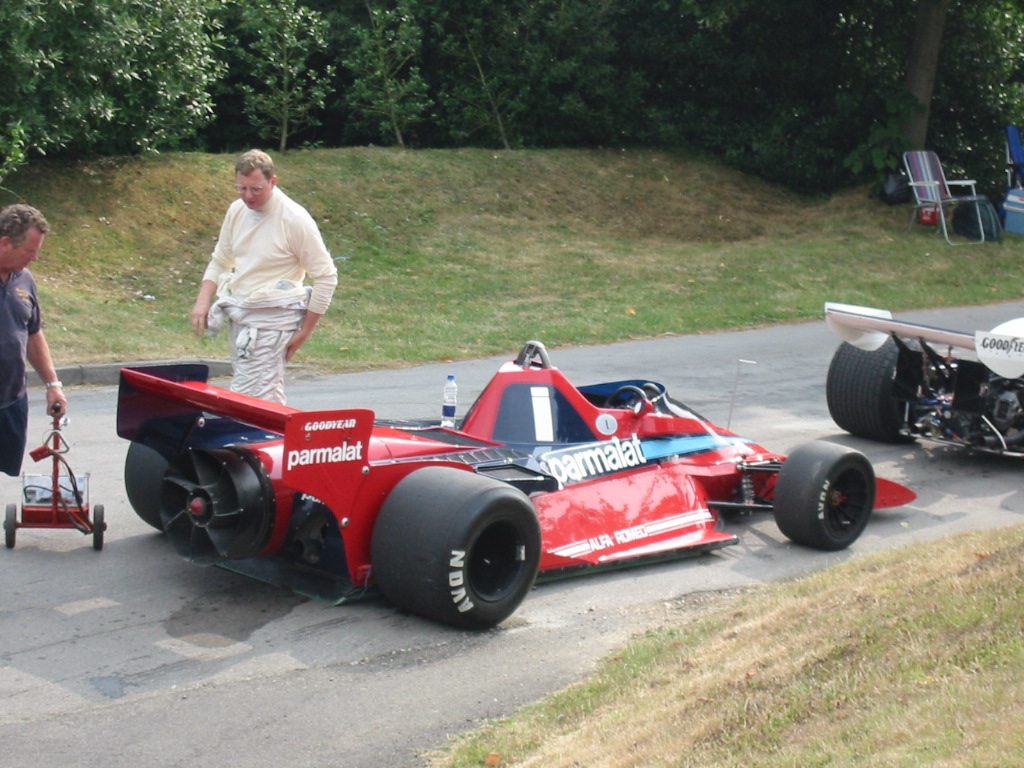
Brabham BT46B
The Brabham BT46B is a race car from 1978 that had a special fan to help it stick to the ground better while racing. This design made it very fast and unique in Formula 1 history.
Lada is a car brand from Russia that makes various types of cars, often known for being budget-friendly. They have been around for many years and are popular in some countries.
Turbocharging is a way to make an engine more powerful by using a special device that pushes more air into it, helping it burn fuel better and produce more power.
An inline four engine is a kind of engine that has four cylinders lined up in a row. It's a common design that helps save space and fuel.
Car
Citroën ID-19
The Citroën ID-19 is an old French car that was famous for its unique features, like a special suspension system that made it very comfortable to drive. It was popular in the 1950s and 1960s.
Car
Citroën DS
The Citroën DS is a famous car from Citroën that was known for its stylish look and comfortable ride. It was a luxury model during its time.
The Citromatic transmission is an automatic system used in some Citroën cars that doesn't require a clutch pedal, making it easier to drive.
Car
Citroën ID
The Citroën ID is a car made by the French company Citroën that was popular from the mid-1950s to the mid-1970s. It had a unique look and some advanced features for its time.
The Volvo 850 is a car made by Volvo that was popular in the 1990s. It's known for being safe and practical, especially as a wagon, and it also raced in a famous car racing series.
The Mercedes-Benz 300 SEL AMG is a luxury sedan that has been upgraded for better performance by AMG, a company known for making fast and powerful cars. It's designed to be both comfortable and exciting to drive.
The 24 Hours of Spa is a long car race that lasts for 24 hours. It takes place on a famous racetrack in Belgium and features many different types of cars racing against each other.
The Toyota Prius is a type of car that uses both gas and electricity to run, which helps it save fuel and be better for the environment. It's known for being one of the first cars to focus on being eco-friendly and is popular among people who want to reduce their carbon footprint.
The Rolls-Royce Corniche V is a very luxurious car that can be driven with the top down. It's known for being super comfortable and stylish, making it a favorite among people who love fancy cars.
The Toyota Land Cruiser is a tough SUV that can handle rough roads and off-road adventures. It's built to last and is often used by people who need a reliable vehicle for tough conditions or family trips.
The Rolls-Royce Phantom is a very fancy car that is all about luxury and comfort. It's made with the best materials and is designed to provide an incredibly smooth ride, making it a favorite among wealthy buyers.
The Bristol Bullet is a special sports car that's designed to be lightweight and fast. It's not very common, so it stands out among other cars and is loved by car fans.
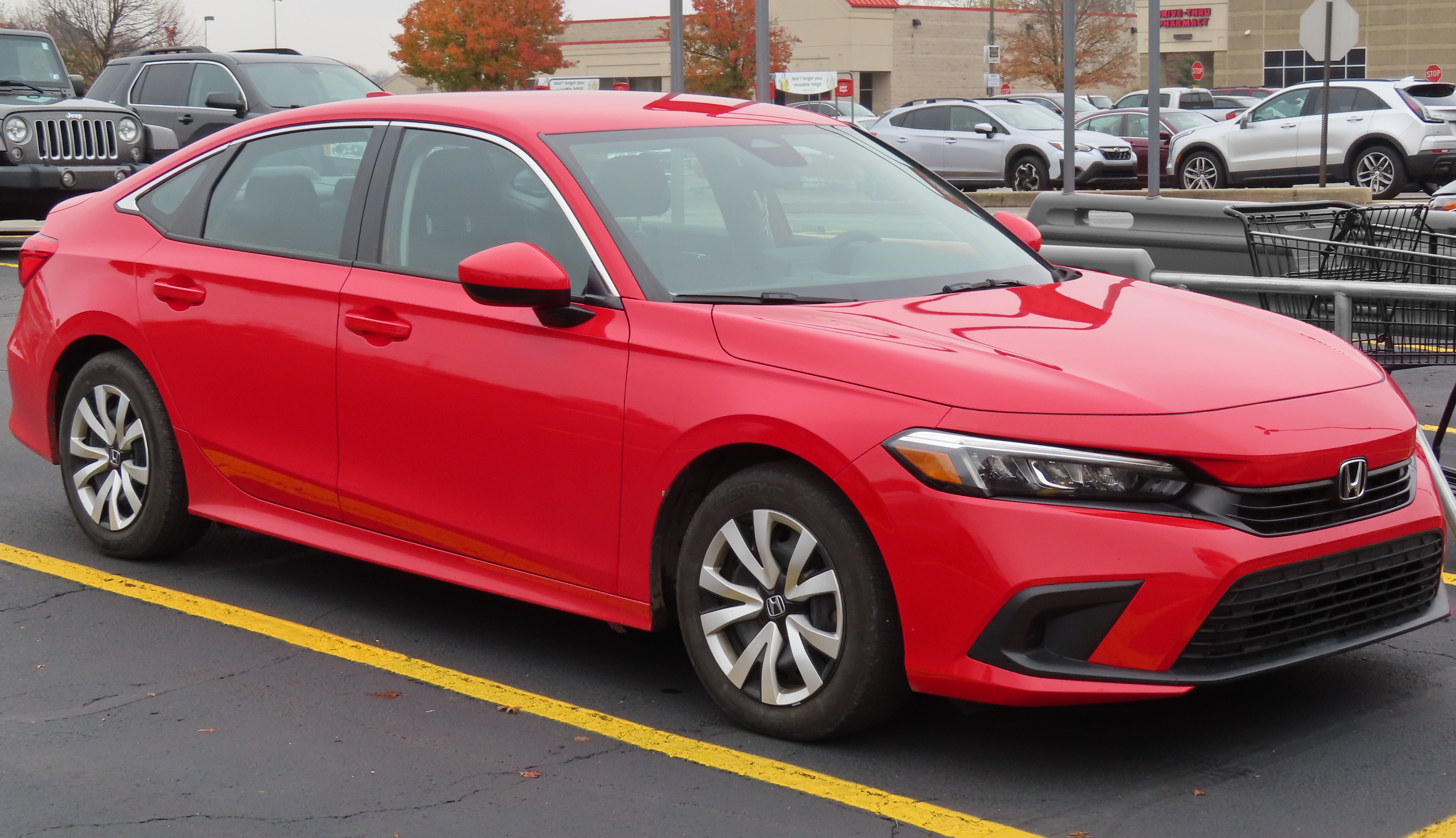
The Honda Civic is a small car that's popular because it's reliable and doesn't use much gas. It's a good choice for people looking for a practical vehicle that can easily fit into city life.
The Chevrolet Vega is a small car that was made a long time ago and is remembered for its unique design. It had some problems with reliability, but many people still think fondly of it.
The Chevrolet Corvette is a fast sports car that many people love because of its sleek looks and powerful engine. It's often seen as a symbol of American car culture and is popular for racing and driving fun.
LIVE
This is an I Heart Podcast.
Guaranteed Human.
Hear that?
That's what it sounds like when you plant more trees
than you harvest.
Work done by thousands of working forest professionals
like Adam, a district forest manager
who works to protect our forests from fires.
Keeping the forest fire resistant,
synonymous with keeping the forest healthy
and we do that through planning more than we harvest
and mitigate those risks through active management.
It's a long-term commitment.
Visit WorkingForestInitiative.com to learn more.
With Black Friday's savings at the Home Depot,
you can get up to $1,400 off
plus get free delivery on select innovative appliances like GE Profile.
Add a touch of ease to your holiday
with the all-in-one combo to wash and dry your laundry
and one machine.
And refrigerators with built-in convenient features
like the dual dispense auto-fill water pitcher.
Shop Black Friday's savings on select GE Profile appliances
plus get free delivery now at the Home Depot.
Free delivery on appliance purchases of $396 more
offer valid $11,5123 US only see store-on-liver details.
Tired of spills and stains on your sofa?
Wash away your worries with anabay.
Anabay is the only machine washable sofa inside and out.
Where designer quality meets budget-friendly prices.
That's right, sofa started just $699.
Enjoy a no-risk experience
with pet-friendly, stain-resistant and changeable slip covers
made with performance fabric.
Experience cloud-like comfort with higher resilience foam
that's hypoallergenic and never needs fluffing.
The sturdy steel frame ensures longevity.
And the modular pieces can be rearranged anytime.
Shop washablesofas.com for early Black Friday's savings
up to 60% off site-wide,
backed by a 30-day satisfaction guarantee.
If you're not absolutely in love,
send it back for a full refund.
No return shipping or restocking fees.
Every penny back.
Up right now at washablesofas.com.
Offers are subject to change
and certain restrictions may apply.
Welcome to Car Stuff,
a production of I Heart Radio.
Hi and welcome to Car Stuff.
I'm your host Scott Benjamin
and I'm joined by Kurt Gehrin,
producer of the show as well, right Kurt?
That's right.
You're doing double duty again.
Today I think we've got a topic
that both of us can...
We'll probably have a lot to talk about, I think.
There's 10 really unusual, unlikely,
weird, strange,
whatever you want to call them, race cars.
And there's been a list compiled, of course.
There's a list all over the place.
So this is one list, I should say.
There's been a list compiled by a place called
drivingline.com
and they had an unusual one.
A different one from others that I've seen,
which I thought was intriguing.
So I chose that one to kind of follow along with,
and then I think we're going to add our own notes
because there's not a whole lot of material on each page.
It's kind of like one of those...
It's like a slideshow almost, really,
when you look at it online.
Below each photo is just a little bit of information
but not a lot of information.
When I saw the list,
I thought, well, I can add something to this
and make it really worthwhile for our audience
and something that they'd be interested in listening to
and maybe even digging into on their own
and learning a little bit more about each one of these cars.
Because they are unique and they are strange
and wonderful and unusual,
and all the ways you can describe a race car
that probably shouldn't be out there on the race course.
That's maybe the best way to put it.
I mean, just real quick.
We're not going to really dig into this yet.
I got a few more things I want to talk to you about
before we start today's episode.
But when you saw this list that I sent over to you,
these 10 unusual cars,
did you have any kind of initial reaction to it?
Yeah. I mean, the look of a lot of the cars is unique.
When I looked at it, I wouldn't with no preconceived notions,
though, and I tried to take each one and look at the era
in which it raced,
and things began to make a lot more sense
when you look at the cars and the landscape
of racing at the time.
Could have been ahead of its time in some ways, right?
In some ways.
But other cars, when you look at it,
you're like, I can't imagine at that time
seeing that car on the race track.
It would be so unusual that it would be the one
that would get all the attention,
even if it wasn't the pulsator,
even if it wasn't the winner of the race, of course,
or even if nothing really spectacular happened with it,
just the fact that it's on the track,
it makes it fascinating and unique in some way.
So I think it's a good list,
and we'll definitely get to that.
Let's get into some of these least likely
and weird and unusual race cars.
As the author of this article says,
his name is Benjamin Hunting,
and he's a writer from a site called
drivingline.com,
and that's the list that we're gonna follow,
but I tell you, we're gonna add a lot to this list.
And as Benjamin says,
racing gets weird sometimes.
It really does get unusual and strange.
And we all know this.
We all know that racers in a particular series,
whatever series it may be,
are all about bending the rules.
And especially, we've seen this especially in NASCAR, right?
We've seen it so many times in NASCAR,
so many different colorful characters
and people that are just right in your face about it, too.
If it's not specifically exactly in the rulebook like that,
I'm gonna do it,
and then the next race has changed.
It's the rules in the rulebook,
and now you can't do that,
so they have to change their tactic.
And it's kind of this cat and mouse back and forth,
play the game type thing that they do.
And as fans, we love to watch this, right?
We love to see the characters
that are like a smokey unique,
or Carol Shelby or any of those guys
that were really just exciting to watch.
AJ Floyd, whoever it happens to be,
it creates characters,
larger than life characters at the racetrack.
And one of the things that results from this
is unusual car design, or car technology,
or just tactics, or whatever it happens to be.
But these happen to be the whole thing,
the whole deal, like the complete package.
These are unusual cars.
And now again, some of them do have just unusual technology,
but along with that,
form has to follow the function, right?
So this makes the vehicle look weird,
because they're trying this new technology,
it makes it look unusual on the track,
and that's what makes it stand out.
And sometimes, as we said,
these are the cars that get all the attention,
whether or not they're on the pole position
or when the race or don't even place it all.
If they make one lap,
everybody's kind of, you know,
owing an eye and over that one car,
or you know, laughing at it,
maybe they're laughing at it.
This one isn't on the list,
but a modern example of some of these types of cars
would be the Delta Wing.
Oh, yeah.
That was an MSA sports car race car?
Yeah.
I don't think they're racing it anymore.
Very unusual car.
So that kind of gives you an idea
if you're familiar with the Delta Wing,
what we're about to dive into.
Yeah, if you're not,
take a look online.
I mean, just do a quick Google search
and you'll be able to find the Delta Wing.
But that is a really strange design.
I mean, look at it next to any other car
on the course at the time,
completely unusual, a really strange car.
But that's exactly what we're talking about.
And as the, you know,
the cars that, as Benjamin says here,
you know, the DeFi convention,
in a lot of cases,
the boundaries are good taste.
And I agree, sometimes that's the case.
But, you know, they all have something likable
about them as well.
You know, there's something about rooting for the underdog
or something about, you know,
cheering for, you know,
the guy that is trying something new.
Ain't why not?
There's been a lot of, again,
a lot of people that,
a lot of people that enjoy doing that
and they do so behind the wheel of misfits,
like number one on our list here,
which is the Cadillac La Monstra.
And I hope I'm pronouncing that right,
but it's a French race car.
And it's a 1949 car actually,
which is competing in 1950,
and I'll describe what's going on here,
but you really need to take a look at this car online.
You need to have an image of what we're talking about here
because there is some unusual bodywork going on, right?
Definitely.
It's wind tunnel tested.
Yeah.
And for the time, that's pretty unique,
I would imagine.
Or for a road race car anyway.
Well, for any car, I think at that time,
I don't think they were doing a lot of wind tunnel testing
back in that time.
I mean, I know that, you know,
of course, the rape brothers had built their,
you know, their little wind tunnel,
and they were, you know, to test their designs,
like the tabletop version,
and then later a bigger version.
But then, and I think that, you know, of course,
there were some wind tunnels around.
There were.
And I know that manufacturers did use them,
and they, you know, this is the later, I think.
I don't know about what?
Gosh, I can't remember when the Chrysler Airflow was built,
but course manufacturers use wind tunnel testing,
and they do now a lot, and sort of race teams, of course.
I think when you see a car that looks like this
from this era,
the wind tunnel is almost always to blame.
To blame me.
Because they're designing the car based on that data
that they get from the test.
Yeah, good point.
That's why it looks how it does.
Yeah, good sides.
Yeah, it's a very unusual looking car to me.
You know what it looks like to me?
And I'm not a huge Star Wars fan, believe it or not.
I mean, I kind of grew up in that era,
and I think that was the first movie I ever saw,
like out, you know, with my parents, like at a theater,
back in the late 70s.
To me, the Cadillac Series 61 that this is built from
are based on this 1949, not the street car,
but this car, this Lamonstra,
looks an awful lot like the land speeder from Star Wars.
Yeah.
It really does.
I mean, it's not the same color.
It's not that copper color or anything,
but it does have a lot of similarity to the land speeder.
Yeah.
And it looks like it's almost hovering above the ground.
You can't really see the wheels underneath it.
It's such an unusual design.
It's very, very strange, very cool now.
But imagine seeing this in 1950 on the racetrack
in Le Mans, because that's where it raced.
Riggs Cunningham was the one who took this car.
And again, underneath it's a 1949 Cadillac Series 61.
There's a couple of cars that he actually brought.
He brought a factory spec manual equipped Series 61 coupe.
And the other one was this one that they had designed
in the wind tunnel.
And this is the Lamonstra, which means, of course, the monster.
And for good reason, I mean, when you see it, I guess.
But the French, I think, dubbed it that.
But this car had a 331 cubic inch V8 that had five carburetors.
And it says it ran an eventful race,
bearing itself in the sand bank at one point
and requiring Cunningham to leave the driver's seat
and dig it out.
And then despite all of that, he finished 11th in the race.
Now, isn't that unusual?
I mean, now think about getting out of the car,
having to dig it out of a sand bank, get it back on the course,
get it back in racing again for the remainder of the 24 hours,
whatever it is, and still finishing 11th in 11th place.
That's impressive.
It is impressive.
Is impressive the car survived that kind of a lick?
Yeah, I think it's a decent finish, I guess,
for a vehicle that did something like that.
Usually, you know, we've heard of these unusual cases
where a driver will be in a race,
and they'll, you know, they call it spin and win.
So they've had a spin out.
They didn't hit a wall or anything like that.
And yet they win the race somehow.
It's very unusual.
It happens, but it's very unusual.
But this is, and not quite the same.
I mean, finished 11th place, but that's a long race,
and digging out of the sand.
That's something that you don't see anybody do,
you know, and still win the race by any means.
Doesn't look like it would take much to get this thing stuck in the sand.
Yeah, I know exactly.
And I do have a little bit of an update on this one.
Not much, but just a little bit.
As of 2017, and I have a feeling these have moved,
but as of 2017, or at least in 2017,
the car was on display at a place called the Revs Institute
in Naples, Florida,
along with a collection of other Cadillac race cars
from the 2017 wins at both the Rolex 24 and Daytona
and the 12 hours of seabring.
And, you know, the title, of course,
the title wins that they won for those seasons as well.
So this is a group.
It was within a group of other Cadillac race cars
from the modern era, which I would have loved to have seen this
in Naples, Florida.
That's not too far of a drive from us here in Atlanta.
We could have made it.
I didn't have any idea it was there, nor do I think I probably
would have driven all the way to Naples.
But if I was in the area,
I would have definitely checked it out,
because how often do you get to see, you know,
grouping of Cadillac's that goes from 1950
all the way through 2017 in race car form?
I mean, that's pretty unusual.
The next one on the list, number two,
the Chaperale 2J.
Now, this one is from around 1970,
and I do want to tell you that we have already done
the full Chaperale story on car stuff, the long time ago.
We did this back in 2011.
So if you want to get some info on that,
about, you know, that whole thing,
and a lot about the Can Am series,
and, you know, the cars that competed in that,
you can, you know, check that out if you want to.
You can go to carstuffshow.com and check that out.
It's actually, it's an interesting idea here
that with the Chaperale 2J,
the idea is, of course,
we've talked about so much about this,
but downforce on a vehicle at speed, right?
Yeah.
And it's how important it is to keep the car stuck to the track,
and how important aerodynamics are,
positive aerodynamics are,
keeping it down,
instead of making, you know,
acting like a wing and taking off,
because we've seen a lot of cars that have done that, unfortunately.
So the idea behind the Chaperale 2J
was that they were going to use something called active arrow,
in order to do that.
Now, active arrow had a different meaning back then,
a little bit of a different meaning back then than it does now.
Now, what we typically see are movable wings,
you know, that adjust at speed
and kind of change the airflow over the vehicle
in order to produce more downforce it,
you know, when it's necessary
and where it's necessary.
This one, however, was able to generate,
this is the crazy thing,
able to generate something like,
like was it 1.5 Gs of downforce,
regardless of whatever speed it was traveling.
So, yeah, you have to imagine this.
So let's say that the car is sitting still on a scale,
and it's not moving one bit,
and it weighs, let's say, a thousand pounds.
All right, so that's easy enough to,
just a easy round number to deal with.
We flip on this giant fan that's in the back of the car
that's run by a two-stroke motor,
and what it does is,
it sucks all the air out from underneath the car
and pulls it down to the road surface, right?
It's driving it straight down,
not any direction to straight down.
The engine is doing nothing,
but the fan is pulling the air out,
pulling it down.
It's like a vacuum.
Exactly right.
So, you flip the switch,
and this thing starts up,
and the vacuum starts up,
and suddenly the scale will read
or it will appear in the car,
the car weighs 1,500 pounds.
And that's a crude way to put that,
and I don't even know if that's true or not,
but what I'm saying is,
it will pull down with the amount of force
equal to one and a half times its own weight,
as it travels down the track.
Now, I mean, again,
it could be sitting still
and do the same thing.
That's why I use that example,
but that's probably a terrible way to put that.
I hope an engineer doesn't call in
and say that's completely wrong.
You just screwed everything up.
You're just saying right now that it probably is wrong.
Well, I kind of am.
I'm backpedaling a little bit
because I'm terrible at this type of thing,
but that's my understanding of it anyway,
is that the car effectively, as it travels down,
that's the goal, right,
is to make it heavier.
As you go faster,
it pushes down on the tires more
than it does when it's sitting still.
And this car,
no matter what speed you're going,
even like you're stopped,
it's pushing down on the tires
with one and a half times its own weight,
which is crazy to think about.
Imagine the advantage that a driver has
when they're driving this car through a corner.
I mean, it's almost as if you could take away,
not that you can completely take away,
but you could almost imagine a driver with less skill
being able to corner harder than a driver with a lot of skill
because the faster you go,
the more this thing creates down for it.
I mean, it's a ridiculous amount of downforce in this car,
which is really, really an interesting thing.
And I think there's probably a full topic for a podcast here.
And I'm not sure if we discussed the KAM series
on car stuff or not,
but maybe we can do that.
But later in 1978,
there was another kind of related car
that I want to talk about.
In 1978, there was the Brabham BT46B,
which is called the fan car.
And it was designed by a guy named Gordon Murray.
And it would use kind of like a similar downforce principle,
and this is the F1 series.
It would use a similar principle for downforce,
but this is the other part of this one.
Is that this one was powered by the car's engine itself.
So the faster the car went, the more downforce it would create.
So again, this one even more than the other one, I would guess,
that suction effect around the corners was just unreal.
I mean, you're able to corner inside, outside,
right down the perfect line wherever you want to.
You wouldn't have any problem.
Everybody else would have problems.
You wouldn't have any problems at all.
So it did remove a little bit of that.
Now, one thing interesting I thought was the lead driver for the car
during that era for Brabham was Nikki Lauda.
He was the Austrian driver at the time.
And of course, there was also another Brazilian driver,
another co-driver, and it was Nelson P.K.
So they both got some time behind the wheel.
A couple of big names in F1, and in worth mentioning anyway.
Number three in the list, highly unusual car.
And this is one that I bet a lot of people do kind of laugh at,
but this is the Lauda Granta.
I hope I'm saying that right.
The Lauda Granta.
I'm getting a lot of part right.
But I hope the Granta is right.
Or he's Granta.
Maybe it's Granta.
I don't know.
But a lot of Americans will laugh at this,
because the Lauda is not necessarily the best car.
It's a Russian brand of car, and you know,
they make a lot of street cars in Europe.
They make a ton of them actually.
They make, gosh, I want to say, it's in millions.
I mean, they've been making them since 2011,
and I think they're still making them,
but it's built in Russia, in Ukraine, Egypt,
and even in Kazakhstan is where this thing is built.
Of course, you know, they're going to take one of their cars
to compete in the World Touring Car Championship.
Of course, why not?
Why wouldn't they, right?
But they chose the Lauda Granta,
which is an unusual choice,
and a lot of people kind of laughed at it,
but it first competed in 2012,
and it has a different engine, of course.
It has a turbocharged four-cylinder engine,
and it has 380 horsepower.
That is not the Lauda Granta that you're going to get
if you buy it out of the dealership.
You're going to get a 1.6-liter 8-valve inline four engine,
or possibly, if you upgraded,
you can get a 16-valve inline four as well.
Number four on the list is,
who's an unusual one?
Really unusual.
This is the Citron ID-19.
Okay, before we start even talking about
where this one appeared,
because this one has some history.
We did do a couple of car stuff episodes on this one too.
If you want the entire Citron story,
part one and part two,
it was done in November of 2014.
It's got an extensive history on the whole thing,
but this is maybe one of the craziest ones on the list for me.
What do you think? Do you agree?
Maybe.
There's some little nuance that makes it not as crazy to me,
in my opinion.
Okay.
Yeah, to me, this is one of the more fascinating ones,
just because of where it appeared
and how this would be even possible today.
It wouldn't be possible, obviously.
But the Citron ID-19,
if you don't know what that is,
it's part of the D series of cars.
The ID meant that simply that it had a manual transmission
in the cloth interior and the DS version of this car,
the Citron DS,
had leather seats,
and something called a Citromatic transmission.
So it was an automatic,
but had no clutch.
It had a shift lever but no clutch.
So the ID and the DS
are kind of along the same appearance,
but different trim packages and things like that,
and options.
Between 1955 and 1975,
they built almost, well,
they built 1.4 million of these cars.
So a lot of them were out there.
However, really on in the run of these cars,
again, they started in 1955.
In 1958,
in Riverside, California,
an ID-19 or actually a pair of ID-19s
ran in a NASCAR race.
It was a road course.
That's the thing that makes it
a little bit easier to believe.
NASCAR was a bit different back then.
It was a lot different back than apparently.
I mean, if you know what a Citron ID-19 looks like,
you know, from 1958,
take a look at one online if you don't,
and imagine that running in NASCAR.
That's really hard to believe.
On a road course,
on an oval, whatever,
but you're right,
that is a road course.
This was the old Riverside track,
and it ran in 1958 as part of the Crown America 500.
Get this.
It finished.
Here's the finishing.
They both finished inside the top 20.
They finished 18th and 19th overall,
but that means that in their class,
they were first and second place.
So a Citron has won a NASCAR race
with a get this a 70 horsepower engine.
These things have 70 horsepower.
That's it.
Now, look at what they're running today,
and you know, like the horsepower
and the appearance of them,
and how closely,
closely they're matched.
They look essentially the same, essentially.
I know there's variation between manufacturers,
but it's such a unusual thing.
I mean, it's funny that they would do this,
and I hadn't put this together,
but the author did.
They used it kind of as a punchline in the,
was it the...
Talladegan.
Yeah, Talladegan.
That's the one.
The Legend of Ricky Bobby, right?
Yeah, they used it as kind of a punchline
because the challenger is the French guy, right?
He's the parier driver.
Yeah.
After Sasha Baron Cohen,
is that who it was?
Yeah, it was very funny.
So it's kind of a funny thing,
but yeah, I hadn't...
You put that together,
those two things together until this point,
but I think it's really fun.
That's a clever, yeah.
All right, number five here on the list is
the one that most people can picture in their mind.
At least most of our listeners can picture in their mind.
I would think this is the Volvo 850 wagon
that was in the British Touring Car Championship.
This one, to me, is iconic.
Oh, I completely agree.
And how it came about is really, really unusual.
There's a long, long story that I'm not going to bore you with,
but it raced in the 1994 season
of the British Touring Car Championship.
And again, there's a fascinating story behind why it raced in there.
And I can give you just the highlights right now,
but again, I bet that most of our listeners can picture this
in their mind.
Yeah.
Just close your eyes.
And if you're not driving close your eyes,
imagine what this car looks like.
And typically, you'll think of this car
going around a corner on two wheels.
And that's what the photographer has just
loved about this car, is that it was always on two wheels.
The thing was very top heavy, of course.
But it had some other advantages,
or maybe it wasn't advantages.
It was just it didn't have the disadvantages
that you would think that it would have.
This was a car that actually performed just as well
as the 850 sedan did.
And they didn't really know that until
there was a shortage at the factory.
So here's how all this goes down.
So you might wonder, OK, why the Volvo wagon was chosen, right?
So it's again, long story, but it's a good one.
I'll shorten it.
So Volvo hadn't raced since about 1986
when it was in something called the European Touring Car Cup,
which was called the ETCC.
And that went defunct, right?
So that was gone.
It was already gone at this point.
But in 1986 was the last time Volvo was on the world racing stage
in that type of series.
And then in the early 1990s, Volvo's senior vice president
his name I can't remember right now.
I'll find it.
But decided that it was time to return to racing
and to kind of pep up the brand that was at this point
better known for safety.
You know, they had all these safety innovations.
They still do.
I mean, they're still a brand known for safety,
which is not a bad thing.
That's a really good thing.
But they wanted to kind of, you know,
I don't know, spice it up a little bit, right?
I mean, it's time to get back on the racetrack
and show what we can do as well.
And so a Swedish performance company was chosen.
It was called Stephenson Automotive,
or Stephenson Automotive.
I hope not pronouncing that totally wrong.
But initially they wanted the 850 sedan, of course.
So, you know, they went to the, the story is they went to the factory
to pick up the cars that they were supposed to pick up.
And there's a shortage of the 850 sedan bodies at the time.
They were supposed to go to customers or, you know,
they were, they just simply didn't have them.
They weren't building them, you know,
it fast enough to be able to provide them
for the racing team or the racing effort.
And the only bodies that were available were the wagons.
And they decided, let's take the wagons.
Let's just do it.
We've got an assignment we have.
We have a short amount of time to build these race cars.
We're going to take these wagons.
We're going to do it.
You know, it's going to be unusual.
But they want us to build them.
Let's do it.
One of the best ideas ever.
So, they find out that as it turns out,
you know, these sedans actually,
there's no disadvantage to running the wagon
versus the sedan aerodynamically.
Well, if you think about the Volvo back in the 90s,
how boxy it was anyway.
It doesn't surprise me one bit.
You have a long flat roof
and maybe more weight over the rear.
Yeah, I think there's more, there's more weight
and it's distributed differently for the wagon, of course,
which is why you see it on two wheels and awful lot.
I mean, I know those cars were, you know,
they often were on two wheels anyway,
but the wagon more so than the others.
And, you know, here's the really interesting thing is that
because it was captured so many times like that,
you know, cornering hard,
you don't expect a wagon to be doing this.
And plus, it looks incredible.
And it's all, you know, decaled up like a race car.
It looks like a race car.
It's really a cool looking vehicle.
If you're a wagon fan,
you fall in love with this immediately.
I did.
I'm a huge wagon fan anyway.
Sad that there are no, you don't find wagons anymore.
There's a few out there
and I've been seen them in commercials recently.
But this vehicle,
this particular vehicle was probably photographed more
than any other car in the series during that season than,
which was just a boon for Volvo.
Yeah.
I mean, it was an unbelievable stroke of genius on their part.
And they didn't even know it was really going to happen.
Like the company didn't know it.
The company that was, you know, building them,
the Stephenson Automotive, the performance company,
they didn't know what was going to happen.
They figured they were going to be ridiculed.
I think initially they were.
They were kind of laughed at.
But they actually had the accident.
Yeah, yeah.
I think that they said that the best that they finished
was something like 14th and 15th in that one season.
But again, one season.
Again, we can probably all picture this car.
It was on posters.
Some people probably still have it as their desktop image saver
or whatever you call it, the desktop image.
So it's a cool looking car.
If you haven't ever seen it, look it up.
A level 850 wagon from the British Touring Car Championship
or BTCC.
And you know what?
We're going to have the rest of our list in just a moment
after the break.
Life gets messy.
Spills, stains, and kid chaos.
But with Anna Bay cleaning up is easy.
Our sofas are fully machine washable inside and out.
So you never have to stress about messes again.
Made with liquid and stain-resistant fabrics,
that means fewer stains and more peace of mind.
Designed for real life, our sofas feature changeable fabric covers.
Allow you to refresh your style any time.
Need flexibility?
Our modular design lets you rearrange your sofa effortlessly.
Perfect for cozy apartments or spacious homes.
Plus, they're earth friendly and built to last.
That's why over 200,000 happy customers have made the switch.
Get early access to Black Friday pricing right now.
sofas started just $699.
Visit washablesofas.com now and bring home a sofa made for life.
That's washablesofas.com.
Offers are subject to change and certain restrictions may apply.
Hear that?
That's what it sounds like when you plant more trees than you harvest.
Work done by thousands of working forest professionals like Adam.
A district forest manager who works to protect our forests from fires.
Keeping the forest fire resistant, synonymous with keeping the forest healthy.
And we do that through planning more than we harvest.
And mitigate those risks through active management.
It's a long-term commitment.
Visit workingforestsinitiative.com to learn more.
Hey, it's Ryan Seacrest for Albertsons and Safeway.
Blue season is here and our pharmacies have you covered with a free flu shot with most insurance plans.
Plus it's cough and cold season and now through December 2nd stock up.
On all the seasons, essentials and get ready for relief with discounts on items like
mucinex cold and flu kickstart mucinex fast max products.
Vicks, daco and Nikol combo pack, Alka Celser Plus, also airborne and affron.
Offers end December 2nd restrictions apply and offers may vary by location.
Visit Albertsons or Safeway.com for more details.
And we're back and I'm your host Scott Benjamin.
And I am Kurt Garen.
Kurt's holding in there for number six.
I know you're you're chomping at the bit for number six.
Oh yeah, I can tell.
Oh yeah.
All right, this one.
That's an unusual one too.
These are all unusual.
Well, that's why they're on the list, isn't it?
This is the Mercedes Benz 300 SEL AMG.
Now, a couple of things make this really unique.
Now, this one.
Well, for one, it's a limousine.
It's crazy.
I mean, if you look at it, it doesn't look like it should be on the racetrack.
But I think the more that I see this one, the more it grows on me.
And I initially didn't necessarily like it.
It's a fire engine red AMG sedan.
I guess a limousine.
It's a longer version of the car anyway, which is really weird.
This one competed, erased in the 24 hour race at Spa in 1971.
And this was, this is crazy.
This is the first race car that was ever built by AMG.
When you look back, I mean, you see a ton of Mercedes on the roads right now.
At least we do here in Atlanta that have the AMG tag on it.
A lot of AMG cars.
AMG has been around for 52 years now.
They've been around since 1967.
And this was the first race car that they ever created.
Now, I know that they were working on other things for Mercedes Benz at the time.
It's kind of their performance division if you want to call it that or their performance house.
But it is a full-size sedan.
And maybe a limousine.
I've seen it called limousine places, but full-size sedan is probably a better way to sit.
The car actually won its class and was second overall in the race that it was in.
We're talking about, again, the Spa 24 hour race in 1971.
Huge horsepower.
428 horsepower.
448 pound feet of torque.
And that comes from an engine.
I think I want to say that this was a board out version of the already giant V8 they had under the hood.
Which was either, I can't, I can't determine this.
It was either a 6.3 liter engine or a 6.6 liter engine that they then board out to be 6.8 liters.
Still a V8, of course.
I mean, that doesn't change when you board out an engine, of course.
But it hasn't some unusual things.
It has a wood dash.
It's kind of like a sleeper car, I guess, if you want to put it that way.
I mean, it doesn't look like outside of the decals.
If it didn't have all that, I mean, it's a little bit jacked up in the rear.
It's got rally lights in the front.
If you took all that off of there, the decals, the lights, it would just look like a sedan on the road.
It really wouldn't be anything much different.
I mean, the tires are a little bit wider, sure I get it.
But it's just like taking whatever car you had on the street and throwing it on the racetrack
and putting a number on it and calling it a race car.
It still has the chrome trim on it.
It just doesn't look like a race car.
It doesn't like it would be very fast.
They called it the red pig.
I mean, if that says anything.
So the Mercedes Benz 300 SEL AMG or if you want to search the red pig,
you'll find an image or a photo of this car.
Now, I found something really unusual and had a tragic end.
It's not probably what you think.
This is really unusual.
So there's a lot of replicas out there.
So replicas of the original are available.
Of course, they're at museums and people are building them that kind of thing.
And they're exact replicas.
They're very detailed right down to exactly the way it was.
But the original, unfortunately, the red pig that was raced
was sold to an aircraft company.
And this is according to a site called MotorOne.com.
And because it was one of the fastest cars in the world at the time,
you know, from one of the, it was huge horsepower again.
It was perfect, as they say, for testing landing gear at speed
by dropping the landing gear through holes that they cut into the floorboards of the car.
So they would drive this thing down the track at speed
and then drop the landing gear through these holes
which would just tear the hell out of the car.
I mean, every time they did it, right?
I mean, the shock that must have gone through
and just the torque and just tearing the metal and everything.
Unfortunately, it didn't take a very long.
But this thing eventually just became such a total wreck
that they couldn't even use it for that.
So the original red pig met quite a strange end.
I don't think there's a lot of cars that have a history like that.
Or, you know, an end like that, especially race cars.
Usually they crash or they end up in a museum.
You know, one of the two.
Especially one that, I mean, this is a historic car.
All of these first race cars.
But then, here's this thing, is then, you know,
it was just another car to them on the way.
But yeah, looking back,
anybody would give anything to have that car.
You know, the original car, sure.
It'd be a great museum piece or even the factory
would probably want to buy that back for a couple million bucks.
Little did they know.
So, all right.
Next one on the list.
And I don't think we need to spend too much time on this one.
I don't know a whole lot about it, as a matter of fact.
It's another series that we probably need to dig into.
This is number seven.
It's the Toyota Prius GT.
And you might laugh through on a GT at the end of Prius.
But until you see the Prius GT, you don't understand.
I mean, this is the Super GT Prius,
which debuted in the Super GT series in 2012.
It took the class pole position in the GT 300 class
and then took sixth place at the 2012 Fuji GT 500 kilometer race.
It is, as you may have already guessed,
not your typical Toyota Prius.
So, this one is still hybrid.
It still has a larger lithium ion battery, as you might expect.
But the biggest difference is that it has a mid-mounted 3.4 liter V8 engine
that produces 300 horsepower.
Of course, it's naturally aspirated.
It's not a turbo engine.
It ran from about 2012 until 2018,
and it got the podium several times during that time.
This one I have been staring at photos of this for a long time,
trying to figure out where the Prius is underneath there.
Because it doesn't have a whole lot of shared panels
or anything like that.
I mean, it's buried somewhere underneath
some really impressive looking bodywork.
At least the version that I'm looking at
does not look like a Prius in any way.
Prius in name only.
Yeah, I guess so.
It's a really, you know, I'm not a Prius fan, you know,
just in general, but this one I would drive.
Really?
Oh, yeah.
I think just about anybody in our listening audience
would drive this one.
If you look at the Prius GT or the Super GT Prius,
you will be inspired by this now.
All right, just real quick.
I was watching a little bit of the Roadkill Knights footage,
you know, some of the drag events.
And one of the things that they had paired up was a,
I think it was a Dodge Dart Demon and a Prius.
And you might think, okay, what are they doing with this?
Well, the Prius was actually powered by
a Dodge Hellcat crate engine.
And not just the Hellcat engine because you might think,
well, maybe the Dart Demon still has a chance
against this lightweight Prius, right?
Not just that, but they had upgraded the 707 horsepower
Hellcat engine to, well, they've upgraded it
by adding a 4.5 liter Whipple Supercharger to that.
So it's achieving 1000 horsepower in a Prius.
That just falls into that Y category.
So this is not, you know, this is not for a fuel economy
or anything like that, right?
But it's funny as hell to watch this Prius drag.
And of course, it just destroys the Dodge Demon right off the line.
I mean, it's within 10 feet,
you're going to see who's going to win.
It's that quick.
It's like it's just gone.
It's unbelievable to watch.
So again, this is that drag racing event in Pontiac.
Of course, this rear wheel drive has a 4.9 inch rear end.
It's got, you know, it's completely stripped out underneath.
It's just a Prius body, right?
But it's just funny to watch.
All right, next one on the list.
And we're getting toward the end here before we get to our surprises.
And we'll probably have to, let's speed through these last couple
so that we can get to our extras, okay?
Let's do it that way.
So there's the 1976 Tarell P34.
Actually, this is called the Project 34.
So that's a, if you want to look it up that way.
Consider this the most unusual F1 car you've probably ever seen.
That's what we have going to say.
This is the six wheeler.
And I think a lot of people can also picture this one in their mind.
This is the six wheeler that has, I think it has Elf printed on the side.
A lot of people can picture that as well.
I think Elf was like a fuel or something at the time, wasn't it?
I think something like that.
They're a long time.
But it was F1, too.
Yeah, you're right.
Yeah, you're right.
It was through the 2000s or late 90s.
Yeah.
Yeah, I think of sponsorship where you'd see banners or at least,
you know, some kind of signage for those.
This is a car that was designed by a guy named Derek Gardner,
who was actually better known as a transmission designer
up until the point that he met Ken Tarell in 1970.
And he convinced him to start designing cars.
And he did.
So I think around 1970, they started building cars in,
God, I think it was just like a private garage.
Maybe even, it could have even have been Derek Gardner's garage for all I know.
I think they built the first one there.
This one has a V8 engine.
It's a Ford Cosworth engine, DFV engine,
which stands for double four valve engine.
Of course, the reason behind this, and a lot of people will wonder,
why bother with extra wheel?
Do you think it would just be extra trouble?
And it seems like it has a real unusual look.
It doesn't look like it would be an advantage of any kind.
But the advantage comes in increased braking power,
which I guess makes sense.
You get more braking surface with an additional two wheels.
You're able to have an additional two brakes.
So you're able to go harder in the corners when you need to.
And that's exactly what they did.
And it was sort of successful.
I think it was 1976 and 1977,
or it retired after 1977.
But it kind of won over fans.
Initially, fans laughed at it.
I thought it was ridiculous.
And it still looks ridiculous a little bit.
But it did win people over.
It ran in 30 races.
It had only one win, which was in the Swedish Grand Prix.
And that's when Jody Schechter drove that car.
And then it had one pole position.
And for, get this three times,
it set the fastest lap in a race,
which is pretty impressive, really,
for a brand new vehicle out of the gate like that.
Sure.
A lot more history on that one that we're not going to get to right now.
Then there's the, number nine, the Rolls-Royce Corniche.
Now, we've done a lot of car stuff episodes on Rolls-Royce.
And you know all about the luxury and the, you know,
the opulence of the Rolls-Royce.
And that's not what this one is all about.
This is a different animal altogether.
This is my weirdest one on the list.
Is it really?
Oh, yeah.
Oh, see, like, do you like this one a lot?
Do you, I mean, do you like it?
It's not that I like it.
It's just, it's just strange.
Yeah.
You know it would be strange seeing it race across the desert.
This was a 1981 entry to the Paris to the Car event.
And I don't know how many years it race,
but it's not entirely a Rolls-Royce.
Underneath, there's a Toyota Land Cruiser chassis.
And it's powered by something quite a bit different as well.
Yeah, Chevy engine.
Yeah, Chevy 8.
Yeah, big V8.
It's got a 5.7 liter small block Chevy V8.
And again, I've, you know, they thought it was a joke again,
but gosh, I mean, it did pretty well in the standings.
I think it was as high as 13 in the standings.
Is that right?
It got to 13th?
Not too bad, really.
And it's a, it's a grueling race.
A very difficult race to make.
And to consider that you're in a Rolls-Royce,
I mean, it's funny to think of because, you know,
you think of it being a luxury vehicle.
And we've talked about this in cars so many times.
We talked about the Phantom.
We talked about, there was a guy who, his name,
it's actually the episode is called The Man Who Became a Paint,
which is, I think it's an intriguing title.
You have to look into that one to see what that's all about.
And we did another one about a spiritual healer or a spiritual leader,
I guess, the spiritual leader Rajneesh,
who had 93 Rolls-Royces that were paid for by his followers.
We did a story about that a long time ago.
I think it's the 93 Rolls-Royces of Bhagwan Sri Rajneesh,
which was done in 2016.
It's a strange story.
And there's a lot of funny lines in that one.
You don't have to listen to that one to get the full story.
But it's a funny idea, isn't it, that, you know,
that this is such a luxury car and it's known for its opulence
and the dollar amounts that are thrown around with this.
And, you know, it's supposed to be like a prestigious thing.
But here it is blazing across the desert.
And I'm sure that inside there it was uncomfortable.
And it wasn't a comfort trip by any means.
It's not like you're in the lack of luxury.
No, not at all.
Not like in one of the hardly a Rolls-Royces.
It's not like in one of the Cannibal Run movies or something
where it's, you know, a race car underneath and, you know,
it's a race car inside as well.
It's got, you know, it has to have all that as well.
Yeah.
I love the name to Jewels.
Do you name your car, Scott?
I do not.
Have you ever named a car?
They kind of develop names over time.
Well, I don't go, I don't name it intentionally.
It just kind of, let me ask you this.
Do you name it or does somebody else name it for you?
Because I've seen that happen as well.
It happens.
Sometimes someone else will name it.
And then I'll, the car will take that name.
But normally it's a name I come up with.
Does your current car have a name?
It does, yeah.
It's Jane.
Okay, Jane.
Is that right?
We're playing Jane.
Is that right?
Oh, playing Jane.
Well, it's just Jane.
I call it Jane.
Yeah.
Playing Jane.
Then I've had the silver bullet.
Was my first car.
That's funny because we're still under Honda Civic hatchback.
Okay.
Silver bullet.
That's good.
Yeah, that's good.
That's funny.
I would bet a lot of people, I just never even think about this.
But I would bet a lot of people name your car.
Yeah.
I'd love to hear some people, you know, some of our listeners
right in with the names of their car or cars that they've had in the past.
And what type of car it was and maybe even, you know, short description.
Why?
All right.
Number 10 on the list.
We're finally number 10.
And then we've got, we do have two things.
So hang on after the list.
I'm going to go through this kind of quickly.
Although I will tell you that this one, you know what?
Number 10, you know what?
Yeah.
I'm going to do something unusual here.
I'm going to actually change the order up of our show here, right?
As we're talking.
Just a little bit.
Just a little bit.
Not too much.
Because number 10 relates to what I'm going to talk about as a surprise for you later.
Okay.
I do want to bring out one that I did not find on the list that I think was really unusual.
And I shared with this one with you earlier, it was the NASCAR Tucker.
And this is another strange one.
But in 1950, again, with 1958, oh, 1958 was the Citroen.
1950 in the Poor Man's 500, which I think is a great name for a NASCAR race.
It's so funny.
The Poor Man's 500, it can feel the speedway in Ohio.
A Tucker, an actual Tucker, participated in a NASCAR race.
It's believed to be car number 1023.
If you go to the registry, you can find out all about car number 1023.
And I'll spare you the extra keystrokes on that one.
I've already done it.
I'll tell you about that in a minute.
The photos appeared in Hemmings.
And I think it started somewhere around 2008 when they kind of posed the idea that
this might have happened.
And here's a photo of a car that looks like a NASCAR.
Did this really happen?
And there's a lot of discussion and back and forth.
And then eventually, the son of the man that ran the car in the NASCAR race
rode in with another photograph of his dad standing next to the same car on the same car lot.
So proof positive that he definitely did run this thing.
In 1950, again, car number 1023.
And this was actually the photo was taken in the Mount Oliver section of Pittsburgh.
I think it looks like Mount Oliver.
Mount Oliver, it's a used car dealer.
A lot that it's on of all things.
And I'll tell you about car number 1023.
This is unusual.
This is one that was actually lost in a fire later on.
And then this is the strangest part.
It was buried under the grudge of the Tucker automobile club of America's founder in Florida.
So if you want to know where it is, it's underneath the slab of concrete in Florida.
You know, buried.
It will always be there.
They know that they know where that one is.
It's gone.
Obviously never to come back.
It was it was unsalvageable.
It was just a twisted mass of rusted metal at that point.
But an unusual thing.
And if you go to Hemings.com, you can see photographs of the NASCAR Tucker.
It's got the number 12 painted on the side there.
And it looks like Joe Nagel Jr. motor sales is the name printed on the side.
So I thought that was interesting.
The driver's name was Joe Marola.
And he was out of Braddock, Pennsylvania.
That's cool.
So yeah, you can check that out if you want to.
That's, uh, I thought that was an interesting little bit of history.
Time for a sofa upgrade.
Introducing Annabase Sofas.
Where designer style meets budget-friendly prices.
Every Annabase Sofas is modular, allowing you to rearrange your space effortlessly.
Perfect for both small and large spaces.
Annabase is the only machine washable sofa inside and out.
Say goodbye to stains and messes with liquid and stain resistant fabrics
that make cleaning easy.
Liquid simply slide right off.
Designed for custom comfort.
Our high-resilience foam lets you choose between a sink and feel
or a supportive memory foam blend.
Plus, our pet-friendly, stain-resistant fabrics ensure your sofa stays beautiful for years.
Don't compromise quality for price.
Visit washablesofas.com to upgrade your living space today.
Sofas started just $699 with no risk returns and a 30-day money-back guarantee.
Get early access to Black Friday now.
The biggest sale of the year can save you up to 60% off.
Plus free shipping and free returns.
Shop now at washablesofas.com.
Authors are subject to change and certain restrictions may apply.
Hear that?
That's what it sounds like when you plant more trees than you harvest.
Work done by thousands of working forest professionals like Adam.
A district forest manager who works to protect our forests from fires.
Keeping the forest fire resistance synonymous with keeping the forest healthy.
And we do that through planning more than we harvest.
And mitigate those risks through active management.
It's a long-term commitment.
Visit workingforestinitiative.com to learn more.
Hey, it's Ryan Seacrest for Albertsons and Safeway.
As winter approaches, make sure you set aside some time for self-care.
Now through December 2nd, get great savings on personal care essentials
when you shop in store or online by two participating self-care items
and save $3.
Shop for items like Trustsame shampoo, Dove shampoo, Dove men's care body wash,
Dove body wash, and Axe shower gel and save $3 when you buy two or more items.
Offer ends December 2nd.
Restrictions applying.
Offers may vary.
Visit Albertsons or Safeway.com for more details.
And we're back.
And number 10 on the actual list, which leads to the surprise.
Don't you look at that yet.
I'm not going to.
I just want your reaction when you see that.
All right.
So number 10 on this list is Jungle Jim's Chevrolet Vega wagon.
Now another wagon, a second wagon to make the list.
And I see why.
I mean, I see why it's unusual to have a couple of wagons out there on the race track.
This one is a drag car.
A drag car.
So it's a little different.
And probably a lot has to do with the weight distribution of the car.
I would guess, right?
You know, drag racing.
I mean, how unusual is it to see a wagon on the track?
We don't see it anymore.
I'm not sure how common it was back then.
I mean, I know in the late 60s and 70s, you wanted your car to look.
You try to be outrageous.
Exaggerated and weird.
So you try to be wanted to beat the other cars, too.
But you also wanted to beat the other cars in a car that was unique in some way.
It could be a little crazy, right?
It could be a little outrageous, a little different, a little unique.
All right.
Well, that's coming up in just a second, too.
Okay.
Hang on.
Okay.
So the thing is that wagons actually had kind of a surge of interest, as they say, in the
NHRA Pros. Class because of the mass at the back of the wagon, which actually added to the
traction of the vehicle.
So when you compare that to a sedan or a coupe of the day, it wasn't necessary.
It was an advantage over a sedan or a coupe, if you look at it that way, right?
So think about going back to that Volvo 850 wagon in the touring car championship.
Similar idea.
There's probably a lot of the same reasons.
There's a bit of advantage.
I mean, and once you're at speed, again, there's a little bit of an aerodynamic advantage as well.
So one of the craziest cars that was out there was Jungle Jim Lieberman.
And he raced in a 1972 Chevy Vega wagon of all things, a Chevy Vega.
A lot of people laugh at the Chevy Vega because it was supposed to be more about economy than
it was about performance, of course.
And it doesn't matter in NHRA Pro stock.
You just throw an engine.
It's just a shell at that point, really.
I mean, there's nothing underneath it that is stock, really.
Outside of just the outward appearance.
Similar to the Prius.
It's more of a visuals thing.
It's just fun to see that car beat whatever is next to it.
Exactly, but he could stuff a giant V8 under the hood of this thing and make it work.
And then it's exactly what it did.
It had a short wheel base because it was a compact wagon.
It had a lightweight design, but weighted in the right way.
It was weighted exactly where he needed it.
So it was actually a strong performer.
And a few interesting things about him.
Jungle Jim was one of the early guys that was really...
I would call him flamboyant, but I don't mean that.
I mean, he was more like a promoter, like a showman.
Yeah.
Like he would make a big deal of the track.
Yeah, he was definitely a personality at the track.
He was really a character.
I mean, Jungle Jim.
Yeah, he was the name.
And he had Jungle Jim.
He ended up dying fairly young.
He died at the age of 31.
He was killed in a sports car.
He had a Corvette.
And I think he was in Pennsylvania, I believe, at the time.
He went around a corner too fast and head on with a bus of all things.
He had a bus head on.
I mean, that's what you hear about.
Like he could get hit by a bus.
Who knows?
31 years old.
He's kind of at the peak of his gamer.
We think he was the peak of it.
He might have been better.
You know, you never know.
But he was only 31 years old, made quite an impression on everybody.
But I said that he was kind of a showman, right?
Right.
All right.
So I have, I'm telling you what I'm doing here.
I'm going to slide a piece of paper over to you.
And I have stapled a piece of white paper on top of this.
The curd has never seen what I'm about to show him.
He might already know.
He kind of have the knowing look.
But to go along with the Jungle Jim story,
we have to include one other character that Jungle Jim had with him on the track.
Can I guess or you want me to look first?
Do you want to guess?
I want to guess.
Okay.
Is it his wife?
It's his girlfriend.
Yeah, girlfriend.
His girlfriend.
Yeah.
Her name.
I don't know her name.
Oh, her name was Jungle Pam.
Now, Jungle Pam.
Okay.
So I'm Jungle Pam Hardy.
Now, Jungle Pam Hardy.
There she is.
I'm showing him some photos of Jungle Pam Hardy and what Jungle Pam Hardy's job was on the track.
Now, she was something that they call a backup girl or a staging girl.
And I'm not trying to be derogatory in any means.
And I'm going to try to be very careful about this.
I am.
But she was a rather busty person.
Bucks him.
Good looking lady.
She was good looking lady.
Yeah.
But it was his girlfriend.
I think he just met her like cruising by her one day on the sidewalk or some story like that.
They were boyfriend and girlfriend.
She toured with him for a while.
I think, you know, she was like she was pretty actually.
She was like pretty valuable to the team and that she did more than a lot of people think.
She would come out in these extremely skimpy, you know, outfits.
I'll call them uniform, but it was an outfit.
Go-go boots, you know, really tiny little shorts and a, you know, halter top.
And you got to remember the era.
You have to look at the photograph to see what's going on.
But she would come out and in these outfits drive the guys, you know, at the track crazy.
And, you know, her drive was to back him up once he had done his burnout.
And she would also very seductively bend over and check for fluid leaks under the car and add fluids.
And, you know, make sure that you do final checks, right?
But she did a lot more than what people give her credit for.
She actually was the one who packed his parachutes.
She would do more than you knew behind the scenes, you know, as far as like, you know, clean up and engine work.
And she would do all, she was hands-on.
She really was. And not a lot of people knew that she was hands-on in the pits, in the pit area.
She was definitely like a pin-up type girl, you know, that they loved to photograph her jungle gym knew that.
And that's why she was there exactly.
And other teams copied that.
They brought someone like that with them as well, because gym was stealing all the tension from every other driver.
No matter how he didn't race, no matter how poorly he was performing,
everybody was looking at his team and his name was getting out there because of jungle Pam.
So he knew how valuable Pam was, not only for, you know, because she was actually helping on the team,
but also the promotional aspects of this whole thing, you know, it were great.
And they worked really well together as a team.
They had a great respect for each other, I know.
You've heard, I've heard her talk about him, you know, of course, his life was cut short, you know, during their relationship, I believe.
I don't know if they were broken up at that point.
I think it was really close to that time when they met.
I know when he passed away.
So I don't know if they had already moved on or not.
But she still had a lot of respect for him and always did.
And it was just it was a good relationship.
Now, again, take a look at photographs of jungle gym and jungle Pam.
If you want to get it, it's kind of a good thing.
You laugh a bit about it. It's really funny.
But the last thing that I want to bring up, and I know we've gone a long time here.
This is a long podcast.
But I want to tell you something that I found pretty unusual.
Going through and finding these jungle Pam images and kind of learning about her.
I saw some articles that said, or there were some modern versions of backup girls right now.
And there's kind of a resurgence of that right now happening.
And it's kind of a popular thing.
This is a global restaurant.
I didn't know that.
I'm not one to hang out at the racetracks.
Maybe you've seen this in person.
I feel like it was even back then.
I feel like it was just kind of part of the show.
Even when it was like a street racing type thing back in the 1950s.
Sure.
Or the women also played that part in the whole thing.
We have seen Greece before.
Well, yes.
That's a good point.
But you know what?
Here's the thing.
And I'm not just talking about the rockabilly looking person.
A girl that throws the green flag and jumps up and down.
Where in her shorts or whatever.
I'm talking about like a full on backup girl at a drag racing competition just like Pam Hardy was.
That has other duties.
But dresses like in go-go boots.
Dresses like they're in the late 60s.
They have that look intentionally.
And they know the role they're playing.
They're just there for the promotional aspect of the whole thing.
And I'm sure it's fun.
It's got to be a lot of fun to do this.
If you want to get an idea of what I'm talking about, you can look up articles about the backup girl or the comeback of the backup girl.
Or there's a video online called Southeast Gasser's backup girls 2017 season.
It's a brand new version.
You'll see women from this year that are doing this.
I mean, and before you write in hostile letters or whatever, these are women of all ages, sizes, shapes, different styles of dress.
I mean, it's girlfriends, it's wives, it's daughters.
It's anyone really that wants to do this.
And it's actually, it looks like a lot of fun.
It really does.
It seems like, you know, those rockabilly events where they have, you know, rat rise and things like that in music.
And it looks like the women that are participating in that as well that are doing this.
It's just that similar kind of feel in a lot of ways.
There are Facebook pages.
There's Pinterest pages.
Of course, there's articles on hot-rotter sites and drag racing sites.
It's really, it's kind of a neat nostalgic thing that I think is, it's taken grip.
And I kind of like it.
I like a trend.
It gives you that feel that old-time feel.
Yeah.
Something about the cars, but then too, just they were more wild and out of control.
You can hear the supercharger whining and everything.
And that's the thing that the fuel was coming out.
Yeah.
It was just, to me, the cars of that era and the whole spectacle of it is just more raw and just,
it's just better as a spectator sport.
I mean, it's fun to watch the top fuel drags fly down the track, but it's so controlled
and everything's dished out in a certain way.
Yeah.
But those cars had some like just unbridled power.
Well, you were sharing, you shared with me a video recently of, it was a drag racing documentary, I guess we'll call it.
I don't know what it was called, but it was from the late 60s in Indianapolis at the national event.
Oh my gosh.
I think it was a harsh sponsored thing because a harsh appeared everywhere.
Yeah, they were throwing in a few times.
But it was film.
Obviously, it was, you know, the old film that had, that alone gives it a great texture feel.
But the cars and the people and the dress and the, you know, the way it's narrated, just everything about that piece was unbelievable.
It was really, really cool.
I loved watching that.
And, you know, the music, of course, it's original music that was scored, you know, just for that documentary.
Very much of the era, very much of the late 60s, early 70s.
I think it was late 60s.
But yeah, you're right, they're just a raw power of those cars.
I mean, a lot of them are, you know, if they screw up, it's in a wheel stand.
And, you know, a lot of them were drifting over into the other lane and bumping the other car.
Yeah.
The engine was just right there in front of them and it would be, you know, losing parts.
Does it flew down the track?
Beautiful cars.
I mean, it's just unreal.
It's so cool to watch the, watch that old stuff.
But yeah.
Well, I tell you, Kurt, I think we've probably exhausted this list.
I know we've got a, we had a long list to get through and I know we've probably gone way too long on this podcast as we always say at the end.
And in the meantime, if you want to check us out on social media, we are on Facebook, Twitter, Instagram, where we are car stuff, HSW on all three of those.
And of course, tell your friends, you know, trying to gain listeners as well.
So, I guess that's about it for me, Kurt. How about you?
That's it for me.
Anything else? Sorry.
I guess we will see you next time.
And, who knows? Maybe Ben will be back.
Maybe.
And thanks for listening, everyone.
Car stuff is a production of iHeartRadio.
For more podcasts from iHeartRadio, visit the iHeartRadio app, Apple Podcasts, or wherever you listen to your favorite shows.
Okay.
Only ten more presents to wrap.
You're almost at the finish line.
But first.
They are the last one.
Enjoy a Coca-Cola for a pause that refreshes.
This episode is brought to you by PBS.
It's the story of a war that was bloody, complex, and profoundly consequential.
Ken Burns and his co-directors, Sarah Botstein and David Schmidt, shine a light on how this historic fight for independence lit the spark for freedom that still burns today.
The American Revolution premieres Sunday, November 16th, at 8-7-Central on PBS.
The American Revolution premieres Sunday, November 16th, at 8-7-Central on PBS.
And the PBS app.
Don't miss it.
This is an iHeart Podcast.
Guaranteed Human.
About this episode
Exploring the quirkiest side of motorsport, this episode dives into the 10 least likely and weird race cars of all time. Hosts Scott and Kurt discuss unique vehicles like the Cadillac La Monstra and the Chaperale 2J, each with their own bizarre stories and innovations. From a Citroen competing in NASCAR to the Volvo 850 wagon that defied expectations, the episode highlights how unconventional designs and strategies have shaped racing history. The conversation is lively and filled with fascinating anecdotes, making it a captivating listen for car enthusiasts.
Race cars often take on some outlandish designs and rule-bending technology in their never-ending quest to go fast. Meet some of the more notable characters in the ragtag gang of unlikely speed demons.