and the engine so I didn't hear it sounding like that
it would be a much better car
and the way
the hybrid system works
the ECVT because it's
revving up
basically when you're accelerating it'll rev up to about
4000 rpm which is where the peak torque
of the engine is
and then the engine will just sit there
and it'll be changing the ratio
continuously as you accelerate
and they call it a motorboating effect
because that's kind of the way motorboats work
you rev it up
and eventually the boat catches up to the speed
of the engine and it's just not
a pleasant sound and this is
as good as Toyota's hybrids
are in every other respect
this is why I prefer
Honda's hybrid system
because it is much more pleasant
to drive
I think it's something
that
once upon a time way back
when the Prius was
only a couple of hybrids
it wasn't so bad because you didn't have a lot of other hybrids
to compare to you didn't know how hybrids
sounded you didn't have a lot of other options
right you couldn't go and buy
10 other vehicles that sort of accomplished the same thing
now you can
so I think it's one of those things
that it doesn't have enough power
yes it doesn't handle well
yeah it handles fine
it's a pleasant car to drive
aside from that sound
and it seems like a small factor
but when you hear that every time you accelerate
when your passengers hear that
that noise
it's like
annoying and it's almost
to me it becomes stressful
I know that I can merge into traffic
I know
in my logical brain that I have plenty of power
to merge into that heavy highway traffic
that's going like 70 miles an hour flying down the highway
but it sounds like I don't
yeah so you have that
it sounds like it's about to blow up
and you're going plenty fast
the sound doesn't match the performance
so you have a sense that
you are going to not accelerate quick enough
and someone's going to be right on your rear bumper
that's not the reality
but that's how it sounds like every time
so to me it's a stressful sound
like that really takes away from things
which is unfortunate
because it does have enough power
it just doesn't sound like it does
and it was comfortable
I mean I found it comfortable inside
I had the 12.3 inch
touchscreen there's an 8 inch screen that's standard
I think it's
only on higher trims of 12.3
and I think it's even an option on the nightshade
so you either have an 8 inch screen
which isn't super large or you have the 12.3 inch
you get Apple CarPlay and Android Auto
you get a couple USB-C ports
front and back
you have a decent amount of cargo room
not as much as the last gen
and I don't have the number off the top of my head
but the last gen had more room than this one does
this is 23.8 cubic feet
with rear seats up
still a good amount of space
still that hatchback so you can wedge in there
stuff that wouldn't fit into a traditional trunk
and it still gets
good fuel economy so that it
varies a lot there's a lot of numbers
because there's front wheel drive, all wheel drive
there's different trims which means the car's all way
a little bit different so everything's getting
there's a couple of different fuel economy numbers
for the one that I had
it is 49 city 50 highway
for 49 combined
that's solid fuel economy for
pretty well equipped all wheel drive
sedan right you can do better
but you've got to lose the all wheel drive
lose some features whatever
so I don't think that it's
it does what a Prius is supposed to do
and that it gets good fuel economy I feel like
where I would like to see Toyota step up
and like you said Sam this engine the sound
of it you got to do something
because it detracts significantly from the drive experience
and it makes you think that it's
it makes you think that it's less than it is
in terms of the performance and the capability
of you know emerging so that
was my big dislike otherwise
I like this I thought it was good and it
is one I take let's see
35
695 and
the only thing that was added on to mine was
the there's the glass I had a fixed glass
roof that's like a thousand dollars
and it was an extra seven
35 for the 12.3
inch screen
so that's the nightshade plus those
two little things added on you
win either way you want to take a guess at delivery
um I'm going to go with
1295 again you're close
it's a weird number 11
35 is what Ronie
says which I'm almost distrusting
that this is strange number but that's
literally say I have an official one to this week
1135
is delivery processing and handling fees
so all told 36
830 for this
not bad you know you're getting great fuel economy
you're getting Toyota which you know the
reliability is great and a Toyota you have them forever
uh you know you you don't
totes don't give up on you you give up on it
and just say I'm moving on somebody else gets it
uh so you know it's a solid vehicle
you just have to be
prepared to deal with that sound
you have to it's a sound
and it's not a pleasant one
yeah I think uh you know what I
would generally recommend
you know for anybody considering a Prius
uh is
if you have if you're able to plug
in at home just get the plug
in hybrid because
then you know you're getting
45 miles of electric
driving range so you're going to end up doing
pretty much all your
driving on electricity
and uh you know and it's got
more electrical power so I think
if I recall correctly even you know
when you're accelerating the engine
doesn't feel like it's working as hard because
it's using more of the electrical power
to accelerate and
it's just I think it's a it's a more
pleasant driving experience
which is a shame because I really
like the design of the the new
current generation Prius
yeah it's so good yeah it's a
good looking car you know the the only
the only other complaint I have about it
is it still has that
tunnel style
instrument cluster display like they had on the
bz4x and
I'm guessing that
you know like the the
current Prius came out two years ago
so probably
next year
we'll see a mid-cycle update
for the the Prius
and at that point they will probably
update the interior with the same
kind of stuff that they did to the bz
this year yeah and
and get rid of that that style of
instrument cluster so
you can actually see the
see the cluster display in front of you instead of having
the bottom half of it cut off by the steering wheel
yeah it's so that and that's
that is a wonky thing weirdly that didn't
bother me as much as the sound like every time I
hit that gas pedal wait it's
the worst sound it reminds me
my rust had a Honda Civic
hybrid back in the day
when um
the girls were little like they so I'm gonna say
maybe like I don't know 18 years ago so it was a
long time ago and I just remember
the first time I drove it was the first time I'd ever
driven a hybrid in my life
and I got in like is this okay
is this car okay is it
gonna make it so it reminds
me of that and that is a very old hybrid
you know yeah and that was really
more of a mild hybrid system anyway
it wasn't as powerful as
as the Toyota hybrid
systems the current generation the last
couple of generations of Honda hybrids really
um with their their
two motor hybrid systems are a lot
better and they're they're basically
much much more similar
mechanically to
the Toyota system than they are different
um but the way that Honda
controls it it's
it's a much more pleasant driving experience
plus Honda's four-cylinder engines are just
generally more pleasant to listen to
than Toyota's even even on
the non-hybrid versions like
you know if you get uh if you get a
Corolla um you know
with you know Corolla comes with a CVT
uh if
you don't get a the hatchback
with a manual and
you know just the gas Corolla
um you know
very very similar kind of experience
to the hybrids and it's just
they're not great sounding engines you know
same thing to the Tacoma
and the 4Runner those four cylinders
don't sound great
yeah they just don't
alright excellent
um so that's the that's the Prius
that is the Yieldy Prius yeah
yeah the the latest Yieldy Prius
um did you know you can support
wheel bearings directly head to
patreon.com slash wheel bearings media
and you can become a patron today
your contributions will help fund the
platforms and tools we use to bring the
podcast to you and exclusives and
improvements are already on the way thanks
to your generosity so if you want to be
part of an automotive podcast like no other
head to patreon.com
slash wheel bearings media
we've updated the wheel bearings
merch store and now there's a whole bunch
of new choices new colors new styles
t-shirts sweatshirts
hoodies hats mugs
travel mugs
stickers aprons
tote bags you name it
you can get your wheel bearings merch
at shop.wheelbearing.media
go check it out
that's shop.wheelbearing.media
alright
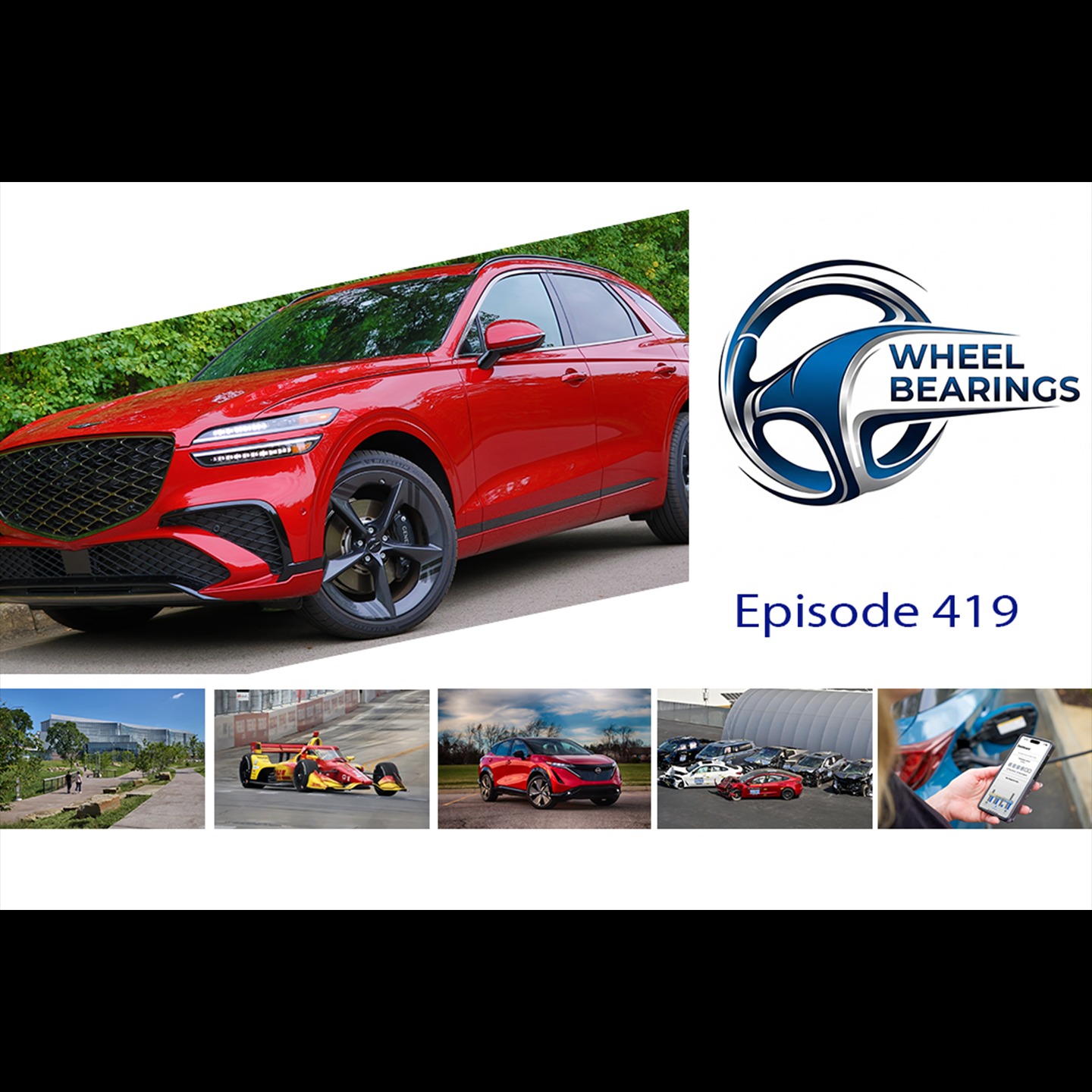
I had
the 2026
genesis gv70 3.5
t sport prestige all wheel drive
again too much name
too much name
so this is the
this is the top of the line
top of the top of the line
gv70
which
I have
liked the gv70
ever since it came out
there's two engine options available
two powertrain options available now
the 2.5 liter turbo
four-cylinder or the
3.5 liter twin turbo v6
and
the v6
is
I don't remember how much power
it has
that's it usually you always have everything ready
I'm the one who's like our horsepower v6
so 300
300 horsepower
is it 300? 300 and then
the 3.5 turbo is 375
okay yeah that sounds right
yeah so
you know the four-cylinder turbo
is plenty of power
300 is a lot yeah
but you know 375
is more
and this is a
quick little beast that's a little
I mean you know it's a midsize
two-row
it's in the same class
as say a BMW
X3
or
let's see an Audi Q5
something like that
so it's a two-row
five-passenger crossover
it's a rear-wheel drive
all-wheel drive platform
so the engine sits
longitudinally in the engine compartment
for 2025
I think I think last year
the GV70
got a mid-cycle update
where they
and over the last year and a half or so
most of the Genesis models have gotten an interior
update and most most of the update
is to the interior there's not really
anything notable changed on the exterior
but on the interior
they have
given it a significant upgrade
they replaced
the separate screens
with the infotainment screen that was sort of embedded
in the dash and then
the more traditional instrument cluster
displaying under a hood
with just the single
long curved panel
that we see on a lot of
the Hyundai Motor Group
vehicles now
although in this case here
there's
there are
let's see two
there's two 12.3 inch displays
in there
but there isn't
a seam
like you would see in a Hyundai
or Kia where it looks
like two separate displays and in fact
I think it's actually a single display
with the right hand side
of it being having a touch sensor
on it touch surface
on it and then the instrument cluster
area is
obviously no touch because it's behind
the steering wheel you don't need to be touching
that part
that would be weird
and they went to
the new center console
design with a rotary shifter
and then there's also
a rotary control knob
that you can use to
interface with the infotainment
as I said the infotainment is a touch screen
but you can also control it from the rotary controller
which
can be a little
more convenient sometimes
because it can be a bit of a reach
because of the way the touch screen
is set up there
and
it's got support for wireless
Apple CarPlay and Android Auto
the default
Genesis
system is also pretty good
one of the
couple of main differences
between the top two trim levels
of the GV70
and of course, oh there we go
like my screen just went black for a second
you're in troubles today
so there's the sport advanced
all wheel drive and the sport prestige
all wheel drive
I had the prestige
probably the most notable differences
between the two
are 19 inch wheels
on the advanced
versus 21 inch alloys
on the prestige
and also
there's Napa leather
upholstery
in the prestige
and the driver's seat in the prestige
also has an adjustable thigh support
which I always like to
I was just going to say
do you actually use the adjustable
thigh support? I do when it's available
because my
proportions
longer thighs
shorter calves
the way my body is
proportioned
my hip to knee length
is on the longer side
so I like having that little bit of extra support
under my thighs
I use that whenever
it's available
fair enough
the nice thing is
depending on the shape of your body
or how the seat feels to you
you have the option not to extend it
to ignore it, you don't have to use it if you don't want to
exactly
so the
GV70
it's a very attractive vehicle
as with all the other current
Genesis
the split lighting theme
so you get the split horizontal
headlights
in the front and then the split horizontal
tail lamps in the back
and that's a theme that they're extending
to their new race cars
inside
there's some carbon fiber trim
in here
there's also by the
media controller knob
there's a fingerprint sensor there
so
if you own the vehicle
I didn't have a Genesis account
set up for this car so I couldn't
program the fingerprint sensor
but
using the fingerprint sensor
you can start the car
without having the key fob on you
so that gives you another way to get in and out
there's also a bunch of
drive modes
and also
terrain modes
which there's off-road
terrain modes
with 21 inch wheels
and
low profile tires
you don't want it
there's no need for you to ever mess with the terrain modes
this is not the car to buy if you're going to go off-roading
no, definitely not
other cars, not this one
in fact
this is the car
I don't know if I mentioned it on the show last week
when this car
was delivered I walked out in the driveway
and I could immediately
see that the right rear tire was flat
oh right
and it on the way
to being delivered here it picked
something up and had a notable
gash in the tread
from the tread into the sidewall area
so I put the spare tire on it
and waited for
the guys from
DriveShop came over the next day
with another car
another GV70
that had been used the previous day
by some executive from Hyundai
who was in town for
a conference
and so
the wheels look really nice
they're these nice five spoke wheels
and they have two red stripes on each of the spokes
which gives it a little bit
a little bit sportier looking
they're a dark gray painted wheel
and then the red stripes just give you that
extra little accent there
so they look really sharp
but
I genuinely enjoyed driving this car
it's not
necessarily the most
fuel efficient car
out there with the 3.5 turbo
but it's not bad, I did about 22 miles per gallon
I had to drive back and forth to Detroit
a couple of times
the back seat
with the driver's seat set at my position
I had plenty of room in the back seat
so that wasn't an issue, there's good cargo space
one of the things
that they have on a lot of the
Hyundai Motor Group vehicles is on the
inboard side
of the front passenger seat
there's a couple of switches there
so that
if there's nobody sitting in the front passenger seat
somebody in the rear seat
can actually slide the front passenger seat
forward and back
or actually flip it downwards
if they want more room
so if this vehicle
is being used to drive people around
as opposed to driving it
you can do that
fairly easily from the back seat
so that's a nice little detail
for a luxury vehicle
what else?
one thing I did note
when I put the spare tire on
I pulled out the spare tire and put it on
the spare tire is actually also
a mini spare but it's an alloy wheel
it's not a steel wheel
it matches the rest of the wheels?
it's smaller
but it's still
an alloy wheel
which was an interesting detail
that's kind of cool
in sport mode
this is a genuinely fun
car to drive on some curvy roads
when you're using
your phone projection for navigation
normally
you can show
if you're using the built-in infotainment
and using navigation
you can flip through a couple of different modes
on the
cluster screen
and one of them
shows the map
so it shows the gauges
on top of the map
so you see the map with your route
right in the middle there
and then if you're using
Google Maps or Apple Maps
it will actually display
that map in the cluster screen
so you don't have to look away
plus with the heads-up display
that's on the Sport Prestige
it'll also show you the navigation prompts
in the HUD as well
and one other detail
when you
put it into
when you go through the different drive modes
in
comfort mode
the virtual needles
on the gauges
show up as sort of a
sort of an orangey salmon color
as you flip through the modes
when you go to sport mode
the needles turn to red
and then when you go to sport plus mode
they
go to
sort of a glowing
almost a fiery red
so if you watched any of the Star Wars
sequel trilogy
Kylo Ren
clearly whoever did this
design was a fan of Kylo Ren's
lightsaber
because that's what it looks like
it looks like this fiery
red
for the gauge needle
so it was a fun little touch
so you're saying red
and apparently I'm on to new movies
and all I could think of was
the new Tron movie that's coming out
Tron Aries and it's all red
all the blue lines from Tron turn red
so in my head it was Tron
and
the GV70 does not yet have
a hands-free driving mode
it's got the Hyundai Motor Group
Highway Drive Assist
which is a hands-on
lane centering and adaptive cruise
but it does have a driver monitor
camera on the
steering column so it's an infrared camera
so it will
give you alerts
if it detects that you're looking away
from the road for too long
or if you appear to be drowsy
or inattentive for some reason
or if you're having
a medical emergency
and you're not
watching the road then it will start
to give you alerts and eventually
bring the vehicle to a stop
if you don't respond
which is good
so the one
that I had
let's find the right tab here
was finished in mono red
paint which was a $650
option
and this is
a very red
not quite like
Sol Crystal red but a very attractive red
the only other option
that was on here
was the optional $30
NFC key card
so you can just put that in your wallet
and tap that on the door
when you're
ready to go
grand total
let me say
the base price
for a GV70
with the 4-cylinder engine
is $48,985
as delivered
the one that I drove
was $72,225
which is a lot
but that is a deal for what that is
if you compare this to
say
like an X3M
or an SQ5
which would have
comparable performance
similar size
those are going to be more expensive
so it's not an inexpensive car
but it is
a not
insane amount
given the segment that it's in
compared to its direct competitors
and these are now
the GV70s are now built in Alabama
they're built in Montgomery, Alabama
they started off building just the GV70 electrified there
and they've added the gas
versions there as well
so they're built in the US
so not as much
tariff
content
there's going to be some tariff
because 64% of the parts are still coming from Korea
right
but it's not
the full amount
so you want to guess at the destination charge
$14.95
so close
$14.50
I was really close
that's about as close as I ever get
I don't even win when Robby's not here
I still can't get it
so that's the
2026 GV70
I like that car
that car was on my list when I bought
my car
that was one of the ones I was considering
to be honest that was on there
were you considering the gas one
or the electric one?
it was going back and forth
I was uncertain
I had not gotten that far
but I was looking at it
that was part of it
it comes as gas or electric
so you can get either one when you get it
but that was on my list
so much I like that car
it's a really nice car
one of the nice things about the
EV version
is that the
the charge port is in the grill
which I love
either because it is funny
you drive up and having to back in
or having to pull in
if you could pull in and charge cars it would be easy
but backing up
I hate backing up the charging ports
you're always doing this like
am I straight or am I going to hit it
and sometimes there's random stuff
the actual units on some of them are very close
to the curb and others are a little further back
from the curb
how close am I to knocking over that giant
expensive electric thing behind me
makes me nervous
especially if you're going to
use a supercharger
most of the superchargers have very short cables
they do so you have to get close
having it up front
makes it a lot easier
you can usually reach it
I like that I think that's a great idea
I wish they just did that
I don't know why Nissan did that on the leaf
and then they changed it because now they have two ports
but the front thing
that was the way to do this everybody
alright
let's move on
so this week
the Center for Automotive Research
which is a non-profit organization
here in Ann Arbor
they've been
holding this conference this year
was actually the 60th year
of the management briefing seminar
and this year they moved it
they used to do it in Traverse City
every summer at the beginning of August
and in recent years
especially since the pandemic
that's been
more of a challenge
it's been more of a challenge for people to get
time off and get budgets to travel up there
so this year they moved it
to downtown Detroit
actually not so much downtown
it's actually in Corktown in Detroit
to the Michigan Central Station
which is a fantastic venue
I still need to get to see that
I have not been there yet somehow
I drove by it once I was like oh there it is
and I did not have time to stop I still want to see that
when you're in Detroit you definitely got to stop by
and take a walk through the lobby area
I've got to take a walk through because everyone says
it's just phenomenal
anyway the MBS
was at Michigan Central
and I did
a bunch of interviews with various people
which I'm going to save for next week because
both Robbie and Nicole are abandoning me
next week so
Patrons, Patreon supporters
they've already got it
they've already heard these interviews
but next week I will be including
these interviews in the show
and so that includes
a conversation with Michael Dunn
I love Michael Dunn, he's amazing
yeah we talked about China
and I also talked
with a couple of folks from
Brembo about Breaks
and
and Mike Dowsett
from
Magna about what they're doing with
he's the chief engineer
head of eDrive systems at Magna
so we talked about hybrids and plug-in hybrids
and eRevs and battery electrics
and what Magna is doing
so those will all be on next week's show
but for this week
I
didn't get a chance to talk to Gil Pratt
Gil Pratt is the
I've talked to him before and there's a couple of interviews
with him in the archives
somewhere but
Gil
is the
chief scientist for Toyota
and he's also the head of the Toyota Research Institute
and TRI does a lot of
interesting stuff
one of the things that he talked
about in his keynote this week
was some work
that they've been doing with behavioral
science
Toyota has long been
about trying to reduce
carbon emissions from vehicles
and
that's why they were the first to bring
a modern production hybrid to market
and this is why
apart from
the BZ
which is just battery electric only
every other model, all the other models that
Toyota currently sells in North America
have a hybrid powertrain option
and many of them are hybrid only
but they also offer
a couple of plug-in hybrids
and one of the challenges with plug-in hybrids
of course is getting people to
plug them in
because
you and Russell on a plug-in hybrid
we do
do you plug it in regularly?
we do actually, we trade off between
the Wagoneer
his car and if I happen to have an EV
for a press vehicle but we do plug it in
at home we do
we actually do
we bought our level 2
charger before we had any electric vehicles
so yes, we're in the minority though
because
a lot of people apparently buy plug-in hybrids
and then don't plug them in which is
kind of wasteful because now you've got
several hundred pounds of dead weight
that you're carrying around
which means you're going to have worse fuel economy
and your handling is going to be worse
you're not getting any benefit out of it
plus there's the wasted
materials and energy that went into
building that battery
and you're getting
worse fuel economy than if you just drove
a regular hybrid so
if you live somewhere
if you are not able to plug in
your car
don't waste the money on a plug-in hybrid
just get a regular hybrid
don't get that parrotard there's no reason to do it
there's absolutely no reason to do it
but if you do buy a plug-in hybrid
Toyota's been doing some research on how to
get people to plug it in more often
and what do they come up with?
well one of the things they came up with
was trying to
adjust
driver's behavior a little bit
that sounds scary
like you're going to
we're going to adjust your behavior
basically they're just
all they're really doing is
they're just trying to remind people
hey you got a plug-in hybrid
plug it in
and then you're going to save money on gas
because you're going to
both the RAV4 and the
Prius plugins
get 40 plus miles of electric driving range
which
that covers
more than 80% of
daily driving for Americans
80% of people drive less than 40 miles a day
so if you've got 40 miles of
electric range you plug it in every day
you're not going to use any gas
yep
Russ hardly ever puts gas in his car
in fact it periodically gets to a point when it says
you must use the gas
we're not letting you use the
use some gas for a change buddy
I'll plug in hybrids
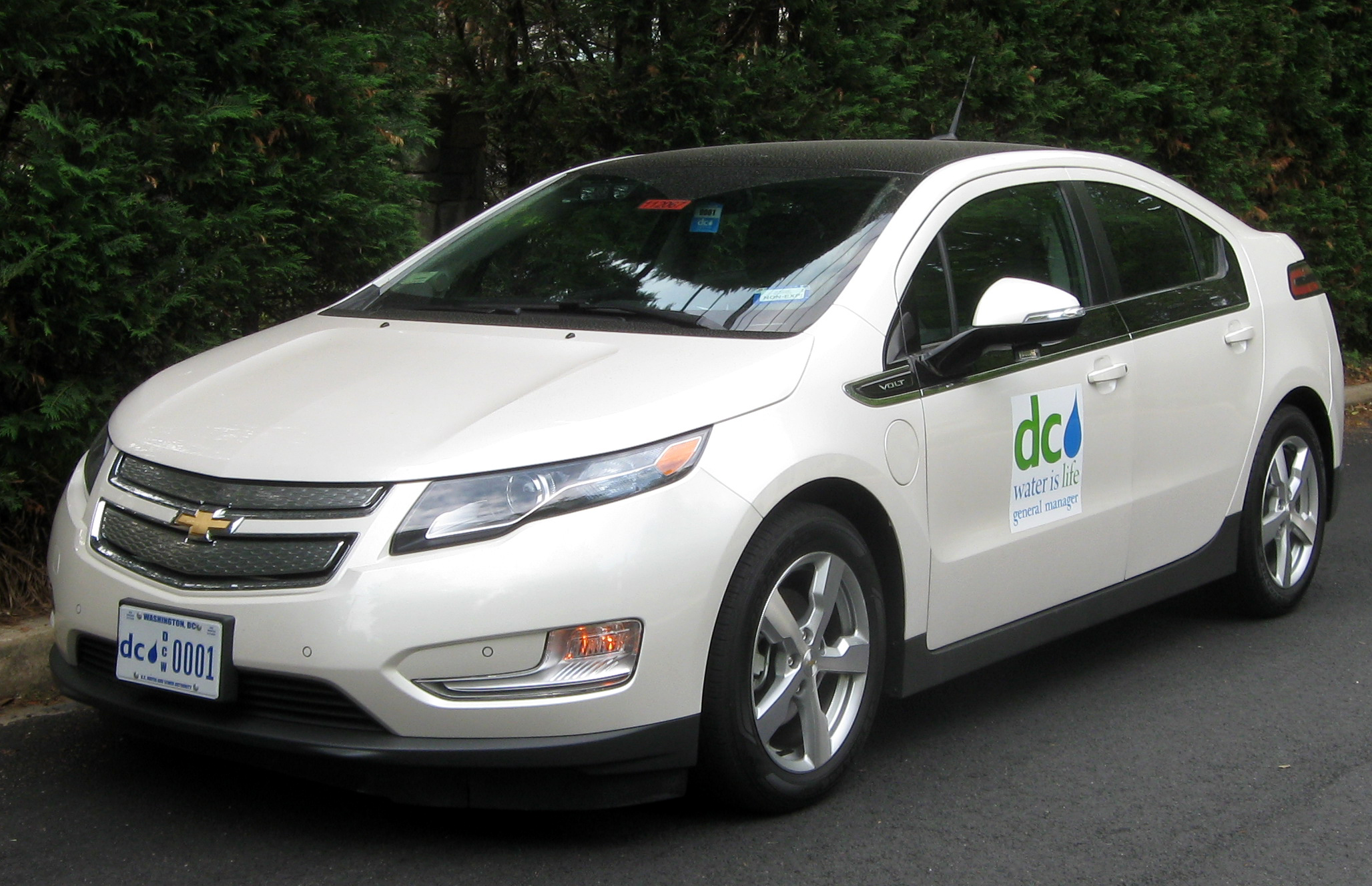
have what they call a maintenance mode
Chevy was first with this with the Volt
where
every once in a while it will run the engine
for a little bit with the goal of
being able
going through
at least one tank of gas a year
so you don't want
the gas sitting there in your tank
for a year or more
it's a good reminder not complaining
but that's how
how often he doesn't
use the gas engine is that it's like
hey you need to use that buddy
so what
TRI did was they came up with
a modified version of the Toyota Connect
app
and they did it with a couple of different
vehicles and some vehicles they had
the smartphone app
and others they had
the prompt in the car
so that when you
when you get in
when you park the car
when you're about to get out
if the battery level is low
it will prompt you
to plug in the car
okay that's fair
that's all it took
did it work
did it get people to actually plug in
it did
they had a control group
and they had a group that got these prompts
and
let me find
the numbers here
but they found that
with these prompts
that increased the charging by 10%
for plug-in hybrid drivers
it's not a huge amount
10% okay
it's better than nothing
okay so in the US
yeah charge up by 10%
in Japan
and drivers shifted to charging
to peak renewable energy
this is a different experiment
yeah that's different
so the other thing
that Dr. Pratt
talked about was
that
for years
we've been told it's best to plug in your car
at night
because that's when there's the lowest demand
on the grid
which is true
but
as more and more renewables
have been added to our
power generation ecosystem
and we've got more
especially solar
we've got a lot of
especially in places like California, Arizona
Texas
we often have a lot of excess solar capacity
available during the day
this past year
in California
from spring all through the summer
we've generally had more
solar
generation
capability
than demand
so basically
it's been almost 100%
solar use during peak
periods of the day
so you might as well
in that case
plug in during the day
when you've got that renewable
energy available
and then
so
in most cases that's probably going to be
workplace charging
if you're going out shopping
if you're not at work
but that sort of
behavior is better
because you can take advantage
of renewable energy
so what they found from that
was with both plug-in hybrid
and battery electric drivers
that the pumps
shifted
charging to
daytime charging by 59%
and added
about 30 minutes of daytime
charging per vehicle overall
which is significant
yeah that's definitely
definitely an improvement
and the
other thing that they found overall
was
by getting more plug-in hybrid
drivers to actually
charge their vehicles
so that they weren't using gas
as much
they found that the satisfaction
of American plug-in
hybrid drivers with their vehicles
increased by 16%
that's a pretty good
improvement
now these drivers realized
oh wow I'm not using any gas
so they were more satisfied with their cars
which is funny because it's like
all you had to do is plug it in to begin with people
but like remind people
that's a funny thing though
when you really think about it it's like
I'm going to go buy a plug-in hybrid
because if I plug it in I can just use
electricity and eliminate gas
dang it I'm still having to use gas
because you're not plugging in
it's such like a logic disconnect there
if you're not getting the satisfaction
you think try using the car
the reason you bought it
the way that it was designed to be used
I paid more for this thing
why am I not
getting benefits out of this
you gotta do is plug it in
you good
see
so some interesting
stuff that they found
and I think they're going to be rolling this out
to
their production
apps in the next year or two
probably
doing these just in time reminders
has had
a notable impact
relative to the control group that didn't get
the reminders
that's good
alright
how do you feel about
having all virtual buttons
having everything controlled through your touch screen in your car
I hate the idea
hate it
do you really hate it
I really hate it
I really hate it Sam
apparently more and more automakers
are hearing that message
because Mercedes Benz
is
they're one of the companies
in fact it was their head of software
that was speaking
with AutoCar at the IAA show
in Munich
it was Magnus
he acknowledged that
yeah
we're here in the message from our customers
they don't like
having everything being
touch controls
and they are moving back
to putting more physical controls in there
and it starts off with the new CLA
and the GLC
that they're launching this year
and
for those
because
the GLC
has this
coast to coast display
and they're starting with
putting more of the controls back
on the steering wheel
getting away from the capacitive controls
that they've had on the steering wheel in recent years
going back to
rollers and rockers
and buttons on the steering wheel
and in
upcoming models they will gradually be adding
more physical controls
back in the center stack
and other places
at least for the most commonly used
stuff because
they don't want to clutter things up too much
physical controls I'm all for
bring them back
bring them back
I don't know where we thought this was
everything in the
touch was a good idea
I was talking with
Adam Ismail from the drive
this week he called me up
for a story he was doing on this
and where
a lot of this came from
is starting with Tesla
when they did the Model S
they were trying to take cost
out of it because it costs a lot
to engineer all those physical controls
and then to manufacture
to assemble it that's a lot
of extra manufacturing complexity
to put all these pieces
together
and so
they
they also wanted some flexibility
to make updates and changes
when you do it as virtual controls
you can change the interface up
it doesn't have to stay the same
which in and of itself is not necessarily a good thing
because in the interface
that you're using to control the vehicle
you probably want it to be familiar
you don't want to be looking around
for stuff
but that's a whole other
issue
and then when they did the Model 3
and then the Model Y
they wanted to take it to an extreme
and eliminate the visible
vents in the dashboard
they wanted a very minimalistic looking interior
and then they did something stupid
that too many other automakers
yes we're talking to you Lincoln
and Polestar and Porsche
and now BMW
actually have copied
which is
having the vent controls
in the touchscreen interface
bad bad idea
but at least
Mercedes Benz kept the physical vent controls
so
I think last year
we saw Hyundai
do a mid-cycle update
of the Tucson and the
Santa Cruz
and they went from that
all-cutch center panel
to adding more
physical buttons back in there
Volkswagen is starting to move back to physical controls
so I think
hopefully this is a trend we're going to see across the industry
to find the right balance
in there between physical controls
for the stuff that you use most often
especially things that you're going to be using
while you're driving
and then having some touch controls
because part of the reason why we went in this direction
because we have
this is where iDrive started
25 years ago with BMW
they came up with the iDrive system
because there were so many features
being added into the car
that
the buttons became overwhelming
and
so they came up with iDrive
as a way to
try to find a balance
and it's kind of shifted too far
in the opposite direction of decluttering
so hopefully we'll see more
of this in the coming years
yeah that would make me happy
put the buttons back people
alright let's see
what was next on the list here
IHS
the insurance institute for highway safety
every year
they buy a whole bunch of vehicles
and they crash test them
they do all kinds of testing on these things
and
they've just done a round
of testing with seven different EVs
and
one of the things they do is
periodically they update the tests
they update the way they do the tests
because the industry follows
what IHS is doing
they want to get top safety pick
top safety pick plus
companies like Hyundai and Kia
they heavily advertise all the top
safety pick plus vehicles
the big deal
yep
and so the industry
doesn't want to get left behind
so as the tests are
done and they see that
they didn't do so well on this thing
they make design changes to do better
on those tests in future years
a notable one in recent years was
the small offset rigid barrier test
where
the vehicle is crashed into a rigid barrier
with where it's
set so that it overlaps
25% of the vehicle's width
so if the vehicle is
six feet wide
the barrier
will be overlapped by one and a half feet
when they first started doing that
about 10-12 years ago
most cars did really poorly on that
and that's actually a pretty
realistic test
very representative of what often happens
in the real world
because that's the moment
you see like oh my gosh you're going to hit someone
in one of your gears
and you're clipping each other
you're not like smack head on
you're partly head on
it's a really hard scenario
to design for
but cars have gotten
so much better with that
and so
what IHS does
every few years they update
some of the tests and raise the bar
make it tougher and tougher
and this year they
did a new moderate overlap
they updated their moderate overlap test
so they've been doing the moderate overlap for a while
in the past they only measured the impact
on the driver dummy
now they also
have a passenger in the rear seat
behind the driver
or at least a crash test dummy
behind the driver
not a real human they don't test with real people
and so now
you've got the impact
on two people
in the vehicle on that side
and
not everybody did so well on this
so they tested the BMW I4
the
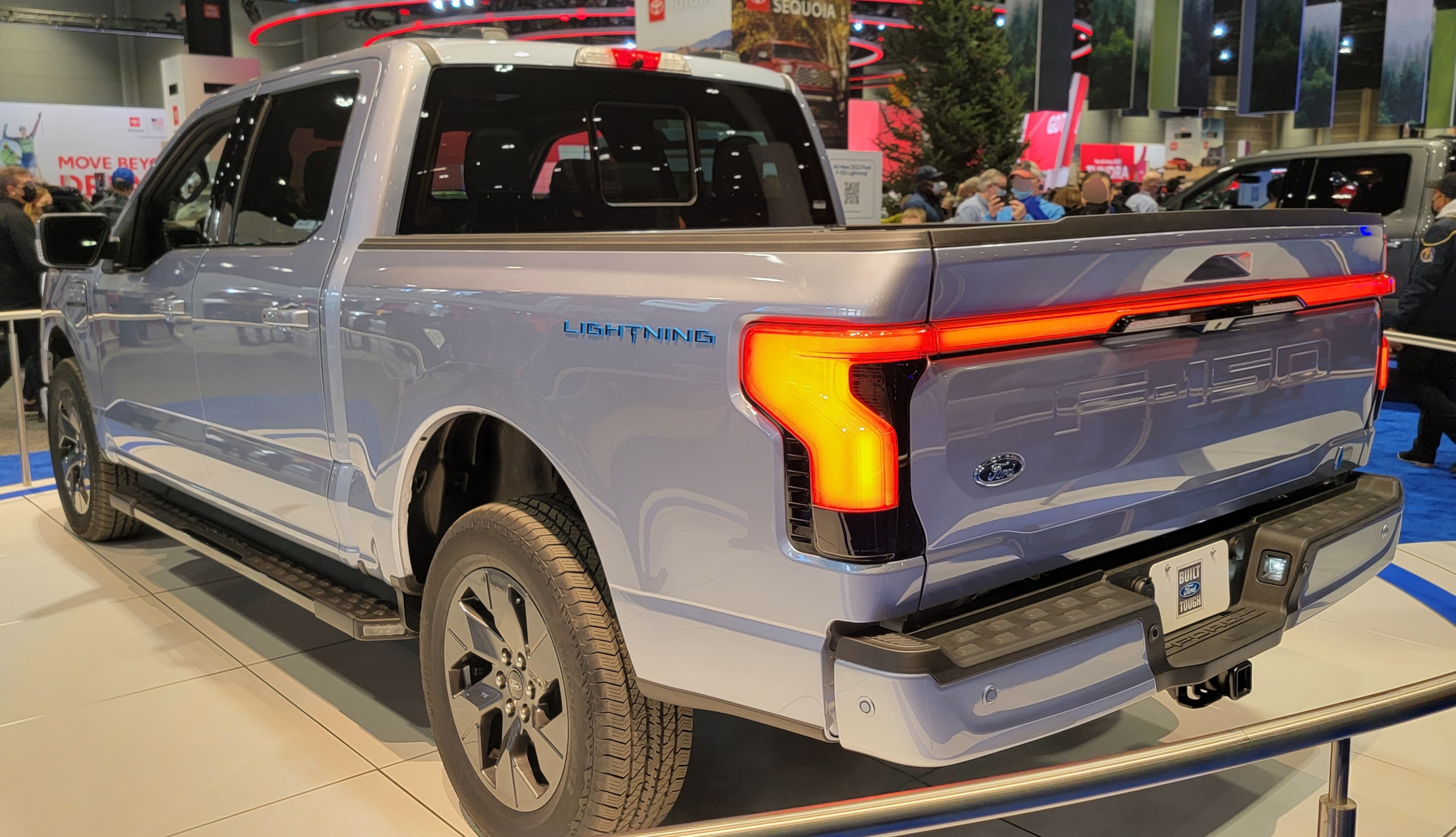
Blazer EV the F-150
Lightning
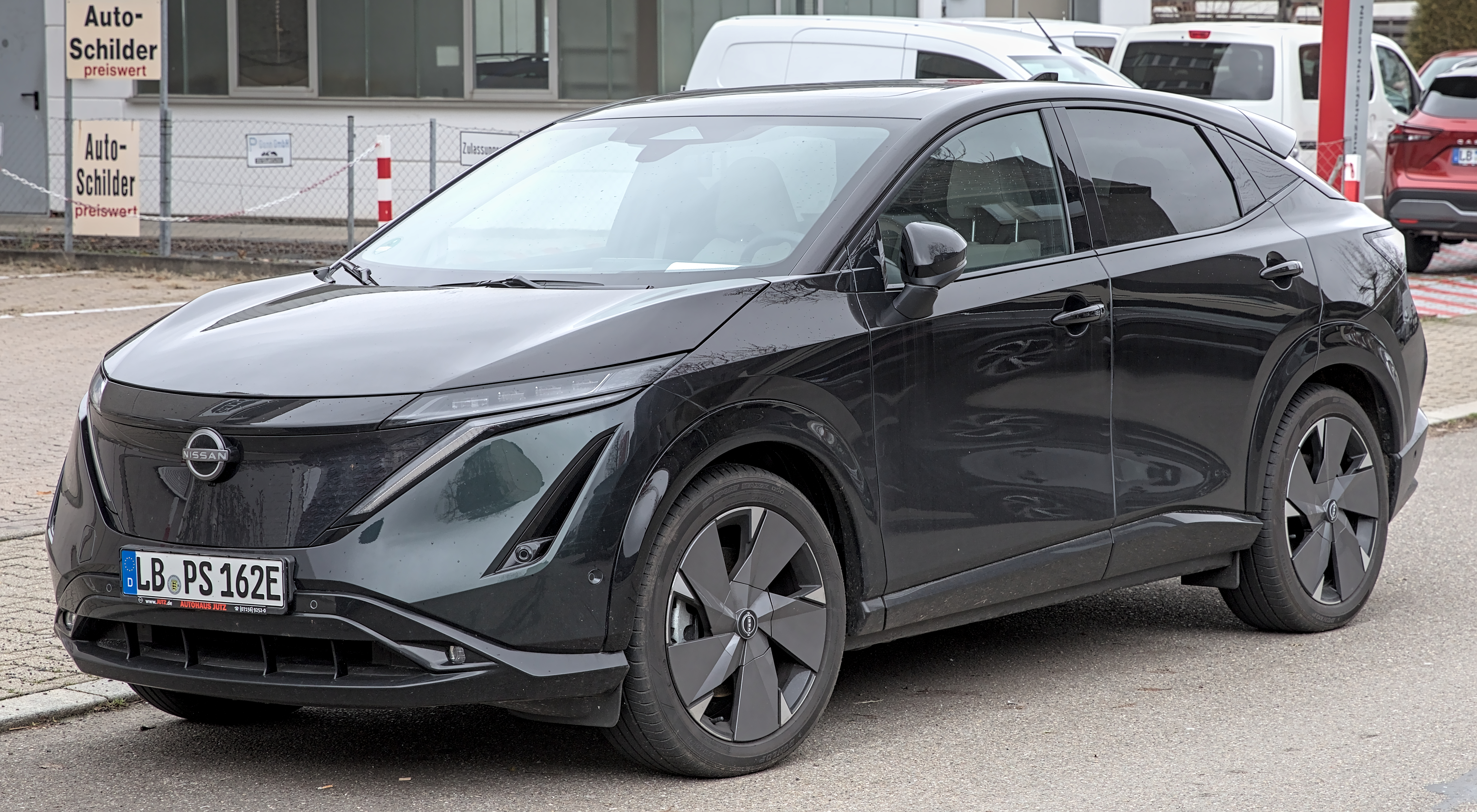
the Nissan Aria
the Cybertruck
Model 3
and the ID Buzz
the
the BMW
the Chevy
the Cybertruck and the ID Buzz
all got good ratings that's the
highest rating for the moderate overlap test
the F-150
Lightning got a poor
which kind of surprised me
yeah I know I was not expecting
that when I saw poor I'm like oh gosh
that like of these vehicles it was
it got the worst rating in the bunch
yeah
the I4
also
you know one another thing that they
evaluate is the headlights the quality
of the headlights the I4
depending on which trim level of the I4 you get
get different headlights
and on the base level headlights they got
a poor rating for that and a marginal
for the upgraded lights the Cybertruck
got a poor for its headlights
most of them got
acceptable
and so
check out the
the link in the show notes
you can see all of the test results
but definitely some mixed results
for all of these
which is
the thing is even now
where they've got
poor results if you compare these
to vehicles from 10
15 years ago a poor today
is vastly better
than the results would have been 10
or 15 years ago it's because
you're exactly right so if you look at this
you're like well I had a you know this old car
and it was rated great yeah but if you tested that older car
today it probably would not do well
because they're constantly sort of raising
the bar for what they want
automakers to do and that's not necessarily a bad thing
it encourages them to continue
to develop vehicles
that are safer to come up with
new ways to make it affordable
to build a car but still build a car that's safe
so I think it's a good thing as they sort of slightly
adjust these all the time it makes us all safer
honestly it was one of the reasons that I decided
to get rid of my last car
because it was a 2010
very low mileage nothing really wrong with it
but I just like gosh that is like
that is so old that like safety wise
that 2010 is
things practically new compared to my car
we didn't know what year is yours
your Miata 1990
yeah so yours is ancient mine was just old
yours is ancient 36 years old
yeah but like that
if you look at the technologies that were on those older cars
and you think oh well I used to try this all the time
yeah but if you knew what it had
if you knew them what you know now
the newer cars are so
so much safer so that even when cars
don't perform as well
they're still much safer than cars were
like you said 10, 15, 20 years ago
yeah and
according to IHS
the Lightning got a poor
for that moderate overlap test and Nissan Aria
got a marginal
in the case of the Aria
they said the restraints worked well
to control the motion of the rear dummy during the crash
but injury metrics showed a high risk of
chest injuries for the Lightning
measurements
you know both of them offered good protection
for the driver
but for the for the rear passenger
measurements taken from the rear dummy
showed a high risk of not only chest
injuries but also injuries to the head or neck
in addition to the rear dummies
lap belt moved from the ideal position
on the pelvis onto the abdomen which increases
the risk of internal injuries
wow so my guess is
that
probably
in the next year or so
I don't think that they have tested the
gas F-150
with
this new moderate overlap test yet
and you know it uses
it's got the same structure it uses the same
same belts and everything it's the same cab
you know and even though
the Lightning sales volumes are not
huge
I'm guessing that
Ford will probably do an update
to these systems probably
you know by next year
because a lot of times the automakers do
when they when they receive kind of feedback
on this the IHS
is like this doesn't work
this isn't quite what you thought they will adjust it
they're like as soon as we can fix this
we're going to go forward we have adjusted
this little thing or that little thing to make it
safer and they'll even sometimes have it retested
so that's how you get these things sometimes
what we'll say like
the 2025 measures this way but
2025 is built after
you know July 3rd
have this rating because they
literally change it if it's something they can change
they'll do it as quickly as they can
especially for safety stuff like this
yes
I'm going to skip down though
what do you think is going to happen with ARIA do you think anything is going to change
with the ARIA
I suspect that the ARIA
will probably not get any changes
and why is that
well actually I shouldn't necessarily
say that because
for model year 2026
which is starting
roughly about now
there will be no ARIA
in the North American lineup for Nissan
it goes poof
it was revealed this week that the ARIA
is going away it hasn't been a huge
seller for Nissan since it launched
although this year has been its best year
to date
but it hasn't
done particularly well but it's still going to be available
overseas
so it's still going to be in other markets
so we could see Nissan
make some updates to the ARIA
that's true
just because it's not here
we just won't benefit from it
we won't know it
it actually doesn't
really surprise me ARIA is going away
because it wasn't
doing well here it didn't get
I think the buzz and the traction they were looking
for when they first
announced it and first put it into
production but the new leaf
is getting incredible buzz
people really really like the new leaf
so it feels like a pretty solid
strategy I can see why ARIA
would go and leaf would stay
and Nissan only sold
9,345 ARIAs
last year in 12 months
which is not great
although through July of this year
they sold 11,600
but this year is such a weird number
because of all the
because the
tax incentives are going away
I feel like it pushed
stuff earlier
in the year
so I feel like this is a weird year to look at EV sales
because they were
heavily front loaded I guess
and you don't know what's going to happen after
it will be interesting to look at the numbers for the whole year
right and to see if they
literally fall off a cliff in September
which might even or after September 30th
which might even not necessarily mean
EV sales have really declined if they stay
whole it's just you wonder if they're just going to
like everyone bought them
where you might have had
somewhat more even sales over the course of the year
right you'll see it compressed
mostly into the first 9 months
into the first 9 months because we have now what
you have 9 days
9 days to secure
your EV
purchase and still take advantage
and September 30th is when it's
you have to have it all signed
on the dotted line
so you have to have a signed purchase contract and make at least one payment
by September 30th
so even if you haven't actually taken
possession of the vehicle yet on September 30th
as long as you've made the first payment
on your
signed purchase agreement
the IRS will still let you claim the
7500 bucks
so 9 days people
move it or lose it
yeah
and
just for comparison
with the ARIA
Ford sold
21,785
Mach-E's through the first 6 months
so that's
almost double the number of ARIA's
huge difference yeah when you look at that
I mean you see
that's huge you can see why they didn't
you can see why they didn't keep it
it makes sense it was a nice car
was decent enough but yeah you can see why
it didn't make it but I think the leaf
is going to have a very different
sales trajectory because
the way they've priced it
300 miles of range for the S-plus model
as we talked about last week
starting at
31 and change with delivery
it's going to be very interesting
to watch sales of
that and then the bolt
starting around the end of the year
beginning of January
and then as we get into next year
the slate
and then at the end of next year
the Ford truck
and I think we'll be seeing some other
lower cost EVs
coming to market as well
yeah I agree
Kia's got the EV3 and EV4
coming
Hyundai's going to have some additional
models so
you know I'm still
super excited about the leaf
I just
it was really good
I don't know what I was expecting
I think I thought well it's going to be fine
the leaf but it was good
it was genuinely good
I'm super impressed with this little car
if you're looking for an affordable
electric vehicle
goodbye leaf I love that thing
maybe you can get a Nissan dealer
to trade you for the wagon here
I could get two
alright
let's see
so let's stick with Nissan for a moment
yeah
as we've talked about
Nissan's having some challenges
with their business
sales globally have not been exceptional
they've been
losing a bit of money
and
earlier this year
they
replaced their CEO
their global CEO
with Ivan
Espinosa
who is formerly their head of product planning
he's now running the whole business
and
in addition to ditching the Aria
they
have also decided to
make some organizational changes with their
design studios
so
Nissan has
a bunch of studios around
the world
several in Japan
as well as
actually two studios here in the US
and in Brazil, in the UK
in China
and
they
they're closing two of the studios
Nissan Design America
in San Diego
which is, I mean that one's been around
for
decades, this is at least the 1980s
I think maybe even back to the 70s
and they're also closing Nissan Design
Latin America and Sao Paulo, Brazil
so they're shutting down those
studios
Nissan does have another studio in LA
which they call Studio 6
which has been an advanced creative studio
which is focused more on
exploring emerging consumer trends
with a focus on the evolving global lifestyle
and technology cultures
that shape the long-term
experiences of Nissan and Infiniti
that will become
the primary US design hub
so I think they're probably going to take
on some of the
responsibilities
of what the San Diego studio was doing
although I think
they probably won't be doing as much as what
was being done in San Diego
does that mean a lot of people are going to be out at Nissan?
Do you think so?
I mean I don't think it's a huge number
of people
and typically in these studios
you're not talking about thousands of people
right
the numbers are probably
I would guess probably
no more than a couple of hundred people
and
I think if they're going to take on some
of the responsibilities of the San Diego studio
you'd probably see some of those people
shift over to the LA studio
and some will go elsewhere
I mean it's kind of a sad thing
but it also
what makes me weirdly happy about that
is knowing that Nissan is having
trouble
but you're happy that Nissan's having trouble?
No, knowing that Nissan's having trouble
I'm happy to see they're taking action
to try to get themselves out of it
knowing that Nissan's having trouble
knowing that they need to do something
knowing that things have to change
I think it's a sad thing
they're laying people off
they're closing studios
but I'm happy they're doing something
they're not just sitting
and waiting for
the winds to change and suddenly for it to get
better
That doesn't usually happen very often
It does not but sometimes companies just sit around
and wait for it and don't really do anything
and I feel like Nissan is trying to do stuff
so a lot of credit to Nissan for actually
doing something
All right
Hyundai
had
Investor Day in Seoul
this week
and they talked about a whole bunch of stuff
they unveiled their
bold 2030 vision
and their product roadmap
and
that included a number of things
they are doing an expansion
of the plant
near Savannah, Georgia
which will add production capacity
and additional 200,000 units by
2028
so that will put that plant
at about half a million units
of capacity
and
no mention of
how
the recent
immigration raids
might have an impact on this
but it sounds like
they are moving forward
they are having conversations
with
the US government
about
because
whenever companies start
new factories or do expansions
or do retooling
they typically will send over some of their
people from the home office to
work for a while overseas
to help with
things like installation
calibration of equipment
getting things up and running
and
this was the issue
a few weeks ago
when there was an immigration raid
at the adjacent battery plant
near Savannah
which is a joint venture of Hyundai and LG
and actually
at the management briefing seminar
this week Bob Lee
who is the CEO of LG Energy Solutions
North America
actually did address this
beginning of his keynote
he took a couple minutes to talk about this
and said
they are in active talks
with US authorities
to make sure that going forward
they have the right
paperwork for everybody
to make sure there's no issues
with any of this
it's important to make sure that you're going to bring a whole bunch of people over here
a clerical area
and have what was it
400 and close to 500 people
that were somehow
their papers weren't right
and I'm like okay guys I feel like I should be able to figure this out
yeah I know
it's unfortunate
it's unfortunate the way the whole thing was handled
you know
with a company
with companies like LG and Nissan
Hyundai
that are investing tens of billions of dollars
in the United States
instead of just going in
and
taking people that are just doing their jobs
and
cuffing them and putting them in cages
for a week
before finally letting them go
and flying home to South Korea
maybe
sit down with management and figure out
what's wrong, what do we need to fix here
to get through this
do we know they didn't ever talk to anybody
it doesn't sound like it
you know it sounds like
well I guess Jose Munoz
who's the CEO of Hyundai Motor Group
acknowledged
that
he's in charge of all this
he said
he was not aware of the raid
until he saw it on the news
well I can believe that
they're not going to tell you they're going to raid you
if you have an immigration issue
so he was not aware
that there was any issue until he saw it on the news
yeah
anyway back to products
last week we mentioned
the IONIQ 3
which was shown in concept form at IAA
that's
going to be going into production
for Europe
no mention of us
ever seeing that here unfortunately
of course not
they're also doing
locally designed EVs
for
India
and then a couple of new models
that are being produced in China
for the Chinese market
their first EREV models are going to launch
in 2027
with more than
600 miles of range
no word on what these are
or what vehicles these will be
just that they're coming no idea what they are here
my guess is
we might see perhaps
an EREV version of something like
either the IONIQ 9
or the Palisade
those larger vehicles
are the most likely to go EREV
they expect electrified vehicles
to reach 3.3 million units
by 2030 including
more than 18 hybrid models and a comprehensive
EV lineup
and that's global sales
3.3 million global sales of electrified models
and then
expanding into new segments including
mid-sized pickup trucks and like commercial vehicles
and there will apparently
be a mid-sized pickup
coming to the U.S. market
mmm
that will be interesting I mean curious to see that
yeah
and then some next generation
battery technology that is debuting
next year
and
Genesis is also going to be
adding EREVs and hybrids
to their BEV powertrains
for the complete lineup
their flagship SUV
the GV90
is expected
to be the first one to get
an EREV powertrain
oh cool
and they're targeting annual sales for Genesis
of 350,000 units by 2030
what are they at right now do you know what the current is
I think it's
probably somewhere around
175
that's a lot
but it's also
considering how strong Genesis has been
with their offerings and is their name
get some recognition because a lot of people
still really don't know who they are
I think it's doable
and they can keep introducing good
products and new products and increasing
the variety of options for people
I think they could do that
I think that is absolutely
possible given
all three
Hyundai Motor Group brands
Hyundai, Kia and Genesis
have been
doing steady growth for years now
almost every quarter
they've got year over year growth
and
I don't see
based on what we're hearing so far
I don't see
any reason for that to let up anytime soon
it would have to be a gigantic fumble
on their part to really
see that go the other direction or to stall
they've got
fantastic products across the range
there's really
nothing right now
in the Hyundai lineup
that
is really kind of weak
no it's a pretty good lineup
pretty much everything they've done
has been a hit
so we'll see
we'll have to see in five more years
a couple weeks ago
I had a chance to
have a conversation with David Salters
who is the president of
Honda Racing Corporation US
unfortunately I had a
technical issue
with the recording
so I can't
include the recording on the show
otherwise I would that was my plan
but we had a really good conversation
about
how Honda is using software
in its race cars
and
you know we focused on
two main areas probably the two
areas that HRC US
is focused on which is
their IndyCar program
and then also
their GTP car
which follows the LMDH
rule set so it's a prototype
endurance race car
it's the Acura AR-X06
in that class in the LMDH class
there
there's some
the rules specify some basic
dimensions for the cars
they have some aerodynamic regulations
for how much downforce
they're allowed to generate
and then
they're allowed to use
whatever engines they want
so the engines are open
it doesn't define
displacement or configuration or anything else
what they do have though is a
spec hybrid system
so they have to use the same
motor generator
unit and gearbox
and battery
on all the LMDH cars so right now
the LMDH class includes
BMW
Porsche
with the 963
Acura
and
what else is in there
Lamborghini
there's
seven different ones
and there's three more coming
Genesis is starting next year
they're testing their car right now
in 2027 Ford and McLaren are both
joining LMDH
and oh Cadillac
I forgot Cadillac that was the other one I was trying to think of
so there's a whole bunch of manufacturers
participating in this
and they all have very different looking cars
and very different engines
Cadillac's got a big naturally aspirated V8
Porsche and BMW
and Lamborghini
are using turbocharged V8s
Acura
has
a turbocharged 2.4 liter
V6
they all have the same hybrid hardware
but they're allowed to do whatever they want
with the electronics and the software
and so
what Acura is doing
is
they're actually using
the ECU
the powertrain ECU from the Formula 1
program which has a lot of
extra computing capacity
and so they have a whole
team of software engineers
and Honda has always been
about motorsports right from the very beginning
back in the 1950s
so Kiro Honda
got involved in motorcycle racing
and Honda has been involved
in motorsports ever since
and it used to be that
they would regularly rotate engineers
through the motorsports
programs you know spend a few years doing motorsports
and come back to production programs
they don't do that so much anymore
because motorsports has gotten
so specialized
but what they do is they have
an annual tech conference in Japan
and they bring in engineers
from Honda operations all around
the world including race engineers
to present some of
the stuff they're doing and you know they've had
last year they had
engineers from HRC US
present about what they're doing with the LMDH
program and with the IndyCar program
in Japan
and sharing that
knowledge with the production engineers
so
in the
Acura
the endurance race car
they have
the core software that controls
the hybrid system but it doesn't just
control it for fuel economy
or anything else like that
like production hybrids do
but they're actually running
a simulation model
alongside the control software
side by side in the same ECU
so it's running simulations in real time
as the car is driving
as it's being raced
and sometimes making adjustments
to some of the control
to optimize the control
and
the software team
is doing
software updates releasing software updates
to the race program
sometimes
multiple times a week
and even during the course of a race weekend
they will
release software updates
based on the data they're getting
they'll make changes and then push that back
into the race cars
and
if you look at the steering wheel
of a modern race car
there's a picture in my
story that I wrote
of the cockpit of the ARX06
on the steering wheel
there are 20 different buttons
and then more
off to the side
that takes our I like buttons
thing a little bit too far
yeah but the thing is
typically in endurance racing
you will have
two or three drivers that share the car
and not all drivers like their car
set up exactly the same way
and in the past they always used to have to
find a compromise
between the setup for different drivers
that everybody could get along with
some drivers
like it to be a little more tail happy
some drivers like it to a little more understeer
and so what they can
do now with the software is the drivers
can make adjustments
as they're driving so
the system, the control
software even when it's not being
manipulated by the drivers
they've got high precision
GPS on the cars
and the system will change
the way it's controlling the hybrid
system from corner to corner
so
if it's a long sweeping corner it'll control it one
way if it's a tight corner because it knows
where on the track the car is
and it will make adjustments and they're using the hybrid system
to do things like preloading the differential
to change the handling balance
and changing the brake by wire
control to change the front to
rear brake balance and doing all kinds of
cool stuff with it
and then the other thing
we talked about was the IndyCar program
where Honda
and Chevrolet collaborated
on developing the hybrid system for the
IndyCars and there they don't get
quite as much freedom
they can't
be changing the software
for the hybrid system
the way they do on the prototypes
but
different drivers are using the hybrid
system in very different ways and this year
Alex Palau who won the IndyCar championship
he won 8 out of 17
races and
he clinched the championship with
3 or 4 races to go
he
Salters was talking about the way
that Palau was using
the system versus the way some other
drivers are using the system
harvesting energy
to
into
on the IndyCar because they didn't have
enough room they don't actually use a battery
they use supercapacitors for energy storage
and it's all
the whole system is packaged into
the
bell housing in the back of the car
with the clutch
and
Palau
he seemed to really
be able to utilize that software
and use the settings that he
had available to him
to really get the most out of the system
more so than any other driver because there's been
some drivers that really complain that they don't like
the system very much but Palau
he just flew away
he just ran away with this year's championship
with the way he was using the car
using the system that's very cool tech
that's a really neat way to make it
to give everybody what they want
yeah
alright
so this past week was the 10th
anniversary of dieselgate
has it really been 10 years
yeah 10 years
10 years ago that I got a call from a reporter
saying
so there's this
thing with Volkswagen
and their diesels and the EPA
and the EPA is not happy
and
so I had to start doing some
research to find out what the hell was going on
that was crazy
over the next year
and a half
Volkswagen got sued
by everybody everywhere in the world
everybody you could hire a lawyer
cause they
had been cheating on their diesel
or emission controls
they had been advertising
for years clean diesel
and
my wife and I bought a Volkswagen
diesel we bought a Jetta TDI sport wagon
and
turns out it wasn't so clean
I knew people
who did the trade
cause you were offered money
for your not clean diesel
that you thought was a clean diesel
that actually were sort of thrilled
either they were thrilled because they got way more
than what they thought
or they were horrifically bummed
cause they really just wanted the diesel
and didn't care so much about the clean
bar
and they were just like I like it the way it is dang it
I don't want to have to trade it in
you didn't have to sell the car
you were allowed to keep it
but then you had to get updates to the car
to make it compliant with the regulations
which reduced the performance
in the fuel economy
exactly they just wanted it
I like it how it is I don't want you to mess with my car
and that like you said was not an option
you had to
you had to get things changed up with your car
you had to trade it in
we took the buy out
I remember driving
it doesn't feel like it was very long before dieselgate happened
Audi did a whole big
diesel program
in Washington DC
and we all had white Audi's
and they all had a decal
a low along the side that was like
Audi's clean diesel
all these pictures
I got a lot of mileage out of those pictures
when that scandal broke
we were just going to use the pictures I have of that
as the header image forever
yeah
back in
2008 in the fall of 2008
when Audi was getting ready to launch their
quote unquote clean diesels
they did a drive program
usually when they do media drive programs
they bring people in
to some location for a day
you fly in you drive the car the next day
and then you fly home
for this thing it was a two week program
where
we drove across the country from New York
to Los Angeles and they
everybody was on waves
of three or four days
I actually did
ended up doing two waves I did so I was on this
for a week so we drove from New York
to DC to Cleveland to Chicago
to Memphis to Dallas
to Amarillo and then
I flew home from
Denver
and then the second week ended up going all the way
to the west coast
and they had dozens
of Audi Q7 diesels
and that was
a shockingly expensive
program for Audi
they spent a lot of money promoting clean diesel
they used diesel engines
in their Le Mans race cars
won
the 24 hour Le Mans multiple times
the world endurance championship
and then when diesel gate happened
they canceled that entire racing program
and went into Formula E
Volkswagen Group made a huge pivot
towards electrification
designing
all kinds of new EVs
part of the settlement that
Volkswagen of America did
with EPA and the California
Resources Board
was they had to invest 2 billion
dollars in charging
infrastructure and
the result of that was electrify
America they built
electrify America with that 2 billion
dollars
and now a decade on
at that time
diesels were
still really popular in Europe
in a lot of European markets
like in Italy and in France
diesel engines were
had like 70-80% market share
and even in Germany
it was over 50% market share
and I was just
looking up
the numbers
2025
as of
July of this year
gas vehicle registrations
through July
in Europe had declined by 20%
from the previous year
and
gas vehicles
accounted for 28.3%
market share
in Europe this year
compared to 35% last year
diesel
dropped from 26%
last year or dropped by 26%
to just 9.5%
wow
through July of this year
diesel got hammered by this
it so did
this was like the kiss of death for diesel
this entire situation
with what happened with the Volkswagen group
I remember back in the late
2000s they were
projecting that
with clean diesels
that diesel would get
like-duty diesels would account for
somewhere between 10-15% market share
in the US
by 2020
yeah no
no
not so much
never got past about 2%
before it went away completely
basically the only
one of the only light duty clean diesel
one of the only light duty diesel
still available in the US market
is the GM
3.0L inline 6 that they have in the trucks
in full size SUVs
that's the last one
everything else is pretty much gone
that was a huge impact far beyond
Volkswagen
entire
scenario
everybody
dropped their diesel engines
yep
alright
let's see
sticking with VW
for a moment
we mentioned tariffs earlier
apparently Volkswagen
is going to increase prices
on most of their imported
Volkswagen's
by nearly 7%
from all year 2026
yikes well I think we knew this was coming
though you know
yeah it was more a question of when not yet
right exactly
exactly so we all knew
that was going to happen it was just that was
again the sort of rush that people were having
I mean you even saw as I want to say it was
was it Mazda?
someone actually advertising you know
tariffs have not affected
impact of our vehicles
or on lots today kind of thing
everyone was trying to buy it out
or you know you're in trouble later
we can't guarantee what it's going to be in another
two months so here you go
so far
Audi is only raising their prices
by 3.7%
that's not bad but that's
an increase of as much as $4,700
compared to a model year 25
it's a chunk of change extra
it's going to add on
it's not
$4,700 that's going to
change it's going to either you can't
get it or you got to go down to trim
that's a trimmer too depending on the vehicle
well the base
Jetta S is up by
$1,050 for
$26 compared to $2025
and
the Taos crossover
is going up by $1,055
for the base trim
see
the Atlas
which is built in Tennessee
is only going up by
3%
yeah so
things even though it's and that's the interesting
thing about it like you know some vehicles
aren't made here some vehicles are made other places
even for the same automaker
they have multiple plants so it's not like they're
only going to necessarily up the price
on the one that technically comes from another country
they up the price of a lot of them to
sort of keep any of them from getting
prohibitively high you know
well also
even for those that are built they're assembled
here you know they're often using
a lot of components from
outside of the US like you know the
powertrains for the Taos
or for the Atlas
are you know VW doesn't have an engine
plant here in the US so
you know engines and transmissions come
from overseas
yeah it's a very it's
incredibly complicated
situation because of the fact that cars are made up
of more than a few parts
more than a few places
many thousands of parts
thousands and thousands of parts
alright Ford
is moving their world headquarters
they announced this week
that they are going to close
and demolish the glass house
which has been their
building in Dearborn that has been
their world headquarters since 1956
I used to work there
did you really? I did
I worked in the building
for
about a year and a half before they moved us
across the road to another building
but still spent a lot of time
there I spent a lot of time in that building
over the years
and so Ford
has been building a new
they've been essentially revamping
their product development center campus
for the last several years
so they
they demolished
their old design studios
their engineering center
and they've been
demolishing it in phases
and then building new
new buildings
so the new
product development center campus
now has about
2.1 million square feet
of space
and
2.1 million
square feet which is about
a little more than double the
950,000 square feet
in the glass house which is a 12 story
tower
the glass house is about
a mile and a half away from
the main PDC campus
and so now
everybody that was working in that building
is going to be migrating over
to PDC campus
excuse me PDC campus which is
much more modern
space
all the design studios are in there
fabrication shops
of conference rooms
individual workspaces
open concept collaboration space
and then
it's also right across the street
from their proving grounds
so it's just going to be a lot more convenient
for everyone
it actually looks much more modern too
the old glass house had this very like
hello 1950
it was a cool building
but it was very just a giant
rectangle essentially
and the new one has
an actual design to it
it feels more modern so I think
it's a nice but it still has a lot of
glass so it's sort of a nod
to the original in some ways
and it's nice that it's going to be so much bigger
it's going to be much more
modern in terms of
what people expect or hope to have
in an office space rather than what they were
just given in 1956
instead of mid-century modern
it's now going to be 21st century modern
21st century modern exactly
I like it I think it looks great
there were about 2,000 people that worked
in the glass house building
and the new building
has capacity for
4,000 people
and it's across the whole campus
including the research and innovation center
and the engine labs
and the track and everything
you're within walking distance
of about 14,000 employees
that work in that whole
campus area
and so
I'm actually
hopefully we'll get a chance to go through there
and get a tour of it
because it's opening up in November
I'm guessing that
we'll probably be getting an invite sometime
in the not too distant future to
get a look at it
but yeah I bet you will
yeah
but it's a shame
they're going to redevelop that property
they're working with the city of Dearborn
they're going to drop
bring the building down
and then
use that as open space
parkland and maybe some other things
going forward
they'll do something neat with it
they won't let it just be a mess
they'll come up with some other interesting proposition
for what to do with that space I'm sure
yep
so our friends over at TFL
we talked about earlier this year
when they bought
several of the members of the team there
including Tommy, Micah, Roman's son
and Case
and Tommy's father-in-law
all took advantage of this
insane lease offer that was available
to residents of Colorado
right it was crazy
Fiat was offering
a two-year lease
10,000 miles a year
on the 500E for
nothing down and zero dollars
a month
and
just go drive the car for two years
please
don't drive more than 20,000 miles
it's all good
so
the 500E is a nice car
it's a fun little car
if you don't need a long distance
road trip car
you just need a local
or regional commuter
it's great for that
at its MSRP
it's a little bit expensive
but for nothing
for two years
of course
no good deed goes unpunished
they published
video
they periodically do videos
with updates of what the TFL
has in their fleet
in addition to the press cars that they get loaned
they buy a bunch of vehicles
to use for longer term testing
and so Tommy did
their fleet update today
and he talked about the 500E
it's mostly his wife that drives it
it suffered
two stone chips
one of which they were able to repair
but the other one started to spread
before they were able to get it
filled
in the windshield
and
usually
these things aren't that expensive
to replace a windshield
back on that Jetta
when I had to get it
it had a crack that developed
from a stone chip
I think I paid
$250
safe light
replaced it right in my garage
and
it was no problem
the windshield for this Fiat 500E
pretty small car
tiny little car
how much did you figure that windshield cost?
like you said
$250, $300, maybe $400
if for some reason it was kind of pricey
it does have
front facing camera
for the forward collision alert
so you've got to mount that
that adds to the cost
okay let's go crazy and go 5
okay
$2,000
what the heck
I didn't have a chance to watch the video
although I saw about this
was there any reason why they said it was going to be
$2,000
to replace the windshield in a Fiat?
nope
I'm baffled
my guess is
probably has something to do
with
limited volumes of this car
in the US
they don't sell that many of them
they've got to report the windshields from Europe
and
there's probably
tariff costs associated with that now
so
that's nuts
but I think they're still making out on the deal
they've got, if you only paid $2,000
to repair the windshield
and you're paying nothing to have the car
to buy that over two years
your net is still pretty cool
you're still pretty good
you're still definitely coming out ahead
but if you have a 500e
if you get a stone chip in the windshield
get it repaired immediately
before it starts to spread
crack starts to spread across your windshield
just take it right away
and get it filled
because
you don't want to replace this windshield
especially if you didn't
get it for free for two years
I know if you didn't get it for free then you're just stuck
alright
last item for this week
is Stalantis
had a briefing call on Thursday
morning
to tell us about
a new battery design
that they came up with, new battery architecture
so typically
on EVs today
your
electric propulsion system
consists of your battery pack
your motors
a power electronics unit
which does the conversion back and forth
between the DC, the direct current of the battery
and the AC required for the motor
and then back
in the other direction when you're regenerating
to go from AC of the motor back to
DC for the battery
and then an onboard charger unit for
level 2 charging
which again takes your AC
converts it to DC for the battery
what the
team at Stalantis did
in partnership with
Total Energy
which owns SAFT, a battery manufacturer
as they came up
with what they're calling
IBIS
which is
uh
where is it now
integrated battery
intelligent battery integrated system
okay
and so what they
what they've done
is instead of having
a separate power electronics module
they have on each of the modules
of the battery
they've put a little
integrated a little inverter
right on the battery module
and you know
when you have the separate
power electronics unit
what happens is
when it's generating the sine wave
for the alternating current
you end up with a sine wave that looks
kind of jagged
it looks noisy
it's not a real smooth sine wave
and what happens from that
is that
you end up
it's less efficient
you lose efficiency from that
and
what they've done is
they've eliminated that power electronics module
they're doing the inversion
at each module
and they can control each module
independently
and then combine the outputs
of those
and because each module is
doing its own thing
they can actually
arrange it so that they're getting
a three phase AC output
from the full battery pack
instead of just a single phase
which overall makes the whole thing
the whole system more efficient
and each of
each of the modules is running at lower voltage
and it can generate a clean sine wave
a much cleaner sine wave
the bottom line
is that you end up
with about a 10% improvement in efficiency
you
have saved some volume
for packaging
the discrete power electronics module
they got about 15%
more range
out of it
they claimed to have reduced the cost
and also made it
safer
not just the upfront cost but also reducing
the total cost of ownership
because they can make the battery
pack last longer
because what happens
now is each module is controlled
individually each module is only
48 volts
whereas typical battery pack
for an EV is anywhere from
350 to 900 volts
and so when you're servicing
a battery pack a high voltage battery pack
you've got to have specialized equipment
specialized training and processes
to do any servicing on that
in this case
because each of the battery modules is only 48 volts
it's much easier
and safer to handle
so now if there's a problem
if there's a bad cell in there somewhere
they can go in and technicians
just at any dealer or service shop
can go in and pull out that one module
and plug in another one
and because they're all controlled individually
you can also
you can have modules
with different cells in them
different chemistries
so you can mix and match different chemistries
and balance it all out
through the
final control system
so it's a pretty slick
solution
they're hoping to have it in production
they did it first
on a stationary energy storage system
and now they have a prototype
running on
a Pujo E40-08
and they're
targeting getting this design
into production by the end of the decade
that's really cool
I love to see this sort of next gen stuff
coming up these things they start to
try to move EV technology forward
and improve on the things that were
that worked but weren't the best designs ever
you know it's neat to see
these kinds of evolutions happening
what do you think?
I think it's pretty clever
what will be
interesting to see
is
we're now starting to shift
towards structural battery packs
that don't have any modules
I asked them
if a solution like this
would be compatible with
a system like that and they said
they think they can make it work
with that type of architecture
because that's what's going to be
in the new, in the BMW
Neue-Class battery pack it's a structural battery pack
no modules
Ford's upcoming LFP battery packs
are structural like that
Tesla is doing it that way
a lot of Chinese are doing that
and so they say it should be compatible
with that
as well as working with things like LFP
or LMR
cells
so we'll see
it's
going to be interesting to watch
yeah I feel like
that EV technology needs to grow and change
so I think this is neat
like okay guys we can happen
alright I think that's all
we've got for this week
we do have one email that came in
from Andy from Melbourne
about the Tello truck
I'm going to save that one
for when Robbie's back because I think Robbie actually
has seen the Tello
so we will save that one
let's get Robbie's little opinion on that one
yeah
and he's definitely seen the slate
up close
I've seen the slate, that I have seen up close
but I think Robbie's the only one of us that's seen the Tello
so we will come back
to that one
in an upcoming show
yes
alright anything else
we didn't cover?
no that's it and I will see you not next week
but the week after I guess
yeah
and I'll be back next week with
a bunch of interviews
there we go
so stay tuned for that
bye everybody
About this episode
Reflecting on the 10th anniversary of Dieselgate, the hosts discuss its lasting impact on the automotive industry, particularly the decline of diesel vehicles in Europe. They also review the 2025 Toyota Prius Night Shade Edition, highlighting its unique color, performance, and the persistent engine noise that detracts from the driving experience. Additionally, they explore the Genesis GV70, noting its luxurious features and impressive driving dynamics. The episode wraps up with insights into Nissan's restructuring efforts and the latest developments in EV technology, including a new battery architecture from Stellantis.
In this episode, hosts Sam Abuelsamid and Nicole Wakelin discuss their recent experiences with the 2025 Toyota Prius Nightshade Edition and the 2026 Genesis GV70. They delve into the performance, design, and driving experience of these vehicles, highlighting the Prius's hybrid technology and the Genesis's luxury features. The conversation also touches on insights from the Center for Automotive Research conference, Toyota's research on plug-in hybrid user behavior, and the automotive industry's shift back to physical controls in vehicles. Additionally, they review the latest IHS safety testing results for electric vehicles, emphasizing the importance of safety ratings in the automotive market. In this episode, the hosts discuss the evolution of vehicle safety standards, highlighting how modern cars outperform older models despite mixed crash test results. They delve into Nissan's struggles with the Aria and organizational changes, while Hyundai outlines its ambitious 2030 vision. The conversation shifts to Honda's innovative use of software in racing, reflecting on the impact of Dieselgate on the diesel market. Volkswagen's price increases and Ford's new headquarters are also covered, concluding with Stellantis' advancements in battery technology.