The Nürburgring is a well-known race track in Germany where many cars are tested and raced. It's famous for being very difficult and is often used by car companies to see how their vehicles perform.
The Subaru Impreza GC8 is a sporty car that is well-known for its success in rally racing. It's part of the second generation of the Impreza model and is loved by car enthusiasts.
Lift-off oversteer is when you take your foot off the gas while turning, which can make the back of the car slide out. This is more common in certain types of cars, especially those with all-wheel drive.
The Nordschleife is a part of the Nürburgring racetrack that has many turns and is very challenging to drive on. It's famous for being difficult and is often used to test cars.
Formula 1 is a type of car racing that features very fast cars and skilled drivers. It's one of the most popular and exciting forms of motorsport in the world.
Aston Martin is a brand that makes luxury sports cars. They are known for their stylish designs and high performance, often featured in movies like James Bond.
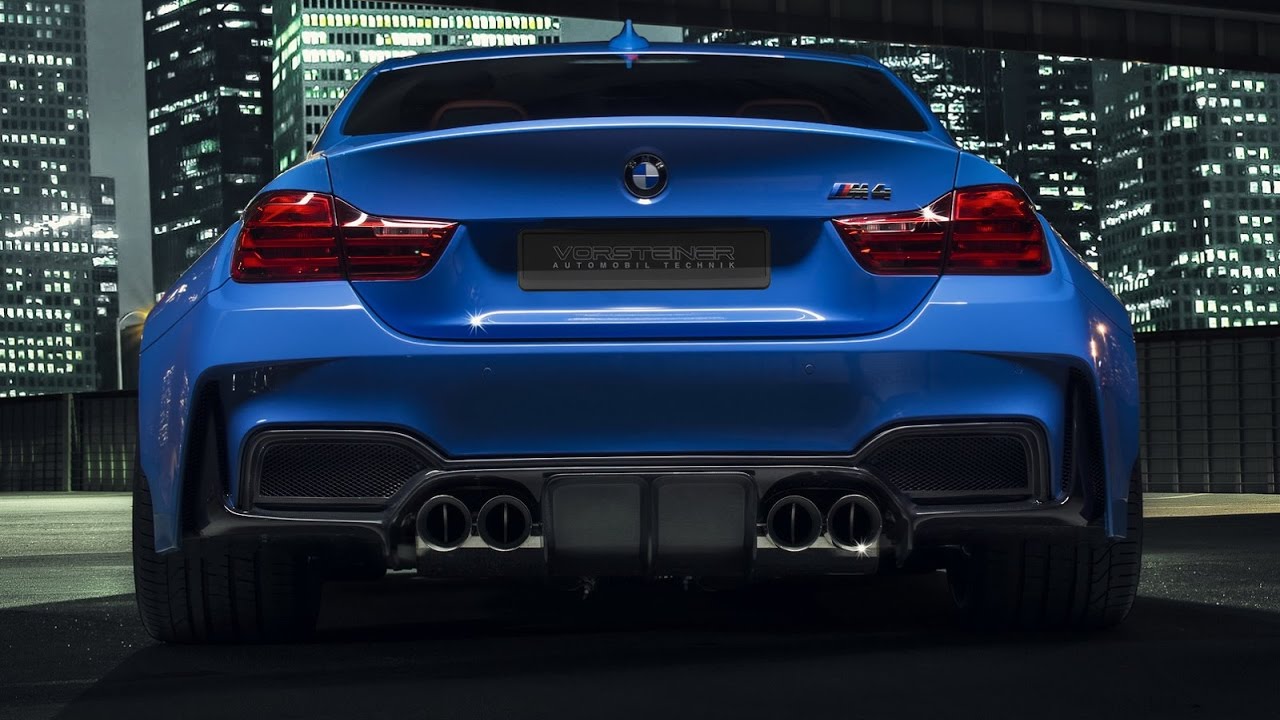
The BMW M4 GT4 is a special version of the M4 car made for racing. It's built to be fast and handle well on the track, making it suitable for professional racing events.
The Mazda MX-5 is a small, sporty car that is very fun to drive. It's known for being light and easy to handle, which makes it great for racing and enjoying on the road.
GT Revival is a video game that lets players experience racing cars, similar to other racing games. It will probably feature real tracks like the Nürburgring for players to race on.
The Mercedes-AMG GT Black Series is a super-fast version of the AMG GT sports car. It's built for racing and has a lot of power, making it very exciting to drive.
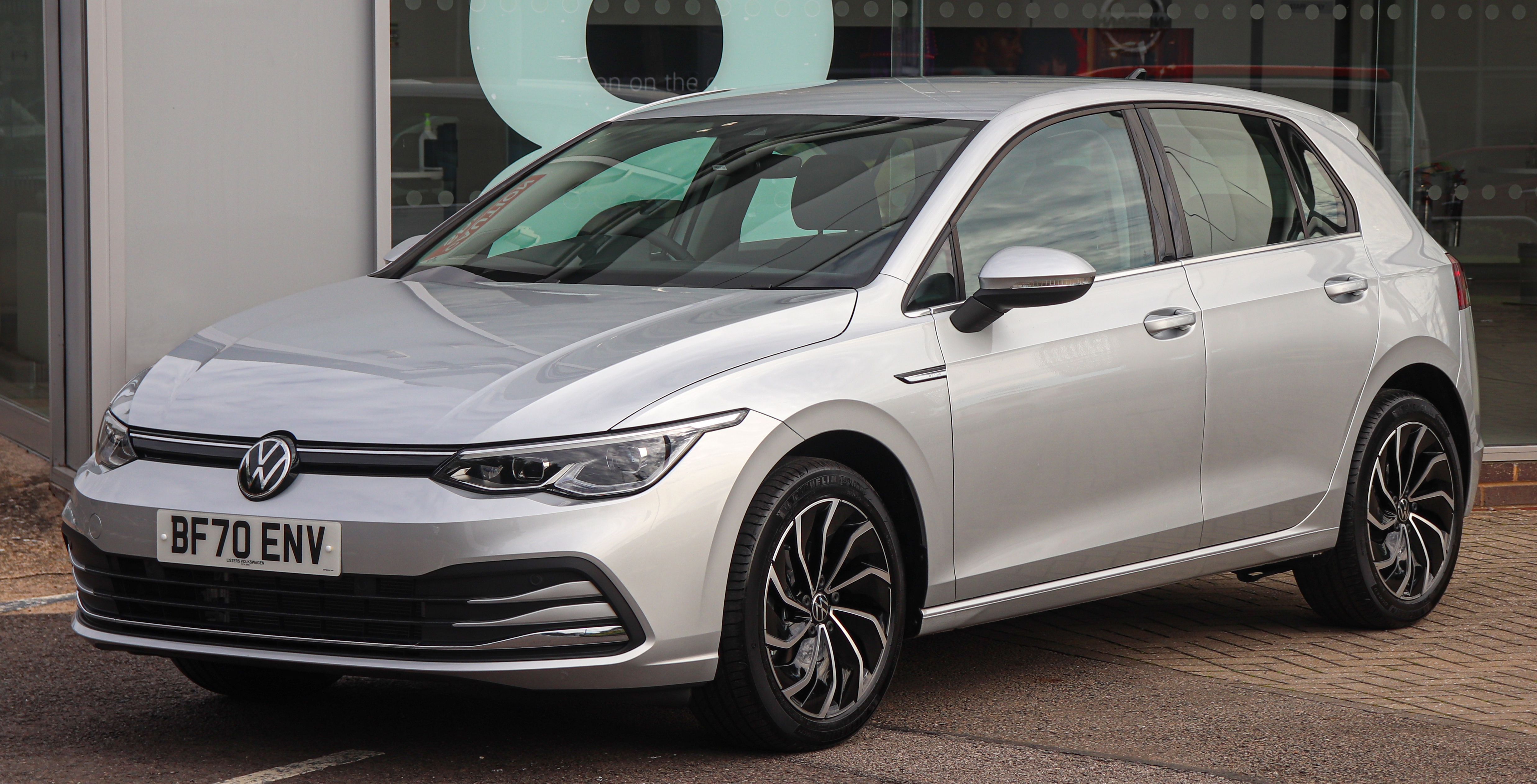
The Volkswagen Golf is a small car that many people like to drive because it's easy to handle and has good features. It's been around for a long time and comes in different versions.
Brakes are the parts of a car that help it slow down or stop. Cars that are made for racing often have special brakes that work better under high speeds.
Armco is a type of metal barrier used to keep cars safe on racetracks and roads. If a car hits it, the barrier helps to prevent more serious accidents.
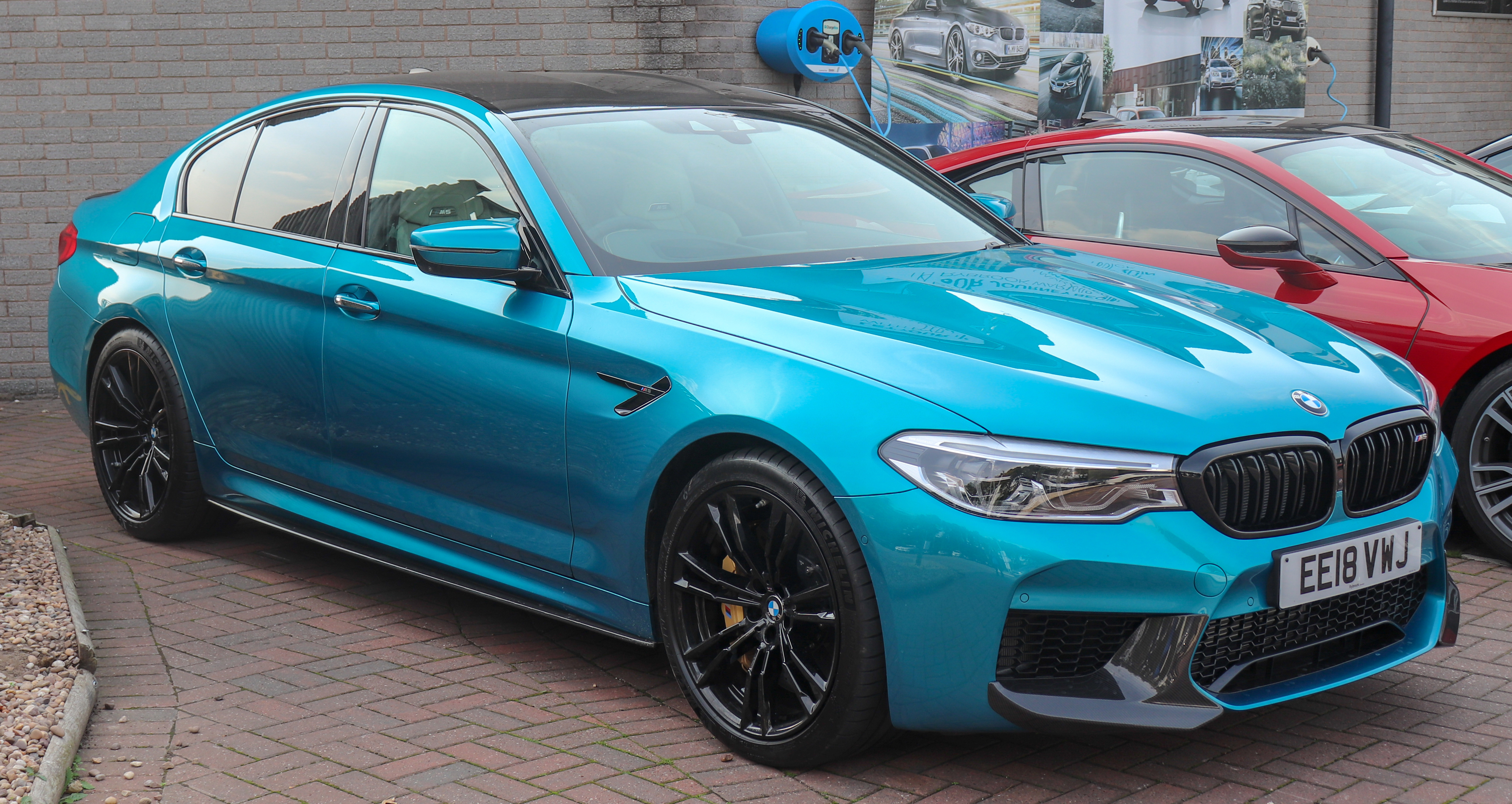
The BMW 5 Series is a fancy car that people often buy for its comfort and style. The E39 M5 version is especially popular because it’s fast and fun to drive, but there was a famous story about it having some engine trouble during a race, which shows how even great cars can have issues.
Electric power means using electricity instead of gasoline to make a car go. Electric cars are often faster and quieter than regular cars and are better for the environment.
Battery technology is about how batteries are made and how well they work in electric cars. Better batteries mean electric cars can go further and perform better.
The Volkswagen ID. Buzz is a new electric van that looks like the classic VW bus from the past. It’s designed to be eco-friendly and has lots of room inside, making it great for families or anyone who needs extra space while driving without using gas.
LIVE
The holidays are expensive. You're paying for gifts, travel, decorations, food, and before you know it you've blown way past what you were planning to spend.
Don't start the new year off with bad money vibes. Download Rocket Money to stay on top of your finances.
The app pulls your income, expenses, and upcoming charges into one place so you can get the clearest picture of your money.
It shows how much to set aside for bills and how much is safe to spend for the month so you can spend with confidence.
No guesswork needed. Get alerts before bills hit, track budgets, and see every subscription you're paying for.
Rocket Money also finds extra ways to save you money by canceling subscriptions you're not using and negotiating lower bills for you.
On average, Rocket Money users can save up to $740 a year when using all the app's premium features.
Start the year off right by taking control of your finances.
Go to RocketMoney.com slash cancel to get started. That's RocketMoney.com slash cancel.
RocketMoney.com slash cancel.
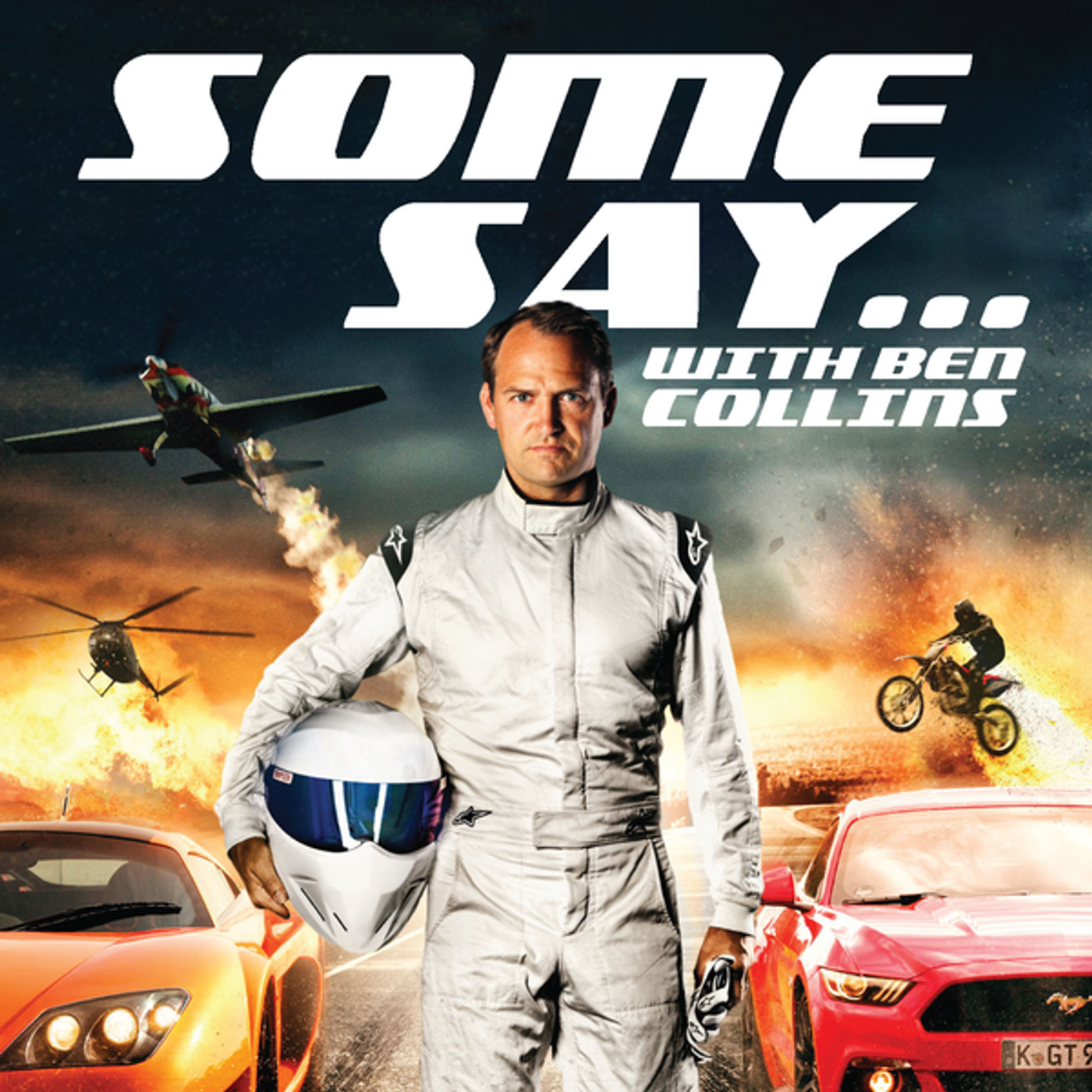
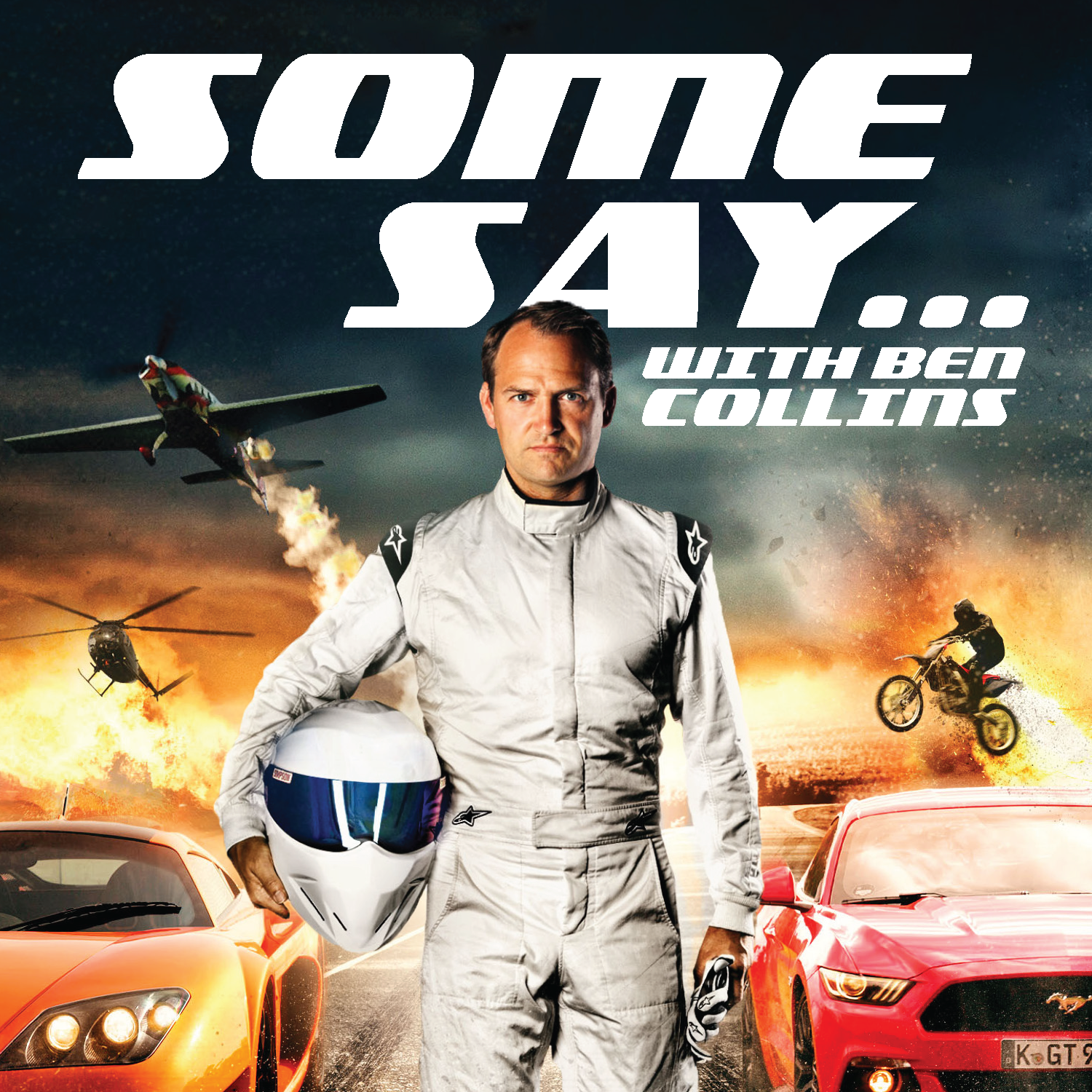
Hi, I'm Ben Collins. Welcome to some say my podcast series, which is all about fascinating car stories.
Now, as some of you may know, for many years, I was the man in the white suit on Top Gear and I was famous for not really saying very much at all.
But in this series, I'll be interviewing some fascinating people from all over the world, from the worlds of cars and motorsports.
So, you guys, got a really interesting character. I just want to grab this guy whilst he's in the UK, which is a rare occasion.
Misha, the king of the Nürburgring, the maester, I think is what you're known as on the internet.
Among the YouTubers, maybe. I like to keep it a bit.
I guess that's what you follow. That's what I've seen you.
And, you know, your knowledge of that place is, I mean, it's pretty forensic, isn't it, at this stage?
How many laps have you done on the Nürburgring?
So, I've been living there since 2015 and I do on average between 500 and 1,000 laps per year.
So, I say between 8 and 10,000 by now, probably.
Bloody hell.
Something like that.
Alright, so can you just wind it back a bit? So, that's where you are now.
And you're famously, you will take anyone's car around, won't you?
If it's suited for the track.
So, what about the tuk tuk I showed you earlier?
Yeah, sure. You can do it.
You're happy with that?
Yeah, if we have a track to ourselves, then probably, yes, yeah, on a certain conditions.
Alright, so you'll drive pretty much anything.
But where does your racing journey begin?
Because it's, I mean, basically, the Nürburgring is known as being one of the hardest places to learn,
let alone be a master of it and be able to drive any car and be confident with that.
So, how did you get started in a motorsport? Because it's fairly recent, isn't it?
Yeah, it's actually quite recent and I think it would be interesting topic for discussion
because you either get born and put into a go-karts and then you become a racecar driver.
But in my case, it's not the case.
I started driving, well, I started driving on the years of 18.
My first car I bought when I was actually 21 years old.
It was a Subaru Impreza GC8.
I bought it with some shot brakes.
So, immediately ordered the big brake kit for the car.
And actually, before that, the same day I bought it, I booked a racecar driver license course for it.
It was a three-day course in Netherlands, in Aassen, because I was living in Netherlands back then.
Very nice track.
So, I had already upgraded brakes, suspension, seats, the dash as well.
And my intention was to maybe one day compete in a time attack championship.
I did the course on the last lap of the free driving after I passed the course.
I blew up the gearbox.
I also even had a small contact with the tire wall on the side.
Because of the gearbox?
No, because of me trying to drift the all-wheel-drive car, because I realized what a lift of oversteer could do.
Because it was a Subaru, so I was like, oh, well, let's see how I can use that.
I know a bit too much.
A bit.
Yeah, a bit.
But it was fun. You learn by doing, basically.
But eventually, fast forward, I built that car to a time attack car.
It had 705 horsepower, 864 nm of torque.
It was very fast.
It was probably one of the most powerful imprecise in the world back in the time.
Competed in time attack, where it was mostly knowing how to drive straight,
and then kind of take the corners.
Didn't know anything about the vehicle dynamics, the driving dynamics.
It's just like, okay, all the gear, no idea.
But the fun thing about knowing what I'm doing now, where I'm right now, the never-green,
I was living and working and studying in the Netherlands back in the time.
It was an hour and a half away from the never-green.
And for many people, it's like you said, like the mecca of motorsports,
or like the holy grail, people need to go there once in a lifetime from other parts of the world.
And for me, it was like some old track in the woods.
It didn't attract me.
I couldn't care.
I really didn't bother going there.
And then fast forward to 2015, I got a job offer to go to a new established rental car company
to help them out on the marketing side.
So I moved there because the offer was interesting.
It was a brand new company.
I knew I could do stuff that I wanted without anyone over my head telling me what not to do.
And well, long story short, I fell in love with the place.
And now I live there, make videos on a daily basis, drive different cars,
and also race cars.
And that's where we are right now.
So it's amazing.
It's like a cultural mecca, like you say.
It's a place to go.
The piston clouser, the restaurant.
Do you like it?
Are you into your meat, cooking it yourself on a stone?
Yes.
Love all that.
It's just got a real like a magnetic sort of force around it, the never-green.
So I mean, I grew up racing in the UK.
So we have some amazing tracks here.
And the two for me that stand out the most are Alton Park and Cabois Park.
And there's real nuance to learning every little tiny detail of that place.
Because there's so much camber change.
It's up and down Dale.
And there's really quirky chicanes and things like this that actually have a very different profile.
Most of the, especially the newer stuff, they built into slowly straights down.
But the banked corners and the really high speed stuff, I think has got hints of Nurburgring about it.
The difference being that there's maybe 10 corners on one of those normal tracks in the UK.
How many curves is it?
They say the Nordschleife officially has 73.
But it's give and take what you find, a corner or a section or what in between.
So a lot.
So I've only driven, other than the Grand Prix track, I've only done the Nurburgring in a rental car.
And it was a diesel.
And you know, it was me and my teammate, when we were racing in, I did world sports cars.
We had these really powerful, 900 horsepower, like Formula 1 cars.
Basically like the big sports cars.
And so we were putting around in these two rental cars.
As fast as they would go.
I don't think Avis minded.
But still, it's so the seed of, you know, really my curiosity.
And then actually, as I was reading more into history of the Nurburgring and when they would do the 1000s.
Kilometer race.
And Sterling Moss in particular, who just destroyed everybody at the Nurburgring.
And it was partly down to his fitness and his determination because he had this incredible focus.
It really opened up a different world.
And also I was reading the notes written by the Aston Martin team that were really responsive for him.
And you got a sense of how much more he was able to extract from himself in the car track like that.
So I think it is what maybe makes that place so special.
But the learning process is the thing.
So for me to go there and do it properly.
What would you recommend is the way to go about learning the Nurburgring?
Well, there are multiple ways people can go about.
There's a traditional way of moving there, doing many laps, doing track walks.
Because there are certain things that you see as a person on foot.
That you will not have the time or the perspective or the angle to see while you're driving at 120 plus miles per hour through the track.
Just doing practice while learning.
But actually what nowadays is very possible is do lots of sim racing.
So I'm now fortunate enough to do some professional racing with BMW M4 GT4.
And my teammates are Jimmy Broadband and Super GT.
Yeah, you know him.
Coming for you Jimmy.
Yeah.
Did he beat you with the MX-5?
No.
So we didn't race the MX-5, but he was my teammate at Prague and he won the championship.
So he did beat me that way.
Ah, okay.
It's not over yet.
That's good.
Exactly.
Stay hungry.
Yes.
But the thing is he learned that track from digitally.
And he is faster than I am in real life.
So there are of course some other driver excuses involved in that.
But it shows that you can actually, at a very cheap or say inexpensive way, you can sit in your living room.
Just as long as you're motivated.
And get on the sim.
Drive it, drive it.
And also willing to learn, of course, because there's lots of time that people are doing mistake, mistake, mistake.
That's perfect.
Well, actually I'm helping develop a game called GT Revival.
So that's hopefully coming out next year.
And yeah, so I'll make sure we try and get the Nürburgring in there and get on the wheel.
So okay, that seems like an obvious one because you can really learn the pace.
I remember the original sim I learned on was a MicroProse GP2.
Do you ever use that?
Yeah, I heard of it.
It's pretty old and used to use keyboards, but it was accurate and you could learn tracks.
So for learning European circuits, I use that quite a lot.
The thing is the Nürburgring, it's so long.
I remember hearing that one thing also you can do, so I think you're right, walking it, talking it, simming it.
I heard some people break it into three sections and you break it down and you try and learn it one third at a time.
The BMW school, I think, does this.
Multiple schools do that.
I think the oldest establishing school, Kuderia Hanset, has been doing it since 1953, I think or so, or 54.
And they break it up into even more sections like five, six or seven sections and they do it based on whichever section they find relevant that particular year.
Because every year the track is changing in maybe small bits or bigger bits because they resurface it, they change the tarmac, the grip levels,
they take away the bumps, new bumps come because the seams of the tarmac, new curbs, different curbs.
It's also an evolving track, that's why it keeps it so interesting.
Plus for you, you drive everything.
Yes.
So this reminds me of my old Top Gear job because it could be a Ford Fiesta and then it could be a Veyron.
So what's the slowest and the fastest cars you've taken around the ring?
Oh, good question.
Well, the fastest must be like either the purely bred race cars, like either the GT4 or I driven a Cup car, like a street legal car,
or some black series modified to 860 horsepower, the MG GT black series.
So they are definitely fast and even too fast for the public sessions where I drove them because like with the black series, with it in one lap,
we had I think 60 or 80 overtakes, you know, so you're just like it's like.
In one lap?
Yes, in one lap.
So this is the thing, I've watched a lot of this on YouTube and I shouldn't be entertained by it because it's probably going to bite me in the backside,
but it looks like carnage.
Everything is out at the same time.
You've got quite slow vehicles, trundling around, people like me maybe who are learning the track,
and you've got people going past it doing full send, sort of like an MG.
Yeah, or even a small gearbox.
How does that work out?
It does work out, surprisingly, you know, because older, or let's say not older, but the majority of incidents that happen,
incidents could be in breakdown, could be someone losing it and crashing it.
They actually do not really involve other cars, multiple cars.
The only multiple car incident that happens there is when more cars collide over a spill of oil or something.
But other than that, people don't really crash into each other.
And that's the funny thing because I used to, for the last ten years, I used to deal a lot with rental cars,
so dealing with people who come for the first time or with their own cars.
And the biggest fear that people have is them being in the way for faster guys.
Okay, so they're aware of it.
They're aware of it.
Which is a German mentality, isn't it, from the Autobahn.
People expect you to move.
Exactly, but of course in that way you have a lot of tourists coming there,
but people from all over the world, also people who actually live there.
Which is a problem, because the Brits, they don't move.
They stay in the middle lane, they're lane hogs.
So there's a class of cultures here.
I know worse cultures than them, so it's not a big thing.
But the thing is people are so afraid of faster traffic behind them.
But the fast traffic is a lot more afraid of the slow traffic and experienced traffic,
what's happening ahead of them.
Because what if they pass them at 100 plus miles per hour difference,
or 200 kilometers per hour difference, and he doesn't move or he doesn't see
and he moves suddenly to the left because whatever.
You're toast.
You're toast.
But vice versa, the guy is afraid of being in the way that the fast guy might crash into him.
And I always tell to the beginners, don't worry, the guy with a half a million euro car
wants to crash into you much less than you want him to crash into you.
So as long as everyone keeps their mind and eyes on the road and communicates
by using indicators, it works out nicely.
So expect the unexpected, be prepared for anything, and everything will work out.
I think there's a reason that that track is in Germany.
And there's a lot more order that goes on there than some of the track days I've been on.
But that's interesting, because there's a ton of blind crests there.
And someone else I know who's raced at the Nürburgring a lot of times said,
despite this, I think maybe in the night, maybe he's a bit tired,
you know, your brain starts to play, can play tricks on you.
And he said he mistook one of the S's for a different one.
And does that ever happen to you?
Because it's such a long lap, you don't get that rhythm of crossing the line regularly.
It's, you know, if you just have a moment of laps, does that come across to you?
No, I didn't mistake in the corner, the only like really fail I had once that I remember
is I was just way too tired. I shouldn't have not been in the car
and I just didn't brake at all for a corner.
I went for an overtake and then I realized I should have stayed behind
and not overtake and I went straight into the wall.
But I was just like, it was a year of my life where I was saying,
yes, yes, yes, yes, yes, let's do this, show here, show there, multiple videos.
And I was just like, I zoned out and I was in a concrete wall.
Yes, it's funny actually, there's a sports car which is the fastest thing I raced,
220 miles an hour at Le Mans. But I was in that season, I was doing so much
and I was racing and I was doing Formula 3 occasionally as well
and I reached for the gear stick on the wrong side.
So I, just for a moment, was in the wrong car ahead.
But I fortunately had it gathered up before the braking zone
but that's a tough way to learn a lesson.
Yeah, mental fitness is important in a car.
So was that your only crash at the Nurburgring, the out braking moment?
Oh no, absolutely not. On average I have about like one a year.
Okay, in someone else's car, well I guess it always is.
Well yes and no, I mean in someone else's, like the YouTube stuff, I had two so far.
Okay.
So one with the brakes absolutely went away.
So we kind of scratched.
Car fail.
Yeah, and one 50% car fail, the deflation of the tire.
So it kind of spun on its own axle so it was, I would say 50-50.
Okay.
Also kind of my mistake.
And then the rest of course race cars, which are also someone else's cars.
My private car once and then I think a rental car two times.
So Jackie Stewart, Green Hill for a reason, because if you go off it's a big accident.
Yeah, absolutely.
But I also say at the same time the Nurburgring is the most safe place in the world to have an accident.
Because you have all these barriers.
I mean, if you're going to go off, you're going to hit the barrier,
but the barrier is there to protect you from a 20 meter fall of a cliff.
Right.
For example, or into a tree.
But they're close aren't they?
They're close.
But again, they're close there for a reason because it's built on a hill.
Again, if you, when you come over, I'm going to take you for a track walk.
So you can go over the barrier and see like, aha, I'm going to fall down 25 meters down
or against the tree if those barriers are not there.
And the track was built in 1927.
So it's not that they could like make it wider or can redo it now.
We should be happy that it exists in its current form nowadays.
So, but as mentioned for me, it's the safest place to have an accident
because I know that within a certain minutes there is going to be emergency personnel with me.
Especially now, Nurburgring has invested, I think, 11 million euros into the digitalization project.
So we have AI cameras that will detect people on track, debris on track, oil on track,
car standing still, which will immediately show yellow LED lights and personnel.
So it's going to get even safer than that.
So when it comes to that, I think it's a very safe place to crash.
There's only one concrete wall.
I hit it at the speedometer stopped when I hit it.
It was, I think, 130 kilometers per hour.
To zero.
To zero.
And I got out fine.
It was no problem whatsoever because it was during a racing.
I had full hunts.
So everything was okay.
And the smallest minor accidents that I had, for example, even as a passenger while instructing,
when the driver decided like, aha, I'm going to lift.
Never lift.
And then you have an incident.
Those small injuries I would have were already significantly worse than a full impact where
I just walked out and didn't have to even have a check in the hospital because the doctors
who saw me like, no, you're fine.
You can go.
So is it one that you thought was particularly gnarly or does make you a bit more fearful?
You know, I mean, you see things go wrong.
I mean, you saw last year we lost two lives of industry pool drivers, people who were there
in a professional environment who were going close to 300 kilometers per hour, 180 miles
per hour on the main street.
They turned in.
They hit something on the track.
It cost a debris, sorry, it cost a tire like flat out deflation or a complete explosion.
And they hit the barrier and the car started rotating because my balcony is about like 200 meters
from the track.
So I always hear cars going past and sometimes I hear poing, poing, poing.
And then I count the things.
I grab my dogs.
I go for a walk, see what happened if I need to see what happened or I need to walk the
dogs.
In this case, the hit was different.
You heard the hit, then it was silent for about five seconds and then it didn't hit the barrier
but hit the tarmac because later as we found out the car started spinning in the air because
of the G-forces at such high speeds, both the drivers or the driver and the passenger were
ripped out of their seatbelts and launched outside the car.
Should have been a fully safe, exercise environment professional driver on the prepared track
on a prepared vehicle for these kinds of things, both people died.
So it can always go wrong in the most unexpected way and it always goes wrong when you expect
it the least because accidents that I had, like as from a driver perspective, not when
brakes failed or something because that's of course also if you know that the brake is
going to fail, you're not going to get into a car.
But also from driver perspective, when I was like 100% attributed to me as a driver because
I did something that I shouldn't have done, it was because like that corner is so easy.
I've done it a hundred times, I know already, I'm going to focus on the next one.
No, keep your mind always at that particular corner because if you lose your attention
for a split second because you're overconfident or whatever, that's when it's going to go wrong.
And that's the thing, when you're out there, we can get out now.
I have a friend who died because he had a moose on his motorcycle.
Things can go wrong on a public road and there are more accidents on a public road,
especially the lethal ones, than on the track because I think the track is the safest
environment to go fast and responsible.
But you've still convinced me not to take the tuk-tuk.
I'm not sure the brakes won't fail.
Here.
No, I'm not taking it to the Nurburgring.
Why not?
There is a record for a tuk-tuk on a Nurburgring.
Is there really?
Yeah, we need to beat it.
It's 34 minutes.
Okay.
All right.
You can do it.
You can do it.
You don't have to go crazy.
I'll bring a bunch of toys.
All right.
Can I be on the backseat?
Yeah, I wouldn't.
You can.
Cool.
So you mentioned you can go and hire a car, which sounds strange, and then drive around
the ring.
Yeah.
So what's the legality to ensuring that car?
So if we talk from the fully like the question related to the rental cars, all the cars are
insured, but all of the rental car companies have access or deductible policy, which means
that the person driving it is responsible for roughly 50% of the value of the car.
So for example, if you're driving a Mark, whatever, seven or eight golf, which is roughly
40,000 years, maybe nowadays 50.
What kind of rental car?
Normal, like an Avis or Hertz?
Oh, no, no, no.
Don't do that.
It's a Nurburgring special.
Yes.
Yeah.
And that's also a very interesting topic we should cover because again, to finish
one topic, you have a Nurburgring rental car companies like that have track prepped
cars.
Okay.
Proper brakes, proper tires, everyday inspected, at least I hope the proper companies do that.
Then you know you're safe at least when it comes to the equipment.
It's fully prepped and it's all good.
If you sign off that you are responsible for X amount of euros, it values between it goes
as cheap or as affordable as 4,000 to 5,000 euro up to for an accident.
So if you damage the bumper, you pay for the bumper.
Like if you ride it off completely and the car is worth 10,000 euros, you're only responsible
for five.
Four or five.
Depends on what the number is.
Up to, in the GT3 RS, the 992, I've seen I think the insurance access on that, it's
I think like 150 grand.
So if you poke that and destroy it, you owe them 150.
150, yes.
Now, here comes the fun bit.
Of course, this is a lot of money.
It's also made to make sure that people kind of don't go out there as a kamikaze driver
because they think I'm insured, I don't care, I will just go out there and do it.
Because people have that mindset regardless when they come with their own car and that's
a big problem because they think nothing's gonna happen, I pay for my insurance.
But your insurance has a small stipulation in the contract saying you're not allowed
to take it out on a Nurburgring, on a racetrack or it might say you're not allowed to take
it on a one-way toll road in Germany, and there's only one, that's the Nurburgring.
You need to read through the small letters.
Sorry, so Nurburgring is a toll, is a road?
It's of a toll road.
On a public session day, so which is called Touristofatn, it's classified as a public
toll road.
You come and buy a lap ticket which is essentially just toll that you pay and you do your lap.
And you're not allowed to do lap timing, you're not allowed to do any competitive stuff, there's
also a speed limit applying.
If you have an accident, the same rules or legalities apply as on a public road.
So this means that police will be involved.
Police will come, investigate the accident, they will make a report and they will probably
maybe even give you a fine for dangerous driving behavior if it was obvious that you caused
it.
And that report will go to your insurance, for example.
And your insurance might say like, oh, you drove on a racetrack, we're going to cancel
your policy completely.
Or if you made an accident and someone got, well, someone's property was damaged, like
the Nurburgring's property, so it could be just the barrier or a tree, well, that would
be a barrier.
If you hit a tree on a Nurburgring, you already did something very extreme.
But for that barrier, you need to pay.
You pay to fix the Armco?
You pay to fix the Armco, yes.
Again, the same way it happens on a public road.
How much is an Armco?
Nowadays, I would say an average bill is starting from 2,000 euros, roughly.
Per section?
No, not per section.
I can grab one of my bills later and show it to you.
Yeah, I got some bills, yeah, for sure.
No, but like on average impact when you like bent, I don't know, like 60 meters with three
layers, then it goes towards, I think the highest bill I've seen was around 10,000 euros.
Okay.
Because the car went pinballing and hit a couple of sections at the same time.
But the important thing regarding legalities and obligations is that people on those days
are responsible to what happens to the track and to the others, like they are responsible
on a public road.
So if you damage the barrier, you need to pay for the barrier.
Or if your car is insured on German plates, because some of the German insurers still
cover the Nurburgring on a public session.
On a track day, they say no, unless the track day stipulates and they say like, we do not
allow lap timing, it's more of a driver safety improvement, there are lots of legalities
between it.
But people need to understand when they go out with their own car is that they are responsible
for what happens to the track and to others.
I know that every UK insurer has blocked the Nurburgring from like a famous mythical case
when the E39 M5 dropped an oil pan and a Carrera GT and a Ferrari 360 went around it
and it was like all over the Daily Mail news when a 10 million Euro insurance bill went
to that car.
So all the insurers blocked out the Nurburgring forever.
But this means that if you go out on a public day and you have a not well maintained car
and you're going to either you're going to drop an oil pan or maybe even leak a bit of
oil and a biker comes around it and kills himself, you're going to be liable for it.
Because your insurance is going to say like, well, you neglected our rules.
You went out on a racetrack where we clearly said not to.
Then according to the European Court, according to your European regulation, I don't know
how it works now with Brexit, but a few years ago, your insurer would have to pay.
They would cover the bill, but then they will go after you and sue you.
So that's how it went to go.
There's lots of legalities.
So what I'm getting at, if you have a car, you're going to drive it on a track, there
ain't no problem.
You're going to do racing, no problem.
If you're going to drive on public sessions, think at least five times.
If it makes sense to maybe not to rent a car that is insured and you're only liable for
a few thousand euros, because that might be worth in the long run.
So those are like a lots of things that people do not think about.
Or bring some Armco with you.
Then you can just fix what you break.
Yeah, but actually also when you break it, you can take it with you and put it on your
wall.
Get it signed by Misha.
If I'm the one that's crashing it into, sure.
Whatever floats your boat.
I'm renting the car.
I'm bringing my own Armco.
I'm bringing my helmet.
That's good.
Sounds good.
Checklist.
Yeah, let's do that.
All right, sorted.
Good.
These are important notes for everyone that does, because there's loads of us that do
go across to the burglary.
And again, I'm also the one who hops in also all the British cars.
The majority of the cars I'm driving are actually UK cars.
And call me stupid or reckless or just someone who wants to have fun in life.
I don't know whichever it is.
I'm doing it.
But it can go really wrong.
I view inspect them a little bit.
No, no, for sure.
No, of course.
Of course, of course.
I look under the bonnet.
I see if there are like any noticeable leaks or any maintenance.
Of course, I look at the pads and tires and everything and make sure and if something
feels off, I'm like, okay, now I'm backing off like completely like, okay, we're done.
Sorry.
So there are lots of laps out there on the video that have not been published for various
reasons.
Brave man.
Yeah.
So when you were studying, did you get the benefit of going to one of these racing schools
at the ring or did you start reading information?
How did you try and catch up?
So how did you learn your craft quickly without the benefit of a racing career go karting?
Good question.
Well, actually, you're realizing that I need to do something about it and not to suck.
So how do you do it?
Same racing, reading, I have something actually here that I would like you to sign.
Okay.
Yeah, I don't mind.
Yes, reading, understanding the vehicle dynamics, the basics, because the basics is the most
important thing.
If you don't have the basics right, you're not going to be fast because professional
drivers, whether it's like Formula One drivers, they're doing the same.
They know exactly the same.
They're just able to process the information faster and do things faster in a certain way
than we are able to do because there's of course also lots of preparation involved.
So understand the basics, get them right, and then it should be good because even now,
when I drive all these cars, again, going back to the fact that Jimmy has a better advantage
over me as a driver because he's a focused race car driver, I drive all kinds of hundred
different cars.
You have more seat time in race cars.
Exactly.
I drive 100 different, 500 cars a year, maybe sometimes different cars, and I need to be
prepared, okay, what if the tire blows out?
What if the brakes fail?
What if they fade?
How does this react on this particular tire in these conditions?
So there's always like a middle ground.
Big variable.
Exactly.
And then I go into a proper race car, we do data analysis, and the first thing like my
teammate or a pro driver or instructor says, Misha, you forget how to brake because then
all of a sudden you need to stamp on it, 120 plus bar of pressure, you need to trail brake,
don't be afraid, something that you can do and you cannot do with a street car and just
be confident and go for it.
And I totally lost my thought there, where we're going.
Well, it's interesting, it's about how you learn and what you learn and how that experience
plays out and comparable.
I think with the street car, the brakes won't stop you and you know also if you're on the
ABS, you're going to miss the corner and you're going to miss it once, you can be in
the gravel.
Exactly.
So race cars, I think you can be very brutal with the brakes.
It's interesting.
Actually, yeah, you were going to say before, you told me the fastest car you've driven
and what's the slowest you've driven around there?
The slowest.
The slowest.
It must be like some, that's a quarter or something, something or maybe even slow,
maybe a lot.
I did drive a lot.
Yeah.
A lot from 1973.
Rear wheel drive.
Yeah.
Awesome.
Proper and like independent suspension because it just does, lives its own life.
It's not because it's...
Yeah.
The straight's going to take a long time.
Exactly.
Yeah, they're quite slow.
But I saw a photo of you in the Lucid, so as a car I know really well, I got the fastest
run up the hill at Goodwill with it once and it's a fantastic dynamic machine.
So how did you find electric power at the ring?
You know, I love it actually.
Really.
I do enjoy it.
I don't have anything against it because a lot of people are not a lot of people.
People sometimes like to generalize.
When I like do some electric car, people say like, ah, we want the internal combustion,
we want this, but there will be always something that people like or dislike.
I consider myself a car guy.
So I don't care about the propulsion, I'm there for the overall experience.
So if the electric power can accelerate me from A to back to A in a fast way, I don't
care.
And actually that's not a problem.
So at this point in time, we are now slowly start to progress where the battery technology
is actually like actually getting viable to do a full lap and in case in Lucid you can
do a full lap without a drop of the battery performance, now it starts getting interesting.
So in that way, it's not a big issue.
I think especially for the Nürburgring, that Lucid you can manipulate the weight.
So you can really dive it into the camber corners, which is essential for the rings.
If you wash out, if the car is numb and you lose the front, you lose so much speed I think.
I'm looking forward to drive the Sapphire because I have just the midnight air edition,
midnight dream edition, and the Sapphire should be like really purposeful.
It's a rocket ship.
You're going to enjoy that.
It's interesting.
So the fastest race car is the GT.
GT4, yeah.
So when you watch that lap by Dumas in the hypercar or the LMP1, you see that?
You mean the 19?
Yeah.
The team of Bernhardt.
Because Dumas did...
Bernhardt has gone faster, has he?
No, Bernhardt done the Nürburgring Nordschleife.
Yeah.
Then...
I thought Dumas did one.
Yeah.
No, he was his teammate.
But he didn't drive the Nordschleife.
Okay.
No, he did.
Dumas did the Volkswagen IDR, I think.
That one?
Yes.
Yeah.
It looks fast forward.
Yes.
It's insane.
That lap is insane.
Yeah.
Is that something you would want to do?
Like to do a lap record?
Yeah.
Probably.
Maybe.
So with all these different cars, different speeds, the track completely changes.
I mean, there are curbs that are nothing in a ladder, but in a hypercar, it's going
to be a serious corner, maybe even a downshift or a break.
So how do you...
I mean, can you get in it, does your brain automatically set to the different...
It's like a video game.
Replace it.
Because you've gone through so many different models.
Do you do it automatically or do you have to think about it?
I mean, it depends.
I mean, you get adjusted to a certain car in a certain way.
I mean, it takes me like, I don't know, well, less than an average person to adjust to a
certain car because I know, like, okay, there we definitely do not have to lift because
of the certain characteristics of the car, whether it's the tire, the overall grip level,
all the aerodynamic forces, but then come really the small things like, you know, as
a race car driver, it's about like, okay, do I brake here 10 centimeters later and trail
brake in there or will I be on the grass or on the curb or where I will be?
And that's the adjustment that gets you, well, the race is one that you want to win.
Of course.
So, yeah, the overall, of course, you understand that the car is much more capable than a base
model car, than a street car.
So you start doing things.
And again, also, SIM for that matter is a safe way to find out what the car vaguely
can do, like roughly can do.
But then at the same time, because most of the time, I'm right, the owner of the car
goes with you.
Yes.
Which is a little bit like sleeping with his wife in front of him.
That's what a lot of people actually comment on my videos, yes.
I mean, how does that work out?
I mean, do you get some people that scream at you to slow down, they change their mind
halfway through?
It's kind of like a base jump, isn't it?
Once you've committed.
No, I mean, yes or no, I mean, actually.
Do you feel the pressure, though, that that person's there?
I wouldn't say I feel the pressure.
Definitely not.
Because they're usually happy.
They're usually happy because people reach out to me.
I never reach out to them.
Like at no single point have I ever asked like, hey, can I drive your car?
They always ask me and I always ask them like, how do you want me to drive it?
Can I take curbs?
Can I go in the carousel?
Can I floor it?
Is there any certain like heat limitation or all temperature level?
Everything.
Empathy, which is what matters.
Absolutely.
Absolutely.
And I asked them that beforehand.
And at any given point there, they can say like, OK, slow down or can we please not do
that again?
How often does that happen?
Never.
Really never?
Never.
It has never happened.
That's not what happened with me.
So I had this passenger ride at Silverstone in a Formula One car with two seats, so you
can't see the guy behind.
Yes.
But they had a panic button.
They would hold onto like a sort of dummy wheel that was fixed off and they had to hold
a button down and if they let go of the button, the red light would come on.
Yeah.
And quite a few times the button came on.
So I would have to stop.
Well.
And I was trying to do the same.
Yeah.
Be empathetic and like, how fast do you want to go?
I have to correct myself.
It has never happened on my YouTube labs.
I've done the Ringtaxi service where there people are actually booking.
They have no idea where they're getting into and they're like, oh, yeah, I can do it.
And then already by the first corner, they're like, please slow down, stop or otherwise I'm
going to puke.
Right.
Whereas in my case, they're like, no, I'm going to through the end.
I know what I signed up for.
I know I've seen these videos and actually I would say in 99.9% people ask me, tell
me, send it.
I don't care if it breaks.
I want you, I just want to see what my car can do and I want to have fun because you
live only once.
I'm like, okay.
And that's 0.1%.
People say, can you take it easy on respect that we do that?
And then people complain like, oh, yeah, there was such a slow lap.
No, I was just respectful.
And when you drive too fast, people complain like, oh, you have no respect for other people's
material.
Yeah.
That's what person asked me to do.
That's interesting.
So beyond the Nürburgring, where else have you picked up any favorite tracks or things
that really scream to you or somewhere you aspire to go?
Because having learnt the hardest one, it must be tempting to go out and...
Everything else, the problem is everything else becomes boring in a way, just like even
because...
You haven't been to Macau.
Okay.
Okay.
Good point.
Good point.
I mean, I love Spa.
Yeah.
Spa.
Spa.
I love...
I was in Portimao recently, also a fantastic track, Adriana Scari, also very good.
I want to do actually a couple of UK tracks, for sure.
You mentioned Oton Park.
I got an invite to go there for some endurance series, actually, in June 6th or something.
So I might do that.
So definitely, I want to go out and have fun, absolutely.
But every time I'm driving any other track, it's like, oh, it's too short.
I'm missing this.
The excitement of having your foot down for actually two kilometers straight and jumping
sideways through the air while fighting the traffic around you, that's completely...
You don't get that anywhere else.
You've kind of got me hooked.
So if I go out there, would you show me around?
Absolutely.
Help me teach me.
I'll start learning on the Sim.
I'll watch a load of video.
I'll get training and start paying attention more.
But I would love to do a lap with you and show you how to do that.
I would love to.
Yeah.
Awesome.
Well, thank you.
In the meantime, I'm going to show you Blighton Park.
It's got five corners.
Do you even handle it?
Nice.
Well, it's about technicalities.
So I'm sure I can learn a lot.
It's not as nuanced as the Nürburgring, but you know.
But again, going back to the basics, if I get those right, because maybe I will get a couple
of seconds back at the ring, because I'm focusing only on the fast stuff there.
So now I'll be able to do the process, the slower stuff, which is also very important.
Well, thank you.
Thank you.
Tune in to Misha's channel, which is just my name, Misha Sharodin.
You can find that for some more crazy stuff with him.
And thank you for your time today, and we'll be going to wrap it on the track now.
Amazing.
We can do it.
Spin Quest Social Casino.
So the new year may be coming to an end, but the excitement never does on SpinQuest.com,
with live blackjack, craps, and so many slots, and jackpots that don't need a countdown.
Your New Year's resolution is more fun on SpinQuest.com.
New year and new players right now get $30 coin packs for just $10.
SpinQuest is a free to play social casino.
Boydwear prohibited.
Visit SpinQuest.com for more details.
About this episode
Misha Charoudin, known as the 'king of the Nürburgring,' shares his journey from a novice driver to a master of one of the most challenging tracks in the world. With over 10,000 laps under his belt, Misha discusses his unique approach to learning the Nürburgring, including the importance of sim racing and track walks. He also delves into the nuances of driving various cars, from the fastest race cars to quirky vehicles like tuk-tuks, and offers insights into the safety measures and legalities of driving on the track. The conversation is both informative and entertaining, highlighting the thrill and challenges of mastering the Green Hell.
He's garnered over 1.2m subscribers with his top-quality content filmed from the mighty Nürburgring Nordschleife, and now the one and only @mgcharoudin is the guest of my latest podcast. What I love about Misha is that he's a true driver at heart – performing up to 1000 white-knuckle laps of the iconic 13-mile race track he calls home each year, in some incredibly varied and capable machinery. In this podcast, we talk his early days, the evolution of the last nine years living inside 'The Green Hell', and compare notes on racing now that he's delved into competitive motorsport.