The Chevrolet Corvette is a famous sports car known for its speed and sleek design. The 1983 version is part of a long line of Corvettes that have been popular among car enthusiasts.
Concept
C3
C3 is a model of the Chevrolet Corvette, a famous sports car. This generation was made from the late 1960s to the early 1980s and is recognized for its unique design and speed.
The C4 generation is the next version of the Chevrolet Corvette that came after the C3. It was made from 1984 to 1996 and had many upgrades in design and performance.
The Trans Am is a sporty car made by Pontiac, known for its powerful engines and distinctive styling. The 1992 version had features that suggested what future models might look like.
A targa top is a special kind of roof for cars that can be taken off. It lets you enjoy the open air while still keeping part of the roof for support, unlike a full convertible.
The 30th anniversary of the Corvette is a celebration of the car's long history and popularity. It highlights how the Corvette has changed over the years since it first came out in 1953.
Validation cars are special test cars made to check if a new car design works well. They are used to make sure everything is safe and performs as expected before the car is sold to customers.
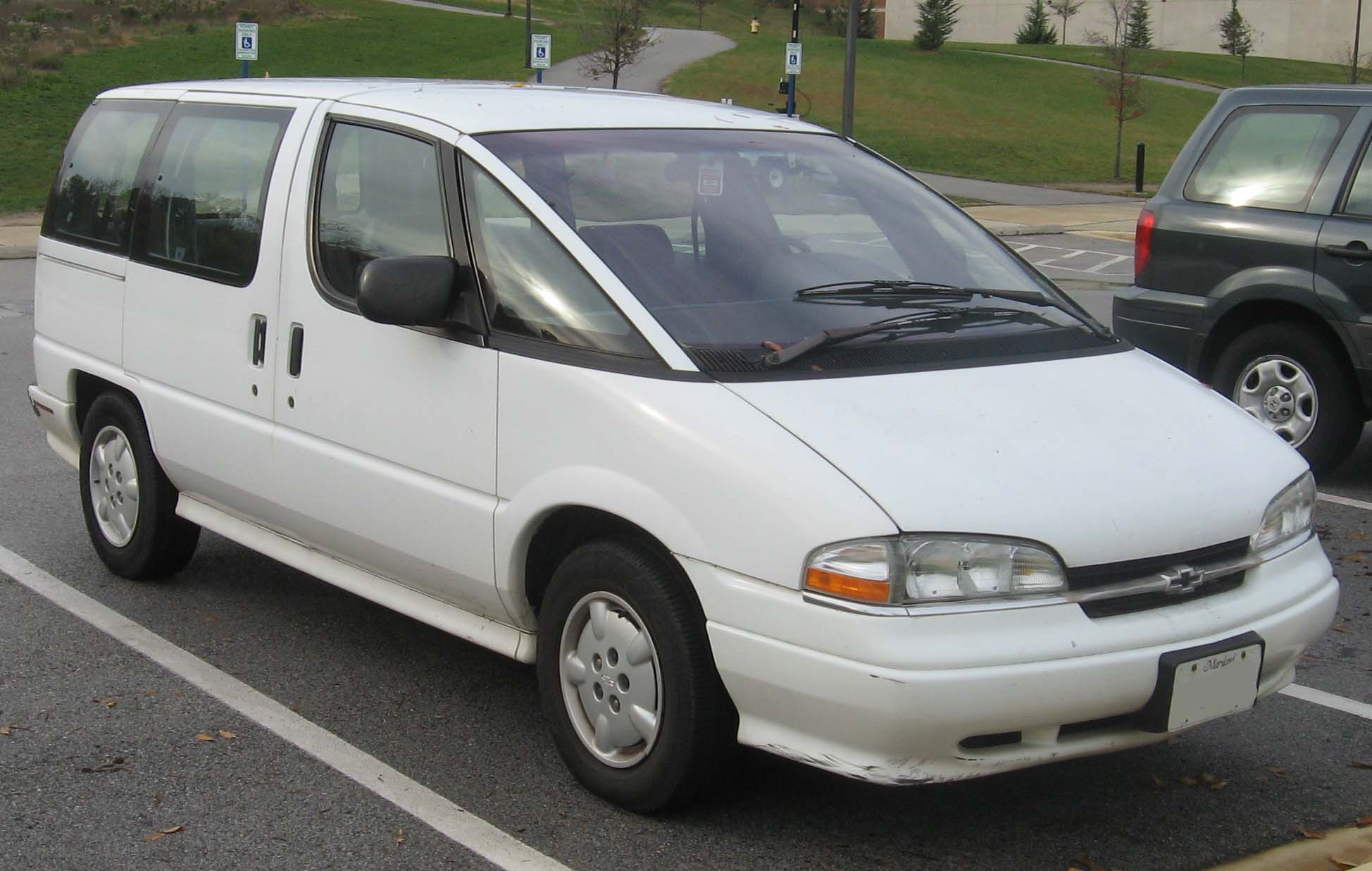
The Chevrolet Corsica was a small car made by Chevrolet in the late 80s and 90s. It was popular for being cheap and practical, but many people didn't think it was very good compared to other cars.
The Chevrolet Lumina was a family car made by Chevrolet in the 90s. It was known for being roomy and comfortable, but it wasn't always considered very reliable or fast.
A digital dash is a type of car dashboard that shows information on screens instead of using needle gauges. It can show things like speed and fuel level in a more modern way.
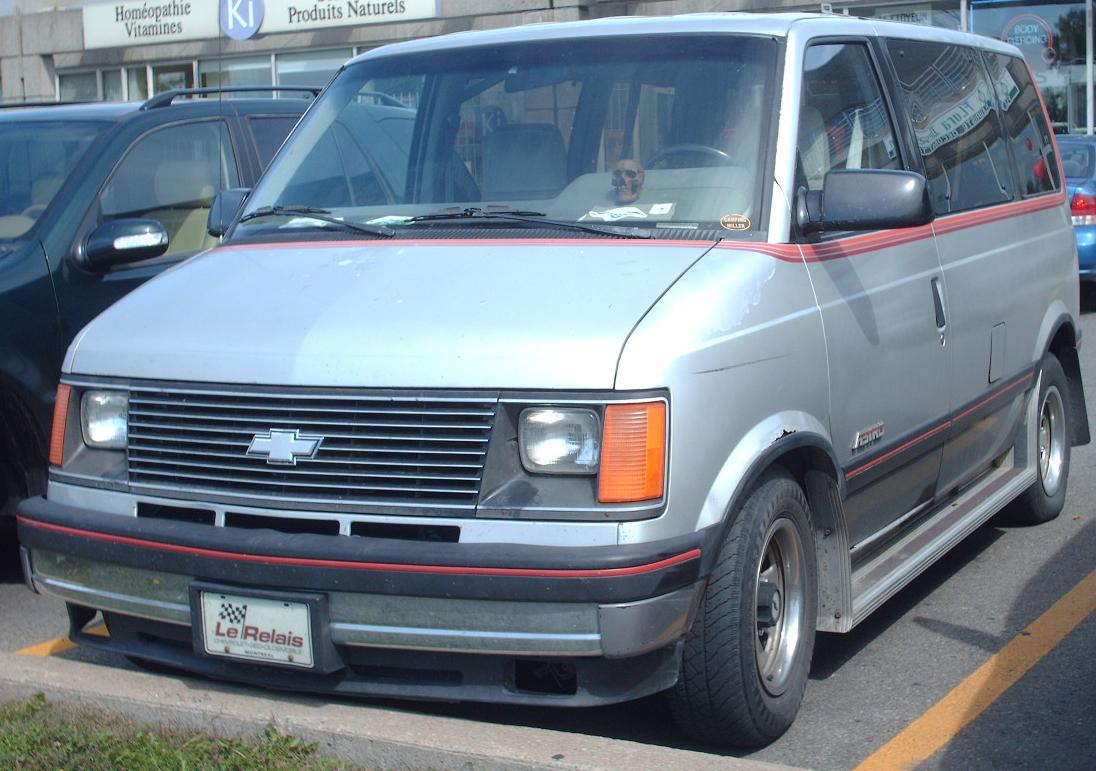
The Chevrolet Astro is a van that was made for many years, known for being roomy and useful for families or businesses. It has a lot of space inside for passengers or cargo.
A gear splitter helps a car change gears more effectively by creating extra gear options. This makes the car perform better and use fuel more efficiently.
Gear Vendors makes devices that help cars change gears more smoothly and efficiently. They can make a car go faster or save fuel by adjusting how the engine works with the gears.
An automatic transmission is a system that changes gears for you while you drive, so you don't have to do it yourself. It's easier to use, especially in stop-and-go traffic.
A manual transmission is when you have to change gears yourself while driving, using a stick and a pedal. It gives you more control over how the car drives compared to cars that change gears automatically.
GTA is a special version of the Chevrolet Astro that comes with more features and is usually more expensive. People like it because it has better performance and looks different from the regular models.
Term
350
The '350' is a type of engine that many Chevrolet cars use. It's known for being powerful and reliable, making it a favorite among car lovers.
A special order is when someone asks for a car to be made with specific features that aren't usually available, like a certain color or type of transmission.
The Pontiac Firebird is a classic American car that was made from the late 1960s to the early 2000s. It is known for its cool looks and powerful engines, and it was often compared to the Chevrolet Camaro. People mention it because it has a special place in car history and is loved by many fans.
The Ford Mustang is a popular American car that looks sporty and is fun to drive. It started being made in the 1960s and is known for being powerful but still affordable. People often talk about it because it represents a cool part of car history.
The Chevrolet Camaro is another American car that looks sporty and is designed to be exciting to drive. It came out in the late 1960s to compete with the Ford Mustang and has different versions for people who want either speed or comfort. It's often mentioned because it's a classic car that many people love.
The Chrysler Daytona is a sporty car that was made in the 1980s and is known for its sleek design. It was created to attract drivers looking for something fun and fast. People mention it because it stands out from other cars of its time.
The Opel Astra is a small car made by the German company Opel, and it's been around since the early 1990s. It's known for being reliable and good on gas, making it a popular choice for everyday driving. People talk about it because it's a smart option for those who need a practical vehicle.
The Tesla Model Y is a modern electric SUV that runs on batteries instead of gas. It has a lot of space inside and comes with high-tech features, making it a popular choice for families. People talk about it because it's part of the movement towards cleaner, electric cars.
The AC Delco pickup coil helps start the engine by sending a signal to the ignition system. If it fails, the engine may not start or run properly.
LIVE
Hello, it's Wednesday, and this is the pile-up, pile-up, pile-up, pile-up.
We've got a cliffhanger of Emily's little 1983 Corvette, factoid, that she refused to share
with me.
There was not enough time to share with you last episode.
To be clear, I did avoid clicking on a link and reading the article myself and then pass
it along.
I know.
And Emily said, what happened?
And I said, I don't know.
Will you tell me?
So this is what I get.
Yeah.
Don't you like to be in suspense a little bit?
I just thought I was going to find out last week, now it's been half a month.
Has this really affected your life?
Yep.
Okay.
In what ways?
I reduced my sleep.
Not your precious, not your sleep.
I know.
I lay there at night and I think, what happened in 1983 Corvette, is 1983 Corvette under
my bed?
Is 1983 Corvette creeping down my street now?
And I'll never know because it technically doesn't exist.
The ghost of the 83 Corvette.
Dun, dun, dun.
Well to talk about what happened to the 1983 Corvette, we have to go back to...
Total secrecy.
Yes.
Everybody has to keep this a secret.
And that's the end of the podcast.
Wow.
No.
I think our listeners can keep a secret.
Yeah.
They can definitely keep a secret.
So we have to go back to 1979, 1980, where the concepting for this car began.
The C3, which last year was in 1982, was just kind of like, they'd been using this basically
the same frame from C1, C2, C3.
It's a little embarrassing.
It was played out.
It was played out at this point.
And the C3 went on for 14 years, which is...
Although the C3 is magic, but I feel like everybody probably agrees it's a little watered
down.
Yeah.
They just, people were getting sick of it.
Also with all the emissions and stuff that were happening, it really got tamed down.
My 1981 C3 has 190 horsepower, which is 15 horsepower less than my ASTRO V6 has more horsepower
than that.
Yeah.
Exactly.
It does look sexy though.
It looks like it goes fast.
The C3 was like not...
That's the important part.
If it looks fast parked...
Then it goes fast parked.
Well, at least it looks good.
That's all I'm saying.
Yeah.
She looks...
She does look good.
The C3 was slated as a late 82 model to kind of go into the next generation, the C4 generation.
They're really going to get on it.
They were going to do...
It's going to be a bridge.
A bridge model.
They had every intent to get...
Really?
A bridge?
Kind of like a bridge.
Yeah.
Like Trans Am did that with their 92 Trans Am.
They made it.
It had like makings of the next generation.
It feels like a bastard car.
No.
It's like a melding of the two.
Don't a lot of other...
So that didn't happen?
Well, I'm going to get into that with the C4 as they were doing it all new, top to bottom,
inside out, upside down, back and forth.
The designers were given carte blanche and they were not told no...
They were given carte blanche.
Carte blanche.
Sorry.
Carte blanche.
They were given the golden girls.
Art Blanche.
They were given the golden over.
She sat with her boyfriend and can't come to the phone.
So the designers were just...
They were never told no.
Instead of the frame on...
It's hard to imagine that 82 Corvette is the car where the designers were never told
no.
No.
This is the 83.
This is the new one, the C4.
Sorry.
This is the C4.
Yeah.
Still, hard to imagine the C4 is the car...
Yeah, but go back to...
Let's...
See, you're looking at it through the lens of 2025.
You've got to go back to when you had this car and your Hot Wheels collection and you
were a kid and just go back to...
We did have a pearl white pink interior, C4.
I loved it.
I was jealous.
It was my brother's.
It wasn't mine.
I wanted it.
Right.
He had the cool Corvette toy.
Yeah.
So see...
Look at it through those eyes.
But dad had an RC Stingray silver that was like...
Loved it.
It was so cool.
Which is also rad.
It was so fun to play.
I don't even think it ever worked as an RC car.
We just played with it as a full-size scale model.
It was big.
Yeah.
Barbie...
It was Barbie's car.
Was there a Power Wheel?
The C4.
Was there a C4 Barbie Power Wheel or was it just a push car?
I think it was just a push car.
Okay.
Yeah.
My stepdad had one.
He had a white one.
It was immaculate.
I was in middle school.
My girlfriend and I did the recreation of a white snake video on the car.
Wow.
And...
At least it's not metal panels.
You can roll around.
They're not going to dent.
Yeah.
And we were kids.
So we were little.
I got into so much trouble.
I don't know if we maybe scratched it, too, but we did get fingerprints all over the
whole thing and just grease marks from our legs, probably sliding down off of it.
Just like...
I mean, we climbed all over that car.
We don't have a video because this was in the 80s and they didn't have.
There wasn't just video running around.
Pretty funny.
Got into a lot of trouble.
C4.
I mean, I remember when we broke the emblem off my dad's station wagon playing basketball.
Like, he was pissed.
Did he get into trouble?
Yeah.
And it's still...
It even had the Cadillacs where it was like a spring loaded.
It could lay over.
It could get hit.
Uh-huh.
You hit it that hard.
Well, we didn't do it.
It just came off the rim.
Oh.
Oh, so it wasn't even your fault.
No, it wasn't.
But he was pissed.
Wow.
That's too bad.
Yeah.
I mean, I get it.
Yeah.
It's sad.
Mad dad.
Mad dad.
Sorry.
That's what I meant.
Mad dad.
Mad dad.
Originally, the car was a teetop car and then the president.
The president of the United States.
I declare presidential decree.
Probably who was it?
Like, Reagan at the time.
All Americans will drive teetops.
No, the GM president.
And the crowd goes wild.
America for teetops.
What a party.
The GM president.
Oh.
Sorry.
Wanted it to be a target top.
Like, you know, Porsche and there's some other sports cars I can't remember that have
the target tops.
And so they had to, like, mid already, like mid design, they had to go back and scrap
everything and then beef up the whole chassis and just like do all of this extra stuff
that took months.
And so they just kind of gave up because it was hard.
No, they just set the release date back to early 83.
And that was the 30th anniversary of Corvette.
So they were like, okay, instead of it being the bridge model, let's have it be 1983, 30th
anniversary.
It's a big deal for Corvette.
Like da, da, da, da, da, da.
Yeah.
So how'd that go?
Well, in mid 82, Bowling Green began Bowling Green Kentucky.
Green Tucky.
Green Tucky.
Wow.
That's okay.
That's fine.
Bowling Green.
Bowling.
Bowling Green, Kentucky.
Bowling Green, Kentucky is the plant where they made the Corvettes.
And they started mid 1982, they begin building the validation cars.
And these cars are what they take to the proving grounds and like, you know, they're validating
everything that they're trying to design.
Yeah.
Ooh.
So they're the ones that have all the shit that goes wrong with them before they
take them to production.
The cars got to the proving grounds with less than a year to come into production,
which is not enough time.
They were everybody was...
It sounds pretty fast.
Yeah.
Everybody's like scrambling to try to get this car to market.
And at the same time also...
It's like the family farm.
Like, we've got to get these Corvettes to market or we're going to starve.
Yes, exactly.
Everybody at GM's going to starve.
Like Mr. Majestic, we're going to get these melons in.
Trying to get the Corvettes out of the field and get in the market.
Yep.
It's exactly like that.
There's people out of the market.
Any fresh Corvettes today?
No, not yet.
No, we haven't gotten them out yet.
Maybe tomorrow.
We're working on it.
We're working on it.
At the same time, there was a lot of different government regulations that were coming out,
especially with smog.
And GM wasn't up to...
They just weren't...
Their technology wasn't up to date with the regulations that were coming out and
the regulations that they could see coming out also for 84.
Is it fuel injected?
I'm assuming it is.
Yeah.
I mean, the vans were fuel injected by 87, so I'm assuming the Corvette was fuel
injected by 87.
Yeah.
Yeah, it was fuel injected.
And I think it went to import injected pretty early on, too.
Okay.
Like maybe 83 or 84?
83.
This is the first one.
Maybe not 83, maybe it was like 84 or 85, because the Trans-Am got an 87, so I'm assuming
the Corvette had it a couple years earlier.
There were all these new regulations.
The car still had emissions issues, it had body fit problems, instrumentation and
drivability.
Like every single thing that could go wrong with the car was going wrong with the car.
I have an 80s Chevrolet, it also has similar problems.
But that's not the flagship model.
No, by far, far, the other end of the spectrum.
Do you think there's a little bit of Corvette?
I've got the three model.
Do you think there's a little bit of Corvette in the Astro?
No.
There's a little bit of the Oldsmobile Custom Cruiser station wagon.
Much less Corvette.
I mean, yeah, you could associate maybe a wheel lug.
Even with all these problems, the 83 was already a darling of the media.
A darling?
A darling of the media, and people were hyping it up, and the release of the 30th anniversary
Corvette was like a big deal.
And so, but then it was like the cars were too crude to hit the market at the time.
Production stopped at 44 cars, and they were all ordered to be crushed.
Hell yeah.
Yeah.
So I'm talking about, they gave up because it was hard.
Well, I'm sure those people would be wildly offended.
It was the major model year, and they were like, if we fuck this up, there's not going
to be any more Corvette, because Corvette will go down if we fuck it up.
And I'm sure there were so many closed door meetings.
There were so many big cancellations around that time, you know, same thing with like
Challenger.
They're like, let's launch it.
They're like, no, I don't launch it.
They're like, no, let's go ahead and try to launch it.
Corvette really paid attention to that.
There's like a lot of stuff back then about people recognizing the significance of a release
date, and like they wanted to get the news out of something good.
And I feel like this is a similar thing where they're like, it's important to get a new
Corvette out.
And then they're like, yeah, but you don't want to fuck up.
I mean, I think that's smart because I mean, the C4 was a hit, but I don't know.
I try to put myself in the place of those cars because I remember my dad worked at a Chevy
dealer in the 90s.
And like he would drive home like Corsicas and luminous and like those were garbage cars,
but I thought they were cool then.
I'm trying to think about like the weird dashes that they had like that.
They looked like computer like green grids and yeah.
I don't know.
Even those cars had those dashes.
What are those?
Digital dashes.
I mean, the Astro does.
Oh yeah, it does.
Yeah.
It's not very digital, but like some of them they travel in an arc from the left to the
top right of the speedometer.
Mm-hmm.
Yep.
Yep.
What's the, what does the Corvette look like?
Is it green digital?
It's like green and red lights.
And then the black, like the dash itself is black.
Huh.
Green and red.
Yeah.
Red for like if you're revving too high and you know.
Huh.
But it's green for the speedometer.
From what I can remember, I saw some videos of it, but I don't like I'm not totally,
there was odometer on this side and then there was the, the odometer on this side
and then the.
Tach.
No, sorry.
Cages.
The speedometer on the side and the tachometer.
The 30th anniversary clock.
Yeah.
Right in the middle.
This was a big deal.
They did not take this decision lightly.
Anyway, all the cars were scrapped and except for.
One car.
And it's in bowling green.
It was at bowling green.
Yeah.
I've never been to that.
I'm not either.
Cause I've only been through Kentucky, but.
I've been in bowling green once, but I didn't go to the museum.
Yeah.
That's where it is actually.
It would be, it would be cool to see.
It is there now.
And it's the rarest Corvette in the world.
According to the museum.
One of one.
People.
It's not the first one off the line.
It's not the last one off the line.
It's just kind of like.
Whatever.
Like.
Normal.
Nelly.
In the middle.
There's nothing special about the number or anything or where it was in the production.
It went to the proving grounds, came back as they all did.
They actually had a scrapper.
They raced them in elimination matches and slowly scrapped one at a time.
They did.
They're like, we're going to make this interesting.
They did.
No, it was the crushers just at the middle of the derbies.
What are those called?
Demo derbies.
Yeah.
It was a demo derby.
Yeah.
That's cool.
That's how they did it.
That's how they did it.
They brought the scrapper on premise instead of like taking the cars out to where they
were, where the scrapper yards and.
Yeah.
Let's something like that out.
The plant manager said that sometimes they do take them out on trucks or whatever.
But at this time they had them.
Yeah.
They can't risk that.
Like that.
Yeah.
Not the 83.
Not that one.
Yeah.
So they cut out the windshields and then they cut out the Vin numbers.
Somebody would have found it.
They would have been like, Hey, this is going to be historic.
Yeah.
It's falling.
Yeah.
No, they're taking.
They are really keeping it close to the chest and they cut out the windshield
and then they cut out the Vin and then they send that stuff up to the finance
department and then they do it with all the paperwork and they're very
meticulous.
I like the idea of a consultant with an accountant with a bunch of windshields
stacked up next to the.
Yeah.
Totally in the Vin.
Yeah.
Like flipping through them and like reading the numbers off.
Apparently they're very meticulous about it.
The day that they were all being scrapped.
Ralph Montalion.
There was one car left and it was pouring down.
Ralph Montalion.
Oh yeah.
Sorry.
Montalion.
Oh.
Ralph Montalion.
Sorry Ralph for mispronouncing your name.
Yes.
Do you know who that is?
No, keep going.
Okay.
Ralph Montalion who was a quality manager at the plant at the time.
QAQC Ralph Montalion.
I don't know what you're saying, but keep saying it.
I guess.
Well, just come on.
There's no suspense.
Keep me going here.
This guy Ralph Montalion.
It was his responsibility to get these cars scrapped.
Right.
They go through the whole day.
They're working hard.
Is he kind of guy like rants to himself.
It's all on you Ralph.
Yeah, totally.
He's under a lot of pressure.
Everybody's counting on you Ralph.
You got to scrap these cars Ralph.
He's got to get these cars swept under the rug.
They got to be out here.
Ralph Montalion.
Nobody wants to hear about or see these cars again.
Nobody wants to hear from Ralph.
Nope.
And it's too big of it's like too much trauma having what
they went through and now not being able to release the cars.
So it's the end of the day.
It's been a long day.
There's one car left out in the lot and it is pouring rain.
There's like three inches of standing water and he has brand
new $200 cowboy boots on.
I thought you were going to say Wellingtons.
No.
He's got Wellingtons.
What is he wearing Wellingtons?
He's a cool dude that works at Chevy.
He's in Dearborn, Michigan brand new Wellingtons.
No, he's in Kentucky.
He's like I'm all set.
Oh, right.
He's in Bowling Green.
He has these brand new out of the box $200 cowboy boots, which
in 1983, that's some money.
That's like $1,000 cowboy boots.
This is actually the end of 82 when this happened anyway.
So 82.
Yeah.
Those are some damn expensive cowboy boots.
And he was just like, I don't want to get my boots wet.
Okay.
So I will scrap that car in the morning.
NBD will just deal with it in the morning.
Wow.
That was one.
We'll do it in the morning.
He comes back in the morning and somebody had told the driver
of the scrapper that they were done, that they had gotten all
of them and apparently finance had signed off on this.
Something, something happened in the paperwork.
They don't know exactly what happened, but the scrapper was
released and they went on their merry way and left the
one loan 1983 car behind.
They intended to destroy them all.
Yeah.
Oh my God.
What an idiot.
All 44.
Why are we always so stupid?
Well, because they were embarrassed.
Probably like, you know, at least in those like end of
steam videos, like Britain, like, and even America, we kept
the UP big boy like 40, 14 still runs.
There's like eight of them in museums.
They were, you know, Britain, they were just like people
started buying them themselves because they were like,
we can't just scrap all this shit.
I can't believe the Corbett Museum was like, get rid
of them, kill them all.
The Corbett Museum wasn't around yet.
This was GM that said, get rid of them.
This is like years and years before.
But isn't the museum at the plant?
I don't think so.
No, okay.
No, I don't actually know that much about the museum,
but the museum, by the time the guy, we'll get to this.
We're going to get to all this.
We're still talking to Ralph.
We're going to get all this stuff.
We're still talking about Ralph Montalion.
Okay.
So he is like, shit, this is my responsibility.
I did not.
I'm going to eat this Corbett piece by piece.
I'm going to eat this whole thing.
Not even a fork in the knife.
Start to the power steering.
Yeah, I knew it.
Drinks the fluid.
I knew it.
Yeah.
So he moves it to the back of the plant and it just sits there.
Oh, shit.
And he's like, at some points, we put a tarp over it
and some points we didn't just sat there for years.
It's like UFO.
And he did get like reprimanded for this,
but nobody was going to pay.
They weren't going to pay to like send it somewhere.
And plus it was like sensitive information.
And it just kind of got forgotten about.
And then the brass changed and like he moved to a different plant.
And then a new manager came in to manage the whole plant.
And this guy, when he was touring the plant for his like first go
around, he was like, what is that car under that tarp?
And it's like, this is a 1983 Corvette.
And he was like, oh my God, this is important.
This is something important.
And so he's like, move it inside.
Thank God.
Move it inside.
Oh my God.
And we're going to paint it.
Protect this man at all costs.
This is a white.
It's a white car.
And we're going to paint it red on the bottom with blue on the top,
like red on the, like just the barely the, the like, just barely
like not even halfway up the doors, but like just the rocker.
No, a little bit like, like six inches above the rocker.
And then blue a little bit above that, like another like
six inch blue line with, then with like stripes, blue
stripes coming off of it and stars.
Wow.
Maybe the red and blue were like, did they do it?
Oh yeah.
No, they painted it.
But then a few weeks later, they painted it back to white.
Oh my God.
Are there any pictures of it?
Yeah.
Yeah.
I'll put links to that in the show notes.
Sounds kind of cool, but it could be terrible.
I was pretty cool looking.
I mean, it was just your, your normal.
I love that it happened.
Americana.
I love that this guy got revved up enough.
American pride.
Oh, he was pumped on it.
And so he had it at the front of the, when people walked in,
he had it at the entrance.
Yeah.
Because he's like, this is important.
This is important.
And then he said that it stayed there until he'd retired.
And then that's when the Corvette Museum opened.
I'd like to know who that was.
You got Ralph Montalion.
And then you don't have the guy who actually made it.
Well, Ralph Montalion is why it's there in the first place.
No, I didn't write his name down, but I can tell you.
Ralph Montalion's mistake.
It's his boots.
It was his boots.
Oh, I guess he can't play with the guy.
So yeah, it's part, it's on permanent loan to the Corvette Museum.
And if you go there, you can see it.
And it almost went, it was really close to the sinkhole that happened.
I was curious about that.
Yeah.
It didn't get sinkholed.
So there were a lot of Craigslist jokes, you know, three Corvettes for sale,
you know, some dirt or like a little bit dirty or something like that.
People are so funny.
So that's how we have one 1983 Corvette.
Oh, that's a little bit cooler than I thought it was.
It is a really cool story, isn't it?
Ralph Montalion.
Ralph Montalion.
That's who we have to like thank for that.
Yeah, that's a cool story.
Yeah.
And I didn't see much that was different.
And I didn't find anything that was like, we're like, this is what was different about it.
I wouldn't note.
I wouldn't.
You'd have to see it at 84 next to the 86.
That's what I want to see.
That's what I was thinking.
To see if like the trim is different or anything.
But they, to me, it looked the same.
Yeah.
That's what I was thinking.
I was like, could I, I would want to see it right next to another one
I kind of want to see it with the key on so I could see the digital dash.
Right.
Yeah.
Because that's part of it.
Might have been some little difference.
Because I'm sure there were differences.
And it's kind of weird to me that they, I guess when the cars are done validating,
they just scrap them because then they have all the information for the next cars
they're building, right?
I don't know.
They must.
Usually.
Gene, Gene.
It's not like they fixed the cars that are being validated.
They just say, this is wrong.
Build it again.
Gene would describe those as working models.
Back when they would give them to the designers to like spruce up.
And then they were like, no van number.
So all the parts were painted different colors.
They would test the cars and then crush them and start over.
Okay.
Yeah.
They wouldn't like fix the car.
Yeah.
It would be like, this is what's wrong with it.
You're out of here.
New car.
Fix all the stuff with the new car.
Yeah.
Bring it in.
Yeah.
It is kind of crazy how, like, how it worked, how automotive design works
and how it is pretty wasteful.
But it's kind of like things.
Don't worry.
They've got the money.
They've got the money.
And it's things that they need to do.
I'm sure they know what their workflow is.
And this is just how you make a new car.
I mean, they're five, six years ahead.
Yeah.
You know, on the design.
Yeah.
Anyway, that is that story.
And doing this got me into the C4.
I was already into the C4.
I would honestly rather have that than my 81.
But that just, you know, it fell into my lap.
So.
You're going to trade up like the guy on Craigslist paperclip to house?
No, it's covered in fur.
You're going to trade the C3 for.
No one wants that car.
I don't know.
I mean, maybe that speaks to a certain C4 owner that sees themselves as a C3 owner.
But not with it covered in fur on the inside.
You don't think so?
No, no one's buying that car.
Okay.
But we're talking about trading.
Emily is here to trade for a C4.
C3 available.
C3 for a C4.
And three C3, which is special because they didn't make very many that year.
About C3.
And supposedly the C4s though in 1983.
I don't know how long they kept doing this.
They were trying to do this thing with fuel efficiency for the manuals.
And they had this look weird.
It was a four speed, but it had like four overdrive.
Okay.
Like gears.
And, but you, I didn't get that too far into it because I was so confused by the first little thing.
Sounds like a gear splitter.
Which is how modern automatics are now when they're like eight and ten speeds.
It's a four or five speed each gear split.
Okay.
So you would go, yeah.
Because it was saying that.
It's how the gear vendors over under drive works.
Like two, like second gear would have two gears.
Yep.
It's a gear splitter.
Yeah.
So people weren't stoked on that.
But could you drive it like first, second, third, fourth?
Or could you, would you have to do one, two, two, three, three, four, four?
I think you have to go through low high.
Oh, okay.
I think you have to deal.
I don't know.
Yeah.
So people favored the, um, and 83 at least say favored the.
Automatics.
Oh yeah.
Cause that manual transmission was trash.
I mean, by the seventies, people favored automatics.
Well, I don't favor automatics, but okay.
Whatever.
Is your Trans Am manual?
Yeah.
Really?
Yeah.
That's what my astro used to have.
That was also, it was hard to find because it's a GTA and people that it was like the most
expensive trim package, also the heaviest trim package.
GTA.
Clever.
Yeah.
So most of people that got that expensive trim package got the 350 and you could not
get a manual with the 350.
You had to get an automatic.
So this person who ordered this one wanted the GTA, but they wanted a manual.
So.
They had a special order it?
They had to.
Yeah.
I think I looked, I have this firebird red book and it says all of the build things.
And I think there was, it was like still 10,000.
It wasn't like it was crazy, but it's definitely better than 30,000.
I guess the car was $10,000.
No, it was like, like one of 10,000.
Oh yeah.
The build numbers.
Okay.
Yeah.
And then Mike four speed Corvette is one of like 6,000.
So I'm going up in rarity as every car I get.
I see.
Right.
Cause those numbers really matter.
Yeah.
You've let me into a part of your life.
I didn't know existed knowing you're standing within production number rarity.
It's so dumb.
It's so dumb.
We tried to look up the Astro production numbers and they weren't ready to leave.
So that means it's extra rare.
Extra special.
I had some stuff to say about the C fours.
One article I read says that when it was released, the C four was the most advanced production automobile on the planet.
That's interesting.
I wonder what that means.
Yeah.
Well, production.
Well, I get that part, but do they mean because the dash was digital and it had fuel injection and.
I think they need.
And I think that the suspension was a really a big deal.
And they had like, I think three different eventually like by 1988, they had three different suspension packages to choose from.
And I read in car and driver.
I read it like a, I didn't get to finish the article though, but they were talking about like, oh, we tried this one and then we tried this one.
I'd love to go back and be an 80s Corvette prick.
Hard pull up and hard park on people on the curve and.
Would you, you wouldn't be the Barbie Corvette over slick back hair.
You know, just trample on people.
I just can't see you doing that though.
It's just a character to play.
Let's see.
What else?
Most advanced production car on the planet.
And then something else, some video I saw, I said it won so many races that the SCCA made Corvette its own class in the 80s.
Hmm.
The C four.
Okay.
Yeah, it was a really, I mean, it turned a lot of heads.
It was a big deal when it came out.
And now you could pretty much just land one for a couple grand.
It ran up to 1996.
They sold 350,000, which made it one of the most successful sports cars on again on the planet.
350,000 C fours.
Yeah.
From 83 to 96.
84 to 96.
Oh, 84.
Because there wasn't one in 83.
They made 350,000.
I don't think they included those 44.
So with Corvette being America's sports car, because I mean, technically the Thunderbird is like a personal luxury car.
The Mustang is a pony car.
It's more economy.
You got, you just got a lot for spending a little was like the Mustang deal.
The Camaro sort of, but it's not a sports car.
I mean, it is a touring racing car.
I guess.
I mean, okay.
So again, but then the value doesn't hold.
Like you get a C three or C four.
Yeah.
Yeah.
Nothing.
Yeah.
And they're cheap and polarizing on the internet too.
People like love them or they want to trash talk them.
Well, because I know they've guys by like Corvette sneakers.
Corvette flip flop.
Are they Corvette sneakers?
Yeah.
Oh, well, I didn't know this.
Maybe I should get some.
Maybe I should get some.
I think you should.
I think that you should make your whole personality Corvette.
Do you think they would be cool?
Ironically or no.
We just have to find out.
I guess we'd have to find out.
Yeah.
Huh.
Yeah.
Well, that's all I have to say about the Corvette.
So I hope I get a C four at some point.
You know, I like, yeah, we're going to, we're going to trade you up.
We're going to find somebody to trade you C four for C three.
Your C three is nice.
So it better be.
No, it is nice.
It can't be, it's got to be good for you.
It can't be shit.
You can't lose on this deal.
I mean, it does leak everywhere.
Fluid?
Yeah.
Every fluid that can leak leaks.
I think maybe not the power steering.
Oh, that was going to be the one I guessed.
No, I don't know if the transmission fluid leaks.
But the, yeah, this, I mean, there's put, wait till we start working on it again.
There's puddles.
We're going to be in puddles of, we're going to have to really cat litter that down
and sweep it up.
What a sports car.
This is America sports car.
Well, you know, if it's not leaking, it's empty.
So.
It's true.
That's true.
Good point.
Good point.
Thank you.
Thank you for pointing that out to me.
Thanks.
What do you have for me?
You got some Corvette stuff for me, don't you?
You know, in Tulane Blacktop, there's a really good Corvette out of drag strip.
And it's like yellow with black panel paint on it.
And it's like white as an accent color.
That car is sick.
I forget what car.
I think it's a known drag car, but it's fucking sick.
And I think there's an Econoline in the pits that matches it.
It's really cool.
I like the second gen when they're like street freak painted with like, I feel like I've seen
one with like freak drops and panel paint like silver with candy panels.
Wow.
That's cool.
That race second gen that we saw like the split window with all the like logos hand painted
on it and stuff.
Oh yeah.
Oh my God.
That was cool.
That was just some random Instagram video, but that was a cool.
I feel like it had like indie profiles on it or something like that or TA tires and like
it was sick.
It was really good.
Had Harry Bradley type Coke bottle fenders where it's like cut real high up where a bumper
would be.
It was very cool.
And then like, I mean, Rob Ida just took his first gen Corvette to where they made wheel
skirts for the back of it and stripped it down and he took it and raced it at
Trog, which was really cool.
Well, what's Trog?
The race of gentlemen.
Oh, okay.
And it was cool.
I mean, I feel like Rob always imagines he's like cool vintage racers.
And so he did that.
He got this first gen Corvette and he actually made it fast though.
Because they're, I don't know, they race on sand.
So yeah, but he couldn't have used what it was actually does the, what was it a
Chevrolet lightning bolt?
I think it was a straight six.
It was only a six in the first gen.
Yeah.
Okay.
It's probably I don't know how long into the first gen.
I know the very first Corvette was that.
Yeah.
The one that John Wayne had and stuff.
Yeah.
Yeah.
I thought, yeah, I thought so.
No, I don't, I don't think so, but I don't know.
I haven't, I don't know that I've seen it with the hood up, but it's cool and
it looks awesome in the pictures.
It's white and then it's got, you know, some black lettering on it and
stuff.
And it's just cool.
Rob's a smart guy.
He knows what it looks cool.
So that was cool.
I like racing Corvettes.
I worked at a Corvette shop.
My first automotive job was at Corvette Motorsports of Cleveland.
And a lot of people up there raced Corvettes.
So we would balance tires and I remember we did like a rocker repair on a C five
where like the guy had got into some cones and tore up his rocker.
And then there was a C three being restored there.
Was that hard to do that?
Cause I thought that the frame part, the unframe was galvanized.
Yeah.
Do you remember?
It's kind of hard to do repairs are not easy.
I mean, when I worked there, I did bond on the quarters on the C three because
they were just like eight up or something or somebody done custom flares or
something.
It's hard.
They're like really curled up there.
Those are called SMC sheet molded compound.
So when they make them, they're squished between two molds where like with my
molds, I just lay it up on the backside and roll it.
They, you know, put the fiber in there and then smoosh it between two.
So it's smooth on both sides.
Probably what a big part of that is, is it squishes the air out and air is a
natural defect in fiberglass.
Like that's why carbon fiber is so strong cause it's like got so few natural
defects.
So it's like they vacuum it and all that.
So SMC, I think reduces defects and makes it stronger, but then it's slick
on both sides.
And then you put it on with that bond and it looks like Bondo, but it's
specifically for bonding SMC panels.
That's like $146 for a gallon.
Wow.
Yeah.
It's really expensive.
Damn.
That's really expensive.
It does work, but yeah, it's like Bondo.
Like you put hardener in it.
You could mix it too hot and just like run out of time.
And the Corvette has these like bonding strips that are like three inches
wide and they're like between the two panels.
So there's the top of the quarter and then there's a bonding strip
and then there's the bottom of the quarter.
So you like, you start to whittle through and like cut through
the quarter and then you take a chisel and you start to try to
split the quarter from the bonding strip.
It's, it's wacky.
Wow.
And like I said, they're like, they tell you to clamp the
shit out of them because the panels are so curled up.
Like we got true like panels made off the GM dies.
It was weird.
And they're like, yeah, they'll be curled like this.
And then you decurl them like it was.
How do you decurl them?
Get it clamped up on the car.
How curled are they?
Like into like a, like this big or like this big?
I mean, it's hard to quantify for you, but they're,
they're too curly.
They're like, you know, imagine the quarter top to bottom
and it's curled more top to bottom.
And then you like have to pull the back mud flare out,
you know, kind of thing.
Wow.
Damn.
Towards the bumper.
Like you need to pull it out.
Yeah.
So you got to put things in place and be ready,
especially when you go to put it on the car.
So you can do like screws or Clicos to like locate it.
Wow.
And then it's go time.
You can be on your shit and move fast.
The weather should be fair.
It's got to be over 70.
It's definitely stressful in my opinion.
Yeah.
It sounds stressful.
Yeah.
Cause you got to go.
It's time to put it on.
How long do you have from the time?
Just like mixing Bondo.
It could be like three minutes, five minutes.
Like, so you need to mix it light, but you can't mix it
so little that it doesn't cure or you'd be up shit creek.
Yeah.
It's too expensive to be wasted.
Did you mess up at all?
Nope.
I don't think so.
Sweet.
I mean it was stressful, but yeah.
No, it was okay.
Cause a dipshit 20 year old can do it.
Then anyone can do it.
Is that what you're saying?
I mean I had Bob's help and Bob was really good.
That car got regel coated.
Oh.
The whole thing?
How come?
You just had too many things?
That's just part of like Corvette Restoration
is they'll redo the gel coat on the fiberglass car.
I don't know.
Let's get it smoothed out.
I mean it's just what they have.
So it's like, you could just put primer on top of it,
but it is more like correct to restore Corvette
by redoing the gel coat.
I think it's a little wacky, but.
Yeah.
Something I know about restoring a Corvette is you can't,
you have to sand the paint off.
You can't use any stripper because of the fiberglass.
Right?
Yep.
So, already right there.
Although we did also sand all the paint off your
Aconoline, so.
Yeah.
I guess it's not that big of a deal.
It's pretty normal.
Yeah.
I mean you don't want to dig a crater into it or something.
Yeah.
You know, you have to be careful because it's a little bit softer.
So what was the hardest thing that you did?
Was that the quarter panel?
The quarter was pretty stressful.
He started me with doing patches in the floor
and like I just did those with regular fiberglass.
That was the first fiberglass I'd ever done.
That was who got me into like making parts because I was like,
hey Bob, have you ever wanted to make a part or a body?
And he's like, well, sure, but who's got the time?
You know, kind of like, I was like, do you think I could?
And he goes, I don't see why not.
So he like got in that he, you know, I've had a lot of literature.
So he like got this thing out as an article about making like a
funny car body.
And I just studied it and I like ordered materials.
I asked our neighbor that did boats.
Like we were in a fiberglass zoned area in the city.
And so our neighbor did boats and he told me where to go
and I just like just bought stuff and made a door.
Wow.
Yeah.
Yeah.
I was like going to move home from, I was in Cleveland for a
school for restoration.
And it was a scam.
This was your Cleveland years.
Yeah.
So I was like, I was going to move home and I'd asked my dad
to send me some gas money and I used the gas money to buy
fiberglass stuff and I made my first mold and first door.
And then what'd you do?
It came out great.
So then somebody hired me to make fiberglass doors
for their vans and I made the molds for the 64 to 66
Gulling door.
Well, it goes all the way to 70, 64 to 70.
I just like, I basically got started in it and I met a guy
in Louisville at Street Rod Nationals and he had a video
of them making a 32 body and I just kept watching it.
And I was like, do you use orthothalic or isothalic
resin?
He was like, I have never had anybody ask me that
question.
And I talked to him and he was like, well, you could
come out to my shop and ask me a question.
I was like, where are you?
And he's like, I'm in Shelbyville, Kentucky.
And I was like, there's a hot rod shop in Louisville area.
I just didn't know.
Yeah.
And he was like, yeah, it's 40 minutes outside town,
but he started teaching me about using gel coat.
And he was like, you could heat it up or you can thin it
out with acetone.
And so we actually heated it up and sprayed it,
which is like a super old school, but it worked
really well.
Oh.
It's just dangerous.
A lot of shops burn down like that.
Oh, okay.
Just because it catches on fire.
Yeah.
People forget about it and people would put hot plates
down and put their paint on a hot plate.
Burn the shop down.
Damn.
Yeah.
Yeah.
It's definitely scary to do.
Yeah.
But now I would just use acetone.
I just thin it with acetone and spray it out of
like a two mil tip.
I brush it sometimes on stuff that's not super critical.
The brushing is weird because you do, it leaves
these big ridges and that's not really what you want.
You want a uniform coat.
Yeah.
But for like the little defrost vents and stuff,
I'm not spraying.
Yeah.
I'm not doing that shit.
So anyway, Bob got me familiar with glass and that's
my Corvette connection.
It's like my first automotive job.
So I like him and I'm like fiberglass took me a ways.
So Joe and I were talking about that the other day,
Rizzo and I were talking about how like we were
looking at pictures of the ice truck in a show
and it's next to a Corvette and the Corvette's got
like a Daytona wing and flares and Joe was like,
I wish people would customize the Corvette's more because
there's too many of them as there are and they're super
plain.
They're all the same.
And I was like, yeah.
I was like, and their fiberglass are easy to like modify.
Like I knew this guy Pat Keating and he'd chopped one.
Like I was by his place when he was chopping a split window
body.
Oh, wow.
Okay.
And so instead of the MIG welder, he had fiberglass
out.
That's cool.
It looks way better chopped.
Interesting.
Yeah.
Yeah.
It was sick.
I'm not a fighter.
Cool.
I did see one a C three.
I think take a good guy's pick recently.
It looked like it had a longer nose on it, but I saw that
in like a good guy's post or something.
So I think that yeah, I think they do look cool.
Yeah.
Definitely 70 stuff where they get crazy with the hood
or the fender flares.
I think look good on them.
Yeah.
All the TA cars, you know, where they've got a big
flares and a wing.
That's cool.
So that's my Corvette jam.
There was a story that my dad had the chance to buy
Corvettes for all three of us.
And he didn't.
It was like they were selling for like a thousand
dollars a piece.
And I think they were first gens.
And he's like, I would have had one for each one
of you kids.
But I think my mom didn't want him to do it.
And like, I think that was the right choice.
Yeah.
Well, how would we have held on to like three
Corvettes long enough?
Right.
We just weren't.
We didn't have money like that.
I mean, we did have the facilities, but that's, I
don't think grandpa would have, it would have been
at his place.
He would have just been like, I have these three
Corvettes on my property.
Grandpa hated dad's Camaro, his 70 Camaro.
He told dad to crush it all the time.
Oh yeah.
He was a Cadillac man.
Yeah.
Yeah.
Well, yeah.
I mean, it's, you know, just didn't, didn't see
the need for the Camaro, I guess.
Yeah.
It's just, you know, it's a trouble car.
Yeah.
For 20 year old or whatever.
That's my Corvette connection.
I don't have a lot.
I mean, there's, there is a lot to talk about
with Zora Arcus Duntov.
Like he's like the, you know, the godfather of
the vet.
Right.
Yeah.
I read a little bit about him.
Yeah.
I think there's a lot to go on there, but that's
like a different deep dive because it would
be cool to talk about the ardent heads that
go on the flathead, like on like the
eight BA Ford motor.
He's a really, really brilliant guy, but
I'm not going to like go off on that
today.
Yeah.
I think we should, we could do an episode.
That's just about him.
Well, okay.
So I had a breakdown story.
I also helped Rizzo with his van.
Yep.
And I'll talk, I got a little bit further
on one of my projects, but the, so the
Astro broke down on me the other night
going home and I thought you came
and helped me.
I thought the ignition module went
because it just died.
I was just going down the road and
I was like, oh, like I'm so close to
doing the engine swap in it.
I'm just waiting to get my seats back
from Rizzo.
Rizzo's like working on my seats for
me.
So I'm waiting for that and I'm going
to put the other engine in it.
So it makes me mad to have to work on
it because I'm, you know, already,
it's already got a freshening on its
way.
Yeah.
It deserves it.
Poor little thing.
It's rough.
Everybody knows it's been in bad
shape.
So it shuts down on me on a very
busy road, you know, on Broadway,
turning on the Sandy and it's just
like buses are going around me.
Everybody's being cool.
Nobody's like getting mad at me.
Right.
So you brought me an ignition
module because I diagnosed it for
like an hour before, like you
were texting me anyway.
So then I actually, I was like, hey,
I need a favor.
I'm over here and I need a module.
So you brought me a module pretty
quickly.
I might add.
And no change.
So we went back to the queue as
you might recall.
I do recall.
You live.
Take a little field trip back to
the queue because I thought I
had another distributor here and
I did.
And it was not what I thought it
was.
It was the old gross one that I
had taken out.
It's rusty.
Very rusty.
Yeah.
So this is the small cap HGI.
Like the Astra has got throttle
body in case you are familiar
with this.
So it's got little magnets that
spin around.
And that's how it generates an
AC waveform.
And it tells the module to fire.
And I like had to market my
coil, but not at the cap.
And the module didn't change it.
And so I'm like, oh my God.
Did I finally burn up a pickup
coil?
Like it's this coil that you
spin the magnet inside the
distributor and it generates an
AC waveform, like a 0.3, 0.4,
0.5 of AC voltage during cranking
and then creeps up higher towards
3, 4, 5 volts when spinning
faster.
So I didn't have my multimeter.
I did have the power probe, but
I've not used it for like resistance
and stuff.
I think it can do that.
I just, I was like, I'm not going
to get into it right now.
So anyway, the module didn't work
we thought or whatever.
And we're like, okay, pickup
coils bad.
We go grab this other distributor
that basically is a pickup coil and
a rusty rotor.
So rough.
And we get the, we found the
original GM module in the bottom
of my toolbox.
So like, okay, we've got good
stuff that works.
We go drop it in, it fires up
and it runs.
Sure enough, like we tried
changing the module first with
the GM module just to make sure
we didn't get a dead one from
O'Reilly's.
No change.
So we drop in this GM
distributor fires right up.
I'm like, wow, the old,
old 37 year old stuff.
So then I order a Delco pickup
coil from rock auto and get it
basically a day later and
I change it and it won't start
again.
I like, I take the Chinese
distributor with the AC Delco
pickup coil and the GM original
GM module.
So this is good stuff.
And I put it back together and
it won't start.
And I'm like, okay, well, the
only difference now is that
like, I just drove it home
with the old factory GM
distributor that's rough.
So I pulled the rotor off
of it.
Sure enough.
It's like the contact for the
rotor was, it's like the shaft
is a touch lower or something
or the rotors made to be just
a little bit shorter and maybe
the carbon button in the cap
wasn't touching the rotor or
the rotor got worn down just
enough that they're not
touching.
So super frustrating,
super insulting, but I will
say with all that stuff new
like the AC Delco coil and
the smoother, cleaner
distributor back in, it runs
really good for being on
five cylinders.
Like just for anybody that
doesn't know, I like, I like
burned a valve so I unplug
that cylinder.
So that spark plug wire, there's
just a boot on the cap.
But this is, you know,
stealing like stop sign
burnouts in the rain coming
over here.
Like it's driving good for
being on five cylinders.
So anyway, it's about to get
a swap, but it forced me to
work on it because, you
know, we got the windshield
back in the 67 and we painted
the dash and stuff.
But then I chose doing the
seat.
So now you don't have the 67.
Yeah, I had fully intended
when the windshield went back
in the 67 to start pulling the
motor.
And if that had happened, we
would have done the motor in
the dry weather.
Yeah.
Instead.
Well, we'll find some dry
weather to do it in.
Yeah, it's going to be
pretty soggy, but whatever.
It needs the motor.
I can't wait till the
Astra is happy.
Yeah.
So then I've been working on
my heater blower motor switch.
The switch is so old it's
not, they don't sell the
style that my van has.
It just doesn't.
Of course not.
Even the Astro one, right?
The Astro.
Well, mine's different than
the ones they sell.
The 67.
And like which van are you
talking about?
Which van are you talking about?
Okay.
This is just like, you know,
daily driver creature problems,
but still, you know, this is
life.
Like we've all got a beater
car or whatever.
And like the poor Astra has
been the beater and it's
beat.
So the blower motor switch
burned up a long time ago.
And I just in the desert
just kind of wasn't that
important.
I mean it did get cold and
it was nice, but it just wasn't
that critical and it didn't
drive much back then.
Right.
Yeah.
So I finally like I got back
into this mystery and I was
like, oh yeah, it's this
weird switch.
Nobody has it.
Coop had mailed me one and
I was like, mine's not like
this.
So finally I was just the
other day was like, find the
plug.
Just switch.
Just get the other style.
So I ordered the, I found
the connector on rock or
O'Reilly's and ordered the
connector for the back of
it.
I was like, I'm going to use
it and I need a defrost on the
way over here.
I mean, it always was like,
Yeah, you need a defrost for
sure.
You can't live in Oregon and
not have a defrost.
Yeah.
I mean, it was like, you know,
I drive it and it would
make, you know, fresh air
would blow it and it would be
enough for me.
But yeah, anyway,
It just takes time.
So we gap Joe's fiberglass
door on his 64.
I made a gall wing years
ago and Joe bought it from
me.
So we worked on Rizzo's
van.
We hand blocked it with 80
grit until he had a
three sixteenths gap.
We just that 3d printed
Gapper tool that I got from
Tim strange.
And we just, you know, we
gap the sides three sixteenths.
We left the bottom because
we're going to do the rocker
next.
We're going to make a fresh
rockers caved in.
Oh, dang.
So I was like, look, let's
not do the bottom of the
door yet because.
You know, the gaps a
little big and it almost
always is on those.
But if we like.
Leave a certain part of it
and spot weld on top of
that, then we can close
the gap up a little bit
tighter.
Yeah.
Nice.
So that was cool.
We did that Saturday and then
he brought me some wood for
my model T project so that
I can sketch out the shape
of the cab that I'm going to
make for it on the side,
like the plan view.
So we didn't get to that,
but I think I'm going to
sketch that out after we're
done recording this.
And so that's kind of what
I've had going on.
I've also got some windows.
I'm working on some mushroom
windows for somebody.
Oh yeah.
Are you doing a refund on
those?
Yeah.
They just they wanted to share
them with me so I could take a
pattern and just like if I
wanted to make people lenses
and then they're like,
well, why don't you.
Why don't you put some
lenses in them for me while
they're there?
I was like, okay, I'd love
to.
And I'm finishing some gym
sounds for somebody.
I get a couple things going.
I just have not been in the
shop that much.
Yeah.
I've been back and forth
and fucking with the Astro
fuck the whole week up.
Yeah, that was
so irritating
because it also like O'Reilly's
like was like, you got to come
down here to order the AC
Delco pickup coil.
I wanted a real Delco one.
Yeah.
I didn't get the cheap shit
for the electronic stuff like
that.
Or the electrical stuff.
Yeah.
No, you shouldn't.
Anyway, yeah, that's what
I've had going on.
That was a week.
Yeah.
It's been some week.
It's been some stuff.
But yeah.
Oh, and then I made defrost
vents or one defrost vent
for my conaline because
when we did the windshield,
they broke the old like
paper-ish ones.
Yeah.
So I made one.
I kind of broke a piece.
Like it's stuck to the mold
when I took it out.
Yeah.
They cracked a little bit,
but it's in a part that gets
trimmed off.
Oh, that's good.
I didn't realize that part
got trimmed off.
I cracked that other part
of the flange and I fixed
that also just because
it's like I laid them up
kind of thin.
The last set that I did
for that customer, I made
kind of heavy like bullet
proof.
But like these are on the
thinner side and I think
that's a little more
appropriate like for
terms.
The difference between
one and two layers is huge
on those because they're
already tight inside and
the more layers you add,
you're building up the
inside of it.
Right.
And then you only really
grind down the flanges
to glue them together
because each vent is made
of two pieces.
These defrost vents,
everybody, they look like
a vacuum cleaner tip.
They do.
Yeah.
Very much look like
a vacuum cleaner tip,
the tip of a vacuum.
But mine, yeah,
my original ones died
so I'm finally laying up
my own fiberglass vents.
Which gets me so nice.
Yeah.
I think mine are a little
bit nicer than the Ford ones.
Yeah.
They're not made out of paper.
Exactly.
They're not made out of paper.
So they're all the same
details.
We like made the first mold
off of it.
Then refine the second mold
so that they're just,
they're tidy.
They're nice.
So that's kind of cool.
That aspect's nice.
Like I'm getting to make
some stuff for me
for my van.
So a few of the people
that have like requested
little things and I said,
yes, they've been
waiting because they know
I'm working on my own
projects.
Which is really like the coolest
thing ever.
Yeah.
Yeah.
It's wonderful to see you
working on your own stuff.
Yeah.
The Model T,
the Model T thing is neat.
That's that's
I'm excited about that.
So I'm going to get after
it gets a sketch in the
side of that cab.
Cadillac motor,
Model T,
it's a good start.
Yeah.
Sweet.
Well,
what do you think?
I think you done been piled
up.
Yeah.
You done been piled up.
Thanks for listening.
Yeah.
Thanks everybody.
Bye.
Bye.
Yeah.
Bye.
Bye.
Bye.
Bye.
Bye.
Bye.
Bye.
Bye.
Bye.
Bye.
Bye.
Bye.
Bye.
Bye.
Bye.
Bye.
Bye.
Bye.
Bye.
Bye.
Bye.
Bye.
Bye.
Bye.
Bye.
Bye.
you
About this episode
A suspenseful dive into the history of the 1983 Corvette, this episode reveals the intriguing tale of how only one prototype survived a mass scrapping order. Hosts Emily and her co-host discuss the challenges faced during the Corvette's development, including design changes and regulatory hurdles that led to the cancellation of the model's production. They share anecdotes about the car's legacy, the significance of the sole surviving prototype, and humorous personal stories related to Corvettes, making for an engaging listen for automotive enthusiasts.