Naturally aspirated means the engine gets air from the atmosphere without any extra help from devices like turbochargers. This gives it a unique sound and feel when driving.
The Porsche Carrera GT is a super-fast sports car made by Porsche, famous for its powerful engine and sleek design. It was built in limited numbers, making it very special and valuable.
The Ford Lincoln Continental is a large, luxury car that focuses on providing a comfortable ride and high-end features. The 2017 version is one of the latest models in this long-standing line of vehicles.
3D scanning is a way to take detailed measurements of an object and turn it into a digital model. This helps in designing and building parts more accurately.
CAD stands for Computer-Aided Design, which is software that helps people create detailed drawings and models of things, like car parts, on a computer.
3D printing is a way to make objects by adding layers of material based on a computer design. It's useful for creating custom parts for cars quickly and easily.
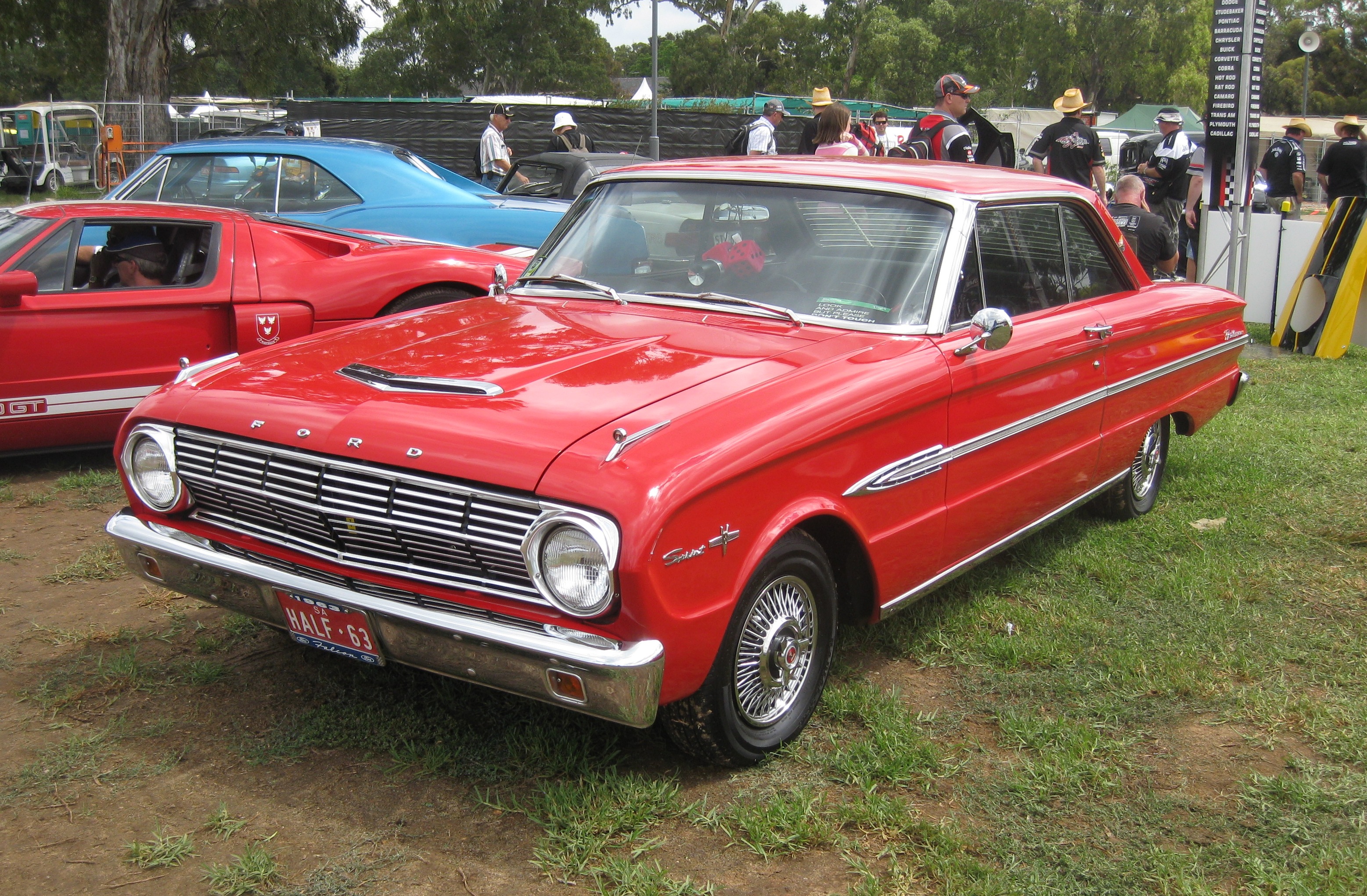
The Ford Falcon is a small car that Ford made in the 1960s. It was popular because it was cheap and easy to drive, making it a good first car for many people.
The fuel injected 302 is a type of engine that uses fuel injection technology to deliver fuel directly into the engine for better performance. It's often used in Ford cars, especially Mustangs.
The Saturn SC2 is a small car that was made by the Saturn brand. The 1999 version is known for being reliable and good on gas, which makes it a practical choice for many drivers.
OEM means Original Equipment Manufacturer. It's a term used for companies that make parts for cars that are sold under another brand's name. For example, Ford is an OEM because they make their own cars and parts.
FSAE is a competition for college students where they build small race cars and compete against each other. It's a great way for students to learn about car design and engineering.
A battery pack is like a large container filled with batteries that store energy for electric cars. It helps the car run on electricity instead of just gasoline.
An internal combustion engine is a type of engine that makes cars go by burning fuel like gasoline. It's what most cars used to have before electric cars became popular.
A plug-in hybrid is a car that can use both electricity and gasoline. You can charge it like an electric car, but it also has a gas engine for longer trips.
Performance engine building means making an engine stronger and faster by using better parts and designs. It's about improving how well the engine works.
Automotive wiring is the system of wires in a car that connects different parts, like lights and the engine. It's important for making sure everything works correctly.
Engine tuning is when you change how an engine works to make it faster or more efficient. This can include changing how much fuel it uses or when it ignites the fuel.
Car setup is about adjusting different parts of a car to make it handle better and drive the way you want. This can include changing the suspension and tire alignment.
Fabrication means making custom parts for cars. This can involve cutting and welding metal to create new pieces that fit the car better or improve its performance.
The Volkswagen Rabbit is a small car that is easy to drive and great for everyday use. It's known for being reliable and good on gas, making it a popular choice for many drivers.
Formula SAE is a competition for college students where they create and race small race cars. It helps students learn about car design and engineering in a practical way.
ASA carbon fiber infused is a strong material used in making parts for cars. It helps the parts resist heat and damage, making them last longer in tough conditions.
Epoxy is a strong glue that holds things together really well. It's used in cars to bond different materials, making sure they stay stuck together even under stress.
A 4-valve V10 engine has ten cylinders shaped like a 'V', and each cylinder has four openings for air and fuel. This helps the engine run more efficiently and powerfully.
The Mustang is a well-known sports car made by Ford. It's famous for being fast and stylish, and many people enjoy modifying it for racing or drifting.
The Dodge Viper is a very powerful sports car that has a big V10 engine, which means it can go really fast. It's known for its bold look and thrilling driving experience, but it can be a bit tricky to handle for beginners.
The Ford Excursion is a really big SUV that can carry a lot of people and things. It's great for towing and is perfect for families or anyone who needs a lot of space.
The Lincoln Navigator is a large, fancy SUV that offers a lot of space and comfort. It's designed for people who want a luxurious ride with plenty of features.
The Shelby Cobra is a famous sports car from the 1960s that is loved for being fast and lightweight. It was built to race and has a strong engine, making it a classic choice for car lovers.
The Lamborghini Gallardo is a super fancy sports car known for being very fast and having a cool design. It has a strong engine and is one of the most popular cars made by Lamborghini.
The Ford Edge is a type of vehicle called a crossover SUV, which means it's bigger than a car but not as big as a truck. It's designed for comfort and has plenty of space for passengers and cargo.
Ford is a well-known car company that makes many types of vehicles, including trucks and sports cars. They have been around for a long time and are famous for models like the Mustang.
LIVE
There's tons of Ford V10s that junk cars that you can get for close to nothing. Also, like we were seeing people, we're trying to tackle this, make a Ford Val V10, and no one ever, you know, was able to complete it. So that was like kind of the, you know what? Let's see if we can do it. Yeah, let's see if we could do this shit, right? Let's see if we, what we got.
And in podcast, I'm Andre, your host. And what do you do if you want an F1 sounding V10, but you don't have the budget for perhaps a Lexus LFA engine, or maybe a career GT Porsche engine? Well, you build it yourself, obviously. And that's exactly what Jack and Diego from the YouTube channel, build it yourself, have done.
They took a Ford V10 2 valve truck engine that no one really considers as a performance engine and decided to base this as their build for a high revving, high power naturally aspirated V10.
First thing you're going to need if you want to do that is to ditch the 2 valve head and go with a 4 valve design. But for don't make a 4 valve V10 cylinder head. So what do you do here? Well, of course you take two cylinder heads.
And you cut them apart and you weld them together. And that's just as challenging and difficult as it sounds. But of course, Jack and Diego have managed.
Today, we talked to Jack and Diego about their background, how they build up their skill set that they've gotten, how they're leveraging a lot of the technology available that's now starting to become affordable to us at the enthusiast level.
I'm talking here about technology like 3D scanning, 3D printing, and of course CAD. How they also learned their fabrication skills and how they do it yourself mentality has panned out with this particular project where this V10 has been put into a 2017 front wheel drive Ford Lincoln Continental, just a note here. It's definitely no longer front wheel drive. So don't worry about that.
This is actually an amazing build and an amazing amount of dedication that's gone into it. There's a lot to take away here for every enthusiast that's got a project going on in their shed.
As to what you can do to speed that project up and stick it out, set it through to the end and also leverage some of these technologies that are available to get a better final result.
Before we jump into our chat, for those who are new to the tune and podcast, high performance academy is an online training school, we specialize in teaching people how to build performance engines, how to tune EFI, how to construct wiring harnesses, we also cover topics on fabrication, 3D modeling and CAD, race drive education, and data logging, just to name a few.
You can find all of our courses at hpacademy.com, Ford slash courses. All of these courses are delivered in high definition video modules that you can watch from anywhere in the world provided you've got an internet connection.
This means you can learn from the comfort of your own place and you can learn at your own pace. All of our courses also come with a 60 day no questions asked money back guarantee.
So if you purchase them for any reason at all, decide it wasn't quite what you expected. No problem. Let us know. We'll give you a full refund.
And for podcast listeners, you can also use the coupon code podcast 75, that will get you $75 off the purchase of your very first HPA course.
We'll put the coupon code in the show notes to make it nice and easy for you to find. Lastly, if you like free stuff, then I've got a great deal for you.
We are constantly partnering with some of the biggest names in the aftermarket performance industry to give away some great prizes.
You can always find our latest prize at hpacademy.com, Ford slash giveaway. It might be an aftermarket ECU or Dash.
It could be some engine components or engine building tools or just about anything in between. They are great prizes and we will ship them free of charge to your door if you're the winner.
There's no tricks here. No purchase required to get your name into the drawer.
Alright, enough with our introduction. Let's get into our interview now.
Alright, Jack and Diego, welcome to the podcast. Thanks for joining us today.
And like we always do, let's start by finding out a little bit about your backgrounds. Maybe we'll start with Jack.
Yeah, so I was born in series in California. My parents owned the auto shop.
So really, I was born into a mechanical minded family. My dad, my grandpa, all did mechanic work. They owned the shop.
So I was there a lot and learned how to do automotive repair, just typical automotive repair, spark plugs, brakes, all that type of stuff.
So ever since I was young, I was going to the shop visiting and that's where I learned and got engaged with cars. So from an early age, I was just brought up into it.
Pre-distant to Tinker with cars for the rest of your life.
Correct, for the advice, just here it is. This is what you're going to do.
So there's always a difference between tinkering with cars or running an auto shop, though, and performance-rated stuff, which obviously you're both doing now.
So how did you kind of change the trajectory to the performance side of things?
I mean, you know, working on cars like, you know, doing brakes and spark plugs. It's not really, you know, it's a job.
Yeah, it's not fun. So it's work. But I always was interested in automotive and cars and one, you know, get into performance type of cars.
So like my first car was a 64 Ford Falcon that I still have. I bought that when I was like 15 years old, so just in high school.
And I wanted to do an engine swap. So I swapped in fuel injected 302. I had the shop there. So I was able to use that, you know, and that was my my first automotive project, I would say.
Up until then, you know, I was always reading Jags and Summit and choosing out parts from the catalog. I'm going to build this big block for it.
So I would spec it out in school, but, you know, didn't have the money to do that.
The number of builds I've done in my head that have never come to fruition. And honestly, that's a great thing, both financially and from a practicality standpoint.
Sometimes they're just better left in your imagination, much cheaper place to build cars.
Yeah, all right. Let's just get Diego to the same point. So at this point, you've obviously done your first engine swap. You're at high school. So Diego, give us your your quick background.
Yeah, I had a very different growing up. So I didn't really touch my first car until I was 18 when I was able to buy my first.
It was a 1999 Saturn SC2 3 door.
Yeah, I mean, I was always a hands on person from, I mean, I was I was very into like Legos and puzzles and stuff. So I just like using my hands building things.
But I didn't really get into cars until I started playing.
Funny enough, Gran Turismo need for speed like video games is what got me into cars and then just I think naturally my love for using my hands and then cars can I just got me into this level where
as soon as I got my first car, I remember the first thing was I googled how to change your oil.
And that's the first thing I did on my car. I changed the oil. I changed the transmission oil. Then I got like started doing like bolt on stuff.
I got an intake for that car. I changed the wheels, brakes and it has kind of progressed into over the years more and more and more.
I mean, ironically, most of the stuff I've done or learned has been through YouTube watching videos of people doing it, absorbing it and then trying it myself.
It's definitely a valid way of learning these skills. Unfortunately for me, back when I was trying to build my first drag car, it wasn't, it wasn't an existence.
So I had to kind of muddle along and figure it out the hard way, you know, scrolling forums back then was kind of kind of the way in that I'm just showing my age so maybe I'll pipe down.
In terms of sort of your formal education and qualifications, if you need to go up to give us a rundown on that.
Sure. I think it's kind of the same for both of us because we went to school together. That's how we met.
So we're both mechanical engineers. We went to school in California. And Davis, UC Davis is right. And yeah, so basically same education between the two of us. That's how we met.
Funny enough, we didn't really talk much in college. I think we had like maybe one class together. I mean, we did formula AAC, which is kind of I think.
Okay. At this point, I feel like we almost now have a prerequisite in order to be a guest on this podcast. You have to tick the box of mechanical engineering and formulate essay.
Yeah, it's I would say maybe 60 or 70% of our guests have really gone down that path. So it's a proven proven way to success.
It's definitely a nice segue, right? Yeah. It's like the first kind of hands-on experience you get with that type of setting.
Yeah, not unfortunately when I went through uni for me essay here in New Zealand just wasn't a thing at my university.
And I was always a little jealous of the universities that had that. I mean, I think just from what I know about it, the people we've talked to on the podcast.
It's definitely going to set you up for success if you want to make a career in the performance automotive industry.
I'm interested though mechanical engineers, we discuss many times as such a broad field and can be applied to numerous industries.
So did you go into mechanical engineering with the intention of being somewhere in the automotive field?
Personally, no. I just happened to get a job in the automotive industry out of college.
And I really don't like interviews like you know job interviews or like having to apply and stuff.
So I kind of just I took the first job I got basically. Okay.
And that's how I ended up here. You know, worked that great. So it will fill us in. What was that job?
I worked at Ford Ford. Okay. Right. And what's that sort of look like? What's the what's the daily?
Yeah. So I work in the product development group. I work in the in the brakes department.
So multiple projects, but basically in the work in the group that works on producing brake systems for most of our vehicles.
A couple of people I've talked to have sort of worked for larger OEs.
I just respect here some of the the job sounds. Maybe how would I put this?
Not overly engaging or in thrilling. You know, there'll be a guy who works on the the left front indicator of XYZ model for three years.
And then moves on to maybe a big step up the headlight on the upcoming model. Is that is that sort of reality?
I think yes, there's certainly exciting times like when there's a problem that you get to be very engaged in.
You know, like I like urgent things that you have to kind of fix quickly. You work with a lot with suppliers with the plant.
But I think the majority of the time just by the nature of how long that product development cycle is, right.
You're going to go through periods of time where you're just pressing buttons, you know, sending emails, presentations, but not a lot progress.
Certainly not a lot of hands on. I barely ever touched the parts I work on.
Okay. Okay. All right. Let's let's switch thoughts. Continue your story.
It's similar. So yeah, you know, like I said, I was always around cars and I knew I wanted to do more with cars but more of the brain side.
So I wanted to go into mechanical engineering, gotten to UC Davis and did mechanical engineering there.
But I always wanted to work at a OEM. That was a goal, I would say, but I didn't think I would be able to achieve it.
So when, you know, I applied to multiple places, did few interviews, but luckily I also got hired at Ford.
They liked the FSAE guys. So I had my initial interview there at the event. So that's how I got into that.
And that was the job I would have wanted. Instead of doing more performance or breaks or some physical, I'm in the hybrid electrified vehicle division.
So I work on, right now I'm doing like a battery systems battery pack. So that's my realm of expertise set.
So I had Chris here just with the full EV hybrid internal combustion debate was sort of seeing a big drive over the last 10 years I guess towards full EV.
I feel as almost a bit of a pushback now against full EV. We're seeing other manufacturers like Toyota and race hybrid.
Where do you kind of see the future with your insight and your experience?
Well, to satisfy the most people, the plug-in hybrid seems to be the way the market is going to trend, right, because you're going to get the ability to have gas and electric.
So when you're cruising around town, right, you don't need the mileage, you don't have the range anxiety.
But then if you want to take the car farther, you're going to have the gas option to take you there.
The only drawback of course is cost and complexity of the system.
I'm glad you brought that up. That's kind of one of the hurdles I kind of see with it.
Obviously they're out there as proven it works. But now you've got kind of the complexity of both an electric vehicle and an internal combustion engine.
You've got two systems that I don't know, could maybe join up to double the potential faults that we'll see in the future. I don't know.
That's a risk I see of that. It might be a stop gap. I don't know what the final solution.
I really think electrified is the right solution for an appliance vehicle.
You want to get to A to B. You want to do it most efficiently, full electric.
But tell battery gets caught up with the demands of users or people acclimate to that mentality.
P-heav is going to be the way we go.
That's fair, totally understandable. It's pretty clear to see why both of you have gravitated towards forward-based projects.
Now that I've got a little bit of insight into the backstory.
We've essentially got your qualifications and we know where you're working and what you're doing.
In terms of the skills that you use on the Build It Yourself YouTube channel, what would you say individually each of your key skills are?
Let's start with Jack.
Actually, I don't think I've pondered that question.
If I were to say something, it would be really choosing something that I want to do and following through that would be my skillset.
That's how to see the endon actually.
Being meticulous and trying to get too deep into the details almost, but trying to figure out how to achieve that solution.
My skillset, that's not like metal working or welding or X, Y and Z, but that means to an end.
That's what drives my ability to learn these things.
Welding, I would say, is one of my passions from doing all this work. I really do enjoy welding.
I took a class to try to get better. I did most of the welding on the car so far.
It's like, I enjoy that. I don't know if I'm good at it or necessarily going to do that for a future, for a job, but I just enjoy doing a melting metal.
It's fun to say that because I remember you hating your day after welding the whole exhaust system.
You're like, I'm done with welding for a week doing that in a short time is not fun.
I used to do a mild amount of welding and particularly with TIG, I think it's a combination.
Understanding the technical process, basically, how it works and how to set up your machine.
Clearly, no amount of practice on the end of the torch is going to get you good results if you've just got your setup completely wrong.
But I think once you understand that and you've got your setup dialed in, going from average results to weld porn results is literally hundreds of not thousands of hours just getting the practice in.
And that's the part that I kind of never really sort of got to that level. I just had too much other stuff that I was doing so it's hard to focus on just one thing.
All right, Diego, give us your tackle on that.
Yeah, let's see.
So I think for me, I just like doing things, fixing things, like solving problems.
And stuff like this is like a good chance for me. I think like you mentioned, a lot of my day job is pretty mundane, I'll say.
So this is kind of like, okay, I get to do the stuff that I actually enjoy.
And for me, it's just learning new things, using my hands to actually fabricate things.
I love just building things and I'm really into like Frankenstein type of builds.
So this was clearly a fun idea in my head for a while.
You know, we were both thinking about this and it was just something that I really wanted to do and I like learning things.
So I didn't really have any fabrication experience before we started this.
It's all kind of been a learning experience.
I think the willingness of wanting to do it and just, you know, I know I'm not going to be the best at any particular thing, but I just want to try it.
See what I can improve on.
And I don't know, I think we compliment each other very well because Jack is very much that engineering mindset is always there.
He wants to find the optimal, best, most efficient way of doing things.
And I feel like sometimes that hinders when you actually do it.
And then I'm just like, let's just try to torch and start cutting or whatever.
Yeah, I think though, that synergy between the two of you, Jack, maybe getting stuck too down in the weeds with analysis paralysis.
You know, if left to his own devices maybe would never see the light of day, nothing would come to fruition.
Maybe the other side of things with you might be, it gets done a little too rough and ready, but you get the job done.
So when you kind of combine that, you get the best of both worlds.
In terms of what I see on your YouTube channel though, you're really heavily leveraging a lot of the technology that has more recently dropped to what I'd call sort of affordable level.
At the enthusiast sort of in the enthusiast market.
So obviously, you've already talked about tick welding and that's an essential part.
But I'm more talking here about 3D scanning and 3D printing.
How hard is it to go from zero to learning those skills?
And obviously modeling with CAD comes into this as well, the three sort of go hand in hand.
I mean the 3D scanning side of it, I think I would say is pretty low to moderate of an investment in terms of like building up the skill set.
It's relatively simple, right? It's almost like pointing a light at a thing and picking up the scan.
Of course, there's more intricacies into it like markers and colors of the material reflectivity.
How far you shoot things gives you better scans.
And then also adjusting, making sure you've got the scope of what you want to scan to get what you need done done, right?
You don't need a perfect scan of stuff because you're going to get stuck, right? Keeping scanning.
But you've got to know that balance like, okay, this is my final objective with the scan.
Let me make sure to figure out I need this and this and this.
And another thing is like figuring out how you want to scan all those parts because you can't scan it usually all together.
So how to separate the scans and then mesh it back together again to achieve your objective of whatever you're trying to do.
I think the scanning side is not super.
I mean, it's true, like we had zero experience with three scanning before we got that first Morocco scanner all in one.
And I think we picked it up pretty quickly.
And we did the whole headers.
Yeah, that's really what helped us design and work on the headers.
It was really the far first time ever using that type of technology.
So it just shows that you just do it, learn along the way and it's pretty easy to get.
I think as well, just that enthusiast level now probably was only five years ago where for a worthwhile scanner,
you were probably looking at the vicinity of 5k USD plus probably more likely 10k USD.
Now we've got a range of options that are sort of in that sub 2000 USD price point,
which at that point obviously it's not chump change.
It's not going to be sort of walking around money for most people but you know, it's a very powerful tool.
You can leverage it on so many projects.
So it is actually a really viable addition to most people's tool works.
Yeah, I mean, the amount of possibilities in the locks is, it's astounding.
Once you're able to put this thing into the computer, then there's the second half,
which we haven't talked about yet is the CAD side, which I think I have a little more reservations on about simplicity of that.
But the scanning side really does allow you to take your design to a high level versus, you know,
like the headers was a good example.
We, we 3D scanned the whole thing and catted it in, in CAD.
And we're able to get, you know, angles down to the degree.
But then we also printed, you know, the like one level below is like printing those little pucks
or a mega sets of fabrication.
Yeah, and like trying to jig up the header that way and just the amount of, I don't know,
obscurity of doing it and the difficulty.
It's just kind of crazy how, how, how you can progress the design to such an advance
state with 3D scanning, right?
That's so, it's a valuable tool.
If you're a fan of the podcast and you're interested in topics like engine tuning,
automotive wiring, performance engine building, 3D modeling and CAD,
or anything else in the high performance industry, I have something that you might be interested in.
Introducing the high performance academy VIP package.
This package of courses gives you lifetime access to all of HPA's online training for one price.
These courses cover everything from tuning in reflashing petrol and diesel engines
through to motorsport wiring, engine building, fabrication, design, car setup and plenty more.
Right now, you can get $500 off high performance academies VIP package
using the code podcast500 at checkout.
But coming at VIP means you'll never pay for another course again.
You'll get instant access to all 40 plus courses we currently offer,
plus every new course we ever release in the future.
Want to define maps or tune with Winnoes, curious about Canvas devices,
or how CAD can help make your dream build a reality.
These in-depth topics, as well as many others, each have their own dedicated course
that are going to help you master whatever it is you want to learn.
And as a VIP member, you're not just getting the courses,
you'll also join HPA's online community with lifetime access to our member forums
and members webinar lessons.
Again, the code is podcast500 for that $500 discount.
Just head over to hpacademy.com to check out the full VIP package and everything it contains.
Alright, let's get back to the episode.
We'll jump into this header design because at the moment a lot of people are probably thinking
what on earth are you talking about.
We'll get into that, so that's fine.
But just a note on that, while we're talking about it here,
I don't know how you would design a five-in-one header per bank of cylinders
with such tight room, or at least from what I saw, not a lot of space.
Manually, without the technology you used,
and still come close to an equal-length design that's going to actually make sense.
Basically, what I'm saying here is I think it's unlocking possibilities
that would not be something you could do using existing technology.
So it is genuinely a game changer.
On that note, before we move on from the scanner,
though, it's a Revo point product that you're using correct.
Yeah.
So you mention all in one.
So traditionally in the scanners, we've got it work.
Most of them, you need to essentially connect that to a pretty powerful PC.
So it's not just the cost of the scanner.
It's the PC, you grab its card, et cetera, that you need.
So can you kind of explain the difference with these all-in-one products
and how they work?
Yeah, that was the first product we used.
It's called the Morocco.
It's basically all-in-one 3D scanners.
So it has the processor technology or the capability within the scanner.
It's got a screen on the scanner.
So you can basically go from the scan to like a final mesh product
all within the unit.
And then you just transfer it to the computer and you have your mesh.
And it's very...
I wouldn't say it's the most accurate, right?
It's definitely not...
You're not going to get like the highest level of scan.
But again, for something like what we were going for,
it worked out great, right?
You don't need precision down to 0.1 of a millimeter.
Yeah, exactly, exactly.
And I think one of the better things about these scanners,
especially nowadays, is that you don't really have to mess with any of the settings, right?
When you think I'm through scanning, I think most people,
even 3D printing to that point,
they think you have to start messing with the settings.
You've got to know,
what am I working with?
These products come basically tuned for you to just start.
Just making it easier for the end user.
You don't need a PhD in 3D scanning.
Exactly.
And people go down that rabbit hole a lot.
But I think that's one of the biggest enablers, right?
Obviously, besides cause,
they're very user-friendly.
They're set up for beginners, basically.
And we were.
All right.
Well, I mean, if you can make it work,
I think that's cut us to the product.
It's obviously meeting that target market.
Right.
So, obviously, as we discussed,
then hand in hand, this goes with CAT.
And Jack, as you mentioned, maybe it's like the higher barrier to entry,
not necessarily price point if you're using what a disk fusion.
Essentially, you can use that for free as a home enthusiast.
But the skillset needed.
So, is this a case of needs must?
Basically, you had a requirement to master CAD.
So, hence, you had to do it?
Yeah.
So for me, I mean,
the CAT takes a lot of practice.
It's a different, I think, thought process, too,
than usual.
If you want to do parts at a higher level,
instead of, you know, blocky type of parts.
But the way I learned it was actually in college through Formula SAE,
you know, we were responsible for a certain part of the car.
And so, I did a lot of the design work for the gearbox in that.
So, I was in solid works doing a lot of stuff there.
And just through personal projects that I've built up,
I've built up the CAT ability.
I don't think, you know,
I think there's a little bit of a difficulty
in just seeing the problem and being able to do it in CAD.
You have to fumble through it.
There's a lot of tools.
There's a lot of, you know,
I don't even know how to do surfacing really in CAD.
Like, surface modeling.
I only know kind of doing blocks and parts.
And so, it's a whole realm.
And it can be very difficult, I think.
You can fumble through it.
But you have to continue and just try to, again,
hit that final objective that you're going after.
You might have to make compromises.
But build up that skill set as you continue to do more and more projects.
Don't let it, you know, bring you down.
I think it takes a little more.
Yeah. Yeah.
I think that's a fair comment.
Now that you're out of college,
are you still using solid works given that that is fairly expensive paid license?
Or if you transition across to Fusion,
is there a problem transitioning if you were to go from one to the other?
You know, I've used Katia at work before.
And I use solid works still.
I prefer it.
It's what I learned in college.
So, I do see a difficulty switching.
It's a different toolbox, but all the same tools.
But it does bring a certain difficulty too.
You kind of have to relearn how to even model the parts depending on the software.
Yeah.
So, definitely with those two.
Yeah, I've actually tried Fusion 360.
Because you said it was free.
And a while back, I just wanted to see how
good it would transfer.
That also learned solid works in college.
That's what I use as well.
And it took me a while to get used to Fusion 360.
Just because of, you know, just coming from solid works.
Of course.
Yeah.
I think what you said there are same tools.
But yeah, obviously there's a different way of utilizing them with any software.
I can say that from our own Kat course,
the skills can transition across between different products.
I think probably it's fair to say that for most of the home enthusiasts,
Fusion probably is still the lowest hang fruit.
But essentially take away from this is you can work in any CAD package
and probably get results.
It's going to be a bit of a learning curve getting there.
In terms of the third part of this trifecta, of course,
is 3D printing.
And again, another technology that's just, you know,
been a game changer.
I wish I'd had access to this back when I was building my drag car.
But, you know, probably the technology probably almost didn't exist.
No, I know it did.
But it would have been at the probably $100,000 plus vicinity for these printers.
I guess for someone listening to this podcast,
who's thinking they don't need a 3D printer.
Can you give us some use cases of how you've used it more than you ever thought?
Sure.
I mean, I think like we've used 3D printing a lot throughout this build, right?
And it's not to say that maybe we couldn't have gotten to this point
without the 3D printer.
But I think it would have taken a lot longer and also a lot more money, right?
For us, the biggest benefit of 3D printing was trial prototyping.
I mean, we did prototyping from the actual intake,
not just the pipes, but the intake itself.
We 3D printed it entirely.
A bunch of revisions over and over before actually cutting the parts
and welding it together, right?
That was the first big, I think, project for us with 3D printing.
Hatters was a big one, right?
We 3D printed everything before cutting any pipes
because I think contrary to popular belief,
we're both very cheap.
We try and do things as budget as possible.
So we're very cost-conscious.
We don't want to start cutting metal before we have to.
So I think that's been in the intake, the video we just did.
I mean, we must have 3D printed a week straight
just to make sure the things were fitting perfectly
and they just saved so much time and money.
And again, the tools are now at least 3D printing especially.
You can get a good 3D printing for very cheap.
And again, you don't really have to mess with any settings.
You just print your part and go.
I'm just interested to get your take on this, I think.
You guys use a bamboo.
Yeah, we just used it for this video, right?
But you've got a Creality as well?
Yeah, we both have.
Okay.
So we started back when we employed Connor,
was sort of around COVID.
And back then, we bought our Creality 3D printer,
which was our first one.
And it works.
And you can 3D print a part.
But it's reliability is possibly questionable.
And I kind of see the guys spending about as much time,
leveling the bed and, you know, discarding failed prints.
Yeah.
And as I see parts actually coming off that printer.
Absolutely.
So it was a couple of years ago I think we kind of saw sense
and ponied up for the bamboo,
which is a far more expensive product.
But I mean, you see the two side by side.
You can see where the money goes.
But that seems more like how I'd put it as the Creality is maybe
perfect for the person who's a bit of a 3D printing nerd
and really wants to build the 3D printer.
The bamboo is more for someone who wants to send something
to print and get a finished product reliably every time.
But am I right on that?
Yeah.
That's how that's true.
Yeah.
I mean, that's one thing we talked about in the video, right?
Like, I have, I think, the most basic Creality I bought mine
eight years ago is the Ender 3.
Pretty sure that's like the second or first one they came out with.
I mean, that's the biggest problem I have.
It's always bed leveling.
I went through this issue for the longest time,
where it just wasn't print.
It would get clogged, mid print, the most annoying thing.
I almost quit.
I almost tore it out.
I mean, you just kept swapping all the parts.
I give up with the new printer.
I replace basically everything and it turns out you could have bought a new printer.
I really could have.
Yeah.
But I was, you know, I liked my printer.
So I just wanted to get it to where it's attached to the little 3D nerd,
3D printing nerd here.
Well, you know, funny enough, the only thing I had to do was switch
slicer software for some reason.
And that fixed.
And still can't imagine maybe I messed with some settings,
but it goes back to the point where these printers are really,
you don't have to mess with many of the settings.
I was proudly messing and they're just.
Well, I mean, that's the real beauty of the bamboo.
Right?
Like, put the part in.
Click.
And it's like it's the part.
The quality is almost, it's not in day compared to that.
And the ease and the speed.
Speed was a big thing, right?
Because you guys have a quality that takes.
Especially if you want to avoid failures, you kind of have to cut back
on the speed a little bit.
Yeah, I mean, it just compromises with everything and the compromise
with the bamboo was, I mean, back when we bought ours,
I think, you know, we were maybe $5,000 versus 1,000 for the Creality.
You know, they're in a different, different league price wise.
And it's obviously not to say that you can't get a good result
with a cheaper printer, but you obviously also need to have your eyes open
when you're going into this, understand what you're going to be getting
and what those compromises may look like.
You've talked about the use of that printer for prototyping.
And clearly, that's a very, very powerful use of it.
They can, however, be also used for final parts.
And we're getting a little out of order here
because we still haven't talked about the car or the engine,
but we will get there.
The intake system, that essentially, the 3D print
formed the basis of a final part.
Yeah.
So how does that work?
And are there any considerations around the material that you're using
for the print that is going to make it viable for a production part?
Yeah, I mean, so really, in the engine bay
or with the car, heat is probably the biggest thing.
And then, like, corrosive with fuel or compatibility with fuel
and different oils and stuff.
So, yeah, the intake piping, right?
We printed that out of a ASA carbon fiber infused.
Really, we didn't need the strength of carbon fiber
because what we ended up doing was coding it
with a carbon fiber chop and epoxying it.
So, that was really our core of what was the 3D print.
So, we just needed good stability at temperature.
Good, you know, some decent structure for us to be able to sand
and do all the stuff we need to.
But then also incorporate, like, flanges for,
we used, like, HD vangen clamps on the ends.
So, we were able to print all of that in there.
So, we needed good dimensional, you know, stability.
So, like, PLA is the most generic, cheap, you know, filament.
But that doesn't really withstand well in the engine bay due to temperature.
So, it'll soften and warp.
But the ASA and ABS, you know, is much more compatible,
more high tolerance to that.
So, that's where we printed all that stuff out of.
I mean, like, we've used a lot of finished parts out of it.
Like, a lot of bracket tree to hold fuel lines, fuel rails,
brake lines, fuel filter.
We printed all of that out of ASA or ABS.
ABS, ABS.
And those are our finished parts on the car.
So, I mean, it does produce functional parts
that you're able to use.
And you could do whatever you want with it, right?
Or I want to clip this one here in your heart.
I think there's the power, I say,
is just being able to come up with bespoke one off solutions
to problems that you couldn't solve
with off-the-shelf parts that already exist.
Hence giving a much cleaner, more professional finish look to a project.
So, yeah, huge, huge benefit.
Just in terms of those materials, you mentioned,
again, just to give some reference.
Could you give us, like, percentage-wise, you know,
what you'd pay more for maybe at the ASA
and ABS versus PLA?
Yeah, US dollars, right?
So, a roll of PLA is maybe $30.
When you step up to ABS, it's maybe $33.
ASA, maybe $35.
And then we start getting to the carbon filaments
to start, you know, add a couple more dollars.
So, it's not like, you know, tens or 20s or 30s.
It's like, you know, a couple percent from the price.
It does require, you know, a different printer capabilities,
though, right?
Higher temperature print heads.
Carbon fiber, especially hardened print, you know,
nozzles, and that's enough.
So, there's other cost facts.
Yeah, there's definitely levels.
But, you know, ABS is still a perfectly good material
to use, even for finished products.
And that is basically, I'd say, on par with PLA.
Okay.
Okay.
Great.
While we're talking about 3D printing technology,
I'm interested if you've sort of considered going on the path
of adding a reason printer to your lineup at the stage.
Yeah, that's a good one.
I mean, because resin printing really gives you
high fidelity quality parts.
That, to me, is the biggest draw.
A lure of it is like being able to give nice surface finish.
But I thought the, like, the big drawback is bed size.
And what do you call it?
UV curing.
Curing, yeah, curing it, but it's a good question.
We haven't really talked about it.
I guess I'd be interested in seeing how we can implement that
into the channel at some point, you know.
But...
I'm definitely a far superior.
I've been talking here, like, I'm an expert on 3D printing,
which I'm absolutely not.
That's why we employ Conner.
But I also, because I'm surrounded by this stuff,
I kind of almost know enough to be dangerous.
And our reason printer, you're absolutely right.
The bed size, the print size, is quite limiting.
The surface finish, amazing.
You give it to someone, and they wouldn't know necessarily
they've been 3D printed.
But then, when you couple that with the limited bed size,
and as soon as you're sort of talking surface finish,
that kind of goes out the window when you start
having to actually join multiple pieces together
in order to get to the finished product size.
But it's a very interesting technology,
and just another one that's sort of got to that price point
where it's semi-affordable to the enthusiast market.
I think we should probably get started with the podcast now.
It's all right, it sounds good.
Start talking about what your channel is best known for,
which of course is the 4-valve V10 modular Ford-based engine.
Before we dive deep into that, though,
your channel built it yourself,
can you give us a bit of a rundown on how
that came to be around documenting this build?
So, I think the name was kind of like we were just joking around,
basically.
But in terms of how we got started with the build,
we're basically neighbors at this point.
And we started working on this cheap Mustang
that we wanted to learn how to drift on.
And it's got this old 302.
It still runs, still drives.
But I don't know how, but it still does.
It looks like crazy.
Yeah, we started running into some measures
with the transmission blow-up.
I think twice now, in one of those instances,
we realized it was a block that's cracked.
It looked like it froze.
And so, in one of those things,
we started joking around about what we should do with the car.
And I think I threw in the, oh, we should V10 swap it.
But I was so long ago,
we've been talking about this for a while.
I don't even remember why I brought up a V10.
But I did.
And then he kind of went in being Jack, of course.
And he was like, well, this is a rabbit hole of,
oh, maybe we should make it, you know, high revving.
It should be a four valve.
And then, you know, the sound was the big thing to me.
I wanted it.
I didn't, I thought the V10s could sound cool,
but I just never found one afford one.
That was like, wow, this sounds great.
So I was like, well, can we rev this thing?
Like, it's even fire, right?
It has all of the ingredients.
Can we make this thing rev?
Yeah, I think that the V10 on its own is not enough.
The Dodge Viper is probably a classic example.
I don't have much experience with those,
but what I've heard, they definitely don't sound like Formula One car to me.
They do not.
Yeah, that's for sure.
They don't have that, that even fire, right?
Sound like LFA.
Porsche Pereira is close to perfect even fire,
but not quite, but still it's, you know, that sound on F1 car V10 era.
They rev so high that it, it almost sounds, you know,
even fire has that unique sound, even though it's not ideal,
or most of them are not a perfect even fire engine.
Can you give us a quick explanation of what even fire
versus odd fire means?
Because that's quite a key part here.
Particularly with the fact that the Viper V10 is an odd fire.
Correct, correct.
So even fire means, you know, between every cylinder firing event,
there's an even number of degrees happening
of crank rotation between each one.
So for a V10, you take, you know, there's two cycles to the crank
for the power stroke or one full power stroke.
So, you know, you divide that.
So it's 72 degrees on a V10.
So it's 720 degrees, two full revolutions for a full engine cycle.
Divide that by the number of cylinders.
We have 72 degrees.
Correct.
So that gives you the even, if you hit that number,
it's even fire a V8 same thing, you know,
if it's 8, 720 divided by 8 is 90 degrees.
So this comes down to the bank angle in order to get that even number
of degrees between firing.
Correct.
So, yeah, it is dependent on bank angle,
but there's a magic recipe that you can fake bank angle
by splitting split pin crank,
moving the crank shaft journals of adjacent banks relative to each other.
So that's your split pin.
For example, LFA is a perfect even fire.
It's a 72 degree bank angle with same pins, similar pin,
or straight pins.
So that gives you an even fire from the beginning.
The V10 Ford is a 90 degree bank angle,
but they move the pins relative to each other 18 degrees
to allow it to have that 72 distribution.
A Viper is this 90 degree bank, but the pin is shared,
and then you get, I don't know if I could call it off my head,
in 45, or it's a weird number between.
So you have a big space, small space,
big space, small space between the firing.
So it gives you a rumble.
And you'll hear that.
There's the other complexity with that.
I think these days it's probably pretty easy to do,
but back many, many years ago I tuned a Dodge Viper
that had a supercharger fitted to it.
And back then there were a limited number of issues
that could actually handle an odd fire engine,
because it's quite unique.
There's not that many out there in the wilderness, correct?
Yeah, yeah.
And it does, it's more processing power.
I think, you know, like Ford, we just got to see the car one time,
Ford, when they did their V10.
It was the original V10 and a Mustang, the Boss 351,
that had a shared pin on a 90 degree,
and they had to run two separate computers,
because they couldn't figure out how to get that, you know,
change an angle with one computer, so.
Coming back to that split pin crank design,
I can only assume that would be sort of a sacrifice in terms of strength
versus a common pin or shared pin.
I mean, yeah, I mean, right,
if you had the choice between a share pin and a split pin,
I think most people would go with the share pin.
And that was one of the biggest, I think, critics.
When we started this project,
people were basically saying, oh, this is never going to work.
The split pin is where you're going to fail or whatever, right?
Even though they're really, we actually were concerned about this initially,
so we did a little bit of research,
and there really isn't any cases out there where people have split their crank on the Ford V10.
The design, it's an engine that I'm definitely far from familiar with,
but again, just from sort of having a bit of a deep dive on your YouTube channel.
This is a two valve truck engine that the V10 was designed for.
So performance in terms of high power at high RPM just wasn't a consideration.
So the split pin would have been a no-brainer.
Yeah, that's right.
Yeah, there should be 500 RPM, red line or something around there.
So it didn't really, you know, not designed for higher RPM.
When Ford did their four valve, they made it a shared pin.
So, you know, I don't know why exactly they decided to do that.
But, you know, there are other notable split pins I do want to bring up
is like, you know, the 5.0 Gayardo that has a V10, the pre-LP they call them.
That was a split pin V10.
Then they went to the Audi designed V10.
That was a common pin.
And then even like GMV6 is our split pin to get a 90-degree V6 to have an even fire.
And those are robust. Everyone loves those guys.
So we thought there was a little bit of hearsay of saying,
oh, a split pin is going to break, you know, one of the biggest components or proponents
that I saw was like a twin turbo excursion making like 700 horsepower
and 1100 foot pounds of torque.
And he hasn't split his pin, but so.
I think the great thing with the internet is you are always going to be opening
yourselves up for a very aggressive comments made with a lot of assertion
about things that that person has not personally experienced at all.
The internet experts will absolutely tell you what will go wrong
with no personal experience.
So, yeah, sure, there's some engineering background to why it would be an inferior design.
But the question is, what was the safety margin built into that component to start with?
And are you going to be anywhere near it?
We talked before starting recording that it's also a factory forge crank.
So we weren't dealing with a cast crank that could be more problematic.
And I think people really don't give credit to just how over-engineered a lot of the OE parts are.
Back in my drag racing days, we used to use a billet crank shaft.
And at one point, I cracked that crank shaft, couldn't get hold of another one.
It's a hugely expensive put a $1,100 factory, 4G63 crank in this engine,
designed for 7,500 RPM, 300 horsepower.
We're making 1200 at the wheels and 11,000 RPM.
It lasted just as well as the billet crank.
I don't think too many people on face value would assume that that factory component
could go to that level.
I guess with this engine, the caterer is not so much the truck bottom-end, the truck V10.
It's really in the heads and that's where the trickiness comes in.
So there is no off-the-shelf Ford 4VL double overhead cam, cylinder head for a V10 that you could buy, correct?
That's right.
Yeah, I mean Ford just made a couple prototypes throughout the years,
but nothing that anyone could get their hands on.
They were taken with 2V, 3V, so that was, first iteration was 2V,
and then they went to 3V, but they also produced 2V with it to get more power with the 3V.
So that was all Ford's offerings.
Was there ever a consideration that either of those 2 or 3VL cylinder head designs
would be viable for the project, because that's going to be easy?
We've actually talked about that a lot.
We've built this thing, obviously it was a passion project,
and it's just interesting to build this.
Could we get something with similar results with a 2V, or a 3V?
I think as far as what is available aftermarket for stuff like that,
it's probably still not much, certainly more than the 4VL,
but obviously you don't have to deal with welded heads and custom cams.
So in that sense, it would be a much more attainable build, I think, a much easier build.
No doubt at all.
I would think you could achieve within like 90% of what, you know, 4VL head.
There's a benchmark already, too, right?
You have 4V, 3V, 2V, 4.6 mod motors, so just look at what a 2VL max effort look does.
The 3VL max effort, a 4VL max effort, compare them.
You can extrapolate that out, and you know where you're going to be.
You can see if it's worth it.
People build 2VL motors, but V8s even today, right?
Even though you have 4VL, so I think it's kind of, yeah, I think for us,
it was like, oh, well, this is, again, going back to kind of like a tribute engine,
you know, and it's part of the challenge, I guess, right?
Can we build these heads?
So this is where the challenge comes in essentially taking 2 4VL heads per bank,
cutting them not quite in half and then welding them together.
I distinctly remember a story from my old workshop back sort of 15 plus years ago now,
and a guy walked in the door, a young guy who had some champagne dreams maybe in a beer budget.
And it was always the story of people rather than walking the path that's well trodden with proven results,
we know the combination, it's going to probably not break the internet,
but it's going to get the job done for a reasonable cost.
Then there's the people who want to do something because it's different,
which I guess kind of covers you guys, we'll get back to that anyway.
And this guy walked in and said, I can't remember the engine he wanted to use now,
but essentially it was taking, let's call it a 2JZ,
and just cutting two cylinders off the back of it and welding it back together.
And he said, you know, just cut and shut it the block, like that was a thing.
And we're looking at him like, what planet are you from?
No, that's a terrible idea.
Yeah, here we are and turns out that cutting and shutting a cylinder heads a thing.
Alright, let's start with the obvious sort of challenges that are involved with welding two heads together
and all of the things that you have to get right to not just have an expensive oil and water sprinkler system.
Sure.
I mean, yeah, and it's overhead cam engine,
so people have done stuff with push rod engines, right?
I think a big trend was like Ford Inline 300, Inline 6s, they'll put LS heads,
a old story of like, or engine that they built was like Cleveland 351 heads on a Ford Inline 6 too.
You know, so people have been cutting up heads and welding them onto stuff,
but they don't have to worry about coolant.
Yeah, we have oil passages coolant and the cam boars lined up, right?
So those were the big, those were the big three.
Yeah, the big thing.
So, you know, the oil passages was relatively simple in terms of they kind of just had these two line drill boards in there.
So you can weld and put a cap over and weld up the cap that's kind of how we did it, that task.
But, you know, getting the cam boars to line up, that was another problem.
And it also compounded, so the heads we're using are from an aviator, or Lincoln aviator,
they're the same as the Cobra heads, they're the, you know, the four valve heads that Ford had.
And it just so happened to add confusion to us.
We got a set of heads from an aviator that had a rebuilt engine,
so that had a decked surface already.
And we didn't know until I think well into the welding process, right?
Yeah, it was like, why are these never lining up?
And, you know, we were, the way we were kind of lining them up was trying to put a cam core,
or a cam inside of there, and spinning it using, you know, like a...
If axle marker, or a marker, you know, with these for that glass from the pattern?
Yeah, so putting that on the cam's boars and spinning it, and then shimming it with aluminum foil.
To get it all right, and then torquing it down onto a block,
because we didn't have a big piece of metal to bolt all this stuff to,
so we're using the block to tighten it down, and then just welding back and forth,
and checking the cams and trying to guess, like, oh, it's binding a little this way.
Let's heat up this side.
Yeah, I mean, it was a learning experience, right?
I think doing it, we weren't really sure if it was going to work.
Well, I guess up until now, there wasn't a YouTube video you could watch about
how to weld two cylinder heads together.
Oh, no, absolutely not yet.
Unfortunately, we could have more water mistakes.
Yeah, and, you know, it kind of goes back to these are off the shelf parts,
so like, like Jack said, we went to a junkyard, picked up these heads,
even the engine itself was from a junkyard, so if it failed, you know,
we were out a couple hundred bucks, like, not a big deal, right?
But yeah, and the biggest challenge, I think, for that was the cooling system, right?
Is before welding it together, we had some time to think about,
one, how do we attach the heads together, right?
But they need some kind of, like, interface, like, do we have to machine the heads,
so they kind of interlock together to add more support?
Where do we cut them?
And then obviously, how do we prevent the oil and coolant from mixing
because we can't weld inside once they're together?
So, you know, I think the blocking off the coolant passages,
it kind of is not the best way if you're going to do it, you know,
I think, or if you want to do it the right way, but for us,
it was just the easiest path, and I think the idea was, well,
we can cool the heads, or both halves individually, right?
Ford had coolant inlets on both sides of the heads, so,
the cooling part, yeah, it's not ideal,
but I think we were fairly confident that we could cool the heads,
even though the block, or the passages between the two halves were blocked.
I think so far we haven't had, I mean, granted, we haven't really driven the car much,
but we really haven't had any issues with overheating.
So, it's obviously, it's worked.
I guess beyond the obvious that you've just mentioned,
not ending up with oil and water lakes,
you've got the damage or distortion that the amount of heat
you've got to pour into that carcin', it's a big old heat sink.
So, the amount of heat that you've got to put into that with the torch
is pretty significant, and that does a whole lot of ugly things
to a carcin', making it move around.
The other aspect, as well, is what it does to the heat treatment
on the deck surface of the head, because that's heat treated
to harden, essentially, to help with head gasket integrity,
head gasket sealing.
So, talk us through sort of the problems that involves...
I'm assuming with the deck surface, once you've welded,
that's as simple as taking it to any machine shop
and just getting into surface the head.
But, you know, what other issues did crop up with that?
Is the hardening a real problem, or is it just irrelevant?
For us, it has been, let's say, irrelevant in terms of,
we haven't had an issue with any bypass or gas bypassing,
or going into the cooling system or anything.
With terms of, you know, the head deck surface,
we were able to take it to the machine shop.
It needed a few cuts, they said, but it really didn't hurt us too much,
with an overhead cam engine, it can affect your timing,
your cam timing, but we fully degrade the engine.
So, we were able to compensate for whatever we needed to via cam timing with that.
But surface hardness, I don't think we really had...
There was no issue. We haven't pulled the head off.
Oh, no, we did torque the head.
We've, we've torque the head and pulled it back off,
but not after or any runtime, just like,
while we're setting it on and off and doing work.
And I don't remember seeing any depressions near the,
well, the surface or anything.
It's not something I've personally had experience with,
but of course, when you've got an engine that's had a blind head,
guess, get one of the things the machine shop will typically do
is check the surface hardness of the head.
Oh, I don't know. Maybe this will become a problem if you're running
a pair of turbos in north of 1200 horsepower,
and the cylinder pressure is much higher.
So, maybe at the level you're at, it's just not a concern.
Yeah.
Where you welded that head on the deck surfaces well
is essentially between two of the cylinders.
Quite close proximity to the valves on each side.
Is there any distortion of the valve seats due to the heat?
Is that something that required attention?
I mean, we got a full valve drop at the head shop,
but we, at least from the machine,
as we hidden specifically, could call out any complications
or any issues that he saw from from machining the head.
So, I mean, we reused all the seats, which is four valve heads
are known to have poor exhaust seat retention.
How they dropped a lot?
Yeah, the dropping exhaust valve seats.
Well, it's something to look forward to.
Yeah.
Yeah.
So, one of the recommendations is that if they don't spin
while you're cutting new seats,
you don't really need to change them necessarily.
I mean, for us, we have like 13 or 1 compression revenue,
8,000 RPM.
So, we probably should have done it,
but again, like we said, we're cost conscious.
So, we didn't opt to do that,
and they didn't have any issues with any of the seat spinning.
So, watch the space.
Yeah, right here.
Knock on wood.
All right.
Getting to the real core issue though,
line honing or line boring, the cam journal.
And we need this cam journal to be perfectly on-size,
and also perfectly aligned otherwise.
You're going to have a laundry list of problems
with your cam shafts and reliability.
So, again, from watching your videos,
no machine shop really seemed interested in taking this job on,
which surprised me.
Yeah, I mean, I don't think we really wanted to go that route, right?
We actually reached out to a lot of shops,
but no one would take on the job.
One is the custom head.
So, it's not like a common, I guess, setup.
And yeah, I guess it's just, you know,
we don't really know really any good machinist
or really a shop that was set up for that.
So, yeah, we kind of were forced into doing it ourselves in a way,
kind of the theme of the build or the channel anyways.
But yeah, I mean, it wasn't really our first option.
Yeah, it was a lot of going back and forth like,
oh, we're done.
No, we should try to do something, right?
See if it works.
And so, we were like researching,
they make, you know, line boring bars for two valve, three valve heads
to bore out the thing.
So, I thought maybe we could replicate this thing and do it ourselves.
Yeah.
I mean, that was another, you know, it's like,
I think what helped us in a way is that, yeah, like you said,
there was this tool, I don't think it's available anymore,
but there used to be back in the day,
a tool that you basically plucked to a drill
and you just lineboard your heads with,
which seems like probably wouldn't be the best results, right?
Like, with your drill, you don't have a lot of control.
How are you not even measuring what you're doing?
So, that kind of gave us a little bit of confidence,
but, you know, I happened to have a lay that home,
so we kind of just rigged up the setup
and we were going to use cam bearings.
So, I think, at least in my head,
as long as we got the boards to line up,
and we were able to get close to the spec
that was required for the cam boards,
we were probably going to be okay, you know,
the cams or the bearings can wear a little bit unevenly
and kind of even out, ideally, you know.
I think one of the benefits with that is
as well as the clearance on a cam bearing or a cam gen
or is typically not quite as mission critical,
was the likes of a main bearing or a conrod bearing.
So, maybe you've got a little bit more leniency,
I'm not too sure, never having done this.
Obviously, it's working.
So, once you've got that done,
the next obvious problem is a camshaft for this thing,
because you can't buy an off-the-shelf set of cams for a Ford V10.
Is it difficult to find a cam manufacturer
that's interested in doing this?
I mean, that was, I think,
that was another perfect example of
we're kind of forced into this,
doing it ourselves situation,
because I won't say there isn't.
We found companies that were willing to make the course for us,
even to make the full cams, right?
But again, it was either they couldn't do it
or if they could do it,
it was going to be significant amount of money, right?
They either had minimum order quantities that we didn't need
or it was just, they're kind of,
they're quoting themselves out,
because it was just something that no normal person
would ever pay.
They don't want their jobs,
so you check a stupidly large number out there
and then if the customer accepts it,
well, at least you're going to make a worthwhile amount of money
for your troubles.
Right, yes.
So, what was the solution then?
Well, we ended up basically,
so we designed the, you know,
we have the two valve camshafts
that came with the engine that we pulled.
So, we ended up reverse engineering
a set of four valve cams
and we catted course,
we were able to get a machine shop to make them
and then we did work with the real company
to grind the final parts,
bullet racing,
they machined that the final finish cams were us.
So, it was a,
that was a fun night, actually,
because we kind of,
it was one of the times
where we actually had to do like math,
figure out the firing order of this engine
and I'm like,
so yeah, that's basically what it took, you know,
we actually had the firing order backwards
the night before we sent out the file.
Yeah, it's like, wait a second.
Why are these?
Measure twice, come once.
That's a big, big guy.
I'm not making sense.
That would have been a very expensive file.
Absolutely. Yeah, we got,
there's a lot of luck in what we've got.
Sometimes it's better to be lucky than good.
I guess one obvious question here
and I think the answer is probably self-explanatory,
but still, I'll ask it,
why did you not consider,
did you consider any of the other available V10s
you've already mentioned,
the Guiardo talked about the Viper,
maybe not the most ideal solution.
I think Audi also make a V10
that's similar in architecture to the Lamborghini V10,
but none of the parts are interchangeable.
Those are relatively cheap.
So there are rather options out there,
but you guys seem to be forward through and through.
Was that the sort of decider?
Yeah, I'd say that's definitely part of it.
Again, it has that historical,
nostalgic type of tie to it,
but also,
and it's something we touched on a couple of our videos.
There's tons of Ford V10s
that junk cars that you can get for close to nothing.
Obviously, a Viper engine is significantly more expensive.
You're not going to find that at a junk yard,
same with the Audi V10s.
You probably have to get that from eBay or some...
So you're going from a few hundred dollars
to potentially a few thousand dollars or more.
Yeah, thousands, right?
And I think one of the benefits of this motor
is that it's part of their modular family.
So, you know, pistons, rods,
those are all the cam or bearings.
They're off the shelf because they're the same as the V8s.
So in terms of custom parts,
even though we didn't go with stock components,
you can buy off the shelf bottom end parts.
Yeah, that definitely eases the financial pain
when you're building an engine,
always much more expensive when you're working with an engine
where there's no aftermarket support and everything
has to be one-off customs.
You can easily double the cost of your pistons and rods, for example.
Right, yeah.
There's also the challenge of...
I mean, sure, the Ford side of it,
but also, like we were seeing people
and were trying to tackle this,
make a 4-valve V10
and no one ever, you know,
was able to complete it.
That was kind of the, you know what?
Let's see if we can do it.
Yeah, let's see if we can do this shit, right?
Let's see if we got,
because it started, like I said,
swapping it into the Mustang.
So that's kind of where the Ford maybe started V10 again.
Yeah, I guess.
And maybe we can be the ones
to hit this project and see if we could do it.
I think there's something to be said for the content
you can create as well.
I mean, it's not going to be such compelling content
picking up Lamborghini V10 from eBay
and making some engine mounts
and adapting it into a chassis.
Yeah, it'd be a cool result.
But, well, doing some cylinder heads up,
that's not something you see every day.
Right, yeah.
So, I mean, I think the engine just...
it definitely wasn't the easiest project,
but it was a cool learning experience
and it paid off, I think,
because even fireness of it was another...
the sound that it should be capable of, right?
There's those YouTube videos of the...
the lights, right?
And Ford V10 and LFA have the same light sound.
So, like, man, this thing should make some signal.
So, it should ideally sound pretty much like an LFA.
Correct, correct.
Where the other V10s, you know,
the Gallardo's, the one I could think of,
that isn't even fire, you know, BMW Viper.
You're not going to get a career engine anyway.
So, like, it's hard to get that sound in there.
All right.
Jumping just a bit ahead,
but we've talked about everything else with this engine.
So, we might as well talk about the results to date.
Do you have a target for power and red line from the outset?
I'm guessing you did,
because everything you select for the engine
is going to really be driven by that final result.
Yeah.
So, you know, one of the first texts about the engine
that I sent to this guy was,
can we rev it to 8,000 RPM?
So, for some reason,
I was just...
it was locked in stone when he sent that text.
So, like, that's been the target since that very beginning day.
It's naturally aspirated 8,000 RPM.
Which you had shaved.
Yeah, we did.
We have 80, almost 8,300 RPM.
It hit some red line point,
I think, when I missed shift or something.
But it did 83.
Perfect.
And, of course, the big one.
How much power does it make?
Yeah, right now.
We got to 4.95 to the wheels.
Yeah, so 4.95 wheel.
We started running out of fuel at the dyno.
So, kind of had to stop there.
Then we got goals.
So, I think the plan is to revamp the fuel system a little bit more.
And hopefully, that'll get us all the way there.
That's...
That's no slouch, though.
And I mean, ultimately, well,
it's not add up the number of hours of labour that you've both poured into it.
But I can imagine, you know,
just that the parts outlay would not be kind of bankrupting.
Yeah, it's...
I mean, I'm here for a while.
Yeah, yeah.
I have absolutely no idea.
Alright, the next part we need to talk about is the chassis that you chose to put this in.
You talked about the Mustang.
But it's not a Mustang and we'd bread our podcast producer.
First sort of told me about you guys and this Lincoln Continental.
And I'm kind of thinking on to Raj, you know, 63, 64.
I think that was convertible to the side doors.
And I'm thinking, it's an interesting combination.
But yeah, I'm down for this.
But it's not that...
It's not that Lincoln Continental.
What model is it?
Well, what year is it?
It's a 2017 Lincoln Continental.
So it's basically a different typehead from the Ford Cos of the City Ford platform.
So the Fusion's the Edge.
Yeah, it's the front wheel drive based sedan.
You know, so all the good stuff, you know.
On face value, that would not be the ideal candidate for a V10 rear-wheel drive swap.
What drove this decision?
Yeah, why don't you answer that one?
So, you know, for what...
Do you guys get that car in New Zealand at all?
Did you guys?
Absolutely not.
No.
Okay.
So you're probably...
So I mean, you've probably seen in pictures and videos on you.
But the car actually looks really nice.
I think to me, that's probably one of the biggest misses.
I think a Ford at the time we're Lincoln.
Because that car, you look at it.
It really deserves a proper, you know, engine transmission chassis setup.
Granted, you know, people are happy with, you know,
where you can get the twin turbo V6.
And that makes decent power.
So it's not like it's not capable.
But, you know, it's not the sedan grand touring car that I think it should have been.
So this...
I had this...
Again, going back to the fact that I like to make Frankenstein builds in my head.
This was something that one time I said, oh, you know what?
I'd love to take one of these and swap GT350 drivetrain into it.
So, BA, you know, six-speed rear-wheel drive.
But that was always just like...
I was never going to do it.
It was just like, oh, that would be really cool.
And then, I'm still not sure how I convinced this guy to eventually go this route.
But we found this car on the...
In co-part.
And it just happened to be very cheap.
It was wrecked and the front end, which is perfect because we were going to have to tear all that up anyways.
And it so happened to have a Michigan title.
You know, and we're in Michigan.
Clean title.
Clean title.
Which means we were able...
We can ensure that we can register it.
I mean, it was kind of like...
Everything kind of just came together.
And we made a bed for it.
Sidebar here and really not relevant.
But I hear this clean title pop up all the time.
What is a dirty title?
How does that happen?
And what's the relevance of this clean title?
Yeah, so I guess...
I don't know how...
What's like a good example on this side of the world.
But here we have salvage title, clean title, rebuilt title, right?
And it just ultimately depends on...
Like a salvage title is basically a car that insurance company has ridden off.
So if you've got a salvage title vehicle, does that mean that you couldn't legally put that back on the road?
It's basically a parts car or you could turn into a race car.
Yeah, you can put it back on the road, but you have to repair it and get it inspected to get it branded or rebuilt title.
And then you can register, at least in Michigan.
Every state is a little different.
So what I'm saying is for Michigan.
So then you've got this rebuilt title hanging over it, though.
So that's going to be visible when you go and sell it and will affect the value of the car.
Exactly, correct.
And for what we're doing, we couldn't do this work and get a rebranded title because there's no worthyness.
So it would be only a car you can't register at.
Okay, not cool.
I've got all that now understood, thanks for the clarification.
All right, so you've got this crash car.
How involved does it to convert it to real drive and then fit this VTN into it?
I mean, so the rear, we start with the rear end and like Diego said, it's based on the fusion.
So someone else is actually rear swapped or rear well drive swapped the fusion.
His name is Matt Sopa.
So he built a five liter Mustang and a fusion, a pretty sick drift car that he made.
So there was some precedent in in what it was going to take kind of or what what needed to get done.
So the rear was almost bolt in relative to what we do is bolt in.
We just had to cut the front mounts off and move them around.
But the rear rear parts of the mounts just bolted in to the stock subframe.
The front end took a whole development or you know, we had to make brackets to come down to the subframe because the front wheel drive subframe is massive and supported by mounts at four corners.
So that we had to cut everything all out and make new brackets and stuff.
But I mean, it wasn't that hard.
Yeah, I mean, honestly, I think the hardest part was figuring out where everything needed to go for it to line up properly.
Right? Because we had obviously we had the to fit the engine and transmission.
So, you know, we had to cut out the entire firewall and the transcription tunnel.
Then line trying to line up the wheel centers, the height of the engine, the subframe.
We wanted to make sure the engine fit under the stock hood of the continental.
So that was definitely, you know, something we had to mess with.
But yeah, you know, it wasn't like, it was difficult certainly.
But again, it was something that you kind of just, you know,
well, the couple of brackets here trial and error and then once you have everything lined up, you know, if you can weld, you can cut some metal.
I think it's fairly attainable.
The sheet metal forming was a big thing, like making the firewall and the trans tunnel, I would say that was.
Yeah, I mean, you could probably go the very basic bare bones, right?
Just weld a bunch of flat sheet metal panels and close the gap.
We were trying to make it a little nicer.
So we had to like buy this bead rolling tool and learn how to bead roll.
Honestly, we still can't really do straight, but it worked out okay.
Yeah, that bead rolling is harder than it looks.
And then you see some of the really intricate panels that someone's rolled patterns into.
I just can't do that.
They're artists.
Yeah, artists.
I mean, we could never match the ends.
If you really, if you look really closely, you'll see that the bead is like this, you know.
But the bead rolling in those bigger metal panels as well as not just for aesthetic.
It actually does do a lot to add stiffness to the panel correct.
Yeah, yeah, definitely.
All right, let's talk a little bit more about the heater and exhaust design.
Because I know that you guys went really sort of deep down a rabbit hole here on how the exhaust was going to affect what the engine sounded like.
So can you give us maybe a sort of a quick physics lesson on how all of this works?
You hear the sound, guys.
All right.
I mean, so yeah, the prime objectives, you know, with the headers was equal length, right?
Because we want, again, it's an even fire engine.
It's the even oscillating fire, right?
So each bank fires sequentially left, right, left, right.
So the goal is making sure all those pulses get at the collector at exactly the same time.
And right next to each other.
So we have, we made sure the lengths were the same, right?
Equal length.
And then we had a package that in the engine bay, which required us to do the 3D scanning, a lot of cadding, a lot of the 3D printing parts, make sure it all fits.
And yeah, we wanted to do use 5 to 1 collectors.
A lot of people want wanting 10 to 1 collectors, but just packaging a 10 to 1 system would, it just would be unpractical.
Yeah, that'd be a mission.
Correct.
And it requires even longer runner links.
So the runner links are selected for our target power RPM, right?
That's 7500 to 8000 RPM.
So, you know, we have like a 30 inch long runner to target that horsepower goal.
And then, so if you have a 10 to 1, you got to route it there, that kind of limits you on length.
But so that was a goal.
And we also used metal 3D printing to make the collectors.
So that was something that was fun to do.
We like made spiral collectors.
The spirulness didn't really affect the sound, but it was a fun project to have that
and like integrate the V-band clamps and use spring, you know, retainers on the collectors.
So, you know, making sure we got them all 5 together, sequentially firing.
So they're not bouncing around.
Yeah, she got it around in a circle.
Correct. And the collector ran a circle.
So that was the heart of making sure all those pulses rely, you know, hit the collector.
That was the first step.
Then the part I think a lot of people miss is the rest of the exhaust system also matters.
So in there, we were targeting equal length again for each bank, right?
We were looking at LFA to see how they, because they're a front engine car with rear exhaust.
One of the benefits of a rear engine car is you have a much shorter exhaust length.
So it does affect the sound because your exhaust length is shorter.
And the length of your exhaust, like an organ pipe, changes the sound.
I think that will be a part that a lot of people just wouldn't consider the length of the actual exhaust system.
Like you say, most people just forget about that part of it.
It's the heated design.
Yeah, yeah.
Yeah, it comes into play and that's why the LFA was kind of like a key one.
While this car sounds so great, the engine's in the front.
How are they doing this, right?
What are they, what are they kind of doing?
So we modeled the exhaust system to kind of mimic that in terms of the banks are completely separate.
A lot of people want to ex pipe or some crossover.
Yeah, some something in the center.
So that's kind of like counterintuitive.
But I think what it'll, we do have a crossover.
So that was the next thing that the LFA has the, they merge them way back to,
as far in the muffler.
So way back in the car, right, at the tips there.
So we needed to bring ours together because the more pulses you can get to happen together,
the higher the pitch is going to be, right?
So if you had a VA and you just had true doors,
you're only going to hear those four banks.
But when you bring them together with like a next pipe,
it increases that frequency.
So we made sure to bring them together.
And then the real key piece was the, what we call it,
we called the resonator chamber, right?
So we, we sound analyzed different cars, the cars that we think sound great, right?
LFA, Mazeza 5 rotor, that thing sounds super sick.
Formula 1 V10s, right?
The Carrera GT and they all have that intrinsic,
we call it at the 500 hertz frequency sound.
That's the predominant sound of those cars.
So the next question was, you know, an exhaust system is like an organ, right?
The length of the pipe does change how the, the, the frequencies resonate.
So now how do we make an organ pipe in our exhaust system to target this 500 hertz?
So we used a lot of chat GPT or AI and some, you know,
like music or sound wave theories to choose the resonator, right?
Stepping the diameter of the pipe introduces reflections in the exhaust pulses.
So making sure we have enough step of area and the right volume of that,
not volume, but area of length of that resonator chamber.
Allow us to target that frequency.
So I mean, every step of that exhaust system was with the intent of making sure
we can try to, you know, harness or get that LFA screech that F1 sound.
I mean, from what I've heard, it's come pretty close.
Like that definitely has that Formula 1 V10 sound.
That means a lot. Thank you.
It's always great when you have a theory run through the theory
and it actually pans out in reality.
Have you sort of done an analysis of the final exhaust night to see
we sort of landed in that 500 hertz?
Yeah, it was actually very close.
We put it as a little, I guess it was like the end credit of the exhaust video.
But yeah, we actually analyzed one of the clips that we used in the video
and it was, you could see it, it was right, right there.
Perfect.
I've always sort of thought that when it comes to exhaust manifold,
exhaust design and general, I think, on a naturally aspirated engine,
forced induction is just a whole different animal.
I kind of feel like there's obviously a lot of theory around the lengths,
header diameters, steps on the header, et cetera,
in order to target the power band that you want.
And then there's kind of like a melding between the science and the art.
And I mean, where this comes from, I remember a customer back in my old shop
and we had this combination, I think it was a Honda B series.
And it was off the shelf parts.
And it made good numbers.
It was not nothing earth shattering.
And this customer went to a manufacturer in the US
who made this beautiful header system.
And it was all designed by computer to be the right diameters, lengths, et cetera.
And it lost eight kilowatts or something.
Which for a B-18C was a significant amount.
So the guys out of pocket, thousands and thousands of dollars
for this part that just didn't work as well.
And you sort of think, well, you know,
ultimately if you are trying to get the most out of this particular engine,
or in your case, you know, trying to design for a particular frequency,
you know, it might take several iterations,
but refreshingly it took one for you guys.
So congratulations.
Thank you, thank you.
We do have a few things to tune with it.
Like it kind of bells just the way we just made it.
It was not as strong as it should be on that resonator.
It's just a can, a super thin can.
And you can hear ringing very low RPMs.
But so you got to dress that.
So I think we're, we've got lucky.
Which I think has a big part of it.
Not to say that we didn't try to do it.
But like you said, I think most times you have to iterate
and, you know, go through it.
So with exhaust, I say we got pretty lucky.
And if anything, that's a testament of kind of what the engine is capable of, right?
So the fact that we chose the end is even fire V10.
Like the foundation was there.
All it took was just that little extra push
to extract that potential.
One more little anecdote on the sensitivity of a naturally aspirated engine
to the exhaust design.
And I may have actually told the store in the podcast
but everyone can just listen again if they've heard the story.
I was tuning a Honda B80C drag car.
And it was an all motor design.
And for simplicity and lightweight,
the exhaust just came straight out the front bumper.
Which for my dyno pack hub dyno was a problem
because it kind of pointed straight at the dyno.
And we were there to update the ECU from something or other
to I think it was to a MoTeC.
So none of the hardware on the engine changed.
And anyway, I laid down some baseline runs on the existing ECU
just to see where we were.
And then we widened the new ECU.
And as part of setting the base timing with the timing light,
I was sort of down pointing at the front crank pulley.
But you've obviously got to have the engine running to do this.
And the exhaust is kind of just blowing straight in my face,
which on the nasty cast and the generic race fuel was not pleasant for me.
So I had the genius idea of just tacking on a 45 degree bend.
And I think this must have been three inch at this point.
So I just tacked it to the tip of the exhaust in three places.
So it wasn't fully welded and thought nothing of it set the base timing.
And because it now didn't point straight at my hub dyno,
I tuned the car like that.
And the entirety of the torque and power curves were different.
And I was down.
It wasn't an insignificant amount.
I was going to say maybe 8 or 10 horsepower as well.
And of course, I'm scratching my head thinking,
what have I done differently?
I mean, a naturally aspirated engine.
There's only so many levers you have available to pull.
And clearly we're not changing the cam timing.
So it's literally ignition fuel and VTEC.
But I don't even think that had VTEC.
Finally, I thought will be the only thing I've changed is tack on this 45 degree bend.
Cut that off and wear away.
So that just blew my mind.
If I hadn't seen it with my own eyes,
I would have never believed that it had that sensitivity.
Well, you know, that's interesting because when we tuned the car,
when we got the car ready for the dyno,
we dynoted with basically just open headers.
We had some little mufflers that we did for sound mostly,
but we didn't have the full exhaust system.
And when we finished the exhaust system,
we noticed that the tune was way off.
I mean, obviously the tuner did a good job because we test drove it after that.
And it was good.
I mean, he got the drivability.
He obviously tuned the ignition fuel.
But we noticed that...
Yeah, whatever. I don't know.
It was an idling.
Yeah.
We had hard time starting it when it was hot.
But maybe that's not so much the tune.
Maybe that's heat-soaking the starter.
But I was surprised that adding an exhaust system would have such a drags
to get back on the tune itself.
It's always refreshing though when you add components,
add an exhaust system like that,
or basically any modifications you put on your engine.
What you're really hoping for when you start running that
is that it's going to be lean.
Because if it's lean, that means that you've got more air flow through that engine.
You've improved the volumetric efficiency in straightaway.
I know when I get the fueling back, right?
We're on.
We're going to be making more power.
So that's kind of satisfying.
Unfortunately, it wasn't the other way.
The worst.
The worst, yeah.
There's not talked too much more about that.
I just wanted to sort of circle back to your collector.
Because I think this is another amazing way of leveraging all of this technology
that we've been talking about so far.
And it actually looks suspiciously like a collector that Connor designed
and had printed for our 3D printing course.
So granted, guessing you haven't seen that.
So maybe he copied you.
It's even got the twist at the end to the V-band.
And we didn't know that.
We'd be hitting him up about that after this podcast.
But where I'm going with this is traditionally that collector part
is, if you can fabricate one, it's so labor intensive.
And then getting access to be able to completely weld it,
it's just a lot of work.
Versus what we can produce using CAD and 3D printing.
Now granted 3D printing using a consumer grade sort of PLA
or something like that.
So it's not going to work.
Not going to last, OK?
We know we're not going to get there.
Metal printing machines definitely still well outside the realms
of what the enthusiasts are going to be affording sort of 50k minimum,
probably 100k plus for something that's actually going to be worthwhile.
But you can leverage businesses out there that will 3D print your parts.
Are you able to share with us sort of what the cost of each of those collectors ended up being?
Yeah, they were actually comparable to buying a collector.
So I think they ended up being about $700 US dollars.
If you price a 5-to-1 collector, it's like right there.
And you know, we...
Perfect.
That was what I was sort of hoping you were going to say,
because the point of the conversation was,
you can now design a part that A, you can't buy off the shelf.
You can incorporate design elements such as the sort of the twist that you've got in yours.
That would be difficult, maybe impossible to incorporate in a fabricated part.
And yet you're ending up with a component that's also cost-comparable.
So I think that's a no-brainer.
And I think a lot of people probably think that 3D printed metal is still prohibitively expensive.
And it's just not.
So it's another thing that people should be considering when it comes to what the correct process
for a particular part of their car is going to be.
All right, I wanted to talk a little bit more about the YouTube as a business.
We didn't quite cover it, but obviously you've got this project,
which you could have absolutely done behind closed doors.
YouTube is not easy and it's not fast.
I kind of find any time I'm doing something for YouTube,
it's going to take me five times longer than if I was just to do that job normally.
Why did you decide to document the process?
Yeah, you know, we've talked about this because we disagree on why we did it.
But I think at the end of the day, we just wanted to basically share the project with people.
Because we thought it was interesting.
And people thought it was too, right?
We saw that there were forum posts about starting something like this,
but never actually came through.
So it was just a way of showing the progress and seeing how far we could take it.
Right? Because again, I think when we started the project,
we didn't really even know we were going to have a work in engine or even working heads.
So it could have been a very short-lived YouTube channel, you know?
Well, you sort of open yourself up to how would I put it?
Maybe looking a little bit foolish as well.
There's no disrespect in trying something that's outrageously crazy and failing.
I mean, that's how we learn.
But of course, you open yourself up for a lot of negative comments as well.
You've got to have a pretty thick skin if you're on YouTube.
Yeah, we learned that the very first video we had this guy,
it was very adamant that the way we had the heads cut was basically proof
that we were going to fail everything.
I don't know. Still bothers to him today.
But yeah, let me just say every video basically,
there's always something someone would have done differently, right?
And that's just the way it is.
And it's not bad sometimes.
Oh, it's like you sometimes get good ideas.
Yeah, I would agree.
There's a body of knowledge out there.
Of course, you know, we've got people watching our YouTube videos
that are literal rocket scientists,
and they're commenting with their experience,
which I absolutely don't have.
So yeah, I think it's important to have an open mind,
because there are a lot of great ideas.
But there's also that vocal minority who like to basically tell you doing it wrong.
Yeah, and this just comes with, I guess, the job.
You know, it's one of those things.
You can't take too seriously.
I mean, we don't take it personally, except that one.
It's obviously hidden there if that one.
What would you sort of say over the time you've been doing YouTube,
what's going to be the highlights for you, the best parts?
I mean, getting recognition, right?
Like being able to talk to you.
You know, I've watched you for years.
Yeah, forever.
It's like, wow, what I've done in my garage is like,
I'm able to talk to Andre.
So cool.
So cool like doing that.
Recognition, it's really cool.
It's a guy, by the way, just a guy.
It's interesting, actually, before you came on my radar,
I've got a friend who sort of occasionally will send me a picture on messenger
of someone on YouTube wearing an HPA T-shirt.
And that was exactly what happened.
And now they've sort of started researching for this podcast.
Yeah, you're pretty good at wearing the HPA T-shirt, which we appreciate.
Oh, yeah.
Yeah, no.
I mean, I think that that was basically, I think, you know, getting the nuts,
maybe not so much the recognition, but I think you see that, obviously,
we're getting the, to see the car evolve and the engine.
And it's just very gratifying to see our work.
And then also seeing other people enjoying it as well, right?
And that's as cool because if we all like, basically,
that's how we put it on YouTube.
All right.
I guess we have to sort of follow that up with the negatives.
And I think maybe we've got yours.
Yeah, go.
But, um, you still remember the name.
I'm just going to put that out there.
Okay, I remember it only because I know it was a fake account.
You always fake accounts.
Yeah.
Yeah.
But, I mean, we know we definitely get a lot of, maybe not so much negative comments.
I think we get more negative comments about the music we use on our videos
and the actual project, you know, but there's definitely a lot of feedback,
whether it's redundant because we already covered it.
I think one thing I've noticed is a lot of people comment as soon as they see something
in the video instead of waiting for the whole thing.
You know, I was like, well, I kind of did that at the end of the video,
but all right.
That's just been a recurring theme, I think.
I think there's people who have shorter tension spans as well now.
So, your retention to the end of the video, you're going to get a lot of people fall off.
So, they comment prematurely on stuff that, yeah, as you say,
you've kind of covered off anyway.
That's the nature of the beast, I think.
I do remember it was, it's a recurring theme.
I haven't seen it for a while, but we get a lot of very, very angry comments
on our YouTube videos about my accent.
What?
I get that.
I have an accent, I come from New Zealand, I mean, accents are a thing.
We all have them.
I personally cannot change my accent.
And while I understand that some people may not like it,
why would you comment about something that is just an inherent feature of a nation
that you can't change?
So, that's always been interesting.
But when they get quite angry about it,
quite heated about this accent that they're struggling to understand,
I remember one of them in this heated argument he had,
but he couldn't string a sentence together in English.
So, I'm like, what is, there's a disconnect here that you're just,
you're not seeing perhaps.
You're jealous of your, your well spoken voice.
I don't know, but, yeah, I mean, I did also learn fairly early on
that you, you have to grow a pretty thick skin in order to,
keep your mental health in one piece, I guess.
I think a lot of people who younger enthusiasts who watch
YouTube channels like yours, like ours,
or any of the other automotive YouTubers sort of sit back on the couch
and think, yeah, this is what I'm going to do when I grow up.
It's an easy way of making a living.
What would you say to that?
I'll learn to play games really well.
I hear that somewhere.
That's a little easier.
No, I mean, I would say, because I was one of the negatives answering
kind of the last question, but this, this question, too,
is like, it's stressful to try to keep delivering on videos, right?
Like you're thinking about timing and what you're going to do the next video
and then it starts to lose some of the mojo of why you're doing it in the first place.
You're creating content for the sake of creating content to feed
the algorithm and keep it happy.
Correct, correct.
So it's like, it's a lot of work.
It's stressful in that sense.
Even though it's not our daily job, we don't need to do this.
It's just we do it for fun, but we also like to excel
it or try to get better at what we're doing.
And if so happens, we're trying to get better at YouTube,
which means dropping more frequently, making sure we're getting good content out there.
And trying to work on the edits and it's definitely YouTube.
It would have been a lot easier to build this car without YouTube.
But, you know, it's just another thing.
And I mean, I guess another thing is that's not so rosy in terms of monetary
because we've put in a lot more money than we've made out of YouTube so far.
I think that's what a lot of people who watch these bigger YouTube channels
sort of see, you know, they're driving around in Ferraris
and, you know, rebuilding whatever and twin turbocuts on this, that,
and the other thing, and all of that is expensive.
So there's this sort of assumption that, you know,
they're making mad bank every month of YouTube ad revenue.
I mean, there are obviously those channels that are doing exactly that,
but I'm guessing for every channel that's making a lucrative living purely off YouTube,
there's probably another million channels
that are not making sense financially.
Yeah, they're putting more into it than they're getting back.
So I think it's just, you know, it's like everything.
It's not as easy as it might look like on the surface.
Yeah, I think if it wasn't for our daily jobs, this project would,
I don't even know if it wouldn't happen.
And if it had, it would look very different, right?
So it's YouTube certainly hasn't, I wouldn't say maybe help is not the right word,
but it's added a certain level of complexity to the project for sure.
Okay.
One of the questions I've sort of had watching everything that you've done
is you've built everything yourself, just like it says on the label.
The tuning is one area that I didn't see you kind of dive into.
And given your natures, I would have assumed that you'd give that a crack too.
Where's the sort of stumbling lock for tuning for you guys?
I think the one, the easy way to say it is we're scared.
So, right, we built the engine, it fired, it ran.
We weren't ready to push the tune in terms of getting power out of it or revving it out.
So, like, you know, we did work on the startup tune.
We got the driving ability tune and it being able to go down the street for that first drive.
And it came to, let's start revving it out, getting AFRs dial in,
get timing dialed in.
It was like, well, we just spent three years building this car,
two years we're building the engine.
Let's let a pro do this one, and I could tune in LS.
Yeah, we can learn.
It doesn't want a different type.
Yeah, yeah, no, that doesn't make sense.
What I would sort of argue that even though it's a V10
and you're revving it to 8,000 RPM,
it's difficult, not impossible, but difficult to actually damage
a naturally aspirated engine.
But yeah, sure, grab yourself an LS and have at it.
You're going to be hard pressed to blow one of those up
without really trying pretty hard, particularly in stock form.
But I think, you know, as part of that as well,
this assumption that I battle regularly that if you want to learn how to tune,
you must blow up a bunch of engines.
I just argue that's absolutely not the case.
Where it gets tricky is for a novice tuner.
I guess the difference between a novice tuner and a competent tuner
is not so much the understanding of what to do.
It's the competency and the speed with which it can be done.
And if you dive into a turbocharged engine festival,
the process of tuning the fuel and ignition is no different.
But your operating window with the engine is going to be happy and healthy
is narrower.
And particularly once you start getting out into positive boost
and higher RPM, if you run that engine lean,
or it's knocking for 5, 10, 15 seconds before you can kind of get it all dialled in.
Yeah, you could do some damage, whereas naturally aspirated engines
that operating window is much wider.
So tuning might be something in the future for you guys though.
Yeah, I mean, I think I want to do it.
The scared part of it is like, yeah,
we'd have to go down the street to dial it in.
We don't have a dyno.
But maybe ringing a dyno, I would like to.
Yeah.
I mean, it's definitely, I think, at least I think of it.
And I'm sure most people do too.
It's kind of like this dark magic skill that most people don't have.
And it certainly looks that way from the outside, right?
I think that's the whole reason we exist
because we started with purely EFI tuning.
First of all, to create the resource that I would have loved to have access to
when I was trying to figure it out myself doing it the hard way.
But also there is this mystique around tuning.
And it's made out like it is some kind of black magic
or some god-given gift that you're either born with or you're not.
And I mean, it's obviously complete bullshit.
It's just science.
And if you understand the process, you can therefore apply it.
But I think it's made out like this because of all these tunas
who actually don't know what they're doing.
So they're trying to also confuse and mystify.
And I would also argue that is the main reason why ECUs have lockable configurations
is to hide the lack of understanding,
of lack of knowledge of this tuner behind a password
so that others aren't going to look at it and go,
this person has no clue what they're doing.
That's probably a different conversation for a different day though.
But suffice to say, it's a skill that is totally something anyone can learn
given you've got a bit of eye for detail and a bit of patience.
I think we're probably taking up just about enough of your time.
So I think we'll move towards wrapping this thing up.
And of course we've got the same three questions.
We ask all of our guests the first of those is what's next in the future for you guys
and build it yourself.
I sense you sort of getting pretty close to the tail end of this particular project.
And I'm interested that that's always a challenge.
You've built this car over a number of years.
You've built up a sizeable following who are tuning in to see this project.
What do you do when that project's finished and how do you choose something
that's going to be equally as interesting?
Yeah, I mean, we've talked about this for a while now,
because yeah, it's one of those things where this type of project,
assuming we want to top it, right, it took three years.
And at the pace we work at, and because it's not a full-time job,
if we wanted to build something to this caliber or potentially even better,
it's not going to be like another couple months build.
It would take a long time.
And I think we've given up a lot of our social life in the last three years to do this.
And I think we have to kind of balance, okay,
is to pay out worth it to kind of do another one.
It's just one of those things where like, yeah, now we have to think,
yeah, do we want to do another one like this?
But we maybe want to step it down to a more basic level,
where we can actually enjoy it much quicker, right?
And then obviously the downside of that or at least our thought is,
are people going to watch our videos?
If we build just a coyote or something, you know,
it's like there's so many of those built out there that,
okay, you kind of start questioning whether that's even a good YouTuber out.
I guess that's where you have to weigh out the decision of,
are you doing something for yourselves?
Or are you doing something for the internet?
And I mean, neither of those are a wrong decision,
but the route you're going to take is going to be very different,
depending on which of those angles you're going with.
Right, yeah, absolutely.
I mean, we have things we are interested in,
absolutely want to do.
It's just how would they be received?
Are they, they're not necessarily one upping this bill.
I think, you know, custom heads without we make
and swapping a cart from front wheel drive to rear wheel drive
is hard to talk, we've talked about it.
But we have things we'd like to do that are cool,
but will it convey to our audience that's,
and is it worth it to dive into?
So, yeah, yeah.
I definitely don't subscribe to the each subsequent project
has to be bigger, better and more elaborate than the last.
I just, I don't think that's necessary,
but that does seem to be the angle you see,
the automotive YouTubers go down.
I guess there's a natural progression there.
I think there's a lot to be said as well for,
you know, doing some projects,
which are maybe a little bit more,
will feel a little bit more accessible to the average person.
But, you know, I think also doing more projects
around simply just leveraging these technologies
that we've talked about in this podcast so far,
just because you're building an intake system
for a custom one-off 4vL V10,
you know, that exact same technology can be used by Jimmy
and his home shed to build one for his Toyota Altezza,
for example, you know, that's exactly the same.
So, I think there's something to be said for that.
Anyway, we'll wait with Bader Breath to see what that looks like.
Next question, is there any advice you'd give
to a younger vision of yourself,
to help fast track where you are today
and your career will get there faster, I should say?
I think I think I could give myself one thing
is don't be afraid to invest, right?
Like, we're money-conscious, cheap,
and I'm a guilty of it.
And, you know, like,
I didn't get a 3D printer until, like, last year,
like, I mean, I got a reality, of course,
but why did I wait so long?
Because, I don't know, I need to be able to,
you know, see what you like to do and invest.
There's go after it, spend some money, it's fine.
That's what I would tell myself.
Yeah, I think, for me,
a big one is be more, I guess, assertive.
You know, I think one thing we struggle with a lot is,
whenever we get to a point where, like,
well, this is not something that we can,
what we should do, like, machine the heads or, you know,
stuff like that, I think a lot of times,
I struggle to figure out how to reach out to
for help, I guess, bigger companies.
Like, you know, I'm just me.
If I reach out to this big company,
they're just going to ignore it,
or they're just not going to respond,
or, you know, whatever, right?
So, you kind of just take that leap.
Don't be scared to ask for help.
Just put yourself out there,
and eventually someone's, most people are reasonable
and I think most people would be willing to help.
You just have to get over that hump of, like,
maybe it's just stubbornness in me too,
but that's one thing I think I would struggle with a lot,
even today.
We see this a lot in the tuning industry,
and I have talked about this before.
I think every tuner, at least initially,
I think it's a done in Krueger effect as well.
They think they are the best in the business
and know everything there is to know.
And there's an ego, I think, in the tuning world.
So no one wants to reach out and kind of ask others
for help to sign a weakness.
And, you know, I think, if I look at my experience,
I definitely started like that.
And then the further you sort of go down the rabbit hole
of tuning, you come sort of down the sort of,
the done in Krueger slide, I guess I call it.
And you realize you don't know what you don't know.
And you're like, oh shit, this is actually, there's a lot.
There's a lot that I don't know.
And then you start absorbing and you learn more and more.
And I think it humbles you.
You realize that no one in the tuning industry knows everything.
No one in any of these industries knows everything.
But, you know, I build up a good group of professional tuners,
both here in New Zealand and around the world
that I could reach out to.
Like, hey, I've got this car on the dyno.
I haven't seen this before.
I know you deal with a lot of these cars.
And, you know, we're always too happy to help.
Say that goes for most people.
So, yeah, worst you're going to get,
I think you kind of alluded to.
They're not going to answer your email
or just plain say no.
And that's fine.
No disrespect, you move on.
Yeah.
All right, last question for today.
People want to follow you
and see what you're up to, where are they best to do?
So, where do they go and listen to this Formula One V10?
I mean, I think the best place is visit our YouTube channel,
build it yourself.
You know, we have an Instagram,
but I think we're pretty bad at it.
Yeah, I think they do have that.
So, build it yourself.
Definitely the best.
I think with full-time jobs,
it's a wonder that you're managing to punch out the content
on YouTube and Instagram.
Just hold on to the beast to keep fed as well.
So, yep, fair play.
As always, we'll put a link to the YouTube channel
on the show notes if people can't type in,
build it yourself or by themselves,
but we'll make that real easy to find.
It's been an absolute pleasure getting behind the scenes.
Look at what we're into this building
and learning more about the build as well as your background.
So, thank you so much for your time today.
Yeah, thank you.
I appreciate it.
Thank you for reaching out.
Again, say it's an honor to talk to you
really after all this time watching your videos.
I appreciate that.
My absolute pleasure.
Thanks, guys.
Thank you.
I hope you've enjoyed this episode of Tundin
and don't forget by using the code
podcast500checkout,
podcast listeners can get a huge $500 off our VIP package,
which includes over 40 current courses,
as well as a long list of courses to be released in the future.
As a VIP, you'll also get lifetime access
to our members' only webinars and our community forum.
Lastly, we'd love it if you could drop a review
on your chosen podcasting platform.
These reviews really help us to grow our audience
in that in turn helps us to continue
to get more high quality guests.
To say thanks, each week we'll be picking a random reviewer
and sending them out an HPAT shirt
free of charge anywhere in the world.
This is also a great place to ask any questions
you might have to,
and I'll do my best to answer them
if your review gets picked.
So, this week a big shout out to Max Fanboy
from Canada who has said,
never miss an episode,
love the podcast, keep it up.
Well, thanks Max, appreciate your comment,
glad you're enjoying it,
and we absolutely intend to keep it up.
If you get in touch with your t-shirt,
size, and shipping details,
we'll get a fresh T shipped straight out to you.
All right, that concludes our interview
and before we sign off,
I just wanted to mention for anyone
who's been perhaps hiding under a rock
and hasn't heard of high performance academy before,
we are an online training school,
and we specialize in teaching
a range of performance automotive topics,
everything from engine churning
and engine building through to wiring,
car suspension and wheel alignment,
data analysis, and race driver education.
Now, remember, you've got that coupon code.
You can use podcast 75 at the checkout
to get $75 off the purchase of your first course.
You'll find our full course list
at hpacademy.com forward slash courses.
Important to mention that when you purchase a course
from us, that courses yours for life as well.
It never expires, you can rewatch the course
as many times as you like
whenever you like.
The purchase of a course will also give you
three months of access to our gold membership.
That gives you access to our private members only for them,
which is the perfect place to get answers
to your specific questions.
You'll also get access to our regular
weekly members webinars, which is where
we touch on a particular topic
in the performance automotive realm.
We dive into that topic for about an hour.
If you can watch live, you can ask questions
and get answers in real time.
If the time zones don't work for you, that's fine too.
You're going to get access as a gold member
to our previous webinar archive
close to 300 hours of existing content
in that archive.
It is an absolute gold mine.
So remember that coupon code podcast 75
check out our course list at hpacademy.com
forward slash courses.
About this episode
Jack and Diego from Build It Yourself share their ambitious project of creating a high-revving, naturally aspirated Ford V10 engine by welding two 4-valve heads together. They discuss their journey, including the challenges of fabrication, the use of modern technologies like 3D scanning and printing, and the intricacies of exhaust design to achieve a Formula 1-like sound. With insights into their backgrounds in mechanical engineering and the decision to document their process on YouTube, they reflect on the highs and lows of building a unique engine and the importance of community feedback.
Want a high-revving, F1-sounding, naturally aspirated V10 on a budget? Sounds impossible—until Jack and Diego from Build It Yourself made it happen. They took a humble Ford V10 truck engine, crafted custom four-valve heads, and engineered headers that deliver that unmistakable F1 scream.
In this episode of Tuned In, Jack and Diego share their backgrounds in automotive engineering and their journey into the performance automotive world. They discuss their current roles at Ford, the skills they bring to their YouTube channel Build It Yourself, and the innovative technologies they leverage, such as CAD, 3D scanning, and 3D printing.
The conversation dives deep into the highs and lows of building a one-off V10 engine. From the headaches of welding cylinder heads and perfecting cooling and oil flow to the science of exhaust sound engineering. They unpack machining, camshaft design, and the creative process behind documenting the entire build on YouTube.
Then there’s the bold decision to drop this beast into a 2017 Lincoln Continental, a choice that might not seem obvious to many enthusiasts. With the added challenge of a rear-wheel-drive conversion, it was definitely no straightforward swap.
What they’ve pulled off in their home workshop is nothing short of extraordinary. Blending solid engineering know-how with hands-on ingenuity, their Build It Yourself attitude is truly inspiring.
0:00 The “Impossible” Backyard V10 Screamer 4:22 How did you get into cars? (Jack) 6:34 How did you get into cars? (Diego) 12:43 Opinion on the future of EV’s side quest 14:32 What would you say your key skills are? 18:38 How hard is it to learn 3d scanning? 26:36 How did you learn the CAD skills? 29:53 Why do we all need 3d printers? 39:40 How did the BIY channel start and why the V10? 42:15 What is an even fire engine? 48:25 How did you convert the engine to 4 valve double overhead cam? 56:15 What issues did welding two heads together cause? 59:44 No one wanted to line bore your cam journals? 1:02:15 How did you find someone to make you custom cams? 1:04:30 Did you consider using any other V10’s? 1:08:07 What's the power and rpm to date? 1:09:40 What chassis did you decide to put it in? 1:13:42 How hard is the rear wheel drive and engine swap? 1:16:29 How does header design affect sound? 1:27:51 3D printed 5 to 1 exhaust collector 1:30:15 Why did you decide to make a YouTube channel for the build? 1:39:21 Why didn’t you try to tune the car yourselves? 1:43:44 Final 3 Questions