#149 - Ronny Dahl's wave rating, Duggo's Yo-Yo skills & Ultimate 4WD
About this episode
Patches and Terrain Tamer giveaways kick things off, then the hosts get practical about 4WD care—especially cleaning the chassis/underbody to prevent salt corrosion, and even flushing mud from inside the chassis by watching the water run clear. The conversation widens to desert racing updates (including a fatality) and a production-class win in a Silverado ZR2. “Ultimate 4WD” spotlights a Nissan Navara D22 classic build, while “wave rating” banter lands Ronny Dahl at 6/10 and ties it back to sticker etiquette.
Can you still see all of WA without a proper 4WD? Should the speed limit in the outback on highways be changed from 110km/h to 150km/h? Is Duggo elite with a Yo-Yo? Answering all the pressing questions and heaps more on todays episode. Plus a favourite segment, Ultimate 4WD, returns!
Music by The Southern River Band. Produced by BackChat
Tyrepower powering the podcast!
The 4WD Podcast is recorded out of BC Studios, built by grounded. building tomorrow, together. https://grounded.com.au/
Follow us on Instagram: @the4wdpodcast. Music by The Southern River Band.
Head to your local Tyrepower for any tyre, wheels or battery needs!
ig: tyrepowerofficial
Terrain Tamer. Making 4WD parts and accessories that have been designed, manufactured and tested to withstand the harshest conditions Australia has to offer.
The 4WD Podcast powered by Tyrepower. Recorded at BackChat Studios built by grounded.
Music by The Southern River Band.
Tough Dog Making Tracks Across the World!
Hosted on Acast. See acast.com/privacy for more information.
pedal to the metal
"So, when you see it coming through at the close-up sort of vision, they are just [772.0s] pedal to the metal or just throttle down, pinned, and they are going for it."
It means the driver is pressing the gas pedal all the way down. In racing, that usually means they’re trying to go as fast as possible.
“Pedal to the metal” means the driver is fully depressing the accelerator. In a race context, it implies maximum throttle input for speed rather than modulating power.
pinned
"So, when you see it coming through at the close-up sort of vision, they are just [772.0s] pedal to the metal or just throttle down, pinned, and they are going for it."
“Pinned” means the driver is keeping the gas pedal basically fully down. It’s a way of saying they’re going flat-out.
In motorsport slang, “pinned” means holding the throttle at or near full opening. It suggests the vehicle is being kept at maximum power output for sustained speed.
throttle down
"So, when you see it coming through at the close-up sort of vision, they are just [772.0s] pedal to the metal or just throttle down, pinned, and they are going for it."
It means easing off the gas. Drivers do it to slow down or to keep the car stable.
“Throttle down” means reducing throttle opening—backing off the accelerator. In racing driving, it’s often used to manage speed into corners or to regain control when traction is limited.
throttle back
"Scary stuff doing that. [782.1s] Scary stuff doing that. [783.9s] Hold them and throttle back on a bike."
It means backing off the gas. Riders use it to slow down and stay in control.
“Throttle back” means reducing throttle input from a higher setting. On motorcycles and race bikes, it’s a key control action for speed management and stability.
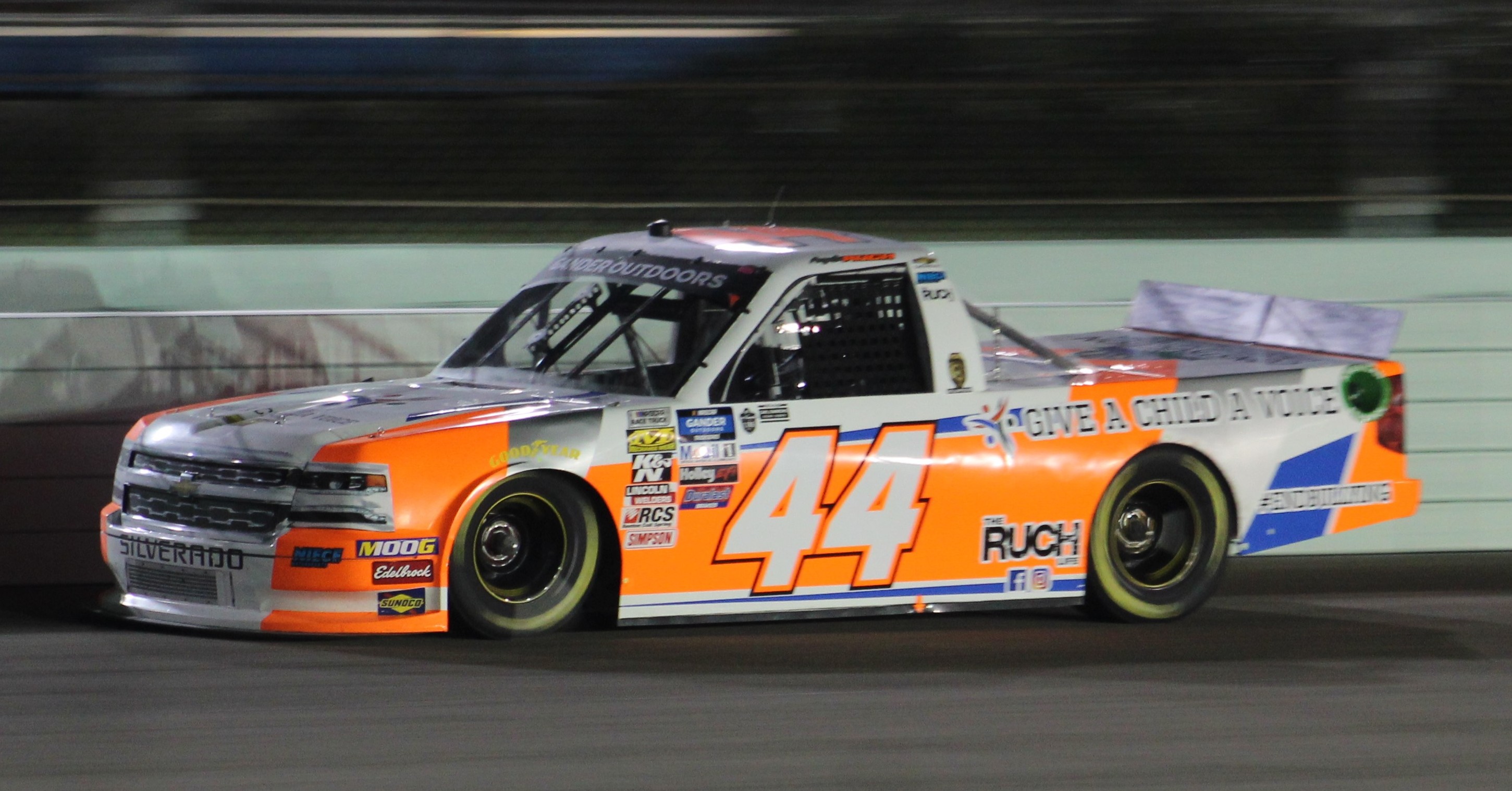
Chevrolet Silverado
"Did it in a Silverado ZR2. Super cheap auto. Yeah, super cheap auto, yeah. Which is pretty good because I think a couple years ago they tried and had some suspension issue."
A Silverado ZR2 is a tougher, off-road version of the Chevrolet Silverado pickup truck. Here they’re saying it won a competition category, which is a big deal because it’s a big truck that can still move fast on the track.
The Chevrolet Silverado ZR2 is an off-road focused version of the Silverado pickup, built for tougher terrain with stronger suspension and off-road hardware. In this segment, it’s mentioned as the truck that won the production class, showing how capable it is in a 4WD competition setting.

F-150 Raptor
"...Lowensy. But they were up against the Ford Ranger Raptor and the 76 series Land Cruiser. Did a 76."
The Ford F-150 is a large pickup truck designed to carry loads and tow things. In the podcast, it’s being compared to other tough vehicles, so they’re likely talking about how well it performs for its type. It’s a popular choice because it can be set up for different uses, including driving off-road depending on the version.
The Ford F-150 is a full-size pickup truck built for everyday work and towing, with a wide range of configurations. In the podcast context, it’s mentioned in the same comparison group as more off-road-oriented vehicles, which highlights how pickups are often evaluated for capability and real-world use. It’s discussed because it’s a common baseline for performance, practicality, and 4x4 capability in the truck category.

Ford Ranger Raptor
"But they were up against the Ford Ranger Raptor and the 76 series Land Cruiser. Did a 76. Say that the production class must be very young."
The Ford Ranger Raptor is a special off-road version of the Ranger pickup. In this discussion, it’s one of the trucks the Silverado ZR2 had to beat in the same category.
The Ford Ranger Raptor is a performance-oriented off-road pickup, tuned for high-speed desert-style driving and rough trails. It’s named here as a direct competitor to the Silverado in the production class, which helps listeners understand the level of competition.

Nissan Navarro D22 classic
"So this one's from Jack Poxton. Jack. Yeah. ...He's got a Nissan Navarro D22 classic."
This is a Nissan pickup truck called the Navara, specifically the D22 generation. People like it for 4WD because it’s built tough and is popular for off-road modifications.
The Nissan Navara D22 is a generation of Nissan’s ladder-frame pickup, known in 4WD circles for being a tough, mod-friendly platform. In this segment it’s described as a “classic,” implying an older D22-era truck that’s commonly used for off-road builds and touring.
IFS
"I[1352.6s] IFS has its limitations, especially with tyre size. [1355.7s] He's ran mostly 31s."
IFS means the front wheels are connected to the suspension in a way that lets each wheel move more independently. The point here is that bigger tires can cause fitment or handling issues with this suspension design.
IFS stands for independent front suspension, a setup where each front wheel moves somewhat independently. The host says it has limitations when paired with larger tire sizes, which can affect clearance and suspension geometry.
31s
"He's ran mostly 31s. [1357.5s] Back seat space was small and the doors made it more difficult"
“31s” means tires that are about 31 inches tall. Off-roaders use this shorthand because tire size affects how the vehicle fits, rides, and clears obstacles.
“31s” is shorthand for 31-inch tires, a common way off-roaders describe tire diameter. Bigger tires can change clearance, gearing feel, and how suspension systems like IFS behave.
braking CV
"Knowing the car's limitations, [1392.6s] I definitely only pushed it hard a few times, [1396.3s] including braking CV once,"
A CV (constant-velocity) joint is part of the drivetrain that lets power transfer smoothly while the suspension moves and the axle angles change. “Braking CV” suggests the CV joint was involved during braking under load, which can be a sign of wear or stress in off-road conditions.
1FZ80
"including braking CV once, [1398.3s] but it was more than often telling my mate's petty 1FZ80"
“1FZ80” is a shorthand for a Toyota Land Cruiser 80-series with the 1FZ engine. The host is basically saying the car’s limits showed up during the trip.
“1FZ80” appears to refer to the Toyota Land Cruiser 80-series with the 1FZ engine family (often discussed as the 1FZ-FE). In this context, the host is saying the vehicle was more than often “telling” their mate’s 1FZ80 about its limits.
straight-thopped front diff locker
"“3-inch Redback Turbo, back exhaust, stainless steel, straight-thopped front diff locker.”"
A diff locker helps both wheels on the same axle pull at the same time. That’s useful when one wheel is slipping in mud, sand, or rocks.
A “diff locker” is a device that locks the differential so both wheels on an axle turn together. “Straight-thopped” suggests a specific locker design/fitment, and it’s used to improve traction when one wheel loses grip.
dual batteries
"“Catch can, dual batteries, so he's got on the red arc, Safari Snorkel…”"
Dual batteries means there’s a second battery for accessories like camping electronics. It helps you run stuff without risking the main battery.
“Dual batteries” usually means a second auxiliary battery (often for camping gear) plus a charging setup so both batteries can be used without draining the starting battery. It’s common on 4WDs because fridges, lights, and recovery gear electronics can draw significant power.
Catch can
"“Upgraded in the cooler. Catch can, dual batteries, so he's got on the red arc…”"
A catch can is a small container that traps oily vapors from the engine before they get into the intake. It helps keep the engine plumbing cleaner.
A catch can is an aftermarket reservoir that captures oil mist and blow-by vapors from the engine’s crankcase ventilation system. It helps keep intake tract and intercooler piping cleaner, which can improve consistency and reduce gunk buildup.
red arc
"“Catch can, dual batteries, so he's got on the red arc, Safari Snorkel…”"
Redarc makes battery-charging gear for cars. Here it’s being used to manage charging for the extra (camping) battery.
Redarc is an Australian brand known for vehicle electrical products, especially battery management/charging systems used in 4WD camping setups. In this context, it likely manages charging between the main and auxiliary batteries.
Safari Snorkel
"“so he's got on the red arc, Safari Snorkel, the aluminium bull bar is the Nissan stock one…”"
A snorkel moves the air intake higher up. That helps the engine keep breathing when you’re driving through dust or shallow water.
A snorkel is an intake extension that raises the air intake above normal water/dust levels, helping the engine breathe in dusty conditions and through shallow water. “Safari Snorkel” refers to a specific snorkel brand/model commonly used on 4WDs.
aluminium bull bar
"“the aluminium bull bar is the Nissan stock one, but he's wrapped decoder that so it looks nice.”"
A bull bar is a front protection bar that shields the vehicle’s grille and radiator area from impacts with animals, branches, and debris. An “aluminium” bull bar is typically chosen to reduce weight compared with steel while still providing protection.
Winch
"“Winch, recovery points, rated LED lights, Sony Stereo, UHF.”"
A winch is a powered puller with a cable. It can pull your 4WD out if you get stuck.
A winch is a motorized cable-retrieval device used to pull the vehicle out of mud, sand, or stuck situations. It’s a core piece of recovery equipment on serious 4WD builds, often paired with rated recovery points and proper cable/rope handling.
recovery points
"“Winch, recovery points, rated LED lights, Sony Stereo, UHF.”"
Recovery points are strong anchor spots on the car for towing or winching. They’re where you safely attach straps or shackles.
Recovery points are reinforced anchor locations on the vehicle designed for attaching straps, shackles, or winch lines during recovery. Using the correct rated points matters for safety and to avoid damaging unreinforced bodywork.
UHF
"“rated LED lights, Sony Stereo, UHF. Fair bit going on.”"
UHF is a type of two-way radio. Off-road groups use it to talk to each other when cell service isn’t available.
UHF refers to UHF two-way radio used by off-road groups for convoy communication. It’s popular in remote areas because it can work where mobile phone coverage is unreliable.
ARB rear bar
"Roof rack, fiberglass canopy, [1461.6s] tight twin drawers with the fridge slide, [1463.6s] rear bar, ARB rear bar."
An ARB rear bar is a stronger bumper for a 4WD. It helps protect the back of the vehicle when you’re driving on rough tracks and can be used with recovery gear.
An ARB rear bar is an aftermarket off-road bumper system made by ARB (Air Locker/ARB 4x4 Accessories). It’s designed to better protect the rear of a 4WD and to handle recovery gear and impacts off-road.
tie rods and drag link
"Upgraded upper control arms, [1467.8s] tie rods and drag link, [1469.2s] tough dog steering damper."
Tie rods and the drag link are steering parts that connect the steering to the front wheels. If the suspension is changed, they may need upgrading so the wheels still point the right way.
Tie rods and the drag link are steering linkage components that transmit movement from the steering system to the front wheels. When lifted or fitted with suspension upgrades, these parts often need to be checked or replaced to keep steering geometry correct.
tough dog steering damper
"tie rods and drag link, [1469.2s] tough dog steering damper. [1471.1s] 2-inch Pedder's lift with torsion bars."
A steering damper (here, a Tough Dog unit) reduces steering oscillation—wobble—over rough terrain. It helps keep the front wheels settled after bumps, improving control and driver confidence on corrugations and trails.
2-inch Pedder's lift with torsion bars
"[1469.2s] tough dog steering damper. [1471.1s] 2-inch Pedder's lift with torsion bars. [1474.7s] Dolbenson's constant load,"
A 2-inch lift raises the truck so it can clear rocks and ruts better. With torsion bars, the suspension height is changed by adjusting how the bars are loaded.
A 2-inch lift increases ride height to gain clearance for off-road obstacles. With torsion bars, the suspension height is adjusted by changing the torsion bar preload/torsion, which can affect alignment and steering geometry.
Dolbenson's constant load
"[1474.7s] Dolbenson's constant load, [1476.0s] 600 kilos at least, he's gone heavy. [1479.0s] And a longer range fuel tank."
“Constant load” here means the setup is meant to keep the vehicle’s ride more consistent even when it’s carrying weight. Dolbenson’s refers to the brand or kit used for that load/ride behavior.
“Constant load” in this context refers to a suspension/ride setup intended to keep the vehicle’s load handling consistent under varying conditions. Dolbenson’s is likely a brand or specific component package used to manage how the suspension behaves when the vehicle is heavily loaded.
longer range fuel tank
"[1479.0s] And a longer range fuel tank. [1481.1s] Well, he's got the canopy in the rooftop. [1482.7s] But I tell you what,"
A longer-range fuel tank holds more fuel. That means you can drive farther before you need to stop for petrol, which is useful on remote trips.
A longer-range fuel tank increases the vehicle’s fuel capacity so it can travel farther between refueling stops. For 4WD trips, this reduces the risk of getting stranded in remote areas where fuel is scarce.
31 inch tyres
"[1536.1s] He has just coated himself. [1539.5s] 31 inch tyres, [1540.7s] they look a little bit slim on there, don't they? [1543.8s] They do look a little slim."
That means the tires are about 31 inches tall. Bigger tires can help a 4WD get over bumps and dig in better off-road, but the exact shape depends on the tire width and how it’s mounted.
“31 inch tyres” refers to tire size, where the tire’s overall diameter is about 31 inches. In 4WD setups, larger tires can improve ground clearance and help with traction in soft terrain, but they can also look “slim” if the width/sidewall doesn’t match the rim and lift.
aftermarket bonnet
"That's from an aftermarket bonnet, is it? [1614.8s] Like as in... [1617.7s] Nah, they have the D22s on top of it."
An aftermarket bonnet/hood is a non-factory replacement hood. Here it’s mentioned because the hosts are talking about vehicle parts and how different setups fit together.
An aftermarket bonnet (hood) is a replacement hood made by a third party rather than the vehicle’s original manufacturer. In this context, it’s being discussed as part of the vehicle’s exterior setup that may relate to fitment and clearance around roof-mounted gear.
clamshell ones
"They're not as easy or as straightforward [1635.0s] as the clamshell ones. [1637.3s] Yeah."
Some roof tents open like a clamshell—two hinged parts that flip up. The point here is that this style is usually faster and simpler to set up than other designs.
“Clamshell” roof top tents open like a hinged shell, usually with two halves that lift and lock into place. The hosts contrast them with other styles (like fold-out designs), implying the clamshell type is quicker and easier to deploy.
roof top tent
"So is your roof top tent. Thanks, mate. Now, this is... I like this ultimate four-wheel drive back with the bang"
A roof top tent is a tent that sits on the roof of the car. Instead of pitching it on the ground, you open it up from the roof when you arrive to camp.
A roof top tent (RTT) is a camping tent mounted on top of a vehicle, usually on a roof rack or dedicated mounting system. It’s popular with 4WD owners because it keeps you off the ground and can be quicker to set up at campsites.
ultimate four-wheel drive back with the bang
"Now, this is... I like this ultimate four-wheel drive back with the bang and I like this Navara, $11,000 entry-level car."
They’re talking about the “best” kind of 4WD setup for real trips—something that can handle dirt roads and camping. It sounds like they mean a fun, capable build, not just a stock vehicle.
“Ultimate four-wheel drive” here is a casual way of describing a do-it-all 4WD setup—something capable enough for off-road and camping, but still practical. The “back with the bang” phrasing suggests a focus on a fun, capable build rather than a bare-minimum vehicle.
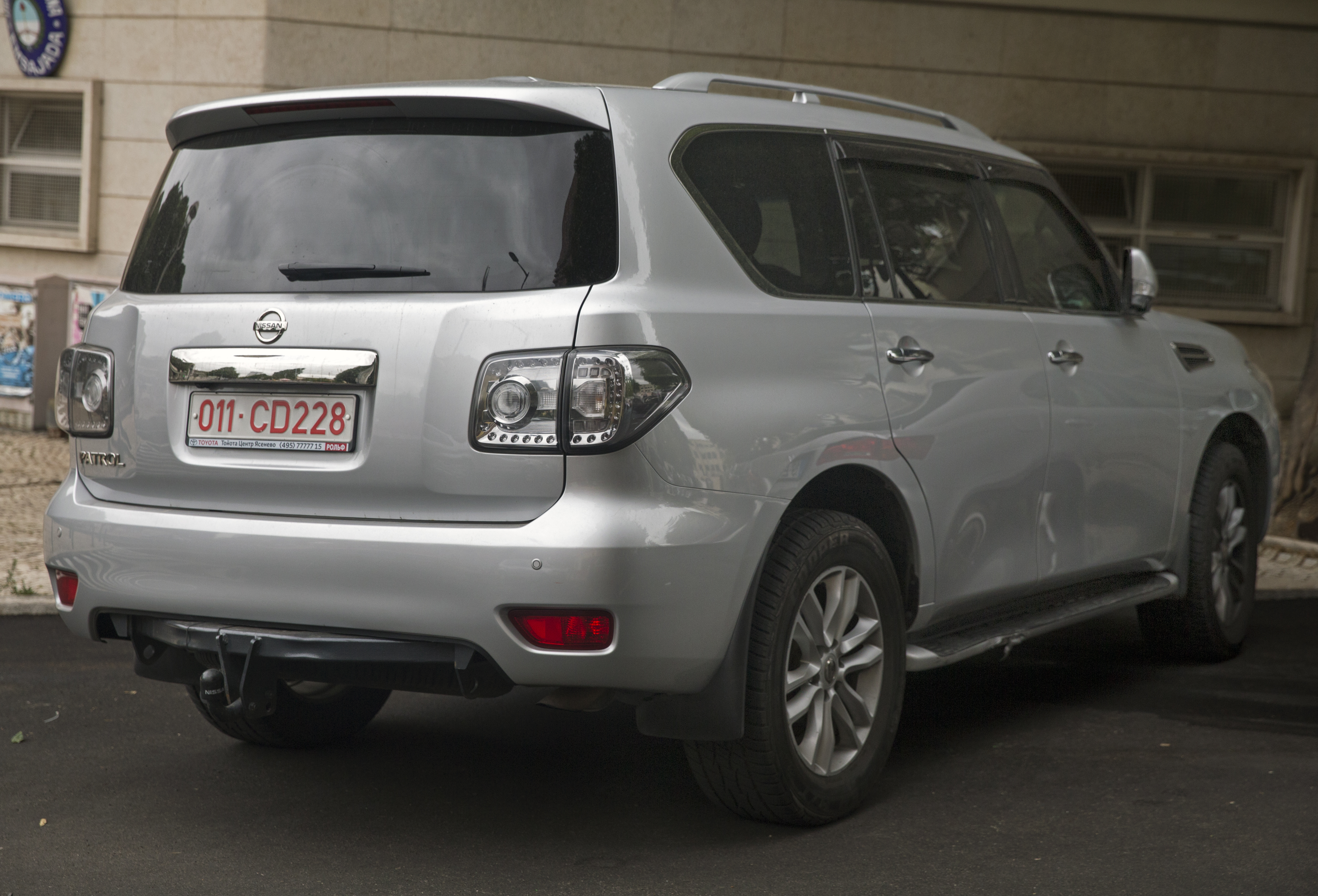
single cab patrol
"What did you send me the other day that was a... Single cab... Oh, the single cab patrol. Patrol? Yeah. 10 grand. It looked good. 10 grand, mate."
The Patrol is a big Nissan 4WD that’s known for handling rough roads. “Single cab” just means a simpler, ute-style setup with less passenger space.
The Nissan Patrol is a body-on-frame SUV that’s widely used for serious 4WD work, and the “single cab” version refers to a ute-style configuration. Here it’s mentioned as a roughly $10k starting point that can be built up for off-road use.
roll cage
"I think we need to put a roll cage in it. ... So I'm just saying we might need a roll cage."
A roll cage is a strong metal frame inside the car. It helps keep you safer if the vehicle tips over or crashes hard, because it adds protection around the cabin.
A roll cage is a reinforced metal frame installed inside a vehicle to protect occupants during rollovers or severe impacts. In off-road and 4WD contexts, it’s often discussed when a truck has a higher chance of tipping or when drivers want extra safety for harder driving.
all-time four-wheel drive
"As in, sorry, no hit. This is an all-the-time... Oh, this is an all-time four-wheel drive."
All-time four-wheel drive means the truck is sending power to all four wheels all the time. That can help with grip on dirt, sand, or wet roads because you’re not waiting for 4WD to engage.
“All-time four-wheel drive” means the vehicle’s drivetrain is designed to send power to all four wheels continuously, rather than only engaging 4WD when needed. In 4WD discussions, it’s often brought up because it can change traction behavior and how confidently you can drive on loose or slippery surfaces.
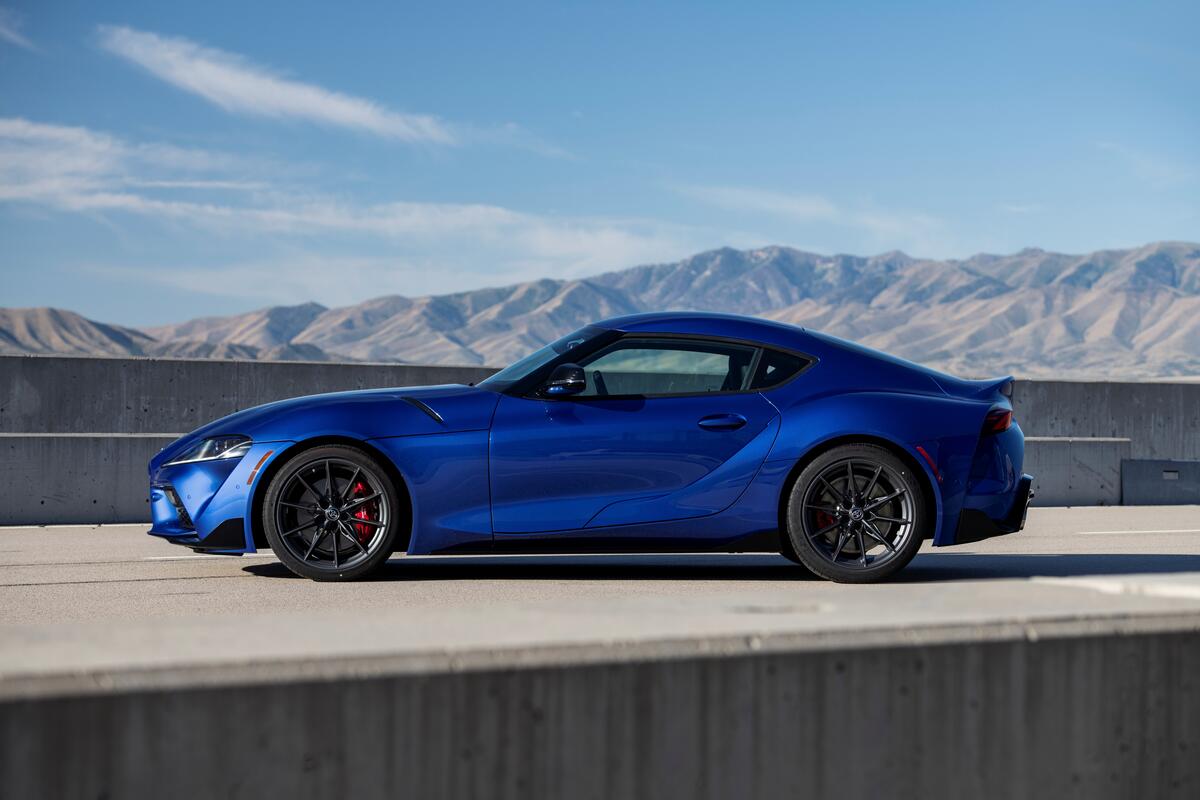
Toyota A90
"Like it just doesn't sit there very well. Then you've got a truck to a 90. Like I just..."
The Toyota Supra is a sports car, meaning it’s built more for speed and driving feel than for off-roading. In the podcast context, it sounds like they’re talking about how it looks or how it feels in motion. It’s a different type of vehicle than trucks or 4x4s.
The Toyota Supra is a performance sports car known for its strong acceleration and driver-focused design. In a podcast discussion, it may come up when comparing how different vehicles “sit” or behave in terms of stance and overall feel, even if it’s not the same kind of vehicle as a truck or 4x4. It’s significant because it’s a recognizable nameplate that represents a different purpose than off-road-focused models.
waving ones
"But there are 45 of the waving ones. And I think what we'll do, we might give away a few of them."
It sounds like there’s a friendly 4x4 driver “wave” thing in the community. The sticker is basically a way to show you’re part of that group.
This refers to a community “wave” culture among 4WD drivers—using a sticker as a badge for participating in that informal etiquette. It’s a social concept specific to off-road/4WD groups rather than a technical vehicle feature.

Land Cruiser
"I just bought the Land Cruiser. This is last year. So I got to chat about the 79 on roaming Brian."
The Toyota Land Cruiser is a tough 4-wheel-drive vehicle made to handle rough roads and long trips. Here, they’re talking about the “79,” which is a very rugged version of the Land Cruiser.
The Toyota Land Cruiser is a body-on-frame 4x4 built for long-distance durability and serious off-road use. In this episode, the host specifically references the “79,” which is the Land Cruiser 79 Series—an older, rugged model commonly used in remote and work-focused settings.
Request an Explanation
Heard something you'd like explained? We'll add it to this episode.
Sign in to request explanations for terms you heard.
Want to learn more?
Browse our glossary for plain-English explanations of automotive terms, jargon, and concepts.
Help improve this episode
See something that's not quite right? Our annotations are AI-generated and can sometimes miss the mark. Click the flag icon on any annotation to suggest a correction.