#150 - Roast Chicken, Thai Big Mac Tacos & Camp Cooking with Sawyzie
About this episode
Camp cooking takes center stage as the hosts relocate to Cobbler's Pool and bring in Nathan Sawyer for a full outdoor feast. The menu blends roast chicken cooked in a Weber Cube/WeberQ with indirect heat, plus easy Big Mac-inspired Thai-style mince tacos on a single butane burner. Along the way they share prep shortcuts, sauce ideas, and practical safety gear like welding gloves, plus tips on fuel, fridges, and freezer power. The conversation also ties cooking back to travel, gear choices, and a Terrain Tamer tip of the week.
Good friend of the boys, Nathan 'Sawyzie' Sawyer, joins the podcast for a proper camp cook-up just out of Perth.
On the menu today: A prosciutto roast chicken cooked in a WeberQ and Thai big mac style tacos cooked on a generic gas cooker. Both really easy to make when heading off camping and absolutely delicious.
Sawyzie walks through exactly how he preps and cooks each dish, plus we get an insight into how he camps out of his GU Patrol setup and how he runs his camp kitchen on the road.
If you're eating two-minute noodles on your camping trips, this one's for you.
Music by The Southern River Band. Produced by BackChat. Tyrepower powering the podcast!
The 4WD Podcast is recorded out of BC Studios, built by grounded. building tomorrow, together. https://grounded.com.au/
Follow us on Instagram: @the4wdpodcast. Music by The Southern River Band.
Head to your local Tyrepower for any tyre, wheels or battery needs!
ig: tyrepowerofficial
Terrain Tamer. Making 4WD parts and accessories that have been designed, manufactured and tested to withstand the harshest conditions Australia has to offer.
The 4WD Podcast powered by Tyrepower. Recorded at BackChat Studios built by grounded.
Music by The Southern River Band.
Tough Dog Making Tracks Across the World!
Hosted on Acast. See acast.com/privacy for more information.
Dutch oven
"[1199.8s] Finding a beautiful spot, sitting down. [1202.0s] Maybe if you're permitted, you can start a fire [1204.3s] and get a Dutch oven going. [1205.8s] Some cast iron cooking."
A Dutch oven is a thick pot with a tight lid, usually made of cast iron. It’s great for cooking outdoors because it holds heat well, so your food cooks evenly even over a fire.
A Dutch oven is a heavy, lidded pot (often cast iron) designed to cook evenly over campfires or coals. Its thick walls help stabilize temperature, which is why it’s popular for slow-cooked camp meals like stews and roasts.
tourer
"[1207.7s] But if you're struggling about fresh stuff, [1209.7s] if you're going like maybe a bit of a tourer, [1211.3s] a lot of dried spices help. [1212.7s] Fresh is always best."
Here “tourer” just means you’re set up for traveling and long trips. The point is that when you’re on the road, it’s easier to use dried spices instead of fresh ingredients.
In this context, “tourer” refers to a touring-style setup—how you travel and what you carry—rather than a specific car model. It’s tied to the camping/road-trip idea: planning for long drives means relying more on shelf-stable ingredients like dried spices.
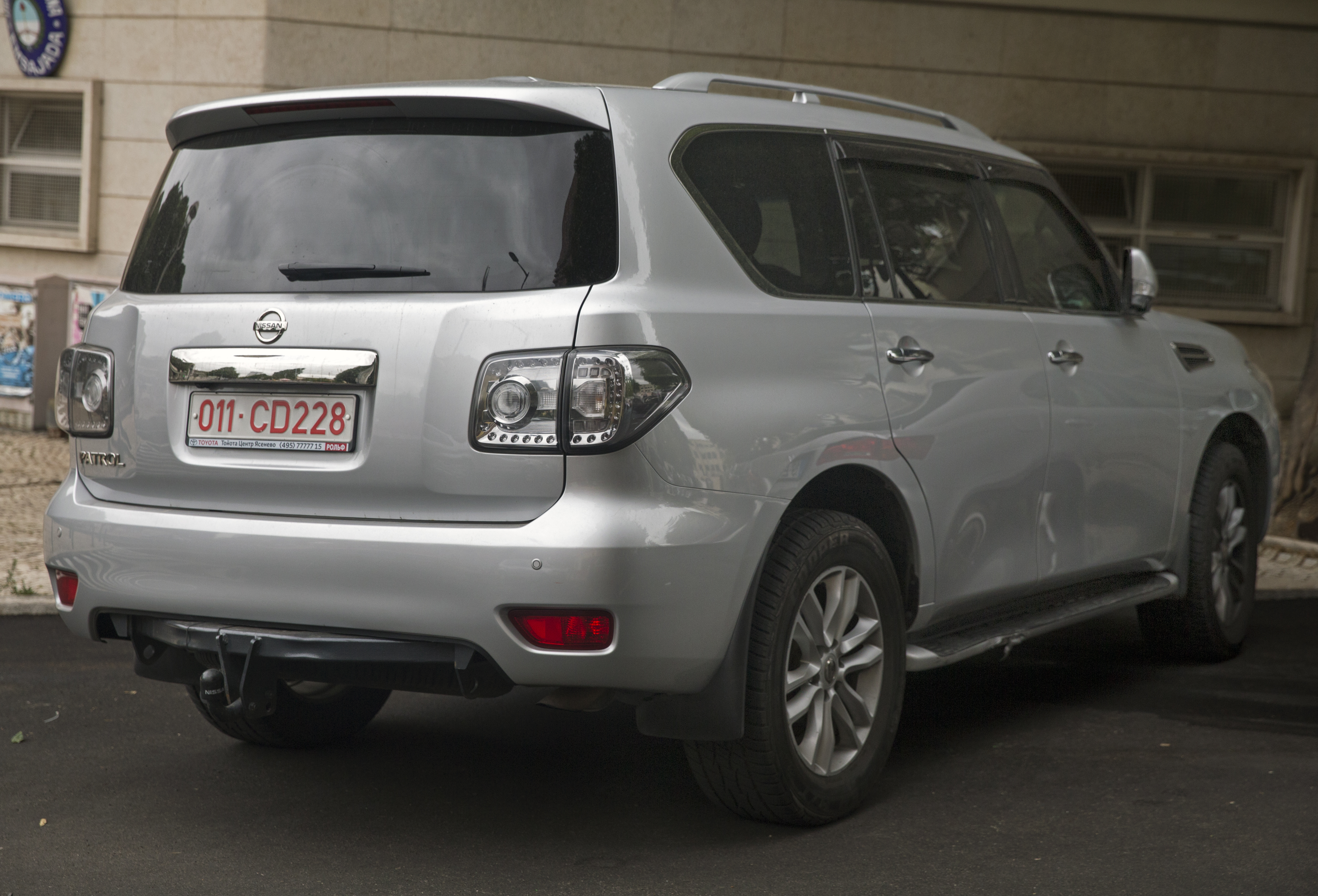
Poutrol
"[1230.4s] Firstly, tell us about your car. [1232.6s] What are you rolling around in? [1234.5s] The mighty Poutrol. [1237.1s] What model? [1238.0s] She's a 2003 GU, ZD-30."
They’re talking about a Nissan Patrol 4x4. In this case it’s a 2003 model, and it’s the kind of vehicle people use for long trips and camping because it’s tough and made for rough roads.
The host is talking about a Nissan Patrol, specifically a 2003 GU with the ZD-30 diesel engine. The “GU” refers to the Patrol generation, and it’s a common 4x4 platform in Australia for touring and camping because it’s built for durability and off-road use.
fifth gear
"[1258.6s] Just trying to charge up a hill. [1261.8s] In fifth gear, I had the luxury of driving [1264.9s] Jadon's V8 Landy, the 76."
“Fifth gear” is one of the higher gears in a multi-gear transmission. Higher gears usually mean lower engine revs, so if you can stay in fifth while climbing, the engine is pulling strongly. If you can’t, you have to drop to a lower gear.
“Fifth gear” is a specific transmission ratio used at higher speeds. In the segment, the speaker says they had the “luxury” of using fifth gear on climbs, which implies the vehicle had enough power to keep pulling without downshifting. That contrasts with the other vehicle that needs to drop to lower gears.

Jadon's V8 Landy, the 76
"[1264.9s] Jadon's V8 Landy, the 76. [1267.7s] And that just eats hills. [1269.6s] Whereas the Poutrol, it's like,"
They’re talking about a Land Cruiser 76-series with a V8 engine. The V8 helps the truck pull up hills without having to downshift as much. In this story, it’s the easier climber compared to the other vehicle.
“Landy” here refers to a Land Cruiser 76-series, and the speaker specifically calls out a V8 version. The key point is how the V8’s torque helps it “eat hills” without needing to drop gears as often. It’s being contrasted with another vehicle’s struggle on climbs.
third gear
"[1269.6s] Whereas the Poutrol, it's like, [1270.8s] I've got to drop down to third gear, [1272.5s] like 3,000 revs, maybe 50Ks in an hour if I'm lucky."
“Third gear” is a lower gear that helps the vehicle pull harder, especially uphill. When you drop to third, the engine revs typically rise, giving you more “push” to keep climbing. They’re saying the Patrol needs that extra help on hills.
“Third gear” is a lower gear that multiplies engine torque more than higher gears. The speaker says they have to drop to third gear and keep the engine around 3,000 rpm to climb, which is a sign the vehicle needs more mechanical advantage to maintain momentum. They also mention that failing to drop further can make them lose momentum.
3,000 revs
"[1270.8s] I've got to drop down to third gear, [1272.5s] like 3,000 revs, maybe 50Ks in an hour if I'm lucky. [1276.0s] And I'm maxed out."
“Revs” are how fast the engine is spinning (RPM). They’re saying they need to keep the engine up around 3,000 rpm to get enough power to climb. If you don’t, the vehicle can feel like it’s struggling.
“Revs” means engine speed (RPM), and the speaker is using it to describe how hard the engine must work to climb. Running around 3,000 rpm suggests the engine is being kept in a more useful power band to avoid stalling or losing momentum. It’s part of the broader “underpowered on hills” comparison.
lose all momentum
"[1277.4s] She's not going to drop to fourth [1279.5s] and you just lose all momentum. [1281.2s] But you love the Poutrol, mate."
They mean the vehicle slows down fast on the hill. If the engine can’t keep pulling, you can’t maintain your speed, so you have to work harder to get moving again. It’s basically “falling behind” on the climb.
“Lose all momentum” describes what happens when a vehicle can’t maintain enough speed and engine load on an incline. In practice, if you don’t downshift to keep the engine in its effective power range, the car slows quickly and may require more throttle or additional gear changes. The speaker links it directly to not dropping from fourth to a lower gear.
rooftop tent
"Rooftop tent. [1543.0s] That's your mode of sleeping on the boat. [1546.6s] I've got the rooftop tent, which I'm a big fan of."
A rooftop tent is a tent that sits on top of your car or 4x4. Instead of sleeping on the ground, you open it up and sleep up on the roof.
A rooftop tent is a camping tent that mounts on top of a vehicle, usually on a roof rack. It lets you sleep up high without setting up a ground tent, which can be handy for rough campsites or quick stops.
swag
"when I've got a perfectly good swag. [1570.7s] Originally, it was always a swag. [1573.0s] But the rooftop tent is a luxury"
A swag is a rolled-up camping bed you unroll when you stop. It’s a basic way to sleep outdoors, usually simpler than a rooftop tent.
A swag is an Australian-style canvas bedroll used for camping, typically rolled up and unrolled at camp. Compared with a rooftop tent, it’s usually simpler and cheaper, but it doesn’t give you the same “lifted” sleeping setup.
Broom
"If you're going for a big tour, [1583.9s] you're going up Broom or something. [1585.9s] I'd probably swap it out."
Broom is mentioned as a place you’d go on a big trip. The point is that the route and camping style affect whether a rooftop tent is worth it.
Broom is referenced as a route/direction for a big tour, implying a travel corridor where rooftop storage and sleeping setup matter. In this context, it’s being used as a shorthand for where you’d be driving and camping for an extended trip.
roof rack
"What do you call them? Roof rack. That way you can carry dirty clothes,"
A roof rack is the bars or mounting system on top of a car. People use it to carry things like luggage or a rooftop tent.
A roof rack is the mounting system on top of a vehicle used to carry gear like luggage, rooftop tents, or cargo boxes. In this context, it’s what enables the rooftop tent and extra storage for a trip.
Jerry cans
"the swag, Jerry cans of water, diesel, all that kind of thing."
Jerry cans are small, portable containers for fuel. Off-road travelers use them to bring extra gas or diesel in case they need it later.
Jerry cans are portable fuel containers commonly used for carrying extra gasoline or diesel on trips. They’re often used in overlanding/off-road setups because they’re compact, stackable, and designed for safe transport.
dual battery
"Under the hood, it's all stock. For the most part, it's got a dual battery and that's about it."
A dual battery setup means your vehicle has a second battery besides the one used to start the engine. It helps run camping gear (like lights or a fridge) without risking the car won’t start.
A dual battery setup adds a second battery (often a deep-cycle or auxiliary battery) to power accessories while keeping the main starting battery for the engine. It’s common on expedition/overlanding builds for running fridges, lights, chargers, and other camping gear.
underpowered
"I'd like to maybe fiddle with things, but again, it's money. I don't want to over tune this thing and have it blow off for me. It's purposely underpowered."
“Underpowered” here means the vehicle doesn’t have a lot of engine strength. The point is that it can still handle the trip if you drive smart and use the right setup for traction.
In an overlanding context, calling a vehicle “underpowered” usually means it has less engine output than you’d expect for the terrain. The idea is that lower power can be intentional for reliability and control, and it may still be capable if you manage traction (like lowering tire pressure) and drive appropriately.
PSI
"It's purposely underpowered. But drop your PSI. It should take you anywhere."
PSI is the measurement of how much air pressure is in your tires. For dirt or rough trails, people often lower tire pressure for more grip, then put it back up later.
PSI refers to tire pressure measured in pounds per square inch. Off-road driving often involves lowering PSI to increase the tire’s contact patch for better traction and ride comfort, then reinflating for highway speeds.

Nissan Xtrails
"to get out there. We were driving along and saw a few X-Trails parked up camping around"
The Nissan X-Trail is an SUV made for regular driving, and some versions can drive on rougher or slippery surfaces. People use it for trips like camping because it has space for luggage and can handle dirt or uneven roads better than a basic car. In the podcast, it’s mentioned because they noticed X-Trails parked up at a campsite.
The Nissan X-Trail is a compact SUV designed for everyday driving with the option of 4WD for rougher roads and light off-road use. In a camping context, it’s the kind of vehicle people choose because it can handle uneven access roads and still carry gear for trips. It may come up in the podcast because the hosts saw multiple X-Trails parked while camping, highlighting its real-world use outdoors.
Request an Explanation
Heard something you'd like explained? We'll add it to this episode.
Sign in to request explanations for terms you heard.
Want to learn more?
Browse our glossary for plain-English explanations of automotive terms, jargon, and concepts.
Help improve this episode
See something that's not quite right? Our annotations are AI-generated and can sometimes miss the mark. Click the flag icon on any annotation to suggest a correction.