A hot turbo is a type of turbocharger that helps an engine produce more power. It's used in performance vehicles to make them faster and more powerful.
Injectors are parts of an engine that help deliver fuel to make it run. In high-performance engines, they need to be upgraded to provide more fuel for more power.
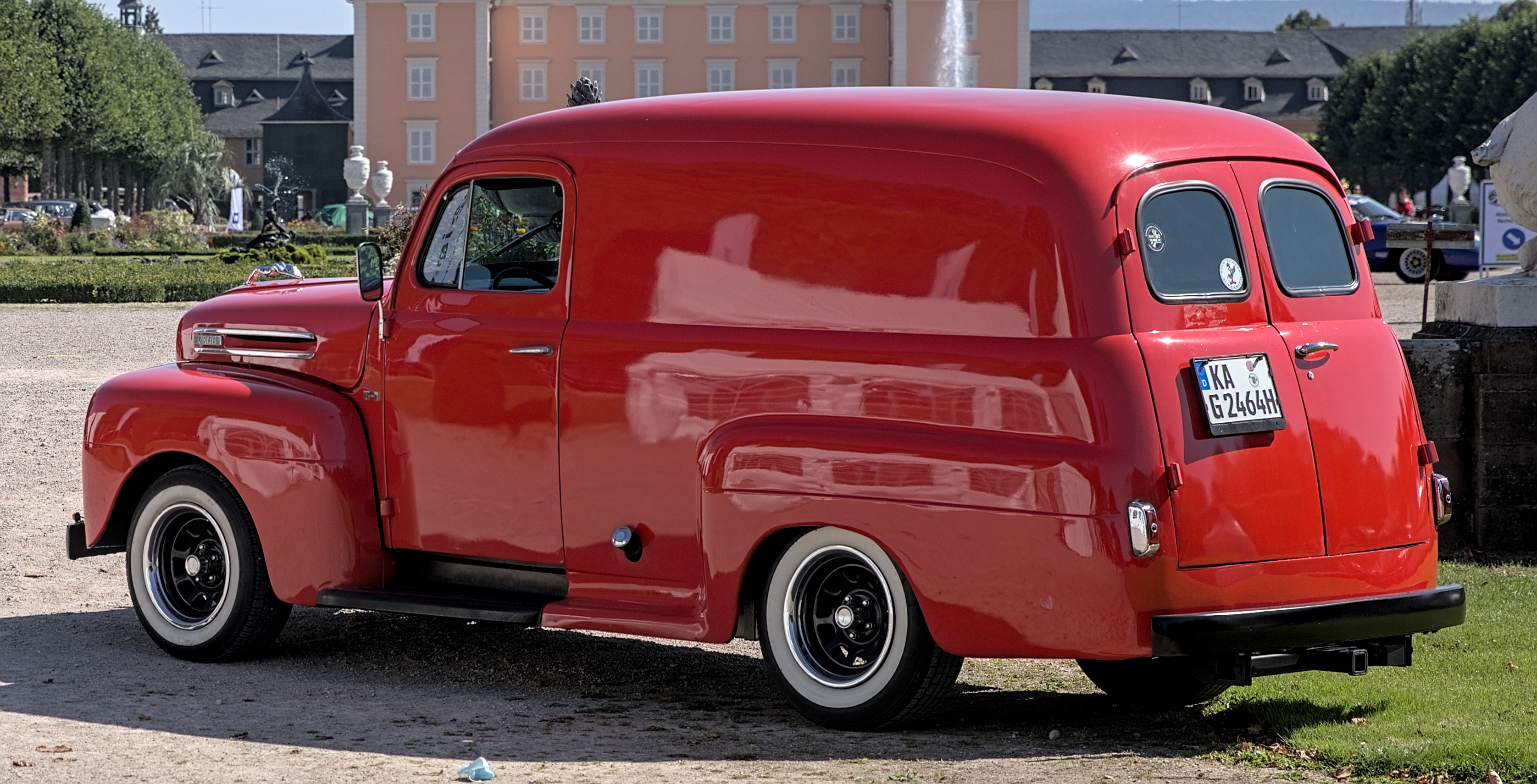
The Ford F-1 is an old pickup truck that many people love because it's tough and has a classic look. It's a favorite among collectors who appreciate vintage vehicles.
A compound turbo diesel engine has more than one turbocharger, which helps it produce more power and run more efficiently. This is especially useful in powerful trucks.
Land speed record racing is when cars are built to go as fast as possible on land. These cars are specially designed and tuned to reach very high speeds.
High Performance Academy is a website where you can take classes about cars, like how to make engines better and how to tune them. It's great for anyone who wants to learn more about car performance.
The Tesla Semi is an electric truck that helps transport goods and is better for the environment than regular trucks. It uses new technology to save money on fuel and maintenance.
Car
Chevrolet 4x4
The Chevrolet 4x4 is a tough truck that can drive on rough roads and is great for off-roading. The 1971 model is considered a classic.
The Volkswagen Dasher is a small car made by Volkswagen in the late 1970s. It was designed to be practical, but many people didn't think it was very cool.
The Audi S1 E2 is a famous rally car from the 1980s. It's known for its unique design and powerful performance, making it a favorite among car enthusiasts.
Hot rods are cars that have been heavily modified to go faster and look unique. They often have powerful engines and cool designs, and people love to show them off or race them.
A project car is a car that someone buys to fix up and make better. People enjoy working on them to improve their performance or appearance, even if it takes a lot of time and money.
Suspension is the part of a car that helps it ride smoothly over bumps and turns. It connects the car to its wheels and makes driving more comfortable.
The chassis is the main frame of a car that holds everything together, like the engine and wheels. It's important for the car's strength and how it drives.
Automotive wiring is the network of electrical wires in a car that connects different parts, like the battery and lights. It's important for making sure everything electrical in the car works properly.
Patch panels are pieces of metal used to fix holes or rust spots on a car's body. They help make the car look good again without needing to replace the whole part.
The Porsche 911 is a famous sports car that many people love for its speed and unique shape. It's been around for a long time and is often used in racing.
Engine tuning is when you change parts of the engine or its settings to make it run better or faster. It's like fine-tuning a musical instrument to get the best sound.
Performance engine building means putting together or changing an engine to make it stronger and faster. It’s like upgrading a computer to make it run better.
3D modelling in CAD is using computer software to create three-dimensional designs of car parts or systems. It helps engineers visualize and plan how things will fit together before they are made.
CANBUS is like a messaging system for a car's parts, helping them talk to each other. It makes sure everything works together smoothly, like how friends share information.
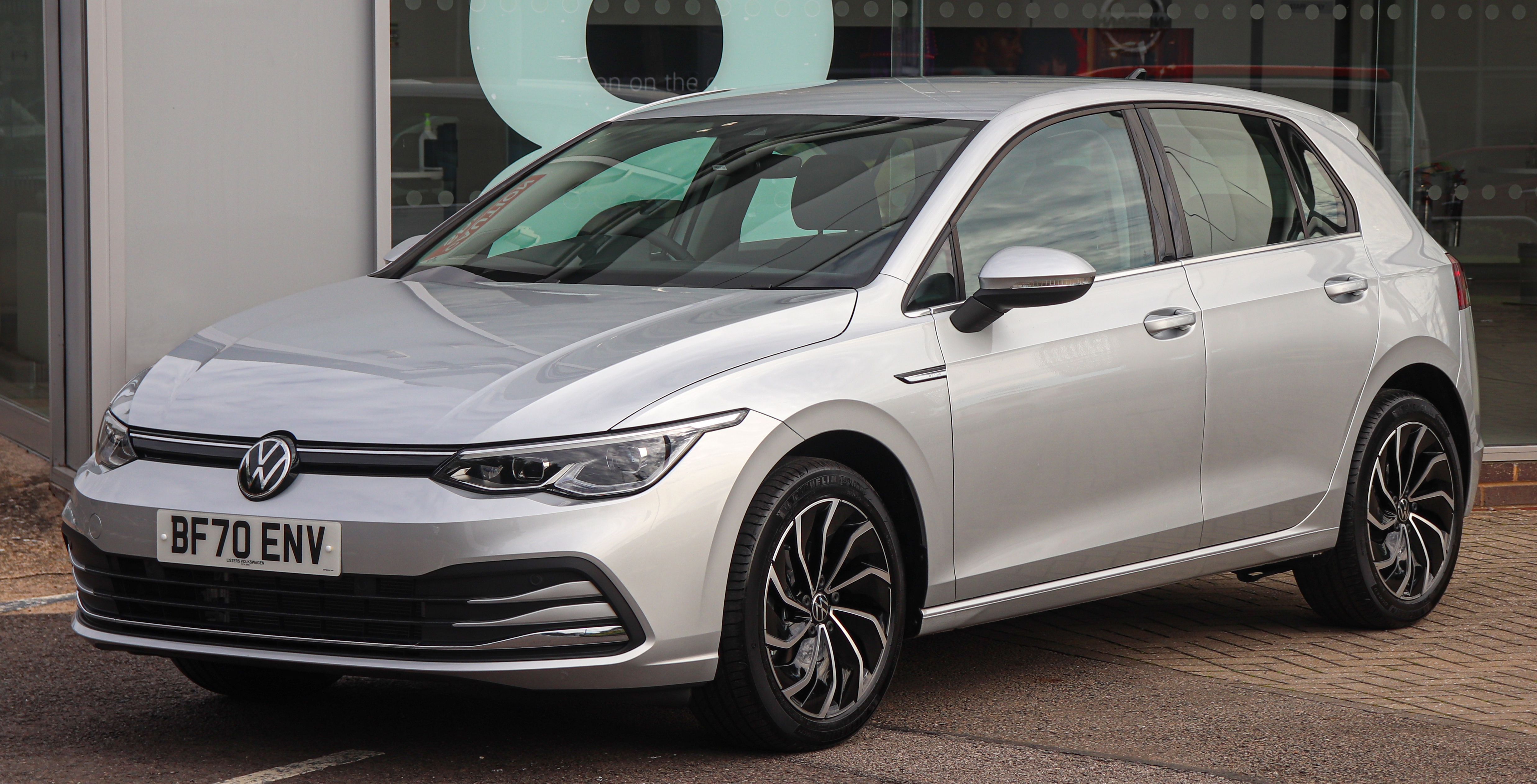
The Volkswagen Golf is a small car that's easy to drive and great for everyday use. It's known for being reliable and fun, which is why many people like it.
The Ford Mustang is a classic American sports car that's known for being fast and stylish. It's been around for a long time and is loved by many car enthusiasts.
The Dodge Viper is a super-fast sports car that looks really cool and has a powerful engine. It's built for speed and is popular with people who love fast cars.
The Toyota Hilux is a small truck that's very reliable and can go off-road easily. People like it because it can handle rough use and lasts a long time.
The Lucid Air is a fancy electric car that's designed to be very comfortable and has a long battery life. It's made to compete with other high-end electric cars.
The Lancia Lambda is an old car from the 1920s that was special because it had new ideas for how cars were built. It's important in car history for being one of the first modern designs.
LIVE
You know a stock diesel turned into I'm going to put a hot turbo on it and some injectors
then we're at like a thousand horsepower and oh now it needs a full roll cage and
it just tumbled and tumbled until 2016. The thing was in autometers booth in the main hall
at SEMA and it won the 10 best of car and driver. It just snowballed into the wildest
diesel hot rod. It was just a gigantic viral media storm of coverage on that truck.
Welcome to the HPA TuneIn podcast, I'm Andru your host and in this episode we're joined
by Scott Birdsall from Chuckles Garage. I actually had the pleasure of meeting Scott
in person when I was attending Pikespeak Hillclimb where he was running his old smoky Ford F1
truck powered by a 1400 horsepower compound turbo diesel engine. Now Scott is well known
for his efforts in the diesel tuning world, however he's not actually too fussy about
what particular vehicle he chooses as long as it's cool and interesting. He's recently
been involved in some land speed record racing with a 2JZ gasoline engine so again he kind
of covers both bases. We talked to Scott about his background, his upbringing, how he started
Chuckles Garage and what services they offer. We also talked about some of the intricacies
involved in both developing and tuning a high power diesel engine as well as his 2JZ
land speed record engine. Particularly when we're getting into the likes of land speed
record racing where there are some very subtle nuances compared to tuning any other engine,
there are certain things that we do need to do to keep these engines alive. Unfortunately
Scott's had a couple of near misses at Pikespeak and the latest one has essentially destroyed
old smoky beyond rebuilding it but he's not down and out yet and we talk about what's
coming up in the future and how he's going to make that even faster than old smoky.
Before we jump into our chat, for those who are new to the TuneIn podcast, high performance
academy is an online training school. We specialize in teaching people how to build
performance engines, how to tune EFI, how to construct wiring harnesses. We also cover
topics on fabrication, 3D modelling and CAD, race driver education and data logging just
to name a few. You can find all of our courses at hpecamry.com forward slash courses. All
of these courses are delivered in high definition video modules that you can watch from anywhere
in the world provided you've got an internet connection. This means you can learn from the
comfort of your own place and you can learn at your own pace. All of our courses also
come with a 60 day no questions asked, money back guarantee. So if you purchase them for
any reason at all, decide it wasn't quite what you expected, no problem, let us know,
we'll give you a full refund. And for podcast listeners, you can also use the coupon code
podcast 75, that will get you $75 off the purchase of your very first HPA course. We'll
put the coupon code in the show notes to make it nice and easy for you to find. Lastly,
if you like free stuff, then I've got a great deal for you. We are constantly partnering
with some of the biggest names in the aftermarket performance industry to give away some great
prizes. You can always find our latest prize at hpecamry.com forward slash giveaway, it
could be some engine components or engine building tools or just about anything in
between. They are great prizes and we will ship them free of charge to your door if
you're the winner. There's no tricks here, no purchase required to get your name into
the draw. Alright enough with our introduction, let's get into our interview now.
Alright welcome to the podcast, Scott, thanks for joining us and as always let's dig into
your background and find out how you got to where you are today, starting with your
passion for all things automotive. Yeah thanks for having me. I guess my whole passion
with automotive things started when I was a little kid and you know we were traveling
Costco and I was honking semi trucks and I got really into you know semi trucks and that
kind of sparked the automotive interest. My father and I used to watch motor racing on
TV all the time. I would help him tinker with his cars and it was just like a natural thing
to be attracted to automobiles. Okay I can understand that, that's probably maybe not
the semi truck side of things but I think the family passion sort of usually gets passed
down to the kids so that's reasonably easy to understand the link there. In terms of
the vast array of vehicles that you're currently interested in though, something that strikes
me is you kind of haven't pigeonholed yourself into one brand, one make or model or even
necessarily gas versus diesel. So what is it about you that's kind of kept you interested
in such a broad range of vehicles? I guess if it's cool, it's cool. So I have a very
broad range of vehicles. I have Supras, I've got a GR4, I've got an 88 Corvette that's
like straight out of the 80s, everything about it. I've got a 71 Chevy 4x4. There's so many
cars, I have a 32 Ford. I guess racing really is my passion. Any kind of racing car interests
me but when it comes to street cars, I don't really have a kind of favorite car. I mean
the top on my list is probably my Supras, my Mark IV Supras but there's no real, I mean
the range, I think it's fair to say that most people either devote their life to US
domestic market models or Japanese domestic market and there's usually very little
crossover. Though I could say looking back at the array of vehicles in our workshop,
we do span both sides of the spectrum as well so maybe it's not as unusual as I think.
Let's rewind a little bit though so obviously this passion has developed, how did you
actually start getting hands-on with working with cars and what was the first, I guess,
cool car that you actually own and started modifying?
So the first car that I owned that I started modifying, I bought from $600 as a sophomore
in high school from my auto shop and it was anything but cool. It's the actual opposite
of cool. In a 1978 Volkswagen Dasher automatic with a 1.5 liter engine or something, it was
pathetic but I still have that car and I plan on doing a really wild body swap with an RS4
or something like that at some point in time. You'll see that car kind of evolve into something
I would have dreamed about when I was a 15-year-old kid when I got it.
Sure. I guess that doesn't really fit the bill of what you've just said. If it's cool,
it's cool. Was that sort of more a budget restrained purchase than anything or is there
a bit more to it as to why you chose that car?
So I chose that car because I thought it was cool. I got roused quite a bit for it.
Everybody thought it was a lame car. It was an old man gold in color and had brown interior.
It's a piece of junk but it was my first car and I loved it and I thought it had the same
shape as a rally car that's been my favorite race car my whole life as the Audi S1 E2.
It's got that same kind of shape. Yeah, love it. Hatchback, two-door. There was things influencing
my choice but mostly it was a cheap car that I can afford and that I thought it was cool.
I didn't really care if anybody else thought it was cool.
I think that's actually a good attitude to have. If you kind of just follow the crowd
and do what everyone else thinks is cool, you just end up producing another one of
a million modified cars that looks just like everything else.
So I think having that sort of mental clarity and be able to picture what something's going
to look like once you finish with it allows you to kind of tread the path less trodden
I guess and create something unique which is, at least as I see it, something that you do a great job of.
Thank you. Yeah, absolutely. If you just sit and tow the line of what everybody else likes,
nothing new will ever be created or nothing special.
And I like to think that I can take any car and you give me enough time and money and I'll make it cool.
Yep, yep, I couldn't agree more. Time and money can fix a lot of e-pills.
Moving back, you mentioned that this car you'd bought for auto shops.
So tell us what, for those who didn't have the privilege of auto shop when they went through school,
what's that look like? What are you actually learning? What are the skill sets you're taking away?
Auto shop was pretty cool. I graduated high school in 1991 and I think they dropped auto shop a couple years after I graduated.
But this was in Fort Bragg High School in California, but they had machine tools.
There was a full tool room, lathe, mill, welding stations, places where you could learn how to charge your battery and desulfate it.
There was carburetor rebuilding. There was all the basics of automotive you could learn in high school and it was really cool.
I wish schools would really bring back having shop class for kids.
Yeah, I think that makes a lot of sense. Particularly if you have a passion for automotive
and maybe you're looking at a career in the automotive industry as a mechanic or just about anything else,
that would be a nice segue into it. So we definitely don't, well at least the best of my knowledge,
none of the schooling that I'm aware of in New Zealand had anything like it.
So probably a missed opportunity and interesting that they have removed that actually.
Yeah, it's a huge missed opportunity for any kind of high school.
I mean, even middle schools could use something like that.
But for me, it was a stepping stool for multiple things that I'm into now.
Cars, mechanical engineering, welding, general tinkering, which I've done since I could walk.
I've tried to take things apart.
How many of them went back together?
Very little. I think that's a natural progression though. It always has to start that way.
I think the first electronics I took apart was my dad's big console stereo and he wasn't really happy about that.
But AutoShop kind of lights the spark in you to go into the automotive world or into some kind of mechanical,
it just gives you the basics and mechanics to go out and pretty much do anything.
Yeah, I think it sounds to me like a low barrier to entry to get your hands dirty
and actually figure out if this is something that you enjoy.
And then at the same time, which elements or aspects of automotive are the ones that turn your wheels?
Yes, sir.
So moving on from AutoShop, what did your education look like and more specifically around growing this knowledge and passion for working on cars?
I've always worked on cars.
My education is I went to, you know, I graduated high school, then I went to J.C.
Then I went to university and I didn't finish because I went in for electrical engineering with a minor in mechanical engineering.
And I actually left.
I got a job doing electrical engineering for a company called EDC Technologies.
And so I'm just never finished.
Is there something looking back on it you regret?
I'm always a bit torn with any university degree.
Obviously, there are certain vocations where you have to have the degree.
You're not going to become a doctor or a lawyer without the prerequisite degree, clearly.
But there's other industries where I think you can just get a job in the industry
and probably learn the skill set on the job as opposed to spending a lot of money and a lot of time doing a degree.
I'm just interested in your take on that.
That's a hard one for me because if I went banished back and finished my degree,
my life would be completely different, I'm sure.
It was a crossroads for me.
So I think it's important.
I think a four-year degree is really important to have.
If not for the piece of paperwork that helps you apply to certain jobs that require it.
But it's just all the fundamentals and the basics for the rest of your life that you learn in college.
Structure, planning.
I think for me, a big takeaway from the degree, I did a four-year degree in technology.
And I sort of say to this day that the only skill set that I really took out of that four-year degree
was an ability to public speak because in our last year, every week,
we had to provide an impromptu off the cuff presentation to our whole class.
It might have only been five or maybe eight minutes long.
But by the end of a year of doing that, standing up in front of a group of people
and talking off the cuff just became no problem.
And I guess that segwayed really nicely into what I do for a living today.
But I think more than that, if you actually kind of dive in, a degree teaches you how to learn.
And I think that's really easy to overlook.
And that's both important from the person who's taking the degree as well as for a potential employer.
In general, I would say there's very few degrees where you would come out
with the exact skill set you need for a particular position.
But then from an employer's perspective, they've got the confidence that
if you stuck to your guns and you got through a four-year degree, chances are
you're probably going to be able to pick up the skill set that you are missing on the job.
Yeah, I definitely, before I started my shop, the degree could have helped me greatly
because there was a long time where I just kind of floated from job to job.
And it wasn't quite sure what I wanted to do with my life.
I've done everything from work at a pizza place to mount tires.
And then after EDC technologies, I went to a company called The Appropriate Connections
where I was doing very high-end home theater engineering and installation work
for rich folks in Silicon Valley.
That is a fairly broad range.
I've done everything.
So was there a point where you became a bit more aligned
with the automotive industry working for someone else
or was this off the cuff where you started your own shop?
Yeah, so I was actually a district manager for marketing at Home Depot,
which is the worst job I've ever had in my life.
It was the worst.
And I was building cars on the side and I already had Chuckle's garage
and I was building traditional hot rods and stuff like that.
I just got so burned out and so pushed out by the corporate world
that I just took what I had in savings and I opened my shop up and I haven't looked back.
So at that point, as you've just mentioned, you're already sort of doing this as a side hustle.
Did that give you the confidence that dropping the day job at Home Depot
that was going to be demand you were going to have a customer base
and it was not going to be a blind leap of faith to have a crack at this?
No, it was terrifying because I was just doing jobs here and there
and a lot of times I was building a car because I made good money at Home Depot
and I was building a car with the money I made there and then selling it
and then making profit on that.
So there was a time that was a terrible business model for going out on your own.
So I didn't have a customer base.
I had some cars that were already in magazines and stuff by then
and I just took any kind of notoriety I had and jumped out of the airplane
and I built my parachute on the way down.
Yeah, it's one way of doing it.
It's a scary way of doing it.
We'll come back one step though before diving a bit more into that.
At this point, what would you say your main automotive skill set was?
What could you actually do on a vehicle and what did you have to outwork if anything?
Pretty much anything except engines back then.
I could weld, I could bend metal.
I had all the basic engineering down for brakes and chassis and suspension.
I did some automotive wiring.
I wasn't great at it.
It's not my favorite thing to do still.
I can do a very good job on things now.
It's just not something I'd choose to do.
So I always pass that stuff on to the guys in the shop
and I pick and choose the fun stuff I like to do here.
It was a natural for me.
I wasn't lacking a lot of skill when I started my shop.
That's a great place to start.
I'm just smiling to myself as you're telling that story though
because I also would say the wiring is not my passion.
I mean, I can get the job done.
I fronted our wiring course, not our professional one, but our club level course.
Actually, as I say that, I realized Zach actually did that.
Having said that, I have built worked examples for our courses.
I've done a full professional sealed motorsport harness for a number of cars
and hating it's probably a little bit too strong of a term,
but it's just so time consuming.
I definitely get a huge amount of satisfaction out of the finished product,
but I know for me, because I do it so frequently,
it takes me so much longer than it should
and it's always just plays on my mind that what else I should be doing
with the time that is just being wasted but poured into this harness.
Having said that now, we've employed another guy, Caleb out of Australia
who actually did this stuff for a living.
It turns out he's really, really good at it.
He's really fast, so I can just pass that off and be happy.
Stay in my lane.
I think that's what I try and do these days.
Yeah, it's also a business decision for me too
because there's a couple guys in my shop
that can do a wiring job in half the time I can.
So it just makes sense.
Time is money here.
Yeah, absolutely.
It comes to my point of it doesn't make any sense
if it's taking you twice as long to build that harness as it should.
Definitely not.
So coming back to taking this bit of a leap of faith,
you took, as you said there,
what you'd saved from working at Home Depot.
What was your plan here in terms of how to build this into a business,
how to market it, how to get customers?
And I'll just preface this with a lot of our listeners,
our home enthusiasts who just enjoy working on their cars.
We also have people who own existing performance workshops
and businesses in the industry and then we've got a handful I guess
that are probably looking at opening their own shops.
So I like to try and build in a little bit of that background knowledge
that is a bit more business oriented as well as just what you're actually doing.
Yeah, so first off, I knew that carrying a lot of debt was a bad idea.
So I made sure my shop was always debt free.
I didn't take loans out to get equipment or anything like that.
I charged a lesser rate than my competitors to get my feet off the ground.
I did a lot of, I guess, early versions of what are now like viral marketing.
The cars that I built were wilder than they should have been.
And I tried new things because I don't, like we talked earlier,
I don't subscribe to any formula for things.
You try new stuff and you'd see what sticks and some stuff is lame
and some stuff works out really good.
And I guess luck has favored me as well.
I've been fortunate enough to have a lot of home runs with the cars I built
and a lot of notoriety for how different the cars were.
I guess that was my main marketing thing at first.
And going to a lot of car shows and shaking hands, kissing babies,
just putting myself out there.
Doing the things you've got to do.
Just coming back to that point you made about luck.
I think there's two sides to this.
I definitely think that luck exists.
If I look at our trajectory with HPA,
we've had a certain amount of luck in that if we had tried to do what we're doing now
with online streamed video based training courses,
if we tried to do that five years earlier than we started it,
I just don't think the internet, the technology,
the broadband speed was probably there.
So we kind of like lucked into the right time.
But I also hold dear to the old saying,
the harder I work, the luckier I get.
So I think passing everything off as being luck based is probably a bit of a cop out
and you probably need to actually take some responsibility for your success as well
through just sheer hard work.
No, absolutely.
Luck does play something into it because there are tons of guys that work just as hard as me
and they can fabricate just as good as I can or better.
There's racing drivers out there that are faster than I am and more talented.
So luck does play a little bit of work into it.
But on my side of the thing, it has been nothing but hard work.
I work six days a week, always here at the shop.
If I'm not here at the shop, I'm out on the road racing or promoting the business.
It is not an easy task, but it is fulfilling and I love it.
My dad always taught me that you don't have to go to work, you get to go to work.
And I wake up every day looking forward to getting all my morning routine out of the way
so I can be at the shop and get my work done.
I think it makes just such a difference if you can make a living out of something that you are passionate about.
The old saying, if you love what you do, you'll never work a day in your life.
And I will wholeheartedly say that that is not entirely correct,
no matter how good the job is, no matter how much you love it.
There's always going to be days that are just worse than others.
But a bad day and a job that you love is probably still better than the best day
and a job that you absolutely despise.
So you've got to kind of keep a perspective on these things as well.
Yeah, I agree. I agree. It's got its good times and its bad times.
But overall, like I said, I still look forward to coming to work every day because I love it.
Coming back to skill sets a little bit, let's just talk about the fabrication side of things
because I think this is an area particularly being self-taught
that is quite tricky to develop and perfect.
So I'm interested if you could maybe just give us a little bit more insight
into how you built up the fabrication side of your skill set.
A lot of trial and error early on when I was a hobbyist,
really destroying a lot of my own vehicles and projects.
I would also go out and talk to the old timers in the industry
to see how they were doing things.
I would go to their shops and watch them early when YouTube was a boon to my skill set
because you could hop on and see like laissez, shaping metal and all the how-to videos.
I mean, I'll still hop on YouTube once in a while
if I can't figure something out and find the answer there.
But I call it the University of YouTube.
Yeah, it's a whole lot easier these days with access to the likes of YouTube as a resource.
As I always say, the problem with YouTube is anyone with a camera can start a YouTube channel.
So not all of the information is created equal.
So obviously you have to have your wits about you to be able to sort of fact from fiction.
But you watch enough videos on TIG welding, for example,
you're going to start to see the common denominators,
oh yeah, this is how this particular function works or whatever that may be.
Exactly.
In terms of what Chuckle's Garage looks like as a start-up, I guess,
you mentioned that you were a bit dead averse.
There's some certain tools that you kind of need to be able to do the job of building cars.
What do you consider to be the bare basic toolset that you need to be able to build cars?
The basic toolset I used, I had all my basic hand tools.
I had hammers, dollies, a MIG welder, a TIG welder, an English wheel,
three or four jacks, some jack stands, a bandsaw, and a sander.
I could make anything with those tools.
So not a CNC or a 3D scanner in sight?
Nothing.
We have a really nice 3D printer now at the shop,
but I still mostly work off pre-war and early post-war tools.
I've always had a thing for the old equipment.
In terms of the English wheel, and right on the edge of my level of knowledge,
here's a bit of an older school, I call it a coach building tool,
for shaping metal panels.
For those who have never heard of an English wheel,
could you give us maybe a real quick description of how that works?
An English wheel is a very, very old tool.
It's got two wheels on it.
One is large in diameter with a flat surface.
The bottom wheel, which is what determines the crown of the metal you're rolling through it,
is that you've probably got 20 different bottom wheels for the thing in different crowns.
Then you put your material through this and you roll it back and forth,
and you can create compound shapes and sheet metal with it.
I would use mine mostly for making patch panels in early car doors,
building roof inserts for early Model A's, 32 Ford's, stuff like that,
all the stuff that used to have a cloth roof with a wood frame.
I guess it's a pinching device that you roll things through.
So I guess it sort of stretches and shrinks the sheet metal
so that you can build those compound shapes?
Yes.
Now, this, as I see it, is probably also a bit of a dying art.
It totally is.
I'll be honest, I rarely use it anymore
because there's so many pieces that are just readily available to purchase that other people make.
It just makes more sense to leverage someone else's skill set in time.
Yes.
You just leverage someone else's skill set.
If I can buy that insert for $300 and it takes me 10 hours to roll one out on my wheel,
that's a no-brainer.
Yes, for sure.
I guess where I was going with this is a dying art.
How on earth do you learn how to use one of these?
Is that just trial and error?
Trial and error and watching videos and watching the old timers do the stuff.
Okay.
All right.
It's coming back to sort of more current times.
You mentioned you've now got a 3D printer.
How much of a game changer has that been for your shop?
I also have Resolute Motorsports, which does early air-cooled 911s.
We build safari-style rally cars out of them.
It's a game changer because you can prototype parts on it.
You can prototype a bracket.
You can very easily make ECU mounts, gauge cluster, bezels, all kinds of stuff.
You just have to dream it up and put it in the machine and tell it what to make it out of.
As I see it, that technology, the limit is really your imagination.
There's almost nothing you can't make or at least prototype with it.
I mean, prototyping's not the only use.
We have a fair few final parts in our shop that come off our 3D printers as well.
Is this a technology that you're personally involved with
or is this a staff member or staff members that are using this?
Both.
We have staff members.
I got outside guys that'll design stuff for, again, leverage someone else's skill set.
You can say, hey, I need this mirror, but I need it made 3D printed in carbon fiber
and I have the means to print it.
I need you to design it for me.
For a small fee, you just pay that and you're good to go.
The design element's not necessarily something you're always doing in-house?
Not always, no.
If it's cost-effective for us to do it, yes.
But if it's not, then I try to streamline things.
If you're a fan of the podcast and you're interested in topics like engine tuning,
automotive wiring, performance engine building, 3D modelling in CAD,
or anything else in the high performance industry,
I have something that you might be interested in.
Introducing the High Performance Academy VIP package.
This package of courses gives you lifetime access to all of HPA's online training for one price.
These courses cover everything from tuning and reflashing, petrol and diesel engines,
through to motorsport wiring, engine building, fabrication, design, car setup,
and plenty more.
Right now, you can get $500 off High Performance Academy's VIP package
using the code podcast500 at checkout.
But coming at VIP means you'll never pay for another course again.
You'll get instant access to all 40 plus courses we currently offer,
plus every new course we ever release in the future.
Want to define maps or tune with WinOLS, curious about CANBUS devices,
or how CAD can help make your dream build a reality?
These in-depth topics, as well as many others, each have their own dedicated course
that are going to help you master whatever it is you want to learn.
And as a VIP member, you're not just getting the courses,
you'll also join HPA's online community with lifetime access to our member forums
and member's webinar lessons.
Again, the code is podcast500 for that $500 discount.
Just head over to hpacademy.com to check out the full VIP package and everything it contains.
Alright, let's get back to the episode.
Alright, let's sort of bring everyone up to speed on what the business looks like today.
So give us a bit of a sense of the location, size, and number of staff for a start.
Yeah, so we're a 10,000 square foot race shop in Santa Rosa, California.
We have everything that you can possibly think of to build a car, like any tool, any welder.
We've got an in-house dyno, we've got a dynojet 224XLC.
It's only a couple of years old.
We've got a load cell and everything.
We have a tuner.
We can do anything.
We can build any level of race car from top to bottom.
Okay.
And on that basis, the next question that obviously follows this up is the services offered.
So is it literally anything and everything?
Someone brings you a base model car and wants a land speed record car,
a pikespeak hill climb car, or a hot rod to show off at SEMA, you've got them covered.
Yeah, whatever they need, the answer is yes.
I do, we are very, very busy.
I have five people on staff here and we are incredibly busy.
So one of the benefits of that is I get to pick and choose the stuff that we build.
So it's always something that we're going to have fun building that doesn't feel like a chore.
I very much like to steer my clients in the right direction because they'll come in with an idea that may be 50% like right on.
And the rest is like, there's no way I'm putting that on your car.
So we will definitely, everything becomes a collaboration with the client.
And sometimes I'll get lucky enough where a client just gives me artistic freedom and a check every two weeks.
And we get to build some really wild stuff.
So basically build your own dream on someone else's budget.
Yeah, here's a car, here's a check.
I want to see it at SEMA next year.
I think what you just said though about guiding customers is really important.
I had exactly the same through my shop and we were probably predominantly,
at least in the early days, dealing more with younger enthusiasts.
And they often had what I would call champagne dreams and a beer budget.
And it's really important to sort of make them realize that the job that they want you to quote on,
that in their minds five grand is actually going to be 30.
Because if you sort of go down that path and they quickly run out of money,
you're just going to end up with a quarter finished project that's never going to see the light of day.
That doesn't do anything for me as a business owner and it certainly isn't going to do anything for the person who owns it.
So I think it's really important to sort of pair back some of the maybe overzealous dreams
and get them back to some level of reality that they can actually afford that you can create
and everyone's going to be happy with.
I'm a salesperson too. I'm selling a dream here.
You have a certain vision and dream for the car you bring in to my shop.
But I also have to be a consultant. I have to be very upfront with what stuff costs.
Today, I had a guy call me, ask me what I would charge to put a turbo on his BMW.
And I said, well, there's a million routes you can go down and a million different ways you can do it.
And I said, what kind of horsepower do you want?
And the number he said, I told him, you're probably looking at $15,000 to $20,000 for what you want to do to your car to make it do that.
And then I went down the list and explained all the components and work that a lot of people just don't think of because they're not in the industry.
It's not because they're dumb or anything like that.
They're just not educated in all the different parts that go on the car.
And so I try to educate and go over everything with them so they can understand fully what the car is going to cost them.
Yeah, I think that's really smart. Just aligning expectations before you actually end up getting involved because otherwise it's just going to end up becoming an exercise in frustration and disappointment more times than not.
Yeah, even in well-planned out cars where a client has a budget for it,
there's a lot of unforeseen things that happen.
Clients will make a change and subliminally they don't think, hey, I just called him and told him to change something.
They don't think that that's going to cost thousands of dollars.
And so then there has been some cars that will go away for a few months and then come back when a client has money to finish it.
But I try my very best not to have any broken dreams laying around out in the parking lot.
It also ends up rightly or wrongly, even if you've done nothing wrong and you've tried to guide them through each step of the way,
it always becomes the shop owner's fault that the car went over budget and isn't finished.
What you just mentioned about making a change and not connecting the dots, that that change will actually involve money,
obviously pricing is kind of a sticking point in the performance automotive industry.
Everyone's heard horror stories about projects that went massively over budget.
And what we'd sort of implemented with my old shop was we would give them a price on the work that they'd asked to do
to the best of our knowledge and then we would stick to that and there's something changed
and you'd have this every time, let's say a $10,000 job and a week into the job,
the customer would turn up with a new part, maybe it's a blow off valve or whatever, can you fit that?
Yep no problem, that's going to add, I don't know, let's just call it $300 to the job.
And then they come up with something else, oh can you change this?
Yeah that's another, I don't know, a grand.
And you're keeping them informed at each step of the way of what these changes are going to do to their finished price.
And then inevitably when the job's finished, they come to pay the bill
and they're expecting their $10,000 that you originally quoted.
But yeah, but how about the 10 things that you changed that at each step of the way?
I told you what it was going to add.
And every time, they manage to conveniently forget, it's almost like magic.
It is so repeatable.
Yeah you just have to try to mitigate that with consulting along the way.
And I always plant the seed, you know, this is a work in progress
and that everything and anything is going to change on this.
So you know, it's just like my planning in cars I build, it's fluid.
If I quote you 10 grand, if anything on here has changed, the 10 grand quote is no longer applicable.
And we are now on this fluid build that I will try to coach you through on the way on.
So is that how you would deal as well?
Like just coming back to your turbo BMW example, I mean there's layers of complexity
in pricing a job like that but once you're sort of zeroed in on the performance expectations,
it's probably generally not that difficult.
Whereas a full ground up hot rod build for the likes of maybe a SEMA level build,
I personally with my knowledge in the industry do not know how you could give
a firm figure at the outset for what that's going to cost.
You cannot. Those are time and material builds, open paycheck stuff
because if you want to be at that level, especially the cars we build
are never something that people have seen before.
I don't want to take a cookie cutter build to SEMA.
That's not what I'm known for.
So if it's never been done, how do you quote for that?
Because you have no reference point.
So it really is just about finding the right customer
that let's say maybe doesn't have an unlimited budget but is going to be understanding.
But can afford it?
Yeah, yeah, okay.
Yeah, yeah.
Anytime a PRI or SEMA level car comes into play,
you have to have a pretty large, dispensable budget at home.
How important are builds at that level to your business
in terms of building up visibility and getting access to more customers at that same level?
Oh, they're massive.
And when someone wants a SEMA level build, there is always discounts involved
because if I can get a car to SEMA or PRI and every single one of them,
again, I don't know if it's luck or the fact that these things are just awesome cars,
but every single one of them has garnered me and the shop and the guys at the shop
all kinds of media attention, which brings clients every single time.
Before I owned a shop, I would see in the magazines, Hot Rod Magazine,
CarCraft, and you would see these builders' names pop up over and over and over again.
If I had disposable income, those are the guys that I'm going to go to.
Yeah, it makes sense.
You're going to want to employ those who are at the top of their game for sure,
and that's the best place to find who's at the top of their game.
Exactly.
Yeah, and once you put all the many tens of thousands of hours into building
all these cars and getting the notoriety and getting your name out there,
then you can charge a decent price for your labor
because you've got a track record and a proven guarantee
that you will provide them a top-notch product at the end.
Yep.
All right, let's shift gears a little bit and move into some of the cars that you're known for.
And I've got a few options here, but let's just start with where I actually first met you,
which was in a hail storm in the pits at Pikes Peak several years ago
where you had Old Smokey.
Your Ford F1 was in my right?
Yeah, so that was 2018 when they had the golf ball-style hailstones hit us at Pikes Peak.
But that's a Old Smokey is a 1949 Ford F1 truck.
And at the time I met you, it was on Old Smokey version 1 for the racing.
That was the first year I did Pikes Peak with it.
I mean, it had a 1,400 horsepower Cummins turbo diesel
and a four-speed sequentially shifted automatic in it.
All right, the bunch to unpack on that, but I want to sort of reverse up
and let's get to the start of the project.
How did this even come to be?
I'm guessing it wasn't built with the intention of running out Pikes Peak at the start?
No, absolutely not.
So back to my problem with cars.
I guess it's not a problem because it makes me money.
But this was 2015 when I bought that truck.
And so Craigslist would have been the go-to place to go find cars to build.
And I found it on Craigslist for $300.
And I went to go pick it up and I ended up getting it for $225.
And I figured I'd, you know, power wash it, clean it up and flip it
and make some money off of it.
I'm guessing at 225 bucks, it probably wasn't, there wasn't much to see.
No, it was actually a really clean truck.
In fact, it had lived the past 40 or 50 years in some raspberry bushes
or blackberry bushes.
So nobody even knew it was there.
They cleared it out and lo and behold, there's a truck there.
And then it went on Craigslist and I bought it.
After I got it cleaned up, I was like, man, this is a really cool looking truck.
But, you know, I pushed it to the side and it sat in the employee parking
taking up space for a little while.
And eventually I thought, you know, I'm going to take it and I'm going to build it
into a shop truck.
So my shop neighbor at the time was Drake at Total Performance Diesel.
And I kind of talked myself into putting a 12 valve Cummins turbodiesel in it
with an automatic transmission.
I figured, hey, that'll be a great, great shop truck.
So this was literally going to be a parts getter.
Yeah.
It was just, it was just going to be a parts getter.
But I have very little restraint when it comes to building my personal vehicles.
And this, this has historically been a problem with me.
I see no problem.
Yeah.
So, you know, a stock diesel turned into, I'm going to put a hot turbo on it
and some injectors.
And then it turned into, okay, the frame needs to be stronger.
And then it was, then we're at like a thousand horsepower and oh,
now it needs a full roll cage.
And, you know, it just, it just tumbled and tumbled until 2016.
The thing was in autometers booth in the, in the main hall at SEMA.
And it won, you know, best, it won the 10 best of car and driver.
Like it just, it just snowballed into the wildest, you know, diesel hot rod.
That's, it's been on the cover of hot rod magazine.
It's been on the cover of car craft Maxine.
Like it was just a gigantic viral media storm of coverage on that truck.
But I guess that fits the formula we were talking about earlier, though,
that it's not, it's not something you're going to see every day.
It's an unusual combination of parts and also arguably being used in a way
that Ford probably never intended in 1949 to be used.
Yeah, it definitely wasn't.
You know, that turned into, man, this thing's really fast.
It, you know, it made 1400 horsepower.
If the same combination that we started with went up Pikes Peak,
I took it to a race called shift sector and I ran it down shift sector
and it was the fastest pickup truck ever in the half mile.
Like it's first time out.
What, what did it run in the half?
We ran 168 in the half for a pickup truck.
It's no joke.
No.
And that's with me not being able to get traction.
It was blowing tires off at 160 miles an hour still.
The truck made 1463 horsepower.
And what was the number?
2011 pound feet of torque.
Yes.
Okay.
It was, it was an absolute monster.
Well, let's, let's focus on that engine for a start.
And Cummins 12, I was definitely not something I'm super familiar with.
Tell us, I guess what the formula for getting one of those to 1400 horsepower
looks like, what do you need to change?
Right.
So the 12 valve, you need to change everything.
The 12 valve actually got tossed during the build process in favor of the 5.9 liter
common rail diesel, which is what you need if you really want to make big power.
Unless you really, really, really get crazy with a 12 valve,
like 1000 horsepower as your ceiling.
Unless you want to get into gigantic turbos that need nitrous to spool them and truck
pull.
They do really well in truck pulling, but for the application I wanted, which was like
a street and track pickup truck, the common rail was the only one that was going to work.
You know, it has the more modern CP3 fuel pump, common rail injection.
And it's just 24 valves instead of 12 as well.
So a much better breathing engine.
Mechanically rotating assembly, pretty much the same.
A lot of the parts are interchangeable.
It's almost exactly the same motor.
To make that motor make 1400 horsepower, you need coated pistons.
We use Carrillo rods, CP pistons, upgraded valve train, heavier valve springs,
a strong MLS head gasket, and ARP studs everywhere, the New Age 625s.
And you can make, you know, well over 1000 horsepower.
It'll make a, and you know, obviously the compound turbochargers and many,
many combinations of compound turbochargers went on old smokey.
It was a, you know, it was a nearly 10 year development bed for what I could do with diesel.
And that, and that's the learning part of old smokey was my favorite.
Taking something, you know, a 1949 Ford truck isn't something
that you think is going to set any kind of record at any point in its life.
Absolutely not.
And we were able to develop that common rail platform to set, you know,
multiple records.
We did Pikes Peak, we set the diesel record in 2020.
Excuse me.
And we set the half mile land speed record with it.
Alright, let's just talk a little bit more about, I want to get into this compound turbine,
but before we do that, just in terms of that combination you just spoke about with the engine,
I mean, ultimately probably nothing untoward there compared to what we'd do with a gas engine
if we wanted to make, let's say, 1000 horsepower.
Just the usual parts that you would have to select.
Yeah, it's the same with any engine.
You know, stronger parts, more fuel, more boost, you know, and a good tuner.
Yeah.
How about that?
It'll get it done.
In terms of reliability of the engine combination of 1400 horsepower,
what's it need?
Does it kind of just go through life quite happily or is it quite maintenance heavy after an event?
They're maintenance heavy and I blew up a lot of engines at Pikes Peak.
At sea level, it wasn't such a bad reliability record,
but Pikes Peak is the ultimate proving ground for any kind of engineering you think you may know.
Pikes Peak probably ate up eight motors over its history
and they're not cheap, you know, to get a common rail built up to that kind of power to be reliable
and then all the turbos and electronics and everything else that it takes to do that,
you know, your minimum 30 grand a shot.
Yeah, that's setting up pretty quickly when you turn through them.
Thank God for partnerships and technical partnerships and sponsors
because I couldn't do any of that without.
That's a whole other thing to talk about.
Yeah.
Am I safe to assume here that the failure mode is probably looking like a bunch of melted pistons
as a result of high combustion temperature and low air density at Pikes Peak?
Yes.
EGT is your biggest enemy in a diesel engine.
Even well tuned, I was seeing 1800 plus degrees and that was like on a reliable one.
As soon as you get past the tree line at Pikes Peak,
there's just not enough air density to make horsepower.
This is also a little counterintuitive for those that come from the gas world
and I absolutely do not profess to be a diesel-tuning guru,
but, you know, with a gas engine, generally, well, we are always running richer than Stoik
under high load and more fuel is your friend.
Booster is potentially the enemy.
And with a diesel engine, it's the polar opposite where we're running lean of Stoik.
More fuel will make more power, but it makes a shitload more heat.
So Booster is actually your friend because you're forcing more oxygen, more air into the engine
to help cool the combustion charge temperature, correct?
Yes.
Yes.
Boost and water methanol, lots of it.
Diesel-tuning is an alien world compared to gas stuff.
You know, you don't have ignition.
Instead of ignition timing, you're dealing with injection timing.
You don't have a throttle body.
I think a lot of competent gas tuners that have switched across the diesel have come unstuck
and kind of got themselves into that Dunning-Kruger situation
where they very quickly realized they don't know what they don't know
and heard a bunch of engines.
Oh, yeah.
Yeah, early on in Old Smoky's development, that was the case.
A lot of stuff got cooked because I just didn't understand what the hell I was doing.
There's one way to figure it out, and that's damaged a whole bunch of engines.
On that basis, were you involved with the tuning directly,
or was this the diesel partner that you mentioned that was, I think, he said next door?
Yeah.
We had tuners.
My neighbor would set me up with his tuner, who was really good.
We just, again, there's some luck involved, too.
You talk to the right people and you end up getting into the best people in the business
to do your tuning work, and that made a huge difference in making power and reliability.
Like, I don't want to put any tuners down, but it's just the more experience
and the more accolades you have, and you just got to look at a guy's trophy case
when it comes to tuners.
Well, I think what I've always said, and realistically, this is why HPA is in business,
is that the tuning industry, unfortunately, has an incredibly checkered reputation.
Reason, as I see it, and you might have a different take on this, is if you want to become a mechanic
or a auto-electrician, I should say, there's a qualification path that you have to go down.
You have to do your apprenticeship, you do your hours, you do your units,
and three, four years later, you've got a piece of paper that says to the world
that you know how to be a mechanic.
And that absolutely doesn't exist in the engine tuning world, gas or diesel,
and anyone with enough money to buy a dyno, hire dyno time, or these days even street tuning
can set themselves up and call themselves a tuner.
And as you say, I mean obviously we're not trying to take away from the tuners around the world
who do great work.
There's obviously some very exceptionally talented tuners, but sadly they far and away
are outnumbered by people doing terrible work, damaging engines needlessly,
and the results kind of give our whole industry a checkered reputation,
which is why High Performance Academy kind of was founded.
So in terms of the rest of the package there, the compound turbo part is one I want to dive into,
and this is really common in the performance diesel world.
We don't really see it too much in the gas world.
Why does it exist? Why compound turbos in the first place?
Give us the high level sort of overview of it.
So a basic overview of a compound turbo system is you've got a high volume low pressure turbo
working in conjunction with a low volume high pressure turbo,
and what comes out the other side with them working together is you get a high volume high pressure turbo,
which doesn't exist in a single turbocharger.
So you can't get anywhere near the combined results with a single compressor and turbine.
Yeah, the combined result is two turbos acting as one,
but it's a large turbo with a much faster spool time and it's much more efficient.
Your ceiling for power is not limited.
It is limited by the size of the turbo, but the bigger you go up,
it depends on your manifold turbo of your spool time.
So let's say I'll use one of Smokey's fastest spooling setups for Pikes Peak,
which was a 58 millimeter manifold turbo and a 72 millimeter atmospheric turbo.
Now, if you just take a 74 mil turbo and stick it on a diesel,
you're going to need a sundial to figure out how fast it spools,
but a 58 millimeter turbo, it's like immediately spooling.
That's a factory sized turbo.
So there's all kinds of science involved in matching the turbine sizes
and the compressor sizes and everything else,
but basically what you get is a very fast responding and efficient large turbo.
So traditionally if we had a, you mentioned 58 millimeter turbo
being essentially stock sized, if we just ran that turbo charger,
yeah it's going to spool up really quickly because it's got a relatively small turbine,
however it's also going to become a choke point because that small turbine
can't bypass enough exhaust gas.
How do we get around that with a compound?
Is it a case of diverting, once that smaller turbo is up on boost,
do we then diverting the exhaust gas around that small tight turbine
into the bigger 72 millimeter turbo?
Yeah, so there's two different ways you can do that.
A lot of the smaller turbos will have an internal wastegate in the housing
or you can put a wastegate on what's called the hot pipe,
which is the pipe that goes from the exhaust of the small turbo
to the turbine intake of the large turbo.
And what you'll do is you'll have a wastegate on the exhaust manifold
which dumps into the hot pipe bypassing the smaller turbo
and giving all the exhaust energy to the large turbo.
So then the small turbo doesn't become a restriction.
Yeah, that makes sense.
Also in terms of the pressure ratio that each of the turbos,
the compressors are working on, basically as I would sort of explain it,
you get almost a multiplication factor of the air pressure
that's actually making its way into the manifold, correct?
Yeah, there's specialized math involved in that,
but it's not just the pressure ratio of one turbo,
like you've got a sum of two, and that's why I call it compounding.
It's not exactly like this, but very much like this.
Let's say your high pressure turbo is making 60 PSI
and your high volume low pressure turbo is making 30 PSI,
you should in theory see 90 PSI at the plenum.
Okay.
Alright, in terms of dialing in this setup,
you kind of alluded to the fact that it took, I think you said 10 years,
and over that time a whole bunch of different turbos.
Is there science and math behind this,
or is it literally an expensive and time-consuming trial and error method?
So when I started doing this, it wasn't a huge thing like it is now,
where there's guys making 4,000 horsepower with triple compounds
and et cetera, et cetera.
It was still kind of a black art, but early on I would leverage
other people's skillset to work on my projects.
Just in the past few years, I've become friends with Gale Banks.
The guy's an absolute, he's like the library of Alexandria for diesels.
He knows everything.
And so I just try to open my ear up and listen to these people
that have been there and done that.
But also, Garrett Motion is a big sponsor of mine,
and I always have their engineers ears for, I throw ideas at them,
and they'll tell me, oh, that sounds great, or oh, that's crazy,
here try this, this is much more suited to that,
or let's try different combinations of this,
which is another benefit of partnerships like technological sponsorships
like Garrett.
They'll send me a couple of turbos to try out,
and if that doesn't work, then we change something here.
It's a development project.
I can definitely see some benefits in aligning yourself with a turbo manufacturer
when you're moving through that many turbos,
because let's be honest, these things are not cheap.
No, no, and compound turbos are very hard on your manifold turbo.
It's not only being driven by the turbine,
but it's being driven at the compressor as well.
Sure, so the life expectancy in other words diminishes?
Yes, some don't last two dino sessions.
Yeah, that's brutal.
Another thing I just wanted to come back to here as well,
which is a more subtle aspect that's easy to overlook,
is if you are running a single turbo,
and you've sized this appropriately for the maximum power you want the engine to make,
particularly we see this in drag racing where we're really running these turbos
at the limit, you sort of get to a point where you're up near maybe 80, 90,
100 psi of boost, it's very difficult with a single turbo charge
to get a compressor where you can operate at that sort of pressure ratio
and stay within any idea of efficiency within the compressor map.
But when you start in a compound, you can end up with the two turbo charges
both running in the fat of their efficiency,
but ultimately still get the sort of manifold pressure that you need
for the performance you're after.
So another aspect there.
That's the goal of compound turbos,
is to get everything working happily within its own compressor map
and also your drive pressure.
There's a magic one-to-one boost to drive pressure that you want to achieve too.
I assume that still holds in the diesel world.
When I was drag racing, you started to learn the importance of that exhaust manifold back pressure
and the ratio that I throw around for a turbo charged gas road car, production road car,
you quite often see two-to-one exhaust manifold back pressure to inlet manifold pressure.
So for 15 psi of boost in the inlet manifold,
you've got 30 in the exhaust manifold pre-turbo.
And when you sort of go to a drag application where you don't really care about response,
you want maximum power, the magic sort of happened once the exhaust pressure fell below
inlet manifold pressure, but of course you end up with a very laggy turbo setup
so it's all about finding that happy medium.
In terms of the diesel engine as well,
I'm guessing here you sort of, my drag car we revved to 10,500-11,000 RPM
so the fact it didn't make any measurable boost below 7 didn't really matter.
Typical diesel engines in production form 4,500 RPM, maybe 5,000 RPM,
sort of a typical red line.
How much can you extend that?
Because you're still talking about big heavy components inside of that engine
to put up with the cylinder pressure.
Yeah, so let's take the Cummins turbo diesel for example.
Your crank alone weighs 150 pounds or so.
So you can think of all the energy.
It's a lot of mess swinging around.
Well, it's swinging around.
You'll have a red line of 2,500 to 3,500.
That's actually pretty healthy.
Which is well beyond its initial design.
So a lot of bad things have happened and can happen
when you're spinning something that heavy at 6,000 RPM.
One of my favourites to watch is the sort of tractable engine fails
which are the most spectacular form of engine failure that I've ever seen.
The block splits in half and literally lands 30 metres away from the rest of the engine.
That just doesn't happen in any other form of motorsport.
There's a lot of energy in there.
I've personally split a block in half myself.
Luckily, I saw the warning signs and stopped,
but we had a very visible crack from the front of Smoky's engine all the way down the side.
The head studs, the amount of them and the size of them,
before the head studs break on those things, they will split the block in half
and suddenly you have half your block attached to the head
and the head is somewhere orbiting Mars
and the rest of the motors sit in there with the rods clanking out the sides.
You're also putting, you've got 18.5 to 1 compression ratio
and you're throwing 100, like Smoky made 106 PSI a boost at 1400 horsepower.
So there's a lot of angry going on there.
That's a lot of anger like that.
Yeah, couldn't agree more though.
Coming back out a little bit,
this platform on face value does not appear to be a match made in heaven with Pikes Peak Hill Climb.
No, it's the worst possible combination of things I could have chosen to be successful at Pikes Peak.
Other than the challenges of keeping a 1400 horsepower diesel turbo engine together
at such low atmospheric pressure,
physically the other challenges, what do they include of getting that truck to the 14,000 foot peak?
I mean, Pikes Peak is a big aerodynamics race too.
You want as much downforce as you can.
When your vehicle that you've chosen is a combination of a shape of an egg and a brick at the same time,
your aerodynamic choices are limited to a giant front splitter and a triple-deck rear wing.
Chassis setup, getting the thing to work over that 10-year period was a real challenge.
We tried multiple different front suspension setups, live axle rear to four-link to three-link
to ultimately going with a S550 Mustang based rear suspension with a quick change in it,
which worked many multitudes better than the live axle.
So it was fun because it was an evolution of the truck
and just finding different ways to make it work better and go faster.
Can you tell us what your best time at Pikes Peak was?
So the record in Pikes Peak that was held by factory Mercedes-Benz,
and I beat that by 30 seconds or so.
I can't remember, but my time was 11.24.065.
It is no joke.
And I can only imagine that Old Smokey is no lightweight.
No, that was it.
So that's also another thing.
You've got a diesel engine that weighs 1,200 pounds by itself.
Wow, yeah.
And then you've got a giant transmission to be able to hold all that torque.
And then the rear end of that thing was a Winner's Extreme Liner,
which is the largest quick change they make.
It was actually designed for multi-engine, land speed cars, not trucks.
So just everything has got to be beefy and, by definition, heavy to handle that torque.
Yeah, everything was huge.
Am I right in saying you said 2,000 pounds for the torque?
Was that what I'm dreaming?
Yeah, 2,011 pound-feet of torque.
Yeah, OK, understandable.
And the overall weight of the truck.
Yeah, so the truck with me in it and ready to race at the starting line was over 4,400 pounds.
Yeah, you're up against it from the get-go.
Yeah.
All right, so moving forward to current times,
you did have just a little off in the truck, I understand.
Talk us through that.
A little bit.
I feel like I was airborne for about an hour.
So in 2023, we were going to defend our record at Pikes Peak.
And I had a brake failure on these two corners to go.
So I was on a lightning corner, which is well above 12,000 feet at Pikes Peak.
Yeah, much, much more above that.
Anyways, I went off because the brakes failed.
I decided to turn into the ditch to try to scrub some speed,
but there was too much energy in that.
And it literally shot the truck off the mountain, landed 175 vertical feet down on the roof.
And then I rolled 11 times or 12 times and ended up 700 yards away from where I launched off the track.
There's not a lot of great places to come off the side of Pikes Peak.
See, I couldn't only imagine you're probably lucky that you walked away from that.
Yeah, so again, we circled back to the luck thing.
There's been a couple crashes there before and there was not good outcomes for the drivers.
Very poor ones.
And I didn't have a scratch on me.
Wow.
I didn't have a concussion.
And believe it or not, the week following that, I was not sore.
The only injury I had was when I was trying to climb back up the mountain,
I slipped on a rock that had snow on it and I bashed my shin on another rock.
Just to add insult to injury.
So yeah, I would call it a miracle because if you saw where I went off,
if you park there and look down, it is incredibly steep.
I have no idea why the truck stopped rolling where it did,
but it stopped rolling on a pretty steep embankment.
Yeah, it was just a miracle.
I was able to walk away from that completely unhurt.
In a way, I'm guessing here, obviously the safety equipment did its job,
which is always reassuring.
We put a cage and all of the other safety equipment into a car
and most often, thankfully, it never actually gets tested to see how well it works.
With the overall mass of the truck, plus I'm guessing here modern cars,
the chassis are designed to crumple to absorb energy.
I'm guessing in 1949 or what's left of the original chassis,
Ford probably hadn't factored too much of that into it.
So again, just very fortunate of the outcome.
Yeah, there was about three feet of the original factory frame that I left in there,
and that was only because I wanted the original VIN number on it so it could still be a street truck.
But it was all a tube chassis.
The rear had a purposefully built folding zone where it would absorb impact
and the front also had some sacrificial tubing.
So you actually had factored that into the equation when it was built?
Yes, none of that helped in this crash because every impact was on the sides and on the roof.
So it was a barrel roll situation.
In the first crash in 2018, the sacrificial parts of the front definitely, I think, saved my life.
I ended up with a fractured neck and a broken tailbone and a severe concussion from that.
And I think if I didn't have those sacrificial frame rails in the front, it would have been much worse.
But the second crash was it was all thanks to the overbuilt cage that we did here.
I didn't just do it to road racing specs.
I did it to FIA rally specs, and we built it out of heavier tube than I really needed.
Everything was 120 wall, very strong, all TIG welded, all done properly.
And I don't mess around when it comes to safety equipment.
I think that's the biggest thing that people really kind of glass over.
They'll buy cheap stuff or they'll buy the bare minimum.
I think until you've actually been in a serious accident, the importance and the value of the safety equipment is very easy to overlook.
I distinctly remember, I've been fortunate that I have never properly tested a rollover structure.
However we've got a little early 90s Honda EFCRX race car.
And K20 powered, naturally aspirated, really good fun, nice little car.
My business partner and I were involved in a 3R endurance race here in New Zealand.
And it's a mixed class where we're in the slowest class being two-letter naturally aspirated.
You're up against unrestricted million dollar GT3 race cars.
And there's six or eight of those that are competing.
So they're all sort of trundling around those to tail and you kind of get lapped every four or five laps around a short track.
So you're sort of spending as much time looking in the rear view mirror as you are looking forward.
Anyway I'll try and make a long story short.
About two thirds of the way through a race I was coming onto the front straight which is through a sweeping right hand corner.
As the slowest class we're always told, stick to your racing line, don't do anything erratic.
It's the fast cars job to get their way past you cleanly.
So I was doing exactly that on the racing line so you're coming out towards the outside curb.
And I see this gaggle of GT3 cars coming up and an AMG GT3 decided that it was going to overtake me on the outside
in a gap that was definitely not going to exist when he got there.
So he tried to overtake me with two wheels on the grass, basically spun me across the track.
And I'm doing 100 and maybe 100 mile an hour.
And I'm spinning across the track and I distinctly remember looking at the roll cage as I was spinning
across the track thinking to myself, I wonder how strong this roll cage is.
Fortunately I ended up with just a relatively light glancing blow on the arm call on the inside of the track
and that sort of bounced me back into the middle of the track and I missed being T-boned by another car.
So I actually got off that incredibly lightly but it's never a pleasant feeling having that sort of thought going through your mind.
Wondering is the rollover structure in this case actually going to save my life or am I going to hospital?
Yeah, there's a massive difference in what I could have had in Old Smoky and what I did have.
You know, the minimum doesn't recall for doesn't call for all the triangles and strength and overbuilding of the chassis and the cage.
The minimum doesn't require for me to wear the same helmet that Formula One drivers.
I wear a steelo ABP helmet. It's got the advanced ballistics in it.
It's a very lightweight carbon helmet.
Lightweight helmets will also save your life because there's less acceleration going forward in an accident.
Good point, yeah.
Full containment seat. That's not required but I run a full containment seat.
I got a saw belt GT pad seat that's fitted perfectly for me.
You know, good belts, good haunts, everything. It all makes a huge difference.
Absolutely.
You know, it's the difference.
The high end stuff is a difference between walking away and going, gosh, I was very lucky and very blessed to not get hurt or, you know, taking a ride in the ambulance or a hearse, you know.
Yeah, yeah, for sure.
Just in terms of the roll cage construction, what material did you choose for that?
So I prefer mild steel. I use DOM mild steel because it doesn't require any kind of heat treating after the fact for a weld.
And just over the years of building tons of cages that have been put to the test, I think it's the best, I think it's the best stuff to make a cage out of.
Yeah, I think typically most people would sort of claim chrome ollie or maybe doke hole T45 as the sort of top level material but chrome ollie in particular, if you're not absolutely on point with the amount of heat you're putting into the welds,
you can end up with an incredibly strong cage that's also going to break at the heat affected zone and that doesn't end well either.
So yeah, I think for the weight deficit to go with a mild steel DOM tube over chrome ollie, particularly given the overall mass of the vehicle, it's probably a smart choice.
Yeah, we've done some exotic cages with the doke hole but it's mild. My go-to is the properly sized mild steel cage. We've got really good welders here too, so there's no...
If you came and look at Smokey's cage, it deflected about an inch to one side from landing on its roof, you know, from a hundred and... that's 175 foot vertical drop.
Yeah, that's quite impressive.
Yeah, it's the construction, it's the triangles, making sure you don't have a bunch of stress risers in it or dead tubes. As long as you follow all the right formulas for building a cage, you'll have a very strong cage.
Alright, so we're two from here. Is it recoverable? Can it be restored to its former glory? What's version two look like?
So, here's the coolest part. The cage, if I wanted to restore the chassis that's on there, I could, but that chassis has been through a multitude of changes, two pretty heavy crashes, and I feel like it's lived out its motorsports life.
We are doing another version of Old Smokey, but the next version is going to be a completely tube chassis, still mild steel, and we're going to do a... We're not going to run the Cummins engine anymore.
We're going to run the 6.6 liter Duramax with a 6XD sequential transaxle, and it's going to be mid-mounted. So the engine will be right behind the cab, and the transaxle will be right behind it.
Without sort of spending another half an hour talking about this, because there are other things I want to get into, with so much knowledge around the existing engine combination, why go the Duramax now?
And wait, the Duramax is quite a bit smaller, and the Duramax has a much lighter rotating assembly, and it will work with a sequential transmission.
With the sequential transmission, you did mention the type there. I wouldn't have thought there was a lot around in the sequential sort of motorsport transaxle world that would support the sort of torque that a compound turbo diesel engine would make.
Yeah, so I work with a 6XD sequential, and they make a six-speed sequential that is absolutely bulletproof. It is the strongest thing on the planet. We subjected it to old Smokies power, which was over 2,000 pound feet of torque, and it took it without a sweat.
But the problem is we found out that the Cummins turbo diesel had so much rotating mass that the transmission would not shift without a clutch. So you couldn't use a sequential as a proper sequential. You had to use it as a clutch.
Right, so too much inertia in the rotating assembly for very rapid changes of engine speed?
Yes, there was no amount of defueling or anything that we could do to get the transmission to shift at all.
Yeah, unintended consequences, but yeah, I get it. I would never have considered that being an issue.
Yeah, and we did, but we were optimistic about it, and unfortunately it didn't work. So the automatic went back into it, which worked great, but we were trying to raise the level here.
I know that a Duramax will work in front of a sequential because the rotating assembly weighs as much as a big block Chevy, and we've got proven setups where the big block Chevy works with a sequential.
But these 6XD transmissions are built for 3,000 horsepower Dodge Vipers that are running the half mile, and it's a proven quantity.
I've got 6XDs in my land speed truck, has a 6XD at 1,400 horse, my Supra is over 1,000 horsepower, and it has a 6XD sequential. It's the absolute strongest sequential on the market.
Okay, yeah, good to know. I think we'll park old smoky version to there, and maybe we'll have to catch up again once it's back up and running.
But you just mentioned land speed record racing, which actually was the next thing on my list to cover. So it sounds like you're into a bit of anything and everything as long as it's all about going fast.
Tell us how a land speed record attempt came to be.
So I'll start with the truck. The truck was our garbage truck at the shop. It's a 1991 Toyota Hilux.
Seems to be a bit of a trend here with shop vehicles becoming absolutely not that.
Yeah, so basically if your vehicle comes to be a shop vehicle or a business vehicle at Chuckles Garage, it's going to set a record at some point in its life.
But anyways, so I've always had an affinity for that truck because it's the same exact truck as a 94.
And I had a 94 Toyota extra cab pickup in college, and I had it all slammed down and modified and everything, totally into mini trucking.
But these trucks also happened, the 81 or the 89 to 94 Toyota pickup happens to be one of the slipperiest pickups ever made.
So I've always wanted to get into the land speed racing because Tim, who is on my Pikes Peak crew, owns several records at Bonneville in a diesel pickup.
So he naturally came to work with me because of our mutual love for diesels.
Anyways, he's talking in my ear over all these years about Bonneville and how amazing it is.
And so I finally decided to build a truck.
And so we take our garbage truck, which was a landscaping truck before it was our garbage truck, and we christen at the land speed scaping truck.
Well played.
And I did a ton of research of what worked at Bonneville, you know, all the formula for a land speed car, pretty standardized.
And talking to Tim, talking to his friends, talking to head tech inspectors, and then, you know, just becoming a scholar of land speed racing and looking back at all the prior successful trucks out there and what they had to do to their truck to make it go fast.
And we applied all that to the truck.
Land speed racing is weird because you think a fast race car is light.
But at Bonneville, there's no traction and you're on five inch wide tires that have no, they're basically slicks.
So the extra weight is actually helpful, not a hindrance because it's more about the traction than outright acceleration.
Exactly.
So we've added almost 2000 pounds to this truck to make it go fast.
It's so counterintuitive.
It is very counterintuitive.
But we put a Dart 2JZ in it, which makes 1400 horse, 6XD sequential behind it.
And one of those winter's extreme liners behind that, the same thing that was in Smokey, but a live axle instead of a stub axle.
So you've got a drivetrain essentially that's proven bulletproof.
Yes.
And I already know the 2JZ.
So that was a no brainer.
I know it can make all the power you can with it.
The Dart motor that we have in there can make up to 2000 horsepower.
Let's just talk a little bit about the dark blocks.
I think it's one that's only been out for a few years.
I think I ended up covering that at SEMA a few years ago where it was still just a 3D printed block which scared the hell out of me because someone picked it up and threw it at me before I realized it was plastic.
Probably should have been a clue in the fact that someone could pick it up and throw it in the first place.
But yeah, where's the weaknesses in the 2JZ block and what does the Dart block do to address those?
The Dart block strengthens every single weakness it has.
It's got thicker cylinder walls.
It's got more clamping surface for the head gasket.
It has a built-in girdle with integral billet mains.
Is this one of the first problems with the stock 2JZ block is the cast main bearing caps crack it?
I think depending who you talk to there's about 900 wheel horsepower.
Yeah, they'll start cracking 800, 900 horse.
We've spun them higher here but it's not a good idea.
Yeah, once you get it on the road in the real world, they'll just break.
It addresses all that stuff.
You can spin them to 2500 horsepower if you want to.
It's an incredibly strong block.
You give up a little bit in weight but in drag racing and at land speed racing,
if you want an extra 1000 horsepower, you'll give up another 30 pounds of engine block weight happily.
Yeah.
In terms of engine selection, was there anything else that you were considering other than the 2JZ?
If I did consider anything else, it would be an LS based engine.
But I am very much a fan of the 2JZ.
I think it's the best gasoline engine that's been available to us yet.
I feel like the BMW B58 might be a close second but I'm not familiar with them yet.
So I went with something I was familiar with.
I think as well, the older tech of the 2JZ over these more modern engines,
as an advantage of what sounds weird, they weren't chasing the very tight emission standards
that modern engines have to live to.
So I think there's a benefit in terms of cylinder head flow that the 2JZ has.
And maybe I'm wrong there, it's a bit of an assumption that I'm making.
Yeah, the 2JZ head is not great.
I would put, you've got the 2JZ RB battle going on.
The RB has a better head.
Any Honda K-Series block has a better head.
The 2JZ does not shine in its head design.
Thankfully, my guy Cameron at my engine builder, ALC Racing Engines,
is incredible with porting these things and makes them flow great.
So you can polish that up.
But where the 2JZ shines is its durability.
The only other motors I can think of that you can grab bone stock and throw a thousand horsepower,
or 900 horsepower at, is like an iron block LS.
Yeah, good point.
There's not a lot of motors that can do that.
And then there's the dyno queens that do it.
But what you can do for a handful of 10 second dyno pulls versus actually driving it in the real world,
also a very different thing.
So with land speed racing, one of the real oddities with this is purely the amount of time
that you are going to spend at wide open throttle.
And if we take road racing, for example, would it be too many instances
where you're at wide open throttle for much more than maybe 10 or 15 seconds?
But how long are you at wide open throttle for a full run at Bonneville?
So Bonneville is, the long track is five miles long.
So your first three miles are getting up to speed and then you are foot to the floor for two miles.
So in our case with this engine, we're holding a 2JZ to over a thousand horsepower for two miles,
which I didn't time it.
I don't know how long that is, but two miles at over 200 miles an hour and 8,000 RPM is quite hard on an engine.
It's not really getting a chance to take a breather.
You're not off the throttle where it's allowing it to go back down.
No.
What are the challenges there for in holding an engine together at a thousand horsepower
when it's still a relatively small displacement engine?
Thankfully, there have been no challenges because we've made all the right choices and components from the get go.
But like we spoke earlier about the diesel stuff, you want the right pistons, you want the right rods,
you want a really strong block, you want really good bearings and you want the ARP625 head studs.
It's almost like a formula.
And then at Bonneville, we run a very safe fuel.
We run methanol.
It is the safest fuel to run in a combustion engine as long as you don't have too much blow by in your rings
and washing out your oil and you change your oil every run.
It works great.
It works awesome.
Where do you see the advantages of methanol in terms of its safety over something like, I don't know,
maybe a VP racing Q16 or X85 or something like that?
Temperature.
It burns a lot cooler.
So your engine temperatures are much lower.
The highest I've seen at Bonneville was 190 at the end of a five mile pull.
Wow.
Yeah.
That's impressive.
And we're running a tiny stock radiator.
So a radiator that was designed to cool 96 horsepower is now cooling 1400 and it does it just fine.
And I've driven that thing on the street on E85 and it still cools it just fine.
This is why we see a lot of methanol powered drag cars will have no cooling system at all.
Obviously, it's dedicated to drag racing.
You're not going to be driving that thing around the street,
but you can get by because of the cooling effect of the fuel.
The land speed scaping truck is street legal.
It's registered, insured and everything and I may have driven around on that.
The other aspect in terms of cooling with methanol fuel, it kind of goes hand in hand with that is the intercooling effect,
basically the way it will cool the combustion charge temperature,
which makes in some instances intercooling optional.
What direction have you gone with that?
We run a very large dual-vibrant core water-to-air intercooler on the truck.
And then we've got an 80 gallon ice tank in the bed that's full of ice and water that runs through that.
So not only are we super cooling our air with ice water, but we're also cooling it with methanol.
So the intake charge on that is very low.
It's well above ambient temperature.
And also another benefit to methanol is protection against knocking.
Yeah, I was going to bring that up.
The effective octane rating of methanol through the roof and I wouldn't say you don't have to worry about knock at all,
but it's very unlikely.
Pre-ignition on the other thing can be more of an issue with methanol and any alcohol-based fuel.
Yeah, but the window of error is enormous compared to race fuel with methanol.
Your chances of success and not having a catastrophic failure are much lower with methanol.
One thing I think is a bit of a learning curve when you start churning with methanol fuel
is inevitably a tuner who's well-versed with gasoline-based fuels will treat it as a gasoline-based fuel.
And first of all, there's two problems with that.
The lambda targets or AFR targets that we're going to use are just completely different.
You know, on a gasoline we might be targeting 0.78, 0.82 lambda under maximum boost with methanol.
We're probably going to be in the 0.6 vicinity if not richer.
And there's that tendency to chase power with leaning the air-fuel ratio out.
And that does work to a degree with gasoline-based fuels, but it absolutely doesn't with methanol
and you are much, much safer to choose a filthy rich target.
You're not going to be giving away horsepower and the engine's going to live a long and healthy life.
Yeah, so we definitely run the land speed truck very rich because that just lends to more reliability.
Since we're changing the oil every run, I don't care if there's a little wash on the cylinders.
It really doesn't make any difference in the power.
And you're just, again, your window of error is huge.
Yeah, I think it's almost to a point where as long as you've got enough ignition energy to light off the charge,
you just sort of keep pouring the fuel into it within reason.
Yeah, we definitely do.
We use the IGN 1A coils from PRP and those things have a ton of energy and no problem igniting a rich mixture.
Now at the start of this conversation, you sort of talked about the formula for land speed racing.
What were you aiming for in terms of a mile an hour and where was that in terms of the previous record
and how did you sort of calculate out what power you were going to need to achieve that?
I didn't really calculate out what power we just kind of went with a really big hammer.
I've got the Haltech ECU and then we've used the Haltech R5 and then I have the keypad where I've got seven different power levels on it.
And thankfully at Bonneville, you can't just go out and haul ass and set a record.
You have to license up.
So I was able to do some testing as I was licensing up what power level I need to be at to not have massive wheel spin, et cetera, et cetera.
And so we go out there with 1,300 horsepower and I only ended up using 800 of that because I know what each boost level is
and what horsepower it made on our dyno here.
So I guess you go with a big tool bag and you end up only using, you might need to use a 23 millimeter socket,
but you end up only using the 18 millimeter.
It's kind of the same thing.
So was that purely just traction limited, the 1,400 horsepower couldn't be used?
Yeah, it's still traction limited.
So the first time my goal was to beat 180 to go 200 miles an hour because the record was 189.
And we ended up changing the rake on the truck, the weight distribution, all kinds of stuff, pressures and the tires.
And everything made a huge difference at Bonneville, especially the rake.
We put rake in it and it went almost 20 mile an hour faster.
But we ended up with a goal of beating a 189 record.
We went 229 the first year out, like right off the trailer, like after my licensing runs.
That gives you the nice red head as well, doesn't it?
Yes.
So the red hat, everybody sees the 200 mile an hour club and they think, oh, he did 200 miles an hour at Bonneville.
But that's not the case.
To get a red hat, you have to break a record over 200 miles an hour.
And so I broke the record.
It was over 200 mile an hour average and I got my red hat, which is freaking awesome.
But this year I went back with a goal of 270 and ended up having the hood evaporate and blow the windshield out and damage the roof.
And then so we fixed all that.
And then we ended up, I finally got it to get to go 252 miles an hour in a different engine class because we ran a 3.2 this time instead of a three liter.
And so I broke another record.
They just give you another free one.
You already get it.
You're already in the club.
But yeah, there's definitely a bunch of science.
There's a vehicle attitude.
You need to get the weight more.
You need to have a front weight bias on it.
You can't have any kind.
If you've got a 50-50 weight distribution in a car, it's not going to want to go straight there.
It's going to want to spin.
So stability is key.
Yeah.
And since our class has no aerodynamic improvements, the only aerodynamic improvements you're allowed are a small front lip which can't stick out in front of your leading edge of your bumper and two roof rails along the top of the roof.
Those are the only aerodynamic things you're allowed.
That and a bed cover.
But essentially you're out there running an aerodynamically factory 1991 Toyota pickup.
And the Toyota pickup wouldn't do 100 miles an hour in factory form.
And so we're out there at 250 plus in this thing.
And it's uncharted territory.
You're finding out all kinds of crazy things that happen at 250 miles an hour.
The doors want to get sucked off the truck.
So we had to pull the doors off and bend the door tops in.
So when you shut the doors, they are tight, tight against the top.
Otherwise it wants to suck them out and rip the windows out of the truck.
I actually had exactly the same with anything I've ever drag raced at, you know, 150 plus mile an hour even.
We're talking stripped out light weighted doors but it's always a problem.
They kind of get sucked out as you mentioned.
There's a nice little product.
I can't even remember who sells it.
You see it on all of the pro stocks and pro mod drag cars where there's a little clip that's at the top of the door.
And you sort of push that through and it opens and then once the door's closed you can pull it
and it'll actually clip into a tab off the cage and physically holds the door closed.
Those are a really nice solution to that particular problem.
I may add that because we're making the door sprung so it doesn't have an aerodynamic gap for air to go in and expand.
It fixed it but all it takes is half a second of that door opening up and it would just rip the top of the door off.
So I think that's a precaution I'll take next year.
From a driving perspective, what is it like to pilot something like that at Bonneville?
I'm assuming obviously 250 mile an hour you're flying but I can imagine you might not get that sense of speed
because you don't actually have physical landmarks or am I off the mark there?
So at 250 miles an hour the mountains that are in the distance aren't moving very fast.
So your point of reference is it's a completely alien feeling to road racing or Pike's Peak
where you know exactly how fast you're going because you have all kinds of point of reference.
The point of reference you have is the mile markers at every half mile and they go by very quickly.
So I would say at over 200 miles an hour you definitely know that you're going fast
and after you've done it a couple times you have a reference of how fast you're going
but the alien part is the complete lack of traction or any kind of response from your steering.
Everything is very vague. Lifting is an instant spin so when you're going that fast you can't chicken lift.
You've got to stay in it and try to steer it.
So at the end of the run is it a case of pulling the chute for chutes and then lifting once the chutes have deployed?
Yes, just like a drag car you don't want to lift out of the throttle until you feel the tug of the chute
but again we're learning things there and I found out my chute was too short for over 220 miles an hour
and the chute lifted the back of the truck off the ground at 250 miles an hour and sent me sideways
and luckily I saved it.
It's funny you say that, I actually was about to tell a very similar story with my old drag car
so for reference that was a Mitsubishi EVO3 that went 8-2 at 180 mile an hour and held the world record at the time
and when we first put a chute on that, granted it wasn't running that quick at the time thank God
and where I mounted it I sort of had a carbon fibre diffuser at the back
and a simple location to mount it was to make a mount that came off essentially the back of the diff cradle
and I don't really think that threw very much, seemed like a sensible idea until the first time I pulled the chute
and because it was so low, same thing, it actually pulled the whole back of the...
there's a photo somewhere that I've since lost of both back wheels 6 inches off the ground at 160 mile an hour
and I can assure you that that is not a comfortable feeling.
No, I definitely know the pucker factor on that so this year when we go back we're going to have a 40 foot lanyard on our chute
and probably two chutes but land speed racing is alien, it's the same type of things you have to do
you need to counter steer away from into the slide or you need to steer into the slide etc
but just the amount of vagueness and it's terrifying
I would say going that fast in that little truck was scarier than Pike's Peak
But you're a sucker for punishment and you're going to go back
Absolutely, my goal is 280 in that truck and I think I have the formula for it for this year
so we're going to go out and try
Let's talk a little bit about that, so far you've sort of alluded to the fact that the main issue is
is a lack of traction, you've got more power than you need
however of course as you want to go faster it becomes exponentially more difficult to do so
so what are the sort of stepping stones between 252 mile an hour and 280?
Weight
More of it
Weight and more of it
Bonneville is absolutely counterintuitive to what you would think a race car should be
like we've added 2000 pounds to this truck to get it to go 250 miles an hour
we're going to add another 1000 pounds, we're going to make some slight aerodynamic tweaks to it
they're within the rules and I'm going to change the attitude of the truck with a little more rake
and I think that will get us to 280 and that will be the absolute fastest any kind of truck that's ever driven anywhere on the planet
Yeah, that probably makes a bit of sense, I can't imagine there's too many people pushing the boundaries of what these trucks should be able to do
You'd be surprised, there have been trucks at Bonneville for a long time
the record that I broke had been set quite a few years ago so they've definitely been pushing trucks out there
One question on my mind in terms of this traction I should obviously add some weight is one way around it
a normal sort of direction I'd go would probably be better or wider rubber
let's get more power to the ground that way
I'm guessing though there's some unintended consequences with wider tires adding more aerodynamic drag, is that a factor as well?
So there's an aerodynamic drag factor with wider tires but there's also a skating floating factor
it ends up being a flotation tire
So it's not actually cutting through the salt so to speak
Yeah, you want a skinny tire that exerts more pounds per square inch on its contact patch than a wider tire would do
So it's almost the equivalent of a rally tire where for heavy gravel or snow they want a skinnier tire rather than wider so it doesn't float on the top of the surface
Yes, or like the mud bog guys that run the super skinny tires so they can get down to the traction
It's multiple things, it's tire float and aerodynamics
Yeah, that makes perfect sense
In a very unusual unorthodox way it makes perfect sense
Yeah, like I said, Bonneville is alien and that's what makes it so fun
I've been road racing for a long time and it's really cool to get into a discipline that almost nothing is applicable
Yeah, it's one of the forms of motor sport I haven't had the pleasure of being involved with at any level including spectating
So maybe at some point we'll have to fix that
Alright look Scott, I think we'll move towards wrapping this thing up, I do want to respect your time here
And we've got the same three questions we ask all of our guests at the end
And the first of those is what's next in the future for you
I guess maybe we've covered a few of those elements anyway with 180mph and SmokeyVision2
But yeah, what have you got?
You know, I've got a multitude of cars in progress
But I guess the biggest one is my Le Mans prototype that I've run once at Pike's Peak
And we've had terrible luck with
We're going to switch that to a Duramax V8 as well
We ran an eco diesel in it which was very very fragile, we could not get it to live
So we're going to run with a 6XD transaxle and a Duramax diesel at around 1000hp
And hopefully have that done for this year's Pike's Peak
If not we'll be at 2027 Pike's Peak bright-eyed and bushy-tailed with a real hill-climb weapon
Right, and am I safe to assume here the principle behind this is taking a Le Mans prototype car
Which is an incredibly well-developed race car
And just transplanting a diesel into it to decimate the diesel record
Well that and make, you know, there's a lot you have to change on that
You've got to make the suspension
Oh, no doubt
Some of the pickups on that a lot stronger because, you know, Pike's Peak is rough
It's not a place where an LMP car can happily live out its life
So we've done a lot of suspension stuff to it
Moton made us some special dampers for it
It's, you know, the cage, you have to build a cage inside of it
Because this is based on the Cadillac LMP1, the open cockpit car
So, you know, now it's got a full cage where the open cockpit would be
It's a weapon, but it has been, we have had very terrible luck with it
And I'm hoping to turn that around
Okay, well we'll wait and see what 2026 brings
Next question, Scott
Is there any advice you give to a younger version of yourself to help reach where you are today in your career faster?
Well, save your money when you're young
So you have something to start your own business with
But I guess the best piece of advice is to mirror and listen to the successful people in the space that you want to be in
Become a student of your craft
Even before you start practicing that craft
You know, give yourself a head start
And then, you know, keep your ego in check and understand that you will never stop learning
I don't think there's any such thing as a master
I couldn't agree more
Yeah, I mean, you've mirrored advice we've had on the podcast numerous times
But it doesn't make it any less relevant
And I probably sound like a bit of a broken record to those who listen to this podcast regularly
But I think there's a danger of getting
It comes down to that Dunning-Kruger effect as well
But there's a danger of getting a little bit into it and then thinking that you know it all
And the reality is we're not reinventing the wheel here
There's nothing really dramatically new that hasn't been done before
So why not check your ego at the door
And be prepared to learn from the people who've already done it
It's going to save you a ton of time and effort as well and money
Exactly
I think having a large ego in this world and our space is a detriment
You know, once you become a know-it-all and think you're the best, you will undoubtedly fail
Yeah, I think being humble and asking the right questions
Most of those who have been in the industry and I sort of would class this across the wider automotive industry
Usually they're happy to help, they're happy to pass on their knowledge
But when you come across as a know-it-all smart ass
Yeah, you gotta figure it out for yourself, you'll see
Yep, I still come across that all the time
And I just make a mental note that that person isn't someone that I look for
Look for information or talk to about stuff anymore
But it goes back to what we talked about earlier
You know, I leverage other people's skills and other people's knowledge
If I don't know something, the only stupid question is the question you don't ask
You know, you're selling yourself short
If you don't know something, find it out and find it from multiple sources
Alright Scott, last question for today and we'll let you get out of here
If people want to follow you and see what you're up to
Follow all these crazy builds and your crazy escapades, where are they best to do so?
So all my socials are at Chuckles Garage
I try to keep it simple and then my YouTube is Chuckles Garage Official
Okay, well great, as usual we'll put links to those in the show notes to make it easy for people to find
Look, it's been a while since I've had a chance to chat, Scott
But really great to pin you down for this interview
Awesome to find out a little bit more about the backstory of both Old Smokey as well as the Landspeed Record Racing
So we wish you all the best for the future and hopefully we can catch up in person again at some point
Yeah, I gotta get you guys out to Bonneville and hop in the seat of Landspeed Truck sometime too
Would absolutely love to
Well thanks for having me on
No worries, thanks Scott
If you could leave a review or comment on your preferred podcast platform
Your feedback really helps us to reach a wider audience which in turn allows us to continue bringing you more high quality guests
As a thank you, each week we'll randomly select a review or comment from Spotify, Apple Podcasts or YouTube
And send the winner a free HPA t-shirt shipped anywhere in the world
It's also a great place to ask any questions you might have too
And if your review or comment is chosen, I'll do my best to answer them directly
So this week a big shout out to Timbo Elle who's joining us from Australia who has said
Can't believe it took me so long to stumble upon this podcast
But the great news is there was a huge back catalog of episodes for me to get through
Absolutely love the content, keep up the good work
Well thanks for the kind words there Tim
And if you get in touch with your t-shirt size and shipping details, we'll get a fresh tee shipped straight out to you
Alright that concludes our interview and before we sign off, I just wanted to mention for anyone
Who's been perhaps hiding under a rock and hasn't heard of High Performance Academy before
We are an online training school and we specialise in teaching a range of performance automotive topics
Everything from engine tuning and engine building through to wiring, car suspension and wheel alignment
Data analysis and race driver education
Now remember you've got that coupon code, you can use podcast75 at the checkout to get $75 off the purchase of your first course
You'll find our full course list at hpacademy.com forward slash courses
Important to mention that when you purchase a course from us, that course is yours for life as well
It never expires, you can rewatch the course as many times as you like, whenever you like
The purchase of a course will also give you three months of access to our gold membership
It gives you access to our private members only forum, which is the perfect place to get answers to your specific questions
You also get access to our regular weekly members webinars, which is where we touch on a particular topic
In the performance automotive realm, we dive into that topic for about an hour
If you can watch live, you can ask questions and get answers in real time
If the time zones don't work for you, that's fine too
You're going to get access as a gold member to our previous webinar archive
We've got close to 300 hours of existing content in that archive, it is an absolute gold mine
So remember that coupon code podcast75, check out our course list at hpacademy.com forward slash courses
About this episode
Scott Birdsall from Chuckles Garage shares his journey from modifying a $225 Ford F1 truck to creating the 1400-horsepower 'Old Smokey' diesel hot rod and competing at Pikes Peak. He discusses the challenges of tuning high-power diesel engines, the intricacies of land speed racing with a 2JZ engine, and the unique requirements of Bonneville racing. Scott emphasizes the importance of safety, the evolution of his builds, and his plans for future projects, including a new version of Old Smokey with a Duramax engine. His insights into the automotive world blend passion with technical expertise.
Pikes Peak and land speed record racing couldn’t be more different when it comes to motorsport, and that’s exactly why Scott Birdsall from Chuckles Garage is so interesting. From 1,000+ HP diesel hill climb monsters to a 2JZ-powered, land speed record-holding Toyota Hilux, Scott is into everything cool and fast.
In this episode of Tuned In, Scott shares his journey from a childhood passion for cars to becoming a successful automotive entrepreneur. He discusses the importance of his hands-on education through auto shop, and the challenges of navigating a career in the automotive industry. Scott reflects on the founding of Chuckles Garage and what it’s become today.
He dives into the wild build story of Old Smokey, a 1949 Ford F1 truck, breaking down the engineering challenges of extreme diesel performance, compound turbo systems, and the brutal demands of the Pikes Peak Hill Climb. After a massive crash at Pikes Peak left the truck beyond repair, we explore Scott’s plans to rebuild the iconic machine—faster and more extreme than ever.
We also cover his venture into land speed record racing at Bonnieville, detailing the unique challenges of tuning for wide-open-throttle for long periods of time and the strategies required to achieve record speeds using the 2JZ Toyota platform.
Scott’s approach to building vehicles is truly unique. His ability to take an unexpected or unconventional platform and turn it into an insanely fast machine for a specific discipline—while doing it all with his own unmistakable style is simply impressive.
0:00 1000+HP Diesels to 2JZ Weapons — Chuckles Garage Does It All 3:53 Where did the passion for cars come from? 6:08 What was the first cool car you owned and started modifying? 8:40 What do you learn at an Auto Shop? 10:58 What was your formal education after High School? 18:24 What was your plan to build your passion into a business? 22:40 How did you build your fabrication skills? 27:18 How much of a game changer is a 3D printer? 30:23 Overview on your business today 38:31 How important are Sema level builds for your reputation? 40:00 Tell us about Old Smokey 1949 F1 Ford 44:29 How to make 1400Hp out of a Cummins diesel? 50:20 Are you doing the diesel tuning? 52:14 Why are you using a compound turbo setup? 59:49 How much can you rev these diesel engines? 1:02:10 What are the challenges of racing old smokey at pikes peak? 1:05:06 Tell us about your crash in old smokey 1:14:27 What’s the plan with old smokey from here? 1:18:06 How did you get involved with a land speed record attempt? 1:21:22 2jz Dart block, what are the advantages? 1:22:52 Was there any other engine options for the land speed truck? 1:24:46 How long are you at wide open throttle at Boniville? 1:26:39 Where do you see the advantages of methanol? 1:30:36 How did you figure out how to break the land speed record? 1:35:36 What’s it like to drive at 250mph? 1:42:08 Final 3 questions