A bivouac is like a special camp where racers stop to rest and fix their cars during the Dakar Rally. It's a place where everyone gets ready for the next part of the race.
The Ford Explorer Tremor is a type of SUV that is made to drive better on dirt roads and rough places. It has special parts that help it go over bumps and rocks more easily than a regular car. People talk about it because it’s good for both families and outdoor trips.
Power steering helps you turn the car's wheels more easily, so you don't have to use a lot of strength when steering, especially when parking or driving slowly.
The Toyota Supra is a fast and sporty car that many people like because it can go really fast and be changed to go even faster. It’s famous and many people talk about it because it looks cool and drives well. The talk about fuel tanks means they fixed or improved parts inside the car to make it better.
The Nissan Patrol is a big, strong SUV that can drive over very rough and hard places without breaking. Many people use it for tough jobs or races where the roads are not smooth. It’s popular because it doesn’t break easily and can go almost anywhere.
Off pavement means driving on roads that are not made of smooth pavement, like dirt or gravel roads.
LIVE
Hey, Gear Heads and welcome to GT Garage Talk, a discussion about all things automotive.
I am your host, Corey, and today I have the privilege of following back up with a longtime
friend of the channel, friend of the show, Mercedes Lilienthal, who recently got back
among many other trips she has taken from Saudi Arabia with the Dakar rally, Dakar
rally, however you want to emphasize that word there.
But yes, she was there with Gen Jaguar Land Rover JLR and lots of good commentary, not
only on the travel aspect of it, which is a big hit here in my household, but the vehicle
side of things.
So without further ado, we'll bring in Mercedes Lilienthal.
So Mercedes, it seems like not that long ago, you and I were talking about a rally that
you participated in, but we've got something a little bit different to talk about this
time.
Welcome.
Thanks for having me on the show again.
It's always a pleasure.
Yes.
So Dakar, I am very interested.
I know several people who have been, who have competed, I've talked, we've got several
podcast episodes about it, but I am very curious, your experience, how long you were there,
why you went, what you did, the whole nine yards.
We've got an hour to go through it, so I'll just kind of pitch it over to you and let
you take it and run with it.
Yeah, you know, there's a lot that happened and maybe you can speed my voice up.
So I talk like this all the way through so we can get everything in.
I was there actually for a fairly short duration.
I was there on behalf of Jaguar Land Rover, JLR, to document and kind of cover their
three Defender teams.
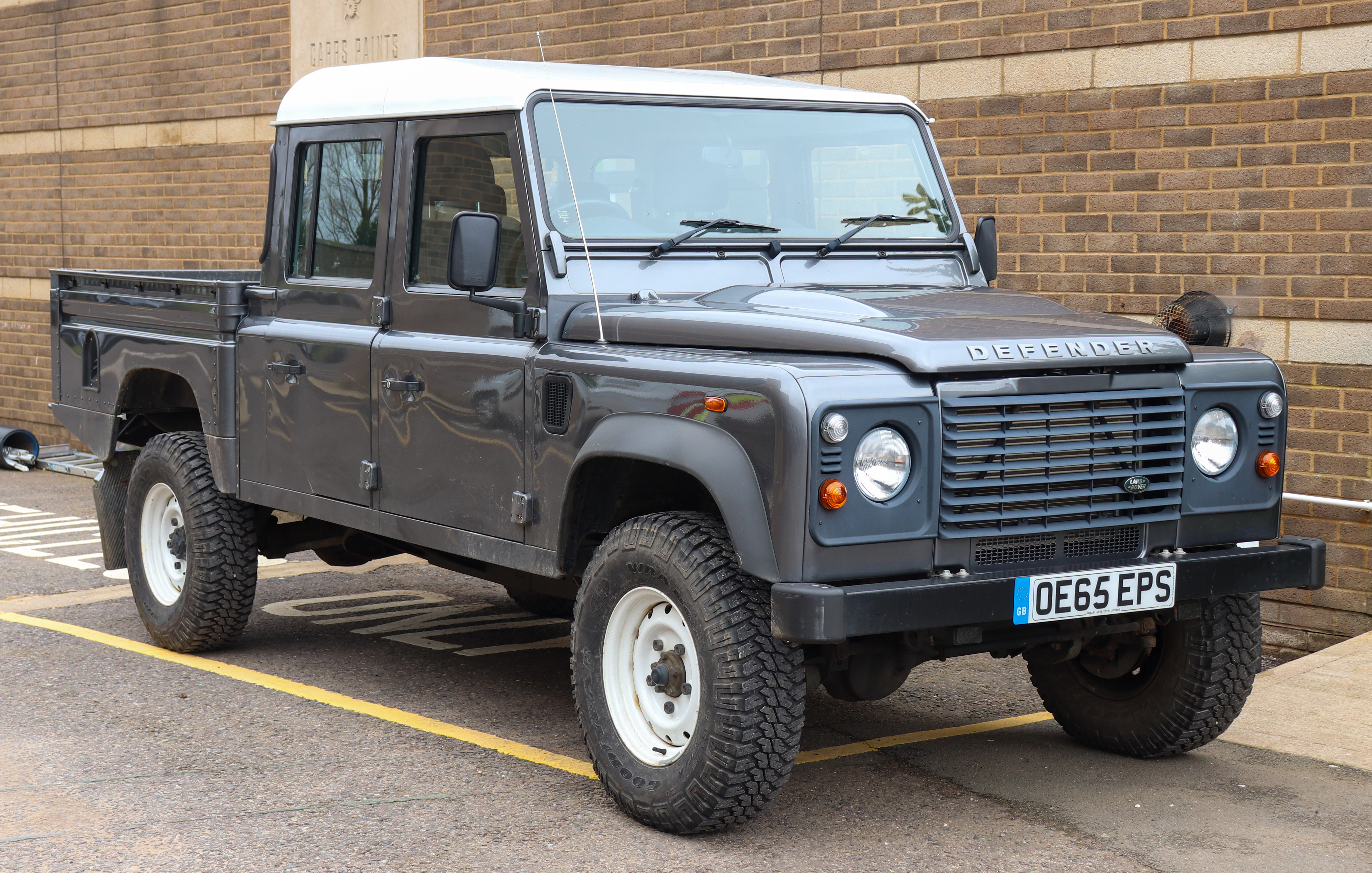
Their brand new Defender D7XRs, they were purposely built for the W2RC series of rallies
and Dakar was kind of the kickoff this year.
They've got a three-year term that they signed on for for all the different competitions.
And of course, this was the very first one.
So when I flew over, I actually live in Oregon, but I was visiting family along with my husband
Andy in the Midwest.
So I left Minneapolis and then flew over to Saudi Arabia, where the Dakar is held.
That was just after Christmas.
That was before, actually just after New Year's and flew over there for a total of about two
and three-quarter days, almost three days.
And then flew back home back to Portland via, let's see, I think it was six airlines, no,
six flights to five airlines and multi-layer layovers and an overnight on the way back
in Dubai and you name it.
They don't make it easy, do they?
Well, when you're literally flying all the way across the globe to the other side of
the world and in a place like Saudi Arabia, I've never been to the Middle East before.
So when we were flying, I was lucky enough to grab a window seat and we're flying over
Cairo, like the outskirts of Cairo in Egypt.
And I'm seeing the Red Sea and I'm seeing Mount Sinai.
And I mean, it was fascinating.
And on the way back home, we flew over places like Iran.
And, you know, it just, it was such a different world.
And I love travel and I love, I mean, heck, if I could do it again for even 10 minutes
on the ground in the Bivouac Dakar, I would do it again in a heartbeat.
It was so fascinating, not only just with the travel aspect of it, but of course the
rally aspect of it, you know, having a chance to see the defenders in action.
There were three different teams, two of them were Americans, actually one of the teams.
We'll get into that in just a little bit.
But and to see some of the classic Dakar cars that we're running in the classic series
part of the Dakar and just the Bivouac and how big it is and how it works and just all
the inner workings, it was just fascinating.
And I love that stuff, especially the competitor media person.
So.
Well, just from a travel aspect, there's a joke in there somewhere about you traveling
from the Midwest to the Middle East.
I just can't quite craft it.
Perhaps our audience is a little wittier on that aspect than I.
But and then to come all the way back to Portland, you said different airlines, multiple
different airlines had to get you home.
Like it wasn't just.
Yeah. Right.
You can't just, you know, hop on Alaska Airlines and, you know, land in Saudi Arabia, for instance.
So. So yeah, on the way out, it was Minneapolis to Dulles.
And then I think I had about a five or six hour layover in Dulles.
And then I think that was Delta.
And then I went to Saudi Airlines and flew overnight to go to Saudi.
And I think that total trip with those three airlines in tow was about 32 hours.
If I could figure that out right with my navigator brain.
But then on the way back home, I flew Emirates and Emirates ended up being from.
Let's see. That was.
Oh, actually, I didn't.
Hang on. Let me backtrack their first set of flights.
So I landed in Saudi Arabia to Riyadh, actually, via Saudi Airlines, and then Riyadh over
to Alula, where stage two and stage three were happening.
So that was kind of the bouncing, you know, where I was from the Midwest of
Minneapolis, Dulles, Dulles, Riyadh, Riyadh over to Alula.
On the way back home, we were still in Alula and then I left and I had to go
kind of backwards to go to Dubai, UAE.
So it crossed off two countries on my list and I had a very quick overnight.
I think I got to my hotel room once I found it in that massive, massive airport.
And I think I was there at like one in the morning or whatnot.
And then I had to leave at like, I don't know, five or six in the morning
to catch my Emirates flight.
So I basically went from Alula to Dubai, had an overnight to Dubai.
Dubai to San Francisco.
That was via Emirates and then San Francisco via United Airlines back over to Portland.
Wow. So, yes, you got a little time in the United Arab Emirates,
but did you actually get to explore or do anything of being there at one in the morning?
You know, the airport's huge.
And I was pumping out so much social media, you know, videos and stories
and all sorts of stuff.
I was up, I think, a couple of nights prior to about three in the morning each night
while I was boots in the ground in Saudi Arabia,
because I wanted to make sure to get as much content as I could out while I was there.
I may have been a little bit delirious walking from once I landed
and then I had to walk all the way back a whole another terminal.
And it was almost like Vegas, in a sense,
where there's so many lights and blinking things and so much activity.
I'm like, this is midnight and this airport never sleeps.
Of course, it's Dubai International Airport.
Once I found my hotel room and once I got settled,
I think it was maybe around one in the morning when I still have to shower
and then I wanted to do social.
And, you know, my recap reel on my eventful arrival back home
is going to be posting here in the next couple of days as I work on those.
I'm a little exhausted just listening to it.
Travel days, especially travel days alone, aren't my favorite.
I like being boots on ground somewhere.
So we'll kind of pivot into that with what your experience was.
You were there while Andy and I were in Death Valley.
So very curious what the difference was like.
We were cold desert.
Was it cold there for you?
Like climate, what were you looking at there?
Yeah, that's a really great question.
I know that you and Andy did the tremor.
Was it an explorer tremor?
I think shortly after I came back and I had a couple of days at home
after my Dakar and then I was in California right away for the Subaru
the outback wilderness.
So I was finishing up my malaria medication, my preventative malaria
medication while I was in California. So fun stuff.
But but boots on the ground, it was amazing.
I mean, the climate obviously Saudi Arabia, big desert, you know, very, very dry.
So we have a good inkling of what the American desert is, right?
Or different parts of the world.
So or Mexico or whatnot.
So, you know, very cold in the morning.
So I had my my hat.
I've got my puffy jacket.
I, you know, just layers and then kind of peel things off as they need to go.
The culture over there is very, very conservative.
So I as a woman, I really wanted to make sure
even though I was media, it was a Western program.
I really wanted to make sure to pay respects for their more conservative culture.
So I wore solid colors, darker colors, baggier clothes.
I did have my camera to my camera equipment with me on a smaller scale level.
But yeah, once once we got to the big whack, I just kind of had my layers
and it's like if I need my jacket, toss it in the back.
And then I just had my my phone, you know, my my little mic, obviously,
for interviews and then I had my camera that was in a harness over my shoulder.
So that's how I rolled.
And most of the time I was fine with a longer sleeve shirt.
It got a little bit warm.
But of course, I decided to bring black for the desert.
I don't know why, but, you know, it was a nice baggy shirt that I had at the time.
And yeah, and, you know, it got dusty.
The times that we were actually on course, the parts of the two days
for stage two and stage three, but I live in the dust and I live in the dirt.
And so I just, you know, I love it every moment of it.
And, you know, just wear SPF 70 to make sure that the sun was hot.
The sun was definitely hot over there.
I live by SPF 70.
I call it my liquid solar blanket.
He keeps me alive.
And then Holly and I have a quote that we picked up on our honeymoon to Cancun.
We went to Chisholnitsa and our tour guide kept using the phrase,
the sun is very heavy today, my family.
And so whenever it's very hot outside, it's the sun is very heavy today, my family.
There you go.
There you go.
Yeah, it was, you know, it was beautiful scenery.
You know, the parts that I had a chance to see, we did have an opportunity
to drive stock defenders in the desert, including myself as a woman.
So, you know, in stage three, we had a chance to drive out to kind of a secret spot
where they had some intense setup and stuff like that and shoot them.
Let me backtrack a day when we were there at stage two, we got to the Bivouac
and we went out near to where the finish line was for stage two.
We had just missed all three defenders coming through.
But with rally, you just never exactly know where they're at.
You've got trackers on them, but you never know.
There could be lag time, you know, they're fast, you know, they may have gotten lost
or, you know, all sorts of different things.
You might get stuck in the way out.
I mean, you just never know.
But day three, we got really, really lucky.
We saw all three of them come through, boom, boom, boom, you know, tight as a pack,
super confident, all six people in total with the three defenders.
And then we also saw some of the other vehicles.
And when we saw some of the ultimates, we saw, you know, a couple of the
side-by-sides in the SSV class, you know, and right as we left, we started seeing
the big T5 type trucks, like the big man trucks just barreling their way through,
which is pretty insane.
So you say you got to explore, is this like the quintessential, the dunes
where you're climbing dunes and you need to have the orange flag behind you?
What was the situation there?
Yeah, that's a great question.
So we were on a fairly tight schedule.
So when we drove, we had very kind of light dunes.
They weren't like you would be thinking of Glamis, for instance.
The Revella Valley when I'd compete with them, you know, where the old Star Wars
were filmed on Donna Glamis near Mexico.
It's nothing.
I mean, they have them there, but that's not what we were driving through.
What we had was more rocky sections, a little bit of sand, you know, fairly easy
driving for somebody that's more experienced.
But I mean, you just put your throttle, you know, even throttle through some
of the loose bits and get your way through.
But for me, you know, I just kind of took a step back when I had the opportunity
to drive both off pavement in the desert and also on the road to get back
to the Bivouac as a woman, because women weren't allowed to drive up until June
of 2018.
So it was really quite, I'm going to be writing about this here soon.
But that was really interesting because I just never thought in a million years.
I mean, you just always push boundaries.
You always figure out, you know, what to do and how, you know, and if you fail,
you know, pick yourself up, learn from your mistakes and keep on pushing to say,
OK, I really want to do this.
I really want to do that.
And I firmly believe that if you really want something bad enough, it'll come.
It'll happen.
It might be in a different form.
But for me, you know, I've always wanted to visit Saudi Arabia, the Middle East
area, especially to go do car.
I mean, heck, if we can find a money tree, I would love to compete in the classic
series part of it with Andy with because we do a lot of regularity.
Rallys or timespeed distance, which is what the classic series does
within the Dakar rally itself.
But that was really interesting.
And so, you know, as I was on the pavement driving, it's kind of like Mexico.
I don't you know, if you've driven in Mexico at all, where all of a sudden
you've got, you know, a lorry in front of you that is half off on the shoulder.
And then there's, you know, one guy coming straight at you, just barreling up
in the middle of the road and you're like, oh, yeah, that's right.
They move off to the side, both lanes.
And then somebody just barrels right up the center, even if it's just a
non-passing zone in which people were doing.
So we very quickly found out that happens in Saudi Arabia, like it does in Lithuania.
And we saw it a bit in parts of Poland, too, when we did the Baltic Sea Circle
rally with Andy.
But so you watched out with that.
But every exit of that highway had police presence.
And of course, it's Dakar rally.
You've got a lot of police, but we didn't realize that for stage three
when I was driving that the prince, somebody said the prince, a couple of
people said the prince, one person said the king was coming unexpectedly to
actually visit the Dakar rally.
So everybody was just in a, you know, oh my gosh, you got to do this,
secure this, this and this, whatever.
And in a drive past, many policemen as a woman and as a westerner being like,
hey, hey guys, you know, it was a really interesting mix of emotions.
But I was just, it was so neat to have those types of experience.
I can't stress that enough of putting yourself out there.
And, you know, I flew solo all the way around the world to go do this.
And did I know languages like that?
No, I downloaded, you know, Arabic, you know, so I could talk about it offline
if I needed to with Google Translate, for instance.
And, but everybody was so friendly and so accommodating and the culture
was just so wonderful and the food was great, too.
Yeah, that's crazy.
I didn't realize it was so recent that women were granted the ability to drive
there. I knew super conservative culture.
I knew super limited access to various things for women there.
But I didn't know 2018.
That was yesterday.
It feels like.
Yeah, it definitely.
And to know, you know, multiple women that have competed in Saudi Arabia,
you know, I mean, this year, for instance, you know, American Sarah Price,
she was the driver along with her co-driver and navigator, Sean Bearman.
They were in Defender number 504, you know, she she competed in that class,
you know, and she did as she came from the SSV world from side by side.
But, you know, she was one of the one of the teams that did really well.
I mean, they won multiple stages and they ended up taking a second place
finished and she's a Western or be an American, but she's also driving in Saudi Arabia.
Yeah. Wow.
OK, so a little bit of the culture there.
But so you went over with JLR and you were there covering Defender.
Let's dive into what aspects you got to experience.
You said you got to see at one point the entire pack come through.
But what was that like kind of covering the event for JLR?
You know, it was electrifying.
The whole entire experience was, you know, when we got to stage two,
they had moved, I believe, from, gosh, I'm trying to think of where it was,
where they were, but the Bivouac was just getting set up in Lula.
So, you know, a lot of it was still going up and things getting finalized.
And when we got there, everybody was out competing.
So everybody's I don't want to say booth area, but everybody's, you know,
kind of Bivouac dedicated area was pretty much empty because everybody was competing.
They were rallying, you know, when we got there, we had a chance to do several
meetings with with the heads, you know, some of the engineering heads
and PR heads from Defender themselves and see the Bivouac that they had.
It was amazing, the area that they had, because they had multiple semis,
multiple different vehicles, they had rooftop tents, they had RVs,
and everybody and everything had a specific role.
So some of these semis had differential parts, they had spare engines,
they had spare body parts, you know, some of these other ones had clean rooms
and consumables, you know, some of the others even had had, you know,
tool chests that would make all of us drool.
So can I just have one, like half of a semi in our house, please?
Because I would love that, you know, they had semis that even had
like a hospitality suite and a huge conference room, too.
That was kind of the nucleus of Defender themselves.
So when the drivers had any issues with with their vehicles, they could come in
and talk to the engineers and multiple computer screens and a huge conference
table and everything in one of them.
That was really fascinating to see how an entity and mind you, JLR,
so Defender is under JLR.
But, you know, Defender came up and said, OK, we want to rally these.
These vehicles are based off of the stock Octa.
We want to rally these.
We want Defender to do this for three years.
And the 2026 Dakar rally was its first actual competition.
There will be more this year and for the next three years.
But to be able to do it in the limited amount of time that they did,
I want to say it was under 18 months.
And under 18 months to say, yes, we want to do this, work with FIA or FIA
with the actual regulatory body themselves to update the regulations
for this revamped stock class that they were planning on doing.
Because, you know, it used to be the Paris Dakar rally, right?
It started in Paris and ended in Dakar, Senegal.
That was in 1978, the first rally finished in 1979.
Those were mostly stock vehicles or production vehicles, because that's pretty much,
you know, it was the 70s, right?
That's pretty much what was there.
You don't have the ultimate vehicles or all these just insanely built
and, you know, aftermarket modded like crazy vehicles.
So but they wanted to revamp this stock class so that Defender and even Toyota
or other manufacturers could be invited to say, yes, let's do this under the stock class.
So not only were they planning logistically, how they were going to do this,
what vehicle they were going to build their things off of revamping
the regulations along with the governing body, they were also figuring out
just the teams, you know, what it is that they needed to do, build them,
test them, run them, and then, oh, yeah, get there in one piece and compete.
So, you know, that in itself, just to get to the start line was just insane.
Yeah, creating something from nothing, building an entire team internally.
So it's basically a stock class for these vehicles.
Was Defender viewing it as a test ground,
taking their brand new Octa model of the Defender?
Were they viewing it as a test bed for future product?
Were they, was it more of a PR stunt for them?
What feeling did you get working with them?
Definitely a test bed, for sure.
They said that they, you know, some of the vehicles that they're working on
right now are seven and 10 years out, and so they're using their learnings
from this and incorporating them into future product, for sure.
So, you know, they, when I was there for stage two and stage three,
they were having a little bit of mechanical issues.
Mind you, that's the beginning of 13 grueling stages.
So I was there pretty much right from the get go.
And they were having, one of the teams was having a power steering issue,
so they figured out what that was.
You know, they had a little bit of suspension stuff that they needed to work on.
You know, they had just a little bit with their, they had a fuel bigger, huge, huge,
I think it was a 550 liter fuel tank that they had in all the vehicles.
And one of the drivers, at least one of the drivers said there's a little bit
of smell of petrol.
So, you know, figuring that out, tweaking that,
seeing if it was a gasket, that type of stuff.
So they were working and fine tuning those vehicles as they were moving along
when I was there, but it was really interesting.
I mean, yeah, talking to, you know, all the different heads and interviewing them
and getting quotes from them.
I mean, for sure, that's one of the main things that they wanted to do.
And to have it have the defender name, they said, it's got to be tough.
And we want to make sure to test these, test these, you know,
with with different aftermarket partners, like, for instance, Bilstein,
they've got their their suspension set up with them that they co-designed,
etc., etc., etc.
You know, same with the BFG, they were running their race rubber for that.
And, you know, away you go.
There are a lot of changes, even though it was a revamped stock class, so to speak.
Yeah. And he said, there are already seven to eight years out in the future.
So that's pretty awesome thinking.
Yeah, seven to 10 years, I think, is what they said.
So you and I both know the history of the brand Ineos, why they exist.
And it has a lot to do with Defender and the founder of Ineos wanting Defender
to be a, I'll use the word sturdier, body on frame platform.
He couldn't get what he wanted, so he built his own.
But from your experience, from what you witness from all the testing
out there at Dakar, sure, a body on frame would be tougher.
But what were some learnings that you gained being an experienced rally
driver and automotive journalist?
What are some things that you picked up on from the team?
Yeah, that's a great question.
You know, I think all three teams.
So let me just list them here so that that, you know, there's a whole,
there are all from all throughout the world, including two Americans
that I mentioned, Sarah and Sean.
The other ones, there was a Lithuanian, a young Lithuanian.
He ended up winning the whole entire class, the whole revamped stock class.
His name is Rakis and his last name.
I hope I don't butcher it, but Chutska, I believe, is 26 years old,
born in 1999, along with his co-driver who's from Spain.
His co-driver's name is Oriol Vidal.
They were in number 502.
They took first place after all the 13 stages got done.
Then also there was a French duo with Mr.
Dakar himself, Stefan Peter Hensel and car number 500, along with
his French co-driver, Mike Admitki, and they placed fourth
in the stock class.
The reason why I'm saying all of them and their names individually is
because they all have a storied history when it comes to either Dakar
rally or other different rallies, but they all came from different classes.
So that was really interesting, whether it was motorcycles,
whether it was side by sides, whether it was the ultimates or the big
man truck type of vehicles, like the T5s that I think they just called trucks
nowadays. What was interesting for me is in coming from a competitive
side, more on the regulatory, so not where speed is the number one thing,
whereas the Dakar rally in Defender, the speed and efficiency was number one.
Coming from myself, where I compete, it is time speed distance.
So it's all about accuracy.
You can't be too fast.
You can't be too slow.
You have to be perfectly en route.
So that's a bit different, but all of these guys came in gals,
came from a different walk of life and they hopped in and they just took off
with the defenders like they were there for the whole entire time.
You know, and they had very limited testing.
They did so well and they had completely different worlds of training
and racing history and they just did great.
They were just in it and in it to win it.
And first, second, fourth in the stock class, you can't complain.
You know, with that defender coming up and essentially dominating.
Yeah, so surely the brand very pleased to come back home with two podium
finishes and a near podium finish there with Mr.
Dakar himself, a lot of learnings there.
But yeah, one thing I know here at GT garage talk, we talk about a lot is
the ability just to get in a vehicle and feel at home, feel like you know
where everything is and how to operate it to its fullest.
That is only amplified more in a grueling rally like this, where you need
to know that it it works.
It works as intended and these vehicles being modified slightly.
There's just a lot going on, a lot of moving parts.
So the fact that defender started this up from nothing did not have a working
team process in place, found these drivers and then to finish like they did
speaks a lot, I would say to the durability of their vehicles.
It does, it definitely does.
And I mean, I think that was the biggest thing for myself, just to see in person.
You know, like I said, we missed them just narrowly on stage two, but to see them,
you know, come through so confidently where we were in stage three.
I mean, gosh, if I had my way, I'd be in a helicopter following the whole
entire stage, whole entire rally, but that's a whole other thing.
I'd love to go back to see them and the other teams compete next year
and do the whole entire duration.
There's such a story to tell.
And even though I was there for a limited amount of time for those two stages,
I'm writing tons of articles, podcasts, radio, all sorts of stuff.
And, you know, I think I've got, I don't know, 250, almost 300 different
social media videos and photos and things that I've shared from my very short time
there, because it's such an expansive story and so many different
sidestep stories that are in it, you know, about the vehicle, about the teams,
about, you know, the Dakar classic people, about the culture, about the, you know,
the terrain, there's just so much to talk about.
And, and, you know, stock, stock class teams, they can't change production
specific key items like the engine, per se, the, the gearbox, differential
housings or the external body, for instance, but they can improve on other
parts within the regulations.
Again, the revamped regulations that are updated to make them rally ready.
This includes like a wide variety of different upgrades.
Like, you know, for instance, they had the same stock differential
housings, but they were able to update the internals.
You know, they switched to the OEM fuel tank, which I think was a 90 liter
fuel tank for the Akta that you and I can buy off the showroom floor if we
wanted to. And they made a bespoke 550 litre fuel tank.
You know, they had the same eight speed automatic gearbox, for instance,
as a production Akta, but I think it had a lower final drive ratio.
All sorts of different things.
I mean, they have a wider track with, you know, and bigger fender flares.
They had their increase, their tire size.
I think they went up to a 35 inch tire size with a 17 inch rim, so that
they had a nice beefy sidewall to help protect them from trail hazard,
trail, trail hazards, sand hazards, you know, rock, all that type of stuff.
They did suffer punctures, but they carry three full size spares with them.
And so the rear suspension, for instance, had to be beefed up.
And so they did that, but they had to still use the stock mounting points.
So I can go on and on, and there's a whole bunch of interior bits too
that got upgraded, but they still worked with FIA, with FIA, to be able to keep,
you know, what these regulations are.
And they built everything while they were planning and updating this.
And same with Toyota.
Toyota had, I think, two different vehicles.
They're also competing in the stock class, the revamped stock class.
And there were a couple of privateers, too.
I think they were all piloting Nissan Patrols.
My goodness.
So yeah, lots to see, lots to do.
I'm very, I know how hard you work.
I've known you for a long time.
And just to keep up with you is somewhat exhausting just because of how much you do.
And to see everything that you were able to bring out of there for essentially
being there for two days and just to be like a sponge, taking in new environment,
new culture, new event for you that you'd never been to.
And to just kind of be thrown into it.
If I remember when you got there, you were kind of up in the air as to what you could do.
It was kind of a weird day for you the day that you arrived.
Yeah, so I actually arrived that previous night, like in the middle of the night.
You notice a theme here.
You're like, oh, you're arriving.
It's like one in the morning or something.
But after my 32 hour marathon and again, this girl in this energy is only decaf coffee.
So not by choice, but you know, you can sleep when you're dead.
But anyways, when I arrived, it was the night before.
But I actually just briefly met two American women and mother daughter
who was on the same flight and they ended up staying at the same area that we were.
And I saw him at breakfast the next morning.
And as I was just ready to sit down, they said, hey, come on over, sit with us
and have a nice breakfast.
And that was before I had any itinerary.
I didn't know what I was doing for that day.
I had messaged a couple of people and, you know, they ended up saying, oh, well,
you know, we don't have anything for you today.
So I wasn't able to get to Dakar or get credentials to go in my first full day
that I was there. So they said, well, enjoy, enjoy the setting.
Enjoy your your it was a villa, a small villa, a small building that I was in.
Enjoy the grounds. OK.
So I had a free day and and then they we just hit it off.
And it was the mother Nancy and daughter Alyssa and they were world travelers.
She's a luxury travel agent and a Nancy, for instance, the mother was over,
I think, one hundred and twenty one hundred and twenty five countries.
And they just came from Egypt.
And I mean, they're fascinating people.
They're from the L.A. area. Long story short, they said, well,
what are you doing today? And I said, you know, oddly enough, I have a free day.
And it's so rare to have, as you know, with programs, being a journalist yourself
and with Holly that you might have a couple hours if you're, you know,
you're able to not a full entire day, especially in a different country
where you've never been to. Well, they said, come with us.
Why don't you know, we've got a couple of things to order.
We wanted to go or plan for tour.
We wanted to go to Higra, which is where the Nephidean people have their tombs
and where they lived and all these carvings, these intricate intricate tombs
and in landscape areas that were not too far away, as well as Mariah,
which is the largest mirrored building in the world.
And then they wanted to go up to Harat viewpoint.
And I'm not sure if I'm saying that right if it's Harat or Harat,
but it's a viewpoint that you go drive all the way up to.
And you can see all of Alula in tons of date farms
and the old ruins of the old area, the old section of the city and whatnot.
And we did all of that together.
And they're like my new besties.
It's just amazing.
We're already planning the next time we can see each other halfway through
from Portland to L.A. Wow.
So I bet without bumping into them, without that, knowing you,
knowing your work ethic, that they would have been torture.
It would sort of would have been to me.
I'm like, I need to be making money.
I need to be making content because the next two days for you
was like drinking from a fire hose.
Yeah, you know, for me, I loved absolutely every second of it.
I mean, you know, do you know exactly what part you're going to be doing
every single day? No, you know, you have maybe a high level of if you're lucky,
no matter what program it may be, or you may have some that are more detailed than others.
But the biggest thing is like I was saying earlier is is putting yourself out
there and just being confident and saying, OK, and a smile goes a really long way.
If you don't know where you're at or if you need help or something like that,
no matter what culture, what language, what whatever, if you smile,
you can make it work.
And it was just great.
And so for me, I just rolled with it.
I kept on saying be flexible, just, you know, be patient, smiley,
even though you're tired and you don't know the last time you slept,
which I run on sometimes.
I mean, you know me, I'm always on.
It's like when it's game on time, it's game on time and sleep you can do later.
But stay focused and just be flexible.
And it worked out really great.
Well, any other thoughts that you want to share from the strip?
I mean, we've done world travel.
We've done free days.
We've done the fact that they placed on the podium like we got a lot of stuff.
But is there something I'm missing here?
Gosh, you know, Dakar is such it's such a storied competition.
It's one of the most grueling competitions in the world for motor sports,
in my opinion, to see the teams to see the defender teams out there
just slaying it and just killing it.
You know, they were all all three of them, actually all three drivers
and all three teams were stage winners by the time I even got there after stage three.
And for a stage stage two and stage three, they were running one, two and three.
So if you let that think in, I think they won 10 out of 13 total stages.
And they were rotating as to who was winning, right?
Whether it was Sarah, whether it was Ruckus or whether it was Stefan, it just that
that says so much about the vehicle, the, you know, the toughest of the vehicle,
how it was built, you know, that it's built off of literally a stock octa
that you and I can go buy from the show on the floor.
And, you know, some of the stories that I love to recall this one,
they were saying that they had some of these little bespoke items like, you know,
bolts or where they had welded nuts or things, you know, for for switching
out race seats and whatnot, that they tricked the robots that were building
this down the assembly line or building these chassis and whatnot.
They just kind of put the put the part in right away.
And then the robot didn't know that it was different and then it just grabbed
it and put it in and this and that and went off the same assembly line.
So and there were tons of people that came together.
They were so excited once Defender announces internally that there were
engineers working on the weekends, that there were people that were like, yes,
I want to help. What can I do?
What can I do? And to have that energy and to have that enthusiasm,
that's so huge to see it on a macro scale when Andy and I compete as husband
and wife duo with different regularity rallies.
Mind you, ours is precision based, not how fast you can go to the finish line.
But we get it. We understand it.
It's like, you know, building up the vehicles, whether we have built
hours up ourselves, you know, for instance, with 2022, you know, we built up
the Subaru when we partnered with Subaru, you know, then we ended up running
with Ineos, actually with Ineos Grenadier and we won our first class
with the Alcan 5000 in 2024 in the winter in the Arctic.
You know, then we partnered with Honda.
We had a bone stock Honda that had some accessories on it, but then we ran
some prototype equipment from rally innovations and Baja designs.
And so as we evolve, we see the inner workings of the backside of it.
So not only as a competitor, but then media while you're competing to cover it.
And for me, that's just that's like my adrenaline.
So to be there at that opportunity, I am thankful for a JLR for the invite
just to say, hey, let's, you know, let's have you over there.
Let's, you know, do the experience, cover the teams.
And I'm still writing about it.
I mean, heck, I'm still doing social media, the crankshaft culture on it.
And finally to the point where I'm I'm flying to or I will be flying to Dubai.
But so many people just wanted to know that the whole travel log
of part of it, in addition to all the competition part of it.
So I am doing my due diligence and doing the best I can, you know,
putting it all out there.
So for people that might not be able to have the opportunity to go to Saudi Arabia,
they can get the behind the scenes look of at least my experience being there.
Yeah. So I noticed right after you got back, yes, you did head south
into California for a Subaru event.
And you literally just got back from another event prior to us recording this.
What is next on your oh, so busy calendar that you can talk about at least?
Right, right.
Well said that I can talk about.
So there are a couple of things that I can talk about.
I mean, Andy and I just got back from Canada yesterday.
Yes, I think last night or if some time before dinner, we did the Thunderbird
rally, which is also another regularity rally at or below public speeds on different trails.
A lot of it was off pavement.
So that was really interesting.
It was like tons of ice, tons of rain, tons of mud.
There's hardly any snow.
It's basically a snow rally and it's a very quick paced rally.
But again, it's at or below public speed limits because they're all public roads.
So I just got back with that and we will be doing competing together.
I can't speak of our partners or the vehicle yet.
But we in July will be doing the car rally, which is a brand new rally.
And that is the Colorado Adventure Rally.
And then we are also planning on doing the Alcan 5000 this year,
which is another summer rally.
And I can't talk more about that either yet.
OK, very intrigued there.
I'm sure you and I will cross paths at some point, eventually, very soon.
As we joked earlier, Andy and I were in Death Valley right around the time
you were on your way back from Saudi Arabia.
So I am very grateful that our paths are crossing more and more here lately.
Yeah, likewise.
And, you know, it's funny, we jokingly say with you,
with Brian Dorr, who you know as well and with other people.
You know, Brian and us, for instance, we live in the same city.
We live in Portland.
We never see him in Portland.
If we see him or if we see you, it's somewhere way far flung location.
You know, testing this vehicle or that vehicle or whatnot.
So, you know, you never know if it's track time or if it's dirt time or,
or, you know, just a tour of a manufacturer's facility.
I mean, you never know where we pop up and it's the same with you guys too.
So, yeah, I thought it was funny.
The first time I actually met Andy in person, we'd already talked,
I don't know how many times on the podcast, but was actually for all
intents and purposes in my backyard over in Fort Worth with the new Tahoe and Suburban.
So you and I just briefly crossed paths there.
But then he and I were drive partners on Kia Sportage.
And then he and I rode back from Death Valley together to the Vegas airport here recently.
So you never know.
It's our, I didn't realize that that was where you guys first met each other.
I'm crossing.
Yeah. Wow. Oh my gosh.
Yeah. You know, he's just never know and the programs fly so fast.
Usually that you're like, hi, bye.
If you're lucky, you could be drive partners where you can spend the day together.
But, you know, you're also still working, whether you're taking video or Andy's
taking photographs or, you know, writing notes, Donna's to, you know, the good,
the good, the not so good and the challenging parts of whatever brand new vehicle
that we're testing in whatever variety.
There's always something different.
And I think that's what I love about it, because I never know necessarily what I'm doing next month
or maybe next Monday or something like that.
But, you know, Andy and I work for ourselves and, you know, we've got our own entity,
Crane Chef Culture, in addition to all the magazines that we write for.
We're both staffers at OVR Magazine, we're the features editors there.
But, you know, so there's always stuff coming in down the pipeline.
If we're not competing ourselves and creating that for ourselves,
there's always different drive programs or different events or testing aftermarket gear
camping stuff. I mean, heck, you know, you pretty much know us well enough to know all the stuff that we do.
Yeah. I laugh because just, let's see, an hour and 27 minutes ago, according to YouTube Studio,
my video on the Ford Explorer trimmer went up.
I intentionally delayed mine past the embargo lift.
And I did actually get some footage of Andy tackling some obstacles there in my video.
So you might want to go check that out, you know, somewhere midway through the video.
He's in there. I even call him out.
I'm like, no pressure, Andy. Just filming you do these obstacles.
So it's awesome. Yeah. He's a pretty good Vanna.
I jokingly say, you know, he's the Vanna of us because he's he's so good on camera.
I mean, he had to be. He, you know, when we first moved here to Oregon from the Midwest in 2006,
he got a job with wine industries.
And I'm sure you're pretty familiar with wine industries, the truck winch company with,
you know, aftermarket parts and bumpers and hubs and all sorts of stuff.
And and so, you know, very early on, I think I remember one of his first trips as the media guy
and the PR guy was at SEMA. And then, you know, the crew came up to him and said,
all right, you know, media's here.
And Andy's like, OK, he's like, that means you.
And so people were there with video cameras, the professional media for whatever TV show
or whatever YouTube huge channel or something.
And he's like, and I got to go now. Like, you know, he's got to be on.
And so that's how he started. It was way back when.
And and so he just he does a great job on camera.
I'm trying to get a bit better, you know, in front of camera, if you notice this,
my whole Dockhart coverage have been, you know, again, pushing boundaries, you know,
seeing what sticks, seeing what works, just as you guys know, and always evolve. So.
Yeah. Well, as always, Mercedes, it was great talking with you, I'm sure,
with many of the events that you listed coming up very soon.
That this will not be the last time we talk here on the podcast.
This is really just becoming the Lilianthol fornicate podcast.
And I'm OK with that because y'all stay active enough.
It allows me to keep up with y'all.
And it keeps our audience engaged into not just new cars,
which we cover here at the main channel so frequently.
But what's going on in the industry at large,
which was always my goal for this podcast.
Yeah, you know, I mean, we love it. I mean, heck, you never know.
Maybe we'll get co-podcast together or something like the ring of that.
But, you know, for us, we have our hands in so many different things.
And I mean, yes, we we test a lot of new cars.
But, you know, we love building them up and seeing their capability and whether,
you know, like, for instance, we partner with Subaru this last year
and we took we took a modified they built it under our direction
with all these different specific parts aftermarket things.
And we lived out of it.
And with a rooftop tent and we did the whole entire Transamerica trail,
that took us 29 days and over 7000 miles with over 3000 of it being off pavement
and a whole variety of things.
What were the challenges?
You know, what is the vehicle capable of?
What could it not do? All these types of things.
And so for us, there's such a world of just, you know, of different things that you could do.
I think time speed distance rally for us, like, you know, the regularity rallies
or TSD rallies that you might hear in North America and throughout the world,
you could take pretty much any car, any car.
I mean, heck, our Pajero that we have sitting outside the other side of my wall here,
we built for or we bought for a little over $4000 from Texas, mind you.
We, you know, did a flying by and we drove it all the way back.
There's our second Texas Pajero flying by oddly enough.
But then we purpose built it for the Alcan 5000 in the winter for 2020.
And we did it.
Mind you, it's a right hand drive diesel, four wheel drive diesel.
Yeah.
Do we know what the heck we were doing?
Kind of, because we had another Pajero ahead of that.
But we purposely built that for it.
And, you know, Andy God, he spent like six months rebuilding the whole entire front suspension
and all sorts of stuff.
And we had a Lobasto Thermo Top Evo engine coolant heater in it.
We had, you know, all sorts of other things, you know, brand new tires at that time.
We decided to do winter specific studded tires and all sorts of different things.
But it wasn't that it wasn't a ton of money, right?
You could buy a car that's like $3,000 and $2,000 and just run, you know,
run what you brung essentially for some of these competitions.
And what's a better way than to marry seeing different things, being with like-minded gearheads,
being out there and being together and being in your car and seeing what the capability can be
and the challenge of it all.
For me, that's why we love rallies so much.
And that's why Dakar folds into this mix.
And it's such a master scale because it's the pinnacle.
It's literally the pinnacle in the world.
Yeah.
It seems like everybody knows that name.
Like Rebell in its 10 years has made quite the name for itself.
But Dakar really does it.
Like you say, it's the pinnacle.
It's the crown jewel of the rally world.
So lots to talk about that.
Yeah, definitely.
Yeah, definitely.
And I mean, and to add to that too, the Alkan 5000 rally, they've started in 1984.
So think about that.
Yeah.
Yeah.
And it's like every other year.
So, you know, they have the winter and they have the summer and then winter and then summer.
And it's usually all the way up to the Arctic, you know, in different parts of Canada and Alaska.
And, you know, the roots vary.
But, you know, that one's also a very long-standing one.
But there's so many different ones across the world.
Yeah.
Well, Mercedes, I will put links to all of your stuff, your coverage down in the show notes down below.
But just for those who never clicked down there, what are the best ways people can find you in
some of your coverage?
The best way singularly would be via crankshaft culture.
Crankshaft culture is Andy and my own entity and brand where we believe that every vehicle is an
adventure and that we're all united by horsepower.
Because we love every type of car because we love every type of, you know, wheeled machine,
so to speak, whether it's an EV, a drifter, a classic, you know, a four-wheel driver,
you know, lowered import.
That's probably the best way, you know, we're on all the social media channels.
So you can see my dot car coverage on Instagram.
I've got, gosh, I don't even know three different saved highlights bubbles with up to 300 videos
and photos or something.
Last I counted, who's counting?
But then we also have some YouTube, we've got Facebook, we've got Blue Sky,
we've got LinkedIn that we post regularly.
And then also via myself too, if you Google my name,
then you can go ahead and just put that in, excuse me, and then put in dot car rally 2026.
I'm sure there's probably a lot of stuff that'll pop up.
Yeah.
Well, thank you so much for joining and just sharing your entire experience from travel to
coverage on the PR side to everything from the Dakar.
And look forward to hearing again from you again very soon.
Yeah, that sounds great, Corey.
Thanks so much for having me on the show.
Appreciate it.
Bye.
Well, there you have it, gear heads.
I another fun discussion about, you guessed it, rallies with Mercedes Lilienthal.
I really, really, really want to experience that for myself at some point in my lifetime.
And it sounds like it's going to be a lot of travel.
As always, you can follow along with us, GT Garage Talk or GTGarageTalk.com.
Until next time, gear heads, bye.
About this episode
Mercedes Lilienthal shares her immersive experience covering the Dakar Rally in Saudi Arabia for Jaguar Land Rover, highlighting the logistics of international travel, the challenging desert climate, and the unique culture she encountered. She provides insights into the new Defender D7XR vehicles competing, the rally stages she witnessed, and her hands-on time driving in the desert terrain. The episode blends travel stories with detailed rally coverage, offering a vivid look at the event's scale, the vehicles involved, and the demanding environment of the Middle Eastern desert.
If you liked that episode and would like to hear more, head over to Patreon.com/GTGarageTalk and sign up on our 1LT Camaro tier and you will be granted access to TheAftermarket, extra content recorded after each new episode. You’ll get to hear just a little more about what Cory and guests are like when making an episode of GT: Garage Talk. If that’s not enough, browse through our many other tiers and see what perks come with each level.