Episode one, the 1959 El Dorado. When subtlety officially lost, welcome to chrome and gasoline.
I'm Alex, and today we're talking about the 1959 Cadillac El Dorado, a car that didn't just
enter a parking lot, it annexed it. Let's set the scene.
Late 1950s America is feeling confident. Highways are growing, suburbs are spreading,
and optimism is basically sold by the gallon, and Cadillac looks at all that and says, what
if we made a luxury car? Dramatic pause, you can't hear because I'm not allowed to do sound
effects that resembles a glamorous living room crossed with a rocket ship.
First, a tiny clarity check. El Dorado, in 1959, is in a separate, weird one-off spaceship.
It's Cadillac's Top Shelf trim series, and in 1959, you're usually talking about the El Dorado
Byeritz convertible, or the El Dorado Seville hardtop. Either way, the vibe is the same.
Maximum presence, maximum chrome, and maximum belief that bigger is automatically better.
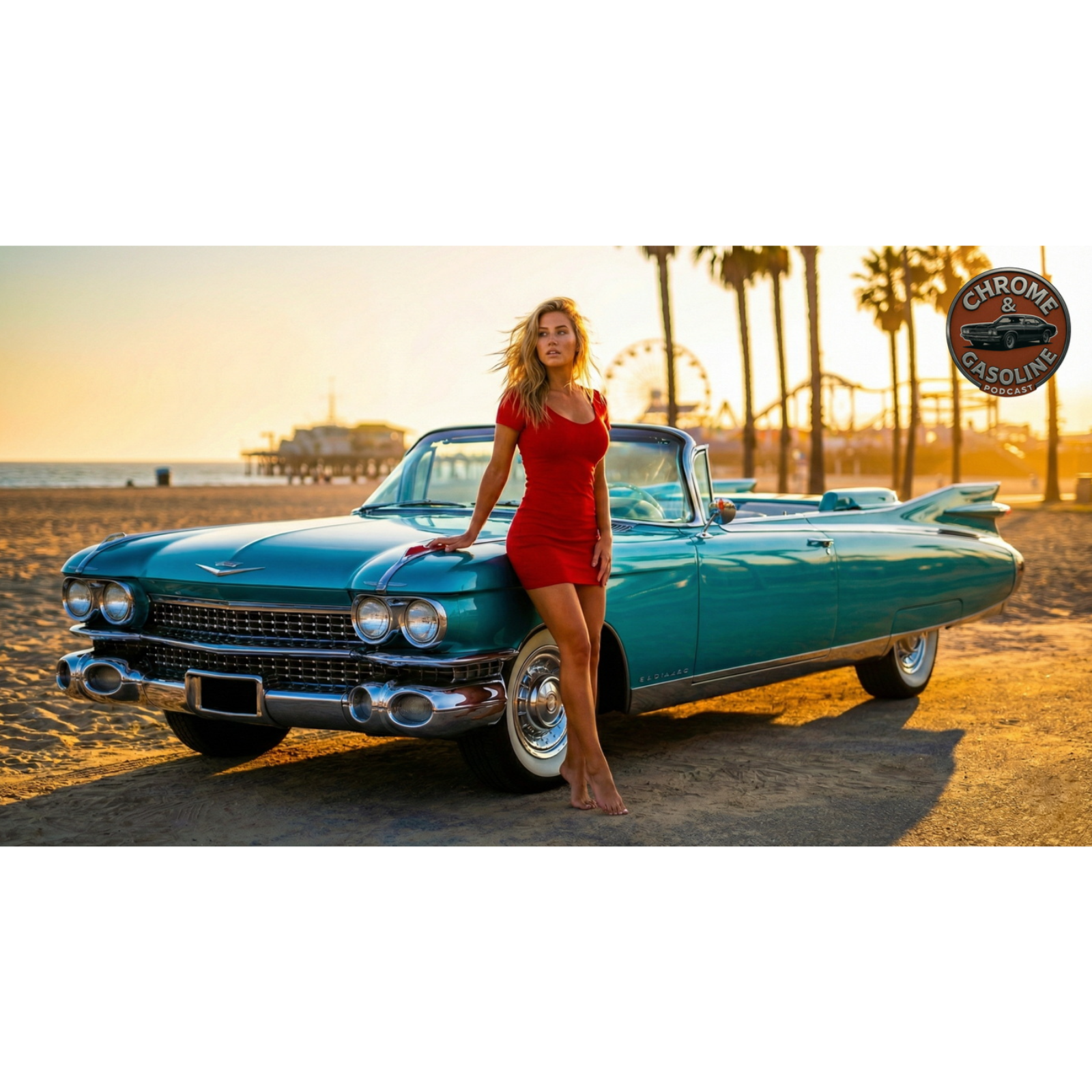
And then we get to the headline feature, those tail fins. The fins on 1959 Cadillacs
are legendary, and the El Dorado wears them with the confidence of a person who walks into
a party wearing a cape and somehow pulls it off. They're tall, sharp, and absolutely
committed to the jet-age fantasy. These fins don't say I like airplanes. These fins
say, I have opinions about satellites. If you've never stood next to a 59 Cadillac,
it's hard to explain the scale. This thing is over 18 feet long. Park it next to a
modern car, and the modern car looks like it accidentally wandered into the adult section.
The El Dorado isn't a vehicle so much as a mobile declaration that you have arrived,
and you brought luggage. Now, the El Dorado was Cadillac's way of turning luxury into a
carnival of conveniences. Power features? Yep. Comfort? Absolutely. Style? It has
more style than it knows what to do with, so it just spreads it across the body like
icing. Also, and this is important, the 1959 El Dorado is a perfect example of why
people get emotionally attached to Chrome. Welcome to our first official Chrome
therapy session. Some people see Chrome and think maintenance. Others see Chrome
and think my childhood, my uncle's stories. That one poster I should not have
put up in a rental apartment. There's something about bright metal on a big
American car that makes your brain go, yes, life is under control now. Even if
nothing else is, especially if nothing else is. So today is the overview. What it
is, why it matters, and why it still makes grown adults act like they've just
seen a celebrity. Next episode, we're going full design deep dive. The fins,
the face, the Chrome, and how Cadillac managed to make a two-tone
object look like it's doing 80 miles an hour while standing still. Chrome and
gasoline. I'm Alex, and if you ever feel like you're too much, just remember the
1959 El Dorado exists, and it's doing great. Episode two, design. Fins, flash,
and the art of being extra. Welcome back to Chrome and gasoline. I'm Alex,
and it's time to talk design because the 1959 Cadillac El Dorado is basically
rolling graphic design with a V8. Start at the front. The 59 Cadillac face is
bold and wide like it's trying to make eye contact with the whole zip code.
There's a grill that feels less like a car part and more like a luxury
building's lobby entrance. And then there's Chrome. Chrome everywhere.
Chrome with Chrome. Chrome that appears to be holding other Chrome in place. Here's
your 1950s marketing speak translator for the day when a brochure says
distinguished bright work. It means we used enough shiny metal to distract you
from your mortgage. When it says dramatic new styling, it means the
tail fins have their own opinions. Those fins, though, the 1959 fins aren't
gently suggestive. They are architectural. They are a statement. They are the
reason some garages quietly weep. And at the tips, you've got those iconic
tail lights perched up high like jewelry on the corners because if you're
going to break, you might as well do it in formal wear. The El Dorado trim
level adds its own flair. More detail, more polish, more yes, I absolutely
ordered the deluxe version. The car looks like it's dressed for a
night out, even if it's just going to the grocery store for one item and
coming back with six, including a suspiciously large watermelon. Inside,
you're in peak late 50s luxury, broad seats, generous materials, and an
instrument panel that makes you feel like you should be wearing a nicer
watch. Controls are big, confident and readable because the design
philosophy was simple. If it's worth doing, it's worth doing in a way you
can see from space. Very on brand for this car. And yes, the El Dorado
could be loaded with comfort and convenience equipment for the era. Things
we take for granted now were once glamorous. Power accessories, climate
comfort options, clever lighting features. The whole pitch is effortless. Not
fast and furious. Effortless, more like, I have someone who worries
about effort. Effortless. There's also a special kind of harmony to
the design. It's wild, but it's coordinated wild. The lines lead you
from the front to the fins like a guided tour. The car doesn't look
confused about what it is. It's not trying to be sporty, efficient,
minimalist, or modest. It is trying to be a 1959 Cadillac El
Dorado, and it succeeds with the confidence of a Broadway finale. Next
episode, we'll get under all that glitter and talk about the
mechanical side, the big Cadillac Vi8, the automatic transmission,
and what it feels like to actually drive a car that seems to bend
time and parking space geometry. Episode three, the muscle under
the mascara, how it moves. Welcome to chrome and gasoline. I'm
Alex. Today, we're talking about the part of the 1959 Cadillac
El Dorado that people forget while staring at the fins. It's
still a machine, and it still has to move under its own power. Under
the hood, you're looking at Cadillac's big 390 cubic inch V8 in
1959, tuned for smoothness and strong torque. Depending on the
exact setup, you're in the mid 300 horsepower neighborhood. The
point isn't drag strip domination. The fact is that when
you press the pedal, the car responds like a well trained but
very large animal. Calm, confident and fully aware, it outweighs
your expectations. Backing it up is Cadillac's automatic
transmission of the era. The sort of gearbox designed to make
driving feel like you're gliding, not shifting. The El Dorado
isn't asking you to participate in the mechanical drama. It's
asking you to arrive, ideally without wrinkling your outfit. Now
driving one, let's be honest. It's not tossable. If you
toss a 59 El Dorado, you're not driving, you're negotiating. The
steering is typically light, and the ride is engineered for
comfort. This is a car made for long roads and confident cruising,
not carving corners like a sports car. You don't attack a
turn. You schedule a turn. Breaking and handling are very
much of their time. You respect the masses. You plan
ahead. You drive like someone who understands physics and
also likes their front bumper remaining in the same zip code
as the rest of the car. And yet, there's something deeply
satisfying about it. The El Dorado has that classic American
luxury sensation, effortless motion, smooth, immense power, and
a sense that the world outside has slowed to a crawl to admire
you. Or maybe it's just slowing down because you're occupying
most of the lane. Either Westie, it's a vibe. Also, can we
talk about visibility? Those fins are behind you like two
confident exclamation points. You don't check if you're being
noticed. You assume you're being seen. The car has built in
main character energy. Next episode, we'll talk culture and
collecting why the 59 El Dorado became a symbol, what people
chase when they restore one, and what you should watch out
for if you ever decide to bring one home and immediately
realize your garage is now a suggestion, not a measurement.
Episode four, fame, fortunes, and the reality of owning a
rolling monument, chrome and gasoline, I'm Alex. By now, you
understand the 1959 Cadillac El Dorado is not just a car. It's
a cultural artifact with wheels. Why is it so famous? Because
it captured a moment. The late fifties were peak optimism,
meets style, space age influence, big design gestures and
luxury that look like luxury from a block away. The 59 Cadillac,
especially in El Dorado form, became the poster child for that
era. Movies, photos, parades, car shows. This car shows up
whenever someone needs to say mid century America without using
any words. Now let's do a quick chrome therapy session for
collectors. People don't just want transportation. They want
time travel. They want the feeling of a world where gas
stations had attendance and your car looked like it belonged
outside a fancy hotel. The El Dorado delivers that feeling in a
way that's impossible to ignore. But ownership comes with
reality. Restoration and maintenance on a car this
large and complex isn't a casual hobby. It's a
relationship. Chrome work alone can be a saga. Interior
pieces, trim, correct details. This is the kind of project
where you learn patience, budgeting and the spiritual value of
labeled bags of screws. If you're shopping for one, general
advice applies. Look for solid structure, honest history and
completeness. Missing trim and unique El Dorado specific
details can turn fun weekend project into epic quest with
side missions. Mechanical work is one thing. Chasing rare
cosmetic pieces can test your soul and your internet search
history. Also practicality. You need space. This is not a car
you tuck into a tight corner. This car wants a garage like it
wants a runway. And when you take it out, you don't run
errands. You make appearances. You become a small event. But
that's the reward. An El Dorado is a conversation starter
that rolls. People wave. People stare. Someone will tell
you about the one their neighbor's cousin's dentist had and
they'll do it with the seriousness of a historical
documentary. Next episode is the finale. The legacy of the
1959 El Dorado, what it symbolizes now and why it
still gets hearts racing even in a world full of supercars
and screens. Episode five. Legacy, the 1959 El Dorado as a
time machine with tail fins. Welcome back to Chrome and
gasoline. I'm Alex and we're closing out our 1959 Cadillac
El Dorado story. The elegant outrageous chrome drenched
monument to an era when restraint was considered
optional equipment. So what's the legacy? The 1959 El
Dorado represents peak more. More design. More size. More
theater. It's a reminder that cars used to be emotional
first and practical second. Today, everything is
optimized. The El Dorado is not optimized. The El Dorado is
romantic. It's a love letter written in steel and
sparkle. It also marks a turning point. The tail fin era
hit its absolute summit here. After 1959, the industry
started to drift toward different shapes and
priorities but the El Dorado remains the snapshot
everybody remembers. The biggest fins, the boldest
stance, the look that screams jet age even if it
never left Main Street and in modern car culture, it's a
superstar. At shows, it's always surrounded not because
it's the rarest thing in the universe but because it's
unmistakable. You can recognize it instantly like a
celebrity silhouette. People who don't know cars still
know this car. They might not say El Dorado but
they'll say that one. The crazy fin one. That's
branding. Let's do one last 1950s marketing speak
translator. The standard of the world was Cadillac's
famous claim. In 1959, the translation is, we build
luxury so confidently that physics files a complaint
and somehow it works. And here's the final chrome
therapy session takeaway. The reason the 59 El
Dorado still matters is simple. It makes people
feel something. Surprise, joy, nostalgia, a little
disbelief. It's proof that design can be fun and
that a machine can have personality so big it
practically needs its own driver's license photo
shoot. If you ever get to see one in person, do it.
Walk around it. Look at the details. Notice how the
car doesn't apologize for being dramatic. Then go
home. Look at your sensible modern vehicle and
whisper. It's not your fault because not every car
can be a 1959 Cadillac El Dorado. That's chrome and
gasoline. I'm Alex and remember life is short. Be
kind. And if you're going to dream, dream in
tail fins.
About this episode
The 1959 Cadillac Eldorado is a symbol of late 1950s American optimism, combining extravagant design with luxury features. This episode explores its iconic tail fins, massive size, and chrome detailing that evoke nostalgia and emotional connections. The discussion highlights the car's cultural significance, its role as a conversation starter, and the challenges of ownership and restoration. With a focus on style over practicality, the Eldorado represents a bygone era of automotive design that continues to captivate enthusiasts and collectors alike.