Our vets can even prescribe medication for many ailments
and shipping is always free.
With Dodge, you'll get more time with your pets
and year-round peace of mind when it comes to their vet care.
Go to dutch.com to get vet care that is always there
for just $92 a year.
Episode one, The Pony Car Revolution.
Hey everyone, welcome to Chrome and gasoline,
the show where classic sheet metal,
roaring engines and great stories all meet.
I'm your host, Alex, and today we're kicking off
a special mini series all about
the very first Ford Mustangs.
The 1964 and a half to 1966 cars
that started it all.
If you've ever seen one of those early Mustangs cruising by,
long hood, short rear deck,
that unmistakable galloping horse badge,
you know they're more than just cars.
They're symbols of a moment in time.
To understand why the Mustang hit so hard,
we've got to rewind to the early 1960s.
American roads were filled with big, heavy sedans.
Meanwhile, a new generation was coming of age,
baby boomers, college kids, young professionals.
They wanted something different,
something stylish, affordable and fun,
a car that felt like theirs, not their parents.
Inside Ford, one executive in particular
understood that craving, Lee Iacocca.
He pushed hard for a new kind of car.
Sporty, compact with room for four
and priced so young buyers could actually afford it.
That idea became the Mustang.
On April 17th, 1964 at the New York World's Fair,
Ford pulled the covers off the Mustang
and the crowd went wild.
The car looked like nothing else in its price range.
Sharp lines, bucket seats, floor shifter,
it made you wanna jump in
and drive straight out of the showroom.
Those very first cars are often called
the 1964 and a half Mustangs.
Officially, they were sold as 1965 models,
but early production cars had some quirks,
details like a generator instead of an alternator
and engine options like the 260 cubic inch V8
that would soon be replaced
by the now famous 289 enthusiasts
used that 64 and a half nickname
to mark those first off the line originals.
Ford didn't just rely on a good design,
they backed it with one of the most aggressive
marketing campaigns in automotive history.
The Mustang showed up in TV commercials,
magazine spreads and huge dealer displays.
When people lined up for test drives,
Ford dealers reportedly sold hundreds of thousands
in the first year.
The Mustang didn't just join the market, it redefined it.
Pretty soon, the industry had a new phrase, the pony car.
A small, stylish, affordable coupe
with a long hood and short deck,
the Mustang created an entire segment
and competitors rushed to catch up.
So in just a few months,
the Mustang went from a risky idea inside Ford
to a full blown cultural phenomenon.
It was the right car at the right time
with exactly the right image.
That's where our journey begins
with the birth of the pony car revolution.
In our next episode,
we're going to pop the hood and look closer
at what made those early Mustangs so special,
the styling, the body styles
and the engines that gave them their personality.
Thanks for listening to Krohman Gasoline.
I'm Alex.
If you love classic cars, stick around.
The story of the 64 and a half to 66 Mustang
is just getting started.
Episode two, style, options and engineering.
Welcome back to Krohman Gasoline.
I'm your host, Alex.
And this is episode two of our deep dive
into the 1964 and a half to 1966 Ford Mustang.
Last time, we talked about
how the Mustang burst onto the scene.
Today, we're getting closer.
Looking at its design, options
and what it was like to actually drive
one picture that early Mustang from the side.
The designers leaned into what became its trademark,
a long hood and short rear deck.
It's a simple idea,
but it gives the car this powerful forward leaning stance
like it's ready to sprint even when it's parked.
Right from the start,
Ford offered different body styles
to fit different personalities.
There was the hard top coupe, the most common,
perfect for daily driving.
Then the convertible,
for anyone who wanted top down cruising and a bit of drama.
And starting in 1965,
the fastback joined the lineup
with that sloping rear roof that screamed performance.
Let's step inside for a minute,
slide into the driver's seat of a mid-60s Mustang
and you're greeted by a simple sporty dashboard,
round gauges, a three spoke steering wheel
and if you were lucky,
a console running between the front seats.
Some cars got the famous pony interior
with embossed running horses on the seat backs
and extra chrome trim.
It made the cabin feel a little more special,
a little more upscale under the hood.
Ford offered engines for just about everyone.
At the entry level,
you had the inline sixes, economical and easy going.
For those who wanted more excitement,
there were the small block V8s
including the 289,
which quickly became a favorite.
That V8 sound is a huge part of the Mustang experience.
Not everyone knew or cared about horsepower numbers,
but they understood how it felt
when you pressed the pedal and the car came alive.
Beyond engines, the options list was huge.
Buyers could add power steering,
upgraded radios,
styled steel wheels and the GT package
with fog lamps, dual exhaust, stripes and special badging.
Ford's strategy was simple.
Let people build a Mustang
that fit their personality and budget.
On the road, those early Mustangs
weren't razor sharp race cars,
but they were light, responsive and fun
compared to many big American sedans of the time.
You felt connected to the car,
the steering, the noise,
even the slight body roll in corners.
It all reminded you
that you were driving something with character.
So from the outside lines
to the interior choices and engine options,
the early Mustang was all about giving drivers
exactly what they wanted,
style, sound and just the right amount of performance.
In our next episode,
we're going to zoom out
and look at how the Mustang
swept into pop culture and performance
from everyday streets to race tracks
and into the imagination of a whole generation.
This is Chrome and gasoline.
I'm Alex.
Thanks for riding along, Apollo.
And I'll see you in episode three.
Episode three, pop culture and performance.
You're listening to Chrome and gasoline.
I'm Alex and this is episode three
of our journey through the first generation Ford Mustang
from 1964 and a half to 1966.
We've talked about how it was born
and what made it tick.
Now let's explore how it became
a cultural and performance icon
by the mid 1960s.
The Mustang was everywhere.
It wasn't just a car.
It was a statement.
In TV ads, Ford sold a lifestyle.
Young people laughing, music playing.
A Mustang parked right at the center of the party.
It said, this is freedom.
This is you.
Think about a high school parking lot in 1966.
Among all the sedans and wagons,
there's one bright red Mustang coupe.
It doesn't just blend in.
It owns the scene.
That's the kind of presence the Mustang had.
Of course, image is one thing.
Performance is another.
Ford knew that if the Mustang was going to be taken seriously,
it needed real muscle behind the style.
With higher output versions of the 289V8
and packages like the GT,
the Mustang started showing up
at local drag strips and road courses,
proving it wasn't just a pretty face.
Racing and performance gave the Mustang credibility.
Enthusiasts saw it as a platform they could modify,
tune, and push to its limits.
And even if most Mustangs never saw a track,
their owners felt connected to that performance image.
At the same time, the car slipped into everyday life.
You'd see Mustangs in driveways.
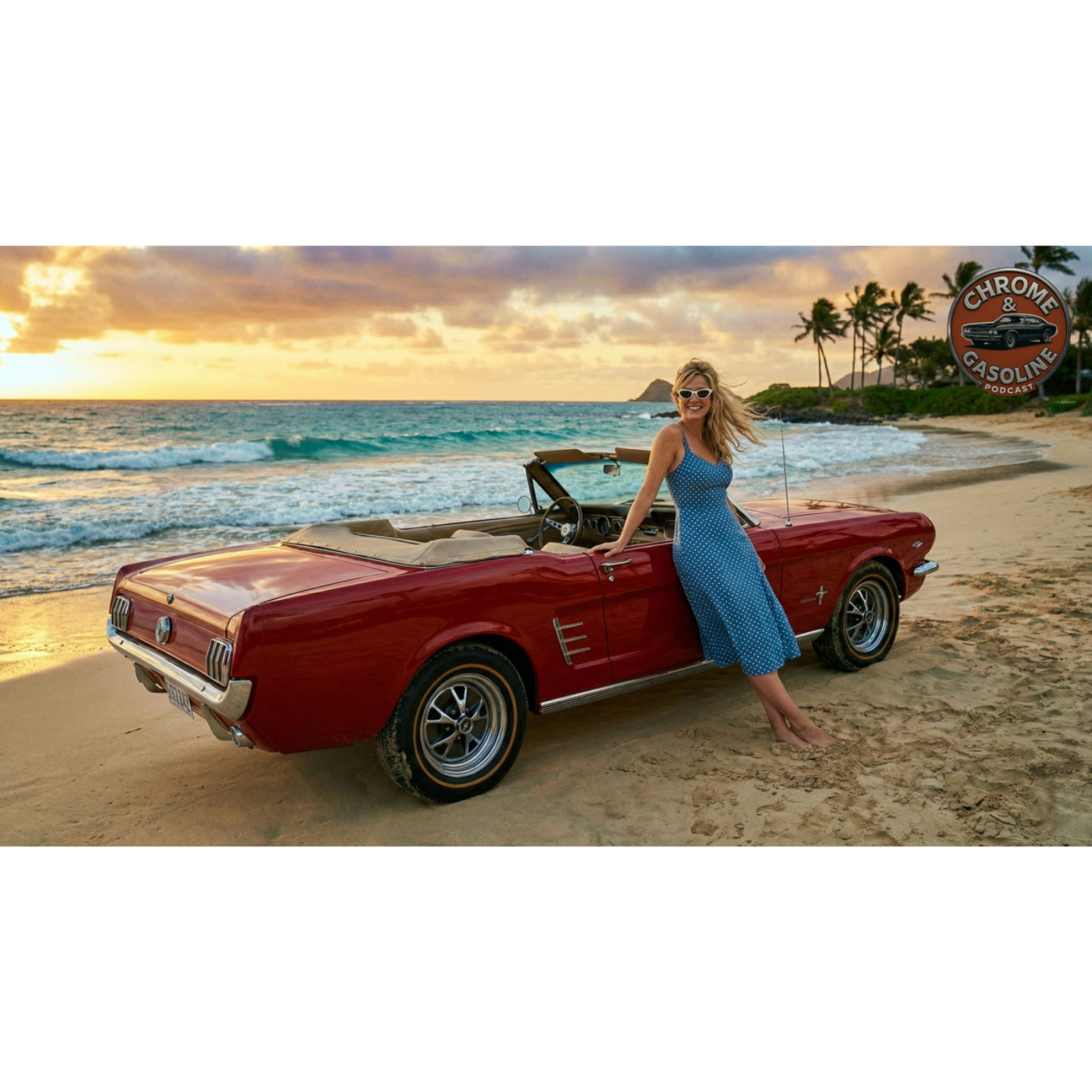
At the beach, lined up outside diners.
Music from the radio spilling out of open windows.
Friends piling in for a late night cruise.
The car fit perfectly into the soundtrack of the era.
Imagine this.
It's a warm summer evening in 1965.
A young driver turns the key,
the V8 rumbles to life,
and the Mustang rolls out onto a two-lane road.
The sun's going down, the sky is pink and gold,
and the whole world feels wide open.
That feeling, possibility, independence, youth
is a huge part of why the early Mustang became a symbol,
not just a machine.
Over time, those 1964 and a half to 1966 Mustangs
laid the groundwork for a fan community
that still thrives today.
Car clubs, meetups, online groups.
People gather to celebrate these early cars,
trade stories, and keep the legend alive.
From TV screens to racetracks to Main Street on a Friday night,
the early Mustang captured the spirit of its era,
and that spirit hasn't really faded.
In our final episode, we'll bring things into the present,
what it's like to restore, own, and drive
a 64 and a half to 66 Mustang today,
and why these cars still mean so much to so many people.
I'm Alex, and this is Chrome and gasoline.
Stick around, episode four is coming up next.
Episode four, restoring the legend.
Welcome back to Chrome and gasoline.
I'm your host, Alex,
and this is the final episode of our mini-series
on the 1964 and a half to 1966 Ford Mustang.
We've covered its birth, its design,
and its cultural impact.
Now, let's talk about what it's like to live
with one of these cars today.
For many enthusiasts, owning an early Mustang
isn't just about transportation.
It's about preserving a piece of history.
Those familiar lines and that galloping horse badge
can instantly transport you back to the mid-60s,
even if you weren't alive then.
But before you can enjoy the dream,
there's often some work involved.
A classic Mustang project usually starts with the hunt,
finding a car that's solid enough to save.
Rust is a big concern.
Floors, frames, and lower body panels
all need careful inspection.
Some owners aim for a factory correct restoration,
tracking down the right paint codes,
interior trim, and period correct parts
to make the car look exactly as it did
when it left the showroom.
Others take a different route, the rest-a-mott approach.
They keep the classic look but add modern touches,
better brakes, improved suspension,
electronic ignition, maybe even air conditioning
and updated lighting, done right.
It respects the spirit of the original
while making the car easier to live with on modern roads.
Either way, there's something deeply satisfying
about bringing one of these cars back to life.
Watching fresh paint go on,
hearing the engine fire up after a rebuild,
it's a connection to the people who designed, built,
and first drove these cars decades ago.
Now, what's it like to actually drive one
in the 21st century?
Compared to modern cars,
a 64 and a half to 66 Mustang feels raw and honest.
The steering can be lighter or heavier
depending on the setup.
The brakes require more attention
and there's more wind and road noise.
But that's part of the charm.
You feel the engine, the road, and your own inputs
in a way that's often muted in newer vehicles.
Picture a Saturday morning.
The garage door opens.
Sunlight hits fresh chrome
and a restored 66 Mustang rolls out.
The owner backs into the driveway,
lets the engine warm up,
then heads to a cars and coffee meet.
Along the way, people turn their heads
smile, wave.
At the show, strangers strike up conversations,
share stories, and maybe reminisce
about the Mustang they or their parents once had.
Moments like that remind us why these cars endure.
They're not just objects, they're memory machines.
As for the market,
well-restored early Mustangs
have a steady place in the classic car world.
They're iconic, recognizable,
and supported by a huge parts and enthusiast network.
That makes them appealing both to seasoned collectors
and to younger fans who want their first classic.
So what have we seen over this series?
A bold idea at Ford that became the 1964 and a half Mustang.
A design that defined the pony car look.
A cultural wave that carried the Mustang
into music, movies, and everyday life.
And finally, a legacy that still lives in garages,
on highways, and at car shows all over the world.
The 1964 and a half to 66 Mustang
isn't just the start of a famous model line.
It's a reminder that the right car, at the right time,
can capture the imagination of millions
and hold on to it for generations.
Thank you for joining me for this mini series
of chrome and gasoline.
If you enjoyed this ride,
share the show with a fellow car lover,
leave a review, and let us know
which classic you'd like to explore next.
Until next time, keep the revs up and the stories rolling.
I'm Alex, and this has been Chrome and gasoline.
Tired of juggling sales tools or spending hours
on prospecting just to book a few meetings?
Meet Apollo, the go-to-market platform for finding leads,
connecting with buyers, and closing deals all in one place.
Apollo gives you access to over 210 million contacts
and AI that handles all your busy work,
finding leads, drafting emails,
and even prioritizing your day.
So stop paying for five different sales tools
when one does it all.
Visit Apollo.io and sign up free today.
About this episode
Exploring the iconic 1964 to 1966 Ford Mustang, this series dives into its revolutionary impact on the automotive landscape. From its inception driven by Lee Iacocca's vision to its explosive popularity and cultural significance, the Mustang redefined American car culture. Each episode covers its design, performance, and how it became a symbol of freedom and youth. The final episode discusses the joys and challenges of owning and restoring these classics today, highlighting their enduring legacy and connection to enthusiasts.