If more fiber and protein fit your New Year health goals, get better macros with hero bread.
They have sliced bread, tortillas, bagels, and more with protein and high fiber.
And there's zero to five grams of net carbs and zero grams of sugar.
Hit your goals with easy swaps for your favorite bread-y dishes with 10% off your order.
Go to hero.co and use code HERO26 at checkout.
That's 10% off with code HERO26 at H-E-R-O.co.
All figures per serving of hero bread contains up to 18 grams of fat per serving,
not a low calorie food.
See nutrition facts on hero.co.
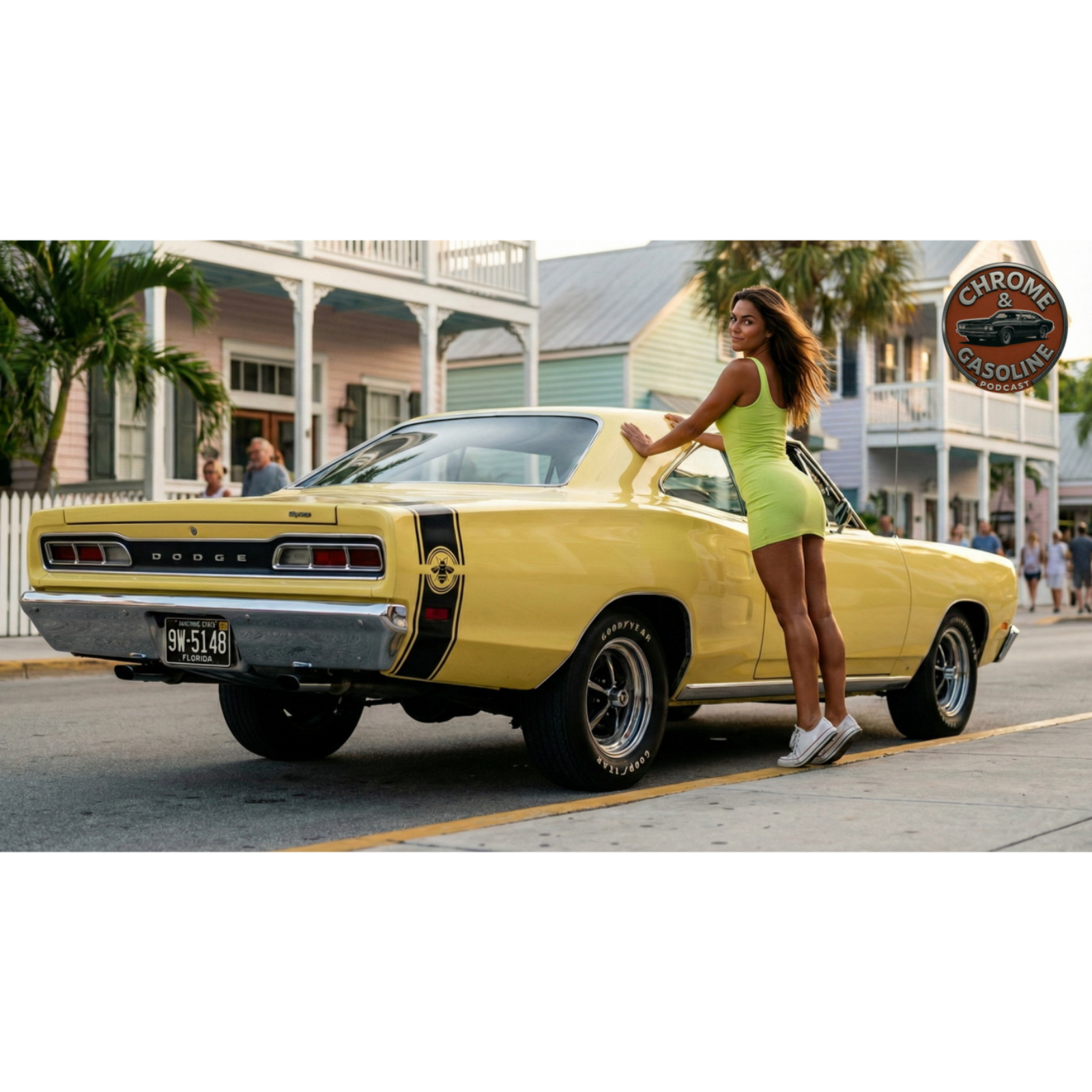
Episode one, the 1969 Dodge Super B is what happens when a muscle car stops pretending it's a gentleman.
It doesn't arrive in a tux.
It kicks the door open in a work shirt, wipes its hands on a shop rag and says,
where's the fun?
And that's the whole point.
The Super B wasn't built to impress your country club.
It was built to win arguments at stoplights and make your passenger grab the dash like it owes the money.
Here's the vibe.
Late 60s America is absolutely flooded with horsepower.
Everyone's got stripes, scoops, and a brochure that basically reads like a love letter to bad decisions.
Dodge looks around and says, all right, we've got fancy, we've got big body swagger.
But what if we make something that's more direct?
The Super B lands as a budget brawler, less frills, more thrills.
It's the kind of car that spends its money on the engine first and then just shrugs at the idea of extra chrome.
Not no chrome, just sensible chrome, which is a hilarious phrase to say out loud.
And the name Super B sounds like a cartoon character who sells performance parts out of a lunchbox.
But it works because this car has that rough and ready punchy personality.
It's not delicate.
It's not subtle.
It's a brick with a right hook.
You don't glide in a Super B.
You arrive, marketing translator time.
If a 1969 brochure says something like exciting performance with value packed engineering,
what it means is we deleted a few fancy things so we could afford to make the loud pedal more interesting.
And honestly, respect.
Because budget and muscle car land doesn't mean slow.
It means focused.
Like ordering a burger with no lettuce so you can afford extra bacon.
That's not cheap.
That's strategy.
Now quick reality check.
When people talk about these cars, they love turning every story into a legend.
You'll hear things like, oh my uncle's friend's Super B could outrun anything on the highway,
including time itself.
Bench race in reality check.
It was very quick for its era, and it absolutely had the attitude to back it up.
But physics still worked in 1969.
Mostly.
The Super B didn't break the laws of nature.
It simply encouraged them to misbehave.
What makes a 69 Super B special isn't just horsepower.
Though yes, the power is a big part of the conversation.
It's that Dodge built a car that felt like it belonged to regular people who wanted maximum grin per dollar.
This is not a museum piece by design.
It's a street machine with practical shoes on.
And it's got that classic Dodge flavor from the period.
Confident, a little mischievous, and completely unbothered by the idea that maybe you shouldn't be doing this.
Picture the world it lived in.
Wide roads, cheap gas, and a culture that treated a V8 like a personality trait.
Dealership lots were basically temptation gardens.
And the Super B?
It's the apple with tire smoke on it.
The salesman doesn't need a long pitch.
He just needs to start it.
Suddenly you're signing papers like you forgot you had a budget.
You're not buying transportation.
You're buying a feeling, but specifically the feeling of your rear tires complaining.
And yes, if you owned one back then, you probably told yourself it was responsible because it wasn't the top of the line fancy model.
That's cute.
That's like saying a chainsaw is responsible because it doesn't have heated seats.
The Super B's whole identity is being unapologetically fun.
It's the car that shows up to the fancy party in work boots and still steals the spotlight.
Not because it's polished.
Because it's honest.
It doesn't promise sophistication.
It promises a good time.
It promises torque you can feel in your ribs.
It promises that every on ramp is going to feel like a dare.
And here's the emotional hook.
People don't fall in love with Super B's because they're perfect.
They fall in love because they're human.
They're loud, a little rough sometimes, and they make you laugh at how dramatic a car can be just by existing.
If you've ever looked at a simple weekend project and thought, how hard could it be?
Congratulations.
You already understand the Super B lifestyle.
You don't choose a car like this because it's rational.
You choose it because something in your brain whispered, yes, that one.
The one that looks like trouble.
And the 1969 Super B is trouble in the best way.
The kind that turns a normal drive into a story you'll tell later,
with a smile that makes people worry about you just a little.
Episode 2.
You can learn a lot about the 1969 Dodge Super B by watching how it sits still.
It doesn't sit like a polite car.
It sits like it's waiting for someone to say something disrespectful.
The stance is pure muscle-era attitude, long hood, confident shoulders,
and that I didn't come here to negotiate posture.
Even parked, it looks like it's already halfway through a burnout in its imagination.
And here's where the Super B really shines.
It's not trying to be a jewelry box.
It's a tool, a beautiful, slightly dangerous tool.
The styling says, I'm here for performance.
And then it backs it up by not over-explaining itself.
It's the opposite of a fashion car.
It's more like a heavyweight boxer wearing a simple robe.
No sequins needed.
You already heard the footsteps.
You notice the front end first.
The face has that classic late 60s Dodge seriousness,
like it's mildly offended you're looking at it.
The grill and headlights give it a focused expression,
and the whole nose reads as sturdy and purposeful.
It's not cute.
It's not dainty.
It's move.
From the side, it's all about proportion and tension.
The body lines from that era were confident without being fussy.
There's a clean, strong shape that feels like it was drawn with a ruler
and a grudge.
The roof line flows.
The fenders feel ready to flex.
And the whole thing has that street fighter
in a tailored suit vibe, a suit that might still
smell faintly of gasoline, marketing translator.
If someone says, sleek aerodynamic profile,
what they mean is it looks fast enough
that your neighbor gets jealous just watching you back
out of the driveway.
Aerodynamics were, let's say, developing.
But intimidation?
Fully mature.
Then you get to the details.
Badging, stripes, the little cues that tell you
this isn't a grocery getter unless your grocery
store is located at the end of a quarter mile strip.
Some super bees wore their identity loud and proud.
Others were more restrained, like they were saving
the noise for the throttle.
And that's a fun thing about these cars.
Two of them can feel like completely different personalities
depending on how they're optioned and dressed.
And the colors.
Oh, the colors.
The late 60s were not afraid of paint that screamed.
You could roll up in something subtle,
or you could pick a shade that looked
like it was invented during a sugar rush.
It's like Dodge wanted you to be seen from space, which
is great, because that's basically the muscle car
mission statement.
Make an entrance.
One of the best super bee party tricks
is how it looks in motion.
The body has that slight rise in squat
that makes it feel alive, especially when it's accelerating.
The front lifts just enough to telegraph what's happening,
and the rear looks planted like it's digging in.
The car doesn't glide.
It lunges.
Even at normal speeds, it gives off
the impression that it's holding back
like a big dog on a leash pretending it's totally fine.
Now let's talk about the reality,
because bench racing loves to romanticize.
These were built in an era when panel gaps could be expressive,
when fit and finish meant mostly attached.
But that's part of the charm.
The super bee isn't a delicate sculpture.
It's a hot-blooded machine built to be used.
It's a car that forgives you for being a little messy,
because it's a little messy too.
Project timeline.
Roast. Anyone who says, I'll just tidy up the cosmetics,
has never met a 50-plus-year-old muscle car.
You start with a little trim,
and next thing you know,
you're learning a whole new vocabulary of rust,
adhesives, and existential dread.
But when it's done, when it's sitting there just right,
that's the payoff,
because the super bee looks like it belongs on a poster,
but it also looks like it belongs on the street,
because that's where it started.
It's also a car that photographs well,
because it has presence.
Modern cars are often shaped
like they're trying not to offend the wind.
The super bee is shaped like it's trying
to offend your common sense.
It has edges, surfaces, and verticality.
It's got that old-school mass and muscle.
You don't look through it, you look at it.
And when you're standing next to one,
you get this weird sensation
that it's bigger than it actually is,
because the attitude takes up extra space.
It's like the car has an aura of, don't test me.
The 1969 super bee is proof that styling
doesn't have to be fancy to be unforgettable.
It just has to be honest.
This car looks like what it is.
A focused, value-minded hammer of a muscle car.
It's not trying to charm you with refinement.
It's daring you to turn the key.
And that's the thing.
Once you see one in the wild, you don't forget it.
It's a bright shout from a loud era.
A rolling reminder that sometimes
the best-designed philosophy is simply,
make it look like it means it.
Episode three, all right.
Let's talk about the reason
the 1969 Dodge super bee exists.
The engine, the shove, the moment
your internal organs file a complaint.
This car is powered by a simple philosophy.
If you can feel your eyebrows move
when you hit the throttle, you're doing it right.
The super bee's whole deal is big torque energy.
You don't need a calculator to understand it.
You don't need a stopwatch to appreciate it.
You just need an open stretch of road
and the self-control of an adult,
or at least the self-control to wait
until you're not directly in front of a police station.
Now, people love to argue specifics,
exact horsepower ratings, which setup is the best,
what the perfect combination was.
Bench Racing Reality Check.
What mattered then and still matters now is the experience.
A late 60s Dodge performance car like this
is about that immediate physical response.
You press the pedal
and the car doesn't politely increase speed.
It changes the whole mood.
It's like flipping a switch from commute to mischief.
The acceleration feel is less high rev sports car
and more freight train with a grudge.
It's the kind of power delivery
that makes you laugh out loud
because it feels slightly irresponsible.
It's not subtle and it doesn't ask permission.
It just goes.
And when you're driving one the way
people actually drove them,
real roads, real pavement, real bumps,
you quickly understand that muscle cars of this era
are not delicate instruments.
They're fun, but they're not modern.
The steering can feel heavier and less precise
than what you're used to now.
The suspension is built for straight line attitude
more than graceful corner carving.
When you take a turn, it's not like the car whispers,
yes, perfectly balanced.
It's more like it says, okay,
but let's not get weird.
Marketing translator.
When someone says road hugging handling,
it means it stays pointed mostly in the direction
you asked as long as you asked politely.
The car will do its job,
but it's going to remind you who's in charge.
And that's part of the charm.
It's a conversation, not an algorithm.
Brakes are another reality check.
By modern standards, stopping distances
can feel like a suggestion.
In 1969, the expectation was that you planned ahead a little.
You didn't just late break like you're in a racing sim.
You looked far down the road and made sober choices,
which, yes, is hilarious in a car built specifically
to encourage not sober choices.
If you're the purchasing manager at a manufacturing plant,
you know having a trusted partner makes all the difference.
That's why hands down,
you count on Granger for auto-reordering.
With on-time restocks,
your team will have the cut resistant gloves
they need at the start of their shift.
And you can end your day knowing
they've got safety well in hand.
Call 1-800-GRANGER, click Granger.com or just stop by.
Granger for the ones who get it done.
Choices.
Living with a super bee is also a sensory experience.
The engine sound is not background noise.
It's the main character.
It's mechanical, throaty, and honest.
Like you can hear the individual parts agree
and to work together.
You feel the vibration through the seat,
the wheel, the floor.
You don't drive it so much as you hold on
and negotiate with it.
And that means every drive feels like an event.
Even if you're just running errands,
you're not invisible, people notice.
Some people smile, some people stare.
Some people suddenly remember they have something
very important to prove in their crossover.
The super bee has that effect.
It turns traffic into a social experiment.
Now, about traction.
These cars can make power in a way
that challenges the concept of grip.
It's not that the car is trying to break loose.
It's that physics is trying to keep up.
You roll into the throttle and the rear end
can get light and playful,
especially on imperfect pavement.
It's a reminder that tires back then
weren't what tires are now.
And ChassisTech was, how do we put this?
Boldly optimistic.
Project Timeline Roast, the first time a new owner says,
I'll just add a little more power.
A super bee somewhere quietly starts laughing.
Because a little more power on a classic muscle car
is the gateway drug to upgraded fuel systems,
ignition changes, cooling upgrades,
drivetrain work, and the phrase while I'm in there,
which is basically a curse in the old car world.
But here's what keeps people hooked.
The driving experience is raw and satisfying.
There's no filter, no artificial sound,
no computer smoothing out your mistakes.
You feel what you do.
You learn the car's temperament.
You become part of the process.
It's imperfect in the most entertaining way.
The 1969 super bee isn't about being
the fastest thing ever made.
It's about being fast in a way that feels alive.
It's about the emotional math of muscle cars,
more laughter per gallon, more story per mile,
more grin per throttle blip.
If you've never driven something like this,
imagine a modern car as a smartphone,
smooth, helpful, always managing the background.
The super bee is a rotary phone taped to a firecracker.
It works, it's loud, and it'll make you respect it.
Episode four, if the 1969 super bee were a person,
it would have a friend who always says,
don't worry, he's harmless.
Right before something hilarious
and slightly illegal happens.
Because this car didn't just exist in a showroom,
it lived in a culture.
And that culture was pure late 60s muscle madness,
an era when people treated horsepower
like a bragging right and street lights like invitations.
Picture the dealership scene, you walk in to just look.
You notice the super bee
because it's not pretending to be classy.
It's sitting there like a dare with a price tag.
The salesman senses weakness immediately.
He says things like, it's a performance value.
Marketing translator, it's cheaper
because we remove things
that don't help you embarrass your neighbor.
And you're like, that seems responsible.
Again, adorable.
A lot of buyers were working folks.
Young guys, families stretching the budget.
People who wanted the muscle car experience
without needing a full luxury lineup.
The super bee fits that moment perfectly.
It's attainable swagger.
It's the blue collar superhero of the Dodge world.
Not flashy for Flash's sake.
Flashy because the engine makes it flashy.
And then there's the street scene.
Nights where the gas station is basically a car meet.
Everybody leans on fenders
and talks a little too confidently.
Somebody says, my buddy's car runs low 13 seconds all day
and someone else nods like that's normal commuting behavior.
Bench racing, reality check.
Half of those stories were true.
Half were true if downhill with a tailwind
and all of them were told with absolute conviction.
The super bee played well in that environment
because it had a reputation for being a scrapper.
You didn't need a fancy pedigree.
You just needed the attitude and the right foot.
It's the kind of car that makes people talk
before you even start it.
And once you start it,
people suddenly remember they left something on the stove.
Drag strips mattered too.
Even if someone never raced officially,
the dream of the quarter mile hung over everything.
The culture was soaked in the idea
that cars should be judged by how hard they pull,
how well they launch, how they sound at full song.
The super bee is built for that mythology.
It looks like it wants a number painted on the window,
even when it's parked outside a diner.
And that diner is important
because that's where the stories got made.
The muscle car era wasn't just about speed.
It was about identity.
People didn't say, I drive a Dodge.
They said, I've got a super bee
like it was a nickname, like it was a personality.
And honestly, it kind of was.
You also got the sleeper fantasy.
Cars that looked mild but had serious punch.
Some super bees wore their intentions loudly.
Others blended in a little more.
Either way, the idea was the same.
The thrill of surprise.
The joy of someone underestimating you.
The moment when you roll into the throttle
and watch their confidence evaporate
like gasoline on a hot manifold.
Of course, myths grew.
Every super bee story tends to add a little seasoning.
It was factory this, dealer that.
It beat a Corvette.
It beat a Hemikar.
It beat my cousin's motorcycle.
It beat the concept of Monday.
My favorite myths are the ones
where the car is basically a superhero,
fighting crime by doing burnouts.
Bench racing reality check.
Plenty of these cars were genuinely quick
and competitive in their day.
But the legend grew because the feeling was so strong.
People remember the emotion more than the data.
And that's fair.
Muscle cars are emotional machines.
And here's the thing.
The super bee has remained culturally sticky
because it represents a certain kind of optimism.
The optimism that your car should be fun,
loud, and a little ridiculous.
The optimism that you can buy happiness
in the form of a V8 and a set of tires
you'll be replacing sooner than you planned.
Project Timeline Roast.
Anybody who owned one longterm has at some point said,
I'll keep it mostly stock.
And then slowly drifted into modifications
like it's a natural law.
The era encouraged it too.
People were always tinkering.
Jets, timing, intake swaps,
exhaust tweaks, gear changes.
The super bee wasn't a sacred artifact.
It was a platform for mischief.
That's why it still hits today.
The 1969 super bee isn't just a car.
It's a snapshot of a time when performance was accessible,
when style was unapologetic.
And when the culture around cars was a mix of bravado,
community and pure mechanical joy.
It's the kind of car that makes people
who weren't even alive in 1969 feel nostalgic.
And that's the weird magic.
It's not just history.
It's a vibe you can still start with a key.
Episode five.
Owning the 1969 Dodge Super Bee.
Today is a little like adopting a retired bouncer.
It's still intimidating,
still capable of throwing down,
but now it needs care, patience,
and occasional gentle encouragement to behave in public.
The good news is, if you treat it right,
it rewards you with something modern cars can't replicate,
an experience that feels personal, mechanical,
and genuinely fun.
Let's start with the big fork in the road.
Original versus usable.
Some people want a time capsule.
The kind of restoration where everything looks like
it just rolled out of 1969 and nobody breathes near it.
Others want a car they can actually drive,
which means making choices that the internet
will argue about forever.
And the internet loves arguing about it.
If you wanna see grown adults lose their minds,
casually say, I like subtle upgrades for reliability,
and then step back.
Here's my take.
The Super Bee was born as a budget brawler.
It wasn't designed to be fragile.
It was designed to be enjoyed.
So building one that starts easily,
runs cool, stops confidently,
and doesn't turn every drive into a roadside seminar.
That's not betrayal.
That's respect.
You're keeping the spirit alive.
The spirit being drive it like you mean it.
Marketing translator,
when someone says sympathetic restoration,
it means I want it to look period correct,
but I also wanna get home without prayer.
Fair.
Now, common sense checks.
These cars are over half a century old.
That means every Super Bee has lived a life.
Some lived a gentle life,
garaged, pampered, treated like family.
Others lived like they were in a constant audition
for a drag strip documentary,
and that history matters.
Condition varies wildly.
So if you're shopping,
you're not just looking at paint and badges.
You're looking at the story underneath.
Rust, repairs, past modifications,
wiring that may or may not be based
on a principle known as hope.
Those are the real characters in the plot,
and if you buy one, you become a co-author.
Congratulations.
You are now in a long-term relationship
with 1969 engineering and every decision
made by previous owners,
especially the one who said,
I know a guy who can do this cheaper.
Project Timeline.
Rust, you'll tell yourself,
I'll just do a few small things over the winter,
and then spring shows up
and you're still waiting on a part
that's definitely shipping this week,
and you've developed a whole new personality trait
called tracking number obsession.
It happens to the best of us,
but the payoff is enormous,
because once you have a super bee sorted,
even mostly sorted,
it becomes a magnet for good conversations.
People point, people ask questions.
People tell you stories
about the one they almost bought,
the one their neighbor had,
the one that disappeared and became a legend.
It's rolling nostalgia,
but not the sappy kind, the loud kind.
And then there's the drive.
Even if you're not flooring it,
the car feels special.
The view down the hood, the sound,
the way the whole vehicle communicates
in physical sensations instead of notifications.
Modern cars are like polite assistants.
The super bee is like a friend
who shows up with fireworks and says,
I brought options.
There's also a deeper reason people love these.
The super bee represents a kind of honesty that's rare now.
It doesn't pretend to be anything else.
It's not multi-mode.
It's not adaptive.
It's a muscle car.
It's large, loud and proud of it.
It's a rolling reminder
that joy doesn't always come in neat, quiet packaging.
And here's the emotional truth.
A 1969 super bee matters
because it connects you to a time
when cars were more than appliances.
It connects you to the culture, the craft and the chaos.
It's a piece of mechanical history you can touch.
You can smell it.
You can hear it.
You can feel it.
People don't maintain these cars because it's convenient.
They maintain them because it's meaningful.
Because at some point,
you drive it on a nice day, windows down,
engine rumbling and you realize
you're not just going somewhere.
You're participating in something.
A tradition of speed, style
and slightly questionable decision-making.
And if you're wondering why they call it a super bee,
consider this.
It doesn't gently buzz.
It stings and it leaves you smiling afterward
like you can't believe you got away with it.
That's the 1969 Dodge super bee in the modern world.
Still loud, still proud,
still the budget brawler that punches above its weight,
especially in the one category that counts most.
Fun.
If you're an HVAC technician and a call comes in,
Granger knows that you need a partner
that helps you find the right product, fast and hassle-free.
And you know that when the first problem of the day
is a clanking blower motor,
there's no need to break a sweat.
With Grangers easy to use website and product details,
you're confident you'll soon have everything
humming right along.
Call 1-800-GRANGER, click Granger.com
or just stop by.
Granger, for the ones who get it done.
About this episode
Exploring the 1969 Dodge Super Bee reveals a muscle car that embodies raw power and unapologetic fun. Designed as a budget brawler, it prioritizes performance over luxury, making it accessible for everyday enthusiasts. The episode dives into its bold styling, powerful engine, and the culture surrounding muscle cars in the late 60s. With stories of street racing and the thrill of driving, the Super Bee is portrayed as a car that connects drivers to a vibrant automotive history, offering an exhilarating experience that modern cars often lack.