Refresh your home for the new year with Dania Furniture.
From elevated living and dining pieces to cozy guest rooms,
create spaces that feel fresh and ready for everything the new year brings.
Explore modern dining sets, stylish storage solutions,
and contemporary pieces that make the most of every moment.
Dania Furniture. We make it simple. You make it home.
Visit your local showroom or shop online at daniafurniture.com.
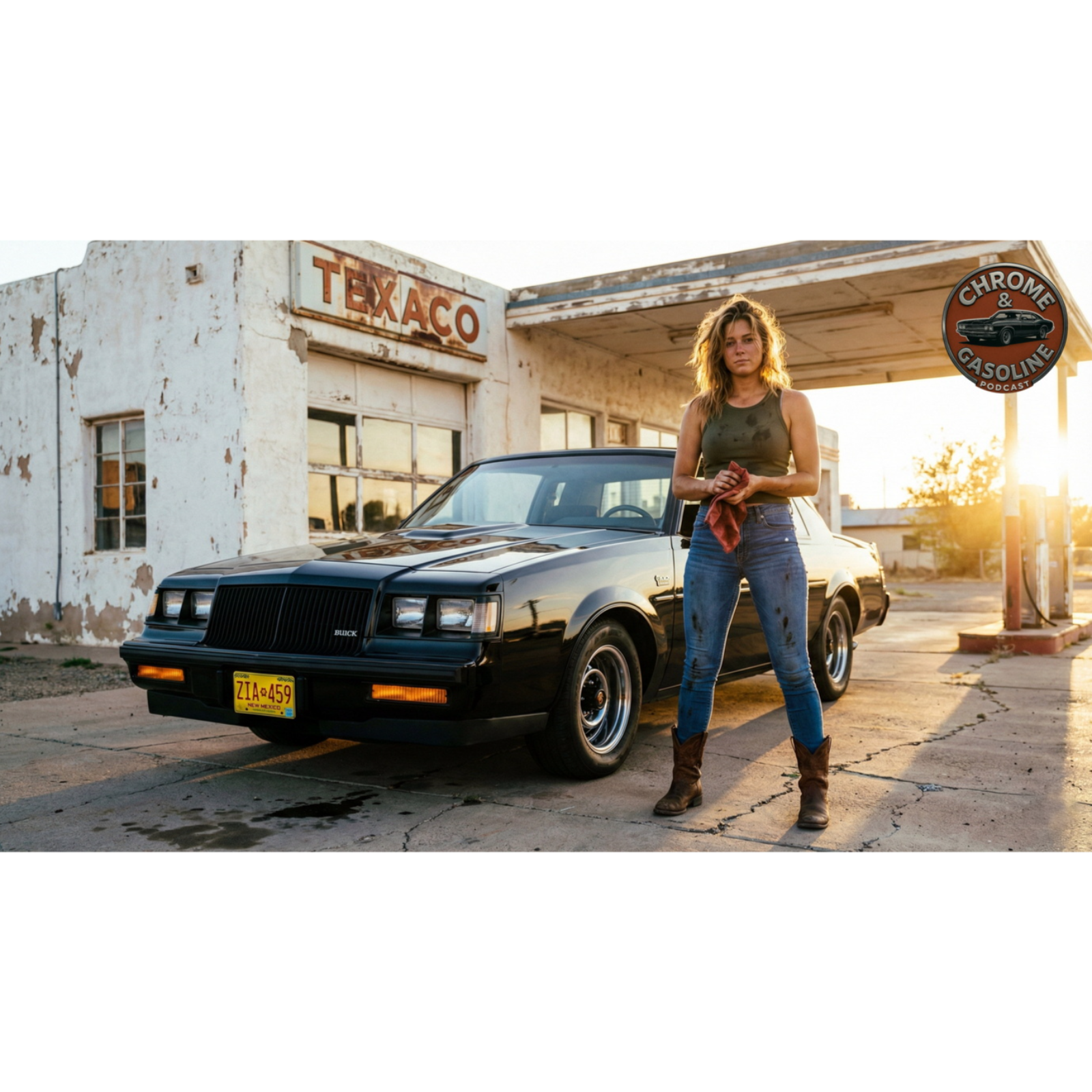
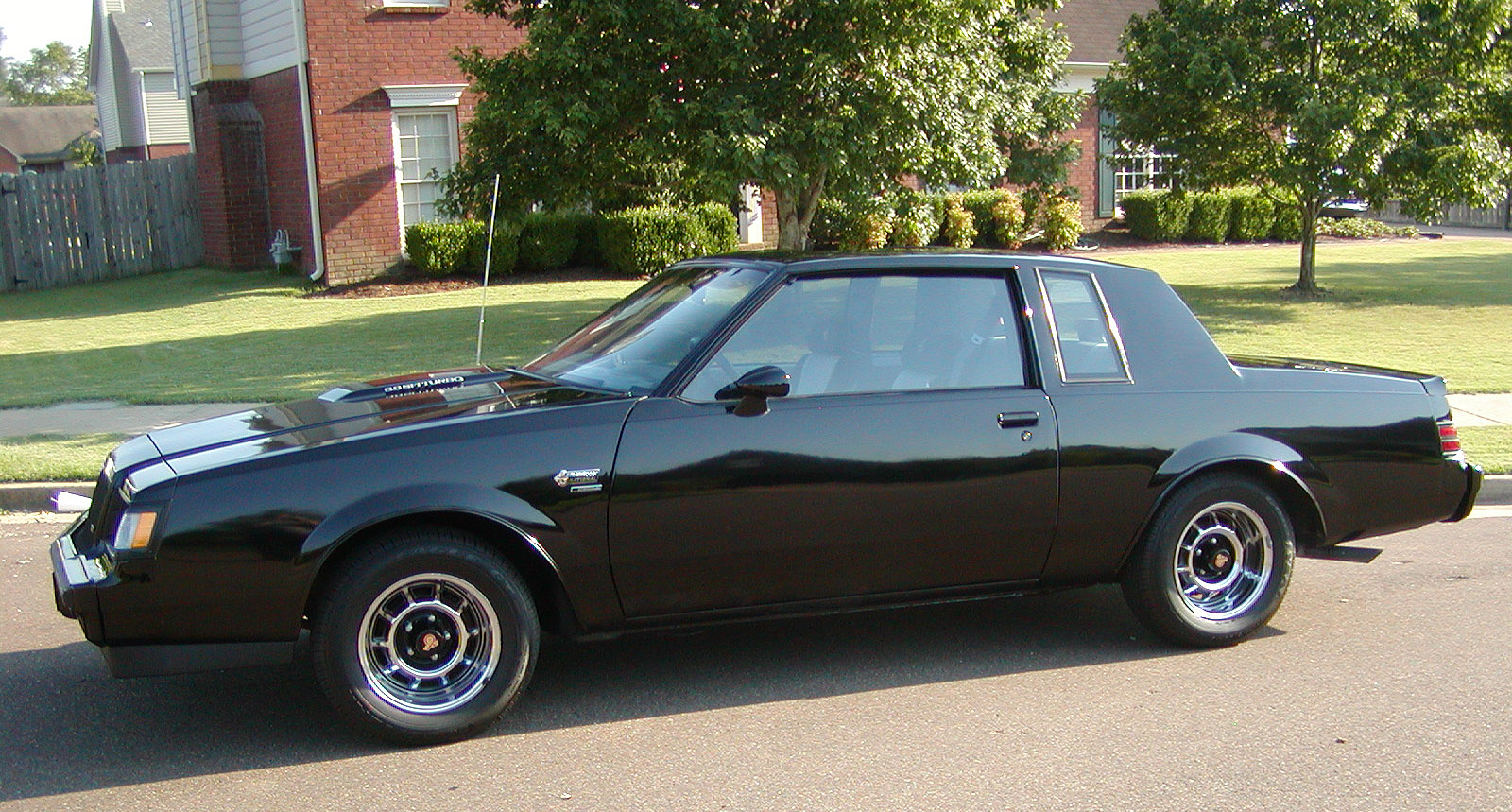
I'm Alex and today we're talking about the 1984 through 1987 Grand National,
the car that proved you can be terrifying with six cylinders,
a turbo, and an attitude problem.
Let's do the 1980s cop drama test.
I'm Alex and today we're talking about the 1984 through 1987 Grand National,
the car that proved you can be terrifying with six cylinders,
a turbo, and an attitude problem.
The 1980s cop drama test right up front.
Picture the scene.
It's night, the street lights are orange,
and there's a detective with a loose tie yelling into a brick phone.
In the background, a black Grand National rolls by like a shadow with headlights.
Does it belong in that chase scene?
Absolutely. It doesn't even need to chase anybody.
It just shows up and the other cars start making excuses.
Now, the Grand National wasn't some exotic supercar.
That's part of the joke.
It's based on the GMG Body Regal,
a polite, square-ish American coupe platform
from the era when shoulder pads were a lifestyle choice.
But Buick did something weird and wonderful.
Instead of shouting about horsepower,
they went all in on turbocharged torque
in a decade where a lot of performance cars
were still recovering from emissions and fuel crises.
Buick walked in like,
what if we just used boost?
Welcome to Boost Theology.
Because with the Grand National,
boost is not just a mechanical concept.
It's a belief system.
It's the moment you're cruising along like a normal person,
and then the turbo spools,
the engine takes a deep breath
and suddenly the car's personality changes.
It's like it was pretending to be civilized,
and then remembered it has a reputation.
Under the hood sits a turbocharged 3.8-liter V6,
and I know what you're thinking.
A V6 in the 1980s?
In a performance legend?
Yes.
That's the whole point.
The Grand National is basically a prank
pulled on every loudmouth V8 at the stoplight.
It's the automotive version of showing up
to a weightlifting contest in a cardigan
and then deadlifting the entire building.
The Grand National also leaned into tech
that was becoming the new normal,
electronic fuel injection,
and engine management.
You didn't have to be a carburetor whisperer
with a screwdriver and a prayer
every time the weather changed.
The car had an ECU,
computer control,
monitoring things like air,
fuel, and boost-related behavior,
trying to keep this turbocharged party
from turning into an expensive smoke machine.
And the best part is how this car delivers speed.
It doesn't feel like a high-reving sports car
begging you to thrash it.
It feels like torque showing up early
and staying late.
The turbo makes the V6 feel bigger than it is,
like it's cheating.
Because it is cheating, it's legal cheating.
It's the kind of cheating that comes with a warranty.
Back when warranties were still an idea.
Now, we've got to be factually careful here
because Grand National legend has been
bench-raced into mythology.
So let's do the bench-racing translator.
When someone says,
my buddy's stock Grand National
had like 900 horsepower,
what they mean is,
it felt fast, it scared me,
and I'm emotionally rounding up.
The real story is better anyway.
Buick built a genuinely quick car
for its era,
with a drivetrain and tuning philosophy
that made it brutally effective from a roll
or a light.
It didn't need fantasy numbers.
It just required that black paint,
that turbo, and the confidence
to let other people underestimate it.
And people did underestimate it,
because it was a Buick.
At the time, Buick had a reputation
for comfort and quiet.
The Grand National is what happens
when a polite brand decides to commit
a minor crime.
So here's the setup for our series.
We're going to talk about the engine,
what the turbo and intercooler do,
how the fueling and computer control made it work,
and the transmission choice
that helped the car put power down
in a very 1980s way.
We'll also separate the early cars
from the later intercooled ones
without turning this into a trivia contest.
But for now, appreciate the concept.
A blacked-out, deceptively ordinary
looking coupe with a turbo V6
that can make other performance cars
feel like they showed up to the wrong address.
Boost Theology
Lesson number one.
You don't need eight cylinders to be a legend.
You need timing, torque,
and the ability to look innocent
while doing something completely unreasonable.
Episode two.
Let's get into the heart of the Grand National.
That 3.8-liter Buick
5-6
the turbocharger, and the reason
the car feels like it's got a hidden trap door
under the accelerator.
And yes, I can hear the V8
crowd warming up their arguments
like it's a high school debate team.
Relax.
This is an anti-V8.
This is pro-chaos.
And the turbo 5-6 is excellent at it.
In the mid-80s
Grand National World, the engine
you'll hear referenced most
is the turbo 3.8 V6.
And in the later, most famous versions
especially 1986
and 1987
it's commonly associated
with the intercooled setup.
People often call that later combination
by its engine code
LC2.
If you don't care about codes,
here's the simple truth.
Buick built a V6 that was engineered
to live with boost and deliver torque
like it had something to prove.
Here's your turbo basics
chrome and gasoline style.
A turbocharger is basically
an exhaust powered air pump.
The engine pushes exhaust out.
The turbo uses that exhaust flow
into a turbine, which turns a compressor
that shoves more air into the engine.
More air means you can add more fuel.
More air plus more fuel
means a bigger bang.
A bigger bang means more power.
It's like giving the engine a second set of lungs
and yesterday's exhaust fuels those lungs.
The thing about turbo power though
is it comes with heat.
Compressing air warms it up
and hot air is less dense.
Also, heat is the universe's way of asking
are you sure you wanted to do this?
This is where the intercooler becomes
the hero in the 1986 to
1987 intercooled cars.
The intercooler cools
the compressed air before it goes into the engine.
Cooler air is denser,
which means more oxygen per gulp.
And cooler air also helps reduce
the chances of knock, unwanted
combustion drama, which matters
a lot when you're stuffing extra air
into cylinders and asking them to behave.
If you're doing boost theology,
the intercooler is basically baptism.
It takes the hot, excited air
and calms it down so it can do the job
correctly.
Now, the earlier Grand Nationals
1984 and 1985
are often talked about
as the non-intercooled hot air setup.
That nickname isn't an insult,
it's just describing the layout.
No intercooler means the air
going into the engine is warmer,
which can affect how aggressive
the whole system is
compared to later intercooled cars.
The later cars became
the poster children for a reason.
Intercooling made the combination
more potent and more consistent.
But let's talk about why this
V6 is such a good match
for turbocharging in the first place.
A V6 like this can be
compact and with the right
engineering it can handle boost.
Turbocharging isn't about
cylinder count, it's about air flow
management and durability.
The Grand Nationals
V6 is all about making
torque in the real world.
You don't need to rev it to the moon.
The turbo helps it deliver that shove
right where you live.
On the street, in traffic, at the stop light
where someone in a loud car
is doing that, I'm not racing
I'm just accelerating aggressively
thing. And here's where the
electronic fuel injection and engine
control come in. These cars
used computerized engine
management that monitored and
tested fueling and other behaviors
to keep the turbo set up working.
I'm not going to turn this into a wiring
diagram podcast. But conceptually
the computer is acting like
a bouncer at a nightclub.
It's letting in air and fuel.
It's trying to keep things stable
and it's not letting the party get so
out of hand that the engine starts
making expensive noises.
This is also why the Grand National
earned a reputation as a tuning
friendly platform.
It was magic, but because it was already
built around boost and electronic
control, it responded
to changes in a way that made sense.
People love that.
People also love exaggerating
that.
So, bench racing translator
time. If somebody says
these things came from
the factory basically maxed out
and ready to beat anything ever made
what they mean is
for its era it was shockingly
sick and it did it in a way that made
other cars feel outdated.
The Grand National wasn't a fairy tale.
It was just a well executed
idea, forced induction
solid torque and enough computer
control to keep it street friendly
and let's not ignore the vibe factor.
Open the hood and it doesn't
scream exotic.
It looks like a v6 with boost
plumbing. That's the funniest part.
It's the automotive equivalent
of a quiet office worker who turns
out to be a championship boxer.
So, if episode one was the legend in
the attitude, episode two
is the reason the legend works.
Turbocharging made a v6 act
like something bigger. Inner cooling
especially in 1986 to
1987 helped it do that more
effectively and electronic
fuel injection and engine management
were the grownups in the room
making sure the whole thing didn't set
the curtains on fire.
Boost theology lesson
number two. Power isn't always
loud. Sometimes it's pressurized.
Episode three.
Now let's talk about a part
of the Grand National story that doesn't
get enough respect at car meets
because it's not shiny, the transmission.
Specifically
the 200-4
are four speed automatic
with overdrive and before the manual
transmission crowd starts sharpening
pitchforks, let me remind you
the Grand National was engineered
to be effective not to win
internet arguments. The 200-4
are as a four speed automatic
that includes overdrive
which in the mid-80s is basically Buick
saying, yes you can be fast
and still drive on the highway without
the engine screaming like it's trapped in a closet.
Overdrive matters because
it lowers the cruising RPM
which improves comfort, fuel economy
and long distance driving.
The Grand National is not a fragile
temperamental toy. It's a street car
with a dark personality.
Here's where the automatic actually makes
a lot of sense with TurboTorque.
Turbocharged engines often like
consistency. They like being loaded up
predictably. An automatic
transmission can help keep the engine
in the sweet spot where boost builds
smoothly. And if you've ever driven
a turbo car where you lift off the throttle
and everything goes sleepy for a moment
you understand why maintaining
momentum and load can feel like part
of the magic. The Grand National
doesn't need you to be a hero with a clutch.
It requires you to be the
kind of person who can keep a straight face
while embarrassing somebody who
showed up revving. Now
I'm going to be careful not to get too deep
into how to modify territory
because the point here
is understanding the car
not turning your driveway into a parts catalog.
But it's fair to say
the 200-4R
has a reputation for being a
key player in the Grand National's
performance identity.
And owners often talk about
durability and upgrades in the same
sentence because TurboTorque
is not gentle. TurboTorque
is the friend who doesn't knock
before entering. It just shows
up and rearranges the furniture.
If you're an HVAC technician
and a call comes in, Granger
knows that you need a partner that helps you find the
right product, fast and hassle
free. And you know that when the
first problem of the day is a clanking
motor, there's no need to break a sweat.
With Granger's easy
to use website and product details
you're confident you'll soon have everything
humming right along. Call
1-800-GRANGER, click Granger.com
or just stop by. Granger
for the ones who get it done.
Let's do the 1980s
cop drama test again
but drive train addition. Imagine
a chase scene.
The driver punches it. The
transmission doesn't ask questions.
It just drops a gear
like it's throwing a chair in a bar fight.
The turbo starts spooling
up and the car surges forward
with that smooth force fed shove.
That's the grand national vibe.
It's not frantic.
It's decisive. And we should
talk traction because this
car is a lesson in physics disguised
as a stylish coupe. You've got
a rear wheel drive layout,
a torqued heavy turbo engine
tires that by modern standards
were not exactly sticky miracles
so what happens when boost hits?
Sometimes the rear
tires have a conversation.
Sometimes it's a debate.
Sometimes it's a full on argument
and the tires lose.
This is where the grand nationals
personality really shows.
It's a sleeper. But it's
also honest about being a handful
when you disrespect the throttle.
You don't drive it like a gentle commuter
and then suddenly floor it mid
corner and expect it to applaud your
courage. The car will respond.
It will just respond like
an 80s performance legend with rear
wheel drive and a turbo with enthusiasm
and a little bit of sideways punctuation.
Now, bench racing
translator, if someone says
oh yeah these things hook like a modern
AWD car, what they mean is
I once got a good launch on a warm
night with decent tires and
I will now build my entire identity
around it. The reality
is more charming. Part of the grand
national story is that it was
brutally fast for its era
but it still lived in the real world.
You had to drive it with some respect
and that respect is
half the fun. The other half
is the look on someone's face when
a black Buick they underestimated
suddenly moves like it's late for a bank
heist. So when you think about
the grand national drivetrain
don't just think turbo v6
please think of the whole system
engine delivering torque
automatic transmission keeping it in the
power and a rear drive
chassis that makes you earn your victory
a little. It's a complete
recipe. And the 200-4
are boring as it sounds
is one of the reasons the recipe
works. Boost theology
lesson number three. It's not just
about making power. It's
about delivering it as you meant it.
Episode four. Alright
let's split the grand national
story the way fans usually
do. Without turning it
into a trivia knife fight
the 1984-85
cars and the 1986-87
cars
share the same core identity
blacked out menace
turbocharged v6 attitude
and sleeper energy
so strong it should come with a
disclaimer. But the later years
especially 1986
and 1987
became the version most people
picture first and the reason
comes down to one word
intercooler. The earlier
cars 1984 and 1985
are commonly
referred to as the hot
air setup. That's not an insult
it's a description.
The turbocharged air goes
into the engine without an intercooler
cooling it down first.
Hot compressed air
is still compressed air so yes
it still makes power
and yes it still delivers that
boosty torque surge that makes the
car feel like it's bend in the rules
but then 1986
and 1987 show up with intercooling
which in practical
terms makes the whole system feel
more confident. Cooler
intake air generally supports more
consistent performance and makes it
easier to manage combustion under boost
in the real world that can translate
to a car that feels stronger
more repeatable and more willing to keep
doing the thing you bought it for.
Quietly embarrassing louder cars
this is boost theology at its most
obvious. The 1984
to 1985 cars
are like the early scripture
powerful, revered, and sometimes
misunderstood. The
1986 to 1987 cars
are the revised edition
with better diagrams and
fewer contradictions. The faith
is the same. The delivery
got sharper. Now why did Buick
end up building this legend at all?
Because the mid 80s were
weird. Performance was coming
back but not in the simple bigger
car, bigger cam, bigger
noise way. Electronics were taken
over. Emissions rules existed.
Fuel economy mattered.
And Buick of all brands
leaned into a turbocharged
v6 strategy that made a lot
of sense for the moment. It gave
them performance without requiring a
huge displacement engine. It also
gave them a character no one expected
from Buick which is like finding out
your quiet neighbor used to tour with a
punk band. And the chassis
context matters too. This is
a G body coupe. It's not
tiny. It's not a featherweight
sports car. It's a street friendly
real car sized coupe you can
actually live with which is part of
why the grand nationals performance
feels so disrespectful to the competition.
It's not supposed to be that quick.
It looks like it should be politely
yielding in the right lane. Instead
it's out here rewriting
reputations. Let's do the 1980s
cop drama test again. But this
time it's the myth building version.
You've got a group of guys in a neon
lit parking lot. Someone says
that's a grand national.
Everyone suddenly speaks quieter.
The owner doesn't have to rev it.
He just starts it. And you
hear that slightly industrial v6
note with the turbo plumbing doing its
thing. Then there's the moment
maybe on the road. Maybe at a
light where the car rolls into
boost and surges forward like it
was tugged by a cable. That
sensation builds legend. And
because it's a sleeper the legend
spreads faster. Nobody wants
to admit they got surprised by a
Buick. So they tell the story
differently. And then the story gets
told again and again.
And suddenly the car becomes folklore.
Bench racing translator time
when someone says these cars
were basically unbeatable.
What they mean is they had
a real advantage in how they made
usable power and how they delivered
it. And that advantage showed up
where it counts street conditions
real roads real reactions.
The grand national
wasn't magic. It was
smart engineering and great execution
in the right era. And I
want to give the earlier cars their respect
the 1984 to 85
hot air versions are part
of the lineage and part of the charm
they're the reason the intercooled
cars exist. They're the
before in a story where Buick
kept refining the idea
until it became a cultural icon.
The later cars get the
spotlight but the earlier ones
are still wearing the same black
suit still carrying the same
secret turbo torque
in a package nobody expects
so if you're looking at the
1984 to 87 run as a
whole think of it like this
it's one continuous theme
stealth performance. The
early years introduced the menace
the later years sharpened the tools
and all of it added up to a car
that still makes people grin, argue
and tell stories that start
with you're not going to believe this
Buick. Boost theology
lesson number four
legends aren't always born loud
sometimes they're refined until
they're inevitable. Episode five
I'll tell you my
grand national story and I'm
warning you up front it's one of those
moments that permanently changes
how you see a car not because
it was dramatic in a movie way
but because it was dramatic in a human
way quiet quick
and deeply embarrassing
for somebody who deserved it
years ago I'm standing in a
parking lot at dusk one of those
evenings where the sky looks like it's been
color graded by a 1980's
cinematographer I'm talking
cars with a guy who has that relaxed
older owner vibe
the kind of guy who doesn't sell you on the car
he just lets the car
exist like a well behaved
dog that could absolutely bite through
a steel door if it chose to
and there it is
a black Buick grand national
no screaming paint
no giant hood scoop
shouting for attention
just black on black menace
sitting low and serious
like it's waiting for a phone call
I do the thing everybody does
I make the face
the respectful face
the face that says
I know what this is
even though part of my brain is still
going it's a Buick
calm down
the owner smiles like he's heard that
internal argument before
he opens the hood and it's not a cathedral
of chrome
it's a v6 with turbo plumbing and purpose
he says something simple
something that sounds almost casual
like he's describing a lawnmower
and I remember thinking
this car is not trying
to impress me
this car is trying to get away with something
we end up on the road a little later
nothing reckless nothing dramatic
just a normal stretch of
pavement where you can feel a car
without needing a racetrack or a courtroom
I'm riding along
listening the engine note is different
from the v8 course I grew up with
it's more mechanical
more business like
not romantic but confident
and then he rolls into it
not a stomp not a hold my beer
just a smooth squeeze of the throttle
like he's turning up a dimmer switch
at first the car is
polite it's driving normally
then you feel that moment when the turbo
starts to spool like the car
takes a breath and the whole
world shifts forward it's
a shove but not a chaotic
shove it's not screaming
it's not flailing it's
like getting pushed by a big hand
that knows exactly where your spine is
the boost comes in
and suddenly the grand national
is doing that thing it does where it
feels like it's pulling the street toward
itself and my brain
my very confident car
my nerd brain goes oh
so this is why people talk
like that we come up to a light later
and there's a guy in a loud car
next to us you know the type
the car is announcing itself at idle
like it wants applause for existing
he's doing that sideways glance
that I'm not racing
but I'm emotionally racing posture
the grand national is just sitting there
quiet black and
unimpressed I'm thinking
please don't we don't need this
this is a nice evening
I would like my heart rate to remain
in the human category
the owner glances over smiles
just slightly and looks forward
again the light changes
he doesn't launch it like a drag
strip hero he just
goes smooth
controlled boost
building and the loud car next
to us does what loud cars often do
it makes noise first
then tries to figure out traction
reality for about a second
they're together then the grand national
does the thing where it stops being
a car and starts being an event
that turbo torque hits
the Buick surges ahead
and the loud cars engine note turns into
pure confusion you can practically
hear the driver thinking wait
was that a Buick
we're not out there disappearing into the horizon
we're not doing anything
unsafe it's just a clean
quick pull that makes the point
and the point is not I'm faster
than you forever the point
is you underestimated
the wrong vehicle back at the
next light the loud car pulls up again
but the posture has changed
the sideways glance is gone
now it's straight ahead hands at
10 and 2 like he's suddenly
remembered he has responsibilities
the owner looks over at me and says
something like people forget what these
are and I laughed
because that's exactly it
the grand national lives on
people forgetting it lives
on assumptions it lives
on the idea that a Buick should
be quiet and soft and harmless
and then it teaches you a lesson
in boost theology
sometimes the scariest thing on the
road is the car that doesn't need to
brag and honestly
every time I see one now I
still do the respectful face
because I learned the hard way
that Buick isn't trying
to impress you it's trying
to get away with it
About this episode
The 1984-1987 Buick Grand National GNX is explored as a surprising performance icon that defies expectations. With its turbocharged 3.8-liter V6, the Grand National delivers impressive torque and speed, challenging the notion that power requires a V8. The episode dives into the engineering behind its turbo setup, electronic fuel injection, and the significance of the automatic transmission. Listeners will appreciate the blend of performance and stealth, as well as personal anecdotes that highlight the car's ability to embarrass louder competitors. The discussion emphasizes the Grand National's unique place in automotive history and culture.