
2014 Suburu BRZ - A Service
About this episode
A 2014 Subaru BRZ comes onto the lift for an “A service,” which the hosts define as “an oil and filter change and inspection.” They explain the Toyota/Subaru twin-car setup, the BRZ’s rear-wheel-drive layout, and why drifting can be harder with modern traction control. Under the hood, they break down the boxer engine, normally aspirated boxer layout, and the dual port + direct fuel injection strategy. They also compare port vs direct injection and wrap up with service advice for Vancouver owners.
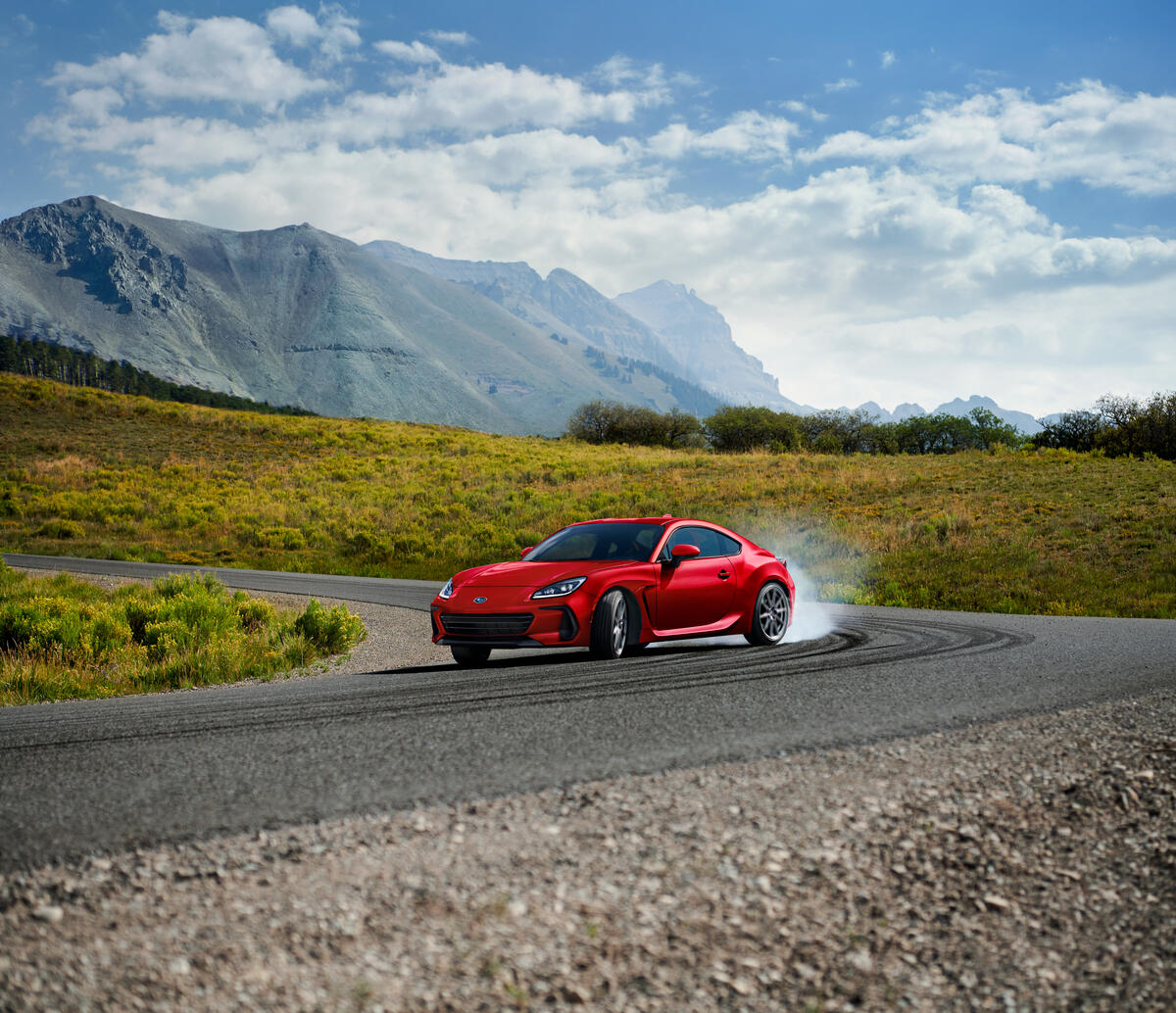
2014 Subaru BRZ
"So today's guest is a 2014 Subaru BRZ. [25.0s] It's a Subaru with Subaru engine, but Toyota makes exactly the same car."
The 2014 Subaru BRZ is a small sports car from Subaru. It uses a Subaru engine and sends power to the rear wheels, which helps it feel fun and controllable. It was also made in nearly the same form by Toyota/Scion, so parts and design ideas overlap a lot.
The 2014 Subaru BRZ is a compact sports coupe built around a Subaru boxer engine and a rear-wheel-drive layout. It’s especially notable because it was co-developed with Toyota, so the same core car exists under Toyota and Scion badges. This makes it a popular “driver’s car” platform for enthusiasts, including drifting setups.
Toyota
"It's a Subaru with Subaru engine, but Toyota makes exactly the same car. [29.0s] I come with what they call theirs."
Toyota is brought up because it makes a very similar version of the BRZ. So if you’re looking at one, you’ll often see the same basic engineering ideas across the Toyota and Subaru versions.
Toyota is mentioned here because it co-developed the BRZ with Subaru, producing an essentially identical sports car under its own branding. That shared development is why enthusiasts often treat these cars as a single platform when discussing parts and driving feel.
Scion
"And there's also a Scion model as well. [32.3s] And all three of them, they're basically the same car."
Scion is mentioned because, back then, Toyota also sold a version of this same sports car under the Scion name. It’s basically the same idea as the Subaru and Toyota versions.
Scion is referenced as another badge that sold a near-identical version of the Subaru BRZ/Toyota twin. In practice, this means the same core chassis and drivetrain concepts show up across multiple brand identities from that era.
rear-wheel drive
"It's got a Subaru engine, a Subaru drivetrain with a rear-wheel drive, not all [42.2s] wheel drive like Subaru's."
Rear-wheel drive means the back wheels get the power. Cars with this setup often feel more “playful” when you’re trying to slide or rotate the car.
Rear-wheel drive (RWD) means the engine’s power is sent to the rear wheels. On cars like the BRZ, that layout helps with balance and makes it easier to rotate the car during aggressive driving, which is why it’s popular for drifting.
traction control
"for people who like to drift cars, in other words, [48.2s] have the back end spin around if you can still do that in this modern day of [51.7s] traction control and gas systems"
Traction control is a safety feature that helps prevent the wheels from spinning when you accelerate. For drifting, you often want some wheel slip, so traction control can make it harder unless it’s adjusted or disabled.
Traction control is an electronic system that reduces wheel spin by cutting engine power and/or applying brakes when it detects loss of grip. The host brings it up in the context of drifting, since modern traction control can interfere with the wheel slip you want for a slide.
gas systems
"traction control and gas systems, which I'm sure you can still do that. [56.6s] These are a desired car for that fee, that driving."
“Gas systems” here means how the car responds to your accelerator pedal. Modern cars can limit power delivery to help with stability, which can make sliding harder than it used to be.
In this context, “gas systems” refers to how the car manages throttle (how the accelerator pedal commands engine power). Modern throttle-by-wire and related controls can limit how much torque reaches the wheels, which affects the ability to induce and sustain a drift.
A service
"So maintenance service is basically an A service or a B. This one was in for an A service. And what's included in that? So an A service is an oil and filter change and inspection."
An “A service” is a basic maintenance visit. It usually includes an oil change and a quick look over key areas to catch problems early.
An “A service” is a scheduled maintenance tier that’s typically lighter than a more comprehensive service. In this episode, Pawlik Automotive Podcast describes it as an oil and filter change plus inspections (like air filter checks and under-hood/under-vehicle visual inspections).
B service
"So maintenance service is basically an A service or a B. This one was in for an A service."
A “B service” is the next level of scheduled maintenance after an “A service.” It’s usually more thorough, but this clip doesn’t explain what’s included.
A “B service” is the next maintenance tier up from an “A service” in many shop schedules. In this segment it’s mentioned as the alternative to an A service, but the episode doesn’t list its exact contents.
two post hoist
"So it's a visual inspection because we do all our oil changes slash A services on a two post hoist. The wheels are all hanging free."
A “two post hoist” is a car lift with two posts that raises the car. It lets the shop look underneath more easily than if the car stays on the ground.
A “two post hoist” is a lift with two vertical posts that raises the car by its wheels, leaving the underbody accessible. The host uses it to explain how they can do oil services and also perform visual inspections with the wheels off the ground.
variable valve timing
"So if you look down on it, it's basically a Subaru engine, two liter overhead cam, variable valve timing and the Toyota."
Variable valve timing is an engine system that changes when the intake and exhaust valves open during operation. That helps the engine make better power and efficiency across different speeds and loads.
overhead cam
"So if you look down on it, it's basically a Subaru engine, two liter overhead cam, variable valve timing and the Toyota."
Overhead cam means the camshaft sits up in the cylinder head. That helps control the engine’s valves more precisely.
Overhead cam (OHC) describes an engine design where the camshaft is located in the cylinder head rather than in the engine block. This layout is common in modern engines because it can improve valve control and packaging.
boxer
"[144.0s] So what does that mean boxer? [145.8s] It basically means it's a horizontal engine. [157.1s] And they're opposed."
A “boxer” engine is a type of engine where the cylinders are laid out flat. The pistons move sideways, and the left and right sides work against each other.
“Boxer” refers to a horizontally opposed (flat) engine design where cylinders sit on opposite sides of the crankshaft. Instead of pistons moving straight up and down, they move side-to-side, with left and right cylinder banks opposing each other.
horizontally opposed engine
"[149.7s] I don't even worry the word boxer actually came from, but I guess it's a [153.0s] horizontally opposed engine. [161.3s] flat formation."
A horizontally opposed engine is another way to say “flat engine.” The cylinders are arranged left and right, and the engine is built to work smoothly with that layout.
A horizontally opposed engine (also called a flat engine) places cylinder banks on opposite sides of the crankshaft. The pistons move laterally, and the opposing layout is intended to reduce certain vibration characteristics compared with some other engine layouts.
Porsche's
"[163.2s] The only manufacturers that use it these days are Subaru's, a Porsche's. [167.8s] Well, not all Porsches, but 911. [169.3s] The Porsches you really want to own of a boxer engine."
Porsche is a car brand known for using a boxer-style engine in some models. In this segment, they’re mentioned as an example of a modern boxer-engine maker.
Porsche is one of the few modern manufacturers that uses a boxer (horizontally opposed) engine layout, especially in the 911. The host is using Porsche as an example of the boxer architecture still being used today.
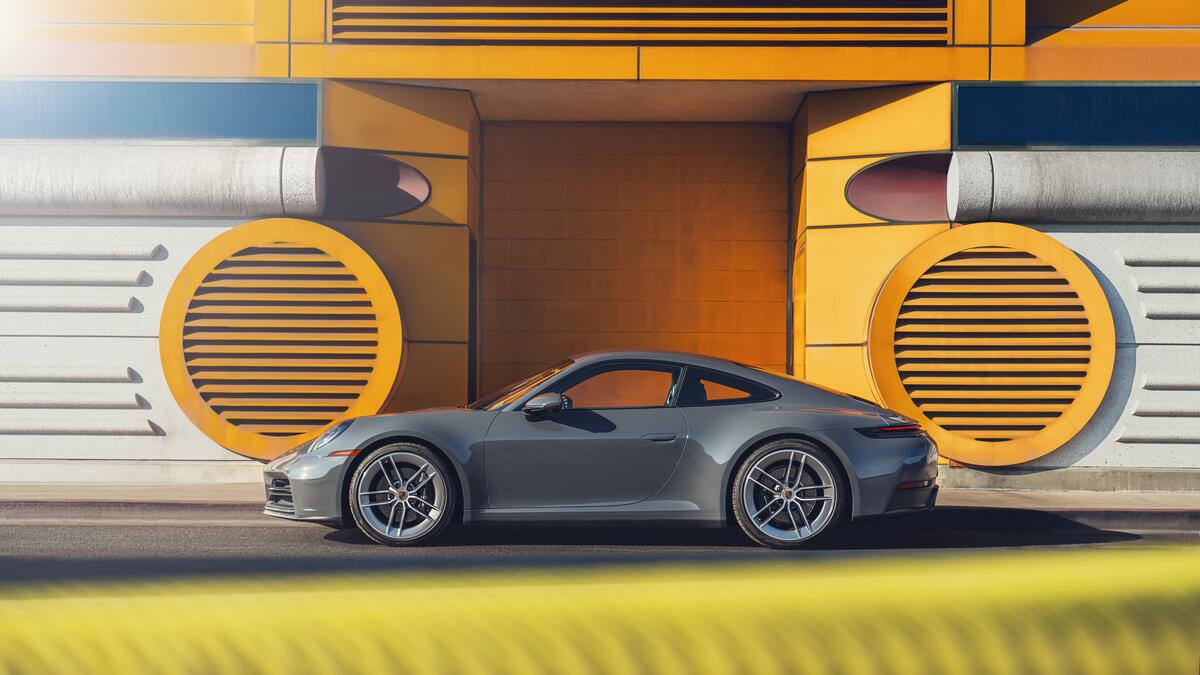
Porsche 911
"...ubaru's, a Porsche's. Well, not all Porsches, but 911. The Porsches you really want to own of a boxer e..."
The Porsche 911 is a sports car made by Porsche. It’s famous for its engine design and for being built for driving performance. People mention it a lot because it’s one of the most recognizable and respected sports cars Porsche makes.
The Porsche 911 is a long-running sports car known for its distinctive shape and its air-cooled “boxer” engine layout. In automotive discussions, it often comes up as a benchmark for how a performance car should feel and handle, especially when people talk about the appeal of the boxer configuration. It’s also a common reference point in enthusiast conversations about what makes certain Porsches “the ones to own.”
Volkswagen Beetles
"[172.8s] And of course, they've made it really awesome with super high power. [176.1s] And then of course, Volkswagen Beetles were the original. [179.8s] I don't know if they're the original, but they were the original mass manufactured engine."
The Volkswagen Beetle is brought up as an old, widely produced car that used a boxer-type engine. It’s a historical example of this engine layout in everyday cars.
Volkswagen Beetles are mentioned as an early, mass-produced example associated with boxer-style engines. The point is historical: the boxer layout has been used in production cars for decades.

Volkswagen Beetle
"... super high power. And then of course, Volkswagen Beetles were the original. I don't know if they're the or..."
The Volkswagen Beetle is a small, classic car made by Volkswagen. It became well-known for its unique shape and for being produced for many years. People bring it up because it’s one of the most recognizable early compact cars.
The Volkswagen Beetle is a classic, mass-market car that became famous for its simple, recognizable design and long production history. It’s often referenced as an “original” when people talk about how certain automotive ideas started and spread. In a podcast context, it likely comes up as a foundational example of a compact, approachable car that later enthusiasts built upon.
normally aspirated
"[183.8s] So this one's normally aspirated? [186.8s] Normally aspirated, yeah. [188.3s] And anything else that's unique about this engine?"
Normally aspirated means there’s no turbo or supercharger. The engine breathes using air pressure and the throttle, not extra “boost” from a compressor.
A normally aspirated engine makes its intake air flow without a turbocharger or supercharger. That typically means the engine relies on its natural airflow and throttle response rather than forced induction to create power.
port injection system and a direct injection system
"[191.3s] Yeah, the neat thing about this, it uses a Toyota fuel injection system, [194.3s] which incorporates a port injection system and a direct injection system. [199.1s] Why it does that, I guess, because it's extra complicated."
This engine uses two ways to deliver fuel. One system puts fuel into the intake passages, and the other sprays fuel directly into the cylinders, helping the computer fine-tune how the engine runs.
This describes a dual-fuel-injection setup that combines port injection with direct injection. Port injection sprays fuel into the intake port, while direct injection sprays fuel directly into the combustion chamber, allowing more precise control across different operating conditions.
computer control
"[199.1s] Why it does that, I guess, because it's extra complicated. [201.7s] You have two fuel injection systems. [203.5s] And of course, computer control."
The engine has a computer that constantly adjusts how it runs. It controls things like fuel delivery so the engine can perform well and run efficiently.
“Computer control” here means the engine management system uses sensors and algorithms to coordinate ignition timing, fuel delivery, and other parameters. With dual injection (port + direct), that coordination is especially important to get the right mixture at the right time.
injecting fuel
"So the computer has to control when it's injecting fuel into one or the other."
Fuel injection is how the engine computer sends fuel into the engine. It controls the timing so the engine burns fuel efficiently.
Fuel injection is how modern engines deliver gasoline into the engine in a controlled way. The engine computer decides when and how long to open the injectors so the air-fuel mixture stays in the right range for combustion.

Nissan 300Z
"...baru's answer to Datsun, Nissan, similar vehicle, 300Z. I'm not even sure what the number is."
The Nissan 300 ZX is a sports car made by Nissan. It’s designed for performance and comfortable driving, with a distinctive long-hood look. People mention it because it’s a well-known Nissan sports model from an earlier generation.
The Nissan 300 ZX (often called the 300Z/300ZX) is a performance-oriented sports car from Nissan, known for its long-hood, grand-touring style and strong enthusiast following. The podcast context compares it to a “similar vehicle” idea, tying it to Nissan’s sports-car identity and naming conventions. It’s discussed because it represents a notable era of Nissan’s attempt to build a serious, high-performance coupe.

Nissan 240SX
"... than this. This is more like a, if you remember, 240SX from the past. This is kind of like that model."
The Nissan 240SX is a compact sports car made by Nissan. It’s known for being rear-wheel drive, which can make it fun to drive. People often mention it because it’s a common car that enthusiasts have modified and enjoyed for years.
The Nissan 240SX is a compact, rear-wheel-drive sports coupe that became popular with enthusiasts, especially as a platform for modifications. In the podcast context, it’s referenced as a familiar reference point for a similar kind of car feel or layout. It’s often discussed because it’s relatively straightforward, lightweight, and has a strong community around it.
drifting
"If you're looking for a little rear wheel drive, drifting car. If you're looking for service for your Subaru in Vancouver, BC, Canada, the people to see are at Pawlik Automotive."
Drifting is when a driver intentionally lets the car slide sideways while turning. It’s a technique that’s easier to do in cars that handle well and send power to the rear wheels.
Drifting is a driving technique where the car is intentionally steered while the tires are made to slide laterally, so the car rotates through a corner. It’s commonly associated with cars that have rear-wheel drive and predictable balance when the driver adds throttle and steering.
Vancouver, BC, Canada
"If you're looking for service for your Subaru in Vancouver, BC, Canada, the people to see are at Pawlik Automotive. You can reach them online at pawlikautomotive.com"
They’re talking about getting Subaru service done locally in Vancouver, in British Columbia, Canada.
This segment is promoting local service in Vancouver, British Columbia, Canada. It’s relevant because the host is pointing listeners to a specific shop for Subaru maintenance and repairs.
Pawlik Automotive
"If you're looking for service for your Subaru in Vancouver, BC, Canada, the people to see are at Pawlik Automotive. You can reach them online at pawlikautomotive.com"
Pawlik Automotive is the repair shop they recommend for Subaru service in Vancouver.
Pawlik Automotive is the service shop being recommended for Subaru maintenance in Vancouver. The host’s point is that they’ve worked on these cars for a long time and see relatively few issues.
Request an Explanation
Heard something you'd like explained? We'll add it to this episode.
Sign in to request explanations for terms you heard.
Want to learn more?
Browse our glossary for plain-English explanations of automotive terms, jargon, and concepts.
Help improve this episode
See something that's not quite right? Our annotations are AI-generated and can sometimes miss the mark. Click the flag icon on any annotation to suggest a correction.