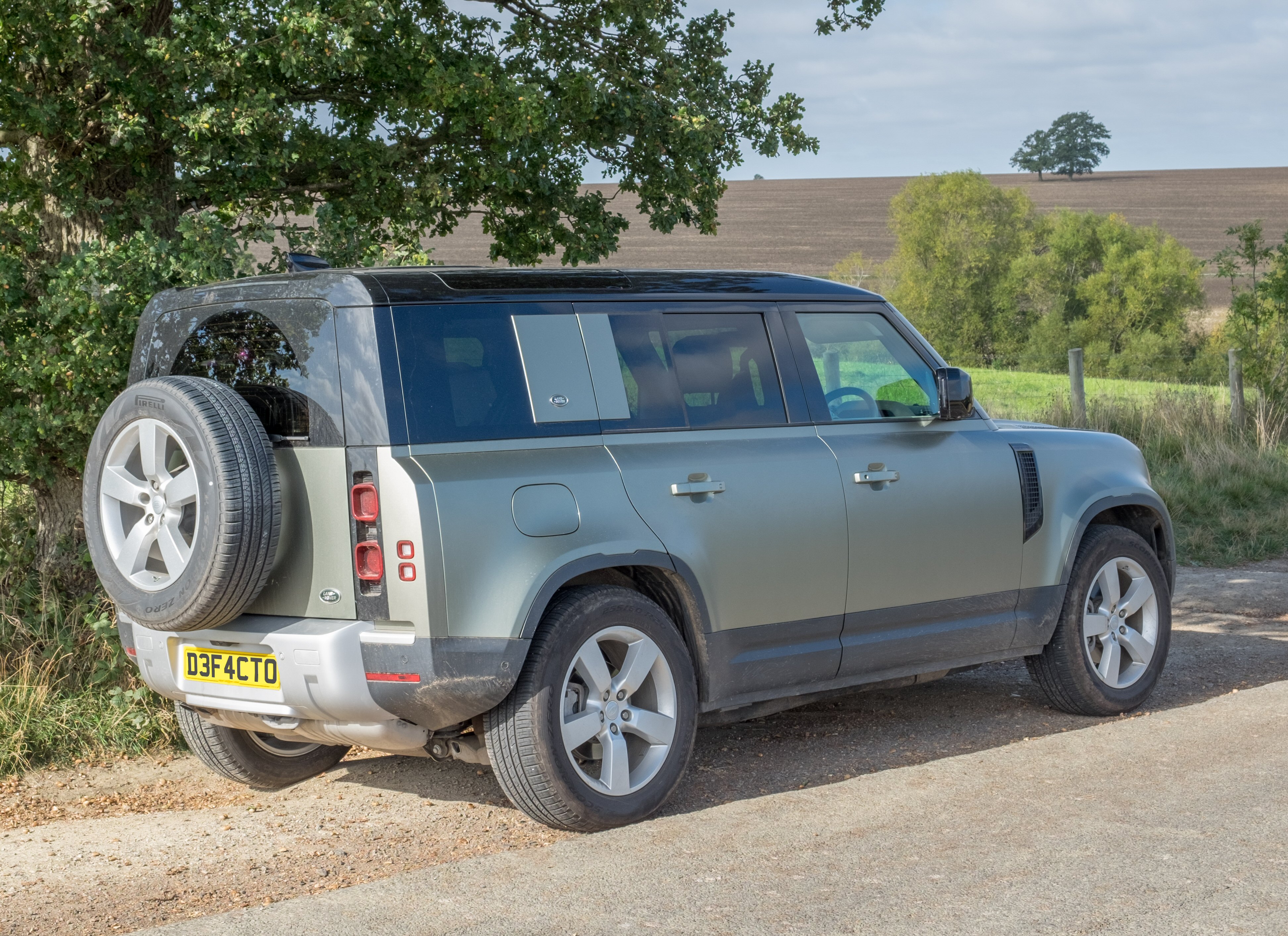
The Range Rover Sport is a fancy SUV that can handle rough terrains while still being comfortable and stylish. It's a popular choice for those who want both luxury and capability.
The Land Rover Range Rover is a fancy SUV that can drive on tough terrains and is very comfortable inside. The 2016-2018 models are talked about because they offer a mix of luxury and the ability to go off-road, which many people find appealing.
The rear differential pinion seal is a part that keeps oil inside the differential, which helps the car's wheels turn smoothly. If it leaks, it can cause big problems for the car.
The pinion nut is a special kind of bolt that holds a part of the car's differential in place. It's important for making sure everything works correctly, and you often need special tools to take it off.
Specialty tools are special tools made for specific jobs on cars. They help mechanics do their work better, especially on parts that are hard to reach or need a unique way to fix.
The drive shaft is a part of the car that helps send power from the engine to the wheels so the car can move. It's an important piece for making the car work.
Land Rover is a brand that makes vehicles designed for driving off-road, like in the mountains or on rough terrain. They are known for being tough and capable.
Pawlik Automotive is a garage in Vancouver where you can take your car for repairs and maintenance. They are known for their good service.
LIVE
Hi, it's Mark. I'm here with Bernie Pawlik, Pawlik Automotive in Vancouver, BC, Canada.
Vancouver's best auto service experience. And we're talking cars. How you doing, Bernie?
It is. I'm doing very well. Love that enthusiasm. So today's guest is a 2018-2016 Range Rover
Sport. What was happening with this vehicle? So this vehicle had a few issues, as Range
Rovers do when they get older. The issue we're going to talk about today is a rear differential
pinion seal leak, which we repaired. So how important is it to repair a leak in the rear end?
It is important. It depends on how much of a leak is coming out. Differentials are,
there's oil in them, lubricated parts, so you definitely don't want to run out of oil. I actually
fixed a car about 35 years ago where a guy had been driving a truck in this differential. The oil
was completely gone out of it. It seized up on the highway by the time we fixed it. Basically,
there's the gears and stuff. There's a lot of powder inside. That's how far gone the lubrication
had disappeared, which I don't even know how that can happen. But anyways, if you have a leak, you
should at least keep on top of the fluid level, which is difficult to do a lot of times because
it's hard to get at, or better have it fixed and then you'll have to worry about it.
How would someone determine this? Do you have to go under the car? You just notice
there's drips on the ground? What's going to happen? If you notice there's drips on the ground
from that area, that's a pretty bad leak. Most differentials have one liter, maybe two,
a fluid inside them. So normally when they leak, they'll just see over a long period of time. You
can see by the pictures that we're going to show you, this one had actually had a fair bit of a
leak and there was actually a drip. Pop up the picture. I think that's the best description.
Yeah, so this is the bottom of the differential. You can see it's pretty oily underneath there.
When it looks like that's time to repair the seal. Differentials are pretty simple. There's
basically three seals and there's some covers. They have one or two covers. So there's generally
the pinion seal, which is the front, which is a piece we fixed today. And you can see that the oil,
it's wettest at the front. And of course, generally with cars, oil leaks run backwards because you're
generally driving forward and forces of the wind push things back. Sometimes you need to
clean these things off and do more of an examination, but this one here was pretty evident. It was
the pinion seal. The axle seals, maybe you can just point those out with your pointer. Yeah,
in that area, and there's two of them. One of them, you can't see too well in that picture,
but you can see one of them. These axle seals were fine. And also on this design, a differential,
it has a side cover, which is above that lower piece. There's a cover there and that seal can leak.
Very uncommon. So yeah, differentials are different on different vehicles, but that's
how this Range Rover one is. It's pretty robust. Of course, this is a high performance truck.
So the differentials are pretty big in this vehicle. So this is an interesting little
here that corresponds to this. Yeah, that's the pinion nut. It's exceptionally tight. We have
special tools to remove these. As you can see, that's a weird shaped nut. There's a special tool
and it's big. And of course, the thing is, even if you had a socket, you could fit over that.
You have to have a way of holding the differential. There's a picture right below that one, Mark,
if you show that one, you have to hold that shaft in place to undo the nut because the nut screws
on there. So it's a two piece tool. We've invested a lot of specialty tools for Range Rovers, Land Rovers,
of various models because a lot of them, you need specialty tools. That nut was insanely tight.
As a matter of fact, I have this snap on. It's like about a three foot long breaker bar and snap the
end of the breaker bar off. So fortunately, lifetime warranty tool, but we have even more robust
tools that we were able to get the nut off with. It's a nine foot tool. Yeah, pull it in the nine
quarter drive stuff. Yeah, it's on there really tightly. So not an easy repair based on how
kind of complex this is to try and get in there. Yeah. And it's a lot of work to get in there.
It's not to like some traditional American trucks. There's a lot of room in the back. You just unbolt
the drive shaft with four bolts, slip the drive shaft off. You can blast the nut off with an impact
gun, slip it out, pop the pinion seal in and away it goes. It's still an hour's worth of work at
least, but it's easy. This one, there's plates to remove and things in the way and the exhaust
interferes and lots of things have to be moved out of the way to get at this. So the typical
Range Rover, it's never simple. So after repair, everything's fine. Yeah, it's all good. And typically,
is this around the place where you might see it or is there any kind of time frame as far as
seeing these kinds of leaks in the rear end? They develop differently on different vehicles. We do
a lot of rear end repairs on certain models of Range Rover or Land Rovers, the LR2s,
which is a different model. But yeah, the leaks in these, sometimes they happen, sometimes they
don't. And things like that can happen more commonly too. If someone's like doing a lot of
off-road driving, but most Range Rovers never make it off-road, although they would be a good
off-road vehicle. In Vancouver, they're just stylish. They are. It's a good way to get around.
And if you have to take off to the mountains, you can. This is one of the items where we recommend
regular inspections on your vehicle once it gets past a few years old. Every year,
they have it inspected because things like this develop. And if you spend the money,
you fix it before it breaks, it saves you money. You don't want to replace the whole differential.
That's a really expensive thing. Yeah. So if you're looking for service for your Range Rover or
Land Rover in Vancouver, the people to see are Pawlik Automotive. You can reach them to book
your appointment online at pawlikautomotive.com. Or you can call them at 604-327-7112. You have
to book ahead. Always busy because they're the best. Pawlik Automotive in Vancouver,
BC, Canada. Thanks so much for watching and listening. Thanks, Bernie. Thank you, Mark.
Thanks for the enthusiasm and thanks for watching.
About this episode
A 2016 Range Rover Sport faced a rear differential pinion seal leak, a common issue as these vehicles age. Bernie Pawlik explains the importance of addressing such leaks to prevent severe damage, sharing insights on how to identify them through visible drips and oil levels. The discussion highlights the complexity of the repair process, requiring specialized tools and techniques due to the vehicle's design. Regular inspections are recommended to catch these issues early, ensuring the longevity of the vehicle.