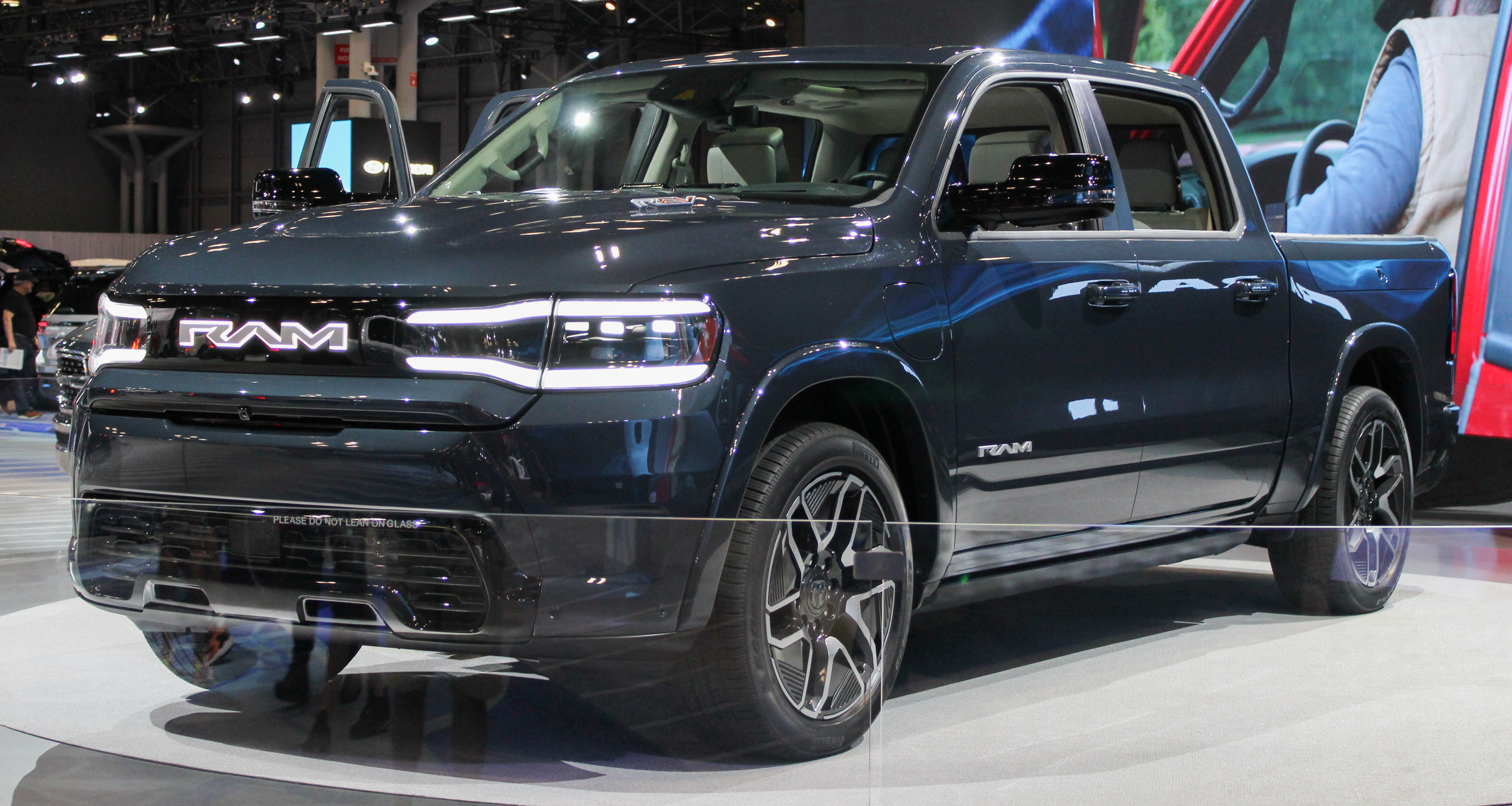
The Ram 1500 EcoDiesel is a big truck that uses a diesel engine, which helps it save fuel while still being strong enough to tow heavy things. It's a good choice for people who need a truck for work but want to spend less on gas.
The water pump helps keep the engine cool by moving a special liquid called coolant around. If it stops working, the engine can get too hot and break down.
EcoDiesel is a type of diesel engine that helps trucks use less fuel and produce fewer harmful gases. It's good for people who want a powerful truck that is also better for the environment.
Gaskets are like flat seals that help keep fluids from leaking out between parts in the engine. They are important for making sure everything works well together.
A three liter diesel engine is an engine that can hold three liters of fuel and air mixture. It's often used in trucks because it can provide good power while being more fuel-efficient than larger engines.
Engine failure means that the engine stops working. This can happen for many reasons, like not taking care of it or if there's a problem with how it was built.
Carbon buildup is when soot and other carbon particles collect in the engine or exhaust system, which can make the car run less efficiently and cause problems over time.
Emission equipment is the parts of a car that help clean up the exhaust gases before they leave the vehicle. They make sure the car is not polluting the air too much.
LIVE
Hi, it's Mark Bosterd.
I'm here with Bernie Pawlik, Pawlik Automotive in Vancouver, BC, Canada.
Vancouver's best auto service experience and we're talking cars.
How are you doing, Bernie?
Doing very well.
So today's guest is a 2017 Ram 1500 Eco diesel.
What was going on with this vehicle?
Yeah, so this vehicle came in for a water pump replacement.
We had previously diagnosed this a while ago at his previous service.
It wasn't a severe leak, so the customer decided to leave it.
But now he decided to bring it in and get it done and keep the vehicle in good shape.
Sort of a not common problem on these vehicles, or is this semi regular?
We haven't done a lot of water pumps on any vehicle.
A water pump will fail over time.
It's a definite failure item on any engine.
It's just like how soon they fail is the question.
Sure. And what kind of kilometer range did this vehicle have?
One hundred seventy eight thousand.
So it's up there.
Yeah, it's a lot of like eight, nine years old at this point in time for the vehicle
and one hundred eighty thousand k. It's not unacceptable.
Let's take a look at some pictures.
Yeah, there's our guest.
There's our guest. Welcome, Dodge.
I keep calling him Dodges.
I can't. It's really a Ram, but I just keep wanting to call it a Dodge Ram for some reason.
This is what we grew up with.
I guess a good thing I don't call it a Fargo.
Yeah, so Eco diesel, the culprit.
Let's jump to right to that.
Yeah, so there's the old water pump removed from the vehicle.
The holding the pulley with my thumb.
And you can see some reddish marks if you want to point them out.
There's some orangey reddish marks that's anti-freeze.
It's leaked out of the water pump.
So there's a couple leaks in that area.
There's also a number of seals and O-rings and gaskets
associated with this pump that we replaced.
And they were there was a possibility they were leaking as well.
So those would be around these kind of whole areas that we're seeing.
Exactly. Those were all the gaskets and seals go.
There's also another pipe, which you'll see in a next picture.
That's the new water pump installed.
The thermostat sits where you moved your little pointer
and we replaced the thermostat.
There's a temperature sensor in that area as well.
And there's a pipe to the right that facing forward under the black pipe.
That pipe comes off when you do the water pump.
And there's a couple of O-rings seals on that that we replaced as well.
So everything is resealed in the front of the engine.
So nothing there to leak of any sort.
So this is for the this is air.
That's the air intake.
That's a throttle right there.
Yeah, that's cool down there.
So pretty straightforward.
Pretty straightforward.
This interestingly enough, I should have taken a picture
when reassembled, but there's also some plastic covers
that they put over the front of this area.
And you have to remove them to get at the water pump.
And I'm not really sure what the rationale is behind it.
When you pop the hood, you can't see the water pump because it's covered up
with a big black plastic cover, which I guess it's more aesthetically pleasing or something.
They're copying Ferrari from the 50s, 60s.
A lot of stuff to get out of the way to get to the water pump.
How complicated a repair was this?
It's really not as bad as some engines and some diesels.
But it's a few hours worth of work, but it's not as bad.
You remove the plastic covers, everything's accessible.
The air intake ducts and things.
But it's really not as bad as some cars, for sure.
So nine year old diesel vehicle getting up there, not regular, I guess, usage.
Is it worth having invested in this?
How much longer life does this vehicle have?
I'd say quite a lot.
We work on a lot of these three liter diesel ram trucks.
And I would say they're not the best engines.
They have a lot of problems.
We've seen somewhere the bottom ends fail at a very low mileage,
which is surprising for a diesel, because usually that's the kind of thing
that diesels are known to last a long time.
There's carbon buildup issues.
It's got all the emission stuff that creates problems.
We run into a few customers, so we don't remove the emission equipment,
but we know have customers who, yeah, I pulled that off and the truck runs a lot better.
It actually works way better without the stuff.
It's just not good for the air.
And it actually causes less problems having the emission equipment
because it doesn't carbon everything up, but not recommending that just to saying that it does work.
But we're starting to see a lot of these trucks with higher mileage.
And most of them are surviving pretty well.
They just have a few issues to repair.
And we've done quite a few podcasts on them so you can get an idea of what repairs are needed.
So in your estimation, I know the investment of a vehicle is expensive at the start.
To keep it running is a good investment over time.
Oh, yeah, other than buying a new one every two years.
Oh, yeah, for sure.
Yeah, it costs a lot of money to do that in depreciation, especially with some cars.
And the thing about diesels is they tend to you've owned diesels
and they tend to actually work better after a while for the most part.
After they get broken in, sometimes when the mileage gets higher,
they start working even better.
So yeah, not a bad thing for sure.
So there you go.
If you're looking to keep your diesel vehicle running for longer,
the experts to see are at Pawlik Automotive in Vancouver, BC, Canada.
You can reach them online at pawlikautomotive.com.
You can book your appointment right there or you can call them at 604-327-7112.
They'll answer the phone, they'll talk to you, they'll find out what's going on.
They'll get ready for your appointment.
You have to book ahead with Pawlik.
They're always busy.
Pawlik Automotive in Vancouver, BC, Canada.
Thanks so much for watching and listening.
Thanks, Bernie.
Thank you, Mark.
Thanks for watching.
About this episode
A 2017 Ram 1500 Eco Diesel came in for a water pump replacement after showing signs of leakage. The discussion covers the commonality of water pump failures in diesel engines, the specific repairs needed, and the overall reliability of the Eco Diesel engine. Bernie and Mark delve into the complexities of the repair process, including the replacement of seals and gaskets. They also touch on the longevity of diesel vehicles and the costs associated with maintaining them versus buying new. Insights into the engine's performance and common issues are shared.