The Nissan Murano is a type of SUV that is designed for comfort and style. The 2026 version has new features that make it even better than the previous year.
Car
Toyota GR6 Hakone Edition
The Toyota GR6 Hakone Edition is a special version of a Toyota sports car designed for better performance and unique looks. It's part of Toyota's racing-inspired series called Gazoo Racing.
Jaguar Land Rover is a company that makes high-end cars, including luxury SUVs and sports cars. They recently had to stop production because of a cyber attack but are now getting back to making cars.
Battery electric vehicles are cars that run only on electricity, using batteries instead of gas. They don't produce any pollution from exhaust, making them better for the environment.
Electric vehicle sales are when people buy cars that run on electricity instead of gasoline. These cars are becoming more popular as more people want to be environmentally friendly.
A V8 engine is a type of car engine that has eight cylinders arranged in a V shape, which helps it produce a lot of power, making it great for fast cars.
The Lucid Gravity is a new electric SUV that promises to be very luxurious and high-tech. It's made by a company called Lucid Motors and is designed to be a fancy and powerful vehicle for those who want an electric car.
The Renewable Carbon Initiative is a group of companies working together to find better ways to use carbon that doesn't come from fossil fuels. They want to help the environment by using renewable sources instead.
Trim levels are like different versions of the same car, with each version having its own set of features. The Nissan Murano has three versions called SV, SL, and Platinum.
Turbocharged means that the engine has a special device that helps it produce more power without using more fuel. This makes the car faster and more efficient.
A continuously variable transmission, or CVT, is a type of automatic transmission that doesn't have traditional gears. Instead, it can change smoothly through a range of speeds, which helps the car accelerate more smoothly and can save fuel.
A nine-speed automatic transmission is a system in a car that automatically changes gears for you, with nine different settings. This helps the car run more efficiently and smoothly at different speeds.
Front-wheel drive means that the power from the engine goes to the front wheels of the car. This setup can help the car handle better in bad weather and usually makes the car more spacious inside.
All-wheel drive means that power goes to all four wheels of the car, which helps it grip the road better, especially in bad weather or off-road situations.
An eight-speed automatic transmission is a system in a car that changes gears automatically, with eight different settings. This helps the car perform better and use less fuel while driving.
A CVT is a special kind of automatic transmission that helps cars use fuel more efficiently. It can change gears smoothly without the usual steps you feel in regular automatic transmissions.
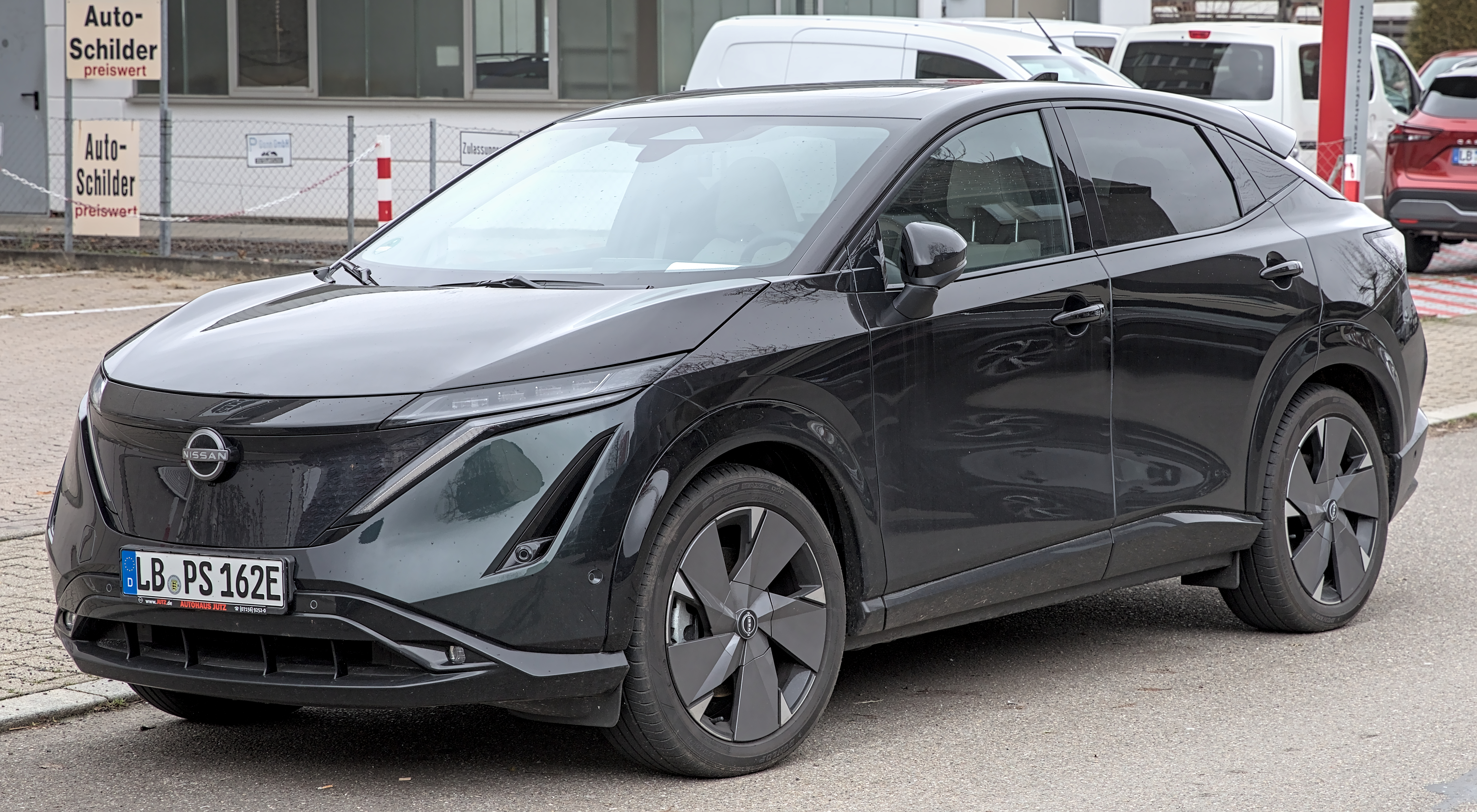
The Nissan Ariya is a new electric SUV from Nissan. It has a stylish design and is made to be environmentally friendly, using electricity instead of gasoline.
Heated and ventilated seats can warm you up when it's cold or cool you down when it's hot. They make sitting in the car more comfortable no matter the weather.
These are features that let you connect your phone to the car without using a cable. You can use apps and listen to music from your phone on the car's screen.
The Mercedes-Benz SL is a fancy convertible car that can have its roof taken off. It's designed for people who want to drive in style and comfort, especially on nice days.
The Toyota GR Corolla is a sporty version of the regular Corolla, designed to be more powerful and fun to drive. It has a hatchback shape, which means it has extra space in the back for things like groceries or gear.
The Subaru BRZ is a small sports car that is fun to drive and has its engine in the back, which helps it handle well on the road. It's built for people who love speed and agility in their cars.
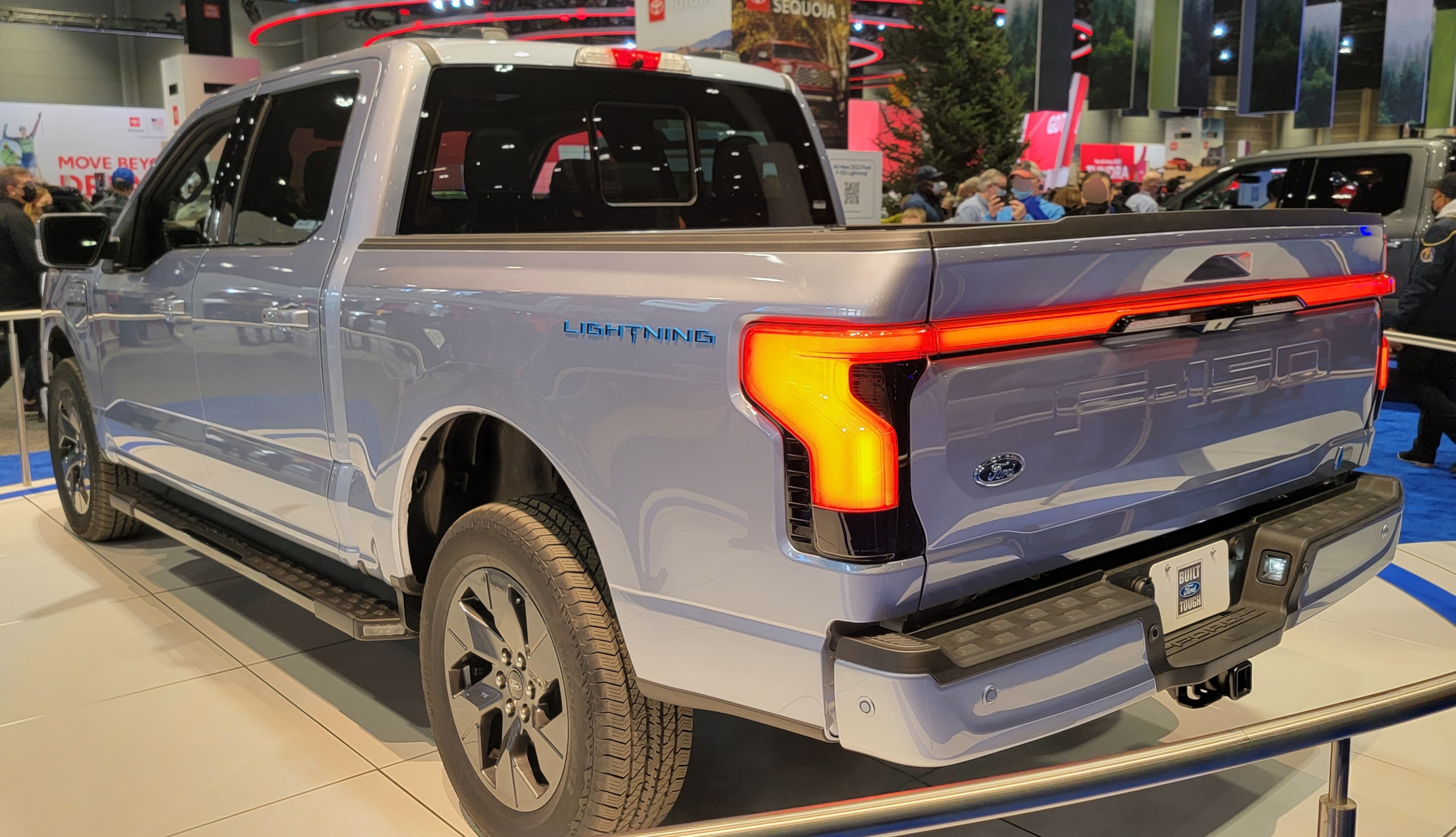
The Ford F-150 Lightning is an electric pickup truck that looks like the regular F-150 but runs on electricity instead of gas. It can still do all the tough jobs you'd expect from a truck, but it's better for the environment.
LIVE
If you're the purchasing manager at a manufacturing plant, you know having a trusted partner makes
all the difference.
That's why hands down, you count on Granger for auto-reordering.
With on-time restocks, your team will have the cut-resistant gloves they need at the
start of their shift.
And you can end your day knowing they've got safety well in hand.
Call 1-800-GRANGER, click Granger.com or just stop by.
Granger for the ones who get it done.
This is America on the Road, main best radio show by the International Automotive Media
Conference and now in its 33rd year on the air.
Thanks for being with us.
This is we bring you the latest automotive information from around the world.
I'm Jack D. Rad.
With me is co-host Chris Teague.
Chris, have fall-colored tourists invaded your town yet?
My town is right on the coast and we get some fall colors but they head to the
mountains for those and I've heard it's pretty spectacular.
We've been in a big drought so we'll see how it goes.
Not a weather show.
Yeah, exactly.
Although this is probably a good week for that I would imagine to be in Maine.
Plenty of news to talk about this weekend on the car side after a long pause due to
a cyber attack, a global automaker has resumed its manufacturing operations.
I'll tell you what automaker we're talking about and what the future may bring
for them next.
Auto sales have been humming through the first three quarters of the year.
Water battery electric sales were particularly strong in September.
But is there a hidden warning in their September numbers?
We'll give you our opinions on that coming up.
Curious about Chris's opinions as always, one EV maker that didn't get a big
lift in September was Lucid Motors.
We'll tell you what their next moves are likely to be and give you our
predictions a little later.
Mercedes-Benz has just gone on record against carbon derived from fossils.
And we'll tell you more about what I think is a baffling story coming up.
And how do you show a new e-bike that looks pretty cool?
Are you an e-bike fan, Chris?
I am a fan.
I didn't used to be, but I tested one and they are quite entertaining.
Yeah, they're kind of cool.
America on the Road is brought to you by drivingtoday.com, emlancy.com, the publisher
of my latest book, Only One Thing Stays the Same, and Mercury Insurance.
If you're looking to save some money, you should switch to Mercury for your
auto and home insurance.
Californians save an average of $670 with Mercury.
So imagine how much you could save.
I got a quote today at drivingtoday.com slash auto insurance.
That's drivingtoday.com slash auto hyphen insurance.
Well, as you long time listeners of the show know, Chris lives at one end of the
country.
I live at the other.
Each week we get together to talk about cars, the car industry, and how you
can save some money on your car.
What is your test vehicle this week, Chris?
I drove the 2026 Nissan Murano.
It was all new for 2025 and I can't wait to tell you all about it.
My test vehicle this week is the all new, well maybe not all new, but
the 2025 Toyota GR6 Hakone Edition.
We'll tell you about it in our road test segment.
And our special guest this week is John Dickon.
He serves as director of material damage claims at Mercury Insurance, but we'll
be talking about home EV chargers.
And you've got one of those at your house, Chris.
So stay with us for that.
We'll have tons of show right here on America on the Road.
Chris is back with us and we're happy about that.
So we'll have a great show.
Stay with us and we'll be right back right here on America on the Road.
Welcome back everybody to America on the Road.
Jack Ney read along with Chris Teague with you for a news time on America on the Road.
And big news for Jaguar Land Rover.
They have finally restarted their engines.
Their revving back to life after a major cyber attack brought its operations to a halt.
This was in late August.
They began a phased restart recently and they started engine building, battery assembly and
stuff like that.
Now they're pretty much back into full production.
But this has been a giant thing.
And again, I think we talked about this a couple of weeks ago, Chris.
Under reported a whole company being shut down by a cyber attack, a global company
like this.
This is major, major stuff, isn't it?
Yeah.
The other automakers have to be looking at this and saying, wow, you've got some
holes when you need to plug up here.
But for Jaguar Land Rover, you know, Jaguar only has I think one vehicle in production
right now.
So this was literally the worst timing that this action could have happened to them.
And I hope they're able to kind of come out of this as they were in the middle
of restructuring anyway.
But it'll be interesting to see where they go.
Yeah.
I mean, they were having a tough time.
As you mentioned before that, they got a $1.1 billion loan guarantee from the
United Kingdom government, which will help them and their suppliers, because
suppliers are hard hit by this, too.
I think you talked about that a couple of weeks ago, too.
Parent company Tata Motors is working closely with British authorities to try
and figure this all out.
It would be kind of interesting to figure out where this cyber attack
emanated from, because nobody quite knows, at least nobody's saying.
But as you say, this is a warning shot for, I think,
all car manufacturers and all big manufacturing operations of any type.
Yeah. The scope of this thing, it just seemed a balloon immediately.
And it covered every part of their business operations.
And, you know, any cyber attack has a negative impact.
But this one, you know, being able to shut down an entire company,
pretty serious stuff.
Yeah. When your assembly line stop is a carmaker, I mean,
everything has to at some point kind of come to a halt because, you know,
you have no product to sell.
Although I think maybe in Jaguar Land Rover's case, they might have had some
built up inventory that maybe some other manufacturer wouldn't have had.
So they could catch their breath that way.
Speaking of car sales, US car sales picked up speed in September.
They climbed 3.5 percent year over year.
Of course, there was a race to take advantage of the expiring federal
tax credits on electric vehicles.
And the seasonally adjusted annual rate, sales rate, which is, you know,
something the industry looks at, hit 16.4 million units, which means
that they're on a pace to sell in the calendar year, 16.4 million vehicles
totally, which is pretty darn strong.
Battery electric vehicles, of course, kind of led the charge here.
One of the leaders of the charge, they took a record 11.8 percent
of US new car, the total market.
What should you take on that, Chris?
I have some questions about that.
Yeah, it was interesting to see, you know, everybody predicted
that EV sales would climb at the nearing the end of the EV tax credit.
Going forward, though, you know, I think some automakers, a lot of automakers
have held on to some of their in-house incentives to kind of keep
driving sales. So I don't think we're going to see a cratering.
But, you know, we've said this many times, I don't have a crystal ball.
So I'm kind of watching this with everybody else.
Yeah. Well, I don't have a crystal ball either.
But, you know, I look to these sales and I kind of wonder why
the market share wasn't even higher than 12 percent, you know, given the fact
that, you know, they're hitting a wall in terms of these federal tax credits.
As you say, some of the some of the manufacturers and many of the
manufacturers have come up with ways to try to extend that.
And just as we're doing the show today, we heard that Tesla
is lowering prices and has low price models going out there.
So there is quite a bit of incentive spending,
but not the kind of incentive spending on non-electrics that we might have guessed.
Just have to see what the fourth quarter holds.
It'll be fascinating to see whether electric vehicle sales do
drastically go off the cliff or whether they hang in there.
Yeah, I mean, I think I think we'll see them come down a bit.
But I don't think we'll see them crater.
I mean, people still want the cars.
So, yeah, it'll just be interesting to watch where, you know, January,
February of 2026 leads us.
Yeah, I wonder what the un-incentivized market share of electric vehicles would be.
You know, I've seen predictions anywhere from four to 10 percent.
Matt DiLorenzo on the show last week was saying that he expects
that electric vehicle sales could be 25 percent at some point.
He didn't exactly specify when.
So I found that interesting because I think kind of their natural rate
is probably significantly lower than that.
But, you know, we all have our opinions, right?
Opinions are like noses.
Yeah, some of this will probably depend on where regulations go in the future, right?
I mean, we've rolled back some of the emissions rules.
So Dodge is bringing back the V8 instead of pushing forward with new electric models.
So I guess that, you know, automakers are going to do what makes them the most money.
And if that's a gas engine, then that's probably where we'll be.
from going from what was going on in September in terms of vehicle sales.
Of course, they're an electric vehicle maker, very maker, a very nice electric vehicles.
As a matter of fact, although very premium priced,
their sales and deliveries were under what
Wall Street analysts had predicted for them.
Of course, this is really important to that kind of startup company,
how they're either matching expectations or not.
They're trying to concentrate on the new gravity SUV,
which makes a ton of sense because that's where all the sales are in the luxury market.
And they are certainly a luxury vehicle.
The gravity is a very nice SUV, but boy, it's been slow to get out into the marketplace.
Hasn't it? It has.
You know, I'm surprised Lucid didn't start with the gravity
given where the market was when they when they hit the ground running.
Yeah. But they've got deep pockets.
They've got the backing of the Saudi government or the Saudi sovereign
wealth fund or whatever it's called.
As you mentioned, I think their biggest their biggest problem right now is price.
They didn't qualify for the tax credits when they were available because of that price.
So, you know, the gravity, they've said they're going to come out
with lower price versions and, you know, they might have saturated
the market that they have at the price point already.
So I hope they're able to come down.
I would like to drive one. I've never driven one. Have you?
Yeah, I have. I've driven various Lucid models.
They're really terrific. We did a test of gravity.
It seems so long ago.
Actually, I went on an event maybe last summer, not this past summer
that has just ended, but the summer before.
Wow. Yeah. So here's the story.
I'm curious as to your take on this.
Mercedes-Benz has come out against fossil carbon.
And we're not talking about fossil fuels here.
We're talking about carbon that is used in parts, you know,
plastics and those kind of things.
There was a coalition that includes other companies
like BASF, Covestro, Michelin, and Continental
that have signed on to what they call the Renewable Carbon Initiative.
And the goal is to replace fossil-derived carbon
with renewable alternatives, biomass, captured CO2,
which is good, recycled material. I'm for all of that.
And recently deceased animals, Roadkill.
No, I made that up. But the rest is true.
I'm curious. My take is if you can pump something out of the ground
and use it and it's useful, why not do that?
But what's your take?
Yeah, I guess so two things.
First of all, I'm going to plead ignorance
because I didn't realize this was a thing
until I saw the notes on this.
I guess is carbon derived from fossils?
Is that a process that they do intentionally
or is it a byproduct that happens
when they're when they're refining other materials?
Well, I think what we're talking about here
is coal, oil, and natural gas.
And instead of using that stuff,
use gas that comes from biomass, for example.
And I'm all for that.
But I don't see anything wrong with pulling stuff out of the ground
that would otherwise go unused to make useful products for people.
I think that kind of just makes sense in it.
It doesn't seem like it's causing any environmental harm.
Yeah. I mean, this sounds a little bit like
the electric vehicle situation here in this country.
People said we're going to build a million electric vehicles,
but we don't have the chargers to support it.
Mercedes wants to go to synthetic carbon fuels and things like that.
Those aren't ready for the mainstream yet,
and they might not be for a while.
So I think this is a great posturing a move to show,
hey, we're virtue signaling here,
but I don't see this being practical any time soon.
And again, I'm not an expert on this,
but it doesn't feel like it's around the corner.
Yeah. It doesn't seem like it's around the corner.
They can continue to do this.
And I think you and I both are,
I certainly am in favor of recycling things
and conservation and conservation of resources.
And I think that makes a ton of sense.
I don't think very few people I think would object to that.
But well, as we go onward here, remind us of the vehicle
you'll be testing this week, Chris.
I had the 2026 Nissan Murano.
And I'll be testing the 2025 Toyota GR86.
So stay with us for that and we'll be right back.
Welcome back to America on the Road with Chris P.
If you were at his road test time
and boy, do we have some cool road test vehicles
this time around.
I have very different vehicles this time.
Sometimes we have almost a comparison test,
but these vehicles are very, very different.
Chris, tell us about the vehicle you're testing this week.
Yeah, I drove the 2026 Nissan Murano.
It was all new for the 2025 model year.
And I've been wanting to drive it since it came out.
Earlier this year.
Jack, that comes in three trims, SVSL and Platinum.
I tested the top Platinum model.
It costs around $52,000 to start.
And mine was around $54,000 after options.
The base model is just under $43,000.
So you got quite a price spread here,
but it is kind of on the premium side of the spectrum.
Jack, have you driven the newest Murano?
And if so, what did you think about it?
I have not.
It's been a long time, actually,
since I've been in any Nissan vehicle.
I've got a remedy that I've been looking for.
Nissan vehicle.
I've got a remedy that I talked to my Nissan friends.
Should I still have some and see what's going on there?
Yeah, so you get a turbocharged 2.0-liter four-cylinder engine
with this vehicle.
It makes 241 horsepower.
And my biggest, most anticipated change to this SUV
for the model year was the move
from a continuously variable transmission
to a nine-speed automatic transmission.
And I'll talk about that more in just a minute.
But front-wheel drive is available.
I'm sorry, front-wheel drive is standard.
All-wheel drive is available
and all models get an eight-speed automatic transmission.
So, Jack, we've talked about the continuously variable
transmissions until we're blue in the face.
And I've said many times that Nissan has done a better job
at it than others just because they do that.
That's been their transmission for many years.
The nine-speed automatic is a big improvement
over the continuously variable unit.
But I still think Nissan might be the only automaker
that can make an automatic transmission feel like a CVT.
It doesn't feel like they've given up on the tuning
just enough to give it in a new feel.
What do you think about that, you know,
kind of retaining the old?
A couple of things.
One, the Morano is a pretty big vehicle, I think, for a CVT.
I think they work best in smaller vehicles.
And, you know, certainly they're more for fuel economy
than they are for fun.
I guess anybody who's close to that,
close to the business would say that.
In this instance, I would think maybe it just needs
more tuning, the new geared transmission automatic
needs more tuning because it's new to that platform, I guess.
I agree.
You know, I think all the elements are there.
I think a little bit of refinement through software updates
and maybe some tuning, like you said,
would help it feel more responsive.
It does feel just a little gummy and not so on the ball.
But it offers a comfortable ride.
I've said many times about, I've talked many times
about our road quality around here
and the Morano did just fine on all of them.
Even at highway speeds, the wind noise is well controlled.
And what you don't get with the nine-speed is the whining
and whaling sound from the engine under heavy throttle.
And that's a welcome change when moving
to the nine-speed automatic.
Inside, cloth upholstery comes standard.
My platinum trim came with perforated leather upholstery.
Jack, they gave the interior some of the touches
from the Nissan Aria EV.
So what you get is a more visually appealing space.
It looks expensive.
It looks like it costs $70,000 instead of $54,000.
And there are nice materials throughout.
You get some fake wood trim that doesn't quite
feel like plastic and some other nice materials inside.
And as I mentioned, the perforated leather seats
are very nice.
The platinum trim has heated and ventilated front seats.
You also get massaging functionality here,
which is unique for a Morano.
I would not have expected it.
Not the best massage, but you do get lumbar support
and everything too.
The front seats are nicely supportive.
They're very spacious, nice room, good ergonomics.
The back seats are a little bit tighter,
which I think is probably not the biggest surprise
for a two-row SUV.
What do you think about that?
Yeah, I think so.
I think this is a vehicle that's always been more
about style, I think, than functionality, really.
I think style is its function, right?
I mean, it's supposed to be a cool-looking SUV,
a crossover SUV.
I think it accomplishes that.
So rear seats probably not used by more than two people
and probably not that very often.
Yeah, and the trade-off is that you get solid cargo space
and the back seats fold down
so you can fit pretty big items back there.
On the technology front,
you get a dual 12.3-inch display screen system.
You get a 12.3-inch digital gauge cluster
and then a touchscreen.
Wireless Apple CarPlay and Android Auto are standard.
My platinum trim came with a Bose audio system
and wireless charging.
I like Nissan's infotainment system.
I think that it does a good job at organizing the menus
to make them easy to use while you're driving.
Nissan uses high-resolution displays
with good processing power, so the system is responsive.
It's easy to see and so you're not like kind of fiddling
and hunting and pecking around
for different buttons while you're driving.
And the Bose audio system sounds fantastic.
It's more than loud enough for everybody
to get good bass and the car has good sound insulation
so it doesn't sound tenny
and you don't get road noise and interference there.
The platinum trim comes with a full suite
of advanced safety equipment as well
so you get blind spot monitoring for cross traffic alerts,
adaptive cruise control and all the rest.
Jack, I think if I were gonna swing this vehicle,
I would go for the mid-range SL trim.
You still get most of the nice stuff
without the super high-end interior features
and you save like $7,000.
So I think overall the upgrade here
is very much worth the money.
Nissan did a good job overhauling it.
I just wanna see some transmission tuning
going into the next model year.
Yeah, I mean, I love the fact that they've gone
to a gear transmission,
a more conventional automatic transmission.
I think that's terrific.
And I've always had kind of a soft spot
in my heart for the Murano.
I think it's kind of cool.
So I'm glad to see it continue and maybe improve.
I agree.
Well, I am really eager for your take
on my test vehicle, which is the 2025 Toyota GR86.
I had the Hakone Edition.
This is a sports coupe,
one of the few sports coupes still around.
It's this special edition.
Of course, they put out special editions
to kind of breathe new life into vehicles
that are kind of aging a bit,
which you can say the GR86 is.
This is named after the Hakone Turnpike,
which is a really cool road,
that I had a chance to drive once upon a time,
just amazing views.
Remind me of the Sierras here in California, for example.
Very, very cool.
Limited, this is a limited edition to just 860 units.
And this is a 2025,
so many of these might already be in people's hands,
although I'm not sure how exactly hot a ticket this was.
Give me, before I dive in any deeper, Chris,
your kind of overall take on the GR86.
I like the format.
The front engine, rear wheel drive,
manual transmission combination is really hard to beat.
But I chose the GR Corolla over the GR86 for a reason.
You get more power and all-wheel drive,
and it's just a more usable car overall.
But for what it is, a small format,
I think it's fantastic,
and I'm glad to see they're still on sale.
Yeah, this is one of those vehicles
that I wanted to like, frankly, more than I did like.
Because I love the idea of this vehicle,
and I think underneath maybe part of the problem
is this is really a Subaru.
This isn't really a Toyota.
It shares the platform with the Subaru BRZ,
and I think there's a ton of a Subaru in this,
including the powertrain.
There's nothing exactly wrong with that,
but I don't know that it's particularly
a leading edge in a lot of areas.
The Hecone Edition includes unique styling,
as you would guess.
There's some performance upgrades,
but not a ton of them, really,
or they're all that meaningful.
Limited edition, as I mentioned,
so there is that, let's talk about the powertrain.
It's a naturally aspirated 2.4 liter boxer engine,
228 horsepower, 180 pound feet of torque,
so not a ton of torque,
although it is fairly good low end torque.
I would say it has reasonable punch,
but this is a vehicle where I thought,
boy, I wish it had more horsepower.
I think that chassis and everything
could use more horsepower.
You have the choice of a six-speed manual transmission
or a six-speed automatic,
and my tester had the automatic with paddle shifters.
I'm curious as to your take on that, Chris.
I see a little wince.
I drove the BRZ with the automatic transmission,
and for me, it kind of muted the experience.
I think the car is already down a little bit on power,
so you have to push it to get the fun out of it,
and the automatic just kind of zaps that for me.
Yeah, I had the exact same experience.
I just feel like if I had a manual transmission
in this thing, I could do what I do
and have some fun with it.
I don't know if I'd be any faster with it or anything else,
but I think I would have somewhat more fun with it.
This does have the, I guess, automatic blipping
of the throttle for heel and toe
kind of eliminates the need to do
as much heel and towing as one used to.
It has a torsion.
Limited slip rear differential is standard,
so that kind of stuff.
Handling dynamics are just fine.
I think it's, this is a vehicle that's fairly light.
It's under 2,900 pounds, so that's very light
in this context.
It has sacs, dampers that are cool,
but I felt the chassis could handle a lot more horsepower.
You know, I was just kind of always
begging a little bit for more horsepower.
It has great stopping power.
It has Brembo brakes, four piston calipers
and two front piston units in the rear,
so all that's good.
And again, I didn't drive this on the track,
so maybe I didn't push it as the way others
would push it when you were on the track,
but most of us are not gonna be driving
this vehicle on the track very much anyway.
I mean, I would say that a lot of these issues,
but maybe shortcomings are probably due to the price,
right?
I mean, this car is much more reasonably priced
than some other offerings,
but a turbocharger would do it some good for sure.
Yeah, yeah.
Inside, again, I kind of got the Miata syndrome here
where I think this vehicle is a little small for me.
I'm not that big a guy.
I'm not six feet tall, like Chris Teague is.
I'm only five, 11 or so.
In fact, I think maybe I'm five, 10 these days.
As you get older, you shrink a little bit, Chris.
It's kind of a weird thing.
Also, when you break your back,
you shrink a little bit,
but it's got a kind of a small cockpit
and just the tiniest of all possible trunks.
The infotainment system's okay.
There's a lot to like about this vehicle.
Again, this is a vehicle I hope to like more than I did.
I think it's a good value,
and I love to see this kind of vehicle still out there.
What are your parting thoughts on this vehicle?
It's right around $39, $40,000.
Yeah, the back seat is mostly a shelf.
I don't think I would ever want to try
to put anybody in the back seat.
If I were 25, had no kids and no family,
this would be a fantastic car to drive around every day.
I think as I've aged and picked up some responsibilities,
it kind of loses it for me.
And it's not fun enough to be kind of like
an on-the-shelf weekend sports car.
I think something else would be better.
Yeah, I'm right with you on that.
Well, when we come back, we will have a terrific guest.
John Dicken is director of material damage claims
at Mercury Insurance.
We're gonna be talking about installing a home EV charger.
So stay with us for that,
and we'll be right back right here on America on the Road.
I received a letter from a reader this week,
and I thought I'd share it with you.
Here's what he wrote.
I just got around to reading Dance in the Dark
and wanted to say how much I enjoyed it.
I'm a compulsive reader,
and this one was right up my alley.
An unlikely hero?
A lot of twists and turns, some adult content,
and humor that rose naturally from the action.
Keep on writing, and I'll keep on reading.
I'll keep on writing, and I'll keep on writing.
I'll keep on writing, and I'll keep on writing.
Of course, that's just the kind of letter
any author would love to get.
I hope that others get the same enjoyment
from reading Dance in the Dark
and my newest crime novel, Only One Thing Stays the Same.
Both are available exclusively at amazon.com.
That's Dance in the Dark,
and Only One Thing Stays the Same,
both written by me, Jack Arnie Ratt.
Thanks for looking for them today.
Welcome back, everybody, to America on the Road.
We're so glad you're with us.
We really do appreciate it,
and we have a wonderful guest for you.
John Dickon has been on our show before.
He is Director of Material Damage Claims
at Mercury Insurance.
Of course, Mercury is kind of our go-to
on all kinds of questions about insurance,
but we're not, we're going to talk about insurance,
but also in kind of an interesting way here, John.
Number one, I would like to welcome you to the program.
Thanks so much for being with us.
Of course.
Thank you.
We're going to talk about EV owners
and the fact that they're installing home chargers,
and that has some implications, I think,
insurance-wise that maybe people won't,
won't immediately jump out at them,
but what general trends are you seeing
among your policy owners
in terms of installing EV chargers?
Is there a lot of it?
Yes, we're definitely seeing more of this,
just as we're seeing an upward trend
with the number of EV vehicles on the road
would make sense that they're installing more chargers
within their homes as well.
We don't have any data on that specifically,
but we're definitely seeing it.
Yeah.
And like I said, it does have some implications.
I mean, certainly installing a home EV charger
isn't an inconsiderable expense.
I mean, it can cost anywhere between $1,700
and maybe $2,500.
It couldn't be $5,000, depending on how much it costs.
$5,000, depending on how complex your wiring is,
how old your house is, and all that kind of stuff.
I've seen people kind of have to rewire their entire home
when they install an EV charger,
but do you have any kind of senses
what's realistic in terms of costs for this?
I think that's kind of your starting price there,
what you mentioned.
It can go up, of course, depending on
if your electrical panel needs to be upgraded
or the distance is long from, you know,
the panel to where your chargers are at.
It's just the complexity of the installation
can definitely drive up the costs.
And then, of course, your permit fees as well.
Yeah.
So that also varies.
If you do a bi-directional charger,
then you're talking about $5,000 to $7,000.
Oh, and explain that to our listeners a little bit.
So a bi-directional is going to allow you
to be able to use the power in your vehicle
to power your home if necessary.
So it allows the power to go both ways.
Yeah, which would be cool if you were able to do it.
It might not be worth the cost to install that,
depending on how you look at it.
What are the major challenges that homeowners are experiencing
when they go to install an EV charger?
So generally, it's, you know, just the cost, I think.
You know, common challenges would be electrical capacity
limitations, the cost of infrastructure upgrades,
charging station itself, regulatory compliance, permit
processes, you know, certified electricians,
proper installation and non-compatible equipment,
all of those types of things is what you basically...
It's pretty important to go through the permitting process,
I would think, and a lot of people maybe don't think
that they need to do that for this kind of installation,
but it might be required, right?
Correct, definitely.
Yeah.
And I think Wi-Fi connectivity is kind of important, too.
I mean, you're using your Wi-Fi,
if you're monitoring your charging, among other things,
certainly Wi-Fi in our homes seems like, you know,
just as important as water flowing out of the taps these days,
but talk about that a little bit.
So essentially, you know, they say this is impacting
about one-third of all problems with the home chargers.
Basically, it disrupts the user experience,
it prevents remote monitoring, scheduled charging,
and access to some of those smart features.
Common causes including Wi-Fi signals, faulty chargers,
or software bugs.
Yeah, and there's potentially a lot of that going on.
You want to have your internet provider
providing pretty robust coverage if you get an electrical system.
I imagine these early adopters
probably have pretty good internet connectivity, typically.
Yes, yes, and I think that continues to improve.
What are the insurance implications here?
I mean, just from the insurance point of view,
does this change your coverage?
I mean, what should homeowners know about that?
Yeah, it's not anything significant,
but you do want to update your coverage.
You can also wait to do it like it's your midterm.
It's not necessarily something that needs to be done right away,
but it is important to update that.
And why does the insurance company find that that's important?
You know, just making sure that they consider that
as part of the value of your home, et cetera.
Yeah, I mean, if you had to replace your home,
for some reason you had to fire or other kind of damage,
and that system was damaged,
you'd want to be able to replace that
and let the insurance company know that you had it.
Yes, correct, yep.
To get reimbursed.
Here's a question, and it might vary from locale to locale,
and I know mercury insurance doesn't operate in all 50 states,
but operates in a lot of states,
and I think in a lot of states in which electric vehicles
are pretty popular,
what about the value of your home?
Does it increase the value of your home,
do you think, to install an EV charger?
You know, they say that the exact financial return,
it really varies upon market.
There are some studies that show that homes with EV chargers
can command a higher price
and a better return on the investment,
especially if that shift continues towards electric vehicles.
But as far as, you know, actual dollar amount,
that I really don't have.
I don't think it's anything significant, to be honest.
Yeah, I mean, I'm kind of wondering,
and it really, of course, your home value,
it depends on the desire of the buyer of the home, right?
I mean, that's the only home value that really counts, right?
And, you know, some might desire an EV charger
and find that to be a very welcome addition to the house
and others might go, well, I don't have an electric car,
I don't intend to have one, and it's kind of meaningless to me.
Exactly, exactly.
And a lot of times in those cases,
I understand that the people will return or take the equipment with them.
You know, you still have where everything would connect,
but they take the equipment.
Yeah, I think a lot of the installation, though,
probably is in addition, depending on, again,
it's one off every time, right?
Yeah.
You know, rewiring and doing that kind of thing.
I know in my particular instance here in this home,
my home is 77 years old.
We've done some remodeling,
but I think it would take a significant amount of rewiring
to get that higher voltage electricity to the garage
where I need it.
I don't have a washer or dryer in the garage, for example.
And it would, it would.
So they'd have to run an all-new line,
and that could even get into possibly even a new panel
that you might even need a new main panel
to handle something like that.
Yeah.
And it's important to have a certified electrician.
This is certainly in virtually all instances.
This isn't a DIY, do-it-yourself, you know,
kind of look at YouTube videos
and then figure it out kind of thing, is it?
Right, especially if you're going through the permit process,
which is recommended.
Yeah.
I think the permit process is probably recommended
from an insurance point of view, too.
I think as an insurance company,
you'd much rather have a certified installation
that has been permitted
by something that came in kind of under the table, right?
Correct.
Yes, for sure.
Are there insurance incentives
for having EV owners
and for charging stations?
You know, we offer a small EV discount
for some states.
We do not offer one in California or New York.
And the discount generally only applies to EVs
on the policy.
And it does not vary
whether they install a charger at their home, either.
Yeah.
I mean, it strikes me that EVs are a different situation
than the conventional car.
I guess it kind of makes sense.
You have conventional and they are treated
in a conventional way.
EVs are significantly different in terms of construction,
in terms of what's valuable
or what is costly to repair.
Walk me through that
and how the difference in what you've seen
in terms of materials and claims
and that kind of thing differ between an EV
and a conventional vehicle.
Yeah, definitely it is more costly
to repair an EV vehicle
as I think we kind of discussed on a prior segment.
So definitely seeing higher labor rates
in many cases, different materials,
which sometimes are not as repairable
as those say, like on an ICE vehicle,
generally have a lot more lighting,
exterior lighting.
For example, if you're looking at a regular Ford F-150
and you're looking at a F-150 Lightning,
there's a lot more lighting
and a lot more fancy stuff on there
that definitely can run those repair costs up.
I mean, that has seemed to be something
that just kind of marks a vehicle as an electric vehicle,
although I think we're seeing
conventional vehicles kind of, you know,
take that styling as well.
But it is costly to have those
quote-unquote lighting signatures, isn't it,
potentially?
Yes, it truly is, it truly is.
So, yeah, Tesla is doing a lot,
they're looking at a lot of their repair procedures
and trying to kind of streamline
some of that as well to help
curve some of those repair costs.
When you have a
damage to a battery pack,
which of course is the most
costly portion of an electric vehicle,
are they able to be repaired
or is it kind of a throwaway at that point?
What's your...
Minor damage could be repaired,
but most of the time,
those are all going to require replacement
and very spendy to replace those battery packs.
So, some vehicles
that could total amount,
having to replace that
battery pack, especially
that's combined with other repairs.
What kind of dollar figures are we
looking at here?
Gosh, so well, that Ford
Lightning, I think, battery for that
is in the neighborhood of $50,000.
Yikes.
Yes, very expensive.
Well, getting back a little bit
to installation of EV charges in homes,
are there
specific electrical upgrades
needed to install a Level 2 charger?
I mean, a Level 2 charger is really
the way to go.
Plug-in charger with a Running 110
is not the right way.
Talk about that.
Correct.
Correct.
So, yeah, I mean, you know,
essentially kind of what we went over,
it just, you know,
the Level 2 is going to be your most common,
you know, one that is installed.
So, but that does
require running all new wiring.
That does require, you know,
the permit process and everything
associated with that.
Yeah.
When you look at claims,
I think claims are
very often associated with
the driver and driver behavior
as much as the vehicle.
But are you seeing different drivers?
It strikes me, electric vehicles are
interesting in that
they have, I think
they're typically owned by people
who are pretty well-to-do and
not as risk takers.
But at the same time,
they have kind of incredible performance potential.
I mean, how does that balance?
What are you looking at there?
Well, I mean, for example,
look at the plaid, the Tesla plaid.
I mean, that car performs incredible.
So, many of these vehicles,
these electric vehicles perform
at very high levels.
So, sometimes it does require a skill set
to be able to handle something like that.
So, and occasionally,
drivers do run out of talent.
Yeah, more than occasionally,
I think in the insurance industry,
you find that out pretty much every day, don't you?
Yes, yes, somebody's out
trying it out.
And you see that a lot of times
when the vehicle's newer.
Right, and maybe they're just not used
to that amount of acceleration.
Any parting thoughts on this whole issue
before we let you go?
We're coming to the end of our segment, John.
I think we've covered it all.
I appreciate it, Jack.
And it's so great to talk with you
and we'll look to talk with you again
as we have more insurance questions
or maybe electric vehicle questions
or any kind of questions at all.
Absolutely.
What we should have for dinner next week.
Yes.
But thanks so much, John Dickens
of Mercury Insurance.
Thanks so much for being with us.
We really do appreciate it.
We look forward to you again and stay with us, everybody.
We'll be right back right here
on America on the Road.
Welcome back to America on the Road
with COVID.
With you, it is listener question time.
Number one, we're so glad you're with us.
We do appreciate that.
And we love to get your questions and comments.
Send them to editoratdrivingtoday.com.
That's editoratdrivingtoday.com.
Here's a question from Bradley
in Stockton, California.
I'm looking to buy a used car
and I'm wondering about trying to buy one
from an auto auction.
What do you two guys think of that idea?
Well, I think a bunch of things.
Actually, I think the first thing is that
a lot of auto auctions are restricted to dealers
and people who have dealers licenses.
So you might have a hard time.
I think some like co-part might have
some public auctions that you can go to.
But that's the first thing.
The second thing is auctions aren't
like shopping at a car dealer.
They're like cheese and everything
that you would get with a certified pre-owned vehicle.
So there are a lot of risks involved.
I think if you're handy and you're looking for a car
that you can do a little bit of work on yourself,
an auction could be a great way to save some money.
If you want to get in a car and drive it every day
and not think about what could go wrong
or what parts you need to buy,
auctions might not be the best choice
due to some of the conditions of the cars that arrive there.
But you can find gems hidden in the rough everywhere.
What do you think?
Yeah, I think you've summed it up perfectly.
I have to make a decision just like that
without seeing much about the car
that I think for most people
is pretty off-putting or kind of a no-go,
as you say.
A lot of people can't get into auto auctions
if you have a friend in the business, maybe you can.
But I would say
largely try a different tack.
That wraps up our show for this week.
My new crime novel, only one thing stays the same,
is now available in both e-book
and paperback form at Amazon.
We'll have links in the show notes to that book.
If you like our show, please pass it on.
Listen on this radio station each week.
Let your friends know where you hear America on the Road.
We love terrestrial radio.
I'm glad it's still out there.
I'm glad vehicles still have AM radio too.
And America on the Road is also available
as a podcast, isn't it, Chris?
That's right. A quick Google search for the America
on the Road podcast will bring us to you
on all the major platforms, Spotify, Apple, all the rest.
Like us, download the show, leave us a review.
All those things help us out
and you can take us with you wherever you go.
We'd love to be pretty much wherever you go,
and we have YouTube and Rumble channels,
so you can check those out.
Subscribe to those if you would.
Look for our America on the Road videos there.
Our thanks to Mercury Insurance
for sponsoring the show
and to our Sports Byline Network stations for carrying it.
Most of all, thanks to you for listening.
We know you have a lot of choices,
so the fact that you're listening to America on the Road
honors us. We do appreciate that.
We hope you join us again next time
for another edition of America on the Road.
I received a letter from a reader this week
and I thought I'd share it with you.
Here's what he wrote.
I just got around to reading
Dance in the Dark
and wanted to say how much I enjoyed it.
I'm a compulsive reader
and this one was right up my alley.
An unlikely hero.
A lot of twists and turns, some adult content
and humor that rose naturally
from the action.
Keep on writing and I'll keep on reading.
Of course, that's just the kind of letter
any author would love to get.
I hope that others get the same enjoyment
from reading Dance in the Dark
and my newest crime novel,
Only One Thing Stays the Same.
Both are available exclusively
at Amazon.com.
That's Dance in the Dark
and Only One Thing Stays the Same,
both written by me, Jack Arnie Red.
Thanks for looking for them today.
If you're an HVAC technician
and a call comes in,
Granger knows that you need a partner
that helps you find the right product,
fast and hassle-free.
And you know that when the first problem
of the day is a clanking blower motor,
there's no need to break a sweat.
With Granger's easy-to-use
website and product details,
you're confident you'll soon have everything
humming right along.
Call 1-800-GRANGER, click Granger.com
or just stop by.
Granger, for the ones who get it done.
About this episode
Exploring the 2025 Toyota GR86 Hakone Edition, this episode dives into the joys of budget-friendly canyon carving in California. Hosts Jack and Chris discuss the car's performance, handling, and unique features, while also reflecting on its Subaru roots. They debate the merits of the automatic versus manual transmission and share their thoughts on the vehicle's design and practicality. The episode also features insights into the automotive market, including EV sales trends and a guest segment on home EV chargers, making it a comprehensive listen for car enthusiasts.
In this week’s episode of America on the Road, host Jack Nerad and co-host Chris Teague put two very different vehicles through their paces. Jack gets behind the wheel of the 2025 Toyota GR86 Hakone Edition, a special, limited-run sports coupe aimed squarely at driving purists. Chris tests the redesigned 2026 Nissan Murano, a tech-forward crossover that aims to raise the comfort and luxury bar in the midsize SUV segment. Together, they compare notes and offer real-world insights on performance, practicality, and value.
🚗 Road Test: 2025 Toyota GR86 Hakone Edition
Jack takes the wheel of what Toyota hopes is the “collector-grade” 2025 GR86 Hakone Edition, whose name is a shout-out to Japan’s iconic Hakone Turnpike. With just 860 units available in the U.S., this limited-edition trim brings exclusive Ridge Green paint, satin bronze wheels, and premium performance touches like SACHS dampers and Brembo brakes to the switchbacks. Powered by a 2.4-liter flat-four engine with 228 horsepower paired with either a manual transmission or paddle-shifted automatic, it offers an analog driving experience in an increasingly digital world. While loving the GR86 concept, Jack and Chris explore whether the car’s slick driving feel makes up for its somewhat modest straight-line speed.
🚙 Road Test: 2026 Nissan Murano
Chris hits the road in Nissan’s fully redesigned 2026 Murano, a midsize crossover that trades in dated styling for a more sculpted body, minimalist interior, and modern tech. Power comes from a 241-horsepower VC-Turbo engine mated to a 9-speed automatic, with available AWD. Inside, buyers get dual 12.3-inch displays with Google built-in, ventilated and massaging seats, and a premium interior vibe. Nissan Safety Shield 360, a new “Invisible Hood View,” and upgraded cargo capacity round out the package. Chris shares his impressions on how well the Murano balances upscale features with family-friendly usability.
🎧 Special Guest Interview:
John Dicken, Director of Material Damage Claims at Mercury Insurance, joins the show to talk about a topic many EV buyers overlook: what it really takes to install a home EV charger. He walks through cost factors, insurance implications, and logistical challenges that can trip up even the most prepared homeowners.
🗞️ In the News:
• Jaguar Land Rover Resumes Production After Cyberattack: After a major August breach, JLR has restarted key operations including engine and battery assembly. A $1.12 billion UK-backed loan guarantee aims to stabilize its supply chain.
• Auto Sales Strong, But EV Signals Are Mixed: September U.S. sales climbed 3.5%, led by a spike in EV demand before tax credits expired. But experts warn this may be a short-term surge rather than a long-term trend.
• Lucid Falls Short Again: Q3 numbers disappointed, with Lucid falling behind rivals and now banking heavily on the upcoming Gravity SUV to drive recovery.
• Mercedes Goes Anti-Fossil Carbon: The automaker becomes the first to join the Renewable Carbon Initiative, pledging to replace fossil-derived materials with bio-based and recycled alternatives.
📬 Listener Question
Bradley from Stockton, CA writes: “I’m looking to buy a used car, and I’m wondering about trying to buy one from an auto auction. What do you two guys think of that idea?” Jack and Chris break down the pros, cons, and what buyers should watch out for before bidding.