I mean, I think that the Pacifica translated surprisingly well to the off road world with
the styling.
You know, I think, look, most of the people, if this makes it to production, I'm sure
most of the people who buy it are not going to try to do any serious off-roading here,
but I think they've given it enough sort of beefiness, if you want to call it
that, so that people could get off the beaten path a little bit.
And I like it.
You know, it's a good send off for the Pacifica.
I mean, I think it's been around long enough now that we're expecting a new version sometime
soon.
Yeah, and I think they'd like to have some excitement around the Pacifica.
This is kind of cool.
They have gotten rid of the third row seats.
They put in a cargo panel and there's more room for gear or for sleeping area, which
is pretty good if you're going to be overlanding in this thing.
Leather seats and orange seat belts kind of give it a little lilt to it.
I think this is kind of cool.
I mean, I'm kind of surprised at an off-road minivan, but at the same time, if they can
pull it off and I'd love to see how it actually performs in the wild.
Like you say, I don't think this is going to be designed for really heavy-duty off-roading,
but I think there's some coolness to it.
Yeah, I think my only question would be the white leather interior they gave the concept
car.
I think that's a little questionable for an off-roading type vehicle, but otherwise
it looks great, like I said.
Yeah.
Let's talk about these new tax credit policies that has come out.
This is based on the tax bill, the giant omnibus bill that was passed this year by Congress
and signed by President Trump.
This changes tax credits pretty radically, and I want to have your opinion on this,
Chris, and I certainly have one.
The policy allows interest paid on car loans for new vehicles assembled in the United
States to be deducted from federal taxes.
Runs through 2028, replaces the soon-to-expire 7,500 electric vehicle tax credit.
We've talked about this a little bit, but what are your thoughts on this?
It's imminent.
I've kind of gone back and forth over the EV tax credit over the years, and I think
I'm kind of going back and forth over this sort of thing.
I mean, I think at the end of the day, I'd like to just see cars being sold
and let, as you've said many times, let the buyers let the market decide what is
a viable product, what is not a viable product, and this just feels a little
bit more like something I could see us doing without.
Yeah, I agree with you.
I mean, I see the point of this in a way.
I mean, certainly we want to, in general, promote production of vehicles
in the United States and employ American workers.
I like that whole idea.
This lets the market work in that it covers all kinds of vehicles.
I mean, you can buy an electric that's assembled in the U.S.
or a gas vehicle or a hybrid or whatever.
That would be fine if you're not buying something built in the United States.
It's not eligible as are leases and used vehicles.
At the same time, I just assume not have tax policy or federal government policy
deal with the market at all.
As you say, let the market decide, let people decide and vote with their dollars.
I like that economic democracy.
So shockingly, I agree with you.
Hardly on this issue.
Well, good. Most of the time we agree.
Occasionally we don't.
Let's talk about the cyber beast.
I'm curious as to your take on this.
Tesla has raised the price of the top tier cyber truck, the cyber beast,
by fifteen thousand dollars.
Sticker price has gone up to one hundred and fourteen, almost one hundred and fifteen thousand dollars.
They have newly bundled the Luxe package into it.
This offers quote unquote supervised full self driving.
Interesting take on the full self driving that we've seen before.
Free access to the Tesla Supercharger Network.
I thought that kind of came with the price of admission anyway.
Overall, cyber truck sales are not what Elon Musk had predicted.
Your take on all of this.
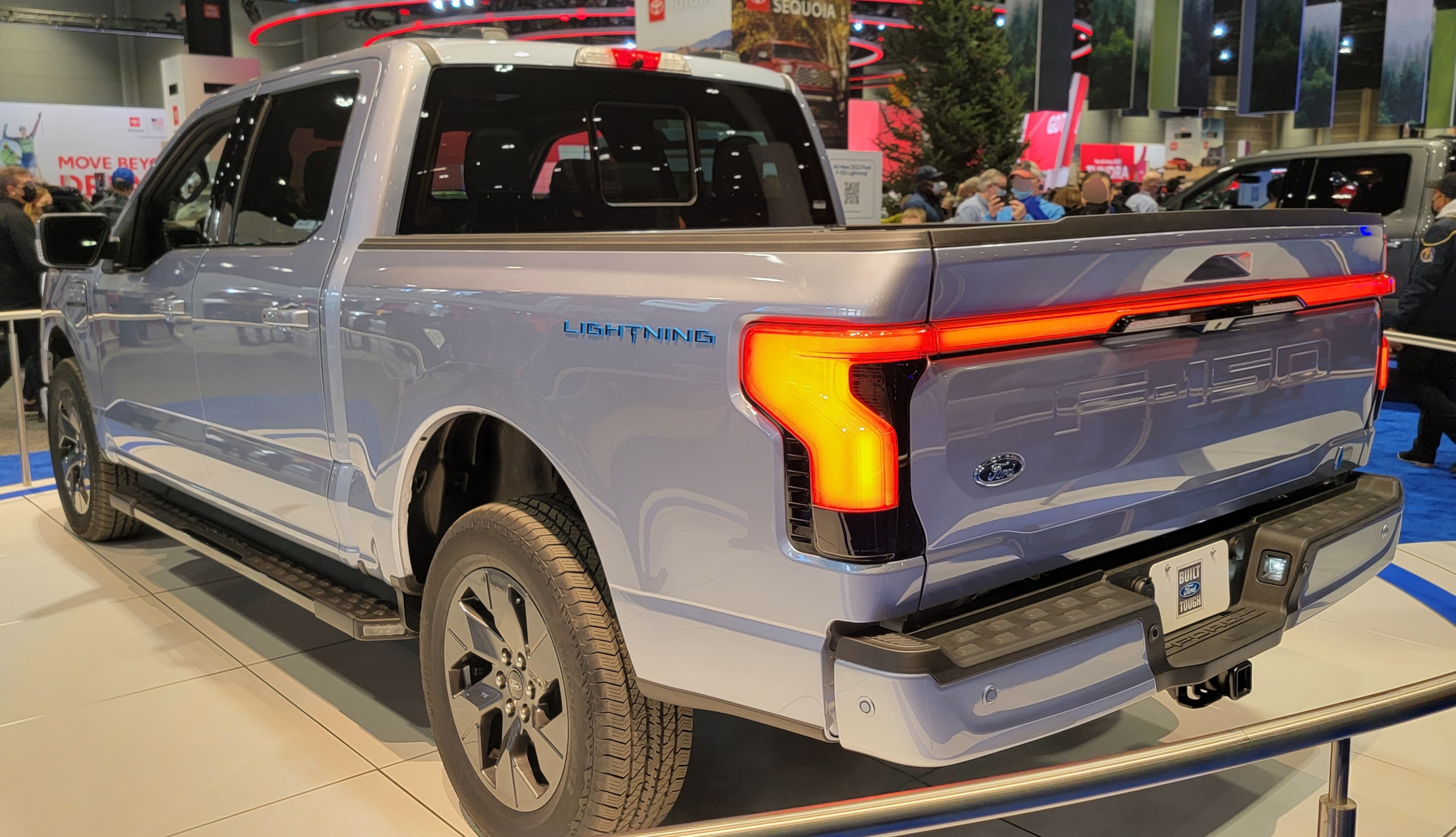
Yeah, I think the Ford F-150 Lightning recently overtook the cyber truck
as the best selling electric truck in America.
My opinion on this thing is that it's styling the pricing
and, you know, the opinions around Tesla severely limit its appeal.
I think the people who wanted one have likely already bought one.
And, you know, in the face of sliding sales,
it doesn't really make sense to raise prices.
Maybe they have a logic that I don't understand, but it doesn't make a lot of sense to me.
Yeah, I think this is a flavor of the month vehicle.
I think you've identified it.
The people who wanted one, they really wanted one and they got one.
There were a lot of people who got on the list to buy a cyber truck
and then backed out. They haven't bought one, which I think is kind of interesting.
Tesla has a lot of incentives now to buy various vehicles, including the cyber truck.
I mean, if you like the thing, this might be the time to step up.
You certainly will get attention on your block if you have one.
But I don't know about the cyber beast either.
I mean, certainly the the regular cyber quote unquote regular cyber
truck has plenty of performance.
But I guess some people want to have the nay plus ultra, right?
Yeah, I mean, if you take everything else about Tesla off the table
and just look at the cyber truck for me, it's too big.
It's too funky looking.
And there are too many compromises made to get to that look for me to actually
think of it as a compelling option in the segment at any price.
Really. Yeah. Well, I'm kind of with you.
I mean, it's a love it or hate it kind of thing.
And I'm kind of on the negative side of that particular vehicle.
And it's it has launched the National Highway Traffic Safety
Administration has launched an investigation of Honda and Acura
engine failures.
And this is a big deal.
More than one point four million Honda and Acura vehicles have a potential
engine defect, and it's a pretty big defect faulty connecting rod bearings
in the three and a half liter V six engines, which are used pretty
extensively through Honda vehicles, cause sudden and complete engine failure.
Not something you want, right, Chris?
It's not. And, you know, as you say this,
this impacts a ton of vehicles.
They've used that three point five liter V six in the Odyssey, the MDX,
the pilot, the Ridgeline and probably others.
But, you know, it's a disappointing thing for it from Honda,
especially since it's been going on for so long.
They've been they've had these issues in the past, not necessarily
with the same crop of vehicles, but with the same engine.
So I hope they're able to figure it out.
Yeah, they've had over 400 complaints recently.
Nitsa has there have been reports of crashes and engine fires.
No injuries or fatalities, thankfully.
Again, as you mentioned, there are other
Hondas with similar engines have also suffered this.
So it's kind of a shame because Honda has a bulletproof reputation.
But this certainly puts a lie to that, I guess, a little bit.
Yeah, I agree. Vinfast is the electric vehicle manufacturer.
It's probably not top of mind electric vehicle manufacturer that is
ending its direct to consumer sales model in the United States.
They're adding franchise dealerships.
And I think it's an interesting move.
I know you're a big fan of direct selling, Chris, your reaction to this.
Yeah, I think for Vinfast, you know, being a Vietnamese company,
they realize that getting traction on their own as a standalone store
is probably not going to be something that they can achieve
within a reasonable amount of time.
I'll also say that I still have yet to see many positive reviews
of their vehicles. So I think that that probably plays a part of it,
including here, opening.
They've had 15 showrooms open in California at the same time.
They're just not getting much traction in terms of sales, as you say.
I think it's vehicle quality is affecting them as well.
So that's going on there.
And the interesting stuff, I guess, a quick note here, too.
A friend of the program and a friend of mine from long back,
Key is Key is Chief Operating Officer.
Stephen Center is retiring, and so I want to wish him well in his new thing.
And he has been a friend from way back from 30 years ago.
Chris, remind us of the vehicle you're testing this week.
I drove the 2025 Hyundai Palisade Calligraphy Night Edition.
I can't wait to tell you all about it.
Can't wait to hear about it.
I'm driving the 2025 Volvo EX40 Twin Motor Ultra.
And so stay with us and we will have road tests of both of those vehicles
in a lot more show when we come back right here on America on the Road.
Thanks so much for being with us.
We do appreciate it.
Welcome back to America on the Road with Chris T.
Jack in the Red Mac with you for road test time.
And goodness gracious, we have some interesting vehicles to talk about.
One, a vehicle that looks vaguely familiar,
or maybe more than vaguely familiar, but it has a different name.
But you have a different vehicle vehicle from Hyundai
that I think is kind of a sleeper in some ways.
And it's very important segment.
Tell us about it. Would you, Chris?
I think so, Jack.
This is the 2025 Hyundai Palisade Night Edition.
This is the Calligraphy Night Edition, I should say.
So this is the darkly styled version of the top trim of the Palisade lineup.
You can get into this vehicle for around $39,000.
The Calligraphy trim is around $53,000.
And the Night Edition with all the additional styling options and stuff
was around $57,000 with options.
Jack, when was the last time you drove a Palisade?
And what did you think of it?
It's been a while, but I have always been a fan of the Palisade.
I think I was on the original launch of the Palisade very, very long ago.
And I think it's been a good vehicle throughout.
I think there's some rivalry, I guess, with the Kia Telluride.
But that's based on the same platform, but I'm a big fan of the Palisade.
Yeah, I think they're both pretty great.
I don't really have many complaints about either the Palisade or the Telluride.
But this vehicle and the Telluride come standard with a 3.8 liter V6.
It's got 291 horsepower with 262 pound feet of torque.
It sends power to all four wheels via an eight speed automatic transmission.
This vehicle can travel, can tow, excuse me, up to 5,000 pounds
when it's properly equipped.
And the zero to 60 only takes around six and a half seconds, Jack.
So for a three row SUV, this is not a super quick vehicle.
This is not one that I would take out and expect to have a thrilling ride in the
canyons, but it is reasonably quick for pulling into traffic for
accelerating up to highway speeds.
And then when you're on the highway, passing is very easy as well
because you've got there's no turbos to worry about or anything like that.
This vehicle is also very quiet and refined on the road.
There's not a lot of wind and road noise.
And it's also able to iron out most of the big imperfections in our roads,
which are just now being repaved after last winter's plows.
It's going to be snowing here in a few weeks, so we'll see how that goes.
Jack, what do you think of the Palisades ride quality
and how it compares to something like your Tahoe on the road?
I think it's more precise on the road than the Tahoe.
Of course, it's smaller.
So I think you have that going with it.
I mean, the Tahoe basically is based on a full size truck platform.
And the Palisade is is much more carlike, I would say, in terms of overall ride.
That's absolutely right.
And I think the benefit here is that you get a lot of the interior space
from a full size SUV, but the ride quality of a minivan or a car
that's a unibody design inside this vehicle.
Come standard with cloth upholstery.
Mine came with leather and simulated suede upholstery.
He didn't ventilated front seats.
Jack, I love the space and across the first two rows of this vehicle.
But I wish the third row was a little bit larger.
What I'll say is that the front seats are very wide.
They're nicely padded and there's good ergonomics so you can see
and reach all the controls in the screens up front.
The second row seats in this vehicle are also heated and ventilated,
which my kids absolutely adored and they get a second sunroof, too.
And there's plenty of room.
And we've talked about captain's chairs, which this vehicle has,
giving extra space between the seats and giving a walkway to the third row.
Even with that, Jack, and I've lost 70 pounds recently,
I still had trouble getting into the third row seat at six feet tall.
And once you're back there, the seat is too low and your knees are too high.
So it kind of feels like you're crunched in.
I think kids will be fine back there,
but I wouldn't count on jamming any adults back there
for any extended period of time.
You get a good amount of cargo space in this vehicle as well.
So the third row seats folded down.
You've got a wide open load floor and plenty of room.
My dog loved it back there.
You get a 12.3 inch touchscreen, a 12.3 inch digital gauge cluster.
No wireless Apple CarPlay and Android Auto in this vehicle, Jack,
which is infuriating for me when I hop in with no cord and to get going.
And we're stuck listening to Sirius XM radio.
What do you think?
Yeah, I mean, in this day and age, we're just so used to that.
It's a big shortfall.
And I ran into that in another Hyundai product
that's in my driveway right now, the Elantra.
And I guess they're going to fix that.
But it's it's a bit of a problem right now.
It is. And it's disappointing, given how great
the rest of the infotainment system is.
We talk at length.
We've talked at length about how great Hyundai's
simplicity and straightforwardness of the infotainment system is.
And then to lack what is now a common feature
and an almost $60,000 vehicle, I think is I'm going to say unacceptable.
But again, they're going to fix it.
So I can't complain too much.
You get a banging Olsen stereo in this stereo system in this vehicle
and plenty more features with with the infotainment.
And then with the safety systems, you get a blind spot
camera system, forward collision alerts, automatic emergency breaking
and the rest, Jack, I think if I were going for this vehicle
and I have recommended this vehicle twice in recent months to people
who ended up buying it, I would go for a middle of the range trim level.
You still get great features, wireless, not wireless,
a sunroof, avocart play, Android Auto, all those things
without the almost 60 K price tag.
Yeah, I think that's wise.
I think that's wise and a good decision.
I like the pal to say it a lot.
I think it's it's terrific.
Well, let's let's talk about the Volvo
X 40 twin motor ultra.
I have to ask the question by another name.
Would it smell as sweet?
Because maybe the new situation is instead of coming out with a new car,
you just name an old car something new because that's exactly what Volvo has
done with the the X 40 twin motor used to be the XC 40.
And now they have a different naming situation there.
But this is still an all electric, small SUV with all wheel drive.
It has modern amenities.
It's a good looking vehicle.
It's just as good looking as when it had a different name.
The Ultra is the top level.
It has a 20 inch diamond cut alloy wheels and a contrasting black roof.
Now, how do you feel about a black roof?
I know you're not a big blackout fan,
but does a black roof work for you?
Yeah, I don't mind that.
My problem isn't with the styling.
It's used to jack up the price and push the vehicle that doesn't get any other changes.
But yeah, black roofs are fine.
Yeah, I kind of like the look of that.
It has a panoramic sunroof with a power sunshade.
So that's good LED headlights.
It's a good looking vehicle all the way around.
It hasn't changed much from when it had a different name.
But I think it was good looking then.
And it's one of those vehicles that doesn't look like everything else, too.
And I think that's good.
It has a minimalist interior layout, focuses on usability and comfort as well.
Heated seats are standard, both front and rear passengers.
It makes sense.
This is a Volvo heated steering wheel, one of my favorite features of all time.
The front seats offer power adjustment and memory settings.
There's keyless entry, good looking ambient lighting,
hence free access to the rear and side doors are good all around.
This is a handy vehicle.
I think it looks good inside.
I think you've had Volvos in the past.
I believe you're a fan of Volvo interiors.
What's your take on this particular interior?
Yeah, I am a fan of Volvo interiors and I am a fan of this vehicles as well.
I think the only downside for me is that Volvo use a gas vehicle platform
to adapt for an EV and there's some trade-offs, you know,
a little bit less rear seat and cargo space.
Otherwise, it's a fantastic space.
Right.
In terms of powertrain, this is a dual motor setup
all-wheel drive with dual motors.
It has 402 horsepower, 494 pound feet of torque.
This is a really quick car.
You wouldn't look at it and go, wow, this is a hot rod,
but in a lot of ways it is.
The system draws from a 78 kilowatt hour battery,
which I think overall is pretty good,
but I will get to range in a minute here.
In terms of performance, it has electronic stability control,
electric power assisted steering, so it feels pretty good.
There's a little sense of weight in this vehicle.
But I don't think it's overpowering to you
and it has pretty good EPA ratings of 94 MPGE combined.
I think that that's actually quite good.
So that's all to the good.
What should you take on the handling of the vehicle?
I think they've done a good job keeping the weight under control.
It doesn't feel big and sloppy like a lot of EVs do.
So, yeah, I think it's reasonably well controlled,
but you do feel it like you said.
Yeah, let's get to range
because that's so important with electric vehicle
or I'm going to ask you how important it is.
275 miles of range on a full charge
with this 78 kilowatt hour battery pack.
What do you think about that?
Is that a reasonable number?
Or would it be better for over 300 miles?
You're the electric vehicle driver.
Tell me your thoughts on that.
I think that number is right
about what our prologue is rated to deliver.
And I've mentioned this before
that we've never achieved that number,
but the number that we do achieve is perfectly fine
for everyday commuting.
I will note that we have a home charger, though,
and I probably wouldn't say the same thing
if we didn't have that.
Yeah, I think it's a perfectly serviceable number for range.
Cool.
It can go from 10 to 80 percent battery charge
in 28 minutes.
That's not super quick, but I guess that's OK.
If you're on, you know, this isn't a vehicle
I would necessarily take on a long road trip.
And you know, having done the Made in America tour
with 500 mile days, that's something that I do.
In fact, we decided not to use this vehicle
for a quick run up to Central California
in fact that we did even more recently,
but that's the way it goes.
It does have, as you would expect from Evolvo,
a ton of safety equipment and driver assist.
It includes pilot assist that helps you drive it,
adaptive cruise control that I enjoy using on the highway,
blind spot information system with steering assist,
lane keeping aid, rear collision warning.
It's got, you know, tons of safety stuff.
Pretty good infotainment system.
It interestingly, it has a 12.3 inch digital instrument cluster
and then a nine inch center touchscreen,
but it is a Google powered system.
That's coming to be the thing, isn't it?
It is and it runs pretty well,
although it doesn't solve the complexity
in Volvos infotainment.
There's still too much swiping and searching for my liking.
Yeah, exactly.
A lot of stuff is buried in that nine inch screen
and that screen in today's market,
it seems fairly small to me.
Let's talk about pricing for a bit.
The suggested retail price of the vehicle I had,
which is again the EX Twin Motor Ultra,
was $60,750, destination charged $1,295,
so the total was $62,000.
I think that's kind of pricey, your thoughts.
It is pricey, but it's not out of the realm
of competitive pricing for the Volvos segment.
I was trying to think of a tactful way to word that,
but yes, it is steep.
Yes, well, and I agree with you
in terms of the electric SUV segment
that I'm fairly spot on.
So a good vehicle, but pricey as we say.
Our special guest this week,
and that he's coming up is Frank Hanley.
He's director of auto benchmarking at JD Power
and we'll be discussing the 2025 Appeal Study.
He's a terrific guest, so stay with us for that
and we'll be right back right here
on America on the Root.
["The Star-Spangled Banner"]
Hi, I'm Jack Arnie-Red,
and I'd like to tell you about my newest crime novel,
Only One Thing Stays the Same.
In a style reminiscent of James M. Kane
and Jim Thompson, two of my writing idols,
the book chronicles of blue collar workers
up and down love affairs
with two modern Southern California women
who continued to surprise, shock,
and ultimately confound him.
As the story unfolds,
an unemployed aeronautics worker named Bill McCurdy
becomes disillusioned with his wife
and slips into an illicit affair
with a teenager from down the street.
Before long, he begins to think
of doing the unthinkable,
but despite his desperate attempts to make things work,
almost nothing goes as planned.
His misguided quest for simple love
doesn't turn out to be simple at all.
And before the roller coaster ride stops,
he learns quite personally and very finally
that Only One Thing Stays the Same.
Only One Thing Stays the Same
is available in Kindle e-book and paperback form
exclusively at amazon.com.
I'd appreciate it if you'd look for it today.
["The Star-Spangled Banner"]
Welcome back, everybody, to America
on the road, Jack Arnie-Red back with you.
We have a terrific guest.
He's been on the show before,
and Frank Hanley is Senior Director
of Auto Benchmarking at JD Power.
Frank, thanks so much for being with us.
We appreciate it.
No problem. That guy's great to join you on the podcast.
We want to talk about the automotive performance,
execution, and layout,
commonly known as the appeal study.
Let our listeners know what that's all about.
Will you, Frank?
So appeal actually looks at customer satisfaction.
So how happy are customers
with their actually new vehicles
at 90 days of ownership?
So it kind of brings out and looks at the passion
that customers are having for their car.
What do they really like about their car?
Where have they found after having the car for 90 days?
Where are they not so happy with their car?
So kind of measure that satisfaction overall
with that the customers are having.
Yeah, it's kind of interesting.
We talked about a month ago about IQ
as the initial quality study,
which is essentially things gone wrong,
I guess, about vehicles.
This is really much more about emotional involvement
with cars and the two lists
are pretty darn different, aren't they?
They are, it's definitely amazing to see how
somebody who would have really poor quality in our study
can still really instill passion on that.
If they get some things right and the customers
really love the styling
and the powertrain's really good,
they can actually still have really high satisfaction
with their vehicles
and overcome some of those problems that they've had.
Yeah, let's look at the stratospheric level
of this thing.
It looks like people are at least a little more
emotionally involved with their vehicles this year
than they were last.
Tell us about that.
Yeah, it was definitely a good year
for the industry overall.
So we kind of measure the scale
that we have as a thousand point scale.
And the industry as a whole,
they'd go up four points overall.
So it's the highest level we've been
since we last redesigned the study in 2020.
So satisfaction among vehicles is definitely
at a high point for the industry
since we last redesigned in 2020.
We also break down the areas of the vehicle
into several different categories.
And in the first time in over a decade,
we've actually seen every single one of those 10 categories
actually saw improvement this year.
So not just are they happier,
but they're actually happier across the board
with every aspect of their vehicle, which is really good.
Yeah, interesting stuff.
It also struck me that something we saw in IQS
is also popping up here.
And that is infotainment systems
and being maybe problematic.
It didn't pop up exactly the same way I think in IQS,
but it looks like people who are getting in newer vehicles,
maybe with more complicated infotainment systems
are encountering more problems.
Talk about that.
No, definitely in IQS we saw with quality
that the customers who got a new vehicle,
so an all new vehicle newly redesigned,
were having more problems with their vehicles
than people who had carryover models.
We also saw the same thing with satisfaction.
So where you would think somebody who has an all new vehicle
that's new styling, new everything versus a carryover
would be much more excited about their vehicle.
We saw they weren't this year,
especially in two areas where you noted,
which was the infotainment system,
where we see their customers are loving the bigger screens
because all screens are getting bigger and bigger and bigger.
But what they're really not happy with
is the complexity that's coming with those screens.
A lot of the controls are moving into the screen,
things are getting more difficult to use
and fine within those screens.
When we actually ask customers where is your dissatisfaction
with these over last year, almost every area of rows,
even simple things like changing the volume on my radio,
people were finding that more complicated.
So definitely liking the bigger screens,
but not the complexity that's coming with them for sure.
Yeah, and beyond just the big screens and complexity,
there's just complexity amount,
the offerings of ability to change driving modes,
to change internal preferences,
to actually reconfigure the displays of a bunch of things
like that that were never offered before or there
and maybe there are more complications than the consumer wants.
No, that definitely personalization level
is definitely getting more and more complicated
with the things you can set.
One of the good things that we did see this year
is a lot of those vehicles do offer vehicle profiles now.
So you actually, when you get the new car, set it up,
you can set up your own profile
and we actually saw the customers that took the time
and actually set up those profiles
so it remembers the thing about everything you like.
They actually did have higher satisfaction with the vehicle.
So definitely would recommend,
if you are getting a new vehicle,
set up that profile,
I think it's gonna save a lot of frustration
for customers in the long run.
With it just remembering things like
where you like to have your seats,
what your favorite presets are,
all that the car will remember for you now.
So definitely set up those profiles for sure.
Yeah, and I think as we go forward, Frank,
we're gonna see AI do that for people
and they won't even have to set up their profiles.
The car will kind of learn who they are and what they do.
For sure.
Definitely, definitely, definitely for the future,
we're gonna see that AI taking more control that way for sure.
It was kind of interesting to me
that Tesla did pretty well in emotional satisfaction,
kind of help drive premium brands overall here.
Certainly Tesla has had kind of a controversial year
to say the least.
Talk about that, would you?
No, I mean, definitely in Tesla
within the quality study we saw
they did have a lot of quality improvements,
especially in the area of software.
And we see where they had those areas
of quality improvements.
They actually saw increased satisfaction as well.
So, you know, big improvements
in their driving assistance systems.
We saw that with, you know,
the customers overall feeling of safety
of the vehicle getting better.
All full of something with the vehicle apps
and the profile set up again,
improvements there with regards to software.
Tesla customers are happier there too.
So definitely they're still leading
in the area of that technology
and continuously updating these cars
and their customers are getting happier and happier
with the learnings that they're getting
from their customers
and implementing corrective actions.
What are we seeing with conventional engines,
internal combustion engine vehicles
versus hybrid vehicles versus plug-in hybrids.
Now we have electric, see a bunch
of different vehicle types that we didn't have
15, 20 years ago.
What have you seen in terms of appeal
among those various categories?
No, I mean, definitely with the battery electric vehicles,
you know, customers are very happy with the powertrain.
I mean, obviously you have that instantaneous
power on demand, you know,
something much more so than you get
with an internal combustion engine
and with a traditional nine or 10 speed transmission
that has to go through all these gears.
You know, you get that power on demand
with the battery electrics.
The thing that was really impressed,
surprising us to this year
with regards to hybrids and plug-in hybrids
was we're definitely seeing customers
getting much more adopted and happier
with the fuel economy they're getting
out of those types of vehicles.
So especially on the plug-in hybrid,
I think customers are definitely starting
to understand you get the best of both worlds there
that, you know, you can plug in the vehicle,
get 30, 40 miles out of the electric engine,
just driving around town,
running to the supermarket and coming home
and not using any fuel,
but then still having that option,
like, hey, if I do need to go further,
I still have the ability to do so
with the internal combustion engine.
So we definitely saw a higher satisfaction
with those two powertrains this year
as I think customers are really understanding
the benefits of having both the gas
and the electric engines available to them.
Yeah, I mean, it seems like maybe
that's becoming a sweet spot in the market,
the plug-ins and just the conventional, quote unquote,
conventional hybrids that are not plug-ins
versus the pure electrics,
which continue to have some issues,
mostly regarding range and charging times, right?
No, for sure.
I think the plug-in hybrids are definitely
are gonna be, I think, a good transition
to go the full electric, you know,
it gives you that, it kind of eliminates
the range anxiety that a lot of customers have
because, you know, if you do run out of electricity,
you have the gas backup that you need.
So I think it's gonna be a good transition point
for, you know, customers who aren't ready
to fully jump into that full battery electric
is way to bridge in between, you know,
these changes that we're seeing going on in the market.
You think we're gonna see that so much?
Are we going to see maybe plug-ins and hybrids
are the ending point as opposed to a transition point?
No, I definitely think, I mean,
I think everybody was ready to jump in,
go full battery electric.
I think we're gonna see a much slower transition period
than what everybody was expecting where, you know,
I think everybody was planning on being
battery electric within the next five years.
I think we're gonna see that go, you know,
much longer than that expectation at this point
just because the infrastructure is not there
and we gotta get over, you know,
this range anxiety that a lot of people have.
I mean, it's a much different driving experience in the US
with the distances we travel
versus other places in the world.
So it's gonna be a little bit slower for the US,
I think, than a lot of the other markets.
Yeah, let's dive into brands that did well.
Start with premium brands and tell us,
I guess there's no particular surprises here,
but tell us about the brands
that are most emotionally appealing.
I mean, Porsche among premium brands
was the top performing premium make this year
in the study, you know, a lot of people would go,
oh, probably not a surprise, you know,
sports car brand ranks is the most appealing,
but when you actually think about it,
their volume models anymore aren't the sports cars anymore.
It's the Cayenne, the Macan and the SUVs.
So, but they're still instilling that, you know,
performance aspect into their vehicles.
And even on the SUV side,
it's really, you know, resonating with customers.
BMW also had a really strong year this year
with their appeal performance,
being the most awarded brand in the study,
you know, the corporation in the study this year.
So very strong performance with them overall.
When we look over that Land Rover,
the Range Rover has now won the award
for the large SUV for the third row in a year.
So a lot of these brands, it's good to see, you know,
they've definitely understood what customers want
and these vehicles that they've designed
are definitely holding out for the long run
and keeping customers happy.
Yeah.
Well, on the mass market side, interesting stuff too.
I kind of a very mixed bag among the top three brands.
No, what we saw there, definitely,
you kind of got between one and two very different aspects
of the mass market brand.
So many was the number one mass market brand,
you know, definitely a very transitional year
for that brand with, you know,
all the models were redesigned this year,
electrification of some of those models,
but many still remain on the top
of the mass market brands followed by Dodge.
And I mean, a large part of that Dodge is still the Durango.
And I mean, that's a model that's been on the market
for a long time at this point,
but still the customers who are purchasing it
really love it.
I mean, that's again, another one of those ones,
you know, big, powerful powertrain
that really resonates with customers.
I have a special affinity for the Durango
because my wife and I just took a Dodge Durango SRT
Helicat around the Midwest.
So we drove it for the better part of two weeks.
So it's easy to get emotionally involved
with 710 horsepower, isn't it?
Exactly.
And that's where they're really, you know,
but every time you hit that accelerator
and you take off, you get a smile on your face
and the rumble of the engine and stuff.
So that instilled a lot of that passion
within customers and makes them happy.
So, you know, really not a surprise
that after all these years Durango still,
you know, really pulling it out for Dodge this year.
And then, I mean, GMC also had a very good year.
I mean, the Hummer EV pickup was actually
the top rated light duty pickup,
which, you know, is kind of a standout
that this year for, you know, pickups,
we actually have an electric pickup
as the top rated pickup in the industry.
So again, that powertrain customers
are who have bought it are really happy with it.
So.
Yeah, interesting stuff, I think,
one of my favorite vehicles,
at least from a styling point of view
is the Volkswagen ID Buzz that scored well.
And I think that's a vehicle
that's gonna put a smile on your face
whenever you walk out the door
and see it in your driveway.
For sure.
I mean, when you look at the minivan segment,
they've definitely kind of, like you said,
you just can't, you see it, you smile, you can't help.
So again, created all that passion around that vehicle
and the icon that he used to stand for with the bus
before now translated into that vehicle.
So really not a surprise when we saw that one,
you know, rising to the top, just,
I mean, it's just so iconic.
You knew customers who bought it,
we're gonna love it for sure.
Really interesting stuff.
Frank Hanley, thanks so much for talking with us.
We do appreciate it, Frank Hanley.
Senior Director of Auto Benchmarking at JD Power.
Always a pleasure to talk to you, Frank.
No problem, Jack, great to talk to you as eyes.
And stay with us, everybody.
We'll be right back right here on America on the Road.
["Metro"]
Welcome back to America on the Road with Co-host Chris Teague.
This is Jack Nierad back with you
at his listener question time.
We love to get your questions and comments.
Love to hear from you.
So send them to editoradrivingtoday.com.
That's editoradrivingtoday.com.
Let's go right to this question from Petey
in Spokane, Washington.
Petey says this, I'd like to change up our car some
and maybe add some performance stuff,
but my wife says she doesn't wanna add,
she doesn't wanna have anything to do with that.
What's your take on tuning a daily driver?
Is it a good idea or a bad idea?
Ooh, I think it can go either way.
Yeah, right.
Automakers spend billions of dollars developing
the most reliable vehicles that they can possibly create
and modifying that, especially on a car
that you have to rely on every single day, is a big risk.
I will say though that there are a couple things
you could probably do that aren't very risky, right?
So wheels and tires are a very good way
to upgrade your performance.
You'll be surprised how much better your car will
handle with a good set of wheels and tires.
Brakes are another thing you can upgrade
that will help your driving experience.
I really wouldn't touch the engine and the tuning
with the computer and everything like that
because then you're gonna get into warranty coverage
and things, so I think you can do it,
but you'd have to tiptoe around and be very careful
of what you're actually changing.
I agree with you totally, and keeping your wife happy
is probably a really good idea for Pete.
Yeah, I forgot about that one.
Yeah, that's a big thing, so.
You have to be doubly sure that anything
you do to that car works perfectly
or you'll never hear the end of it.
You just never will.
That wraps up our show for this week.
My new crime novel, Only One Thing Stays,
the same is now available in both e-book
and paperback form at Amazon.
We'll have links in the show notes.
If you like our show, and we hope you do,
you've stayed with us this long, thank you,
and please pass it on, let other people know
what radio station you listen to, America on the Road.
We would appreciate that, and of course,
America on the Road is available as a podcast,
right, Chris?
Yes, it is.
A quick Google search for the America on the Road podcast
will bring us to you on all the major platforms,
Apple, Spotify, all the others.
Like us, download us, leave us a review.
All of those things help us,
and you can take us with you wherever you go.
We have YouTube and Rumble channels,
so check those out.
Please subscribe to those.
Look for the America on the Road
Made in America tour stuff on our YouTube channel,
among other things.
Our thanks to Mercury Insurance for sponsoring the show,
and to our sports byline network stations for carrying it.
And most of all, thanks to you for listening.
We know you have a lot of choices,
so we are proud and happy
that you're listening to America on the Road,
and we appreciate that.
Please join us again next time
for another edition of America on the Road.
["America on the Road"]
I'd like to tell you about
the most exciting and authentic racing novel
I've ever read.
It's called Closing Speed,
written by award-winning author, Ted West.
In 1970, the Indy 500 pole speed was 170 miles an hour.
But at Le Mans, Vic Alfred's Porsche 917
raged down the mulsins straight at 248 miles per hour.
The racing pit of the Porsche 917 versus the Ferrari 512,
the fastest road racing ever.
And Rodentrack sent a promising new rider,
27-year-old Ted West, to cover it.
He traveled from Brands Hatch to Monza,
the Targa Florio, Spa, the Nurburgring, and Le Mans.
He got to know the races personally
and the women who love them.
The racing was blindingly fast.
Driving horrifically fragile cars at those speeds
took unheard of courage.
That was around every corner
and the drama tensely real every moment.
Closing Speed is the most realistic,
intimate racing novel ever written.
It's a look into the very heart of the sport,
an incomparable racing read.
It's available now at Amazon.
That's Closing Speed by Ted West.
Look for it.
About this episode
The episode dives into the 2025 Volvo EX40 Twin Motor Ultra, exploring its familiar design and features as it transitions from the XC40 name. Co-hosts Jack and Chris discuss automotive news, including Chrysler's new minivan concept for overlanding, changes to EV tax credits, and Tesla's price hike on the Cyber Beast. They also touch on a significant NHTSA investigation into Honda and Acura engines. Frank Hanley from JD Power joins to discuss customer satisfaction in the automotive industry, highlighting trends in emotional involvement with vehicles and the impact of infotainment systems.
This week on America on the Road, we put the spotlight on two 2025 model-year vehicles that represent very different segments with wildly different powertrains but share a commitment to technology, practicality, and style — the 2025 Volvo EX40 and the 2025 Hyundai Palisade.
Leading off, host Jack Nerad delivers a detailed road test of the 2025 Volvo EX40 Twin Motor Ultra. While the name may sound new, the EX40 is essentially a renamed version of Volvo’s previous XC40 Recharge. This all-electric compact SUV features dual motors delivering 402 horsepower and 494 lb-ft of torque, paired with a 78 kWh battery that provides up to 275 miles of range. Its minimalist Scandinavian interior includes heated seats front and rear, a panoramic sunroof, Google-powered infotainment, and a Harman Kardon audio system. With DC fast-charging capabilities and a long list of advanced safety features, the EX40 offers luxury EV buyers a stylish and well-rounded all-wheel-drive package, but is its as-tested price of $62,045 a hill too high?
Next up is co-host Chris Teague’s road test of the 2025 Hyundai Palisade, a three-row SUV that’s become a go-to family vehicle thanks to its spacious cabin, upscale features, and user-friendly tech. Powered by a 3.8-liter V6 engine producing 291 horsepower and 262 lb-ft of torque, the Palisade delivers confident performance through an 8-speed automatic transmission, available in both front- and all-wheel-drive configurations. It earns an EPA-estimated 21 MPG combined, giving it solid range for long-distance travel. Inside, the Palisade offers seating for up to seven, 18 cubic feet of cargo space behind the third row, and a maximum of 86.4 cubic feet with seats folded. It also tows up to 5,000 pounds when properly equipped. Its near-luxury feel, intuitive tech, and extensive standard safety features win it kudos from both Chris and Jack, and they’ll have more in this road test.
This week’s special guest is Frank Hanley, Senior Director of Automotive Benchmarking at J.D. Power. Frank joins the show to break down the results of the 2025 APEAL Study, which measures how emotionally satisfying a vehicle is to own and drive. He explains which brands are connecting with owners on a deeper level and what manufacturers can learn from the data. It’s an insightful and data-rich segment that pulls back the curtain on the psychology of car ownership.
This week’s top automotive news stories:
• Chrysler Gets Rugged with the Pacifica Grizzly Peak Concept
Chrysler has revealed an overlanding-ready concept minivan, the Pacifica Grizzly Peak, at Overland Expo Mountain West. Featuring lifted suspension, all-terrain tires, roof storage, and a reconfigured cargo area, the concept taps into the booming “van life” trend with AWD practicality.
• New Tax Break Replaces EV Credit
A new U.S. tax policy will let buyers deduct interest on car loans for new vehicles built in the United States, replacing the expiring $7,500 EV credit. The deduction, estimated to save buyers about $576 (roughly), applies to U.S.-made gas, hybrid, and electric vehicles purchased between 2025 and 2028, but excludes leases and used cars.
• Tesla Hikes Cyberbeast Price by $15K
Tesla has increased the price of its flagship Cybertruck variant, the Cyberbeast, to $114,990, adding a new “Luxe Package” with Full-Self Driving and Supercharger access. The move has puzzled analysts, as Cybertruck sales remain slow despite massive early demand.
• NHTSA Investigates Honda, Acura Engine Failures
Over 1.4 million Honda and Acura vehicles are under investigation for engine defects that could lead to sudden failure. The NHTSA probe focuses on V6-powered models like the Acura MDX and Honda Pilot, with more than 400 complaints filed to date.
• VinFast Abandons Direct Sales Model
Vietnamese EV maker VinFast is shifting away from its Tesla-style direct sales approach in the U.S. The company has opened its first franchised dealership in San Diego and now has nearly 30 locations nationwide, hoping traditional retail will boost brand visibility.
• Kia’s Steven Center Retires
Steven Center, Kia America’s COO, is retiring after a 46-year career in the auto industry. Widely respected across sectors, Center plans to remain active in the field through consulting and teaching roles.
And finally, our Listener Question of the Week comes from Petey in Spokane, Washington: “I’d like to change up our car some, and maybe add some performance stuff, but my wife says she doesn’t want anything to do with that. What’s your take on tuning a daily driver? Is it a good idea or bad?” Jack and Chris offer their thoughts on balancing everyday practicality with performance upgrades, and whether tuning your daily driver makes sense in today’s market.
Thanks for joining us, and don’t forget to look for new content on our YouTube and Rumble channels. Please subscribe. If you do, we’ll like you forever.