The Honda Passport is a type of SUV made by Honda. It's a bigger car that can carry more people and stuff, and it's now being sent from the US to Japan.
A vehicle assembly plant is a big factory where cars are built by putting all the parts together. BMW builds many cars in their factory in South Carolina.
The National Highway Traffic Safety Administration is a government group that makes sure cars and roads are safe, including new things like self-driving taxis.
Self-driving vehicles are cars that can drive themselves without a person controlling them. They use special cameras and computers to know where to go and what to do.
Autonomous miles driven means how far self-driving cars have gone on their own without a person controlling them. It helps show how good these cars are getting at driving themselves.
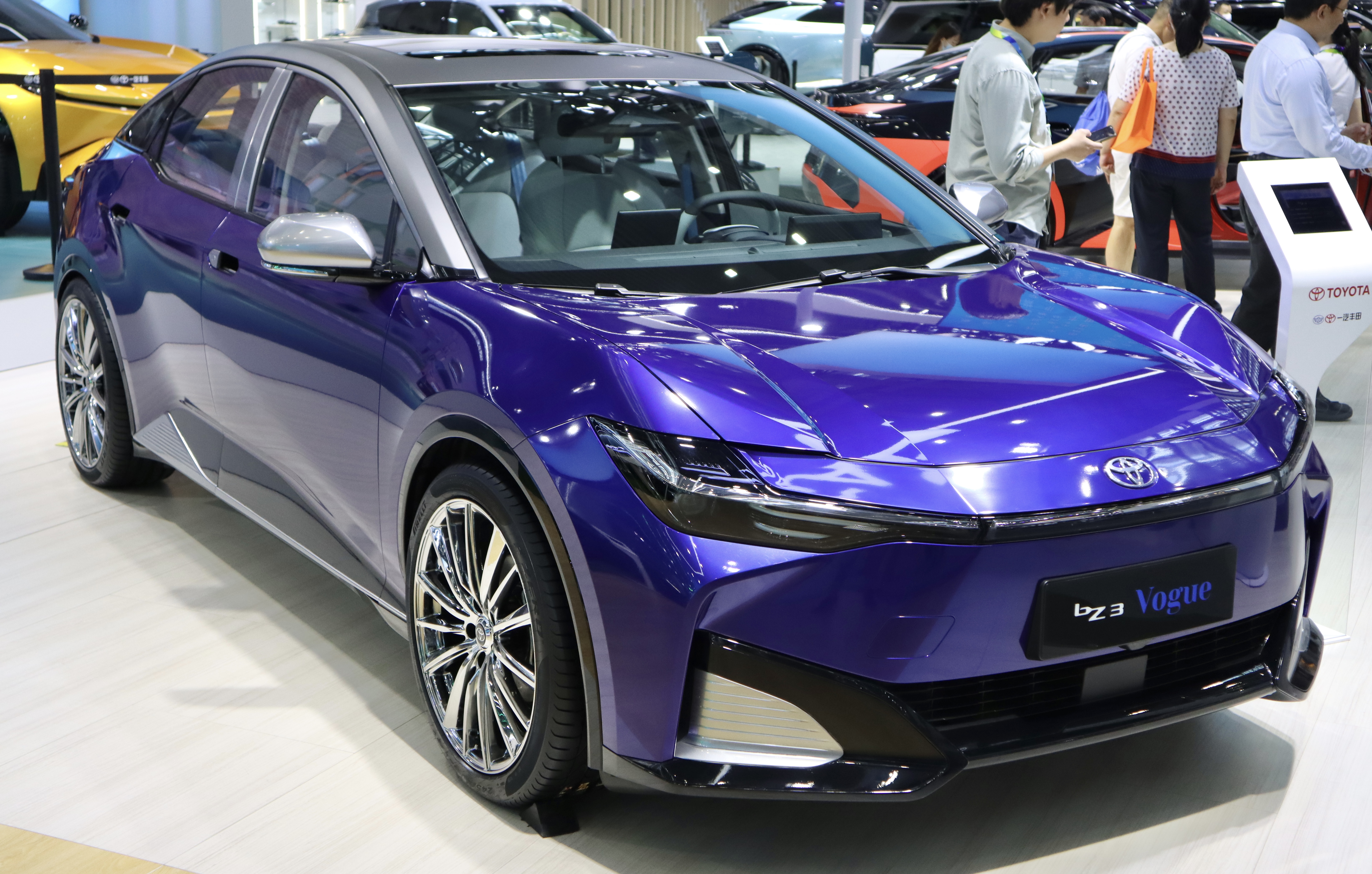
The Toyota BZ is an electric car made by Toyota. It runs only on batteries and is part of Toyota's new electric car lineup.
LIVE
This is America on the Road named Best Radio Show by the International Automotive Media
Conference and now in its 33rd year on the air.
Thanks for being with us as we bring you the latest automotive information from around the
world. I'm Jack Nerad. With me I'm proud to say as co-host Chris Teague, freshly shaven, looking
slick. And I've got to ask this question, Chris. Is spring break in your neck of the woods coming
up? Are you there? What's going on in spring break? We actually split spring break into two,
so we have a week in February and then a week in April. So not quite yet, but I shaved because
we hit 60 degrees yesterday and that was my benchmark. Okay, you're not in shorts yet are you?
No, my daughters were today though. There is also plenty of automotive news beyond the
Chris Teague family news. Honda is sending US-built vehicles back to Japan. The Acura
Integra Type S and Honda Passport will soon ship from American Plants to Honda's home market,
so we'll talk about that. But there is a big question here. Which automaker exports the most
vehicles from the United States? We'll give you the surprising answer about which brand tops that
list coming up. Federal regulators are taking a closer look at robo-taxis. I have a close look at
them over the weekend in Phoenix, Arizona. Kind of crazy the amount of robo-taxis there.
They had a big meeting on that with NHTSA, so we'll talk about that. And
Silantis is making yet another leadership change. There is a new Dodge CEO and he is also going to
lead the Chrysler brand. I guess the newness is with Chrysler rather than with Dodge.
What's your prediction for Chrysler there, Chris? I don't know. I hope they pull it out,
but with the V8 now back in the lineup, you can never rule out another 300 or something like that.
Might happen. We'll see. American on the Road is brought to you by drivingtoday.com.
EMLancy.com, the publisher of my latest book. Only one thing stays the same. And Mercury Insurance.
If you're looking to save some money, you should switch to Mercury for your auto and home insurance.
California would save an average of $670 with Mercury. So imagine how much you could save.
Get a quote today at drivingtoday.com slash auto insurance. That's drivingtoday.com slash
auto hyphen insurance. And Chris, what is your test vehicle for this week?
I spent the weekend luxury in the 2026 Lincoln Navigator. I can't wait to tell you all about it.
I was in smooth quiet. I guess you could call it luxury too. I was in the 2026 Hyundai Ioniq 9
and all-wheel drive version of that. Pretty interesting vehicle. Our special guest is Cameron
Creighton. He's an expert on the 2026 Toyota CHR and BZ Woodland. So I think you'll enjoy our
interview with him. So stay with us and we'll have tons of show coming up. We're glad you're
with us and stay with us. We'll be right back right here on America on the Road.
Welcome back to America on the Road with Chris T. Jackney Radmack with you.
It is news time on America on the Road. And I think Honda's been getting a lot of play out of the
fact that they're going to export some U.S. vehicles to Japan. This has got a lot of interest in the
media. Something that certainly I think we might have even talked about before. But in the second
half of 2026 Honda will ship the Acura Integra Type S and Honda Passport Trail Sport Elite
to Japan from its American assembly points. The interesting thing to me, Chris, there's
many interesting things about this and it might be more symbolic than anything else. But these
will be left hand drive vehicles, which makes them not all that useful in Japan. I really can't
imagine having a left hand drive vehicle in Japan. Maybe a right hand drive vehicle in America is a
lot easier than a left hand drive vehicle in Japan. What's your take on all of this?
Yeah, I can see the Integra is probably the smallest vehicle that they're going to be
exporting in this deal. And even then, it's larger than a lot of the vehicles on Japanese roads.
And as you say, a left hand drive vehicle would probably limit its or a left hand drive configuration
probably limit its appeal. But I don't know. I can see that being, like you said, symbolic,
but also maybe helping kind of correct some of the trade imbalance with vehicles that we have.
Yeah, it is a giant trade imbalance. That is for certain. This is some context for that.
Japan exported roughly $34 billion in vehicles to the United States last year in 2025.
And they imported less than $1 billion in return. I think it's probably way less than $1 billion
to tell you the truth because there's very few that I can even think of that would be out there.
So I don't know that this is going to big time affect that trade imbalance. And
one can also argue whether that's a problem or not a trade imbalance. But certainly,
we love to have American workers creating vehicles for the world. So that's good.
Yeah, absolutely. I mean, I hope it works out for them. I hope they see some traction enough to
keep it going, maybe even to convert some to right hand drive. Who knows? I don't actually
know if they sell any of these vehicles like the Integra in Japan. Do you know? Is the Integra US
only? Yeah, Integra had been US only up until now. This will be the first Acura over there. I think
they sell the Integra as something else. A Honda, yeah. Yeah, as a Honda brand. Or Honda has multiple
brands there that are invisible to us, I believe. So it might be one of those. Yeah, I stumbled into
the Japanese auto advertising algorithm on Facebook a while back and the range of Mitsubishi's and
Daihatsu's and Toyotas that you can get there is just amazing. So I hope they can do it. Right,
it is a mindblower. Well, we asked, we kind of teased the question, what is the US brand that
exports or what is the brand that exports the most vehicles from the United States built in
the United States to foreign countries, which I guess is what exporting is, isn't it, Chris?
And it is BMW, which I think a lot of people wouldn't, off the top, they probably think
General Motors, Ford, something like that. But it's actually BMW. BMW manufacturing in South
Carolina exported nearly 200,000 vehicles from its Spartanburg plant last year. That was worth
about $9 billion. They're going all over the place, nearly 120 markets around the world. I think
that's where they build all their SUVs. I don't know that they even build SUVs in Germany. Maybe
in South Carolina. And also, that is their biggest plant ever, you know, anywhere,
which I think is interesting too. These exports go through the Port of Charleston,
beautiful city, by the way, too. And they go all over the globe. I think it's a pretty cool thing,
don't you think, Chris? I agree. I've been to the factory and I've lived in South Carolina briefly
for a little bit and the people there are very proud of it. They love the location there.
The Port of Charleston is a great place to ship vehicles out of. So I think it's a good arrangement
for BMW and the people that work there. Yeah, it's terrific there. My middle daughter and I
once attended a driving school, a BMW sponsored driving school that took place right across the
street. I think they have a driving course and all that stuff from that factory. So that was pretty
cool. They have assembled more than 412,000 vehicles in 2025. That's what they assembled
in that plant, which is a huge number. I mean, that's a big number, especially it's a big number
for a luxury brand. So that is interesting. And as I say, they're sending them all around the
world. They employ 12,000 workers. It makes me wonder how German drivers feel about American
built BMWs versus American drivers viewing their German built BMWs. Yeah, and I'm wondering how
Americans feel about American built BMWs. I'm not sure that a lot of them are hip to the fact that
they're driving a vehicle that's built in South Carolina, as opposed to, you know, somewhere
overseas. Here's a question or kind of an issue. And I came to fore when I was in Phoenix recently
where robo taxis are all over the place, including picking up people at the airport right and left.
It's kind of crazy how many Waymo robo taxis are going on the streets of Phoenix. But the National
Highway Traffic Safety Administration has just hosted a vehicle safety forum about robo taxis.
I think there's some safety issues still about them. I kind of wonder too. I mean, when I'm
driving next to one or behind one, I'm kind of wondering what's going on. I kind of followed
one for a while just to see how it drove. And it strikes me they go up to red lights pretty
quickly and then kind of nail the brakes a little harder than maybe I would want to do it. I'm not
sure whether they had somebody aboard then or not. But I'm curious as to your thoughts about all of
these robo taxis we're seeing. Well, we've seen fewer reports of crashes and huge disruptions
caused by these cars. Doesn't mean they're not still happening, but the reports are certainly
fewer and further between. But I've seen recent videos of robo taxis driving in between firefighters,
you know, spreading a hose onto a fire in between police and a standoff and all sorts of things.
So I think there's some refinement left to do. And, you know, I don't blame the feds for taking
a look at it. I do think that there are a lot of people who desire or prefer that sort of
transportation over a traditional taxi because there's nobody to talk to. So I don't know.
I don't have a huge problem with it. I just want it to be safe.
Yeah, I'm right with you. I want it to be safe too. It's interesting to me that
so many people don't want any interaction with a driver these days that they would prefer to be
in a vehicle that drove itself as opposed to talking to somebody. I guess you don't really
have to talk to somebody when you're in an Uber or one of those vehicles. But I kind of say hello
to them and try and have a little banter with them. I do too. Yeah, I don't have a huge issue with
it. I don't want to give my life story in the backseat of an Uber or a taxi. But, you know,
I more ask about them. I kind of do an interview of them. And maybe they like, I think a lot of
people like talking about themselves. Yeah, and something they know about for one thing.
Waymo has reported more than 200 million autonomous miles driven. They give about 400,000
weekly rides. I mean, this isn't a small thing anymore. This isn't just this kind of oddball
experiment going on here and there. I mean, this is very big already and could be much bigger.
And I think Congress is looking to figure out what we should do to regulate it or not regulate it.
Your thoughts on that? Yeah, I mean, I guess the more miles they travel, the better they get,
right? Because they're just building this database and library of knowledge and things like that.
And I don't think they should be banned. I know I've had my doubts about them in the past. But
I do see them operating, like you said, in a limited situation like Phoenix or some city where
they're very well mapped roads. I don't have a problem with that. Yeah. Well, I think they run
into issues in bad weather. And like you say, in unusual situations, like a police activity or
something like that, that could be a problem with them. Let's talk a little bit about Chrysler.
They now have a new CEO, Matt McAleer, who's been on our show. We've talked to him several times.
Dodge CEO is now assuming the head of the Chrysler brand, which is pretty small these days,
right? Basically a minivan. A minivan with two names on it, but essentially one minivan. And then
he also runs Alfa Romeo operations also kind of small here. There's some shrinking going on at
Stellantis, right, Chris? Yeah. I mean, they've got a lot of brands, they've got a lot of people,
and they've got some of their brands that aren't doing so well, as you mentioned Chrysler. And so
I think it's, you know, a leadership change is not that surprising at this point. Yeah. We'll
have to see what goes on. Of course, Chrysler has a proud name. Walter P. Chrysler is a
wanted name in automotive history. Again, Chris, remind us of your road test vehicle for this week.
I had the 2026 Lincoln Navigator. Very, very cool. I will be talking about the 2026 Hyundai Ioniq 9
in all-wheel drive trim. So we're glad you're with us here on America on the Road. We're going to
have road tests when we come back. So stay with us for that, and we'll be right back right here
on America on the Road.
I received a letter from Rita this week, and I thought I'd share it with you. Here's what he
wrote. I just got around to reading Dance in the Dark and wanted to say how much I enjoyed it.
I'm a compulsive reader, and this one was right up my alley. An unlikely hero,
a lot of twists and turns, some adult content, and humor that rose naturally from the action.
Keep on writing, and I'll keep on reading. Of course, that's just the kind of letter
any author would love to get. I hope that others get the same enjoyment from reading Dance in
the Dark, and my newest crime novel, Only One Thing Stays the Same. Both are available exclusively
at Amazon.com. That's Dance in the Dark, and Only One Thing Stays the Same, both written by me,
Jack R. Neyred. Thanks for looking for them today.
Welcome back to America on the Road with Chris Teague. Jack Neyred back with you. It is road
test time, and Chris, you were driving a large luxury vehicle from an American manufacturer
actually named for a president of the United States. I haven't been in a Lincoln Navigator for
a long time, so I'm eager to hear about it. It's interesting. This is the second or third one I've
had in the past probably five years or so, but the 2026 model, it was updated in 2025, so 2026 is
kind of a carryover. You can get into this vehicle for around $94,000, and so, you know,
for those of you keeping track, that's not cheap by any stretch of the imagination.
That's for the base premiere trim. I had the mid-range reserve trim, which with a few options
came out to about $111,000. You can get the black label, which is like the super custom model,
for around $122,000 after destination, and then options are on top of that. So,
you know, six figures probably, no matter how you cut it with options. I think that's probably the
story here, but you get plenty of power. I want to get your opinion on this, Jack. It's a twin
turbo 3.5-liter V6, 440 horsepower with 510 pound-feet of torque. This is not a super quick
vehicle, but what do you think about those numbers in a luxury SUV of this size? I like the numbers.
You know, I might like the numbers better, me being old school, that they came from a
5-liter V8 engine as opposed to a turbocharged engine, but it seems to work just fine.
It does. It feels pretty lively off the line. You have a 10-speed transmission,
automatic transmission, and four-wheel drive here. I did not go off-road and test this vehicle
on the trails. I was very afraid of bumps and bangs, excuse me, but the ride quality is extremely
lush in this vehicle. I think that, you know, we have now a pothole report in Maine now that the
roads are kind of thawing out a little bit, and driving my daughter to the ski mountain on the very
unpaved or very gnarly paved back roads, she remarked that she didn't feel anything and wished
that we had this vehicle as opposed to our Land Rover Defender, which has air suspension. So, you
know, just to show you what the ride quality is like there. I mentioned, as I mentioned, 440 horsepower,
510 pound-feet of torque, plenty of power for this vehicle. You're not going to win any drag
races, but it does not feel slow, and it's also not loud. So, the engine feels very isolated from
you in this vehicle. It's very quiet, very cocooning, so I wouldn't call it a hot rod by any means,
but again, it doesn't feel slow. You get Ford Blue Cruise with this vehicle too, so you have
hands-free adaptive cruise control on limited-access highways and some other highways,
and this vehicle also has power running boards, so there's never any climbing in and out,
never to inconvenience you getting in or out of this vehicle. Inside, you get seating for up to
eight people. You get three rows with a power-folding third-row seat. The reserve trim has premium
leather. I could not tell you what that means over base leather. I haven't tested the base model of
this vehicle, but it has heated and ventilated first and second-row seats and massaging first
and second-row seats, as well as captain's chairs, which I've said many times that I love for people
with children. It keeps your kids further apart. They have their own space, and you can kind of
access the third row easier or your cargo space. My dog likes it because when he's not strapped down,
he can walk back and forth and say hello to everybody. The front seats are extremely comfortable.
I think they're like 30-way adjustable seats in this vehicle, so you have thigh rests and adjustable
bolsters and a headrest, and everything is adjustable, and they're very wide, deep, and nicely
supportive. Did you like the way they worked? I remember some issues with those. They adjusted
so much, I didn't feel like I could ever adjust it properly for me. I will say that there are so
many settings that it takes a while to dial it in, but once you do, you have a memory seat that you
can figure it out. Lincoln has revised its seats. The last navigator I tested was probably in 2020
or 2021. Those seats, even though they were just as adjustable, didn't feel as coddling or as well
padded as these do. I think there's been some revisions there that make them a lot better.
You get plenty of space. Obviously, the front seats, you can stretch out, and there's never an
issue with head or leg room for even taller people. You also have a panoramic sunroof in this vehicle,
and there's a digital synth system that I really enjoyed. I don't know. It's kind of a gimmicky,
but you get like an alpine synth and a vanilla lavender synth that you can program in that comes
in through the ventilation system. What do you think about that? I think it's probably better
than it sounds, right? It does sound gimmicky to me. I'm not a big air freshener kind of like
scented air freshener guy. Maybe we should be. I don't know, but I can see why that might be kind
of fun. Well, it's a lot more subtle than the green pine tree hanging from your rear view mirror, but
the big story in this vehicle, and this came out last year with the navigator, is the 48-inch
display that stretches from the front window pillar all the way to the other window pillar.
It contains your gauge cluster. You have a media display, and you can configure the other displays.
Mine had like the trip information, so fuel economy and then weather. And when you're looking at it,
you know, 48 inches, it's very far away from you. I'm pointing out you can't see it on the radio,
but it's very far away, but you have a wall of information in front of you, and you have an
11.1-inch touchscreen below that, where you control the media and some other things. Wireless
Apple CarPlay and Android Auto, Serious XM radio, and a Rebel audio system. I think it's like 19
speakers or something crazy like that. Sounds fantastic, and it's run on Ford Sync. So everything
kind of makes sense, even though there are a lot of digital things here. So, Jack, I think this
vehicle for me is outrageously priced. I couldn't imagine spending six figures on a vehicle, but
if you're in the market for a luxury SUV, I think it's kind of down to a full-size luxury SUV.
I think it's kind of down to this, or the Cadillac Escalade. And I'm personally a Navigator fan.
I don't know how you feel. Yeah, quick question. Does it have a head-up display, or basically,
is it the situation where it's got the high-mounted display? Oh, it has both. You have both.
There's a lot going on. A lot going on. Well, you should get a lot for six figures, I guess.
I am going to try to quell my skepticism, as I review the Hyundai Ioniq 9 skepticism just
about electric vehicles, because I think this is a pretty good family-focused vehicle, and maybe
what a family-focused electric SUV should be. Three rows of seating. It has a big battery pack,
so a lot of range. Over 300 miles of range. Styling? Well, that's up to you. I mean,
this is drawing from the school of electric vehicles need to look different than conventional
cars, I think, by a lot. I'm not necessarily a fan of how this one looks, but again, I'm trying to
quell my skepticism. And I think maybe you like it, right, Chris? I'm a little bit less enthusiastic
about it than I am about the Ioniq 5, which I really like. It's just a little awkward to me.
Yeah, okay. Well, then we're kind of in agreement on that. This does have a lot of room. It is a
three-row SUV, so it's right in the middle of a very important segment. It does have all-wheel
drive, a generous amount of standard equipment. I think the driving range is fairly reasonable for
an electric vehicle. I'll get into charging a little bit, and I even think it's priced pretty
well. So go figure. I mean, compared to the Lincoln Navigator, this is an incredible bargain
for a three-row vehicle. Of course, it is not a luxury vehicle and not nearly as large, but
the Ioniq 9 lineup starts at about $60,000. That's for a rear-drive S model. Many people will
probably not buy that. Many people might. And then it goes up to close to $80,000 for the
performance calligraphy design. This is right in the middle, about $67,000, $68,000. And heaven
knows, $68,000 is a lot for what is essentially kind of a mid-size SUV, but in the overall scheme
of things for an electric, I don't think that's too bad. What's your kind of, from 35,000 feet
level, how do you look at the Ioniq 9, Chris? I don't think it's badly priced for a three-row
electric SUV, but I do think it is a steep price for a Hyundai that people are expecting more value
from. There you go. I think that's a good way to summon up. For families who are looking to shift
to electric, I don't know how many there are out right now. This is probably a very good choice.
It uses the dual-motor all-wheel drive system. One motor drives the rear axle, the other powers
the front. That makes sense, rather than doing, say, left and right. I don't think that would be
nearly as good. 303 horsepower, which isn't a ton, but plenty of power. And of course,
torque is there instantly, so acceleration is smooth, quiet, effortless. It just feels good.
You can get into this and go pretty fast, at least go quickly. It has a multi-link rear suspension,
so it feels pretty good. You can control the regenerator of braking through steering wheel
paddles. So if you want a ton of that, you can get it. If you don't want so much, you can get that,
too. It does have various drive modes, eco, normal, sport, snow. You can customize one if you have
plenty of time on your hands to mess around with something like that. Let's talk quickly about
range. I mean, 300 miles of range, I think, is pretty good. And a lot of 320 miles of range.
You're an electric vehicle driver. How do you feel about that? And about the 40-minute charge
time from 10 to 80, that's the thing where, well, maybe it's shorter, actually. It could be as
quickly as 25 minutes, which is a lot better than 40. In fact, I guess I've got conflicting
information here. But if it's as quick as 24, that's not too bad, but still half an hour
sitting there doing. If you get on the charger, tell me your thoughts, Chris.
I think 320 is a solid number for a 3-row SUV. And if you need to travel beyond that,
if it is able to charge using the 800-volt architecture that quickly, I think that's
not a terrible ask for an EV these days. So this is a comfortable vehicle with a ton of tech.
I think there's a lot to like about it. I think it's priced fairly well, actually,
in this. So I think it's one to look at if you're concerned about buying an electric vehicle
for your family and you like its looks or they don't offend you. I'd say step up to the
Hyundai IONIQ 9. I think there's a lot to like about it.
Yeah, I should clarify. I think it's a mix between the IONIQ 5 and the Hyundai Palisade
in terms of styling. And it's a little jumbled, but it doesn't look terrible. I don't have a huge
problem with it. Yeah. A lot of safety equipment. So a lot to like, as I say, and have a look.
And when we come back, we will have a terrific guest. Cameron Creighton is the expert on the
2026 Toyota CHR and BZ Woodland. So stay with us for that. And we'll be right back right here
on America on the Road.
I'd like to tell you about the most exciting and authentic racing novel I've ever read.
It's called Closing Speed, written by award-winning author Ted West. In 1970,
the Indy 500 pole speed was 170 miles an hour. But at Le Mans, Vic Alfred's Porsche 917 raged
down the mulsins straight at 248 miles per hour. The racing pit of the Porsche 917 vs. the Ferrari
512. The fastest road racing ever. And Rodentrack sent a promising new rider, 27-year-old Ted West,
to cover it. He traveled from Brands Hatch to Monza, the Targa Florio, Spa, the Nurburgring,
and Le Mans. You got to know the races personally and the women who loved them. The racing was
blindingly fast. Driving horrifically fragile cars at those speeds took unheard of courage.
That was around every corner and the drama tensely real every moment. Closing Speed is the most
realistic intimate racing novel ever written. It's a look into the very heart of the sport,
an incomparable racing read. It's available now at Amazon. That's Closing Speed by Ted West. Look for it.
Welcome back, everybody, to America on the road. Check me read back with you. We're outside
Ohio, California. Maybe we're inside Ohio, California. In any case, we're at a terrific
place where we're getting the opportunity to drive a couple really fascinating cars.
The BZ from Toyota and the CHR, also a Toyota vehicle, both 2026 model year vehicles. Let's
start with the CHR, shall we? Really interesting take. Here's a vehicle that had a particular
persona and now has a completely different persona. With me is Cameron Creighton, who is an expert
on both these vehicles. And number one, I should thank you for being with us. And tell us about
the CHR, how it's changed. So the CHR, as you may remember, was an entry level,
compact SUV that we used to sell in the United States. And we're bringing it back as an all
electric SUV with a little bit different positioning. But the overall vehicle concept,
the shape, the coupe high rider, the concept still stands in the current BEV form.
Tell us a little bit about the vehicle. I'm really curious about the positioning of this
and curious about why the CHR, as opposed to naming it something else. But first,
tell us about the vehicle because it's a fun to drive vehicle and really interesting.
Yeah. So the CHR BEV is the entry into our BEV lineup. And so, you know, it's the, we would
position it as kind of the sporty alternative for the younger customer, for the city, for a city,
more of a city lifestyle, if you will. But it's really that vehicle for someone that
wants something a little bit more nimble, drivable in the city, that kind of fits their lifestyle
more. So tell us about horsepower, power, that kind of thing. I mean, it's a fun to drive vehicle,
super smooth. I mean, a lot of technology in the vehicle. But, you know, give us some specifics
about the vehicle. Yeah. So the CHR is available only with all-wheel drive. So that means, you know,
it'll have the dual motor setup with 338 horsepower. So it really has a very sporty drive and it's very
quick off the line. And so kind of fitting with like the body style, the sporty styling. Also,
the driving is also sporty. Yeah. Really fun to drive, very planted. Tell us about the safety
equipment and advanced driving assistance. Yeah. So same with BZ, same with BZ Woodland. CHR will
have the TSS 3.0 system. So that comes with, you know, there are adaptive cruise control, lane
centering, pre-collision, all of the safety systems that come standard on our Toyota models.
I think Blind Spot and Rear Cross Traffic is not part of Toyota Safety System 3.0. But yet,
it's on all these vehicles. Explain that to me, would you? On CHR, the Blind Spot monitor,
it's standard. So every CHR will have that system standard. Yeah, it's not technically a part of
the TSS 3.0 suite of technology, but every single CHR will have that. Tell us a little bit about
pricing and where this is positioned versus our position of the course, industry term,
you know, where, you know, who you think is going to buy this, what it competes with, those kinds
of things. Yeah. So the CHR is kind of in an interesting segment. So we segmented, or we would
call it a small SUV. The vehicles that immediately come to mind are, you know, like the Kia Niro,
you know, Nissan Leaf, but also, you know, on the high end, even, you know, a Kia EV6
or IONIQ 5, it kind of plays in the middle of those segments. And the pricing. Oh, and the pricing,
it starts at $37,000. So, you know, really a great value, you know, for a vehicle in that segment,
with that power, you know, the handling and the horsepower. I think the vehicle we tested,
prices tested was maybe $42,000. It was an XSE, I think, with tons of equipment. Yeah. So all
that kind of stuff. Just a very fun to drive. And I think people who have not driven battery
electrics will just be blown away by the smoothness and quiet of this vehicle. Talk about that a
little. Yeah. Well, of course, you know, BEVs have the inherent quietness, having the electric
powertrain. But of course, you know, the engineers went the extra step to make sure that, you know,
when the, since there's no electric or there's no ice motor, that everything around it, the
wind noise and the road noise is also quiet. Why don't we switch gears and talk about BC Woodland?
Really interesting vehicle, again. So you've got vehicles kind of at different ends of the
spectrum. So you have CHR on the sporty side, more urban, the younger, more sporty. And then you
have Woodland on the other side that's, you know, more for off-road, off-road-ish, off-road light,
I should say. Also for more adventure lifestyle, you know, people that like to ski, snowboard,
kind of a more active outdoor lifestyle as well. And the product, of course, you know, echoes that.
Well, tell us about that. There's a lot of very visual cues that this is kind of an off-road-ish
kind of thing, right? And I'm proud of you for acknowledging that this is not a heavy off-roader.
But a lot of people, it's just like that look and, you know, that sense that
they could go off-road and they certainly could. Tell us about it.
So right now we're actually seeing a big market for this type of vehicle. You know,
basically we say getting to the trailhead. But actually the BC Woodland offers good capability.
So there's available all-terrain tires, a no-cost option. And it's really, really capable. There's a
capability with X mode. So it allows you to traverse some more difficult landscape.
But I've driven it myself and I was very impressed with the capability.
I think we're going to get a chance on an off-road course here in the next maybe
few hours or something like that. Maybe tomorrow, maybe never.
At least on this trip. But we'll see. Rain kind of interrupted that on this particular event.
But tell us about horsepower. This is a very quick vehicle,
even with the big tires and all that. So BC Woodland is quick. So it has 375 horsepower.
So there's a larger motor on the rear. One that gives it additional capability.
But it also just makes it quicker. It's very snappy off the line. Very impressive.
I think in the presentation or in the walk around this morning they talked about it being rear biased.
Does that mean, does it operate as a rear drive vehicle most of the time? Or is it front drive
with, you know, kind of rear drive type handling?
So basically the power is sent to the wheel that needs it.
Both motors are the same size. So the front is I think 167 kilowatts, plus or minus.
But both motors are the same. So you can have a rear drive feeling or you can have more of a front
drive. Just depends on where the power is needed in the moment.
How did you decide, you know, BC has been in the market for a while. It was introduced to
really as busy 4x. One of a really, really difficult vehicle name for a lot of us.
It's hard to type among other things. But that's not a big issue. I think maybe
being memorable, it was a bigger issue with that. You kind of simplified that to BZ.
So walk us through the BZ line or, you know, this electric vehicle line.
So as you know, we've got three vehicles. We have the now BZ, formerly known as the BZ4x,
which is we would call it kind of the core of the lineup. And it has a wide range.
So BZ has two batteries, you know, a smaller battery and a larger battery.
And prices ranging from I believe 34,000 to 45,000. So it's the largest kind of price range
and availability of our lineup. So we kind of anchor that in the middle kind of the center.
And then you have kind of the branches. You have CHR on the sporty side, MSRP starting at about
$37,000. And then you have BZ Woodland on the other side, which, you know, BZ Woodland
kind of starts where BZ Limited all will drive kind of ends. And so kind of thinking about that
in terms of the kind of the tree and offering kind of a flavor for everybody.
When you're going over that, it struck me that I should have asked you about range for these
vehicles too. And let me put it this way too. Range is kind of interesting because it's a
number a lot of people cite, right? And once you own a BEV, and my partner on the radio show does
own a BEV, it becomes less material because enough range is enough, right? But talk about that and
tell us, you know, where you are. The BZ with the standard range or with the smaller battery
has 236 miles of range. So that's the price entry leader for the lineup. And then you go up to the
BZ, the normal with the larger battery, believe it's 77 kilowatts, has a max range of 314 miles.
So that would be, you know, our range leader in the lineup. And then CHR, I believe the range
would be 287, if my memory serves me correct, for the starting with the SE. And then the
BZ Woodland would be 281. But, you know, we feel that these vehicles have very competitive range,
especially the BZ. Coming from the BZ Forex to the BZ made massive improvements, you know,
the battery chemistry and the technology to make it more.
And you made the charging times.
Yeah, the charging times now, what is it, 10 percent or 0 to 80 percent in about 30 minutes
or so, which is a large improvement. Also battery preconditioning, so to get the battery
ready to charge as well, which also helps, you know, speed up those charging times.
I want to talk to you about a product development question, right? Because I mean,
this has probably been one of the most difficult products to develop in that the environment
in which it's being introduced is way different than it was maybe when it was being developed.
I got to believe these vehicles were developed well before we were going to see the end of the
$7,500 tax credit. And suddenly that happened. How did that affect what you're doing and what
you've done and what you're going to do going forward? Yeah, that's a great question. Because,
you know, with the changing, you know, environment, you know, we're always having to look at what
the market is doing and making sure that we're aligned with what the market is doing and how
it's evolving. But, you know, even with the changing conditions, we still see that there's a market
for BEV vehicles. And, you know, Toyota, we're a full line manufacturer. So, you know, we,
you know, need to be or want to be in all of the all of the segments that, you know, consumers
are participate or are buying in. So, you know, with our BEV lineup, we're offering something for
those that want a BEV in our lineup. It makes all the sense in the world. And you have other
markets in, you know, Toyota has to sell these vehicles in other markets, too, where things
are quite different, aren't they? Yes. Yeah. When can folks expect to see these vehicles in the
marketplace? So, BEZ, of course, is on sale now. So, it's available right now at Toyota dealerships.
The CHR and the Woodland should be available, I believe, end of March or early April.
Okay. But very soon. Yeah, very soon. What's your favorite feature of the BEZ Woodland?
Oh, that's a good question. I would say probably the X mode. Yeah, the X mode was very impressive.
I tried it the other day. And there's a few modes, and I can't remember off the top of my head
all of the different modes, but I know there's like a mud and dirt mode. There's a snow mode.
And it's basically kind of like a, I wouldn't call it a crawl control, but it's like speed control
and, you know, giving the wheels optimal traction for the surface that it needs.
So, it really, the computer, you know, knows where to direct the power to what wheel or to what tire.
And to me, it gives it a little bit of credibility along with the all-terrain tires as well.
I mean, I think, you know, the consumers that buy that vehicle will find it pretty capable.
Very cool. Thanks so much for sharing so much about these two vehicles. I can. Well, I've driven
both of them. I think people will really enjoy driving these when they come out. Cameron Creighton,
thanks so much for being with us. And stay with us, everybody. We'll be right back right here
on America on the Road.
Welcome back to America on the Road with Christine. This is Gagging Redback. Let's do it
as listener question time. We are excited to answer your questions based on our long
experience providing car advice. So send your questions to editoratdrivingtoday.com. That's
editoratdrivingtoday.com. Chris, we have what I think is a good question from Irv and Duluth,
Minnesota. Here it is. What should I look for if I tow a small boat or camper just a few times a
year? I'm not sure whether he's looking for a particular vehicle or just thoughts on what the
vehicle should be like. Well, I think if you're only towing a few times a year, you should look
for a vehicle that is, first of all, comfortable for you that meets your primary needs. So your
space, your comfort, your safety technology, your entertainment technology. A lot of compact SUVs
have like 1,500, 2,000 pounds of towing. I don't know if that fits your
bill, but the Ford Maverick pickup truck, which is small and pretty comfortable for a pickup
truck, can tow up to 4,000 pounds, which is definitely enough for a small boat. So I would
say if you're towing only occasionally, then you need to look for your primary comfort and safety,
first of all, and then towing capacity on top of that. And I would say go for a higher towing
capacity than you think your boat weighs or your camper weighs because you probably are going to
load that boat with some more stuff. You might not even know how much the boat weighs or the
camper weighs. Knowing that would be very useful, but also know that you're probably going to put
stuff in there and it's going to be even heavier. So word to the wise there. That kind of wraps up
our show for this week, Chris. I'd like to remind everyone that my new crime novel, only one thing
stays the same, is available in ebook and paperback form at Amazon. So look for that. If you like our
show, please pass it on, listen on this radio station each week. Let your friends know where
you hear America on the Road and we'd love to double our listenership and viewership this year,
wouldn't we, Chris? Yes, you can help us do that by looking us up with a quick Google search for
the America on the Road podcast. We'll come to you on all the major platforms, Apple, Spotify,
the others. Like the show, leave us a review, click that subscribe button so you can get our
show every week when it comes out. All those things help us out and you can take us with you
wherever you go. Yes, absolutely true. We have a YouTube channel, so check that out. Look at our
YouTube videos. Subscribe to that if you would. We'd love that. Our thanks to Mercury Insurance
for sponsoring our show and to our sports byline network stations for carrying it on
terrestrial radio. We love terrestrial radio and most of all, thanks to you for listening. We
I'd like to tell you about my newest crime novel. Only one thing stays the same.
As the story unfolds, an unemployed aeronautics worker named Bill McCurdy becomes disillusioned
with his wife and slips into an illicit affair with a teenager from down the street.
Before long, he begins to think of doing the unthinkable and before the roller coaster ride
stops, he learns quite personally and very finely that only one thing stays the same.
Only one thing stays the same is available in Kindle e-book and paperback form,
exclusively at Amazon.com. I'd appreciate it if you'd look for it today.
About this episode
The show covers a broad range of automotive topics including Honda exporting US-built vehicles to Japan, BMW leading US vehicle exports, and federal scrutiny of robo-taxis in Phoenix. The hosts review the 2026 Lincoln Navigator, praising its luxury and power, and the 2026 Hyundai Ioniq 9, highlighting its family-friendly electric SUV features and reasonable range. Special guest Cameron Creighton discusses Toyota's 2026 CHR and BZ Woodland electric SUVs, focusing on their sporty and off-road capabilities respectively. The episode also offers towing advice and insights into the evolving electric vehicle market and leadership changes at Stellantis.
This week on America on the Road, roomy SUVs go under the microscope. Host Jack Nerad tests the family-focused 2026 Hyundai Ioniq 9 SEL AWD, Hyundai’s newest three-row electric SUV. And co-host Chris Teague details his week-long experience in the luxurious 2026 Lincoln Navigator. The hosts also discuss key industry developments, including Honda’s reverse exports and federal oversight of autonomous vehicles. Plus, Jack sits down with Cameron Creighton, an expert on the 2026 Toyota C-HR and bZ Woodland, to explore Toyota’s latest compact crossover and electric SUV offerings.
🚙 Jack Nerad Test-Drives the 2026 Hyundai Ioniq 9 SEL AWD
Jack evaluates Hyundai’s flagship electric three-row SUV, the 2026 Ioniq 9 SEL AWD. Priced at $67,920, it features a dual-motor all-wheel-drive system delivering 303 horsepower, a 110.3-kWh battery pack offering an EPA-estimated 320-mile range, and efficiency of about 88 MPGe. The interior provides seating for seven with generous space, including power-adjustable heated and ventilated front seats, sliding second-row seats, and cargo capacity expanding from 21.9 to 86.9 cubic feet. Tech highlights include dual 12.3-inch displays with wireless Apple CarPlay and Android Auto, seven USB-C ports, and Hyundai’s comprehensive safety suite with forward collision avoidance, lane-keeping assist, and Highway Driving Assist 2. Jack notes its focus on comfort, usability, and value for families transitioning to EVs.
🚗 Chris Teague Test-Drives the 2026 Lincoln Navigator
Chris gets behind the wheel of the full-size 2026 Lincoln Navigator, which starts at $94,890. Powered by a 440-horsepower twin-turbocharged V6 engine backed by a 10-speed automatic transmission, it accelerates from 0-60 mph in 5.1 seconds. Seating up to seven passengers, the interior boasts heated, ventilated, and massaging front seats, along with a massive 48-inch panoramic screen serving as both the instrument panel and infotainment system. Standard features include BlueCruise hands-free driving and adaptive cruise control. With a maximum towing capacity of 8,700 pounds, the 2026 Navigator delivers plenty of luxury appeal, making it a strong choice for those seeking premium comfort and capability. But is it worthy of a six-figure price as tested?
🎙️ Special Guest Interview
In an exclusive interview, Jack talks with Cameron Creighton, an expert on the 2026 Toyota C-HR and bZ Woodland. Creighton provides insights into the compact C-HR’s bold styling, agile handling, and efficient powertrains, as well as the bZ Woodland’s all-electric performance, rugged design elements, and advanced tech features aimed at eco-conscious adventurers.
📰 This Week’s Headlines
Honda Exports U.S.-Built Vehicles to Japan
Honda is exporting U.S.-built vehicles back to Japan for the first time in decades, introducing the Acura brand to its home market. Starting in the second half of 2026, the Acura Integra Type S and Honda Passport TrailSport Elite will ship from American plants, retaining left-hand-drive U.S. specs. This follows Japan’s simplified inspections for U.S. vehicles under a bilateral agreement, amid pressure for balanced trade. Challenges include Japan’s preference for smaller vehicles and right-hand drive, but the move highlights the strategic role of U.S. production.
Which Car Company Exports the Most from the U.S.?
BMW’s South Carolina plant led U.S. automotive exports by value in 2025, shipping nearly 200,000 vehicles worth about $9 billion. Primarily crossover SUV models destined for 120 global markets, exports mainly used the Port of Charleston. The Spartanburg facility, BMW’s largest worldwide, produced over 412,000 vehicles last year and employs more than 12,000 workers.
Feds Take Long Look at Robotaxis
The National Highway Traffic Safety Administration (NHTSA) hosted a forum with executives from Waymo, Zoox, and Aurora to discuss safe expansion of autonomous vehicles. As robotaxis grow—Waymo reports 200 million autonomous miles and 400,000 weekly rides—the Trump administration seeks to ease regulations while addressing safety.
Chrysler Gets New Chief
Stellantis has appointed Dodge CEO Matt McAlear to lead Chrysler and oversee Alfa Romeo in North America, following Chris Feuell’s departure. McAlear retains his Dodge role, where he launched the award-winning Charger. Chrysler offers only the Pacifica and Voyager minivans, with a 2027 Pacifica refresh planned, while Alfa Romeo sales fell 36% last year amid limited updates.
📩 Listener Question of the Week
Irv from Duluth, Minnesota, asks: “What should I look for if I tow a small boat or camper a few times a year?”
Jack and Chris recommend focusing on vehicles with adequate towing capacity (at least 3,500-5,000 pounds for small loads), integrated trailer brake controller, and features like tow/haul modes. They suggest midsize SUVs or trucks with strong engines, good stability control, and rear- or all-wheel drive for better traction, and they stress remaining well under trailering limits.
🎧 America on the Road is named Best Radio Show by the International Automotive Media Conference and is now in its 33rd year on the air.
Subscribe on Apple Podcasts, Spotify, YouTube, and wherever you listen.
📚 Jack Nerad’s New Book
Jack’s crime novel, Only One Thing Stays the Same, is available now in paperback and eBook on Amazon — currently at a post-Christmas sale price.
🎧 Where to Listen
Catch America on the Road on this station each week, or subscribe to the podcast on Apple Podcasts, Spotify, YouTube, and more. Follow for newcar reviews, guest interviews, auto news, and road tests.
Sponsored by Mercury Insurance and DrivingToday.com
📺 Watch & Subscribe
Find America on the Road on YouTube and Rumble. Subscribe for road test videos, shorts, and extended reviews.