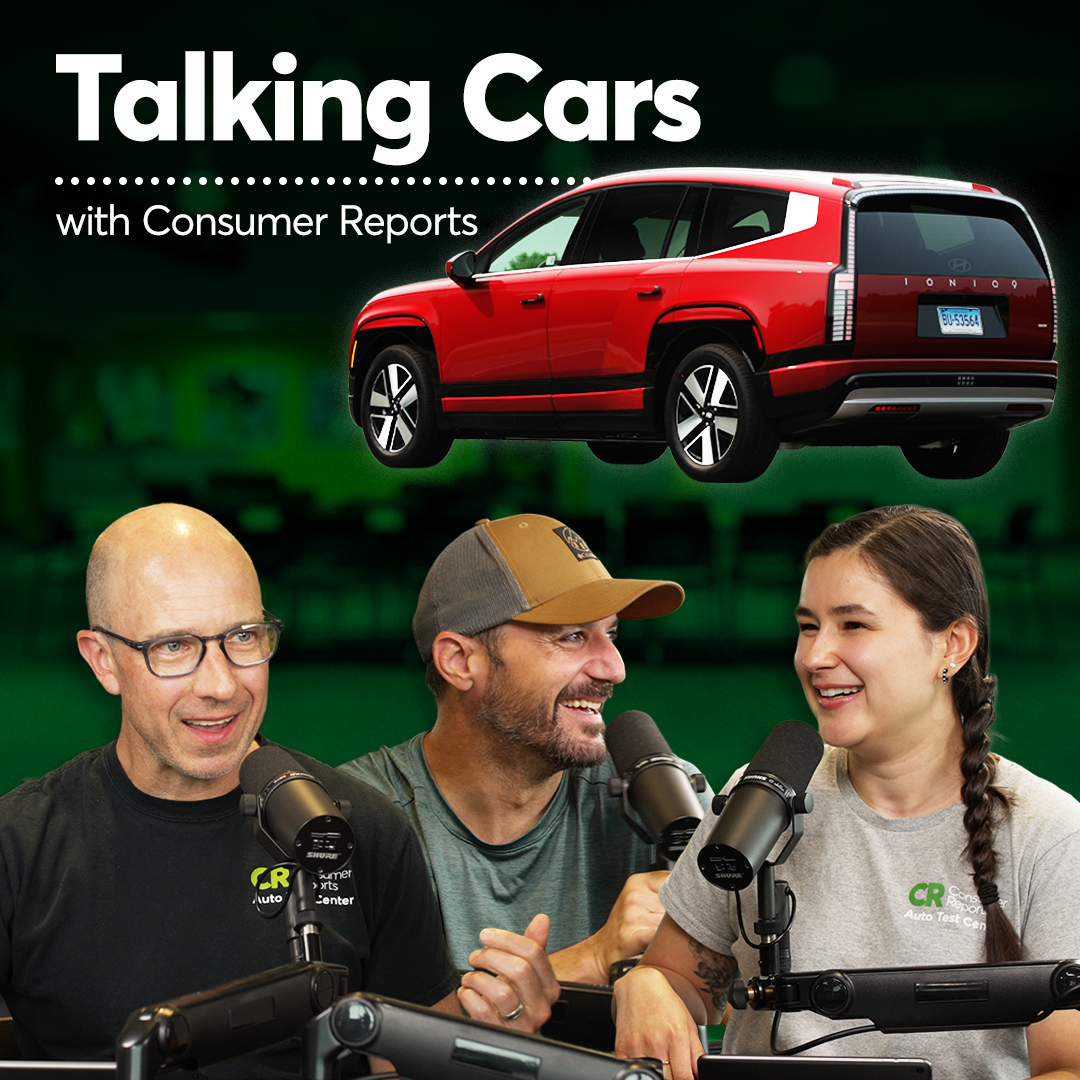
And the three of us today are going to talk about the 2026 Hyundai Ioniq 9, because that
is an EV that we recently bought.
In fact, we bought one of the first ones in the state of Connecticut.
And it's a sister vehicle, brother vehicle, cousin, if you will, of the Kia EV9.
Both are three-row all-electric SUVs.
What we found with the EV9, it translates this Hyundai really great second and third-row
space.
Yes.
Very accessible, drives really nicely.
What we bought was the 2026 Hyundai Ioniq 9 SEL, what has three into three horsepower
from dual electric motors, a 110.3 kilowatt-hour battery, one-speed direct drive, no real
transmission there, and all-wheel drive standard on the dual-motor version.
$66,320 was the MSRP, and we only have a few options.
Ultimate red paint for $500, carpeted floor mats for $230, which I got to say, it's $66,000.
If they're adding in floor mats for $230, that's kind of cheap in my opinion, but
we'll leave that.
Cargo cover for $190 with this $1,600 destination fee, total cost $68,840.
Maddie, this is a growing segment.
It's got a lot of competitors, what do you think it falls in against whom?
Which vehicles?
Yeah.
We do have a few.
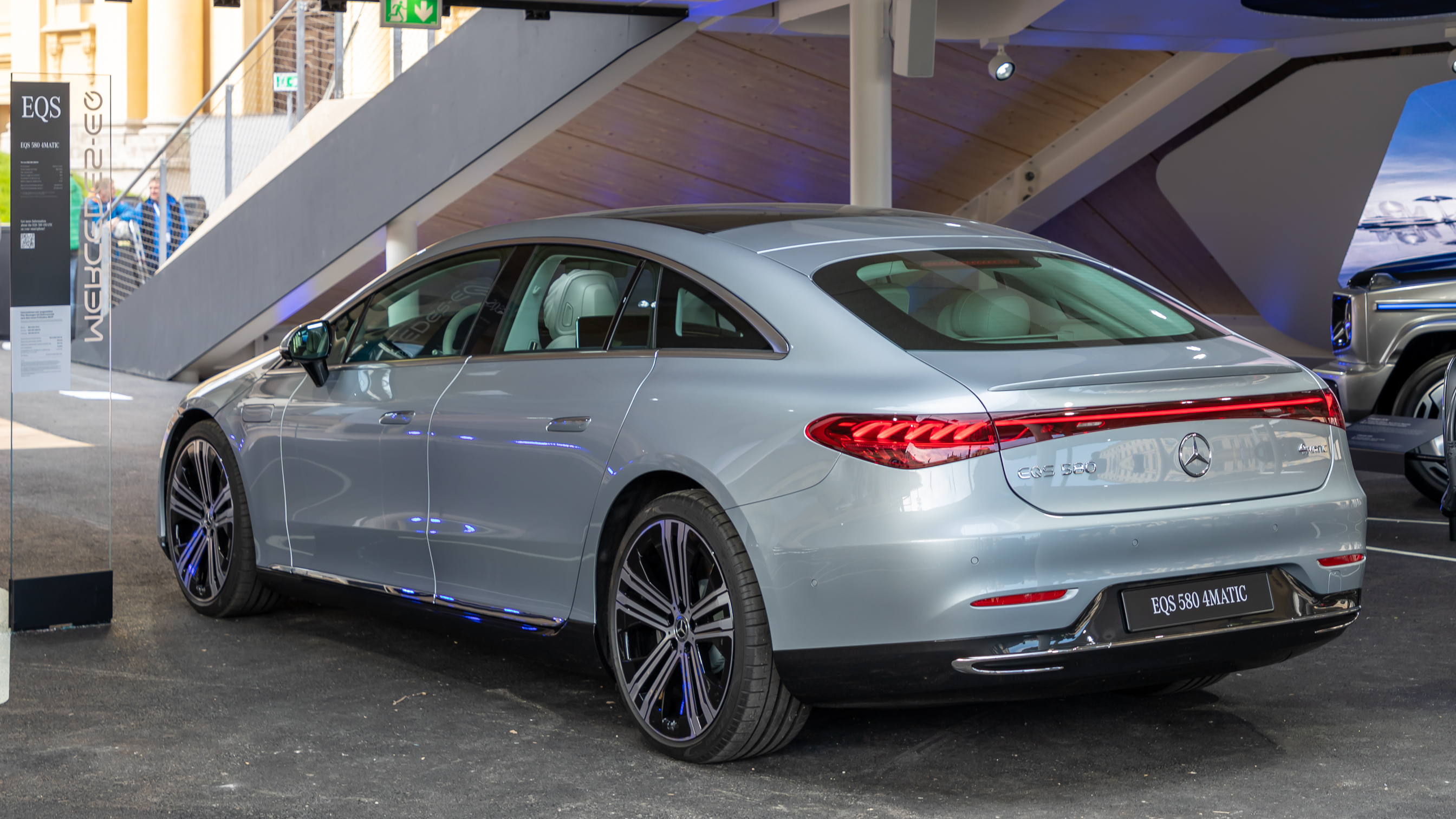
We have the R1S, the EV9 as you mentioned, Mercedes-Benz EQS SUV, daddy buzz and a Vistik.
I think this is a pretty solid EV, a three-row EV that you can get.
The price is a little, you see the price tag of about $70,000, and it's kind of
like, that's a little bit more than I was expecting, but where it falls in line with the rest of
them, it is on the cheaper end, so it's all about, I guess, the accessories, the styling,
the range, those are all really important factors, but I think it is a really solid EV that Hyundai
has going here.
Yeah.
I mean, I like that.
It's interesting.
It used to be that the Hyundai would come out first, and then Kia would follow, and
they flopped it.
This makes a better presentation than the Kia, Joey would.
Yeah.
I like the Kia EV9 in terms of styling, feels a little more for a younger generation, a little
more edgy, and then when you look at the Ionic 9, it just feels a little more grown-up,
maybe a little more classy.
I understand.
You look at our trim and the color, that kind of adds to it, the red, everything
really gives it that vibe, but yeah.
It's nice to finally get a non-silver or white car.
Yeah.
It sticks out.
It looks good.
It's the color pops.
You were saying in our pre-meeting that one of the biggest issues for you is with the range,
worry about range, electric, compared to something like, I mean, the Hyundai Palisade and Kia
Italia Ryder 2 SUVs that dominate that three-row mid-size segment.
Yeah.
I feel like this is something, I guess, my advice would be if you're looking at
the Ionic 9 and it's something you're just not ready to commit to full EV, that not too
far from that is the Palisade, Tellurine, you're going to have hybrid platforms, so you'll
get the efficiency there, but yeah, looking at that as an option and also going back
to competitors that'll be the Vistik, if you spec that out properly, you can actually
get a Vistik around that 70-gram price point.
There's a small overlap there from a vehicle like the Cadillac Vistik in the Ionic 9, depending
on how you spec them out.
Yeah.
Yeah.
If you go crazy with the options.
Yeah.
You can go far on the Vistik and get really expensive.
Just like Mattia, we were talking before the calligraphy trim, and I don't know if I'm
putting it in the wrong spot at time, but we rented one from Hyundai early on to
do our first drive, which is available on ConsumerReports.org, and then we also
got ours in, but you liked the calligraphy version.
Yes, I did.
So our version, the SEL, it has the same like silver, plastic elements all around
the cabin, but for some reason, the addition of the silver like camo type, if
you will, addition in the calligraphy, it just brings it all together.
I think some people that drove around kind of said it looked space shipy inside,
which I thought was fun.
But the interior of ours, it has more of like a fake wood paneling, which
considering you're paying about 70,000, it kind of feels like it's a little
cheaper than than something that would be nicer with like maybe real wood
paneling or just less of that silvery, plastic trim.
But overall, I do think it is a nice interior either way.
And I don't know if I know there's more that comes in the calligraphy
than just like the interior styling.
But 10 grand, it's about 10 grand more than what we paid for.
I'm not sure if that would be worth it for me, but perhaps for others.
Yeah, I mean, it gets it has a hundred more horsepower, the calligraphy.
But this isn't a slow vehicle by any stretch.
Quite simply. Yeah.
I don't know if I would need that extra horsepower.
Right.
So why don't we get into one big thing about this is that it's one
of the first vehicles we've gotten in our fleet that has the new Tesla
style, the Nax North American charging standard system, standard
charge port as a native, you know, so we have to have an adapter.
Would that change your feelings on the electric vehicle, Joe, if you were buying
because now you have access to.
Yeah, I definitely.
Yeah.
So once you open up that accessibility to Tesla supercharging,
that's going to relieve just in general, all those stresses, rain,
range, anxiety, looking for other chargers, conventional chargers
that aren't working broken down.
It seems like Tesla's infrastructure is just has much more support
and maintenance and everything to, yeah, it's definitely a high point for them.
There's so many, so many chargers that are Tesla superchargers
or just Tesla chargers in general.
And so it's I think it's a huge selling point, too.
If this is so much easier to plan out, I feel like less anxiety
being able to know that there are all these Tesla chargers along the way.
Oh, yeah. And I don't have.
And whenever you have them, that's always like 10, 20 of them.
So you don't.
And they work. And they work. Yeah.
Yeah, I mean, I took our the Cadillac OPTIQ OPTIQ.
We have like every Cadillac EV almost, I took it up to for to Massachusetts.
The Great Barrington, if people know where it is, it's populated.
But the Tesla chargers, to your point, there were 10 here.
And then we were down the road and there were 20 over there.
And then to find chargers for this.
And the range was great.
I didn't need it, but it was one of those things where, OK, if I can charge, it's great.
Low speed level to charge points.
I think I got 25 miles over three hours.
You know, the the cable didn't hook back in.
You know, it didn't it didn't have a holder.
So it was just lying on the ground.
And the only high speed ones were seven miles away that were not Tesla.
But no adapter for the OPTIQ.
You know, it takes the CCS.
So I'm like, all right, I have to use this.
Have I taken the eye?
No, I would have been able to plug right in.
Yeah, yeah, totally.
It's it's even if you have a vehicle with a lot of range,
it's still nice to have that option versus being forced into something
like that slow speed charge point.
Yeah, or you know what you're going to get for the most part with Tesla.
Yeah, you're not going into going in blind, hoping the charger works
or whatever the situation may be.
Yeah, exactly. Exactly.
So why don't we kick off?
We'll jump in with the interior of the vehicle.
Maddie, you have some some feelings on the way that the giant screen,
the married up screens look and functionality.
Yeah, so we have two 12.3 inch screens, one for the driver screen.
And then it's kind of seamlessly connected to make it look like
one long panoramic screen with the center screen.
And then we have another kind of touch capacitive display
for the climate controls below that.
And so you do have a very kind of screen heavy layout.
But the way that it's designed, it's not as overwhelming.
I think visually as a lot of other vehicles that have huge touch screens.
So when you hop in, if you're familiar with other
Hyundai's and Kia's that are recently been on the market,
it looks very similar.
So you don't immediately think, oh, my goodness, I'm in this EV
and it's so different from an ICE vehicle or so I don't know how to use it.
But it looks very similar to like the interior of a Santa Fe, for example.
So all of these screens, they have like kind of large buttons,
which are easier to use while you're driving.
There's really high contrast.
It's very well labeled and it has a great use of color.
Like I said before, the climate screen with its kind of touch
capacitive controls is more difficult to use.
I don't know if you struggle like I did with like changing the fan speed
or like even the seat heaters or just like tiny little buttons.
So not great, but at least the temperature dials are there.
So you that's so much easier.
Yeah, having the knobs is great.
I tried in using voice commands and it was it was hit or miss.
And that's when the alternative to
distracting to look down from the road to do it is voice that doesn't always work.
Yeah. Maybe, you know, not a great setup.
Yeah, I think if I don't know, brought it up a little bit higher,
made it easier to actually use those controls while you're driving.
It would really elevate the whole thing.
Right. But I think they did a good job in general.
And a lot of like the safety centric things like your windshield wipers
and your headlights, those are all still very familiar physical controls
and stocks, so people shouldn't have trouble with those.
But yeah, as always, I say like hop in it, take it for a drive,
try it and just change your temperature, your fan speed, anything.
See how comfortable it is for you.
How was it for you, Joey, using controls?
Yeah, no, I agree with Maddie.
Yeah, the the bar touch capacitive bar.
Yeah, it's just I'm not a big fan of but I do like the dials and everything there.
But I also agree with, you know, having voice activation
isn't a workaround for other controls that aren't ideal.
But that being said, once you're familiar with this system
or have been familiarized with, you know, Kia, Hyundai of the past
or current gen or current models right now, really easy to get into.
And yeah, you've become familiar with they have the tiles.
And I think at one point they initially had tons of icons,
you know, sort of like the Audi way, you know, and it's great
when there's seventy five icons on the screen.
You don't have to hunt around, but they're all small.
The tiles took a little bit of getting used to.
But I think it's a little it's it's it works fairly well.
It just keeps putting menus, right? Yeah, yeah, it has like widgets
that you could kind of say of like the navigation if it's equipped,
which I think it's standard in this vehicle and phone and radio.
So you shouldn't have to like keep swiping unless you want something
that's like something you might not use as often and you can customize it,
which is great. Right.
And there's even shortcut buttons that you they have a little star on it
so you can program those to do different things.
So it's really able to you can set it up however you want it to be.
So that hopefully you get used to it and you can just use it pretty quickly.
And it's true once the work around for poor integration aside,
once you do use it a lot, you do get used to it.
I would just like to be able to know a button by touch.
Absolutely. Versus surface that I'm hoping I'm not.
Yeah, glancing, you know, glancing below.
Yeah, absolutely.
One of the things we have seen in a number of EVs
is because of the lack of a transmission tunnel,
because of the lack of a drivetrain tunnel, you have a ton of floor space
and opening it up so you don't feel very cluttered.
But there's a drawback.
Yes, a flat floor. Right.
Which means that if you're like me and you hop into the car
and you just throw your things on the passenger seat or on the floor,
they could just come rolling over to your side.
And we've had people report that this does actually happen
and you have like water bottles that get stuck under petals or small items.
So it's just something to be aware of.
I don't know if you can like rake something up to block things
from rolling over.
But yeah, I mean, the cost of the the benefit of having more space
does come at a cost in this case.
It looks nice, but there's also that safety concern.
There is a bin there, and it's
there's just two tiered two tiered bin.
And the upper one is pretty accessible, I think,
but the lower one, which is great for if you have those rolling things
to throw them in there.
But you do want your thing to be accessible.
So if the passengers using it, then they put it down their feet.
I know, you know, my wife would ride past, you know,
she'll ride in the passenger seat, an umbrella or something like that,
you know, and that just can.
Oh, as soon as you open up that like area or give the passenger access to that,
you as a driver just lost all that real estate.
Right, you just gave, you know, I'd like it to be blocked off
from the passenger so I can just use it for myself.
Yeah, it is.
I mean, there is more as a driver,
maybe you are carrying more stuff regularly.
Yeah, so it would be nice.
But the bin is deep and it has a nice lip.
It's just really hard to access.
And the depth means, you know, you're going way past it.
Yeah, absolutely.
And I feel like the second one isn't very usable for me.
It's kind of it's not very tall.
I think the opening.
So I kind of just, I think, like showed the the charger adapter
there and hope that it stayed there.
But there also is like the center console bin,
right, which has like two levels to it.
And the first level is fine.
But then once you open up the second level,
it's like a deep dark abyss.
Yeah, yeah.
So you could definitely lose things in there.
Which you could reach in from the second row to get.
So it and there there is an option.
I think the calligraphy we rented had it where there's a bin
you could put that can roll out.
So you could see the cost savings like, OK, we have the one bin
and then modify it, which is cool.
But to your point, it's an abyss.
And it didn't quite function properly.
And whether or not we know, I think,
just getting an early model or getting, you know,
whether or not that's happening on all.
Yeah, the lid on it is kind of cool.
Do you want to explain what the how the lid works on that?
Yeah, so I guess from my recollection, it can fold either.
You have it's it's split in two sections
and has two buttons on the front.
And you can either break away and fold them in one half
or the other, as well as it can fold in the other direction
right from the rearward forward.
If someone wants to open it from the back seat.
But that being said,
you really have to press the button down hard
and put a little downward pressure.
It just feels like fitment or however it's built isn't.
Yeah, yes, it isn't correct.
It's awkward to grab the back side work.
I found myself doing this.
Yeah, it felt like it hinged it hinged better
from the rear seat rather than it did from up front.
And it could just be growing pains.
I mean, we have to get in the first model.
So did you both were able to use
a wireless car player Android Auto?
I was.
I I use car playing.
Yeah, wireless car playing.
I had no issues.
OK, I had a lot of problems with it.
Yeah, yeah.
And I've seen that with a lot of Hyundai's and maybe it's
maybe I need my iPhone 12 needs, you know, I need to spend
a thousand dollars more on a phone.
So what's really useful is that in the center console
in front of that bin that we're talking about,
you can't really open is a wireless charge pad.
And it's it's almost just where you would put your right hand.
So it's super accessible
and it's nice to just pop the phone there and it's rubberized
so it doesn't slide around.
But I ended up having to connect it hard to the hard to the car.
Yeah. And I use Android Auto and I connected wirelessly just fine.
But I do like that when you plug in a phone to the car,
it just doesn't like instantly.
It's load so fast, whereas like other vehicles,
you might have to still go through the process of pairing your phone.
But this one is just like plug in and go.
Yeah, pops right on.
If the wireless isn't working, at least it's not a huge pain to plug in the phone.
But I get that it's like you want to do it wirelessly.
And you know, you get into the I shouldn't say, you know,
you get into the situation where they're designing the software
for the car one time and it's much easier for the phone company
to send an update.
And I understand it, you know, there may be a versioning.
I just have seen this so often with the Hyundai's and Kia's
with the wireless just never seems to work.
But enough of that, Joey, why don't you give us your feelings
on the vibe of the car, but also talk about that access,
talk about that second row space in the third row.
Because, you know, one thing with with midsize SUVs,
you just don't really get a useful third row seat.
Yeah, so this being an EV, you have the, you know,
you can have the floor really low.
So your step in, especially with third row access,
this is where it's most noticed is getting into the third row.
Tall roof line, similar to the EV 9,
closest you can get kind of to a minivan experience somewhat
as to, you know, you're just kind of stepping up and in.
If you have much more headroom, there's less ducking.
Yeah, getting into the second row is a breeze.
Very easy to get in, especially that flat floor,
you know, flush door sills up front, very much the same.
You do have a sloping A pillar, but really you don't even notice it.
You naturally kind of just duck through and get in and out.
But yeah, that is a high point of these cars.
Very roomy, very easy to get in and out of my biggest gripe.
And we say we say it over and over again.
It's the pop out door handles.
And what is it about?
And what is about these versus maybe others?
I feel like Cadillacs have their own.
Yeah, offered to grab the experience is just not there.
It's trying to be a traditional door handle,
as well as just how it feels grabbing it.
Then you're relying on the key fob or proximity and logic
for someone like me who might leave the key inside all day inside the house
and then run it out like, oh, I got to, you know,
I know there's other settings where you can have it unlocked and have them popped out.
But depending on who's driving, I know our situation is unique
where we have multiple drivers.
So the settings are usually never in where you, you know, last have them.
So I'm running into that a lot.
But that aside, I just, yeah, I don't see what's to gain with pop out door handles.
Your efficiency number, drag coefficient, better just, you know,
you better be gaining there if you're going to lose in the access department.
Yeah, I so these handles are a little bit different than what we've seen
very recently with a lot of these types of door handles that pop out
is that they still are like kind of mechanical.
They don't have that electric component that opens the door.
So you don't have that delay that we see often,
but you still have the delay potentially of the handles popping out.
And if you live in a colder climate like we do, where we have icy rain,
those can get iced over my issue that I have.
And this this was when I was driving around a bunch of people.
And so I unlocked the door from far away so that they could all hop in
before I got there. But by the time we all got there,
the car had relocked itself.
And as we were putting our hands in the door handles, they started to close.
So we had to like rip our hands out quite quickly.
I don't know if they would have stopped,
but they definitely like made contact.
So that's something that I would know as a driver,
like don't unlock it too early.
But like if you have kids or people who are unfamiliar with the car,
sure, that's that's just something that you have to be aware of with these cars.
And I guess to your point, if there's settings to change it,
you can do that, but you have to go through that motion of doing that.
That's interesting. That's the first time I've heard of that.
And that's awful. I mean, you know, it's it's shocking at that time.
So, yeah, that's that's that makes it worse than the angled ones
that pop out of the delay, like you said, the electric ones.
I mean, it happened once.
It could have been a fluke, but it's something that stuck with me.
And I'm not going to mess with these door handles now.
Oh, well, well, the third row,
we talked about how it has actual human size.
Yeah, it's not adult size.
Let's say adult, not human adult size seats.
Yeah, I'll give you about 45 minutes back there.
You know, OK, right around there.
No, it actually has that capability of, you know, hauling an adult size person
on, you know, a legitimate short trip, let's say, you know, quick dinner.
Yeah, that's exactly those situations.
And then on top of that, now you just made a bigger third row for your kids.
If you do have that and utilize it for that.
So I'm sure the kids aren't complaining when they get more room back there.
You could move the second row seat forward a little bit.
So you could customize the foot room for or
because optimize it for both the second and third row occupants.
Yeah, for me, I think I could almost put the second row almost all the way forward.
Still have enough kind of enough leg room to allow maximum leg room for third row.
That is a lot of flexibility there.
Like most midsize SUVs, it does come with the expense that third row raised.
It can't really hold more than a suitcase and a couple of things or something like that.
If you're going to start prioritizing behind third row luggage cargo,
you're going to want to go towards a minivan because that's where it's a game changer
and drastically changes, especially on minivans where the third row folds into
the floor like a stone go.
That's where you're going to get a lot of cargo space.
If you're looking to have a full load of passengers as well as a load of cargo.
So we cover the interior.
I'm going to flip a little bit on our rundown and jump to Maddie to talk about
for the regen braking, aside from the charging of an electric vehicle.
The regen braking is another huge aspect of it just because of energy recapture.
So if you would please go into and tell us about the.
Sure. Yeah. So Hyundai and Kia and Genesis, they have regen braking
that's very customizable in terms of you have these paddle shifters
that normally you might use for manual transmission.
But in this case, it adjusts the regen level from all the way from an eye
pedal, so full one pedal driving all the way down to no regen.
So you'll just coast as you might write normally in an ICE vehicle.
And in this implementation, you can just very easily just adjust it
however you need, because it does it can take some time getting used
to that feeling of letting off the accelerator and kind of feeling
that that deceleration that just comes naturally from the regen braking.
But I found that in this vehicle, it was very easy to just get adjusted to that
and just to kind of find that sweet spot of that regen level that I really like.
And especially when I had a lot of people loaded into the car,
I think I had like six people that adds weight.
And so that's going to affect how the vehicle actually feels when you're when you're driving.
So I felt that it was actually very easy to get used to.
I think if you haven't driven an EV before, this one is kind of nice
because it feels a lot more like there's less of a learning curve
and how to actually drive this with one pedal or if you want to do different
regen levels. So it's it's very nice, very customizable in that way.
One of the new things with, I guess, this generation of their power
electric powertrain, well, let me back up with the previous ones
or older EVs, when you're on the break, you couldn't adjust the regen level.
So using the plus or the minus pad now while you're breaking,
you can, you know, you physically pressing the break, let me clarify.
You could change the region level so that maybe you know something's coming up
like a traffic light or you want to move into more one pedal driving.
So that's kind of interesting.
Yeah, it's it's one less step that you have to think about.
Now you don't have to be like, OK, I need to take my foot off the break,
then do the regen and then I can break again.
It's a lot more seamless this way.
Yeah, this was a big big improvement for me because it feels very intuitive
and it feels as if you're just like cinching down on the actual break pedal.
And it feels much smoother as you like escalate the levels of regen
because I do like the paddles, especially I love the setup for
just the adjustability on the fly.
And I will go between usually level zero, one and two
and kind of click through those.
And now when you can do them under breaking, it makes it that much more
seamless and it feels very intuitive.
Actually, it's kind of fun because there's somewhat a level of like engagement.
And now with EVs, you know, I love sports cars and, you know, manual transmission.
So give me something to play with while I'm driving.
That's actually useful and yeah, it adds to the experience, which I like here.
They're also I mean, they're large paddles.
So unlike they feel good, you get into the general motors
in the Honda and the Acura buttons with a button, you know, and that's that's
awkward. Some of the GMs are good.
They have a two step, but this is great with three steps plus the full
one pedal driving either of you like or dislike one pedal.
I depends on the situation.
Like if I'm driving alone, I'll use one pedal because it's kind of like fun
kind of like a game to see, like, can I get all the way to the stop
without pressing the brake?
But with people in the car, I tend to turn it off because sometimes
they can make people motion sick.
That's just personal preference.
Yeah, I do exactly what I just described, level zero, one, two and three.
And I use the paddles.
I've rarely ever only time I entertain one pedal drives when I'm forced to
for work. Yeah, for work.
Yeah, when I'm forced to.
But yeah, you know, the certain platforms, Rivian,
Tesla, right now, where it always is.
It's very strong.
Yes. Yeah, I do.
I think to your point, Maddie, I find I try it and then I think fear
that I'm annoying passengers because it is if you're just driving, you know,
you know, you have the brain foot connection, you know what's happening,
but they don't. And it is like it can be an aggressive braking for no reason.
So it isn't.
Joey, if you want to give us the driving experience, it's it's a big
five thousand some odd pound SUV still big.
You feel the way that being said, low center of gravity.
It is a decent, decent balance.
Yeah, there's not too much body roll with that, you know, the battery
down low, low center of gravity.
You know, the steering is fairly responsive.
It's, you know, could use more feel feedback.
This is stuff that's very typical of vehicles this size.
I feel like it's a nice balance for steering to the ability of the chassis.
And yeah, pretty good blend.
If you're looking for, you know, some sporty driving experience,
you've come to the wrong place, but I wouldn't expect anyone to come here
with, you know, that in mind. Yeah.
It's a family. It's a family car.
It rides really well.
Hey, it's got very solid primary ride.
Body motions are kept in check.
It, you know, good bump absorption.
You do notice some, you know, when you hit some more aggressive,
like potholes or, you know,
joints in the road, bridge abutment, stuff like that.
You'll hear some of those impacts, but that's very typical of a lot of these cars.
These EVs are very, very quiet, you know, powertrains, super smooth, super quiet.
So when they're that quiet, you tend to hear a lot of the other noises
that are, you know, going on normally, like tire impact, everything like that.
But yeah, it's just it is a very, very nice experience
just for something to hop into.
It's a well-rounded, large, three row.
You mentioned compared to EV9 with motion sickness.
Yeah. Yeah. So Maddie mentioned motion sickness.
That's where my head went to immediately when she was speaking of Regen
cause of motion sickness.
So I believe, you know, we've had history we heard of in the past,
some people getting sick in the EV9.
And I think it's a blend of, you know, you have the Regen stuff
that Maddie's talking about and also just, you know,
the ride and, you know, there might be some jerkiness.
Like you had mentioned, it's different as a passenger.
When you're a driver, you know, you already know what's coming
because you made that input as a passenger, you don't.
And it's so smooth, it gives an eerie feeling that might make someone sick.
You know, there's other factors where what's your visibility?
How high, you know, kids can get sick because they can't see out over the belt line.
Sure. We've heard that time and time again.
You know, other, you know, vehicles of the past, non EVs.
Oh, definitely, definitely.
But yeah, I can't say I've ever had any of these issues.
But yeah, I mean, this is something why in general,
you always should drive an experience of vehicle before you buy one.
But Maddie, do you have any thoughts on the ride, ride quality, ride comfort?
I enjoyed it. I didn't have any problems with it.
I thought it was pretty quiet.
And the six people you're carrying.
And seriously, yeah, no, they all enjoyed the ride, too.
Like even I had full grown adults in the third row
and they thought it was comfortable.
I think overall, a very positive experience with this car.
Yeah, why don't you go into the safety systems?
Yeah, absolutely.
So Hyundai has a smart sense.
They're smart sense sweet and it comes standard on this Ionic nine.
And so this includes their highway driving assist, too.
Ford collision warning, blind spot warning, rear cross traffic alert,
A.E.B. with pedestrian and cyclist detection,
lane keeping assistant, lane departure warning, lane centering assist.
Adaptive cruise control, auto lane change, rear occupant alert
and a standard direct driver monitoring system.
That is so much.
Yes, it's a word solid.
Yeah, and it but it's all standard, which is fantastic.
And especially the direct driver monitoring system,
which is a camera, an infrared camera that's pointed at the driver's face
so they can monitor their eyes and make sure that they're looking on the road.
That being standard is is fantastic because if people are going to be using
the what we call the active driving assistant,
which includes the adaptive cruise control and lane centering assistance
at the same time, we want to make sure that they aren't over relying
on the system because these systems aren't 100 percent.
Sure. Right.
And although the lane centering system in this Ionic nine is is pretty good.
So far it's been able to like keep the vehicle centered in the lane.
It does swing wide a little bit around curves,
but it's kind of pretty confident, I think.
Did you have the same experience or similar?
I liked it, except for the auto lane change.
I found that it it felt like it would launch me to the far lane.
And it's disconcerting feeling when you're pulling from the right lane
to the left lane as a guard rail.
I just felt like I had to intervene.
I didn't want to trust it.
Yeah, I get that.
I think that some people also commented in our log book
that it's kind of a quick lane change, which can give that feeling
of like kind of going a little bit too much towards the outer edge
of the lane before we center.
Yeah, I've yet to have any auto lane change really make me feel comfortable.
But I always see there.
Yeah, yeah, I like to do that on my own.
I get that.
I think I like the GM implementation.
GM has a super cruise that works well.
I.
You know, we're not here to talk about the other products that works.
Well, I think I got out of a super cruise into this.
So you had a direct comparison.
Direct comparison.
And there are a couple of times, you know, in traffic's moving, you know,
seventy five, eighty miles an hour.
And it just felt like it threw me.
And I don't want to find that out.
Yeah. Yeah. I think that's totally valid.
I mean, you don't have to use it.
Oh, no. Turn it off.
Yeah, of course.
But it's something if people like to use it, they can.
I like to use it because it's kind of an assurance that there's not
someone in my blind spot, because it's not going to go
if there's someone in my blind spot.
It doesn't mean that someone's not very quickly coming up behind you
in your blind spot. Sure.
But it is just like an extra assurance that I like, but it's not
not necessarily for everyone.
Yeah, to your point, it's an assistant.
It's not a requirement or it's not a depend on.
Yes, it's not 100 percent.
I can just check out of driving.
Yes, I don't need to check my blind spot thing. Exactly.
Yeah, exactly.
For the adaptive cruise control, though, I think that really does
benefit from the EV nature of just the smoothness of the power delivery
and not having to like downshift if you need to speed up quickly.
So I found it to be pretty smooth, even in stop and go traffic.
Still have a lot more testing to do with that.
But general first impression, I think it's a solid system.
Yeah, no, I agree, especially when you're dealing with EV platform,
EV power trains with ACC and stuff like that.
So very, very smooth experience, only, you know, which most vehicles
have is limitations in aggressive stop and go traffic.
When someone slows down really quickly in front of you,
then takes off very quickly.
There's going to be a little bit of a delay before or it might not
accelerate as fast as you would like to close up that gap.
But other than that, it's really, really smooth.
The lack of ping-ponging on the lane centering is just it's great.
Yes, yeah, because too many too many where the car is just going like this.
It never seems like it's ready to just be centered.
And like you're the whole time, you're just kind of like trying
to counter steer what it's doing.
So that can be an uncomfortable experience because you fight the steering wheel
in some brands. Yeah, definitely.
But not as much in this one, which is good.
So overall, solid product, competitive,
like so many vehicles today, high price, I mean, it's unfortunate.
Where do you guys see that they the two the two models fit?
Again, we're talking about the Hyundai Onyc 9, not as much the Kia EV9.
But like I said early on, it used to be that Hyundai would come out
with a product and Kia would come out with one a year later.
The same version of the same platform, even though they have the whole
we're two companies, it's same engine, same transmission, same same size,
everything. But it was it was a little bit of a sporty.
Where do we where do you each see them now?
Yeah, this is I mean, we did speak of this before, you know,
and was thinking about it, trying to put my finger on it.
And I and looking on the website, a lot of it's tough.
It feels like they're even.
It kind of comes to whichever, however you spec out what trim you get,
how you spec it out, they can.
I mean, I said before, I feel like Kia is just driven towards
maybe a younger crowd.
I like the Kia styling feels a little more edgy that way,
where Hyundai comes across maybe a little more conservative in their styling.
But in terms of maybe, you know, how they're packaged and like
which one is the better or more premium.
It's tough because it comes to what how you spec them out.
And there's a lot of flexibility there.
Yeah, Maddie. Yeah, I agree.
I think he has definitely like risen in terms of like how it looks,
the quality and interior.
But I do think that like Hyundai has kind of a more elevated design in a way.
Not to say that I don't like the Kia design.
It just Hyundai's tend to just look a little bit nicer inside, in my opinion.
But as Joe was saying, it really does come down to how which trim you get.
You could get a really high Kia trim that looks very similar to like a lower Hyundai trim.
So, yeah, it really is just how you customize it, I think.
I like the I like the I like nine where I dislike the EV6 more.
It's a little blockier.
It's a little the EV9.
Can I say the EV6? I'm sorry.
The EV9 it's blockier.
It looks it looks like one of those Lego cars, you know, we're like,
yeah, I see the shape, but you're using squares to do curves
and it just doesn't work out well.
One thing we didn't talk about with the with the Hyundai is it has
it's called bokeh tail styling.
So I love it.
It pulls back, which impacts the cargo area, of course,
it's much more of a curved opening once you open up the door.
But yeah, it has a little more of an elegant if you will look.
Yeah, it's distinctive.
Yeah, just as like the EV9 cube look that you're talking about is
distinctive, so is this boat look.
Yeah, but it does, especially we got the color red, which I think
looks fantastic on this on this design.
Yeah, it's just like it's just a nice styling exterior.
And the people that I drove around also thought it was so
there's that. Yeah, so it's interesting.
Well, we have on consumerports.org.
We have a first drive of that.
We also talk a little bit about the calligraphy
version that we rented and it's in test.
We should have it online in a few weeks, the full test.
So go to consumerports.org to look up more about the Hyundai Ionic 9.
So now we're going to move to the questions part of the show.
As always, send us your video questions, send us your text questions.
Go to cr.org slash talking cars to submit them.
And if we use your question on the show,
you will get one of these t-shirts, not mine, not Maddie's,
but one of these black t-shirts with the auto test logo and CR green logo.
And you can pretend that you work in consumerports
just like just like we do when we wear the mountain public.
But anyway, Terry from Williamsburg, Virginia asks,
we keep our vehicles years after the warranty expires
and drive less than 7000 miles a year.
I understand hybrids like to be driven a lot.
And technically, the batteries degradation process begins on day one,
whether the vehicle is being used or not.
Is buying a hybrid still a better choice over a non hybrid?
Joey. Yeah.
So what do you think?
Few things here.
Are you spreading out this 7000 less than 7000 miles throughout the year?
Just looking at that?
Are you are you doing that in one, you know,
chunk at one time of the year and the car is just sitting there
and you're not driving it?
And that's kind of an issue in itself.
But I mean, I think I broke it down.
Did the math you like divide, you know, something like that by 52 weeks,
7000 roughly you're at 100 and something miles, whatever over that.
You're in a week and that is a good to me, a good light usage on a car.
And so that's looking at it from that angle.
But then now you take into account, you're not driving it that much.
And you want to either choose a hybrid or non hybrid within that model.
So now you want to look at what's the difference in cost?
Are you actually driving it enough, that hybrid enough to make it worth it?
Is the hybrid only fifteen hundred?
Is the hybrid version only fifteen hundred dollars more than the ice version?
Right. Or depending, like we just spoke in the podcast,
depending on how you spec this out or trim this vehicle out,
you can put a large price differential there
and make it where you're not driving 7000 miles a year
is not worth it for you to get the hybrid version.
If, you know, you're getting some ridiculous spec that makes it cost more.
You need to just look at how much are you driving and, yeah,
and what the efficiency is as well.
And, yeah, it just you got to see if it's really worth it to get the hybrid
or it might be worth spending less money on the ice platform
since you're not driving it that much.
You know, get one that obviously you got to look at fuel economy, make it,
make sure it's worth it.
And, yeah, it might be worth just, you know,
making your decision based off of that.
Maddie, what do you think about it?
Do you have any thoughts on it?
Everything he just said.
OK. No, I do agree, though.
I think it's a fuel economy.
If that's really important to you as a the consumer,
then a hybrid seems like a really good choice.
There are different levels of like how good of MPG
you might get in a hybrid versus the ice, depending on the brand.
So look at difference in size of the vehicle,
the brand itself in terms of internal combustion engine versus the hybrid.
Sure. See how that compares, because it may or may not be worth it.
You know, like what we talked about, you know, what we talked about.
What we talked about earlier about the different models is
I pulled out the 2025 Lexus RX.
So the ice internal combustion engine, like you said, starts at 50,575.
There's an RX hybrid starts at 52,875.
OK, that's, you know, it's it's it's not quite what is it, $2,300 difference.
OK, that one, you're going to probably pay off the difference
in price in fuel savings over two, three years.
Yeah. But if you get the RX 500 H F sport performance version,
which is 66,250 and it is a hybrid, you're not paying off
a $16,000 difference very quickly in fuel savings.
So that's the type of math you have to do.
I feel like in this question comes from a place of efficiency.
So it there might he doesn't seem like the person that's going to be like,
obviously, I'm not going to go speck out the hybrid platform
or the hybrid version to have like every bell and whistle
if I'm keeping in mind like, you know, cost savings.
One of the things that we did a number of years ago, again, it's 15 years ago
and you could find this on consumerreports.org as well.
But we looked at how the 2001 Prius Toyota Prius tested back in 2001.
And then in 2011, we borrowed a 200,000 mile 2002 Prius
and we did basic maintenance on it.
So that was up to snuff.
So I think we might have changed the oxygen sensor.
We, you know, we made sure did oil change and stuff like that.
You could see the exact numbers online, but it lost one mile per gallon.
It was it was a few tenths of a second slower.
You know, it the the battery lasted so long and there is a worry.
You know, we have we have a story online.
It talks about, yeah, a hybrid battery could be expensive, seven grand.
Yeah, I did the acceleration testing.
Do you remember this?
Yeah, it's it just I mean, it was kind of beat on.
You know, it was an old car.
It was good to see it still delivered.
It didn't matter.
Right. It delivered what the what it's for.
So, you know, and also hybrids very reliable.
I mean, hybrid owners, 83 percent of them tell us that they would buy them again.
And hybrids tend to have much, much better scores, reliability scores.
Overall, in general, there are specifics.
So you're going to have some models, maybe new ones or maybe it just wasn't
a great, great platform.
But case in point, Toyota Prius often top in reliability.
So our second question is from Brett from Chicago land.
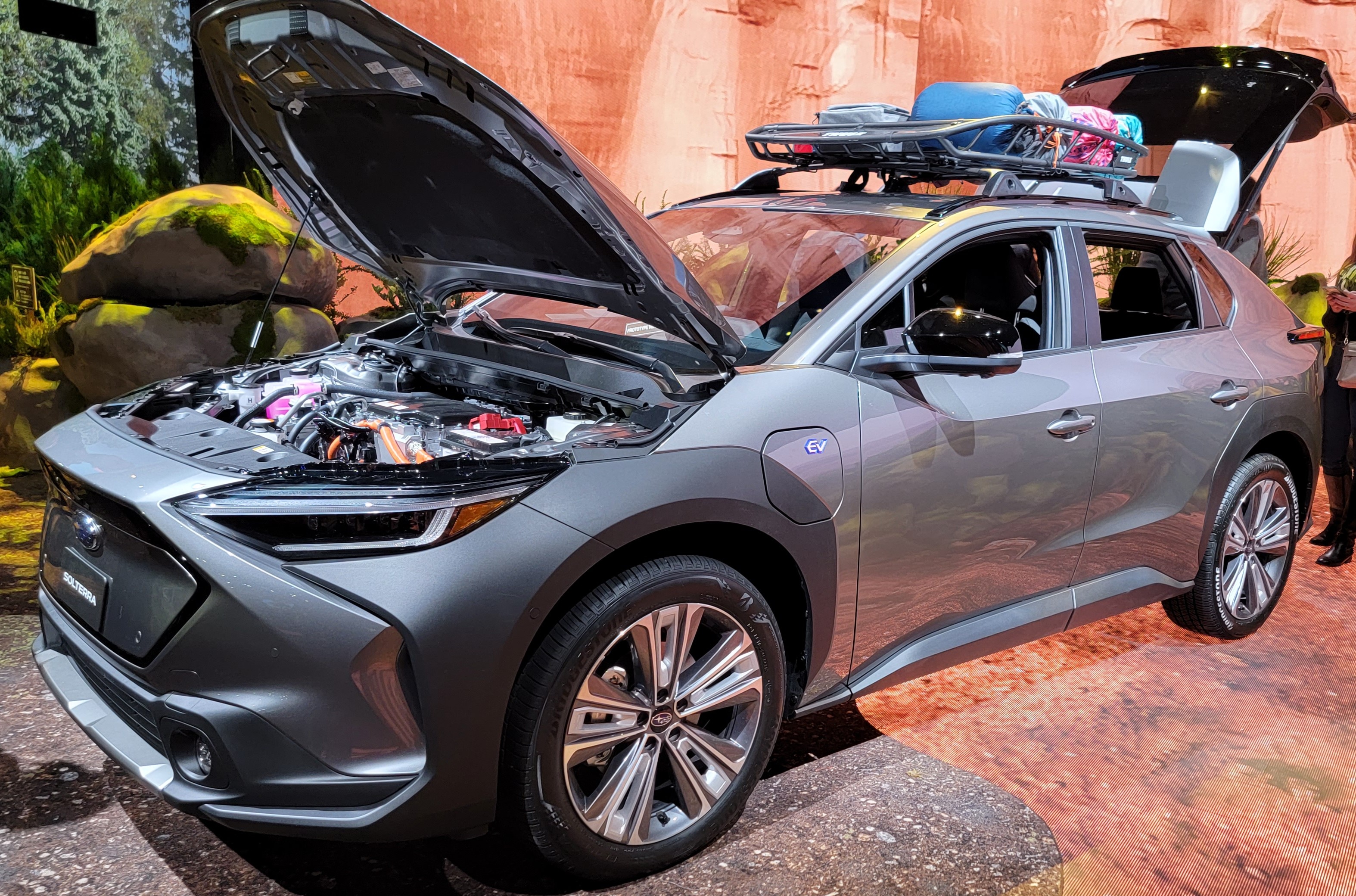
Brett says, I have a Subaru Solterra EV and OK car, but a great deal.
And was looking at the new RAV4 plug in hybrid electric vehicle,
the new RAV4 P have launch announcement.
And it got me questioning the value of a PHEV.
Subaru suggests I only charge if below 30 to 40 percent.
I try to do so, though I charge it to 100 percent,
which I understand may not be ideal because it reduces battery life.
But for a PHEV, it feels like to get the value of the electric miles.
You need to charge it almost every day, given it only is 35 to 40 miles.
But by forcing every day charging, aren't you lowering battery life?
So for this question, we're going to enlist Michael Croson,
who you may have seen on the podcast.
He is one of our technicians and he's an expert in electric vehicles.
So, Mike. So, Brett, great question.
Yeah, you are right.
They do recommend not fully charging or fully depleting electric vehicle batteries.
When it comes to a plug in hybrid, though, the SOC,
the state of charge is a little bit more tightly controlled.
What I mean by that is 100 percent is not actually 100 percent and zero is not zero.
So when you use up your EV range in a plug in hybrid vehicle,
you still have a decent amount of that battery pack SOC available
because the vehicle will operate like a regular old hybrid.
Gas engine is going to shut off at stop lights.
You'll pull away on electric power.
It will then kick on the gas engine as needed.
So you're not taxing that plug in hybrid battery
quite the same way you would be on a fully electric vehicle.
So I would say to get the most out of your plug in hybrid,
charge it all the way up and use those EV miles.
Keep in mind, they are more efficient in around town speeds.
So if your trip is within whatever your plug in hybrid
electric vehicle range is, go ahead and use full electricity for that.
But if you're going to be out on the highway,
going further than the PHEV range you have,
keep that electric range for in town and use the gas on the highway
where it is more efficient.
OK, so thanks, Mike, very much for that answer.
Do you guys have any thoughts on the question?
No, I'm trust Mike to answer it.
Yeah, OK, resident expert.
So that's going to do it for this episode.
As always, check out the show notes below for links on everything
that we talked about in this episode and send us your questions
to cr.org slash talking cars.
Thanks for watching and we'll see you next time.
About this episode
The team dives into their experience with the 2026 Hyundai Ioniq 9, a three-row electric SUV that competes with models like the Kia EV9 and Rivian R1S. They discuss its impressive interior space, driving dynamics, and the advantages of the new North American charging standard. The conversation covers the vehicle's pricing, features, and the pros and cons of its tech, including the touchscreen interface and regenerative braking. They also compare it to competitors and reflect on the evolving EV market, making it a comprehensive overview for potential buyers.
This week, we discuss the 2026 Hyundai Ioniq 9. This sleek, futuristic-looking three-row electric vehicle shares its basic technology and design with the Kia EV9. We cover the similarities and differences between the two vehicles, share our driving experiences, and lament (once again) the use case of electronic door handles. We also answer questions about fuel savings on hybrid vehicles and the longevity of plug-in hybrid vehicle batteries.