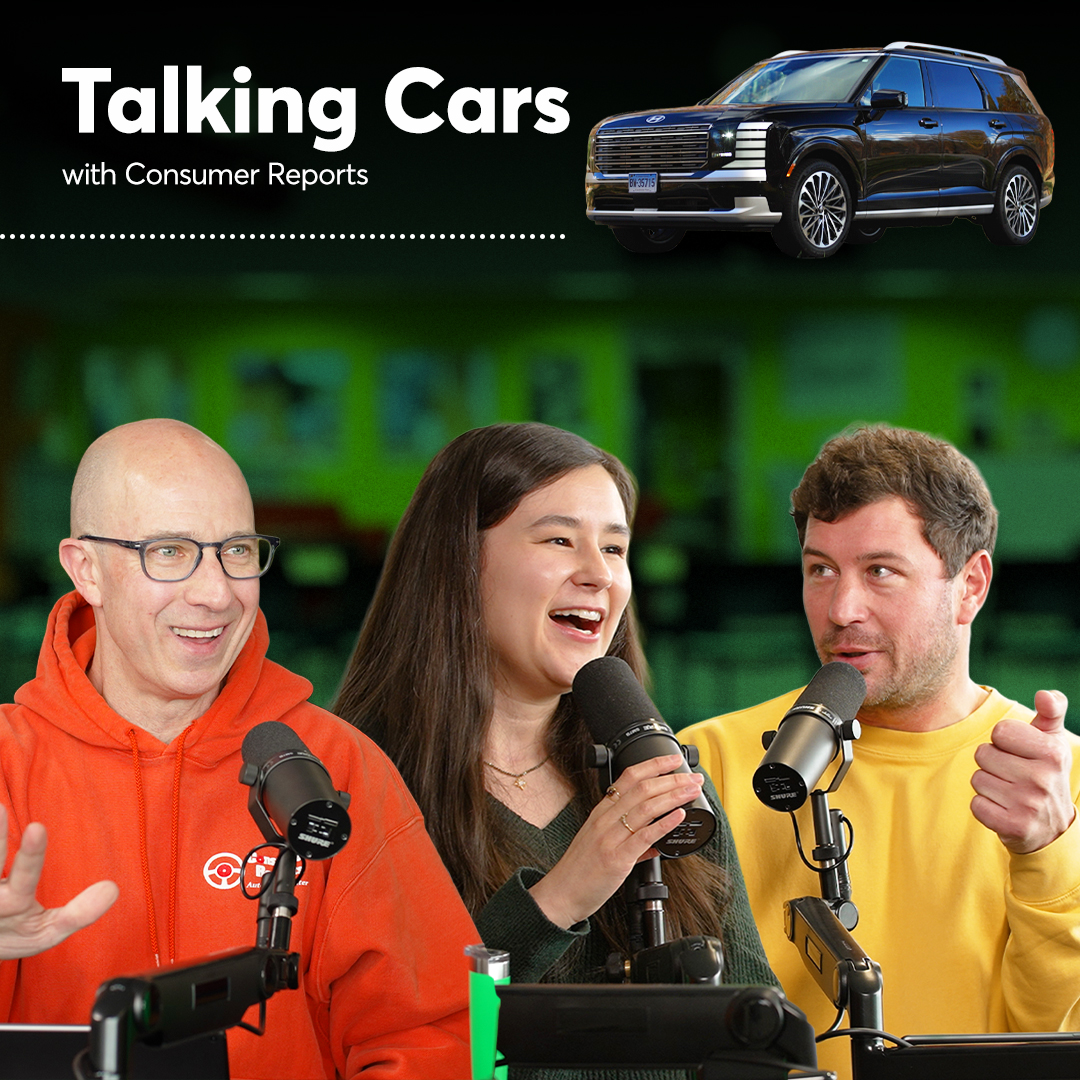
The Hyundai Palisade Hybrid is a type of SUV that runs on both gas and electricity, which helps it save fuel. It's designed to fit more people and has three rows of seats.
The Toyota Highlander is another SUV that can hold a lot of people and is known for being dependable. It also has a version that uses both gas and electricity to save on fuel.
The Hyundai Calligraphy is a fancy version of a Hyundai SUV that comes with extra features and a more luxurious feel. It's designed for people who want a nicer experience when driving.
The Range Rover is a fancy SUV that can go off-road but also feels very comfortable inside. People like to talk about it because it's big, luxurious, and has cool features like massaging seats.
Super Cruise is a feature from Cadillac that allows your car to drive itself on certain highways. You can relax and let the car handle the steering and speed as long as you're on the right roads.
BlueCruise is a system from Ford that lets your car drive itself on some highways. You can take your hands off the wheel, and it will keep you safe by watching the road and other cars.
The auto lane change feature helps your car switch lanes on the highway when you turn on your blinker. It checks if the lane is clear before moving over, making driving easier.
The check engine light is a light on your car's dashboard that tells you something might be wrong with the engine. If it comes on, it's a good idea to have it checked out.
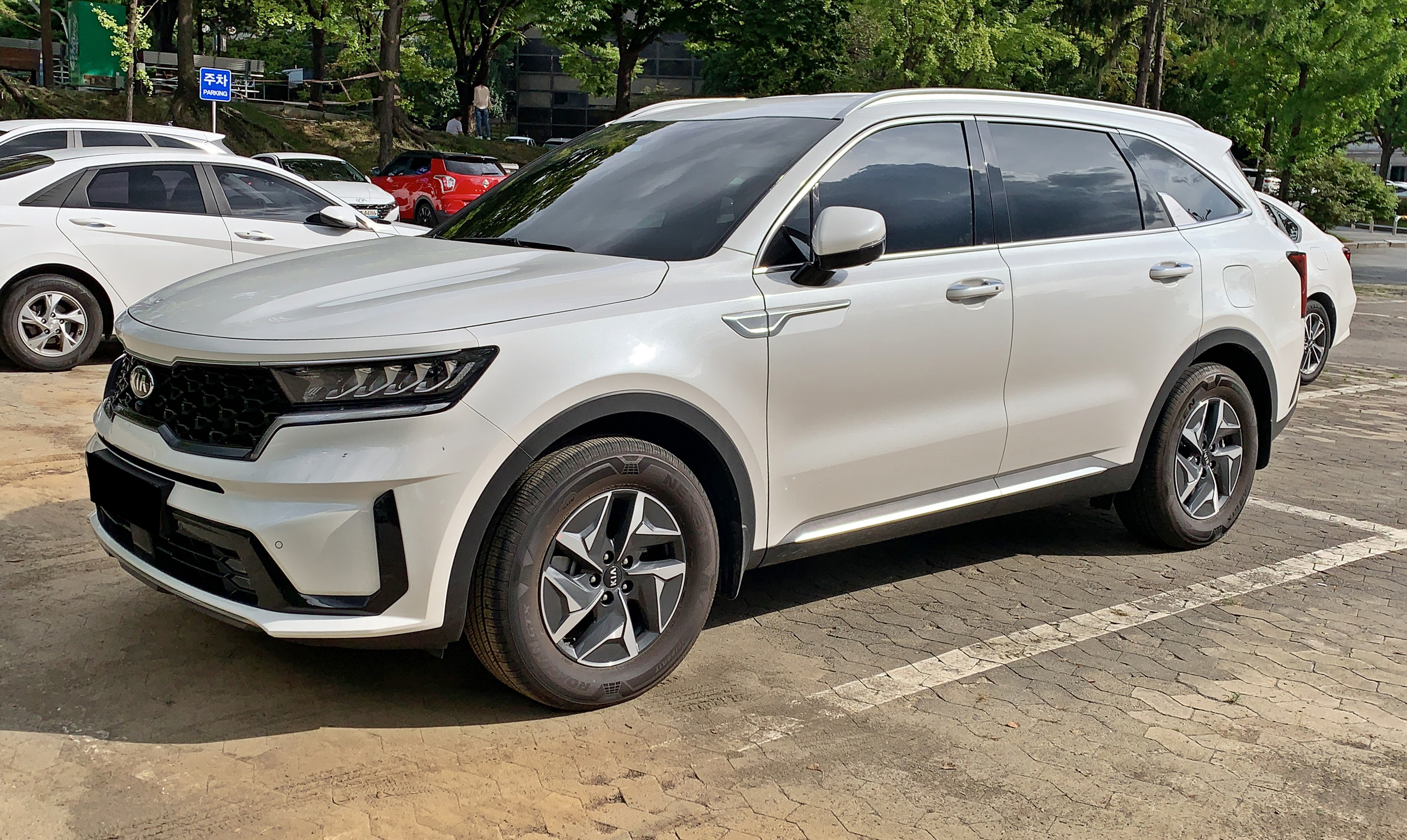
The Kia Sorento is a family-friendly SUV that can carry a lot of passengers and cargo. It also comes in a hybrid version, which is more fuel-efficient.
A turbocharged engine is a type of engine that uses a turbo to make it more powerful without needing to be bigger. It helps cars go faster and use less gas.
Stability control helps keep your car from sliding around on the road. If it senses that the car is losing grip, it can apply brakes to specific wheels to help you stay in control.
The RAV4 is a small SUV that's great for families and has a lot of space inside. People talk about it because it's reliable and good for both city driving and adventures.
The Armada is a big SUV that can fit a lot of people and stuff inside. People talk about it because it's strong and can pull heavy things like trailers.
The Genesis is a fancy car from Hyundai that has a really nice inside and lots of cool tech. It's mentioned because it's a good option if you want luxury without spending too much.
The GV70 is a stylish and fancy small SUV that has a lot of nice features inside. It's talked about because it competes with other luxury brands but offers great value.
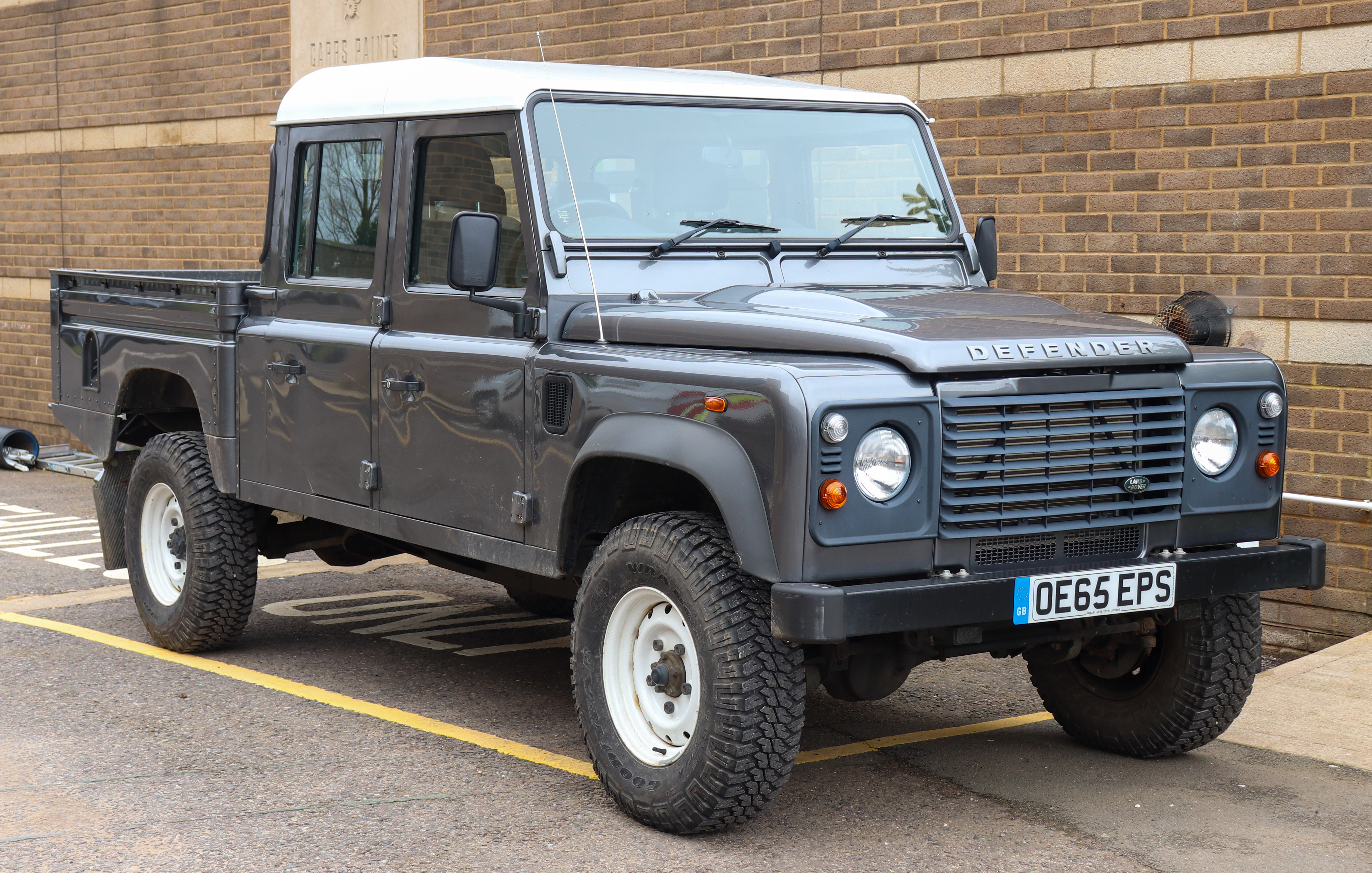
The Defender is a tough SUV that can go anywhere, even on rough roads. It's talked about because it combines old-school toughness with new technology to make it more comfortable and fun to drive.
The Camry is a popular car that many people trust because it lasts a long time and doesn't use too much gas. It's often mentioned as a good choice for anyone looking for a reliable car.
The Spark is a small and cheap car that's great for driving around the city. It's often talked about because it's easy to park and doesn't cost a lot to buy or run.
LIVE
Hi, everyone. Welcome to the show. I'm John Linkove. I'm Maddie McCarty. And I'm Ryan Pilsakowski.
And today we're talking about the Hyundai Palisade Hybrid. A couple things you may want to know
about this SUV. So it's the first hybrid version of Hyundai's 3-row SUV in order to
compete with the Toyota Highlander slash Grand Highlander hybrids. The EPA, the Environmental
Protection Agency, says it gets 29 miles per gallon highway where the regular all-wheel-drive
V6 version gets just 20 miles per gallon combined. And then there are both front-wheel-drive
and all-wheel-drive versions of the hybrid available. So Maddie, you know, the three
of us have spent a lot of time in it individually. What are some of the good things? What
did you like about it? I thought that it was a nice interior. First off, you hop in and
it's got a lot of different nice materials like microfiber along the pillars. And some,
I think it's probably pleather. I don't know if it's real leather, but it has, it gives
it a nice look and has nice stitching. Everything just seems very clean, which I appreciate.
The seats were comfortable, I found. And I thought it drove pretty decently. I know that
there are some differing opinions. But as, you know, getting from point A to point B,
I thought that it would get you there. Yeah. Yeah. I mean, we bought a calligraphy version,
which is I think the next to the top one. Yeah. There's calligraphy night right
above it. There's like something with like blacked out trim or stuff like that. So yeah,
we got the calligraphy. It's a $60,000 SUV. But it's one of the, it's the volume version,
according to Hyundai. Yeah. Well, it's loaded. And it's loaded. It is loaded. It has a lot of
stuff in it that I was not expecting. Yeah. Like what? Well, it has like a mild like
massage seat in the front, right? Was it called? It's called the Ergo motion seat. I think it's
supposed to like help alleviate like stiffness or pain. Yeah. Move some blood around while you're
in a long drive or something. Yeah. Yeah. I mean, for that price point, that's pretty good. Yep.
By today's name. I think it has, he didn't ventilated rear seats. Yeah. He did rear seats,
as you see, you find in some like high end SUVs, but ventilated. Right. Yeah. Not so much.
I thought that was kind of interesting. Heating in the third row. Yeah. As well. Yeah. That's
rare. Yeah. And for that price point, that's impressive. But again, if you would
said something like, oh, you know, I was driving the Range Rover, the big boat Range Rover, and it
had massaging seats and people like, well, yeah, 300,000. You paid twice the price of this. Right.
Yeah. Right. Easily. Yeah. Yeah. So, you're totally right. That's the one thing I wanted to
bring up in the trim just because of that headliner, like you said, is super nice. Yeah.
In an age where so many vehicles have this like hard stuff that looks like it's more easy to
clean than nice to look at or touch. Right. Yeah. It's not like a bunch of reflective plastic
everywhere. Exactly. Yeah. Exactly. So, what else, Ryan? Well, I agree with Maddie. Just handling
wise, driving it around. It has kind of a nice steering weight. It feels a little big,
but it handles itself well. And it's just super practical type of car, right? It's easy to
get in and out of the doors are pretty big. Makes a lot of sense, I think, family wise,
right? And the fuel economy, I mean, that's impressive, I think, for a third row SUV.
We'll talk about some other things after, in the bad category, but it's a nice setup,
if you will. There's some things I need to fix, however. But in general, I think it's a nice
three-row SUV with a lot of features that you wouldn't get in any other brand, really.
Yeah. And you don't always see, I think, the big redesign of such a kind of a groundbreaking
vehicle. I mean, when that and the key at Telluride both came out. Yeah. These are big
vehicles. Yeah. Wow. Here's Hyundai Kia really taking it to Toyota, taking it to Honda with the
pilot. You know, that's a big thing to start with. And then a massive redesign like this,
okay, what's going to happen? And they kind of hit it. Hit it maybe not out of the ballpark,
but maybe a really solid double. Maybe they let down a triple with it.
Well, I think they're in a good position because what we're going to talk about, I think,
is fixable. And they have a really good start. There's a good base to carry forward, I think.
So I'll mention too, I think that it rides pretty well. It's a little firmer than
its regular ice counterpart, but it's internal combustion counterpart, but it's
still pretty comfortable and it's quiet. Very quiet. It's very quiet, which is the engine itself,
like switching between EV mode and kicking on the engine. I couldn't actually hear it sometimes,
especially if I had AC going or music going. It's just very seamless, noise-wise in that way.
That adds to that. The quietness adds to the luxury feel when it's quiet like that. You're
like, oh, I'm in something a little more upscale, which sends that $60,000 even further up.
That's great, I think. I mean, $60,000, let's be honest. It's a lot of money.
It's a ton of money. It's a ton of money. And even if that's the volume one,
and we haven't driven the lower versions, they still are going historically Hyundai and Kia as well.
But Hyundai, we're talking about the Palazzo. It still will be nicely equipped.
It's not as if it's going to be bare bones unless you spend $60,000 and then they just
throw the kitchen sink at it. They just distribute it pretty well, I think,
through the line, the options and fuel. Matty, can you tell us about some of the
8S systems that come standard on it? Absolutely. So we have blind spot warning,
rear cross traffic warning, forward collision warning with pedestrian and cyclist detection,
and then highway driving assist. And so highway driving assist comes with lane centering and
adaptive cruise control to help the vehicle stay centered in the lane and keep a steady pace
behind the lead vehicle while adjusting for changes in speed automatically.
And it has a lane changing, right? Yes. So this one, so the calligraphy,
actually the SEL Premium and Up come with HDA2, which adds in the automatic lane change.
So I like it. You just have to turn on your blinker and then it will help you steer
into the adjacent lane. So it's sort of like what they did with the
blue cruise or the super cruise, when you just hit the signal and it moves,
it knows if there's cars there or whatever. Yeah, so it might slow down a little bit to
get an appropriate space behind the next lane over, the vehicle in the next lane over.
Yep. So it's, I think some people like using it here. Some people don't ever use it, but for
this specifically auto lane change feature, I thought it did pretty well.
Did you try it? I tried it. I like using them just in the sense also of just trying all the
parts of the car for the job. I was surprised the first time I tapped it and then it,
oh, okay, it will start going. So that's nice now. It's not set to do it automatically.
The systems that do that are a little unnerving. Even though I know it's,
they're generally overly compensating for safety. It still is unnerving to have something just go,
time to move. Sometimes with no warning. Right, with no warning. I think you should
pull back into the right lane. Like, no, no, no, I could see up ahead. I know what's
going on up there, but it wants to go in the right lane. That's a strange feeling,
but it was seamless. It didn't bounce the lane in my experience or any of that.
Yeah. I do think that it wasn't as consistent as I was hoping it would be. So sometimes you would start,
it would start moving and then it would drop out. It would cancel out or it would swerve back in
because something, it picked up some change that it no longer liked and then kind of,
you know, took a step back. Sometimes telling you, sometimes not.
Yeah, right. When it gives up and there's a spot on route two, I think that we all end up driving
through with the kind of a fast s-curve and so many cars give up there with no warning.
And that's a scary thing, especially when people become reliant on it.
Yeah, over-reliant, absolutely. And that happens a lot with lane centering, which
in this car, I think it's pretty solid. It's really good on straight roads. So you don't get
any sort of like wavering within the lane. Yeah. Instead, it's pretty straight and it's easy to add
your own steering in. I do think though that I was the, the curve performance, so actually taking a
curve and keeping the vehicle in the center, it tended to just swing wide and sometimes it would
touch the lane, give its own lane departure warning, letting me know that it couldn't handle it.
Yeah. And then sometimes I'd go to standby and not tell me. So it was not as reliable.
So you just have to really make sure that you're still paying attention and
putting in your own steering input. Again, you should be paying attention, right?
I understand. Well, I found it also that it's not to a fault of the vehicle, but
construction lines and skimmed over lines when they grind them out to paint new lines
because they shifted the lanes, that confused it as well. And I mean, personally, it's just another
example of why I think everyone's like self-driving cars. Like, yeah, maybe on straight, square,
right angle roads. Maybe it's working in San Francisco, but there's a long way to go.
They're supposed to, like in owner's manuals, and this is not just Hyundai. This is
every OEM. They're supposed to say like, use it here or don't use it here. And so they'll
say like, don't use it in poor road conditions, but people still use it in poor road conditions
because it allows them to. It does. So again, performance is going to drop.
And sometimes, I mean, at 60 miles an hour, or 70 miles an hour of flowing traffic,
and then all of a sudden the lane shifts. Like if you're engaged with it, it's still
as, you know, the reaction time may not be quick, unfortunately. You know, people aren't
paying attention. And so, yeah, all of a sudden it engages and it starts following the,
you know, towards the Jersey barrier instead of following the lane to the right.
Yeah. And then not that the policy did that. It's just an example of things that have happened
over the time with Hyundai. Yeah, absolutely. So we are three different heights here.
How was seating position, seat comfort, roominess, lack of roominess?
Comfortable for me. Yep.
Yeah, I was able to adjust everything to my liking. The only thing is that
it's pretty common, I think, consistently within Hyundai vehicles right now,
with its current like infotainment design, is that you have to be very particular about
where the steering wheel goes so that it doesn't cut off the corners of the screen.
But other than that, I was able to find a comfortable position.
I didn't feel like boxed in or anything. Right. I had issues with the position a little bit.
So they have that, the stock that has the drive, you know, your gear select.
It's down kind of under the wheel. And I have decent sized legs, I call them,
might call them meaty legs. And they, I'm like too close to the stock. And I,
and you have to look at that stock because the power button, you know, turn the car on,
ignition button is behind like part of the steering wheel, at least for my position.
So you're like kind of looking for that. And I'm always bumping into my leg when I'm,
and where I like the steering wheel, it could use more adjustment all the way around
telescope and everything else. Where I like it, I can't quite get.
I wish I could get a little lower. And then I'm losing some of the
instrument panel from this, you know, the steering wheel. So it's not ideal for me,
but it's not the end of the world either. But I've just, I've been a more comfortable
driving position cars, right? So that was, you know, something to navigate. But
I wish they would get away from that stock thing. I don't, I don't quite understand that.
So some of the features in this, we did talk about second row seats have the
cool recline. So it's super recline. It's not like full first class seat with the,
with the leg rest, but powering power, second row seats, again, the price,
lots of adjustability. And, you know, we have captain's chairs, it is available
with a bench and a base model. Anything else that you really want to hit on that you liked a lot?
Well, we were talking about this at one point, the front seat has that thigh
extender, but it's like really like a calf rest, as if you were going to sleep in the
front driver's seat. I don't think you can fully extend that while you're driving.
It comes out an awkward amount though. But for me, and like I was playing with it,
well, by accident, because that's what I will say that seat controls are a little
bit interesting. We'll kind of talk about that. Yeah, it's not like your normal setup,
but that little thing swings out like as if you were going to like kick your legs up,
but it doesn't come up that far. And it just seems a little odd. I don't know what the point
of that is, I guess. Yeah. I think if you're at a stop, you can swing it up more so that you
can kind of just chill there, which I think would be really handy if it were a full EV and
you're like at a charger. Right. Okay. Yeah, I didn't think of that. Versus like waiting
in the school pickup line or something. It just makes more sense in like the passenger
seat. Like let them sleep. Absolutely. You shouldn't be sleeping in the driver's seat.
I don't know. I thought that was interesting anyway. So before I move on, I want to talk
about the controls a little bit because I thought that they were for the most part
pretty easy to use. I mean, we have, we do have two 12.3 inch displays that kind of come
together seamlessly for the driver screen and the infotainment screen, but then we have a
lot of buttons. Hard buttons. Yeah. So you have like this whole row of shortcuts
and even some customizable buttons that make it really easy to just quickly switch through apps
if you want. Even the home screen has different, what we call like widgets, so you can have
navigation up if you have that or a phone and media all at the same time. Yeah. And you can
arrange that. But like the windshield wipers, the headlights, those are all very straightforward.
Physical knobs and levers. You don't have to like tap on like the side of the screen or
something. It's just, it's just there. Because it's not a redesign of it.
There's the wipers on the left and there's a lever, you know, versus being traditionally on
the right. And you know, it just, it's straightforward. Yeah. So I mean, that was a good,
but you know, of course, every car, even some high scoring ones are going to have some bad.
And while we haven't tested it, we've had a lot of people putting miles on it so we can get
our tests up online and out to CR members. The powertrain really listed it a lot of different
responses and most of it was not great. Yeah. It has a lot of issues. And I still reserve
full judgment until we test it fully and everything else. But my time in it was interesting.
Just in general, there's a pretty good delay when you're taking off.
You know, it's a hybrid. So it's got this, you should have this electric show
and then the engine will start up and there's transitions between electric and
the engine aren't terrible, but there seems to be some confusion when you're taking off
certain areas. And I left here one night with it and there's a sectional road where
it's just flat and then it's a little bit of a hill and there's a stop sign at the top of
that hill. It's not that much of a hill. It's just a little inclined. It's a three-way
intersection. And I stop. People come to the intersection after me. So now it's my turn. I'm
first. I go to take off and I step on the throttle and it's just creep slowly and it's EV only.
And I'm like in the middle of the intersection by now and it's crawling. Like it would not
go. And I put my foot to the floor and I'm like, I need to go. Like people, you know, this
is, it was, you get like anxious. Yeah. Yeah. This is not a major intersection.
Yeah. It's not a major intersection, but it's a, it's an intersection. Like people time it.
They think like, okay, he's going. I'm going to start. Yeah. And you also, you get used to driving
cars. Like when you step on the throttle, usually the car goes forwards, right? Like with its
emergency, especially if you're foot on the floor. That's kind of the point of the
drive mode, right? And then it came to life eventually by the time I was at the next
stop, you know, at the other edge of the intersection where their stop line is.
And the engine came on and it took off and not even in a hurry. It just went,
but it seemed very, very confused. Like it did not know what was going on.
It didn't do that again, but I did have, while I had it, but I did have, and I did read some
other people had similar situation. Mine seemed like it might have been most severe. But it,
even after that, it was just some clunky shifts, slow to respond to throttle inputs when you're,
you know, taking off like that stuff. It was pretty bad. I mean, it was, it was alarming
to me. Almost sort of point of like, is there something wrong with that? I was waiting
for check engine light to come on. You know, sometimes you get like a stumble and then it's
like, oh, something bad happened. Right. And then it clears itself out. It just never,
nothing ever came on. It was fine, but it's a bummer because usually like the hybrid version,
what we find the hybrid versions are better than their ice counterparts because the hybrid
systems have been so perfected and they had that electric shove and, and Hyundai,
Hyundai and Kia have done that well in other vehicles. They just, something doesn't seem
fully right here. I don't think so. I don't know if you guys had something like that.
Yeah. Mine was definitely not as extreme as yours was, but mine was turning left onto the
highway and like an unprotected green and having to time it right. But then yeah,
it just not shooting forward as much as I was expecting it to. And so just panicking a little
bit. But then like, I got used to it. I got accustomed to that behavior. So then I adapted
my own driving behavior. And once I did so, it wasn't bad. I mean, I could feel the downshifts
just a little bit or on the highway, which was fine. It wasn't
egregious, but it also wasn't perfect and smooth. So I wasn't trying to give it,
I wasn't giving a high bar. Like it, it worked. It was fine. I didn't feel the same terror.
It sounds like you felt it in that moment. Yeah, it was
Did you get a moment right? No. I, and part of me, that was in the first five minutes of my drive,
right? All a bunch of people drive these cars. So, and these cars are brand new. So I think there
is some like, in learning of the transmission does and some things. So, you know, again,
I reserve full judgment for later, but it initially was like, wow, this is something,
you know. Yeah. And both of you drove the regular policy. Yeah. Right? Yeah. Okay. So I mean,
if I'm, I'm going to step on you. No, you're good. I think it's an interesting thing because you brought
up a great point in that what we found is when we test the Kia Sorento and then the Sorento hybrid,
the Tucson, the Tucson hybrid, whatever it is, we always go, yeah, the hybrid makes up for
the deficiencies and it's always a base four cylinder, some small four and then a hybrid
four. Yeah. And here we have a hybrid four against the V6. Yeah. And we just like we said with Toyota,
you know, like Toyota, now they all run turbo fours or hybrid fours and it's just like, yeah,
the V6 is really great and it's responsive and we miss it or whatever. And that'd be,
and here it, so it's almost like an apples and oranges and like, oh, if that was a four cylinder,
that thing would probably be a dog. Yeah. You know, in that big vehicle. Yeah. And then
this would be, oh, at least it's better. Yeah. And here it really stands out, not to minimize
because I had the same experience and I pulled out in front of a school bus and, you know,
making in the traffic in the morning is like, oh, I got to floor it and then it lights up a tire and
you launch like you're driving, driving like a jerk. So I was totally there with you guys.
Yeah. I will say overall power, I was expecting a little more. I thought it was like merging
onto the highway and whatnot. Or like if you want, you know, or you're already moving
and want to get going. I found myself putting it to the floor fully several times.
For me, it was like because there was that delay because like the EV mode can go up
pretty high like to cruising speeds on the highway. So it was like keeping it in EV mode.
And then when I wanted to speed up to merge, because there is a really quick merge right now
due to construction and it just wasn't giving me what I needed. So then, yeah, you floor it
and then you get launched forward. But after a delay. After the delay. Yeah. That you then
a couple of days later learn and you fix and you're driving, right? Yeah. So I'm assuming,
you know, it does get good fuel economy for its size. So yeah, they might be just,
they're stretching that battery as much as they can, I guess, you know. I mean, even
regardless, well, I guess despite the delays in the power delivery, I still like the hybrid.
I think with the better gas mileage, I think it's worth the difficult, some minor difficulties,
maybe some major difficulties in some people's experience. I would probably want to have the
all wheel drive one just again, I'm totally projecting having not driven. But think of a,
if it has this issue with all wheel drive, if it's going to light up the front wheels,
and then all of a sudden clamp down like a stability control, that's at least here,
if it, if it, I'm just assuming, you know, if it feels a little slippage, it's sending,
it's going to additionally send power to the rear and you're going to go,
you're not going to actually have that same situation. Yeah, I mean, 29 miles per gallon
for the all wheel drive version we drove is, we own is fantastic. The other thing that
is I thought was interesting, because usually the hybrid's better, even ride comfort,
I thought, and that can, you know, I didn't look at the wheel size and whatnot, because that
wheels and tires, that can matter. But usually the hybrid's a little more weight kind of settles the car
down or, you know, helps with some of those impacts and stuff like that. The regular ice version,
I think, rode a little better. But which is a calligraphy too. Yeah. Yeah. So it's not
as if it's a base model. No, no, right. So I thought that was kind of interesting. But
yeah, so it seems like the things that normally make a hybrid better,
or didn't pan out in the... No, and it's not horrible, but they just, it's a little bit over
reversal from what we're used to most times. Yeah. So what about the brakes? That was another
comment in the logbook so far that a number of people, a number of testers have said,
like, eh, it feels a little underbraked, it's not reassuring. Sorry. So after you launched,
and you hit the brakes. No, I was, once I was moving, I kept moving until I got home.
No, getting off the highway a few times, or another situation I wanted to stop.
I wanted to stop quickly. That paddle goes in always, and it does not give you a lot of
confidence that you're going to stop. It's not a light car, but it just doesn't have,
like some brakes, they have that nice firm feel. There's a good initial bite,
and then it's easy to modulate after that. This isn't hard to modulate, but you just
don't have the power. It doesn't feel like there's a lot of power there.
So the second row of seats we talked about, power seats, really cool. Oh my gosh.
Did you guys play with them? Yes. I did. Yeah, and oh.
I think we're going the same thing. I think we're here together. Yeah. So there's a really
convenient button, like the top, I think, of the seat, and it just automatically folds it
out of the way so you can get in the third row, but it takes forever. Oh really? Yeah.
I timed it. It was about 12 seconds. Legends say it's still moving right now.
Exactly. Wow. I didn't try it, but it was, but imagine if you had the antsy kids trying to
jump in the back and you're waiting for it. Yeah. Kids not going to want to wait for that.
Of course, like, if you have bucket seats, they could go around, but like, still.
My son and some friends went out to see the, see a movie. So I took them, and yes,
two of them just did the go around. Yeah, like go to the hatch.
Yeah, right. They got to climb through the hatch quicker. So I went back there,
and, you know, adjusted the seats and tried it out. And yeah, super slide. You know,
I did the recline. They're like, okay, let me go check the third row. And they're like,
coming up to lose a gravity, which has the same type of thing, except it's noisy. It sounds
industrial. Yeah. This at least was quieter. Yeah. It's a great feature to have, though,
when it works, right? Oh, fantastic feature. Yeah. And the third, it's interesting,
I mean, this is kind of a positive. The third row actually has a power. Like,
you could slide the third row back and forth a little too. Yeah, which I thought was
pretty nice. Yeah. Yeah. I didn't play with that. Yeah. So you could do that. Well,
I don't think you would ever climb in with third row. No offense. No, I don't think you'd have
a good time in this one. No, I used to, I used to sit in the third row and I was the tall guy
for a seat comfort, but I'm glad that those days are over. You've gotten old and your knees
don't work as well. Give it a some medical condition though. Yeah. So what do we think
about the overall verdict on this? You know, what it got a lot of attention online.
A lot of people said, okay, you're, yeah, V6 is great, but what about the hybrid?
You guys fight it out. You go first. Okay. Well, I already said before I would get the
hybrid over the ice. I would say, if someone was interested in it, I would say, as we normally
advise, don't buy this model year, wait for the next one. But then, yeah, check it out.
And I really liked it for the most part. I think it's a pretty well-rounded vehicle.
And like we talked about before, you get a lot of amenities for the price.
I think you could even go to a mid-level trim like SEL Premium and still get a lot.
And I think the only thing that I would really struggle with day-to-day
is adjusting the climate. We didn't talk about that, but we can now very briefly.
It's a touch-capacitive little screen where it's on little panel and it's quite low.
And it's just like a bunch of small buttons all in a row or a grid. And it's just a little bit
harder to use than potentially just having dials or buttons for everything.
And I know we say this a lot, but really for climate control, I just want dials or at least
for temperature and fan speed at the bare minimum. We do get temperature in this car,
but we don't get fan speed. And so, yeah, I think that's something that I would
get a little bit tired of doing. I don't find auto always being what I want.
So then I want to get into the fan speed and adjust it. Or when you have the multi-zone and
someone, my wife, wants it super cold or super warm and I want it a different way.
And then you have the fan trying to balance that. You want to get in there and you're
just counteracting each other. Yeah, exactly. Well, that's what I
land in the middle of. I just had to figure it out.
Brian, what about your thoughts? Yeah, so again, I think there's a ton of potential here.
I agree. I mean, I wouldn't buy the first, but you wouldn't buy a new one this year.
What we mentioned in the transmission drive train stuff, that's off-fixable.
That's software-fixable. I think for the most part, right?
And it may learn like you point it out. Yeah, listen, what happened to me
might have been it could have been a one-off thing, fluke thing, right?
But I think there's still some issues there that are just present all the time.
But I think it's fixable. And I think the rest of the cars are just a great base to start with.
I mean, it's got the room, it's, you know, even the seat that goes too slow,
like they can fix that, right? So, and I think it's not my cup of tea and we don't rate
styling, but I think it's just people will like the styling of it. It's different.
You know, it's a little more loud, if you will. It stands out.
So I think, yeah, I think it's going to be, I think they'll,
I think they will fix it, the little things that we don't like.
And hopefully it does well. So this is, this isn't based on consumer
reports numbers because we're just using the EPA, but so according to EPA buyer,
someone who buys this will save $4,000 a year in fuel over buying the all-wheel drive V6 version
of the Palisade. So compared to the average vehicle that it's interesting, the window
sticker didn't say us. The window sticker said you don't save any money over the
average vehicle. So the fleet averaged out. But then the EPA website
said that it would save $250 a year in fuel over the average vehicle.
The front-wheel drive hybrid will save $750 a year over the average vehicle.
So it will help you pay off a difference. It may not be immediate. I mean, right there,
$4,000 a year over the V6, that's close. Like that'll pay off at a price difference
relatively quickly. Yeah.
It's interesting to have a front-wheel drive version of this hybrid
in a vehicle this size. And that found out interesting, but it's cool.
Would you, would either of you say, let's assume it's test-fine reliability a lot.
Toyota Grand Highlander or Hyundai Palisade Hybrid? Toyota Grand Highlander Hybrid
or Hyundai Palisade Hybrid? I'm going Toyota.
Can I do the max? The Grand Highlander max.
Okay. Yeah, that's fine. That's fine with the big engine.
Yeah, it'll be fun. But honestly, it's a toss-up for me. I'd have to drive them back
to back. But they both have their pros and cons for controls.
And, Adas, maybe I'm leaning a little bit towards the Palisade right now.
Okay. Seating position is just better on the
Highlander for sure, for me. Sure, yeah.
So we have first drives on both versions of the Hyundai Palisade up on ConsumerReports.org
and stay tuned for full test results. So now we're at the question and answer part of the
show. As always, you can send your text or video questions to TalkingCards.iCloud.com.
Send them in. If you get chosen to have your question answered,
you will get a spiffy ConsumerReports.org garment. Not this, but a garment of some sort.
A t-shirt? I think so. We're giving away t-shirts, not hoodies. T-shirts.
So you get a t-shirt with the new logo on your left side of the shirt.
Anyhow, our first question comes from Mark from Naperville, Illinois,
who says, after having spent a lot of time with physical therapy and acupuncture to
alleviate my sciatica symptoms, seat comfort has become a priority for me,
and my Toyota RAV4 isn't helping in this department. Is there anything to the Nissan
and Infinity Zero Gravity seats? The very name has a distinct odor of marketing hooey.
Nice. But several sources seem to indicate that these seats are very comfortable in
long-distance driving situations. So in our planning meeting, we said like,
all right, we got to do research and check and such, and then we had a visit from Nissan.
It was perfect timing. To talk about the new Sentra, which is going to also be on ConsumerReports.org,
Maddie, you beat me to the question with this Nissan guy, so I want you to take it first.
Sure. What is Zero Gravity? So the way that they explained it is that it's named after,
it's named, I guess, in the category of like NASA, everything, right?
So very comfortable seats with the aim to reduce pressure on pressure points,
just the way that it's the foam sits, and also how your spine rests against the seat.
I don't know how it does it, and I don't know if it actually does it, but what we can talk about
is how we have rated the comfort of recent Nissan's that we've tested. And I think
for the Armada, I really liked it. I think in that specific car, I spent three and a half
hours in the driver's seat and three and a half hours in the second-row seat, and I was totally
fine. So that is a car, obviously that's more expensive, and I think we had at least a mid-trim,
so take that as you will. I know that I also spent two hours in the Nissan Kicks,
and I didn't like that one. So my recommendation for Nissan's is to try it out. That's the
go-to answer in this situation. Sure. The Kicks has the zero gravity seat. Are they all zero gravity?
They're not all zero gravity, because they made a big deal about Centra having it, not only in the
front, but also now in the some trims in the outboard rear, but not the center. So it does
depend. It depends on the trim level. And the Murano that we have, I found it fine. I didn't
sit there saying that I was 2001 floating out in space or doing some kind of Martian
thing going around. It was a seat. It was fine. It wasn't offensive. It wasn't the best thing that
I've ever ridden it. Yeah. I think at the end of the day, if you hop out of the car and your
back doesn't hurt, that's a good seat. You're winning. Yeah. Yeah. We say this a lot. Everyone
bodies different. Yeah. So we can test a car and it does great, but it might not fit you.
So we've got to go sit in these things. Unfortunately, yeah, I get your test drive
can't be three and a half hours long. But that's the unfortunate. The tricky part is just
everyone's body's different and you don't know what might fit you or not.
I think the key thing for Mark and for other listeners and viewers is
it depends on the trim level as well. Absolutely. So I don't know. He didn't say what level the
Toyota RAV4. So you could have an LE. It's got a manual adjusted cloth seat. It's definitely a
price point seat. And then you get into a Murano or you get even into a Rogue that has a zero
gravity because it's a Platinum. Yeah, it's going to be a different experience. The seat's
going to be different. It's going to have different adjustments. So we say that a lot
with Subaru is we've said, eh, okay, the premium with the cloth seats. So we suggest getting the
leather if you can or move up one level because it's just more supportive. It has fewer pressure
points. So that is a key thing to think about. It may not be marketing hooey. It may be marketing
hooey depending on your body, but definitely try out different levels of the seat to see.
And if the dealer doesn't have it, go to another dealer. Don't settle for what they have on the
lot. Yeah. I also just want to put in, since we're talking about the Palisade before,
their Ergo motion seats. So instead of using foam, which a lot of OEMs do use, they use air
pockets, which they like inflate. And that's what inflates and deflates for like the bolsters
and the lumbar and the Ergo motion seat movement, which is supposedly like I said,
supposed to help reduce fatigue. And in the Palisade, you can have it, they come on manually,
like you press a button, or you can have it set to go off a half an hour into your drive,
which was very startling up first. Yes. Someone said it an hour in mind. And I was like, wait,
what? Yeah. And the car like that, I didn't expect it to have it. So it's like, whoa,
what is that? Right? Yeah. Yeah. No, it is, it is, I mean, to another example,
Hyundai Genesis, some of them have, the seat will adjust the bolster based on how you're cornering.
So you go around, and it'll tighten the side bolsters so that you're not sliding,
she's not sliding, I don't want to get out of the microphone range.
And again, that's a more complicated seat that may be better than, and this was a GV70,
might be better than the Audi Q5, which just has regular bolsters. So definitely try it out.
Our next question is from Steve, who says,
I look forward to the show every week. I have a question on tire ranking categories.
What is the difference between the all season and all season SUV tire categories in your ratings?
The Michelin Cross Climate II 3PM SF ranks highest in the all season SUV category,
while the Michelin Defender II non 3PM SF ranks highest in the standard all season category.
Is the separation simply based on vehicle type, SUV versus sedan, or something else?
So I'm going to leave and we'll just let you know.
This is a great question. And so he's right, I mean, it's basically because they were
tested on different vehicles. So we test like three major groups of tires. If you have your
passenger all season tires, historically anyway, they go on like a Camry. These are all season
tires that go on small SUVs, a Camry. And then we test truck tires that go on body and frame
truck tires. And in that year, we would test these SUV all season tires, which that Cross Climate he's
talking about. And then the third year's performance, all type of performance,
some are all season sports car tires, right? The ratings for each year are only comparable
with them with themselves because they were tested in a batch that year on the same vehicle.
But the next year, the different tires were tested on a different vehicle.
The interesting part about the all season and all season SUV tires is that
there's actually a huge overlap. And this is kind of where we're headed,
which is why I like this question. We're headed towards taking all season,
because there's a huge overlap in all season, regular all season tires and SUV all season tires.
And the fact that there's tires that fit on Camrys that go on RAV4s and Highlanders, right?
And there's the all season tire isn't necessarily an all season SUV tire or an
all season tire, right? Because there's a big overlap. Some manufacturers like Michel and they
make tires of the Cross Climate in a little tire that goes on a Chevy Spark all the way up to
your suburban, right? Other manufacturers don't do that. So they have segments,
which makes it difficult for us because I can't test two tires or one tire in two different groups,
because then it will come up with two different overall scores tested on two different vehicles.
That's not fair because then when you go to our selector and you want to choose a tire,
you're going to see the Cross Climate two with two different overall scores.
And what does that mean, right? So unfortunately, right now, we're trying
to figure out a way to do that better, but that's why. So the difference is, yes,
they're tested on different vehicles. Going forward, I think next year, we're going to blend SUV and
all season together because that's where it's going. The Sedans are slowly going away. The RAV4 was,
I think, the most popular vehicle sold in the US last year, something like that.
It's like that. It's not the CRV. They're always out there.
But the point is that all the medium sized SUV is tremendously popular and the tire's
overlap is huge. So that's where we're hopefully headed. But as of right now, that's why you
see the two different scores. The Defender 2 gets a 68, which is the top for that category
for that year. And then the Cross Climate 2 gets a 78 for that category for that year,
which was prior. So it's a little confusing in that sense, but you can't compare them
directly because they were tested on different vehicles. So it's a great question. And hopefully,
we're going to mitigate some of that confusion in the future.
So since I'm not in the tire program, why is he talking about three o'clock in the afternoon
in San Francisco with three PMS? That's three peak mountain snowflake symbol,
the Cross Climate 2. The Cross Climate 2 is an all-weather tire. So all-weather tire has a
three peak mountain snowflake symbol, which is the same symbol that all dedicated winter tires
carry on their sidewalls, which means they pass an actual test, a physical test
that gives them that symbol, meaning they have snow traction that's suitable for winter driving.
Some provinces up in Canada, they require these in the winter.
And there's nothing beats a dedicated winter tire in snow. So these all-weather tires
they basically have that symbol, but they also have the UTQG ratings that your regular all-season
tire has that you can run year-round. So now you have this tire that has basically
all-season performance, but extra snow traction. And Michelin does it really well with the
Cross Climate 2. So that's what three PMSF means. So if you want to get snow tires,
should you not buy a set of tires that doesn't have the three PMSF on it?
So yeah, I mean, if you're worried about snow traction, an all-weather tire is great.
If you live somewhere where it gets really nasty in the winter, you should get a dedicated
set of winter tires and then swap between all seasons and winters. Around here,
all-weathers make a lot of sense. All seasons even work. There's a lot of really good all-season
tires that are good in snow too. But the three peak mountain snowflake symbol on your all-weather
tire is a tire that's going to help you in the snow tremendously. And it saves you from having
to switch back and forth. So back to his question, yeah, that's basically the difference.
They're tested on different vehicles. So they're both great tires and you can use them
interchangeably if you have a Camry or a R4 or something like that in reality,
but we just can't test them that way as of right now.
I learned a lot.
I learned a lot too. I have one last question.
Hopefully it's short. What's the difference between all season and all-weather tires?
So that, yeah, all season tires have, all season tires is sort of an American thing
back in the day, right? We wanted a one tire that did everything. The Europeans had summer
tires and winter tires. We came along, we're like, we want to make one tire that does
everything. And it does, but it doesn't do it great. It's like a Swiss Army knife.
It does everything, but not great. So, but these tires, by definition for us, these tires have
a UTQG ratings on them, meaning they have traction temperature,
treadwear ratings from the government. It means they can be driven on year-round.
Winter tires don't have that. So we call an all-weather tire, at least internally.
This is the tire industry is a little annoying with this because there's no set definitions
for something. An all-weather tire, at least what we define it as is a tire that has a
three-peak mountain snowflake symbol and UTQG ratings. So it's basically, think of it like,
you have all season tires, all-weather tires, and then winter tires. And it's just,
it's closer to maybe an all-season tire in reality, but it's just extra snow traction
towards a winter tire. So it's like a winter capable all season.
Yes. All right, that's a good way.
And I look at it, the way that the rubber technology is going is like,
eventually all season tires may not exist or they all have that symbol because they're
making the rubber compounds so much better than it used to be. So it's not just tread
design, it's compound. So we can talk about this for three hours, but we're not going to.
But that's the difference for us anyway. Cool. Thank you.
Yeah, we encourage them. I mean, if you look at the ratings, they're sprinkled throughout the
entire list of all seasons because they're tested with all seasons and it shows you they're
great and they just run the whole gamut of the rating. So it's, yeah, we recommend them.
All right, that's it for this episode. Unfortunately, we're not getting a
t-shirt because we ask questions. It's only to the people who send them in to TalkingCars
at iCloud.com. So make sure you send them in. There's all tire information, all you could want.
There's Hyundai Palisade, Hyundai Palisade Hybrid, and the full three-row SUV categories
on ConsumerReports.org. Thanks for watching. We'll see you next time.
About this episode
The 2026 Hyundai Palisade Hybrid is making waves as the first hybrid version of Hyundai's popular three-row SUV, boasting impressive fuel efficiency at 29 MPG highway. The hosts share their experiences with the vehicle's upscale interior, comfortable seating, and advanced tech features like adaptive cruise control and lane assist. However, they also discuss some drawbacks, including a sluggish powertrain response and underwhelming braking performance. With a solid foundation, they believe the Palisade Hybrid has potential, but recommend waiting for future model years to address current issues.
We bought a 2026 Hyundai Palisade Hybrid Calligraphy AWD for our test program—Hyundai's first model to use its new hybrid system based on a turbocharged 2.5-liter four-cylinder. We share our first impressions of this three-row family hauler, covering performance, fuel economy, interior space, cabin luxury, daily usability, and how the hybrid stacks up against the gas-only Palisade. Plus, we answer viewer questions about our All-Season vs. All-Season SUV tire ratings and whether Nissan's "Zero Gravity" seats deliver real comfort or just marketing hype.
Join CR at https://CR.org/joinviaYT to access our comprehensive ratings for items you use every day. CR is a mission-driven, independent, nonprofit organization.
SHOW NOTES
-----------------------------------
00:00 - Introduction
00:16 - Overview: 2026 Hyundai Palisade Hybrid
00:52 - What we liked
13:59 - What we did not like
28:48 - Question #1: Do Nissan's "Zero Gravity" seats actually deliver any comfort or is it just marketing hype?
34:10 - Question #2: What is the difference between the All-Season and All-Season SUV category in CR's tire ratings?