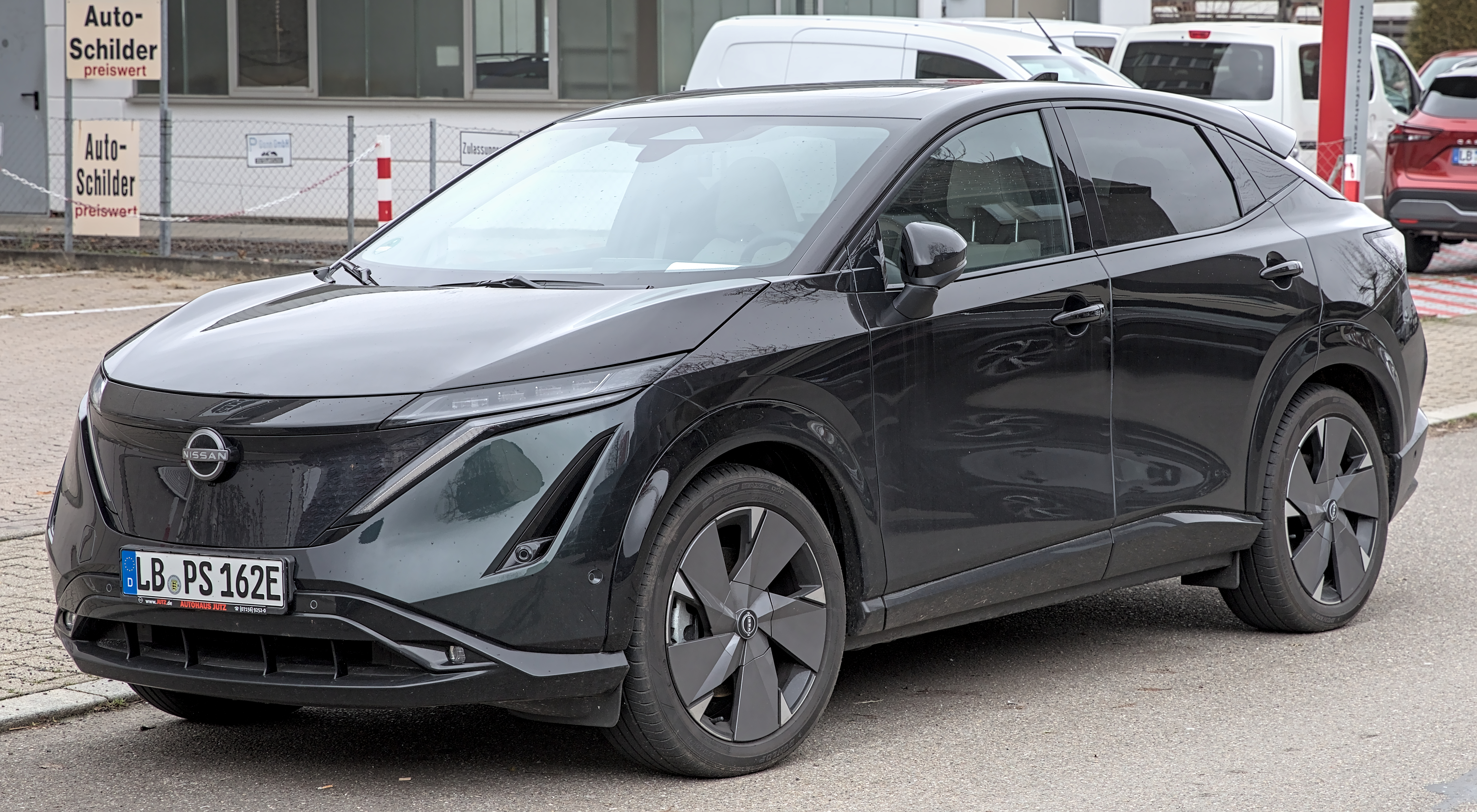
The Nissan Leaf is a popular electric car that is known for being affordable and practical for everyday use. It's designed to run on electricity instead of gasoline.
The Dodge Charger is a big car that looks sporty and can go really fast. It's popular because it combines a comfortable ride with a powerful engine, making it fun to drive.
Chadimo is a type of charging plug for electric cars that helps them charge faster. It's mostly used in Japan and is an older way to charge compared to newer methods.
The previous generation Leaf is an older model of the Nissan Leaf, which is a popular electric car. Newer models usually have better features and performance.
The EPA is a government agency that tests cars to see how far they can go on a certain amount of energy. They help people understand how efficient a car is.
Front-wheel drive means that the front wheels of the car are the ones that get the power from the engine. This helps the car grip the road better, especially in bad weather.
The Tata Motors Aria is a type of SUV that is big enough for families and has a lot of room inside. It's not as well-known as other SUVs, but it can be a good choice if you're looking for something affordable.
Superchargers are special charging stations for electric cars that can charge them much faster than regular chargers. This helps you get back on the road quickly when you're traveling.
Zero gravity seats are special car seats that help make you feel more comfortable by spreading your weight evenly. They are designed to reduce pressure on your body, making long drives more enjoyable.
Taylor fit seats are a type of car seat made by Nissan. They use a special synthetic leather that feels nice, similar to a fancy leather called Napa, which makes them comfortable to sit in.
Napa leather is a type of soft and nice-looking leather often used in fancy cars and furniture. It's smooth and lasts a long time, which is why many people like it for car interiors.
Android Auto is a feature that connects your Android phone to your car. It shows your apps and maps on the car's screen, making it easier to use your phone safely while driving.
Apple CarPlay lets you use your iPhone in your car. You can see your apps, maps, and music on the car's screen, making it easier to use your phone while driving.
Route planning is figuring out the best way to drive somewhere, especially for electric cars. It helps drivers find charging stations along the way so they don't run out of battery.
SOC means how much battery power is left in an electric car, shown as a percentage. It's important for knowing if you can drive to your next charging station without running out of power.
Air cooled means that the engine or battery is cooled by air instead of liquid. This can make it lighter and simpler, but it might not keep things as cool during intense use.
Battery longevity means how long a battery can last before it stops working well. Keeping it at the right temperature and not overcharging it can help it last longer.
Forward collision warning helps drivers by letting them know if they are getting too close to something in front of them. It uses sensors to watch the road and warns you if you might crash into something.
AEB with pedestrian detection helps stop the car automatically if it thinks you might hit a person. It uses cameras and sensors to see pedestrians and can help avoid accidents.
Adaptive cruise control helps you maintain a safe distance from the car ahead while driving. It can automatically slow down or speed up so you don't have to keep adjusting your speed.
A 360 degree surround view camera gives you a view of everything around your car, almost like a bird flying above. It helps you see better when parking or driving in tight spots.
Delivery fees are extra costs you pay when buying a car to cover the shipping of the car to you. These fees can change depending on how far the car has to travel.
The Nissan Armada is a large SUV that has a lot of space for passengers and cargo. It's great for families and can handle tough driving conditions, plus it has some nice features inside.
The Toyota Camry is a popular family car that is known for being dependable and easy to drive. It has a nice interior and gets good gas mileage, making it a favorite for many people.
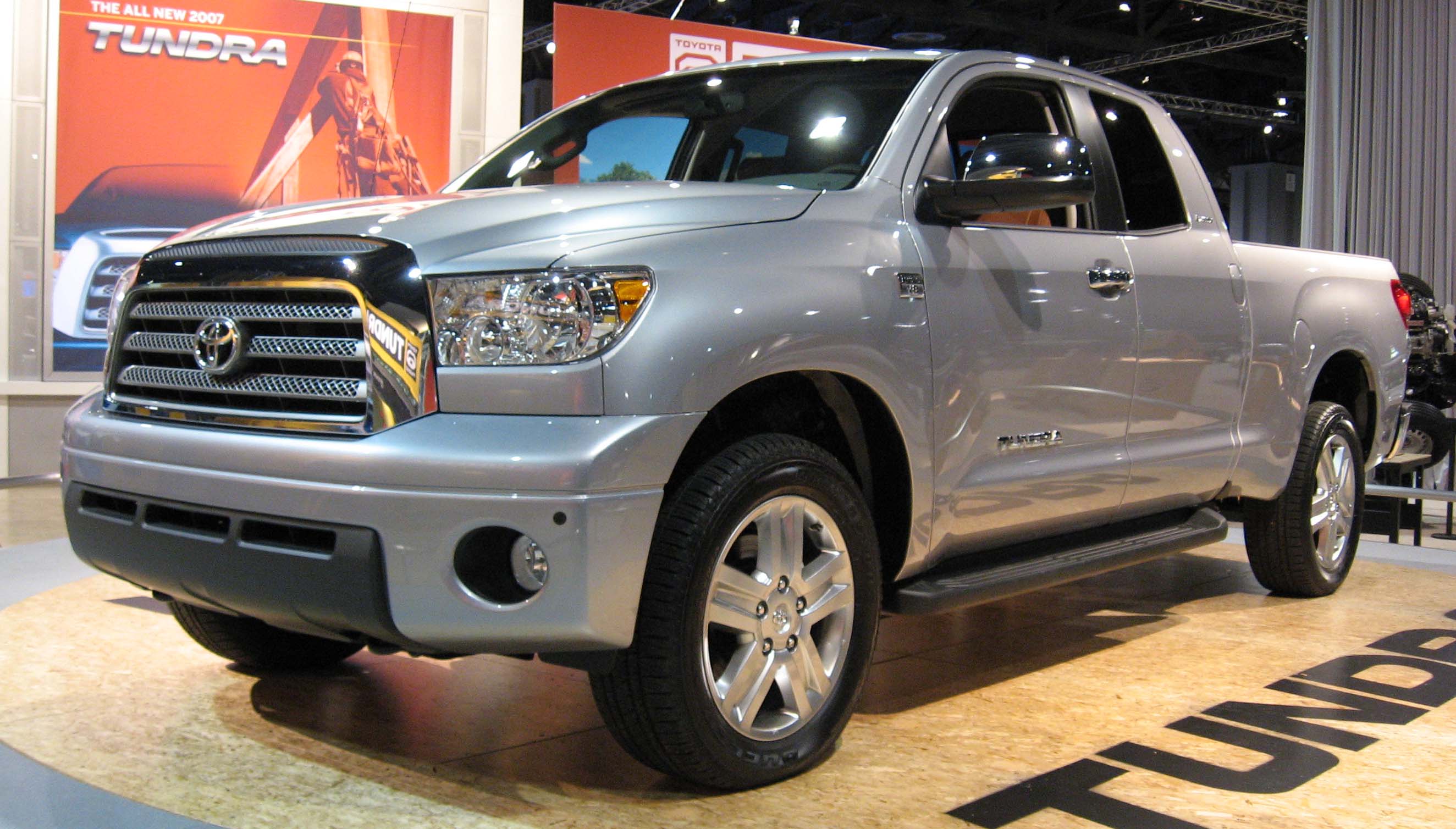
The Toyota Tundra is a big truck that can carry heavy loads and drive on rough roads. It's known for being tough and is a good option for people who need a strong vehicle for work or outdoor activities.
The BMW i4 is a new electric car that looks like a regular sedan but runs on electricity instead of gas. It's designed to be fun to drive while being better for the environment.
The Subaru Impreza is a small car that's great for new drivers. It has all-wheel drive, which helps with traction in bad weather, making it a safe choice.
The Toyota RAV4 Prime is a type of SUV that uses both electricity and gasoline to drive, which helps save fuel. It's known for being safe and having modern features.
LIVE
Hi, everyone, and welcome back.
I'm John Linkov.
I'm Maddie McCarty.
I'm Steph Schrader.
And we're here to welcome Steph to the show.
She's an auto reporter at Consumer Reports.
She's been here for a number of months already and has been on videos, done a lot of stuff
for CRO, and now makes her debut on Talking Cars.
So welcome.
This episode, we are going to be talking about the new Nissan Leaf electric vehicle.
It now has a Nax, the North American charging standard port, instead of Chadimo, which is
Charger de Move, equivalent to Charge for Moving, and is a pun on Ocha demo Igaoka
de Suka in Japanese, which means let's have a cup of tea when charging.
And forgive my Japanese butchering.
You need multiple cups of tea.
Yes, for the old leaf.
That was a long, big, big cup of tea.
It is the third generation.
The Leaf originally debuted for the 2011 model year here in the United States, and it's
still a small car.
It's a little taller.
Yeah, so with that, we're going to jump into what we like.
And Steph, you did our first drive on it.
You spent a lot of time in a borrowed one as well as our own.
Tell us what you think about it.
Well, it fixed the two most glaring issues.
One with the Nax port.
Chadimo, really hard to find.
Kind of an older standard.
It was a slower charging standard.
This one charges about three times faster than the previous generation Leaf.
And it also rides a lot better.
It's a little less jarring over bumps.
Absorbs bumps well, but it's not too floppy.
It's got a good balance of ride quality, like comfort and handling.
Maddie, did you find something similar or whatever?
Yeah.
Honestly, I was kind of expecting something similar to the old Leaf, which I haven't driven.
I never drove one, but I have heard stories.
So I kind of kept my expectations quite low.
So I was actually pleasantly surprised and I was like, oh, you know what?
It's very smooth over bumps like you were saying stuff.
So I actually didn't have a problem with the ride or how it handled.
Okay.
Let's talk about the powertrain.
So the range of it, depending on the version you get, 259 to 303 miles according to EPA.
We have ours is 288 miles, RSV Plus trim.
It's front-wheel drive.
In the winter, it can drop.
We have a little bit of that and the stuff that's problematic, but I mean, overall, it's
been okay, right?
It's been fine to drive around.
The range has been relatively within spec.
Yes.
I think I got about 260 miles at a full charge, which is lower than the 288 projected, but
it is a winter time.
So that's not unexpected.
Yeah.
So it was definitely, definitely better than what the first gen Leaf and second gen Leaf
offered.
I think, Steph, you took the borrowed one, I think, on a trip and...
Yeah.
Roughly from here to Boston and back and it was great.
It's finally got enough range that it feels more like just kind of an everyday usable
car.
You can take it along the road trips.
The route planning is really good.
It's really seamless.
It'll suggest chargers along the way.
If you want to route to a different charger and get some shopping done, stop at a bathroom.
You can do that and it won't fight you or constantly try to reroute you.
But yeah, it's just kind of a change in focus from being more of a commuting focused vehicle
with that shorter range to being one that you can take on a road trip if you want to.
Yeah.
Yeah.
I mean, I think it's based on the Aria, similar platform as the Aria.
So it has, Nissan's been able to take a lot of that development, put it into this because
Aria is expensive.
I mean, this is not cheap, but it's still as much more of the approachable, affordable
EV.
Absolutely.
And I think having that switch to the next charger does make it into something that you
can take on those trips to other cities and other states because the level at which you
can charge the leaf is so much faster now and there's so many super chargers around.
You just have to be careful and you have to actually look in, I think, the Tesla app to
make sure that the charger you're going to is one that supports vehicles that aren't
Tesla's.
Yeah.
That's the only caveat I would say and PSA to people.
Yeah.
There has been, I mean, as an interesting side note about all the whole like, the ax is open.
Some ax is open to some, not everything is there.
But yeah, no, totally, totally.
The interior, and I think Maddie, you want to talk about the seats at some point, has
the zero gravity.
They're called Taylor fit seats, which is Nissan synthetic leather that feels like Napa
leather and not the winery in the Napa, but the material feel.
What did you each think of it?
Because it came across as a positive and so far in our driving, most people felt they're
okay.
And we've had a lot of conversations, you and I, particularly on another podcast about
zero gravity.
Yeah.
No, I thought they were fine.
I honestly, I didn't realize that they were zero gravity, but I did notice that they
were nice.
So I guess that kind of confirms that the zero gravity seats are comfortable.
I did see that other people, they didn't like it.
Do you maybe not like it?
I thought they were really supportive while still being soft, but I do worry about how
that Taylor fit that pleather.
Let's call it what it is.
The loner that Nissan let us use, it was already starting to show, it had these white seats
and it was already starting to show some blue from people's pants.
And I'm like, yeah, yeah, that's yeah.
Our seats are black.
So you're not going to face that problem.
So, I mean, taking it around, again, we haven't been to put it on the track yet.
Heather, A, we're putting miles on it, but for miles and we've also got the snow.
But I mean, in general handling, it's competent, not really particularly exciting, I would
say, right?
I think it's one of the better handling kind of crossover style EVs.
If I was going to pick one in our current test fleet, that's the one.
It's got the battery down low.
It's a really balanced chassis.
It's kind of fun to drive and like 214 horsepower, it's peppy.
Even in kind of its most eco mode, its most efficiency minded, you're never left wanting power.
I thought it was kind of fun, actually.
Yeah, I mean, I like you said, I wasn't ever left wanting for power because it was there
as soon as you put your foot on the accelerator, you were going, you're flying.
Yeah, definitely.
It's it's probably not the most neck snapping type of acceleration, but far more
far quicker than the German cars generally are.
You know, the Germans, at least the Audi's and the Volkswagen's tend to have a
like a bit of a delay coming in.
So it's almost like the gentleman's EV has a launch is gracefully down the road.
But it is it's quicker, but not meant to be a performance.
Yeah, like you can drive just fine with it.
Yeah, you don't have to worry about it lagging behind or jolting you forward.
Like the wagon, your ass.
Oh, yes, yes, yes, yeah.
Yeah, the wagon, your ass acts almost like a loose interaction.
Like it's a turbo, you know, climbing inside.
What what do we think about the the you guys think about the interior
because nice integration of Apple CarPlay and Android Auto.
It has a kind of an attractive interior.
It's definitely not nearly as quirky and weird as the original one.
I think it looks pretty clean.
I wasn't like in awe of what it looked like.
But I climbed in and was like, OK, I can I can handle this.
I can deal with this.
And yeah, the integration of Google makes it really familiar, you could say.
The lower the lowest trim does not have Google Assistant integrated into it.
So with our trim, it does.
And it's nice because you do have like your widgets where you can have your map
and your media all up on the same screen at once.
And like you said, with the route planning, it uses Google Maps.
And so it is really good at finding all those chargers that you need
and basing it off of the vehicles, SOC.
Yeah, so that makes it super easy because in other vehicles, you have to like
kind of account for how many miles you think you have left versus how far away
that like maybe the charger is going to be and you have to plan all yourself.
So it's nice that that's integrated because not all EVs have that yet.
And I mean, because it is Google integrated right in the system,
it'll show you how many chargers are at a designated station.
So if you want to make sure that because I know this is a problem,
at least one or two of them are working, you know, what you've experienced
and broken chargers and people blocking them.
Yes. Yeah, no, indeed.
Yes. So there are a number of other positives that we had, Steph.
You were you were talking about a couple of them.
Yeah, they fixed another couple of issues with it.
It's got a better cooling system, no longer just air cooled, right?
So it's better at keeping the battery in optimal temperature.
It should help with longevity.
So not only can you go longer, your battery is going to last longer.
And it has a telescoping steering wheel.
That is a good point.
It didn't have it before.
It didn't have it before. That's amazing.
And what else did you think about, Maddie, any other big things,
you know, particularly in maybe the 8S world or such?
I think there are some positives there.
You might tell that I'm trying it's a little bit of a stretch.
I would say for the most part, it's fine.
ACC definitely takes advantage of that EV powertrain.
So it's so smooth with acceleration and deceleration.
But I can save the others for later.
I will say what is standard, though, because we do like it
when safety features are standard.
So it does come standard with forward collision warning,
AEB with pedestrian detection, rear AEB, blind spot warning,
lane departure warning, lane keeping assistance, adaptive cruise control
and lane centering assistance.
And then it comes with a 360 degree surround view camera,
which can be really nice for backing into parking spots
or even seeing what's in front of you.
So at least there's that.
Yeah, I mean, I do it while the hood drops off.
It is nice to be able to just, you know, to pull up, particularly,
I mean, now in winter, you know, which is like, you don't know
how far out of snow is, you don't know what's sticking.
I mean, it is one of those little things that.
You may take for granted until you need it.
Yes, definitely.
I mean, I found it I found it roomy and I like that.
Just particularly compared to the first one, the first one.
Look, it was an early EV, you know, packaging is not going to be great.
But this size, to your point, Steph, you said, you know,
it's similar size.
It's not like it made a giant footprint change,
but much more efficient use of space.
Rear seats comfortable, easy to get in and out of.
And again, it is a longer distance EV, not a commuting special
that you have to constantly charge like that first one.
I like that it's still pretty inexpensive.
Like I know the bolt that's coming out as kind of a limited release
is going to be undercut it by just a couple thousand dollars.
But I mean, it still starts at under 30,000.
You know, delivery fees bump it up just over 30,000.
But still, I mean, basically the same price as the last one,
which today is is really kind of rare,
especially with something that has so much more modern technology
and is such a big step forward in a lot of ways.
And it's not a gimmicky $30,000 where it's like, well, it's really 40.
But then you figure in the incentive and the this and the that.
Like, no, no, no, it's you walk in, you can you can pay that price
if your state has an incentive all the better.
OK, so some of the things we found a little lacking on it.
One charging speeds, not really particularly great.
I mean, it is three.
I think you said three times as fast, faster than the last leaf,
but still 150 kilowatt max on DC fast chargers isn't fantastic.
Right. I didn't find it that obtrusive.
I mean, Nissan, we haven't really done our own speed test
aside from, you know, anecdotally, the one time where it went
seven percent over 90 percent and only over 90 percent
because I was farting around in the store, you know,
but I can totally believe Nissan's number of 10 to 80 percent in 35 minutes.
I don't think that's a bad.
Yeah, not awful.
I think it's it's the in comparison you see for a brand new car coming out.
It's on the low end, you know, where you see a number of competitors
that do have just faster speeds.
So maybe not a super negative, but definitely on the low end of that.
It's livable, but it'll be surpassed probably pretty quickly.
Oh, yeah. Well, we see everything.
The minute it's out, it's going to be surpassed.
I feel like everything we've talked about so far is very much just
exactly that sentiment of it's very middle line and it's going to be surpassed.
But it's it's all right. It's fine.
Yeah. It's it's livable.
Well, in particular, again, to your point, the price.
I mean, if this was a $60,000
EV that was all of a sudden going to be out of date, that's one thing.
Yeah. You know, I mean, just like that's that's a nonstarter.
No one's going to be buying that.
So what else do you think controls?
I feel betrayed. You know, OK.
I the last one, I got one as a rental car and I was like, I like this thing.
I could see myself like having one of these, you know, but it had buttons.
It had tons of physical controls that were wonderful.
And now, I mean, to their credit, it still feels like a very normal car inside.
They didn't, you know, try to cram everything on one screen or do anything.
True. Super bizarre.
But they have a lot of these touch sensitive buttons that, you know,
if you don't have gloves that have the little point you can't use with gloves.
That really is annoying in the winter time, because the climate control buttons
are all touch capacitive on this bar.
I don't know if you struggled with those, but I did.
Like I accidentally hit the screen a lot.
Yeah. And you don't know if it actually registered your input
because it has a very like light beep, but you can't hear it
if you have the AC or like the the heater going or if you have music going.
And then it's supposed to have like a haptic like touch feedback,
like vibrate a little bit.
I couldn't feel it. I think one person did.
Did either of you feel no any sort of response?
OK, so then you are kind of tapping blindly and hoping that it works.
And I mean, any time you have to take your eyes off to kind of confirm,
did I press this and some of these controls, especially on the steering wheel,
they're so little that you have to have a great amount of precision
to make sure that you're pressing the right one.
And it's just frustrating and it's less safe than having, you know,
here's a knob, here's a switch.
You know what they did give you, though?
They gave you buttons for the the gear selector, plus their heart.
You're telling me you don't like those buttons?
I mean, you can use it.
Well, there's a drive switch, too. You have a toggle.
Oh, yes, yes.
You know, I I would appreciate a regular inline gear shift or something like that.
I mean, to your steering wheel, you know, point,
I found with every Nissan that I've driven, let alone the leaf.
But but I think I was in the Armada recently for a while.
As you move your hand on the wheel,
you will glance one of the the rectangle or buttons
that chooses between the gauge cluster and the center screen.
So then the one time you're like, Oh, I'll adjust something there.
You find out that it's not in the mode that you left it in.
Yes. Or I left it in, excuse me, not you.
No, it happened to me, too.
And it's and it's eventually just like, no, I'm just going to take my my focus
off off the road. Yeah.
Or you have to look and make sure, oh, OK, I hit that one
so I can adjust the gauge cluster and, you know, you're 70, 80, 100 feet down the road.
Yeah. And anytime that you kind of power cycle the vehicle, turn it off and on
or use E-Step, which we'll probably talk about.
Yeah, we should talk about that.
When you switch back to like the regular mode,
it'll start with like two out of four region,
even if you like having a little extra rigid or breaking
to kind of help slow the car instead of having to press the pedal all the time.
Well, why don't we get into E-Step?
Since you were talking about it.
So yeah, so E-Step is their one pedal driving mode ish.
Well, you it's not a full one pedal.
It won't bring into a complete stop.
But it will you could just you could drive with the gas
excuse me, the accelerator pedal somewhat, right?
There's there's a quirk in Japanese law that is why they did this,
where you have to have the car controlled by at least two pedals.
But E-Step is on its own little switch.
And it's not a true one pedal driving mode.
And it also moves the brake pedal as it engages.
So when you do need to hit the brakes,
because it's not designed to bring the car to a complete stop,
it's it's suddenly not at a consistent location.
And I I hate it.
But what about the other modes?
Did we did you like?
Well, can we talk about how weird it is that the E-Step button is all the way
over on the right and not like a continuous level of using the paddle?
If there's like if you hop into a Hyundai or a Kia EV, that's how they do it.
You can press the pedal all the way down to I pedal, which is their one pedal mode,
but not in this car.
And I don't know why and it's so far away.
So I kept having like I like to adjust my regen level as I'm driving.
And I did not like having to constantly just go back and forth and kind of monitor
what state I am in, because if you have E-Step on and then you try to like
reduce the regen, it gives you an error and it forces you to turn off E-Step.
So I just don't think that it's a very intuitive way to do that.
Yeah, it should really just be the fifth level.
Yes.
If, you know, and and on the paddles, it shouldn't
shouldn't require going all the way over here.
No. And I will say I did.
I thought I wasn't going to like the range of regen, but I actually thought it was OK.
By the end of the time that I had with it, at first, I thought it wasn't
like the the levels themselves.
There's four different ones that they weren't different enough from each other.
But then I settled on level two, which I liked.
OK.
So I think I was OK with it.
I mean, I like I always like engaging and playing with it and almost using it
like left foot braking in a sense.
And I think the Hyundai system, when they execute it well, and sometimes
their hybrids have it and sometimes their hybrids don't have it and that's a different vehicle,
but it's still strange.
I think it's the best of all of them because it has a wide enough range.
But it still doesn't remember when I get in that I want one pedal breaking.
Yeah, you know, in my neighborhood, I'm in the city and I want to get in.
And, Hyundai, what are you doing?
It's as if it's some kind of, you know, safety thing.
We have to go back to the basic and then go from there.
Matty, you alluded to the 8S.
I did.
Yes. So where are we with that?
Yes. So we do have lane centering assistance to help steer your vehicle
in the center of the lane and adaptive cruise control, which is going to help
you maintain your asset speed behind a lead vehicle and it can speed up or slow
down depending on what the lead vehicle in front of you is doing.
So like I said, ACC, fairly smooth, but lane centering, I would say
that is my least favorite part of this because it just didn't feel like it was,
you know, right on the center lane, it didn't just stick to it.
It was very fluid and it would swing wide around curves.
It even would activate lane keeping, which would then kind of freeze the steering
wheel as it was pushing you back into the lane this whole time.
It's like, I'm not the one who caused the vehicle to swing wide.
The vehicle did.
So now you're punishing me for a mistake you made.
So I just don't think that it's very pleasant to drive with.
Many other systems allow you to put in your own steering.
And it feels like you are driving with the system.
This one feels like it doesn't want you to as much.
And it's just taking hold and has a stiffer steering.
Yeah, I mean, lane departure warning, lane keep assist kind of engage kind of late.
Absolutely.
They're kind of like a last resort as opposed to an assist.
Which might be maybe a philosophical decision on their part.
But I think that even on like the strongest intervention or sorry,
it's like the highest sensitivity level.
It doesn't really change how effective it is.
So it's always going to activate once you're out of the lane.
And then it might give one shove back into the lane and then give up.
So you'll end up chasing or changing lanes anyways by accident.
And if you get to one of those like dotted lines as you're like merging
under the freeway, sometimes it'll go.
And it's it's not pleasant.
Yeah, like you should have to monitor the system.
It's not going to be perfect.
But when you feel like you have to babysit the system, I don't want to use it.
Is it the lack of that additional feature that you know, the hands free aspect?
I think the difference here is that the hands free aspect is also using HD mapping.
So it knows where the center of the line is from like GPS
or just previous data that it's it's bringing in.
So I feel like there's less mistakes, we might say.
And that's because the hands free system, it has to be quite confident, right?
Theoretically.
So I think there is a performance difference that you can definitely see.
OK.
And one thing that's very different from apart from the hands free versus hands on
is that this version doesn't have a driver monitoring camera.
So in the hands free version, if you get it,
it's not available on this on this vehicle.
But in like the Armada, it's going to have a camera
that's tracking your eyes to make sure that you're looking at the road.
And if you're not, it's going to give you warnings.
And then eventually it will intervene and bring the vehicle to a stop.
So this car will not doesn't have that feature.
So you really, really have to pay attention.
Apart from all of the performance issues I was talking about,
but you can't rely on it.
No, it's it's an assist.
Definitely not.
Definitely not a low cost hands free system.
Low cost, you know, relax system.
We had a little bit of issues with ours.
And again, this is our own model.
So it's it's not to say that all Leafs are bad or something.
But some charging issues, you know, it's supposed to get.
One person said, you know, that we're supposed to get about two hundred eighty
eight, two hundred ninety miles, but full charge two hundred sixty three.
I think was that you?
Or was that me? OK, that was me. OK, sorry.
Yes. So we've had some, yeah, like you said,
interesting phenomenon happened.
Yes. With this phenomenon.
It's a good one.
So when I took the vehicle, it was at two hundred sixty three.
And then when I got to my home,
left it there, didn't touch it again, hop back in it.
When I left it, it was at ninety percent SOC.
And then when I hop back in, it was suddenly back up at a hundred percent SOC.
So it's like I recharged my battery overnight, but I didn't.
It wasn't plugged in, but the range didn't change.
So it's just kind of tricking you to be like, oh, I'm a hundred percent charged again.
So I don't know what it would do if I plugged it in.
But I wasn't the only one that experienced this.
One of someone else on this podcast might cross in.
Yeah, he said that when he took it over the weekend,
it would drop as he was driving.
And then every single time he hopped in, it would be back at a hundred percent.
It was a hundred percent of what remained.
Yes, yes, technically.
So maybe that was it.
I would feel right at home.
I have a old nine forty four with a broken fuel gauge.
So it's always full.
It's always full, always empty.
It's just always when it goes, it goes.
Yes, just just charge it in, plug it in often.
Step to do when you were driving it, what was your experience with any of the
any of the range issues or it was I didn't I most of my driving was earlier
in the fall, so I didn't get anything like that.
But I mean, this is kind of a standard DV problem.
When it gets cold, it doesn't charge as efficiently.
It doesn't, you know, keep its range as well.
But luckily, this one has enough range that I don't feel like you're going to
get stranded like you will in the 508.
We did have one person.
Oh, I think Joe ran out.
Yes, Joe ran out on the highway.
He he was supposed to have like he didn't charge it overnight because I think
when he got home, he had over 50 percent SOC.
So it was like, all right, I'm going to have enough getting back.
And no, he said it like dropped so severely as he got closer and closer to the track.
And so, yeah, it went into turtle mode.
He got battery warning issues or battery issue warnings, and it ended up dying.
And then I think my crossing had to go and rescue him.
That happened to me with the first leaf we had to.
So I mean, I think with the test leaf, one person has to get stranded.
Yeah, it's a tough initiation.
Yeah, it is.
So I think I think moral of the story in ours that we have, like you said,
we don't know if it applies to others.
You can't trust the SOC.
You can't necessarily trust a range once it goes 50 percent, we realized.
So but our EV range test, I think later in the summer, we'll see how much we get.
So we do have a first drive on consumerreports.org at Steph Road,
about the one that we borrowed, and the leaf is about to enter testing.
And as soon as we plow the snow off our track, we'll be able to get a lot of that done.
So check out consumerreports.org for more on the leaf and our road test information.
So now we're going to move to a different topic
because we had a discussion with Keith Barry about car insurance.
It's something that we hear a lot about from viewers, from readers,
from subscribers, from members.
So Keith and I sat down and had a great conversation about car insurance
that we want to share with you.
So Keith, car insurance, huge topic in my house.
I've got my daughter is going to be a licensed driver soon.
So I'm looking forward to that that cost increase.
Oh, boy. Yeah. Yeah.
Tell us, I mean, we we we have a survey that we did of insurance policyholders.
They gave us a lot of information.
Yeah. And you can see all that at cr.org slash car insurance.
And so we survey, you know, we love surveys.
Oh, my gosh, we survey everything.
But I like it because the survey means, you know,
people want to hear what we have to say,
but they also want to see something that reflects what happens in their lives
in the real world.
And so when we asked 40,000 people what they thought about their insurance,
they got we were able to look at way
many, many, many more experiences than we could have with insurance.
Oh, certainly. Certainly.
Yeah. So, you know, different states, different parts of the country,
a lot of insurers only are active in certain areas.
So we asked them, you know, whether they liked their insurance company,
whether they switched recently, why if so, why they switched.
We asked them about claim satisfaction.
We asked them about price increases.
We asked them if they were satisfied with the prices.
And we were able to figure out which insurance companies
were the best in in the most of those areas that we asked them about
and for different parts of the country and for, you know, even different groups
of people, including, you know, seniors, new drivers, et cetera.
So I mean, some of the findings, I think one of the big things is
people tend to just sit on their policy, you know, it comes in the mail every year.
It doesn't look obscenely, you know, obscene when they raise a rate.
Is that good or bad?
Yeah, so you might be leaving some money on the table.
So, you know, what we found is that, you know, if there's a change in your life,
like your kids getting getting getting a license, like maybe you're retiring,
you're changing a job, you're changing a car, you're getting married,
you're getting divorced, whatever.
You you want to talk to your insurance company about that.
And you also want to shop around for insurance.
It isn't just about the life changes, but it's also depending upon
where you live in some states, insurance companies are allowed to just jack up
your rates if you haven't switched for a while.
So you're saying like being passive gives them a window?
Yeah, they say, oh, this person isn't shopping around, they're safe.
We're just not going to treat them that we're just going to jack up their rates.
No, no, no accidents, no nothing.
No, and that's in some states, that's the case.
The other thing that you have to think about is in some states,
they're also able to look at your credit scores.
So if your credit score improves or if it takes a hit, that's also going to change it.
So it's always good.
You know, I'd say, you know, every three years or so, it doesn't take that long.
Call around, find a local independent agent, go online and, you know,
look at our list of the top rated insurers, see if they operate in your area
and get a couple of quotes.
And, you know, I've personally done this one time I ended up saving a lot of money.
Another time I realized, hey, I'm actually in the best spot I could possibly be in.
And at least you know what you're spending, even if you don't save money,
at least you know.
It's a validation check, basically.
You know, it's validating what you, you're where you stand
and then what you can save potentially.
Exactly.
Another one is if you're buying a new car.
You know, so we got data from a couple of our partners
and it showed the difference in price for yearly price and insurance
from one car to another, two brand new cars, two cars could be sold
even at the same dealership, could be $2,000 a year.
For what reason?
Well, it depends on, you know, sometimes it depends on
on how expensive the car is to fix, how much damage it can do to someone else
if it hits them, which is unfortunate.
So you're saying like a Camry and not knocking a Camry,
but just as an example, next to a Tundra.
Yeah, a larger car is going to do more damage.
How easy that car is to fix.
And, you know, also sometimes it's it's just sort of the the vehicle itself
where the claims history for that vehicle is sports cars, fast cars.
Yes.
Tend to be more expensive to ensure.
Sure.
The cars that are kind of on our top picks that are a little more,
hey, this is a good choice for a family.
Those tend to be a little less expensive.
You know, your Subaru's are up there and at the bottom, you've got your charger.
You've got your, you know, your BMW i4.
These cars that we say, well, it's real fun to drive,
but you can get in a lot of trouble driving those cars.
Certainly, certainly, certainly.
So before you buy, you know, factor that in because the car might you
might be thinking about your monthly payment and not expecting
an extra hundred dollars a month, two hundred dollars a month in insurance costs.
So you're saying for a new driver, Impreza, not WRX.
Exactly.
Exactly. Yeah.
What what happens with in sense of dealing with companies?
You know, is it is it they're all just nameless, faceless monoliths
unless you go with a local agent or are some easier to deal with others?
So it's really interesting.
We really dug into this and we got stories from people and they told us,
you know, they poured the heart out sometimes about I was with this company
for 20 years, never thought about it.
And then when it came time and I actually needed them
and that's where the story diverges.
Yeah. So you either get I'm so glad that I stuck with them
through all the rate increases because they handle my claim perfectly.
Or sometimes it's and they fought me tooth and nail.
They, you know, they didn't want to pay.
They, you know, they didn't answer my phone calls.
I couldn't get in touch with there was, you know, just a call center, no one local.
There's a big difference between how you're treated
among these insurance companies, what we found.
I mean, no one is going to.
No one's going to get invited to your wedding.
But, you know, some of some of these folks,
you know, you're not going to put them on your holiday card list,
but some of them are a lot easier to deal with than others.
And when you're already in a lousy situation,
you want to make sure that it's, you know, nice and easy to get that claim paid.
Have it taken care of how one person you can deal with rather than having a call
and wait on hold and tell your story every time.
You talked about, you know, the anecdote of the person
paying all the rate increase and such.
Does it tend to go what you would think the super cheap low cost, you know,
by the dollar insurance company versus a little more of the high end price?
You get a little better service.
You get what you pay for, basically.
You know, sometimes.
But, you know, the thing that I noticed the most
is that some of the companies that are on the bottom of that list
are the ones that spent the most money on marketing.
It's kind of the famous insurance companies are the ones that, you know,
maybe are the ones that you might want to get another quote.
If you if you have them, not saying that they're necessarily bad.
Sometimes they're the least expensive.
Sometimes in your area, they're the best choice.
But we did see some some companies that are a little more selective.
Some companies that mostly dealt with individual agents
and local agents who were longstanding.
So you could have that relationship.
People said that they really like that. Sure.
Some like, you know, USAA, that one's limited to military families
and kind of extended military families and veterans.
That's one where there's, you know, that's always up there.
But again, it's a bit of a select list of people who can actually get it.
So it isn't necessarily the, you know, the big guys are bad and the little guys are.
Or it really is.
It comes down to, you know, it comes down to a lot of different factors.
Some of those factors, does the the agents or do the companies really know
a lot about your vehicle or your area or do you have to kind of prompt them?
Yeah, I would definitely prompt them.
The best agents are going to try and get a policy that fits you
because they are trying to keep you as a customer.
So, you know, I've had this experience when I've called insurance companies
sometimes they've said, you know, honestly, there's nothing we can do.
And I'll say this, this, that.
And I'll say, well, that doesn't work in your area.
That doesn't you don't qualify for this, etc.
Sorry, that's, you know, it's the best we can do.
And other times that they've they've sat with me and said, hey,
you want to adjust your deductible a little.
If you raise it by this much, sure, if you end up in a crash,
you'll have to pay that amount, but your monthly payment will be lower.
And if you don't expect to get into a lot of crashes,
it'll come out in the end with your saving money.
Well, they see your record so they can make that.
It's not going to save the person who once a year is having a crash.
Exactly, exactly.
But there are other things, too.
You can get discounts, ask about these discounts,
and they depend on where you live.
They depend on a lot of different things.
So I am sure that that your daughter is a straight A student.
Close to it.
But that bio AP score grade needs to come out.
OK, you've got to work on that.
You've got to work on that.
I only got a four in my bio AP.
It's one of my great shames in life.
And look where you landed. I know, I know.
I'm not I'm not dissecting anything.
I did not go to medical school.
But with that said, she could she might be able to qualify
depending upon who your insurance company is.
You know, for a good, good student discount.
OK, there are loyalty discounts.
There are, you know, if you don't drive that much,
you can call and let them know.
We saw this happen a lot during sort of when work from home was even more popular
that people would call up their insurance companies and say,
hey, I'm only driving five, 10,000 miles a year.
I'm not driving the 30,000 miles I used to and the premiums went down.
Sure, sure.
As you age, it also changes.
If you retire, that's the time you call when that happens.
OK, other courses and such that you could take behind the wheel to do it.
Or is that only like when you're learning in some states, adults
and even teens can take additional courses.
Again, that depends on insurer and state.
This is, you know, there are 50 different sets of rules around car insurance.
Sure, it's very hard to make generalizations,
which is why sometimes we're finding that the best insurance companies
are the ones that are that are that work in specific states.
So like one of our top rated ones only works in New York.
And they know New York insurance and like no one else does.
But those are definitely worth looking into those things
that you can plug into your car and they monitor your driving.
Oh, yeah.
Definite privacy concerns there, you know, telling your
basically everything about your actual driving.
It can save you a little money.
These aren't going to give be like huge savings,
but they can add up 10 bucks here, 20 bucks there, 30 bucks there.
You know, it can it can it can save you some money.
Yeah, you're not going to cut your insurance bill in half.
No, we're not going to see savings like that.
But you're not giving money to the insurance company.
You don't need to. Exactly.
And that's a good thing.
Is there anything else you could tell us about it?
Yeah, I mean, if you go to CR dot org slash car insurance,
you can find our guide to car insurance.
You can find the best car insurers.
You can find which cars are expensive to insure,
which ones are less expensive.
And I mean, we go into it in great detail.
We break these surveys down, we slice them and dice them,
and we have something kind of for everyone in there.
And people can be part of the survey
if they're members of Consumer Reports.
Yes, they can.
So tell us what you think about your insurance company.
We love when people tell us.
What they think about their products,
because we're only, I'm only one man.
Yes, and we work you to the bone as if they were two.
Yeah, and 40,000 can do, can make,
you know, you can get a very good sampling
and it makes our statisticians happy too.
When that number goes up, they're just, they're happier.
Excellent. So people go to CR dot org slash car insurance.
And they can also look to join Consumer Reports as a member
and participate in our surveys for the car insurance
or as well as for our annual survey for cars
and all other products.
Give us a piece of your mind,
tell us what you think about what you own.
Excellent. Well, with my daughter getting close
to driving time, I'm going to take a look.
Yeah, good luck.
And now we'll move to the question and answer part of the show.
As always, send your video and text questions
to TalkingCarsaticloud.com.
If you do get your question chosen,
you'll get a piece of swag.
It looks kind of like this, but not a sweatshirt.
So imagine it without a hood and long sleeves
and stuff like that.
Maybe it's like what Steph's wearing,
but with shorter sleeves.
Yeah, yeah.
The question comes Steve from California,
who says, I live in the Central Valley
and we have some of the worst fog in the world
that causes massive car pile ups.
I own a Toyota RAV4 Prime
and frequently use adaptive cruise control
to help me navigate in this fog.
I remain hyper vigilant about the cars in front of me
and feel like the adaptive cruise radar
sees well through the weather,
sometimes even better than I do.
Is my car's radar able to see through fog
or am I just hoping that it's helping me?
Maddie?
Yes.
The answer is yes and no.
So the RAV4 Prime, it comes with two sensors
for adaptive cruise control
or what Toyota calls dynamic radar cruise control.
So you have a camera in the front windshield at the top
and then you have one radar sensor
in the front of the grow.
And these two, the more basically the more information
you get coming in, the more sensor overlap you have,
the better feedback you're gonna get
and your system is gonna be able to parse out
all of the false positives, false negatives
and get you actually information on what is out there.
So radar is sensitive to inclement weather.
So those raindrops that you have in really dense fog,
those are gonna dissipate the radar
and it might even reflect back the radar signal.
So your vehicle might sense
that there's basically a ghost object there.
But be that as that may,
I have also experienced using adaptive cruise control.
I use it in inclement weather with heavy rain.
We certainly get really heavy rain here and snow.
But the thing is you need to be monitoring it.
And it sounds like you are staying hyper vigilant,
which is fantastic,
but it can give you that extra level of security
as long as you're monitoring it.
So use it at the farthest gap distance,
so gap distance number four in your car
and just know that the system can give false positives.
It can miss things,
but I think of it as an extra layer of security
to help me in case there's an object out there
that I can't see.
The camera also basically is like your human eyes.
It's not gonna be able to see through that fog very well.
So, but with the integration of the two,
it can give you some,
it can give the vehicle some information
that can help actually be able to monitor
how far away the car is from you.
It is gonna be even,
it's gonna struggle even more around kerfs.
So I'm guessing Central Valley, if there's mountains,
there's gonna be a lot of kerfs.
So be careful, it might pick up the wrong vehicle.
I would definitely stay hyper vigilant.
Toyota officially says don't do that,
but as long as you look at it like a driver aid,
again, it's very good that it has those redundant systems.
Absolutely.
So, if the camera gets a bunch of condensation,
a bunch of raindrops,
you still have radar, vice versa,
but the third system needs to be your own eyeballs.
Yeah, I agree.
Yeah, and also, I mean, I always find,
I really like driving with those types of systems,
but modeling the throttle myself.
Not just setting it at 75, backing off on level four
and being like, okay, everything's good.
I mean, no, and I'd rather be out of it more often in Fog.
Fog is just, I would trust almost the forward collision
warning versus having it on the adaptive cruise control
at that point.
The forward collision warning is gonna kick in.
Hopefully once, if it's in your site,
it's gonna be in the car site.
Yes, exactly, exactly, yeah.
But instead of relying just purely on the systems,
like all right, it's gonna totally compensate for me
because Fog is definitely scary.
I mean, even blowing snow is scary,
let alone Fog, so.
Yeah.
Well, that does it for this episode.
Thanks for watching and we'll see you next week.
About this episode
The latest Nissan Leaf SV+ marks a significant upgrade with the introduction of the Nax charging port, enhancing charging speed and convenience. The hosts discuss their first impressions, highlighting improvements in ride comfort, handling, and overall usability for road trips. The Leaf's range now reaches up to 303 miles, making it more practical for everyday use. They also touch on the new interior features, including zero gravity seats and advanced tech integration, while acknowledging some limitations like charging speeds. Overall, the Leaf SV+ presents a compelling option in the affordable EV market.
This week, we cover the all-new 2026 Nissan Leaf SV+. No longer "just a commuter car," the Leaf offers increased range, updated SUV styling, a new NACS charge port, and a suite of standard advanced safety equipment, including Nissan's Pro Pilot Assist. We share our first impressions of the Leaf and discuss whether Nissan's improvements to its original EV make it a competitive option. We also talk about how to shop for the best car insurance and answer a question about how the weather can affect your car's advanced driver-assistance systems.
Join CR at https://CR.org/joinviaYT to access our comprehensive ratings for items you use every day. CR is a mission-driven, independent, nonprofit organization.
SHOW NOTES:
0:00 - Intro
0:30 - 2026 Nissan Leaf SV+ Overview
1:08 - What we like about the 2026 Nissan Leaf
12:00 - What we dislike about the 2026 Nissan Leaf
25:36 - How to find the best car insurance
37:51 - Audience Question: Does inclement weather affect a vehicle's radar and safety systems?