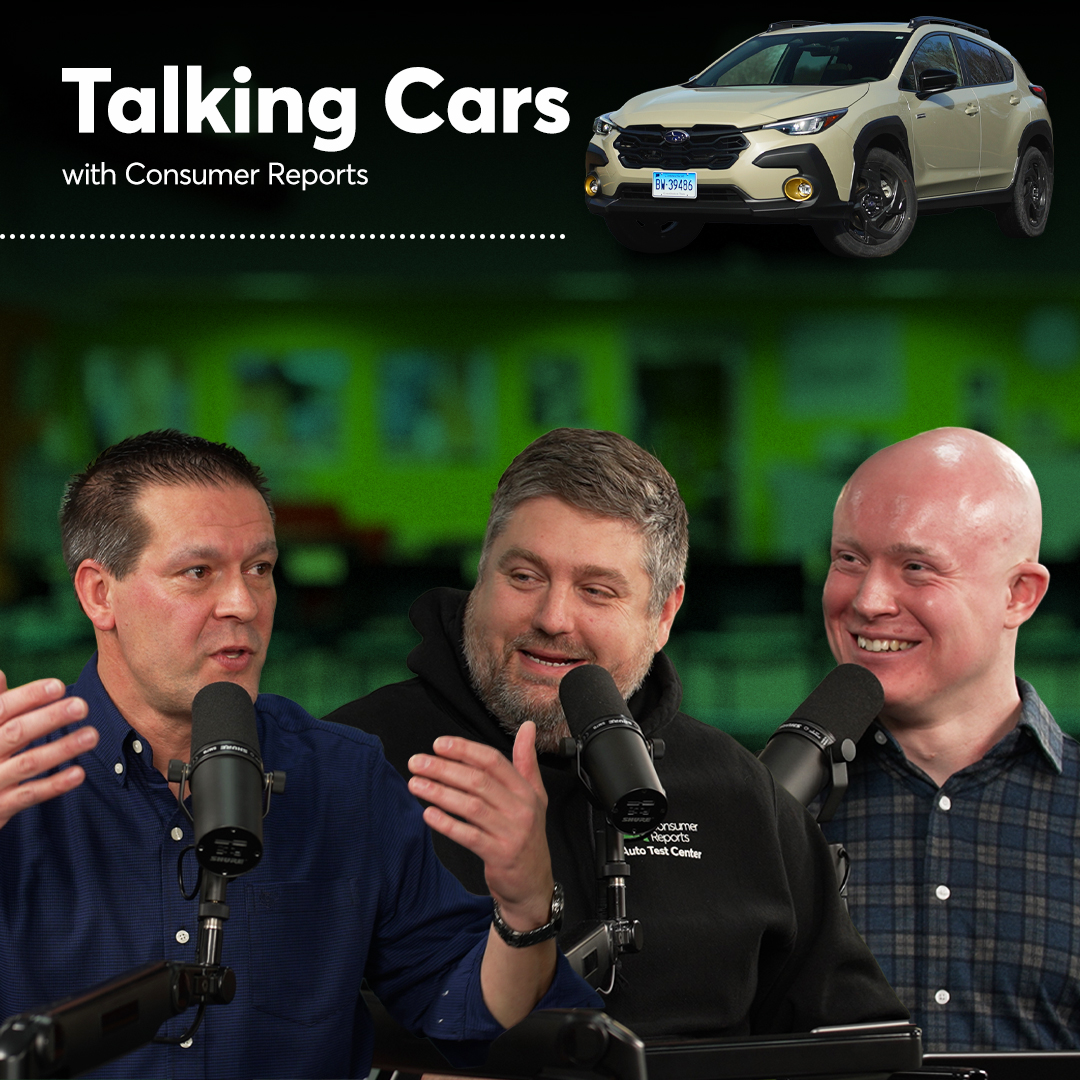
The 2026 Subaru Crosstrek Hybrid is a new version of Subaru's small SUV that uses both gas and electric power to save fuel and be more environmentally friendly.
PHEV means Plug-in Hybrid Electric Vehicle. It's a car that uses both gas and electricity, and you can charge it by plugging it into an outlet, giving it a longer electric driving range.
The hybrid price premium is the extra money you pay when buying a hybrid car compared to a regular gas car. This extra cost is usually because of the special technology in hybrid cars.
Throttle delivery is how smoothly a car speeds up when you press the gas pedal. If it's smooth, the car accelerates gently; if it's abrupt, it can feel jumpy.
A CVT is a type of automatic transmission that can change gears smoothly without any noticeable shifts. This helps the car accelerate more smoothly and can save fuel.
An internal combustion engine is the type of engine that runs on gasoline or diesel by burning fuel to create power. It's what most cars have used for many years.
ICE means Internal Combustion Engine, which is the kind of engine that runs on gasoline or diesel. It's the standard type of engine used in most cars before electric ones became popular.
A subcompact SUV is a small type of SUV that is easier to drive and park than larger SUVs. They have more space than regular cars and are good for people who need to carry things or want a higher seat.
Trim levels are different versions of the same car model that come with different features and prices. For example, one trim might have more technology or better materials than another.
A blind spot is a part of the road that you can't see when you're driving, usually because of the car's design. It's important to check these areas before changing lanes.
Off-roading is when you drive a vehicle on rough, uneven surfaces instead of regular roads. It's usually done in special vehicles that can handle tough conditions like dirt and rocks.
Regenerative braking is a system in some cars that helps save energy when you brake. Instead of wasting energy, it turns that energy back into electricity to help power the car.
The Subaru Forester is a type of SUV that is great for families and people who like outdoor activities. It has a lot of space and can handle rough weather well.
All-wheel drive means that all four wheels of the car get power from the engine at the same time. This helps the car grip the road better, especially in bad weather or off-road.
A drive shaft is a part of a car that helps send power from the engine to the wheels so that the car can move. It's like a connector that helps everything work together.
Traction-limited situations happen when a car's tires can't grip the road well, like when it's wet or icy. In these cases, having power to all wheels helps the car stay stable and move better.
EPA-rated means the fuel efficiency numbers given by the government for how many miles a car can drive on a gallon of gas. It's a way to compare how much gas different cars use.
The Subaru BRZ is a small sports car that is fun to drive because it has its back wheels powered, which helps it handle well on the road. People talk about it because it's designed for those who really enjoy driving and want a car that feels sporty.
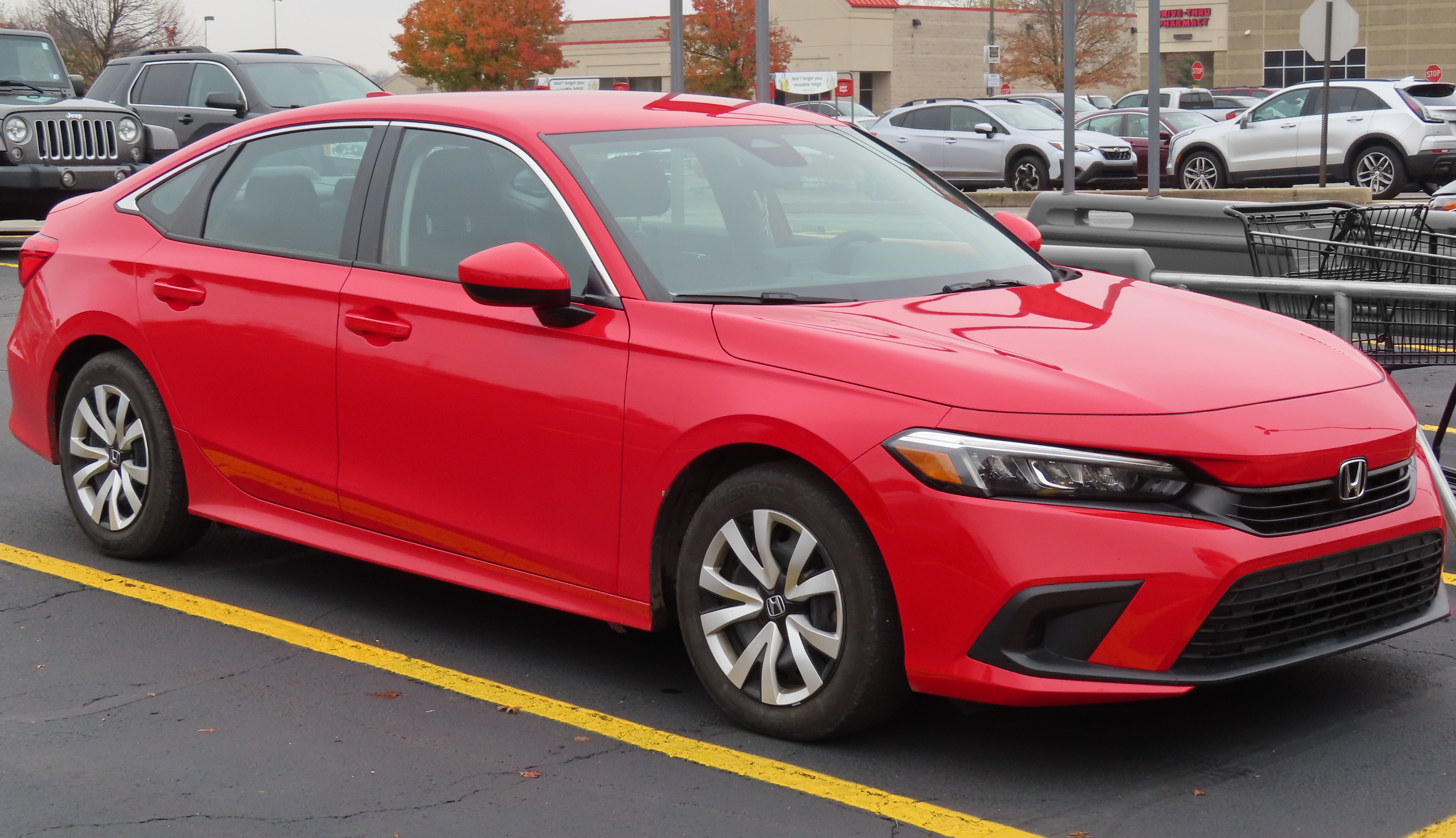
The Honda Civic is a small car that many people like because it saves gas and is easy to drive. It's known for being dependable and is often talked about because it has a good mix of fun and usefulness.
The Toyota Corolla is a small car that is very popular because it doesn't use much gas and is known to last a long time. People often mention it when talking about cars that are good for everyday driving.
The BMW 535xi is a comfortable and powerful car from BMW's 5 Series. The 'xi' means it has all-wheel drive, which helps it handle better in different weather conditions.
The Subaru Outback is a type of car that looks like a mix between a wagon and an SUV, and it's great for people who like to go on adventures. It has a lot of space inside and can handle rough roads, which makes it a favorite for families and outdoor lovers.
ADAS means Advanced Driver Assistance Systems. These are features in cars that help make driving safer and easier, like keeping you in your lane or helping you stop quickly if needed.
LIVE
Hi, everybody. Welcome to another episode. I'm Mike Monticello. I'm Michael Crossen. And
I'm John Williams. So today, we're going to be talking about our first impressions of
the 2026 Subaru Crosstrek Hybrid. And we're going to start off, I'm going to give three
important things I think most people would want to know about this Crosstrek Hybrid.
The first I wrote down, thrice makes right. That's a saying, right? I think so.
It is now. Yeah. And it's because this is Subaru's third attempt at a Crosstrek Hybrid. And thanks
to John Williams, I forgot about the original one. Remember, Subaru originally called the Crosstrek
the XV Crosstrek. And they had a hybrid called the XV Crosstrek Hybrid that came out for the
2014 model year. And then their second one was a PHEV, a plug-in hybrid electric vehicle
that was sold from 2019 to 2023. Neither one was that great. They're kind of like half-hearted
attempts. Just for example, the PHEV only had a 17-mile driving range and a reduced cargo space.
So the second thing I wrote down is the Toyota connection. And that's because just as with
the Forester Hybrid, which we've already tested in uponconsumerreports.org, Subaru looked
too Toyota for some hybrid hardware to make this Crosstrek Hybrid. And the third one is the
hybrid price premium. And we're going to talk about this more. But it's about a $3,000 difference
between the Crosstrek Sport and the Sport Hybrid. But it's a $7,000 gap between the base regular
Crosstrek and the, in a sense, base Crosstrek Hybrid because it starts at like third trim level.
So it is a pretty big price gap. We're going to talk about that. We're going to talk about value
and things like that as we get into it. And also it's good to know that this is not an all-new
Crosstrek, right? It's the main thing here, really, is that it is hybrid now. But it's
basically very similar to the previous, the 2025. Basically the same base motor,
the two leaders gone. So they all have the base of the 2.5. So there's a power bump
across the board. And then, yeah, this is sort of like the real hybrid, right? Right.
Yeah. Okay. So let's dive right into what we like about this Crosstrek Hybrid. And John Williams
is going to start with you for folks that may not have noticed. This is a new fresh face.
He's one of our recent additions, auto test engineer here. John, what are you liking about
this Crosstrek Hybrid? Sure. Yeah, I think specifically with the hybrid, the first thing
to talk about it right is the power turns, the main thing. And there is a lot to like about
it. I think especially compared to the regular gasoline model, there's smooth power delivery.
It comes on pretty quickly from a stop right off the line. You get some nice torque.
You are on paper. It's only 14 horsepower more, but you have to think about how that power is
delivered. And it really is delivered smoothly and pretty quickly. It gives you some nice
passing power on the highway too. That is something that a lot of people complained about
with the regular gasoline one, just not really having enough oomph there. So
it's nice to see that. I like to say that, you know, I call it the dreaded subi surge,
right? And that's that Subaru has for years now because partially because a lot of their models
don't have that much power is they make it kind of an abrupt throttle delivery right off the line.
And maybe the very best thing about making this into a hybrid is that because of that smooth
electric shove, that's gone. It's just nice and smooth off the line. There's no abruptness.
And I think that might be one of the best things about it. Yeah, I think that as a hybrid,
it's very seamless, right? The way that electronic continuously variable transmission,
the electric drive and the engine all kind of work pretty well in most scenarios.
Yeah. Yeah, I would agree with you on that. Yeah.
Okay. Yeah. I think the hybrid part is the best part. Yeah. I actually think that the
gas motor is a bit of a let down on that side of things, that and the CVT. Yeah.
With hybrids, you'll sit their cars on, but the ice is off. And when that gas motor does kick on,
especially when it's cold out like first thing in the morning, it's pretty abrupt.
For sure. And noisy and rattly and like stuff and the cupholder starts to rattle.
So, you know, I think the hybrid part definitely helps refine it, but it still has kind of
those lingering issues, I guess you would say. Yeah, it's not uncommon, especially at the
lower speeds when the gas engine comes on. And keep in mind, it all depends on how heavy you are
with your throttle foot, right, in terms of when that gas engine is going to come on. I saw anywhere
from five to 18 miles an hour, depending on again how hard it was. But at those lower speeds,
you do feel that bump. Absolutely. But John, some other positives about, you know, besides the
powertrain? Yeah, sure. So I think controls, this is a pretty big one. Obviously, it's
pretty similar to any Cross Trek that we've already experienced before, but that's a good thing.
There's a lot of really traditional controls, simple stocks, knobs, traditional gear selector.
It's, I think we talk about this concept a lot of a car that you can just hand the keys to your
neighbor and it's easy to get in and just understand and drive. And for the most part,
the Cross Trek hybrid and the regular ICE one is definitely that way.
And it's refreshing and an age of, you know, touch or touch panel, everything. It is nice to
see some actual controls that you can get in and just go. And there's still a screen there. I mean,
it does have a pretty sizable screen as well. So on people that like that have that too.
Yeah. I also, you know, thought, I mean, this has been a Cross Trek thing, but the ride is,
I think, quite comfortable for among, we would call this a subcompact SUV.
Absolutely. And the interesting thing is that it actually has bigger wheels,
because it is a higher trim. We actually, typically we buy, I think it's the premium,
right? Which is like second tier of a Cross Trek and same with the Forester,
but because the hybrid starts at the sport level, which is third tier for the regular model.
Of I think five, right? I think there's a lot of terms.
And so that they both, both regular and hybrid come with 18 inch wheels,
which is bigger than what we normally have. And so I was not sure how the ride was going
to be adversely affected. But again, as we see with a lot of hybrids,
there is some added weight as well, which typically tends to kind of settle things down.
It does just a little bit. Yeah.
And I think they did a good job on the ride, especially being such a short wheelbase.
You know, there's not a lot of time between when the front axle hits a bump and the rear
axle hits a bump, but overall, I think they did pretty good.
Yeah, definitely agree with that. I think another great thing about the Cross Trek
in general is visibility, right? So many cars nowadays sacrifice visibility for styling.
That's not really the case with the Cross Trek. And a lot of Subaru's lineup for
that matter still has really good visibility.
Yeah, really so much has to do with those windshield pillars or what a lot of people
call A-pillars, right? And Subaru has been doing this for a while now. They're able to somehow
get their craft structure to be up to standards, yet have a slim A-pillar,
which makes it just a lot easier so that when you're going through a turn,
you don't have to like, you know, peer all the way around the A-pillar.
And you do that. There's a little quarter window too that lets you kind of see in
front of the side view mirror, which often is a blind spot as well.
So yeah, I think they're putting a lot of effort into that.
Yeah, I like the handling too. I mean, I think it's not like it's a sporty vehicle,
but it just, you know, it has pretty good steering. We see a lot of cars these days.
The steering feels kind of numb or lifeless. This actually, I think it has a decent heft to it.
It's not too light. It's not too heavy. Turns in pretty naturally, right?
Gives you a little bit of feedback when you're going through that turn.
You want it to kind of, the steering to load up a little bit and feel what's going on with
those front tires. I don't think it does a pretty good job.
Yeah, I would agree with that. And they can roll some B-roll here, but we did a little bit of
camera work on the dirt road out there.
I was off-roading.
Yeah, I was in the, I was driving the camera car and we weren't going all that fast.
I could not actually keep up with the cross track in the corners.
The vehicle that I was driving just pushed, lost the front end.
You're blaming it on the vehicle? Well, maybe it was you.
Maybe it was, but I couldn't keep up with the cross track either way.
So, you know, a credible grip it seems like, especially in like kind of loose terrain
situations. And it's nice to see too, because a lot of the times I think vehicles with
softer, more absorbent, ride comfort for that matter, you do lose a little bit of a
handling edge with those.
Because it has that raised ride height, right? So, you think it's going to roll a lot.
And it does if you really push it, but in normal driving, it's totally fine.
Yeah, I think for 99% of people driving normal day to day,
not going around a racetrack or anything, this thing is going to have more than enough grip.
So, another thing that we see with hybrids a lot that is usually,
often a detriment is brakes, right? And now hybrids have been around a long time.
Now, initially they were all pretty bad back in the day.
But we're still seeing some that have, you know, some level of non-linearity.
I thought these were pretty good. I thought if you got in and didn't know it was a hybrid,
you might think that the brakes wouldn't necessarily give it away, right?
I mean, I think I noticed just a little bit of softness to the pedal
and a little bit of non-linearity when you're, like when you're coming to a stop,
you're feeling a little bit of maybe extra grabbing.
But in general, I thought they were pretty good.
Would you guys agree with that too?
Yeah, I think pretty good, totally normal.
You know, I think again, most people probably would never even feel that.
Yeah, right.
Yeah, it is a challenge for a lot of hybrids sometimes trying to blend,
right? The friction breaks with the regen, which is your electric motor,
slowing the car down essentially.
So, it's nice to see that they've done a good job with that.
Yeah. Any other likes? I know you want to get to your dislikes,
Krasi, but any other likes?
No, I'm just going to go over, I totally get why people buy these things.
Yeah.
Sort of the 2023, the silver one we had was sort of my first real
experience with the Crosstrek. Now, the two that we have, the ice and the hybrid,
I totally understand why people buy them and I get it. I didn't really get it before,
but I get it now.
Well, you know, the interesting thing is it's a small vehicle,
but like you're not sacrificing rear seat room.
It's, I mean, it's a good point.
There's more room in the back, actually.
I think I fit better in the rear than the front.
Yeah, I don't, I mean, there isn't a ton of headroom,
like I have like maybe inch and a half or so left over.
But you know, like it's, it's actually a reasonably comfortable seat and there's
good foot space underneath the front seats. There's good decent knee space,
good under leg support, which all has to do with how high is that bottom cushion
off the floor and is it maybe raked back a little bit.
I think for an adult, adults can actually sit back there and agree on such a small vehicle.
Yeah.
And kind of goes without saying that you get the versatility of a hatchback,
which is always nice.
Yep, right.
Okay, so if there's no more likes, let's move to Michael Krossen with some dislikes.
So this isn't really so much of a dislike, but I'm just not sure if the hybrid particularly
is good value, just given the price of it and where that price sort of falls within the Subaru lineup,
if you look at them in terms of price structure.
Yeah, it's a hybrid.
You're going to get maybe a little better mile per gallon depending on the situation,
but I don't think the increased cost justifies that.
It's more so about the overall experience, which, you know,
I think John put pretty well of just sort of,
you get a little more power, but it's how the power is delivered.
So, you know, you're paying for that and that's fine.
But if you look at it just from like a monetary point of view and like buying fuel versus saving fuel,
I don't know if it's great value as far as that goes.
And then the real problem is because the Forester exists and there's also a Forester hybrid.
And there's a lot of overlap here on this pricing.
And depending on how you option your Crosstrek hybrid sport,
and ours did have sort of like one sizeable option group in it,
it actually puts us up into the Forester hybrid category of pricing.
And for me, I would probably maybe lean toward that Forester a little more
just because it is a bigger vehicle, you get a little more headroom,
a little more space, a little more usability, utilitarian kind of stuff.
The Forester doesn't drive quite as well.
You know, it doesn't rotate as well.
It's not as light. It's not as nimble.
So I guess it really just comes down to,
you just need to be aware of that when you go in to Subaru, I think.
And you feel like you're getting more for your money,
even though it might cost a little bit more,
you're getting more for your money with that larger Forester.
Yeah. And that's kind of where I'm just sort of on the fence about
when I sort of don't like, it's almost like,
I think I first said, why does this one exist?
You have the base ice, that's great.
But then very quickly, at least money-wise, you run into the Forester.
Yeah. We're not, it's not uncommon for a hybrid to be $2,000 or $3,000 more expensive
than the non-hybrid, right?
But in this case, because of the way they did the trims,
they really made it difficult.
Not as good of a value for someone going for the hybrid,
because it's a $7,000 difference just to get going.
I feel like you wanted to say something, J-Dubs.
No, I was just going to jump in.
I know you brought up fuel economy.
I feel like that's kind of, if we want to talk about that for a little bit,
a little bit of the elephant in the room, if you will, with this car,
right? Because I think a lot of people, you think hybrid,
you think I'm going to save a lot of money at the pump,
I'm going to get much better fuel economy than a pure gasoline car.
And that's not necessarily the case here.
So first of all, there's kind of a reason for that that I think we should talk about,
which is how Subaru's actually laid out their hybrid powertrain.
And it's a lot different than others on the market.
So all-wheel drive Toyota hybrids, for instance,
you have the front wheels being powered by your gas engine, right?
And then in the rear, instead of having a long
drive shaft that runs most of the length of the car,
like you'd have in a traditional all-wheel drive car,
Toyota just mounts an electric motor essentially right at the rear axle.
So the front and rear wheels are not actually mechanically connected,
which is a little bit unusual for an all-wheel drive car.
And there's a reason that Toyota does that, right? It's for efficiency.
So a lot of times Toyota all-wheel drive hybrids
are not actually running in all-wheel drive mode.
If you're just cruising along, they're operating as a front-wheel drive vehicle.
And they do that because they can use less energy
and hence get you more fuel economy.
Basically, there's less spinning bits under the car at any given time, yeah.
But Subaru does it which way?
Subaru does it more in the traditional way of an all-wheel drive vehicle.
So the electric motors, there's two of them in Subaru's hybrid powertrain,
they're both mounted inside the transmission.
And then from the transmission to the rear wheels,
you do have a traditional drive shaft going back there.
So the result is that all four wheels are getting power all the time.
So the advantage of that is that in traction-limited situations,
like mud, snow, dirt, you're actually taking your cross-track out,
where they advertise it being shown, all these extreme scenarios,
you're going to have a lot better traction.
But the disadvantage is that you are using more energy
because you're driving all four wheels all the time.
Right. So I don't know if you already said it,
but it's basically mechanical all-wheel drive versus electric all-wheel drive in a sense, right?
And so talking some numbers, the cross-track hybrid, EPA-rated 36mpg combined,
actually it's 36 everything, 36 city, 36 highway, 36 combined,
the regular cross-track, again with that larger, now larger standard engine,
is 29mpg combined.
So it's not quite as big of a jump for the hybrid as we often see with hybrids, right?
I think highway is definitely the important one to highlight here.
If you do a lot of highway driving, the difference between the regular gasoline cross-track
and this hybrid is only three miles per gallon,
so it's not going to be something that you're going to instantly save money on fuel.
Right. But I also want to say that this is very intentional for Subaru.
This means so much to them. I mean, they call it symmetrical all-wheel drive,
but the fact that every Subaru comes with all-wheel drive,
other than the awesome BRZ, of course, which is rear-wheel drive sports car,
but that's very important to them.
And now, whether it's actually truly important for their customers,
I don't know, but you can see why they would do it,
because they want this to be a very capable vehicle.
And to your point, that's actually a much more difficult approach
from a design engineering challenge to integrate that.
Rather than just slapping electric motor on it.
Exactly. So it's like you said, they were very intentional about it.
Yeah. Yeah, in that system, I think Subaru buyers probably do rely on it.
You know, a lot of them live in northern climates with snow and hills and stuff
like that. I think that's part of when we were doing the camera work.
The car that I was in was an all-wheel drive vehicle as well,
similar subcompact SUV. It was a mechanical.
You know, it didn't have electric rear diff or anything,
but it just did not have the same level of grip, especially in corners.
And I just found I couldn't, you know,
Andrew was running the canvies that closed the gap,
and I just couldn't close the gap to the car
because I just kept washing out in the corner.
It just wouldn't turn and bite and go.
Was John driving? Who was driving?
Julian was driving the other car.
Yeah. Okay. So, you know,
I think a dislike for me is just that the engine gets loud, right?
Now, this is a flat four. Again, it's a Subaru thing, right?
You know, a horizontally opposed engine.
And they just don't sound great in these regular models.
I will say that I think they sound pretty good in the WX and STI,
and they sound awesome when you put an aftermarket exhaust on.
I don't know if you guys agree with that, but I think then...
You're going to put an aftermarket exhaust on your cross-tracker.
I might. I'm just saying that in general,
that just regular standard form, they just don't have a great sound.
They sound a little out of balance, which they're not,
but it's just the kind of unique sound they give.
And on the bright side, this engine doesn't have to work as hard as the regular model,
right, because it does have that electric boost to work with.
But if you really need acceleration,
you're going to have to rev the engine.
The engine is going to have to be on.
It's going to have to rev pretty high,
and it doesn't sound great up there.
And it doesn't do simulated upshifts,
which the regular CVT and the regular cross-track does do these simulated upshifts.
That sort of adds to the experience.
I think it helps dull some of that noise.
You just don't have that monotone drone of that gas engine as it kicks in.
Right. So to me, it's a little bit of a bummer
that they don't do the simulated upshifts here.
It's not surprising because we know it's based on a Toyota hybrid system.
Their hybrids do not do any of those simulated upshifts
in the sense of, say, a Honda, right?
We know Honda hybrids do the simulated upshifts,
which just makes it a more palatable experience
when you do need to kind of go kind of hard.
Agreed.
So it just makes it seem like the engine is working hard at times,
but less hard than the regular.
In general, still, because of the way the CVT does keep the revs low
during regular driving, I think,
and you've got that electric boost, you do,
in general, it feels like it's working less hard
than the regular cross-track,
but it is going to get loud when you really need it.
If you want a good example of those simulated shifts,
go test drive the Honda Civic hybrid,
and then go test drive the cross-track hybrid,
and make sure you get on it with the loud pedal,
and you'll see what we're talking about.
Yeah, exactly.
Any other, what other things dislikes do you guys have?
I think, for me, it would have to be the infotainment.
It's just this system that they've had for a while.
It's an 11-point something-inch screen
that I think first came out in the 2020 Outback,
which, say, five years, well, tech age is pretty quickly,
and this thing, I think, is, unfortunately,
starting to show its age a little bit.
It's kind of slow to boot up.
It doesn't always respond to your inputs right away.
Some things take two or three taps.
There's kind of a lot going on on the screen.
It's really busy to look at.
It's just something that I've never really been
in love with that particular screen, so it's...
Yeah, and just because of the portrait format, right?
It's so it's taller than it is why, right?
And the way that they integrated most of the climate controls
into the touchscreen rather than physical controls
and they're down on the lower portion of the screen,
it just makes them like the only easy thing to adjust
as far as climate control really is the temperature buttons.
Those are actual physical buttons and defrost buttons, right?
Everything else, you have to go in through the screen,
and it just takes a little more effort.
And like you said, sometimes you press it
and it seems like it doesn't take, right?
So that's it's not the best.
I think another thing too, while we're talking about the dislikes
and sort of an oversight, and we have two,
so we have the ice and we have the hybrid.
The hybrid has sort of another package on top of it,
and it has a power driver seat where ice does not,
but both of them at least have adjustment,
height adjustment on the driver's seat.
Passenger seat in the ice does not have height adjustment.
I can't sit in that seat and it doesn't even have a sunroof.
Because your head's into the roof.
My head's into the roof, and I did a video on the ice,
so in preparing for that, we drive the cars a lot,
like in the week leading up to it,
and we were going to buy a car, I was going with James,
and poor James.
I mean, I'm 6'1", James is like 6'4",
and I'm like, we're taking the cross track, sorry.
So he had to sit over them, and his head was just,
his neck was in the roof.
You don't like James, do you?
I had to drive the car.
No, James is great.
But I don't know what that seat mechanism cost
to give you some more adjustment,
but that seems like an oversight.
It's a very simple thing to think about.
If you know that some people sit in the car,
if larger people are going to be in that path in your seat,
right, you really need to be able to lower it,
and you can't.
And my guess is somewhere along the trim level,
it probably then comes into the fact where you can.
So, whichever one you're buying,
just be aware of that if you have some of your life
that's tall, right, just make sure that,
yeah, that they can fit in the car.
I think to your point,
definitely there's so many trims
that make sure you have kind of your shortlist
of the features that you do need,
because even simple things like that,
it can be easy to forget
that those may not come standard, right?
Yeah, these seats,
I don't love the front seats in general,
since you're sort of talking about that.
Although like you said,
I do appreciate that with the hybrid,
because it has power operated seats or driver's seat,
you can adjust the leading edge of the bottom cushion,
which you can't do with the regular gas car.
But there's just too much built-in lumbar support.
I'm not a huge fan of lumbar support,
so for me it just made the seat a little bit uncomfortable,
but again, it's so body-specific, right,
in terms of like some people are fine with them,
but they just didn't work that great for me.
I don't know where you guys kind of wish
you washed you as well,
as whether you like them,
but you don't love them or...
Yeah, I'm kind of, they're okay, they're fine.
Could they be better, sure.
Could they be worse, absolutely, yeah.
Yeah, I think for me,
they kind of fall into that category
of it's still ultimately an entry-level seat,
you could call it,
but it's, it worked all right for me.
So like for instance,
I thought it was better
than something like comes in the base Civic,
but still, it could be improved.
All right, all right, we got quiz time, okay?
So I want both of you guys to tell me
which Crosstrek would you buy,
or would you buy the less expensive regular Crosstrek,
would you buy the Crosstrek Hybrid,
would you step up to this Forester Hybrid,
or would you buy a different small SUV in general?
And I'll start with you Crosstrek.
Well, this was not on the study guide,
you hand it out, so I'm offended by that.
It's a pop quiz.
So I would buy an Impreza if size didn't matter,
because it's basically the same thing, right?
Crosstrek is a lifted Impreza.
So I would save some money,
get a car that's a little sportier,
a little bit more fun, that kind of stuff,
or if I really wanted the room,
I would just go for a Forester.
I'm going to fit in that better.
I'd have the same problems with Impreza
that I do in the Crosstrek.
So even if I had to spend a little more money,
I would get a Forester of some flavor,
some trim line, and be happy with that.
You still get the symmetrical all-wheel drive,
you still get the reliability of Subaru's,
you get the functionality, the utilitarianness.
I don't know if that's a word.
I like it, utilitarianness.
You're the word guy, you'll let me know later.
And yeah, I would do one of the two.
Okay. John, what about you?
Yeah, I know it's tough.
I think for me, I really like the form factor
of the Crosstrek, kind of like this hatchback wagon thing.
Like I think we have too many SUVs,
so I'm a little bit more partial to it than the Forester,
but to your point, I mean,
the value is kind of a tough sell on the hybrid.
I think I would either consider one of the ice trims
of the regular Crosstrek,
or potentially if I was more concerned with fuel economy,
maybe the Corolla Crosstrek hybrid might be the way to go,
because the hybrid Corolla Crosstrek,
which has all-wheel drive starts at $29.2
compared to the Crosstrek hybrid starting at, what, $33?
It's a big difference, yeah, so.
Yeah, okay.
So we have a first drive up on consumerreports.org.
What would you buy?
I was trying to not have to, I was trying to not be pinned down.
Try to avoid the question.
You buy a BRZ, we know.
I'd buy a BRZ.
I would honestly, I'd probably go, again,
if we're putting the Forester into the mix,
I'd probably go with the CRV hybrid, right?
It's just, I prefer that hybrid setup,
you know, the way Honda does it.
So that's probably what I would go with.
Boy, thanks for, you didn't let me get away with that one.
Nope, gotta keep going.
Gotta make a decision.
All right, so we have a lot more information
up on consumerreports.org,
including a first drive of the Crosstrek hybrid
by friend of the show, Keith Berry,
so definitely check that out.
Okay, so now we're gonna move on to audience questions
and don't forget, send those questions,
comments, 30-second video clips to.
TalkingCars at iCloud.com.
Okay, yeah, send those there.
And don't forget that if we use your question,
your video, whatever it is on the show,
we will then send you some CR swag.
And guess what?
Donald from Michigan is getting some CR swag,
so that's pretty cool.
Okay, so I gotta pull out my glasses here.
I don't actually need them,
but I think it makes me look smarter
when I read the questions.
Yeah, I agree.
Yeah, okay, so Donald from Michigan says,
I've got a 2012 BMW 535xi with 125,000 miles on it.
By the way, buckle up, because this is a long question.
I'm the original owner and I've babied it from day one.
The only reason I'm thinking about replacing it
is that I make regular, three-hour-long, 180-mile trips
up to my cabin in northern Michigan.
How lucky is he?
Cabin, that sounds nice.
And I want something I can count on without worry.
It's time for tires, probably brakes,
and I've noticed a faint rubber-rubber sound
coming from the front end,
which probably means suspension work is needed as well.
So here's the question.
Do I sink $5,000 plus into repairs on a car worth maybe $10,000,
or is it smarter to move on?
This car is aging well,
just like the staff of talking cars.
I didn't write that.
He put that in there.
But did you pick the question?
No, producer Dave picked the question.
Should I invest in repairs
or make the switch to something new?
I'm going to send this to you, Mike Croson,
first to answer this.
Yes.
People know I call you Professor Croson
because you used to teach shop back in the day,
and you are a wealth of knowledge,
especially when it comes to mechanical stuff.
So tell us what is the answer here.
So this is tricky.
Donald, you've got quite the situation.
It's good that you're the original owner
and you've known what's happened in this car.
There's value in that.
Here's the thing.
Would you spend $5,000?
Would I spend $5,000?
Yeah, maybe.
I would do it one time
and know that in three months,
in three weeks,
in three months, in three years,
it's going to need $5,000, $7,000, $10,000 on top of that.
And at that point, you're out.
You're buying yourself some more time,
but there's no guarantee.
So on that first trip up to the cabin,
yeah, you could have trouble
and you could have a 150-mile tow
because there's probably not a BMW dealership up that way
or there might not even be an appropriate independent shop
to deal with whatever problem you have.
You get a flat tire, fine.
You get that fixed anywhere.
But this car is sort of on that cusp
where these cars get real needy
and they like attention.
Why are you looking at me when you say that?
They just like attention is what I can say.
So they require work.
And that work can be expensive.
You got to think about the fact that this car,
yeah, it might be worth $10,000 now,
but this was probably a 50-something to 60-something
$1,000 car when it was new.
And all the parts and all the labor
are still priced that way.
So these can be expensive to live with,
especially as they get up in age.
So it's kind of like, spend $3,000, $4,000, $5,000.
You're buying yourself a certain amount of time.
That amount of time is unknown to anybody.
And when the next big thing happens,
you just know you're out.
You know, you're extending the life of this car.
Maybe one to two years is probably a realistic number.
But it could be longer.
You never know.
It could be longer.
And it could be two weeks after you just spend $5,000.
You could hit with something major
and then you have to make that decision.
And it's not just BMWs that do that.
A lot of the European brands do this.
I have a family member that just went through this,
actually two.
One chose to fix their car.
And one pulled the handle and said, I'm out
and they got something else.
So every situation is different.
I almost feel like though you're implying that you might do it,
which makes me think that maybe you're a sentimental mechanic,
not just a mechanic.
You can get sentimental about your cars.
I like fixing cars.
And I think a lot of people move away from the car
just from the unknown.
It can be scary.
Right.
And I do know that I can fix a lot of the things
that happen to a lot of these cars.
But I put that into my answer, right?
I'm not just doing it from my point of view.
I'm thinking if I had to spend $5,000
on this 2012 car with 125,000 miles,
it's a risky proposition.
You may never, in a sense, get that money back.
That might just be blowing up.
That might just be gone.
Your best case is you just get some use out of that money.
And you might put brand new tires on this thing
for the next person, because something big happens
and then you choose to move it along.
So it's always a gamble.
OK.
It's the smartest move.
It's like a 50-50 at this point.
If this car had 65,000 miles on,
it hadn't driven a lot.
I'd say, yeah, do it.
You'll get a few more years out of it.
This can be tricky, Donald.
I would just really think about what is your tolerance
for breakdowns and would a breakdown totally ruin your trip?
Kind of sounds like it.
Would a breakdown stop you from getting to work?
Would it stop you from picking kids up from school?
That kind of stuff.
Gotcha.
OK.
Good answer.
All right.
Let's move on to Pam from Dalton, Georgia.
Pam says, I am considering buying the new 2026 Subaru
Outback.
I have read that redesigned cars should usually be avoided
in the first year to allow the manufacturers
time to work out the quirks.
I wonder where she read that?
Sounds like she's paying attention to us.
Yeah.
I think some smart people said that.
Where are they?
In this case, I believe the powertrains in the new model
are basically the same as the previous model.
Do you think I would be OK getting the 2026
or would it be best to wait?
John, I'm going to throw it to you for the answer for Pam.
Sure.
Yeah.
So first off, Pam, you're absolutely right.
The powertrains are largely carried over.
Subaru did tell us that there's been some component changes.
Internal parts of the engine, but largely they are the same.
So while it's not a guarantee, we would expect the new powertrains
to be hopefully pretty reliable.
But that being said, there's a lot of new stuff
going on with this Outback.
It is sort of a true redesign.
It's not just a refresh with some different bumpers.
So for instance, there's a lot of new tech in the car.
There's a new infotainment system, which personally,
I'm happy to see.
We experienced it briefly with a borrowed car we had.
And I think it's a lot better.
There's some more buttons.
What's in the Crosstrek?
Yep, there's more.
But it's all new ones.
But it is brand new.
Exactly.
And same goes for some of the advanced driver assistance
features.
For instance, you've got on the top touring trims,
Subaru now has a hands-free driving assistance
feature that they've never had before.
So from that standpoint, there's potentially
some things that could go wrong there.
Again, we can't say for sure, but anything new
you can ever be sure.
So it really comes down to your tolerance
for dealing with issues in general.
Driveability is kind of what comes to mind first off
because you want to get where you're going,
but you also have to consider, is there
going to be a software glitch with the infotainment?
Is a sensor going to go out with one of the ADAS systems,
things like that, that may not stop you
from driving the car, but may be an inconvenience?
Yeah.
It definitely looks a lot different for sure.
It does.
That's for another episode.
Our personal opinion is there.
That interior looks very, very different.
And I think you are taking a chance that with that many new
things that there could be some teething problems initially.
This might be one to maybe think about waiting a year.
Is that fair?
I think so.
I think generally that is our advice,
and that is always pretty much the sound advice.
If you can, unless you need a car today, kind of a thing,
keep driving what you have for a little bit.
And let the software updates come out and that kind of stuff.
And yeah.
OK.
All right.
Well, that's going to do it for this episode.
If you want to learn more about the cars
and the topics that we talked about,
you can click on the links in the show notes.
Don't forget to send those questions,
comments, and videos to TalkingCarsaticloud.com.
Very good.
Thanks so much for watching,
and we'll see you all next time.
About this episode
The team shares their first impressions of the 2026 Subaru Crosstrek Hybrid, marking Subaru's third attempt at a hybrid version. They discuss its improved power delivery, thanks to a Toyota-sourced hybrid system, and the hybrid's pricing structure, which raises questions about its value compared to the regular Crosstrek and Forester. The hosts highlight the vehicle's comfortable ride, visibility, and handling, while also addressing concerns about engine noise, infotainment system usability, and overall hybrid efficiency. The episode wraps up with a listener question about the practicality of investing in an aging BMW.
Subaru is back with a hybrid Crosstrek—will this one finally get it right? For our test program, we purchased a 2026 Subaru Crosstrek Sport Hybrid, and in this episode we share our first impressions. We cover ride comfort, handling, controls, safety technology, and take a close look at Subaru's new hybrid powertrain. We also answer audience questions about repairing older vehicles versus upgrading—and whether buying a first-year redesigned model is a good idea, even when it comes from a reliable manufacturer like Subaru.
Join CR at https://CR.org/joinviaYT to access our comprehensive ratings for items you use every day. CR is a mission-driven, independent, nonprofit organization.
SHOW NOTES
-----------------------------------
00:00 - Introduction
00:16 - Overview: 2026 Subaru Crosstrek Hybrid
02:14 - What we liked
10:16 - What we did not like
25:15 - Question #1: Is it worth repairing an older vehicle versus upgrading to a newer one?
29:32 - Question #2: Should you still avoid buying a first-year redesign if the powertrain carries over from the previous generation?