The Volvo XC40 is a compact luxury SUV. In this episode, the host is driving the 2026 version and plans to talk about what’s new and how it compares to the Mazda.
Polestar is a car brand that makes electric vehicles. Here, they’re working with researchers to try to measure what makes driving feel exciting, using information from the driver’s body and brain.
They’re talking about the feeling people get when driving that makes it exciting. The idea is to measure that feeling with data from the driver’s body and brain instead of just opinions.
“High performance” just means the cars are meant to feel more exciting to drive. That can be things like faster acceleration and more responsive handling.
The Dodge Challenger EV is a future/EV version of the Challenger. It’s electric, and the discussion mentions it using a sound feature to mimic a gas-car exhaust note.
These are advanced headlights made of many small LED lights. They can “aim” and reshape the beam while you drive, so you can see more without blinding other drivers.
Car
2027 Audi Q9
Audi’s Q9 is a future big SUV. The important part is that it’s expected to come with advanced headlights that can shape the light beam more precisely at night.
Car
2027 Audi SQ9
The SQ9 is a sportier, higher-performance version of Audi’s big SUV. In this segment, it’s included because it should get advanced “smart” headlights that adjust the beam in real time.
Instead of a headlight beam that stays the same, these systems adjust the brightness and shape as you drive. That helps you see better while reducing glare for other people on the road.
In this context, the camera is part of the headlight control system that detects road users and lighting conditions. The camera feed is used by the vehicle’s software to decide how to adjust the beam.
The system can detect people and then dim the headlight beam in the area where it would shine directly on them. That reduces glare while still lighting the rest of the road.
Even if a car tech works well in other countries, the U.S. has its own rules about headlights. Those rules can delay bringing certain advanced lighting systems to American cars.
Headlight glare is when another car’s headlights are so bright they temporarily make it harder to see. It can make the road look washed out and less clear.
RideCheck is a safety feature for ride-sharing. It watches trips for signs that something unusual might be happening so the service can respond or alert people.
Off-road means driving on rough or unpaved ground instead of regular roads. The host is saying the ride-share system watches for unusual situations like that and can prompt action.
A collision just means a crash or impact. The host is describing a system that can detect when something like that might have happened and then alert Uber.
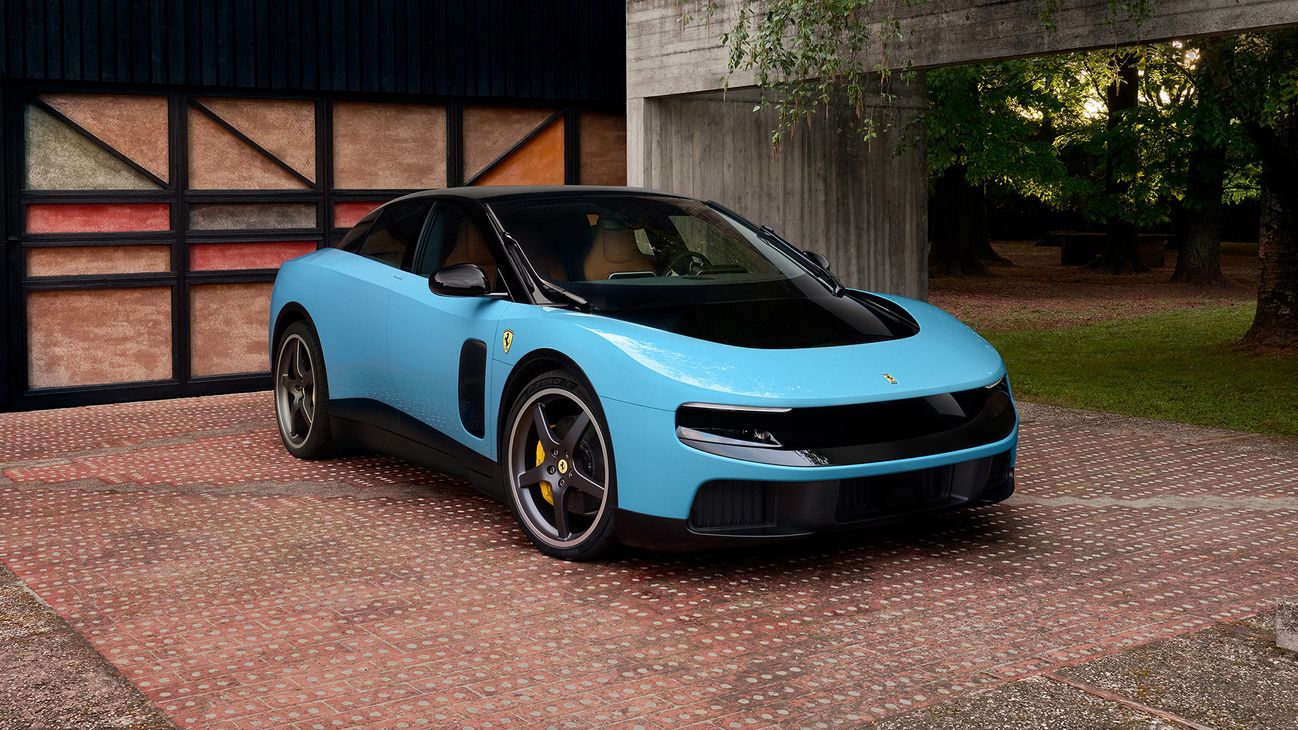
The Ferrari Luce is Ferrari’s upcoming electric car. It’s a big deal because Ferrari is famous for making cars that feel exciting and emotional, and electric cars can be a different experience than gas-powered ones.
LoveFrom is a design company that helped shape the car’s look. The host is pointing out that the design collaboration is part of why the car feels like a big change.
A grand touring car is built to be a comfortable car for longer trips, not just a track-only machine. Saying it’s a five-seat GT is basically saying it’s meant to carry more people while still being quick.
That phrase means the sounds the car makes as power is being sent to the wheels. Some electric cars add or enhance those sounds so the driving experience feels more “alive.”
A V8 is a type of engine with eight cylinders arranged in a V shape. It’s commonly known for a strong, recognizable engine sound.
Car
Mercedes-AMG GT four-door coupe
This is an AMG-branded electric version of a “GT” style car, but with four doors. The hosts are comparing how it tries to deliver excitement without the classic engine sounds.
The Mazda CX-50 is a compact SUV meant for daily driving with a more outdoorsy style. The podcast says Mazda redesigned it for the model year. They’re also noting that it’s still around, even though some people thought it might stop.
This means the CX-5 uses a 2.5-liter engine with four cylinders. More cylinders usually means smoother power, and the engine size helps determine how strong it feels and how efficient it is.
This is the SUV’s automatic gear system, with six different gear ratios. It helps the engine stay in the right range so the car drives smoothly and efficiently.
MPG tells you how efficiently the car uses fuel. Higher MPG usually means you spend less on gas, and city vs highway MPG shows how it changes with driving style.
The Honda CR-V is a small SUV meant for daily errands and family use. It’s not a sports car, but it can still feel nice to drive. The podcast brings it up to compare how fun or engaging different SUVs feel.
The Toyota RAV4 is a compact SUV meant for everyday driving. The podcast compares it to other SUVs to talk about which ones feel more fun or engaging. They also mention basic interior features like cloth seats that come standard.
These seats can warm you up and also blow air to keep you from getting too hot. It’s the kind of comfort feature you usually see on higher trim levels.
“Premium adjacent” means it feels kind of like a luxury car—nice materials and a more upscale vibe—but it’s not priced or positioned as a full-on luxury brand. The hosts say Mazda does that especially well with interiors.
Instead of regular dials, a digital gauge cluster uses a screen to show things like speed and warnings. Here, they’re saying the CX-5 uses a 10.25-inch screen for those driver displays.
A rotary dial is the kind of physical knob you turn to control the car’s screen menus. They’re saying this CX-5 doesn’t have that anymore, so you control things by touching the screen instead.
Apple CarPlay lets you use your iPhone through the car’s screen for things like maps and music. “Wireless” means you don’t have to plug your phone in with a cable to use it.
Android Auto connects your Android phone to the car so you can use apps on the car’s screen. They’re listing it as another standard feature along with CarPlay.
SiriusXM is a paid satellite radio service with lots of stations—music, news, and sports. They’re saying the car includes SiriusXM so you can listen to those channels.
Blind spot monitoring is a safety system that watches the areas next to your car that you can’t see well. It warns you if another vehicle is there when you’re trying to change lanes.
The Jaguar Mark I is a classic Jaguar car. The podcast is saying it deserves praise because it matches what people expect from a small luxury crossover. The focus is on whether it meets those basic goals.
This Volvo uses an automatic transmission with eight different gear ratios. That helps the engine stay in the right range so the car shifts smoothly and drives well.
Volvo’s Pilot Assist is a set of safety/driver-help features that can help the car stay in its lane and manage speed. It’s meant to make highway driving easier, but you still have to pay attention and be ready to take over.
Adaptive cruise control is like regular cruise control, but it also watches the car in front of you. If traffic slows down, it can slow the vehicle too, so you don’t have to constantly adjust.
“Semi-autonomous” means the car can help with parts of driving, like keeping speed or helping with lane position. But you’re still responsible for watching the road and taking over if needed.
Power front seats use electric motors to move the seat and adjust driving position at the touch of a button. “With memory” means the car can store preset positions (often for multiple drivers) and return the seat to them quickly.
Mechanical cushion extensions are parts of the seat that slide out to support your thighs. It’s a comfort feature that helps the seat fit your legs better.
A panoramic sunroof is a big glass roof panel that brings in more light. The power sunshade is the automatic cover that helps block bright sun when you want less glare.
This is how much room you have in the back for bags and luggage when the rear seats are still up. The number is measured in cubic feet so you can compare it to other cars.
The Lincoln Navigator is a big luxury SUV made by Lincoln. It’s designed for comfort and space, and the speaker is talking about a newer generation that Lincoln keeps improving over time.
A “pillar to pillar screen” is a very wide dashboard display that stretches across the front of the cabin. Instead of separate screens, it looks like one big screen for the driver and passengers.
When they say “Google-based systems,” they mean the car’s screen software uses Google’s services. That can make navigation and voice features feel more like your phone.
Term
UX
UX means “user experience.” It’s basically how good the car’s touchscreen/controls feel to use—like how quickly you can find what you want.
A “litmus test” is a quick check for whether something is good. In this case, they’re saying if you can change the radio easily, the system is probably well designed.
The Ford Expedition is a large SUV built for families or groups that need more space. It’s often chosen for road trips because it’s comfortable and roomy. The podcast mentions it because of how the dashboard and gauges are arranged for the driver.
“Body-on-frame” means the car’s body sits on a sturdy truck-like frame underneath. It’s often used for big vehicles because it can be strong and durable, especially when carrying heavy loads.
A “3.5-liter V6” is an engine with six cylinders, shaped like a V, and it’s 3.5 liters total in size. Generally, that kind of engine is designed to provide strong everyday power for a big SUV.
A “10-speed automatic” is an automatic gearbox with ten different gear settings. It can shift more times to keep the engine working in the right range for smoother driving and better efficiency.
The Cadillac Escalade is a large luxury SUV. It’s designed to feel comfortable and upscale inside. The podcast mentions it because they’re comparing how cushy the ride feels versus another SUV.
“4.4 liter” describes the size of the engine—how much space the cylinders have. Bigger engines can make strong power, but turbocharging also plays a big role in how it drives.
The Land Rover Defender is a rugged SUV made for both everyday driving and rough roads. Here they’re talking about the newer Defender and how you can get it in different sizes, including a bigger version with more seats.
A “price walk” is the way a vehicle’s price climbs as you move up trims or add options—starting from the base price and ending much higher in the real-world configuration. It’s a shorthand for how quickly the cost escalates rather than staying near the entry-level number.
The Ford Bronco is an SUV made for off-road adventures. It’s meant to handle rough terrain better than typical family crossovers. The podcast brings it up as an alternative people consider when they want something different.
The Jeep Wrangler is an SUV designed for off-road driving. It’s built to handle rough roads and trails better than most regular SUVs. The podcast mentions it because some shoppers compare it to other, more comfort-focused choices.
The Chevrolet Volt is a car that uses both electricity and gasoline. You can plug it in to drive on electric power, and it can also use gas when the battery runs low. The podcast mentions it to compare what plug-in options were like in the past versus now.
The Hyundai Ioniq 6 is an electric car. It’s brought up as another newer EV model you can find used now.
LIVE
This is America on the Road and a best radio show by the International Automotive Media
Conference and now in its 34th year on the air.
Thanks for being with us.
This is we bring you the latest automotive information from around the world.
I'm Jack Neerad with me as co-host Chris Teague and Chris, I know you're doing some
kitchen remodeling.
Is that virtually done?
Well, it's almost done.
We have our countertops going in today and I cannot tell you how excited I am about that.
Yeah, it is an exciting time to get that thing done.
Plenty happening in the automotive world this week, also equally exciting.
Polestar is partnering with Oxford researchers to find out whether the thrill of driving
can actually be measured.
That's kind of interesting.
We'll see what's going on there.
Audi is bringing advanced headlights to the United States using smart technology to improve
visibility while reducing glare.
I'll tell you, that's a good thing, fun to report on that.
Uber is expanding its focus on safety with GPS trip monitoring, emergency assistance
tools and enhanced driver screening.
So we'll talk about that.
Ferrari has unveiled its first fully electric vehicle, but not everyone is impressed.
It has a thousand horsepower, but I'm curious as to whether Chris Teague is impressed.
I'll ask him about that in a second.
Mercedes AMG at the same time has a very competitive vehicle, also with over a thousand horsepower.
Kind of crazy.
So we'll talk about that.
What's your take on this Ferrari Luce?
I think it's an interesting design.
I'm not sure it's an interesting Ferrari design though.
Yeah, exactly.
It kind of looks like a computer mouse.
Merrigan the Road is brought to you by drivingtoday.com.
I'm lancy.com, the publisher of my latest book.
Only one thing stays the same and mercury insurance.
If you're looking to save some money, you should switch to mercury for your auto and
home insurance.
California can save an average of $670 with mercury.
So imagine how much you could save.
Get a quote today at drivingtoday.com slash auto insurance.
That's drivingtoday.com slash auto hyphen insurance.
Well, as you long time listen to the show, no, Chris lives at one end of the country.
I live at the other.
Each week we get together to talk about cars.
And Chris, what is your test vehicle this week?
I have the 2026 Mazda CX-5 and I can't wait to tell you all about it.
It's redesigned.
And I'm looking forward to hearing about that.
My test vehicle this week is the 2026 Volvo XC40.
So we'll talk about that.
A special guest this week is Greg Migliore, a veteran auto journalist, fellow member
of the North American Car of the Year jury.
So stay with us for all of this.
We're going to have a ton of show for you, some great reviews, great information about
new vehicles and great information about what's going on in the car industry.
So stay with us for this.
And we'll be right back right here on America on the Road.
Welcome back, everybody to America on the Road with Chris T. Jack and you read back with
you at his news time on America on the Road.
And this is a fascinating piece of news to me, Chris.
I am curious as to your take on this.
Polestar is teaming up with the SDG Impact Lab at the University of Oxford to answer
a question that's long seemed impossible to quantify.
Something maybe we all think about.
What makes driving exciting?
That's the question.
The Swedish EV maker and Oxford researchers have launched a pilot study that will examine
whether the thrill of driving can be scientifically measured using data from the brain and body.
What's your take on this?
I think it's interesting, but it's also probably going to be one of the most difficult things
to quantify in driving history, right?
Everybody's different.
I prefer different feelings than you and different things engage me.
So I'd be interested to see the results.
Yeah, they're going to use high performance Polestar vehicles.
That's in and of itself maybe an issue because you're using electric vehicles and so you
don't get the visceral thrill of a gasoline motor growling in the background, that kind
of stuff. But researchers will monitor physiological cognitive and behavioral responses.
Well, I think I probably have all of those, but I don't know how they work.
The project reflects a broader shift taking place in the electric vehicle era.
Electric vehicle makers are trying to figure out what makes cars fun, basically.
And I think that's what Polestar is trying to do because they have just unbelievable
zero to 60 performance.
The acceleration is great.
And yet enthusiasts in general, and I'm generalizing here, don't seem to be warming up to them
all that much.
So I guess they kind of want to figure all that out.
Kind of makes sense, right?
Yeah, they aren't really loving some of the things that automakers have done.
You know, it's been hit or miss, dodge with the the exhaust, the Fratsonic exhaust system
in the Challenger EV or Charger EV, excuse me.
So I don't know.
It doesn't people don't seem to really love the the the efforts that EV makers have been
and putting out there.
So we'll have to see.
Yeah, yeah, yeah.
And I think Polestar would like to do that because they're a performance brand who make
electric vehicles.
So they got to figure that out.
Testing will include sessions at Sweden's Gotland Ring Test Track.
That'll be fun.
And we'll see what, you know, a wide variety of people feel is driving excitement.
I can't wait to see the report on this.
It'll be fascinating.
Well, another thing that's semi fascinating, depending on how how you care about driving
at night is the more sophisticated lighting technologies that American drivers are now
going to get from Audi.
They're going to introduce their digital matrix LED headlights in the United States
on the 2027 Audi Q9 and SQ9 flagship SUVs that are coming out.
Unlike conventional high beams that switch on and off as a single unit, these will continuously
adapt the light pattern in real time.
They use camera and advanced software to do this.
I think this is be terrific.
I mean, I do a lot of night driving on some freeways where the glare from the oncoming
traffic is just kind of pretty difficult.
I actually use night vision glasses to help deal with that.
Your thoughts on this, Chris.
I love these and I'm so glad that we're finally able to get them, you know, the advanced capabilities
that they have, the targeting of the light, the ability to kind of block out pedestrians
and other drivers.
I think it's awesome.
Yeah.
I mean, the technology has been available in Europe for more than a decade, but of course
we have different regulations here in the United States, so that has prevented them from coming
here.
Now, apparently they passed that hurdle.
A triple A survey cited by Audi says six out of 10 drivers report problems with headlight
glare from other vehicles.
I can certainly understand that, so maybe that'll solve that.
It'd be cool.
It'd be cool.
Those vehicles will reach American dealerships later this year.
So look for that.
I hope that technology spreads rapidly.
One thing I noticed, Uber is expanding safety technologies and putting that out for people,
letting people know that safety is something important to Uber, the ride-hailing service.
They're emphasizing a growing suite of safety features designed to protect both riders and
drivers.
Sometimes the drivers are at risk in these cars.
The company says safety remains a central focus supported by technology, background
screening of the drivers, emergency assistance tools, and insurance coverage.
So a lot going on there at Uber is trying to emphasize the safety of using its ride-sharing
service.
One of the company's most notable tools is RideCheck, which uses GPS information and
smartphone sensors to identify unusual trip activity.
I'm wondering what that is, Chris.
What are your thoughts on that?
Yeah, I don't know what that could be, but I'm glad to see that there's some more checks
and balances going into place here.
I think one of the early complaints with some of the ride-sharing services of the drivers
weren't as experienced or heavily vetted as some of the taxi drivers are.
But I think anything that makes ride-sharing and taxi services safer in general is a good
idea.
They do say that if the vehicle unexpectedly stops, goes significantly off-road, or appears
to have been involved in a collision, the system can prompt Uber to do something about
it.
So good stuff from Uber.
Congratulations to them on doing this stuff.
Then there is this Ferrari EV, the Luce 2027 Ferrari Luce.
Their first electric vehicle introduced with great fanfare this week, and the initial reaction
is, I would say, mixed at best.
I think it looks like a computer mouse.
It's just not a very exciting shape, pretty bland, emotionless, according to me.
The stock market doesn't love it either.
Here's about a Ferrari fell pretty significantly, 6% following the debut, which is about the
last thing you want to have happen.
I'm curious as to your take on this.
The first is that I think an EV was always going to be a risk for Ferrari.
That's the brand of emotion.
We just got done talking about how EVs struggle to generate or elicit those emotions.
I don't have a problem with the design.
I don't think a lot of people have a problem with the design.
I think that people have a problem with the design for a Ferrari.
If we're talking about a Honda or we're talking about something like that, then that would
be a compelling product.
I think there are some mixed emotions and mostly negative from the people I've been
reading about the way it looks and the way it's priced, and basically all of it except
for maybe the steering wheel.
Yeah.
It's a giant departure in a lot of ways, not just the design.
Of course, the design.
It was designed in collaboration with a company called LoveFrom led by a former Apple design
chief.
I guess it likes the shape of a computer mouse because that's what it really resembles.
Then it's a five-seat grand touring car.
That's odd coming from Ferrari.
It does have plenty of power, a thousand horsepower, a little over a thousand horsepower.
It'll go from zero to 60, they say, in roughly two and a half seconds with the top speed
of nearly 200 miles an hour, 193 miles per hour.
All of that stuff's good, but I think it's not very exciting to look at.
You don't look at it and go, number one, it's a Ferrari.
Number two, you don't go, wow, that's cool.
That's kind of an odd thing, I think.
I don't think anyone's arguing with the performance.
Again, it just comes down to the look.
People are not identifying with it as a Ferrari.
If you look at the back seat, I was talking about this with someone the other day, is
the back seat looks like it could come out of a Mazda or a Nissan or anything else.
It doesn't look, there's nothing special about it.
Yeah, yeah.
Then there is this thing about emotional engagement that we talked about just earlier
in this segment.
They have a unique sound system that amplifies and processes actual drivetrain noises.
Of course, there's not engine noises, there's not an engine.
They have motors in this thing, and I don't think they're very loud, so it's really kind
of just the whole drivetrain.
I think classic rock would be a better choice than that, but I don't know what you think
about that.
Yeah, again, this is one of those things that is, you know, it's going to struggle to connect
with people.
The engaging sounds, they're not going to replace the sound of a V12 or a V8 or any
of the other things that Ferrari's done, and that wasn't supposed to with an electric
vehicle, but I don't know.
Yeah, I think Mercedes is stepping on Ferrari here with its unveiling of its 1,100 horsepower
electric GT four-door coupe, the AMG electric GT, I think in a lot of ways, this is a cooler
car.
What's your take on that?
Yeah, I think it is cool, but it's also one that people kind of struggle to get into the
design for.
Yeah.
So, I mean, we're going to have some interesting competition there from these super expensive
vehicles.
And when we come back, we're going to talk about two vehicles.
Your road test vehicle is what, Chris?
The 2026 Mazda CX-5.
And I'll be road testing the 2026 Volvo XC40 in B5 all-wheel drive Ultra trim.
So stay with us for that, and we'll be right back.
Welcome back to America on the Road.
It is road test time on America on the road.
This is Jack Kneerad along with Chris Teague, and we're excited to tell you about the vehicles
we've tested this week.
We're also excited the fact that you're listening and maybe watching America on the road.
We do appreciate that.
If you like our show, please pass it on to somebody else who you think might like it.
We would appreciate that.
We're available in podcast form, so that's fairly easy to do.
And Chris, tell us about the cool Mazda that you were driving most recently.
Yeah, I have some interesting points to make here, and it's going to address some of the
things we've talked about until we're blue in the face about Mazda over the past several
years here.
This is the 2026 Mazda CX-5.
It's been redesigned for the model year.
I think a lot of people believed it would be discontinued after the CX-50 came out, but
instead Mazda rolled out a redesign.
Jack, have you driven the new CX-5, and what do you think?
I have not.
I have not driven it at all.
I don't think I've seen one.
I drive a lot of Mazdas, but the CX-5 I think has not been in my driveway yet.
Oh, wow.
Well, it looks familiar.
It's a little bit wider, larger, so you get a little bit more interior space,
but it's very much, like I said, a familiar Mazda product here.
You can get into this vehicle for around $31,500 after destination.
My test vehicle was just under $41,000.
It was the very range-topping model.
I will say, though, that the mid-range trims of this vehicle, we've talked a lot about
Mazdas interior quality and the design.
I think you get a lot of the good stuff and a lot of the great tech for a lot less money.
So around $36,000 is the midpoint here, and you can get quite a bit of stuff.
And there are five trims, too, which is always surprising to me that Mazda can offer so many
different configurations.
This vehicle comes with a 2.5-liter four-cylinder engine.
It makes 187 horsepower, 185 pound-feet of torque.
Unfortunately, and that's maybe not unfortunately, as a new vehicle, I should say, there's no
turbo or hybrid option available here, so we're not talking about the uprated power
that we do in other models.
And I should say there may be a turbo or hybrid coming later, so I don't want to talk down
about it just yet.
That engine's paired with a six-speed automatic transmission, and all-wheel drive is standard
as it is for all of Mazda's crossovers here.
And even without a hybrid, though, fuel economy's not bad.
You get 24 miles per gallon in the city, 30 on the highway, and 26 miles per gallon combined.
That engine is not going to make this vehicle quick, but it is fairly refined.
Mazda does a good job of the six-speed automatic transmission.
They've used it in almost all their vehicles recently, and it's one that we're familiar
with.
It's pretty smooth, so that works out well.
And this vehicle, despite not being quick, it's got pretty nimble handling.
The steering feel is good.
This is not a sports car, but it does feel good, and it is engaging to drive.
And I would say it's more engaging than the CR-V or the Toyota RAV4.
Inside, you get a cloth upholstery, comes standard leatherette, which is synthetic leather,
and the mid-range trims, and the top trim comes with leather.
So that's the one that mine had, and it felt great.
It feels high quality for especially $41,000.
The top trim comes with heated and ventilated front seats, heated rear seats, heated steering wheel,
and, you know, again, high quality materials throughout.
Jack, what do you think about the interior finishes of Mazda?
They do such a good job with their interiors.
I mean, I think they just look very classy.
They look very premium.
I think we've talked about the term premium adjacent when it comes to Mazda,
and I think probably the CX-5 is another example of that.
I mean, every Mazda I drive, I'm very impressed with the interiors.
I agree.
So this vehicle is not the most spacious inside.
This is a compact SUV, but it is very comfortable.
The seats are wide up front.
They're supportive.
They've got great padding.
The heating and ventilation work well, and the ergonomics are great in this vehicle.
And Mazda does a good job with this, too.
You know, we say Honda does function over form.
Well, Mazda does a pretty good job at function and form.
So it looks great, and it feels great at the same time.
The back seat space is a little tight.
I will say that this vehicle has a sloping roof, which looks great on the outside,
but that does create a little bit of a tightness on the headroom.
And the rear door shape, openings are a little bit awkwardly shaped,
which if you have a large car seat or you're trying to load a kid in and out
or a large dog might be a little funky.
All of these vehicles come with a 10.25 inch digital gauge cluster.
The lower trims have a 12.9 inch touchscreen.
My test vehicle, the only one that came with it has a 15.6 inch display.
Now, this is where it's interesting because there's no more rotary dial in this vehicle.
This is all touch, all the time.
And Jack, I'll say we're applauding that.
But one of the things here is that you have tiny little buttons for climate controls,
tiny buttons for the heated seats and ventilated seats.
So you have kind of a trade-off.
Now, you can scroll through lists of songs and everything a lot faster, a lot smoother,
but you are going to spend some time trying to aim your finger at these buttons while you're driving.
All the vehicles come with wireless Apple CarPlay and Android Auto,
Serious XM radio, Bluetooth, and a full host of other features.
The screens are large, they look great, they're responsive, they're crisp.
But again, I think there's a little bit of refinement left to do here.
And then every trim comes with blind spot monitoring, rear cross traffic alerts,
safe exit warnings, adaptive cruise control, and my top trim added driver monitoring.
So Jack, 41K, I hate to say it isn't that much to spend on a loaded up compact SUV these days,
but as I said earlier, I think you could spend in the middle of that range around $35,000, $36,000,
and be perfectly happy.
Yeah, it sounds good.
And with the screens, watch what you wish for, right?
We have wished for touch screens, and now maybe they're not as easy to use as we had hoped.
But I think it's a step forward, and I can't wait to drive the new CX-5 from Mazda.
It's always been one of my favorites, probably my favorite in that class,
and I imagine this new version will live up to that.
Well, I'm driving an old favorite, I think of both of ours, the Volvo XC40.
This is a vehicle that's been around for a long time.
It's far from the newest vehicle in its class.
It still deserves praise, though, because it hits the marks I think that small luxury crossover should hit.
This is in a market filled with newer entries.
Volvo stays committed to the XC40's original mission, which is premium comfort, which we like.
Scandinavian design, hey, I'm part Swedish.
I love that.
Yeah, I think it's one of the best all-around entries in the subcompact luxury SUV segment.
Some are maybe more sporty, sportier.
Some have more advanced tech, but I think it just continues to rank high.
Clean design, I think it's design and kind of upright design give it a good interior space.
Plenty of features, upscale cabin, nice place to be.
I was driving the Ultra Trim, which the vehicle I had was denim blue and had a blonde leather interior.
It's just a good looking vehicle all the way around, 21-inch alloy wheels.
Not inexpensive, a total MSRP of $57,000, which is a stiff price for a vehicle this small,
because I think it's smaller than the CX-5 you were testing.
At the same time, it's a luxury brand or a premium brand.
It uses a turbocharged 2.0-liter four-cylinder engine, paired with a 48-volt mild hybrid system.
Output is 247 horsepower, 258 pound-feet of torque, so it's not a screamer.
This power is sent to all four wheels through an eight-speed, gear-tronic automatic transmission.
Performance is pretty good.
I wouldn't say it's going to light your fires here at a 60-time of about 6.1 seconds.
So reasonably good.
Predictable handling, though.
Mild hybrid system aids in terms of responsiveness, because you get that electric motor kick in the pants a little bit.
I wouldn't say kick in the pants in this context, actually, but a little bit more power.
Your thoughts on this powertrain, Chris?
I like the powertrain.
Volvo does a good job with the four-cylinder engine.
I'm still stinging from the price you mentioned earlier.
I think that's been sticking with me over this whole chat.
Yeah, well, we can talk about that a little bit more, too.
All-wheel drive system, of course, provides additional confidence in poor weather conditions,
and I think the Swedish engineers know all about that.
Fuel economy is respectable.
I don't think anybody is buying a luxury vehicle that costs $60,000,
and looking at fuel economy is their number one thing.
Driving dynamics, I think, are appropriate for its class.
This isn't one that's going to, I think, really wow the enthusiast testers out there,
but at the same time, I think it's fun to drive.
Searing is light, accurate.
It's easy to park, and I think when it comes to handling a lot of civilians,
people out there think parking ease is the most important thing,
and maybe it is a nice ride quality.
As a smaller vehicle, this is still a great vehicle to take at highway speeds,
so I like that a long-distance driving, and it has adaptive cruise control with Volvo's pilot assist,
so a semi-autonomous driving system in the ultra-trim.
And then there's the interior, which I think is good-looking.
You've had Volvos in the past, Chris.
I think you like Volvo interiors as much as I do.
I do, and one of the things about the XC40 is that it doesn't feel like the lesser of the Volvo models.
It does feel like a full-fledged Volvo.
The seats are still comfortable, and it looks great inside.
Yeah.
My tester had power front seats with memory, mechanical cushion extensions.
Oh, I like that under my thighs.
Heated front seats, panoramic sunroof with a power sunshade,
and good room all the way around, I think, and it has interesting storage areas as well.
I think Volvo does a nice job with the practicality here.
20.7 cubic feet of cargo space behind the second row,
and 57.5 cubic feet if you fold those rear seats, so a lot to like.
And then there's the infotainment system, which is a Google-based system,
which largely works fine.
I think it kind of doesn't love us Apple people so much.
You have any thoughts on that, Chris?
I know you're a tech guy.
I do. I love Volvo, and the infotainment system is decent,
but there's a lot of swiping, there's a lot of tapping and things,
and I've mentioned this several times.
I think that it needs to be streamlined a little bit.
Yeah.
In terms of active safety equipment, there's a ton of it, you would expect that from Volvo,
so this is a good vehicle.
I mean, it's hard to say a vehicle this small across this much money is a bargain,
but in a lot of ways, I think it's a good buy.
It might be if you look at the competition, I think it's not too terrible in that light.
Right.
So I think we have two winners here, and we have a winner in terms of our special guest,
Greg Migliore is a veteran auto journalist, so we'll be talking with him right after the break.
Stay with us, and we'll be right back right here on America on the Road.
I received a letter from a reader this week, and I thought I'd share it with you.
Here's what he wrote,
Both are available exclusively at Amazon.com.
That's Dance in the Dark, and only one thing stays the same, both written by me, Jack R. Neyred.
Thanks for looking for them today.
Welcome back to America on the Road, Jack Neyred back with you,
and a terrific guest is with us, Greg Migliore is a fellow North American car of the year juror,
auto journalist of some renown, and thanks for being with us, we appreciate it.
Jack, thanks for having me, great way to spend an afternoon.
Let's talk some cars.
I love talking about cars, and morning, noon, or night, I like talking about cars.
You've been driving some interesting stuff recently.
Why don't you tell us what you've been in recently, and then we can go from there.
Sure, I just got out of the Lincoln Navigator,
which they launched a new generation of it fairly recently, and then they keep refining it,
which I think is a good tactic for Lincoln.
It's a really great vehicle.
It was mind-stickered for about $106,000, so it was loaded up,
it had all the stuff, all the things, beautiful interior, comfortable rides like your own clouds, all that good stuff.
But the thing you kind of noticed, I think it's becoming a hallmark of Lincolns,
is they're like pillar to pillar screen.
So that certainly caught the attention of my passengers, so beautiful vehicle.
Yeah, how do you feel about that giant screen?
Do you think it's overkill?
Do you think that's just kind of fun to have?
What's your take on it?
You know, it's interesting because, ironically, my son was doing like a screen-free week at school.
It's like a challenge for me to do.
So this was not really the vehicle for it.
But I think the way they executed is pretty well done.
I think it's actually a little bit better than how some of the Mercedes,
especially the electric models, is just like Star Wars screens right in your face.
Whereas this is a little more subtle, although it is quite panoramic and dramatic,
going from pillar to pillar.
The information is pretty usable, useful information.
It's colorful.
It certainly adds an aesthetic to the vehicle, especially at night, too.
It really casts this kind of beautiful glow across the interior,
which I suppose some people might not like.
But, you know, overall, I think it's a solid execution.
I think Ford was among the early adopters with like SYNC getting into their vehicles
back probably around 2007, 2008.
And I think they had some growing pains, for sure.
But I think this is a pretty solid execution.
You know, it seems like Ford has gone away from SYNC recently
and gone to some Google-based systems.
So was the system in the navigator a Google system?
Yeah, this one did have kind of like some Google underpinnings, I believe,
but it was all very Lincoln-facing, right,
for what the consumer would experience as far as the UX.
And relatively easy to use, queued up the navigation,
did all the things I wanted it to do.
It was relatively easy to change the radio station.
That's always my litmus test.
There's a plus, yeah.
You know, I think you got to be able to queue up some spring steam
or whatever you're looking for, and in that sense, it was pretty good.
And do they use a similar system to the Ford Expedition
in terms of kind of positioning the instrument panel?
So it's a little higher up, almost like a head-up display,
but not really.
And then you have that squared-off steering wheel.
Does Lincoln do that, too?
Yeah, Lincoln's steering wheel is kind of like squared off.
The reason they told me they do that is to keep your line of sight,
like right in front of you, which makes sense, you know.
And it takes a little bit getting used to.
I've driven other Lincoln's with a similar steering wheel.
Not as big a deal.
They're smaller, smaller products.
Turning the navigator is a little bit like kind of docking a battleship
with this type of steering wheel, but it's, you know, pretty communicative
and, you know, the feedback is there.
So I got used to it pretty quickly.
And it's a cool look, too.
It's just another thing that when you get inside the navigator,
people are like, oh, hey, what's that?
And it's something to talk about.
Right.
I kind of like the squared-off wheel, actually.
It kind of helps you position your hands a little bit
or you kind of know where you're on the steering wheel.
You know, as a sailor, sometimes a lot of sailors will put a little piece
of tape out the top so they can tell that the rudder is in the middle, right?
So you're at the top of steering.
And maybe it's a similar kind of thing in the Lincoln.
It's kind of nice to know where the wheels are pointed, right?
That's a good idea, actually, when you think about it.
It isn't navigator after all, right?
Right.
Yeah.
Exactly.
Well, it's kind of like, as you say, like a battleship or a super tanker
or something like that.
I mean, it is a serious vehicle.
A separate body on frame, kind of the last gasp in some ways of the American car.
But what's the powertrain in the navigator?
This is the 3.5-liter V6.
Tons of power, 10-speed automatic.
And it's just like, this is almost where I think you can hark back
to some of the great Likens of old.
And it's not going to, like, rip off your head with power.
But it's all the power you certainly would need, you know?
So it's great for passing, good for on the expressway, all that stuff.
You can even sort of beat people off the line, so to speak, if you're...
If you're paying attention.
Yeah.
But it's a silky powertrain.
I like that a lot.
And I mean, again, the suspension just potholes are not a problem for you.
It's just the most comfortable vehicle in this type of segment, I think.
A little bit.
I think it's a little cushier than the Escalade, but, you know, that's kind of subjective.
Yeah.
Well, they certainly are both immensely comfortable vehicles, so you've got to like them.
I think Escalade even takes some of the screen thing even farther than the Lincoln does in some ways.
That's true.
I think Lincoln does it a little better, actually.
I think it's more in its place.
It's not as over-the-top as Cadillac, which is a little tech-forward, in my opinion.
Do you think people should be concerned about the fact that it's a V6 engine, not a V8 or something like that?
Of course, Lincoln's in the past had V12s back in the day.
Well, that's going back to, like, I want to think...
Yeah, in the 30s.
Yeah, yeah.
They were a real originator of the standard powertrain, you know?
I believe Lincoln got it start making engines or something for, like, the war effort in World War I and some other things.
So it's certainly part of their heritage, but no, it's fine.
You know, I think it's one of those things we're in this segment these days.
It's okay.
I wouldn't say no if they found a way to, like, I don't know, get the Coyote in there somehow or, you know, maybe there's something else they could drop in there.
But I think it's more than adequate.
And I think your average Lincoln buyer is just looking for plenty of power, but comfortable power, smooth delivery.
They're not looking for, like, you know, to redline everything.
Why else have you been driving that was interesting to you?
Well, I was in the Land River Defender Octa, which I thought was quite the rig.
It's going to get well into the six figures as far as price.
It's the Defender, and it's pretty big.
This one had that kind of, like, bronze paint, I think, that you see in all the magazine shots and press shots.
So it certainly got a ton of attention, kind of blacked out dark wheels and some accents like that.
Inside more of that kind of bronze copper stitching.
What's your take on bronze?
You know, I don't really warm up to bronze that much.
I kind of like, why bronze?
And yet it's kind of become a thing, hasn't it?
I love it all day long.
I think it looks great.
I think it, you know, it gives things like this something special.
Land Rover's really steering into it.
You know, I've driven a couple of Rovers where it's, you know, even can play that into the headline a little bit.
But even, you know, to go off of a slight tangent here, like Kia and Hyundai have gotten into it too.
And it's really, you know, sort of elevated their vehicles.
I had a guy ask me if the Santa Fe I was driving, which had that kind of bronze copper look.
He said, is that a Land Rover?
I'm like, wow.
You know what you're talking about there, man.
So I think it's a great look.
I really do.
Well, there you go.
That's why they make different flavors of ice cream, isn't it?
Exactly.
This is definitely, definitely an expensive flavor of ice cream too.
It's, you know, well into the, well into the six figures.
It's got that 4.4 liter twin turbo V8, which BMW actually did a lot of the heavy lifting on that one.
And it's, you know, it's just, it was a ton, a ton of fun to drive.
It's like, if you're looking, hey, how can I elevate after driving a navigator?
Well, let's get inside a Defender with the big V8 and plenty of room.
And I'm a big fan of the Defender these days.
I think it's really got some character.
And speaking of flavors of ice cream, you could get a two door Defender,
or you could get a three row four door Defender.
I think that's, you know, they're really playing all their cards here.
I guess they kind of have to though, right?
Because Land Rover does.
What is amazing to me, Greg, is the price walk on Defender.
I mean, where it starts and where it ends up.
You were kind of where it ends up in the octa, but, you know, well over six figures,
but it starts much lower than that.
And I don't know how they get away with that really.
What's your, what are your thoughts on that?
I think it's interesting because you could drive this like, you know,
really tip of the spear one.
And I think mine came in at about 160 grand, which kind of wrap your mind around that.
But then, you know, base ones start much lower and that's, you know,
much more accessible, much more affordable for people who might just maybe be kind of
cross shopping it with like a higher level Wrangler or Bronco,
gives you an ability to try something different.
And I, I happen to like the design, you know, and being based in suburban Detroit,
like it seems like every other car is a Wrangler.
To me, it's kind of cool to see like when people roll up in a Defender or something a little bit different.
It's subtle too, I think, like it's not like as overtly retro as the Bronco,
or it's not GP for lack of a better way to put it.
And I think in that sense, it's kind of classy.
Yeah, I think it is classy too.
Very, very clean design, which I like a lot.
I think one of the things we talked about fairly recently was this number of electric vehicles,
used electric vehicles that are going to come back into the market.
And it's going to be an immense number, you know, something like a million by 2028.
What are your thoughts about that?
Well, I think it could be a good time to buy a used EV,
especially like a lightly used EV with the war in Iran and gas prices and tariffs,
just all this economic uncertainty and disruption.
You know, you might want to try to save some money at the gas pump and an electric car is a great way to do it.
I think the selection of EVs used EVs is better than it's ever been.
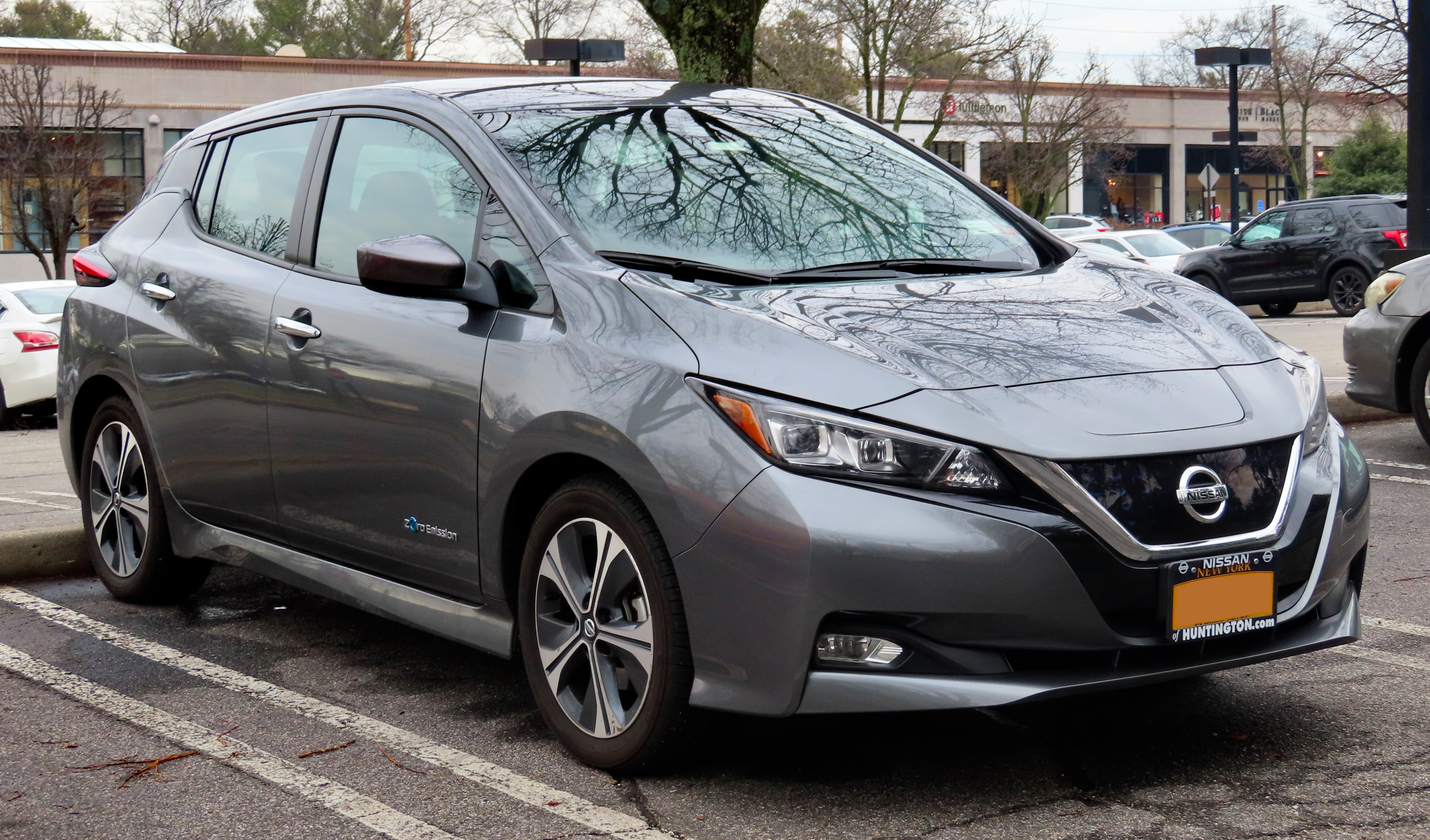
You know, a used EV a few years ago was like, what, 2009 leaf or Chevy Bolt or Volt or something.
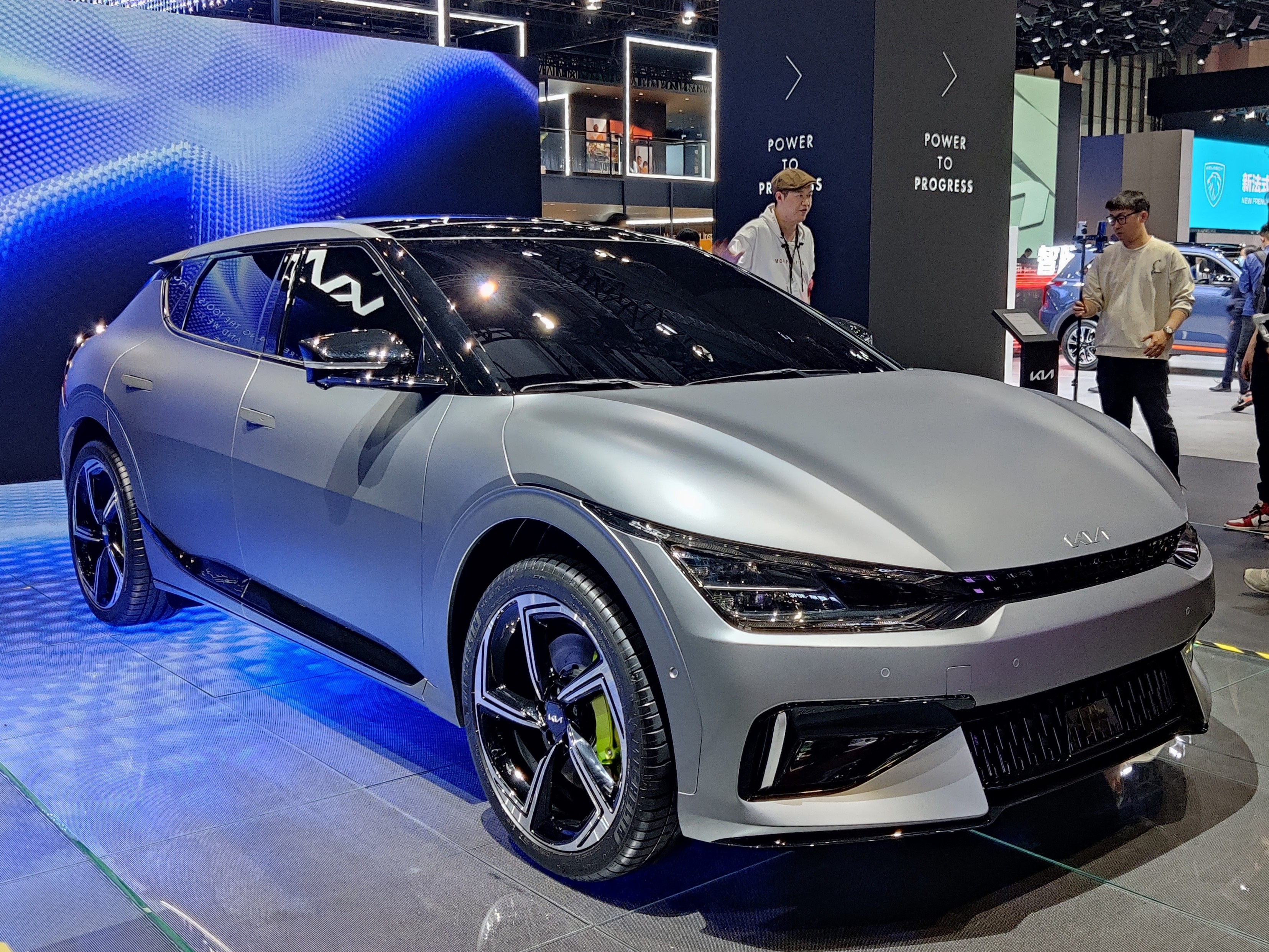
Now it's like you can get a 2023 EV6 or Hyundai Ioniq 5 or 6 or something like that,
which the technology is still very much, you know, up to date.
It's very much still of the moment.
Even if the car companies have advanced to a new generation of tech,
the one from three years ago is still pretty good.
You know, you're definitely still in that moment.
I think they're great cars.
I think you can, some places, depending on where you live,
you can still get some like tax credits or some sort of offset from your utility company if you want to put a home charger in your home.
That being said, it's still not super cheap, you know, but if you're looking at a used EV,
somebody else took the depreciation hit for you.
So it, yeah, I would consider one.
I think if you're looking at an EV, looking at a used one coming off leases is pretty much the way to go here
because it's going to be much less expensive than a new one is going to be.
Because for one thing, that person who bought that one or leased that one got the benefit of a tax credit that doesn't exist anymore.
So you have that.
At the same time, I don't think the typical entry level buyer, the kind of people who are buying used cars,
are going to warm up to EVs because they just don't have the infrastructure to deal with that.
They don't have the personal infrastructure.
They don't have the home charging and that kind of thing to deal with.
Nor do they want to pay for that for that matter.
So I'm wondering what's going, I think the prices of these things are going to plunge.
I just can't imagine that they're going to hold value particularly well in the next couple of years.
Well, it does seem like everything in the market where if you sort of have some means and some savvy,
you could really take advantage of some of these situations, which, you know, that's probably another discussion.
But if, you know, you have 25 grand on hand, you could probably get yourself into a used, you know, a pretty good used EV and profit from that and enjoy it.
I mean, because I think they're fun to drive.
You know, I think we've talked this before.
They're terrific daily drivers and lots of fun, all that low end torque.
Many of them have cutting edge infotainment systems because car companies kind of think that your tech has to be tech forward in an EV.
So I think it could be a good deal.
Yeah. Well, sadly, not very many people have $25,000 on hand for any kind of car purchase these days.
So that's a tough one.
But Greg, it's always great to talk to you.
I do appreciate it.
Thanks for talking to me again.
Greg Migliore, auto journalist par excellence.
Thanks so much for being with us.
We appreciate it.
My pleasure, Jack.
Thanks for having me.
Stay with us, everybody.
We'll be right back right here on America on the Road.
Welcome back to America on the Road with Coach Christie.
This is Jack Newred with you and it is listener question time, our final segment of the week.
We love to answer questions for you based on our long experience providing car advice.
Send your questions to editor at drivingtoday.com.
That's editor drivingtoday.com.
Here's what I think is a pretty good question from Billy Bob in White Settlement, Texas,
which I think is near Fort Worth where one of my daughters lives.
This is the question, are off road trims worth the extra cost if you don't drive off road much?
Well, I know I usually say it depends, but this one I think I have a pretty strong opinion on it.
I'm going to say no, I don't think they are worth it if you don't go off road much.
Beyond the extra cost, these packages and trims generally cost more than the road going or lesser trims.
You can have some reduced fuel economy because of the beefier tires.
You might have some handling difficulties if you're driving it just around town.
Some of these vehicles are larger and taller, maybe more difficult to maneuver.
And then again, you know, if you're mobility, if you have challenge mobility,
you're carrying your parents around, whatever it might be, they're sometimes harder to get in and out of.
So I think it could be more of a hassle than it's worth and they cost more than what you might want to pay.
If you're not going to use it, then don't pay for more car than you need.
Yeah, I think it really depends on how the style affects you and how you value it.
If you value all that and are willing to put up with the drawbacks that you so rightly mentioned,
okay, spend the money otherwise, well, save your money and use it on something else, you know.
Go out and buy a steak dinner or two.
That wraps up our show for this week.
I'd like to mention that my crime novel, only one thing stays the same,
is available in both e-book and paperback form at Amazon.
I think it's actually on sale now.
That's so true. We have a YouTube channel, so check that out.
Please subscribe to our YouTube channel.
We think we're posting some interesting videos there now.
All right, thanks to Mercury Insurance for sponsoring the show
and to our sports byline radio network stations for carrying it.
We love being on terrestrial radio, very cool.
Most of all, thanks to you for listening.
We know you have a lot of choices, so the fact that you listen to America on the Road is very gratifying to us.
Thanks so much for that, and please join us again next time for another edition of America on the Road.
I'd like to tell you about my newest crime novel, only one thing stays the same.
As the story unfolds, an unemployed aeronautics worker named Bill McCurdy becomes disillusioned with his wife
and slips into an illicit affair with a teenager from down the street.
Before long, he begins to think of doing the unthinkable,
and before the roller coaster ride stops, he learns quite personally and very finely
that only one thing stays the same.
Only one thing stays the same is available in Kindle eBook and paperback form exclusively at Amazon.com.
I'd appreciate it if you'd look for it today.
About this episode
The hosts kick off with automotive headlines, from Polestar partnering with Oxford to measure the “thrill of driving” to Uber expanding safety tech and Audi rolling out digital matrix LED headlights. They then set up a road-test showdown: the redesigned 2026 Mazda CX-5 versus the 2026 Volvo XC40. The CX-5 review covers its 2.5-liter engine, standard AWD, and “premium adjacent” feel, while the XC40 focuses on its turbo 2.0L + 48V mild-hybrid setup, Pilot Assist, and practical cargo space.
This week on America on the Road, Jack Nerad and Chris Teague review two small SUVs — the refined 2026 Volvo XC40 B5 AWD Ultra and the completely updated 2026 Mazda CX-5. One is from a premium brand, but both have a premium feel. Jack and Chris also discuss Polestar’s ambitious landmark study to measure the thrill of driving, Audi’s advanced Digital Matrix headlights coming to the U.S., and Uber’s latest safety technologies. They also dive into the controversies surrounding the debuts of Ferrari’s first-ever EV, the Luce, and Mercedes-AMG’s ultra-powerful new electric GT.
Jack reviews the 2026 Volvo XC40 B5 AWD Ultra, a stalwart subcompact luxury SUV that excels in comfort, safety, and Scandinavian design. With a 247-hp turbocharged mild-hybrid powertrain, premium Blond leather interior, advanced Google-based infotainment, Pilot Assist, and excellent ride quality, the venerable XC40 remains one of the most well-rounded luxury crossovers. As tested at $57,040, it delivers premium refinement in a compact, practical package. But has it kept up with the times? We’ll discuss that.
🚗 Chris Teague’s Road Test: 2026 Mazda CX-5
Chris tests the fully redesigned 2026 Mazda CX-5, which gains a longer wheelbase, a more spacious interior, bolder styling, and improved ride comfort. Powered by a 187-hp 2.5-liter four-cylinder with standard all-wheel drive, the likable compact SUV delivers solid efficiency and engaging driving dynamics. Chris and Jack discuss its upscale cabin, large touchscreen and Google built-in, enhanced safety features, and value. It has a starting price of $29,990, but Chris suggests you look at a mid-range model at about $35,000 or so.
🎙️ Special Guest Interview
Greg Migliore, veteran auto journalist and North American Car of the Year jury member, joins the show. Among the topics — the glut of used EVs about to hit the market. Are they an opportunity? Or just something to avoid?
📰 This Week’s Headlines
Ferrari Unveils First EV: The Luce
The revolutionary 1,035-hp electric grand tourer draws mixed reactions over its design and high price.
Mercedes-AMG GT 4-Door Coupe Packs 1,153 hp
The new electric flagship delivers supercar acceleration and advanced F1-inspired technology, but some don’t like its looks either.
Polestar & Oxford Study “Thrill of Driving”
Researchers use biometric data and high-performance EVs to scientifically measure what makes driving exciting.
Audi Brings Digital Matrix Headlights to U.S.
Advanced adaptive LED headlights debut on the 2027 Q9 and SQ9, improving visibility while reducing glare.
Uber Expands Safety Features
New GPS monitoring, emergency tools, and enhanced screening aim to better protect riders and drivers.
❓ Listener Question
Billy Bob from White Settlement, Texas, asks: “Are off-road trims worth the extra cost if you don’t drive off-road much?” Chris and Jack punch in with their thoughts.
Jack’s crime novel, Only One Thing Stays the Same, is available now in paperback and eBook on Amazon — currently at a sale price.
🎧 Where to Listen
Catch America on the Road on your local Sports Byline Radio Network station each week and subscribe to the podcast on Apple Podcasts, Spotify, YouTube, and more. Follow for new car reviews, guest interviews, auto news, and road tests.
Sponsored by Mercury Insurance and DrivingToday.com
📺 Watch & Subscribe
Find America on the Road on YouTube and Rumble. Subscribe for road test videos, shorts, and extended reviews.