“Hellcat” is Dodge’s name for a high-performance version of their cars. “Burnout” is when a car spins its tires and makes smoke, and the graphics are just a design theme based on that.
Dodge is the automaker behind the “Hellcat” performance identity referenced in the segment. Here, it’s mentioned in the context of a crossover promotion with Under Armour using Hellcat-themed graphics.
The Dodge Challenger is a sports car that’s known for strong acceleration and a bold look. It’s made for driving enjoyment rather than just everyday commuting. The podcast mention is about how the car’s image shows up on other products.
This is a Volvo XC60 SUV, and the “B5” is the specific version of the powertrain. “All-wheel drive” means the car can send power to all wheels, which helps grip on wet or slippery roads.
This is Mercedes-Benz’s upcoming all-electric van concept. The big idea is that it’s meant to be comfortable for longer trips and can recharge quickly.
This is a seating design meant to change the cabin layout quickly. The goal is to make the van easier to use for different situations without a lot of hassle.
MBU-X is Mercedes-Benz’s in-car software platform that powers the infotainment and connected features. The host pairs it with a large screen setup, suggesting it’s central to the cabin experience.
The Lamborghini Miura is one of the most famous early supercars. It was groundbreaking because the engine was in the middle of the car and it helped popularize the idea of a true everyday exotic.
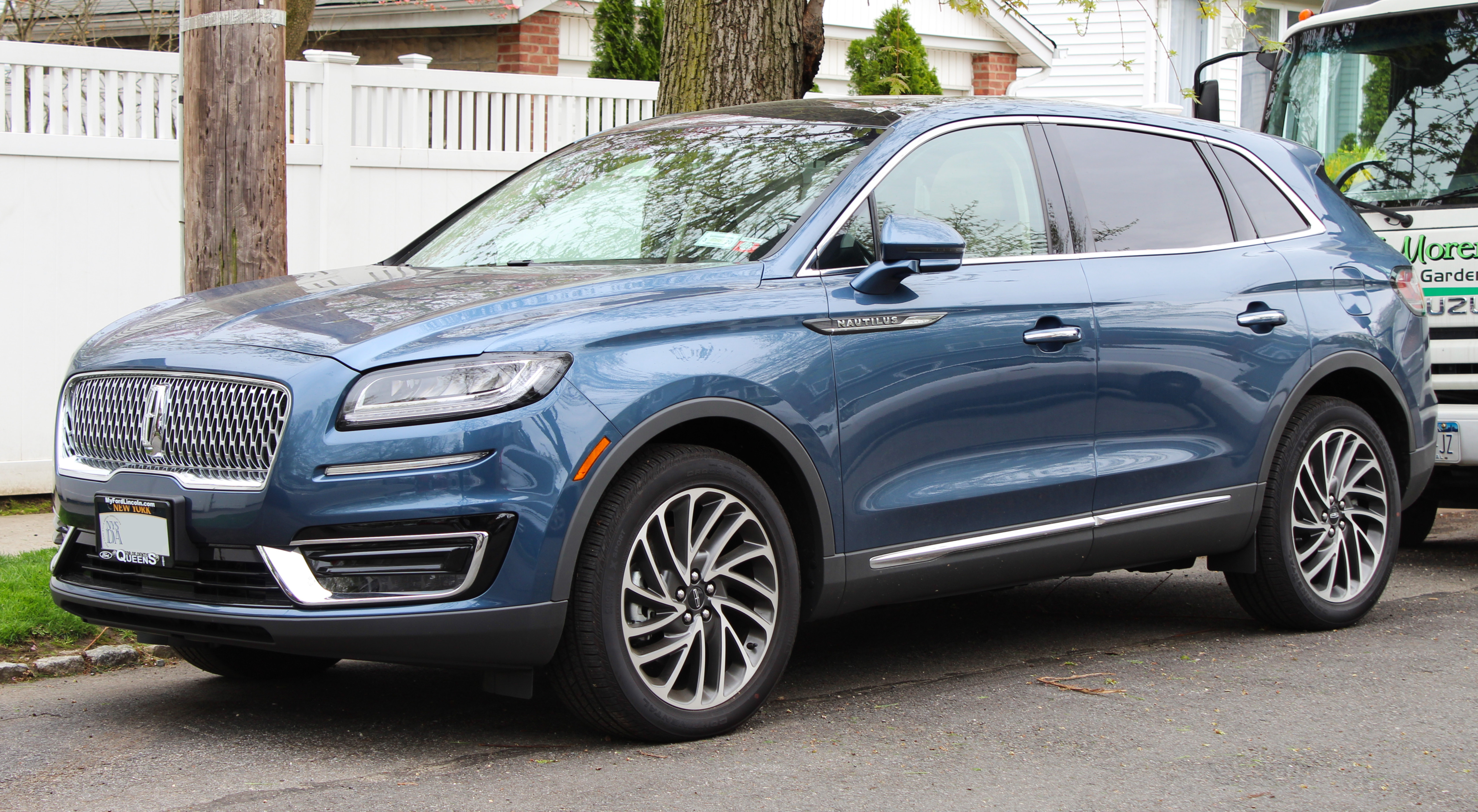
The Lincoln Nautilus is a mid-size luxury SUV. It’s meant to feel comfortable and relaxing to drive, with features designed to improve the ride experience. The podcast is highlighting how some of its comfort technology works to create a calmer atmosphere.
The Lincoln Navigator is a large luxury SUV made for comfort. It’s designed to carry people and gear comfortably, especially on longer trips. People often talk about it as a calm, relaxing place to ride.
The Charger SRT Hellcat is a very powerful Dodge car. It’s famous for big engine power, and the “Hellcat” name is a big part of the brand’s performance image.
The Challenger SRT Demon is a super-aggressive Dodge muscle car. The “Demon” name is tied to drag-racing style performance and a reputation for being over-the-top fast.
The Lexus NX 350h is a luxury SUV that runs on a hybrid system, so it uses both a gas engine and an electric motor. The “F Sport” version is the sportier trim—usually firmer feel and sportier styling than the base model.
A plug-in hybrid is a car that uses both gas and electricity, but you can charge the battery by plugging it in. That means you can often drive on electricity for part of your day before the gas engine helps out.
A CVT is an automatic transmission that can change ratios smoothly instead of shifting gears in steps. That often makes acceleration feel seamless. Some people hear or feel the engine rev differently than a normal automatic.
The F Sport handling package is a set of upgrades on the Lexus F Sport trim meant to make the car feel more controlled while driving. It can include suspension and wheel/tire changes. The host says it helps the NX handle well.
This means the car has bigger rims and shorter tire sidewalls. That can make the ride feel a bit firmer, but it can also improve how the car responds to steering. The host says it still rides well even with that setup.
Sound insulation is what helps keep outside and engine noise from getting into the cabin. Better insulation can make the car feel quieter and more comfortable. The host says this NX feels more premium because it’s better at blocking noise.
Apple CarPlay connects your iPhone to the car’s screen so you can use apps like maps and music. “Wireless” means you don’t have to plug your phone in with a cable.
A digital gauge cluster is the screen behind the steering wheel that shows your speed and other driving info. Instead of round dials, it uses a display.
The infotainment system is the car’s screen and controls for things like music, navigation, and phone features. The host says Lexus made it easier to use.
Wireless charging lets you charge your phone by setting it on a charging pad in the car. No cable is required, though the phone has to be placed correctly.
Lexus Safety System 3.0 is a package of safety features that helps the car warn you and assist you while driving. It can alert you about possible crashes and help with things like keeping distance on the highway. It’s meant to reduce the chance of accidents.
Adaptive cruise control is like regular cruise control, but it also reacts to the car in front of you. If traffic slows down, it can slow the car for you and then speed back up later. It helps make long drives less tiring.
Blind spot monitoring watches for cars you can’t see in your mirrors. If something is in your blind spot, it alerts you—so you’re less likely to cut someone off when changing lanes. It’s a common modern safety feature.
Rear cross-traffic alerts help when you’re backing out of a parking space. If a car is coming from the side, the system warns you so you don’t back into it. It’s meant to prevent common low-speed parking accidents.
A mild hybrid adds a small electric assist to help the gas engine. It usually improves efficiency and makes the car feel smoother, but it’s not meant to run like an all-electric car.
Term
Scandinavian minimalism
This is a design style that tries to keep things simple and uncluttered. The host is saying Volvo’s interior and overall vibe follow that clean, Nordic look.
EPA ratings are official estimates of how many miles per gallon a car should get. They’re based on tests, so your real mileage may be a bit different depending on how you drive.
A Bowers and Wilkins audio system is a premium speaker and amplifier setup developed by the British audio brand Bowers & Wilkins. Automakers use it to differentiate cabin sound quality, often aiming for clearer highs, stronger bass, and better overall tuning than standard stereos.
Automatic emergency braking is a safety feature that can brake for you if it thinks you’re about to hit something. It’s meant to prevent crashes or make them less severe.
Semi-autonomous features are safety/driver-help systems that can do some driving tasks for you. You still have to pay attention and be ready to take control.
As-tested price means the exact price of the specific car they drove, including the options it had. It can be higher than the starting price you’d see for the model.
A “self-driving car” is supposed to drive by itself, but many systems on the road still need you to stay in control. The car may help, but it’s not fully autonomous in the way people assume.
Term
Waymos
Waymo is a company working on self-driving technology. The point here is that their systems are far more advanced than what most regular cars can do today.
These are “helper” systems in modern cars that assist with things like staying in the lane or avoiding crashes. They’re not the same as the car driving itself, so you still have to pay attention.
Driver attention systems use in-cabin sensors (like cameras or other monitoring) to detect when you’re distracted or not looking at the road. They can trigger alerts—such as sounds, vibrations, or seat warnings—to prompt you to refocus before a dangerous situation develops.
In-cabin sensing means the car uses sensors inside the cabin to monitor what the driver is doing. Here, it’s used to tell when you’re distracted so the car can warn you.
These are safety technologies that help you drive, like keeping the car in its lane or helping you avoid crashes. They can help a lot, but you still have to watch the road because they can stop working or make mistakes.
Lane markings are the lines painted on the road that show where each lane is. Some safety features rely on those lines to steer or guide the car, so if the lines aren’t visible, the system can struggle.
“Self-steering” means the car can help steer itself to stay in the lane. But it depends on clear road signals, and if it can’t detect them, it may stop helping or not work as expected.
A touchscreen is a screen you press with your finger. While driving, it can be distracting because you may need to look at the screen and take your hands off the wheel.
Muscle memory means your hands learn where things are. If the controls are buttons or knobs, you can use them without looking, which helps you keep your eyes on the road.
Hyundai is bringing back some physical buttons/knobs for things like temperature control. The idea is to make those tasks easier to do without looking away from driving.
Volkswagen is said to be changing course on some of their touchscreen control choices. The reason implied is that many drivers want buttons/knobs they can use without looking.
LIVE
This is America on the Road, named Best Radio Show by the International Automotive Media
Conference, and now in its 34th year on the air.
Thanks for being with us as we bring you the latest automotive information from around
the world.
I'm Jack Neerad, with me is co-host Chris Teague, and Chris, are you feeling okay?
I know you were a little nauseous before the show started.
Yeah, I'm doing okay.
The weather's nice.
It's nice and warm.
I'm happy with it.
How are you?
Yeah, just fine, haven't been out much, but you know, it's early.
Plenty happening in the automotive world this week.
Women have just completed a global survey in which they said 97% of them are safe, confident
drivers.
Who can argue with that?
As I told my wife, I'm not going to.
Mercedes-Benz just unveiled a living room on wheels.
The electric luxury van has a 400 mile range, app-controlled seat ballet, I don't know what
that is.
And 31-inch rear TV, your family holler would wince in comparison, so we'll have details
on that coming up.
60 years ago, the Lamborghini Murro re-invented the supercar, now the brand is celebrating
by dominating Forza and Gran Turismo games, nothing says timeless icon like smoking teenagers
in video games.
Lincoln has introduced the Sanctuary, a real world chill zone with massage seats, digital
sense and a calming screen, so you can take five without getting in the car.
But it looks like a public restroom, so we'll talk about that.
And it's a shame that Father's Day is over because Dodge and Under Armour have teamed
up to put Hellcat burnout graphics on workout gear.
Now, Chris, did you get any Father's Day gifts?
I got a magnet fishing kit, I don't know if you've ever seen that, you throw a magnet
into the water and you pull back whatever sticks to it, yeah, a lot of fun.
Ah, okay, well, you find some magnetic fish even better, or maybe not, I don't know about
those.
America on the Road is brought to you by drivingtoday.com, emlancy.com, the publisher
of my latest book, Only One Thing Stays the Same and Mercury Insurance.
If you're looking to save some money, you should switch to Mercury for your auto and
home insurance.
Californians save an average of $670 with Mercury, so imagine how much you could save.
And to quote today at drivingtoday.com slash auto insurance, that's drivingtoday.com slash
auto hyphen insurance.
Well, Chris, what is your test vehicle for this week?
I spent the week driving the 2026 Lexus NX Hybrid, I can't wait to tell you all about
it.
Yeah, I look forward to talking about that.
It's almost a head-to-head comparison here.
My test vehicle this week is the 2026 Volvo XC60 B5 all-wheel drive.
So we'll talk about that.
Our special guest this week is Jennifer Smith, she's CEO of StopDistractions.org.
So she'll have some interesting things to say about distractions in the car.
So stay with us for all that, and we'll have tons more show coming up on America on the
Road.
We're glad you're with us.
Stay with us.
We'll be right back.
Welcome back to America on the Road with Chris Teague.
This is Jackie Radback with you.
So glad you're with us on America on the Road.
If you like our show, please pass it along.
You can pass along a podcast of America on the Road.
You're going to look for America on the Road on Substack now.
We're all over the place.
So look for America on the Road, and as I say, we're glad you're with us.
It's news time, and I got to kick out of this, Chris, and maybe you did too.
There is a global survey put out essentially by women drivers saying that women's drivers
are pretty good.
Apparently women's drivers day was June 24th.
I didn't realize that, nor did I celebrate that, but there was a check magazine, I have
some check heritage, that partnered with women's worldwide car of the year to pull 1,700 or
so women from 33 countries.
What they found was 97% of women drivers think they're really safe drivers, only 3% admitting
that they sometimes drive unsafely.
What do you think about this kind of self-reporting, Chris?
Well, two things.
First of all, I think everyone reports or would believe that they're a great driver.
I think that we all kind of overlooked that part, any faults that we have in that area.
But the second thing is, I think there's a reason why, at least in the United States,
women are generally cheaper to insure than men when it comes to cars.
So maybe they're onto something.
I'm not going to comment on the accuracy of that, because I believe they can be great
drivers too.
Yeah.
And I think largely they are, certainly safety statistics indicate that, and the insurance
thing you point out is another indicator of that.
The survey highlights common distractions, and we're going to talk about that with our
guests coming up.
47% admit using a cell phone while driving, 37 eat or drink while driving, and 18% tend
to children.
So I mean, that's not necessarily great, yet they prioritize child safety and do that
kind of stuff.
So it's interesting that good driving, I think it doesn't matter what gender you are, it
just matters whether you're paying attention and have the basics down.
But paying attention is number one, isn't it?
Yeah.
I read a story a long time ago, totally gender neutral, but the measure of being a good driver
is not that you arrived alive and unheard, it's that you did all the things right along
the way there.
So I think saying I'm a good driver, men do this, so it's not a women problem at all.
But you look at your phone, I fiddle with the kids in the back seat, whatever.
Those are not safe activities, even if you arrived unheard.
Right.
Yeah.
We get by with a lot of stuff that we probably shouldn't be doing in the car, but it happens.
And happily, a lot of times we're able to avoid anything more than maybe a little bit
of a scare or something like that.
I'm curious as to your take on this new Mercedes-Benz electric VLE luxury van, Chris.
I mean, this is what they call a groundbreaking all-electric vehicle.
It apparently redefines, at least according to them, long distance comfort and family mobility.
This is what it offers, range exceeding 430 miles, 800-volt architecture that you can
recharge up to 220 miles of range in just 15 minutes.
So that's pretty good, I think.
So overall efficiency, it's a spacious cabin, it's essentially a rolling living room, accommodates
up to eight adults.
They have what they call roll-and-go seating in this.
What's your take on this kind of vehicle?
It's an interesting contrast because the specs are pretty impressive for any V.
I mean, it's not coming out any time in the next couple of months, but those are impressive specs.
The thing that really hit me is that they describe as a long range or a long-haul traveler.
When these sorts of vans, at least in other countries, are used to carry executives and
other people around urban environments, right?
Like these in Japan, these vans are meant for that sort of thing.
So it'll be interesting to see how they end up being used.
And it's coming to the United States, as they say, so maybe we'll get to try it.
Yeah, I can't wait to see it.
It has air suspension, so that's nice, adjustable air suspension.
Rear axle steering, rear wheel steering that enables a pretty tight turning circle for
something as big as this is.
And there are very few vehicles out there that'll accommodate eight passengers, so that's pretty
cool.
And then they have the operating system, the Mercedes-Benz operating system, MBU-X,
super screen with a 31-inch panoramic rear display.
So a nice place to travel.
Burmester 3D audio, a lot to like inside.
Yeah, I guess the annoying thing for me as an apparent is that I would be in the front seat
either driving or navigating and wouldn't be in the back seat to enjoy any of those
comforts back there.
Yeah, well, I'll be interested to drive this thing sometime in the future,
as you probably will, and with your family that would be fascinating, I think.
Lamborghini is celebrating 60 years, 60 years, can you imagine, of the iconic Miura.
What a legendary and groundbreaking vehicle that was.
It was launched at the 1966 Geneva Motor Show, and it revolutionized the automotive world
because it was one of the first essentially mid-engine street legal supercars out there.
It had a transversely mounted V12 engine, just a beautiful vehicle all the way around.
I mean, what's your take on your ground breaker, right?
It is absolutely a ground breaker, and this is the personal opinion,
but I think it's the best-looking vehicle Lamborghini's ever made,
and that goes back to the earlier models too when they had the front-engine rear-drive cars.
But yeah, I would love to have one, obviously.
I'm not in that budget range, but yeah, they're great looking.
Yeah, super, super cool.
And it has also now become a superstar 60 years later in video games and computer games.
That kind of thing.
Do you play any of these games?
I'm not a race game kind of guy, I think.
I've played Forza in Gran Turismo, but I don't have a lot of time for video games.
Forza more recently, yeah.
Do you enjoy it?
Is it kind of like racing?
It is like racing.
There's some cartoonish elements to it.
I don't think I would treat it as a simulator by any means, but they're a lot of fun.
Yeah, the few times I've done that, it seems like you go off the track and crash,
and then you could go right back on the track and keep going.
Yeah, exactly.
Doesn't seem right to me somehow.
When I've been on the track and crashed, well, that was kind of the end of the day for me.
So I didn't do that much, but there were a time or two, I guess.
Here's an interesting thing.
Lincoln is trying to capture sanctuary.
And if there are promises of anything out there, the Lincoln brand promises sanctuary
in their vehicles, and they have put together what they call an installation,
a multisensory installation that's open to the public that's inspired by what they do
in the vehicle, in the rejuvenate feature.
This is in models like the Navigator and Nautilus SUVs.
And it uses stuff to create calm, which is a good thing to have out there.
But premium materials, massage, seating, ambient lighting, panoramic visuals,
digital scent diffusion.
Maybe I could use a little of that.
And the audio from Revell, what'd you take on this?
Yeah, I agree.
You know, the sanctuary thing is absolutely real, right?
I had a Navigator, a Lincoln Navigator a few months ago with the digital scent system
and the things inside.
And it's a very nice vehicle.
And I can see wanting to get these features out for people to be able to try them in the public.
I always wonder about how popular these sorts of things are.
This isn't the first sort of experience type thing we've seen.
So I just wonder how many people show up and actually, you know,
experience the thing that Lincoln has set up or any other automaker.
Yeah, I wonder how many people who are driving in their Navigator just kind of,
you know, park in the driveway and then just drink in the Aurora Borealis or
Forest Meditation or Tropical Paradise.
I mean, maybe they do that before going inside to deal whatever they have to do in the house.
But I think a lot of us are pretty busy and just would not do that.
My wife would be knocking on the window.
What are you doing out here?
Exactly.
My wife would be wondering, have you passed out in there?
What's going on?
Have you had a heart attack and died right in the driveway?
Well, Dodge and Under Armour are getting together to have a dynamic,
what they call a dynamic, new collection.
I guess we can decide on that.
A performance athletic gear that's inspired by the Charger SRT Hellcat
and the Challenger SRT Demon.
All kinds of apparel, footwear, accessories.
You think this has any leverage?
Well, I'll point out that neither of those cars are sold right now.
So at least as new models.
I don't know.
It's not really my thing.
I think there's probably a group of people who would really enjoy that sort of thing.
Dodge sells a lot of clothing.
I just looked at their store the other day.
So more power to them.
Yeah, you know, maybe for the right person and certainly the person who loves that brand and loves,
you know, what it represents, you know, why not have apparel that expresses that as well.
So that's kind of cool.
You know, Hellcat shoes.
Why not?
Remind us of the test vehicle you have for this week, Chris.
I drove the 2026 Lexus NX Hybrid.
Very cool.
I was at the wheel of the 2026 Volvo XC60 B5 all-wheel drive.
I'm good at reading words, but letters and numbers, I guess I have problems with.
So stay with us for all that and we'll be right back right here on America on the Road.
Welcome back, everybody, to America on the Road.
We'll just be checking right back with you for road test time.
And we've got two kind of similar vehicles here, some luxury SUVs to talk about.
And Chris, you were driving a vehicle that my oldest daughter has her eye on, the Lexus NX.
Tell us about it.
Well, I have to tell you, I'm a little conflicted by it because I do really like this vehicle,
but I think there's some things that Lexus has always kind of struggled with.
I'll use that word even though it's not really a bad thing.
But stepping back, you can get into the regular gas-powered NX for around $47,000,
a little bit more than $47,000.
My NX350H Hybrid F Sport, which is a whole mouthful, was around $58,000 as tested.
And then you can get the NX450H and spend up to around $65,000 for the plug-in hybrid model.
Jack, have you driven one of these recently?
And if so, what did you think about it?
I have.
And I think I like the NX more than I thought I would.
Iterations past always seemed kind of toy-like to me.
They just didn't seem very substantial.
And I think now the newest iteration of the NX, I think, is much stronger and just feels
like a more substantial vehicle.
And I liked it.
I agree.
So I'll get into my challenge with it in just a moment.
But the NX Hybrid comes with a 2.5-liter four-cylinder engine with two electric motors.
You get 240 horsepower combined with a continuously variable transmission.
Front-wheel drive is now standard.
My test vehicle came with all-wheel drive.
When I drove the gas version of this vehicle,
I think it was probably three or four years ago now, we talked about this.
It just felt underpowered.
It felt a little lethargic.
Like you said, it didn't feel like a solid, complete luxury crossover.
I think the Hybrid has a lot to do with the fact that I feel that that has changed.
It feels quicker.
It feels more engaging.
It still doesn't live up to the F Sport name.
So this is not a sporty vehicle as you imagine it.
The styling here is really the only change with the F Sport trim.
And that's kind of my biggest problem.
And people have been talking about this for many years.
So I'm not like a ground breaker here or anything.
The handling is great.
This is called the F Sport handling package.
The ride quality is pretty good given that you have larger wheels and smaller tires.
And even though the engine does whine a little bit,
it does wail with the continuous variable transmission, it's not as loud.
They did a good job with sound insulation in this vehicle.
So it feels more premium than before.
What do you think about that, Jack?
Yeah, I think all around it.
Like I say, more substantial vehicle just feels more luxurious than before.
Like I say, the previous editions of this vehicle were certainly not my favorites
in the Lexus lineup, but I think they've come a long way.
And now that my daughter has her eye on one, I think it's a pretty good choice actually.
I think it's a very good choice for her.
Yeah, I don't disagree.
And if you're charging almost $60,000, $60,000 for a vehicle,
that's got to feel like you're getting your money's worth.
And I think this does in a bunch of ways now.
Inside, you can get genuine leather with this vehicle.
My F Sport trim came with synthetic leather upholstery.
It felt just fine.
There's no quality issues here.
It feels like real leather.
It doesn't smell like real leather,
but I think that you can kind of get over that after a little while.
The F Sport model comes with heated and ventilated front seats.
You get a heated steering wheel, power seats, a head-up display,
and heated rear seats.
So there are quite a bit of features in this vehicle.
This is a compact SUV though.
So we're not talking about a super spacious interior.
The front seats are nice.
They're comfortable.
They're wide.
You have good ergonomics up front.
Lexus does a good job with the cockpit feel of their vehicles.
The back seat, you might struggle a little bit to fit adults.
My 13-year-old daughter, who is now taller than my wife,
she's like 5'3", 5'4".
She did have some issues with her legs behind my seat at 6' tall in the front of the vehicle.
But my 9-year-old daughter had no problems at all.
She's a little bit shorter right now until she grows a little bit more.
You do get a good amount of tech features with this vehicle.
A 14-inch touchscreen is available.
9.8-inch digital gauge cluster, wireless Apple CarPlay and Android Auto.
My trim came with the optional 17-speaker Mark Levinson stereo system.
I've always been a fan of the Mark Levinson stereos.
I think they're very clear.
They have great bass.
They're more than loud enough, and it just sounds great in this vehicle,
as I mentioned earlier, with the sound insulation,
so you don't have a lot of road noise coming in.
Just a really good stereo experience.
And Lexus' new infotainment system is easier to navigate than before.
We've talked about that with Toyota and Lexus in the past.
With the F-Sport trim, you get wireless charging,
LED ambient interior lighting,
and my vehicle also had the optional panoramic moonroof.
You also get Lexus Safety System 3.0,
so you get four collision alerts, adaptive cruise control,
and then blind spot monitoring, rear cross-traffic alerts,
and a few other features are added on with the F-Sport trim.
So, Jack, if this were me, I think I said I liked the NX.
I would probably go for a lower trim level,
get a smaller sunroof, maybe a few fewer features,
and come out with a price tag in the lower $50,000 range,
as opposed to almost $60,000 for this hybrid.
But, man, it's a comfortable vehicle, and I think it handles well,
and I think it would be very, very comfortable for your daughter.
Yeah, what powertrain would you go for, Chris?
I'm curious.
I think the hybrid is a sweet spot in this model line.
Like I said, I think the gas feels a little underpowered.
The plug-in hybrid is too expensive,
and you still have to plug it in,
so the hybrid gives you the acceleration, the torque,
and then you get fuel economy on top.
Do you think the base engine is underpowered for a 30-year-old woman?
No, no, I think most people commuting would feel just fine in that.
I think for me, looking at this as a sporty SUV,
as it's advertised, I would want the hybrid,
but I think she'd be happy with the gas.
Yeah, well, we'll see what happens.
She won't do a little shopping here,
and we'll take her shopping,
or she can take herself shopping,
because she's 30 years old.
She doesn't need me to go with her,
especially because she lives a thousand miles away.
There you go.
Yeah, but good recommendation.
I was driving in a lot of ways a similar vehicle,
the Volvo XC60 and B5 all-wheel drive.
This is a mild hybrid trim.
I had the ultra version,
so the top of the midsize SUV lineup.
This balances Scandinavian minimalism,
safety, and everyday usability.
That's kind of the watch words for Volvo,
and so there's luxury appeal there, of course, as well.
Mission is pretty much accomplished.
I think they do a good job.
This is one of the most popular of the Volvos out there,
and rightly so.
I think it's just a good value all the way around,
and it does a lot of good things.
It has very composed on-road manners.
You're probably not going to take it off-road ever.
I guess you could, but you probably wouldn't.
And it has a nice understated interior.
I really like the Scandinavian look.
It's not over-dramatic.
Some of these luxury vehicles just are in your face,
and I like the fact that this is kind of a lower key inside.
What's your take on styling inside and out of the XC60?
Yeah, Volvo interiors are among my favorite in the industry.
The seats are great.
The styling, as you mentioned, is clean.
There's not a lot of clutter.
There's a lot of stuff built into the screen,
which I'm sure you'll talk about,
but it's a very nice pleasing design.
Yeah, they've done a few things for 2026 model year.
They've updated the grille.
It's bolder now, larger probably.
A larger infotainment screen, that's useful,
and a more refined mild hybrid power delivery,
which seemed very good power delivery.
Not exactly cheap with the roster of features we had.
The price was approaching $68,000,
so expectations there are high,
but it has strong credentials all the way around.
Let's talk about powertrain.
It's a turbocharged 2.0-liter four-cylinder,
again, a mild hybrid equipped,
produces 247 horsepower, 266 pound-feet of torque.
It has a conventional eight-speed automatic transmission,
and all-wheel drive is standard.
I like the fact that the mild hybrid
contributes some nice smoothness to this,
and some low-end torque,
and kind of smooths the shifts and everything else.
This isn't a drag strip car,
but the 0-60 is six and a half seconds.
I think that's pretty respectable.
What do you think, Chris?
Yeah, those are supercar numbers
from a couple of decades ago.
I think we were a little bit jaded
by the numbers these days.
It's perfectly fine.
I like that powertrain.
Yeah, I mean, I like the way it drives,
and I think passengers appreciate its comfort and quiet,
so that's good.
Decent fuel economy,
EPA ratings are 23 miles per gallon in the city,
30 miles per gallon on the highway,
26 miles per gallon combined,
so that's good.
Like I say, it kind of emphasizes ride comfort
over edge of the seat handling,
but at the same time,
I think the handling is quite good,
and you always feel in control.
I certainly did.
I wouldn't take this vehicle off-road,
but one could do some light off-roading in it.
So let's dive into the interior a little more deeply.
Napa leather interior in the Ultra trim,
very high quality throughout,
nice soft touch, as they say in the industry,
materials throughout.
Very quiet cabin, too.
I think it's well laid out,
comfortable for families on long trips.
You have to be not that big a family,
but I think a family of four probably would enjoy this.
22 cubic feet behind the rear seats,
and that expands to 54 cubic feet with the seats folded,
so a lot of room there.
And I think it's a practical vehicle
all the way around.
What do you think, Chris?
I agree.
You're not going to fit,
you know, five passengers can ride comfortably,
as you said.
It's not going to be a huge family that you can carry,
but it's got good cargo space,
and it is very comfortable inside.
Right.
It has a new 11.2 inch touchscreen,
faster and higher resolution than before.
It supports wireless Apple CarPlay,
Android Auto,
and I think there's a lot of Google attached
to this particular one,
so that works quite well.
And I think, you know,
people know how to use Google Maps
and those kind of things.
And then it has a Bowers and Wilkins audio system
that's very good.
And of course, it's a Volvo,
so safety is up front,
automatic emergency braking,
lane keeping,
assist blind spot monitoring,
and you know, a ton of stuff like that.
It's some semi-autonomous features.
I think, again,
as you mentioned with the NX,
starting maybe a little lower
lower on the price range is the way to go here.
It starts around $51,000,
the XC60 starts there.
As I say, the as-tested price of the vehicle I had
was $68,000,
so that's a big premium.
Where would you go with this thing?
Well, Volvo specifically,
I actually prefer some of the lower trims.
You can get the textile seats
that almost feel like wool instead of leather.
Those are very nice.
And you still get most of the safety features
in the styling,
so yeah, I think you could definitely get out the door
with a lower trim level.
Yeah, you might be under $60,000,
and I think that would be a nice thing in this vehicle.
Well, when we come back,
our special guest is Jennifer Smith.
She is CEO of an organization called Stop Distractions,
and important safety stuff.
She had some personal experience in her family
that kind of prompted that,
so we'll speak with her coming up.
Stay with us for that,
and we'll be right back right here on America on the Room.
I received a letter from a reader this week,
and I thought I'd share it with you.
Here's what he wrote.
I just got around to reading Dance in the Dark,
and wanted to say how much I enjoyed it.
I'm a compulsive reader,
and this one was right up my alley.
An unlikely hero.
A lot of twists and turns,
some adult content,
and humor that rose naturally from the action.
Keep on writing, and I'll keep on reading.
Of course, that's just the kind of letter
any author would love to get.
I hope that others get the same enjoyment
from reading Dance in the Dark,
and my newest crime novel,
Only One Thing Stays the Same.
Both are available exclusively at Amazon.com.
That's Dance in the Dark,
and Only One Thing Stays the Same,
both written by me, Jack Arnie Red.
Thanks for looking for them today.
Welcome back, everybody,
to America on the Road, Jack Arnie Red back with you.
We have a terrific guest for you,
talking about something we talk about
on America on the Road all the time,
and that's distracted driving.
Jennifer Smith is CEO and co-founder
of StopDistractions.org.
Number one, thanks for being with us, Jennifer.
Well, thank you so much for having me.
It's a really important topic.
It is.
What prompted you to get into this,
and to talk about this?
I'm kind of curious as to what made you decide
this is an important issue.
Yeah, definitely.
I was actually a real estate agent,
and back in 2008,
my mother was hit by a driver
who was using their cell phone.
I was very fortunate he admitted it,
so I knew the cause immediately,
and I just decided I needed to do something about it,
which is when I started to reach out to other families,
and now we have StopDistractions.org.
Yeah, very important stuff,
and there's so many things in our cars
that can distract us from what is the most important job.
I mean, the key job when you're driving the car
is pay attention and drive the car.
Now, you know, don't do other things.
I think we're getting more distractions than ever.
What's your take on that, Jennifer?
Yeah, I mean, again,
go back to 2008 when my mom was killed.
The iPhone just came out in 2007.
Our biggest issues then were texting and driving
and, you know, using the phone,
talking on the phone when driving.
We didn't do anything else with it.
Even texting was like dot, you know, so hard.
Now, our phones have evolved there, everything.
There are entertainment.
People are watching Netflix, watching sports,
where they are driving down the road,
like, and just not even thinking.
They're in meetings.
It's how we conduct business and do work.
People are usually get to shop, pay bills, you know,
take pictures, you name it.
We do that with this device
that has so much power in our phone,
and we're just compelled so much to use it.
We don't think about everything we're doing is so distracting,
and then it's just more and more and more,
because, hey, I'm not texting and driving,
but you're doing everything else.
Yeah, it is kind of frightening, isn't it?
I think I saw a study somewhere that said
a higher percentage of people
would rather get rid of their spouse
than get rid of their cell phone.
And it's kind of frightening
because that has been a, probably,
the major source of distraction.
And talk about that.
There's certainly others,
but go into cell phone usage a little bit more.
Yeah, I never want to ignore
that there are a lot of other distractions in the car,
and that we do need to just drive and focus
and let all those other distractions, you know, cease.
It's not safe.
But the phone is the most prevalent,
and there's that compelling, some say,
addictive nature to it, where we are,
like, think of social media and how it's built
to make us stay on it longer and do more.
And, I mean, even think to, in school,
we're giving children iPads now,
and having them start learning with games,
where they're getting that big celebration,
that big dopamine hit, because they got it right.
And so now, when we're driving,
we want that dopamine hit.
Our brain hears that phone,
and that's the most important thing to it,
because it wants that dopamine hit.
It doesn't think, oh, wait, I'm driving.
I need to focus.
But the good thing is, like, it's not all bad news.
I want to turn it to good news,
is we are also at the point
where there's finally solutions and technology
that got us into this mess,
now has solutions that can get us out of this mess
if we just choose to use them.
Well, dive into that,
because I'd like to hear about that.
Yeah, so, I mean, first and foremost,
the easiest and best thing you do
is turn on do not disturb while driving on your phone.
Every phone has it.
You literally just go into settings
and turn on do not disturb while driving.
It will hold all your calls and text messages
and send a response even that you could customize,
but to that person saying,
hey, they're driving right now.
And so not only is it making them understand
you're in an unsafe situation,
so they're not expecting you to answer,
because we're expected to be available 24-7.
But also, it's kind of giving them that education
that, oh, wow, they're not using their phone while driving,
so maybe that'll start to ripple effect
and go to everyone else.
But also, it removes the temptation for you.
If you don't hear that ping, you're not going to reach for it.
You don't want to grab for it.
It's a hard habit to break.
I admit, it takes months.
Even after losing my mother,
it took months for me to put the phone down
and not be tempted and not grab it.
But you can do it,
and it's with things like do not disturb while driving.
There's also other things.
You know, apps you can get with your insurance companies
that will, you put it on your phone.
It gauges how you drive, and it gives you feedback.
You can get discounts on your car insurance
and more and more every year, the better you drive.
But the best part is it gives you feedback
to tell you how you can be a better driver.
Like saying, hey, you were using your phone a lot.
You know, maybe let's try putting the phone down
this next week and see if we can reach this goal.
You know, turning those bad goals into good goals.
It's just, and I could go on and on and on.
Well, let's talk a little bit more about do not disturb.
Can you set it up that the phone will turn itself off
or put you into do not disturb just because it knows you're driving?
Yes, it's automatic.
Yeah, okay.
So it can sense that you're driving, and then, boom, you know.
Yeah, so you turn it on once, and anytime you start driving,
I think it's about over 10 miles per hour.
It will automatically kick in, and it will hold those calls and text messages.
Typically, all smartphones have it, both Android and iPhones.
Yes, and I have a great place you can go.
The National Distracted Driving Coalition has a website at usnddc.org,
and they have a section on their Ford Do Not Disturb While Driving Day.
That page has videos for every type of cell phone,
how you go through your settings and turn it on,
customize the messages and do everything you need to.
You can even set emergency numbers that their calls can get through.
Will get through.
So if your wife, your spouse, your parent needs to get that call through,
they can get through that whole, but it's such a great tool.
It's free, and it's on your phone now.
Yeah, and most people don't know about it,
but now they're learning about it today, so that's terrific.
I didn't know about it, and I'm really concerned about this.
There, what is your take on voice controls and taking phone calls, but strictly voice?
I think they're still distracting, right?
I mean, phone calls can still be distracting,
even if you're not handling a phone instrument,
but I want your opinion on that.
Well, I have a strong opinion on this.
The driver that killed my mother was holding his cell phone and having a conversation.
The fact that he was holding the phone had nothing to do with the fact that his brain
didn't process the information that his eyes were seeing,
because your brain can't do those tasks at the same time as switches back and forth.
He even says, I never saw her.
I never anything, and he was looking straight out the windshield.
When you're on a phone call, you can get embroiled in that phone call, right?
I mean, even if you're just speaking,
or you can get embroiled in a conversation with somebody sitting next to you in the car,
and suddenly you're not paying the attention you should to your driving,
maybe sometimes you can get away with it, because not every situation is a panic situation,
but it's still a troubling situation, isn't it?
Yeah, and I mean, for me, I don't use my phone at all while driving, even hands-free.
The big phrase is that everyone says, hands-free is not risk-free.
If you want to be truly safe behind the wheel, you put the phone down,
you put it away, and you don't use it at all.
There is no distraction that is worth risking your life,
even that split second could be dangerous, and if you're talking on the phone,
your brain is not processing all of the information you're seeing,
it's just a biological fact.
So that is why I choose, and my family chooses,
due to the fact that we lost my mother from something like this.
We don't use the phone at all, but I know the majority of the population cannot function,
cannot live, they have jobs, they all have all these things,
and so that is why in the law, in the states, we pass hands-free laws,
and the purpose of those laws is not to condone hands-free calls,
but it is to help law enforcement and to change the culture.
We write them so you cannot hold the phone or support it with any part of your body,
trying to just get the culture changed.
You don't have the phone in your hand while you're driving,
you don't need the phone, you're supposed to be focused on driving,
and that way there's no loopholes or confusion with law enforcement.
If you get pulled over and you just had it in your hand and you,
oh, but I wasn't doing anything, I was just holding it, it doesn't matter.
You cannot hold the phone because we want to change that culture.
We want to make it unacceptable to use your phone while driving at all.
It strikes me that there are a lot of distractions in modern vehicles.
I test new cars every week, that's one of the things we do on America on the road,
and if anything, I think cars these days are more distracting,
their controls are more distracting.
Touch controls on screens I think are more distracting than real knobs
on the dashboard that you can understand where they are and grip them.
You have to kind of look at the dashboard to use the touchscreen properly.
Talk about that a little bit.
What are your thoughts on new car tech?
Yeah, I know it's bring back buttons.
I mean, knobs and buttons, those are easy to reach for.
Even those glances away to change the radio station, that is a distraction.
Anything could happen in that split second.
There was a time when the technology went crazy in the cars,
then it came back to, there are again a lot of safety technologies to the cars
at the same time as these, not as safe technologies, you know,
and I think the automakers need to be very careful on how they market these things.
The self-driving car is not a self-driving car, that technology is not ready.
You know, we do have waymos and things like that that are working on it.
But, you know, your car is not driving itself, so you can go and do whatever you want.
And even if it is, the law in your state probably says you cannot if you're behind the wheel.
So, yes, there's a lot of distracting technologies,
and we need to be mindful of the design of the cars, the size of the screens,
what we're allowing to go through,
what we are distracting that driver with when they do need to focus.
But then also look at the other side,
and that's all the great technologies that are coming in.
The lane keep assist, all those advanced driver assistance technologies,
also the new things on the field that Europe already has as a standard safety feature,
and that's driver attention systems, you know, in cabin sensing that alerts you
when you are distracted and not paying attention or looking at the road.
It'll give you seat warnings, you know, vibrations, a little sound,
dings, different cars for different automakers.
But that'll help you get more focused, you know.
This technology is evolving to also work for impaired driving, you know.
This is going to be able to work for drowsy, distracted, drunk, drugged driving.
This is this one solution that can handle them all.
So, yes, there's a lot of things in the car that maybe aren't the safest,
but the frontier ahead of us, if we push as consumers,
that we want these amazing safety technologies, it could really protect us,
help us change our behaviors, and really save and protect everyone on the road.
Yeah, which we all want.
I mean, you know, certainly concentrating on driving is very, very important.
Paying attention is very, very important.
And even if you have these driver assist features,
and I've driven a lot of cars that have them now,
you still need to pay attention to what's going on, because at a second's notice,
or less than a second's notice, they'll suddenly stop functioning.
They won't be seeing lane markings on the road,
or they won't be seeing something that prevents them from self-steering the vehicle,
and you're in a world of hurt at that point.
What do you think the solutions are going forward besides just awareness?
Well, I mean, it's road safety, it's that three-legged stool.
It's the education and awareness, the good laws with tough enforcement,
and then, you know, technology and engineering.
And those three sections of things are what's going to get us out of this mess,
and reduce fatalities and save lives.
And to bring all those things together, it's the coalitions and partnerships.
Everyone working together that deciding this is a priority,
because the numbers are not concrete and stone,
because it's so hard to acquire how many fatalities and crashes are caused by someone on their phone.
We have to decide, as a country, to make this unacceptable and then work towards it.
Like, why do you think the roads are so dangerous and all insurance is going up?
It's because crashes are happening because everyone's distracted on their phones.
29% of all crashes it was estimated in a study by NHTSA
are caused by distracted driving, the economic cost of all crashes.
That's the leading crash-cause economic contributor in the country.
And so we need to focus on that and direct our attention to it,
so we can have results and bring that down and save lives.
Well, so much to chew on there.
Thanks so much, Jennifer Smith, for being with us.
StopDistractions.org is the name of your website.
And certainly, this is something that I think we can all get behind.
Thank you, and don't forget to turn on Do Not Disturb While Driving.
You got it.
Stay with us, everybody.
We'll be right back right here on America on the Road.
Welcome back to America on the Road with Coase, Kristie.
This is Jackson Brown with you.
This is listener Question Time, our final segment of this week.
We'd love to answer questions for you based on our lengthy experience providing car advice.
Send those questions to editoratdrivingtoday.com.
That's editoratdrivingtoday.com.
I've got a question for you from Cindy Lu in Kansas City, Missouri.
Chris, this is what she asks.
Some of the video displays in cars seem to be getting out of hand.
Are giant touchscreen controls making cars less safe to operate?
Well, I think the answer is that they absolutely can make cars less safe to operate.
If you remember physical buttons in your car, you kind of build a muscle memory.
You don't have to like hunt and pack around.
You can reach down and turn the air conditioning up or change the radio station
without having to look at a touchscreen.
Now you're hunting and pecking just like you would be on your phone if you were holding it
and driving.
And I think we're seeing evidence of automakers catching on to this, right?
Hyundai has said they're going to make physical controls for climate and other things.
Volkswagen is kind of backtracking on some of that.
So we're seeing automakers catching on.
Unfortunately, we've gone to the very end of that spectrum before we start pulling back a little bit.
Yeah, I think car makers thought it would be very inexpensive and maybe high tech
to put all that stuff in into screens.
And then they could change it around.
They could do all kinds of stuff once they had that screen real estate staked out there.
But I think they're discovering that people of all ages, not just oldsters like me,
like real solid buttons and knobs for some of this stuff that you can reach and hang on to
and do all of that with.
That's true.
Well, that wraps up our show for this week.
I'd like to mention that my crime novel, only one thing stays the same,
is available in both ebook and paperback form at Amazon.
So look for that.
If you like our show, please pass it on.
Listen on this radio station each week.
Let your friends know where you hear America on the road.
We'd love to double our listenership this year and we need your help.
Don't we, Chris?
That's right.
And you can help us with a quick Google search for the America on the road podcast.
We'll come to you on all the major platforms, Apple, Spotify, all the rest of them.
Like the show, download our episodes, sign up to receive them automatically every week
and leave us a review.
All those things help us out and you can take us with you wherever you go.
We would appreciate that.
We have a YouTube channel, so check that out.
We also have put a lot of our content now on Substack.
So you can look forward on Substack as well if you're a Substacker.
Our thanks to Mercury Insurance for sponsoring the show
and to our sports byline radio network stations for carrying it.
We love being on Terrestrial Radio, Long Live AM.
Most of all, thanks to you for listening.
And please join us again next time for another edition of America on the Road.
I received a letter from a reader this week and I thought I'd share it with you.
Here's what he wrote.
I just got around to reading Dance in the Dark and wanted to say how much I enjoyed it.
I'm a compulsive reader and this one was right up my alley.
An unlikely hero, a lot of twists and turns, some adult content,
and humor that rose naturally from the action.
Keep on writing and I'll keep on reading.
Of course, that's just the kind of letter any author would love to get.
I hope that others get the same enjoyment from reading Dance in the Dark
and my newest crime novel, Only One Thing Stays the Same.
Both are available exclusively at Amazon.com.
That's Dance in the Dark and Only One Thing Stays the Same,
both written by me, Jack Arnie Red.
Thanks for looking for them today.
About this episode
Driver confidence and distracted-driving stats kick things off, including why “hands-free is not risk-free” and how phone features like “do not disturb while driving” can help. The show then pivots to car reviews: Chris introduces the 2026 Volvo XC60 B5 all-wheel drive and compares it with the 2026 Lexus NX Hybrid. The XC60 gets praise for composed everyday manners, practical cargo space, and updated tech, while the NX focuses on hybrid feel, comfort, and safety/infotainment details.
This week on America on the Road, Jack Nerad and Chris Teague review two refined luxury SUVs — the 2026 Volvo XC60 B5 AWD and the athletic 2026 Lexus NX 350h F Sport Hybrid. They also discuss a new survey in which women drivers assure us they’re just fine, examine Mercedes’ opulent electric VLE luxury van, and offer their congratulations on the Lamborghini Miura’s 60th anniversary. We’ll also give details on Lincoln’s wellness “Sanctuary” experience, and Dodge’s Under Armour Hellcat workout gear. Our special guest is Jennifer Smith, CEO of StopDistractions.org.
🚙 Jack Nerad’s Road Test: 2026 Volvo XC60 B5 AWD
In the first of our luxury SUV reviews, Jack offers his opinions on the 2026 Volvo XC60 B5 AWD Ultra, a refined mild-hybrid luxury compact SUV with a 247-hp turbo 2.0-liter engine, premium Nappa leather interior, and a large 11.2-inch touchscreen. Its composed ride and class-leading safety are among its most positive attributes. At around $68,000 as tested, it excels in comfort, efficiency (26 mpg combined), and understated Scandinavian luxury. But, yes, the price is steep.
🚗 Chris Teague’s Road Test: 2026 Lexus NX 350h F Sport
In comparison, Chris tests the 2026 Lexus NX 350h F Sport Handling, which pairs a 240-hp hybrid powertrain with sport-tuned suspension, Active Variable Suspension, and aggressive styling. Available in FWD (40 mpg combined) or AWD (39 mpg), the likable NX is coming into its own, featuring premium sport seats, an available 14-inch touchscreen, and strong safety tech. In total, it delivers an appealing mix of efficiency, luxury, and athletic handling.
🎙️ Special Guest Interview
Jennifer Smith, CEO of StopDistractions.org, joins the show to discuss distracted driving and vehicle safety.
📰 This Week’s Headlines
Women Rate Themselves Safe Drivers
A global survey finds 97% of women consider themselves safe and confident behind the wheel, with a strong focus on child safety and vehicle ratings.
Mercedes-Benz Unveils VLE Electric Luxury Van
The new all-electric VLE offers over 430 miles of range, app-controlled flexible seating for eight, a 31-inch rear screen, and lounge-like comfort.
Lamborghini Celebrates 60 Years of the Miura
The iconic supercar’s anniversary highlights its lasting influence in both automotive history and modern video games like Forza and Gran Turismo.
Lincoln Creates Real-World “Sanctuary” Wellness Space
Inspired by its in-vehicle Rejuvenate system, Lincoln’s immersive installation offers massage seats, digital scents, and calming experiences.
Cyndi Lou from Kansas City, Missouri, asks: “Are giant touchscreen controls making cars less safe to operate?” Jack and Chris weigh in.
📚 Jack Nerad’s New Book
Jack’s crime novel, Only One Thing Stays the Same, is available now in paperback and eBook on Amazon — currently at a sale price.
🎧 Where to Listen
Catch America on the Road on your local Sports Byline Radio Network station each week and subscribe to the podcast on Apple Podcasts, Spotify, YouTube, and more. Follow for new car reviews, guest interviews, auto news, and road tests.
Sponsored by Mercury Insurance and DrivingToday.com
📺 Watch & Subscribe
Find America on the Road on YouTube and Rumble. Subscribe for road test videos, shorts, and extended reviews.