
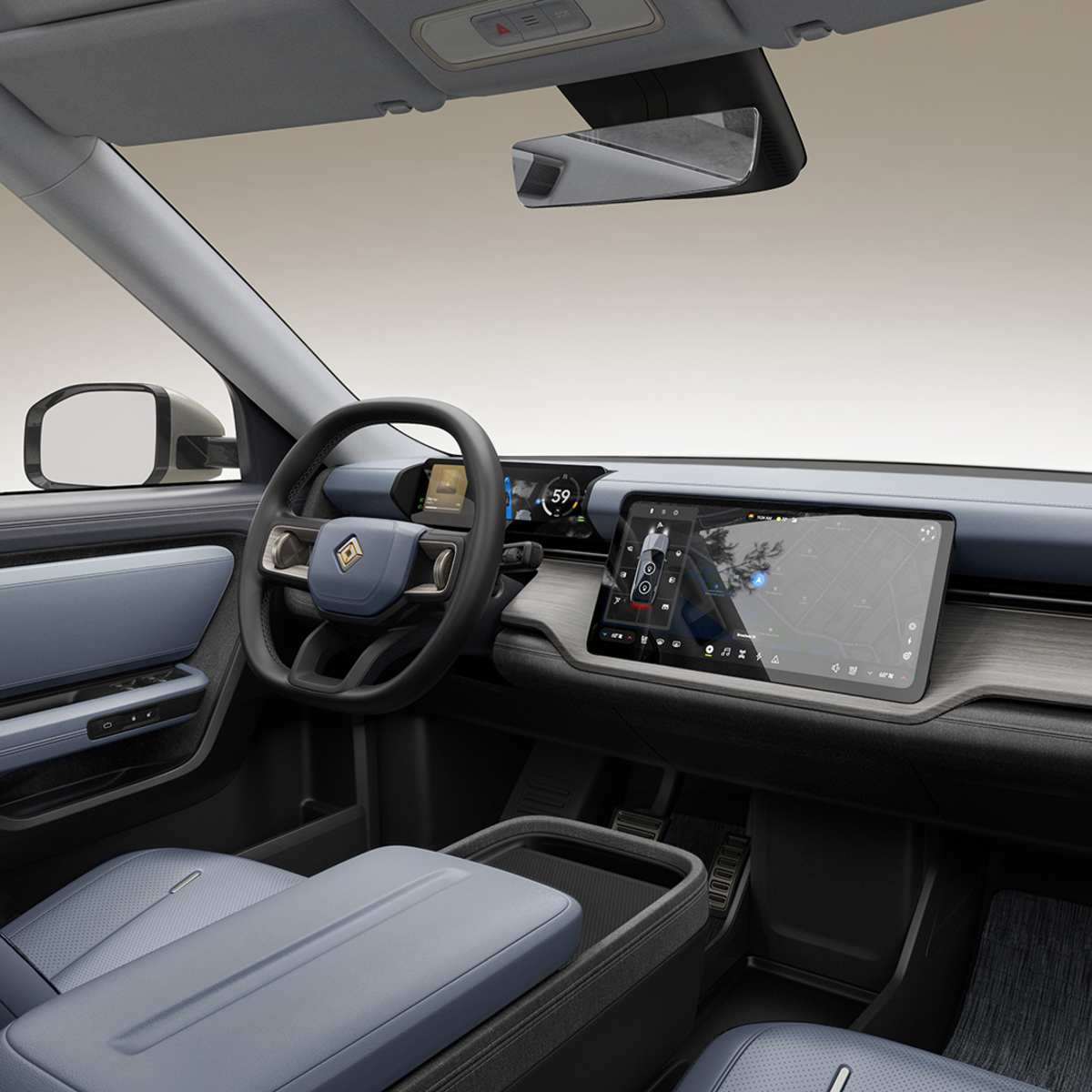
Rivian R2
The Rivian R2 is Rivian’s electric SUV. In this part of the episode, they talk about the performance version, how much range it’s rated for, and the battery size—so you get a sense of what it’s like to live with and drive.
dual-motor performance setup
“Dual-motor” means the car has two electric motors working together. That usually helps the car launch hard and grip the road better, and here it’s the version producing the big power numbers.
EPA rated
“EPA rated” is the official U.S. test used to estimate how far an EV can go on a full charge. Your real range may be different, but it’s the same kind of test for comparing cars.
battery pack
The battery pack is the big rechargeable battery inside the EV. Here, Rivian says every R2 uses the same battery size (87.9 kWh), which helps explain why the range ratings are similar across trims.
87.9 kilowatt-hours
“Kilowatt-hours” (kWh) is a way to measure how much energy the battery can store. More kWh usually means you can go farther, but how you drive and the car’s efficiency still matter.
front trunk
A front trunk is extra storage up front. Since EVs don’t have a conventional engine sitting there, manufacturers can use that space for luggage or groceries.
soft close
“Soft close” means the hatch or door doesn’t slam shut. Instead, it guides itself closed smoothly and gently at the end.
compact spare
A compact spare is a smaller temporary spare tire. It’s meant to help you drive a limited distance after a flat until you can get the main tire repaired or replaced.
1500 watt capable
“1500 watts capable” tells you how much power the car’s outlet can supply. That helps you judge what kinds of devices you can run from it safely.
12-volt
Even though the car is electric, it still has a 12-volt electrical system for everyday electronics like lights and screens. Here they’re pointing out a 12-volt power source for accessories.
one touch raise
One-touch raise means you can open or close a window with just one tap, without holding the button. It’s a convenience feature that helps you quickly adjust airflow.
gauge cluster
The gauge cluster is the screen or panel behind the steering wheel that shows your key driving info like speed and battery status. The host is saying Rivian’s version is good.
hard controls
Hard controls are the physical buttons and knobs in a car. The host is saying the R2 uses fewer physical controls and relies more on the screen to adjust settings.
flat floors
Flat floors mean the area where your feet and storage sit is mostly level, not bumpy. The host likes it because it makes it easier to store bags and keep them from moving around.
Apple CarPlay
Apple CarPlay lets you connect an iPhone to your car so you can use certain apps on the car’s screen. The host is saying Rivian doesn’t support CarPlay in this setup.
Android Auto
Android Auto is a way to connect your Android phone to a car so you can use certain apps on the car’s screen. The host is saying Rivian doesn’t support that feature in this car.
ride quality
Ride quality is how comfortable the car feels when the road is rough. The host is saying the R2 feels smooth and not too bouncy.
steering is a little on the light side
“Light” steering feel means the steering effort is low, so the wheel doesn’t require much force to turn. The host also compares it to a “trucky” feel, suggesting the R2’s steering weight and response are tuned more for easy maneuvering than for heavy, sporty feedback.
regen
Regen is the way an electric car slows down and recharges its battery when you lift off the gas. It can make the car feel like it brakes more by itself.
one pedal driving
One pedal driving is an EV driving style where lifting off the accelerator provides enough deceleration that you can do most slowing without using the brake pedal. The host notes the R2’s regen behavior makes it work well if you like that style, but could be an issue if you prefer coasting or lighter lift-off deceleration.
physical disc brakes
Physical disc brakes are the conventional brake system that uses brake pads clamping onto rotors to create friction and slow the vehicle. The host contrasts them with regen to explain what happens when you press the brake pedal on the Rivian R2.

Ford Expedition
The Ford Expedition is a big SUV. The host compares it to the Rivian R2 to show that the R2 is easier to live with in the city while still fitting five people.
charge speed
Charge speed is how fast the car can recharge at a charging station. Faster charge speed usually means less time waiting during road trips.
CCS
CCS is a common type of fast-charging plug for many electric cars. The host is saying this car isn’t using the CCS standard.
Nax
Nax is the charging setup the host says the car uses instead of CCS. The exact meaning (what plug/network it is) isn’t fully explained in this snippet.
level one charging
Level 1 charging is the slow way to charge an EV at home using a normal outlet. It’s fine if you don’t drive far each day and can plug it in overnight.
level two charging
Level 2 charging is the faster home charging option that usually needs a special charger installed. It helps if you need to recharge more quickly than overnight outlet charging.
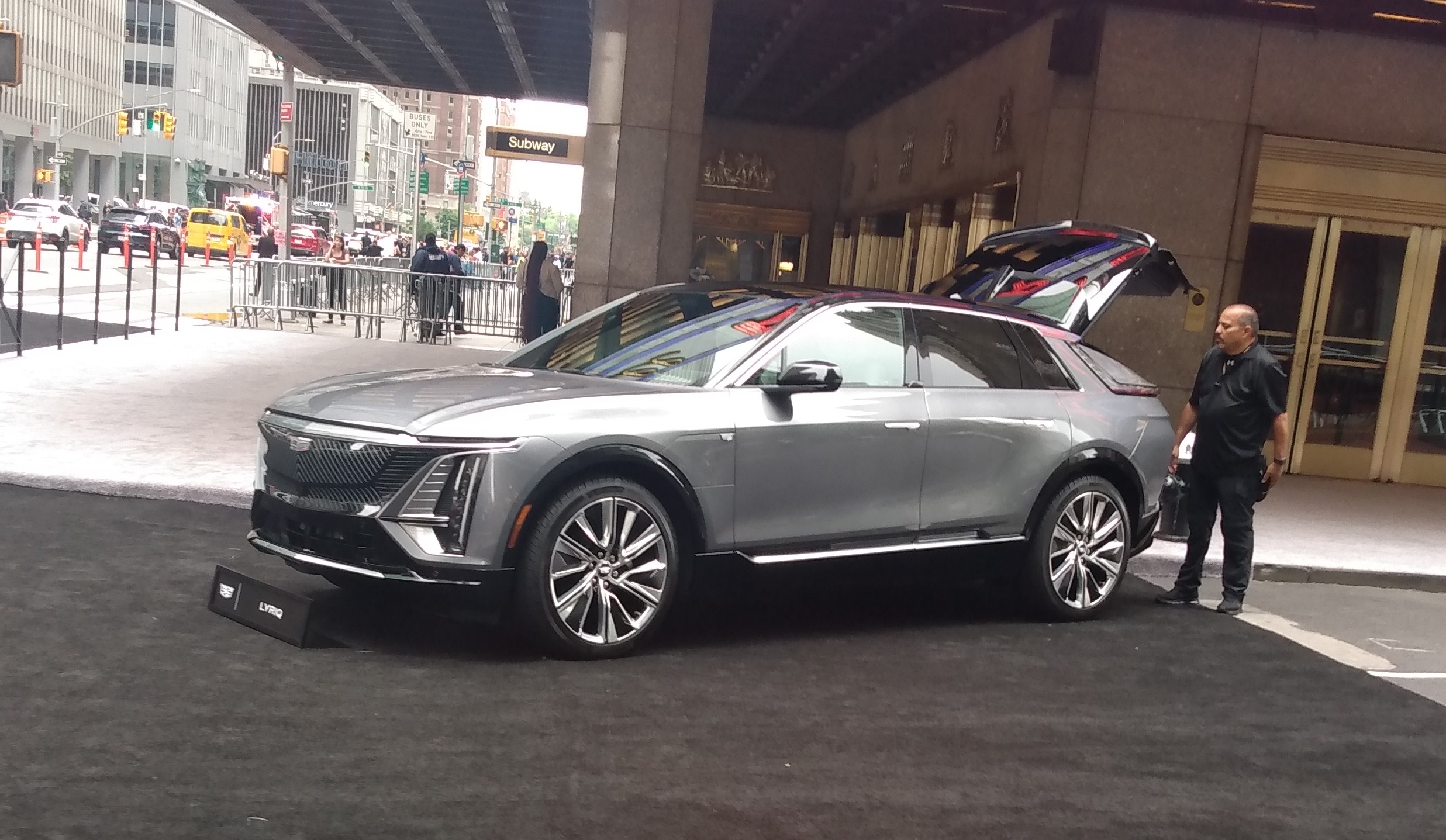
Cadillac Lyric
The Cadillac Lyriq is an electric SUV, so it uses a battery and an electric motor instead of a gas engine. The podcast mentions how it accelerates and that only some versions are available at the time of the discussion. That’s important because it affects what you can buy and what kind of driving performance you’ll get.
dual motor all wheel drive
Dual motor all-wheel drive means the car has two electric motors and can send power to all four wheels. That can make it grip better and feel quicker, especially when accelerating.
DC fast charging
DC fast charging is the quick-charging method for EVs. It can refill the battery much faster than home charging, especially on road trips.
ground clearance
Ground clearance is how much space the car has between the ground and the bottom of the vehicle. More clearance helps when roads are bumpy or uneven.
semi-active suspension
Semi-active suspension is a suspension system that can adjust how stiff or soft the ride feels. The goal is to be comfortable normally but more controlled when you drive more aggressively.
drive modes
Drive modes are presets that change how the car behaves. For example, one mode might feel smoother and efficient, while another feels more responsive.
heated and vented seats
Heated seats warm you up, and vented seats blow air to keep you cooler. It’s a comfort feature that helps in both winter and summer.
semi-autonomous driving package
This is a set of driver-assist features that can help with parts of driving, like staying in the lane or maintaining distance. You still have to pay attention and be ready to take control.
tow package
A tow package is the set of parts that lets the vehicle tow a trailer. It usually includes the hitch and the wiring so the trailer lights and systems work properly.
launch package
A launch package is an early-batch bundle of extras included with the first cars. Here, it includes special paint and towing-related equipment.
nine speaker audio system
A nine-speaker sound system means there are nine speakers in the car. That can help the audio sound fuller and more spread out.

Rivian R1
Rivian R1 is Rivian’s bigger electric-vehicle line. The host is using it as a reference point to explain that the R2 shares a similar look and vibe, just in a smaller package.
electrochromic glass
Electrochromic glass is glass that can automatically darken or lighten at the touch of a button. The host is saying the R2’s roof doesn’t have that kind of built-in tinting or shade.
40-20-40 split
A 40-20-40 split means the back seat is divided into three parts that fold in a specific pattern. It helps you move cargo while still keeping someone seated in the middle section.
cargo hold
Cargo hold just means the trunk/storage space behind the back seats. The host is measuring how much stuff it can fit, first with the seats up and then with them folded down.
retractable door handles
Retractable door handles are the kind that hide in the door and pop out when you’re near the car. The host is saying some people don’t like them, including how the door sounds when you shut it.
