Yeah. So I I I genuinely think the solution to all of this
is self driving cars to where that hear me out.
Self driving cars is that everyone gets into them.
And to be honest, like even for me, I wouldn't mind like getting in a vehicle
sometimes and just like pushing a button and like doing something else.
But I think at that point, that would really like to still
what driving is to people like if it's driving really just getting to a place
or is it the actual experience of being in a vehicle, controlling it,
being aware and stuff like that.
Like that, I think would dramatically change the market
possibly for the better is because then you would have to truly choose.
Are you going to be piloting this yourself and why?
Yeah, I think turning it into an appliance may help. Right.
I mean, in some regards, it might help.
Like I look at the cars. I've got a lot of cars.
I'm a broken person. Maybe I'm not anyway.
How many cars do you have?
Enough that we're not going to talk about it, because then people will be like,
what? No, but like I drive four cars generally,
like four cars that are my general daily drivers.
And all of them do all of them do different things for different reasons, right?
And I have I am well within my VIP days.
I used to be very much into like, I don't want to hear shit.
I don't like I want a comfortable driving experience
unless I don't want a comfortable driving experience.
Does that make sense?
Like you were saying, like, I don't mind a car driving itself
if the intention is the car driving itself.
Like I'm not like I used to work in that industry.
So like the fear of it crashing itself.
I know exactly that it will probably do that at some point and that's OK.
I'm half joking, half not joking.
But I'm not like that doesn't bother me.
I'm not like, oh, my God, I'm a purist.
I have to drive here. I want to drive here. I want to know.
I don't care about any of that.
Honestly, if I could go somewhere like it from me to Chicago, two hours,
whatever, if I could have the car drive itself for two hours, shit.
Yeah, I'd like be like talking shit on Facebook all the time or doing something else.
Right. Like I'd have lots of other things that I could be doing.
And that's completely fine with me.
Right. I could be interacting more, you know,
regularly with people while I'm wasting this two hours.
And so I think that's fine for me.
And so like for for normal daily driving, I drive more luxury vehicles.
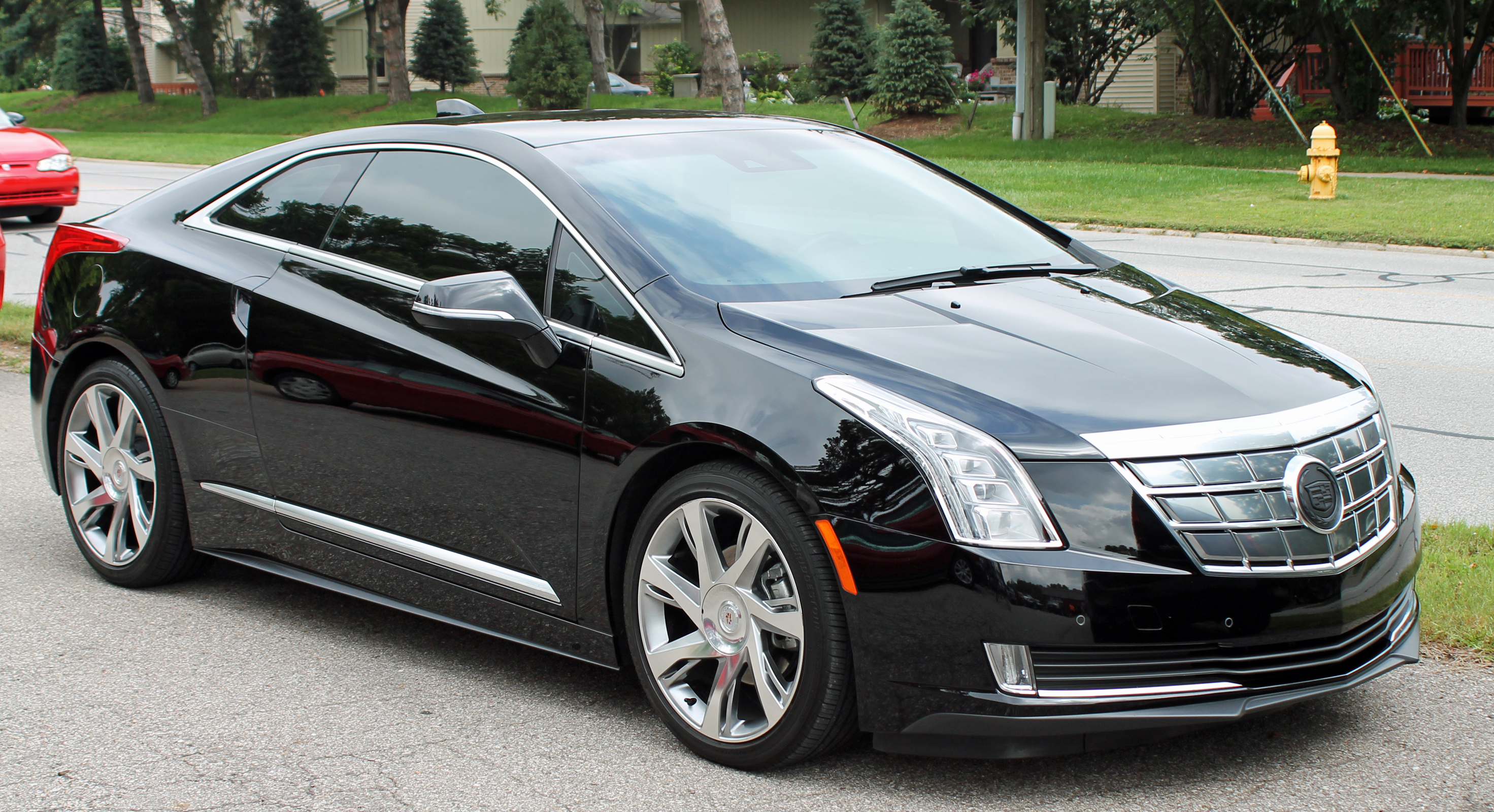
Like I have an LR 2014 LR that I really enjoy, but really good tires on it.
It's quiet as shit.
Like, oh, my gosh, seventy five thousand dollars.
Nobody bought it. Fantastic.
I was about to hold on.
The ELR is the Cadillac version of both.
Both. Yes. Those were cool.
I thought they're great.
They're awesome.
Twenty four hundred of them sold because nobody wanted to spend twenty
yeah, seventy five thousand dollars on a volt.
No. And I do not blame them at all.
And they look not at all.
I'd have to look up at a picture.
But I remember them being pretty handsome.
Oh, my God.
I think they're one of the prettiest looking cars ever made by far.
Like it's it's insane.
There's it's not it's new and old classic look to me.
Like it's it's a good combination of like what are they what do they call it?
Like neo romanticism.
I'm really bad at art.
So somebody yell at me and, you know, if they comment on this shit.
But it's that kind of like old new style.
Like it can be both.
And it's kind of a cool kind of a cool experience because they made the
CTS V coupes and they made, you know, CTS Coupes.
But they were like proportioned just enough to be like I'm vomiting right now.
And I don't know why.
And then the ELR is just like we fixed it.
We fixed it.
It's like not.
Yay.
And so I really do like that car.
And then I have a Mercedes GL 350.
So it's a diesel.
And I use that whenever I need to tow anything or whatever.
But again, quiet, comfortable, you know, $70,000 car that just does
what it's supposed to do, gets 28 miles of the gallon on diesel.
Great. Right. Toast 10,000 pounds.
Great. That's awesome.
You know what I mean?
And then I bought a Fisker Ocean because I'm an idiot.
And by that, I mean, I'm super smart.
I was I was going to ask you what your dumbest vehicle was.
Really hoping this was going to be the answer.
It's pretty close. It should be.
I mean, it depends on who you are.
Like it's really dumb if it dies soon, but it hasn't died yet.
So it's really smart.
See, it is it is one of those things where it's smart until it's stupid.
Yeah, you get the point because I bought it.
Yeah, exactly. And so I bought it.
I bought it.
Fundamentally, I bought it for about 14 five and, you know,
$70,000 car, somebody sold that I bought it for 14 five with 9000
miles on and because everybody wanted out of it because I don't blame them
because, again, there's no support.
But again, with our particular set of skills, the people who we're talking
to now and, you know, you guys and people who are in the pockets,
if you have the particular set of skills to make sure that you can
maybe fix some things when things break, then yeah, it's a fine car.
Now, if it breaks itself, OK, well, then it's stupid and I'm going to turn it
into a power wall, but there you go.
See, I have a backup plan, always have a backup plan or or, you know,
case, swap it, put a motech in it and really go full dumb.
Oh, I think it's a beautiful.
Again, I think that Heinrich Fisker is a great designer and a terrible,
terrible, terrible business person.
That was the Fisker was a very good looking car when it came out.
He's, yeah, the prompts he needs, like, sometimes you just need to know
when you're good at the thing and then not do the other thing that you're bad at.
Right. That's that's just how I look at it.
Yeah. Well, you know, like,
no, I'm not even going to do that.
So all right, let's go.
Let's go back by the rabbit.
No, yeah.
So let's go back to college and you were real quick before we start this.
Did you guys start with the team name Professional Awesome?
Or did you decide you needed that once you were getting your ass kicked?
Real close to the beginning was professional.
I think 2009, late 2008, early 2009, we coined that name.
And we got it. We got it.
We got a business card.
All it said was Professional Awesome, nothing else on it.
And it was just pure ego.
It was it was a joke.
Yeah, it was it was.
I mean, fundamentally, you're right, it's ego.
It's a it's a joke.
It's like we can be professional and awesome at anything we try to do.
That was basically that's what it means.
And so we we made that we made that joke and it sticks
because it's such a weird name.
It's such a dumb name that like people say Professional Awesome.
And they're like, what?
And then they say, oh, that's pretty awesome.
And oh, God, damn it.
And then they're stuck, right?
Now it's an infinite loop in your brain and it's not coming out.
Yeah. And so it's Babe.
It's Babe Ruth standing, pointing to the back.
Right. And like, watch, watch this.
Right. And yeah, we made some business cards
that said Professional Awesome on it.
And I remember we were at Autobahn again
and we were hanging out with Chris Rado.
And if you don't know Chris Rado,
go look at his cars and stuff like that.
Cool, dude.
And we gave him one of the cards and he looked at it and he read it.
And he's just like, what?
And then he started laughing.
And then he's like, oh, that's awesome.
Oh, it's professional awesome.
Oh, God. And then he was just like took off from there.
Because he thought it was something you'd only do,
something you'd only do in your early 20s and be like, yeah,
we can do this. Right. Exactly.
Yeah. And like I said,
you all make the mistake of thinking that you can do things.
And then it all comes crashing down.
So it had you had practice like just starting something new,
like just jumping into a new thing
just because you think it would be cool.
Yeah, that's the head versus the kiddie pool problem.
Yeah. Yeah, just like, OK, this is this is something we can do.
I think we are intelligent enough people to try and to see what happens.
And pretty soon, like we had to figure out
why Tony Wiesenheim's car was so fast, the turning concept guys were so fast.
And I mean, we're great friends with them still, which is freaking awesome.
Because like, again, the relationships you make are freaking sweet.
And so just talking to them and like, why is that car so fast?
Is he that much better of a driver?
Are we as the car slow or what?
And at that point, Dan was driving
and Dan was a pretty talented driver, right?
Like he is a talented driver.
And so it was like, what is happening?
So that that woke us up.
We went to later that year.
What was it? What is that track down South?
Was it Nashville?
Nashville Super Speedway with No B, because Red Line went with No B.
If you don't know what No B is, go go go check out No B.
Anyway, it's been a minute.
Yeah, we went with No B and again got crushed.
It was that was that 2008 or nine?
I don't remember. Anyway, we got crushed by by turn end again.
Which was cool.
And claim to fame is
Joseph Joseph Newgarden was there and we beat him.
So screw that guy.
He never did anything in his life that was great.
How right, except Indy and everything else.
But so he was there.
He was driving. I can't remember what he was driving.
But it was just again, we got destroyed
and it was like, what is wrong with us?
And so then it just snowballed and snowballed.
And then we pushed and pushed and pushed.
And after like the next year, we came back.
We did a little bit more.
It was more prepped in the similar level as turn end.
And then we started winning
and then we started sending records and all this stuff.
And then those guys were like, Jesus, damn it.
Like, go away.
So it was just fun.
So when you guys first started and you realize
the gulf between you and the next car,
like, did you guys know what data was?
Did you get how did you go about with your engineering
hyper fixated brain about trying to figure out?
Like, because I assume there's some sort of flowchart
or spreadsheet of like how to get from here to there.
But like, how do you even know where to point all that energy?
Well, at that point, the car was so low prepped.
I mean, let's be honest, like you walk in a time attack now,
even in street, you know, whatever, like that is a hill to climb.
Even an enthusiast, like kind of like, you know,
global time attack, stuff like that, even in the low classes,
it's a hill to climb.
The prep on the cars now from when we started
is a completely different world.
And so at the time, we really didn't have much on the car.
So like in terms of low hanging fruit,
it was basically the shortest tree on the planet
and we could all just grab any fruit we wanted to.
And so we could we could make reasonable changes.
The car's better suspension, knowing how to set up that suspension,
right? You learn that stuff pretty quickly.
If you if you go ahead first into it,
that at least you could make it better.
You could make a step change better because, again,
the car wasn't set up that fantastically.
Then like tires back of the day, we ran mostly on RS3s.
And so we had to figure out how to use the RS3 well.
So then we started taking tire temps, all this stuff,
like data was really based on an old, I think the first system
that we put in the car was an AIM system that we got from
another one of our buddies.
We helped work on his RX8 cars
and we bought his full AIM system from him for super cheap.
And we put that in the car and it was only GPS,
a little bit of accelerometer data, but wasn't that consistent
because it kept on falling out on us for some reason.
But that was the data we had and we just started looking at it.
And then like, yeah, we've always been critical.
We've always been the idea of like,
where's the delta? Where can we find the delta?
And then again, mentors from people all around, right?
Like everywhere, like I said, the turning concept guys told us a lot.
Mike Warfield, like, like I said, Chris Rado and crew,
all those guys like, you know,
Uncle Tony from UMS Tuning, Tony Circa,
like people we just met along the way
would give us little tidbits of information.
We'd learn more, learn more, learn more,
and then we'd learn on our own pretty aggressively.
And at this time, we all lived together.
And so it wasn't we weren't going over to each other's house.
We walked into the garage and worked on the car.
It was like a fraternity.
And so there wasn't anywhere to go.
Whatever we were doing was learning how to go faster.
That's it.
And so that step change was pretty aggressive
because it was like we were in embedded in
for a lack of a better way to put it.
We were embedded in the Fast and the Furious and doing it the right way.
Like, you know, you know, Fast and the Furious one and two,
not one in Tokyo Drift, I guess,
because then it started to be weird because two is three.
And you get the point.
Anyway, yeah, a little confusing there as well.
And so the we could all bounce ideas off each other pretty aggressively.
We could all learn pretty aggressively.
We buy books, we would just start reading and then be like,
oh, this is what we need to do.
No, yeah, OK, yeah, this and then change this and do this.
And so it was changes every day.
Checks every day.
Gingerman, you used to be able to run Wild Wednesdays
so we could go and make sure that everything was working really easily.
And yeah, it was a lot.
It was a simpler time as well.
But the bar to grow and be faster
was pretty low.
And so we started pushing it up pretty aggressively.
And so that's that's really what happened.
I mean, now, like I said, you walk in and you want to even run a low class.
I mean, like Club TR is like, Jesus Christ,
the props on a club to your car are crazy.
It's pretty wild.
Hey, so that makes it harder to you can't start that way anymore.
You just can't.
Well, that was going to be my next question is,
how do you feel about people starting in time attack versus when you guys did?
Because it seems pretty intimidating right now.
Oh, yeah.
Like if I'm a if I'm an 18 year old kid and I just started college
and I'm like, man, I just heard about this time attack thing.
Like it's a lot.
It's a lot.
It is a massive commitment if you want to ever do anything in it.
And it's harder.
I 100% admit in that I think that sucks in some ways,
but I think that's just by virtue of things have gotten more popular,
which I think is cool on the other end, right?
The the media around it, the people around it,
the people that are involved with it.
There's just more.
Everything's more, right?
And so is it bad in some ways?
Yeah, I mean, is it like bad for the people coming up in some ways?
Yeah. And that's why I think that, you know, you see the organizations
always attempting to give, you know, maybe to to to bring out more classes
if possible, right?
Class proliferation is always a hard thing, right?
Everybody who's ever raced with NASA or SCCA knows that
everybody gets a class and everybody gets a trophy.
And and it is what it is, but it's not the best idea in the world.
And when you get too deep in those weeds, like things don't work out either.
You can't go too far that direction.
But I completely agree that, like,
we we are a type of people who we walked into a lion's den back then.
It wasn't a lot of people, but they were very good.
I would still say they're very good.
The prep wasn't as high, but they were very good.
Now it's a different thing, though.
Now you have if you if we only walked into it with five people in our class
and the low classes of 10 people in our class and the low classes.
Similarly, now Club TR, what, 22 people, 30 people?
They have to stop people from signing up.
You got to get what I'm saying.
Like I'm 100 percent with you.
That's a more difficult situation.
And so you need to be a good driver and you need good prep and you need,
need, need, need, need.
And that's a lot harder in a lot of ways.
Yeah, especially if you want to be competitive, like if your goal is to
try to be on the podium, try to win like the
the accumulated knowledge over 30 years now of car prep and driver development
has the you don't have to fudge around with a lot of the do I don't do this thing?
It's like, no, you go straight to this because we've got decades of experience.
If you're going to ride at this ride height, you need these kind of roll
center corrections and it's just wild.
The amount of information that has been accumulated and passed down
has really accelerated a lot of that.
Yeah. And I think you're right on that other side of it is that
when we started, especially with aerodynamic development,
there wasn't a lot of available resources besides
like the standard books that I would suggest people read, you know,
Simon Macbeth's books, things like that.
Like there wasn't a lot of things outside of professional motorsport available to you.
And a lot of those are heavy math.
So that puts off a lot of people who aren't heavy math.
Right. And so that kind of sucks because
understanding the concepts doesn't require heavy math, but a lot of the people
writing the books require heavy math.
And so I think that's one thing that's interesting is that just from that side
of the you're right, like it's harder in a lot of ways, but it's easier
in some ways, like the parts that are available now just from an aerodynamics
perspective or just from a suspension perspective or the tires are ridiculous
now or the brakes are ridiculous.
Now, the likelihood that someone else has your car and then has something prepped
that's pretty fricking good that has all these parts available to it is high.
We made a lot of parts, right, which was our stepping stone, right?
But now the parts are available.
But now the problem is that everybody can buy those parts.
So you still need to be smart enough that you take those
combination of parts and do the best you can with them, which in some
cases is harder and in some cases is easier.
And I always say it's not the parts.
It's how you put them together that makes that system work well.
Lots of people can buy the parts.
We see people with, you know, two hundred and fifty three hundred
thousand dollar builds that are fucking garbage.
Like, sorry, they just are.
But the thing is they don't know how to put the parts together
appropriately to make a fast car.
What they do know how to do is buy parts.
Those are different things.
And that's hard for people a lot of the time.
This is this is a very me illustration.
So bear with me.
But like the the progression of biblical interpretation.
OK, very much mirrors
the proliferation of aerodynamic knowledge.
And I'm pretty sure that's a completely unique sentence in the history of the world.
I feel pretty good about that right now.
Anyway,
but yeah, so like something completely new.
Yeah, it's I mean, this
we're forging new ground here for sure and nobody cares except for me.
But it's so in the beginning, it was really like truly top down like it was the pope.
It was the local pastors who had literally had the only Bible.
And so the only way to get that
information was through these authority figures.
And so during the Reformation in the sixteen hundreds,
the big push was to get the get these in the hands of the people like take it out
of these so called authority figures at the time and make it public.
And that's I think was a good step.
But the backlash of this that we're still kind of dealing with is that
yeah, but then you give all this into the hands of people who either don't
know, don't care to know or don't care to actually work at understanding
this knowledge, it can be taken to mean a whole host of things.
Sure, some some really good, some aggressively terrible.
And I feel like that's kind of in the place just in a much accelerated
timeline because that's kind of how our society is worked now.
Of aerodynamics is that it was held in these the white halls of super
professional motorsports.
It proliferated, it has proliferated out into where we've got these buzz,
buzz catch phrases and like, oh, yeah, you need to do this because I heard that
from like these other people who heard it from other people sort of thing.
But the quality of information is hard to parse out.
And I think in part and I think this is biblical as well.
But like in part because a lot of times the answer is maybe or it depends.
Like it there is no right answer, except if you give a very detailed
right analytical thing.
So there's my thesis.
That is the first time
aero proliferation within grassroots motorsports has ever been compared to
the proliferation of what is that the King James Bible or what was that?
Just just biblical access.
They're big biblical access.
There you go. You heard it here first, folks.
There you go.
I'm going to put that on my profile now.
So you're welcome to put it on your LinkedIn.
That's the important part.
Oh, yeah, I have one of those.
There you go. Yeah, put it on there somewhere.
That's awesome. No, I agree.
I think that that is very true.
It's that as the information becomes disseminated, you get a lot of voices.
And unfortunately, some of those voices are not telling you the right information
or not using the information appropriately.
And that can be difficult.
On the other side of it, you have more proliferation of information.
And that can mean great things for people.
Because if you look at like I said, you look at anybody in Club TR,
you look at anybody in basically any time of tech class,
the quality of the aerodynamics is substantially higher than it was 10
years ago, substantially higher was than even five years ago.
And that's freaking awesome.
Yeah, professionally.
It is. Yeah, agreed.
So.
I'm not quite sure how to ask the question then, like so the information is out.
There's lots of different, as you said, voices to be able to listen to.
Yeah.
And oftentimes it comes down to either like do your own research.
But like how to do that on research or like find the few voices
that are doing the work and are accessible
to whoever's looking for that.
Sure.
One of those obviously is going to take a lot more time and resources and like
trying to, you know, if it is like going to a wind tunnel, if it is CFD,
you know, like, like I did, like put some wool on your car with some tape and you
can learn a lot that way too.
But like again, that takes time and you still have to like pour over the video
and see like what this might mean.
And like even for me, like I had a trained aerodynamicist like walking me
through like, oh, this is probably what's happening here.
Right. Yeah.
So how, how, how do people go about this or like, how do you,
what are some different ways, some avenues that you see people trying to navigate
these waters? Yeah, I'll preface this by saying, I think we had an hour and a
half long podcast and it was called like, how do you find an expert?
And the TLDR on that was
you're screwed in today's day and age.
It's difficult and it's not to say that you can't.
Right.
Just the level of the required work to understand.
I kind of think that, yes, you can get good information and it depends like how
you qualify that information, the quality of that information.
So there's a lot of information out there.
Is it bad? Most of it isn't necessarily bad.
It's just not as good, right?
And so there's there's bad is a relative like we talked about.
Bad is a relative or incorrect is a relative.
And that's the hard part for me.
And so to get information and it can be
like it can be a change in the correct direction, right?
Let's say let's let's qualify these terms.
So like I want to make more downforce.
Somebody can tell you how to make more downforce.
Is it the best way to make more downforce?
Maybe not, right?
Somebody can say, put an air down on the car.
And then another guy says, put a big splitter that looks like an airfoil, right?
Both of those things technically will probably make more downforce, right?
Depends on the cars, you know, just an air dam.
But most of the time, yes, it will it will work in some way.
Now, we know that there's going to be a difference in performance between
a full on splitter with, you know, good arrow shape and stuff like that,
comparative to just an air dam.
We know that like that's something that's that's clear in a lot of ways.
But maybe if you're new to it and somebody's like, you need this four inch
splitter with these diffusers versus this four inch splitter or three inch splitter
with these diffusers or this shape or these end plates or this wing, right?
Well, now if I'm looking at two things that are wings, how do I make that
decision, right? That's a hard one because
one be more better, maybe ish.
It's like, yeah, that's difficult.
It's difficult for everybody.
Yeah. And so I think the only way you kind of get past that is you have to get up
to the top of the Dunning-Kruger mountain and then fall into the valley of
despair and enjoy it down there because that's when you're deep enough in
the hole to know the differences enough that you can make a better choice.
And or the only other option that we found in our like as we as we had
this conversation through it is that you really do need to talk to experts
that have what are in a criticality results, like not just like, hey,
we won this class because I've talked about this before and this is going to be
real upsetting to some people, but whatever I say it all the time.
It doesn't really matter is that lots of people win classes and they win
classes that nobody is in.
I always tell people that I don't care about wins.
I care about records.
Records mean you beat every person that has ever existed at that track at
that time with that organization.
That is that's a thing that's impressive, right?
Now, if you win that day, I'm not going to take the wins away from people.
Like, be proud of that. It's cool.
You showed up. I didn't.
Fantastic. You do that thing.
But the realistic thing is if you're going for the thing,
all that meant that all the wind meant that day is that someone else
was faster than show up.
And so what happens if they do show up next time, right?
So you fundamentally have to build a faster car to beat the people who
didn't show up, not the people who did show up.
Do you see what I'm saying?
Because you don't control the other people unless you slash their tires,
which is a completely different conversation.
And so not something I recommend either.
But that's kind of the way that I think about it.
So looking to the people who have records, who have consistent records,
who continually go fast, who continually, you know, push that limit.
And then under talking to them and understanding where they got their
information from or who they work with and all those things is about as
safe as you're going to get.
Now, some of those answers are expensive as shit.
We all know that.
But that was the closest I could come to a realistic answer, unfortunately.
And it really sounds like in how you've kind of described the process
of not only where you guys came from, but even how.
How you kind of went about starting this whole
interest, this new hobby for yourself.
It's like the records, like certainly, again, are part of the driving force.
But like where you've spent most of your time
talking has been about the learning process.
Like that, you got to love that.
Yeah, that seems to actually be what drives you.
Yes, you can't see it, but there's goosebumps.
I like learning.
Like that's it.
I like to know the thing that I didn't know yesterday.
And that's cool.
I mean, like for me,
for me, cars are interesting because it's every single possible
type of area or type of engineering that you can possibly have.
And so like when Seth said, you know,
the ambiguous engineering or general engineering, or I can't remember the exact term,
but generic, generic engineering, there you go.
That is exactly right.
And it's right in so many different ways because racing, if you want to do it
alone, relatively alone at a grassroots level, you have to be a tire engineer.
Otherwise, you can't win.
You have to be a pseudo aerodynamicist.
Right? You have to be a suspension engineer.
You have to know how to be a mechanic and work on things and understand how things
are going to break and take the trans out in 20 minutes.
Otherwise, you're screwed and we'll make the next session and how to not light
your brakes on fire and boil the brakes and slide off turn one.
Like you got to know these things.
And so you have to understand all these different avenues of of engineering.
And that part is cool to me.
That part's like the real driver.
You got to understand electronics and like literally like electrical.
And then now in the world today, if you want to do anything with data,
now you've got to know can, right?
You've got to know can up and down and understand those types of things.
So now this avenue of understanding this like before, you know,
the hardest thing to understand like, oh, this is going to be kind of insulting
to some people. But again, that's my M.O.
Like the hardest thing to understand was like how carburetors worked.
And the people who tuned carburetors were considered these like mad geniuses
like, what's an emulsification tube?
Oh, my gosh.
And it was so cool.
Right. OK, fine.
But now, like, yeah, you don't need to know what a emulsification tube is.
But there's so many options for shocks alone.
There's so many options for tires and widths and wheels and all the things
that come along with it.
And then the aerodynamic choices and then like, I got to know how to do data.
And oh, no, now I have to know how to pull the data off and then compare it
to other people's data.
And I'm going to be honest with you.
I haven't even pulled the data and I don't even know how it works.
And I forgot to put an SD card in it.
OK. Well, that sucks.
But you kind of got to learn it now.
You know what I mean?
And so if you want to be that top level, it's just an avenue like you better
love learning or you better have money or cool friends that love learning
because otherwise it's going to be hard or impossible.
Do you think you can still replace money with effort to some extent?
I think we do show that.
I think up until we we haven't run, you know, our Evo in a while now.
But even back, you know, three, four years ago when we did run it,
we I think we very much showed that cars of substantially more cost and what
would be considered, you know, like to put it in perspective,
we still like our front splitter, right, is made out of three quarter inch plywood
with two of like we use our large diffusers or off the shelf, large diffusers
that I have not changed at all.
And that ran a twenty four gingerman and a thirty eight at Button Willow.
It ran a twenty four gingerman with five hundred and fifty horsepower
blowing up a blowing a head gasket.
Like which is fast, by the way, just for people, if you don't know.
Yeah. And then and then like the whole flat bottom is made out of aluminum light.
Like the only thing carbon on the car, realistically, like like the carbon is
like the hood because we got one in the trunk because we got it in the roof
because we got it in the wing because we got it.
And so like Grant has made some carbon parts and he's made some fantastic
carbon parts like he's made an intake and stuff like that.
But past that, it's not like this full body kit carbon thing.
The fenders are made out of aluminum with some trailer fenders that are riveted to it.
Like you can still do it.
It's possible.
Is there effort involved with that?
Yes. Is there understanding and engineering involved with that apps
a freaking loopy, but you can do it.
And am I even recommending it?
Not necessarily, but it sounds like it goes back to what we talked about earlier
and they the interesting engineering problem is not a no.
Like an unlimited budget.
Right. For me, at least that's what I'm saying.
For me, that's how it is.
And why why is that more interesting to you?
Because I can make some cool ass shit that's really fucking fast if I had a lot of money.
Yeah. I mean, that's it.
If I had if I had, you know, 10 grand to make a splitter,
oh, my God, that splitter would be great.
If I had 20 grand to make that splitter, it'd be ridiculous.
Right. I know I can.
I have the skills and the understanding to be able to do that.
Right. And it's mostly just not having the money to help like the other people
that you need involved like to people to make carbon and all the things that come
along with it. But from an analysis standpoint, we can make some extraordinarily awesome shit
and the the wall, if you will, right, the barrier to entry there is cost.
And the step change from what we have, right, the wood at this point to carbon
would be pretty high, right? I fully admit.
But the rest of the car is the development, how you move, how you take the systems
approach and make every little part better instead of focusing on I make a billion
horsepower or I have the biggest tires on the planet.
Now, all those things are great.
I'm not saying all those things aren't great.
But what inevitably happens is that we rarely see somebody who puts a car
together that is all, if you will, like all nines and tens in terms of stat line
and they're all sussed out appropriately because it's hard.
That is very difficult.
That takes a long time.
That takes a lot of testing and takes people and energy.
And so they're not generally sussed out.
So if you have a nine, ten car in three categories out of five and then
you have a car that sevens in all the categories, the sevens car, if you
will, right, it's a very useless analogy, but Gran Turismo's analogies.
That sevens car is going to run faster than the guy with the nines and tens
in three categories and garbage in the other two.
Sure. It's just not sussed out, right?
Like those other things are going to screw you at some point at some point
in the track. And that's kind of how it works.
We've never been the fastest on a straightaway, but our corner speeds
are damn high and we come out fast because the suspension works.
And so we don't make our time up on a straight, but we definitely make it
in corner and out of corner, right?
And then maybe even in a braking zone.
Actually, our brakes have always classically sucked compared to a lot of people.
But anyway, that's something we can work on.
And so the other thing I'll say right there, I think that's important to people is
people who race or this is actually an analogy on life.
There's two types of people.
When something goes wrong, they put their head down, they get pissed and they
are annoyed and they just don't do anything about it.
And they say, damn, that sucks like that fucked up and that sucks.
That's one way you can look at racing.
The other way is you take your car out, you go reasonably quick,
you're somewhat competitive, but it is literally running like trash.
OK, we've all been there.
Like what is wrong with this thing?
I can't steer it, but at least I'm like still in third place or fourth
place or whatever, right?
The other person, the second person goes,
I'm in third or fourth place and this thing is a pile of shit.
That's fucking awesome because now I can fix a lot of stuff and I can go way faster.
And that's the difference.
And if you're the second type of person who goes, hey,
every problem is opportunity.
You probably do pretty well, not only in racing, but probably life.
But if you're the type of person who goes, every problem is a downer
and I'm going to get upset and the world's going to come to an end,
then you're probably not going to do well either way because everything's a downer.
We we did a an episode towards the
is pretty close to when we before we took a break on Carol Dweck's book
mindset about growth versus fixed mindset.
And this is very much what you're describing now.
There you go.
And I mean, that's it's hard because there's so many people like I literally
like we'll talk to people and they're like, man, it's running like shit.
I'm so pissed. You know, this is a hard day.
And I'm like, dude, you're running fast.
Look at all these things we have to fix.
You fix those things, you come back.
Oh, my God, the car is going to be so fast.
This is awesome.
And then they're like, oh, yeah, that is cool.
And I'm like, if think about it this way,
if they were running in third or fourth place and the car was running
perfectly, what does that tell you?
Isn't that a way harder uphill battle?
I like finding problems.
Right. Problems mean opportunity.
That's like that's the switch that most people don't ever make in their brain.
And that's like a great thing.
Problem opportunity, problem opportunity, problem opportunity.
I can do better. I can do something different.
I can find a way to improve on something.
If you tell me what it is and race cars will tell you by lighting money on fire.
But if they can, you know, you get that indication that there's something
wrong and you can do it better, that's great news, especially if it's already fast.
So the you're talking and describing a lot of things from a very systematic
point of view, like very blueprint, how do all of these things work together
in harmony, support each other?
That's that's not something that little baby Mike learned or like developed.
Where where did this
sense and viewpoint at how to look at things holistically come from?
Unless it was connects, maybe maybe I don't know.
It could have been connects.
I think what it was is honestly like I thought about it for a while and like
like mechanically like putting a system together has always been something
that's been a big deal for me.
I've been building computers and programming since a young age and all
these other things, right, that a lot of the a lot of the nerd crowd do that.
You know, I think all of those different avenues and starting to put together,
you know, different facets of your of like the engineering understandings and
things like that, then make you start thinking like, hey,
it's not just one thing, it's lots of things.
And I think one of the one of the big things that happened to me or that
that ingrained in me something different is sports in a lot of ways where
I play sports the way that I like to do things, the way that I, you know,
play any sport that I play is like it's based on fundamentals.
The thing that I can control are like, am I doing these fundamentals appropriately?
And am I the fastest person on the planet?
Absolutely not. Am I the biggest person on the planet?
No, am I the strongest person on the planet?
No, but you know what I can be pretty dang fast, pretty dang strong and smart.
And if I can put those together,
that person is going to be better than the dude who's just really big or just
really fast, right? Or just really smart with no other attributes.
And so that was something that was pretty early on for me is that like I can be
good at stuff, but I have to put a package together that makes sense, right?
I have to do the things I'm good at.
And then if I'm not good at it and bring those up enough that the package is
better, right? If you can't run, you're useless. So learn to run, right?
So it's like it's it's always about taking your week, you know,
your weakest link, right? In the whole scheme of things and bringing that up,
right? It's the whole raising tides kind of situation.
If you don't have something, you don't focus on your strength.
Like if I can run the fastest in the world and I'm playing soccer, that's great.
But if I can't kick a ball, I should probably learn how to kick a ball.
Right? Right? Like that's the idea is that you have to be able to bring up
your weakest, you know, your weakest subset.
Otherwise you're always just going to be a really fast guy that can't kick a ball.
How useless is that? It doesn't really make sense, right?
Like that's cool, right?
But you should be doing track instead, not playing soccer.
So.
I guess the then personal question is, so what knocks you on your ass?
Because and I.
Like if everything's an opportunity and if everything like kind of like if you
like the project, the process and like learning and stuff like that, like what?
What really like sets you back and like is genuinely hard for you to even like
figure out what's next or just gives you pause, you know?
I think there's definitely some problems that are like
kind of feel existential, right?
Like in a way, there's problems that can feel existential.
Like I don't have enough time to fix this or I don't have enough money to
fix this, like it almost feels like it's out of your reach in some ways.
And that becomes more of a question of like, what am I willing to sacrifice?
And so that's a that's a harder question sometimes.
And so like I remember, you know, we go to we go to Button Willow.
We've gone to Button Willow quite a few times.
And if anybody's followed us knows that we either blow up the car or, you know,
something happens, we do not have good luck at Button Willow.
OK, fine.
We inevitably get in the car and we start driving back in the van.
And we're like, oh, put this away.
Don't talk about it for a while. Fuck that thing.
Inevitably, we get on the highway.
And when we pass the Super 8 and if you've been to Button Willow,
you know when that is, it's not very far away.
We start going, but we could fix this and we could fix that.
And it's a disease, it's a problem.
It's like, how like.
This is torture.
Please stop thinking this.
You know what I mean? Like it's a weird feeling.
It's like, no, stop, put it away, but we always talk about it.
It's like, man, what could be better?
What could we have done?
Oh, we could do this next.
Or we could do this with a little bit of time in this and this and this.
And I think that drive is is important in a lot of ways.
But I think the other part is like
existentially when when things get really hard, like it's a lot of time
and a lot of energy. Yeah, you can get burned out, right?
There's not enough there's not enough time and drive to do it anymore.
And so that's one thing that we've hit a couple of times.
And I think that's that's the biggest thing is like when you are
so headstrong, when you want to learn, when you want to consistently learn
all that burnout is always going to be a thing.
I think you you if you do something at a high level,
the only real option you have is burnout or cocaine.
And some people like the cocaine route, some people don't, right?
Like Adderall, whatever, right?
That you try to stay that focus.
And so, yeah, it's it's fine.
Whatever I'm just saying, like choose your poison, right?
And so you have to take a step back necessarily to regain.
And I think that's the hard part.
I do look at, you know, failure as an opportunity in a lot of ways.
But sometimes that the next mountain is like, wow, that's a big mountain.
And that's the only like when you start out, the mountains are really relatively
small, like, oh, man, we're just going to get some better tires.
OK, that's not hard.
Or we're going to make these suspension tweaks, not hard.
We're going to make these simple aerodynamic changes, not hard.
But then you're like, oh, we need to revamp this thing, the system, right?
We need new electronics to do this, so we have better control over something, right?
Like it just becomes a much bigger project.
And that's where it can become overwhelming.
And then I think that's completely reasonable.
You sound terrifyingly optimistic in some ways.
Is this a good day for you, Mike?
This is a normal day like this is just how I am.
I'm not I am I would agree with you that I am I I believe in like most people talk
to me like I'm angry and I'm not exactly angry.
That's not it.
I don't think that's an appropriate way to describe I believe personally the way
that I look at it. Am I rough around the edges sometimes?
Yes. Am I opinionated? Oh, fuck yes.
But I do believe and I want the best not only for me, but for everybody
around me in a lot of different ways.
And so am I optimistic that that is a possibility?
Yes, most of the time when I get pessimistic, that's like a oh, God,
that's a mmm, that's a bad day, right?
Like and and and and I've had a couple like it's not common, but I'll have it
like three hours or four hours where I'm in a hole.
And I'm like, this doesn't feel right.
And then I'll come out of that hole.
And like from a, you know, from an emotional perspective, if you will.
And so the shorter time that you can spend in that hole and and work through
the emotions that come along with whatever puts you in that hole in the first place,
I think it's important, especially at doing anything at a high level.
And I think that again, people think that's like a innate
that's innate within people and I don't believe it's innate.
I believe it is another skill that you have to learn that.
Again, changing your mind, you know,
problems to opportunities, failure to opportunity, right?
No one, I mean, not no one, but most people who are successful
didn't start as successful. They fucked up a lot of shit.
And I have my graveyard of garbage that I have broken and blown up.
I remember when I electrocuted myself multiple times with VCRs.
Yes, VCRs.
Most people don't even use, you know, anyway.
But it took breaking a lot of stuff to learn how to not break a lot of stuff.
Right. But but no one ever sees, right?
Like as a general reality, no one ever sees the graveyard.
They just see the person that's standing in front of them as they are made at this
present moment, right? Just like you, you know, you said to me, I'm optimistic.
And I think that for the most part, I've been optimistic for a long time,
but there's a graveyard behind me of stuff that makes me optimistic now.
Does that make sense?
It does.
So the optimism in part comes from
what I would presume is like heartache and trials and things that you've survived.
Sure. Right. I mean, and I think there's like people say things like.
You know, you can live through it, right?
And I mean, this is existential, much, you know, deeper conversation about life.
But like, like knowing that you've, right, like the first time you break
somebody else's TV or you break your parents like something, something, right?
You, oh, my God, I broke something at my house when I'm a young kid, right?
The first time you do that, terrifying, like you're going to get whooped or some
shit, right? OK, fine.
But you learn to fix it.
And now if you break it again, you can fix it.
And now, now the idea becomes I'm not worried about breaking it because I
know I can fix things. Oh, and I can fix this thing and I can fix that thing.
And then it starts to just grow.
And now, like there's plenty of times where somebody's like, hey, can you help me
with this? And I'm like, I have no idea how to fix that.
But sure, let's go.
And it's the idea that now I have fixed a lot of stuff and I've worked on a
lot of stuff that it's like, I know there's a system and I know there's
a process. And if I just follow the process that my brain works,
I'll probably come to a conclusion that's reasonable and we will probably
come out this the other side reasonably well.
Now, is there a possibility that's not true?
Absolutely. But I have broken so much shit.
Remember the graveyard back here, right?
It's back there somewhere I've broken so much that probably broken
something's close to it, which means that I can probably fix something close
to it. And that's just how my brain works.
So it's the thought that experience
breeds skills and strategy in life.
In everything and finding the right path and the right process.
When you do the process, the outcome is inevitable.
That's the way I look at it.
When you do the right process, the outcome is inevitable.
If I don't know how to fix something, but I know the process of fixing
something, being like, what's the first step?
If it's electrical, well, I'm going to check that it has continuity.
OK, what voltages are supposed to be cool?
Is anything burned out?
Right? Is like, that's the continuity tests, things like that.
Oh, we've got to test some resistors now.
Oh, they own out correctly.
Fantastic, right? I know the process.
I don't understand the electronic, right?
As a whole, do I understand the schematic yet?
Ops, a fucking Lutli not.
But as a whole, I know the testing to start with and the process to start with
to start building a map so that I can go deeper and deeper and deeper into the
thing to fix it, whether that's just electronics or use that analogy for life.
It's the same kind of concept.
So what's the current problem or the current thing that you're working on
that you're excited about?
I'm going to ruin a factory five Shelby Cobra replica.
That's what I'm going to do.
OK, I have a relative term.
I've seen I've seen the sketches for a while now.
Yeah, so I'm crazy enough.
So similar to the Evo, the Cobra I have had since I was 19 and it has never
been on a lift and it is now on a lift, which is insane to me.
It's ratchet strap to my lift right now.
It's fantastic.
But I'm working on that and why I'm saying I'm going to ruin is because
I'm going to fundamentally piss everybody off.
Literally, there is something in the car that is going to make every single person
angry, which is just not my intention, but is fantastic in some way.
Because it's not that serious, right?
It is a replica of a cool car that I'm going to change entirely.
So just calm down, right?
Like it's OK.
And so why I say that is because for a start, it's an LS, right?
Oh, my God, I can't believe you put an LS in it.
Oh, my gosh.
Second, eight HP.
I can't believe you're going to put an automatic transmission in a factory
five or a shuttle replica.
See these people are electric power steering.
Oh, God, people are crying now.
Oh, no, not electric power steering anything but that because I love the
feel of manual if you can't go manual at least hydraulic so that I can
get that feedback from them ants on the road that I love running over so much.
Anyway,
Bosch Tronic or Bosch Eye Booster System for the brakes instead of hydraulic or
instead of a hydro boost or a vacuum boosted brake system.
And so like every step of the way, it's just going to be something that
upsets somebody somewhere, which is fine with me.
But what it does afford me is the ability to make something so that the car
has a sentimental value to me.
It was a car that I built for my dad originally.
Unfortunately, I didn't finish it before he passed away.
And so it's a very important car to me.
And hence the reason why I'm doing this now is because it's going to be the 20th
anniversary of his passing next year and I need this car ready and done for that.
So you've seen the schedules for a long time.
We've talked about and that's why the timeline has been shortened substantially.
It's like, hey, you got to we always tell we always say in our group,
like you got to make a timeline for something because if you don't make a
timeline, you'll never finish it.
OK, so the timeline is now set.
We're going to do this.
And so I'm doing it this way because one, it's what I want.
And that's just what I want.
And I think, you know, an L.S. with an HP and a factor five is hilarious.
Lots of, you know, twenty two twenty two hundred pounds and, you know,
550 horsepower is just fun.
And the other side of it, though, is like I used to work in power steering.
So I know how the electric power steering works appropriately and I know how
to tune it appropriately to make it good.
It had manual brakes in it.
I didn't enjoy it as much.
It wasn't easiest.
It wasn't even in that car at that weight.
It was still a little bit difficult to modulate appropriately.
And the iBooster systems work pretty well.
So I'm going to try it.
And so it's going to have a full suite of electronics going to be run on a link.
You can have a full aim, kidding it with a with a digital dash, all this fun
stuff. And then the other side of it is going to be the stuff that we're
good at, which is aerodynamics and suspensions.
So both of those are going to be, you know, basically very different than
most of the cars that most of the Shelby Cobra shapes, if you will,
updated to more of like a DTM style, where it's using what we've learned
in the last 70 years in terms of aerodynamics to build a car that, again,
twenty two to twenty three hundred pounds, five hundred and fifty horsepower.
But it's going to make some good downforce and it's going to be fast.
It's going to be on, you know, at least three fifties.
It's not three thirty fives all the way around.
It's going to be fun to drive.
And I'm going to I'm going to make a switch.
We call it set on kill.
And it's like little grandma mode, like almost like a valet mode right there,
like electric throttle and everything.
So it'll barely go over 60 miles per hour.
I'll probably lock it out at 60 miles per hour.
And the steering is going to be full and the brakes are going to be full
and anybody can drive it, can't barely kill yourself in that, right?
Then there's going to be normal drive, right?
Which is going to be fun.
And then set on kill is going to be all of it, right?
Everything's going to be as quote unquote manual or feedbacky as possible.
But it's going to give you all the throttle response, all the power, all the
everything, and hopefully I don't, you know, destroy it.
You know what this sounds like?
This sounds like an amazing one lap of America car.
It might be, except it has no top.
I mean, that has not stopped everyone's.
I mean, I'm OK.
I used to.
So I drove it from Chicago and back a couple of times.
I drove and driven it pretty far distances, four, five, six hours at a time.
And I just wear a helmet.
And I just like helmet with some earplugs in and just chill just like it's a
motorcycle and just kind of chill because everything is waterproof for the most
part, so it's like who gives a shit?
And I actually drove it in the snow for the first time.
Like I took it ice racing if you've ever seen that video.
And so, yeah, it's like just have fun with it.
That's cool.
So when when is the deadline next year?
March.
Wolf. OK.
Wolf. Yep.
That is working on it.
I've got a lot of background parts coming and things like that.
And so it's going to be hard.
It's going to be difficult.
But whatever, I make difficulty for myself.
It's that seems to get you up in the morning sometimes.
No, and it is.
And for me, like I said, it's got a special place for me.
It's got a special reason, a special value for me
that pretty much nothing else has.
And so like the reason why I kind of am the way I am is because of my dad.
So, like I said, he the reason why I built this car in the first
place, the story goes that he he had a he had a stroke and he was paralyzed
and he was in the hospital at this point and he had other problems.
Why was in the hospital is paralyzed way before that.
But he had a he ordered the build manual and I'd never heard of factory five before.
He ordered the build manual and I go out to see him because he was in
California hospital at this point and he hands me the manual and he goes,
do you think you can do this?
OK, so I'm an 18 year old and he's and the most I've ever done is
like suspension on a car like a cold air intakes and things like that.
Let's be honest, I'm I'm I'm rocking the frickin fast and the furious
like capabilities here barely, right?
And I was like, sure, I'll like read it and stuff like that.
So I read it, I go home and calls me up.
He's like, hey, you think you can do that?
Like.
Yeah, probably.
Again, blind ego, confidence, call it whatever you want.
I play a game called confidence arrogance ego and or confidence ego arrogance.
And God knows what that one was, but it was it was something.
Anyway, decided yes.
When I was young, I mowed a lot of lawns, did a lot of work.
So I had money and we're like, so we're going to my dad goes,
so we're going to do this.
And I'm like, sure, why not?
And so we ordered it.
Nice.
Started off mistake.
Anyway, I had nothing available.
I had no preparation for this thing.
So I bought them, you know, a Fox body must hang as a donor,
build all this stuff, had to drive it.
I fell out of the back.
Like the Fox body was so rusty that the back of the seat mounts fell
through the floor as I was driving at home because I power shifted it too hard.
And I was I just literally like the seat hit the ground.
It was like, and I was driving it like I was moving.
This wasn't like sitting still.
I was going like 35 and I power shifted in a second and I was touching
the ground at that point and I was like bouncing up and down.
It was kind of awesome, actually.
Anyway, I had to figure out what to do.
So I took apart that whole car.
Then I had no idea how to get rid of a shell.
So I saw it into a million pieces.
And then I put that on a trailer and then some guy picked it up as scrap.
And I'm like, great, good job, Mike, you're great.
And then then I got the kick out delivered and then I had to figure that out.
And so like every step of the way, it was just another problem
that needed to be solved.
And just like they say, when you have a big thing happening,
how do you eat an elephant?
Right, you've heard this before, I assume.
How do you eat an elephant one bite at a time?
And so I started taking bites and within six months
I had a driving what they call a go cart, which is a car without a body on it.
And so I sent a video to my dad.
We did all this stuff.
I drove it around in in snow and it was awesome.
I love the shit out of it.
I was sitting on a milk crate.
There you go.
And then, unfortunately, before I could get it really, really done,
he passed away.
So I didn't have the opportunity to ever have him in the car, which sucked.
I finished it anyway, went to school, all the fun stuff.
But that's why it's important to me.
That's a that's a driving factor.
Why do you think your dad wanted to challenge you with that?
Oh, he loved everything like he just he loved challenges.
Right, but he threw he threw that at you, right?
Oh, for sure. For sure.
He threw it at me.
I mean, I think that that's it.
Partially, it's like blind confidence, again, within me,
like any saw it in himself and stuff like that.
But my dad was a very capable person.
He liked woodworking more than he liked the like the mechanical side of it.
But he loved boats and he loved planes and he instilled all that.
Like we used to go to races all the time.
We go to the air show in Oshkosh, if you're familiar with that,
if you like planes, oh, my God, best thing in the world.
Like it's like, you know, Mecca for planes.
And he always had big dreams.
And I think from his, I mean, the best
like a guess from his vantage point is there wasn't I think he knew
that there wasn't going to be a lot of time left.
And he's like, this would be a cool thing that we get
experienced together.
Let's see what's possible.
And, you know, maybe in his mind, he'd be able to help a little bit
here and there, but that wasn't the reality of the situation.
But I still think he's like, you're very smart.
You're capable. I've taught you a lot.
Now go show everybody.
That's kind of how I look at it.
So where can people go to see all of this nonsense and hear you talk more
and see and see the pictures that you post?
Well, I'm going to be posting on my Instagram and my Facebook.
So pro on Mike on Instagram.
And then they'll show up on my personal Facebook page, but then also
probably get shared on our professional awesome page and probably some updates
on the professional awesome technical forum as well.
If you're not familiar with that page on Facebook.
And so all those places will probably have some updates there.
And I'm going to be going through like my process and what I do like so
I've scanned a lot of the car to do to build parts so that we could do,
you know, so that I can make custom parts and make all these things
fit well and everything that comes along with it.
So I'll go through some of the process and explaining like how I did this
and why my mindset works like that and what I'm trying to do to be safe
and blah, blah, blah, blah.
So like there is going to be some some if you will, how can I say that?
Like explanation of decision making process and the process that I use.
And yeah, I think that'll that'll be fun for people.
And then anybody that wants to help, feel free to reach out.
All that fun stuff.
I'm always I try to be collaborative.
I'm terrible at managing other people I have to admit.
But it is what it is.
And I'm going to do my best to build the coolest thing that I can.
Well, Mike, thank you for taking some time out to to chat with us
for a little bit, appreciate it.
No problem.
You can find us at track walking podcast pretty much everywhere.
But the discord and the link is certainly the place we like to hang out.
And we do like the professional awesome
technical form on Facebook as well.
It's a very it's a very good place to post quest.
Good questions.
I think probably my trying to manage it.
Oh, my God, hurting cats.
So many cats.
We've we've had those conversations too.
Yes, so many cats everywhere.
Well, Mike, thank you for your time again.
Look forward to hearing more about that.
Shelby, I think it's going to be a cool project.
Oh, yeah, it's going to kill me, but it's going to be fun.
One way or another, either I died during the build or after the build.
I mean, it's inevitable, right?
Like, it has to happen.
Just depends on the time frame, right?
We all end up that way.
But I think it'll be pretty cool.
And I'm excited because I want it to be a community thing.
I don't mind other people driving some shit.
So like, I might, you know, we'll see if other people can drive it.
Some, you know, fast people that know how to drive.
And that aren't me, that aren't named Mike Lewin, because I'm not that fast.
It used to be OK, not fast enough for this.
Well, I may not be a Tomo, but I'm I'm not too bad.
So there you go. I agree.
I mean, you're you're faster than me.
You got to be. So there you go.
We'll take some steps along the way, right?
There you go. Perfect.
Well, thank you again, Mike.
And that's going to do it for us tonight.
Thanks for listening.
And for the three of us, I'm Scott and I'm Seth and I'm Mike Lewin.
Have a good night and we'll talk to you next week.
About this episode
Mike Lewin from Professional Awesome shares his journey in motorsports, discussing the evolution of time attack racing and the challenges faced by newcomers today. He reflects on the importance of learning from failures and the thrill of problem-solving in automotive projects. The conversation dives into his upcoming project: a Factory Five Shelby Cobra replica, which he plans to modify significantly, including an LS engine and electric power steering. The episode highlights the blend of engineering, creativity, and personal significance behind his automotive endeavors.
Mike likes K'NEX... Seth wonders why hope springs eternal... and Scott says a totally unique statement in the history of statements...
We sit down with Mike Lewin to talk about being professionally awesome, thinking systematically, the skill of optimism and growth mindset, and the dumbest car he owns.