Supercharging means adding more air to the engine to make it more powerful. It helps the car accelerate faster and gives it more power right away.
Car
Yamaha DT 50
The Yamaha DT 50 is a small motorcycle that is great for beginners. It's designed for riding on both streets and dirt paths, making it versatile for new riders.
Car
Yamaha Virago 535
The Yamaha Virago 535 is a type of motorcycle that has a unique engine design and a classic look. It was well-liked for being easy to ride and dependable.
The Ford Mustang is a well-known sports car from America. The 2005 version had a design that looked similar to the original Mustangs made in the 1960s, which many people loved.
The California Special is a special version of the Ford Mustang that has unique designs and features. It's meant to make the car look different and more exciting compared to regular models.
A hood scoop is a bump on the car's hood that helps bring air into the engine. This can make the engine run better by keeping it cooler or giving it more air.
Autocross is a type of car racing where you drive through a course set up with cones. You race alone against the clock to see how fast you can complete the course.
The Ford Mustang GTD is a special version of the popular Mustang sports car that is built for speed and performance on the racetrack. It has a powerful engine and special features that make it stand out, appealing to car lovers who enjoy fast cars. People talk about it because it combines the classic Mustang style with new technology for better driving.
All-season tires are tires that can be used in different weather conditions, like rain or light snow. They are convenient because you don’t have to change them for different seasons.
Garmin is a company that makes GPS devices and technology. They help people find their way using satellites and have products for cars, boats, and fitness.
HP Tuners is a company that helps car enthusiasts improve their vehicles' performance by offering software and tools. They focus mainly on cars made by General Motors.
GM stands for General Motors, a big car company that makes many different types of vehicles, including trucks and luxury cars. They own brands like Chevrolet and Cadillac.
SEMA is a big car show in Las Vegas where companies show off new parts and accessories for cars. It's a place for car lovers to see the latest trends and products in the automotive world.
PRI is a trade show for racing where companies display parts and technology used in motorsports. It's a great place for people in the racing industry to connect and learn about new products.
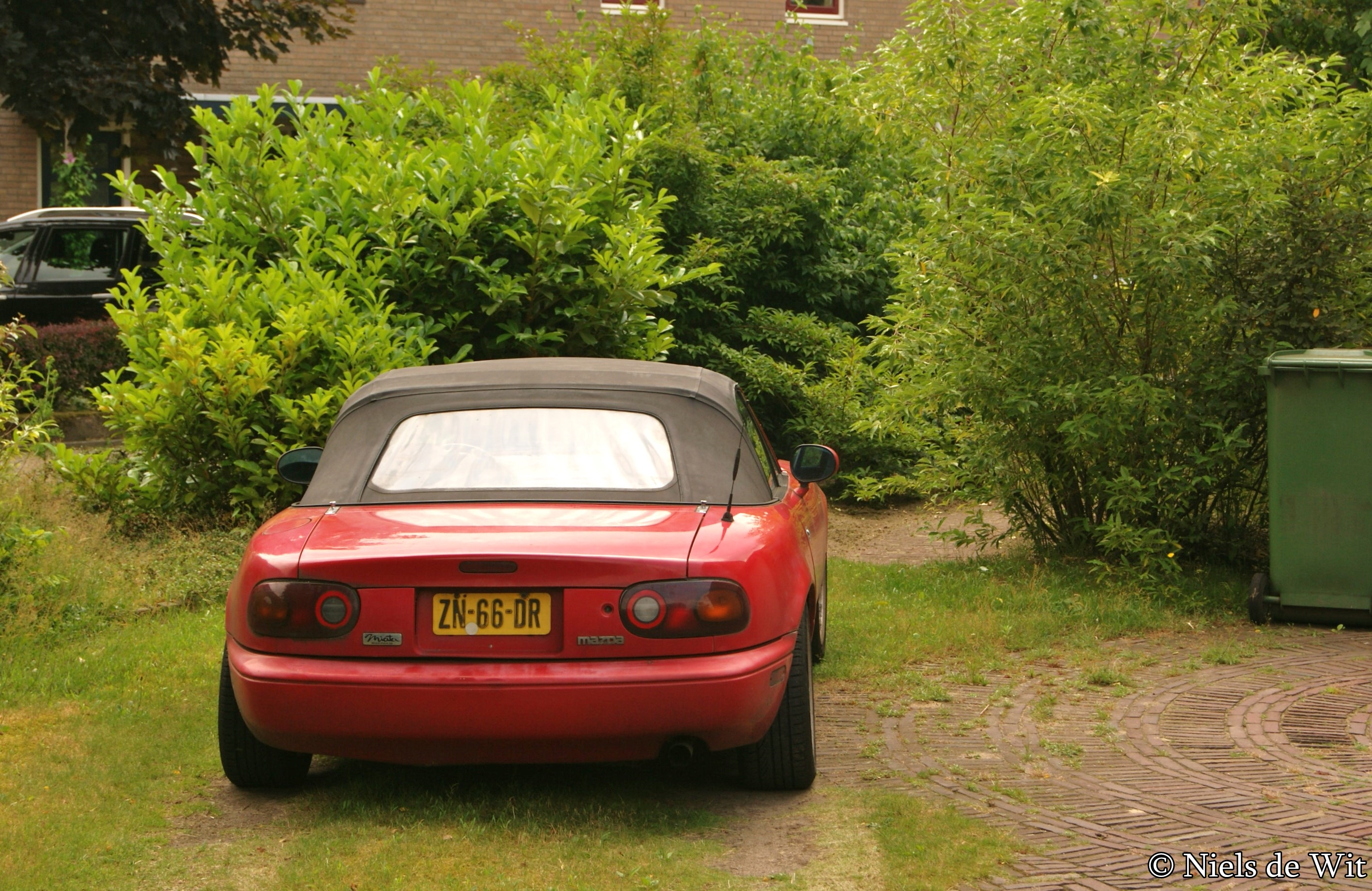
The Miata is a small sports car made by Mazda that is fun to drive and very popular among car lovers. It's known for being light and having great handling.
An LS swap is when you take out a car's old engine and put in a new one from a GM vehicle, which is often more powerful and reliable. It's a common upgrade for performance cars.
The Corvette is a fast sports car made by Chevrolet. It's famous for being powerful and stylish, and many people love to drive it.
LIVE
Hi, I'm Scott.
And I'm Seth.
And I'm Adam.
And we are Track Walking.
Tonight, we have a gentleman who is not good on scooters, drives just about anything he can
get his hands on, was instrumental in bringing forth a data device that many of you use.
And in general, is a good hang in the paddock.
Adam Spence.
How are you doing, Adam?
I'm doing very well.
And yourself?
Tired today, actually.
Seth and I were just talking before, right before you got on.
And Seth asked me what I've been doing.
And it feels like a whole lot, but it's hard to put my finger on it.
It's tired.
It's tired.
It's a Monday, so.
It is a Monday.
It's, you know, just getting darker outside.
And we're about to get, I think, a bunch of rain, which is going to herald
a lot of colder weather around here.
So we'll kind of see how that works.
Well, we had that about two hours ago, and it was a trench of downpour.
And, oh, yeah, like 15 degrees.
So. Jeez.
OK, well, I'm jealous.
It was like 88 here.
And my lawn, it's so dry, my lawn is crunchy.
Gross.
So I mean, Texas, what can I tell you?
Yeah, but you just got back from a pretty cool trip.
So.
Yeah, I just got back from Scotland.
That's the thing.
I'm tired, too, because my body cannot figure out time zones right now.
I keep thinking that 1 a.m. is morning and I'm it's not working well.
So. Yeah.
So, Adam, you and I met on the one lap of America.
If I do recall on your first year, which would have been 23, is that right?
Yeah, that's exactly it.
And that was the year of the Audi.
That was the year of the Audi it was.
Was bright green, wasn't it?
No, that was the second year.
The first year, the Audi was great.
Great. That's right.
The green was a much cooler look.
What what?
What tickles you to actually go on the one lap?
Yeah, that's a that's an interesting story.
So it's a good friend of mine,
Scott Donahue from the Kansas City area.
He was always talking about the one lap and it was something
which I knew about and one year, probably two, three years prior,
we actually came up to Hastings just for the day to check it out,
see what was happening.
And he dragged me along and I got to see everyone, meet everyone.
And it was like, oh, I need to do this.
And the rest is history.
Was that the really wet day?
That was the really wet day. Yes, it was.
I was going to say, was that the worms?
I always remember the worms on the track
and we were doing the track walk that day. So many worms.
I I remember the bird is what I remember.
That's that's the year that
Chris Mayfield had his M3
and he definitely killed a duck while driving on track.
And the duck was still in the grill
when he came back into paddock afterwards.
So you were there.
I was, yes. Yeah, it was a fun day.
And what what was it about it that actually like intrigued you?
Because it's not an event that's for everyone.
I can definitely understand that now.
It was nice because it was a track that I visited and I knew.
So the track was less interesting
and understanding more about the story of the drivers
and what they were up to was was really the fascinating part.
Talking to people in the paddock
and listening to the passion and the enthusiasm,
but also the stories up until that point were just amazing.
I mean, I remember I think Andy Hollis was there in his McLaren
and his wife, I think, was was doing some of the transit driving.
And again, just hearing like, oh, yeah, we just pack, you know,
a bag for clothes.
We don't really have any tools and we're just making it work.
It's just like, you're driving how many miles?
Yeah. And was the Audi just a car that you had?
It was a year or so prior I bought the Audi
with the intention of driving something different on track.
So you really didn't see many Audi's on track at that point,
especially in these sort of, you know, NASA worlds or anything else like that.
So I bought that.
I tracked it for a bit in time trials.
And then it's like, hey, here's a great platform to, you know,
just go and do something silly on track with.
So that's really where that came from.
I'm going to pause this.
I can go like which we're going to go.
We're going to have to use the wayback machine
because there's a lot of questions going about which Audi is it?
Yeah. So this is in particular, this is a B8.5 Audi S4.
So it's a three liter supercharged.
OK, that's a cool car.
It's a fun car.
Yeah. And it does for how heavy it is, because it's just under 4,000 pounds.
Yeah. Actually, pretty well on track.
I wouldn't say very well, but it, you know, for the weight, it does well on track.
Is it really that heavy?
Yeah. Now, now, now it's not.
So I've recently spent the this season cutting weight out of it.
And I've got it down to 3,300 with a roll cage.
So that's been interesting.
But yes, it's just under 4,000 pounds, you know, in full street trim.
They're not small cars.
So how we need it, we need to go back in time here
because you make it sound like a reasonable thing.
Like, no, I just went to the track in Hastings and decided after that
I was going to do one that. But how do you?
What's your what's your your childhood, your adolescence?
Like, how did you become a person
that thought that that's at all reasonable course of action?
So I don't know if we've got enough time for all of that,
but I can certainly give you a summary.
Yeah. It might explain.
I've got a T-shirt at home in the wardrobe right now that says
if it doesn't have an engine, I'm not interested.
So that will kind of give you the summary of where I am now.
Now, how I got there, I used to tell people
it was all about visiting Butlins when I was younger,
which is like a holiday camp.
And, you know, when I visited Butlins,
you know, my mom and a boyfriend at the time said,
oh, I could have 50 pence in pocket money every day.
And it was up to me what I did with it.
And so immediately when we got there, I saw this small track
and it had like tiny little motorcycles on with round hay bales.
And I looked at that and I'm like, I'm going to save all my money
and do that once.
And I thought that was where it started
until last year we were flicking through some photos.
You know, my mother was brought out some old photos
and she showed me a photo of when I was about three years old
in front of a birthday cake.
And it was a birthday cake of a motorcycle made out of chocolate fingers.
You know, so Capric's chocolate things.
I don't think they're here in the US.
But anyway, it was a motorcycle made out of chocolate fingers.
And I think that's probably where it all started and sent from.
So from there, it went into motorcycles with the first foray
into, you know, engine driven vehicles.
We need to talk about that before you go on for it.
Like, like what's what's what's your young motorcycle career like?
Because I have become I've returned to being a bike guy
in the last couple of years, so deeply interested.
Yeah, you you triggered triggered all the delightful lights
in Seth's brain because he races tiny motorcycles right now.
So that's fantastic.
And and over in in England, you guys get some really neat
small bikes that we don't get here.
So I'm hugely in love with the the small learner class bikes
that they make 16 year olds ride over there so much cooler.
It gets even more interesting, actually.
So the history of it is I can't remember the first bike
because it was the first bike was I bought it
a little moped to learn on to strip down.
But my first bike that I rode on the road was a Yamaha DT 50.
So basically dirt bike.
Yeah. Yeah. Love on.
Yeah. Fantastic. Great thing.
I wrote it at school.
It was fantastic.
From there, I jumped into immediately after that,
it was a Yamaha Virago 535.
So something different.
Then it went to a CBR 400 RR.
And this is all what I'm still learning.
So this is under that learners permit.
I actually owned a gray market version of one of those briefly.
So like, I actually know that bike.
That's a cool bike.
It was. It was the mini fire bed.
I think fire blades.
Sorry that I used to call it.
It was revved to like 12,000 RPMs or something crazy.
Like it sounded great in my neighborhood
when I got it running and rode it around.
Exactly. Yeah.
That's that. That's the exact bike.
It was so much fun. So much fun.
From there, then it jumped to CBR 600.
Then it was a Yamaha.
No, it was a Kawasaki Ninja ZX-R Ninja.
That was the first new bike I ever purchased.
That was my pride and joy.
I kept that for a long time.
And there were bikes in between, but I always kept that one.
And then when I moved to America, I ended up selling that.
And the really strange thing about the UK market
is when I put it up for sale,
somebody from Poland contacted me
and they drove all the way from Poland to buy the bike,
put it in the back of a van and drive back to Poland
because it was cheaper to buy old bikes in the UK
than it was to actually source it in other places in Europe.
It was absolutely insane.
Wild. Did you do or did you want to do any,
any track stuff on bikes?
I did. I never had the opportunity in England.
That was a shame.
It was like more, you know,
the time disposable income and all the rest of it.
But I have subsequently since then
done the Californian Superbike School a couple of times,
which I thoroughly enjoyed.
Yeah.
What was it about bikes for you?
Are they more readily accessible and cheaper to own in England?
Or like what, what was it about that,
that whole world that really got you going?
I think it was something to do with that birthday cake
when I was very young, but also it is the accessibility.
So in England, you can ride a bike at 16.
And you just have to pass a basic test called a CBT,
or at least at the time it was a CBT.
And then from there you could ride all the way up until 17, 18,
and there was a period of time where you had to be restricted
to lessen, I can't remember what their horsepower was,
33 horsepower or something like that, something really, really low.
So even the CBR 400, I had to have restricted plates in there
because, you know, obviously it was too powerful.
But yes, I mean, it was cheap.
It was meant I could get around and get my freedom.
But I did do my license very quickly at 17,
which is when you start driving cars in England.
But no, it was all about the accessibility and the freedom.
I love how you just said that 30 horsepower isn't very much
because Seth over here is, you know,
talking about stepping up to a bigger race bike
for like nine horsepower.
So that's hilarious for me.
I race children's motorcycles on go-kart tracks
and have all the fun in the world doing it.
So I don't even feel bad.
In fact, I think I heard that on the podcast once
and I looked it up and I saw the bikes you're talking about.
They look like an absolute joy.
It really is.
Everyone should do that.
If you find yourself in Houston, I'll stuff you in a set of
leathers and we'll go right to the track.
It'll be a good time.
I was just about to sell my leathers, actually.
Maybe I should keep them and bring them down to Houston.
Absolutely.
I have a garage full of bikes.
We'll have fun.
He does.
How many bikes do you have right now?
Are you selling the 20s?
Roughly 20.
Yeah.
Oh, you're not Jake.
No, I'm not.
I'm really not.
They're in there with his Porsche that's been on a lift
for more than...
Six or seven years or something like that.
Yeah.
So at what point in your schooling or life
did you move from England to America?
And why?
Yeah, that's a difficult one to answer, except I always knew
I wanted to live and work in America.
In fact, there were a couple of instances in England
where when I joined senior school,
the teacher would get you to stand up and do an introduction.
Part of my introduction was,
hey, this is what I'm doing now, but in the future,
at the time, I wanted to go and study in the US.
And I was almost ridiculed.
It was really sad.
It was just almost...
There was no encouragement.
It was almost just like, that's never gonna happen.
You're dreaming too much.
So, okay, fine.
And then at university, there was another incident
where I wrote a...
I remember it was for a business class
because I did effectively what I think you call
computer engineering here.
It's basically electronics engineering with software,
but I wrote a for a business class.
I ended up writing a paper.
And again, I spoke about the desire
to live and work out in America.
And again, it was marked down because of that.
And I was just, I was really surprised by that.
It was a strange thing.
They made me really write it and all the rest of it,
but I still stuck by those principles, so.
And it was...
You felt ridiculed because it was too lofty of a goal?
Yeah, it was almost...
So part of the essay that I wrote was,
I basically said, hey, look, the opportunity
just feels like there's more opportunity in the US.
And so there was an aspect there,
which was twofold.
One is opportunity personally,
but also then for family and all the rest of it.
Like I wanted my kids to grab in a place
where they would be given confidence.
And that wasn't always the experience I had
of encouragement and confidence.
And so it was just one of those things.
It don't get me wrong.
I mean, every culture is different.
But yeah, it was just interesting to see that reaction.
So.
Interesting.
So when was it that you actually got
the opportunity to move?
So the first time I was working for a company
on the South coast of England
and they had an office in Florida.
And as soon as they said that there was an opportunity
to work out in the office in Florida,
I was trying to find any way I could.
And it was really quite funny
because I was looking for opportunity.
It wasn't forthcoming.
And at the time I was about to leave the company
and then my colleague who I worked very closely with,
he actually ended up leaving before me.
And so they basically came to me
because there was only two of us on the team and said,
hey, you know, unfortunately he's leaving.
So, you know, we need to make sure
that we do a transfer and do everything we can.
I'm like, I was about to leave too.
And they're like, no, no, no, you can't, you can't.
And so, you know, that's when an opportunity
actually for the US came up, which was a great one.
And so that probably was 2006, I want to say.
It was the first time.
And so that was down in Florida
for about the period of just under a year,
which was a great, great experience.
What part of Florida?
Fort Lauderdale.
So it was actually Fort Lauderdale, essentially.
2006, it was the year after all the hurricanes
really came through there.
So I think you got to miss some of that excitement,
so to speak.
I certainly did.
I learned a lot.
I asked lots of questions because, you know,
a lot of friends had condos and places down there.
And it's like, what did you do?
How did this work?
So, yeah.
So let's talk a little bit.
I assume you had learned a fair bit
about the part of America
that you were going to be coming to
before you got there.
But what were the parts
that you were really excited about
and what parts surprised you?
Oh, that's quite an interesting one.
So I actually didn't know too much
because I'd never really been
to different parts of America.
So Florida was really the first
sort of eye-opening experience.
Okay.
And I didn't know what to expect.
And I do remember landing and I was in a taxi.
So I got a taxi from probably Miami
where I flew into, up to Fort Lauderdale.
And I'm going down the concrete jungle road,
looking around going, what have I done?
I just, I had no idea what to expect.
And so it was really, it was a transition
and it was a, okay, now we've got to make this work.
And it was, you know,
I think at the time I was probably early mid-20s.
And so it was just like, let's find a way to do this.
And even just breaking into a social scene,
I mean, it was, you know,
something which I'd never ever done before.
And so it was just like, okay,
we're going to make this work and find a way to do this.
And actually it was a car club,
which was the, you know, this sort of turning point
where when I joined at a car club,
which at the time in South Florida was so much fun.
And, you know, so many sort of activities.
And, you know, we even did a car show.
It's a Miami convention center.
I mean, there was so many things
that was going on down there.
So you basically have to own a car in the US.
What was, what did you go shopping for when you got here?
That's good.
Okay, that one, that one for me was easy.
So just prior to that, so what was it?
2005, Ford announced the new Mustang.
And it was a retro.
Right, we're going back to the retro sort of looks.
And so I knew that definitely was on the docket.
I wanted to own one of those new Mustangs.
And so it probably was in within a week
of being in the US.
A colleague who was a Mustang aficionado,
should we say, but basically very passionate
about Mustangs, he took me in his,
he had a, you know, an older one,
but he took me in his down to the local Ford dealer.
And that was it.
I mean, we went shopping and tried to find one.
And yeah, I mean, I ended up purchasing one,
which I ended up actually exporting
when I left the US after a year.
I actually ended up exporting that one back to the UK.
Yeah, so that was a fascinating experience.
Which model was it?
So that one was a 2007 California special.
So it was a GT California special.
What made it a California special?
I don't even know that one.
Yeah, so over the years, the Mustang
have done a number of different California specials.
And generally it's a trim package.
So at the time it was like bullet wheels,
bullet aluminum wheels.
It was a hood scoop.
It was the side air dam scoops.
So compared to the base model,
it was just effectively what the original sort of
California special was,
which was more of a sort of,
at least in this day and age, a cosmetic package.
Okay.
I was trying to pull up a picture real quick.
Did you get into, oh, pictures of it.
Cool.
Yeah.
I mean, they were cool.
Like, especially for the time,
it was a cool car when those came out.
So did you get into any autocross
or track driving or performance stuff in Florida?
Because I know a bunch of people in Florida
who autocross the crap out of their cars.
So I didn't.
In fact, when I'd left England,
so shortly before leaving England,
I had got into kart racing there.
So I had a Rotaxenia kart in England.
Okay.
And so I knew it was something I wanted to do.
But the idea of racing around cones solo
or autocross, whatever you want to call it,
wasn't a real thing, right?
In terms of that wasn't even on my radar.
I didn't even know what to look for.
So it wasn't until I got to Kansas,
did I really get into autocross?
And that was actually with another Mustang.
So that was with a 2013 Mustang GT, California special.
And that was when I did autocross
for the first time in Kansas.
So.
And you said down in Florida,
it was a lot of like car show, car meet cruises,
I assume.
Exactly.
Yes, cruises, people modifying.
I mean, the car club was very much so
about modifying vehicles,
whether it be for performance
or anything else like bags and everything like that at the time.
We went to one car show in particular
and this is very sort of recent sort of news,
but Hulk Hogan was there.
So he was just wandering around in the car park
and I got to meet Hulk Hogan.
And yeah, I mean, it was, again,
so many opportunities just through the car culture at the time.
Yeah, I was living in right near Orlando
during that same time.
And that was just the thing we did on weekends
as we hung out, sometimes worked on cars,
but at nights we'd go around and just drive,
go find places to hang out.
It's wild to think now,
like looking at that same kind of demographic
and like how different it is now.
Like no, I'm not trying to say if it's better or worse.
I think it's better, but it was just chill.
We didn't necessarily go out to race or anything.
It was just like going to like drive around and hang out.
It was fun.
Exactly, yeah.
And it was a brilliant way for me
to break into a social scene, right?
Yeah.
So you lived in Florida for a year, you said, right?
That's right, yeah.
Then you moved back,
I assume that was like the end of the tenure of the job?
It was, so shortly before I actually went out to Florida,
I actually got told that there was a chance
we might be closing the office out there,
which was a shame.
And so I already knew it was coming
and originally it was only gonna be six months.
It ended up being close to a year,
but that's really when I came into contact
with my next opportunity in the US
and I was gonna stay out there.
But at the time, the labor laws,
probably not too dissimilar to where we are now,
the H1B visas were just non-existent.
You couldn't get one.
And so that's really where I was on an L1,
which was an inter-company transfer visa
and I couldn't transfer it across.
So I had to go back to England, right?
There was no choice about staying.
And so I had to go back to England
for a couple of years before I got another phone call
saying, hey, the visas have opened up again.
It used to interest it.
So.
That's cool.
And what opportunity was that to move back?
That was with Garmin.
So yeah, that was when I first got to see Kansas.
And yeah, I was the only one out of the family of four
to ever see Kansas before we moved there,
which was probably good or a bad thing, so.
I was about to say,
were you aware of how diverse America was
before you moved to Kansas
after having lived in like Metropolis, Florida?
I got a small taste of that.
So shortly before I left Florida,
one of the colleagues in the office
actually ended up moving to Virginia.
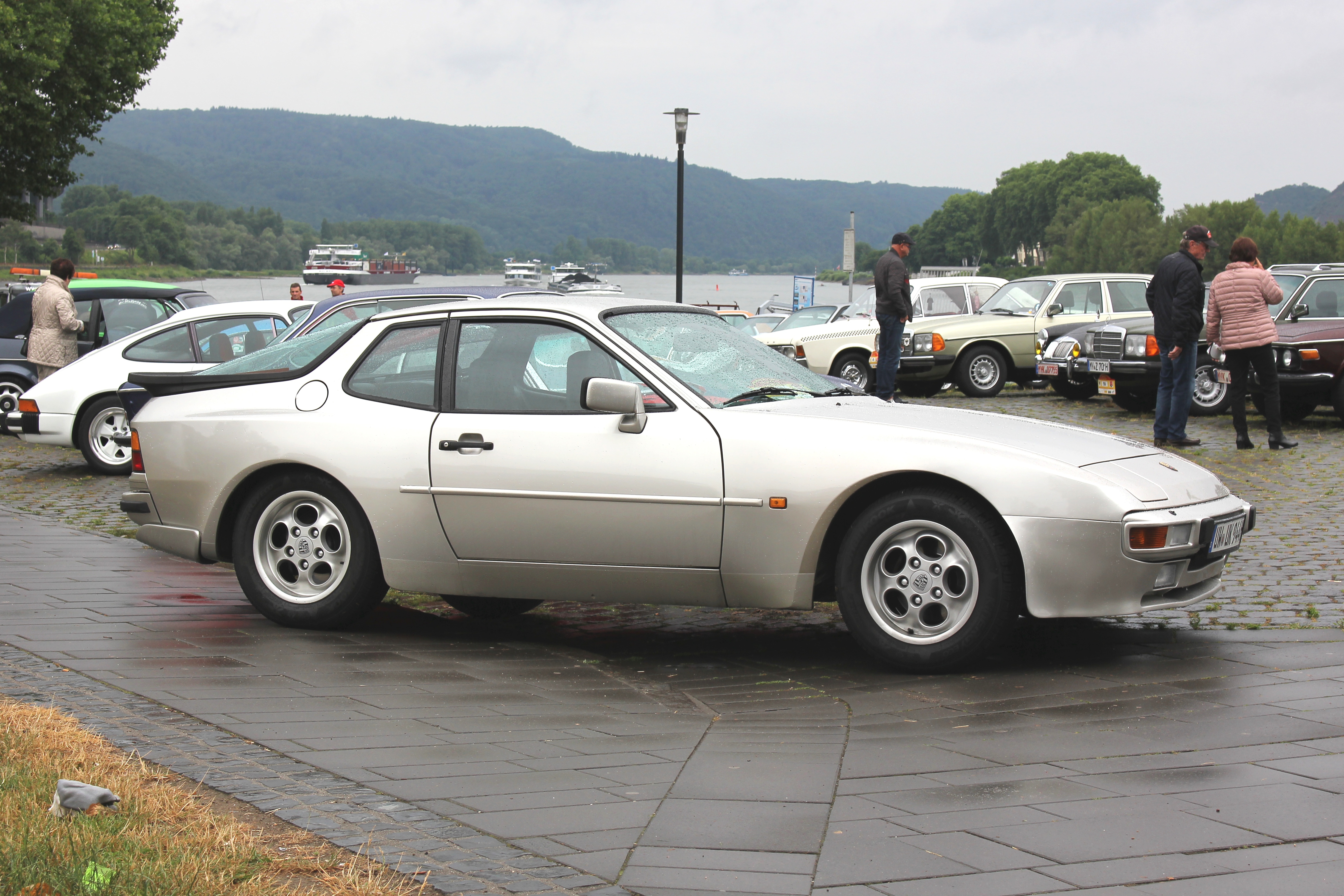
So we ended up driving his old Porsche 944.
So I drove that while they drove the U-Haul up to there.
And we got to stop at various different places along the way,
which is when I first came across something called Grits,
which I'd never again seen before.
So I got in that very short space of time,
introduced to a few different things.
All right, what kind of Grits?
I mean, that's, because that's a whole, whole last thing too.
I have no idea.
It was a couple of days ago.
And yeah, I've got no idea.
That's hilarious.
So what was intriguing about the Garmin opportunity
besides obviously getting to move and live in America?
Yeah, so at the time,
I'd been working in the marine electronic space.
So I'd kind of built up expertise
both in autopilots, in display technology,
software in general.
I mean, basically at this point,
I'd been focused on embedded software.
Garmin was actually a really great opportunity
because originally, going back to 2007
when I left the first time,
originally I was going to work in the aviation department,
which was a huge passion for mine, or for me, sorry.
So it was going to be aviation.
And then when the opportunity finally came around
a couple of years later, it was like,
hey, that's not not the direct opportunity right now.
It's really a marine,
which is where I'd spent most of my career
up until this point.
It's like, okay, that's cool.
And at the time, there was no moving around inside Garmin.
That was not a thing.
So it's just like, that's cool.
I mean, I'll still be connected
with the aviation side of the world,
but hey, there's this great company based in the Midwest
where it's great to raise a family.
And I think the way that we explored it,
or at least expressed it at home was,
we wanted to live by the theory of no regrets.
In that we knew what life in England was like.
We knew what the opportunities were like there.
And there was this opportunity here,
which if we didn't take it, we might regret it.
But if we did take it and decided later
that we didn't like it, we could always go back.
And so that really was eye-opening
and allowed us to kind of,
or at least allowed me to convince my family
to move across to a country that they'd never seen.
Well, apart from they had come out to Florida
for a couple of weeks,
but they'd never seen Kansas
and had no idea what to expect.
And I was asking them to move halfway across the world.
What are you saying?
That's, and that's not a common outlook on life.
Is it the whole, you described it as living without regrets,
but the whole, there's almost some like blind trust
that like things will be okay.
Like it'll work out sort of thing,
which I mean, it might not work out too.
So where, how are you like,
like that's an interesting thing.
We have a shit, we can get into it.
Yeah.
So I don't know where that came from.
I remember being young.
My mother, we always been very like,
power of positive thinking and all the rest of it.
But I also remember being effectively taught
that your life is what you make of it, right?
And so even at school, it's like,
I'm going to get out of life what I put into it.
So I ended up putting a lot into it to do well at school.
And then it's like, okay, what's next?
And so the US thing was, like I say,
it was always something I wanted to do.
And then when this opportunity came up,
it was just, you know, trying to take a step back
thinking, what do we do, right?
Cause yes, we could say no
and just carry on with what we've got.
But it was really, I think it was also my wife.
My wife was very sort of supportive
and she could see it meant a lot,
which I thought was fantastic.
And it really was a, you know,
sort of compromise on many fronts.
Now, don't get me wrong, there were years,
you know, the first couple of years, which were not easy,
you know, and we learned a lot about
how to move countries and what it means.
I think one person described it as you take a tree
that's been sat in the ground for like 50 years
and you pull it up and suddenly it has no roots
and you transplant it somewhere else
and it's got to go out and find the roots again, right?
Make those connections, whether it be socially
or, you know, family-wise or work or anything like that.
And that to us really helped with, you know,
understanding that transition.
But I think it was, you know, just the,
hey, there is this opportunity
and we can always come back.
That really helped.
How was your first Kansas winter?
Oh, my God.
Because I grew up in Michigan,
I've spent a bunch of time in North Texas
in the winter and stuff.
And I'm just curious about what the,
how different that felt.
So snow in England is, if it snows,
you get a dusting in general, especially on the South Coast.
So I'm from a place called Bournemouth,
which does not snow very often.
You might snow maybe once a year,
but you're talking about, you know,
a quarter of an inch, right?
Or, you know, maybe an inch.
But generally the road's shut down
even with an inch of snow, right?
That's just how it happens.
Sounds like Texas.
So when we landed in Kansas,
it was January 4th, 2010.
Oh my God, that's when you moved?
Yes.
And so I had spent from November to mid-December
when I went back to England for Christmas.
I'd spent six weeks basically trying to find
somewhere to live and buy a couple of cars,
which there was another Mustang there.
So there was a 25th anniversary edition Mustang there,
as well as a Mazda 3 for my wife.
And so the Mazda 3 had,
it didn't even have all seasons tires on,
because again, I'm not used to what I needed to do
because England is very sort of, you know,
average is 50 and might get up to 70,
maybe 80 if you're a lucky type thing,
but it's really sort of mild.
And so we land and there was,
there'd been a massive snowstorm, you know, that day.
And I had to dig the car, it was the Mazda 3,
out of the parking spot,
then drive back to the airport to pick up the family
because I'd left them there.
The battery had died,
so I had to get someone to jump start us.
By the time I got back, we realized,
and thankfully we'd already lost our daughter's car seat.
So she had a car seat and it got lost somewhere in the,
in the transit because as we load up the cases
in this little Mazda 3, we quickly realized
to fit the cases and four people in there
was not going to work.
So my daughter ended up sitting on my wife's lap
with luggage packed all around.
And there I am trying to drive
in my first real Kansas snow with barely any tread
down I-35 and just skating around all over the place.
So yeah, it was entertaining.
And there's another story which was
my wife tried to take my son to school for the first time
and she hadn't got a license yet
so she couldn't really drive, especially a US car.
And so that was when we realized, oh, there are no sidewalks.
It's not like, even though the school was like a mile away,
even in the snow without the snow, there's no sidewalks.
And so it was just like, oh, okay.
So our realtor actually ended up coming
and taking my wife and our son to school
for the first time, it was quite funny.
I assume you did some enough recon
to have purchased coats and boots and things of that nature?
We had, so we had obviously some warm stuff anyway, right?
So things like ski stuff, we didn't have ski stuff
but that sort of stuff, similar sort of clothing
we would have anyway.
But we did that weekend, the first weekend
to go out and stock up even more
because it was definitely an eye opener for sure.
That's just a rude introduction.
And what year was this?
2010.
10, yeah.
Those weren't even the good Mazda 3s either,
that was just the, yeah, the rust buckets
or what would end up being the rust buckets.
Yep.
So you start with Garmin in the boat division,
the marine division and what are you,
you're working on their navigation
and overlays, stuff like that?
So originally I was working on instruments,
so displays which go on sailboats and others.
Then it moved to things like MFDs, autopilots.
But it was very quickly,
and I had this throughout my career where
people very quickly realized
or at least saw leadership qualities in me.
And I'd actually already left a couple of jobs
because I'd been made a team leader.
Just because I love the engineering
and every time you get into leadership
it kind of takes away.
And so Garmin really was,
within six months I've been made a team lead,
another six months I was a manager
and then another six months I find myself
leading the entire marine software engineering division.
And at that point when it happened,
I kind of looked introspectively
and thought everybody keeps seeing something, right?
And this keeps happening.
So let me embrace it rather than fighting it.
And so that's what happened in that regard.
Interesting.
Even though it was something that at the,
before that it felt counterintuitive
or just something you didn't wanna do?
I didn't wanna get away from writing code.
I didn't wanna get away from the engineering.
That's what I was passionate about.
That's why I got into engineering.
And so the sort of management side
where you spend a lot more time in meetings
versus actually doing the engineering,
that's what I was probably fighting on a long say.
So how did you go about actually making that?
It's not just a mental switch,
but going from the coding and the kind of hands-on
to trying to embrace this,
these roles that you kept getting shuffled into,
how did you approach like trying
to change your mindset around that?
Yeah, so you've used the word mindset,
which I think is very accurate
because there's a book called Mindset by Carol Dweck.
We talk about it fairly frequently.
Okay, good, okay.
So the reason why I bring that up is really what happened
and how it helped were two things.
One is mentors.
So I had a couple of really good mentors
both inside the company and externally.
And then the other one was reading,
that sort of self-development
and trying to learn from other people's mistakes.
How I picked up on that was
when I got moved into a leadership position at Garmin,
one of the first things I was given
was a book about servant leadership.
And that was something which is practised at Garmin
and is very important there.
And so reading that book,
again, even changed my mindset
about how to approach things.
Who is the author of that one?
I knew you were gonna ask.
I'll look it up.
I can't remember if that's my answer.
Yeah, I wanna know if that's,
because that sounds like a book I've read before,
but that would have been in a church context.
So I'm wondering if that may have been a similar book.
Yep, I'll look it up in the background.
And then I'll let you know.
No worries.
And if nothing else,
we can throw it in the show notes too.
So you do some reading, you do some stuff
and you just decide that you're gonna try
to embrace these roles and try to do the good thing.
And what is it that you find
that you're able to kind of really own and latch onto?
That's an interesting question.
So I'm trying to,
here's how I'm trying to think about this one.
So often in interviews, if I'm interviewing someone,
you know, if you ask them for their strengths,
they will try and tell you
how they think they want to appear to other people, right?
How they want to kind of demonstrate their strengths.
So I asked the question of,
if I was to ask one of your colleagues or peers,
what would they tell me your strengths are?
That kind of changes the mindset, right?
About how to kind of think about it.
So the way that I've seen
and the feedback that I've received is
I can generally read a room
and I have enough background and experience
and technical capabilities
that I can not only see when people are not aligning
in terms of they're communicating,
but they're maybe perhaps there's information
that's not being translated or being understood.
But also I can pick up things very quickly.
And so there's a couple of traits
which seem to have served me well.
There's another thing which,
and I got given this feedback directly from Garmin,
which is I have an ability to retain information sometimes
that I can recall when I need it,
but it also gives me that bigger picture look.
And so it's the bigger picture sort of step back
with trying to piece things together
that has benefited me for sure.
The other thing though is,
and I think this comes through the servant leadership,
is I very quickly realized that the team
that I was leading, I was there for them, right?
I'm there to give them everything
they need to get their job done.
They're not there to do my bidding
because that doesn't make any sense.
And so by doing that and taking that approach,
it very much changes how I approached every situation.
You sound better than every manager I've ever had.
Certainly sounds better than Machiavelli, I mean,
that's another type of leadership
that's thrown around sometimes.
So I assume that this,
I'll call it a transformation,
but that this shift that you did
that that took some time,
that wasn't something that like you said,
you just decided to pick up a book one night
and the next morning,
you kind of knew what you were about in that role.
What did that, yeah, how did that go for you?
So I guess in the gosh, I've been doing this now,
probably for a couple of decades,
the first attempt wasn't great.
The first attempt, one of the biggest lessons
I learned from the first attempt was
there's a really interesting expression
which is choose your hills to die on.
So even if I'm defending the team
or trying to ensure that the right information
were focused on the right things,
you can't fight every battle.
And actually most of them you don't even wanna fight.
And so that was one of those things
which I learned very quickly was,
ah, yeah, rather than always trying to do
the right thing and I mean this Lucy, right?
You're always trying to do,
no one's doing anything sort of untoward or anything,
but rather than trying to always kind of
do course corrections,
it was only the really important ones
cause the rest of it you can just leave go
and generally things work themselves out for themselves.
The other thing though that I learned was patience
because there's an expression which
I did learn through reading
and sort of self-inspection
which is there's an expression called,
somebody who doesn't suffer falls gladly.
And I definitely was guilty of that
in terms of I would try and
expect or had expectations on everybody
and holding everybody at the same level
versus realizing that no,
everybody brings something different
and comes from a different background
and it's all about how do we make the best out
of what we've got right now and what we're doing?
And so there was just a couple of elements there
which was really helped me hopefully be successful
and you can ask anyone that's worked for me,
that's probably the easiest thing to do.
You know, but is definitely,
I see that has led to more success, so.
Can you give us just like a concrete example of
a hill that you chose to die on
that in retrospect you shouldn't have?
And obviously you can make it a little more generic
than the need to, but just like for like leadership,
understanding and stuff like that.
Give me an example.
Yeah, so, you know, I'll use an example
that wasn't anything to do with any company
I've worked for in the US
because that's probably easier, right?
So, yeah.
So there were definitely times when, you know,
from a perspective of when you're working
in an engineering company,
you've basically got a pull from the market
and you've got what's from an engineering perspective
and technology perspective we can do and is realistic.
And we often talk about things like schedules, right?
So things like a schedule, you know,
from a project management perspective,
it's a triangle with three sides, right?
And so at one point you've got time
on one side of the triangle, you know,
how long it's gonna take to do something.
On another side you've got features,
i.e. in that time, what features can you deliver.
And then on the third side of the triangle,
you've actually got resources
in terms of how many people do we need
to deliver these features in that length of time.
So if one of those sides of the triangle changes,
one of the other sides has to change as well, right?
That's the, you know, the project management triangle.
And so there were definitely times,
especially early in the career,
where there was always a push for, you know,
accelerating timelines or, you know,
changing the features that we had to deliver.
And so rather than trying to find a way to get it done,
there was an immense pushback, you know,
from a team perspective of we don't have time,
we're gonna spend time fighting up front
saying, no, we can't do it,
versus trying, starting, learning
and adapting along the way.
But then also compromising,
because a compromise is another aspect that comes into it.
So when, you know, now someone comes with a,
hey, we need to change a timeline,
or we need to change, you know,
sort of the features that we're delivering,
you know, the appropriate responses to say, that's okay,
but something else has to change, right?
We either need more resources, you know,
or we need to change one of the other sides.
And so it's one of those from the aspects of compromise
and finding a way to say, yes, with compromise,
has really helped versus trying to find a way to say no,
because I do find, and that's one of the things
that I've seen a lot of,
is when you get the constant cycle of no, no, no,
or people that say no, no, no,
it doesn't lead to good things,
versus if you can sit down and have that conversation of,
hey, we need to make this change, which is absolutely fine,
but something else has to give in its place,
generally it works out.
And so it's that way of, you know,
saying yes with compromises.
A dig, though.
So you're promoted fairly quickly within Garmin
to the point where you've got to make this
bit of a mind shift change
to kind of own and become better at this leadership role.
And then your role within Garmin kind of changes
and, you know, fast forward to me here, Adam,
let's really focus on me for a minute.
No, but it's, you know, one of the things I know you from
is from this, and what a lot of people I think
would know you, or the product is the catalyst.
So how did you go from boat navigational
stuff to leadership into car, car GPS and, you know,
machine learning kind of stuff?
So besides Mustangs, obviously.
Of course, right.
Yeah, there's a big part of the history there.
So when I first joined the company,
we were actually looking at doing our first action camera.
So this started almost very early on in Garmin
where I got involved even from a sideline perspective
in the action camera,
because it was going to be important for motorsports.
So at the time, you know, there was the verb
which some people might remember.
And then we had the verb X, verb X, verb XE
and then the verb ultra.
But each one of them in some regard
had some connection with motorsport.
I remember going up to the SCCA solo nationals.
And I think this was around 2015.
And actually we had a booth there
and, you know, the camera was used because it had GPS
and it would do the track map
and it would connect to the OBD2 and, you know, read car data.
So there was always on the, in the background
even when I was with Marine,
there was always an aspect of, you know,
being involved in that and trying to at least discuss
internally of like, how do we get more involved?
Right. So I was a big proponent for that.
So then there was an opportunity that came,
we were doing an internal reorg
and I had an opportunity to effectively say,
hey, you know, I've done this, I've really enjoyed it
but Marine was never my passion.
And in fact, there was an opportunity in aviation
going back to that whole aviation aspect
where I could join aviation, you know,
and explore that and go down that path.
So I ended up doing that.
And within the year that I was there,
not only had I built a project on the side,
which I can't talk about,
which I built a project on the side,
but I'd also got my pilot's license.
Because again, that's something which, you know,
was another opportunity internally.
And so this project on the side actually led me
to this innovation group in Garmin called,
at the time it was area 51.
Now it's called Garmin Labs,
but it was very much a small nimble group
where we were exploring
and trying to diversify for the company.
You know, so if anyone,
if people don't know the history of the company,
I mean, it started at Marina and Aviation.
And then over the years has spawned into, you know,
the company is today serving so much more.
But that's the purpose of that group.
And so I was in that group for a decade.
And during that time, again,
I'm always trying to find ways to say,
how do we serve the motorsports market, right?
I'm very passionate about it.
I had a lot of problems that I needed solving
within the motorsports market.
And it was, there was two kind of critical things
that happened, which was,
not only was there an idea that, you know,
I had confidence that would really help,
but also I found somebody who was interested
in executing on it,
which is a big piece of the puzzle, you know,
because ideas are one thing.
And in fact, we often say that ideas are worth nothing.
It's all about what you can do with those ideas
and actually execute upon them.
And it was once I found somebody
that was willing to explore it with an open mind,
because I'd been to others before
that weren't as open-minded,
that it suddenly then took off.
And that's basically sort of a 10,000 foot view of that.
And then very quickly after that,
it, we brought it into, you know, into production
and it is where it is today, so.
I mean, Area 51 does just objectively sound cool.
It does.
Yeah, we were sad when they changed it to Garmin Labs,
but we definitely understood why.
In that group of people, do you have,
I wanna say people with like varied outside interests
that are all, I mean, you obviously do car stuff,
you do plane stuff.
Is it just a whole group of people who are like,
no, my entire life is doing cool shit
and I wanna go to work and do cool shit too?
It is a mix for sure.
I think early on, there was definitely,
there was a lot of people that, you know,
were always doing different diverse things.
In fact, we were encouraged to.
We were always encouraged to go and try
and look at a different market or an adjacent market
because there's always something there
you can glean from it.
You know, you'd be amazed at how much crossover there is,
you know, in different markets.
But then over time as the group grew,
you know, there's definitely more technical expertise
that are required.
So, you know, there's a diverse mix there for sure.
So, when you, I don't know, when you get the green light,
basically to go ahead with this idea of yours
and you get, I assume, that resource side of the triangle
to actually go out and do that,
did you have a clear idea of what you wanted it to be
or was that kind of the point
where you got to explore the idea?
So, where the idea came from,
it's probably good to start there
because that might explain some of the background.
So, where the idea came from was it was in 20,
gosh, when was it?
Probably around 2015, 2016.
I went to Gateway one weekend.
So, what's now known as Worldwide Technology Raceway.
And I went to Gateway and I was in a speck meata.
And on the Friday practice,
I managed to find some time
when I set a great lap.
And then it got to the Saturday and suddenly I was slower.
And I was like, why am I slower?
So, I'm putting out the laptop.
I'm trawling through data going like,
what have I missed?
What have I lost?
Where was that lap?
Like, you know, how do I kind of work out what it was?
No, couldn't find it.
So, I'm talking to everybody as you're doing the paddock
and I'm trying to work it out
and I'm still missing why I was faster.
So, in general, you give yourself an excuse.
Oh, it was the weather, right?
It was colder.
The engine was whatever it is.
Oh, it's the tires, right?
There's always an excuse.
And Sunday, it's happened again.
I'm like, I'm not happy.
Why, why at the end of the weekend am I slower
than I was on Friday, you know, practice?
So, that led me to believe that there was something
in a data system and a way to solve the problem
of tracking everything you did on track
to always be able to compare and bring you back
to how do you ultimately get faster
in terms of you've done it once.
How do you stitch it together to be able to repeat it?
So, that's effectively why we set out to solve.
In doing that, some of the technology that was built
to actually achieve that really helped,
but the team then made it what it is today.
So, it was an idea of what I needed to,
the problem I needed to solve,
but the solution and where it ended up
was really a team effort.
And that's always true, I think,
of any great product, right?
I mean, an idea can come from somewhere,
but really it was the team effort
and the team collaboration.
And the really nice thing was,
none of the team really had any motorsports exposure,
which meant they were very hungry to understand and learn.
And so, we were challenging fundamentals.
They would come and ask questions
or go and explore or go and investigate
and look into how others do it or anything else like that.
We were challenging fundamentals versus,
oh, we know this and we're just gonna go
and implement it.
So, I think those two aspects combined
really helped shape that product.
So, with your experience at Gateway in Amiata,
you were trying to solve the problem,
and I'm trying to rephrase just so I'm sure
I'm understanding here.
You were trying to solve the problem
of being able to readily sift through data
and present it to you or the driver
in a simple, easy to understand.
Way.
Exactly, yeah.
So, I think the way I've described it in the past
and there's probably old podcasts and material out there,
you can hunt this down.
But the way I've described it in the past is,
if I am able to capture every line
I've taken through every corner,
but then work out how to stitch the lines together
so that they could actually be driven
as a continuous line,
I can pick up the fast parts of one lap
and stitch it together with the fast part of another lap.
That's fundamentally what it's all about.
Now, what it does is it avoids the,
hey, I can take turn three really fast
by compromising the exit,
which means I can't set up for turn four.
It doesn't stitch those two things together.
That's fundamental to that ultimate solution.
And so, by doing that, it basically meant
I had confidence that someone was watching me
and monitoring everything I did,
even if it was a week later, a day later,
to always bring me back to,
you've done this before, go and repeat this
before you try something new and find it even more time.
And had you done any,
I assume if you're driving at that point,
you'd had some interaction with driving coaches?
Is that right?
I did.
In fact, that was probably,
I'd been doing this with a particular organization
for a few years at that point.
I was actually coaching as well.
And it was one of those, again, frustrating parts
for even me coaching others,
because it was, you know,
coaching in the right seat was okay.
I had a scary situation at once,
you know, when I was coaching in the right seat.
And so I also wanted to find a way
to get myself out of the right seat.
But going back to it and answering your question directly,
Ross Bentley was a huge influence on that and on me
in terms of even coaching
and how I was approaching the problem,
because I very quickly got turned on to his books,
speed egress, even back in the autocross days.
I read that one first before, you know,
the, you know, getting into the ultimate speed egress.
And, you know, just again,
approaching from that mindset,
you know, the curious mindset,
I think is probably a way to put it,
but also a consistent mindset was really helpful.
And so coaching for me a lot came from Ross.
And you got to work with him decently
on that whole catalyst project.
I did, in fact, we became sort of,
I connected with Ross before that was even really a thing.
And how I first connected with Ross
and became friends with Ross was actually through SimRacing.
So I was doing, I used to wake up
every morning at like 4.35 a.m.
And I would do 30 minutes in the SimRig,
you know, just to try and keep my hand in
and keep the skills up,
which are, you know, the skills that fall off over time.
But I'd been exploring and experimenting with VR.
So I had one of the original Oculus headsets.
And I just finished reading an article of his
all about peripheral vision.
And I suddenly put two and two together thinking,
well, hang on a minute,
I'm spending all this time in a SimRig
where VR, there is no peripheral vision, right?
I mean, it's very much that screen
has got a tiny field of view.
And it's not like you're using any peripheral vision.
So my first message to him on Facebook was all about VR.
And I said, hey, am I going to actually, you know,
be untraining, you know, myself by doing this, you know,
and should I be worried?
Should I go back to screen?
So it was that typical sort of, you know, question.
And he was like, I don't know, let's find out.
I mean, it was just, it was just that whole approach
of, you know, it's very open-minded of,
it's like, hey, it's good point, you know,
but there's, and I can't remember the rest of it.
There was a lot more than that,
but it was that it was a really sort of insightful sort of,
you know, it's a really interesting point.
And we should probably understand that a bit more.
And, you know, we chatted, you know,
back and forth from there.
And yeah, kind of the relationship went through that.
What was the answer?
The answer was rather interestingly,
that it made me so paranoid that one of his,
one of his trainings or one of his sort of encourage,
the things he encourages you to do
is as you're driving down the highway,
is look for like a signpost
and then try and work out where it disappears
in your field of view.
And so I would then, every time I drove,
just be repeating that.
Cause I'm like, if I am reducing my, you know,
peripheral vision over here,
I'm going to boost it back up over here.
So the answer is I don't know.
However, I do know that probably three or four years in,
I ended up stopped using VR, which I really miss
and I would go back to in heartbeat.
But because my eyes started hurting.
And so again, it was never proven
whether or not it was the VR,
but I didn't want to risk it.
And so, you know, that, that point I put down VR
and went back to traditional monitors
and touch woods.
I haven't had an issue since.
So I'm trying to stay away from corrective lenses.
Must be nice.
Do if I don't have my contacts and it's bad.
No, I'm on borrowed time.
I know it.
Yeah, I'm only, I'm the old guy reading glasses now.
I don't, I don't need them for anything
beyond about two and a half feet away from me.
But the, I tell, I tell this story the first time
I knew I needed them.
I was under a car that was on jack stands
and I went to put a bolt on something.
And of course, you know,
it's only 10 inches from your face.
You have to pull your head back.
Yeah, you can't move farther away from it.
And I couldn't figure out where,
where trying to put a nut on a bolt
and I can't see the bolt and like, damn it.
So that's coming for you eventually.
You'll be under the car and you'll be like, oh man.
So, so you work through the, the catalyst
kind of brainstorming idea.
You bring it to market and how do you,
I guess looking back on it now,
how do you feel about your time working with
with the catalyst kind of helping to birth it,
so to speak?
Very fondly, I think, you know,
it's one of those, it's one of those products and projects
where every aspect of it was exciting and interesting
because it was something that no one had done at that point.
And so the amount of people I spoke to in the industry,
even before it was released,
trying to explain what it was we were doing
and how it could help.
I got so much pushback.
Oh, that's not possible.
That will never happen.
That will never help.
You know, you can't do that.
There's a very famous one,
there's a very famous Formula One team principle
that I spoke to even about it.
And, you know, he was like, you know,
you can't do that.
You know, it just won't happen.
And it was just amazing to see the pushback.
But in seeing what it has done now
and in seeing the-
Real quick, sorry.
Was it the technology that they were unsure about?
Was it like the algorithms and the programs itself
or what weren't they,
what were they convinced wasn't going to work?
That's a great question.
I think, you know, and again,
I don't wanna, you know, say anything untoward here,
but the, I think my impression of the industry
at the time was we've always done data analysis
in this way, you know, for decades, right?
Data has been around a long, long time
and there is no other way to do it.
You know, there's too many variables.
There's too many unknowns.
There's too many sort of aspects
that you just possibly can't take into account.
And yes, there are,
but there's a way to simplify all that.
And that's effectively, you know, what's happening.
And you, through the power of positive thinking
from your mom and leadership, like,
is that like, in the back of your mind,
do you just kind of like grin
and kind of think like, well, watch me or?
You've just reminded me of something.
Okay, so.
Okay, let's go.
Yeah, great.
So another place that I got a lot of this
positive thinking was actually a Hewlett Packard.
Thank you.
This is actually the crux of it.
So I was at Hewlett Packard for a year in industry
because we don't do internships in England
like you do in the US.
You know, the course I did was a,
effectively what they call a sandwich course
where you did two years of studying,
you did a year in industry
and then you did another year of studying
to get your degree.
So I went to Hewlett Packard
and it was around the time of Carly Farino
who was effectively CEO
and she brought back the rules of the garage.
And if you've never read the rules of the garage,
they are incredible when it comes to innovation and invention.
Not only that, while I was at Hewlett Packard,
I got put on an innovation course.
And I remember some of it,
but I really remember the sort of open-mindedness
and aspects of it.
And I'm just gonna bring up the rules of the garage
because they are so good.
You have my full attention right now.
Okay, all right.
And I use this even day to day, right?
In terms of any new team,
for them to help understand who I am,
I bring these up, right?
I'm like, hey, this kind of shaped my thinking.
So if I ever say something,
you'll understand where it's coming from.
So here they are.
So the first one is,
believe you can change the world.
Believe you can change the world.
Yeah.
So that doesn't mean that you're gonna do something
completely crazy, but if you don't believe that,
you'll never even stand a chance
of changing it one millimeter alone,
anything else like that.
The next one is,
work quickly, keep the tools unlocked, work whenever.
So it's basically nimble.
Know when to work alone and when to work together.
That one's really important.
Yeah, holy crap.
That would be a tough one.
Okay.
Especially for engineers
because engineers, as engineers, right, I'm an engineer,
there's ego tied to things that we do.
And that's very difficult, right?
That's very difficult to know when to be like,
okay, I don't know, raise the hand.
And also if you raise the hand too quickly
and you become, or you get judged,
then it's like, ah, okay.
So there's a few tricks there
that we use in engineering.
That's not only an engineering thing, but yeah.
This one, and this was very true
of some of my early engineering.
This one's really important.
Share tools, ideas, and trust your colleagues.
Up until this point, I'd worked with so many people
that there was this aspect of knowledge is power
and I've got the knowledge and I'm not gonna share it
because that makes me powerful, you know?
And that was sad.
That was tough.
This one I love.
No politics, no bureaucracy.
These are ridiculous in a garage.
Give me an example of a time when politics
or bureaucracy would, yeah, cause there,
say that one again.
Yep, so no politics, no bureaucracy.
These are ridiculous in a garage.
So, go on.
No, I'm trying to work this out on the fly.
So, the notion of thinking of the implications
or I don't even wanna say the implications,
but like how other people might think of them
or how they may look to the outside.
Is that what she's getting at here?
Yeah, and so these are the original,
just to go back to that.
So, Carly Farina brought these back,
but these are the original rules of the garage
from Hewlett Packard.
So, from Bill Hewlett and why I've ever forgotten his name.
Anyway, this is what they said in the garage.
These were basically printed up in the garage.
This is what they lived by.
And they were brought back in 2003 by Carly.
So, what it really means here is,
and in my experience, the way I explain it is,
we always understand that there are politics in bureaucracy.
Right, you know, that's unfortunately
just a part of human life, whether you like it or not.
So, if you understand it's there,
you can at least hopefully navigate it.
But we try to live without it, right?
If we identify it, let's try and move along.
Let's try and stay away from it as long as we can,
so on and so forth.
The example I use, or at least where I've seen this
bite people in the past is,
there will be a point,
and again, I'm not talking about any particular company,
but there will be a point
when people start commenting on things
outside of their expertise or experience,
because they're in a position
where they feel like they need to have a view
on something.
Whether it's data backed,
whether it's experience backed or not,
those become really tough.
And so, when you do something brand new
for the first time, when no one's got experience of it,
that project's easy,
but suddenly when someone's got experience of it,
they feel like they know
and they can then have an input onto it.
That's when in my experience,
politics and bureaucracy start to, you know, come around.
That's the most diplomatic way I've ever heard
of telling somebody to shut up, you know?
It's great.
But I've seen so many cool projects killed, you know,
because without any data, somebody has an opinion.
And we've always said, hey, look, it's okay not to know,
and it's okay to have an opinion,
but we have to make decisions based on data
and on information and be open to we could be wrong.
And that to me is where
if people are not open to being wrong
or there is ego in a room,
that's where it starts to fall down, so.
Okay.
What else?
Okay, what else?
The customer defines a job well done.
I think that's really a, you know,
the way I describe it is at the end of the day,
the customer pays us salary.
So we really need to do what's right for the customer.
Here we go.
Radical ideas are not bad ideas.
And I think that's, again,
articulating maybe some of the pushback I got
from, you know, the original idea
and the way that, you know, some people reacted to it.
Okay.
Invent different ways of working.
I, yeah.
I could live in this rule just because
and never get anything done
because I would just be like, well,
how else could we do this
and just never actually get anything done?
But yeah.
There's a rule at the end
that will stop that from happening.
Oh, shit.
Of course, okay.
Here we go.
Here's one then.
So make a contribution every day.
So again, really important to,
we should be working on something
that's actually going to go out the door,
you know, not just inventing different ways of working.
Okay.
I'll shut up now too.
Oh, but it gets better.
Okay.
If it doesn't contribute,
it doesn't leave the garage.
Yeah.
Seems cut and dry.
And then the last two.
So it's almost over.
The last two is believe that together,
we can do anything.
And I think that really is a sign of a good team.
And then lastly, invent.
Yeah.
I feel like that could be an entire podcast series
like we could do one episode on one or two of those
and go deep.
Absolutely.
You may have volunteered yourself to come back
at a point and talk more about this.
I'll prepare better if I do that.
Yeah.
But so that was kind of fundamental to you.
Yeah.
Yeah, that guided me very early on.
You know, if you think from college,
that was one of the things
that really helped me and guided me.
That's crazy.
Was it interesting to you
or had you considered at that point that like,
because Hewitt Packard, big corporation,
that they had like,
that they weren't just producing and making things,
but this is like an ethos.
This is a way of thinking
that they were trying to train people to do,
that they weren't just trying to train them to do skills.
They were trying to train them how to be human almost.
Was that surprising to you?
It was very surprising.
And I really enjoyed my time at Shewlett Packard
from that aspect.
I mean, there was so much there that, you know,
I don't think I would have had the experience
at any other place.
But it was almost also interesting to years later,
I went back and found some videos from the 90s
of Shewlett Packard in Bristol in England
and how it was even presented to the outside world.
And it was even true then.
I mean, it was, you know,
I saw people that I'd worked with,
you know, a decade or so later in that video
and they were still there.
And it was again, just amazing to see
not only was the experience I had
and what I took away from it real,
but also they'd been doing a lot of this all along,
which was just mind-blowing.
That's cool.
Now, then there was a merger with Compaq and things changed.
If anything does, things change.
So you have since moved on from Garmin,
you are, can we talk about who you're now working for?
Absolutely, I'm working for HP Tuners.
A car company.
Cars and things.
Who knew?
And they do GM products.
Things about them.
Not GM products.
That's where we're probably most well-known,
but yes, we do do a lot more outside of that.
Yeah, I think, was it at Lime Rock?
I talked to you about,
we should do something for the van.
Just, and I think we actually figured
that the van wouldn't fit on the Gridlife Dino,
that it's too long.
Like it's not built for that kind of a wheelbase,
which is a real bummer for me,
because I think it'd be hilarious.
And what are you doing with HP Tuners now?
Yeah, so I'm basically the associate director
of product development.
And so what that factory means is guiding things
like roadmaps, explorations.
I now have an engineering team.
Going back to those leadership skills
that people see in me.
Yeah, I mean, it's a fantastic company.
It's, for people that don't know,
it's been around 20 years.
It was founded by two very passionate people in racing.
So one is a TA2 driver, Keith Brocek.
And the other one is Chris Piaztre,
who is Oscar Piaztre's father.
And so, again, it's just a really exciting
sort of world to be in and see, you know,
how far we've come in in a couple of decades, so.
And is this the first company you've worked for
where you've been hired and immediately to do leadership?
No, because I wasn't.
Okay, so you got hired in to do engineering stuff?
So I was actually hired into product development.
So the way that this transpired was I,
going back to, you know, again,
how do you break into a market
and how do you, you know, release something like Catalyst
into the motorsports world
when no one has got any idea who you are?
I actually spent three years, four years,
prior to releasing Catalyst, going to PRI,
because I needed to basically network, connect,
understand who we needed to work with,
and so on and so forth.
And so in one of my very first visits to PRI,
obviously we don't have a product
and I'm trying to work out
how to talk to people in the industry.
So I run around with an action camera in my pocket
and literally talking to people about like,
hey, you know, from Garmin,
you know, the small company, Midwest company,
you know, we've got an action camera,
is it something you might be interested in type thing,
which again made connections.
And that's where I met Keith for the first time.
And so basically over a five year period,
Keith and I would meet, you know,
in the time we would meet and discuss and talk
would increase each year until, you know,
we were going to each other's booths and sharing ideas,
you know, in terms of interest in integration
or so and so forth.
And eventually he kind of mentioned,
actually at our booth, he's like,
hey, we're looking for a product manager
if you're interested.
And it was quite funny.
And I sat there, you know,
and I thought about it after I left PRI
and I was like, oh, maybe, you know,
that could be really interesting.
And you know, again, being connected so much
with racing that the new year came around.
And I think by February, I was like, yeah,
let's explore that.
So, you know, and by April, I think I was there.
So nice.
And here you are back in leadership
from all those pesky traits
that you keep demonstrating.
Is it a curse?
Seemed to be wearing it fine.
And in your spare time,
you've been trying to do GLGT things
in your Audi, right?
You bought it.
Yeah, that sounds pretty well.
Yeah, you bought some race tech stuff for me
and you, was it Midwest Festival
that you were gonna try to run it for the first time?
It was Mid-Ohio, and in fact, it was Mid-Ohio
when we were gonna talk about tuning the van.
That's right.
Yeah, it was Mid-Ohio where I lasted six laps
before the engine in turn one decided
to generate its own local Cumio Nimbus Cloud,
which was quite impressive.
Yeah, that sucks.
But you've been taking the opportunity
to drive some rush cars
and do all sorts of that stuff.
So that's cool.
Absolutely, it's been, I mean, it's been a ton of fun.
Gridlife has been an amazing organization
to be involved with, you know,
I'm very grateful for that.
I'm very grateful having the opportunity to come out
and not only drive, but also you see it from all aspects.
In fact, when we were at Laguna Seca last,
what, two weeks ago now,
I actually had the opportunity to take some photos,
you know, from the side of the track.
And again, that was just eye-opening
because the last time I'd taken any photos
from the side of the track
was probably a few decades ago at Le Mans.
So that was, yeah, that was fun.
That's cool.
So what's coming up for you that you're excited about?
And I guess, can you even talk about it?
No, I mean, a lot of things that you can appreciate.
I can't talk about what we're developing,
what we're working on, you know,
obviously, you know, keep an eye out on socials
and everything else like that.
This is the season where we've got trade shows.
So SEMA and PRI, it's always exciting
to kind of go through that.
There's then auto sport in, you know, in January,
I think it is now, which I haven't been to for a few years.
That's changed a lot of that show, which is a shame.
But no, excited for SEMA and PRI for sure.
Nice.
Well, I know I'll be there Thursday and Friday morning.
Then we've got to kind of leave,
I think, right before noon on Friday.
But of course, like always, we'll hug real quick,
take a picture and you'll probably have some meetings
that you'll need to get to at that point.
Exactly.
Cool.
What do you get to drive next?
So next, so the plan right now is
we're just prepping for one lap.
So for next year, we're gonna take the super again.
So that's the current plan.
And next year, I'll probably end up driving a rush
for pretty much the whole year.
Nice.
We've also got the GLGT car, which I need to finish off.
And I've got the engine, got another engine back in,
but I need to finish that off and shake it down properly
before bringing it back to GLGT.
So that will kind of come back,
but that was a bit of a rush build.
And yeah, that was, I'd forgotten how much it took
to build a race car, because the last time I did it
was the LS swapped Miata, so.
Yeah.
And those are a real vibe too, so.
Well, where can people find you,
learn more about you and kind of follow in your exploits?
Yeah, so obviously Instagram and Facebook,
I'd have to pull out the links,
but yeah, I'm on there and I tend to post
from time to time when it's not busy.
This year has been tremendously hectic,
so I haven't been very active,
but those are the normal parts.
I mean, HP tuners, obviously, you know,
from those social sites, great community
to kind of keep in touch with and see what's happening,
do a breadth of different things.
I mean, from side by side to, you know,
we're into watercraft now,
we're into pretty much all the manufacturers on the street.
So it's an amazing, you know,
from your truck to your Corvette to, you know,
Mustangs to, you know, even Audis and VWs
and everything else like that, so.
That's awesome.
Well, Adam, thanks for coming on
and spending some time with us.
You know, I know I always enjoy seeing you in paddock
and stuff and, you know, we try to take some time out,
but, you know, we both have things to do at the same time.
So.
Absolutely.
And we need to touch base more on the eye tracking
because I'm fascinated by that.
Yeah, stay tuned in that area.
But yes, that's a, I'm hooked.
I'm absolutely hooked at this point.
So.
Well, cool.
Well, thank you, Adam.
We are at Track Walking Podcast on Facebook and Instagram.
The Discord is kind of where we hang out
and have our chats and kind of share ideas
and listener questions, kind of all that stuff.
So thanks for listening.
And yeah, we'll be back next week with more shenanigans.
But for the three of us, I'm Scott.
And I'm Seth.
And I'm Adam.
Have a good week.
We'll talk to you next.
About this episode
Adam Spence joins the Track Walking crew to share his journey from the UK to the US, detailing his passion for motorsports and engineering. He discusses his experiences with the One Lap of America, his time at Garmin, and the development of the Catalyst data device that revolutionized motorsport data analysis. The conversation dives into the challenges of leadership, innovation, and the importance of teamwork, as well as Adam's current role at HP Tuners. With anecdotes from his racing experiences, this episode offers insights into the automotive world and the drive behind creating impactful technology.
Seth uses the way back machine... Scott gets way too excited about corporate cultures... and Adam leaned into what others see in him...
Adam Spence joins us to talk about his many bikes, how cold Kansas is in the winter, how he had to change to go from an engineer to a leader, how he brought a new form of motorsport device to life, and how he embraces new challenges.