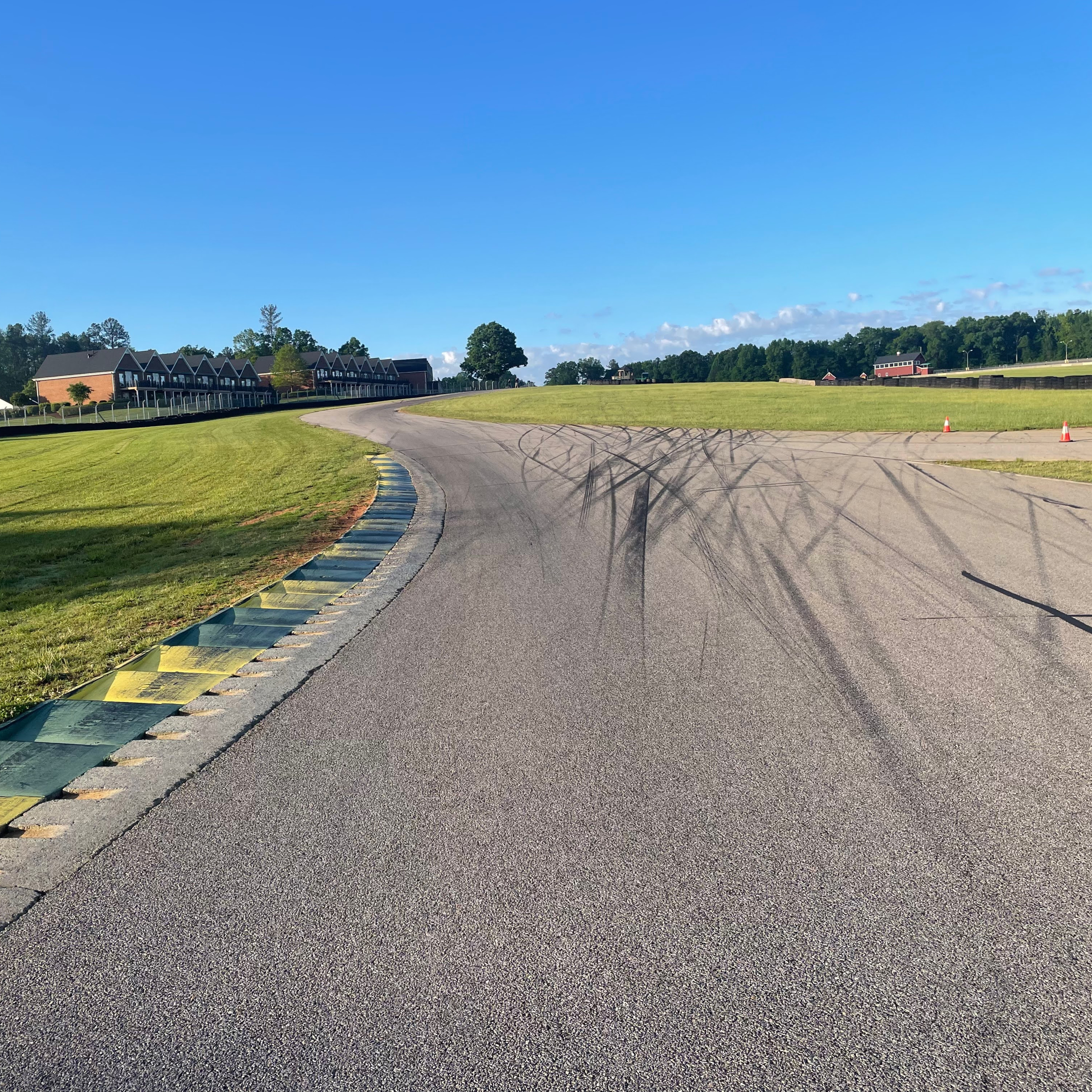
Scott and Seth dive into their upcoming adventure at the Big Bend Open Road Race, discussing the unique format and their preparations. They explore the concept of potential in both mechanical terms—like tire performance and chassis capabilities—and personal growth in driving skills. The conversation touches on the balance between optimizing a car's performance and understanding individual limitations. They also share updates on their projects, including a Miata with engine troubles and the challenges of racing setups, all while reflecting on the philosophical aspects of racing and self-improvement.
"But what's the event called? We are going to the Big Bend Open Road Race. So, they close down 59 miles of road between Fort Stockton and whatever the other town is,"
The Big Bend Open Road Race is a car racing event in Texas where drivers race on closed roads. It's a fun way for car lovers to compete and show off their vehicles.
The Big Bend Open Road Race is a unique motorsport event held in Texas, where participants race on closed public roads. It combines elements of speed racing and rallying, attracting car enthusiasts and competitors from various backgrounds.
"I guess the only two... I think there's three open road races in the U.S. There's the Silver State Classic, the Big Bend Open Road Race."
Open road races are competitions where cars race on real roads that are temporarily closed off to regular traffic. They can include both straight paths and turns, making it exciting for drivers.
Open road races are events where participants race on public roads that are closed to regular traffic for the duration of the event. These races often feature a mix of straight and curvy sections, testing both speed and handling of the vehicles involved.
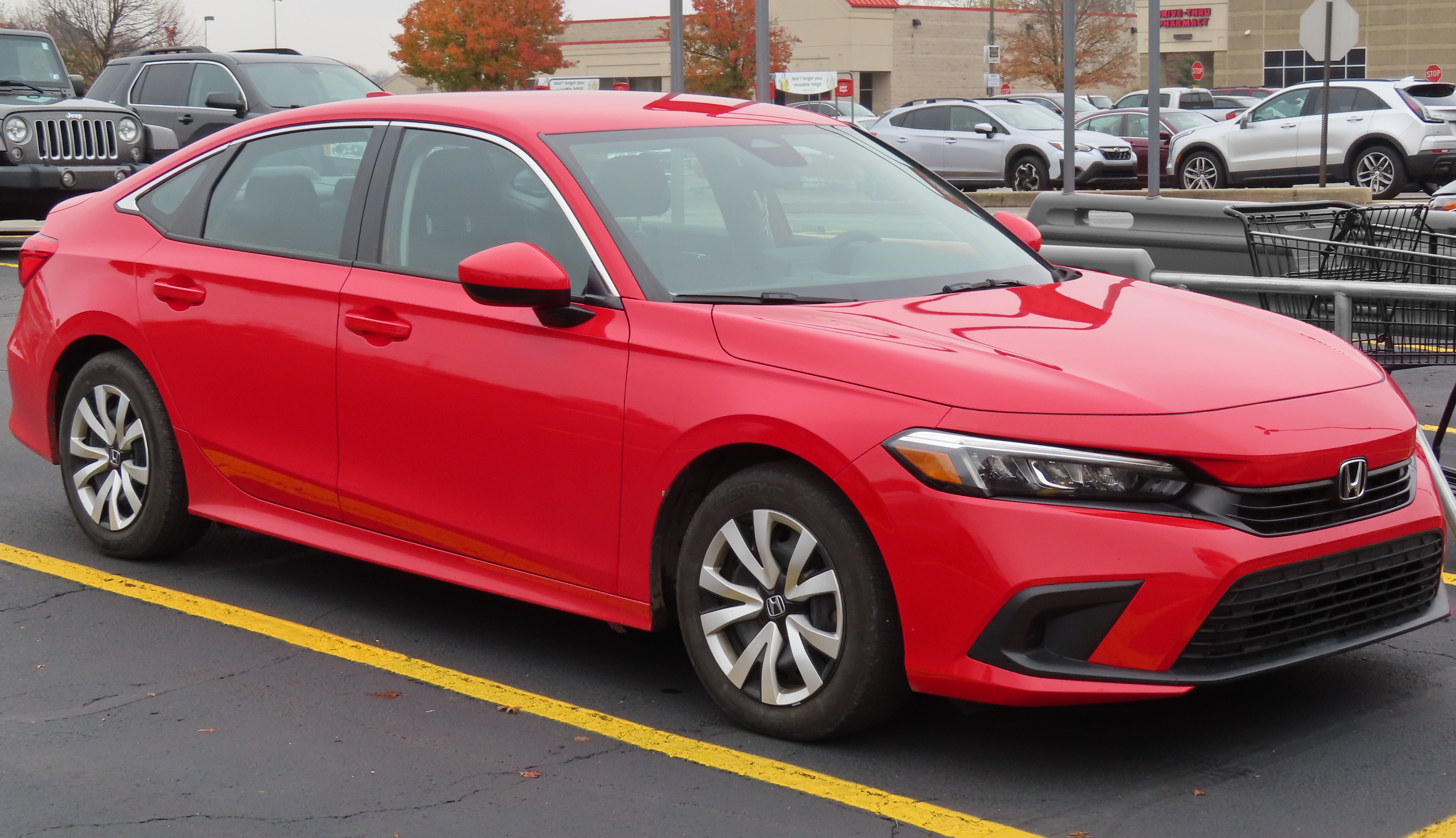
The Honda Civic is a small car that many people like because it's dependable and gets good gas mileage. It's been around for a long time and comes in different styles.
The Honda Civic is a popular compact car known for its reliability, fuel efficiency, and sporty design. It has been a favorite among drivers for decades and is available in various trims and configurations.
"Yeah, so we're taking a full-built GLTC race car across Texas. Because we could take it on the trailer, but that doesn't seem nearly as much fun as driving it."
GLTC is a type of racing series where regular cars are modified to compete on a track. It's popular among car enthusiasts who enjoy racing their cars.
GLTC stands for Grid Life Touring Cup, a racing series that focuses on grassroots motorsport. These cars are often highly modified for performance and handling on track.
"...but when I met him is when he started doing rallycross with it. And it was still a pretty nice car."
Rallycross is a type of racing that takes place on a track with different surfaces, like dirt and pavement. Cars race against each other to see who can complete the course the fastest.
Rallycross is a form of motorsport that combines elements of rally racing and circuit racing, typically held on a mixed surface track. It involves racing against the clock on a closed course with jumps and turns.
"...So it's going to be pretty cool. K-24. Full suspension..."
The K-24 is a type of engine made by Honda. It's known for being powerful and is often used in modified cars.
The K-24 is a popular inline-four engine produced by Honda, known for its performance and reliability. It's often used in various Honda models and is a favorite for engine swaps in the tuning community.
Race seats are special seats used in racing cars that help keep the driver secure and comfortable while driving fast. They are shaped to fit the body better than regular car seats.
Race seats are specialized automotive seats designed to provide better support and safety during high-performance driving. They often feature a bucket shape to hold the driver in place and are made of lightweight materials.
"Brian is in the lowest prep class. So in the lowest prep classes, you're either trying to go like 100, 105 or 110 average speed over the 59 miles."
Low prep classes are types of racing where cars don't need many special parts or changes. This makes it easier for more people to join the race without needing a fancy car.
Low prep classes in racing refer to categories where vehicles are required to have minimal modifications or enhancements. This allows for a more accessible entry point for drivers who may not have heavily modified cars.
"He'd need a different final drive or something. In a couple hundred more horsepower, you know, those sorts of things."
The final drive is a part of the car that helps control how fast the wheels turn compared to the engine. Changing it can make the car go faster or help it save fuel.
The final drive is the last gear ratio in a vehicle's drivetrain that determines how power is transferred from the transmission to the wheels. It affects acceleration and top speed, with different ratios optimizing for either performance or fuel efficiency.
"In a couple hundred more horsepower, you know, those sorts of things. But he's going to catch the vibe and have a good time."
Horsepower is a way to measure how powerful an engine is. More horsepower usually means a car can go faster and accelerate quicker.
Horsepower is a unit of measurement for power, commonly used to describe the output of engines. It indicates how much work an engine can perform over time, affecting a vehicle's acceleration and top speed.
"Like what is the true potential of a Miata versus the true potential of a Corvette?"
The Chevrolet Corvette is a famous sports car from America that is known for being fast and stylish. Many people love it for its powerful engines and great performance.
The Chevrolet Corvette is an iconic American sports car known for its performance, sleek design, and powerful engines. It has undergone several generations of development, each improving upon the last.
"Like a given set of tires has the potential to generate a certain amount of grip under certain conditions. Right."
Tire grip is how well a tire can hold onto the road. Good grip means better control of the car when driving, especially when turning or stopping.
Tire grip refers to the friction between the tire and the road surface, which affects how well a vehicle can accelerate, brake, and corner. Different tires have varying levels of grip depending on their design, rubber compounds, and the conditions they are used in.
"...get them up to the right temperature, all those things. The reason that there's sort of overlap between different tires..."
Tire temperature is how hot the tires get when driving. Tires need to be at the right temperature to work best and help the car grip the road.
Tire temperature is crucial for performance, as tires need to reach a specific temperature range to provide optimal grip and handling. Race engineers monitor and adjust tire pressures and conditions to achieve this.
"...you've got roll resistance, you know, how stiff is the car? How much does a car weigh?"
Roll resistance is how much energy a tire uses when it rolls. If it's high, the car uses more fuel; if it's low, it saves fuel and can perform better.
Roll resistance refers to the energy lost as a tire rolls over a surface. It is influenced by the tire's construction, materials, and inflation pressure, affecting fuel efficiency and performance.
"...How much power are you making? How much downforce does a car make?"
Downforce is what helps keep a car on the ground when it's going fast. It makes the tires grip the road better, which helps the car handle turns and stay stable.
Downforce is the aerodynamic force that pushes a car down onto the road, improving traction and stability at high speeds. It is generated by the shape of the car and any aerodynamic components like spoilers.
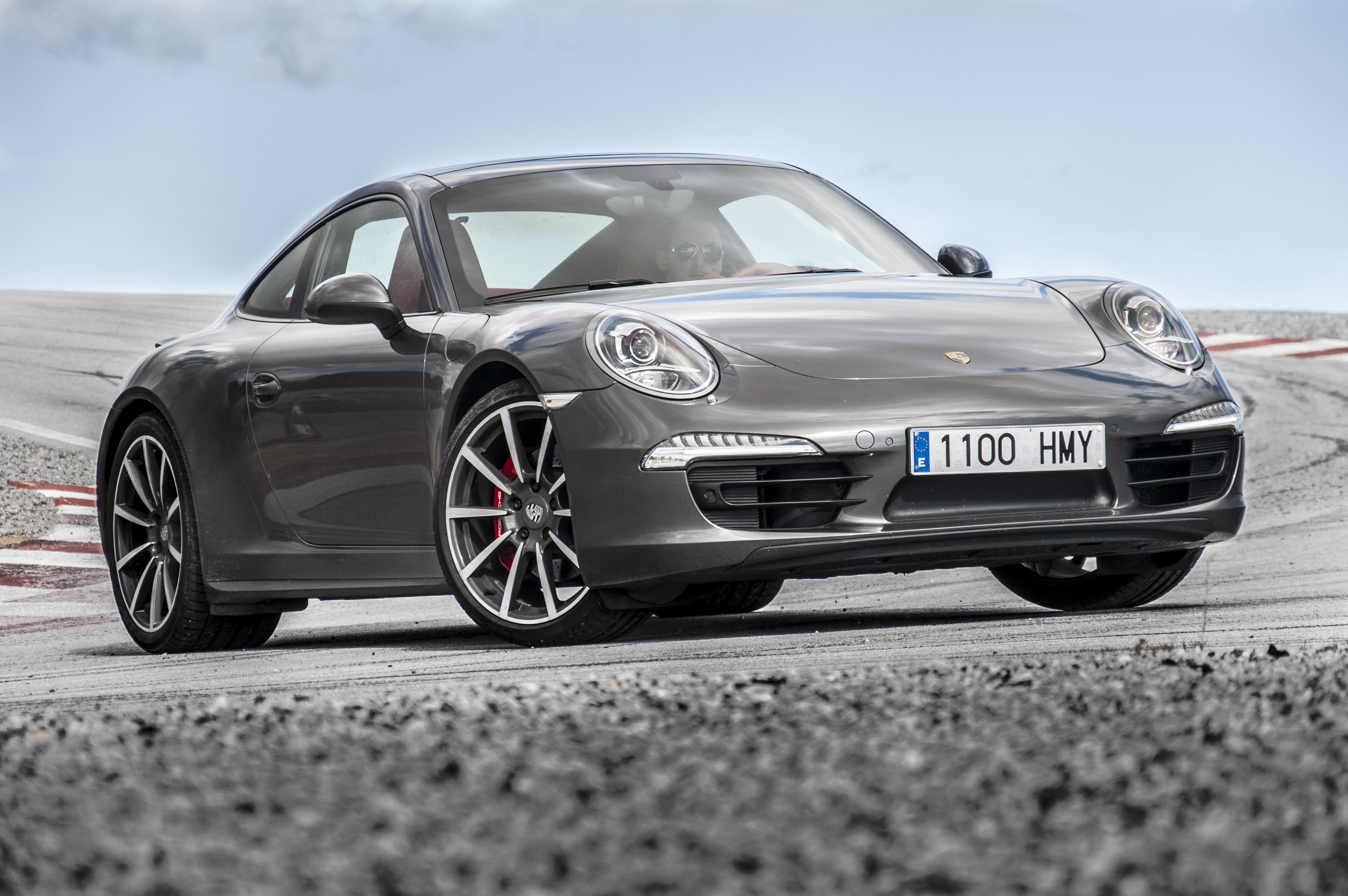
"And if you look at something like the Porsche 911, there's, you would go, okay, it's the same unibody and the majority, I think all of the street cars have the same suspension pickup points."
The Porsche 911 is a famous sports car that has been around for many years. It's known for its unique shape and great performance on the road.
The Porsche 911 is a renowned sports car known for its distinctive design and performance. It has been in production since the early 1960s and has undergone several generations of development, maintaining its status as an iconic vehicle in the automotive world.
"And so you start doing cup cars. And cup cars have crazy changes to make them work out the way they do."
Cup cars are race cars that are made from regular cars but are modified to be much faster and safer for racing. They have special features that help them perform better on the track.
Cup cars are specially modified race cars that compete in specific racing series, such as the Porsche Cup. They undergo significant changes to enhance performance, handling, and safety compared to their street counterparts.
"So in order to make a in a Miata competitive on, you know, the class of tire, I think he put 18 inch wheels underneath it."
18 inch wheels are the size of the wheels on the car. Bigger wheels can help the car grip the road better and improve how it drives.
18 inch wheels refer to the diameter of the wheel, which can affect the car's handling, ride comfort, and overall performance. Larger wheels often allow for better tire options and improved grip.
"I think that's a, it's got an LFX, but I think it's a turbo charge or super charged or it makes some horsepower. You get to push air into cars these days."
A turbocharger is a part that helps an engine get more air, which means it can burn more fuel and produce more power. It uses the engine's exhaust to work, making cars faster and more efficient.
A turbocharger is a device that forces more air into the engine's combustion chamber, allowing for more fuel to be burned and thus increasing power output. It uses exhaust gases to spin a turbine, which compresses the intake air.
"...it was certainly back in the day of running Hoosiers in and autocross."
Hoosier is a brand that makes tires specifically for racing. They are popular among racers because they provide good traction and performance on the track.
Hoosier is a well-known tire manufacturer that specializes in racing tires, particularly for motorsports like autocross and circle track racing. Their tires are designed for high performance and grip.
"...but it was pretty, it was certainly back in the day of running Hoosiers in and autocross."
Autocross is a type of car racing where you drive through a course marked by cones. It's not about racing against others at the same time, but rather about completing the course as quickly as you can.
Autocross is a timed competition where drivers navigate one at a time through a defined course on either a sealed or unsealed surface. It emphasizes precision and skill rather than speed, making it a popular motorsport for enthusiasts.
"...Like I'm sure you've watched formula one qualifying and they go a little bit faster, a little bit faster, a little bit like they're, they're finding a little bit every session they go out in."
Formula One is a type of car racing that takes place on tracks around the world. It's famous for fast cars and skilled drivers, and teams work hard to make their cars as fast as possible during races.
Formula One is a premier international auto racing sport known for its high-speed races and advanced technology. Teams compete in a series of races known as Grands Prix, and the sport features some of the most skilled drivers and cutting-edge car designs.
"if we're doing spring rate changes on the car if we're changing some geometry on the car"
Spring rate changes are modifications to how stiff the springs are in a car's suspension. Stiffer springs can make the car handle better but may also make the ride bumpier.
Spring rate changes refer to adjustments made to the stiffness of the springs in a vehicle's suspension system. This can affect how the car handles, its ride comfort, and its overall performance.
"if we're changing arrow components on a given weekend like that's totally fine too"
Aero components are parts that help a car move through the air more smoothly. They can make the car faster and more stable by reducing wind resistance.
Aero components are parts of a vehicle designed to improve its aerodynamics, such as spoilers, diffusers, and wings. These components help reduce drag and increase downforce, enhancing stability and performance at speed.
"...Like F1? Like steel-bited cars, mid-level series youths, CNTV. Like TCR?"
Formula 1 is a top-level car racing series where teams compete in fast, high-tech cars on different tracks around the world. It's very popular and known for exciting races and advanced car designs.
Formula 1 (F1) is the highest class of single-seater auto racing, governed by the Fédération Internationale de l'Automobile (FIA). It features a series of races known as Grands Prix, held on various circuits around the world, and is known for its advanced technology and high-speed competition.
GT3 is a type of race car that is based on regular sports cars but has been modified to go faster and handle better on the racetrack. They are used in various racing events and are popular among car enthusiasts.
GT3 refers to a category of racing cars that are based on production models but modified for performance. These cars compete in various endurance racing series and are known for their balance of speed and handling.
"So I put these fancy new front lower control arms on my car and they're very fancy."
Front lower control arms help keep the wheels connected to the car's body. They help the car handle bumps and turns smoothly.
Front lower control arms are crucial components of a vehicle's suspension system. They connect the chassis to the wheel assembly, allowing for controlled movement and stability while driving.
"...and they've got adjustable heim joints on the inners"
Adjustable heim joints are parts that connect different parts of the suspension. They can be adjusted to change how the car handles and drives.
Adjustable heim joints are specialized rod ends used in suspension systems that allow for precise adjustments in alignment and handling characteristics. They provide a flexible connection that can accommodate movement while maintaining strength.
"but then you can also, you also have the eccentric bolts and like there's many adjustments that you can do."
Eccentric bolts help you change the angle of parts in your car's suspension system. This is important for making sure your tires wear evenly and your car handles well.
Eccentric bolts are specialized fasteners that allow for adjustments in alignment settings on a vehicle's suspension. They are often used to fine-tune the positioning of components like control arms to achieve optimal handling and tire wear.
"The clutch was slipping at a certain point. And, you know, she's flat foot shifting."
The clutch is a part of the car that helps you change gears. If it's slipping, it means it's not working properly, making it hard to shift smoothly.
The clutch is a critical component in a vehicle's manual transmission system, allowing the driver to engage and disengage the engine from the wheels. A slipping clutch can lead to poor performance and difficulty in shifting gears.
"I kind of know what rod knock or bearing play sounds like. And it's not that."
Rod knock is a noise that happens in an engine when parts inside it are worn out. It sounds like a knocking and can mean serious problems if not fixed.
Rod knock is a specific type of noise that occurs when the connecting rod bearings in an engine wear out, causing a knocking sound as the rod moves. This can lead to severe engine damage if not addressed promptly.
"So you could have broken a piston ring and then blown stuff by it. I think likely that would be my guess."
A piston ring is a small metal ring that helps keep the engine's combustion process efficient by sealing the space where fuel burns. It also helps keep oil from leaking into that space.
A piston ring is a metallic ring that fits into a groove on the outer diameter of a piston. Its primary function is to seal the combustion chamber, control oil consumption, and transfer heat from the piston to the cylinder wall.
"Yeah. I've never had a Mazda 2 on an engine stand before."
The Mazda 2 is a small car that's easy to drive and park, making it great for city life. It’s also known for being fun to drive, which makes it a favorite among people who like a little excitement in their daily commute.
The Mazda 2 is a compact car that is known for its fun-to-drive nature and efficient use of space. It offers a sporty design and agile handling, making it a popular choice for urban drivers looking for a small, economical vehicle.
The Chrysler Pacifica is a family minivan that has lots of room for passengers and cargo. It's designed to be comfortable and has some cool tech features, making it a great choice for families on the go.
The Chrysler Pacifica is a versatile minivan known for its spacious interior, advanced technology, and family-friendly features. It stands out in its class with options for hybrid powertrains, making it a popular choice for those seeking efficiency and comfort in a family vehicle.
"Right. Odyssey. But you can buy it in function like a cargo van ..."
The Honda Odyssey is a minivan that can fit a lot of people and their stuff, making it perfect for families. It’s known for being safe and dependable, which is why many parents choose it.
The Honda Odyssey is a well-regarded minivan that offers a blend of practicality, comfort, and performance. Known for its spacious seating and cargo capacity, the Odyssey is often favored by families for its reliability and safety features.
Select text to request an explanation
Hi, I'm Scott.
And I'm Seth.
And we are Track Walking.
Tonight, Seth is in our good friend, Brian's house.
Sitting on his couch.
Brian is not there.
No, he had to go.
So, I'm just camped at his house recording a podcast.
So, seems normal.
Literally couch-surfing.
Yeah.
Yeah, you guys are doing a cool event next week that...
Well, I think we'll have to talk about afterwards.
But what's the event called?
We are going to the Big Bend Open Road Race.
So, they close down 59 miles of road between Fort Stockton and whatever the other town is,
south of there.
And they have different classes.
The fastest class is like, okay, cool, let's see how long it takes you to get to the other end.
Go.
And I see this as not like a straight shot of highway.
No, there is definitely some straight shots of highway in it, but there's also some curves in it.
So, there's a couple...
I guess the only two...
I think there's three open road races in the U.S.
There's the Silver State Classic, the Big Bend Open Road Race.
And I feel like there was like a Nebraska one for a while.
Yeah, Nebraska has some real open roads.
Yeah, there was another one.
Somebody will remind me what one it was, but there was three for a while.
But this has sort of been a bucket list thing for me to at least go to.
I'm not that excited about driving it because as I've stated more than once,
going fast is not really my jam.
But it's kind of cool that this thing exists.
And so I wanted to go see it, but it's in the middle of fuck all Texas.
And so without a reason to go there, I haven't really done it.
And then Brian sent me a picture of Orange Wheels last week.
I was like, dude, are you doing a thing?
And he said, yeah, I'm doing the Big Bend Open Road Race.
I'm like, cool, can I come?
And so I'm going to go with him.
And I don't know that he'll need help, but we're going to turn into a week-long road trip.
And he's going to do that.
So pretty excited.
And it's in the Civic?
Yeah, in the Civic.
Yeah, so we're taking a full-built GLTC race car across Texas.
Because we could take it on the trailer, but that doesn't seem nearly as much fun as driving it.
Correct.
That car has seen so much life.
It really has.
And what's cool is I feel like I was there at sort of the beginning of it because,
I mean, Brian did a few things before I met him,
but when I met him is when he started doing rallycross with it.
And it was still a pretty nice car.
And then we rallycrossed and I convinced him to do the rallycross national championships.
And then he just took off and did all the things from there.
So like, I remember it as a street car.
And the first time we did one lap in it, it was a pretty normal automobile.
It was loud, but it was pretty normal.
And now it's not.
So it's going to be pretty cool.
K-24.
Full suspension.
Big front brakes.
Arrow.
Stripped interior.
Cage, race seats.
Yeah, all the trimmings.
What's cool is, so like I said, the fastest class is just sort of like go see how fast you can go.
But they have lower classes where you're actually trying to meet an average time or like an average speed.
So for the 59 miles of the course, you try to average whatever there's classes for like 140.
There's classes for 160.
Brian is in the lowest prep class.
So in the lowest prep classes, you're either trying to go like 100, 105 or 110 average speed over the 59 miles.
The caveat being in those low prep classes, because they don't require cages or anything,
you can't exceed 124 through any of the speed traps.
And I don't think my understanding is you don't know where the speed traps are,
but they've got them out there.
If you exceed 124, the runs disqualified.
So, and the reason Brian is in that is because his car like arrows out and it gears out at like 133 miles an hour.
So like the next, any of the classes for cars that are prepped to his level,
like he can't go fast enough to even hit, like to minimally hit what they're trying to hit for an average speed.
He'd need a different final drive or something.
In a couple hundred more horsepower, you know, those sorts of things.
But he's going to catch the vibe and have a good time.
That car is going to be singing for.
I did calculate the, I don't have it with me, but I did calculate the time he needs to meet to the 10th of a second.
So we'll see how he does with it.
That's my whole job as a helper is to give him that number and say, go do this.
Put some of good oil in it.
I am not the car owner.
None of that has anything to do that.
I think I'll check tire pressures, pat him on the back, send him on his way.
Good for you.
So you messaged me a few days ago.
I did.
About?
About potential.
If the word means a lot.
Potentially.
Potentially.
So I was thinking about potential in a whole bunch of different ways.
Sort of the mechanical side of things.
The potential of a particular set of tires versus another set of tires.
The potential of a chassis.
Like what is the true potential of a Miata versus the true potential of a Corvette?
Like C5 Corvette versus C6 Corvette.
We look at those and we go, oh, well, we could make this faster than we could make this.
Regardless of what class structure we're in.
And so everything mechanical has a potential associated with it.
Bits and pieces, whole systems, that sort of thing.
But also there's, as a kid, there's, I'm sure you might have heard this,
that you're just not meeting your potential.
Sure.
I'm sure I had, my mom had that teacher conference more than once.
Yeah.
I don't recall a specific time, but I know I've heard that before.
Yeah.
And so we have, the idea of potential in a person is very nebulous.
And it must be there because I'm never going to be as fast as Max Verstappen in a car.
His potential for driving a car is higher than mine.
And I know you hate to hear that.
Right.
But I'm the same kid who couldn't really run until he was nine and things like that.
Like I don't have good coordination.
Right, sure.
I'm almost 50.
My eyesight's failing.
Like, it's just.
Right.
Maybe Max is going to be better than me.
Maybe Prime Seth.
Yeah, Prime Seth wasn't that good.
But he had so much potential.
But did I?
All right.
So we're talking about a few different things, but all of it is kind of intellectual.
Well, the simplest thing is the mechanical thing.
Like a given set of tires has the potential to generate a certain amount of grip under certain conditions.
Right.
And as the race engineer that you are, it's your job to get as close to the optimal conditions for those tires as possible.
You know, use the inside and outside of the tire, get them up to the right temperature, all those things.
The reason that there's sort of overlap between different tires and there's different tire choices is because very, very, very few people truly optimize the potential of a tire.
If people are closer to optimizing it, it would be like, cool, this is the tire because we've all optimized it and this one's better.
Sure.
Yeah, depending on use case and...
Right.
Yeah, type of racing, vehicle, all that good stuff.
Right.
But in that's the other thing as you may, like on different cars, we always say that in different cars, oh, these tires work better.
And honestly, I think a lot of that has to do with just set up and optimization and things like that because nobody's using all of the tire.
Certainly not in amateur motorsports.
Sure.
Yeah.
And even if they were, how would you know?
Right.
In terms of data collection and everything, it's very, very difficult to actually know that with all the sensors and things that you would need to be running to be able to know that.
You know when you're off.
Yes.
I mean, you know, like, you know, when you screwed up.
Yep.
You know what it's not.
Right.
Yeah.
Yeah, the...
Yeah, I guess let's stick to mechanical stuff first.
You know, a lot of people know the different characteristics of tires of, you know, even if they're the same physical size.
You know, a lot of people know, you know, this tire is going to be good.
It's going to be better.
Like right at the beginning, this one's going to wear really, really well, but not be quite as fast, et cetera, et cetera.
So everybody kind of knows the characteristics of different brands, stuff like that.
And then you've got widths and heights that you can certainly play with using those as heat sinks.
And then you've got roll resistance, you know, how stiff is the car?
How much does a car weigh?
How much power are you making?
How much downforce does a car make?
Like all this stuff, you know, influences what the tires do.
And so, yeah, and picking a tire, you're picking something that's not going to be good at everything.
Right.
You're picking a tire that's going to be what you think is the best for your use case.
And maybe on that given day.
Yes.
If you're super baller and you can run like hot weather tires and cooler weather tires.
It's true.
It's true.
It'd be nice to be that baller.
Wouldn't it?
So, yeah, the potential of a, you know, without testing, it is hearsay.
Somebody or like communal knowledge or community assumptions.
Anyway, it's into the philosophical question of what do you actually know?
Yeah.
Right.
Exactly.
Yeah.
Turns out from a priori, which is Greek or Latin for by experience or through living it.
Not much, to be honest.
And there's a lot of questions about our objective experience as well.
Yeah.
And, you know, car chassis, yeah, that everybody loves to talk about the time
attack class, wheel-to-wheel endurance race kind of, you know, even up through
professional motor sports, you know, which chassis is better?
Yeah.
Which chassis is the better bones sort of thing.
And is that kind of a deep dive that I'm not even sure I'm ready to talk about here?
No, that's a huge can of worms.
Yeah.
It makes me happier when, for a particular class, a number of different chassis work.
Yeah.
I hate a common solution where it's just like, no, this works.
And you see that?
I saw that when I autocrossed a lot.
And you'd see a new chassis come in and you're like, cool.
Now everybody has to buy X because that's the only car that's actually going to win
in that class this year.
Yeah.
That's kind of what it seems like.
But on the other hand, I was thinking of this abstractly.
And if you look at something like the Porsche 911, there's, you would go, okay,
it's the same unibody and the majority, I think all of the street cars have the same
suspension pickup points.
I don't know.
Except for maybe some of the super, super high-end ones maybe modified a little bit,
but not much.
But when they go to turn those into actual race cars, they still change stuff.
Yeah.
Almost everyone does it seems like.
Yeah.
So like even when you look at a car, like a GT3 RS, the street car is a monstrously fast
car.
Yes.
And if anybody is going to take it actually racing, they're not good enough.
Yeah.
Porsche cup car then.
Yeah.
And so you start doing cup cars.
And cup cars have crazy changes to make them work out the way they do.
So that goes into the whole potential thing.
Mm-hmm.
Like stock unibodies not good enough.
We got to change stuff.
That's true.
And then like how fast can a Miata go?
Well, the, the topic of the day for that one is the long awaited time attack car known
as Hyper Miata has been pretty dormant for the last several years.
And it was pretty quick, but I guess with some tire changes, tire rule changes in
the class and series that he was running, you know, 15 inch wheels just wasn't
cutting it, you know, right?
Just nowhere near.
So in order to make a in a Miata competitive on, you know, the class of
tire, I think he put 18 inch wheels underneath it.
And the amount of, you know, changes and cuts and things that needed, you know,
had to happen for that to be become a reality.
And while he was in there, they basically did like everything over.
You might as well while you're in there.
Yeah.
It's got like, I want to say the body is almost two feet wider than it had been.
It's pretty wild.
You can see where like the stock doors sits and then you have like a sill plate.
Wow.
Just like overhangs.
It's got a sharp.
We've been doing that since the 80s with, with various silhouette cars anyway.
So.
So it's a very cool car.
We're going to see how fast to Miata can go.
Yeah.
I think that's a, it's got an LFX, but I think it's a turbo charge or super
charged or it makes some horsepower.
You get to push air into cars these days.
Like you can't just have a naturally aspirated giant V8.
Like that would be silly.
No.
Yeah.
It's probably cheaper just to put a turbo on it and everything.
And make, you know, better power is what I'm trying to say.
But yeah, the potential, I feel like again, it kind of comes down to use case
mechanically, like, you know, is tire a big deal or not?
And if it is, then you need to find a chassis that can fit that amount of tire.
And I mean, I had somebody tell me one time back in the day, they said,
find the fastest tire that you can legally run and then find a car to put it on.
Yeah.
Like, I mean, they were like, that's it.
Like whoever's going to win this is going to have the fastest tire there.
And it's not always that way.
But it was pretty, it was certainly back in the day of running Hoosiers in
and autocross.
They were like, whatever's the biggest Hoosier that can legally be run in
this class is what's going to win this class.
And 98% of the time that was true.
And they're like, so if you can't run that tire, you like have fun seeing how
fast everybody else can go.
Yeah.
Yeah, I don't think it's that simple, but I mean,
But it's an interesting philosophical starting point, though.
Sure.
Rather than saying, I actually really like Miata's.
I wonder if I could go race it somewhere.
Yeah.
That's not a potential.
That's a love question.
It's a relational question right there.
Yeah.
And I think I, you know, especially when we're talking about mechanical,
physical things and their potential and in competition, right?
Money has to come into the.
Come into question at that point is like the potential will always
find a ceiling with a limit on money.
Yeah.
And that's, and that comes down to the fact that you, if you have a car
that's like theoretically, if you have a car that's capable of running a
two minute lap at a, at a course and you have another car that's capable
of potentially capable of running, you know, a 156.
You can, you can definitely be more mediocre in the 156 car than you
can be in the two minute car.
And so that's really nice.
Like if you're, if you're the guy in the faster car, it makes your,
makes your day more pleasant.
It's true.
But then, then you got to wonder about potential and, you know,
are you going for just beating everyone else?
Or are you going to get everything that you possibly can?
Is this one of those ask any racer, any real racer things?
I mean, I do remember, I want to say it was Vettel when he,
I forget who he was racing with.
I think it was Vettel.
I might be wrong, but it was towards the end of the race.
He was well clear of everyone else and he was still pumping out
fastest laps and his engineer came over the radio and said, you
know, there's no need to risk it.
You know, just bring it home and Vettel said something along
the lines of there's no risk.
There's just satisfaction.
Right.
And like, yeah, it's, you know, winning isn't everything.
Winning by a margin isn't everything, but like finding
every hundredth and thousandth that is in that, like that may
be more like pure potential than anything that's benchmarked
against other teams.
Cause again, if they're not at their potential, which,
which nobody ever is, right?
Like I'm sure you've watched formula one qualifying and they
go a little bit faster, a little bit faster, a little bit
like they're, they're finding a little bit every session they
go out in.
So they, they would tell you they're not at their potential
yet.
I've seen different times where they've gone and set poles
and they've been like, yeah, there's like two tents out
there.
I just couldn't get it today.
I'm like, you're on pole.
They're like, so.
But satisfaction.
Yeah.
Yeah.
Yeah.
And I think, um, I think what's more, the more interesting
question to me comes back to drivers and potential because
that is a interesting question, not just a philosophical
one, but that's one that's self talk.
That's how you view yourself, your self image.
Um, that's a whole lot of things.
It is, especially for, I would say for modest people, like
it's, it's easy for you and I to look around us and be like,
ah, these, these guys are better than us.
I mean, not just because they beat us, like that's
obviously a marker of doing that when you go out.
And you get, you know, your mid pack.
You're like, I mean, I'm mid pack because I'm mid pack.
Yeah.
Yeah.
The stories we tell to ourselves.
Right.
And you go, do I, do I have enough left in me
somewhere to pick up a second a lap to be, you know,
top four or five and reliably reliably.
Yeah.
Not just like one lap that that's fast, but like
race that fast.
Yeah.
Yeah.
So I think that's, you know, one aspect is your
self image, you know, how do you see yourself?
Like, were you to qualify pick, pick a spot in the
field?
Were you to qualify there?
Would you expect that?
Would you be excited?
Would you be disappointed?
Like what, what's your feeling?
You know, it's like, if I qualified 17th in a
GLTC field, I'd expect that.
Like that'd be decent.
Like nothing spectacular, but like, yeah, that's
about right.
Yeah.
Down in 24, 25th.
Yeah.
It might be a little bummed, but like anything
above 15 would be pretty good day.
So.
Yeah.
Yeah, good.
So I was, I was thinking of that potential, there's a
difference between potential statically, like
potential today versus potential over a season
or potential over a career.
Like when you start driving, you're not good
enough to win.
But 10 years from now or five years from now, however
long it takes you to get better at this.
You may be good enough to win on that day.
If you think that development is good and
natural in the world.
Yes.
Are there people who don't?
Yes.
Absolutely.
Really?
I've always thought is a linear progression.
I mean, obviously you stall and whatever, but.
No, it's, I mean, that's, there are many people
and can depend on the area of their life to
and activity and anything else.
But there are many people who believe that
you are what you are.
And there other people are what they are
and you will win some and you will lose some
and that's just the hierarchy.
That's just how things are.
And so for those people, there's not much
sense in going and hunting a challenge
because chances are you'll lose if you go
looking for a challenge because you, again,
you just kind of know what you're good at
and what you're not and roughly about how good you are.
So it doesn't necessarily mean that, you know,
you need to go pick on, you know, a 12 year old
kid or anything, but, but yeah, there's
challenge isn't really desired because, you know,
the hierarchy is what it is.
That would be weird.
So I kind of, when I, when I started driving, like,
I'll say I knew I wasn't going to win.
But that's not to say I've never won anything.
But I knew that there were people around me that were better.
Exactly.
And my only goal in driving has really been
to get closer to them.
Yeah.
And that sounds somewhere in the middle, but I mean,
that does sound like a more fixed mindset.
Yeah.
It's like there, I just won't be that.
Now I think there's, I think there's a difference
when you look at the amount of resources
that other people put in and say that either
I'm being outspent, I'm being out,
they're spending more time on it than I can
or want to dedicate to this or something along those lines.
And I think if you realize and own those parts of it,
then yes, there will be a cap.
Because unless you're willing to put forth
as much time and effort as other people
those are the ways that we improve.
And so if you're not, there's no shame in that.
I think you just have to own it
and know that there will be some ceiling on your performance.
Like if you do-
Is there that whole like, you don't want it enough?
If you wanted it more?
Yes, but I don't think that's shameful, right?
It's talked about like it's shameful though.
Oh, for sure.
Because it competitive environment.
But it's not because like
if you look at many drivers who have kids and families
and like they do volunteer and they do all this stuff
like a lot of them just can't put in the amount of time
and resources that younger single people
who make a good amount of money can.
Or, you know, some business owners
will be able to put forth more financial effort.
Some of them are there willing to.
So I mean, I think just looking at what you're able
and willing to do.
I mean, on any given weekend
when we go to set up cars for people
I naturally want to know kind of all about their car
and then I ask what is
what are you willing to change on a given weekend
at the track?
That's a good question.
Because if you're not willing to
like I'm not going to make fun of you.
I'm not going to shame you at all
but I need to know the limitations.
Right. Like are we going to adjust
fully adjust alignment
or are you just willing to tweak tow
or are you willing to not do any of that at all this weekend?
Yeah, like are we are we limited to tire pressure?
If we're limited to that, fine.
I know it and I'll still make recommendations.
I'll still give you like a full run down
of what I think can and needs to happen.
But then on the other side
if we're doing spring rate changes
on the car
if we're changing some geometry
on the car
if we're changing arrow components
on a given weekend
like that's totally fine too
but like I need to know the box that we're playing in.
Yeah.
And if you're willing to again
the potential is higher
if you're willing to change more
the potential is higher
if you're willing to put more money in, right?
If you're willing to put more time and effort in
the potential is higher
but I think knowing the limitations
and what you are
and are not willing to do is vital
in finding that potential.
It's just one of the times where we need to learn to be honest with ourselves
or we just crap at judging ourselves with it anyway.
I mean
I think you and I can always agree
that we're always pretty crap at judging ourselves
but I think hopefully that's where like
you and someone outside of you
can like give some insight
like here's what you make in a month
now you can overspend that
and start credit card spending
which absolutely happens in racing
are you willing to
pay that off longer term at a high interest rate?
If not
then you need to do a lot of work
to get financial sponsorships
and things like that
and that comes with a huge amount of time and effort invested.
Yeah, you owe somebody.
Yes.
Yeah, it's not free.
It's not free money
and if you do find that person
you call me.
Scott wants that free money.
You call me immediately.
Yeah, so I...
that's kind of where I'm at.
All right.
Yeah, I'm always conflicted
with the human potential
because I understand there's variations
within human beings
just within
something as simple as reaction times
eyesight.
There's stuff that can be trained
but if you look at the highest level of any sport
you can see variations in people
and then you look at what normal people have
and I think it's awfully hard to train them up to elite level
and so...
Yeah, age starts to really come in there
when you start training
is a pretty big deal.
Right.
Honestly, do you think you could pro-race
given the resources?
From now?
Now, like if somebody said today,
Scott, I want to put you in a pro-car...
What kind of pro-car?
Like F1?
Not F1.
Like steel-bited cars,
mid-level series youths, CNTV.
Like TCR?
Something like that or higher.
GT3 type stuff.
No.
Do you think you'd get swallowed up so it's no?
Well, for me it's...
And again, like I'm going to call it a limitation
but I don't see that as a bad thing.
My son and the amount of travel and time that it would take
would mean that I would see my son less than I currently do
and that's a no-go for me.
Because even when dentists decide to go endurance racing
at a high level, they do have to dedicate a huge amount of time to it.
Huge amount.
And like, you know, that aside,
as long as the financials were there,
that would be like the next limitation for me.
It would be time.
But as long as it was a time and effort,
absolutely I would give it a huge swing to go do
and I think I don't think I would be last.
Would it be fun?
I hope so.
I would have to learn how to have fun in it
because I know like on the one lap this year,
we were trying pretty hard
but there were still some things left out on track and whatnot
and looking back on it definitely had fun
but like it was hard too.
So that's one thing I heard Fernando Alanto talk about
when before he left F1 for a while
and then when he came back
he just, you know, didn't enjoy the experience in the moment
during the first half as when he came back
he's just really trying to enjoy it for what it is.
Yeah.
And I think that would be hard to do.
But yeah.
Would be a thing.
Yeah.
I had a weekend.
I want to hear about it.
We've got another couple of weeks coming up too.
It's really busy
and it's like right at the end of the regular season.
They cram everything in at the end of the season.
That's what happens.
Those people that do this to us.
Yeah.
So I put these fancy new front lower control arms on my car
and they're very fancy.
They look very cool
and they've got adjustable hind joints on the inners
and so there's like, you know, you can adjust those
but then you can also, you also have the eccentric bolts
and like there's many adjustments that you can do.
And I put the hind joints.
What I thought was in a good range of distance on them.
Okay.
And I didn't adjust the toe at all
from when I took my stock control arms off
and I had the alignment set
right where I wanted to and everything
and I have like an inch of toe in per side right now.
Good lord.
So I don't know what's happening
unless I have like five and a half degrees of camber right now
which is kind of the only thing I'm thinking
can really cause that much dough.
So I've got to kind of figure that out
because there is an event happening here
in like a week and a half
that is going to be my last opportunity to drive this year
in the Miata
and I kind of want to make it
but I also like,
I don't want to do the time attack thing
where I'm staying up, you know, Friday night
before the event trying to get the car to work either.
Yeah.
That does not sound like fun.
So yeah, trying to do that right now.
Have you measured the distance just like from the lower ball joint
to the like the bolt where the hole goes in?
Make sure the arms are the right length.
I thought I did.
So maybe.
Gonna do it again.
So yeah, so that's one aspect.
Another aspect is we've got pit race this weekend
which is the last of the grid life calendar for the year.
I've got, you know, we're full up for coaching
and set up this weekend.
I'm actually going to go to the test day on Thursday
and I'm going to do set up day with my buddy Emmett
and his Thunder Roadster.
Yeah, that looks cool. I like those cars.
It's such a wild combination of parts on that car.
It's, I mean, it's all tube frame.
Right.
Center drive, but like you're kind of off to one side.
I mean, it's, it is very like legends ask.
It's a narrow. It's a really narrow car.
Pretty narrow.
You've got double arms in the front or double, you know,
control arm in the front.
You've got a live axle in the rear with a spool diff.
It's my first time ever driving a spool.
No different thing.
Yeah. Yeah, it really is.
No ABS, no traction control, nothing.
It's got carbs on the Hayabusa engine.
Four carbs?
Is it like synced with four carbs on it?
Yeah, that's beyond me. I don't know.
Okay.
But it's got a sequential transmission.
Because it's a bike.
It makes very good sounds.
Yeah, because it's a bike.
And it uses bias ply tires.
So all the slip angle.
It is a vibe.
And so, yeah, kind of after Emmett,
a buddy of his and I did a seven hour endurance
a couple of weeks ago,
which we kind of used it like a come and go test session,
basically.
Okay.
And we made just a bunch of changes
and like got it into a much better window
than when we started.
And after that, I did a deep dive on bias ply tires
because I never like really needed to.
And man, they want something much different
than the radial tires that you and I enjoy.
Explain.
I think I know what it is, but tell me.
So the bias ply tires have a significantly stiffer sidewall.
And so the tread does not shift as much as a radial does
to conform to the surface of the track.
Okay.
And so when you're in a corner,
the tread will not really follow the track.
It follows the sidewall and it follows the wheel.
And so keeping that contact patch as level as possible
through what you need it to is the real trick.
And so he and I have a one specific thing
we're going to try on Thursday.
We've got it set up kind of how we left him,
but I think there's going to be a better way to achieve
that same thing for bias ply tires.
So we're going to try and see.
My understanding was that they generally like more slip
angle to achieve their maximum grip
and do all their stuff anyway.
Correct.
Yep.
So.
Yeah.
Because the tire moves less.
So it doesn't generate heat as much either.
There's, yeah, it's just a huge thing.
And you cannot under inflate them because you'll ruin
the edges because the sidewalls are so stiff.
Okay.
Like when the tires off of the rim uninflated,
it is concave.
Yeah.
I've seen that before.
Yeah.
Very, very different.
And driving it was wild.
So anyway, so I'm going to go there with him.
And you know, it's championship for a couple of
my drivers this weekend.
So, you know,
Did they have the potential to win things
or at least be on the podium of things?
Yes.
But they have to win.
So it matters.
It matters.
Yes.
So.
Yeah.
And that's Pete we're talking about in clubs.
Yeah.
It'll be settled by the time this comes out.
So there'll be that.
But yeah, the, you know, everybody's fate is in
their own hands.
There are three people who could win the
championship.
He knows how to put the pressure on himself.
Yeah.
And right now it's showing that it's going to
rain during podiums.
Oh, God.
Yeah, it's going to be a thing.
So yeah, so we got that going on.
Kind of quick turnaround because I'm leaving
Wednesday night.
So I really only have like a couple nights here
at home to actually do things.
And I guess the biggest news is Becky and I have
been working a lot on mooncake.
Really want to kind of make it a better race car.
And we have definitely done that.
Becky's also really leaning into the whole
self-improvement thing as well.
And she cut like a 1.2 seconds off of her
personal best at gingerman in one day.
And she was trying stuff.
I've never seen her like be willing to try
before.
So very cool day.
The clutch was slipping at a certain point.
And, you know, she's flat foot shifting.
And, you know, the clutch is a little slower to
grab than should be.
And turns out there's some kind of oil in the
bell housing that we're going to have to
take a look at.
It's likely the, you know, clutches don't
like oil.
Historically, no.
Sorry.
These clutches don't.
There are some bike clutches that do.
Yeah.
Yeah.
I mean, dry clutches don't like oil.
White clutches are fine, but that's by their
nature.
But that got put to the back burner
because pretty much I think the last
session she was going to go out.
She came in early because the car was
making a very bad sound.
Oh, no.
And she came in early.
She made a very bad sound.
Oh, no.
And she came in and the car was making a
very bad sound.
I kind of know what rod knock or bearing
play sounds like.
And it's not that.
Okay.
So it was bad enough that like we pushed
it onto the trailer.
Oh, no.
Did you take the oil out yet?
And so we unloaded it last night.
You know, get it out there.
We'll deal with it tomorrow sort of thing.
And so we check the plugs today.
You know, start on the passenger side as one does,
you know, start from one go to four.
And then plug one looked fine.
You know, you could see the piston down there.
Cool.
Plug two looked fine.
You could see the piston down there.
Plug three looked fine.
Could see the piston down there pulled plug
four.
It was a little darker.
With something built up on it.
I was like, hmm.
And I looked down there and that piston was
much more reflective than the others.
Oh, no.
So I grabbed my compression tester.
Okay.
We tested cylinder two.
120 is a reference cylinder reference.
Yeah.
I just, what does this one do?
Okay.
This was actually the second one we did.
We did test number four first,
but I just needed to know.
And so cylinder two was like 125 PSI, you know,
it well on the range that I would expect it to be cylinder
four did not move the needle.
So she's dead.
And that sucks.
Do we think of valve climbed in there or something?
It's, well, I don't have a boroscope.
Probably need to get one cause God damn it.
If I don't like keep experiencing these things
that need to be boroscoped.
Let me say you've needed one more than once.
Yeah.
I know.
I'm probably going to get one.
No, we didn't look.
I mean, it didn't look like there was any pieces of things.
Okay.
Just looked like it had a lot of fluid in there.
So you could have broken a piston ring and then blown stuff by it.
I think likely that would be my guess.
Okay.
And I pulled the injector plugs and had her started up
before all this and it definitely had a loop to it,
because, you know, another sure fire was signed up.
One of those cylinders ain't doing much.
Yeah.
So that sucks.
How easy is it to find motors for those cars?
I'll let you know.
Oh, okay.
I talked with Chris Taylor already who, you know,
Texas boy who does like, I think like half of the B-spec field
at this point.
He said most of the engines they get are straight from Mazda,
Mazda Crate engines.
Oh, okay.
Because, and they're also, they're not powered away.
So they're looking for all the power that they can.
So it's kind of a really big deal for them.
Where for us, like if the engine made a little bit less
power, then, you know, we could go with that cold air
intake that we've been not doing because we don't want
to make too much power sort of thing.
Right.
So he told me a price that he remembers, which was 3500
for a Crate engine from Mazda.
And I don't think I'm willing to do that.
Yeah.
It sounds like a lot.
Sounds like a lot of money.
Sounds like almost a Mazda too.
Well, there's one up the road for sale for me at
2012 for six grand.
I keep driving by it.
And I'm like, I don't, yeah.
I haven't checked to see if it's an automatic or
manual.
I mean, maybe when I get back, I'll look.
Yeah.
So going to be checking a few, a few options and, you
know, if the leak down numbers are good, generally,
it'll be a decent engine, I think.
Yeah.
So just, you know, mooncakes done for the year anyway,
that was going to be the last event.
So, you know, it's kind of just holding pattern
for now.
But yeah, that kind of sucks.
Has Becky ever torn a motor all the way down?
Uh, no.
This is like, if it's already broken, this is the
time to take a motor apart and just like.
That's true.
Learn about it because it's already broken.
Yeah.
Yeah.
I've never had a Mazda 2 on an engine stand
before.
They're not very big.
No, they aren't.
It's well smaller than the K that I have.
Yeah.
I think that's just fine.
So yeah.
So busy couple days.
And then, you know, we're getting into Halloween with
the kid here pretty quick.
His birthday isn't long after that.
So we're like trying to get invites.
It's just busy right now.
So things and stuff.
That will happen again.
And we still need to talk about your Scotland trip
at some point as well.
Yeah, probably.
I mean, I went to Scotland.
Yay.
Yeah.
It was fun.
I was excited.
Yeah.
You didn't send me nearly enough pictures.
No, I was trying to be specifically trying to
not put any of it on social media.
And so like, I was trying to do that whole
live in the moment thing.
So my wife took some pictures.
I think I took three pictures the entire time
I was there.
Good Lord.
Because I was specifically trying to do that.
But I saw some weird cars.
It was fun to see all the weird little
Europe gets these and we don't cars.
I really enjoyed that.
They also have a bunch of like medium sized vans.
Yes.
So we had the transit connect.
And then we had the big transits.
And you know, we have the same thing.
But they have a whole field of vans.
It's like that Mercedes Metrus size.
Yes.
And there was a bunch of them.
And I was like, this is bullshit.
Yes.
Why?
Because it'd be perfect for me hauling the motorcycles I haul.
Like those medium sized vans would be amazing.
And we don't get them.
Even the Japanese like micro van scene is dope.
Yeah.
It is unfair, rude.
Yeah.
Like here, the best we've ever gotten,
like in terms of size differences,
like the smallest fans recently,
like outside of like the cult from the late 80s or early 90s
is like the Mazda five was like the mini minivan along
right in there with the transit connect.
Right.
And then different use cases, but both small vans.
And then you have the mini van segment that everybody
knows and love.
And then you have like the big ass cargo
and like 15 passenger vans.
Right.
Full size vans.
Yes.
Yeah.
We get shafted on a lot of things.
I mean, Mercedes does sell the Metrus here,
which is a mid size van.
Yeah.
I mean, that's like a Pacifica or.
Right.
Odyssey.
But you can buy it in function like a cargo van thing.
Like I know guys who carry full size like sport bikes in them.
Right.
But they're not inexpensive by any means.
No.
No.
Which is annoying.
Like I want to buy like,
I guess all vans are expensive now, but yeah.
Yeah.
Yeah.
It's hard because, you know, do you get that?
And like largely I have a stripped out back or do you get like a
normal mini van and just like an open trailer?
It's hard.
Yeah.
I mean, I've made my decision,
which is why I have my Subaru and open trailer.
Like it's where I'm at.
All right.
Well, I need to get like another hour's work done tonight.
Cool.
I'm just going to hang out on Brian's couch and do nothing.
Yeah.
You should turn the light on.
It's been getting darker.
I got to walk across the room to put lights on.
Yeah.
Literally all I see right now is a pair of white headphones.
Yeah.
It was lighter when I started, but it's darker now.
A few minutes ago or like half an hour ago,
Brian pulled the, pulled the Civic out front.
I think he was jockeying car.
So he had gone have dinner with his, with the family that's in
town.
We are going to be driving a car that has tire donuts on the
side of it.
Like this is nothing about this car is subtle.
It will be fine.
It'll be an adventure for sure.
Brian being friends with Brian is a, is a neat thing.
We are at track walking podcast on Facebook and Instagram.
Hit the link in the show notes for the discord,
which is where we like to hang out.
We definitely did not get to any of the questions that we've
been asked.
So we'll have to do that on a different one,
but thanks for listening and please pray for me in the next
couple of weeks and hope Seth goes fast.
Well, Brian's going to go fast.
I'm just going to go along.
Fair enough for the two of us.
I'm Scott.
And I'm Seth.
Talk to you next week.
Yeah.
Request an explanation for:
7 cars
Scroll for more
7 cars featured
Request an Explanation
Heard something you'd like explained? We'll add it to this episode.
Sign in to request explanations for terms you heard.
Want to learn more?
Browse our glossary for plain-English explanations of automotive terms, jargon, and concepts.
See something that's not quite right? Our annotations are AI-generated and can sometimes miss the mark.
Click the flag icon on any annotation to suggest a correction.