Horsepower is a way to measure how powerful an engine is. 93 horsepower means the engine can do a certain amount of work, but it's not very powerful compared to many modern cars.
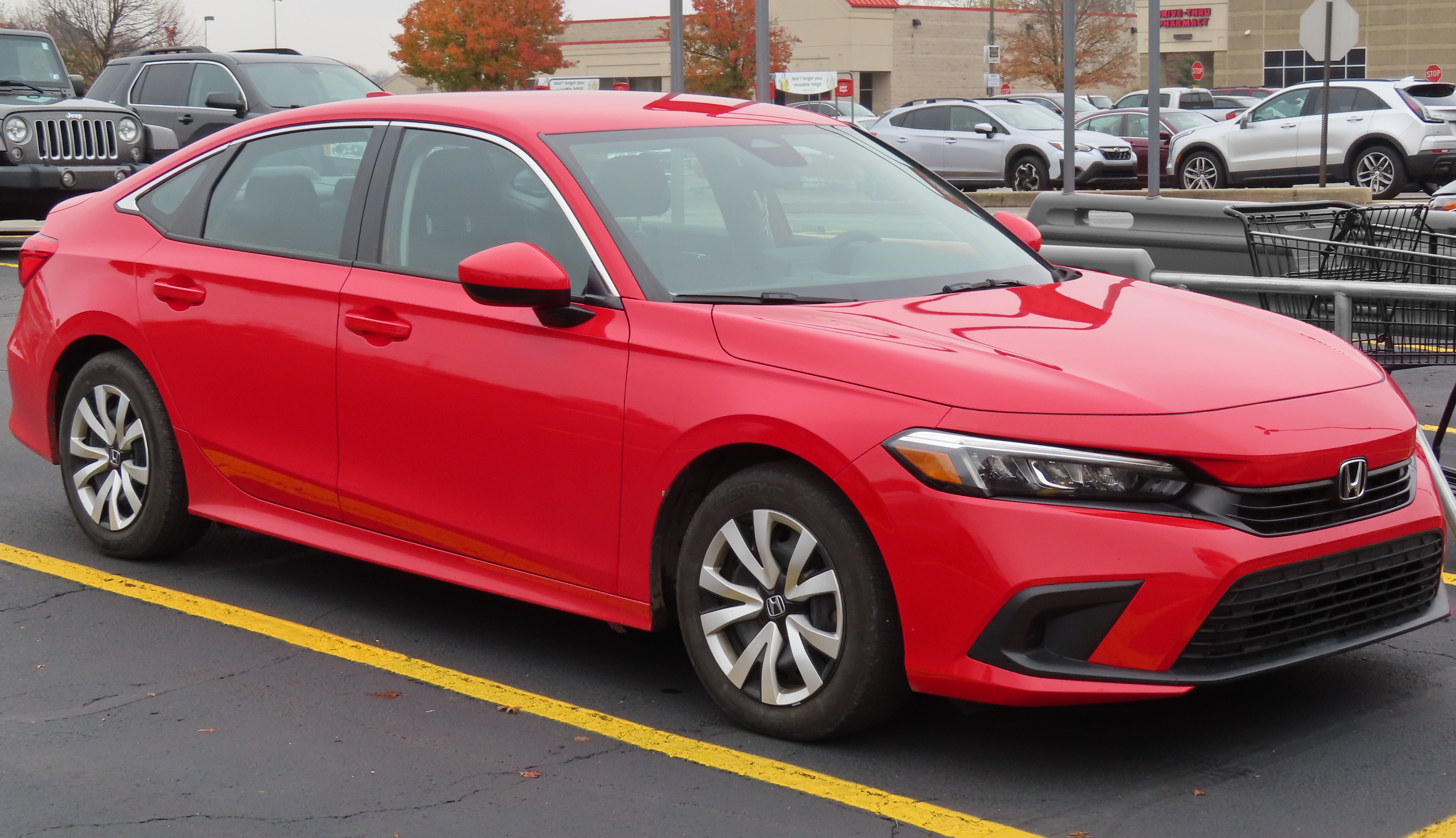
The Honda Civic is a small car that many people like to drive because it's dependable and doesn't use a lot of gas. It's been around for a long time and is often talked about because it's a good option for both new and experienced drivers.
A neutral car is one that feels balanced when turning, meaning it doesn't lean too much to the front or back. This makes it easier to control during turns.
Lift-off oversteer happens when you take your foot off the gas while turning, which can make the back of the car slide out. It's important to be careful with your speed in corners to avoid this.
Lift and turn means taking your foot off the gas while turning the car. This can help the car turn better, but you have to be careful not to lose control.
High speed rear stability is about how well a car stays balanced when going fast. If a car isn't stable, it can lose control and feel like it's going to spin out.
High speed areas are parts of the track where cars go really fast, while low speed areas are where cars need to slow down for tight turns. Cars can feel different in these areas.
Adjustable shocks are parts of a car's suspension that you can change to make the ride feel different. They help the car handle better on the road or track.
Slip angle is how much a car's tires are turned compared to the direction the car is actually going. A little bit of this helps the car turn better without losing control.
The apex is the part of a turn where you want your car to be closest to the inside edge of the road. It's important for going around corners quickly and smoothly.
The Mazda Miata is a small sports car that only fits two people, and it's known for being really fun to drive. People love it because it feels sporty and is usually not too expensive compared to other sports cars.
Endurance racing is when cars race for a long time, sometimes for hours or even days. It's not just about being the fastest; it's about how well the car can keep going without breaking down.
The Oldsmobile Intrigue is a bigger car that was made a while ago, and it was designed to be comfortable for driving around. It's not as common today, but some people talk about it because it was part of a famous car brand that no longer exists.
The Mazda MX-5 Miata is a small sports car that’s really fun to drive. It’s often used in racing events where drivers compete on a small course, making it a great choice for that kind of activity.
Autocross is a type of racing where drivers go through a course marked by cones, one at a time. It’s more about being careful and precise than just going fast, so it’s great for beginners.
Power to weight is a way to measure how fast a car can go based on how much it weighs and how powerful its engine is. If a car is lighter and has a strong engine, it can be quicker and more fun to drive.
iRacing is a video game where you can race cars online against other players. It tries to make the experience feel as real as possible, like driving a real race car.
LIVE
Hi, I'm Scott, and I'm Seth, and we are Track Walking.
This week, Seth isn't going to lag on the audio.
Maybe. Maybe.
And we're going to try to do something that we
have been pretty miserable at this year, I think we can confidently say.
I was just saying, we do encourage people to try things, like really do things they're bad at,
and that's what we're doing tonight.
Yeah, I mean, we've got questions from August.
Oh, wow.
Which I feel like we really should be more timely because, especially in the summer,
at least, because people are like actually out doing racecar things that we might actually
be able to help with.
We didn't do that this year.
People people probably don't even own the cars they were driving when they were like,
oh man, I want to ask out a question.
And no, I've sold that car.
Crap.
Sorry.
That probably should be one of our resolutions for next year.
Like if we have a show resolution, that should probably be one of them.
Just to make time for questions rather than doing all of our shows to the end.
Yeah, yeah.
Also trying to drink tea and I microwaved it for way too long.
It's one of those things where it's too hot, but you want it.
And so you keep trying to drink it.
I can smell how sweet it is.
And I want it in my mouth hole.
So we are rapidly approaching the end of the year.
Let's get in there in a hurry.
This is the to use my grad level nonsensical verbiage.
This is the penultimate weekend.
It's amazing.
Not weekend, penultimate show.
Show, right.
It's kind of because we record on a Monday and then it comes out the next Monday and
there's a weekend involved between that.
Besides maybe a special one that we'll do.
Yeah.
Well, holiday greeting or New Year's greeting.
Or both.
Or both.
So stay tuned.
Who knows what'll come out?
Cause not us.
Yeah.
So we're going to get into it.
These are questions from our discord.
We have officially closed shop on the Facebook group, the track walking chats.
We just weren't hanging out there very much.
And so we closed it because what's the point in having something if you're not going to use it?
Yeah.
We're all the kids are using discord these days.
So it's just.
Like my race car.
Is that sad?
Wow.
Wow.
You're just going to wallow over there or what?
No, I'm also putting together a crate engine for our Sunday cup car, which
is weird for 93 horsepower.
Did you do the, hey Mazda, give me a, give me a motor all shiny and new.
It's very shiny.
Oh, it's amazing how shiny motors are when they're like new, new, right?
Oh my God.
That's good.
That team.
Um, yeah, because we had purchased one, uh, locally, weirdly, uh, car part.
Had one listed local that had 29,000 miles on it.
Um, it's a bit of a weird thing to me because these cars are 12, 13 years old at this point.
And so I just, uh, the price was little high, but it was right across from where I was working.
Low mileage.
All right, let's go.
So, um, we got it.
It's turned out that it had been on the shelf for 10 years.
Did I tell this story before?
I've heard it.
I'm pretty sure the show has heard it.
Yeah.
Yeah.
That didn't, that didn't work out.
So we got some emotional damage from it.
So I can tell you just keep rehashing in your head.
So, well, I, I also, I feel weird about having bought a crate engine for a Mazda too.
You're not that fancy.
I'm genuinely not.
And, but like we kind of did the quick math in terms of like all the new stuff that comes on this engine.
And it's not a terrible deal, especially when you have that Mazda Motorsports.
Discount as well.
And the guy who delivered on the truck was delightful, very helpful.
Wonderful.
And uh, yeah, it's in the garage.
I mean, this is when Chris Taylor was like, no, we just buy new ones.
You should have been like, he's smart.
I should do what he does.
Yeah.
But like they're also racing B specs.
So like there is no horsepower limit.
It's just like run as much power as these things will make and have it be legal sort of thing.
So pardon me.
I was like, ah, we don't need that.
I can use a tired motor.
It'll be fine.
Yeah.
Turns out good tired motors are a bit of a unicorn.
So yeah, they'll be going in here at some point over the holiday.
I hope.
It sounds super fun, especially with how warm I'm sure your garage is currently.
That's the thing, dude.
Everything I touch is so cold.
Like I turn on still that electric heater we've got up there is one of the best things
I've bought for that garage.
And so like I can get it up to 5560 honestly with some layers and stuff moving around.
That's plenty.
But like it warms up to that.
So most of the time it's hanging around 40.
Which means everything made of metal.
Is 40.
Is 40.
Just very cold.
So who was a friend of the show was working on civics on a concrete floor and hadn't was
laying on an electric blanket that I thought.
Yeah.
That was a good idea.
Yeah, so I found out about that a few years back because every time I would lay on the
concrete, I mean, which is I don't know if you knew this attached to the frozen ground.
They're thermally coupled.
Like it gets very cold.
And so I started using those really cheap foam interlocking mats.
Yeah.
And just like put two of those down, you know, protects your head from,
you know, inevitably snapping back and hitting the concrete.
But it also keeps you significantly warmer.
So do that top tip.
Don't land the cold concrete.
I don't have cold concrete here.
I will later, but now it just doesn't exist.
So yeah.
First question.
Yeah, I'm excited because I have like I have no idea what's going on.
I'm going in completely blind.
Yeah.
This is back from August, end of August at least because that makes it better.
Some corners seem to require a lift followed by a confident turn in.
I find it incredibly unnerving to try to turn in without being on the gas or trail breaking.
It feels very wrong, quote unquote.
How can I work through this to determine if I need a setup change or if I just need to get
comfortable with it?
Some corners seem to require a lift followed by a confident turn in.
So it's one of those things where you don't, you can't go into the corner flat,
but you don't need to break.
That's what it sounds like.
Yeah.
But if, so here's, here's where I would start with that is,
um, you know, and he said that he doesn't feel comfortable doing that if he's not on the
gas or doing some sort of trail breaking, something like that.
And that's typically when people talk about doing an early lift to be able to be back to
some sort of throttle by turn in.
Um, you know, that helps the car be more planted, especially in high speed corners,
which, you know, if you're just doing a little bit of a lift or a brief full lift,
something like that, you know, you're, you're moving or you're pretty close to the limit
of the lateral grip, I would assume.
And so getting that done before you turn in and get back to some sort of throttle really
does settle the car down.
Yeah.
I think the question is what feels weird.
Because like you say, if you're, if you're trail breaking the front of the car is more
loaded in the rear of the car is less loaded.
And so you have the dynamics associated with that.
And if you're on the gas, it's the inverse of that.
And I mean, technically, if you're lifting, it's, it's a, not quite like breaking, but
usually the car is a little bit front heavy.
But yeah.
So, so it would be like a neutral car feels weird on turn in.
What do you mean neutral car feels?
Well, so, so that's the thing.
If it's, it sounds to me like they're comfortable going in under braking.
So the front of the car is loaded up or the comfortable going in under accelerating.
So the rear of the car is loaded up.
But neutral is like, I mean, kind of in the middle, like you don't have,
you don't have a front or a rear weight bias due to dynamics.
The car is just how it is.
Yeah.
I would actually argue that it's, especially if you're going into a turn that requires some
sort of a lift, you are actually a little front bias.
Right.
A little bit, but not like your trail breaking.
No, but that little bit is going to make the car want to rotate more than being barely on
throttle, like maintaining speed with throttle sort of thing.
Right.
And I guess if we're talking about a high speed corner, that's where things start to feel weird.
Right.
Yeah.
Yeah.
Because the car is going to want to rotate more at high speeds.
So I think my thought process, you know, kind of as you work into the corner,
you know, would be, you know, how much of a lift, how early do you need it?
You know, the safe thing would be back to some sort of throttle near turn in to settle the car
so that it doesn't want to over rotate.
But if you do too much of a lift or you do it too early, it could also feel like
you're just leaving some entry speed on the table.
Right.
Especially if you have other people around you, if you're wheel to wheel type stuff and
now suddenly everybody puts a car length on you and you're like, wow, I was kind of a bitch and
lifted early and now everybody's past me.
Yeah.
Yeah.
So I think the thing for me in terms of car setup is that if, you know, if turning and
braking at the same point or doing a lift and turn at the same point, there's going to be
some point where you just can't tune that out.
But that is high speed rear stability that you're looking for, that if the car just really
feels like it wants to come around too easily, you know, that's going to be some sort of shock
or arrow thing.
Softer rear, more arrow.
Possibly.
Yeah.
Certainly more arrow.
You know, anything, I mean, arrow works at all speeds, blah, blah, blah.
But really, you know, if you're above 55, 60, you know, that's really where arrow is going to start
to start to do a thing.
So that would kind of be a little bit the easy button.
But I also know this driver and I don't think he has arrow on the car or is a loud arrow on
the car.
I can say there's your problem right there.
So that's the thing when you're setting up a car, like a lot of times you're setting it up to make
the worst part of it better, like the worst part of the track better.
And then you have to drive around something seldom when I've had cars seldom am I totally happy
with the high speed and low speed areas of the car of the track.
And so if I'm on a track that's got a whole bunch of tight low speed stuff, I'm like, all
right, so I'm going to set it up to turn better at lower speeds.
And then when anything that's big, I'm kind of going to pucker and be a little bit scared.
Or I'm going to set it up to be stable at higher speeds.
And then I'm going to accept the fact that the car is going to push a little bit at lower speeds.
Because I've never been in a car.
I was like, you know what, this car does everything well.
Yeah, formally.
Or like, you know, if you need to set up a car to just help give you confidence.
Like if you're, if you're confident that like you can grab a car by the scruff of the neck
and make it work in low speed stuff, almost not regardless of setup, but like you can make it work.
But like the high speed stuff makes you nervous.
Like you could bias it towards being a lot more stable and planted at high speed.
And kind of given up some of that, that low speed stuff.
But I think it'd also depend on what series we're talking about.
I mean, if these are shocks that aren't adjustable, I mean, that's a,
that's a big thing you can't play with.
If you are alignment limited, that's something.
If you have minor aero or not even a loud aero, that's going to be limiting.
So there's, and those are honestly the, for me, kind of fun sandboxes to play in,
because there's just only so much that you can do.
So, yeah.
Did we give an answer there?
Now, I think for me, it would be, it would be playing with the driver first.
Right.
Before messing with the car setup, the timing of the lift, the amount of the lift,
to the timing of getting back to throttle with the amount and timing of steering,
kind of all that stuff.
But intentionally going out there and trying stuff.
Right.
What will work or what are you having to do?
And then one of my favorite questions is, you know, if, if the car,
if you could have the car do one thing better,
or what's the one thing the car, if you could have the car do this one thing better
to help you, what would it be?
Yeah.
Maybe you can't do something about it.
Maybe not.
Yeah.
So, yeah.
Yeah.
Case dependent, but.
We're, we're crap at giving answers.
No wonder we don't do this very often.
I mean, I think we're crap at it.
We give wishy-washy answers.
We're not like two clicks in the rear, go.
Why are drivers so quick to talk about what they're bad at and have such a hard time owning
what they think they're decent or good at?
Seth.
Why do I think that?
Yeah.
Why, why, why do you think that it's the case?
Because the things that you're bad at are the things that you want to fix.
And I think that's, that's true about, I don't think that's just true about racing.
I think that's true about like people in life.
Like we focus on negatives because those are the things
that we think of in our life that we want to fix.
And the things that we're doing well, we don't spend that much time thinking about.
I think it's a deeper psychology than just racing.
So, you think it's more of a, of an attention and kind of emphasis.
That's not that people don't think they're good at things.
It's just that they're so focused on improving
that they are thinking about the things that they want to get better at.
Nobody looks in the mirror and says, you know, this is what's good about me.
Everybody looks in the mirror and goes, uh, this is why I'm gross.
Is that a good thing though?
I mean, no, but I think it's, I think it's pretty natural though that we,
we look at our performance at work.
We look at our relationships.
We look at ourselves in the mirror.
We look at, you know, when we were in school, we looked at,
you look at a report card and nobody sees five A's.
They see the one C.
And I think when we're driving, it's the same way.
It's like, it's, it's the bad stuff that I can't stop dwelling on.
Not the stuff I'm good at.
Stuff I'm good at, whatever, I don't care about that.
What I care about is what I suck at.
Sticks in my head.
I don't think that's great though.
I'm not saying it's good.
Like I don't want to be like that.
I also think there's some protection of looking like,
how do I say this?
So you know how you go around and especially when you first start driving,
you're like, I'm so fast.
I'm doing so well.
And then you kind of get humbled somewhere along that path.
I think we're protecting ourselves from being humbled.
Because if we say what we're good at, even if it's something that,
you know, still needs to be improved on,
but something that like drivers feel like they do well,
that they can't say that out loud because somebody's going to blow them out of the water
and then they'll feel bad.
So we're protecting that, that thing we're good at?
I think we're just protecting ego.
I don't know if it's the thing we're good at,
but like, I feel like I'm good in the rain,
but I've been absolutely curb stomped in the rain as well.
I'm replaying a series of corners right now at Audubon and qualifying
and like I qualified sixth.
Sounds good.
And I think two or three of the drivers who got by me
were in the last two laps when it was starting to dry up.
So like I felt pretty good about what I had done,
but I also followed one of the other very fast GLTC drivers in the wet.
And in the course of three corners found were a second and a half.
Well, it's just, so I'm just like, yeah, I feel like I'm decent at it.
I'm not the best.
Right.
Yeah.
So I don't know.
I don't know why we can't say this is what I feel like I'm pretty good at.
But I'd like to be better.
Like I don't, I don't know why it's so hard to say that
because every classroom session Seth and like,
even with clients and people like they will tell you what they think they need to be better at.
But if you ask them what they feel like they're good at,
man, that is an uncomfortable question.
You just see them like kind of shift in their, in the chair, like shift posture and just, well,
I don't know.
Maybe we're not good at anything.
I mean, but what's the measure, right?
Right.
Measure has to be like how you feel about yourself.
Yeah.
And what metric you're using.
Like if you're just trying to look at what everyone else is doing and compare yourself to that,
that's going to be a bad time.
Yeah.
It was my, it was climbing with my, my youngest kid and he went to the gym the other evening
and it was like, I'm not going climbing in the evening and he got back and he said,
it was super, super weird because he was of the, what are it?
Six, eight young men who are climbing bouldering at the time.
He's like, I was the strongest climber there.
I climbed the hardest routes, I was showing people what to do and he's like,
it was really, really weird and I felt uncomfortable.
And there's something to be said about that as well, to show up and be like,
the guy who's good at it and be like, oh man, if I'm the guy who's good at it here, we're all in
trouble.
Yeah, it's kind of when somebody jokingly says, you know, I just want to be like you
and my line always is aim higher.
Exactly.
It's like, I know too much about myself or you don't know enough about me.
One of the two, but yeah.
Yeah.
Yeah.
Next, how should one or how do you prepare for and structure a weekend of self-coaching or
setup in a HPD or competition environment?
Any helpful aids for planning and documenting?
This is, I feel like this is you, like people pay you to do this.
Holy crap.
How should one prepare for and structure a week of self-coaching or setup?
I think the metrics are going to be important,
you know, because if you're going to try to get better and, you know, he was talking about
self-coaching specifically, so evaluating yourself, which I think you and I have
both largely come to the conclusion that we lie to ourselves very well.
Which the first thing is like you're a liar, you have to have data.
Yes.
Some sort of data, which can be video in my world and my mind video is data.
It's just a different form of data.
Hopefully both, both would be better.
In terms of the self-coaching part.
And then I would almost, this might actually flow from this.
The last question is going in like, what do you want to improve on?
Like going to the track and especially if you're doing it by yourself or you're with
some friends, I kind of going into the weekend with an idea of what you would like to work on
would be big.
So you can kind of focus your energy and looking at your data and video and everything like that
can really kind of hone in on the few specific things that relates to that.
So whether it's, you know, end of your acceleration zones, how quickly you can get to the brakes and
how forceful, you know, the duration that you hold the brake for, its peak, steering speed,
head, eye movement, like whatever it is, like gear your data around that.
Does that make, does that make sense?
It does because I think too many people show up and they're like, I would like a faster lap time.
Yes.
And that's way too vague for a testing type weekend, testing self-coaching type weekend.
Like I think lap times are a useful metric to see if what you're working on is effective.
But sometimes even sector times are more important than that, like the,
like where you're picking up if you can do the difference in speed or difference in speed and
time type traces. But yeah, I think just like using a lap time to judge things is,
now using a lap times to judge things is okay. Using a lap time as a goal is not a good coaching
metric. Sure. Well, I think even using it as a metric, it's too general. It's too big.
Yeah. Like you could have added 20 horsepower to your car and that's what did it.
And you could have just driven worse.
Temperature difference.
Right. Exactly.
Yeah. Yeah.
So yeah, I think having the data and then I think as in general drivers are weak at documenting
a particular session or race or even a weekend looking at a kind of big picture.
Not only like, how did you sleep? How did you eat that day or before this particular event?
What were you going into it to work on? If it was car placement, if it was this one or two
corners specifically, or if it was awareness or one particular skill, you know, writing that down
and then how did it go? You know, I was able to work on this, but in this other area,
I found that I couldn't really feel what I was doing or how I was changing things.
So I need to figure out next time why I'm having some sort of a bandwidth limitation there.
Like why can't I recall and have a sense of what's going on?
Something like that. It's almost, it would almost be like a session or race journal.
I know people who do that. Motorcycle guys who do that and it always struck me as odd
only because I processed through talking. So even like, if I'm really working on something,
I need somebody to talk to about it. Even if they're not there with me, if they're just at the track,
if it's somebody I know, I will find you and I will talk to you about what I'm doing and it has
nothing to do with you. It's all about me trying to organize my thoughts out loud so that I can
think about them better. You're just going to talk at them? Yeah, because I need that to organize
my thoughts to sort of bullet point them and get them together. It helps if the other person
actually knows or cares what I'm talking about. So it's a two-way discussion, but it's not necessary.
Right. Yeah. So what do we decide? Data, goals, like something measurable, but not something too
general, something that, uh, yeah, lap time isn't a goal. And then some sort of way to log
more minute, like per session, what are you going to try to do? What did you accomplish
at the end of it? And that can flow right into the next session. All right. So that didn't work.
I'm going to try this, or I'm just going to change focus, getting frustrated with concentrating on
these one or two things. I'm just going to work on, uh, the sounds of the car,
like the tire sounds and sounds of running over curbs and stuff like that, whatever it is, but
really documenting that. And I think that also helps, um, helps you stick to something.
You know, if you write something down that you've thought about,
it helps you to recall it. It helps you to remember it. Kind of makes it more permanent.
So what do you think about, um, so when we did motorcycles, we used to play a game called, uh,
knees on every curb. And so it's not the fastest way around the track necessarily just because
of corner things, but we would make, like, we would spend a bunch of time going, okay,
make sure your knee puck hits the curbing every time you go through an apex.
Doesn't matter if it's the fastest way or not. And it was just a way to,
like, understand where you are spatially. Um, what do you think about doing things like that?
Be like, all right, like, let your front tires clip the curb. See what that feels like,
like specifically, doesn't matter if it's the fastest way through the corner,
just, just tap it. Just, just a little tippy tap. Make sure you feel it.
It's, do you, do you remember that old movie driven with Sylvester Stallone?
Yeah. Where he put, where he sucks the quarter of the track.
Yes. This, this is what you're reminding me of that right now. Yeah. Yeah. Where you,
you know, you put the, the quarters out and you have to catch them with only the rear tires,
not the front ones. Right. So the idea is you've got just a little bit of slip angle,
but not too much. And you know, everybody kind of rolled their eyes and, you know,
indie cars doing that sort of thing. But like, I, I don't know. I, I don't think it was,
I think I get the idea behind it. And like you said, it was kind of bringing
your mind back to a very concrete focus and task at hand and something that you probably
don't do often. So it takes extra thought. Right. So go, go be like Sylvester Stallone.
Yeah, absolutely. Get a roll of quarters. Have a good time. Yeah.
Yeah. Self coaching or set up, set up, I think would be very similar.
Yeah. Documenting is really, really important. Like document your changes and how they made you
feel. And I think, I think giving yourself some license to try things, try things that you
maybe don't think would work or like, no, that's too big of a change. Well, maybe,
but like give it a shot. Or if you're working on, you know, self coaching,
go, go drive a corner so differently, like just, you know, the entire lap drive around on the
left hand side, you know, just do, try to break yourself out sometimes. If you're in a rut,
you can just try something, I don't want to say off the wall, but try something that brings you back
into what you're doing presently. And if nothing else kind of along the same line, so like just
think about car placement, like where do you want to put the car? Like not necessarily how
you're driving, but like, Oh, I want the car to be out there. How can I get it there?
So I think the, God, I would love to have somebody I really trust to do side by side
drills like you lap after lap, side by side. Yeah. I mean, we've done that on bikes a lot,
but to do that in, in cars, I think would be great. If I could really trust somebody to not
ding me, it'd be fun. Yeah. Yeah. I've done it a couple times,
like in practice and stuff. And it's,
I would like to do it more. I would like to do it more because it's fun and it is difficult.
I think simmer racing would probably be a good place to, to do it because you don't have the,
you don't have the physical sensation. So all you have are whatever audio is getting fed to you.
And largely you can't like, you can't really see a whole lot. Like if they're just behind you along
the sides, right? You know, unless you're one of those people with great GPUs and you've got your
side mirrors on all the time, but yeah, you could do that too. All right. Next one.
What's everyone's best way to still see your braking zone while following someone super close?
Or, or sorry, and how do you avoid someone checking up earlier than you do and hitting them?
In iRacing, I end up either popping out so I don't hit them or breaking earlier than I usually do
just in case. I don't have an answer for this one in a car. I've never driven
close enough to people in cars to have this be an issue. What's it, so what would you do in
motorcycles when you're following someone super close? I assume you offset just a little bit?
Offset a little bit, but it also depends on whether or not you trust them.
If I don't trust somebody, I will always, like if I, if I'm that close, I can't pass them going
into the corner, right? Like, like I know I can't pass you going into a corner if I'm not offset
anyway. And so I'm not going to take a risk on corner entry where there's no, there's no way for
me to really gain. Like all there is, if I'm, you know, whatever 14 inches off your back tire
into a braking zone, all I'm doing is making it dangerous for both of us.
So I either offset us to make sure there's nothing that's going to happen or I back off
early enough and try to get a little more roll speed on entry unless I trust you, like genuinely
know you and trust you. I follow my daughter and like that, I have a couple people I race with
that I will follow them in with, you know, six or eight inches of rear wheel overlap,
just offset them into a braking zone, knowing full well if they hit the brakes early, I am
going to hit them. But I also know that they're not going to hit the brakes early because I've
done enough laps with them. Right. Um, but in cars are so big, cars are so big. Well, I think trust
is, is the big one, right? Like if you're jumping into a random I racing lobby or even an official
race and you don't know the people around you, man, yeah, there's a level of trust there that
trust for consistency that you're, you're going into something. Um, so just to talk about the real
simple basic math and physics of it. Um, if you break at the same time as the car in front of you,
the gap will stay the same. So there will be no shrinking of the gap, no extending of the gap.
If you both hit the brakes at the same time and with the same pressure, you will maintain that gap.
Now, so that to interrupt you, that fundamentally means that you're breaking one car length earlier
than the car in front of you. We're going to get there, but exactly. That's, that's where it becomes
difficult as the trailing car. Um, but if you are following and you hit the brakes a fraction later,
even at the same pressure, that gap is going to close. And so it becomes a timing issue
that if you are planning on trying to close up a gap, like if you have enough of a gap between you
in the front and the car in front, you can break a fuzz later than the car in front of you.
Um, or you can try to break at your normal place as long as you have that gap,
but otherwise you have to break earlier. Um, in order to keep a gap, especially if you're right
behind them. Now, in terms of like a passing opportunity, if you know that you're faster
in the corner at min speed or you're better on rotation, something like that, you really don't
want to be right on their bumper because you can't roll that extra speed when you are right on their
butt. They are dictating your minimum speed. You can't go faster than them unless you want to punt
them, which isn't very fun to be honest. I mean, sometimes it is a therapy jerk, but
I mean, you might want to punt them. Yeah. Yeah. But
so you keep that in mind. Like if you're intent on trying to pass in this corner, you need more
of a gap to allow your car to take a set and do the rotation much better than being right on their
bumper and just kind of being limited by what the car in front of you is doing.
Um, on the other hand, if you're content with following that car,
genuinely, generally you can at the end of the straightaway just breathe off the throttle just
a little bit to give you just a little bit of a gap because not everyone's like inch perfect every
single lap, but hopefully you've been following them for just long enough that you know about where
to expect them to start braking and continue on.
For me, it also comes back to vision. I'm going to, I've got like two more points and then I'll
toss it back to you. Okay. Um, braking markers are the second worst reference point on a racetrack
sec can only to cones because in general, braking markers are on the outside of the corner.
And if you're looking at the braking markers or even focused on them, your focus is not what's
coming up. It is on exactly where you are and you're already behind. So without going into
like the nitty-gritty details of how our eyeballs work. Um, when we say look ahead, I don't think
we talk enough about looking up and I'm not just talking like at the track level, like even if
you're looking, you know, to the exit when you're at the entry, something like that. I'm talking
about like looking higher than that at the horizon. Um, or even like at the tops of some
distant trees or something like that, because we can really pick up what's underneath there
with a great amount of detail, but we've got to be able to use it. So where our eyes are looking
and what kind of vision we're using, um, becomes really a big deal, especially when you're
following a bigger car and all you can see is like trunk. Uh, it's very difficult unless you get
your eyes to the exit and high up. And then all of a sudden you still have your reference points.
You still kind of know where you are. So you're not just waiting for them to make a move.
You know, re, reactivity and breaking zones is not great. It's not a strategy.
Um, but yeah, and I think finally, like Seth said, that since if you are going to follow
into a corner closely with the intent on following, it is difficult because your car
will naturally want to rotate earlier in the corner than the car in front of you because
of where you started breaking. So how you use your brake pedal is going to be a little bit different.
Uh, you're going to obviously want to take still the same amount of initial brake as the car in
front of you, but you're going to probably be able to lift a little sooner off the brake and get back
to throttle a little bit earlier in the distance of the corner to match the car in front of you.
And that is difficult because as long as the car in front has clear kind of clear air, so to speak,
they're going to be doing things exactly where they want to. And you've got to kind of figure it
out a little bit, which is why you see a lot of cars who are following right on somebody's bumper
doing ever so slightly later turn in to a later apex because they're breaking earlier.
And so just allowing the car to fade out just a little bit sooner and then come over
because that's where their car is naturally going to want to rotate more.
And so just have to change things up just a little bit.
So I want to come up with two scenarios here because you've been talking a lot
about like I'm going to follow somebody through a corner. So the other two scenarios are I would
like to gain distance entering a corner or gain distance exiting a corner.
Okay. So gaining distance entering a corner you have to have offset.
Like you're going to try to close up to the car in front of you?
Yeah, let's say we're pretty close to the car in front of us and I may want to try a pass going
into a corner. So I have to have offset on that car or I think I'm going to be able to gain on
them. Like even if I'm not going to actually be able to pass them going in, I'm at least going
to be able to slightly overlap them going in. So I have to have some offset on the car because
otherwise we'll physically be in the same space. So that's something to know, right?
Yeah, and something to communicate as well, especially in real life because we can't reset
like we can in a sim racing world. But yeah, kind of announcing your presence and that's
least like showing them a headlight. You know, half a car, something like that. Just
let them know that you are there and that you're thinking about maybe doing a thing.
I think, you know, as long as it's a long enough braking zone, I'm okay with like
staying just a fuzz offset but behind and then jumping out as you go to the brake
because you'd have a far enough distance and a long enough time for both drivers to adjust
their turn in points. But if you're starting to create a racing scenario where you're thinking
about a pass and you're right about at the turn in point or like as somebody's rolling off of the
brake, that's not a place to start doing something. Okay. So my other scenario is I want to get a jump
on them coming out of the corner. It seems to me if you're going to do that, you need,
this is what I do on bikes. If I'm going to do that, I know I have some advantage.
I have a corner speed advantage. I have an acceleration advantage, mid-corner, that kind of
thing. In order to take advantage of that, I actually have to create space going into the
corner. Like I actually have to be farther away from them going into the corner so that when
that space, because that space will contract with me having a higher speed, but it will
contract mid-corner or towards the exit. Right. Which is so hard as competitive people,
like to give a car more distance. Right. And so learning, that was one of the things I learned
in endurance racing because I got to try it over and over and over with people that I couldn't,
that I was bad at passing. So you get to try it and you get to try it and you get to try it until
you finally figure out how to do something that works. But learning what is the appropriate
amount of space to give them on a straightaway such that you can make that space contraction
happen where you want it to happen is a really interesting thing to learn.
Yes. And difficult. I mean, it's a bit of a skill to judge speed and distance
actively. It's something that I play this little game on highways or like just normal
two lane roads. If I've got the cruise control on and I'm coming up behind a car that's going
slower than me, I will try to guess before I slow down how much slower they're going than I am
to see if I can judge closing speed or was it closing and I forget the visual terms.
But yeah, either a car that's faster than me or slower than me, how much faster. And
the difference between two and four miles an hour is actually bigger than you think
if you get to kind of become familiar with it. And four miles an hour difference in a corner
is a lot. Two miles an hour is pretty good still too. But if you kind of experience that with
both cars moving down a highway, something like that, like two miles an hour in a race
corner is a lot. But on the highway, it's very different to try to figure out. But that's where
that experience kind of comes in as you know, based on what I've seen the last lap or the
last couple laps following this car, I think I need about four car lengths before they hit the
brakes to be able to close in under braking, but not be all the way on their bumper until
we are already exiting the corner on throttle. And I've done a slightly later apex than them.
Or I've cheated them enough in that they're exiting super narrow, something like that.
It's a difficult one because you have to give up something in order to gain more.
Right. And it's, you know, to ask sprint racers to be patient sometimes is a is a task.
Be like, look, you got four whole laps. Relax. Yep. Yep.
Last one for tonight, I think. I guess this one's to me
with the Miata probably out of the picture is Scott Day dreaming about driving anything else
next year in between coaching gigs, whether it's something accessible, aspirational pipe dream,
what sounds fun. I know what I want you to say, but we'll we'll see where this goes.
Oh, I kind of want you to start. Why don't you start and I'll explain why here in a second.
I want your aspiration for next year
to do long endurance stints in anything that's not bad.
Sure. Okay. Because I think you'll get frustrated in a bad car. There's definitely
people out there racing lemons racing cars that are just bad. And I think you would just hate
that. There's cars that aren't fast but are still good. Yes. And I would I would love to see
how your brain works spending an hour or an hour and 20 minutes lapping in traffic
in a car that's pretty good. I think it would give you a huge amount of things to think about,
a huge amount of things to try a lot of long lengthy opportunities to try those things.
And I think it would make you very tired and that would be entertaining. Yes.
I almost guarantee you would. Yeah, I am intrigued with endurance racing. I think the longest I've
driven on track is 30, 35 minutes at a time, which sitting next to Mr. Six Hour Enduro
over here is, you know, just warming up at that point. Yeah. Yeah, endurance does
intrigue me not only for the long stints but also the teamwork aspect.
That is kind of exciting, kind of cool. So I am going to try to take an opportunity or two
to do that next year. You know, the one lap trying hard was kind of an almost an easy goal
this past year. It was just kind of the next I felt like evolution of our time in the one lap.
And so in terms of like a competitive event to do, I don't know.
Hill climbs are intriguing to me, but the inherent risk that goes along with those
right and, you know, kind of short, short run sort of thing. I'm not, I'm not entirely sure.
Honestly, doing some autocrosses in the Miata might be pretty silly, stupid and very fun at the
same time. So I mean that maybe, but I think where I am now with the Miata is I kind of know that
I'm, again, until it sells, I'm going to be continuing to work on it and drive it and stuff
like that. But I think my competitive time with it is largely over. And I don't know
what car I would have, like what car I would want to own that's next, except that I'm intrigued by
things that are faster. I was going to ask you if you're, if we're not talking about money here,
because money, I mean, money's always an issue. Like it, it doesn't. But I mean,
if somebody, somehow you had an opportunity to have something with 800 horsepower in it.
I think that's too much. That's too much. That's a lot. Now don't get me wrong. I would drive the
hell out of something that had that, but in terms of me owning it, I think that's a bit much. Okay.
Um, now honestly, like thinking of, um, something like the, the Cardinal coupe
in terms of power to weight, like something that weighs 2,000 pounds, 2200 pounds with 400 horsepower,
it bookies like it is righteously good fun. Um, and so kind of the class like that,
power to weight class range of cars and stuff like that, um, is intriguing to me, but
because I'm not done driving competitively, I would need a place to go be competitive with it.
Right. And so what I'm trying to figure out first is like, what, where do I want to go compete?
And then based on that, pick the car, which is opposite of what I did last time, right? It's
like, I picked the cars emotionally invested in, and then I figured out something to do with it.
But if kind of as I've learned, like it can be a lot quicker and cheaper,
if you figure out what you want to do and you get a better fit for whatever that class or series is.
Do you have any interest in open wheel cars, formula Mazda or some of the older series?
Yes. I feel like I might get ruined, um, but yes. And yeah.
Do you just let you would like to experience what those, what it means to be in a car like that or?
Yeah. And again, as I don't think that iRacing like can equate it necessarily to the
visceralness, visceralness did, I guess that's a word now. Sure it is.
In real life, but some of my favorite cars in iRacing are formula cars.
Um, they're very lively. They're, they do have just a little bit of slip in them,
depending on which one. Um, I, they're, it can be good.
Um, so that's not off the table, but that would be a whole ass race car if I was going to go open
wheel because that, that's also would limit my, uh, practice time and right because most HPD
organizations do not allow formula cars as well. They shouldn't, they shouldn't be out playing with
with full size cars. Um, so yeah, I would have to be a lot more intentional about seeking out those
and then the, the competition that almost dives into, I feel like the whole motorcycle thing of like
you know, you never want to touch anybody in a normal car, but like you really don't want to
touch somebody in a four-wheel car. Right. Um, yeah. So I don't know is kind of the answer, but I'm
gonna, uh, gonna try to get in some different paddocks this next year, coaching and driving.
And, um, honestly, like maybe I should lean into the, if you want to toss me your keys for a whole,
uh, a session promise I'll be gentle. Um, but yeah, getting to experience more cars,
I think would always be a good time.
And maybe you don't know what you want until you, until you taste it. I think so. Yeah. So
yeah, but right now I'm kind of living vicariously through a Sunday cup car and
helping get it ready and making it as good as I can sort of thing.
You love it. But vicariousness only goes so far for me. Yeah. It's like, I do get a lot of pleasure
out of it, but I still need to get in and flex my driving muscles every so often.
So yeah, we did it. Hey, we answered questions. Yeah, we're actually up to date.
Ask us more questions so that we can ignore them for a while. Yeah. Yeah, that would help. And maybe
since we answered some, that'll be incentive that, Hey, promise we'll actually do this.
So, uh, well, we are at track walking podcast on Facebook and Instagram discord
is where we go to hang out and you can ask questions and that sort of thing. It's also the,
uh, uh, part of the larger Robertson racing discord. So if you, um, you know, if you're
doing driving or your car curious, or you just like the culture, you know,
come and hang out and we'll, uh, we'll talk about all things cars and food and, you know,
I think the topic of the thread right now is what are you doing besides our instead of working on
your car? Um, looks like a lot of baking and making food right now. Yeah, it's a good time
here for that. It is. So, uh, thanks for listening and thanks for your questions. Um,
they'll do it for us this week. I'm Scott and I'm Seth. We'll talk to you next week.
About this episode
Listener questions take center stage as Scott and Seth tackle inquiries from their Discord community. They reflect on their struggles with timely responses and share personal anecdotes about car setup and driving techniques. The duo discusses the nuances of cornering, braking strategies, and the psychology behind drivers' self-assessments. They also explore the importance of data and documentation for self-coaching during track weekends. The episode wraps up with thoughts on future driving aspirations, including endurance racing and open-wheel cars, making for an engaging and relatable conversation for motorsport enthusiasts.