The global MX-5 Cup is a racing series where drivers compete using Mazda MX-5 cars. It's a way for drivers to show their skills and potentially earn prizes.
NASA beginner weekends are special events where new drivers can learn how to drive on a racetrack safely. It's a chance to practice driving without worrying about racing against others.
The Lotus Elise is a small, lightweight sports car that is very fun to drive. It's designed to be quick and nimble, making it great for racing or just enjoying the road.
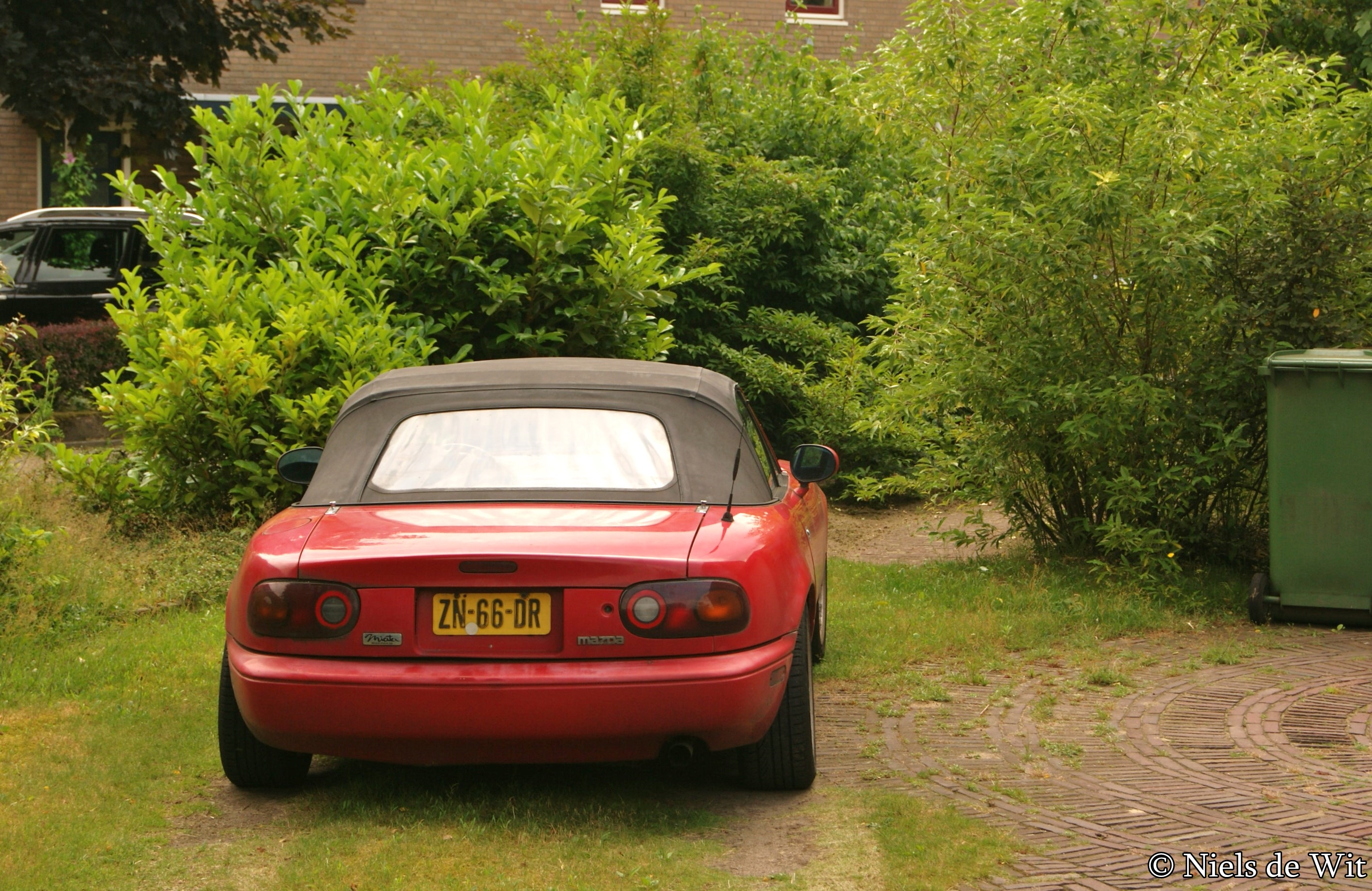
The Mazda MX-5 Miata is a small sports car that is very fun to drive. Many people love it for its light weight and good handling, making it a great choice for racing on tracks.
The Chrysler Crossfire is a sporty car that was made a few years ago. While it looks cool, some people think it doesn't handle as well as other sports cars.
Beginner track days are special events where new drivers can practice driving on a racetrack. It's a safe place to learn how to handle a car better and have fun without worrying about traffic.
Harnesses are special seat belts used in race cars to keep drivers safe. They hold you in your seat tightly, especially when going fast or turning sharply.
A bucket seat is a special kind of car seat that hugs you more tightly, helping you stay in place while driving fast or making sharp turns. They're common in race cars.
Coilovers are special parts that help control how a car rides and handles. They can be adjusted to make the car sit lower or higher, which can make it handle better when driving fast.
One Lap of America is a car event where drivers race their cars on different tracks across the country. They drive from one track to another and try to get the fastest time overall.
Autocross is a type of car racing where you drive through a course marked by cones, usually one car at a time. It's more about skill and control than speed, and it's a fun way to enjoy your car.
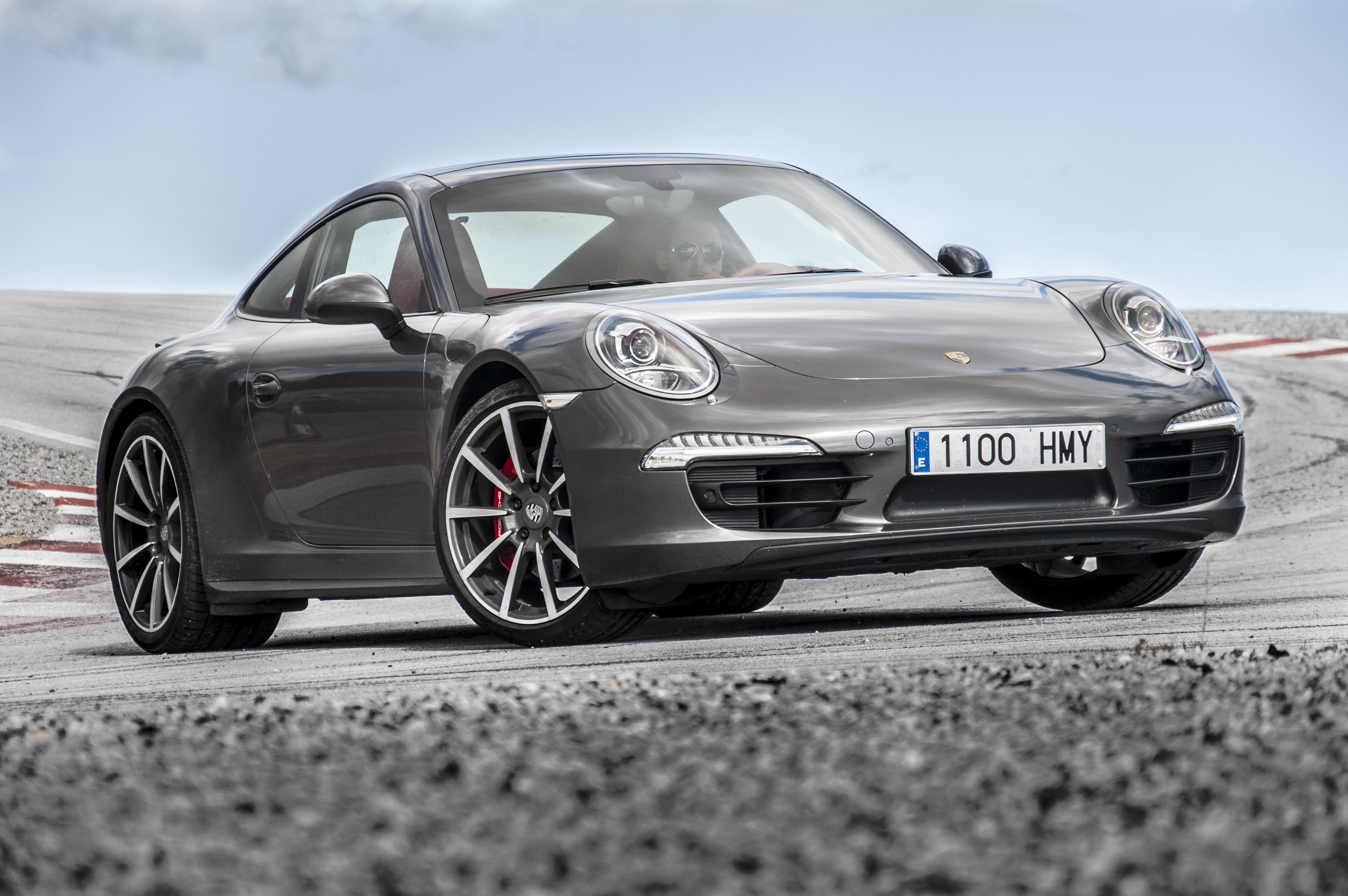
The Porsche 911 is a famous sports car that has been around for many years. It's known for its unique shape and powerful performance, making it a favorite among car enthusiasts.
Rally cars are cars made for racing on different types of roads, like dirt or snow. They are built to be fast and tough, so they can handle rough conditions.
The C8 Corvette is a sports car made by Chevrolet that has its engine in the middle, which helps it handle better on the road. It's designed for speed and performance, making it a popular choice among car enthusiasts.
Drifting is when a car slides sideways while going around a turn. Drivers do this on purpose to show off their skills, and it's a big part of some racing events.
Yaw is when a car turns left or right while moving forward. It's important for drivers to control this movement to keep the car stable, especially in racing or drifting.
The Mazda MX-5 is a small sports car that is fun to drive and easy to handle. It's known for being light and responsive, making it a favorite among car enthusiasts and racers.
LIVE
Hi, I'm Scott, and I'm Seth, and we are Track Walking.
Tonight we talk about food, but maybe not food that you eat, or maybe food that you do, I don't know.
We're doing a food for the soul thing, is that what we're doing?
You remember those books like that?
Yeah, like Chicken Soup for the Soul, Chicken Soup for the Teenage Soul, Chicken Soup for the Old Lady Soul.
A deep memory. I remember my head would have been my mom, bought me the Chicken Soup for the Teenage Soul when I was in high school, like early high school.
I remember reading in, I don't know, parts of it were okay. I don't remember much of it now.
Did your soul feel fed?
Who knows what a 15-year-old soul really wants at the time. It's very wispy in here and there, I guess.
My best friend in high school, his mom was super into those, and so they were on the bookshelf, and I never read any of them.
Yeah, it was a little too popular for my taste even back then.
They needed like a Chicken Soup for the Punk Rock Soul. They needed something that was edgy.
Yeah, it couldn't have been Chicken Soup though.
Like Borscht?
Good Lord. I was thinking like Chicken Chili or something like that.
Yeah.
Wait, Chicken Chili? I don't know.
Anyway, you're in the middle of moving, which is a wild time in your life.
It is. It is shocking when you take everything that you own and put it in the middle of your living spaces.
And so, you know, my attics are empty, my closets are empty, my kitchen cupboards are empty, but nothing else is empty.
Everything is full of all that stuff.
Yeah, you guys have been there for 18 years?
25 years.
I was wrong.
Tell me about the stuff that you've accrued over 25 years and having to sort through that.
I can't really even get into my stuff yet because I haven't really begun to touch my stuff because this is a two-stage move.
The stuff is my wife's stuff.
The, what I'd call the community stuff, like the kitchen, you know, the stuff that's ours, stuff in the living room, stuff in the kitchen.
And my kids' stuff, the two kids that are the younger kids still had their own bedrooms and stuff in their bedrooms.
And I was talking to my youngest son today and he said, the biggest problem is we've never moved before.
Yes.
He's like, there's no reason I should be pulling out stuff from fourth grade.
He said, the only reason I still have stuff from fourth grade is because I've never had to throw it away before.
I could just tuck it in a corner.
And he said, we've never gone through an event that would require me to do the stuff I'm doing now.
He said, if we moved every five years, I would only have five years with the stuff right now and that would be totally reasonable.
But I have my entire lifetime worth of stuff and that's unreasonable.
So he's, he's the kind of kid who will just, is not very sentimental.
He'll just get rid of stuff on command.
Yeah.
He's, he's pretty, he'll look at it and remember and let it go.
And really only one of my kids is quite sentimental and she's having a hard time with it.
But I don't know, like you might, well, one of my kids and my wife, I mean, my wife just got rid of her, her running trophies from high school.
And like her scrapbooks, I think she kept her scrapbook.
She still has.
Still fits her because she was one of those, one of those lovely young women who grew to adult size when she was in like seventh grade and then stopped.
Just a tiny person she is.
Yeah.
And because I was the first kid who left home and my parents were super hyped about that, finally having a child leave home.
I paired my belongings down to like a shoebox and the stuff I took to college with me.
So I don't have anything from my youth.
I just have stuff from like the last 25 years to deal with, which when I get into the garage will be a lot, like a lot of a lot.
Yeah, I've, we've now lived in this house longer than I've lived anywhere since I moved out of my parents' house for college and hearing your stories and kind of like looking around.
I'm like, I feel like we've probably accrued a lot in the last five years, certainly in the garage.
The garage has gotten real dumb.
Is you have stuff like you, you could be like, Oh, this is stuff from the first year we lived here.
You know, this stuff came in with us, but there's stuff from that we acquired in the first year and in the second year and in the third year, fourth year, this year, there'll be stuff from next year.
And you realize like, no matter how hard you try every year is a little bit more.
It's like geology and we're just like throwing a little bit, a little bit of sediment on top and it's going to, going to turn into a rock.
The thing I need to resolve to do this year is I need to sell the stupid Sims monitors.
I need to get those out of my life because they're so big and they take up so much space.
The, so, and again, like this, the stupid Simrig came with three 55 inch plasmas.
And so all three of the roadie boxes that each one came in is easily five feet long, four feet high and like almost a foot thick.
And I've got three of them plus the two stands that hold the flanking ones, right, which are six and a half feet tall.
And then they've got a platform that's like three feet by three feet.
It's, it's so dumb.
It's so dumb.
Someone who's listening to the show needs enormous monitors.
And I will make a great deal on a triple set of 55 inch plasmas.
Bring a trailer because it will be a thing.
I know that they fit in the van, but you would need something or a pickup truck.
You would need something tall.
You may not be able to close the tailgate on a short bed truck though.
Oh, short bed.
You'd have to bungee the hell out of stuff, but I believe, I believe in some people.
So big.
The show's just going to turn into me selling crap soon.
I know.
Bye.
Bye, my things.
No, that's what's going to happen when, when I've moved my wife to Colorado and I'm back here and I'm faced with the reality of all the stuff that I need to get rid of.
It'll be every Facebook marketplace.
Yeah.
What's my priority to sell this week on track walking sponsored?
I mean, sponsored by let's go.
Let's do it.
Yeah.
I sat down last night, starting to look at the coaching calendar for this year and joyfully, it's looking thick.
And yeah, I need to, I need to start getting this stuff figured out in terms of where I'm going to be when and all that good stuff.
It's a good problem to have.
Nobody knows what, what enough is until they've discovered what too much is.
And I'm excited for you to see if you're there.
We're going to learn.
We're going to learn today.
So I don't remember moving on to the topic of the show.
We should do that eventually.
I don't remember where I came across this quote.
It was something over the past several months.
I hear something or I get an idea and I write it down and often times I forget where it came from, but I wrote it down.
So I remember what it is.
That's something.
So here's the quote we want to talk about today.
The same water that softens potatoes hardens eggs.
The same water that softens potatoes hardens eggs.
I found that to be interesting.
I mean, I guess you could talk about cooking because boiling water, well for noodles softens them.
Rice softens it.
I think for eggs and potatoes though, it's the most, when I was actually thinking of food, the most interesting thing about that is raw potatoes aren't really edible.
They need to be cooked to make them, you know, everything bio available and digestible and not make you sick.
Ooh, you already went deep with it.
Raw eggs are the same in general, which is like you can eat a raw egg, but you're statistically trying to wait until how many of those you eat before you get salmonella and like get sick doing it.
So even though the water is changing both of them in different directions, it is making them safe and available.
So that's where this whole phrase breaks down and you're like, well, then it's all the same thing, man.
But I don't think it's literally talking about potatoes and eggs.
Well, no, I mean, if we know anything about this show and you and I, it's like, no, it's not.
Um, yeah, that's, yeah, that's interesting.
Like looking at it from the really like wide, wide open picture about preparation, I guess, or we could go to like training and learning and stuff like that.
But like taking one thing and making it something else is kind of what we're talking about.
I mean, I do have another interpretation of it.
Okay.
And that was more, that was in reference to the hardening and softening.
And so you're changing, you take the same, the same experience boiling water and you create different changes.
Right.
And the best way I thought about that is you can have somebody early in their driving career who experiences like a blown motor.
They hit a wall, they do something like that.
Two people who do that.
One person will, will double down on racing, fix new motor in the car, fix it.
You know, like this hardship is part of racing.
It's what I love.
It's great.
A totally other person will be like, this just ruined it for me.
Like I can't, I cannot psychologically go racing knowing that the level of tragedy I've just gone through could happen to me anytime.
And so they fix the car, they sell the car and they go watch football and do reasonable things with their lives rather than race cars.
But it's the same thing.
Like they both experienced the same, you know, the same, I don't know, a tragedy hardship.
Like, like the same experience can have two drastically different outcomes in racing.
Yeah, which, you know, we see after tragedy, you know, how people mourn, how people deal with loss.
You know, I mean, we've, we've got catchphrases for it that people handle these things differently, right?
Yeah.
But yeah, I was thinking about it in terms of driving and the first, the first example that I came up with is that some drivers
to get in the car and to get in the best mind space that they can be, they need to get hyped up.
They need to listen to some loud music, high fives jumping around.
They need to really get into it.
Then there are some other people equal, just different who have to listen to Enya or have to go meditate and like fall asleep in the car beforehand because they need to calm down and like get their mind in a calmer state.
But again, they're kind of both doing the same thing.
They're just getting there differently.
Right.
Does that make sense?
Yeah, it does.
I've always been fascinated by that because I've, when I used to, you know, sit on grid and wait to go out and you know, people just like jamming to music, just getting hyped.
And I'm like, ah, my nervous system is already just primed to explode and I don't think Metallica is going to put me in any better condition than I'm in right now.
Like I would love to turn everything down two notches emotionally in order for me to be good.
And then we would all come off the track and we'd be about the same coming off the track.
Metallica, huh?
That's who you went with?
I just was picking something loud and something that a 50 year old would be like, let's think about music.
I was about to say, I think that shows your age too.
I know who I am.
Yeah.
Yeah.
And I was, when we look at the different environments of, you know, we'll stick with our genre here in driving, you know, we've got HPD environments.
We've got club level competition environments and then we have like professional level competition environments.
And what each of those environments does to people is very, very different.
Some people will go into the HPD environment where they get to do some fun driving, they get to improve, but they get to hang out with people kind of have a good time.
You know, maybe never take it too seriously, but they just have a good time and that's it.
And for other people, that environment makes them want more.
Right.
More focus, more, um, more speed quicker, more review, more, just more.
And so it leads them into competition and then in the different competition paddocks and things like that, like if you were to get into a highly, highly competitive paddock, let's say global MX five cup.
And there's money being thrown around as pricing.
There's a decent amount of money going into the cars like it's, you know, probably helping to fund.
Some people thrive in that environment that they will just rise up.
They will find out what, what do they need to do to rise to the top constantly learning and just feeding off of the energy and the hyper competitiveness of that.
And some people, if they were to get into that environment would see the hyper competitiveness and the noise and the extra things that all these drivers need to do.
And would just say I'm competitive, but like I don't want it to be everything.
I don't want it to take over my life and who I am.
And if I wanted to be at the front, I would need to give this a whole lot more than I'm willing to do.
Some of us protect ourselves from having to make that call.
By not even doing it.
By not getting by, by, like I purposely don't get far enough into some of the sports that I do right now that I would have to make that decision.
I won't let it consume me.
And so I sort of know where the edge of the cliff is and I stand comfortably back from it.
Which is probably through experience in my life where I've gone a little bit too far and had to walk it back.
But I once met a guy who was on his 21st NASA beginner weekend.
Wow.
Because he had a lotus Elise and he just liked to go do laps.
And he liked the, he liked the safety and stability of, of having point buys and knowing nobody was going to really try to be competitive with him.
They were just going to be safe.
And if he got held up, that was fine because he was just there having fun.
And that was wild to me.
That was in like my fourth, fifth, sixth NASA weekend when I was, you know, getting, getting my time trial license and starting to do things for real.
And this dude just knew what he liked.
And I understand that a lot more now than I used to.
Did I, did I tell you on recording about my mom's Miata that she has?
I know about your mom's Miata and I know a little bit about her going and driving.
Yeah.
And it all seems a little mysterious.
So my mom, like three years ago decided three, four years ago, cheese, maybe that she wanted to get a track car.
And instead of letting her buy a Chrysler Crossfire like she used to own to go tracking with, I promised her that was a bad idea.
Good call.
So we looked at other options and I'm like, for the money, it's going to be a new Miata, like a fourth gen Miata.
It's not going to leave you on the side of the road.
It's going to be cheap to own.
It's going to be super fun.
And yes, it comes in a convertible and she did a bunch of beginner track days.
Um, did the one lap of America a couple of years, a few years back.
And this off season, I'd kind of been thinking about it and could tell she'd been thinking about it.
And I kind of asked her like, so what are you, what are your plans this next year?
Cause I know there was that.
Uh, there's the Porsche club gets together at Putnam Park frequently and she, she likes that group.
And there was an event that she was talking about going to like September, October, which I know she didn't go to.
Like, so what, you know, how's it going?
She's like, I just, I'm not sure anymore sort of thing.
You know, and she's kind of doing the waffling and, you know, because I was also asking cause it's like her helmet, which is my old helmet is definitely up for recertification right now.
And I'm like, if you want to keep doing this, like we really need to find you a new helmet and she's like, yeah, I'm not sure.
It's like, I enjoyed it.
I'm just not sure like it's for me sort of thing.
And she had stayed in beginner.
Um, she was a very predictable safe driver, um, who just knew, just didn't want to go beyond a certain point.
Right.
And her certain point was her comfort.
Um, she rarely got a point by from anyone.
One, because she was in a Miata at a Porsche club track day.
And two, she just has a comfort zone, which is big, nice and padded and plush.
And so in talking to all of us, you know, we, before the one lap, especially, but you know, even for track days, you know, we installed a roll bar.
And then especially for the one lap, we installed a bucket seat and harnesses and my mom's not a spring chicken.
So I know that getting in and out of the car with this seat and the three points still in it, but like it's kind of a pain in the butt to use.
Uh, I know it saps a little bit of the enjoyment out for her to like take it down the road.
It does for almost anybody who puts a bucket, like a race bucket in like cars become less enjoyable, the more work they are.
By the end of the one lap, I remember, especially in the Miata, it was a lot of effort to get in and out of that car at, and this was like no joke, like 10, 12 times a day in and out of the car.
Over eight days, like you get tired of that.
And so I, you know, in talking with her, I'm like, I think come springtime, you bring the car up.
Let's put the factory seat back in, which is still like it's the Ricaros.
Like they're super nice seats.
You know, let's take the harnesses out.
We'll leave the roll bar because I'm really, I'm really not undoing that.
Yeah.
And like it'll be way more comfortable for you and you can still take it on the track if you want to.
So this probably, this probably swerves a little bit away from the point of this podcast, but so I know when your parents are married, your dad was alive.
Your dad did some racing.
That's when your parents were married, right?
And then eventually you got into track stuff.
It's true.
Why do you think your mom felt the need to jump into the world that had been occupied by your dad and then you?
Yeah, I'm not sure.
Okay.
Is the best answer I have.
She doesn't strike me as a car person in the same way that like you and your dad were or most car people I know are.
No, and she's not a thrill seeker.
Yeah.
You know, we used to own a boat and go water skiing and tubing and stuff like that.
My mom would make sandwiches and like be sure we all had sunscreen.
She was a super mom like that.
Right.
But rarely, rarely, rarely would she ever actually get on skis.
And so yeah, when she wanted to do this, it was interesting.
This was after she lost her husband.
I think she was just, I think she wanted something new.
Yeah.
And I think it was an easy way to kind of see what I'd been up to and maybe connect with Becky and I a little bit more.
Open the door for her to meet some new people she never would have, you know, to go on a pretty epic journey and adventure like the one lap is.
And she'd been out to to see us a couple times at one lap a couple times at that point.
So she kind of like she knew what the show looked like anyway.
Yeah.
She knew what the circus and the paddock looked like for sure.
Yeah.
Yeah.
Those of us who have done the one lap several times like every year is an epic adventure, but like it becomes so commonplace.
I think we really forget that.
So I think that was it.
And for her, convertibles have just always been freedom.
She is a little bit of a free spirit.
I got to talk to her at your wedding and I can't tell if she's becoming a little more of a free spirit as she is, you know, retired and.
I think she's having to lean into it.
Because as lonely as your 30s, 40s and 50s can be in terms of friends, people are largely still healthy and around.
Okay.
But the more that time goes on, disease, age, et cetera, starts to creep in and the friends start going away and it's really hard to make new friends.
Yeah.
Or and to like do something new.
Yeah.
It's at some point you kind of feel like you've done.
I almost feel like this.
I've done, you know, like the vast majority of things that I had an interest in between like 13 and 17 years old, like those real formative years where you find out about the world.
I've done pretty much all of those things.
And I'm only 50, I say only 50, but like, I've got, I don't know, 30 more years, 40 more years, 50 more years.
Like to fill my time, but I've done all the cool stuff I wanted to do.
And now you can take up acting in your 60s.
Cross my mind.
I mean, move to a small town, join a theater company.
It could be amazing.
Yeah.
So not to like turn into my mom's podcast here.
No, this is just.
But yeah, the, it is the idea that again, in that HPD environment, when I was in that beginner environment, I could not wait to move on to keep getting better to go faster to like, what's the next thing I can put on my car that will help me drive it better and go faster.
My mom has zero interest in any of that.
Like when, when she first got the car, like I was talking about coilovers and she's, yeah, she was like, yeah, if you think, if you think it'll be good.
And like I had this moment of like, step back, look at myself, you know, from, from the ceiling of the room and be like, Scott, you fucking idiot.
Do not put coilovers on your old mothers.
She's not, I mean, she's older, but like, just, that's a dumb thing to do.
It would make it lower, harder to get.
It'd be, it's a terrible idea.
Terrible.
Make everything about the car worse for her.
But it would be for me.
Right.
And that's, that's the thing is like, maybe I'm the, I don't know, would I be the potato or the egg in this, in this illustration?
You would, you would want to be the egg.
You would want this water to make you harder.
Yeah, that's fair.
Yeah.
And, and like it did because I went to, you know, my first track day and could not get enough of it after.
And my mom did her first track day and she was like, yeah, this is as far as I want to go.
Right.
Like here, I'll do this thing.
And I mean, the fact that she did the one lap of America in a competition setting, you know, she had only driven two tracks before the one lap, Putnam and Gingerman.
And then she did three other tracks timed that she had never even seen before.
Like she watched a few, some YouTube videos and stuff.
But like, like, I think that's amazing.
But like, she did it for the adventure, not for like the track experience, you know.
Right.
She did it for a very different reason than I do this.
Yeah.
Yeah.
Like if you don't set a good time, you want to know why.
And I don't think the time matters to her at all.
I don't think it does.
No.
I mean, she, she was definitely bummed.
She came in last a bunch.
Right.
But there was one time she didn't.
And so that was fun.
But like she was more happy about like the group of people that she was sharing the track with.
Yeah.
Yeah.
Yeah.
We are put us in the same pot and it cooks us different.
Yeah.
So I, you know, I think the notion that when you go to the track or when you start, you
know, hanging out with the same group of people and everyone starts throwing around advice
like, Oh, you need to do this.
Oh, you should really get one of these or you should really do it this way.
Maybe, but I don't think that should be taken as the prescription for how everyone needs
to do it or even how you need to do it.
Because what might work for them may very well likely not work for you in the same way.
It may provide you with the same benefits, but maybe it's just going to lead you to want
to get out of it sooner.
Right.
I think, I think for me that at the core of it needs to be like, why, why are you doing
this?
Nobody knows why they're doing it.
Like, you know that.
No, but I think it's always a good question to ask.
Right.
You know, like, okay, not why am I doing this?
But like, what do I want out of it?
Yeah.
Do I want to like burn bright for three years and then just like move on to the next thing?
Because honestly, a lot of people do and maybe that's not so bad for a lot of people.
But the whole notion of that there's one way to do it is I think harm.
I was going to say a myth, but I think it's actually more harmful than a myth.
Yeah.
I think when that became, I sort of always knew that, you know, I've done, I saw it in
autocross.
I saw people who just wanted to enjoy their cars.
Like that was it.
Like I, especially when I, when I taught for the, the PCA autocross, there was people who
like they used the time as a number, you know, it was, it was kind of like, it was a metric
for getting better kind of see with other stuff, but they weren't really competitive
beyond the fact that they had bought a 9-11 and they were doing what 9-11s were meant
for and that made them happy.
And that's all they needed to do.
Like, like you watching, watching guys so happy that they spun their car.
Like that's such a remarkable thing to do when you've bought, you know, a $90,000 car
and you're able to go into an environment where you can safely spin it and giggle a
little bit and be done.
That's amazing.
That's all they ever wanted out of it.
And so I saw it there and I sort of knew that that was going on and it wasn't until
I started riding motorcycles on track and then talking to my car friends about them
and I'm like, you, you have to come do this.
It is the best thing in the world.
And the number of people who looked at me and we're just like, no.
I love that for you.
Yeah, they're like, they're like, I don't.
And I just saw it as like a progression, right?
Like you see something cool and you want to do the cool thing.
And that's kind of how I've lived for a really long time.
That's why I started rock climbing.
So I started telemark skiing, you know, it's, you know, there are things that I knew about
and I wanted to do them.
You did telemarking.
Yeah, that's what I did from the time I was 16, 17 years old all the way through college.
You're, you're, you're tiny and spindly.
So your legs could probably take it.
I'm, I'm built thicker naturally.
Like the amount of size my thighs would have needed to get to do that.
Well, would have been impressive.
I had some, I had some chunky thighs for a couple of winters.
I was, uh, I was the girls liked it, but, uh, anyway, but so yeah, that was,
that was my thing is like, you, like you see something cool and you want to do it.
And if you have the opportunity to go do it and the universe set,
the universality of coolness sort of seemed like, of course, these are cool.
Like you watch, when I went to college in Houghton, Michigan,
you watch the rally cars drive through town when the rally was in town.
And like that's the coolest thing in the world.
If you have the ability to go do that, of course, like who wouldn't want to go drive around a Volkswagen
rabbit with giant floodlights on the front of it in the woods.
Like that's amazing.
Let's go do that.
Yeah.
But did you see the lights?
They're really bright.
They're so big and cool.
Like they're amazing.
And you know, I didn't have the, I didn't have the opportunity to do it,
but if I did what I have a hundred percent, like wouldn't have hesitated.
And then later on when I got to rally cross and do some, some pseudo stage rally later on
immediately, like, of course I want to go do that.
And so I got to motorcycle racing and that was the first thing I did in my life where
the people around me went, nah.
Yeah.
And, and I just like, I totally like, it reset some of my expectations and I realized
that everyone probably has that limit in their life where they're like, they're,
they're faced with an opportunity and they're like, I don't think so.
Don't, don't want to do that.
And everybody has it at different points.
You know, your mom, if you told your mom, cool, you can go drive a C8 Corvette around those
tracks.
She'd probably do it, but not in the way that a C8 Corvette is intended to be driven at
all.
Yeah.
It would be like parade laps plus.
Right.
Yeah.
Right.
With helmets.
Yeah.
And so like the car would be completely unnecessary because her Miata's enough for her to, to
want to do that.
And, and yeah, it's, it's all the same.
The water of life, like, like life is cooking you all the time and changing you.
The water of life.
Well, yeah, that means a lot of stuff, but you know, we're, we're in a boiling pot, right?
Sure.
And we're being changed by the experience of life and everybody has different experiences,
but we, we have a lot of the same ones, but they shape us, those same experiences shape
us differently from our, from the opportunities we either, we either do or don't take, you
know, the education that we do or don't take advantage of or like do different things,
you know, when, when proper grief and tragedy strikes, how that shapes us, how we make,
and keep friendships.
You know, we, we have a remarkably similar set of, of opportunities and experiences when
you really boil down to it, but those do shape us differently depending on who we are and
in the environment with which those opportunities and experiences happen.
I was also thinking about this from kind of my teaching background in terms of either
teaching people or coaching people or anything like that, but you can be in the same environment
with a group of people trying to get them to a similar place and even if it's trying
to get them to a similar place, the way that each of those people needs to be led there
differently is astounding.
Yeah.
And it's not just in the words you use.
Sometimes it's not in words.
Um, it's wild.
And I mean, I'm, I'm now thinking about like coaching drivers, you know, so you've got
drivers of different disciplines and even within those disciplines, you have different
classes of cars.
And inside of those classes of cars, you've got drivers who are going for season championships
versus like this is their first year in it and they just kind of want to get their feet wet
or you've got the HP drivers who again are having a good time, want to improve, but just
have a little bit less urgency to their review and like the changes that they want to make.
And then you've got the hyper competitive drivers who it's everything possible.
Every session they want to be doing it.
And none of those is better than another one.
It's, it's, man, that's a hard, it's a hard thing to realize though.
But every one of those has a cost and a benefit and an approach that has to work for the person.
Right.
If, if not for the moment, certainly for the longterm and if not for the longterm, it better
be good in the moment, but like it's everybody needs something different.
And I, I think that's part of what I enjoy about coaching is a huge part of it.
A huge part of my job is to help them figure out not only what is next, but how they can
get to that next point.
And that's, that's challenging.
It's fun, but like it's challenging.
Do you find yourself inadvertently being a mentor more than you thought you would be?
To some drivers, yes.
Yeah.
I mean, you won't be to everybody because that's a, like some of that's a personality
thing.
Yeah, certainly to some because inevitably, especially when we're looking at what I would
call like higher level.
No, I'm going to take that back.
What I would call a more hyper competitive focus where it's more of like gaining every
advantage, looking at all the little details.
And so then we're talking about nutrition.
We're talking about hydration.
We're talking about sleep.
We're talking about, you know, one of our earliest episodes.
I still remember about, you know, the things that you naturally say to yourself when you
have successes and failures, you know, where you're really like looking for every detail
that may help.
And so naturally the things that would help make a healthy human being, but we may need
to focus on different things for one driver versus another, like maybe one driver oozes
confidence, but needs to like reign it in to be able to focus on the details and the
task at hand, or maybe another driver is, I don't want to say timid, but very like soft
spoken and like could use a little swagger going into like a podium sprint scenario
where like having a little bit of a confidence helps you attack that first time lap.
Right.
Yeah.
So I think that's fun.
That's fun.
So I was thinking about the fact that you were an English teacher for a little bit.
That's true.
And the relevance to that is my wife is an engineer, like, like not just by education
and vocation, she's fundamentally an engineer.
Yeah.
It's who she is as a person.
Who she is as a person.
I think it's one of those, you know, born that way and then climbed directly into that
nice little shell and she was fine.
Her, one of her best friends in high school became a journalism major.
And on top of that, she was also a pageant contestant and made it all the way to the Miss
USA pageant representing Michigan one year.
And so you can imagine they were different people, but they both talk fondly about the
English class they were in high school and got yelled at by the teacher for talking and
giggling with each other.
But they were, they both got A's in it.
And so you could look at that and go, oh, they've learned the same thing.
Yeah.
But they produced, they produced wildly different papers.
And they got, you know, this, this English class helped, helped this one young woman
head towards her degree and in journalism, working with the written word and the, you
know, people and how language was important and how you could get that across.
And my wife learned to write technical reports using the words necessary to get the point
across the end.
And it's fascinating that, that two people in the same pot could be changed in such
different ways.
So that's, yeah, like I keep ruminating on, I feel like we're in one of those, those
Buddhist traps right now where you take the same, the same little riddle of a word and
you just sort of like toss it around and toss it around and toss it around until one of
us becomes enlightened.
I'm, I've started to coach a new client whose background is semi professional professional
drifting.
Oh, okay.
That's a different environment.
And he wants to go wheel to wheel racing.
All right.
And what's, what's great is I just did a, a Sim coaching session a week or so ago with
him and the comfort level that he has in yaw is astounding.
Car gets out of sorts.
It's not a problem.
Right.
Um, and so where I've had drivers who have kind of come the other way that like we, we
need to get this car to rotate under you.
Like we need to learn not only the skill, but then the comfort level in controlling
it, timing it, kind of all that stuff.
And then coming at it from this other angle is you've got this guy who is comfortable
all day in getting a rookie set up global MX five cup car, which if you've driven those
in eye racing, which a lot of people have, they love to get sideways and it's kind of,
it's a little tough to control there.
He's, he's fine.
And so now we're trying to like tone it down and like use it as a tool versus like when
things get out of hand, he can control it, you know?
So like, all of a sudden we're having to come at it from a different, a different point
of view right now.
And that's, that's fun.
Yeah.
It's a good time.
It sounds, it sounds neat.
Yeah.
So,
so like one little phrase makes us all smarter.
Just like that.
Yeah.
Potatoes, potatoes and eggs, which could be part of a decent hearty breakfast if you
wanted it to be so.
Yeah.
Or just like a potato salad, which you make with, you make with both of those.
The same water that softens potatoes hardens eggs.
Yeah.
Yeah.
Well, we are at track walking podcast on the stuff.
Discord link is in the show notes.
Click that come and hang out with us.
It's a good time.
Um, yeah.
Thanks for listening into 2026 here, which, uh, and we've been doing this for a while.
It's good.
It's going to be a good year.
I can feel it better be.
Wow.
Yeah.
Anyway, thanks for listening.
And, uh, yeah, for the two of us, I'm Scott and I'm Seth.
We'll talk to you next week.
About this episode
A lighthearted discussion about life transitions, particularly moving, leads to a deeper exploration of personal growth and experiences. Hosts Scott and Seth reflect on how the same situations can affect people differently, using the metaphor of boiling water that softens potatoes while hardening eggs. They share personal anecdotes about their families, track experiences, and the varying motivations behind engaging in motorsports. The conversation highlights the importance of understanding individual perspectives and the unique paths people take in their automotive journeys.