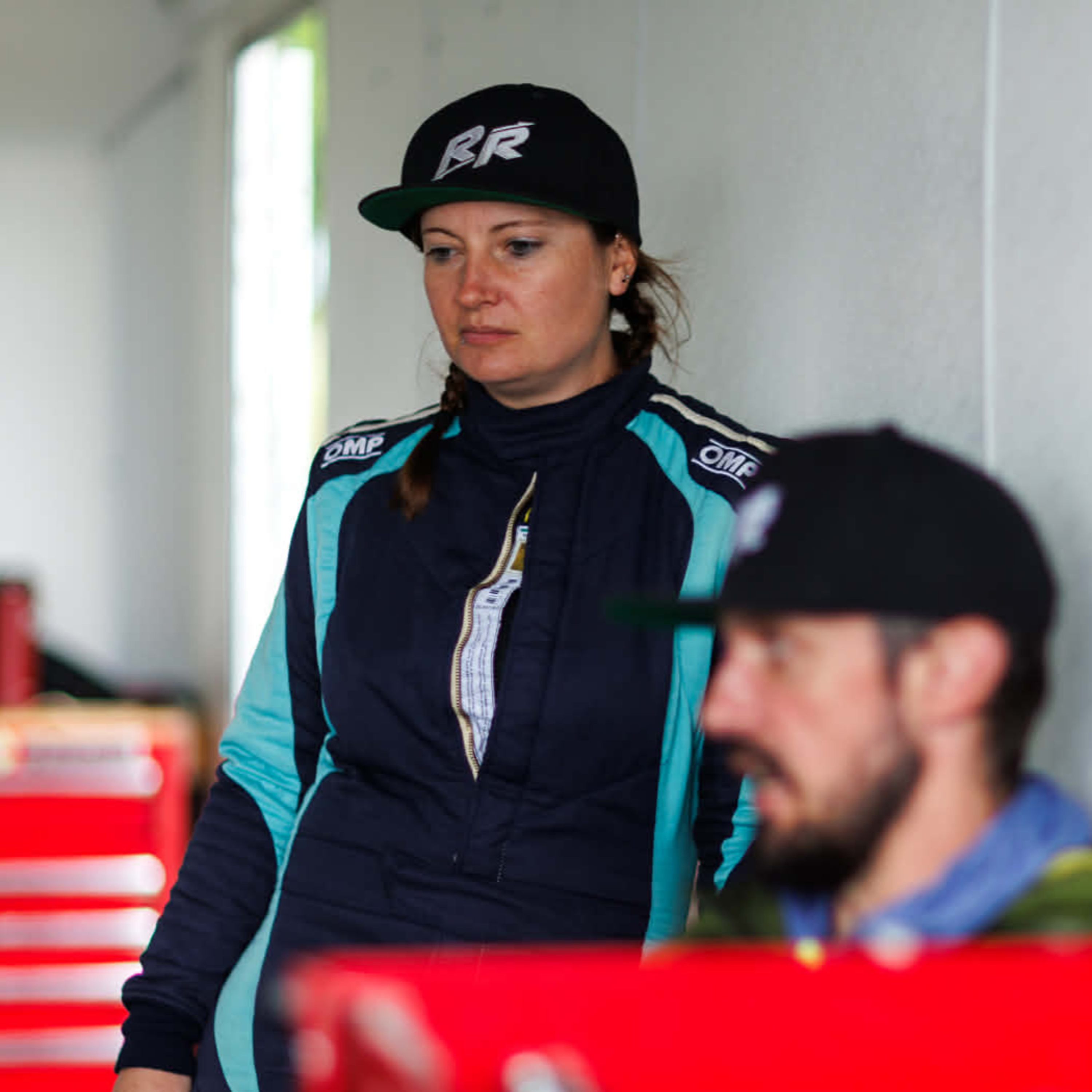
238 - Commit to Competition (Becky Robertson)
About this episode
Becky Robertson describes a season built around her as the driver, with Scott shifting into coaching and car-building support. The conversation moves through confidence-building track time, ergonomic and setup changes to Mooncake, and the mental work of learning to judge progress without constant car changes. She also reflects on balancing family, work, and racing, and sets clear goals for the year: stay in the competitive mix, review every session, and keep improving without excuses.
Becky is going to try not to cry... Seth asks all the hard questions... and Scott gets uncomfortable...
Becky is going to compete in Sundae Cup (Club SC) this year, so we talk to her about taking up space, how the change from feeling like a failure to identifying opportunities, and what she's hoping from this venture.
------
------
closing speeds
"But that's the closing speeds and the bearman incident from the F1 race. And that's Zuka."
Closing speed is how fast one car is gaining on another. If the gap is closing quickly, there’s less time to react, which can make crashes more likely.
“Closing speed” is how quickly one car is catching another—basically the relative speed between two vehicles on track. In incidents, it matters because it determines how much time and distance the faster driver has to react and the slower driver has to anticipate.
F1 race
"But that's the closing speeds and the bearman incident from the F1 race. And that's Zuka."
F1 is Formula 1, the highest level of open-wheel racing. They’re talking about a specific incident from an F1 weekend.
“F1” refers to Formula 1, the top tier of open-wheel racing. The hosts are referencing an incident from an F1 event to discuss how rules and on-track speed differences affect safety.
FIA
"So just real quick, Seth, what's your take? My take is that the FIA has to fix what's going on..."
The FIA is the organization that sets and enforces rules for major racing series. The hosts are saying the FIA needs to step in and fix the problem with the current rules.
The “FIA” is the Fédération Internationale de l’Automobile, the governing body that oversees major motorsport rules and safety standards. In the segment, they’re arguing the FIA must change how regulations handle the situation.
black flagged
"Yeah, Cappellino, whatever. That guy. The speed his car was going, they, in a normal race, you would have black flagged a car for going that slow."
A black flag is the race director telling a driver their car is not safe to continue. The driver has to pull in, usually to the pits, so they don’t endanger others.
A “black flag” is an official race warning that tells a driver to stop competing immediately (usually by entering the pits). It’s used when a car is unsafe or not complying with race conditions, not just for on-track driving mistakes.
race regulations
"Okay. And you, how do you create race regulations that, that basically have cars with a speed differential so much that one car needs to be black flagged?"
Race regulations are the official rules that tell teams and drivers what’s allowed during a race. The hosts are talking about whether the rules should prevent dangerous speed differences.
“Race regulations” are the rule set that governs how cars are allowed to run and how race control enforces safety and fairness. In this discussion, they’re debating how the rules can allow situations where cars have too large a speed difference.
speed differential
"...have cars with a speed differential so much that one car needs to be black flagged? They need to fix something. Okay. Becky. I agree with Seth. It's like they're multi-class racing..."
Speed differential just means one car is much faster than the other. When that difference is big, it can be harder for the faster driver to slow down safely in time.
A “speed differential” is the gap in speed between two cars on track at the same time. Large differentials increase the risk during braking and corner entry because the faster car may not be able to adjust in time.
multi-class racing
"Okay. Becky. I agree with Seth. It's like they're multi-class racing, but they're switching classes periodically throughout the race..."
Multi-class racing means different types of race cars run on the same track together. Because they’re not equally fast, faster cars have to pass slower ones, which can get tricky.
“Multi-class racing” is when different categories of cars (with different performance levels) share the same track at the same time. It creates frequent traffic and passing situations, which can amplify incidents if speed gaps and timing aren’t well managed.
braking
"...going into that high speed right into an immediate braking long duration left, that move was never going to work."
Braking is when the driver slows the car down using the brakes. Here, they’re talking about how the timing of braking can make a risky pass either work or fail.
In racing, “braking” is the phase where drivers slow the car down—often repeatedly and at high speeds. The hosts discuss how braking timing and distance affect whether a passing move is feasible when there’s a big speed differential.
fantasy team
"Yeah. Like what a house is doing well. Bizarre. He's on my fantasy team. So I was a little bummed. [217.6s] I mean, I was bummed for him too, but also for me because he didn't win any points."
This sounds like a game where you pick real racers and score points based on how they do. If a racer has a bad day, you lose points in your fantasy lineup.
They’re talking about a fantasy league where participants earn points based on real-world racing results. In this context, a driver not scoring points affects the host’s fantasy ranking.
this season
"This season we're focusing on me as the competitor, which is the big shift [295.7s] from all of our other seasons. There's a lot of reasons for that. It just happened to be the [302.1s] nexus of time for me to do this."
They’re talking about the current year of racing/competition and how their plan is different this time. It’s basically a “new season rules/roles” discussion.
The hosts are describing how the focus of the competition changes from previous seasons to the current one. They frame it as a shift in roles—who is competing versus who is coaching.
project manager
"replacing the engine. He's the project manager of my, my car in this season in a lot of ways."
A project manager is the person who helps organize everything needed for the season. They make sure the car build, timing, and people involved all line up.
In motorsport, a project manager coordinates the many moving parts of a season—car build, scheduling, parts, and communication between drivers, engineers, and mechanics. It’s a role focused on keeping the program on track rather than directly tuning or driving.
engine
"even though I'm competing, he's taking the lead on my car build, um, replacing the engine. He's the project manager of my, my car in this season in a lot of ways."
The engine is what makes the car go. In racing, teams may replace or rebuild it to keep the car reliable and fast.
The engine is the car’s power unit, and in racing it’s a major component that can be rebuilt or replaced between events. Engine work affects reliability, power delivery, and how the car is set up for the track.
arrive and drive driver
"You're comfortable with that? Like, are you comfortable with, I don't say the support, but, but being more of a, you're closer to being an arrive and drive driver than Scott ever was."
“Arrive and drive” means you don’t have to handle all the car prep and logistics yourself. You basically show up and drive, while the team takes care of the setup and support.
An “arrive and drive” setup means the team provides a ready-to-race car and logistics, and the driver’s job is mainly to show up and drive. It shifts more of the technical and operational workload to the team, so the driver relies heavily on engineering and support staff.
Sunday cup
"[524.9s] I want to, yeah, I want to talk about that because you did, you did Sunday cup [533.1s] in the heyday of like right when Sunday cup was turning into serious business, [538.1s] you did some Sunday cup rounds."
“Sunday cup” is a track competition format the group races in. The hosts are saying it felt more intense and pressure-filled than HPDE, which is more about learning.
“Sunday cup” refers to a specific club racing/track competition series the speakers are discussing. In this segment, it’s contrasted with HPDE as a more competitive environment with pressure to drive immediately faster.
HPDE
"[553.4s] HPDE, but we did Scott and I split the car for a few in Sunday cup. Right. [559.3s] Mid Ohio and Lime Rock. Mid Ohio and Lime Rock. Yeah. Right. [563.4s] But you intentionally, you intentionally stepped away from Sunday cup though, right when things were,"
HPDE is a track day format where you learn to drive better with coaching. You’re not racing for a win—your goal is to improve your skills and get more comfortable on track.
HPDE (High Performance Driver Education) is a track program focused on teaching driving skills rather than racing for points. Drivers typically get structured coaching and run sessions where the goal is learning and consistency, not beating a specific competitor.
Lime Rock
"[553.4s] HPDE, but we did Scott and I split the car for a few in Sunday cup. Right. [559.3s] Mid Ohio and Lime Rock. Mid Ohio and Lime Rock. Yeah. Right. [563.4s] But you intentionally, you intentionally stepped away from Sunday cup though, right when things were,"
Lime Rock is another well-known race track. The hosts are mentioning both tracks to describe where they did these events.
Lime Rock Park is a historic road course commonly used for racing and track-day programs. The pairing with Mid-Ohio indicates the speakers’ experiences weren’t limited to one venue.
Mid Ohio
"[553.4s] HPDE, but we did Scott and I split the car for a few in Sunday cup. Right. [559.3s] Mid Ohio and Lime Rock. Mid Ohio and Lime Rock. Yeah. Right. [563.4s] But you intentionally, you intentionally stepped away from Sunday cup though, right when things were,"
Mid-Ohio is a famous race track. The speakers are saying they ran these types of events there and at another track too.
Mid-Ohio is a well-known road course used for racing and driver education events. Mentioning it alongside Lime Rock suggests the speakers are comparing experiences across multiple tracks.
pressure of competition
"[643.7s] I think a big thing was track time. Probably a big mental part of it for me was not having the [652.4s] pressure of competition. Not feeling like I had to like drive better, like try harder. More of a [662.6s] when you have to immediately go fast, right? You're like this counts. So I have to go fast"
They’re talking about how racing pressure can make you feel like you have to go fast right away. In contrast, a learning-focused track day lets you slow down a bit to try things and build skill.
The speakers are describing how competition pressure changes driving behavior—pushing for immediate speed versus allowing time to learn. This is a mental approach difference between racing-oriented events and education-focused track sessions.

Honda fits
"...if you're struggling to catch up and keep up with a bunch of Honda fits, that can feel like garbage."
A Honda Fit is a small hatchback. In this story it’s basically the “car you’re trying to keep up with,” and it shows how frustrating it can feel when you’re not matching the pace yet.
The Honda Fit is a small, front-wheel-drive hatchback that’s often used in grassroots track racing because it’s relatively affordable and easy to keep running. In the segment, it’s used as a benchmark for how competition can feel overwhelming when you’re trying to improve.

Honda Civic
"...And then you go to an HPDE and you're like civics now. Civics too."
A Honda Civic is a popular compact car. They’re saying that at different track events, the cars around you change, which changes how you judge your own progress.
The Honda Civic is a compact car that commonly shows up at track days and HPDE events. Here, it’s used to illustrate how the driver’s perspective changes when they move from one event group to another.
moving target thing
"Yep. And I hate the moving target thing where like if the car changes every"
The “moving target” idea is that if the car keeps changing while you’re trying to learn, it becomes hard to tell whether you improved because of your driving or because of the new setup. Consistent testing helps isolate cause and effect.
ergonomics
"But when we were kind of looking at ergonomics and stuff like that, it's like, you know, we can change this."
Ergonomics is about how the driver sits and reaches in the car. If the steering wheel and seat are positioned well, it’s easier to control the car and stay comfortable for longer.
In a racing/track context, ergonomics means how the driver fits the car—seat position, steering wheel height/reach, pedal spacing, and overall posture. Better ergonomics can improve control and reduce fatigue so you can drive consistently.
spacers
"we can get spacers longer bolts and drop the steering wheel mount a little bit to make it better."
A spacer is a small add-on piece that changes the position of something. Here, it sounds like they’re using spacers to adjust where the steering wheel sits so it fits better.
Spacers are thickness pieces used to reposition components—here, likely to move the steering wheel or its mounting point. In track setups, spacers can fine-tune steering wheel height/angle to match the driver’s preferred reach and posture.
rear alignment
"because like we can change the rear alignment now, we're going to maybe see what stiffer springs feel like."
Rear alignment is setting the angles of the back wheels. On a track, getting those angles right helps the car turn predictably and keeps the tires working the way you want.
Rear alignment refers to adjusting the rear wheels’ angles (commonly camber, toe, and sometimes caster-related settings depending on the car). On track cars, rear alignment strongly affects rotation, tire wear, and how the car behaves mid-corner and on exit.
stiffer springs
"we're going to maybe see what stiffer springs feel like, like we're going to be trying stuff here."
Springs support the car and control how much it squats or rolls when you turn. Stiffer springs usually make the car feel more controlled on track, but can also make it less forgiving.
Stiffer springs increase the suspension’s resistance to compression, reducing body roll and controlling weight transfer more aggressively. On track, that can sharpen handling response, though it may also make the ride harsher and change tire loading.
one-lapped it
"So Becky, run me over a list what you've got in your head of what has changed on Mooncake since kind of since I last hung out with you guys for the last time you one-lapped it."
“One-lapped it” sounds like they’re talking about doing a lap and using that as a reference point. It’s a way to compare how fast or consistent the car/driver is.
“One-lapped it” means completing a lap (or a lap attempt) and achieving a strong enough pace that it’s being used as a benchmark. In track talk, it often implies comparing lap times or demonstrating improvement relative to a previous session.
camber
"I got more camber. I slotted the struts to get more camber, a lot more camber."
Camber is how much a wheel tilts in or out. Changing it can help the tire grip better when you’re turning, especially on a track.
Camber is the inward/outward tilt angle of a wheel relative to vertical. More camber can help tire contact during cornering by keeping the tire better aligned with the road as the car loads up in turns.
struts
"I got more camber. I slotted the struts to get more camber, a lot more camber."
Struts are part of the suspension that connect the car to the wheels. Adjusting them (or their mounting points) can change how the wheels sit, which affects grip and handling.
Struts are suspension components that help control wheel movement and ride/handling. In many setups, “slotted” strut mounting holes allow adjustment of alignment settings like camber without replacing the whole suspension.
new seat
"I got a new seat that fits me really well. Like, Scott didn't even help in picking it."
A new seat is about getting the driver positioned correctly. If the seat fits you well, you can hold the wheel more consistently and feel more stable in turns.
A new racing seat tailored to the driver improves fit and support, which helps maintain consistent steering input and reduces unwanted body movement during cornering. The transcript suggests the seat was chosen specifically for Becky this time, rather than being a shared compromise.
Race tech
"Race tech. Race tech. They were really helpful and great and have a seat that fit me. And I think some other women that we were with tried it and liked it too."
Race tech makes racing seats and related safety gear. Becky says they helped her find a seat that fits her better, and she recommends them if you can’t find the right fit.
Race tech is a motorsports-focused seat and safety equipment supplier. In the segment, Becky credits them with helping her find a seat that fits her body, and recommends them to listeners who struggle with seat fit.
poured insert
"Okay. Yeah. Cause a lot of women have to go to like a poured insert or like they have to take a seat that's built for men and do something completely different to make it fit women."
A poured insert is a custom piece added to a racing seat. It’s shaped to your body so you sit in the right position instead of having to force yourself into a seat that doesn’t fit.
A poured insert is a custom-shaped insert added to a seat to improve fit. It’s typically made by filling a mold with material so the insert matches the driver’s body contours for better support and comfort.
modular
"Which is kind of wild because where most women race is actually drag cars and circle track and circle track seats are wildly modular and customizable. Well, you just bend them till they fit."
Modular means the seat can be adjusted in parts. Instead of one fixed shape, you can change pieces so it fits different drivers better.
In this context, modular means the seat components can be adjusted or swapped to change how the seat supports different body sizes. Becky contrasts this with more fixed racing seat designs, where fit can be harder to dial in.
shifter
"Yeah. I got some cool parts for the shifter so that it's closer to me. So I was actually shifting with like the ball of my hand, pushing it all the way into the far gears."
The shifter is what you move to change gears. If it’s positioned better for your body, shifting is easier and more consistent.
A shifter is the mechanism used to select gears in a manual or sequential gearbox. Moving the shifter closer to the driver can reduce reach and improve shift speed and consistency under cornering loads.
ball of my hand
"So I was actually shifting with like the ball of my hand, pushing it all the way into the far gears."
It sounds like she’s using a specific grip on the shifter to make shifting faster and easier.
Using the ball of the hand to shift is a technique for applying leverage and speed to the shifter. It’s often about ergonomics—how you can move your hand quickly and accurately without awkward wrist angles.
custom battery mount
"Yeah. Yeah. We got a custom battery mount, lightweight battery mount specifically for my car that allowed me to take some battery brackets out of there."
A battery mount is the bracket that holds the battery in place. A custom one can save weight and make room for other parts.
A battery mount is the bracket/structure that holds the battery securely. A custom lightweight battery mount can reduce weight and also free up space by allowing the battery brackets to be removed or relocated, which can help packaging and weight distribution.
ballast plates
"Added some ballast plates in the back of the car. So it's much better corner balance now."
Ballast plates are extra weight you add to the car. Putting it in the right spot helps the car handle more evenly in corners.
Ballast plates are added weight pieces used to tune the car’s balance. By placing ballast in a specific location, teams can improve corner balance so the car behaves more predictably in left/right turns.
corner balance
"Added some ballast plates in the back of the car. So it's much better corner balance now."
Corner balance is how the car’s weight is split at each wheel. Tuning it helps the car turn in more predictably.
Corner balance is how much weight each wheel carries, typically measured and adjusted so the car’s handling matches the driver’s goals. Improving corner balance can reduce understeer/oversteer surprises and make tire loading more consistent.
radiator ducting
"We checked out the AC compressor and condenser. We added some radiator ducting."
Radiator ducting is like a channel that helps air flow through the radiator. That helps the car stay cooler when you’re driving hard.
Radiator ducting is shaped airflow guidance that directs air through the radiator for more effective cooling. On track, better ducting can help maintain stable engine temperatures and reduce the risk of overheating during sustained pulls.
AC compressor
"We checked out the AC compressor and condenser. We added some radiator ducting."
The AC compressor is the part that makes the air conditioner work. It’s something teams may inspect when they’re changing front-end cooling or ducting.
The AC compressor is the pump that pressurizes refrigerant to run the air-conditioning system. On track-focused builds, people often check AC components because they can affect packaging, weight, and airflow through the front of the car.
condenser
"We checked out the AC compressor and condenser. We added some radiator ducting."
The condenser is part of the air conditioner that helps get rid of heat. If you change airflow in the front of the car, it can matter.
An AC condenser is the heat-exchanger that releases heat from the refrigerant to the outside air. It sits in the front airflow path, so changes to ducting and cooling can impact how well it performs.

Mazda 2
"You don't need to add any power, right? You're already making as much like with that stock massive Mazda 2. All the powers. We don't know how much power this engine's making yet."
They’re talking about a Mazda 2 and how it already has a certain amount of power. They haven’t fully measured the exact horsepower yet, but it feels good.
The Mazda 2 is the car platform being discussed, and the hosts mention it as the baseline for how much power it’s already making. The conversation suggests they’re building or modifying it for track use and are still learning the engine’s output.
test drive
"Well, I haven't driven it in anger yet. Okay. But it feels, I took it for a little test drive today. It feels very happy."
A test drive is just a short drive to see how the car feels. Here, they’re checking it before taking it to the track.
A test drive is a short evaluation of how a car behaves under normal driving conditions. In this context, it’s being used to confirm basic drivability before pushing it harder on track.
street testing
"Is it still street legal with air quotes? Yes. Okay. So you can still do street testing with it. Yeah. That's all we've been able to do."
Street testing means evaluating a modified car’s behavior on public roads rather than at a track event. It’s often used early in a build to gather feedback on drivability, cooling, and basic handling before track days.
suspension
"Okay. Yeah. Suspension wise, you're other than than camber. Are you, what's going on? Real quick, while I grab the mic, one of the big focuses this year was to lighten up the car as much as we reasonably could."
Suspension is what helps the tires stay in contact with the road. Changing it affects how the car handles and grips in turns.
Suspension is the system that connects the wheels to the car and controls how the tires move over bumps and during cornering. The discussion focuses on suspension setup changes—especially camber—because that directly affects grip and tire wear on track.
lighten up the car
"Real quick, while I grab the mic, one of the big focuses this year was to lighten up the car as much as we reasonably could. There's some stuff"
They’re trying to make the car lighter. A lighter car usually handles better and feels more responsive, especially on a track.
“Lighten up the car” refers to weight reduction as a performance strategy, especially for track use. Reducing mass improves acceleration, braking, and how the suspension and tires respond, and it can also make the car easier to tune.
shims for the rear axle
"You've got shims for the rear axle? We do. We haven't put them in yet."
Shims are thin metal pieces used to make small adjustments. On a race car, they can help the rear wheels sit at the right angles so the car grips better.
Shims are thin spacers used to adjust alignment or suspension geometry at the rear axle. In racing setups, they’re often used to fine-tune things like ride height, camber/toe, or other angles to improve tire contact and balance.
mental recover
"Like the first time that I drove it, how it on the one lap in my car, it was raining and I spun out and it took me all day to mentally recover from that."
After a crash, spin, or near-miss, drivers have to get their confidence back. If you’re still shaken, it can affect how you drive for the rest of the day.
In motorsport, “mental recovery” refers to how quickly a driver regains confidence and focus after a mistake or scary moment. It matters because performance depends not only on car setup, but also on decision-making and composure under stress.
Apex Pro
"And I laughed so hard and I looked at my trace on the Apex Pro. It did a little loop-de-loo. And we all had a great laugh about it."
“Apex Pro” is likely a tool that records your driving path on track. She’s looking at the trace to see how her car moved through the corner.
“Apex Pro” sounds like a track-data/telemetry app or device used to visualize your driving line. In this context, she’s referencing a recorded trace that shows her car’s path through the corner.
lifted or I froze up
"In the first one I made the mistake because I was scared and I lifted or I froze up. And in the second scenario I think"
When she says she “lifted” or “froze up,” she means she didn’t stay committed to the plan. Instead of driving smoothly, she either backed off too much or hesitated, which can cause the car to get unstable.
This describes a common driver error mode under pressure: either lifting off the throttle abruptly or “freezing” (hesitating) instead of committing smoothly. Both can upset the car’s balance and lead to mistakes like spins or loss of momentum.
spun out
"And even though I spun out I never felt out of control. So you made a mistake because you were going fast"
“Spun out” means the car lost grip and rotated until it was pointing the wrong way. It usually happens when the tires can’t hold the car’s speed and direction at the same time.
“Spun out” means the car rotated faster than the driver could control and ended up facing the wrong direction—typically from a loss of traction at the tires. On track, it often points to a traction/balance issue (too much steering angle, too much throttle/brake input, or insufficient commitment).
concrete wall
"and I crashed coming out of turn one and hit the concrete wall there. It wasn't that bad but it just shook my confidence a little bit and I think"
A concrete wall is the hard barrier track drivers can hit if they lose control. Even if you’re okay, it can make you nervous and hesitant until you feel safe again.
Hitting a concrete wall is a serious track incident that typically involves significant deceleration and can shake a driver’s confidence even if the physical damage is minor. In this context, it’s used to explain how fear and self-trust can take time to rebuild after an impact.
track driving
"I guess, okay, working up my progression of thinking I couldn't drive on track and then learning that I could and maybe not so bad at it and gaining some confidence. I think another step in that would be the one lap last year..."
Track driving means practicing and driving on a race circuit instead of regular streets. It’s where you learn how to handle the car faster and more precisely, usually lap after lap.
“Track driving” refers to driving a car on a closed circuit (like a race track) where you can push braking, cornering, and acceleration much harder than on public roads. It’s a skill-building context—learning car control, lines, and confidence through repeated laps.
crew chief
"And I loved my role that week... like I just killed it that week. And she was the crew chief for all three cars for sure."
A crew chief is basically the team’s coordinator. They help manage what happens with the cars during the event and make sure the driver and crew are on the same page.
A crew chief is the team member who coordinates the car’s setup and strategy during an event—often managing communication between drivers and the crew. In multi-car or multi-driver weekends, the crew chief helps ensure each car gets the right attention and that decisions are consistent.
one lap team
"[2294.2s] So like that's been the whole progression of like, I wonder if I can do this track driving thing. [2299.1s] I wonder if I can be the leader of a one lap team."
A “one lap team” sounds like a setup where you’re trying to be at your best for just one lap. That means you have to get everything right fast—like getting the car ready and hitting your lines consistently.
A “one lap team” here sounds like a team structure where the driver’s performance is judged on a single lap (or a very short stint) rather than a long race. That changes how you approach preparation, tire warm-up, and setup for peak performance quickly.
dedicated coaching slot
"...Scott to save a dedicated coaching slot for me at all the events, because I know that's asking him to not have a client so that I can be his client."
A dedicated coaching slot means setting aside a specific time to get instruction from a coach. On track days, that usually means you get focused feedback when you need it.
A “dedicated coaching slot” refers to reserving a specific block of time with an instructor/coach during events. In track contexts, that often means structured feedback and guidance rather than casual advice.
take up space on the track
"This was even before Mooncake the whole notion of like you take up space on the track. You pay for it. So like your car your dedicated track space like you deserve to be out there like you belong out there."
They’re using “take up space on the track” as a mindset about racing confidence. It means you should feel like you have a right to be on the track and drive your line, as long as you do it safely around other cars.
The hosts are talking about track etiquette and mindset—how drivers should feel entitled to occupy their place on track rather than getting pushed aside. In racing terms, it’s about claiming your line and space safely and confidently while sharing the circuit with other cars.
one lap 20 27
"[2941.8s] Let's do one lap 20 27. We'll do it in mooncake and you'll be the sole driver and I'll do you [2946.8s] I'll do the race engineering because like I can't fit you know Scott can't fit in your driver's"
They’re talking about a planned track run—basically how they’ll structure the session and who’s driving. The “20 27” part likely refers to a timing/goal for that plan.
This sounds like a track-session plan or a lap/goal target for the year (possibly “2027”). It’s mentioned as part of how they’ll run the session with one person driving while the other handles support.
new motor
"[3011.8s] But I mean I'm just saying like if like Scott put a new motor in his car [3019.1s] and you were like. I know like what you're saying is logical and makes sense. I get that."
A “new motor” means swapping in a different engine. People do this when the current engine isn’t working well or when they want the car to be more reliable for track use.
A “new motor” means replacing the engine with a different one, usually to fix a problem or to change performance characteristics. In track contexts, engine swaps are often done to get reliability back up or to match the car to the season’s goals.
CMP Carolina Motor Sports Park
"we haul down to CMP Carolina Mortar Sports Park for the first competition with good life. So the apprehension because of that schedule logistics is very high."
This is the name of a race track/venue. The hosts are saying their first competition is happening there soon after vacation.
CMP Carolina Motor Sports Park is a racing venue in the Carolinas. In this segment, it’s the first competition location they’re preparing for, which frames the season’s logistics and pressure.
logistics
"So the apprehension because of that schedule logistics is very high. I wouldn't even be able well I'm not sure I enjoy Disney anyway but like I would spend the whole time at Disney thinking about the fact that racing is coming up."
In motorsports, logistics covers the planning required to coordinate travel, event timing, and getting the car and team ready. Here, the hosts link logistics to their anxiety about being prepared for the next competition.
grid life
"like we're trying to be ready to go to grid life before we leave for vacation to make that easier but also I think I'm more of the it'll all work out with logistics kind of person"
“Grid life” is the name of a racing/track event they’re aiming to be ready for. They’re talking about getting their car and plans in order before that event.
“Grid life” refers to a motorsports event/series brand that hosts track days and racing activities. The hosts mention trying to be ready for it before vacation, implying they’re preparing their car and routine for an organized track event.
car prep
"Okay because you're not half assing car prep or your prep. That is one thing that I think I'm pretty good at is whole assing whatever I do."
“Car prep” means the work you do to get the car ready for competition—things like setup checks, maintenance, and making sure the car is dependable for the event. In racing, prep is often the difference between showing up and actually performing.
tint advisor
"Do you have a tint advisor on your helmet? I do. Okay that's probably a good thing if that's a concern of yours because you're the only one who knows what's going on inside your helmet."
That’s something on your helmet that helps with how dark or light your visor/lens is. It’s mainly about seeing clearly on track—like reducing glare—so you can concentrate on driving.
A “tint advisor” on a helmet refers to a setup that helps manage how tinted the helmet visor or lens is for different track conditions. The goal is to improve visibility (and reduce glare) so you can focus on driving instead of squinting or getting distracted.
performance goal
"Yeah and that's like a that's not just a performance goal that's a mental performance goal as well of like even if I mess up I want to have the perspective to know that it's not the end of the world that everybody doesn't hate me now"
They’re talking about a goal for how well you drive, but also how you handle your head when you mess up. On track, staying mentally steady helps you improve faster.
In this context, “performance goal” isn’t just about lap times—it’s also about how you mentally handle mistakes and keep your focus. Track driving rewards consistency, so mental targets can be as important as mechanical setup.
reviewing video
"I actually think as much as I hate it talking to other drivers or reviewing video or like getting other people's feedback helps as hard as it is for me because I want to just like hide those things."
They mean watching recordings of your driving after a session. It helps you see what you did—like where you turned in or how you approached a corner—so you can do it better next time.
“Reviewing video” refers to watching onboard or trackside footage to analyze driving technique—such as line choice, braking points, and how the car behaves through corners. It’s a common coaching tool because it helps drivers spot patterns they can’t feel in the moment.
come off track
"Right like where's the where's the transition from I did bad to I can do better like that's the thing when you come off track and you've done poorly I certainly have lived that like that's been my my driving life but but you you come off track and there's there's two ways to think about it"
“Come off track” means you leave the main racing surface, like going onto the grass or off the pavement. The discussion is about how to think about that moment—either as a failure or as a chance to learn.
“Come off track” means the car leaves the racing surface—like going onto the grass, gravel, or run-off area—usually due to a mistake or loss of grip. How you interpret it matters: drivers can either treat it as proof they “were bad” or as data showing where they can improve.
transition from I did bad to I can do better
"Right like where's the where's the transition from I did bad to I can do better like that's the thing when you come off track and you've done poorly"
It’s about changing how you think after you make a mistake. Rather than telling yourself “I messed up,” you remind yourself “I can improve,” so you stay motivated.
This is a mental reframing technique for drivers after mistakes. Instead of interpreting a poor lap or off-track moment as personal failure, the focus shifts to actionable improvement for the next run.
entry of turn 10
"...I was messing up the entry of turn 10 I know that I was rushing the exit here or something like that..."
They’re talking about the beginning part of a corner—when you first set the car up to go around it. They’re saying they messed up how they started that specific corner (turn 10).
“Entry” is the phase of a corner where you set up the car before the apex—braking, turn-in, and initial steering angle. “Turn 10” indicates a specific numbered corner on that track, and the speaker is pinpointing where their technique broke down.
exit
"...I was messing up the entry of turn 10 I know that I was rushing the exit here or something like that..."
The “exit” is the part of the turn where you start accelerating again. If you rush it, you may not be lined up correctly, so the car can’t speed up as well as it should.
“Exit” refers to the end of a corner where you straighten the steering and get back to full throttle. Rushing the exit usually means the car isn’t positioned well enough to accelerate smoothly, which can cost speed and stability.
data we have video
"...like honestly we have data we have video so like an immediate review of that stuff if I feel like something went really bad is like let's look at the facts..."
They’re using recordings and driving info from the track to figure out what went wrong. That way they can fix specific mistakes instead of just feeling bad about their driving.
They’re talking about using track data and onboard/recorded video to review driving mistakes. Instead of relying on feelings, they compare what actually happened with what they intended to do, then adjust technique for the next session.
competitive mix
"...like I don't want to be I want to be in the competitive mix okay I want to be looking for where I can find a couple tents to go faster than the next competitor..."
“In the mix” means you’re not just driving around—you’re close enough to other drivers to actually compete. They’re saying success is about making small improvements so you can stay near the front group.
In racing, being “in the mix” means you’re close enough in pace to fight for positions rather than being stuck in the back. The speaker frames success as staying competitive by finding small improvements rather than chasing huge gains.
tents
"...looking for where I can find a couple tents to go faster than the next competitor you know not looking for whole seconds well maybe..."
In racing, “tenths” means fractions of a second—like 0.1 seconds. They’re saying the goal is to be close enough that you’re only off by small amounts, not by big gaps.
“Tenths” are time differences measured in 0.1 seconds, commonly used in motorsport to describe lap-time gaps. The speaker contrasts being multiple tenths off versus being close enough to challenge, emphasizing fine margins.
Commit to Competition
"...oh this is good what were your goals at the end of last season well committing to competition is something that I think is already in my head..."
This part is about the episode’s main idea: really committing to racing. They talk about staying focused, practicing your mindset, and using feedback to get better.
This is the episode’s theme: committing to racing goals and mindset rather than just hoping for better results. In this segment, they connect it to practice, self-talk, and using feedback to improve lap-to-lap.
review session after every session
"okay so it's reviewing I mean I told Scott I want to review session after every session to have something to work on for the next session"
They’re saying they watch and think about what happened after each track run. The goal is to figure out what to change next time so you get better lap by lap.
They’re describing a feedback loop: after each on-track session, they review what happened so they can identify specific areas to improve next time. In motorsports, this is how drivers translate laps into actionable changes (lines, braking points, setup notes).
preseason over the off season
"and like even preseason over the off season has been part of that too like doing sim work doing conditioning workouts working on the car"
They’re talking about the time before the season really ramps up. People use that period to get in shape and prepare the car so they’re ready to compete.
They’re referencing the off-season/preseason period as part of a structured build-up to competition. In racing, this time is often used for training, simulator practice, and car preparation so the car and driver are ready when the season starts.
sim work
"even preseason over the off season has been part of that too like doing sim work doing conditioning workouts working on the car"
They’re talking about practicing in a video-game-style driving simulator. It helps you learn the track and practice your technique without using the real car.
“Sim work” means practicing in a driving simulator (software that models tracks and car behavior). Drivers use it to learn circuits, rehearse braking/turn-in, and test driving approaches before or between real track days.
conditioning workouts
"like doing sim work doing conditioning workouts working on the car that's all that's terrible what all of that sounds terrible"
They mean training your body—like strength and endurance work—to be better prepared for driving hard at the track. It helps you stay focused and feel less worn out.
“Conditioning workouts” refers to physical training aimed at improving strength, endurance, and recovery for driving. Track driving can be physically demanding due to sustained cornering forces, heat, and concentration over long sessions.
car's ready
"so the the car's ready almost ready back he's ready back he's ready ... the control where he was like it's ready because I did it or does he just need to know what's ready"
They’re saying the car is prepared and ready to go run at the track. They also argue about whether the other person needed it ready so they could work on it, or just to know it was ready.
“The car’s ready” is about readiness for competition—typically meaning it’s been prepared, checked, and is reliable enough to run sessions without mechanical issues. The discussion also suggests they’re debating whether someone needed the car ready for hands-on work or simply to confirm it was prepared.
over the limit of the car
"...feeling in control at or over the limit of the car on track okay like being comfortable with that..."
It means driving so hard that the tires start to lose grip. When that happens, the car can feel unpredictable, so the goal is to learn how close you can get to that edge without going past it.
“Over the limit” means pushing the car beyond the point where the tires can keep the car’s intended grip and behavior. On track, that’s where handling can suddenly change—like losing traction or becoming harder to control—so drivers work to understand where that boundary is for their car and tires.
exploration to the other side
"...and not view that as a failure right just as an exploration to the other side yeah okay it's hard to do..."
They’re saying that if you go too far and it gets sketchy, that doesn’t automatically mean you failed. It can be a way to learn what the car does and how to handle it better next time.
The speaker frames exceeding the limit as “exploration,” meaning learning by temporarily going beyond normal comfort. In motorsport, that’s often how drivers build confidence and refine technique—by discovering what the car does when grip is reduced.
fast big fast sweeping corners
"...making mistakes where it's fast big fast sweeping corners big fast braking areas those give me the heebie jeebies..."
These are long turns you carry speed through. Because you’re turning for a while at high speed, small mistakes can really show up.
“Sweeping corners” are long-radius turns where the car stays loaded for a longer time and speed builds through the arc. Big, fast sweepers demand stable grip and smooth steering inputs because small mistakes can compound over the length of the corner.
autocross
"...Scott hates autocross because it's like making mistakes when you're slow it's dumb..."
Autocross is a timed driving event on a cone-marked course. The turns are usually tight, so you have to be precise even at lower speeds than on a track.
Autocross is a motorsport format run on a closed course with cones, where drivers complete timed laps at relatively low speeds compared with road racing. It emphasizes quick steering and car control in tight, slow-to-moderate corners, so “mistakes when you’re slow” can still cost time and confidence.
hopes versus goals
"...Becky and I briefly because we just recorded that podcast about hopes versus goals and so Becky does have a few hopes for the season as well..."
They’re talking about the difference between wishing for something and setting a real target to work toward.
This is a discussion about “hopes versus goals,” contrasting what someone wants to happen with specific targets they’re working toward. It’s a mindset/strategy topic rather than a technical driving term.
on the podium
"...I hope to be on the podium that's my first hope at least once at least once at least once..."
“On the podium” means you finish near the very top—usually third or better.
“On the podium” is a racing outcome meaning finishing in the top three positions. It’s used here as a season target/aspiration.
top five for the season
"...yeah okay do I have to tell the other one you don't have to say anything you don't want to say but I will ask you I hope to be in the top five for the season okay which of those two do you think"
They’re aiming to finish among the best five drivers over the whole season.
“Top five for the season” refers to a championship-style ranking target across multiple events. It’s a performance benchmark rather than a technical term.
time attack
"also if anyone is selling a time attack ticket for Midwest Festival Lime Rock Park or Watkins Glen holler at me because Becky needs tickets for those three or me holler at me too"
Time attack is a racing style where you’re mainly trying to set the fastest lap time. Instead of racing side-by-side, you make runs and compare how quickly you can go.
Time attack is a motorsport format where drivers run the course as fast as possible in timed laps, usually with limited or no racing wheel-to-wheel. It’s often used as a way to measure setup changes and driver improvements because each run is focused on lap time.
Watkins Glen
"also if anyone is selling a time attack ticket for Midwest Festival Lime Rock Park or Watkins Glen holler at me because Becky needs tickets for those three"
Watkins Glen is a well-known race track. Cars need different setups there because the track has both fast sections and hard braking.
Watkins Glen is a famous road course in New York, often hosting major racing events and high-participation track series. Its mix of long straights and heavy braking zones makes setup choices—like brake cooling and tire management—especially important.
Race Sense
"G lock always is really good to us race sense I'm actually going to have somebody taking my tire temperatures"
Race Sense is a brand Becky credits around the time they’re measuring tire temperatures. That kind of measurement helps drivers understand what their tires are doing during a run.
Race Sense is mentioned right before Becky talks about having someone take tire temperatures, suggesting it’s involved with data/monitoring or track support. In motorsport, tire-temperature measurement is often part of a broader approach to setup and performance tracking.
G lock
"race tech love my new seat they've been great to work with G lock always is really good to us race sense I'm actually going to have somebody taking my tire temperatures"
G lock is a brand Becky thanks for helping her team. The exact product isn’t specified here, but it’s something used for track driving.
G lock is referenced as providing support for Becky’s team, likely related to a track safety or retention product (the context is sponsorship/gear rather than a general term). Without more detail in the excerpt, it’s best understood as a brand that supplies something used on the car for track use.
tire temperatures
"race sense I'm actually going to have somebody taking my tire temperatures oh it's gonna feel so weird"
Tire temperatures tell you how the tires are being used during a run. If one part of the tire is getting hotter than the rest, it can mean the car needs adjustment.
Tire temperatures are a key diagnostic metric in motorsport because they show how hard the tire is working and whether the car’s setup is balanced. Teams often measure temperatures across the tire’s tread (inner/middle/outer) to infer issues like camber, tire pressure, and driving technique.
race deck
"we are also a race deck dealer so we can get seats ordered and shipped and anything anything race deck we can get dopey or like come find me at the track and put your butt in my seat"
They’re talking about a company called Race Deck that sells racing seats. The point is you can order seats through them and try them at the track to see how they fit you.
“Race Deck” is mentioned as the dealer/source for ordering and shipping seats. In this context, it’s a brand identity tied to aftermarket racing seating and track-day fitment.
track walking podcast
"well we are at track walking podcast on facebook instagram discord is where we hang out"
“Track walking podcast” is used as the show’s identity/segment context, indicating the episode is part of a track-focused discussion format. It’s more about the podcast’s structure than a technical automotive concept.
Request an Explanation
Heard something you'd like explained? We'll add it to this episode.
Sign in to request explanations for terms you heard.
Want to learn more?
Browse our glossary for plain-English explanations of automotive terms, jargon, and concepts.
Help improve this episode
See something that's not quite right? Our annotations are AI-generated and can sometimes miss the mark. Click the flag icon on any annotation to suggest a correction.