About this episode
Spring break stories in Florida lead into a tour of theme parks, including Epic Universe and Epcot’s Test Track, where the hosts react to GM’s ride and the bright orange Corvette C8 Z in the exit showroom. The conversation then shifts to motorcycles: a long haul to Georgia, riding a Yamaha Tenere 700 through North Georgia’s twisty roads and rough gravel, and a funny tip-over that turns into a surprising appreciation for heavier bikes. It wraps with a college Lemons team that chose survival over speed and still finished.
Seth may have been wrong afterall... and Scott thinks GM can do better... and should...
We talk about Scott's spring break trip to Florida, Seth rides a bike he has heard things about, and Sonja's team does race car things!
------
big motorcycle
"And Seth gets to know what it's like to be a big boy? ... I know what it's like to pick up a big motorcycle, that's for sure."
They mean a larger, heavier motorcycle. It’s harder to handle than a small bike, especially when you’re moving it around slowly or lifting it.
The hosts are talking about riding a large-displacement motorcycle—typically heavier and harder to maneuver than smaller bikes. “Big” usually means more weight and power, which changes how you pick it up, balance it, and move it at low speeds.
spray sun
"Ever since they came out with the spray sun, this God, this is not a car podcast right now."
They’re talking about sunscreen that you spray on instead of rubbing in. It can be easier to apply, but you can also end up using too little or too much.
This refers to spray-on sunscreen, usually dispensed from pressurized cans. It’s a different application method than rubbing in a cream, and the hosts discuss how it affects coverage and mess.
pressurized cans
"Ever since they came out with like the, it's not aerosol, but like the pressurized cans of sunscreen, game changer."
They mean sunscreen comes in a can that sprays under pressure. It changes how the product goes on your skin.
The phrase describes sunscreen packaged in pressurized aerosol-style containers. In the context of the episode, it’s used to explain why the application feels different from squeezing out a cream.
GM
"...And GM has always, I think, sponsored the ride. Like they've got a big,"
GM is a big car company (General Motors). In this case, they’ve been connected to the Epcot ride called Test Track through sponsorship, so the ride includes GM branding and themes.
GM (General Motors) is a major automaker that has sponsored the Epcot ride “Test Track.” Sponsorship like this often shows up as branded vehicles, themes, and marketing tie-ins tied to GM’s engineering and performance messaging.

Chevrolet Corvette
"...m with GM products, the first of which being the Corvette C eight Z sitting right there and like bright ora..."
The Chevrolet Corvette is a sports car made by GM. It’s designed for fast driving and is known for being one of the brand’s top performance models. When people mention “C8,” they’re talking about a specific generation of the Corvette.
The Chevrolet Corvette is a performance sports car from GM, known for its long-running role as the brand’s flagship for speed and driving feel. In a podcast context, it’s often mentioned because specific Corvette generations and trims (like the C8 Z) highlight major engineering changes and high-performance versions. The “C8” reference points to the eighth-generation model, which is a common topic when discussing modern Corvette performance.
hybrid
"...was it the X, which has the hybrid upfront, which is blisteringly fast."
A hybrid uses two kinds of power: a gas engine and an electric motor. It can save fuel and sometimes helps the car feel quicker.
A hybrid powertrain combines an internal-combustion engine with an electric motor and battery. The goal is usually to improve efficiency and can also add extra torque for quicker acceleration.
chain drive
"...there are a few different kinds of like drives. There's like the old chain drive that like, you go up and it like click, click, click..."
They’re talking about how a roller coaster can be pulled up the hill. An older chain-based system can feel rough or uneven compared with newer designs.
In the context of roller coasters, a chain drive is a mechanical system that pulls the train up the track using a chain. The speaker describes it as “jerky,” which is a common complaint with older, purely mechanical drive systems.
magnets
"...They're all magnets and it is wild. Not only how smooth, like you can actually feel..."
They’re saying newer coasters use magnets instead of a chain to move the train. The result is usually a smoother ride because the motion can be controlled more precisely.
The speaker contrasts older chain-driven coasters with magnet-based drive systems, which typically use electromagnetic forces to move the train more smoothly. In automotive terms, it’s an analogy to how electric/motor control can improve smoothness and responsiveness.
acceleration
"...when you're about to accelerate because there are these little fins... And it will accelerate you going up, which is wild..."
Acceleration just means how quickly you speed up. They’re saying the speeding-up part didn’t feel strange, but other parts of the ride did.
Acceleration is the rate at which speed increases, and it’s a key sensation on guided test tracks. The speaker notes that the acceleration felt “fine” and then focuses on what else changed (jerkiness, braking behavior, and track forces).
brake shoe
"...it basically is a big brake shoe at the end. Right. There's something on your car that sticks down like some sort of fin rotor, and these giant brake shoes, like just clamp onto it."
A brake shoe is a heavy-duty friction pad used to slow things down. When it clamps onto a surface, it creates stopping force—often in a noticeable, jerky way.
A brake shoe is a friction pad mounted on a mechanism that clamps against a rotating surface to slow the vehicle. In the segment, they’re describing a “big brake shoe” that clamps onto something sticking down, which would create strong, abrupt deceleration.
slot car
"...it's basically a giant slot car, if you think about that. Like it's got a post in the ground and you can of course see it like around the track and that's kind of what's guiding you..."
A slot car is a toy car guided by a slot in the track, which constrains where the car can go. The speaker uses it as an analogy for a test-track vehicle that’s guided by a post/track feature, emphasizing how it’s “rail-like” rather than free-driving.
roller coaster
"...this wasn't a roller coaster, so to speak. Is it two dimensional or do you have up and downy stuff?... But what really stuck out to me was when you're on a roller coaster, there are certain sensations that I just expect to feel..."
A roller coaster is a track ride where you’re pulled along rails and the track shape makes you feel strong forces. They’re using it as a comparison for how the ride sensations matched what they expected.
A roller coaster is a rail-guided ride that uses track geometry and speed changes to create sensations like airtime, lateral forces, and jerky transitions. The speaker compares expected “feel” from a roller coaster to what they experienced on the test track.
cambered corners
"...there were some whoops, definitely cambered corners, like a giant banks, like almost a half a dish..."
A cambered corner is a turn where the road or track is tilted. The higher side helps the vehicle stay planted as it goes around the bend.
Cambered corners are turns where the track surface is tilted so one side is higher than the other. That tilt helps vehicles maintain grip and stability through the turn, especially at speed.
banks
"...cambered corners, like a giant banks, like almost a half a dish to like really get up to speed..."
Banking is when a turn is tilted like a ramp. It helps keep you from sliding outward and lets you go faster through the corner.
Banking (or “banked” corners) means the track is angled upward toward the outside of the turn. This geometry helps counter the forces that would otherwise push the vehicle outward, improving speed and traction through the corner.
harness or the lap belt
"...to like feel restrained against my harness or the lap belt or whatever, right?"
A harness and lap belt are seat belts/straps that hold you in place. When the car brakes or turns hard, they can make you feel more firmly held—especially if the car’s motion is abrupt.
A harness and lap belt are restraint systems used to keep occupants secured during high-speed driving. In performance or track-style experiences, the way these restraints load during braking and cornering affects how “restrained” or “jerky” the ride feels.
EV
"...like what kind of body do you want on your EV? Do you want the SUV? Do you want like the more open top like sports car thing, right?"
EV just means an electric car. Instead of burning gas, it uses electricity stored in a battery to move the car.
EV stands for electric vehicle. It means the car is powered primarily by an electric motor and battery rather than a gasoline engine.
deceleration zone
"...we come up to like the first deceleration zone and it was the jerkiest thing I've ever felt."
A deceleration zone is where you’re supposed to slow down. If the braking is abrupt, the ride feels jerky; if it’s smooth, it feels more controlled.
A deceleration zone is a section of track or course where the driver is expected to slow down, usually by braking and/or reducing power. The way the vehicle slows—smooth versus abrupt—strongly affects ride comfort and perceived control.
switchback
"...the middle part of the ride, like they had fake trees and it was like kind of the switchback with some elevation..."
A switchback is a twisty section with sharp turns that zig-zag direction. It’s the kind of route that makes you feel how smooth and controlled the car is while turning.
A switchback is a tight, winding series of turns where the road changes direction sharply, often climbing or descending. On track or test routes, switchbacks emphasize how well the vehicle manages speed changes and balance through corners.
breaker release
"...I'm like, breaker release was pretty abrupt, don't you think? And I got like, it took me out of like the enjoyment of riding this stupid thing..."
Brake release is what happens when you stop braking and start letting off the brake pedal. If it happens suddenly, the car can jerk forward and feel uncomfortable.
“Brake release” (what the speaker calls “breaker release”) is how the car transitions when the driver eases off the brakes. If the system releases too abruptly, the car can lurch, making the ride feel like a roller coaster rather than a controlled driving experience.
on and off the brake pedal
"...there's got to be a better way to present like the joy of driving than like jerky on and off the brake pedal and then go through a corner..."
This is when you press the brake and then quickly let off it again. If the car doesn’t transition smoothly, you feel a jolt instead of a steady, controlled slowdown.
Alternating between braking and releasing the brake pedal can create noticeable longitudinal jerk (fore-aft lurching), especially if the vehicle’s brake-by-wire or traction/regen blending isn’t calibrated for smoothness. On a ride designed to feel “car-like,” this kind of abruptness stands out.
brake release
"So they need to hire you as a technical director to perfect brake release on their roller coasters. We can do better. We can do better."
When you slow down, the brakes have to be applied and then released. “Brake release” is how smoothly and how fast the car stops braking—too abrupt can feel jerky or unsettling.
“Brake release” is how quickly and smoothly the brakes are let off after braking. In vehicle dynamics, the timing and rate of release can strongly affect stability and how jerky the deceleration feels.
algorithm
"but I felt like with the data, like speed data, you could, you could write an algorithm that's far better than what they had to do a better job."
An algorithm is basically a set of rules a computer follows. In this case, it would use ride measurements to decide when to brake and how to adjust the rest of the ride.
An algorithm is a step-by-step method for turning inputs (like speed and acceleration data) into outputs (like braking timing). Here, the idea is to use measured ride data to automatically adjust control actions for better results.
force it took to accelerate the car
"You'd feel like they could analyze the force it took to accelerate the car and then adapt the whole rest of the ride to that."
To speed up, you need a push (force). If you know how hard you had to push to accelerate, you can better predict what needs to happen next to slow down smoothly.
The “force it took to accelerate” refers to the physical force producing acceleration, which depends on vehicle mass and traction. In control terms, it’s an input that can help predict how the system should behave later (like when to start braking).
calibrate it for that
"So when we go up to braking, we can calibrate it for that. Yep. Yeah. Like, all right, so this accelerated slightly slower, so we'll need to start braking slightly earlier."
Calibrating is adjusting the settings so the system works correctly for the current situation. If the ride speeds up differently, you tweak the braking to match.
To “calibrate” means to adjust settings so the system’s behavior matches what’s expected under current conditions. Here, the speaker suggests using measured acceleration differences to tune braking timing and release.
mass will, you know, want to fly through whatever pressure is put
"You know, just hold the maximum brakes a little bit longer. And then, you know, you'll have to release them a little bit slower, a little bit. You know, you have to drag it out a little bit more because the mass will, you know, want to fly through whatever pressure is put."
Heavier things don’t want to change speed quickly. If you slow down, the “pushback” from inertia means you may need to brake longer and release more gradually.
This is describing inertia: a heavier mass resists changes in motion, so the vehicle/ride tends to keep moving unless braking forces counteract it. In braking control, mass affects how long you need to apply brakes and how smoothly you can release them.
ABS
"Maybe, maybe our GM, ABS friends will, will know somebody in GM and be like, hey, should I take a look at this?"
ABS is a safety feature that helps a vehicle brake without the wheels skidding. It keeps braking controlled so you can stay stable and maintain traction.
ABS (anti-lock braking system) is a car safety system that prevents the wheels from locking up during hard braking. The speaker implies that ABS engineers could help with how braking and release should be tuned to keep the ride within safe, controlled limits.
Ferrari
"Yeah, do better GM, do better. Or we just have to like, like we have to find a new manufacturer for that. Yeah, I don't know. Let's get, well, yeah, Ferrari could do better. [1568.5s] They could over engineer it."
Ferrari is a famous Italian car brand, especially known for racing. The speaker is saying Ferrari might be able to engineer a better solution, and they’re comparing that to how Ferrari does in different types of racing.
Ferrari is brought up as a potential manufacturer that could improve the situation by “over engineering” the design. The speaker also connects Ferrari’s strengths to motorsport, contrasting Formula 1 strategy with endurance racing performance.
over engineer it
"Let's get, well, yeah, Ferrari could do better. [1568.5s] They could over engineer it. I, they could, I, it's hard because I'm coming from the F1 side of things."
To “over engineer” something means making it more complicated or robust than you really need. The idea is that it might work better or last longer, but it could also cost more or be harder to maintain.
“Over engineer it” means designing something with more complexity, strength, or precision than is strictly necessary. In automotive terms, it often implies extra engineering effort to improve durability, safety, or performance margins.
F1
"They could over engineer it. I, they could, I, it's hard because I'm coming from the F1 [1575.7s] side of things. And it's like, they're doing okay right now, but like, they can always mess up a decent strategy."
F1 is Formula 1, the highest level of car racing. The speaker is using it as a benchmark for how racing teams plan and perform.
F1 refers to Formula 1, the top level of open-wheel racing. The speaker uses it as a reference point for how teams think about strategy and execution.
endurance teams
"...but like, they can always mess up a decent strategy. That's true. But then you look at their endurance teams and [1589.9s] they're doing great."
Endurance racing is long-distance racing where the cars have to keep working for hours. The speaker is saying the endurance teams are doing well compared to other areas.
“Endurance teams” refers to racing teams that compete in long-duration events, where reliability and consistent performance matter as much as outright speed. The speaker credits Ferrari’s endurance efforts as being strong.
motorcycles
"[1604.4s] I did. I drove 800 miles each way to Georgia this weekend to visit a friend of mine and drop off [1612.9s] some motorcycles. How many are you down to now?"
They’re talking about motorcycles—how many they have and moving them around. It’s part of the “motorized” lifestyle they’re describing.
The speaker discusses transporting and managing motorcycles, including driving long distance to drop them off. While not a specific model, it’s a core automotive activity in this segment.
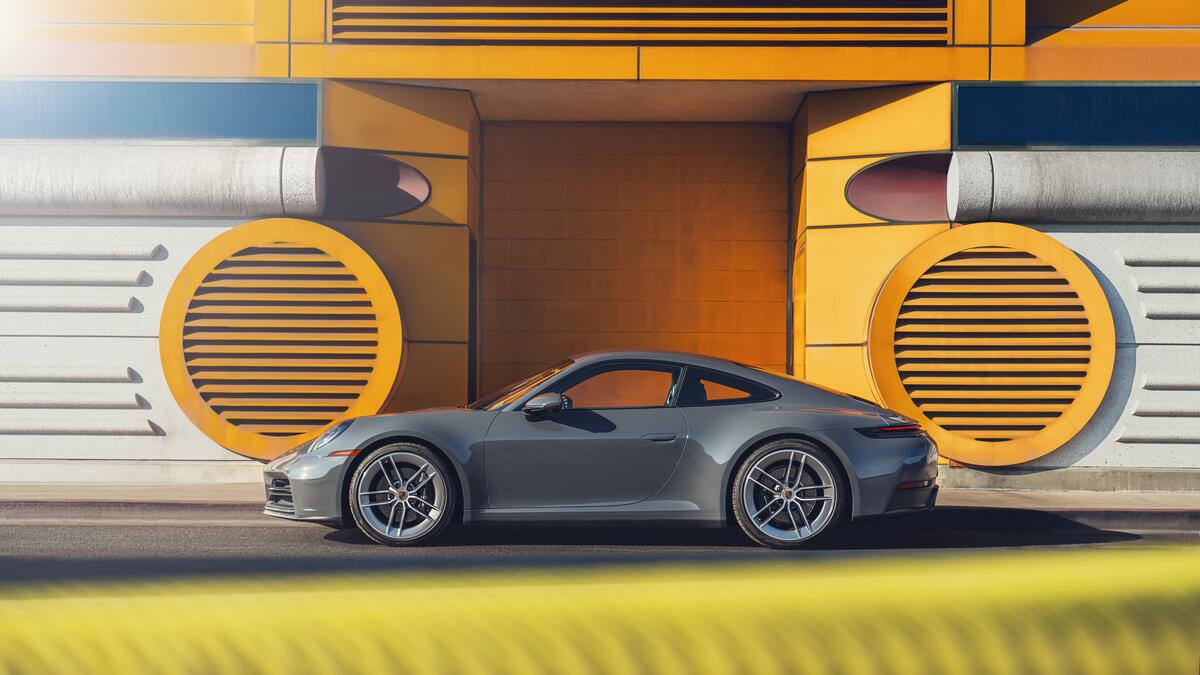
Porsche 911
"the ground. Yes, the 911 is on the ground. I rolled it like three feet and I need to call people about finding someone to do stuff with it this week."
They’re talking about a Porsche 911. It’s a famous sports car, and here they’re just saying they moved it a little and need help with it this week.
The speaker is referring to a Porsche 911, a long-running sports car known for its rear-engine layout and classic handling. In this context, they’re talking about moving it around and arranging for someone to work on it.
two stroke
"He has a 125 two stroke trials bike, which is immensely capable. And I brought out one of my electric trials bikes."
A two-stroke engine makes power every two piston strokes. That can help a motorcycle feel snappy and strong at low speeds, which is useful for trials riding.
A two-stroke engine completes its power cycle in two strokes of the piston, which can make it feel very responsive and powerful for its size. Trials bikes often use two-stroke setups because they deliver strong low-end torque and quick throttle response.
trials bike
"He has a 125 two stroke trials bike, which is immensely capable. And I brought out one of my electric trials bikes. And so we just rode through the woods, hopped logs, went up hills, crossed streams."
A trials bike is made for riding over obstacles at low speed. Instead of racing fast, you try to stay balanced and controlled while going over things like logs and rocks.
A trials bike is built for slow-speed obstacle riding—climbing, hopping, and balancing over rocks, logs, and uneven terrain. The goal isn’t speed; it’s control, traction, and precise body positioning.
rear wheel bearing
"he's like, and we fixed he has a KTM 500 that he does woods racing with. And he had the most destroyed rear wheel bearing I've ever seen in my life, like all the balls were gone."
A wheel bearing is a set of parts that helps the wheel spin smoothly. If it’s destroyed, the wheel can feel rough or start to wobble, so you have to take it apart and fix or replace the damaged parts.
A rear wheel bearing lets the wheel spin smoothly while supporting the bike’s weight and loads from bumps and traction. When it fails badly—as described here with missing balls—it can cause grinding and wobble, and it may require disassembly and careful reassembly.
KTM
"he's like, and we fixed he has a KTM 500 that he does woods racing with. And he had the most destroyed rear wheel bearing I've ever seen in my life, like all the balls were gone."
KTM is a motorcycle brand that makes a lot of off-road bikes. In this story, it’s the bike his buddy was riding when a wheel bearing failed.
KTM is a motorcycle brand known for off-road and dirt bikes, including models commonly used for woods riding and racing. Here, the speaker mentions a KTM 500 as the bike that needed wheel-bearing repair.

Yamaha Tenere 700
"He said, or do you want to ride the Yamaha Tenere 700, which is technically a middle weight adventure bike. Okay. [1814.3s] It's a 700cc twin."
The Yamaha Tenere 700 is a motorcycle designed for both street riding and dirt/gravel-style roads. It’s in the middleweight class, and in this story it’s also much taller and heavier than what the rider is used to.
The Yamaha Tenere 700 is a 700cc twin-cylinder adventure motorcycle aimed at mixed riding—pavement and rougher back roads. In the segment, it’s framed as a “middleweight” bike that feels tall and substantially heavier than the speaker’s usual race bikes.
middle weight adventure bike
"He said, or do you want to ride the Yamaha Tenere 700, which is technically a middle weight adventure bike. Okay."
A “middleweight adventure bike” is a motorcycle that’s not too small and not too big—meant to be easier to ride than the biggest touring bikes. “Adventure” generally means it’s built to handle both regular roads and rougher surfaces.
“Middleweight” is a class of motorcycle roughly between smaller bikes and large touring machines, typically balancing power, weight, and handling. “Adventure bike” usually means upright ergonomics, long-travel capability, and tires/geometry suited for mixed road conditions.
700cc twin
"It's a 700cc twin. It looks like, you know, just a big adventure bike when you look at it."
“700cc twin” means the motorcycle’s engine is about 700cc total and it has two cylinders. That combination affects how smooth it feels and how it delivers power.
“700cc twin” describes the engine displacement and cylinder layout: 700 cubic centimeters total displacement, with two cylinders (“twin”). This matters because it influences how the bike makes power and how it feels at different speeds.
dual sport bike
"And the dual sport bike that I have, the Kawasaki dual sport bike that I have, weighs just under 300 pounds."
A dual sport bike is made for both street riding and dirt/gravel riding. It’s a compromise bike that can do a bit of everything.
A dual sport bike is designed to work on both paved roads and light off-road trails. It typically blends street-friendly features (like lighting and gearing) with suspension and tires that can handle dirt and gravel.
twisty back roads
"So you have an amazing network of twisty back roads, most of which have a really good pavement on them because it doesn't really freeze there."
“Twisty back roads” are roads with lots of curves. Riding them well usually means being smooth with steering and speed.
“Twisty back roads” refers to winding, curving roads that demand continuous steering and throttle/brake modulation. For riders, these roads reward good chassis control and smooth power delivery rather than just top speed.
one and a half lane wide twisty roads
"And we went for like a three hour ride on the most amazing network of one and a half lane wide twisty roads that have a 40 mile an hour speed limit,"
They’re describing very narrow, curvy roads. On a bike, that means you have to be careful about where you ride in the lane and how smoothly you set up for each turn.
This describes road width and geometry: narrow, winding roads where there’s limited room for passing and you must be precise with lane position. On motorcycles, narrow lanes increase the importance of visibility, line choice, and staying predictable to other traffic.
adventure bikes
"...I don't know much about bikes alone, adventure bikes, adventure bikes like can go off road, but they can also go on pavement."
Adventure bikes are motorcycles built to do more than just street riding. They’re made to handle rough roads like gravel or dirt while still being comfortable on pavement.
Adventure bikes are a motorcycle category designed to handle both paved roads and unpaved surfaces. They typically prioritize upright riding position, long-travel suspension, and tires that can manage dirt or gravel.
semi knobby tires
"...they've got upright handlebars. They've got, usually they have semi knobby tires..."
Semi-knobby tires are tires with extra grip blocks for dirt and gravel. They’re not as “spiky” as true off-road tires, so they work better on regular roads too.
Semi-knobby tires have a tread pattern that’s more aggressive than street tires but not as extreme as full off-road knobbies. That balance helps with traction on dirt and gravel while still being usable on pavement.
dirt road
"...my friend Mike took me to a dirt road, a winding dirt road that went up a mountain..."
A dirt road is a road made of loose material instead of asphalt. The surface can be slippery and uneven, so you have to ride more carefully.
A dirt road is an unpaved surface that changes traction constantly due to loose gravel, dust, and ruts. Riding on dirt road conditions requires smoother inputs and better tire grip than typical pavement.
second gear
"...Just put it in second gear and ride up and see how it goes."
Second gear is a lower gear that helps you crawl or climb with more control. It gives the bike more “pull” at low speed, which is useful on rough terrain.
Second gear is a lower gear that provides strong acceleration and engine braking at low speeds. On steep or rocky climbs, riders often use lower gears to keep the engine in a useful power band and maintain control.
wash out
"...sections like parts of the road have been tried to wash out with rain and all that's left is the big huge rocks."
A washout is when rain damages the road surface and removes the softer material. After that, the road can become rougher and harder to ride over.
A “washout” is a section of road that has been eroded or undermined by water, often leaving holes, ruts, or exposed rock. After heavy rain, washouts can turn a previously rideable surface into something much more technical.
stability
"...a bike that has a ton of mass associated with it just sort of like goes over things. It doesn't get deflected... it's got a ton of stability..."
Stability here means the bike feels steady and predictable over bumps and rocks. A heavier bike can keep going in the direction you’re aiming instead of getting knocked around.
In off-road riding, “stability” refers to how predictably the bike tracks and stays upright when hitting irregular terrain. The speaker attributes the bike’s stability to its mass and momentum, which helps it resist getting deflected by rocks.
crosswind
"Like there's places where heavy bikes have an advantage 70 miles an hour with a 20 mile an hour crosswind. Yeah, being on a my Kawasaki 300 pound bike. If you're in a heavy crosswind with that, you're moving across the lane when the wind blows."
A crosswind is wind coming from the side. On a motorcycle it can shove the bike sideways, so you have to work harder to stay in your lane.
A crosswind is wind blowing from the side rather than straight ahead or behind. On a motorcycle, a strong crosswind can push the bike sideways, making lane positioning and stability feel much more stressful, especially at highway speeds.
stop signs and stop lights
"I figured out a whole bunch of stop signs and stop lights are where I don't enjoy the bike. Oh, just longer stopping distances, I assume."
Stop signs and traffic lights make you stop and start a lot. On a heavier bike, stopping and getting going again takes more work and can feel harder in traffic.
Stop signs and stop lights force repeated full stops and starts. For heavier motorcycles, that means more effort to brake, put a foot down, shift, and then accelerate again, which can make low-speed riding feel tiring and less confidence-inspiring.
stopping distances
"Oh, just longer stopping distances, I assume. Just having to stop, like having to stop something that weighs 450 pounds, put your feet down, you know, go through the gears..."
Stopping distance is how much road you need to slow down and fully stop after you brake. A heavier bike usually takes more effort and more space to stop.
Stopping distance is how far a vehicle travels from the moment you start braking until it comes to a complete stop. Heavier bikes generally need more braking effort and can take longer to stop, especially if traction is limited.
first gear
"...go through the gears, put it in first gear, put your feet down, wait for the light to change, get the bike going again..."
First gear is the lowest gear on the bike. It’s what you use to get moving from a stop, especially at low speeds.
First gear is the lowest gear ratio on a motorcycle, used for the slowest speeds and the initial pull-away from a stop. When you’re stopping and starting in traffic, repeatedly selecting first gear is part of managing low-speed control on a heavier bike.
dropping a motorcycle in traffic
"...And I'm reasonably nervous about dropping my friend's motorcycle in town. It's never a cool thing to do. Dropping a bike in traffic doesn't make you feel good."
Dropping a motorcycle means it tips over while you’re moving slowly or stopped. It’s more likely with heavier bikes because balancing takes more effort.
“Dropping” a motorcycle means tipping it over while stationary or moving very slowly, often during low-speed maneuvers. It’s especially common when a bike is heavy and you’re putting a foot down, balancing, and dealing with tight spaces or uneven surfaces.
gravel driveway
"...he's got a crazy half mile long gravel driveway, but we stopped at the bottom because we needed to talk to the guys who were fixing the phone lines. And you come off a paved road and it's a gravel hill that goes straight up."
Gravel is slippery compared to pavement because the surface isn’t solid. When you’re stopping or riding slowly on it, the tires can grip less reliably.
Gravel is loose, so tires can lose grip more easily than on pavement. Stopping on or maneuvering on gravel—especially on an incline—requires smoother inputs and more caution because traction can be inconsistent.
rear brake
"And so we're at the bottom of the hill and he's talking to people and he's like, all right, we're going to go through here and ride through the field and go up."
The rear brake is the brake that slows the back wheel. On gravel, it can be easy to lose traction if you brake too hard.
The rear brake slows the motorcycle using the brake at the back wheel. On loose gravel, using the rear brake can help manage speed, but it can also trigger rear-wheel slip if applied too aggressively.
clutch
"And I go to release the clutch and the rear of the bike spins the tire just a little and we're on loose, like completely loose gravel facing uphill."
The clutch is a lever/pedal that controls when the engine starts turning the wheels. If you let it out suddenly on slippery ground, the rear wheel can spin instead of gripping.
The clutch is the control that connects and disconnects the engine’s power from the transmission. Releasing it too quickly can cause wheel spin, especially on loose surfaces like gravel.
rear-wheel slip
"The rear of the tire spins just a little bit and it scooches the bike toward my left foot, which makes the bike start to lean to the right."
Rear-wheel slip is when the back tire spins without gripping the ground. On gravel, it’s common when you accelerate or release the clutch.
Rear-wheel slip happens when the rear tire loses traction and rotates faster than the bike is actually moving forward. It often occurs during clutch release, throttle changes, or braking on low-grip surfaces.
loose gravel
"the tire just a little and we're on loose, like completely loose gravel facing uphill. The rear of the tire spins just a little bit and it scooches the bike toward my left foot,"
Loose gravel is slippery because the ground shifts under the tires. That can make the bike slide or spin more easily than on pavement.
Loose gravel is low-traction road surface where individual stones can move under the tire. That makes it easier for the rear wheel to spin and harder to keep the bike stable while climbing or turning.

Yamaha T7
"It made me feel like a badass. I was like, I have ridden this bike off road more than most Yamaha T7 riders ever ride off road because I rode through some fields and did little jumpy things."
The Yamaha T7 is a motorcycle that’s meant to handle both street riding and dirt/off-road. The speaker is saying they rode this bike off-road more than most T7 riders.
The Yamaha T7 is a mid-size adventure motorcycle known for being relatively light and capable on dirt compared with many street bikes. The speaker uses it as a benchmark for how much off-road riding most T7 owners do.
Ford DX2 Lemons car
"...she was team managing their crappy college Ford DX2 Lemons car. [2520.9s] And the last time they ran..."
They’re talking about a “Lemons” style race, where the cars are usually inexpensive and the goal is to finish and have a good time, not build a perfect race machine. Their team was managing a Ford DX2 for that event.
“Lemons” refers to the racing culture/series where teams run cheap, beat-up cars and focus on reliability and creativity rather than performance. The speaker is specifically saying their team managed a Ford DX2 in that context.
lap time
"...their crappy college Ford DX2 Lemons car. [2520.9s] And the last time they ran, they got about 45 minutes of lap time."
Lap time is how long it takes to go around the track once. In racing, it’s a way to measure speed, but in long events it’s not the only thing that matters.
Lap time is how long it takes to complete one circuit of the track. Teams use lap times to judge pace and progress, but in endurance or “survival” events, the priority can shift from fastest lap to consistent, trouble-free running.
windshield
"...they got about 45 minutes of lap time. [2528.2s] They broke a windshield like three minutes into the first practice session..."
The windshield is the front glass that keeps wind and debris away from the driver. If it breaks during a session, it can be unsafe and usually means you have to stop and fix the car.
A windshield is the front glass panel that protects the driver and helps with airflow and visibility. In racing, damage to it can be a safety issue and can also force repairs or end sessions.
exploded their transmission
"...they broke a windshield like three minutes into the first practice session and they exploded their transmission like 20 minutes into the first race..."
They had a major gearbox failure. When that happens, the car can’t put power to the wheels correctly, so the race ends quickly.
“Transmission exploded” describes catastrophic drivetrain failure—something inside the gearbox fails so severely that the car can’t continue racing. In motorsport, transmission failures often come from abuse, overheating, or mismatched gearing/load for the power and traction conditions.
endurance-style mindset
"So they put the car back together this time and they had like a real sit down conversation... [2557.9s] ...okay, nobody needs to try to go fast... We are going to try to survive the weekend..."
This is the mindset used in long races: the first job is to make it through the whole event. Speed matters later—if you break early, it doesn’t matter how fast you could go.
The hosts describe an endurance mindset where the primary objective is survival—keeping the vehicle running and managing risk—before worrying about outright speed. That’s why they talk about trying to “survive the weekend” and why short bursts of speed don’t matter as much as staying on track for the full event.
run plan
"Actually have a run plan. [2585.4s] Yeah. Right. And that's the thing, like learn how to show up for all the hours of the race."
A run plan is basically the game plan for the whole race weekend. Instead of just trying to be fast for a short moment, the goal is to keep the car running and make good decisions for hours.
A run plan is the strategy for how a team and drivers will use time during a race weekend—what to focus on in practice, how to manage stints, and how to avoid mistakes. In endurance-style events, it’s less about “going fast once” and more about staying consistent for the whole event.
show up for all the hours of the race
"Yeah. Right. And that's the thing, like learn how to show up for all the hours of the race. [2590.5s] And after we can do that, then we can learn how to be fast while racing..."
In long races, the real win is finishing and staying consistent for a long time. It’s about not breaking the bike/car and keeping your driving steady.
This is endurance-racing thinking: success depends on completing the event reliably over many hours, not just achieving peak speed. It emphasizes consistency, driver focus, and avoiding mechanical issues that can end the day early.
AIM solo
"...Sonya has my old AIM solo and she was trying to get a start, finish set and they couldn't get it to communicate with the computer to put a lap on it."
AIM Solo is a device that records driving data during a track session. They were trying to get it to talk to their computer so it could automatically capture lap information.
AIM Solo is a standalone data-logging system used in motorsports to record telemetry like lap times and sensor data. In this segment, it’s being used to communicate with a computer so the team can automatically log a lap.
data acquisition
"...they learned that they should really figure out their data acquisition prior to going to the track. But you know, we, this is how we learn."
Data acquisition just means recording car and driving information while you’re on track. They learned they needed to set it up ahead of time so it would work when they got there.
Data acquisition (DAQ) is the process of collecting and recording telemetry from sensors during driving. The hosts are saying the team should have their logging setup figured out before arriving at the track to avoid losing time.
green flag
"...And the Saturday, they took the green flag, which they were very excited about."
A green flag means the session is officially starting and it’s time to drive normally at speed. They were happy because they were finally getting to race.
The green flag signals that a race or timed session is officially underway and cars can begin running at speed. Here, they’re excited because their event is starting.
high pressure power steering hose
"...until they blew the high pressure power steering hose. And, you know, vacated a whole bunch of power steering fluid..."
This hose moves the pressurized fluid that helps you steer with less effort. If it bursts or leaks badly, you can lose power steering and end up with a lot of fluid on the ground.
A high pressure power steering hose carries pressurized fluid from the pump to the steering gear. When it fails, the system can dump fluid quickly, leaving the driver with little or no power assist and potentially causing overheating or damage if run dry.
power steering pump
"...the only thing that they could figure out to do was to drain all the fluid... And just run the whole system dry. Sure. With still, with still a belt on the power steering pump."
The power steering pump is what creates the pressure that makes steering easier. They kept the pump belt turning but ran the system dry as a short-term fix.
The power steering pump is the component that pressurizes hydraulic fluid so the steering system can provide assist. The team’s workaround involved keeping the pump belt on while running the system without fluid, which is a risky temporary strategy.
hydrologue with fluid
"...if they tried to block off the high pressure side, the pump tries to seize itself with fluid, tries to hydrologue with fluid. And so the only thing..."
They tried to block part of the power steering system, but it caused the pump to act badly—basically not being able to circulate fluid the way it should. That made them realize they couldn’t just cap it and keep going.
This appears to describe a failure mode where the pump can’t move fluid properly and effectively “seizes” or gets damaged when the system is blocked or starved. In context, they tried blocking the high-pressure side and it led to the pump trying to run in a way that caused problems.
power steering fluid
"I'm like, you do like the entirety of your team understands that power steering fluid acts as a lubricant and a cooling fluid for that pump, right? Yeah."
Power steering fluid is the liquid that helps your steering feel lighter. It also helps keep the power-steering pump cool, so if the fluid is wrong or low, the pump can overheat or wear out.
Power steering fluid is the hydraulic fluid used in many power-steering systems to help move the steering rack with less effort. In some setups, it also helps carry heat away from the pump and components, so low or contaminated fluid can contribute to overheating and pump wear.
checkered flag
"And they took the checkered flag. Not fast. But they were, they were a very happy team of will college people for having basically completed a lemons race on their second attempt."
The checkered flag is what you see when a race is over. Getting it means you made it to the finish line.
The checkered flag is the signal that a race has reached its finish. Teams often celebrate it even if they weren’t the fastest, because it means they completed the event.
lemon race
"...for having basically completed a lemons race on their second attempt."
A “lemon race” is a race where people bring cars that aren’t great—often broken or unreliable—and try to finish anyway. The challenge is keeping the car running long enough to complete the event.
A “lemon race” is a motorsport format where teams intentionally race unreliable, often beat-up cars—typically with the goal of finishing rather than winning outright. It’s commonly associated with endurance-style “survive and repair” racing culture.
not being an asshole award
"And they got an award for the not being an asshole award, I think. Oh. Which I mean, honestly, for a bunch of like 20 year old college dudes..."
They’re talking about a funny award for being a good teammate and not acting badly. It’s more about sportsmanship than racing fast.
This refers to a humorous award category given in the event they’re describing, emphasizing sportsmanship and behavior rather than speed. It’s a “culture” detail that helps listeners understand the vibe of the race.
tire temperature probe
"...she has her, her tire temperature probe. She's got a pyrometer to check just to make sure there's no glaringly obvious alignment issues."
A tire temperature probe measures how hot the tire is getting. If the tire is getting too hot or heating unevenly, it can mean the setup or driving needs adjusting.
A tire temperature probe measures how hot a tire gets across the tread. In racing, tire temperature helps teams judge grip and tire wear, and it can indicate whether pressures, driving style, or alignment are causing uneven heating.
pyrometer
"She's got a pyrometer to check just to make sure there's no glaringly obvious alignment issues."
A pyrometer is a tool that measures temperature, usually from the surface. In racing, it helps teams check tire temps quickly so they can tell if something’s off.
A pyrometer is a temperature-measuring device that can read surface temperature (often by infrared). On race teams, it’s used to quickly check tire temperatures and spot problems like overheating or uneven contact patterns.
alignment issues
"...a pyrometer to check just to make sure there's no glaringly obvious alignment issues."
Alignment issues mean the wheels aren’t pointed the right way. That can make tires wear unevenly and grip worse, so the car feels less predictable.
Alignment issues refer to incorrect wheel angles (like camber, toe, or caster) that affect how the tires contact the road. In racing, bad alignment can cause uneven tire wear and inconsistent grip, which is why teams check for obvious problems.
endurance racing
"actually endurance racing and knows what it means to treat sketchy equipment in such a way that you're going to make it to the end of the day and how that differs from trying to go fast."
Endurance racing is like a long-distance race for cars. Instead of just going as fast as possible for a short time, teams try to keep everything working and finish the whole event.
Endurance racing is a motorsport format where the goal is to last for a long time—often hours—rather than just win a short sprint. Teams focus on consistency, strategy, and keeping the car and driver safe and reliable throughout the event.
gingerman
"And I know they're planning on being at gingerman when that race goes to gingerman. Yes. And I want to say I'm somewhere else that weekend, but again, it doesn't surprise me."
Gingerman is a reference to Gingerman Raceway, a motorsports track in Michigan. The hosts mention it as a likely destination for a race weekend, which helps ground the episode’s track-focused planning.
paddock
"But I, but I don't think they would turn down opinions of somebody who actually genuinely understands some things about cars in ways that they don't yet. Yeah. It's a thing. But congratulations. Yeah. Very, very proud of them."
The paddock is the busy area at a race where teams hang out and work on their cars. It’s not the track itself—it’s where the teams set up and prepare.
The paddock is the area at a race event where teams, garages, and support activities happen between sessions. It’s where you’ll find team members working on cars and where people network and share information.
trackwalking
"Well, we are at trackwalking podcast, Facebook, Instagram, but join the discord."
Track walking means walking the race track before you drive it. You look at where turns are, where you’ll need to slow down, and what the track looks like so you can plan your driving.
Track walking is the practice of walking the circuit to observe braking zones, corner geometry, surface conditions, and sightlines before driving. It’s commonly used in racing prep to help drivers plan lines and anticipate hazards.
car selection
"And we talk about car selection and nonsense like that. Yeah. Yeah. If you can like share, write all that, the podcast, because it does help and that's fun."
Car selection means picking which car to use for a race or track day. The right choice depends on what the track needs and what the driver can handle.
Car selection refers to choosing which vehicle to run for a given event or series. In track contexts, it usually involves matching the car’s capabilities, reliability, and rules compliance to the driver and track demands.
Request an Explanation
Heard something you'd like explained? We'll add it to this episode.
Sign in to request explanations for terms you heard.
Want to learn more?
Browse our glossary for plain-English explanations of automotive terms, jargon, and concepts.
Help improve this episode
See something that's not quite right? Our annotations are AI-generated and can sometimes miss the mark. Click the flag icon on any annotation to suggest a correction.