This is the What Car? EV Podcast for Thursday, September 25th, 2025.
Episode 241, All The Names.
I did a little bit of driving around the country this weekend.
Well, weekend? What day is it?
The Red Warrior, you are.
And I didn't even realize the state that I was in, like, physical state, but I could mean anything as well.
Which one of America's 50 states that I was driving for at the time, because you're just driving.
And then I saw this sign that said Lordstown.
And I'm like, I know this place.
Yeah. So I take a picture and text you like, hey, look at this.
Small world.
Yeah. A manufacturing plant that is of no interest in the world except for absolute geeks of the automotive
culture.
And speaking of absolute geek, then I actually drove one.
You did.
And that one probably either got sold for a lot of money or got crushed.
Yeah.
Because I think it went up for auction, didn't it?
It was probably in that batch that went up for auction that was, remember that?
There was one that, what was that called?
Or did you just say it?
I'm still not awake for my trip.
What?
The, what was the Lordstown?
Endurance.
That's what the Lordstown truck was called.
So yes, if people missed it, Lordstown was automotive manufacturing plant.
Was it GM?
GM, formerly GM, yeah.
And then from there got purchased by Lordstown Motors, an EV company that then struggled sold it to Foxconn.
Which I don't know what the current status is.
Yeah, with the promise that Foxconn would produce the Lordstown trucks and then Lordstown then immediately went bankrupt.
And Foxconn, who knows?
I've lost track at this point.
I'm Phil Roy.
There you go.
And I don't really know where I am at this point.
I've had a couple of 23 hour days in a row and.
So physical state, both literally and metaphorically TBD.
Yes.
I'm here physically, but maybe not mentally.
We'll find out.
I'm excited to see what we talk about.
We did a quick brief rundown for me before this show and I'm like, I could I could talk about all this stuff.
But keep in mind, folks, I don't actually know anything about what I'm going to get my opinion on.
And you've got about four hours of sleep.
I think I got nearly five last night.
Oh, OK.
It's pretty good.
Yeah.
All right, Ed Sanchez got a little more sleep than that last night, pretty sure.
As long as one of us is competent on this episode, that would be good.
Four plus years of podcasting, still of niche interest, but hopefully growing.
Anyway, yeah, we got some exciting news today.
And and as Phil mentioned, I did actually get a chance to drive a Lordstown endurance.
But not recently.
That was back in the days.
This was a couple of years ago.
I think I think I might have done a review on her blog for it.
So I want to say you find that we'll post it.
And it wasn't a bad one either.
Like you didn't really have anything bad to say for a work truck.
No, the concept was solid.
The execution and some of the technicals were kind of here.
I remember the charging port was like a little awkward.
There was like various things that and then if you looked at the efficiency
numbers, it was not particularly efficient.
But in terms of the driving experience and the approach and concept, I thought
I thought I had some merit, but yeah, unfortunately, never caught on.
And nobody else did.
I guess I was the only one.
What's up for this week?
What are we going to talk about?
Well, we're so I can't remember a couple of episodes ago.
The Yang Wang Unine set a speed record, I think.
And now we have another Yang Wang Unine setting another speed record.
So this is a different car, but extreme model.
But it's the same.
It's just different because I saw this article.
I was like, we already we already did the Zed and you're like, no, no, no.
This one's different.
So what's the difference?
What's the Unine extreme?
So I guess this is I'm assuming production intent, although production
is maybe a generous term.
Supposedly they're only going to build 30 of these.
But how many of the Neveras were they going to build?
They were going to build like 150 or 200.
Yeah.
I don't know if they ever got there.
I think they kind of fell short.
Well, I mean, so this is a whole other discussion about is is
their demand in the ultra high end market for super powerful EVs.
Anyway, not to get too off topic.
So, so before it hit like I think like 293 or something.
So it was knocking on the door of the Bugatti, but not
not quite there.
And I guess this surpassed that officially.
So anyway, it hit 308 miles an hour.
So, you know, everybody needs to go that fast.
Yes, I can't remember.
I mean, you'll you'll have to do the math on the kilometers
an hour because, you know, that's what the rest.
I don't care.
We use freedom units here.
Freedom units.
So that's, I don't know, like 60 bald eagles.
I don't know.
So, so some other highlights of this evidently first production
car with a 1200 volt platform.
That's a lot of volts.
Yeah.
But that's exactly where I think all these ultra high
performance expense, I don't know how expensive this is, but
I'm guessing it's pricey.
This is exactly what they should be doing.
Crazy high voltage, like stupid, weird, fast charging,
like all these things.
This is where you push that limit.
You don't push that limit in like a Corolla EV, like that's
not, we don't need to.
Well, I mean, you know, it goes back to the whole idea of
like motor sports, you know, kind of pushes the industry.
Exactly.
Eventually that technology filters down to the mainstream.
So anyway, stay tuned.
We have some other thoughts kind of along those lines.
But anyway, the quote regular U9 I think is about
a quarter million.
So I'm assuming this will be a little more than that.
But probably still less than the two million plus of the
Remat-Snavera or Bugatti Chiron or however that's.
Yeah, I think it's something like that.
Do you know if I'm busy?
If you're sitting on youtube.com slash at the walk car,
you will see me busily not paying attention.
And I'm trying to discover if this is a multi gear
transmission or if they did this with a single speed.
I think it's single speed.
Wow.
Yeah.
But I mean, if you know, doing the math, each the motor
in each wheel is 750 horsepower.
So I'm assuming it's powerful enough that they can get away
with a single speed, which is even more impressive.
But yeah, that's wild.
Yeah.
As far as I know, this is just a single ratio drive on
this.
So that's quite an accomplishment.
Can you imagine if they geared that so we could only
do like 200 miles an hour or like 180, you'd have no
traction in any.
Well, not only that, I would say the acceleration would
probably be so ferocious.
It would probably black you out.
I don't think they could get traction.
It would be probably one of those things where like at
any speed, it could just light up all the tires.
Well, maybe.
Well, okay.
So if you if you have this the mile per hour, I don't
maybe this is completely incorrect, but wouldn't you double
the gear ratio or half the gear ratio, whatever, like.
You'd basically double the torque multiplication.
Yeah.
I think.
So yeah, I get what you're saying.
So well, do you remember that like college experimental
car they they did in Switzerland or something that did
zero to 16.9 seconds?
Yeah.
Yeah, yeah, yeah.
It was like 80 miles an hour, but but getting there
was like boom.
Yeah.
Yeah.
They did it in.
I can't remember.
They measured it in feet and it was a very small number
of feet that it got to 60 miles an hour.
It was it was.
Yeah.
Well, I think I think we're you know, I just just
as inside just for for curiosity.
I looked up some of the terminal velocities of
aircraft and most propeller aircraft have a cruising
speed of about 170 ish miles per hour.
So this is faster than most of those.
Now some of the faster like turboprops or they can get
they can approach 400 now commercial airliners are
like 400 plus, I think.
Yeah, no.
And there are reports like have a commercial of commercial
airliners with a good tailwind on a good day actually
nearing Mach 1 in like 700 something miles an hour.
Okay.
Yeah, they don't normally go that fast.
But like when the conditions are perfect that there
are a couple cases where like a 737 or whatever it is
is actually neared or exceeded Mach 1.
Yeah.
But generally you're cruising at like 500 miles an hour,
I think.
Yeah, for but still, I mean, we're we're getting into
like aircraft level velocities with this.
So why can't we add wings and this is our flying car?
Well, you know, it is China.
So, you know, they're probably working on it.
I know I saw some pretty wild concepts that see
us from Chinese automakers like literally doing like a flying
car concept.
And I don't know if they ever actually made it to production,
but they they sounded pretty serious about it.
And I'm like, all right, well, crazy talk.
All of these like flying cars things very fast.
So this next vehicle is not quite as fast.
I if I venture to guess.
In fact, I would say this next vehicle is not fast at all.
I would say that it's so not fast.
It's not going to exist.
Well, okay.
Yeah, we're getting there.
So you remember was probably I won't say about 18 months ago at
this point, Ram said they were going to the Ram rav full battery
electric truck with a massive like, I don't know where they're
saying like 230 kilowatt hour.
Yeah, all the battery, all the battery and they were
claiming 500 mile battery range, which yeah, and we speculated
that this thing probably weigh about 10,000 pounds.
But yeah, but it would actually be useful for trucks.
Yeah, items like towing because that was what we discovered
with the Silverado EV is you put a giant battery in it and it
can actually tow and be useful.
So that's that's no more now the name the name is living on.
So so here's the little switcheroo.
So they're canceling the full battery electric version.
They're still going to do the range extender, but instead
of calling it the Ram charger, they're going to call the range
extended model the Rev now wait.
So OK, this goes back to me not being away.
Stay with me.
So Ram was making they were going to make a full electric
truck and what was that going to be called was going to be
the Rev.
OK, and then the range extended version, which would be the
Ram charger.
OK, and now now just the range extended version, which is a
gasoline engine, presumably gasoline engine.
No, it's in a star v6.
OK, powering a battery pack and then the electric motors will
drive the tires the gasoline engine won't.
OK, so that will now be called all the names that they were
going to divide up.
It's now all that's going to be the Rev.
The range extended is going to be the Rev and there's
something this is totally in the side.
There's some speculation that the Ram charger name will also
be used for a ram badged version of the Wagoneer.
Again, totally speculative, but that's one rumor floating
around out there.
So the Ram charger name may not be dead, but not in the
way we thought it would.
This really isn't a surprise to me anyway, not the name
thing, but the them canceling.
No, because I mean, I think where the current the current
state of technology, current state of infrastructure.
I honestly think pure electric trucks are not a good choice
right now.
I would not.
I mean, unless a guy was like just a weekend warrior, you
know, Home Depot weekend projects, stuff like that, which
is probably the majority of half time.
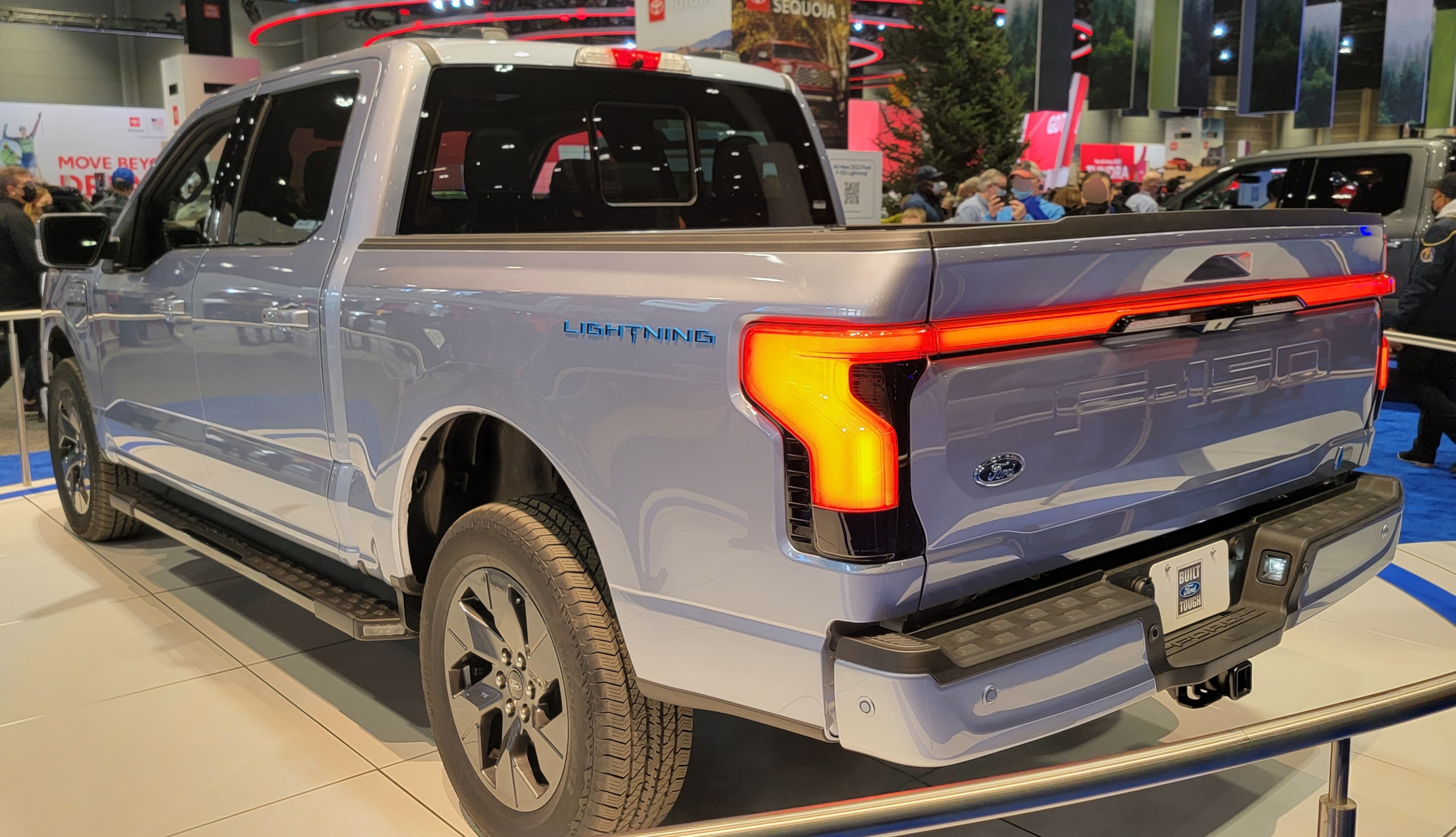
Yeah, so, you know, if they wanted to get a lightning
or an R1 or whatever, I'd say, yeah, sure, great.
But if they're like, oh, yeah, I tow and do this and that.
I'd say, but they said, well, I still want an electric.
I'd say, well, I'd wait until the, I guess the Rev now
comes out or something with the range extended option
because I really think that's a lot more practical right
now.
So yeah, certainly for my application, I would not be
dropping $80,000 on an electric truck for what I need.
Yeah, on what I need.
It's just simply not going to fulfill my needs.
Yeah, but a range extended one would 100% fulfill my needs.
So I can't disagree with this.
Now that said, if I only went and went mountain biking
or surfing lightning is fine.
Yeah.
Is it?
Yeah.
No, I think the lightning works for a lot of people.
But once you really start using a truck as a truck.
Yeah.
Once you're six or 7000 pounds in long distances, you're going
out into mountains.
Just it's not going to do it.
It's not going to cut it.
Anyway, I bet that this is not based on that.
I bet this is based on the political environment right
now and the fact that all the emissions are getting
dialed back or at least that's the plan.
I don't know if it's happened or not because I've
not been paying attention to the world.
Well, that certainly seems how Stellanis is running their
business lately.
Yeah.
At least in North America.
Ironically, they're really pioneering some pretty
advanced EV technologies in Europe, but in America,
they're going full.
Yeehaw.
So speaking of which along the same lines.
So you remember how only a few months ago, they were
like, oh, yeah, we're going to do a four by E version
of the Gladiator.
Uh huh.
Yeah.
Well, that's not happening.
Hmm.
So, um, yeah, I was kind of kind of looking forward
to it in kind of a abstract sense.
Not that I buy one.
I'm not.
Why would they not do one?
Because a four by E is just a hybrid hybrid.
Yeah.
Yeah, it's not.
It's still the gasoline powers the tires with an
assist from electric motor.
Why would I got to believe that all this is is a
body on a unlimited.
It's it's what's a longer wheelbase, but yeah, it's
effectively stretched unlimited with the with the
bed on it.
Yeah.
So why would they not want to do that?
I think probably because the first of all, the tax
credits disappearing.
So that's part of it because I think maybe they
were counting on that to kind of offset the cost.
And now that that there's no longer cafe penalties,
they're like, who cares?
Do you think we're going to like right now
in California, the state you and I live in in
case you didn't remember that right now you go to
a Jeep dealership and I believe you can only buy
four by E unlimiteds.
You can't buy any of the lot off the lot.
Everything else is a special order special order.
Yeah.
So is that going to change?
I haven't heard of a change in strategy for the
Wrangler and not only that from what I've heard
that the four by E Wranglers are actually
selling pretty well on their own.
Just, you know, I think, I think maybe initially
there's a little pushback and people say, Oh,
I don't want this.
And then they drove.
I actually drove one at an event a little probably
like two years ago and it's there.
I mean, they got 470 pound feet of torque.
So I mean, it was pretty punchy.
I was pretty impressed by now.
Grant, it was just kind of a down the block
and back short test.
Yeah.
But yeah, I mean, they're there.
They got plenty of power and they're pretty punchy.
So, I mean, I think from a drivability standpoint,
it's, it's, you know, pretty compelling experience.
But yeah, I think, you know, now that there's no longer
the stick of cafe fines and regulations are kind of
like nobody really cares.
And plus the added cost of, you know, the hybrid power
train, they're like, this thing's probably going to
cost 60 on the low end, probably $60,000.
Probably mid higher and 75, 80 grand and they're like,
nobody's going to buy this.
So, I mean, again, you could speculate on exactly
why they did, but I think my feeling is that they're
keeping a lot of this stuff in their back pocket
for when there's a change of administration and most
likely a change in rules regarding fuel economy
efficiency, so forth.
And then, so they're just kind of, I think delaying
that for a few years.
I think you'll probably see this model eventually,
but not immediately.
You think they're still continuing to put money
into development of this stuff?
Or do you think they're just pausing the programs
and saving the money?
I would think the R&D on this, I mean, they, they
announced it a few months ago, like it was pretty imminent.
And so they just very kind of suddenly just, I would guess
that the R&D on this is basically done.
That my guess, if we do see this model, my guess
is it would be probably like 27, 28 when it comes.
Yeah, the only concern I have with all like whatever,
I mean, this administration is doing some wild things
with emissions and whatnot.
And yeah, if the next president comes in and they're
a Democrat or they're a more like Republican Republican
and not progressive Republican in terms of environmental,
yeah, then then everything will swing back.
I'm wondering how far back this administration is setting
us in just the development of this.
Are they pausing?
Are the manufacturers pausing the development?
They're just going, okay, well, that team, we're not
going to have to worry about this for at least
the next three years.
So that team can go off and they can do something else
and we'll think you figure out how to stuff the Hemi
in the gladiator.
Yeah, would save already done.
But so I just that's my only concern is that it's not
just that we're pausing the release of the vehicles
is that we're pausing the development and setting
ourselves back, which the rest of the world.
I mean, if it's only American manufacturers that
are doing it, then they're not really getting
any further behind each other, but the rest
of the world is continuing the development and
all it does is set us up for failure down the road
because we won't be able to compete will be four
years behind on where we should have been.
And already we can't produce things that are
competitively priced as it is.
So we're going to have things that are more
expensive with fewer features.
My my feeling is they've just delayed or slowed
down the market launch and and at least
temporarily the development resources on some of
these models.
I mean, Ford, you know, Ford did a big presentation
a few months ago on their future, you know, modular
EV sort of thing.
You remember that presentation Farley did.
Yeah.
And where they're going to basically completely
reconfigured the Louisville plant where they
make the escape right now.
It's going to be all EVs.
So I think that stuff is still happening
in the background and I still think and again,
this is just my kind of analysis of this.
There's still kind of a consensus in the auto
industry that come.
2028 2030 things are going to flip again where
there's going to be a much larger emphasis on
environmental friendliness, fuel economy, so forth.
So I think they're they're just kind of tapping
the brakes a little bit for now.
And especially in the case of Stellantis,
they need sales badly because the last few
quarters they've not done well.
Yeah.
And they've in some ways kind of dug a hole for
themselves for so many years by kind of doubling
down on the hammy bad boy tire smoke and kind of
image and they've basically conditioned their
customers to want that.
So when Tavares very suddenly kind of flip
the switch and said, okay, we're killing
the hammy, we're going EV, we're going to do
this hurricane turbo six and all that.
It really alienated a lot of their customers.
So, you know, for better for worse, I think
Stellantis at least in the near term is going
to have to kind of placate their customer base,
bring back the hammy, you know, as much as
they can and, you know, try to build up their
sales before a few years down the road.
They're going to have to flip the switch again
and go in a more, you know, progressive
direction with their powertrain strategy.
Anyway, that's just my take.
But yeah, anyway.
Now, well, so to prove my point a little bit,
the next item that you put on this rundown is
a foreign company that is continuing its
development of things like range extension range
extended vehicles.
Well, because they're a global company.
They're and they do have a significant
presence in the US and North America, but
they're also all over the world.
The Hyundai Group.
So they said, but what's kind of interesting
though is a few years ago, Hyundai was saying,
oh, we're all in on EVs now that they're still
kind of flirting with fuel cells a little bit,
but they were super, super bullish on EVs.
They're doing God's work with the fuel cells.
Yeah.
And now they're they're kind of backtracking
a little bit by saying they're going to bring
out a bunch of what they're calling E rev
or range extended electrics in 2027.
So again, that's kind of an interim step
toward full EVs.
I still consider the Hyundai Group.
I would among the mainstream OEMs is kind of
a leader in EVs, you know, with the EGMP vehicles.
But I think they're getting the sense
that a lot of customers are still not ready
to make the full leap.
So they're saying, okay, in the interim,
we're going to do these range extended models
kind of, you know, kind of training wheels
for people that are kind of EV curious,
but not quite ready to make the full full leap.
So anyway, those are coming in 2027.
They said they're targeting 600 plus miles of range.
They say they're going to use in-house developed batteries.
But even even so, my guess is they're probably
going to partner with either LG Samsung or SK for that
because even Tesla, they're in-house battery packs
or with Panasonic.
So anyway, so anyway, specific models and brands
were not specified, but a lot of people are thinking
that's probably going to include a Genesis model.
So anyway.
Does I, as somebody that I've kind of come
through an EV journey over the last five years
where I didn't care at all about them five years ago.
You were definitely skeptic.
Yeah, I mean, I wasn't like anti-EV.
I'm just like, I don't get it.
Like, I just we'll see, you know.
And I'm in the, I've been in the automotive industry
for 20-something years reporting on all of this stuff.
And so, yeah, I'm fully aware that things change.
And one of the things that caught my attention
about it was that it was coming in and disrupting
and that if I was to kind of concentrate on a niche
that this is the most exciting niche that there is.
And that's kind of what drew me into this
as just an automotive nerd.
It's like where people love supercars.
You're never going to own one, you know, a supercar,
but you can love the supercars
and you can know all there is about it.
And so it was kind of like, you know, whatever,
just curious, curiosity for me.
So one of the things that people have talked about
in all of that time is you don't need to go
more than 200 miles on an EV.
Anything over that is a waste of time
and that you really only drive 24 miles a day
or 30 miles a day.
And so EVs with 200, 240 miles of range.
Like that's kind of a, you know, that's more
than you'll ever need.
So why is 600 plus miles a selling point
for these?
I just I just is.
I don't know.
I mean, even in the like the mainstream commercials
I see for like the Civic Hybrid or something,
I think they're touting like, you know,
500 plus range.
So that's still a thing with consumers.
I think for dealers and brands
that are still not really on the leading edge
with EVs, they want to move what they have
not future promise.
So I think long term marketing pivot
is difficult with when you're saying.
By our EVs, they only do 250 miles,
but that's all you need.
You don't need anymore.
And oh, by the way,
look at this 600 mile gas vehicle
that we also sell.
It's a very difficult thing to speak
out of both sides of your mouth,
especially at the same dealership
where you're saying somebody will be like,
oh, I can only do 200 miles.
Yeah, yeah, yeah, but that's fine.
You know, let's do the math.
You don't need anymore.
And but then also sell something that 600
miles where you theoretically wouldn't need
to fill up until once a month.
I mean, that's as good as electric for me
because everybody says with electric,
oh, you you don't ever fill it up.
You just come home and you plug it in
and you fill it up.
Well, that's great.
But the one road trip that you might take a month,
you've got to then find a fast charger
and sit there for maybe 30, 40 minutes.
If you got 600 mile range in 15 minutes,
you can fill it up for a month.
I mean, it's faster to do that.
So I don't understand.
It's very confusing when you're marketing to both sides.
Yeah.
And I get both sides of that argument.
So people probably listen.
I feel, you know, stupid, whatever.
But I'm just thinking from a marketing point
of view, you are stabbing yourself in the back
by touting 600 miles when at the same time
you've got to sell a vehicle that can only do
220 miles and you're trying to sell
to a market convincing them spend more
to go less far.
Yeah.
No, I mean, it's kind of a conundrum
because I think, you know,
my this is my cynical side coming out,
but they're basically appealing to people's insecurity
by touting the really long range.
Like, oh, you need this.
Whereas it's like you're saying that this is like
the guys that buy the big pickup trucks to compensate.
Well, they're doing a mileage range compensation.
Yeah.
I mean, so yeah, it's going to be interesting.
I mean, just imagine the Stelanus deal
or the the Dodge dealers in a few months
when they're going to have the hurricane
and the EV chargers, you know, side by side
and, you know, how they're going to try and sell that.
Yeah.
And if rumors prove true that they're trying to put
the the Hemi back in it.
I mean, so that's going to be really confusing.
Even though by most indications, the the Daytona EV beats
all I mean, I know if you've seen the videos,
even though on paper, it's a little less horsepower.
The off the line like zero to probably 90.
The the EV just demolishes even a even a red eye.
And they're like, dang, this thing is really fast.
Yeah, these were like haters.
They're like, oh, I hate this car, blah, blah, blah.
And they drove.
They're like, dang, yeah, really moves.
You know, butts in seats.
So everybody says butts in seats.
So yeah, I mean, to your point, this is it's going
to be interesting how when that day finally comes
when they kind of start shifting towards EVs,
how they're going to spin that.
But they'll just ignore the past.
It's just people have memory.
It just sticks in your head of like, oh, but my last car
went 600 miles and that was a selling point.
You know, that that was what swayed me was all that
marketing.
Yeah, but like you said, people are dumb.
Yeah, persuadable.
Oh, well, I'm a little more polite about it.
You know, but I wonder when the sales pitch
that the dealership is going to be, do you really need
that?
Yeah, what's your typical daily driving pattern?
Oh, this this would be perfect for you.
Yeah, 300 miles.
I yeah, I will carry on instead of anyway.
That horse.
So somewhat related to this last announcement, I guess
Hyundai said they're going to do a body on frame
midsize truck.
So this would be, I guess, a step above the
Santa Cruz.
So this would be like a Ranger Tacoma competitor.
So at the CEO Jose Munoz said the segment represents
a quote white space opportunity.
We were ready to capture.
And he said it'd be coming before 2030 and that
they could also do SUV variant.
So like a Bronco or forerunner type model.
But I thought about this and I'm like, is this
really the right strategy?
Because I look at between the Ranger and the Maverick,
the Maverick outsells Ranger three to one in the US.
I think, I mean, again, this is just my opinion.
I think the better strategy would be to make the
Santa Cruz, maybe kind of iterate and fine tune
that a little more.
I would love to see a Santa Cruz with the midgate.
I know you might my obsession with shocked.
Shocked as a former Avalanche owner.
But I think the Santa Cruz with the midgate would be fantastic.
If they wanted to make it a little kind of more macho
looking, style it like the new Santa Fe, a little, you
know, chunkier, more assertive.
Right now, it just kind of looks kind of like a kind
of like a Tucson pickup, basically.
Yeah.
So I think they could kind of chunk it up a little bit.
Like, I don't know if you've seen what Honda's
done to the Ridgeline, but the newer Ridgelines are a
lot kind of more aggressive looking.
They look more like Tacomas.
Yeah.
Whereas before, they look more like a pilot.
I was going to say pilot, but I'm trying to think
them the midsize, not Odyssey.
That's the minivan.
I might draw in a blank.
Anyway, you know what I'm talking about?
Yeah.
Yeah.
It just looked like a mainstream kind of SUV, but
they're like, nah, we want to make it a little
more kind of macho and assertive.
So if it were me, I'd double down on the Santa Cruz
and try to really do something with that.
But I mean, they're a multi-billion dollar
multinational company.
They got the resources within the group.
They have a body on frame pickup in the Australian
market, the Kia Tasman.
I don't know if you've seen that.
It's interesting.
The styling is they talked about electric or
anything with this.
There's speculation.
It might be a hybrid drivetrain, which makes sense
because they do offer one in the, there's a version
of the Tacoma that has the TRD Extreme or whatever
it's called.
It's got a hybrid powertrain and the overseas
there's a overseas version of the Ranger that
actually has a plug-in hybrid powertrain.
So it seems it looks to me like the midsize segment
is slowly kind of transitioning to more electrification.
So that would make sense.
So these two, these two news items could be related
not necessarily, but there could be some tie-in with
that anyway.
Yeah, it's, we've seen the electrification of
kind of everything.
And now, and this is after a few years of basically
everybody like us saying, what's the point in
having an electric truck unless it's a tiny truck?
And it seems like that's the future, the near future
is the full-size trucks and the larger trucks
are going to be hybrid, gas-only or hybrid.
And then maybe the little ones might be
electric or electric, whatever, but it seems
like trucks are going to be exactly what we said
they should be several years ago when everybody
started saying they're going to produce electric
trucks, which is put a gas engine in there
and make it useful and then take the cars
and do go fully with the passenger cars.
Yeah, yeah, yeah.
So speaking of kind of covering all the bases.
So BMW just showed off the new IX5.
So I guess they're doing five different powertrain
options with this.
Because why not?
Make things confusing.
So this will be offered with EV, plug-in hybrid,
gas, diesel and fuel cell.
Fuel cell?
Fuel cell.
Finally, somebody doing it right.
And guess who they could develop that with?
Is it Hyundai?
Toyota.
Oh, wait, Toyota.
Okay.
So, yeah.
So in terms of the market potential for that,
I got to wonder.
Because of all those other hybrid or all those other
hydrogens successful fuel cells.
Yeah, wildly successful fuel cells in the market.
So speaking of which, I had a friend text me
the other day and she was like, she was like,
can this price be true?
And she sent me a link to a listing on a Mirai.
And I think literally was only $7,000 and she said,
wow, this is an incredible deal.
I'm like, you think it is?
It's an incredible pain in the, you know what?
Yeah, because I said, it's almost impossible to find
fuel for these and half the time the stations are
out of out of condition.
So I said, do not get a Mirai.
And then on top of that, I don't know what the
pricing is now, but there was an article a couple
of years ago and how expensive it was to fill
up the Mirai.
Well, once you've blown through the credit
because when they sold these new, they came
with like a $15,000 fueling credit.
But once that's expired, I guess the like price
per gallon equivalency on hydrogen is something
like $10 a gallon.
Yeah, it was the equivalent of running like race gas
in a Camry.
Yeah, essentially.
So yeah, I could see why the price was so cheap.
But anyway, there's still, I guess BMW is still
committed to it and still thinks it's the future
and always will be.
And always will be.
Yeah.
So I don't know, what are your thoughts on this?
Every time.
So my kids are learning a couple of my kids are
learning about they're doing one of my kids is
doing this interesting thing in school where
they are taking cities.
Maybe this is just a granola tree hug and hippie
California thing, but they are taking theoretical
cities and the city requirements.
Keep in mind, this kid is in elementary school
and they're taking these theoretical cities
with the population and the requirements of like
what the city needs.
CO2 footprint and all that.
Well, no, they're determining what would be
the best electricity source for that city.
Whether it be solar, wind, nuclear, coal, gas.
Yeah.
And they're looking at the various elements,
the amount of footprint that they have available.
I mean, this is fourth grade.
Cost.
Yeah.
So they're I don't know if they're looking at cost
necessarily, but the so I was talking to her a
little bit about this and the only time that I
could come up with as a good use of hydrogen in
at all in any of this was producing green hydrogen
to power the city at night.
So excess power generation via solar during the
day or wind and then you can convert to your
excess into hydrogen to power at night because
that was one of the problems that they were having
in their study was nighttime or when it's not windy.
And you know, it well, of course, my easy answer
that is battery storage, but yes, but you could
also transport in hydrogen or you could store
you could transport it out.
You could you've got movability that comes
with hydrogen.
So yes, batteries also one of the things,
but I think batteries came part and parcel
with renewables with the renewables.
Yeah, because you'd have to buffer it into something.
So it's whether or not you build out the battery
or could you produce, you know, giant canisters
and you could store a ton of hydrogen.
But that was the only use case that I could find
for it.
I couldn't know where in there could it was
I like, yeah, you could do that.
And then the excess and then you could sell it
at the gas station for hydrogen powered,
you know, fuel cells nowhere in there was that.
So I don't know if like if you go to a lot of websites
now when you scroll to the bottom of the page,
you get kind of the clickbaity kind of scammy links
like, you know, doctors don't want you to know
this one big secret, you know, whatever.
And then another one that kind of pops up
every now and then is Toyota develops
water powered engines.
This will kill EVs.
Yeah.
Yeah.
And then I went into a reddit thread
and I guess some people that have some actual
knowledge of science broke this down and they said
this would actually be energy negative.
If you think about it, because in order to get
hydrogen from water, you have to do electrolysis
to separate the hydrogen and oxygen molecules.
And then when you recombine them, you're going
to have an energy loss.
So yeah, anyway, I we've talked a lot about
hydrogen and you want to talk about your personal
transformation.
I remember the early days of this, you were kind
of raw hydrogen.
Oh, yeah.
No, I know we had a till we had Charin on.
And yeah, that was about MCS.
And you're like, wow, okay.
That was the turning point was seeing megawatt
charging and the realities of that and what that
can mean for the industry beyond passenger, but
also to commercial heavy duty, like more heavy
duty with trucking with boats with airplanes, like
that I actually saw the potential of that.
And I'm still not a hundred percent sold that maybe
hydrogen doesn't serve a purpose somewhere in
aviation or something like that.
But it's definitely not mainstream and much like
and like now where they use bunker fuel in
the giant boats like we don't use bunker fuel.
There isn't a car that produce that uses
bunker fuel, but there is a niche.
If you don't know, bunker fuel is essentially one
step above tar.
Yeah.
What they reseal asphalt with.
Yeah.
And these there are these transport ships that use
bunker fuel, but it's not needed in anything
other than that one application.
So I could totally see where in some world where
we end up with and I'm just making stuff up,
but we end up with hydrogen powered powered
freighters.
Yeah.
Yeah.
Or yeah.
No, I could see that, you know, or trains or
something where it's just one specific application
when that made sense.
So I guess BMW, you keep your
still a believer working with Toyota on hydrogen
and you can sell it to the future of bunker
fuel replacement.
I don't know.
Yeah.
So this next one you want to talk about nerdy.
This gets super nerdy and full full disclosure.
I'm not an electrical engineer.
So the kind of the technical description of this,
I'm still trying to understand in my head.
So but I'm going to try and talk through it.
You said, oh, I have thoughts on this.
So I do.
I do.
Yeah.
Okay.
So Panasonic who, you know, the greater scheme
of things are not the largest, you know, I mean,
that's now like CATL and BYD and all that.
So they're I'd say probably number four or five globally in
terms of battery.
They were an early partner of Tesla.
That's kind of, I guess, how they got their notoriety
in this segment.
Panasonic is working on developing an anode free
battery and I was like, what?
So but I guess how they're doing this is when it's like
physically manufactured, it does not have an anode.
But and again, if you're an electrical engineer, please
comment on the YouTube video or email us, let us know kind
of how this works because I'm still not totally understanding
this when they charge the battery like just after
manufacturing, it basically develops the anode from
the charging process.
The charging process creates the anode.
So I guess the idea with this is they're more
volumetrically efficient and that rather than having to
physically produce and manufacture an anode at the
manufacturing stage, just by virtue of them, the charging
creating one, it increases the power density.
So
it's like what?
I don't understand it.
That said, we hear about battery technology changing
all the time.
This is going to be the game changer.
This goes back to what you were saying about water powered
engines and at the bottom of these, we be we've been
hearing about all this stuff for a while.
I just I want to aiming to have battery in production
by 2027.
We'll see.
Yeah, we'll see.
I I know that everything you need baby steps along
the way.
And I think we're always I don't know if this is a
baby step or if this is a giant leap.
I don't know.
But it couldn't be what it by 25% seems like a giant
leap to me and we're never we've never had as far as
I'm aware a giant or not.
We've never had you rarely have a giant leap.
You have tiny iterations and then you add those
up over a decade or two decades and you go, wow,
look how far we've come from the EV one to today.
All right, that's a quarter century.
We had a lot of progression in that amount of time,
but there was I don't believe there was any one moment
where they went, ah, here's where we get the extra 300
miles of range tomorrow.
All EVs get an extra 300 miles like that.
Well, so I to me the big breakthrough and I think
this is what everyone's really chasing is cost.
So it's one thing to develop this in for two point five
million dollar ultra exotic and say back to the Yang Wang
of the 1200 volt.
Yeah, that is exactly where these things get tested.
Yeah, but the challenge is to do this in large
volume, low cost, mainstream applications.
So again, I don't know where they are in that stage.
My guess is, you know, the early, early versions of this
are going to be not the cheapest maybe, but I mean,
it sounds like that with this process, maybe they
have cost in mind and that if it removes a stage
from the manufacturing process where they can basically
create the anode through just the charging.
I mean, I'm sure, you know, they're looking at
manufacturability with this.
So again, important if true 25% is huge.
So if this happens, this could be a pretty big breakthrough.
But yeah, I just so maybe I got really jaded with the
4680 cells the Tesla has where that was supposed
to be exactly this kind of game changer.
It was supposed to be the huge game changer.
It just wasn't.
It just well, no, but now and now, you know,
LFP was supposed to be the next big game changer.
Now they're talking about sodium batteries.
I think LFP is a game changer, but not in the sexy way.
I think it's the game changer in terms of the cost.
Yeah, costs and its ethical nuss of manufacturing.
Yeah, cutting out certain chemicals, things like that.
I think it's a it's a nerdy game changer, not a sexy game
changer.
Yeah.
Yeah.
So anyway, important if true.
We'll see what happens with that.
And last item.
Last item.
Okay.
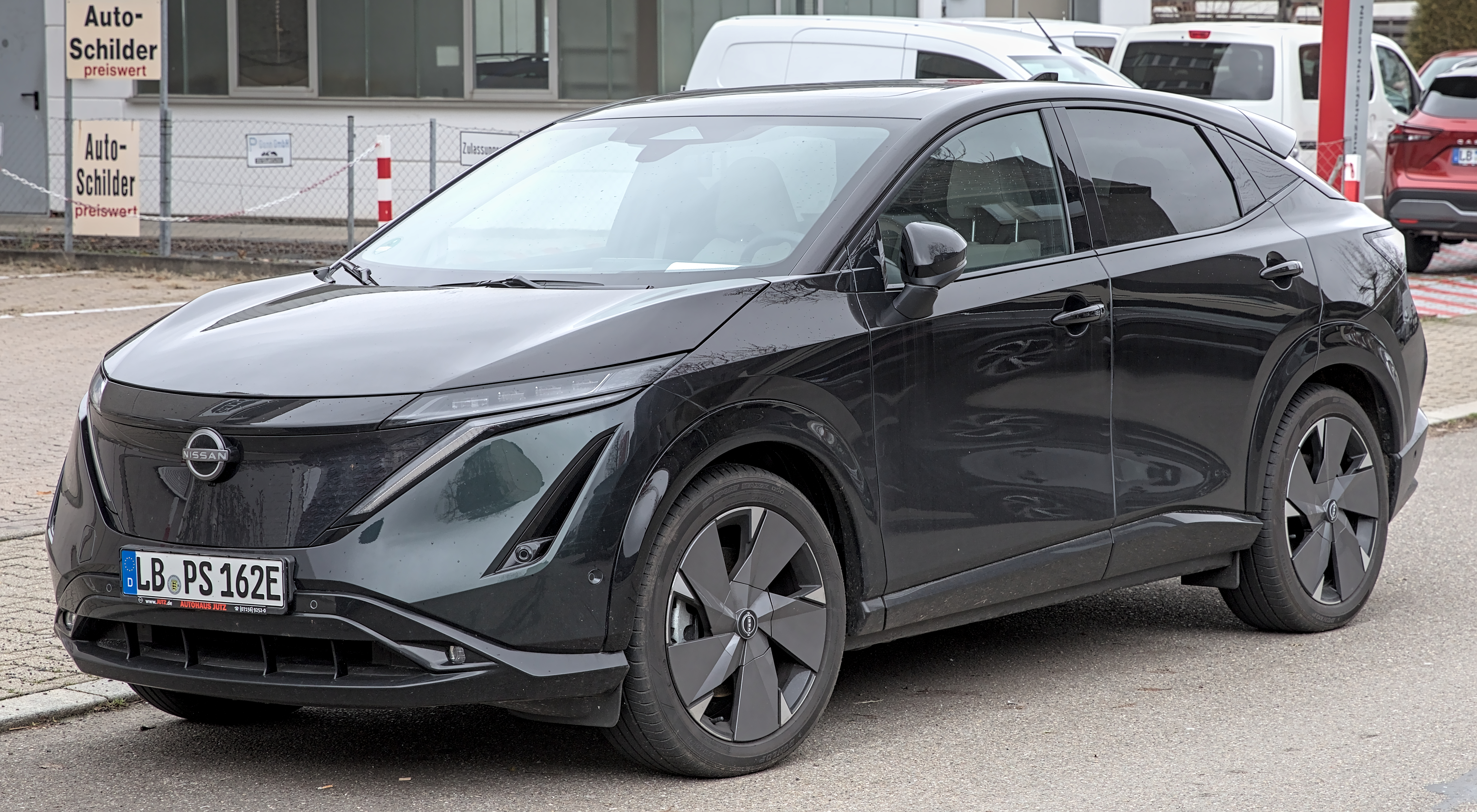
The Nissan Aria came out like two years ago, I think.
Yeah, something like that midsize SUV, presumably kind
of Model Y competitor.
Yeah.
It kind of snuck up on us too.
Like they they were like, oh, we're going to produce this
and then it just kind of disappeared and then boom,
they were on the street.
I mean, that was how it was in my mind.
Yeah.
And I guess it's disappearing again.
So no longer on this.
Supposedly, yeah, Nissan is dropping the Aria from the US
market, not globally.
Interestingly, they're going to still sell it in overseas
markets, but it looks like they're really doubling down
on the new leaf as their volume play.
Some are speculating this has to do with the cancellation
of the tax credit.
And you'd think, you know, with Trump and his tariffs
and build in America.
And this is another interesting twist.
So the current leaf, the old like Chatham leaf that, you know,
with my charging story I told a little while ago, they actually
do build those in Tennessee.
But the new one, the 2026 with the dual, you know, Naxon
Naxon 1772 ports.
Those are only at least for now only being built in Japan.
So even the US model of the new leaf is going to come from Japan.
I'm trying to remember where they get 15% tariffs.
Yeah.
No, I was going to say with the billion percent tariff that goes
on there, but in the greater scheme of things, they got off
pretty, yeah, pretty light.
But anyway, so, so that's that's kind of the speculation
of why they dropped the Aria.
I don't I don't think the Aria was really burning up
the sales charts anyway.
So this makes me sad, though.
How so?
I like the Aria.
I think it's nice.
It's a handsome looking vehicle.
Yeah.
It's not going to like wow anybody, but they all they look
every Aria that I see looks nice cruising down the road
and parking inside the road.
I've not heard too many bad things about it.
It's not like the BZ4X that was like it just had charging
issues that maybe the Aria does.
I don't I just you don't hear about it.
So I assume it's just a generally good EV.
I know from what I from what I know of it.
It's just a nice solid selection.
Yeah, no, it's kind of a bummer.
I mean, I think whenever, you know, you have less choice.
It's not generally a good thing.
I understand from the business case, though.
You know, Nissan's new CEO.
He's really going after aggressively going after
cost-cutting.
I mean, they're closing one of their flagship buildings
in Japan.
They're the latest thing I heard is I guess for for, you
know, decades, they had a specific UV treatment on
interior materials, but that was before they started
instituting UV blocking glass.
So they're like, well, if we already have, you know,
UV glass, why do we still have to do this?
So they're they're looking at down to like the scent level
on trying to reduce costs.
So reduced cost on the flip side of that is increased
profitability.
So I kind of get why they're doing this.
But yeah, I mean, yeah, they're saying the the
underwear gnomes are the ones that are running the
show.
I that reference just went.
Yeah, that's that's like a 25 year old South Park
reference.
Okay.
I guess I'll have to go back on YouTube and look
that up.
Yeah, search for the underwear gnomes.
Yeah, I just I kind of always like these.
It's not stand out.
It's not like game changing.
Yeah, it's not a lucid.
It's not anything while it's just a solid.
It's like a nice comfortable pair of shoes or something
that this is just it snuck up on me and it quickly
like just became part of EV world them to me.
So this is another model that in my mind, like we
were kind of talking about the the gladiator 4 by
E.
This is a model I think will maybe at some point make
a comeback.
Maybe when they do the mid cycle refresh or redesign
my guess is it'll probably come back.
Yeah, purely speculative.
If I'm wrong, don't sue me.
Anyway, yeah, there you go.
That's pretty much it for this week.
That's it next week.
I'm on the road again.
Yeah.
But I think we're going to have a kind of a we're going to
chew dive into a we actually were thinking of discussing
it this week.
But I think you know what?
This is its own episode.
So yeah, so we're going to just pick a topic or
two and just chew on it for a while and make you
absolutely sick of that one topic by the time we're
done.
What do I say at the end of these episodes?
Because I don't remember anymore.
I say show notes are available in the show.
If you're listening to this on a podcast, it's already
there on your phone.
If you are watching it on YouTube, just scroll down a
little bit and then you don't have to look at our mugs
and you can read the show notes that are in there
where there will be links to everything that we talked
about.
I did say YouTube YouTube dot com slash at the what car
is where you can find us.
You can find us on social media is not all of them
and we're not super active.
The best thing you could do is share us on social
media.
You be our social media.
Do the work for us.
You're welcome.
I don't know.
There's what got on slash advertise, but did you
mention YouTube dot com slash at the what car?
I think I did, but I probably said it can't can't
be overstated.
Yeah, I cannot be overstated.
Tell your friends.
All right.
Talk to you about whatever it is we talk about
next week.
Maybe I'll actually be awake for next week.
I'm sorry.
About this episode
A casual yet informative discussion unfolds as the hosts reflect on their recent experiences with the Lordstown Endurance and its tumultuous journey through bankruptcy and ownership changes. They dive into the latest EV news, including the Yang Wang U9's record-breaking speed and the shifting strategies of automakers like Ram and Hyundai regarding electric and hybrid vehicles. The episode also touches on the cancellation of the Nissan Aria in the U.S. market, while exploring the implications of evolving battery technologies, including Panasonic's innovative anode-free design. The hosts maintain a light-hearted banter throughout, making complex topics accessible.
Ram’s battery electric pickup is dead while the range extended version lives on…with ALL the names. The Ram Ramcharger REV will be Ram’s only “electrified” pickup and will see a gasoline engine power a battery, which in turn powers electric motors — and it’s our contention that this is the right move. Are we correct? Also, Yangwang resets its own record, Jeep axes the Glatiator 4xe, BMW rides the hydrogen train, and more.