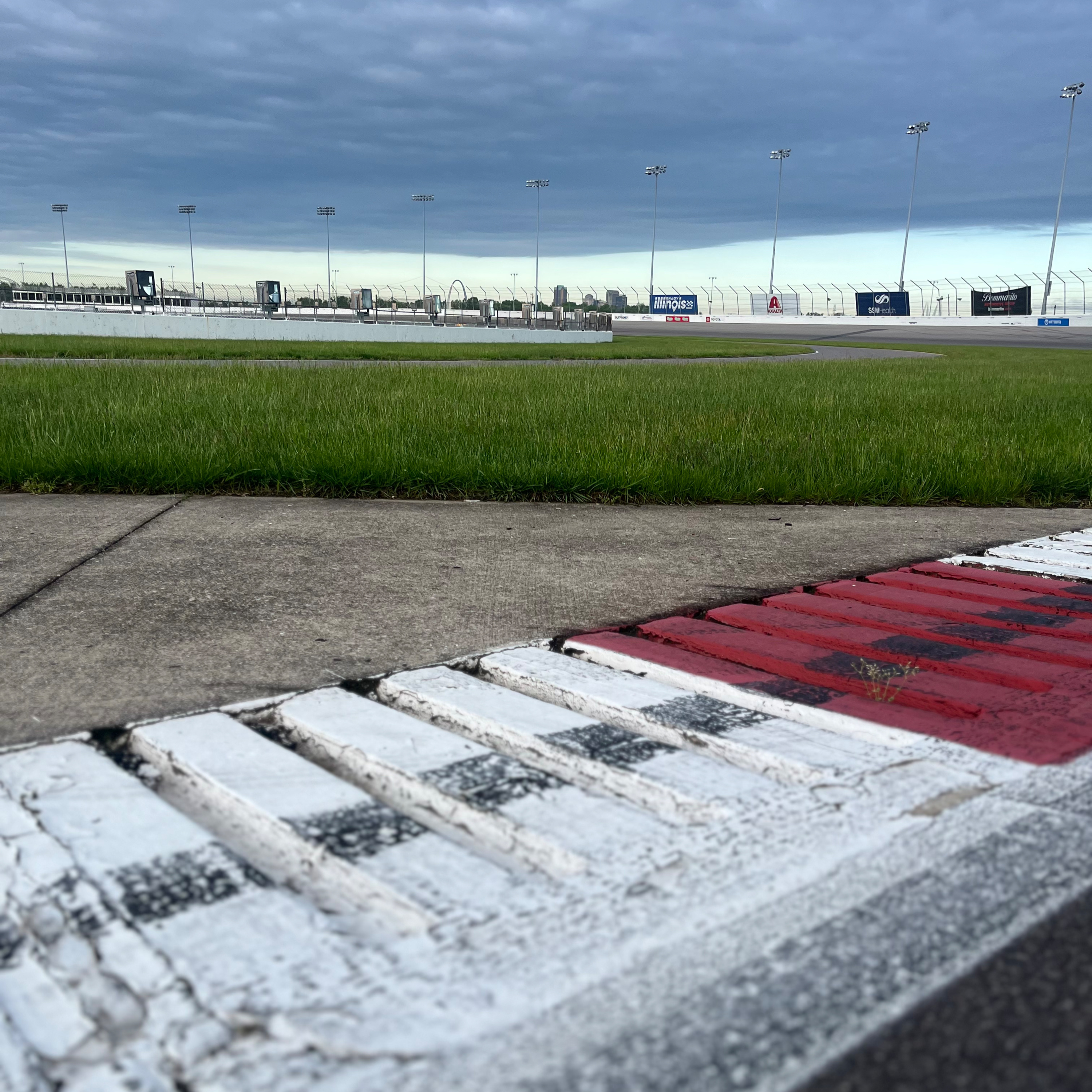
Race tires work best when they’re warm. When it’s cold (like 52 degrees), the tire doesn’t warm up as fast, so it can feel slippery and not grip as well.
Term
weird looking trash bag thing
They’re talking about a rain cover people use in karting to keep water spray off the driver. In wet races, spray can make it harder to see and makes you uncomfortable, so people try to stay dry.
Ventilated leathers are motorcycle riding gear with openings that let air in. They help keep you from overheating, but in cold weather they can make you feel colder and less protected.
Non-ventilated leathers are riding suits with fewer openings for air. That helps keep you warmer when it’s cold and wet, instead of letting heat escape.
“Single car accidents” means crashes involving only one vehicle, often caused by loss of traction or control. In wet conditions, riders/drivers can spin and slide into barriers because the tires can’t generate enough grip.
“PMT” is the name of the tire the rider is using. They’re describing it as a soft, grippy race tire that’s built to handle wet or damp track conditions better than a normal dry tire.
Blackfire is the specific tire the rider is talking about. They say it’s designed to grip better when the track is damp, while still being decent when it’s dry.
“Wets” are special motorcycle tires made for rainy track days. They’re softer and have tread that helps the bike grip when the road is wet and slippery.
Corner speed means how fast you’re going while you’re actually in the turn. On a slippery day, it can be safer and easier to keep a steady, moderate speed through the corner instead of trying to brake late or lean aggressively.
Leaning the bike is how you “tilt” into a corner. On wet pavement, leaning too much can make the tires slip, so riders sometimes keep the bike more upright for safety.
Keeping the bike more upright means you don’t tilt it as much in the turn. On a slippery track, that can help prevent the bike from sliding or falling.
A rain line is the “best track path” to ride on when it’s wet. Some areas have more traction than others, so following the rain line helps you avoid sliding.
Repave means the track got new pavement. New asphalt can feel different in the rain, so riders often have to adjust where they brake and where they ride for grip.
The hard braking zone is where you brake strongly to set up for the turn. When the track is wet, braking can be less predictable, so it’s easier to lose traction.
A sprint day is a schedule with shorter races or sessions. With short runs, it can be harder for tires to warm up—so cold weather can hurt performance more.
When a motorcycle turns, it leans over so the tires can grip the road. If you can only lean, say, 20 degrees, you may not be able to go as fast because you’re limited in how much grip you can use.
“Rotation per corner” is basically how much the car/bike turns and pivots through the corner. On wet roads you often have to do that turning more carefully and in a shorter time so the tires don’t lose grip.
The “apex” is the inside point of a turn. “Late apex” means you hit that inside point later, so you can start straightening up sooner and get back on the gas earlier.
“Squaring the entry” means turning in more straight and direct instead of following a wide arc. The goal is often to keep the bike more upright early so it’s easier to control and accelerate later.
“Mid-corner” is the middle part of the turn—after you’ve turned in, but before you’re coming out. Riders use this phase to keep the bike stable and ready to accelerate out.
Horsepower is a measure of how much power the engine makes. More horsepower can help you accelerate harder out of corners, but you still need grip and control to use it.
“Throttle exit” means what you do with the gas pedal as you come out of a turn. In the rain, how smoothly (or abruptly) you add gas can make the bike grip or slip.
“Traction” is the grip between tires and the road. In wet riding, traction is reduced, so riders manage weight and throttle/braking inputs to avoid wheel slip and keep the bike pointed where they want to go.
“Brake bias” means how much of your braking comes from the front brakes versus the rear brakes. In the rain, changing that balance can help prevent the bike from losing grip when you slow down.
“Rear brake” is the brake that slows the back wheel. In wet weather, riders may use it only when needed because braking too much (or at the wrong time) can cause the rear tire to lose grip.
“Lock the front brake” means the front wheel stops gripping and starts sliding. On a bike, that can make it harder to steer and can be risky—especially when the road is wet.
When you lock the front brake, the front tire stops rolling and just skids. That makes it much harder to steer the bike. On wet or slippery pavement, it can quickly turn into a crash.
When you’re turning, your body and the bike feel like they’re being pushed outward. On a motorcycle, if the tires lose grip while turning, that outward tendency can help the bike slide sideways. That’s why braking on wet pavement can be extra risky.
If the rear brake locks, the back tire skids instead of rolling. It can feel a little different than locking the front, but it still reduces traction and control. On slippery surfaces, it can contribute to a slide and crash.
Sprint races are short motorcycle races where you ride aggressively for a brief time. Here, they’re talking about racing in wet conditions and how that affects braking and crashes. It’s part of the event wrap-up.
The “12 and under” class is an age-based race group for younger riders. The speaker is counting how many riders were in that category and what the field looked like. It’s part of the event recap.
“F seven” is a race category that the speaker says is the slowest group. They’re using it to show how many riders were in the entry-level or less-advanced bracket. It helps explain why there were lots of newer competitors.
The Fiat 600 is a small Fiat car model. It’s designed to be compact and easy to use, especially for city driving. The podcast may mention it because the “600” name comes up in car and racing conversations.
A timing loop is the track-side detection system used to trigger timing events as vehicles pass a specific point. If it can’t be made to work, the race schedule can slip because officials need to get the timing equipment functioning correctly.
A transponder is a small electronic tag on the bike/car that helps the track computer automatically time laps. If you don’t use transponders, someone has to time things manually instead.
“Hand timed” means people are timing laps with a stopwatch instead of using an automatic sensor system. It can be a little less precise than computer-timed laps.
An endurance race is a longer race where you have to keep going strong for a while, not just sprint fast for a short time. This kind of event often uses automated timing like transponders.
Understeering is when you turn the handlebars but the bike doesn’t rotate into the corner as much as you want. It can feel like the front of the bike is sliding or pushing wide. That’s a warning sign the front tire is losing grip.
“Bike’s limits” means the point where the tires can’t grip the road well enough to do what you’re asking. When you’re near those limits, the bike starts to feel unstable or starts sliding. The goal is to ride fast without crossing that line.
A stint is just a chunk of time in a long race where one rider/team keeps going before they have to stop. In endurance racing, teams plan stints around fuel so they don’t run out. This episode’s example is using about 40 minutes at a time.
In a long race, you can’t just ride the whole time—you have to stop for fuel. The team plans when to refuel so each rider can complete their time on track. In this race, they refuel twice to cover the full four hours.
“Traffic” in racing means other riders on track that you have to deal with while you’re trying to go fast. If traffic is better, it’s easier to pass and less likely you’ll get surprised. That can make the whole race smoother and safer.
Lap time is the time it takes to go around the whole track once. Racers care because even tiny differences can mean someone is riding faster or choosing a better line.
The rear shock is the suspension part at the back of the bike. It helps the tire stay in contact with the road over bumps and changes how the bike feels when you brake or accelerate.
Fork springs are the suspension springs in the front of the motorcycle. They affect how the front end reacts to bumps and braking—if they’re not right, the bike can feel off.
“Teched” is when the track checks your car to make sure it’s allowed to race and is safe. It’s like a quick rules-and-safety inspection before you get on track.
The clutch is what lets the engine and the gearbox work together or separate. It’s what you use to shift gears smoothly on a manual car.
Place
CMP paddock
The paddock is the area where teams hang out and work on their cars between track sessions. If the ground is sandy or soft, it can make jacking and setup harder.
OSB is a type of wood panel made from compressed wood pieces. Here, they used it under the car so the wheels had a solid surface instead of sinking into sand.
A jacking surface is the area under/around the car where a jack contacts the ground. On soft surfaces like sand or grass, using a solid base helps prevent the jack from sinking or shifting, which can be unsafe and can damage the car.
Term
tired temperatures
They’re talking about how hot the tires get. Tire heat helps show whether the tires are working well or getting overheated.
The Ford Edge is a family-sized SUV that’s meant for everyday driving. It’s built to be comfortable and practical, with enough space for passengers and cargo. People talk about it when they want a vehicle that feels easy to drive without being too big.
The alternator is what charges the battery while the car is running. If it starts failing, the car can lose electrical power and act weird—especially when you’re driving hard or for long periods.
That toe link arm helps set how the rear wheels point relative to each other. If it breaks, the car’s handling can suddenly get unpredictable, and the tires can get damaged quickly.
Realigning means adjusting the wheels so they point the way the setup intends. After something breaks or shifts, the car can handle differently, so they reset the alignment before continuing.
Wheel-to-wheel means cars are racing very close to each other, sometimes side-by-side. “Noses clean” means they avoided crashes or contact while doing that.
A wheel bearing is what lets the wheel spin smoothly. If it’s wearing out, the wheel can get loose or start making noise/vibration, which can make the car feel unstable and can damage the tire.
Mazda Motorsport is Mazda’s racing support group. Here they’re helping racers with parts and support during the weekend, which can make it easier to fix problems quickly.
Part
Bolton hub and bearing
The hub and bearing are what let the wheel spin freely and stay supported. If that part breaks, the car can’t roll normally, so you need a replacement fast—especially during a track event.
OEM stands for “original equipment manufacturer,” meaning the part is made to the car maker’s specifications. Using an OEM Mazda part helps ensure fitment and correct dimensions, which matters when you’re trying to get a car back running quickly.
Shimming means adding thin spacers to fine-tune how the suspension is positioned. It’s a way to adjust the car’s alignment so the tires contact the road the way you want.
Camber is the angle of the tire when viewed from the front or rear—whether the top of the tire leans in or out. It affects how much of the tire’s surface grips during cornering.
Asymmetric means the left and right sides of the car aren’t set up the same. That can make the car handle differently in corners, so they’re trying to figure out why it happened.
“Bonk” here means the car hit something hard. That kind of impact can bend parts and throw off alignment, which could explain why the car isn’t the same left-to-right.
Thrust angle is basically how the rear of the car is pointed compared to where the car is actually going. If it’s off, the car can feel like it doesn’t want to go straight or turn predictably.
Toe-in means the wheels are angled slightly so they point toward the center of the car. That changes how the car grips and turns, especially when you’re entering a corner.
In track driving, “rotate” describes how the car pivots into the corner—shifting from initial turn-in toward the point where the car’s nose and weight transfer let it follow the desired line. The hosts tie alignment changes (front camber and rear toe) to improved rotation on entry and at the rotation point.
Valkyrie engineering is the company that made a custom tray to hold the battery. A good battery tray keeps the battery secure and properly mounted for track use.
A roll bar is a strong metal frame meant to protect you if the car tips over. In race cars, it’s also used as a sturdy mounting point for some equipment.
Place
Gratton
Gratton is the race track they’re talking about testing at. They’re using it to see how much time someone can make up compared with the front runners.
Term
arrow discs
“Arrow discs” sounds like a specific kind of brake/rotor setup. Race cars use different disc/rotor designs to help braking work better and stay consistent.
Gearing is the way the car’s transmission multiplies the engine’s speed. If the jump between gears is too big, shifting at the wrong moment can make the car lose speed.
Scrub speed is speed you “waste” when the tires aren’t rolling smoothly and the car slows down more than it should. It can happen when you’re not in the right gear or the car is fighting for grip.
LIVE
Hi, I'm Scott and I'm Seth and we are Track Walking. I yoned right before I started talking
and I wasn't sure if it was going to stop before I usually time needed. So I started
yawning and I kind of panicked for a hot second and I'm like, oh no, this is going away quick.
No, I'm yawning just because you're talking about it. I'm like, oh, yawning sounds good.
Breathing about it. So you had your first race weekend of the year recently, right?
No, our second race weekend of the year. Oh, damn, that's right. Things have happened.
You just ignored the first race weekend. Time is a construct to me. I have little handle on
the past, present, or future. But I remember you telling me before we've recorded
that they were switching up the schedule. Is that right? Yeah, they've never done that in all of the
years that I've raced with them. And there was no clear explanation for why. Jeff, the gentleman
in charge just said, this is what we did this time. Sorry. And so we did sprint races on Saturday
in an endurance race on Sunday, which is backwards from how we usually do things.
And this really plays into two of your weaknesses dealing with change and
your dislike of authority. So like this is really rage bait for Seth.
It was really terrible. The only thing is it worked out okay.
No. Because for... Spoiler alert.
Yeah. So in Texas, in March, April, we're in April now. We should not have a cold race weekend.
Shouldn't. But man, we seem to really be just tiptoeing into spring, which to be honest,
this is how it used to be. I don't... You remember, Seth, you've been around for a while. We used to
like get this time during the year where we might occasionally see upper 30s, low 40s overnight,
but then it'd get up into the 50s and 60s during the day. Like it was called spring time.
And now it just goes right to summer. But this is Texas. It goes right to summer anyway. So we were
even a couple of weeks out, we were expecting it to be hot. And whatever 56 days out,
somebody was like, it's going to rain. I'm like, what? It's not going to rain. I mean,
it'll be fine. And then three or four days out, I actually looked at the weather
and they were like, no, it's going to be rainy and cold on Saturday.
Define cold for Texas.
Um, when I got to the track on Saturday morning, it was 52 degrees in raining.
That's chilly for Texas. Sure.
I mean, that's chilly for anywhere on a race motorcycle. I mean, even in a race car, like
your tires are not working right at 52 degrees.
No, do, do motorcycle riders, because you know, carts, you can have your carting suit,
but then you have like that weird looking trash bag thing that a lot of carters put on to
not drown, not get water, water boarded from the magnitude of spray. Like,
do motorcycles motorcycle riders have things like that?
They make them and nobody, in the world that we are in, nobody wears them. Everybody just
suffers. That's just what we do. And the other thing is if you're in a part of the world that
routinely races in the cold and wet, people I know that I followed in like England. So like,
if you race tiny motorcycles in England, it's going to suck a lot of the time. That's just
the nature of what you're doing. And so part of the solution for that is you get a set of
leathers that is not ventilated. So it doesn't have 40,000 tiny holes in it to let the air move
through. But I live in Texas and I always need ventilated leathers. And except when I don't,
and when I don't, it's really freaking cold. Yeah. Yeah, that word always is a strong word.
It really is. So when I left my house at four in the morning, just after four in the morning on
Saturday, it was 72 degrees. The race was indented. Oddly enough, the race is like
nine miles from where my kid goes to school. I'm like, hey, I'm coming up to race. And he's like,
hey, have fun. Cool. Love you too. Cool. Whatever. So I leave it just after four in the morning,
72 degrees. You can look up, you can see stars in the sky. And I'm like, bullshit,
it's going to be fine. Like this was one of those weather scares or they're trying to get everybody
yellow, whatever, it'll be fine. Just south of Dallas, all hell breaks loose. It drops from the
low 70s to the low 50s. It rains and everyone in Dallas crashes. There were, I saw 12 accidents
between the south side of Dallas and Denton, which is on the north side of Dallas. I think
does it not rain there? Somebody said it's been wet up there. So it's not a big deal,
but 10 of them were single car accidents, just people spinning into, into the barriers.
And it was like, what in the holy hell is going on in this town? I can't believe I have to go
ride a motorcycle on this. People can't even keep their cars from crashing this morning. Oh my God.
So we get there. It is, I want to say it was lightly attended, but we've certainly had more
people show up to race before than that. Maybe it was the schedules different. Maybe it was that
it was 52 and still raining when registration was going on. And people looked at the weather and went,
yeah, I don't think I want to do that. And so practice started. Nobody was really hyped.
Finally, I went out about half an hour after practice started. It was wet. It was, they're
doing construction near the track. One Lappers actually sort of know this track because it is,
a long time ago, we used to do the drag race at a drag strip that was next to an old junk yard
on the north side of Dallas. And behind the drag strip is the cart track. And the drag strip has
been defunct for a while and they're doing some construction over in the drag strip. And apparently
the dust all blew over to the track and then it rained on the dust. So everything was just like
slippery. It was bad. I only fell over once.
I know I've asked this before. Do you use different tires in the rain?
I don't because I don't have an extra set of wheels for this bike. I run what are called,
it's a PMT, which is the company, the Blackfire, which is a super soft, is a soft
race tire with tread in it kind of. And it's a pretty good tire for damp conditions, great
dry tire. We've had really, really good luck on it in the dry. And then it works pretty good in the
damp. And it feels about like a race like when it's wet. So it sucks when it's wet. So you get
you get a little bit of damp and it's the tire we've been running for the last couple years.
We like it. And people who had wets on Saturday did much better as one would expect.
But yes, for the problem with the 70 right now is that I have corner speed. Like that's my jam
when I ride the 70 is I've got corner speed and I do everything else not to be like, you know,
I've got giant brass balls and I go fast in the corners of awesome. But like that's all the bike
really has. It doesn't really go fast. It doesn't stop well. So I carry a bunch of corner speed in
and that's that's how I raise people. And if it's slippery and you really can't lean the bike,
I talked to a bunch of other people or better riders than me and they're like, no, it's fine,
just don't lean. I was like, cool. But how? Yeah, I mean, that's what you do. You just keep the bike
really upright. Because you like once you get over under the side of the tire, the bike would
just fall over on you. And so you keep the bike really upright. But once you take that away from
me, like I'm there, I guess. So are do you or any of the other drivers like do you guys go
search for a rain line? Like are you guys doing that traditional thing?
So prior to the repave, they repaved this track last year. Prior to the repave, I had a rain line.
Like I knew where to break in the hard braking zone. I knew a couple of different areas that
had grip. Like I felt like this track about like you felt about mid Ohio. I was like, no, in the
rain, I can do some magic stuff because I know where to ride on this track. And now they repaved
it and it's all about the same. There's some patches they put in because the carts pulled up
some stuff and those are kind of slightly worse than the regular pavement. But no, it was just
sort of consistently crap everywhere. And it was hard to be excited about that. I got up to
like 62 ish when we were racing. And this was the sprint day, right?
This was the sprint day, but it never got sunny. So the track was cold and you'd come in and your
tires are still cold. So they never never got hot enough to do anything. So sprints were not
exciting. I filled the grid a lot. Okay. All right. I mean, somebody had to, I guess. So
talk to me about the mechanics of not leaning the bike over because I have a decent understanding
of physics and things. And like, if you don't tip a bike over when you turn,
like it's going to tip itself over the other way. Like, so are, like, are the cornering
speeds just that much lower that you're hanging off the same amount? Or do you hang off like
more because you're intentionally trying not to
lean it over at all? Like what does that actually look like?
It's largely that corner speeds are lower, but there's a bunch of adjustment in body position
because you're trying to make sure the bike just doesn't tip and doesn't produce,
you know, doesn't get over into the side of the tire and doesn't do that. So you're fighting to
keep the bike upright. You're still trying to move your body off to the side. You're fighting to
keep it upright. There's other times when you would be going that same speed where you would be,
you would actually be leaning the bike more to try to use the side of the tire more at the same
speed. And there's just some subtle dynamic things where you're like, no, like no matter what I do,
like I can't lean the bike more than 20 degrees or something. So how fast can I go on a motorcycle
that can only lean 20 degrees today? Where normally I'm leaning, you know, closer to 40 degrees.
And because, because in cars on a rain line, you're generally, you're doing, you know, about this
sometimes a little bit more rotation per corner, but you're doing it in a much smaller window.
So you're doing more steering in a shorter window of time. Is that kind of the same way
with motorcycles? Because you're, you know, you're entering shallow, you're trying to go
past turn and then exit a little bit shallow as well. That's, that's it. You're, you're trying
to not spend any more time leaning the bike than you need to. Right. And so you're,
what we, what I was doing is I was apexing a little bit late. So I was sort of squaring the
entry, like squaring the entry, keeping the bike up. And then, so then I could use,
I could use less lean through mid-corner and get on the, stay on the bike up and get on the gas
sooner. That was my idea. I don't know if it really mattered. I didn't have that much acceleration. And
the first round I raced a couple of the races with the endurance bike, which has got, you know,
two and a half times as much horsepower. And every one of my endurance team looked at the
endurance bike and we went, yeah, we're not riding that today. Like you just sit there and
look pretty. We're not going out on that. So quick, quick questions. Like I've got two more
questions about the dynamics in the rain because like my brain's kind of going for it right now.
So on throttle exit, you were, are you, because body placement matters so much more?
On a motorcycle, when you, you know, lean off of your bike in the middle of a corner,
are you intentionally towards the end, trying to shift your weight backwards quicker or more
to help traction? Not particularly. Most of us, on these bikes, most of us have our
weight pretty centered anyway. There's a lot you can do, you know, shifting your weight back and
forth six inches on the seat does a big thing or does a, can be a big change, but I think most
of us are riding the bikes pretty neutrally. You don't really want either wheel to be in a,
in a suboptimal grip solution. It's really just a matter of like, like literally pushing the bike
up. So you get done with the corner and you like push it up as you roll the throttle on
so that the bike is, is standing up as much as it can as you, as you roll the gas on.
And then the, the rotate, the physical rotation of the wheels that allows you to like pull yourself
on top of it after that. Yeah. Like you, you push the bike up and you start to go. And then,
yeah, you basically climb back on top of it as the bike goes. That's, that's so weird. My physics is
wild. And then on corner entry, you know, we, in wet driving, we can shift our brake bias and
stuff like that a bit too sometimes is since you guys have two brake levers to control the front
back, are you guys typically grabbing a little bit more rear? If it's really slippery, that's
when we will actually use the rear. I don't, I don't use the rear brake on the small motorcycles.
It's not necessary unless it's wet. I didn't use it at all. Either day, I didn't feel like the
bike benefited from using any rear brake. It wasn't that. It wasn't really going to be that big a
deal. I wasn't going to gain a bunch by really trying to break hard. I was being pretty, pretty
conservative because the thing is with, with bikes, like if you're in a car and you're,
and you break and you're like, oh, lock the brakes a little bit. It was, it was exciting. And then
you, you carry on gathered up and in a bike, especially if you lock the front brake, you just
fall over. Like the first indication you have 95% of the time that the front brake is locking
is you go smack and you hit the ground and you're like, oh, I guess I locked the front brake. That
sucks because seeing here, I would have thought the opposite, but if the front locks, it doesn't
just go straight. You lose that. Is it centrifugal force? Yeah. And then instead of just sliding,
it like slips to the side and then allows everything to fall on top of it.
Yeah. The front tire just moves sideways and you go, boop, and you fall. I mean,
it's weird. It is in, is close to an instantaneous crash as you can get. And
is it the same if you lock the rear? No, if you lock the rear, you can get, you can feel it a
little bit. Like you can feel the rear of the bike move, but if you're, if you're locking the rear
at the same time, you're also breaking in the front. You've got some weird dynamics going on.
People are good at riding motorcycles can do that all the time, can do some very strange
stuff with the brakes. I'm not good enough to do that on pavement. On dirt, we do that all the
time, right? You use a lot of rear brake. You use some front brake. You use the rear brake to steer
the bike. Sure. Yeah. There are people who are much better at me than that. I'm just trying to stay
alive when it's slippery out there. So. Okay. So you survived the sprint races? That's what you're
talking about. Survived the sprint races. We had a couple big. So the, the interesting thing to note
is we had, we had four riders in the 12 and under class. I think we had four women in the women's
race. And F seven, which is the slowest class, had 10 bikes, 11 bikes. Okay. So there are,
there's a whole bunch of little kids out riding, riding again. I say that they're
a bunch of them are pretty much as fast as me. But there's a bunch of new riders,
a bunch of younger people going. So a few years ago, it was like fast people on fast bikes in
the fast classes doing fast stuff. And now we've got a whole bunch of new riders showing up. And
that's where I like to play anyway. So it was even though I didn't, I didn't do anything. I think I
got 11 podium all weekend of the five races I did, or on Saturday of the five races I did.
I got to race some people as terrible as it was to race in the rain, or in the wet,
because the rain stopped, but it stayed wet. But also a whole bunch of people who were learning
how to race got to beat me and that made them happy. So that's nice, I guess. Way to contribute,
Seth. Yeah, that's basically what I did. And like the first race I did, the dinosaurs race,
so for, for old people, I think there was, there was six of us in the race, three people
crashed on the first lap. And two of those people remounted and passed me again before the race
was over. So it was, it was one of those days. Sure. But Sunday you said that
did your endurance team actually show up on Sunday and then decide not to run?
Well, they were there on Saturday, because the, the younger, the 16 year old Sean,
he runs sprints. He actually races against me in sprints. He did quite well. He definitely beat
me basically everywhere. His, his bike is faster than my 70. When we had raced in the
first round, we were racing his bike against the endurance bike and we had some good battles.
I can't, I can't touch him on, on my 70, which is fine. He's, he's a good racer.
But his dad was planning on fast Seth, since there's two sets on the team, why wouldn't there be?
Sure. Fast Seth was planning on doing some sprint racing on the endurance bike and he was like,
absolutely not. Like I am, I've become smart enough not to do this. So he just hung out all day.
So they were there. They knew what was going to happen. They're, they've been racing a long time.
Fast Seth used to race big bikes, used to race 600s before he decided it was dumb. And then
he's literally just been getting smaller and until we've, we've landed
at this particular bike that we're having fun with. So, but Sunday, Sunday was supposed to get
up to the mid 70s. It was the mid 40s in the morning, but the race wasn't supposed to start until one.
No, race was supposed to start at 11. It was going to be sunny by 11. But they couldn't make the
timing loop work. Because we don't run, we don't run transponders for sprint races. That's all hand
timed. But we do run transponders for, for the endurance race. And it took them almost two hours
to rerun wires to get the timing loop going. And that was, that was good and bad. It allowed
two more hours for the track to warm up. But it also meant that I was going to be driving home,
doing a four, you know, bit over a four hour ride, drive home two hours later than I would have
otherwise. So I wasn't super hyped about that. But we had a good, good race. I think there
was 17 teams, 19 teams. We keep getting gridded at the back because we're in the slowest class,
which sucks. Good passing practice. Yeah. And also so fast, Seth, because he's a big bike racer
and because he's hyper aggressive on starts at his jam, we put him out there and we're like,
all right, go pass a bunch of people, but don't die. And he's getting better at the not dying part.
Oh, that's good. Because he's definitely crashed in the first two laps before being,
being excitable. But yeah, we went out, we had the track was much better, but not good.
And it was a matter of riding within the bike's limits, just figuring out what those are. There
was, there was a bunch of, of understeering the motorcycle, which is still such a weird
feeling going into a corner and feeling the front, you know, you could just feel the front
scooch a little bit and go, and you're like, that was almost a crash. And it's a very unpleasant
feeling. But the, all three of us are, are attuned enough to the bike now that we can do that
occasionally and not actually crash the bike. So that was good. See, we had a, we had a really
good race. The we were each running, we're running 40 minutes stints because we have to fuel the bike
twice in four hours. And so we fuel the bike at an hour and 20 and then 240. And that makes us not
run out of gas. So we run 40 minutes stints a piece. We just had a good time. The bike got about
three seconds faster between the first stints and the last stints. All the riders got between two
and three seconds faster. And that was just the track coming in and getting better.
The traffic was better than at the last race. There was less semi-psychotic riding.
And I attribute that to the people that are still pretty new are better than they were last
round. And there were less people that are still pretty, were, were still really new. So it was,
it was a good group of people to ride with. And we just did one of those things where like,
there's not that much to say about the race other than we, you know, we started in whatever it was,
17th place. And we got up to ninth place pretty quickly. And then eighth place and then seventh
place. And we just sort of rode well. And there's nothing really exciting about riding well. The
biggest competition we had was in our own team was whether or not I could beat Sean from a
lap time standpoint. He went out and set like a 51 second lap, low 51 second lap on his first
first stint. And so I went out on my first stint and I set a lap time that was
three tenths faster than him. And he hates that, which makes me feel so happy.
He hates when you beat him in general or like when it's that close?
No, he doesn't like being beat. He needs to be the fast person on the team and not have his
dad's old friend beating him. Like he's known me since he was he was 11 or something. So we've
known each other for a really long time. But yeah, getting beat by me is not fun. I beat the first
round. I was the fastest one on the team by just a couple tenths. And he did not like that at all.
So, so his goal in his second stint was to go out there and make sure that he had the fastest
time on the bike. And he did. He came in with a 50.2. Oh, wow. And my last stint, I got a 50.4.
Okay. So you at least gave him a run for the money.
Gave him a run for his money. And I was, I was just happy. Like they handed us a time sheet at the
end. And I had very few laps that were in the 52s or higher. Like even with traffic,
I was doing 50s and 51s consistently. Just like I was really happy with
the way that I was the way that I was riding bike felt good at the end. We do have new we had
actually we had all new suspension on the bike. We had a new rear shock, which is the springs
probably too stiff. We have new fork springs custom made new fork springs, which may not be
stiff enough. Working through some stuff. But I guess the most exciting thing was on the very
last lap, I made a pass on a young woman that I've known forever. She used to race with Sonya.
And I knew I was like she wasn't in our class. But I knew they were getting really close to
throwing the checkers. And I knew I was catching up with her. And so I made a nice clean pass on
her. And I went around. And because of when they threw the checkers, that pass halfway through
the last lap is what moved us from sixth place overall, the fifth place overall.
That doesn't matter at all in the grand scheme of things.
You're yeah. But it made me feel good. Yeah.
I was about to say, don't bullshit me.
Yeah. So, so we have fifth overall, first in class, the, the other, the other team riding in
our class, I think we were up on them by 12 laps or something. So we're, we're pretty happy with
where our standings are. I think the three of us are hoping that somehow we're also talking about
we need to, we really do need to pick up another rider for the season because I'm going to miss
the end of the season. But there's a chance that if we ride consistently, we have, I think we got
fourth in the first round, we got fifth in this round. If we can keep getting fourths and fifths,
we might be able to squeak our way into a top three. Oh dang. But we have to ride, you know,
we have to do every lap, every round and ride it well to do that. So I'd be pretty exciting.
It would be pretty exciting. And the boys, my friends who I used to race with, they won.
They're faster than everybody right now. And Carl Eason's team, the friend of the show, Carl,
they got second, they're almost, they're faster than almost everybody. And so
anytime we can be pretty close to the people that are getting beat. So like those two are
going to get first and second, unless they have a problem, those two are going to get first and
second basically every race. And then there's a bunch, there's six or seven teams in that
could get third through, through eighth type of place. And so like when we beat people in that
range, we feel pretty good about it. Hell yeah. That's awesome. It was, it was, like it's hard
to say anything about the round because it like nothing super exciting happened. Like I fell over
once in practice and went, I'm not doing that again. And I think all of us fell over once in
practice. Actually, Sean crashed his race bike hard three times in practice. It was like running
out of spare parts. So he was, he was testing the limits on his sprint bike. But when it came to
endurance day, we just traced well for four hours and had a good finish. That's awesome.
Congratulations. It's good when the Frankenstein race bike with experimental
suspension and on you get done and you're like, no, it just worked. It was fine.
Yeah. Good. Well, we had our season while Becky's competitive season opener happened at CMP.
I did want to hear. I've been waiting to hear about this. Like I'm excited.
You know, and at some point we'll have Becky back on to kind of recount the season. I'm sure
at some point it's a big drive for us. Like I know other people have bigger and stuff,
but like it's a 15 and a half hour drive straight through. Fortunately, our buddy from the area,
Adam Cook, wasn't going to be racing this event. So he's like, yeah, I'll drive down with you guys.
And having that third driver was amazing. And so, you know, we went from.
If only you could take an extra day off work. It would be nice too.
Because you go from, you know, only getting like two and a half hours of sleep and then
having to drive again to, you know, probably on any given length, no more than two and a half
hours, but like you didn't have to worry about driving for like six hours. So like you could
kind of zone out. You could just know that like, all right, I woke up, I was sleeping, but like
it's fine. I'll go back, you know, we'll stop or go to the bathroom, get some snacks and then
like laid back down again. It was amazing. We left at 7pm Wednesday night. And we rolled in at like
nine, right about 930, which was four minutes before Becky's second session. Like her practice
group, you know, we knew we were going to miss the first one, but we were four minutes before
the second session goes out and we got her out 10 minutes after her session started.
Good Lord. I was pretty, but like that's, that's kind of like one lap bragging,
you know, like how quickly can you do your, your gas stops? Like it was pretty good. We rolled out,
opened up the trailer, rolled the car while she was getting on her suit.
Did the pressures real quick gone? Go, go.
Does, don't cars usually need to like go through tech and stuff before they go on track?
Yeah. I mean,
Did you, they really just need to get teched during the weekend?
I mean, it was a practice day. It wasn't like competition day.
And we did get teched right afterwards. So it's cool.
But yeah, that first session now was basically like,
is the engine going to be good? Is the clutch going to be good?
Right. And they were. So that's great.
Yeah. And this is one of the events. CMP paddock kind of sucks. It's like sandy grass. It's basically
Michigan, but in the south. And so we did the last time I'd raced down there. We did the same
thing. We brought two sheets of, um, OSB, which is, you know, basically chip plywood that they use
for rough construction, put two of those at the very bottom of the van underneath everything.
And then we just laid those two sheets out and that's what the wheels sat on all weekend so that
we could, you know, have a firm jacking surface and didn't have to lay in the sand and crap.
And then you just leave them there and that's that.
Like at the end of the weekend, you just drive away.
Yeah. I mean, we put them next to the trash can, but like that kind of stuff,
track staff, I have to, like I've known some track staff, like the maintenance crew.
I can almost guarantee you they put those away somewhere. Like they will use those.
Right. Because they're, they're nice sheets. I mean, no fluids got spilled on them. They're just
hanging out. So, um, yeah. So we had Adam cook down there and then, um, our other buddy,
Danny Corliss, friend of the show, uh, he lives, I mean, it's not a short drive for him, but like
he's more in that area than Michigan and he came out pretty late Thursday night and he hung out
with us too. So, uh, Danny was largely helping, uh, Becky and Mooncake kind of help and take care
of the car and, um, pull video, um, just kind of help check things over, um, Adam helped take some
tired temperatures and, uh, helped on the car occasionally too. And so it's just fantastic
to have those two gentlemen come out, help out, hang out, had some good talks, ate some good food.
There was one truck that had this like pulled pork sandwich with like fresh vegetables and this,
like, I think it was, I want to say it was basil mayonnaise. It was amazing. Like it was,
it was, it was right on the edge of too salty, but my God, it was delicious.
So that's where you're getting down. Like you're getting down into the south where they've got a
history of some good barbecue and there's something to be said for getting into a part of the world
where they're, they know how to use spices and flavors and things like that. Not, I mean, I am
dissing on Michigan there, but, um, yeah, it's nice. It is, it is wild to me having been to
worse. Yeah. Well, you're a captive audience. I mean, you are at Disney too. I'm just like,
it's, it's kind of wild. It's just kind of wild as it, like the milkshakes, I didn't get one because
I recognized the truck and the milkshake I think was like 10 or $15 for like a fairly small size.
And I'm just like, I, I, I wanted it, but like, I can't let myself do that. It's crazy. At some
point the value, the value doesn't work out. Crazy money. Um, yeah. Adam did get some deep fried
Oreos that were banging. Oh my God, they were so good. They're usually so expensive though,
like $5 for three Oreos. And I'm like, that's, I'm going to buy a whole package of Oreos that
aren't deep fried for the cost of three. Come on, man. I know, but they're deep fried though.
Um, so yeah, the weekend, um, had a slate of drivers, um, that I was coaching. We were doing
setup work for 123 of them. And yeah, across, you know, had three time attackers and two
wheel-to-wheel drivers. And it went pretty well. Um, no real serious mechanicals. Um,
all the drivers I've worked with previously or over the winter. So we kind of had a,
you know, a language kind of set up, you know, I had a bit of a handle on, uh, history,
like things that we've talked about and stuff. And it was, was great. Uh, one of the drivers,
it was their first grid life weekend. Um, everything went well, great experience.
And, you know, kind of new next steps coming into, uh, Rhode Atlanta. And, um,
yeah, it was just good. Um, not saying like everybody won everything or anything like that,
but like, you know, Pete, it was his first time at CMP and, you know, he's never driven there before.
Never driven there. Interesting. Um, so coming in and he, he was exhausted, you know, he did the
drive from Chicago by himself. Um, had a little bit of alternator issues and then one of the
bolts on his rear toe link arm broke during a session, um, started a grass fire under his car.
So, yeah, car was okay, but like, yeah, sketchy moment for sure. And, um, yeah, really kind of
damaged one of his brand new wheels. And, you know, then you're looking for, you know, kind of
specialty parts for arms and stuff. And so Becky had to go help him get the car realigned in the
back, like leading into I think Sunday morning, blah, blah, blah. So yeah, um, it was good. Um,
um, said he, you know, didn't never put the lap together that he was happy with.
Um, and you know, definitely improved in some areas and we've already talked in terms of like
how we do our coaching and debriefs and stuff like that. And you know, we've got some things
we're going to change up for road America, hopefully help, help him focus in and, um,
you know, get the information a little bit clearer as well. So that should be good.
Uh, the wheel to wheel drivers kept their noses clean all weekend, which was great.
Um, you know, one of them I worked with last year and he's picking up pretty close to where we left
off. Uh, he did a lot of actual driving over the winter because he's, uh, he lives in a warm
climate. So, you know, he gets to have that opportunity and, um, yeah. So he seems excited
about that. And then Becky, um, you know, has never driven CMP. It's her first track event of
any sort of the season and it's her first return back to, uh, competition for like three years,
basically. So like, you know, the odds were kind of stacked against her. Um, there were six Sunday
cup entries and she was right on the heels of P five for the entire weekend. Uh, she started
out beating him and then he put a lap together and she just couldn't quite make it there sort of thing.
Um, car seems good. Um, I think it was Danny found that the right rear
wheel bearing was dying or the hub was starting to get a little bit of play in it.
And fortunately Mazda motor sports has kind of looked like they've come on as a partner of
good life this year. They're doing like some mild contingencies for racers,
but they've got their parts trailer on site and earlier that weekend weekend,
I told her you should go like introduce yourself, like say hi, just touch base and stuff. So they
at least know who you are because there aren't many time attack Mazda's at all. Um, let alone in
Sunday cup, she's definitely, you know, the only one for a while now there's, you know,
certainly been another two here or there, but that kind of turned out well because we could
not find a replacement within hours of the track. And so, you know, this guy had given her
his, uh, business card. And so she texted him in the evening said, Hey,
we're looking for this like Bolton hub and bearing. Do you happen to have one or
know where we could find one? He's like, I'm at dinner, give me like 15 minutes and I'll
check the inventory. He gets back to her 15 minutes later says it shows that I have one.
Now this kind of part isn't used very often. So it's probably a reliable count. I'll be back
at the track here in a little bit. And so, you know, we didn't have any luck finding any
replacements otherwise. And so sure enough, he drives up in his car with a box in hand, OEM,
Mazda part, happily pay him some money and we go about our way.
Amazing. Bolted back on. Um, yeah, we started shimming the, the rear as well to get a little
bit of toe out in the car. Um, cause we're kind of at that point was set up. It is kind of tough
though, because the bolt pattern of the rear hub isn't like square to the ground. It's like
tilted. Oh no, it's not. It's tilted a little bit. Yeah. So when you shim, it does both things.
You get a toe and camber change. So we put it on, we did 2.03 washers on the front
to get like the biggest amount of toe change, but it also gave us more camber. So like,
and that corner already had more camber than the other side. So it looks a little weird.
Um, so I think what we may try next is to move those two that are on the front to the top,
which should take some camber out, but still give it a little bit of toe
out. I don't know. We're going to do it and try take, take some measurements and see
why, why is the car asymmetric? Just normal build things or somebody
bonk it or um, yeah, I mean, Becky did bonk it at, um,
mid Ohio, but oh, that's right. But it was on the rear. So if anything,
I would have thought it would have helped with the toe out issue. Um, but yeah, the car had
a little bit of thrust angle. So like the, the left rear is pretty close to zero toe,
but the right rear had like a 16th, 16th heavy maybe in it toe in
the right rear has that same corner that has toe in has more camber than the left rear by
like 0.3 or 0.4. Oh, well that's a lot, which isn't nothing for sure. So,
yeah. So, you know, we added some more front camber. We played with rear toe,
which did seem to help it rotate, um, for the really important turn 11, which is a
big breaking zone, slow, but long left-hander, um, which definitely seemed to help it rotate
more on entry and right down to the rotation point in the middle of the corner. So that was good.
Um, the new shifter works well. The new battery tray that Valkyrie engineering made
for her works great. The new seat and ergonomics are amazing.
We did have to add some ballast because we got the car, car on the dyno
and now makes 95 horsepower, which is two more than it had made, but which is two more pounds
than we really had planned or sorry, 50 more pounds than we had planned. So we had some ballast
and reserve for it. So we put that in, but that was only like 35. And so we ended up
taking a spare me out of hub and bolting that near the ballast stack. And then we,
we have those really like huge nasty zip ties and we ended up bolting my spare alternator
onto the bottom of the roll bar sitting on the floor as well to like make minimum weight.
That sounds safe. It was totally fine.
So, but yeah, she, you know, she did well. Um, you know, I don't think she did as well as she
had hoped. Um, but I think considering the circumstances and new track, which
you know, she doesn't pick up tracks as easily as others. And so in competition,
like there were a lot of things that could have gone very wrong, but like she handled
traffic pretty well. It seemed like, um, yeah, just did what she did. You know,
she's rolling with two sets of wheels and tires now, which, you know, she's really trying hard.
And so we're going to be going to test at Gratton here soon to how many seconds
off the lead was she or how much time was she off the lead? I only asked because she had
ideas about where she wanted to be with that. Yeah. So,
so I, we've affectionately started calling the sedans club SC and like all the hatchbacks
Sunday cup, like so kind of two different classes. Yeah. Um, because the sedans are
seem to be just out in front by a bit of a margin. And so, yeah, their, their top speed is
higher. It's, it's a thing. Uh, yeah. Minimum speed. I think it's also like it. They're very
good cars for the class and they're driving them very well. They also showed up with
the arrow discs, like the fricking trihards. Um, I, I called a mountain grid and, and, uh,
they were like, yeah, but looks cool, doesn't it? Um, yeah. So they, I'm going to have a hard time
remembering here, but I want to say they got, they broke the record, but I want to say it was
like a high 53 mid 53, something like that. Okay. And then I want to say, uh, it was Sam
Dooling who got a, so 54 or 55, something like that. And now that can't be right.
I forget, but Becky got a mid or low 57. So I think she was like
two to three seconds back from the fast hatchbacks. Okay. If that makes sense. I mean, that's
by part way through the season, she wants to be closer to them, but that's not,
she's not a world off. No, no, not at all. And, and like, we all know where the time is.
Um, yeah. So, you know, a lot of it was, you know, kind of played into some of the weaknesses.
Some of it was gearing, like whenever she shifts, if she doesn't really time third gear well,
the drop from third to fourth is big enough that if you don't ring out third, um,
you almost lose while she lost speed after the kink, if she shifted into fourth a little too soon
because of scrub speed. So, right. Um, obviously not ideal. Um, but yeah, the car
car performed well. Um, no tears.
I don't think maybe there were, I don't think so. Um,
and I only say that because that was one of her goals this year. Right. Right. Um,
so yeah, we're, she wanted to go testing. So we're going to go test with, um,
one of the other Sunday cupers at Gratton here and, um, we secured tickets to the other three
events that she wanted to do. Yay. And so we're, she's all in. So here we go. Fantastic. I love that.
Yeah. So coaching wise. I'm glad, I'm glad she got done with it and she's like more, like I need
more and better. Yeah. Yeah. She's not discouraged. We, we got home. We took a couple of days and then
you know, she got the car up. She started realigning it again and like just,
just straight back on the horse sort of thing. So it was good. Fantastic. Well, and the motor
and clutch and all that stuff works. So ideally you won't have to do like, it should be set up
from here on out. Like wouldn't that be great? Should be good. And we've got the gauge now and
it was hot down there and the coolant was 204, 207. Okay. So, you know, the,
that's no worry. So maybe I block off more of the, uh, radiator girl. I don't know.
Yeah. But yeah, I was going to continue and coaching went well. Just for me kind of
confirmed. I just, I enjoy it. I really do. It's fun and I think I know a few things that I can do
better and I'm going to do that better because I get excited sometimes. I need to, uh, not get less
excited, but like I talk when I get excited. So I need to calm down. How was the vibe at the
event in general being like the first thing that a whole bunch of people did this year?
Yeah, it was, it was honestly kind of hard for me to tell. I'm kind of, yeah, I'm kind of so bound
to the paddock space. It's kind of hard, hard to check. I heard of a few grumblings from some
people, but on track action in general seemed good. The music I heard didn't really go. A bunch of
cops showed up to the, uh, Sonoco pump party on Friday night. Don't know what happened there, but
hopefully everybody was fine. I don't know. So yeah, it's good.
Kids and kids, it happens. Yep. So there we go. Race weekend wrap ups.
What about, can you tell me real quick about what you did at Road America this weekend?
Cause I'm curious about that. No, different. We're going to do that in a different episode.
Yeah. Okay, fine. Sorry about that. No, I think
I talked too much about motorcycle racing. No, yes, but no, we want that here though.
Yeah. Uh, we are at track walking podcast on Facebook and Instagram and the discord is where
we are. It's Robertson racing discord link is in the show notes, click, join, like, subscribe,
share, rate, review. I don't know. There's too many things to do, but we like you guys for some reason.
Answer our questions and ask your own questions. Yes. We like, we like questions going both directions.
It's true. Yeah. And I got some pushback from one of the episodes we did too, which was honestly
exciting. Like I, I liked that. He thought I was wrong about, uh, goals and stuff. And so I,
I find that interesting. It was good conversation. I love, I love it when other people think you're
wrong because usually it's just me. Love you too. Uh, that's going to do it for us this week.
For the two of us, I'm Scott and I'm Seth. Have a good week. We'll talk to you next.
About this episode
Rain and cold reshaped both the motorcycle weekend and the hosts’ expectations: sprint races flipped to Saturday, endurance to Sunday, and early forecasts proved real. On the wet track, cold tires struggled to get working temperature, so riders leaned less, searched for a rain line, and adjusted braking and lines to keep traction. Tire choice mattered—wets helped—and the endurance strategy ran on timed 40-minute stints. The episode also wraps up CMP logistics and car setup/repairs.
Seth talks us through the physics of locking up the front tire on a bike in the rain... it's not good... Scott gives a wrap-up of the first big coaching event of the year - CMP!