This is the What Car? EV podcast for Thursday, October 2nd, 2025, episode 242.
Are EVs too fast? Hmm, maybe.
We're on, but I don't know if we're recording because we're using something completely different to record this episode.
Yeah, brand new platform.
Yeah, which hopefully nobody knows. Like, hopefully this is seamless.
We haven't just made a horrible, horrible mistake.
And if you're listening to this, then I'm guessing that we didn't make a horrible, horrible mistake,
because that means that we have actually succeeded in recording using this new software,
which, as is, if you tuned in last week, you will know, I have no free time right now.
So, at this point, I am winging it.
Just like how I lived my life.
And who was winging it?
I am Phil Royal. I am logged into Ed's account.
So hopefully our names appear right on the screen as well,
which you could see at youtube.com slash at the What Car, if all goes well.
I've been, I don't know, I'm here and people have paid me for a while to do automotive content.
And now I'm doing this automotive content where I guess I'm paying myself.
I don't know. I don't know how this works.
Oh, that's the dream.
But yeah, hopefully my checks don't bounce.
Ed Sanchez, likewise, long timer in the automotive industry in one form or another.
Currently a podcaster with Phil, experimenting with the brave new world of technology
and all of the benefits thereof, hopefully.
And so here we are for yet another episode.
Yeah. So, all right, there's an article that we were going to talk about last week.
And I think you kind of alluded to it last week.
And we decided not to talk about it.
Instead, we decided to bump it to this week because this week I am once again somewhere else in America.
And so we're going to just talk about this article that appeared on Wired.
Now, true to form, I haven't read it.
I'm going to require you to kind of walk me through this.
But the gist of it seems to be our EVs too powerful. Is that right?
Yeah, pretty much.
What kind of crazy talk is this?
Well, this is written by a guy named Jason Barlow.
I guess he's kind of like a freelance contributor.
I don't know exactly what his credentials or background is.
He claims he's been doing kind of similar to us automotive journalism content for a while.
So he's had more access to exotic cars than we have, evidently.
He claims to have driven Lotus, Avigia, Pininfarina, Batista, Remetz, Nevere,
so forth, some very fast and powerful EVs.
I don't know if he's driven the Yang Wang, U9 Extreme.
But anyway, maybe that'll be the follow-up.
So anyway, he kind of touched on something that we've discussed before,
that basically he thinks there's been too much of an emphasis on performance with EVs
and performance being just the raw like zero to 60 pin you back in your seat,
chase to a thousand plus horsepower.
And he's like, that's the wrong priority right now.
So he basically says that the quote I pulled from this
that I think is kind of the crux of all this is he says,
isn't the speed at which you can recharge more meaningful in the real world
than the speed at which you can hit 60.
So we're here to unpack that a little bit today.
And I know you have particular feelings about this.
Well, I have said in the past, it's easy to make an EV go fast.
And that I don't need a Cadillac Escalade that does zero to 60 in two and a half seconds.
I need a Cadillac Escalade with three rows to get the kids to school back.
I don't need outright acceleration.
That's when I was testing all the Hellcat models and I had the Durango Hellcat
and I put the whole family in there and it could do zero to 60 in two and a half seconds
or whatever it was 2.9 seconds.
Like that was great.
But it was a party trick.
And it was a party trick that I did it every traffic light for the time that I was testing the vehicle.
But if it were my own vehicle, I wouldn't do it.
I would do it a couple of times and then you'd be like, all right, you know,
let's just drive at this point.
Let's put everybody in the vehicle.
Like normal people, yeah.
Yeah.
So I get it and I get that supercars should go fast.
That is where you want to push those limits.
And this also, that quote that you pulled also kind of ties back to what we've covered this before.
You, you're Model 3 owner and you're kind of the EV enthusiast of the two of us.
Relatively speaking.
Yeah.
So I, when I started down this kind of paying attention to EVs five something years ago,
all that I heard of was range anxiety, range anxiety.
And within the first year I realized range anxiety was a bogus.
It was, it was a red herring.
The reality was charging anxiety.
Can you charge?
How fast can you charge?
Where can you charge?
And then the more EVs that I tested, the more I realized, yeah, these things could go fast,
but what's, what's the point?
And this comes from my background is motorsports where I race.
I have driven a lot of supercars.
I've driven a lot of modified cars that can go very fast.
And I guess that party trick wore off on me.
I'd prefer to drive a slow car fast than a fast car slow in traffic.
I don't know.
What fun is it having like a Lamborghini and then you're just commuting doing 35 miles an
hour with everybody else?
There's really no point.
But where you live, you probably see that a lot.
So.
Yeah.
So I get, I get that.
And as time has kind of gone on, I think rewind, go back to the Wayback machine.
And there was a time where this needed to happen.
When the Model S came out, EVs were kind of, they were a joke, essentially.
They didn't go anywhere.
They didn't go anywhere fast.
You couldn't recharge them.
You couldn't do anything.
So Tesla came along and proved a point and they proved that EVs can be fast and more
than a golf cart.
But now I think this article kind of says, I think also what I've, what I've kind
of been saying for a little bit in that the industry's matured.
EVs are not what they were 15, 10 years ago.
This is a very different world.
And that we don't need that party trick anymore.
I would much prefer that you spend the time building efficiency and building range
efficiency and charging efficiency versus building a vehicle that can go.
Zero to 16, two seconds flat.
Yeah.
What's the point?
What is absolutely the point other than, okay, you've got a plaid model.
That's great.
You know, you've got BMWs, you've got his M5s, M3s.
There's always a world for that.
The base one, if you could get significantly more range by putting the
development into the efficiency of the motors and the discharge cycle of the
battery and you could extend the range, then do that.
That's the technology that we need to progress with.
I've been told that that's not the case, that you can have your cake
and eat it too.
I don't believe that, although Lucid would disagree with it.
Well, I mean the Lucid, the Lucid Air pure rear wheel drive is
currently the most, until next year, the most efficient EV you can buy.
And that's a 4,000 plus pound, pretty good size sedan.
Can do zero to 16, four and a half seconds.
Pretty quick in most people's books.
It's the outlier though because it dethroned, as far as I'm aware, it
dethroned the previous efficiency champ, which was the Ionic.
The Ionic, it was the Hyundai Ionic.
Ionic 6.
No.
The sedan.
It was, remember the Ionic that had the Ionic?
The little hybrid plug-in and EV.
That was the range champ up until the Lucid came, not range champ,
efficiency champ.
Like efficiency, yeah.
Yeah.
And then I think, I don't know if the Model 3 kind of knocked that off,
but I think until the Air pure rear wheel drive came out,
the Model 3 was the efficiency champ.
If you're curious, you can go on to fueleconomy.gov
and do a side-by-side comparison that has all those stats.
But I want to say the, I mean, shoot, I could do it right now.
I want to say the combined MPGE, again,
your favorite measurement of efficiency.
Love MPGE.
So scientific.
It's so applicable to EVs.
I believe, I don't know if it's combined or like the city rating.
I think the Lucid Air Pure is 141 or something.
It's, you know, it's way up there.
And mine, when I bought it was well, like 132,
which I bought mine before the Air Pure came out.
So at the time, mine was the efficiency champ.
And I think at that point, the Ionic, the original Ionic,
I think might have been discontinued.
So I don't know if that was like, even in the running.
Anyway, long story short, I mean, I think both the Air Pure
and the Model 3 prove that you can have a pretty quick
fun to drive vehicle that's not an energy hog
that's still, you know, by, you know, objective,
you know, measurements pretty efficient.
So I guess, I guess my question isn't kind of where I want to
go with this is where, where do you draw that line of
what the priorities should be?
And I, this is, so I have an idea.
This may be a little arbitrary.
I would say, unless, you know, under,
I'd say under like 100,000 is just focus on efficiency
and everyday livability.
So for the zero to 16, two point, whatever, you know,
100,000 plus who cares, you know, they're kind of
in their own class of, I wouldn't,
I wouldn't really call that exotic anymore because
you could, you blow that much on a full size truck anymore.
But, you know, just, you know,
let the high end of the market chase the really like,
you know, eye popping, you know,
horsepower and acceleration figures, all that.
I think what the mass market wants,
I don't think anyone, you know,
both of us are old enough to have lived through kind of,
I'd say the tail end of the malaise era of automaking,
which I would say was late, late 70s to like mid 80s,
where, you know, you had, you know,
five liter V8s making 130 horsepower
and just really stupid, like, like, you know,
relative efficiency for displacement and all that.
We had these relatively large engines
that made hardly any power and it was just,
and they weren't really that particularly fuel efficient
and it was just not a great era.
I don't think globally, but especially in the U.S.
of all the smog and the, I don't know if cafe was even a thing then,
but there's a big emphasis on fuel efficiency
because the country had just gone through the oil crisis and all that.
I don't think anyone wants a 14 second zero to 60 car anymore.
I think that would just sit on lots of gathered dust.
To me, and maybe the smacing kind of arbitrary,
but I think the level which a car feels pretty peppy,
and I'd probably be happy driving as a daily driver,
is seven seconds zero to 60.
Yeah, that's actually, I remember.
That's exactly what I was going to say.
Somewhere between seven and eight seconds is a peppy car.
And I was, you know, I would say, you know,
mid to late 90s, seven seconds was actually fairly impressive
for a mainstream car.
Now, if you were talking for our Corvette, it's like,
meh, but you know, for your mainstream sedan,
even some of the more premium models,
zero to 60 in seven seconds, like, wow, that's pretty quick.
And I think even today, when I get in a car,
that has about that level of acceleration,
it's like, wow, this thing's pretty peppy.
So I think that would be at a level that would satisfy,
I think the majority of car buyers.
So if it could deliver that, deliver,
I want to say, kind of as a baseline 300 miles of range,
you know, maintain good battery health through,
you know, let's say 100,000 miles,
you know, have, you know, comfortable accommodations
for four to five people, decent cargo space,
you know, a decent infotainment system.
I mean, I think that's what most people are looking for.
And some people say, well, you know, you already have
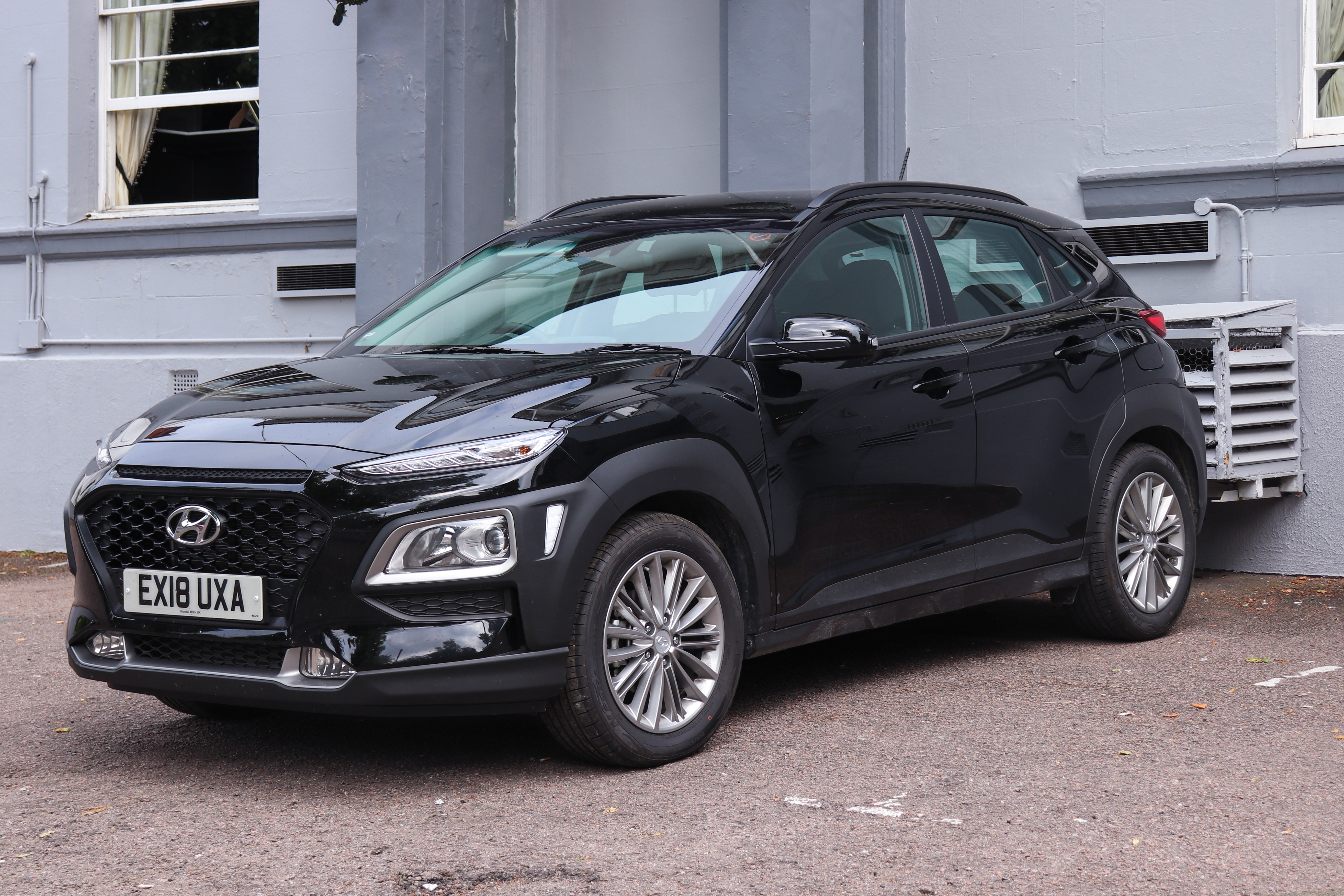
the Chevy Bolt and the, you know, the Hyundai Kona EV,
maybe the lower, lower level Ionic five.
I mean, so there are cars out there in that range
that kind of meet that.
But, you know, you don't, that's not the ones
you read about and hear about.
You hear about the Ionic 5N and the, you know,
the EV6 GT and the plaid and the, you know,
Model 3 performance, those are the ones that,
you know, they like handing out to journalists
and they get all the headlines and everything, but...
They seem to put a lot of the, you know,
the flash bang, wow, goes into the acceleration.
And so they put a lot of development into the acceleration.
And where they need to be putting a lot of this
is into the charging curve and the voltage pack,
the voltage of the pack to get, to maximize charging efficiency.
And I feel like, like the cars that you mentioned,
like the Bolt and the Kona, they don't really do that.
Those are the worst of every world.
Those are...
Worst-surprised, I mean.
Well, they don't accelerate fast
and they don't have the fast charging
that you might get on some of the other vehicles.
They're not that...
But they're not objectively bad.
They're just like kind of, I guess, I mean, I don't know.
Yeah.
I think they need to concentrate on,
for your mainstream it needs to,
it's the charging that needs to be concentrated on.
And that...
So that actually gets me kind of way down
to some of the striking points is,
I feel maybe the bigger obstacle
for EV adoption for a lot of people
is the charging rather than the cars themselves.
You know...
Almost every car is good now.
We hit this point probably,
I don't know, I'll arbitrarily pick out a number.
Or a date.
And say mid...
20,000s.
Yeah, maybe somewhere around there.
Cars just stop being bad.
Yeah.
Like, you're probably actually closer to right.
2010, 2011, 2012, somewhere around there.
All cars just got good.
Like, the interiors got good.
The features got good.
Everything had like a rear view.
Performance, efficiency.
Yeah, they all had review cameras.
They all had park assist.
I mean, not all of them.
But that was pretty common.
All of those features that were absolute premium features,
like Mercedes features,
suddenly came to the masses.
And so from then on,
it's been hard to buy a bad car.
Yeah.
I mean, you can.
I've rented plenty of bad cars.
But like, okay.
So this last two weeks ago,
I guess, I don't remember where I am in time.
I went and rented the cheapest thing
that was on the Enterprise lot at the time,
just walking up to the counter.
And I rented a Chrysler Pacifica.
Okay, I've rented one of those too.
It's amazing.
Yeah, it's great.
Especially if you're traveling in a group.
That's like the perfect car.
The interior was great.
The stereo was great.
The camera was great.
The stereo sounded amazing.
Like drove well.
Yeah.
Got good fuel economy.
Like everything was good about this vehicle.
And this was the cheapest thing
that Enterprise had on its lot.
So it's hard to get a bad vehicle at this point.
But you can with EVs.
If all of a sudden you can't charge it.
You know, if it's only doing marginally better
than level two at its peak,
which I don't really know if any cars do that anymore.
But that was the case not too long ago.
Is it you could get stuff that was...
Well, or as per my experience of, you know,
about a month ago is just even finding a place
that even trying to find a charging station
that actually works.
I mean...
Yeah.
So...
But there, that gets to a whole other conversation
of manufacturers trying to work with companies,
whether or not they should be making their own
charging stations or whether they should be
partnering with other companies
and making a kind of conglomerate consortium.
Yeah.
Like I...
Whatever.
Yeah.
You know, what is the correct answer there?
Obviously Tesla seems to be the best
for what's working right now,
but whether or not it's the best in the long term.
I don't know.
It's certainly not the best for the long term
for the consumers to have one company
own the entire ecosystem.
Generally, generally.
And I say that recording this on a Mac.
Generally, it's a bad thing.
Yeah.
Well, I mean...
Yeah.
But I think Tesla's been doing it long enough
that they have a vested interest
in maintaining the uptime,
the reliability and the experience
because it is a viable part of their business.
Whereas I think earlier on,
I mean, you think about the kind of the fallout
of the diesel gate scandal
and that basically was the creation of Electrify America.
You know, effectively, they were relying on
a lot of federal money initially to do this.
And then once that money kind of ran out,
it seems like their enthusiasm
for the whole thing just kind of...
I don't know if we care about this quite as much anymore.
Whereas Tesla, at that point,
it already built it up to a point where it's like,
this is a major line item in our quarterly reports.
And this is a big P&L, you know, center.
And so we want to keep this uptime,
reliability, experience,
because this is, you know, a core part of our business.
So, you know, building out EV infrastructure
is very tedious and expensive.
So, I mean, I get why a lot of it is crappy,
but it still doesn't excuse it, you know.
Many years ago, I was on an airplane with
a company that I used to work for,
and the boss was there.
And he was complaining about the Wi-Fi.
And he had booted up his laptop
and he was, you know, typing away.
And he couldn't, yeah, on the airplane,
you know, we're 35,000 feet
and doing 500 miles an hour.
And he's like, you know, this isn't working.
And it's not, he can't stream like the race
that he wanted to stream, something like that.
And I said, you know, your signal is going to space
and coming back.
Like, give it time, give it a little leeway.
This is amazing that you can even do.
And we're going 600 miles an hour.
Yeah, this is amazing that you can even do that.
And he said, yeah, but I'm paying for this.
It should work.
They've sold me on this item.
I have paid my money and they now need to deliver on this.
And that kind of goes to EVs of their,
like, like Fry America and everybody sells you on
what we've got this infrastructure.
And then you show up and it doesn't work
or it doesn't charge at the rate that it should charge.
And on one hand, it's amazing what they can do.
But on the other hand, they have made a promise
and they are not fulfilling on the promise.
And that's where the Supercharger Network excels
is they always seem to fulfill on what they say,
generally speaking.
Even to the point now,
and I don't know if this has been the case for a while
and I just haven't noticed till recently,
it will tell me as I'm pulling into the station
which stations are out of order.
And it's cool to say like 4C non-functional
or 4C issue reported.
So just imagine it for some of these others
if it did that and you come in and it's like...
Order.
Yeah.
So, you know, that's, I mean, honestly,
I think that's the level it needs to be for people.
Honestly, I think it's...
Again, I'm just going to keep hammering on this.
I really think it's the charging infrastructure
and experience that's the biggest obstacle for people.
I think a lot of people that drive EVs,
they're like, wow, this thing's quick and it's quiet
and, you know, it drives nice and this and that.
But the charging experience is just a huge turnoff.
And a lot of times they'll...
If they had it on a lease, they'll just turn it back in
and say, I don't want another one or...
You know, you reminded me of your friend
that bought that Lexus RZ
and thought her only option was to just plug it
into her wall outlet, which will take like 40 hours
for her full charge.
Yeah.
So she never drives more than like 100 miles
or no, it wasn't even that.
It was like 80 miles or something away from our house
because she needs to be able to make the round trip.
She didn't...
She's never...
Last I talked to her, she'd never level three charged.
She'd never...
I don't even know if she'd like level two charged
at a destination charger.
She just operated on, I'm going to plug this in
outside my house.
Yeah.
Which, you know, is an option
and it's funny.
I've read a lot of blogs by bloggers,
journalists, influencers that don't have 240 volt at home
and I think it's almost kind of like a Stockholm syndrome.
They've tried to self justify how great 120 is.
I'm here to tell you it's really not.
Yeah.
If you can do 240 at home, do it.
It's much better.
Yeah.
I honestly have no idea how you would do it.
Several years ago,
I think I had the Nero EV
and I've got 240 at my house
but I decided that I would plug in 120
and it was going to take like four days
or something ridiculous to charge the vehicle.
I don't remember what it was.
So I operated like I was at a apartment complex
and I went and there was a mile from me
it was a level two charger
and so I went,
put through my bicycle in the back
and level two charged the thing
and, you know, like seven hours later
it was full and then rode my bike back there
and it was really just a pain in the butt.
Ultimately, you could do it
but it was kind of a pain that
level three is a necessity
if you don't have off-street parking
and level two charging at your residence.
That level three is a requirement.
Ubiquitous level three is an absolute requirement
just for these to even start to take off.
For things to take off exponentially
you need to get the people
that don't have off-street parking.
You need to get the apartment dwellers
and even around here
this guy around the corner from me
bought a Cybertruck
and he street-parks it.
He's got a house
but he street-parks it
and I don't know the story behind why.
I'm guessing, I'm guessing
but the Cybertruck lives on the street
and I never see a cord go into that
so he is living off of superchargers
I would guess.
Or he's got workplace charging or whatever.
Yeah, it could be that too.
I don't know the guy.
I mean he's around the corner for me
and I don't like people so I don't talk to him.
So let's live, let's go to this fantasy world
where public EV charging is like a soft problem
like it's ubiquitous, it's reliable
that's no longer an issue.
That aside, in your mind
what do you think it will take
to make EVs go mainstream
and people to have confidence
and for them to start selling
without tax incentives
without where people will just
organically naturally start buying them
and it'll kind of hit that tipping point
where you'll kind of see the hockey stick.
Well I think there's two factors
and one of them was something that you just said
which is no government incentives.
I think you need to take away the argument
that the right has generally been saying
which is don't force this on me.
You've got to stop forcing it on people
and you've got to kind of put that
the ability to produce an EV
affordably and a good one
and profitably you've got to put that on the companies.
So I don't disagree with getting rid of the incentives.
I don't know if now is the time to get rid of them.
I don't know that deep into this process
but I think getting rid of that argument
of don't force your EVs on me
well we're not, there's no incentives.
Sure we're giving incentives to the oil companies
but they seem to be cool with that
but I think getting rid of those
and then put the, I can't think of the word
but the requirement basically
on GM, Ford, Hyundai, Honda.
Onus.
Yeah, Onus, there you go, the Onus.
Ding, ding, ding.
It's, I was about to say
it's like a Weenus but
a little bit different.
No, I mean and to be clear
I'm not, you know I don't want to be one of these
like socialist kill joys that say
nobody should have a fast EV or this and that
but I don't think that should be the focus
for mainstream models.
If someone wants to pay 100,000 plus
and get a plaid or a sapphire
or you know a Taycan, you know,
turbo, hey, go for it.
Enjoy, you know impress all your friends,
whatever but that's, I don't think
most people really care about that.
No, well the other item
that I would say is for mainstream adoption
is exactly what they care about
which is price.
Price is going to sell them.
So if you've got ubiquitous charging
and you've got generally 250 to 300 mile range
on all EVs and they all charge generally well
if you get rid of the argument of
don't forces on me and then you say
and you can buy one for 30 grand
which is equivalent to the ICE version
or at least one for that
and then I think you're going to get a lot more
adoption and I think that there is
a big market for slow EVs
if they are efficient and affordable
and the people that say
oh well all, you know, it's
all of them are fast, you don't pick up efficiency
by making something slower
is an argument that I've heard and I don't know
if that's necessarily true but I find it hard
to believe that some kind of efficiency
whether it's in actual motor efficiency
like miles per kilowatt
or per kilowatt hour
or if it's efficiency in production
like you can wind a motor
cheaper
if you can make it
cheaper and thus you can make the price
cheaper if you're not
building something like with RC cars that was
definitely the case that you would get
hand wound, tightly wound, you know
nine turn motors versus those would be
very expensive versus machine wound
like 15 turn motors that were
significantly less expensive and so I've
got to believe that it's still the case
and would apply to cars
but at the same time I do think that there's a market
for
the ultra high end
the 0-60 in, you know, two seconds
one and a half seconds and I think that's where
that's where you also get
into the market of pushing the limits
of charging like wasn't it
Yang Wang, something that we talked about
that was like 1200 volts
great
3000 horsepower, yeah
and get the 1200 volt
thing that can charge at 900 kilowatts
like do that
do that there and that will help
hopefully create the technology
and bring the price down
and so you have the multi-millionaires
that are owning those vehicles
that then are essentially funding
the little people
like me
yeah and just kind of going
back to, you were talking about
basically having the
IS&EV equivalent
side by side
I think what will be the big tipping point
is when you have that
price parity between those two models
and the EV
model is demonstrably superior
is like
if you have them side by
side for essentially the same
price
the EV model
even if styling-wise
it looks about the same
let's say the IS model
let's say 9 seconds
EV 7 seconds
you know
about the same range
but EV has
Frank the IS model doesn't obviously
that there's a lot of these little
like surprise and delight
kind of easter eggs on the EV model
that make it that much more compelling
to the point where people would be like
why would I buy this one it's kind of a piece of crap
you know it's like
you have to make so many compromises
you know it's not quick it's not very practical
you know it's
just kind of outdated technology
so of course I might get this
and I think so we always
talk about new car sales
and I don't know what the numbers are
but used car sales are exponentially larger
than any kind of
new car sale at all
and I think that
another thing that would make a tipping point
in all of this is
as used EVs go on the market
and
they're affordable and they are the good
second generation of EVs
that they are post
2020 I guess
randomly pick a date that
things got good
you know we've now got if you went to
Craigslist or Facebook Marketplace or whatever
and all of a sudden you're choosing between
a Model 3
and Ionic 6
Mach-E
you know you're choosing between these modern
EVs and they're used and they cost
$12,000 each
and you look at
an ICE vehicle that's used and it's about the same price
so the same kind of deal is what you're saying
price parity and then you go
you know what these are actually modern
nice new vehicles
if you wanted something I haven't
priced them out now but if you wanted something
like in that range just a handful of years ago
you were looking at the Kona, the Nero
the old Bolt
and they're just not
a used vehicle leaf those pick those up for like
$3,000 but they only go 40 miles
because they're down to like 2 bars on them
yeah those are awful
don't buy a used leaf
I nearly did
it would have been a very bad mistake
so I think the used market also works into this
equation
but it seems so
volatile right now
the used market was like crazy
I mean remember just coming out of the pandemic
your Model 3 was selling for more than
Yeah, it was insane. And now it's like I don't even want to talk about resale right now, but
I'm just waiting to buy yours. I am waiting for it to hit rock bottom
and then I buy your model three because you're the sucker that did all the upgrades on the thing.
And if you're lucky, I'll upgrade to the LFP pack, then you'll have a perfect car.
Hey, there you go. I'll take it. I love LFP. That's also the future of EVs,
but that's a whole different conversation. One of the futures, I guess.
Mm-hmm. So I came up with how many points around here? One, two, three, four, five, six.
I have seven points for what I think is the formula for the perfect mainstream EV.
So you want me to unpack that? Yeah, go for it. And I'll disagree with all of them.
Okay. So number one, price 35 grand or less. You could make the case 30 grand or less.
Yeah. I would love the average selling price of a new vehicle right now is like
$48,000. It's probably higher than that at this point. That was like a couple of years ago.
It was like $48,000, $48,000, something like that. So 35 is low.
And I would say for 35, well-equipped, not a Strip-O like one at this price kind of teaser.
Yeah, I think you... Man.
But 35 decently equipped. Yeah. I think 35 decently equipped. Yeah,
I'm with you on that. 29 for your Strip-O somewhere on there.
Yeah, exactly. 0 to 60. Maybe this... I know we just talked about seven seconds.
I think seven seconds is acceptable, but if you want just a little bit of the wow factor,
I would say six, six seconds or below. What's your model three? You've got an SR plus.
And it's got to be right in that range. Isn't it like high-fives or something?
When it was rated new, it was rated 5.3. I think the newer LFP models are 5.8.
That's only because they're a little bit heavier, but... Yours is...
That's plenty quick. Way more than most people need.
No, I have no complaints about the performance. It's absolutely quick enough.
So maybe sub six seconds a little ambitious. I'm going to say sub seven. How about we say that?
I think that's safe. I like that. I'd say 300, 350 mile range.
It's funny because you say that, and I think 300. Yeah, that's what it needs to be.
And you say then 350 and I'm like, ah, it sounds like a lot.
Yeah.
So somewhere in there is, for whatever reason, my mind says 300 is necessary, 350 is too much.
Yeah. So I think you're in the right range.
Well, let's just call it 300. I'm going to say 10 to 80% fast charging in less than 20 minutes.
If they could hit 15, so I have timed myself on my road trips of...
And granted, this is not equal to equal, but time myself on a road trip where I pull over
from exiting the freeway to entering the freeway, filling up a gas powered vehicle,
15 minutes, pretty much like clockwork. And that, but that involves driving to the gas station,
which is usually right, you know, you're on the interstate. So it's like the gas station
right there. And with EVs as may or may not be the case.
It's kind of getting there, but it's not there yet.
Yeah. Depending on where you are. So if you said it's 15 minutes, it's actually
probably 20 from pulling off to pulling on. So I think, I think if you could get it to about
15 minutes for 10 to 80% charge, I think that would be, that would be pretty good.
No, I don't think that's like a pie in the sky goal either. I think that's achievable.
This goes back to spend the money on charging efficiency and range efficiency,
and you can get there. Stop, stop cramming these like crazy acceleration cars down our
throats and trying to convince us that that's what we need. We don't need that. And in fact,
when my kids start driving, I don't want that. Like that's ridiculous. Can you imagine you hand
to your kid something that's faster than a Hellcat? And you're like, here, go learn how to
drive. It's not necessary. It's unsafe. You need slower vehicles. You know, when my in-laws were
driving, the last thing they needed was anything faster than the Avalon that they had. You need
slower vehicles. It's a public safety issue. And actually some of the later, I don't think the
one they had was quite this new, but even some of the later model Avalons were 300 horsepower.
So anyway, moving on, I would say comfortable seating for four to five adults. I think that's
kind of for a mass market car. That's just kind of table stakes. Yep. And then I think I'm going to
name kind of a minimum cargo capacity of 20 cubic feet with the seats up and 45 plus with the
seats down. Whether or not you want to include a frunk with that. I don't think a frunk is not
as altogether necessary. But I see a frunk as kind of a surprise and delight item.
I think it's a cool to have. I think it's something that would give people's attention.
If it didn't, I don't think it would necessarily be a deal killer. But I think more and more
people may be conditioned to expect that with EVs. Because there's like, well, it doesn't have an
engine. Why can't Tesla has this? Or the Lightning has this? Yeah. I've seen a lot of disappointing
frunks in my life. No, just because it's got it doesn't mean it's true. I mean, true. I hear what
you're saying, but it's, you know, the the EVs that don't have it, like you and I both watched the
Monroe live videos when they start, you know, tearing the cars apart and doing reverse engineering.
Usually the reason they don't have frunks is just kind of lazy engineering. Like they didn't
really optimize the architecture, the cooling system, steering system, whatever, they just kind
of kind of took whatever was off the shelf and shoved it in there and said, oh, well, you know,
we don't have room for a frunk. Whereas if they really focused on having that as a feature,
they could have easily done it, but they decided not to. Yeah. Yeah. Anyway. And then, you know,
I think this is kind of this is kind of, you know, obvious now, but I think, you know,
it's what sells. I would say crossover. I would prefer more of a wagon type form.
But of course you would. Of course I would. Yeah. But we know on the history in America,
wagons don't sell. But even there, even there, I think the form factor is kind of morphing
a little bit where there are some crossovers that are a little lower slung that are a little
more wagon-ish. We're almost going to end up at the liftback.
Yeah, which I wouldn't be mad about because I like liftbacks too. I'd say they're, you know,
you know, half sibling to the wagon. But I mean, like, case in point, like, I know a lot of people,
you know, call the EV6 a crossover. I'd almost say it's almost more of a wagon or
liftback. And, you know, I kind of dig the EV6. I kind of like the looks and the packaging
and stuff. Yeah. Price-wise it's still not quite at, you know, our target price,
but Kia's got a lot of, Hyundai Group in general have a lot of EVs coming out in the next couple
of years that I think are probably going to tick almost all these boxes. So.
Yeah. And they're not the only ones. I think you're going to see it from a lot of companies.
Yeah, I think kind of, to me, what you've described in there is if they could hit the
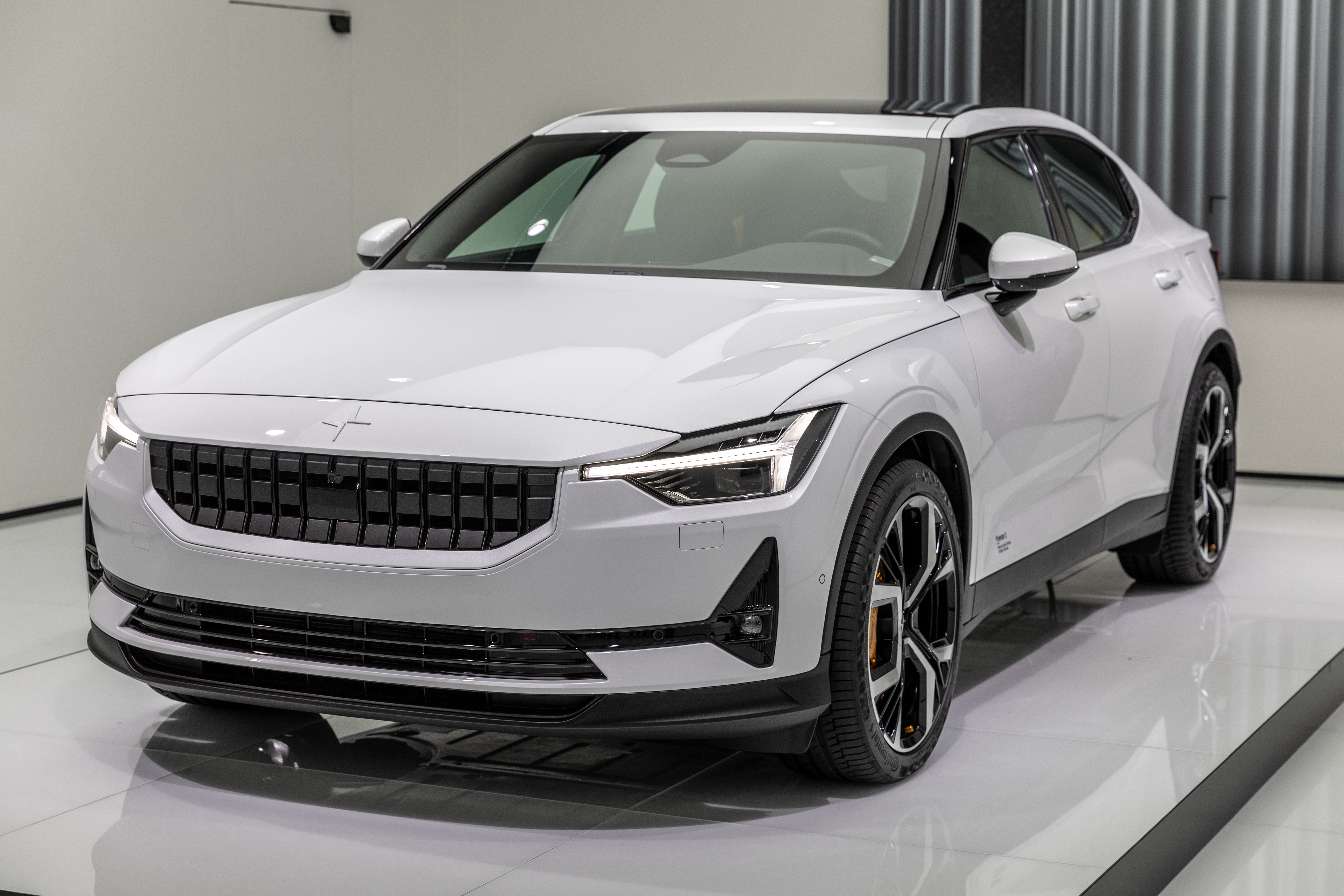
price point, which I don't think they do, is Polestar 2.
Polestar 2 I think is, you're looking at new at least like 45 plus.
Yeah. But that hits like minus the price. That kind of hits all things. It's a looker.
It's, it's not bad in any respect. So I, I think we're nearly there. I think on your list,
that exists. The only thing that doesn't exist in that is the price tag.
Yeah. And I don't know how we get there.
Especially now. Well, now we've lost the EV incentives, many of them, federal ones,
anyway, and a lot of the car companies that are not just EVs, sort of like the Fords and GMs,
have lost any incentive to go make EVs. And so the development is slowing down,
which when the development slows down, the price is not going to drop because you're not
going to see the advances happen that get the efficiency of manufacturing. So
I think had we kept the incentives and the push for EVs that what you've listed
a couple more years, it, yeah, I think we've, I think it's further away
than what it was just two years ago.
Yes and no, but I think enough things are in the works are in motion. I, I'm going to, like I said,
I'm going to throw out another number. I think whether it's calendar or model year,
I think 2027, you're going to see some models that that basically will hit almost all of these
hit almost all of these close on the price, maybe not quite a, you know, 30k, but yeah,
I'd say 30, 30 to 34 and hit all the rest of these. And one, one thing we haven't seen the
official specs on yet is the new the second gen bolt GM is really hyping up.
Yeah, no, they're killing it. They're killing everything in order to just hang there.
Yeah. And also the new Ford, you know, you know, modular, you know, the whole whiz bank thing that
Jim Farley was talking about. I mean, they've certainly set a high bar for themselves, you
know, whether they can fulfill that. But I'm going to say 2027, 28, you're going to,
I think if that's not the tipping point, I think it'll be close to it.
I think. Oh, tipping.
Yeah. So I think we've got a long way to go to hit like the big tipping point.
And a lot of that is just simply price based on the used market on the new market. You need
the EVs to be very affordable and at least comparable in almost every respect. And I think
we're a little bit away from that. And we talked about it the other week that
they sell EVs in there. So 300 miles is what you're saying is like the, you know, the ideal EV.
But then we just, we're talking last week, week before, whatever that there was,
whatever company was was doing like a range extended something version with the gasoline
engine and they were going to advertise 600 miles per tank. This is a long way to go
before you get to that parity. Because if it's the same price and I go, oh,
and one I can go 300 miles and it takes me 20 minutes to recharge. And the other one could go
600 miles and it takes me five to 10 minutes to fuel. There's a big disparity between those two.
And when not, those two are not going to join. And my argument in the other episode was doing
is the automotive world and that particular manufacturer doing themselves a disservice
by even making a 600 mile vehicle when they know that they're going to go EV eventually
and that they can never match 600 miles in an EV, not with the technology that we've got now.
And the new technology is always, oh, just around the corner. It's like the new battery
technology is like hydrogen. It's the future and it always will be. But the new battery
technology is not going to come in and suddenly double our mileage. Well, but okay,
the counterpoint to that is when 240 volt home charging becomes basically just well,
it's pretty much in the code for new construction. I think in California, I think across most of
the country now. Well, they can do it in California because how many new houses do they build out
here? Yeah, but you know, once that becomes expected, I don't I don't know at that point
if 600 mile range is going to be that big of a deal, especially if it's just like
around town car. You know, if it's a two car household, what I kind of see probably I'd say
for the next decade is two car household, one of them being in a pure battery EV and one being
a P have or hybrid for road trips. I see that possibly becoming a more, you know,
predominant pattern. Interesting, you mentioned that one of my friends has a Polestar two
and they've got a Volvo, something, something crossover, gas power. And they got the gas vehicle
because he was going to have to go into LA fairly regularly and commute into the office.
And then stuff happened. And now he no longer needs to commute in. And they're going to get
rid of the SUV, I believe. I'm not actually sure how that works because I've also got a camper
and that's what they pull it with. But the idea is that they're going to get rid of that
because they only need the around the town vehicle. Maybe they're planning to rent a truck
or something when they need to go camping. I don't know. But it's interesting because there,
they've got the choice now. They're like, well, we're spending so much money on two vehicles,
we really only need one. And they're going to keep the EV of the two. And this was, I believe,
their first EV. Well, maybe they looked at fuel and costs and especially in California.
I mean, even with the electricity rates we have, it's still quite a bit cheaper to,
well, they've got solar. Okay. So I mean, so it's basically free energy for them potentially.
And they largely don't even drive anywhere because they've all got e-bikes and they just
ride their bicycles everywhere. So it's just an interesting case there where it was exactly
what you were saying of, you know, you've got these two vehicles. And in that case, they do
one for long distance, one for short distance. And they're choosing to just go with the
short distance vehicle. So maybe you're more right than you know. Time will tell. Yeah.
Isn't that what they always say? Time will tell. And time will tell. I think that's it.
You might, you might see the show up in little shorts here and there. That's,
that's the goal. That was one of the goals of transitioning to this platform. But we'll see.
We shall see. Time will tell. Time will tell. Until next time.
All right. I will talk to you whenever I talk to you. Bye.
About this episode
The discussion revolves around the performance of electric vehicles (EVs) and whether the focus on speed is misplaced. Hosts Phil and Ed unpack an article suggesting that the emphasis should shift from acceleration to charging efficiency and range. They debate the real-world implications of EV performance, sharing personal experiences and preferences for practicality over raw speed. The conversation also touches on the future of EVs, infrastructure challenges, and the importance of affordability and efficiency in mainstream adoption.
Are EVs too fast? What a ridiculous question! Other than…maybe? The question is not actually so much about outright acceleration, but more about what the industry is prioritizing over other meaningful developments for electric vehicles. On this week’s podcast, we consider the options.