The C8 Corvette is a newer Corvette generation from Chevrolet. It’s special because the engine sits behind you (mid-engine), and that makes it handle differently than older Corvettes. People bring them to track events and try to place well.
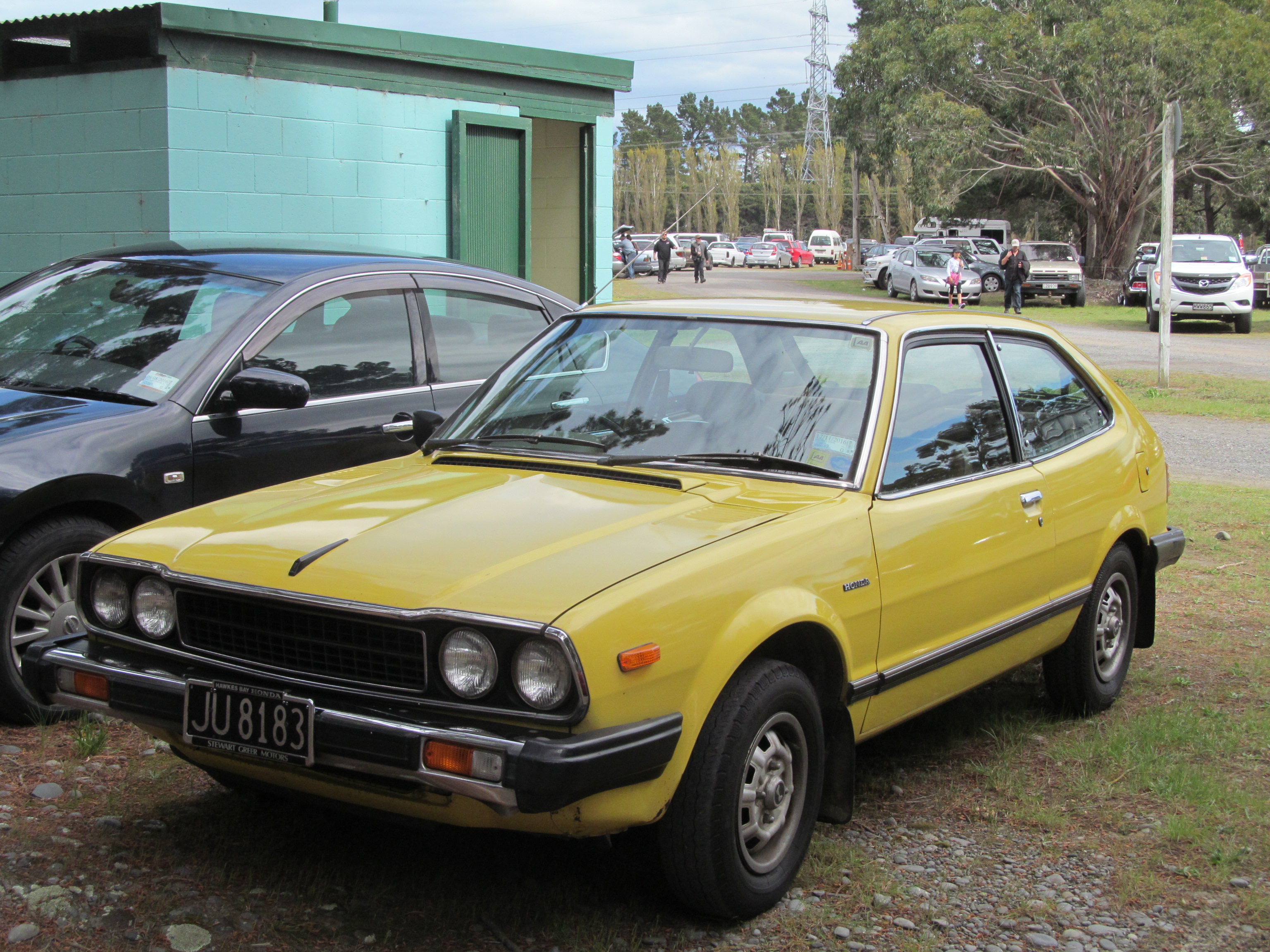
The Honda Accord is a regular everyday car (a midsize sedan) made for commuting and family use. People mention it when they want a car that’s good at the basics—comfortable, easy to live with, and reliable for daily driving.
A “NASA spec class” is a racing group with strict rules about what the cars are allowed to be. Everyone has to follow the same basic setup, so it’s harder to win just by building a completely different car.
Car
Hayabusa
“Hayabusa” here means the Suzuki Hayabusa engine. These race cars use that engine design, which affects how the car makes power and how it feels to drive.
A sequential transmission is a gearbox where you shift one step at a time, usually with paddle shifters or a shifter. It’s designed for quick, repeatable gear changes in racing.
A solid rear axle connects both rear wheels with one rigid bar. That changes how the rear wheels move together, which affects traction and how the car handles when you’re accelerating or cornering.
Bias ply tires are an older tire design. They can feel different from modern tires and often need more attention to heat and grip, which can make the car harder to drive fast at the limit.
Slip angle is how much the tires are “sideways” compared to where the car is pointed. In drifting or sliding, the tires need a certain slip angle to make sideways grip.
They’re saying you have to drive the car more sideways than you would in a typical grip-focused car. Instead of trying to go through the corner perfectly straight, you use a controlled slide to carry speed.
It’s a driver permit from NASA that lets you race at their track events. You usually have to go through a safety/skills process first, then you can sign up to compete.
Mixed class racing means different types of race cars share the same track in the same race. Since they’re not all equally fast, you have to be careful about traffic and passing.
A split start means the race cars don’t all go at once. Instead, they’re divided into groups and start in separate waves so faster and slower cars don’t get tangled immediately.
Concept
thunder roadsters
“Thunder Roadsters” sounds like the name of a race group/class. It likely means a specific set of cars that are allowed to compete together under that series’ rules.
“Spec 944” is a racing category for Porsche 944s where the rules limit how much you can change the car. The goal is to keep the cars more similar so it’s fairer to race.
They’re using “lemon’s race” as a joke about racing with cheap, imperfect cars. It suggests the track will be full of oddball cars that aren’t super expensive or super reliable.
Concept
25 minute races
A 25-minute race is relatively short, so drivers tend to push hard for most of it. There’s less time to “settle in,” and you have to make quick decisions around other cars.
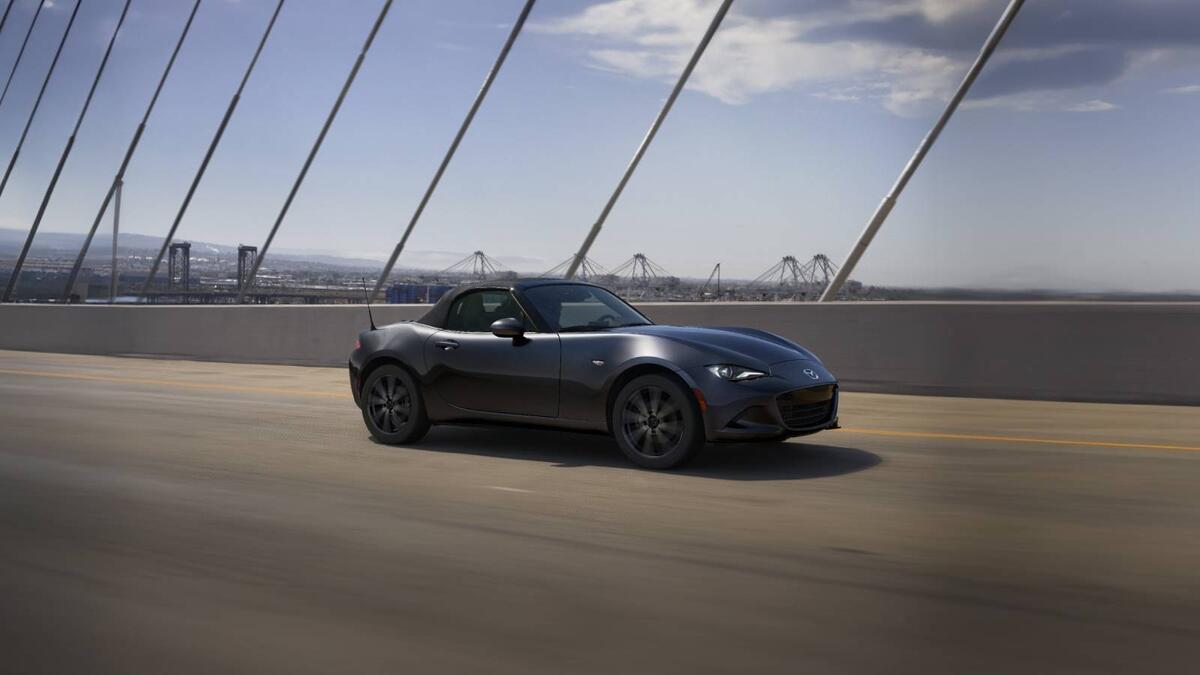
The Mazda MX-5 (Miata) is a small two-seat convertible made for driving for fun. It’s popular with people who like to do their own repairs or upgrades because it’s generally straightforward to maintain compared with many more complex cars.
Michael Schumacher was one of the most famous Formula 1 race car drivers ever. People talk about him not just for winning a lot, but also because some people think he wasn’t a perfect person.
Senna is Ayrton Senna, a legendary Formula 1 driver from Brazil. He’s remembered as an amazing racer, and people also debate what kind of person he was beyond the racing.
SCCA is a US racing club that organizes amateur road racing and autocross events. It’s the kind of organization that helps regular people get into motorsports.
The ND 500 is a race the listener says was a big deal where they grew up. It’s mentioned as a key event that shaped their interest in racing.
Person
Emerson Fidipaldi
This sounds like a reference to a famous Brazilian race driver from earlier generations. The transcript likely means Emerson Fittipaldi, who won Formula 1 races and is well known in racing history.
Person
Ari Lyandike
This looks like the name of a race driver the listener admired. But the spelling here is likely wrong in the transcript, so it’s hard to say exactly who it refers to.
LIVE
Hi, I'm Scott, and I'm Seth, and we are track walking tonight.
We talk.
We do.
About like almost every other show.
But yeah, we're, Seth and I kind of realize we're getting close to the end of our season.
I guess we have seasons because we actually take a break.
That's because we think we're an 80s TV show.
Yeah, one episode per week and you get to wait until the next one.
Now we should do reruns.
No, I hate it when podcasts do like revisit this thing.
It's like I've either already decided not to listen to that or I've already listened to it.
I don't need to again, but yeah, we were kind of getting there and part of it is the fact
that the one lap has happened and neither of us were there.
When we're recording, it is happening.
Like our buddies are doing things there by this time of day.
They're transiting and we're not.
Yeah.
Yeah.
Becky and I went down with our son on Friday, which is Tech and Registration Day, which
is by far the best day to go visit people and actually get to talk with them because
Saturday you do the event and then you pack up and leave.
Like there's not much time for Tom Foolery.
So yeah, we went down and it kind of struck me that morning going to work.
That's like, I should be packing my bags and putting them in a vehicle today, but I'm not.
I'm going to work and that kind of sucks.
But yeah, we got to say hi to everybody.
Most everybody had a few cars that didn't even make the start.
That happens already had some cars that some attrition and stuff like that, which usually
a lot of it happens early and then it kind of trickles off through the week.
But yeah, Beck and I started talking about next year's one lap on the way to visit.
And I think we kind of realized that it's very, it's much more difficult, I think,
for us to be a team when we don't supply the vehicle because it's effectively asking someone,
hey, give us your car for a week and like you'll be known for giving us a vehicle
or letting us drive a vehicle and that's it.
So the other option would be for each of us to find a co-drive, which is an interesting prospect
and one that we're kind of at least intellectually exploring right now.
But I don't.
Yeah, the fact that the two of you do that is strange.
Yeah, it's interesting because it's usually you've got, you know, when two people do one lap,
they're two buddies and they do one lap or they're a father and son or they're, you know,
something like that.
But splitting up a husband and wife, which you guys have done before, is odd on one lap.
Yeah, I mean, we've, like you said, we've done it.
And so, you know, if that's a path back to the one lap, I think we'd both be game for it.
It's kind of how it sounds.
Yeah.
But yeah, and I think the other thing that I kind of need is I need a reason to do the one lap.
If that makes sense.
What would be a reason?
I don't know, Seth.
That's why we're talking.
I don't know these things.
No, because so one of the reasons I stopped doing one lap is I kind of felt like I had done
everything that was significant to me.
I'd driven the vast majority of the tracks that we go to, and it was just going to sort of be recycling the experience.
And it's worth recycling the experience because it's great.
It's a wonderful thing to do, wonderful people to hang out with.
But, you know, I decided to do other newer things rather than do that same thing over and over again.
Because I'm not chasing something new when I do it.
I'm not trying, I don't say I'm not trying to go fast because I'm always trying to go fast in what I do,
but I'm not going to buy a new C8 Corvette and try to get a top 10.
And like, apparently a lot of people are doing.
If I looked at the pictures, there's a billion C8 Corvettes.
The top 15 looks hard.
And yeah, podium is very unclear.
Very unclear.
Just some big fast cars.
Very talented.
Some pro drivers.
Yeah.
Yeah, part of it is the fact that we've driven a lot of the tracks that the One Lab tends to go to.
I think there was one this year that Becky and I haven't been to one road course,
and then there's the oval that they're doing that we haven't done near Road America.
But yeah, the part of the lure at the beginning was to go to these tracks that we'd never been to
for the adventure and excitement of new tracks, new venues, stuff like that.
I think the other part for me would kind of depend on the vehicle that we would have access to.
You know, the whole point of the Sunday Cup years was not to, I guess, perform well overall.
It was just to kind of demonstrate the joy and fun of driving slow cars fast.
And we had our internal competition and stuff like that,
but we weren't going there to set anyone's hair on fire.
But we had a purpose.
It was kind of the same as the Caymiata year.
It was the last year or four.
It was just like, what can this whole ass race car do on the One Lab of America?
And then the Cardinal, the first year of the Cardinal was just to like, can we do it?
Then the second Cardinal year last year was to go and like, how well can we do?
How well can we perform?
So if we got a car that was a performance car,
like I wouldn't mind taking another swing at trying hard again.
Outside of that, like, yeah, maybe if the tracks were really interesting,
like the adventure part could come out of it or, you know,
if somebody rolls up with an SUV and like wants to go in SUV class,
like, I don't know, that might be interesting too, you know.
What if you find somebody, if you have somebody who approaches you with a
mentor-y, coach-y type thing, there's certainly people who look at an event
like One Lab and they want to do it, but it's intimidating.
Yeah.
And...
Well, and this has kind of been, I don't want to say my angle for a while,
but like this is, I think one of my, the things I can offer people is not only
like experience having done the event, but also driver coaching, set up feedback,
stuff like this, like the amount of stuff that we can learn about a vehicle
and work on behind the wheel over a week under some wild circumstances,
like could be pretty substantial and pretty fun at the same time.
So for me, for me, I did it because it was fun.
I did it because I had friends I was doing it with.
Like it was, it was the grand adventure the first year I did it.
I did it with Tim Miller because he asked me to.
I did it with Brian because I asked him to.
Like, I was like, we should do this thing.
Let's go do it.
Yeah.
And then we did it.
And...
Brian, Brian also had some things to say about how you recounted the,
the Texas speed, speed journey that you two went on this past summer.
Yeah.
We probably had different views for sure.
Anyway, keep going.
But, and then I wanted to build a car that would do well.
I don't want to say the Accord did well, but it was, it was good at it for what it was.
It was a, you know, at that point, whatever, 18 year old Honda shit box,
but it was, it was comfortable and it was reliable.
And I could put a friend in it that hadn't been driving much and it was safe and quick for him to drive in.
And I got a full two page magazine spread in grassroots motorsports.
And so that was like my peak car building thing.
And that's like the lamest car ever.
Like, what magazine car did you build?
I built an Accord and it was cool.
And yeah, then I just did it with Bob because he's my friend.
It's true.
And that's kind of the only thing that I see pulling me back is if a,
as if a buddy of mine goes, hey, we should go do one lap in my car.
I'll be like, all right, let's go do one lap in your car.
Becky did mention that.
She's like, I bet if I assessed to do it with me, he would.
I'm like, I know he would.
Yeah.
This is the, this is the last year for a little bit that, that I have a hard,
I can to do it because my kid is graduating high school this week.
So I would not have been able to do it this year, but I am running out of excuses.
So it's true.
So, yeah, it's, it's just strange.
You know, I still think the reasons why we didn't do it were good reasons and
it just, it feels weird to have our, our buddies and our friends doing a thing
that we really enjoy doing and we're not doing it.
So, I don't know.
That's all I got to say about that.
I'm the same way.
I'm, I'm sort of casually following along and just seeing people do fun things
and it still looks fun.
Still looks worth doing.
Still looks worth talking about.
I'm just not there.
There we go.
Um, figure we should also talk about, um, what I'm doing this,
this summer with, uh, track day organization called Rev match.
I wanted to hear about this and you wouldn't tell me about it.
Um, because you're like, no, we'll talk about it later.
And so I've been waiting for like two weeks, a week and a half.
Calm down.
It's fine.
Just saying.
It's fine.
Um, yeah.
So I have known the guys at Rev match for a while now and kind of went out
to help out events last year.
Um, you know, help instruct and kind of give an outside view of the structure
and organization and you know, some, some of the things that they do really
well and some of the things that maybe they could grow out or do a little bit
better at and, uh, this year they won the off season.
They were interested in, uh, having my curriculum for HPD kind of introduced
into, um, their organization.
And, uh, I was intrigued and it's whenever you take an existing organization
and you apply a pretty big wholesale change, there are lots and lots of
challenges.
Um, and some of those, you know, we're certainly, we're certainly seeing,
but I think the willingness to take some, a big swing at it like this is
impressive.
And so I applaud everybody at Rev match for, you know, trying something
new because I know that it is not an easy thing.
Did they know that they needed to change their HPD program or were they just
looking for something different?
Like, were they trying to fix a problem?
I think what they were trying to do is they were trying to distinguish
themselves from the vast number of other Midwest based track day organizations
out there.
Um, they were trying to have a system that, um, makes, it's hard to say
makes sense, but like has very clear defined, uh, boundaries between the run
groups.
Um, and that's of course, one of the, the difficulties in coming into an
existing organization and, you know, applying this kind of an approach to HPD
to it, uh, there's a lot of back work that needs to be done.
But yeah, they, they were interested in just like, how do we help drivers be
better, um, get better and kind of provide that support because most organizations,
you know, if they have anything, it's will be for novice.
And then after that, it's good luck kid.
You know, you're on your own.
Yeah, have fun driving.
And, uh, we'll see you at the end of the day.
Yep.
That's basically it.
If there are any problems, let us know.
Otherwise have fun.
Follow the rules.
There is, there is a beauty to that for the right people and the right circumstances
to just be able to go, to go lap with your buddies.
But yeah, if you're trying to do, if you're trying to be better, it's awfully
hard to figure out how to do that within that structure.
And this was one of the things I, I told them and they were protective of as well,
which I appreciate, um, of their drivers is there are some people who go to their
events and just want to drive.
They're interested in progressing.
They're interested in like learning what's next sort of thing.
Like they're just there to have fun and do laps.
And honestly, I think that's great.
Um, it's something that this, um, program can absolutely accept.
You know, every organization has your perennial novice intermediate and
advanced level drivers and they don't have to advance.
They don't have to move up.
They're just, they're good where they are.
And honestly, that's totally fine.
Um, each run group has like a base foundational skill level that they need
to meet and as long as you meet that, have fun.
Wonderful.
Yep.
And if you want to get better, if you do want to advance, come and talk and we
can give, we can give you stuff to work on, see what's next and, you know, get
the moving, moving up, getting faster, more aware, all that good stuff.
Yeah.
It's that second part.
It's the, it's the people who are yearning for something that need to
have something to chase and somewhere to go.
Yes.
Yeah.
Yeah.
So yeah, that's, that's kind of what this is.
And so it's, you know, all track day organizations largely run on volunteers.
And so that's always difficult and challenging, but at the same time,
rough match has like a really good core group of people.
Um, who, um, you know, really enjoy and giving back to the organization.
And yeah, they were willing to try something new too, which is definitely
tough and for a lot of them, it was more responsibility.
It's not just like, you know, check in, how are things going?
Cool.
Have fun.
It was like leading some classroom sessions.
It was being at the top of grid to, you know, check in on your drivers,
see how they're doing, high fives, uh, reminders, kind of stuff like that.
Going out on track, like observing, being on the side of the track,
observing, giving feedback to drivers who are interested, uh, taking notes.
Like it's, it's a lot more of a program than it was.
Okay.
With any program like that takes more effort, takes more responsibility.
And that's again, that's not easy.
Yeah, could feel like work to some people.
Could, could, um, effort for sure.
Yeah.
Hopefully worthwhile.
So yeah, I'll be, um, I think there's only two of their events.
I'm not going to be able to make it to, but the others I will be at, um,
I'm kind of the, when I am there, I'm the lead instructor.
So I'm kind of helping the, uh, the group leads to have what they need,
um, help fill in any meetings, um, you know, support on grid.
If I'm needed to just kind of be there and, um, you know,
if I have any coaching clients there too, I'll take care of them and go from there.
Maybe bring the yacht out.
I don't know.
We'll see.
What, what tracks are they cause I know you're at road America,
which is big and awesome to be at.
It's big and awesome.
Um, uh, Audubon, Gingerman, Red America, Black Hawk, definitely missing one.
Yeah.
Those kind of tracks.
I love all of those tracks.
I mean, there's things I hate about Audubon, but all the other ones I love just,
I don't, I don't dislike the track at Audubon.
I dislike the Audubon experience.
Right.
Um, the driving's great.
Audubon is a fantastic racing track.
Uh, I really like it a lot.
Um, Black Hawk, I haven't been to in a while and that track is a fist fight
of a track in a good way.
It's just a lot going on.
Be sure you break syrup to snuff because they will be tested.
It's, it's like petting a raccoon that doesn't want to be petted.
Um, it's, it's fluffy and it's great and it might hurt you.
If, if not hug, why hug shaped?
Exactly.
Black Hawk is hug shaped like the track map looks cool.
The track walk is cool.
It's just like, like you got to be a little bit careful cause she'll bite you.
Yeah.
The other side of the, the curbs are steep and you may drag frame.
Uh, if you go over them, I've heard from people and there's, yeah,
there's trees you can hit.
Uh, there's probably turtles and deer, tire walls.
I mean, there's, there's stuff that'll bite you.
Berms.
Berms.
Not naming names on top of one and has been done.
Um, yeah.
I mean, it's, it's a great little track.
The facilities really are quite nice there.
The food is some of the best, uh, that we've been to.
It's a, it's a cool track and you're on the inside.
So like observing and like watching cars drive by and hear them through the trees.
It's a, it's such a cool, such a cool experience.
Um, top tip for anybody who does go to black Hawk ever do not cross the blend line.
Um, and absolutely listen to the woman at the top of grid.
She is the boss.
You are not.
And if you do not want to talk to her more than you need to do not cross the blend line.
There you are.
Noted.
Noted.
But yeah, uh, excited to be running around with those guys this year.
Um, yeah, it's, that's quite the undertaking.
It's, um, it's been good so far and it'll be, uh, certainly, uh, certainly effort and
labor to, uh, to keep it going.
So, but I think it's, I think it's worthwhile.
I've gotten some feedback from a few drivers who've really enjoyed it.
So it'll be, it'll be really interesting to hear at the end of the season from people
that have, that have done, you know, essentially a full season or most of a full season through
the program as it exists now and see if, if they, if they really think they, they advanced
in a way that they're, they're happy with or happier with than they thought they were
going to be something like that.
Yeah.
I'm almost, I'm, you know me.
I try to be, uh, understated.
Um, right.
I try to undersell a fair bit.
Yeah.
If this was the best thing you could think of, you wouldn't tell me that's the problem.
Like if you were like, it was amazing.
It was so cool.
Everybody had the best time ever.
You'd just be like, I mean, we did good.
Yeah.
Um, my expectation and goal this year is to get the program at the end of this year to
the place where 2027 can be a full year of the new program at scale.
Okay.
Like, I think it's going to take that long honestly to get like paperwork and backlog
because every driver kind of needs, we need to like have approved them for the, uh, the
run group that they're in.
Right.
Uh, we need to get the staff, um, finished kind of getting them where they want to be
where they feel like they're, they're best suited, get them trained into those positions.
Uh, get the communication between all the staff, um, with this new format, get that
up to snuff, uh, help the drivers, um, become kind of more aware of the expectations and
offerings of it.
So I realistically, this is a 2025 is the transition in my mind.
Okay.
Um, are we in 2026?
What year are we?
Oh my God.
Is it?
We are.
To check my phone.
I'm like, what year is this?
I think it's 2026.
Yeah.
So 2026 is a transition year.
Um, and then 27 would, I would think in, at least in my mind, you hit the ground running
and you're just, okay.
Cause everybody, everybody knows what to do.
Everybody's in the right place.
That sort of thing.
So, and then they've, you know, recharged, reenergized and kind of know.
Is rev, is rev match doing or wanting to do competition?
Or are you just going to get all these kids?
I call them kids because 80% not 85% of drivers are younger than me now, but that's more.
I, you might have been surprised.
Um, there were quite a few retired folk out of.
Kids are hurt then.
Kids are hurt.
Um, so.
Yep.
Yeah.
Or do you just train them up and send them off to, to NASA and SCCA in, in, in parts other
places?
Yep.
So rev match this year is doing, are doing, uh, hot lab challenges.
I believe at every event and it's kind of an additional run group.
You can still be in your DE session and sign up for the hot lab challenge.
And there are kind of general classings, uh, that you enter in as well.
And then they are doing a wheel to wheel weekend, one weekend at Gingerman, I think in August
as well, that they'll be, you know, taking anybody who's interested.
They'll kind of look through their driving resume and be sure that that's a good idea.
Uh, I'm going to help vet that process.
Um, we'll see how that goes.
Um, but yeah, there's, there's the thought, um, and certainly with the curriculum that
I have, uh, advanced has to have something to work on every group needs to have something
to work on if they want to.
And so for the novice drivers, it's figuring out, uh, what you need to do to become an
intermediate for intermediate.
It's what you need to do to become advanced.
And for advanced, it's what to do to become a competition driver, uh, wheel to wheel,
uh, time attack, kind of whatever the discipline, but, um, you know, lots of drills involved,
lots of video watching and stuff like that.
Um, yeah, go from there.
Dope.
Yeah.
I just, I like, I like any place that shows up that has, uh, a friendly atmosphere towards
we'll call it lighthearted competition.
I'm not saying that's necessarily what it will be, but some of the other, uh, sanctioning
groups in the Midwest got real serious like, and I feel like if you wanted to, like, I've
got a shitty civic and I kind of want to go road racing somewhere and I don't know what
to do, having someplace to land would be really cool.
Yeah.
And, and like there's no set number of weekends, uh, for all of this, like, I think the expectation
is, you know, to get through like it most likely going to take more than one weekend
per run group to kind of work your way through.
Um, but like if you really put in some effort and stuff, like, I don't see why you can't
run your way all the way through in a year or in a season, so to speak.
Yeah.
Um, and I mean, again, if that's your desire, like let's, let's make it happen, come out,
let's do it.
Dope.
Yeah.
So looking forward to that.
Excited.
Um, yeah, they're there.
And then I think the next one I'm at is, I want to say is Autobahn.
I'll have to look at the schedule.
Yeah.
Ref match track days.com or.org.
It's one of those, but ref match track days.
Look them up.
Come out.
It's a good time.
There's tons of C time.
I'd forgotten like five sessions a day is a lot.
It's exhausting.
It's so many and like sometimes six, like it's just, it's more track time than you really
want.
Like going in, you're like, Oh, awesome.
I want all of that track time.
And then like two or three in the afternoon comes around and you're like, I don't want
any more track time because you're tired and your brain hurts.
I have never slept better than, than in a hotel room.
Yeah.
After the Saturday of my first track weekend when I had like five, 25 minute sessions and
so many, like I just needed to close my eyes and go to sleep.
I had to rebuild some sort of neural connections.
I had to do something, but I couldn't stay awake anymore.
It's, it was so good.
Yeah.
Yeah.
It's true.
So, yeah, looking forward to that and I've got, yeah, a lot of coaching.
Um, I also was offered to go race NASA in a, um, a friend's Thunder Roadster.
I'm pretty hyped about that.
That's going to be a thing.
I think that sounds potentially very cool.
I think in, in the moment when the flag flies and you've got some other people to, to race
against, um, I think it'll be a really neat experience for you to show up with your fancy
mirrored visor and your, your cool guy race suit.
Totally forgot I need to get tear offs because I don't want my fancy visor to get chipped.
Um, and when you're driving open cockpit, you kind of need like actually need tear offs.
Yeah.
They will throw rocks on you.
So then I'll feel cool doing this.
The throw it behind me and see if it lands in somebody's radiator or something.
All you have to do is just flip your hand up and let go.
The wind will just take it away.
Um, yeah.
So it's going to be interesting.
I've done, I've done arrive and drives.
I've never done arrive and drives for a race.
Therefore I've never driven someone else's car in a actual competition like wheel to
wheel competition.
I've done it for time trials, obviously, but like, right?
Yeah.
That's going to be interesting.
And I have a hard time seeing myself not giving a little bit extra space because it's not
my car.
Right.
Um, yeah.
And Thunder roadsters, I know we've, we've talked about them before.
It's a NASA spec class, uh, pretty limited in terms of, uh, what you can do and change
on the cars.
They use a Hayabusa engine that is carbureted.
So first two very strange things, uh, then it's made to do a sequential transmission,
which is cool.
The transmission's part of the engine cause you know, it's got a solid rear axle,
which is weird, which teaches you many things very quickly.
And then to top it off, it has bias ply tires, which are strange.
They're very, very strange.
They like, they love the slip angle.
Yep.
Yes.
So you really, you really do have to slide these cars more than normal to get speed out
of them.
Right.
And apparently at this weekend, uh, the heavy hitters from the Great Lakes region, and
I think some from the Southeast region are coming up.
So like, so you might have like a real field.
It's not going to be like four cars or something.
No, it's sounding like 18.
Good Lord.
I mean, I've driven these before a couple of times, but like not a lot.
So I think the plan is we're going to go Friday and we're going to do the trek race,
which is like a very informal Enduro with just the two of us, which also comes with
practice time in the morning.
So we're going to get some practice in on Friday, do a half hearted endurance race
that afternoon.
And then Saturday is a warm up qualifying in race one and then warm up race two,
race three on Sunday.
So.
All right.
Yeah.
That's going to be a thing.
I'm, I might be more excited for you than you are excited for you.
I, I don't know how to feel about it, to be honest.
Like I'm used to prepping my, like I'm used to choosing the event, prepping the car,
doing, you know, kind of all the mental and emotional work to lead up, but this is
like an opportunity that was just like, Hey, you want to come and do this.
And it's like, well, yeah, I do.
But like that's strange.
It's just, it's a very, it's a new experience to me,
but it's not something you would have necessarily asked, like sought out.
No, I, I have a really hard time asking to drive other people's car, let alone like
in full on competition.
Oh yeah.
I have my NASA competition license too, by the way, which is strange, but whatever.
It's fine.
Yeah.
It's fine.
I should probably look back over the rules and stuff.
Some of their flags for, cause they have a mixed, mixed, mixed class racing.
That's going to be another thing.
I get.
Oh yeah.
Yeah.
Cause yeah, there will be, they do a split starts.
Split starts.
Mixed class racing with split starts and yeah.
I think it's spec me out as spec 944 and thunder roadsters all at once.
It's going to look like a lemon's race out there.
There's going to be a lot of freaking cars.
And they're like 25 minute races, which again, I've never wheeled a wheel.
That long of a sprint race before.
So yeah, max, maximum effort.
Yeah.
Love it.
So yeah.
So that'll be my, I think my first official competition for the year.
Yeah, we'll see.
I'm not sure if I'll have my fancy new suit before then.
Kind of hoping I will, but we'll see.
Becky has her fancy new helmet now.
So she's all kitted out.
Oh, does she?
Yeah.
Looks, it looks pretty dope.
Like her, her old helmet was the bell sport.
So I had the visor that was like half of the height of the helmet or whatever.
Right.
Just enormous.
And now this new ones, like it's obviously a nicer, safer helmet,
which means it's got a much smaller eye port.
And she went full on hot boy and got the mirrored gold mirrored visor,
which kind of matches the stripe on the car.
So yeah.
Yeah.
I will say car helmets and bike helmets are starting to diverge now.
Car helmets, the, the ports are getting smaller and bike helmets.
They're moving, you know, they're up as high as they can be in their wide,
just for visibility.
So it's starting to get to the point where you notice something that's a car helmet
and something that's a bike helmet,
even without the weird arrow add-ons that the bike helmets have sometimes.
Yeah.
So yeah, that's kind of where we're at.
Cool.
That sounds, that sounds fun.
I mean, a lot of what you're doing sounds fun and busy.
And, um, like I don't want to, to trade places with you necessarily.
Busy time in my life.
Yeah.
And I, but I am jealous without,
I need to turn a wrench on the Miata.
Like that's another thing I need to do.
Yeah.
It's kind of been all hands on deck otherwise and like just, you know,
the poor forgotten kid in the, in the garage here,
but I intend to work on it and drive it at some point this year.
I love that for you.
We'll see if, we'll see if that happens.
Not that I don't believe you.
It's harsh, but fair.
But, but, uh, finding space for that is, is going to be, be weird.
Yeah.
Yeah.
It's going to be a thing.
Um, we did get a topic suggestion and we're going to love that.
Yeah.
Um, so this was from a listener who wrote,
I was thinking the other day about Michael Schumacher and what a flawed character he was.
Then my wife and I watched the Senna documentary and it really got me
thinking about the nature of heroism, especially in regard to drivers.
I know you already did the heroes journey episodes,
but I would really be interested in your perspective on your own driving heroes
and why their heroism even matters to you.
Also, how do we think of heroes when we are inevitably,
uh, when we inevitably learned that they are flawed.
And I thought this was very interesting.
I also think that's interesting.
Let's, let's be specific before we get all philosophical and
I'm already philosophical.
You can't stop me.
No.
Um, so growing up.
Um, I remember the first driver I looked up to because my dad was a,
an SCCA competition driver when I was before I was born and when I was very,
very young and so racing and growing up in Indiana,
like you're always aware of the ND 500 that was like the race.
There were no other races sort of thing.
And so, um, you know,
names like Emerson Fidipaldi, Ari Lyandike, the answers and dreadies.
Like I knew all those names growing up.
Um, I remember a, uh, a story my dad used to tell me that I forget where it was,
but I played in the same sandbox as I think it was Lyandike's kid.
Um, like we were about the same age at that point.
So that was like, um, or was it, was it Lyandike or Fidipaldi?
I don't remember one of them.
Um, and that was always like, Oh, then I like, I like that driver then.
That's, that's who I looked up to, you know,
because I had some connection to that driver, you know.
Um, and then, you know,
kind of going on my interest in professional driving kind of wanes.
And it just was kind of hard to watch, like find anything else
other than the Indy 500 for a long time.
Yeah.
Unless you had speed vision.
That was the first time you could really watch.
Really needed strange racing.
Um, and then, you know, even like, you know, kind of fast forward today,
you know, it's like we, we watch formula one, you know,
we're obviously kind of deep into a good life and we watch some SRO.
We watch some IMSA level races and stuff like that.
And I, I have drivers that I like more.
Um, Daniel Ricardo being like a standout.
I just like him a lot.
Uh, a lot honestly, because of his personality, um, out and in the car,
like he's always struck me as like a very sincere driver,
but a goofball outside the car.
But like somebody really wants to perform well inside the car.
And I think of reason why I kind of admired him is because I saw some traits
in him that I either thought that I have or that I wanted to emulate and become.
Does that make sense?
It does.
Yeah.
So like, uh, another one would be, uh, Fernando Alonso partially
because he's the old guy on the grid and like weirdly, weirdly he and I are the same age
and like dude still doing F1 and I think it's amazing.
I love how he's doing F1 too.
Just frankly, he's just like, he's like, I'm going to do the best I can in this car
and I'm going to beat the shit out of my teammate and, uh, let's see what happens.
Yeah.
When he came back and he was getting some podiums at the beginning of,
you know, that new regulation change was at 34 years ago.
Man, those were, those were the best celebrations.
Like he, he was the guy on the bottom step of the podium.
Like just middle fingers up and like spraying champagne on everyone.
It's amazing.
Um, so yeah, I guess for me it's, I've never really had a hero.
Um, I've always been suspicious of having a hero.
Somebody who almost could do no wrong if that makes sense.
Right.
Um, because I don't know, maybe I've experienced too much of life,
but like people can always do wrong and they always do wrong.
Um, when I was at seminary studying theologians, um, some of the theologians
that I resonate with the most had pretty gross personal lives.
Um,
We like to call those deeply flawed characters.
Yeah.
Yeah.
And, and the question was posed fairly frequently.
Does how they live their life affect their body of work?
Right.
And I always thought that that was an interesting question.
And so when we talk about Schumacher, Senna, uh, we even talk
about Fernando Alonzo, like these guys, especially early in their career,
when they were like hungry, uh, Sebastian Vettel, when they were hungry,
when they were really getting after it, like they were probably not nice
to hang out with certainly not nice to compete against.
Right.
They didn't have big friend groups.
That's, yeah.
Yeah.
They had, they had coworkers.
Like if you wanted to be on board and help to accomplish this thing,
get on board and like do work.
But beyond that, like it didn't really matter.
And to be honest, like I've shared the paddock with some of those characters.
Um, people who are very about what they're doing.
And if you're interested in that one to help or something like that,
100% they've got the time of day for you.
They'll be interested, but otherwise they're just kind of doing their own work.
And I think that's fine, but that's not terribly interesting for me to like
want to hang out with and just talk about what you're doing.
Uh, for me, it needs to be a little bit more two way of a street.
And so again, going back to the idea of a hero,
a hero for me was always like a larger than life figure.
And again, I think maybe because of how much life I've seen,
there are no people who are larger than life.
They're just portrayed in a certain way.
One of the only ways you stay in that or any person stays in that space
is if they die before their flaws are as revealed as they could be.
And so we don't have a chance to really sit down and critically look at
their life and their body of work without the tragedy of their death being in it.
And I think Schumacher, who's, I mean, we could talk about that as
the death of the person, if not the body in, you know, Sena dying and,
you know, a bunch of those people like that's like,
we didn't get to have them for long enough to hate them necessarily
to the degree that we have with some other people.
True.
Or even on the flip side, take Sebastian Vettel.
Like could be very callous and very rough when he was going for world championships.
And once he got into Ferrari and kind of just started driving,
like got to a point in his career where he drivers around him were kids of friends of his
and he like started taking on this mentor role.
And all of a sudden like became one of the most lovable, admirable drivers
that I recall seeing in the formula one paddock.
Like I remember he stayed behind a few different races to help pick up trash in the stands.
Like name one other, name one other driver who's done that.
And maybe there have been more and they just didn't get talked about.
But like, like just really cool, just really become a kindly old man.
Well, still doing that.
You're right.
People do evolve.
People can evolve.
People change for sure.
Yeah.
In ways that are favorable to to themselves in the world and to your perception of them.
So yeah, I guess that's that's a nice thing, a nice thing to see.
So I guess, I guess the answer, my answer to the question would be that I don't have,
I really don't have heroes period.
I certainly don't think I have any heroes in automotive sports,
but I do have drivers, mechanics, people in the field who I do greatly admire.
And sometimes it's for their work ethic or their attitude.
Sometimes it is for their adaptability in different scenarios,
like for, for whatever the reason.
And I, I think I like it.
I like that, you know, having people that I admire and look up to and maybe like do want to
develop parts of myself to become more like them, but I do not want to become them.
Yeah.
Because, you know, again, an automotive in the automotive more motorsport realm.
Some people can be very singular minded and I've just never been able to do that for a myriad of reasons,
but you know, Daniel Ricardo, you know, being super focused and getting at it on track
and being smiley off track, like that's cool.
That's different.
That's memorable.
You know, seeing Fernando Alanto, like the different types of racing that he's done
and how long he stayed in it with a real kind of competitors mindset.
Like that's impressive to me.
So there, there are more, but for sake of brevity, I think I'll stick with those two.
So I told this story when I was in Georgia to my friend Mike and his cousin.
We were just talking about different people we had been around and organically they brought up Travis Pastrana.
And I was like, he is such a nice person.
What do you mean?
I'm like, well, we did, we did one lap with him and they're like, you hung out with Travis.
I'm like, I mean, kind of.
I mean, we were in the same space.
We talked to each other like we did that.
I said, but the thing that I remember most and that really cemented my opinion of him is we got to the hotel.
I don't even know what hotel it was, but we got there at like 1130 at night and a friend of mine had stopped.
He and his son who was probably eight and they just wanted to say hi to me and they were there at like 1130.
Yeah.
And I walked in the lobby and like, hey, how's it going?
We're talking five minutes later.
Travis walks in and my friend knew exactly who he was like immediately.
His kid didn't really, but my friend was like points to his kidney.
He said, that's Travis Pastrana and Travis looks over and like he's tired.
We're all tired and he looks at this eight year old kid and he smiles and he said, hi, I'm Travis.
What's your name?
And he shakes his hand and he talks to this eight year old for four or five minutes and says thank you and like it.
Yeah.
I'm not sure if this kid remembers that to the day his dad remembers it.
Yeah.
But it was such a moment of kind of unnecessary kindness like he didn't need to do that at all.
And that made me go, holy cow, like the act of being himself is difficult.
And he still goes through all the efforts to be that person in those moments where he doesn't need to be.
And that was really impressive to see and that's the one story I tell about hanging out with Travis Pastrana.
Like we had a bunch of other stuff we did in the times I drove with him.
But that was one thing where if I'm going to try to emulate anything in a professional motorsports environment, it's too...
Stop and talk to your adoring fans.
Yeah, but because even like you have to, I mean, you know that even when you're doing your silly little racing,
there's somebody who cares about what you're doing.
There's a kid there who cares about what you're doing.
You hop out and you have the mirrored helmet.
And like to take the time to be the coolest guy in the world when you don't have to be the coolest guy in the world is really cool.
Yeah, it's true.
And so...
And I'm sure that happens at a whole bunch of other scales.
I know that happens in professional motorcycle racing because I have friends that have shared the paddock with MotoGP riders.
I've been at the Go Kart track where Colin Edwards with Superbike Champion MotoGP rider, he was there with his son.
And he and I just stood on the fence and did talk dad stuff while our kids were out riding on the track.
Like those moments where you experience a racer in a very human way and they continue to be a kind human in those moments.
Those are the people that really have made an impression on me more so than watching people do amazing things behind the wheel.
Yeah, and I think that's a good point is I've seen some first hand and televised or whatever some amazing driving.
But the people I'm drawn towards are the good people who can also drive well.
Those are the people I admire.
Those are the people I want to interact with.
When I go back to the people focused motorsport thing, that's what ultimately keeps us in this sport and in this field.
And so going fast weirdly, it's not enough. Going fast isn't enough.
No, but life is like that in general though, right?
Like whatever this thing that is important to you in this moment, that's never more important than being the best version of yourself well in that moment.
Like being a good person in that moment.
Well, I don't think it is, but I've certainly seen it.
You know, one of my first places where really, really interacted with this was water skiing, which is such a small group of professional watersports.
And like there were some real pricks in water skiing who just thought that they were hot shit and that the way that they were doing it was better than other people's and like just the stupid amount of flame wars that were happening.
And man, that's dumb.
Like even if you think that it's such a small pond, literally that you're swimming in to like start wars like weird turf wars to like get a leg up on people just made no sense to me.
Yeah. And so I'm totally uninterested in that.
That's me.
Be a good person first and then everything else. Only then do I get interested in everything else.
So be a good as human.
Yeah. And the last part of that was how do we think of heroes when we inevitably learned that they're flawed?
Yeah, I think less of them.
I guess. Yeah. In my case, again, I can't even remember as a kid if I had heroes, but I just don't think there are heroes.
I think there are some extraordinary people who do extraordinary things.
And I wouldn't want to take any of their actions away from them, but they're people and like there are people who are better than others for sure.
Not for me to judge, but just be a good person.
I don't know. Be a good person and do things that you enjoy.
But we know, at least tangentially, the toll that semi-professional racing takes on a person's personal life.
How do you be away from home 30 weekends a year and be a good dad and a good husband?
People do it, I guess, but not in a way that I would be comfortable being a dad and a husband.
So immediately you're not impressing me with some aspects of your life by the very nature of being a professional driver.
You've already made compromises in your life that I would never be willing to make.
And so that's a hard spot to start from.
Yeah. And just because I wouldn't choose that doesn't mean I think they're bad.
Right.
But I think what would be cool is, if you've chosen that professional motorsports route and you are a husband,
you are a father or a mother or whatever your family member is to with the time that you don't have allocated to motorsport
or to taking care of yourself or whatever it is that that time is well spent and well focused on the other things.
Like with the time that you have left over or with the time that you don't have allocated directly to use that time well.
And if it's scheduled or whatever, however it works, just do it. Does that make sense?
Yeah.
And to the level, for me, it wouldn't be quite so much a matter of like hours in the day or days in a week or month or whatever it is,
but it's just like be intentional about what you're doing.
Right. And that's when we talked about the fact that you see the pro racers in their prime.
They don't have many friends.
No, it's...
But there's very few of them that, like if you look at the number of them that have at least public relationships that seem semi-normal,
they seem like they have weird relationships when they do because they're just, I don't know.
Yeah. Yeah. And it's always hard to know and trust like whatever the media puts out in this regard because it always seems like
they're vying for attention rather than like purveying facts and information.
It makes it really easy to be judgy though, which is what I love doing.
For sure.
So, I don't know. It was a very interesting topic.
It was.
People are people, like even remarkable people are still people and I think that's something to remember.
So, I guess the question here is, do you have heroes?
And if so, why have you picked the people that you have?
If you don't have heroes, why is that?
And how do you navigate life and admiration?
Do you look up to anybody sort of thing?
I only look up to you, Scott.
Please don't.
All right. Well, that's going to do it for us this week.
We are at Track Walking Podcast on the Facebook and the Instagram, but click the link for the Discord and do so quickly because that's where we are largely going to be hanging out in the literal off season.
That is coming up here next week.
Yeah.
And yeah, go ahead, like, rate, review, all that good stuff.
Post your run videos and stuff to the Discord.
Those will certainly help keep us entertained as we're all out doing the thing that we all like to do.
I want to see some big heroic laps.
I want to see laps where I, like, I watch them and I kind of pucker a little bit.
I'm like, whoa, they're not going to make it.
And then they just, like, those are the, I want to see that.
Yes.
And questions and topics, we can start getting a cue for next season, I guess.
Fall season, fall of 2026, because it's 2026, not 2025.
Probably.
Maybe.
So anyway, that's going to do it for us.
Thanks a lot for listening.
We really, really do appreciate it.
For the two of us, I'm Scott.
And I'm Seth.
Have a good week.
We'll talk to you next.
About this episode
Near the end of their season, the hosts compare event timing and talk through what’s coming next for One Lap—especially the logistics of running as a team and whether they’ll need co-drivers. Track walking and track-day structure take center stage: steep curbs, “blend line” etiquette, and how run groups support different goals. The conversation widens into “hero” talk—why character matters, how racing affects personal life, and what they’re planning for next season.