The Tesla Model Y is an electric SUV made by Tesla. It's known for being roomy and having a lot of tech features, making it a good option for families.
The Tesla Model 3 is a popular electric car that can drive long distances without needing gas. It's known for being fast and having lots of cool tech inside.
A sunroof is a window on the top of your car that you can open to let in fresh air and sunlight. It makes the inside of the car feel brighter and more spacious.
A kilowatt-hour is a way to measure electricity. In electric cars, it tells you how much energy the battery holds and how far you can drive before needing to recharge.
The Rivian R1T is a new electric truck that can handle tough terrains and has a lot of space inside. It's built for people who love outdoor adventures.
Resale value is how much money you can get for your car when you sell it later. Some cars hold their value better than others, meaning you can sell them for more money.
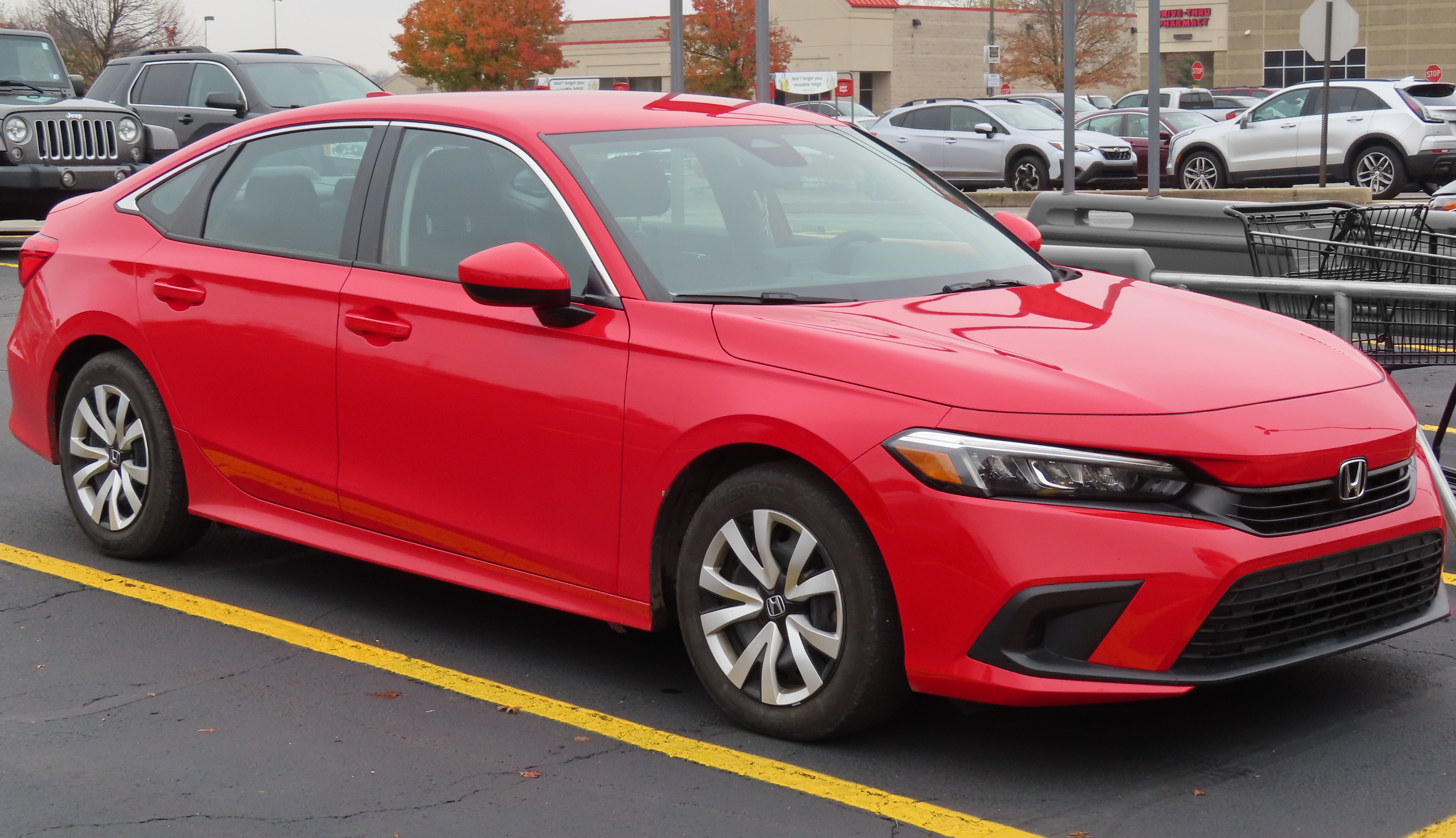
The Honda Civic is a small car that many people like because it's dependable and gets good gas mileage. It's been around for a long time and comes in different styles.
V2L is a feature in some electric cars that lets you use the car's battery to power things like small appliances. It’s like having a portable power source wherever you go.
Watts measure how much power something uses. You can find it by multiplying volts (how strong the electricity is) by amps (how much electricity is flowing).
EGMP is a special platform used by Hyundai and Kia for their electric cars, helping them to be more efficient and flexible in design.
Term
$7,500 tax credit
The $7,500 tax credit is a discount you can get when you buy an electric car, which helps lower the price. However, this tax credit can change or go away, affecting how much you save.
The Hyundai Ioniq 6 is a new electric car that looks really modern and is designed to be very efficient. It's part of Hyundai's effort to create more environmentally friendly cars that are fun to drive.
The Zeekr 001 is a new electric car from a company called Zeekr. It looks like a mix between a wagon and a sedan, making it interesting for people who want a cool electric vehicle.
The Lucid Air is a fancy electric car that can go really far on a single charge. It's designed to be very comfortable and has a lot of cool features, making it a strong competitor to other high-end electric cars like the Tesla Model S.
The 900-volt architecture is a way for electric cars to use a higher voltage for their electrical systems. This helps them charge faster and perform better than cars that use lower voltages.
The Starry Sky Concert Hall Headliner is a fancy ceiling design in some high-end cars that uses tiny lights to look like stars. It makes the inside of the car feel special and luxurious.
The AC condenser helps keep your car cool by cooling down the air conditioning fluid. If it breaks, you might have to spend a lot to fix it and your car won't be able to cool down anymore.
The BMW 7 Series is a high-end car that offers a lot of luxury and advanced technology. The first version, called the E32 750iL, was special because it had a really powerful engine and introduced new safety features.
The Hyundai Santa Cruz is a mix between a truck and an SUV, which means it can carry stuff in its bed like a truck but is also comfortable to drive like a car. It's great for people who need a vehicle that can do a bit of everything.
LIVE
This is the WhatCarEV podcast for Thursday, October 9th, 2025, episode 243, de-contented, effectively.
Alright, we're trying this again with the same software as last week, but I'm going to edit it differently this week, so hopefully, I don't know, last week was fine, it was fine.
I thought it turned out okay. Yeah, it was a little choppier than what I was hoping for.
Well, but there are also some other bells and whistles to this platform that we're discovering.
Yeah, and that's kind of why we changed over to it.
I'm Phil Royal, I am here.
That's about all that you can say.
I'm very unaware of what's going on in the last week, because much like in previous weeks all through September, I just travel.
I've just finished another trip and hi.
I don't know.
Welcome.
Yeah, I don't really know what's going on this week.
I'm going to learn along with all of the watchers and listeners.
Oh, you want to watch?
YouTube.com slash at the WhatCar.
You can watch there.
You want to listen?
I don't know, podcast apps.
That form of your choice.
Yeah, we're everywhere outside of there.
Ed Sanchez, a podcaster of four plus years, going strong, been dabbling around in various automotive stuff for a long time before that.
But here we are.
Here we are.
So this, shall I start us off?
Yeah, why not?
Let's, you know what?
We're here.
We're recording.
We might as well do a podcast.
This was, I think, ultimately, for me at least a little anticlimactic.
This is something that's been rumored for years, hyped, speculated.
I mean, you name it.
So we finally have the specs.
This is something Elon himself kind of kind of spoiled a couple months ago when I guess I can't remember if it was somebody asked him or he tweeted or X or whatever.
He says, oh, what about the low cost car?
And he says, it's basically a Model Y.
And that's basically what it is.
So this is the actual low cost.
This is the mythical $25,000 Tesla.
It's not $25,000.
Okay.
This is the long.
This is what we've been waiting for.
Well, for, I'd say for at least the next couple of years.
I mean, maybe, you know, 28, 29 plus, we may see that unicorn 25.
$25,000 car.
But anyway, for now, let me ruin that for you.
There's never going to be a $25,000 Tesla.
Never.
Inflation doesn't work this way.
Yeah.
Well, if there will be, they better act fast because like I said, I think 2030, the dam is going to break and the beast from the east is going to.
Yeah.
If there's a $25,000 EV, it's for China.
It's not from America.
Okay.
Anyway.
Tesla unveils the Model Y.
Model Y standard.
Okay.
Effectively, this is for all intents and purposes.
Maybe the fanboys will come after me with torches and pitchforks.
It's essentially a new trim level.
I mean, that's basically what it is.
Is it a new trim level or a decontented?
Well, I mean, decontented effectively.
So none of this, this has been rumored and speculated and tweeted screenshots.
I mean, you name it over the past couple of weeks.
So none of this is really surprising from those that have been kind of tracking this.
So it says no glass roof, but that's not really true.
I guess it's still a glass roof, but they added a headliner inside.
Huh.
Obviously that was cheaper than re-engineering a metal roof.
I don't know.
So could you just remove the headliner?
Just find a regular Model Y in the junkyard or something?
And just like get a box cutter and like cut it out.
Yeah.
I have no idea.
Anyway.
So I guess know what they're calling panoramic glass roof.
So you can't look up and clear blue sky.
Which for a bald guy like me is that's not an issue for me.
I'd rather go ahead.
Does anybody want a glass roof?
I'm sure.
You know what?
Make a comment on our YouTube.
I don't know people that like the glass roofs.
Well, I put in almost within like a week or two of buying the car.
I got your Model 3.
Model 3.
I got a mesh screen off Amazon.
Just because even though say, oh, it's got 100% UV protection, all that.
On a sunny day, my bald noggin was still feeling the heat.
Yeah.
So I was like, I don't really want this.
I've got a sunroof in one of my cars.
I never have that open.
I've always got the shield thing over it.
When you open it, it's like instant sweat.
Yeah.
The last time I owned a car with the sunroof, honestly, the only thing I used it for
is I cracked it open on hot days to kind of let the heat disperse.
So the Teslas are like...
I almost never used it.
The Teslas and other EVs are these glass roofs.
It's like the worst of the world.
You can't open it.
Anyway.
It lets all the heat in.
Yeah.
All right.
So this episode's just about glass roofs, right?
Yeah.
No rear display.
Again, not a surprise.
That was rumored.
It got rid of the light bar, the horizontal light bar.
It's got these just two little squinty headlights on the outside.
Interesting.
Kind of looks like the Model 3 now, somewhat.
Fabric seats, standard 18-inch wheels and tires.
19-inches optional.
69.5 kilowatt-hour battery, presumably LFP.
The report I saw didn't specify that, but that would be my guess.
Zero to 60 in 6.8 seconds.
Again, this is for the Model Y.
They also debut, but it's kind of secondary, kind of a decontented Model 3 as well.
And a lot of the specs are fairly similar.
But Car and Driver has a little more detail on the Model 3.
I think the price on that is like $1,400 cheaper than the Model Y.
So anyway, this is it.
Over 300 miles of range.
Did you say that?
No, 321.
I guess if you get the 19-inchers, it drops it down to like 303 or something.
Still, it's really good.
No, that's good.
I don't know.
I mean, speaking and observing as a Tesla owner, I was kind of underwhelmed.
I just saw that and I was like, okay.
In Tesla's defense, it's a base model car.
After years of having the Model Y, they have now just released the base model car.
So yeah, it shouldn't excite you.
There's nothing here that should excite you outside of the price.
It's just simply to get...
Well, that's the thing.
The price doesn't excite me either.
I guess I'd be more enthusiastic if it was like 35 or 36.
I'd say, wow, that's a really good deal.
But this is, with destination, this is almost $42,000.
So I'm kind of like...
I was talking to a guy I know.
He's got an Ionic 5 and the lease has come and do on that.
And he is looking at getting a Rivian R1T, a used one.
So early, you know, first year or two of production.
And he said that he can pick those up for about 40.
So now there's a used market of really good cars,
of good EVs that have cratered.
Manufacturers like Rivian, they're not going to have like a...
Even Mercedes and BMW have like...
Doesn't Mercedes have like the worst resale value of like any vehicle?
Like way worse than like Hondas and...
I mean, Hondas and Toyotas have like the highest resale value.
Oh yeah, Hondas and Toyotas are like some of the best.
So Rivian was just going to crash anyway with this.
But now you've got the choice of a Model Y de-contented base model
or you could buy a couple-year-old Rivian.
It is a pretty hard sell.
Well, not to mention, I mean, the Model Y has been out for a couple of years.
You could probably get one decent one like mid-20s now probably.
Yeah.
So I guess on one hand I'm saying,
yeah, you shouldn't be excited by this car because it's a base model car.
Who's excited?
Like you read car reviews and they never go,
oh, then here's a good review of the new Civic and we tested the base model.
Manufacturers never give it to a writer to test the base model.
It's always like the...
It's got all the whiz bang features to it.
So they know that there is nothing of interest in a base model other than the price.
And that's what you've just discovered with this.
It's a non-interesting vehicle price.
But then like you said, the price is still too high.
So there you go.
It's not...
To me, I mean, who knows?
I could be pleasantly surprised and the next couple quarters
their sales could really take off with this.
I personally, the price difference between this and the...
I guess they can serve the long-range rear-wheel drive model,
which is roughly about 5,000 more.
I mean, not that I'm like blown away by those extra...
Like the rear display and the panoramic roof and whatever.
But I don't know.
I mean, for that difference in price, why not get all the goodies?
5,000 doesn't seem like a lot when you're talking $40,000 car, does it?
No.
So it's to me, this isn't like, oh, I just got to have this.
It's like, if it was $35, $36, I might say, wow, that's a really good deal.
I think I might get one.
I mean, for me personally, but...
The charging of notice is also lower on this.
225 kilowatts instead of 250.
Eh.
Well, you say that.
Not a huge difference.
No, but it's in their estimate.
They're saying in 15 minutes, it's a nine mile difference.
So 160 miles versus 169.
It starts to add up with time.
I don't know.
Yeah, I guess.
I don't know.
Long story short, it's basically it lowers the...
I guess it lowers the entry point a little for people that want to get into one.
For the little people.
The little people.
But to me, this is not a screaming bargain.
This is not a game changer.
Nah, I think you're right.
Could it increase sales?
A little, but I don't think this is going to double their sales overnight.
Interesting thing is on this Inside EVs article, they list that it has less cargo space too.
74 cubic feet instead of 76.
Yeah, and I don't know what accounts for that.
I don't know if it has something to do with the design or the battery packaging
or the LFP is volumetrically larger and that gets into the space.
I don't know.
I don't know.
It's what it is.
I mean, if this changes your opinion and this makes you want to buy one suddenly,
please comment in the YouTube comments of this video.
But for me, this is not like, oh my gosh, I got to get one right away.
I think you're right.
If you really want to model Y, just buy a couple of year old used one.
Yeah.
Save more money and get a better model.
To me, this is kind of anticlimactic.
I just, I don't know, not blown away.
Saying this as a relatively happy 2019 Model 3 owner.
Saying it as a Tesla stand.
As a Tesla stand.
Incidentally, this is almost exactly the same price as mine was new.
But I just, I don't know.
Not doing it for you.
All right.
Tesla Model Y performance now offers what 120 volt vehicle to load output?
Wow.
So basically like what Hyundai's had for the past four years.
This is like so the iPhone versus Android.
Where the iPhone comes out with a feature.
It was like, oh wow.
It's been on Android for the last like eight years.
What are you doing?
Is this a big deal?
120 volt V2L?
So you can basically run a coffee maker, you know, whatever string lights off your car.
Do we know the wattage output?
Like, could you run a coffee maker?
Actually, that's a good point.
Because coffee makers are kind of wattage hogs.
Yeah.
I actually don't know.
Maybe not.
Yeah.
Looks like they may have, this is where I should have done any amount of research.
That's according to this article, Tesla Roddy.
In response to Tesla shareholders who highlighted the much requested feature,
the official Tesla X account noted that V2L is possible with the Tesla outlet adapter.
New Model Y performance offers vehicle to load 120 volt,
20 amp AC with Tesla output outlet adapter.
So that's all they've written.
So we don't know the wattage.
Well, isn't it volts times amps?
Am I wrong?
It'd be 2400 watts.
So we could run a coffee maker.
You could run a coffee maker.
You could even probably run a microwave off that.
Yeah, you should be able to.
You know, I say that with confidence,
but I can't run the one on my camper off of a 2000 watt generator.
So yeah, you might just be able to get it.
Yeah, that seems fine.
It's useful.
It's useful.
But again, it's not new.
This is something Hyundai's had.
When the EGMP cars came out, the IONIQ 5 and EV6 initially,
now it's expanded a little bit.
They've had this for several years.
So it's kind of a little bit us too, I think.
I'm curious what the use case is for some of this.
When I go camping, I see a lot of car campers.
I say car campers.
They're not really camping in their car.
They're driving their car and then they're 10 campers.
I guess they're 10 campers.
There you go.
And a lot of them have EVs.
And I never see a cable coming from the car
out to be cooking on like an induction stove top
or something like that.
Everybody uses the little propane screw-in canister.
Everybody's using the little lights that they,
like nobody's plugged into their EV.
Nobody, even the Rivians, like nothing.
So I kind of wonder how useful this actually is.
I mean, you can charge laptops off of the USB port in cars, generally.
So even though they're USB-C.
Yeah, I guess it doesn't make it faster.
Because, I mean, hypothetically, USB-C has an output of up to 100
and now over 200 watts in some instances.
But the ones in cars, even though it's that same form factor,
it's not that much output.
So, yes, you could, but...
It's like charging your EV on 120 volts is what it's like.
Yeah, pretty, yeah, effectively.
So, I mean, yeah, it's cool.
I mean, to me, this is something they should have had from day one.
You know, and for that matter, there is some speculation
that this is going to go over as an OTA update
and all of a sudden all the Teslas are going to have it.
Because I've seen some reverse engineering of some Tesla components
that reveal that the cars have a lot more capability
than they were shipped with initially.
So, a lot of people say that a component tree,
most Teslas will support this natively.
They just haven't activated it.
So...
According to the article,
Tesla shop has it for just $80 for the adapter.
Cool.
I think that might be Europe only right now.
I don't know if that's the US models, too.
Yeah, I...
Ultimately, it'll be global.
I'm not super excited about it,
but I think the reason I'm not super excited about it
is because, like you said, it's something they should have from day one.
What was that?
Yeah.
It's hard to get excited about a feature that we've been talking about
for a long time on other cars.
Again, kind of how I feel about the Model Y standard.
Yeah.
That should have been on the menu since day one, I think.
But anyway.
Yeah.
Twisted the screw.
So, speaking of what a lot of people consider
one of the primary competitors of the Model Y,
Hyundai Ioniq 5.
So, as we know and have well covered,
the $7,500 tax credit is going away.
As of...
Basically, as of a week ago, it went away.
So, a lot of car companies are adjusting their pricing in response.
So, Hyundai Ioniq 5 gets massive price cuts.
In some cases, almost $10,000.
So.
Well, that's nice.
And the 26s are going to have the NACS, too.
And you can also plug in accessories into the power port
with their adapter and have the...
Yeah, the little dongle that they had for years.
So, I don't know.
Well, I saw today.
I saw an Ioniq 9.
Just parked at the side of the road.
Oh, the big one.
Yeah.
The big one.
I've seen a couple of those now.
They look really nice.
For being an oddball vehicle, these Ioniq line...
The Ioniq line is very strange-looking.
So, the Ioniq 5, 6, 9...
That's all the ones that there are, aren't there?
Right now, yeah.
Yeah.
They all look kind of unique and weird and good in their own way.
I quite like it.
I think it's a hit that they've got.
Yeah.
So, anyway, yeah.
So, I mean, I don't know how much that's cutting into their profits
or if they've somehow feared out how to kind of take some of the costs out of it.
Well, I would say that they'd be getting...
If they're going to do price cuts upwards of $10,000 in that range,
then it's going to cut into their profit by roughly $10,000.
Well, no.
I mean, I guess, yeah.
They didn't suddenly find something that made them $10,000 cheaper to produce.
It didn't just happen.
No, but I'm just kind of wondering what their calculus is with us.
I mean, I'm sure at least short-term, it's in response to the tax credit going away.
Yeah.
But this is not a long-term business strategy if they're taking a loss.
Yeah, they've said, was it Hyundai Group in general, that they make money on all their cars.
But I don't believe they've revealed the truth behind that.
I think that's just a statement that they've made at a car show somewhere along the way.
So that seems like a lot of profit if you can just cut $10,000 off of the price of the vehicle and still make money.
It seems like you were making money hand over fist.
Yeah.
So this is...
Well, I mean, I have to say though, when the IONIQ 5 first came out,
I thought it was a little bit overpriced for what it was.
So, I mean, maybe this is where it should have been in the first place.
Yeah.
Hey, we can hope, you know, that they've just been raking everybody over the coals for all these years,
and now it's just going to be more affordable.
Sure, why not?
I'm still like, I like those.
I like those.
I had it, not to go on it.
The IONIQ 5 is nice.
I don't know if I...
I mean, I haven't priced one out.
I mean, what's like a 22 or 23 model?
Oh, used.
I'm sure that they're pretty good.
I'm sure that they're super affordable.
Yeah.
Because they're just such an oddball vehicle when you look at them that...
I don't know.
I still don't know what to think about it.
I want to like it, but it's too big.
Like, I want it to be...
I think what's surprising about it is when they showed the concept...
My first thought was there's no way it's going to come to market like that.
Yeah.
Like, it's going to be toned down.
It's going to be more conservative, more conventional.
And when the production car came out, it looked almost exactly like the concept.
And I was like, dang, they really did that.
Yeah.
Yeah, they've been...
Same with the IONIQ 6.
Again, I thought like that is way too out there to come to market like that.
And they brought it to market and the buyers also thought it was way too out there.
They have not been selling super lame.
Anyway, I'll give them credit for being bold.
But sometimes it pays off, sometimes it doesn't.
All right.
So this is one of those forbidden fruit models that we cannot get in the US.
Will we someday?
Who knows?
I think it's a vehicle both of us would be interested in if it did come to the US.
The Zeekr 001.
So this is the wagon shooting break, lift back, large sedan.
Yeah.
Yeah.
So I guess this recently got...
Are all the O1s, are they performance-y?
Because they have like a performance version of this.
No, the one I think I'm trying to...
I think the top line, I want to say it's called the SR.
I think that's a thousand plus horsepower.
Yeah.
Yeah, yeah.
No, but they have more regular kind of not super...
Super crazy.
Yeah.
1200.
Oh, the 001 FR, 1200 horsepower quad motor.
The 001 models range from 500 to over 900 horsepower.
So even your base model, still okay.
Yeah.
So these are basically roughly equivalent, I'd say, to like a model S or like a lucid air kind
of.
So anyway...
So what are they doing now?
Why are we talking about this?
They're...
I guess they got an upgrade to a 900-volt architecture.
I guess previously they were 800.
Just 800.
Just 800.
Just slum it.
Yeah.
So the big claim to fame, I guess, is they're claiming 10 to 80% charging in seven
minutes.
Nice.
Pretty impressive.
On all those 900-volt chargers that are out there.
Yeah.
So some of the Rolls-Royce models have like this LED kind of like constellation headliner.
Yeah.
Like it's supposed to be like a starry sky.
Yeah.
I guess this one...
They've got like a thousand LEDs in the roof liner.
Yeah.
Well, I think it's like fiber optics.
So that's what...
Yeah.
But it's something like a thousand of them in the roof liner.
It's crazy.
Yeah.
So this one has one too, but I guess it's an actual display.
It's called the Starry Sky Concert Hall Headliner.
So I'd love to deal with that.
Is this in the glass?
Ten years.
Uh-huh.
Is that...
I mean, can you put a TV on there?
Is that...
I'm assuming.
I don't know.
I think it's an actual display.
I mean, if you wouldn't lie all the way back and watch movies, I mean, presumably you could.
I don't know.
Is it the glass?
So it's got to be a glass ceiling, glass roof.
Yeah.
Because that's what it looks like in the pictures.
So is this just embedded into the glass or like...
I'm assuming.
I don't know.
I'd hate to deal with it 10 or 12 years down the road when it finally kind of says
that's it.
This stuff is like that, though.
Yeah.
EVs introduced because they're so expensive.
They introduced a lot of features.
So it was hard to get a decontented EV for the longest time.
And so you had all of the bells and whistles.
And the bells and whistles that break on a vehicle.
Like the driveline and everything is pretty bulletproof for the most part in most vehicles.
And it's all the things like this.
Like imagine this and then you've got like three lights, three little stars
that never turn off like in 10 years time.
You've always got these lights on.
Or it's just blacked out.
And it's just like, I guess at that point it's like, oh well.
Or flickers.
I've got the reverse camera in my F-250.
There's something going on.
I've tried like cleaning all the connectors.
But my reverse camera, because it's an aftermarket one.
When you're bouncing down the road, you'll hit a bump in the screen
like flicker white.
And when you're driving at night, it's kind of distracting.
Well, do you just leave it on like the whole time you're driving?
I mean it only turns on when you put it in reverse.
But it also turns on when you're driving down the road
and you hit a big bump with 80 pounds of pressure
and it fires while towing.
It will do something and it will power it.
And then it like flickers white and you get like this little flicker
like Max Hadron comes on, I don't know.
And tries to sell you Pepsi.
I just, I don't know.
Yeah, I'm kind of with you about how this, because I mean a lot of these,
you know, aside from the EV specific stuff, the whole concept of like
whiz bang, bells and whistle tech stuff has been in some form or another,
I'd say over the last 15 years cars have kind of had this stuff.
And we've seen with like slightly older Mercedes and BMWs,
like from 10 or 15 years ago, a lot of the stuff starting to go out.
And, you know, a lot of people wonder why you can get, you know,
a 15 year old, you know, seven series for about the same price
as a 15 year old Camry is because the cost to repair
that 15 year old seven series is probably more than you paid for it.
Yeah.
Because of all like, oh, your AC condenser went out, this one out,
you need to knew this, you need to knew that.
Oh, how much is that going to be?
Oh, about 15 grand.
It's funny that you paid 12 for it.
Yeah, you mentioned the seven series.
What was the big engine that was in that?
They had like a...
I had a V12 at some point.
Yeah.
And that had something like four ECUs to run it.
Well, two at least, yeah.
So I know that when, because the owner of a company that I worked for
had one, and whenever there was a slight electrical issue,
you would take it in and it was like crazy amount of time
and then even more ridiculous amount of money to repair this thing.
It just had, I don't know, it was too many things.
So I have a funny similar story too.
This is way, way back in my ancient history.
So for a brief, brief amount of time,
I worked at a BMW repair shop.
Just kind of phone, answer, you know,
go for kind of entry level grunt job.
But I remember one guy,
this was like the first generation,
I think, I want to say like the E32 750.
So like the first generation of the 750 IL.
And that was the one with the 20 ECUs.
And so he brought in for service
and they took it out for a test drive
and foot to the floor, it would do like 20 miles an hour.
And they're like, what is going on with this?
So I guess what had happened is they had flip flopped
some sensor from one bank to another.
And like you said, it had separate ECUs for each cylinder bank.
So it was going, it was reading like the O2 sensor
from the wrong side and it kept trimming the fuel
thinking it was running like too rich or too lean or something.
But it kept retarding the spark and reducing the fuel.
So it just like would crawl.
And then finally when they figured it out
and switched them back, it ran fine.
Long story short, don't buy an old seven series.
So anyway, yeah.
I mean, so far I've been fairly fortunate with my Model 3,
but every now and then it does some squirrely stuff.
In fact, next time I need to bring it in,
I might mention to my infotainment display.
It's been a little laggy.
The series XM has been doing some weird stuff.
I had the infotainment screen go black on me
just going down the road.
It rebooted and it was fine, but it was like, you know,
it's making me a little loose.
You think that's related to like how you get computers,
you got an old computer and then you upgrade
and upgrade and upgrade and you're on like an OS
that it never was designed for your two generations later.
Everything doesn't work at all.
Is it kind of like that?
Do you think that they're upgrading you
beyond the abilities of the hardware?
Do you think you're going to have to go and spend
another $1,000 and replace to go to hardware for?
I hope not.
I'm hoping that they're doing enough validation QA on this
that they know what the systems can handle
and they're not pushing out software
that's beyond the capabilities of the built-in hardware.
It's funny because I know this guy with a Model 3
that just told me a story about...
Yeah, I don't know.
But yeah, so yeah, it might say,
oh, if you're having this issue,
oh, come in for, pay us a thousand bucks
and we'll replace it.
Yeah.
Funny, you probably know a guy that did that.
Yeah.
Anyway, yeah.
So, knock on wood.
We'll see where I am a couple of years from now.
I made a comment about the Zeekr going to 900 volt.
Oh, all those 900 volt chargers that are out there.
I think China is probably a little bit different.
I don't know.
I've never been to China.
I don't know.
But I like the idea of high-end EVs
drawing things like this.
I think Lamborghinis should be on 900 volt,
1200 volt architectures
that you can only charge at a Lamborghini dealership
or something like that.
Or a Yankee dealer.
Yeah, you know, whatever, wherever.
That's where you push the limit.
So when you've got something like this
that is equivalent of like a Lucid Air sapphire
or a Plaid or whatever,
that this is something that you can push those limits on
and I applaud that.
And you're going to be paying for it.
Yeah, I mean, that far to your point,
even in China, it's like over 100,000.
Yeah.
But this is how we get everybody to 800 volts,
which is I think ultimately where I would love to see
all the EVs.
I think 800 volt brings fueling parity
if you then work on the charging curve
and all of the things around.
You can make the case that Hyundai kind of democratized it
with the EGMP.
You know, it was formerly just like premium,
like Lucid Air.
I mean, even today, the Model S is still 400 volt
ironically enough.
But you know, the newer Porsches and the Lucid Air
and they said, no, this is kind of our mass market model
800 volt.
So good for them.
Even though they came out with a model,
Hyundai came out with a model later on that was not.
Well, they have this new kind of,
I don't want to get nasty grim from Hyundai,
but kind of a quasi EGMP is 400 volt.
Yeah.
So a little bit lower costs, but anyway.
It's for the poor people.
Full of polls.
Yeah.
So anyway, so I, you know, we try not to get political,
but sometimes the politics come to us.
Mm hmm.
So when come, come November,
I think we all said, yeah,
he's going to basically scrap all the EV friendly policies
and I'm assuming.
Huh?
He being Trump.
I'm assuming.
Yes.
So hence the tax credit went by by,
they tried to get rid of Neve,
but I guess they were thwarted by the courts.
So he tried to,
I initially, they tried to freeze the funds
and a judge said,
no, you can't do that.
That they've already been allocated.
You have to give them out.
And I guess because the administration did not appeal it
in a certain amount of time,
they kind of forfeited the chance to appeal it.
So they just said, fine, okay.
So what's kind of interesting about this though is
so they're re out,
they're dispersing the funds,
but it sounds in some ways with fewer strings attached.
So I guess under the Biden-Nevy plan,
they wanted them every 50 miles on,
I don't know, certain highways or freeways or whatever.
And they were prioritizing national parks and stuff like that.
So I guess Duffy and the DOT under Trump just got rid
of all that and say, hey, we don't care who you are,
restaurant, gas station, hotel, whatever,
you're all eligible to get these funds.
They just want to blow through the funds, don't they?
Well, I guess, but honestly, I'm not mad about that.
I say put them where they'll get the most use,
where they'll get the most traffic.
I think really, if they get too didactic
and too specific about the requirements,
I mean, maybe dogmatically and philosophically,
they may say, oh, well, this is equitable
and whatever, but if they're just going to sit there
and gather cobwebs, I mean, I don't know.
I think it's better to do the calculus
from a usage perspective.
It will definitely be a quicker ROI
on the companies putting them in,
whether that's the side owners
or connect with the gas stations and stuff like that.
So I'm not really mad about this.
I'm mad.
I was initially kind of rolled my eyes
that they froze them in the first place.
I wasn't surprised.
I mean, I knew they would.
We all knew, yeah.
But it was like really, guys,
but with these revised guidelines,
I'm not mad.
I'd have to read through how it should be.
Part of me is like, the cynical part of me is like,
yeah, they just open it up to get rid of the funds
so they don't have to deal with this
so they can kill the department later on.
And then they can also take another victory lap
when all of this stuff gets installed,
doesn't get used,
and then they can just call it a big boondoggle
from the Biden administration
because they just basically handed out all this money
and then there's going to be like all this corruption,
you know, is what always happens
when the government funds are given willy nilly.
And they're just going to say,
oh, look at the mess that Biden made.
And they're setting the old administration up for failure
and then they can be like,
well, and we're not going to renew any of this stuff
because look at the fraud that happened
and the giant waste of money.
That's my knee-jerk reaction.
But like you said,
I mean, if it actually just gets used,
like, so, okay,
they before were prioritizing things like national parks.
I don't know if there's a huge need for EV chargers
in national parks.
Yeah, same, it's like, okay.
I mean, there's a lot of usage there,
but you don't need a ton.
So don't prioritize that.
Have some incentives,
but it depends on what it is
and how it's being done.
And the cynic in me says
that there's no way it's going to be done better
by an administration that wants to get rid of the funds
and eliminate all the green credits and everything.
So part of me is like, ah, you know,
this is like, I can't even think.
It's like asking the guy that...
I can't even think.
It's asking somebody to sell something else
as a direct competitor to what he wants.
And he's like, well, he's just going to blow it out
and not care.
Okay, so I've got a slightly different take on this.
And maybe you'll say, Ed, you're full of it,
but maybe you'll say, oh, I hadn't thought about it that way.
But I'll wait until the end until I say that.
You got to look at the primary interest group
that has the ear, respectively,
of the Biden administration, the Trump administration.
Democrats traditionally have kind of been beholden
to government employees, labor unions,
those kind of special interests.
The Republican special interests are businesses primarily.
So I don't...
I am not intimately familiar with the old Neve guidelines,
but I'm wondering if it basically effectively
kind of cut out businesses like gas stations
like commercial developers.
And it prioritized national parks,
municipal installations,
disadvantaged neighborhoods, so forth.
So from a feel-good perspective,
you're like, oh, we'll put them in here and here
and we'll make it equitable and available to all.
I think probably under Trump,
they're taking much kind of colder calculus about it.
Like, how can we make money off this?
And from a business standpoint,
they're like, where are we going to get the most utilization?
And that's where we need to prioritize,
because we'll get our ROI.
We'll have to put our ROI.
As long as they keep in mind the idea,
because I think the original one, didn't you say,
it was like X in a certain distance,
you had to have chargers in every X miles or whatever it was.
I think every 50 miles or something.
Yeah.
So as long as it keeps something like that in there,
then that's fine.
There's nothing worse than going on a trip
and there's like no ability to fill up later on.
Like having a ton of stations in like Phoenix,
but then there's nothing until you get to LA.
Does not work for your trip between Phoenix and LA.
Well, I mean, that is a concern.
And I think you will see under these new guidelines
more concentration around urban areas
and maybe less on the freeway.
But I mean, case in point, a few months ago,
I went on a trip to Texas into Buckeys.
Buckeys has like 60 superchargers around it
in addition to the gas station.
So you might see some build out
on heavily traveled interstate and highway thoroughfares.
But to your point,
whereas under the Biden guidelines,
you might have one in Podunk, New Mexico.
Under this, there might not be quite as much incentive
because they're like, well, we're going to get
like three users a month.
Yeah.
And that's the problem with them is that,
okay, so you have them every 50 miles,
but if they're only,
if only 20% of them are being used,
then the other is just going to go into a state of disarray
and not get the maintenance.
And ultimately pulled out.
Yeah.
Who knows?
So time will probably end up roughly the same answer.
Yeah, I'm not really mad.
I mean, it's kind of a catch-22.
On the one hand, you want them kind of in remote,
maybe not highly traveled places
in kind of a just-in-case scenario.
But from a business and side owner perspective,
you want maximum utilization.
And that will be concentrated
around urban areas, interstates, tourist attractions,
so forth.
So I don't know.
We'll see how this plays out.
But net, I think it's a good thing.
They finally kind of release the funds,
and they're going to get out there somehow.
Yeah, better than no funds.
Yeah.
So anyway, okay, so this is kind of the wrap-up.
I don't know if you want to,
we even want to get into this.
You tell me what it is.
Okay, so if you, I don't know,
I can't even remember if we've ever discussed this
on the podcast, but there are some EV motorcycle makers.
There are.
I've seen some cool ones.
Yeah.
So one of the bigger ones is Zero,
which is actually not too far from where I live.
It's in the Santa Cruz area.
And they've been there for,
I mean, basically since their founding,
I don't want to say mid,
2006, like 2010, something like that.
Wow, okay.
Yeah.
So they've been doing it for a while.
The early ones were basically like fancy e-bikes.
The new ones are like legit motorcycles.
Yeah, they just clicked the link.
Link in the show notes.
Yeah.
That it looks pretty good.
Yeah, they are moving to the Netherlands.
And the reason why is they said
Europe is a much faster growing market
for them than the US.
Oh, I can believe that.
Completely.
So anyway, they're still going to keep
like an R&D office in California,
presumably to kind of draw from the
Silicon Valley, you know, tech
brain trust.
But manufacturing, logistics,
that sort of thing, I guess,
they're moving to the Netherlands.
So anyway, kind of an interesting,
and I don't know, at least unexpected
for me.
I mean, people that watch this
the sector a little close.
I mean, maybe this has been in the works for a while,
but a little bit of a surprise to me.
But yeah, we'll see.
No, I think that
I can't disagree.
There's more of a market up there
than there is here.
That makes sense.
It's whether or not they're being chased out,
not the dark politics, but is that
like they're just seeing it as
if they're going to survive and you need
government funding or assistance or you want to
I'm sure that was a factor and I would
guess the EU probably has much more
generous incentives.
Yeah.
And my guess, again, I
you know, maybe I can research for the next
episode.
My guess is
this has been in the works for
at least
since the beginning of the Trump
administration, possibly before though.
And
they saw what incentives
were available from the EU or from the
Netherlands specifically that said,
hey, we would love to have you over here.
You know, we'll give you,
you know, however many years.
Everything you want.
I mean, yeah, I don't know, but
I'm sure I'm sure
the Netherlands was gave them very
favorable terms.
I'm sure.
So anyway, good for them.
I'm glad they still have kind of a
vestigial, you know,
presence in California.
And that they're still going to exist.
I'm sure that's another option.
Yeah, but yeah, we'll see.
But anyway, so
that's what we have for this week.
Wow, what a great wrap up there.
So everything we talked about show
notes will be available in the show.
However you find that and you can
find that on YouTube.
com slash at the wat car.
You can also find it at the watcar.com
where we do we post up a thing
and then also on every player
with podcast stuff,
you'll find that there.
We're on social media,
share, do whatever you want.
YouTube's where we're pushing, I guess now.
I don't know is what the boss wants
is the YouTube stuff.
So that's what we're doing.
And the rest of it, I don't know,
go to the website and you can poke around.
There like the watcar.com
slash advertise if you are a big company
wanting to do some kind of larger
sponsorship or
anything that involves throwing money
our way.
I think we're back next week
and I think I might actually be around long
enough to read some of the articles
and be
I don't know interactive
in some way.
Yes.
Also possibly another special episode
coming up, but in the works
but sometimes the wheels
turn slowly.
So I don't know if that's going to happen
but hopefully.
Alright, well
maybe I'll talk to you then.
Okay.
About this episode
The discussion centers around Tesla's recent unveiling of the decontented Model Y and Model 3, which have sparked mixed reactions among enthusiasts. While the new models aim to lower the entry price for Tesla ownership, the hosts express disappointment over the lack of significant features and the high price point. They also touch on the competitive landscape with other EVs like the Hyundai Ioniq 5 and the Zeekr 001, highlighting market trends and the impact of government policies on EV infrastructure. The episode wraps up with insights into the growing EV motorcycle market and Zero's move to the Netherlands.
Tesla’s base model is finally here…and it’s a Model Y overflowing with a lack of features. The price is also dangerously close to the next trim level, which begs the question: Is the “Standard” Model Y worth the money? Also on this week’s podcast, V2L comes to the Model Y Performance, Hyundai drops the price of the Ioniq 5, Zeeker cranks the voltage, and more!