The Tesla Model 3 is a smaller electric car made by Tesla. It's more affordable than some other models and is known for its long driving range on a single charge.
LFP battery packs are a kind of battery used in electric cars. They are safe, last a long time, and are cheaper to make, which is why some companies use them.
Car
Ionic 5N
The Ionic 5N is a sporty electric car made by Hyundai. It's designed to be faster and more fun to drive than regular electric cars.
LFP packs are a kind of battery used in electric cars. They are known for being safe and lasting a long time, but they don't store as much energy as some other types of batteries.
The Chevrolet Bolt is a type of electric car that is designed to be affordable and practical. It's known for being able to drive long distances on a single charge, which is great for everyday use.
The Nissan Leaf is a well-known electric car that is often chosen for its lower price and usefulness for city driving. It's one of the first electric cars that many people consider.
The Ford Model T is one of the first cars that many people could actually afford. It changed how cars were made and helped make driving popular in the early 1900s.
DC fast charging is a way to charge electric cars quickly. It uses a special type of electricity that makes the battery fill up faster than regular charging methods.
Range is how far an electric car can go before it needs to be charged again. It's important for people to know this so they can plan their trips without running out of power.
Kilowatt charging tells you how fast you can charge an electric car. The higher the number, the quicker the car gets charged, which is important for people who want to spend less time waiting.
Car
Ferrari Electrica
The Ferrari Electrica is a new electric car from Ferrari. It's part of their effort to make cars that are more environmentally friendly while still being fast and exciting to drive.
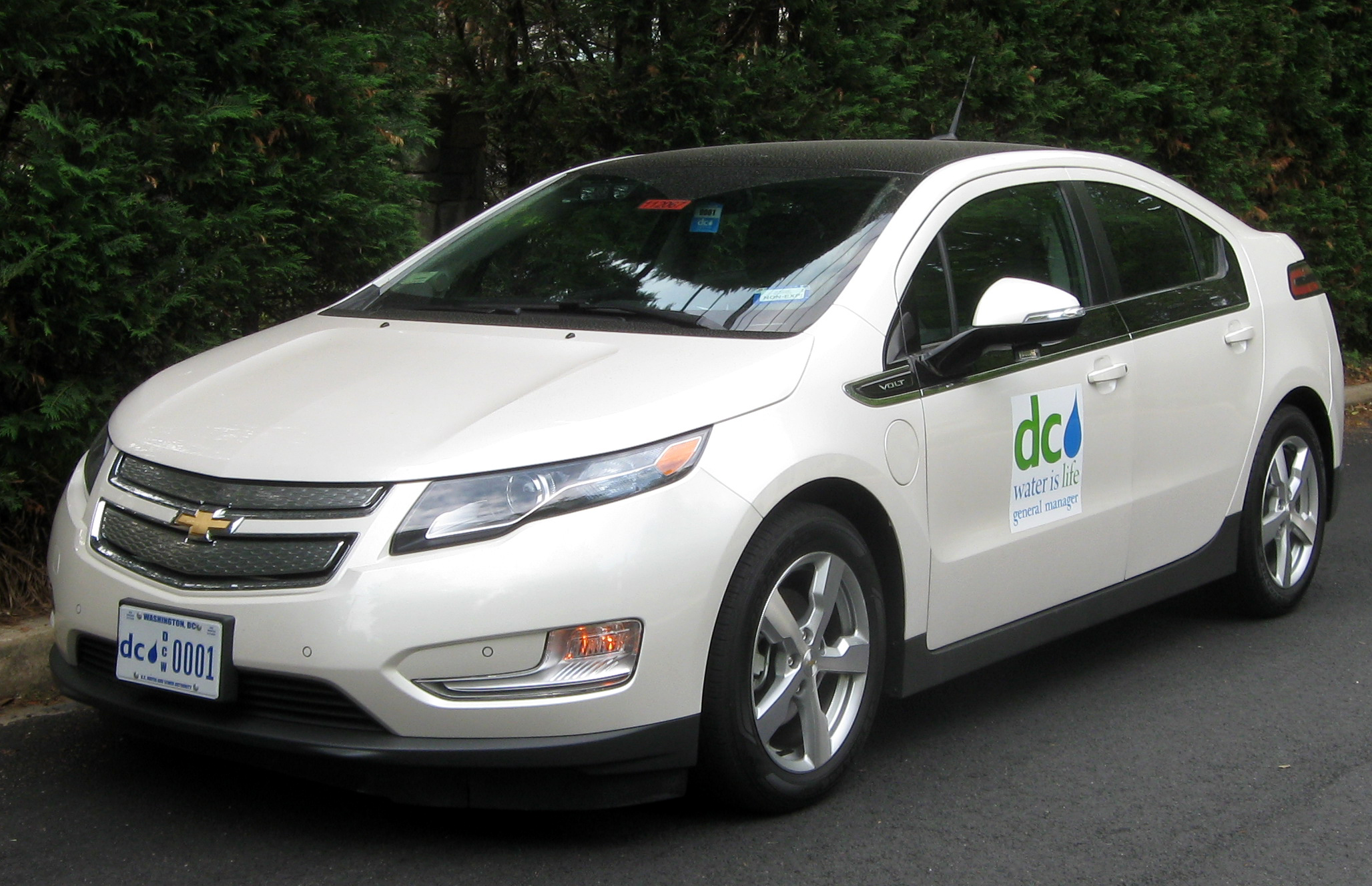
The Chevrolet Volt is a car that can run on electricity and gas. This means you can drive it using just electricity for short trips, and it has a gas engine for longer drives, making it very flexible.
800 volt architecture is a type of electrical system in electric cars that helps them charge faster and perform better. It uses a higher voltage to make everything work more efficiently.
Gear reduction is when gears slow down a motor's speed but make it stronger. This helps electric cars perform better, especially with fast-spinning motors.
Zero to sixty is a way to see how fast a car can go from a complete stop to sixty miles per hour. A lower number means the car is quicker off the line.
Regenerative braking helps cars save energy by using the power generated when you slow down to recharge the battery instead of wasting it. It's like getting some energy back every time you brake.
Lucid Motors is a company that makes electric cars. They focus on high-end vehicles that can drive long distances on a single charge and have special features for fast charging.
A supercharger is a special charging station for electric cars that lets you fill up the battery quickly, so you can drive longer distances without waiting too long to recharge.
The Dodge Charger is a big car that looks sporty and can go really fast. People like to talk about it because it has a strong engine and is often seen in movies or as a police car.
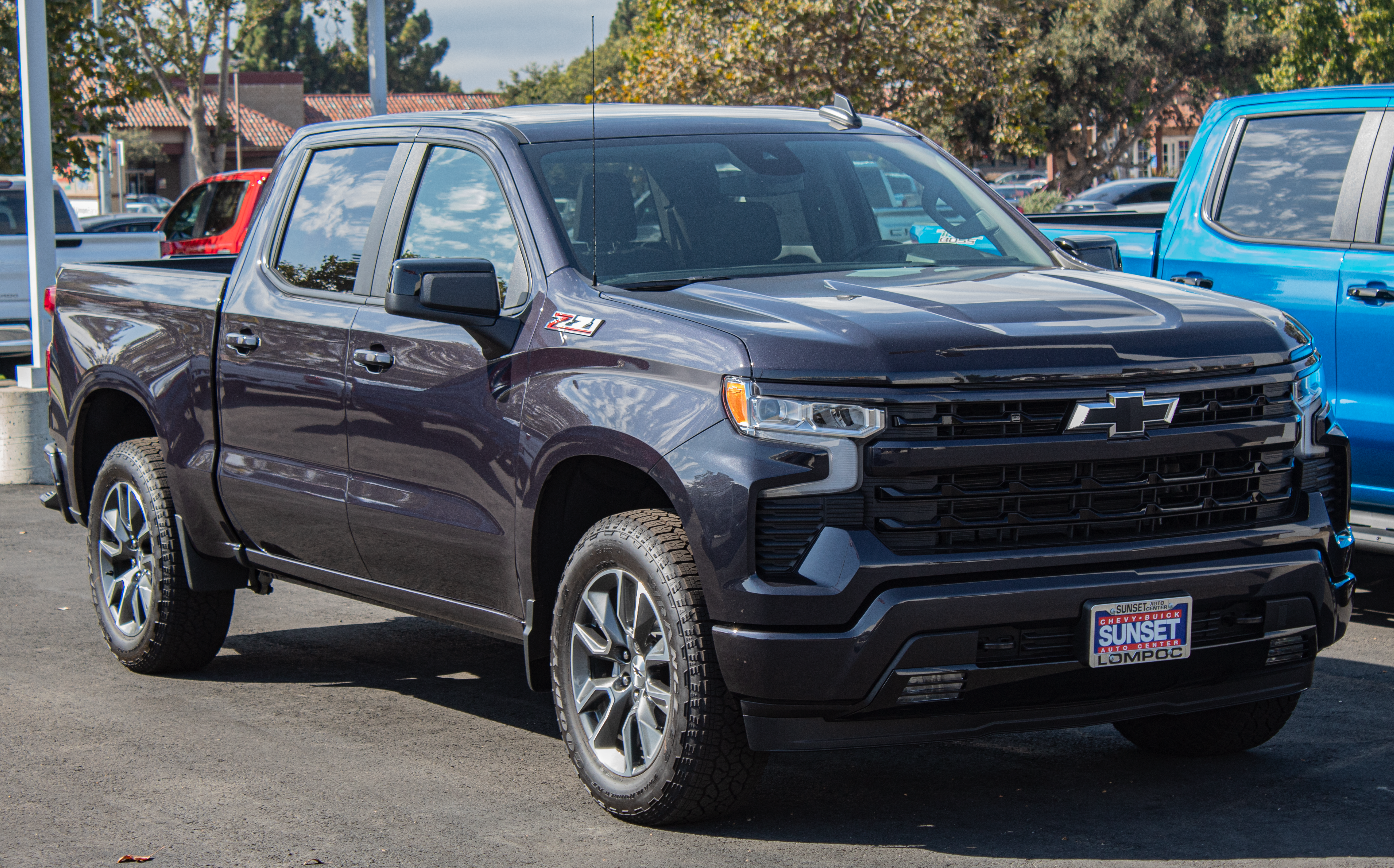
The Chevrolet Silverado is a big pickup truck that people use for work and everyday driving. It's known for being tough and having different options for engines and features.
A kilowatt hour is a way to measure electricity. In electric cars, it tells you how much energy the battery can hold, which affects how far the car can drive on a single charge.
Mazda is a car company from Japan that makes fun-to-drive cars. They are known for their stylish designs and good handling, especially in smaller models like the Miata.
The Ford Mustang is a classic American sports car that has been around for a long time. It's known for being fast and stylish, and many people love it for its sporty look and powerful engine.
The Hyundai Ioniq 5 is a new electric car that has a cool, modern look and a lot of space inside. It's popular because it can go a long distance on a single charge.
The Dodge Challenger is a big, powerful car that looks like the classic muscle cars from the past. People talk about it because it has strong engines and a cool design that many car enthusiasts love.
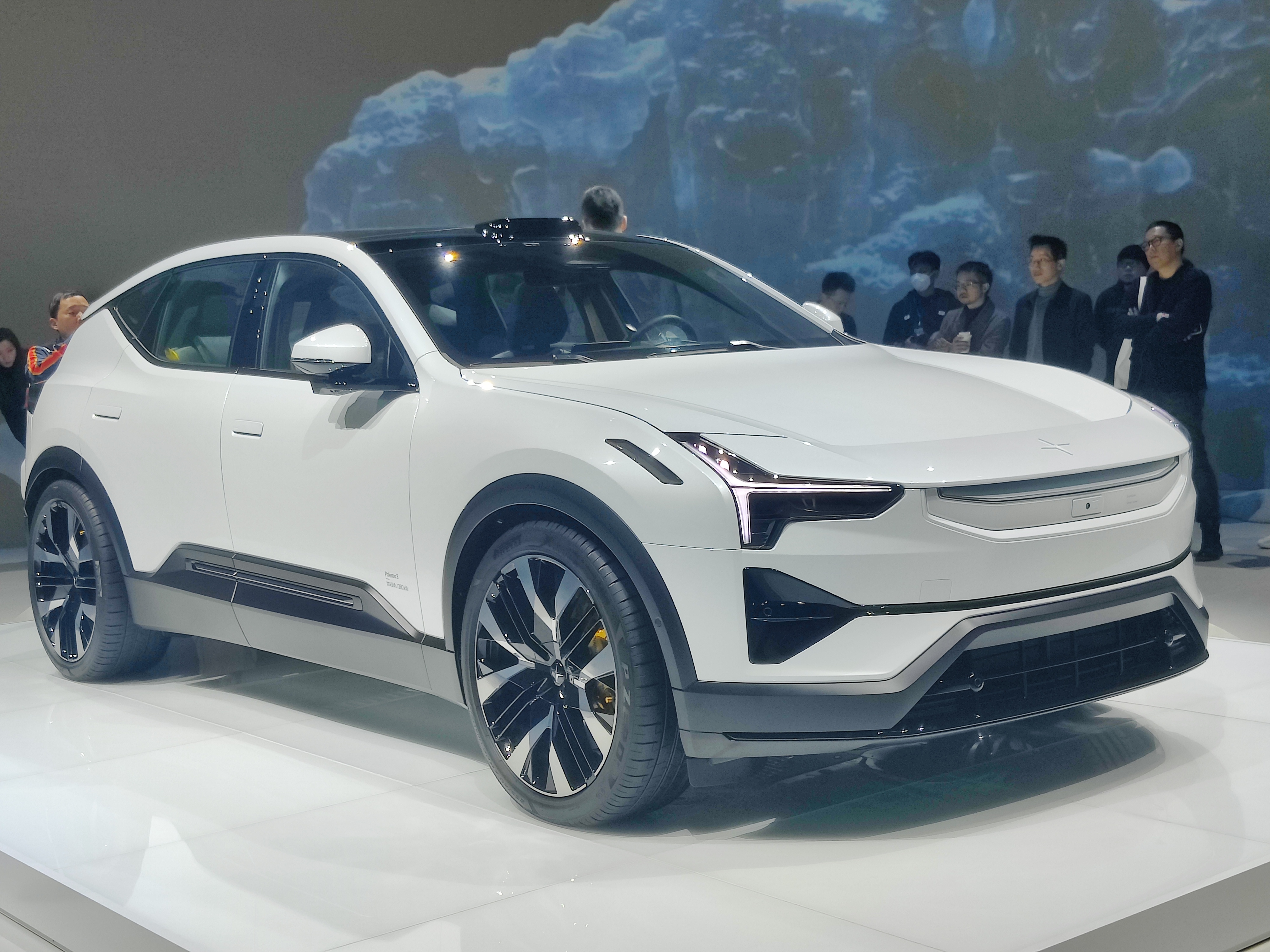
The Polestar 3 is an electric SUV that looks stylish and is good for the environment. It's part of a new wave of cars that run on electricity instead of gas.
The Dodge Ram is a big truck that people use for work and towing things. It's known for being strong and durable, making it a popular choice for those who need a reliable vehicle.
The Mazda RX-7 is a sporty car that is known for being lightweight and having a special kind of engine called a rotary engine. Car fans love it because it drives really well and is fun to take on the road.
The Toyota Camry is a popular family car that is known for being reliable and comfortable to drive. Many people choose it because it gets good gas mileage and has a lot of space inside.
The Mercedes-Benz SLS AMG is a super fancy sports car that has unique doors that open up like wings. It's known for being very fast and stylish, making it a dream car for many people.
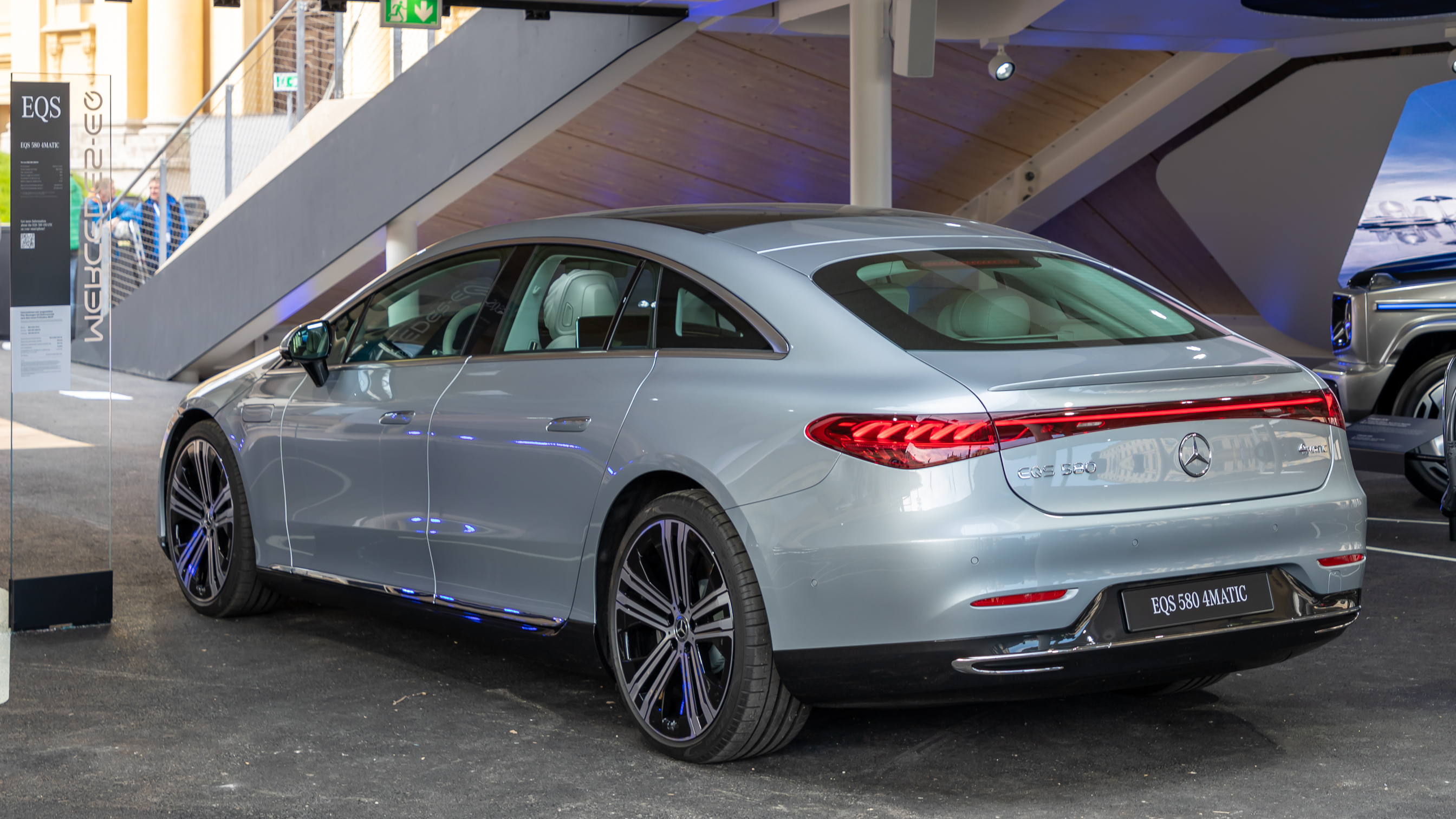
The Mercedes-Benz EQS is a fancy electric car that is very high-tech and luxurious. People talk about it because it has a lot of cool features and is part of the growing trend of electric vehicles.
The Tata Motors Aria is a type of SUV made by an Indian car company. It's known for being different in style and is part of Tata's push to make more popular vehicles.
LIVE
This is the What Car EV Podcast for Thursday, October 16th, 2025, Episode 244.
That's a heck of a front-end, buddy.
So in the interest of journalistic integrity and accuracy, we need to make a slight correction
to something that was said last week.
Uh-oh.
Did we screw up?
Well, not maliciously, but we made an incorrect assumption.
Okay.
I like incorrect assumptions.
Anyway.
Uh, you want me to kick it off?
Yeah, why not?
Go for it.
Sure.
Ed Sanchez, a podcaster extraordinaire in my own mind of four plus years, coming to
you live.
Sort of.
Won't be live when you get it, but yeah.
Live to date.
Just have fun.
Hope we're entertaining and informing.
And yeah, over to you, Phil.
Way to kick it off.
Way to kick it off.
Strong start there, Ed.
Strong start.
I'm Phil Royal, and I'm here.
I promised last week that I would have read some of these articles, and best I could
do is glance at them.
It's still.
One stuck out though, and you're like, oh, we have to talk about this.
Yeah, you weren't even going to, like you kind of, you're like, yeah, we don't need
to talk about that one.
But I'm going to save that for the end.
The one that I'm most interested in, I'm going to save for the end in this amazing
EV podcast that we do, where combined we have like 50 years of experience doing
automotive content.
Isn't that scary?
That must mean that you're really old, and I'm just like, I've got like five
years of experience.
We're going to go with that.
Okay, what do we screw up on?
What do we mess up on?
Okay, so we're talking about the low-cost Model Y, Model 3 last week.
I speculated they had LFP battery packs.
Which would make sense.
Which would make sense, since they have had in the past.
However, I subsequently found out they are not, at least the US spec
models are not LFP, they're NMC packs.
But with fewer cells, I guess in the long range and the premium models.
So the reasons for that, you know, previously the previous, I guess the SR plus
or the entry-level Model 3 had a CATL LFP pack.
Then they discontinued that model.
So they've kind of reintroduced it.
So I assumed, oh, it's got a LFP pack.
So yes, I was incorrect about that assumption.
So the NMC...
Do you think this is due to battery supply issues?
Like tariffs on where...
Battery supply tariffs.
I think some uncertainty in the supply chain probably.
Yeah, I think that probably had something to do with it.
To your everyday consumer, what difference does this make?
None.
Absolutely nothing.
So anyway, this could be like EV nerds, yeah, so there you go.
Yeah.
All right.
I'll tell you what does have an LFP pack though.
Oh, as far as we know this week, does the bolt have an LFP pack, the new one?
The new bolt has an LFP pack.
I believe CATL, but that's not authoritative.
Yes.
So we finally have official specs on the long anticipated new bolt.
So the big, big headliner here I think is the price.
So without the tax credit, under $30,000.
Which is where last week's Model Y standard edition should be.
Should have been, yeah.
Yeah.
So this is a good price, is it not, for your base model entry level EV?
Yeah.
This puts it below the new leaf as well, I believe.
So does the new leaf still have, what charging does that use, is that?
That's the weirdo.
It's an ACS on one side and J1772 on the other, remember?
Okay.
So as long as they're doing something weird.
All right.
Back to the bolt.
So $30,000 and whoa, you've got a note here.
Base LT model arrives at $28,995 a few months later.
So it's even cheaper than $29,990.
Even cheaper.
Wow.
So yeah, so 65 kilowatt hour LFP pack, 255 mile range, which is actually slightly less
than when it first came out, I believe was a 264 mile range, I want to say.
So tiny, but I mean, the EUV was 247, so it's effectively the same.
Yeah.
Give or take.
Yeah.
Plenty for, I think, car in that price and size class.
Yeah, it's the amount that you need.
Yeah.
The big news, I think, is the charging rate.
So the old one was only 55 kilowatt DC fast charging, which was kind of like trying
to fill up a swing pool with a garden hose.
Mm-hmm.
This one's almost triple that.
So 150 kilowatt peak charging rate, NACS, native NACS connector, the 10 to 80% charge time
is, I don't mean to be mean about this, a little underwhelming to me.
They're saying 26 minutes, which it's okay, but yeah, I'd be more impressive.
It was like 15, but.
I think 15 is kind of the standard, 15 to 18 minutes is kind of the standard.
Yeah.
Like, that's what it should be.
Mm-hmm.
That's what everything should be.
Yeah.
Other stats, 210 horse, so that's up 10 from the previous model.
And I didn't hear anyone complain about that one being underpowered, so.
The drive unit is actually shared with the Equinox CV, but I think maybe tuned a little
differently.
So also, we were talking about this last week, a V2H capability, but I think it requires
like a GM proprietary system, kind of like the Ford pro-powered backup or whatever.
So we could do it, but you got to spend like $8,000 to do it.
Exactly.
Oh, don't do it, but you know, you got to buy this.
Yeah.
I don't have a lot of specifics on that.
So this one got a lot of the EV blogosphere kind of scratching their heads and kind of
like, what does this mean?
They said it would be a limited run model, but they said the brand would not abandon
affordability, so whatever that means.
So it kind of, what I get from that is that they're doing the opposite of Tesla and they're
releasing the base model first, and then they're going to go to the higher end and then they'll
just cancel the base model, eventually they're going to prime the waters with this.
The sound of this is kind of a stopgap, because I think I read somewhere that 80% of the
chassis is shared with the predecessor model.
So this is basically a heavily refreshed version of the last model.
New battery, new motor, slightly revised styling, but if you look at like the door panels and
the overall silhouette and stuff, it's basically the same car.
Yeah.
So, yeah, I don't know exactly kind of how to read that.
I think they're bringing it out.
I think they probably have something in the pipeline to replace it, I'm guessing.
But the way it lined up and the blowback they got from canceling the original model.
Oh, everybody was so upset, it was like the end of the world when they canceled the last
one.
I think we were part of that crowd that, not super happy about canceling the last one,
and then they've just kind of, I guess, repackaged the same thing.
Yeah, I mean, so, yeah, I don't know exactly how to read this.
I think it's a solid car.
I'm not blown away, I'm not, but I think the specs are competitive for the price.
Was it last week or the week before we talked about the ideal?
I think it was before that, the ideal EV.
Yeah.
So it said like 30,300 miles range, so on and so forth.
So this hits most of them short of the range, and I'd say short of the charging
speed.
If this had a 300 mile range and could do the 10 to 18, 15 minutes, I would say this
is the ideal EV for the current market.
But so when we talked about the Model Y base model last week, there were a lot of
specs, so this was 40,000 and we pretty generally agreed 40,000 was too much for
your base model.
That's just too high.
But then when you looked at the specs, it was 225 kilowatt charging.
160 miles of 15 minutes.
So we don't know if that's 20 to 80 percent or whatever it is, but you'd have to do
the math. 320 mile range.
Oh, that's like 50 percent charging in 15 minutes.
So maybe it's comparable.
It everything on it was a little bit better than the specs on this.
I'm trying to click back now.
So instead of 255 miles range, you were getting 320.
Instead of 150 kilowatt peak charging, you were getting 225 instead of like 26
minutes of charging.
You were getting 20 minutes, whatever it was, assuming that those numbers line up.
I don't know what the horsepower was, but they're claiming they're claiming
around 300. Yeah.
So a little bit more 300 horses out of like 210 horse.
It's just a little bit better.
But is that increment $10,000 better?
I know, I don't think so.
Yeah, that's kind of where I am.
So I don't like the specs on this bolt.
I think they're OK, but they're not great.
I look at the Model Y standard and go, all of those specs are fantastic.
Like I like a little bit more here or there, but not for $40,000.
I think somewhere between here is the sweet spot.
And nobody's hitting it right now.
Thirty to thirty three to thirty five thousand with the specs
right between the bolt and the Model Y standard.
That's what we need.
Yep. Somebody hit that.
See that.
We'll see that in a few years, I think, from someone.
I don't know who, but I think someone will make that car.
Yeah. But anyway, so cool.
But yeah, the cryptic language about it being a limited run models
kind of wasn't quite sure how to read that.
But I'll tell you what will be everything's limited run eventually.
Well, I'll tell you what is probably a much more limited run,
at least in terms of of unit volume
is the Ferrari Electrica, yeah, which I don't like the name.
Do you like the name?
Well, you got to you got to say it like an Italian letter.
Yeah, I guess. I don't know.
So this is the wheelbase of an Ionic five.
I assumed this thing would come out and be a big honking SUV.
They haven't really said what this thing is, as far as I could tell.
The profile of it is interesting.
It's either a low, a low slung
crossover or kind of a fastback sedan, it looks like, I don't know.
So we don't really know much about that.
It's 800 volt architecture for motors.
So 1100 plus horsepower.
Is it four or three? I thought it was three.
But no, I think it was it's four.
It's two front 140 motors
and then two rear four hundred fifteen horse motors.
And I don't know how things work.
I guess you make this up in gearing, but the front motor
spins to 30,000 RPM and the rear spins to 25,000 RPM.
So I just got to be the gear reduction drive
and everything that makes up for that difference in gear reduction.
One hundred and twenty two kilowatt hour battery, which seems massive.
Yeah, it's big, especially in basically an ionic five.
Doesn't seem really big.
Three hundred and fifty kilowatt charging.
It could charge seventy kilowatt hours in twenty minutes.
I don't know.
Like everybody's giving different specs about everything.
I don't know what any of this means anymore.
Zero to sixty two miles an hour, two and a half seconds,
one hundred ninety two mile an hour top speed.
There's things like all over the place.
It's a small car.
It's got a massive battery.
It accelerates fast.
I don't know that.
And correct me here, I thought this spec was kind of crazy.
Five hundred kilowatt regen on diesel.
So get off the brakes and it can it can regen to the battery.
Five hundred kilowatts.
And I know that one of the tricks that I think it's lucid, isn't it?
That they do it when you charge a lucid on a supercharger.
I'm maybe butchering all of this.
It actually uses instead of the standard charger, it uses the the regen.
The the hardware for the regen to go through to charge at a higher rate.
It uses the motor inverter.
I think. Yeah.
I want to say. So I wondered if this, while it's
eight hundred volts and three hundred fifty kilowatt charging, is it actually
faster? Can they actually do like some crazy.
Voodoo magic here that I don't understand what I'm talking about.
And you end up seven hundred fifty kilowatt charging or something.
Yeah. That this can do.
I know I've heard some interesting commentary on this.
One one thing.
I don't know if it's it's been released in some other sources,
but I haven't seen any discussion on the weight of this heavy.
Well, I mean, we know a two hundred kilowatt hour battery in like a Silverado
and Hummer is more than a Miata.
Yeah, it's like three thousand pounds, something like that.
Yeah. So you've got to assume this is like what's funny is,
I guess, at one point, some Ferrari engineers or the CEO or somebody
was thrown shade of the Chinese OEM saying like,
oh, well, they're they're just brute forcing everything and their cars are,
you know, unnecessarily heavy and this and that.
And then but they were, you know, saying that before they really got into engineering an EV
and I think they kind of realized like, oh, yeah, that's just kind of the nature of the beast.
Right now, that is definitely the nature.
So I mean, if I had to guess, I would guess this is
at a minimum five thousand pounds.
I would be surprised if it was under five thousand,
you know, with that size of battery.
It can also do point six eight G's breaking with just region.
Okay, let's which you would hit in
about I'm trying to remember now last time I pulled data for when I was running my
RX seven, but I think I was peeking at like one point one or one point two G's
under breaking.
I think not counting taking out spikes and whatnot.
So that's pretty that's pretty stout stuff.
Yeah.
Yeah.
Well, I'm wondering what approach are going to take for it if it's just like like
off off accelerator like like regen or if it's going to be modulated with the brake
pedal because you remember like Porsche, a lot of people say, oh, Porsches don't have
regen braking.
They do, but it's modulated through the brake pedal not lifting off the throttle.
Which is the way I think it should be done.
I think Porsche does it right.
Yeah.
So it shouldn't be lift off and you're instantly on.
I mean, sure you could do that setting, but like Tesla, at least I don't know if the
new new ones do it, but when I researched this before,
you hit the brake pedal and it went to friction brakes.
Yeah.
So it would do if you lift it off, it would do regen, but if you touch the brakes,
your brake pad would actually engage on the rotor.
Porsche doesn't do that.
Porsche, you hit the brakes and it regens first and then it will apply friction brakes
when needed.
Yeah.
And if they do that with this, like, you know, if you could do 0.68 G's of braking.
Yeah.
Like you'd never, the Ferrari would never, literally never use the brake pads.
Unless you like, not even an emergency stop on this thing, it'd be like $20,000 a show.
Yes.
So the other, the other item of controversy on this is it's got paddle shifters.
And you found that not only does it have paddle shifters, it also makes noises.
Yes.
So they're going to.
Ferrari is claiming they're authentic.
Authentic fake noises.
The best kind of noises.
Genuine foe, right.
Okay.
So they made an analogy which I guess I kind of get.
They said the sound the Electrica will make, they said it's kind of like an electric guitar.
So is an electric guitar fake noise or is that real?
I mean, neither one of us are musicians particularly.
No, I'm going to go out on a limb though and say that cars don't make electric guitar noises.
No.
Electric guitar is designed to make that specific noise.
And so this is what Ferrari is claiming.
So a lot of the Ionic 5N, various other EVs have engineered simulated noise that has no relation
to the powertrain or natural frequencies or whatever.
So Ferrari's approach to this is they're taking and amplifying like the mechanical vibrations
from the car and piping that into the cabin.
So I guess this is a more real fake noise.
I guess, I don't know.
I like the concept.
I like the concept.
I'd have to actually hear it.
I know when I test drove AEM's Mustang, yeah, the Tesla Convertive Mustang that once you take
out all of the like stuff that yeah, all the sound editing, but also all the stuff that
the isolation that to minimize the noise and vibration and everything.
AEM took all that stuff out.
When you actually push the button, you could feel the center console like
vibrate. You could hear it.
It made noises.
It felt like a performance vehicle.
And I like that.
You know, I wouldn't like it in a daily driver if I bought a bolt.
I wouldn't want that to be you know, an off you go.
But it definitely had some feeling to it.
And so I can see where Ferrari could isolate that because that's going to exist in everything.
They isolate it like everybody else does,
but then come up with a more pleasant version to present to the to the occupants of the cabin.
I get the concept.
I would have to hear it.
But much like with the IONIQ 5N, I like the the noises.
Yeah, but that's more that's more fake than this.
Yes.
But I also like the noise that when I revved the Dodge, whatever that was,
Challenger EV with the Fratsonic exhaust.
Fratsonic.
Yeah.
I like that too.
Like I thought like, no, but Dodges like in your face, like they're trying to be a reverent.
Of any approach, I guess I respect from what I know about it, Ferrari's approach more than
anyone else's because at least like for instance, if Mazda were to do this, I'd hope that kind of
take more of the Ferrari approach than just some completely synthesized fake noise.
Well, we know the approach Mazda takes to EVs.
They don't do them.
They do it very poorly.
They all floated to Chang'an to do something.
For one generation.
Then they get rid of it for the American market anyway.
And they only bring the good one to not America.
Yeah.
Anyway, so yeah, we'll see.
Again, this was still very, I think they're
saying like 2028 when this is supposed to go on sale.
I read 26.
So it's due 26.
I think I got that from my research.
So that means they're going to show the production model in 26 or it's actually going to be on
the street.
Let me search.
There will be a link in the show notes to everything that we talk about unless
what we did last year or last week where I forgot to put it in.
Then I put it in after the episode had gone live.
So some of you will have got shown notes and some of you won't.
Oops.
Hopefully this week I remember linking the show notes.
Let's see.
Ars Anica says a new EV due in 2026.
But they only say that in one image and not in the body copy.
So who knows?
I would guess and I won't be able to afford it.
So I would guess concepts on failing.
Yeah, probably.
So this is a this is a brand you've spoken of a few times and express admiration for.
I don't know if enough people are expressing admiration for it.
So Polestar.
So kind of cool cars.
They're not doing so hot in China evidently.
Isn't that weird?
Yeah, because I mean you can make the point they're kind of a Chinese.
There's like a hybrid Swedish Chinese brand.
Yeah, I mean there were like Polestar Volvos before this which were like the high
performance AMG Volvo kind of I guess.
But then they decided to break it off and make it its own brand.
And for a while they're planning all these standalone show rooms and everything.
So they've kind of a reverse course on that.
And I guess they're selling them through Volvo dealers again.
But I guess in China they're down to a single show room
which is not exactly great indicator of health.
Aren't I am I wrong?
Aren't they all made in China?
Most of them are.
Yeah, some are made in South Carolina now.
And I think I think they make some in Europe.
But yeah, a lot of them come from China.
So they're not selling well in China.
So they're cutting down.
So just as a point of comparison.
So we talked about the Zika, the refresh for the Zika 001 last week.
Okay, so this is global sales in 2024.
Polestar sold just under 45,000 units globally.
Do you want to guess what Zika sold?
I have no idea.
But I'm guessing more.
222,000.
Now granted, the majority of Zika sales were within China.
I think I read somewhere outside of China.
They sold like maybe 15 or 20,000 vehicles.
Yeah.
So they sold half of what Polestar sells globally.
They sold half of that outside of China.
Yeah, but within China they're doing pretty darn well, especially.
And Zika's considered more of a premium brand.
So is this the end for Polestar?
It's not looking good.
I think.
It's a real shame.
I don't know what this means.
I really like.
I like the way the Polestar 2 looks.
I mean, I wish it was lower and less cross.
Yeah, but the Polestar 2 is kind of the outgoing old Polestar,
the 3 and 5 and whatnot.
That's kind of the future.
Yeah, I like the looks of them all.
And it's funny that you mentioned the old Polestar,
because when I was on my last trip, we were staying in an Airbnb
in the Airbnb or the house right next to us,
which I assume was also being used as an Airbnb,
had a Volvo wagon Polestar, like in the nice blue with the little.
But like the ICE model.
Yeah.
The five cylinder turbo or whatever, or six maybe.
Yep.
And one of the guys that I was with, I was like,
dude, that's a Polestar Volvo.
And he's like, what?
I'm like, yeah, before there were EVs,
they were the performance art and they were like AMG.
They were, they were cool.
And he had no idea and like checking them out.
So it looks like they may, again, this is highly speculative.
I think Polestar's best bet, at least for the near term,
to kind of get him over this rough patch
is ironically to fold them probably back into Volvo,
use the Volvo distribution network, the dealerships,
as a way to kind of have them.
I mean, I guess in a way kind of make Volvo the SRT of,
make Polestar the SRT of Volvo.
So it's like, okay, we got these standard Volvo models,
but if you want the hot, high performance, the Polestar,
they're basically Volvo-ish, but you know, little edgier.
But you're saying that they would drop the,
you think that they should drop Polestar as the EV brand
and just fold it back in and it's, it becomes a trim level.
Keep them, I mean, keep the branding and keep.
But I think to have duplicate dealer networks
for Polestar and Volvo, I don't think
operationally makes a lot of sense.
I mean, I think it makes more sense to have them
in the same showroom.
So you'd essentially go in and buy a Volvo Polestar 3,
is what you're saying?
Effectively.
Yeah.
And then that would be the electric version.
And I mean, kind of like, I guess you can make the case,
like for instance, most Stellantis dealers in the US
are multi-brand.
So that would be Jeep, Dodge, Ram, Chrysler.
Almost all of them are all under the same roof.
So it wouldn't be much different than that.
So you'd have Volvos, if you want some save from practical
or Polestar, if you want some a little more exclusive energy.
Now the difference there is a Polestar looks very similar to a Volvo.
So you set them next to each other in the, in the showroom floor
and you go, okay, I see that these are basically the exact same thing.
Just one's going to be electric, one's not.
But you can see the design lines up.
When you go to like Dodge, if you've got a Dodge
next to the only Chrysler that exists next to a Jeep.
Yeah, next to a Jeep.
These are very, very different vehicles.
You could set somebody in there and say,
are these made by the same company?
And they would look at them from 10 feet away and go,
you know, maybe not.
Maybe they're not.
They're very different looking.
I don't think you would put a Volvo and a Polestar
next to each other and fool anybody that these are made by different companies.
And so if you put them in the same showroom,
I just say, slap the Volvo badge on there.
So, so that would basically mean making Polestar trim level effectively.
Yeah.
The Polestar could be the electric name.
So it's the Volvo Polestar 3.
But Volvo independently has already pledged to be predominantly electric going.
Yeah.
Still, I mean, not as.
What's a pledge worth these days?
True.
They've already backpedaled from saying,
we're going to be all EV by 2030.
So.
Yeah, Dodge was moving all electric with vehicles,
weren't they?
And now they're, they're back and the hammy's coming back and you've got.
Well, yeah.
So, you know, I don't know.
GM, I think, did the same thing.
It means nothing.
It means nothing.
So I don't know what the turnaround plan is for Polestar.
For me personally, I, you know, I don't know if and when we're going to see it in the U.S.
I'm more excited about Zeekr.
I think the Zeekr models are more interesting to me.
Like the 001, I would love to see that in the U.S.
I think that's a super cool vehicle.
To me, that's more appealing than any pol, anything Polestar makes right now.
So if the price was the same, Zeekr 01 or Rivian RX3.
Is that what it's called?
The RX3?
The little hatchback thingy?
I would say that's kind of apples and oranges because
the R3, R3 is small.
It's maybe a little bigger than a Golf.
I mean, well, I guess what I'm getting at is Chinese car or American car.
Like I still, and I don't know why, I still got something in my mind and it's
like I don't want to buy a Chinese car.
And I think it's just because we are being browbeaten with anti-China rhetoric
and have been for a while.
And I think that that has made an impact on me.
And I've gone, I don't really want to buy a Chinese car.
Well, I mean, to your point, if it's in my budget, I would, I still,
again, it keeps getting pushed out and pushed out.
As soon as I can see one and drive one, I want to get my hands on the R3X for sure.
That's what it is.
Look at me being a Mazda guy with an RX7 in my garage, not the RX3.
The R3X, totally different.
I'm guessing, again, I don't know the exact pricing.
My guess is the R3X, which is the super hot rod, you know, rally, blah, blah.
That's going to be around 60 grand is my guess.
Now, the lower trim models, I'm thinking probably low to mid 40s.
That's probably a little more in my budget.
So I may end up just getting just the dual motor than the tri-motor,
but whatever.
In terms of the Chinese brands, I hear what you're saying.
And they're being very aggressive.
And, you know, I don't want to get wrapped up into the whole geopolitical aspect of it, but
I know a lot of automakers kind of see the Chinese as an existential threat to their existence.
And so they're scared.
They're fighting back.
They're aggressively trying to figure this out.
I would not outright say I will not buy a Chinese brand.
There were some people like in the 70s and 80s that said that about the Japanese.
90s, 2000s, they said that about the Koreans.
I think some of the engineering and design the Chinese brands are doing is amazing.
Frankly.
So you don't have what I assume is just my mental block about buying a Chinese car.
Well, let me ask you this.
Would you buy a Volvo?
Probably the end of that I bought into.
Yeah.
Volvo's been Chinese-owned since basically 2008.
Yeah.
But you don't feel any differently.
The funny part is, I mean, I'd probably buy a Polestar.
The Volvo's that I'd buy would be probably pre-2008.
But I'm a used car guy.
So I mean, organizationally, I don't see much difference between a Volvo and a Zeekr.
They're both owned by Geely.
They probably have some shared engineering.
I don't know.
To me, it's a difference between a Chevy and a Cadillac.
I mean, I mean, maybe I'm being naive about that or just.
But I mean, organizationally.
Yeah.
No, I fully acknowledge that I think my aversion to a Chinese vehicle is based on
the propaganda or whatever that I've been fed.
It's not based on much reality, I'm sure.
I don't think the Chinese cars are going to come over here and spy on us and then
explode with us in the cabin of the car to get rid of all of us Americans.
I don't think there's a threat from this.
Any data that China needs to know, they've got from space or those balloons they float across America.
They don't need to put GPS in the cars.
They can already get all this information.
This is already out there.
There's nothing.
We give that information away for free or you can buy it from Google
because they're trying to make their billions.
I don't think there's a national security threat, but I still have this aversion,
but I fully acknowledge that I think that it's from propaganda.
Yeah.
I'm trying to figure out in my brains how
tamed that I'm being in that justification.
I don't know.
I could definitely see down the road buying a Chinese car and being like, whatever.
Chinese car.
So who's going to break this to BMW?
I was sad.
You put this in the rundown of GM Cancell Fuel Cell Development Program,
and BMW is just cranking this up, baby.
Hydrogen's the future and always will be.
Who got the memo that was incorrect?
But in this, now you've written some notes here
that they are stopping working in next generation hydrogen fuel cell development
through its hydrotech brand, which I didn't even know was a thing.
Or maybe I did know it and I forgot it.
Production of hydrogen fuel cells for data center and power generation
through fuel cell system manufacturing LLC.
A GM joint venture with Honda will continue.
What does that mean?
I don't know.
Fuel cell for data center and power generation.
So they're still kind of doing it, but it sounds like not for cars.
So I feel like there's a lot of good uses for hydrogen
if we can get to a sustainable green hydrogen production.
And one of the good arguments that I heard a while back was
you take wave generation for electricity, and then you set it in an area in South America.
There's this little cross thing like a river that goes through part of South America and the
southern part. And there's like these big waves. And you could set one of these wave power generators
where it goes up and down and air forces, air from the waves forces the spinning of the turbine,
whatever it is, science. And out comes green hydrogen or electricity, which you can then
capture into hydrogen because there's nothing for miles and miles and miles, there's nothing.
So then you could capture and package the hydrogen and then you could put it on a barge
and you could ship the hydrogen to America where we burned it up,
you know, doing American things. And I can see or you come up with a pipeline or whatever it is
like we did with Alaska. You do you do something to get it somewhere else. And I could see where
you go to very very distant places and you could create green hydrogen.
But outside of that for hydrogen generation, I'm not I'm not convinced that it's doable. But then
I think trains and things maybe there's a thing there because here's aren't aren't trains diesel,
but they're actually electric. Like, yeah, yeah, basically, the trains are basically like
whatever it's called now the ram charger ram rev. Yeah, yeah, where the engine is
basically just a generator for the electric motors. Anyway, the big, you know, pie in the sky unicorn
rainbow promise of hydrogen relies on like ultra abundant electricity. Because hydrogen itself
is an energy carrier. It's not an energy source. Because I know I'm kind of using
non scientific terms. I'm sure that hydrogen fanboys are going to beat me up in the comments.
All the hydrogen stands. But basically, it creates it takes more energy to create hydrogen
than it yields. So but if we live in this future of hyper abundance where we have more electricity
than we know what to do with, then in that scenario, green hydrogen makes sense. Because
it does have the advantage of being more portable than electricity. And that if you
create it and you contain it, it has I guess will be considered consider potential energy
that can be transported. Whereas electricity, you kind of have to use it
where you get it, if that makes any sense. Right. So I mean, yes, you can store electricity in
a battery, but hydrogen can do it in a lighter package, like in terms of anyway. So yes, there are
selective applications where hydrogen makes more sense. But as a general overarching,
you know, you know, fuel of the future, you know, this is like the magic pill,
panacea for everything. No. And I think that's basically what what GM has come to the conclusion
of like this. I'll tell you what was really the whopper, which was just like, wow,
this is kind of like a slap across the face for the hydrogen stance. And this is in GM's own
press release. It says the company cited Department of Energy data stating 61 hydrogen
refueling stations nationwide compared to 250,000 level two or higher EV charging locations.
So if you want to talk about fueling infrastructure,
and if people are trying to make the case, oh, hydrogen is competitive with EVs,
not not even in the same galaxy. Like, I don't know if I fully and I've done no research on
this fully believe the 250,000 level two as a number. That's realistic. So that would
include DC fast charging and level two. Does it also include the level two in your garage?
Probably. Maybe. Maybe. And I don't think you can count those. But well, they're not public,
but they didn't say public. Yes. And that's that's the caveat there. But even so, say that
number, make that number instead of 250,000, make it make it make it 50,000. Like,
which we know that there's more than 50,000 like level three charges probably just in California.
Yeah. So even if you just dump that number way down, it's still more than 61 hydrogen.
And we know the hydrogen refueling half of them go down at any given time.
And besides which I think 45 of them when they're operating are in California.
Yeah. So it's like, yeah. And they don't mention there the price.
The it was. I think they read somewhere like the unsubsidized cost of basically gallon
equivalent hydrogen is about 12 bucks. Yeah. It was significantly more. There was an article
about it where a guy filled up his Mariah, whatever it was, and it was like $100 or
whatever it was, where it's like comparable Camry would have been like 60 bucks, something like that.
It was it was significantly more expensive would have been like 30. Yeah. And it and it
it didn't really get him much further. It got him like the same range or less
and cost more and was more difficult to get to and had to travel further. And there were
broken hydrogen fueling stations. So it was like there was nowhere where it was a win,
not a single place where it was a win. Yeah. So I think GM is kind of seeing the light.
BMW and Toyota are still true believers, I guess.
There's subsidies somewhere paying for that that they're cashing in on and maybe the subsidies that
GM had finally dried out. And I guess. But anyway, so you want to talk about the vision
iconic? I know you do. Yeah, Mercedes vision iconic concept.
So this is kind of like out of Batman the animated series from the 90s that Mercedes has done. I
haven't read anything about this. But you look at the pictures. I looked at the pictures, pretty
pictures. That's all I really needed to look at. And I assume this is an EV. I assume that's
why it is in the show notes. I assume that there are no specs on this because this is a
concept. It's got a long nose. It's got the same grill that we several episodes back,
they revealed this grill. And I went, oh, that's cool. Then they put it on like a crossover
the next week. And I was like, I don't really know about it. Here it's on this now the same
grill on this concept. And I'm like, man, this is awesome. Yeah. So giant grill,
it's got a hood ornament. Glad to see that. We need to go back like something Cruella
de Ville would. It does. It does. Long, long hood. But you know what? It looks a lot like the
Mercedes Batmobile. The what? The which? Batmobile? No. Well, yeah. No. The Mercedes McLaren,
the Mercedes SLS, they've had a couple that have a similar design. Like really long hood,
kind of a fastback. I would say the SLS AMG was a little sportier, like more like racetrack looking.
This looks more kind of Art Deco kind of ornate. But the dimensions, like more hood than car.
I don't think that this is out there as you might initially look at. Mercedes has produced at least
two vehicles. I mean, one of them was a rebodied Viper, basically. But they produced at least two
vehicles that kind of have similar dimensions to this. So I don't think this is that far off. What I
don't understand is what the heck you put in the front. That's a heck of a frunk that you got
there, buddy. Well, yeah, I don't think this was designed around practicality. I think this was
designed around just making a bold statement. In fact, you know, getting back to the, I think
that's still the case. The EQS had basically a non-functional hood. So they actively discouraged
people from opening the hood. Because there was no frunk, first of all. And the main reason was to
access the cabin air filter, which on those was massive. It was like, it's like two by three
feet or something. But yeah, they really didn't want people getting under the hood. In fact,
they don't even have a marked hood release. Only mechanics and technicians know where to
reach to pop the hood. And when you do, it's a bunch of hoses and circuit boards and then,
of course, the cabin filter. So I mean, maybe Mercedes doesn't even care. They're like,
who cares? Peasants shouldn't be looking under the hood anyway. So I don't know.
Yeah, I'm with you. Peasants should not be looking underneath the hood.
So yeah, I mean, they're saying this purely the concept. I mean, it's cool looking,
but again, not at all practical. The only reason I really wanted to talk about it was because I
don't think it's as far out as you think the interior is definitely far out there.
But I don't think that this is as crazy as you might as you might think. And I like that.
I like the fact that I could see them doing a limited run. Yeah, I'm not talking like this
is 500 units of something. I think they could do more. I don't know how much like the SLS,
how many of those they made. I don't remember any of that. Yeah, I don't think this is in the next
A class or C class. I think this is this is a very limited production, very expensive.
I would say probably 300,000 plus at least. But I like it. I really like it. And I think
this is this is what Mercedes needs to do is stuff like this. They need to go stand out again.
Yeah, yeah, because the EQS and EQE, I mean, for an engineering standpoint, I'm sure they were
fine cars, but they were very kind of anonymous and kind of didn't really stand out. They weren't
really distinctively Mercedes. The fact that when the Aria came out, I saw my first one
and it was all black and I thought that's a Mercedes. Yeah, like you've got a problem with
your Mercedes design when people are mistaking Nissan's. I mistaken Nissan area for Mercedes EV.
This is where they need to go. This is why I liked that grille design. I thought it was bold.
I didn't like it on the first first crossover they put it on. But I really like this. I think
this is a good direction for Mercedes to go. They should definitely do this. They will fail
spectacularly because everything I like doesn't succeed. So take it for what it is for Mercedes.
And I would say I'll buy one, but there's no way you could give me one. I'll drive it if you
give me one. How about that? Sounds good. All right. You know what else I'll do
if you give me one is I'll put an end to this show and go my merry way.
Until next time. Yeah. All the show notes, everything in the show notes. You know what
I didn't say at the beginning that I always usually say? What? Go to youtube.com slash
at the water car. I'm promoting this at the wrong place. You've listened to this episode.
Now go and watch it and make comments. If you don't have time for a full sit down,
we got a bunch of new shorts now. Oh, that's right. We have shorts.
And they are long pants too, but like shorts and long pants. They're what a short is. I was
about to explain what they are, but if you don't know what shorts are, they're like reels.
You don't know what a reel is. It's like a short. So we've got those shorts. Yep.
You can share it. You can do whatever it is that you do with it and consume it.
Consume it. Until next time. Yep. Talk to you in a week.
About this episode
A lively discussion kicks off with a correction regarding Tesla's battery packs, clarifying that the US Model Y and Model 3 use NMC packs instead of LFP. The hosts delve into the newly announced Chevy Bolt, highlighting its competitive pricing and improved charging capabilities. They also explore the Ferrari Electrica, discussing its specs and unique features like paddle shifters and synthetic sounds. The episode wraps up with insights on Polestar's struggles in China and a look at Mercedes' Vision Iconic concept car, emphasizing the need for bold design in the EV market.
What a Vision! The Mercedes-Benz Vision Icon concept is unveiled, and it’s a bold move — but is it also the right move? We talk about that…but not until the end of the podcast. First, there’s news about the second coming of the Chevy Bolt, Ferrari’s Elettrica specs, Polestar’s floundering Chinese-market sales, and more!