The Tesla Model 3 is an electric car that is smaller and more affordable than some other Tesla models. It's known for being efficient and having a good driving range on a single charge.
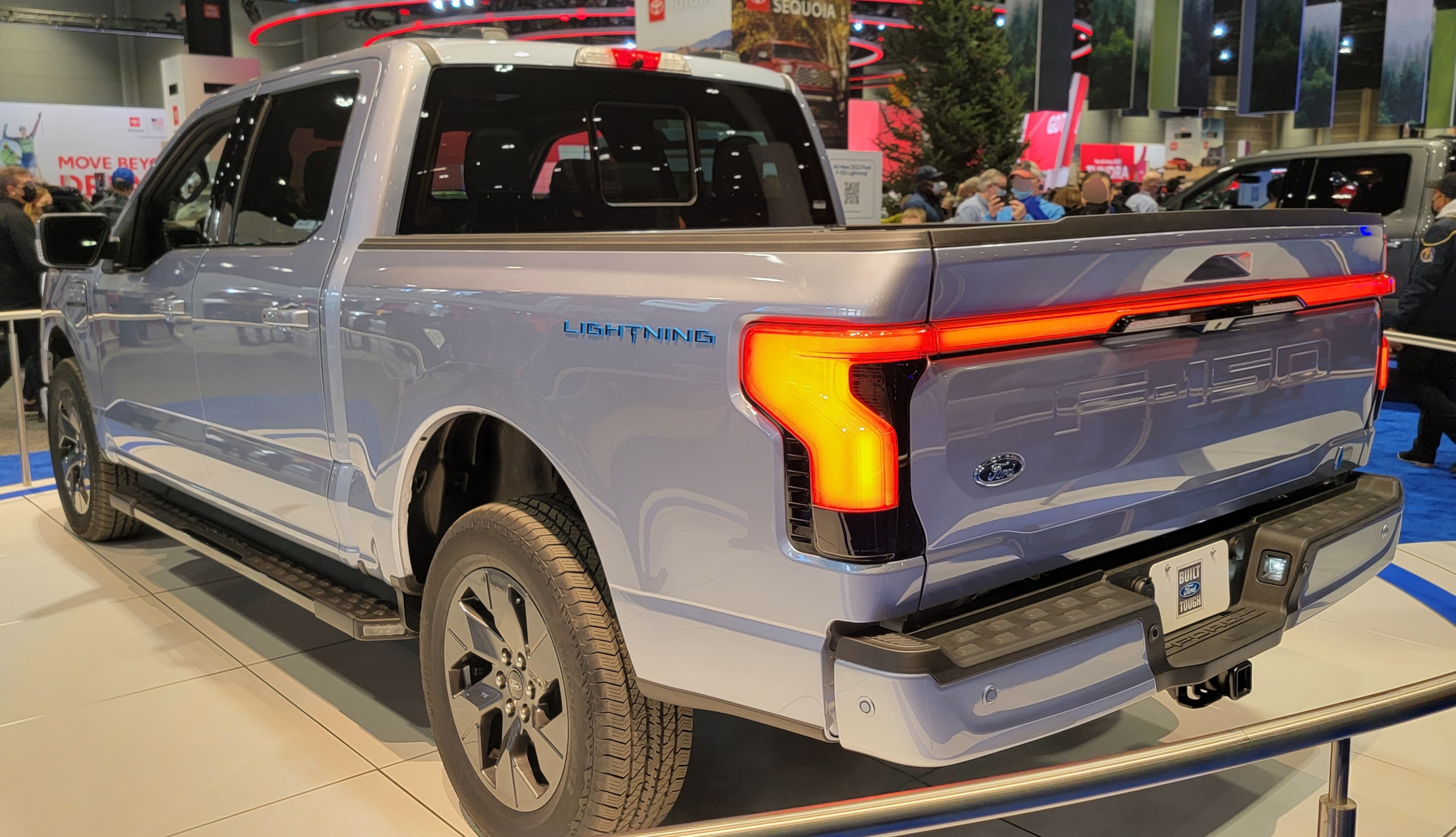
The Ford F-150 Lightning is an electric pickup truck that looks like a regular F-150 but runs on electricity instead of gasoline. It's one of the first electric trucks available.
The Tesla Cybertruck is a unique-looking electric truck made by Tesla. It has a very different design compared to regular trucks, with sharp angles and a metal body.
An aluminum body means the outer parts of the truck are made from aluminum instead of heavier materials like steel. This makes the truck lighter and can help it use less gas.
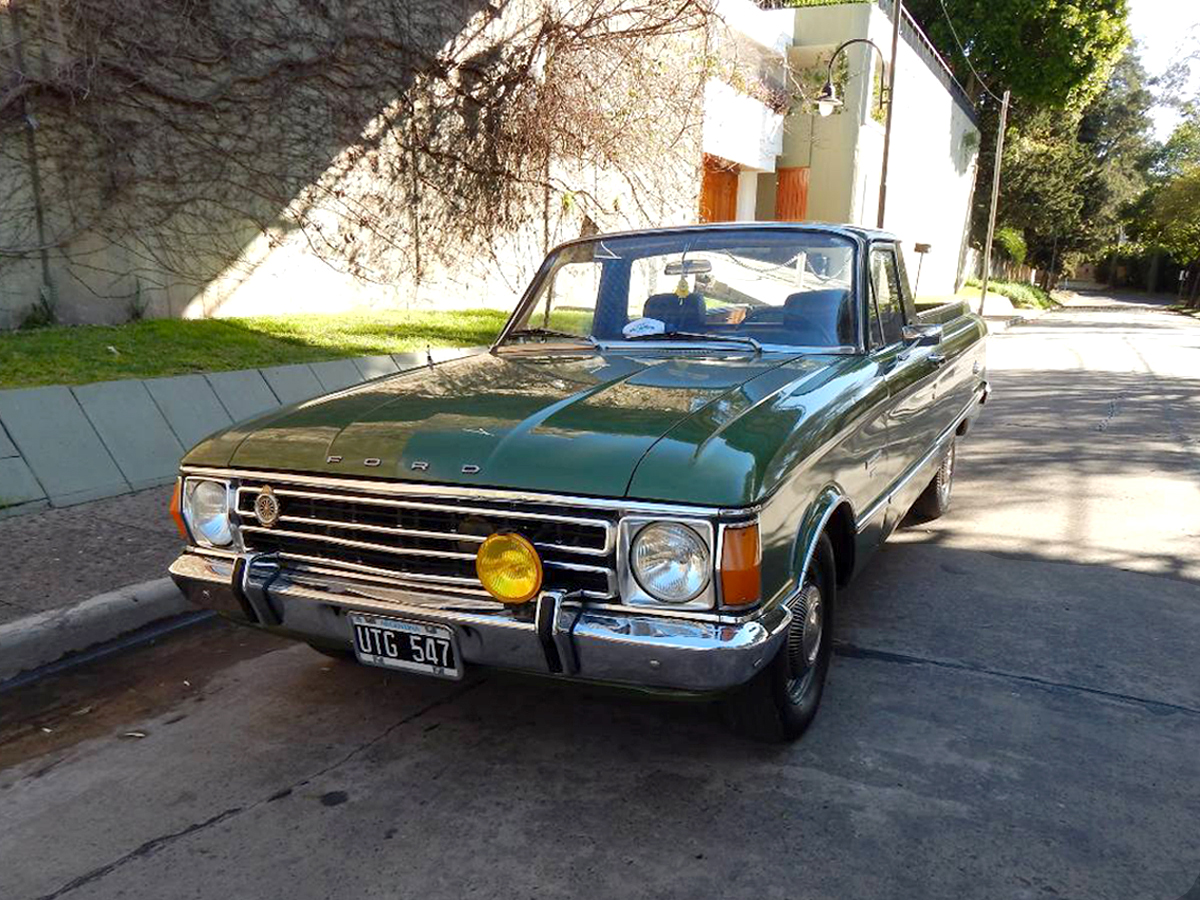
The Ford Ranchero is a special kind of vehicle that looks like a car but has a truck bed in the back for carrying things. It was made a long time ago and is remembered for being useful and stylish.
The Ford Lightning is a special version of the Ford F-150 truck that is designed to be very fast and powerful. The new version is electric, which means it runs on batteries instead of gas.
Battery degradation is when a battery loses its ability to hold a charge over time. This means that an electric car might not be able to drive as far as it could when it was new.
The Toyota bZ4X is an electric SUV, which means it runs on electricity instead of gasoline. It’s part of Toyota’s new line of electric cars, but some people felt it didn’t perform as well as they hoped when it first came out.
A 'daily driven' car is one that you use every day to get around, like going to work or running errands. It's not just for special occasions or weekends.
Engine failure happens when a car's engine stops working completely. This can be caused by many things, like not taking care of it or parts wearing out over time, and it usually means the car can't be driven anymore.
Window regulators help your car windows go up and down. If they break, you might not be able to open or close your windows properly, making the car less usable.
Redwood Materials is a company that recycles batteries from electric cars. They help make sure that the materials from old batteries can be reused instead of just thrown away.
Car
Mercedes
Mercedes is a brand that makes luxury cars known for their comfort, safety, and advanced technology. They are often seen as a status symbol in the automotive world.
The Toyota Hilux is a tough pickup truck that people love because it can handle rough roads and heavy loads. It’s famous for being very reliable, and many people talk about it because it’s great for work and adventure.
The BMW X5 is a fancy SUV that people like to drive because it’s comfortable and has a lot of cool technology. It’s one of the first SUVs made by BMW, and many people talk about it because it’s a popular choice for those looking for a luxury vehicle.
Payload is how much weight a truck can safely carry, including everything inside it. It's important for knowing how much stuff you can load in your truck without causing problems.
A kilowatt hour is a way to measure how much electricity a battery can store. In electric cars, it tells you how far you can drive before needing to recharge.
Range is how far an electric car can go before it needs to be recharged. It's important to know so you can plan your trips without running out of power.
Car
Lordstown Endurance
The Lordstown Endurance is a new electric truck meant for businesses and work purposes. It has special motors in the wheels to help it drive efficiently.
LIVE
This is the What Car Evie podcast for Thursday, November 13th, 2025, episode 248, Make the
Lightning Great Again.
How you doin?
Well, according to the economy I should be doing horrible.
And I know two people that apparently the bad economy right now is not potentially going
to affect them.
And it's not you and me, by the way.
Well, I hope not, but we'll see.
Well, you hope that the bad economy does affect us?
It does not.
It does not affect us, yes.
But I'm Phil Royal, I am one of the co-hosts here who was looking for a way to work his
way into the podcast smoothly.
So that was my awesome little, not a segue.
I guess it was a segue from nothing into something.
Is that a segue?
I don't know.
Whatever it is.
What do I say here?
I said my name.
I say youtube.com slash at the What Car.
You can watch our Spinaly Faces there.
Or listen to us.
Click on the shorts tab.
Oh yeah.
If you can only pay attention for about 30 seconds to a minute and a half.
We have shorts.
Watch those.
They'll kind of ease you in just like my bad transition did at the beginning of this episode.
Outside of that, I've been doing content poorly for a long time that's related to the
automotive world.
And you're still doing it.
Yeah.
For some reason, I still am able to do it.
Like people still pay me to do this stuff even though I'm convinced I'm a hack.
So there's that.
Are you a hack?
Ed Sanchez fills a hack in crime.
That does sound bad.
Anyway, likewise, been in the biz for two plus decades.
It's coming up on, I think, pretty soon, five years doing a podcast.
I'm really bad at math.
We're on episode 248.
So somebody else do the math.
I think we've only skipped one episode in that amount of time.
And I was like, how will we ever recover?
Yeah.
Well, we may be skipping.
We've got two back-to-back weeks that are really rough coming up.
So we might take another break.
So there may be a break for the holidays of a week.
I don't know.
Yeah.
We'll see.
What there is no break for, though, is the waterfall of cash that is coming down for
certain EV CEOs or presidents.
As we were discussing earlier, I've lost track as to who's president, who's CEO, who's
chairman.
It's time for corporate structures.
Yeah.
It's very confusing.
Not everything is equal.
So Ford has, what did we decide?
We're not about to talk about Ford.
We'll talk about Ford later.
Ford has a chairman, a CEO.
And a president.
And a president.
GM has a chairman slash CEO.
And a president.
And a president.
I believe Tesla, which is what we're about to talk about, isn't Elon-
Has a supervillain?
It isn't Elon.
Yes.
It is evil layer.
Isn't he president and CEO?
And then there's also a chairman?
Or is he chairman?
No.
No.
He had to, as part of the SEC settlement, he had to give up chairman.
I thought that ended, though.
I think the period where that was binding ended, but Tesla still has a non-mask chairman.
Chairwoman, technically, if you want to get specific.
But he's still CEO, yeah.
So he's CEO.
Is he also president of Tesla?
I don't know.
This is where the corporate structures are horrible, and nothing is the same.
He's the guy that runs the show.
He's the head honcho for all intents and purposes, yeah.
And he is asked for, and this isn't new.
This isn't new.
He asked for a, I think it was 700 million something, so almost a trillion.
Is that what it is?
I thought he asked for a trillion, but it's 700 million?
It's not quite a trillion, but it's close enough.
He asked for $700 billion, a ball pit pay, or not a ball pit pay, a bonus, whatever it
would be.
And what does he have to do?
No, I guess the news is, he asked for it now, the news is that he's gotten it.
It was approved by 75% by a shareholder vote.
Which is ludicrous that that many people voted for.
What does he have to do to become, wouldn't he be the world's first trillionaire?
I guess if he were to meet all the milestones for this compensation package, then yes.
Which we know he's going to get this, no matter what.
It doesn't matter if he reaches his goals.
He's going to get it.
The structure of the board of Tesla is set up so that he controls it.
Everybody's a fanboy on there.
They're a relative for a fanboy.
They are all going to give him this.
They are all going to vote to give it to him.
All right, so what does he need to do in theory, even though he really just has to sit there
and not die in order to get the money?
Okay, well, first of the first, so this will be divided into what they call 12 tranches,
which are basically like kind of installment payouts of the compensation.
I think the first tranche or installment would be if Tesla hits the market cap of two trillion,
which they're already at least were over a trillion.
I don't know where they're current because their stock price kind of fluctuates, but
so they're already about half of there.
As of this recording, 1.37 trillion US dollars.
Okay, so they're not far off from that.
So probably, I would say probably within a year or two, they'll hit that.
And then it says the next nine tranches, so I guess maybe it's 10 total,
would be awarded if Tesla's value increases by increments of 500 billion up to a maximum,
or I guess not the maximum, but where he would get fully paid out if their market cap goes to
6.5 trillion, which is insane.
Is there a time limit to this, or this just kind of sits for whenever?
I don't think there's necessarily a time limit.
He doesn't get the payout till he reaches these certain milestones.
I think that's pretty much how it works.
Maybe there was a time restriction, but I didn't see it.
You've got a note here that says his ownership would increase from 13% to 25%,
which gets him back to where he wanted to be.
That was his big thing.
Remember like a year ago?
Where he had a tantrum and said, if you don't give me 25% control, I'm gonna leave.
So he sold a bunch of his shares to buy Twitter because he talked himself into a lawsuit
and had to cough up like 15 billion dollars, whatever it was, to buy Twitter.
And he lost, he went from like 13% or whatever the number was down to 11%, and then he threw a
little hissy fit and was like, well, I need 25% ownership of this because otherwise,
why should I be running this company?
And I think, I don't remember where the $45 billion payday came in all of this, but
all of this is, it's not becoming of a CEO.
And if he were any CEO of any other company in the world, pretty much, they would have canned him.
Or they would have said go-pounds down.
Yeah, they would have gotten rid of him with a demand like that, like you need to give me all
of this share or else why should I work here? Why should I continue to do this?
And then also re-diverting all the Nvidia chips to saying, well, Tesla's not ready for them yet,
and then having his XAI company buy them all. And so he made the decision that Tesla wouldn't
get all these chips. And then his other company went and purchased it. And then he did things,
oh, right before that, he was saying, well, Tesla's not a car company, they're an AI company,
and that's the future. Oh, and I've got XAI here. And it's direct competitor, apparently,
to what I'm running here, like literally all fireable offenses for any other CEO. Imagine
except him, anybody else. Imagine Chris Farley, Mary Barra, whoever the
Chris Farley or Jim Farley, Jim Farley, Jim Farley, Kumar Galhotra, who I just discovered is the
President of Ford. Imagine any of them making these commands, demands, outright demands.
Yeah, the board would say get lost. Yeah, fired in an instant. But pay him a trillion dollars.
Yeah. So anyway, so yeah, he's someday going to get a fat payday sooner or later.
I'll tell you who else is going to get a pretty decent payday, not quite to the same magnitude.
I mean, I wouldn't mind having this kind of compensation.
I'll argue that it is to the same magnitude. Because you think so?
I think when you hit a certain threshold of money, cash doesn't matter anymore.
Yeah. Since this is a family show, I'm not going to say the full word, but kind of FU money.
Yeah. Yeah. So dive into this one. This is RJ Scorinch. This is over.
Yes, Rivian. Which did I send you that text?
What?
The, but you know, you see all those bumper stickers on Tesla's that said pre Elon crazy
edition or I bought this before Elon went mad, all those things. There was one that I saw that was
Tesla Model 3. Model Model Y.
And it said, the bumper sticker on that said, I identify as a Rivian.
Pretty funny. Maybe I should get one.
So Scorinch, or I guess Rivian voted to give Scorinch a $4.7 billion pay package.
So it's not a trillion, but that's, that's still a chunk of change, I'd say.
For a company that I think is losing money, that's pretty good pay.
Well, they have a lot riding on the R2. I know they, they really want slash and or need that to
succeed for them to get over the hump. But anyway, very generous, not quite as generous as what
Musk was able to strong arm, but and of course they, they, you know, did the whole, you know,
PR package with this, they said the performance grant is quote, structured in a way that ensures
the options only vest should the company deliver a significant value to our shareholders.
I need to make money.
Yes. So they said he needs to add 32 billion in value to Rivian and that shareholders will see
153 billion of value creation if he hits his milestones. So however, they formulated that.
Rivian's market cap right now is 21 and a half billion.
Okay. So if they're seeing, if they want to see 153 billion of value creation, I'm assuming that
means market cap. Yeah. Market cap and or sales again, but yeah, most likely market cap, I'd
imagine. They got a long way to go. They got a little ways to go. Yeah. Good thing he's a young
guy. So I guess he could see get as many as 36.5 million shares under this package.
And this one does have a timeframe. This one says 10 years.
And if he hits those goals within 10 years, you would get another 3% of the company, which
I believe would raise his full stake. I think I read somewhere up to like 10%.
Well, and it would be 3% of a company that in theory is worth over $200 billion.
So that in itself would be a pretty huge bump in pay. Like that would, I assume,
that's on top of the 4.7 billion is that he would get 3% of the company that I'm no good
at math, but that seems like a big number. Yeah. So he's not going to be shaking his
soda cup on Main Street. So anyway, good for him, I guess. That's a lot of money.
That's a lot of money. And I would say Elon's asking. So remember like Austin Powers.
And in the first movie, he asks for $1 million from the world and they laugh at him because
it's such a ridiculously small number. And then they ask for like $100 billion.
Yeah. Which now is like, it's just another payday for Elon Musk. But then was like a ludicrous
amount of money. Like it didn't exist. So everybody's like, oh, you know, where we get this money from.
I would argue that with this, the difference between 4.7 billion and 1 trillion is really
almost nothing. So it's like RJ saying $1 million. No, I'm just saying that there is really,
it would be like if Dr. Evil had said $10 billion and then changed it to $100 billion. The actual
effective difference is nothing to an individual. Now, when you're running an entire evil empire,
as Dr. Evil was, okay, you can spend that money because all of those lackeys that you've got
to hire in the sharks with freaking lasers, none of that's cheap. You're blowing through a lot of
capital on that. But as an individual, if you're Elon Musk, or in this case, if you're RJ Scorange
and you've got 4.7 billion, lose half of that in taxes, you got $2.5 billion, what can you not buy
personally that you could buy if you had a trillion dollars or half of that in taxes? You've got $500
billion. Small country, private island, I mean. You could buy, you cannot spend, you've hit the
point with $2.5 billion in cash. You've hit the point where you cannot spend that amount of money
personally as a company. Well, effectively, yeah. As an individual, I can't remember who it was that
was saying it, that if you win the lottery and you win like, when it was the mega ball thing and
it was like a billion dollars, you pretty much cannot spend that amount of money. You go out and
your first day, and was it Bill Gates that was talking about this? You go out and your first
day, you go and you buy a $30 million mansion. And then the next day, you go out and you buy
all these like $20 million worth of cars, and then you buy all this, you know, you drop $10
million in clothes, and then you go and you buy in a state over in Italy, and you spend another $30
million. And by the time you're done, you've spent $150 million, then what? And then you're like,
now what? Yeah, you become Bezos and you buy a $100 million yacht, and then that costs you
$30 million a year, whatever it is, in upkeep and staff. But you still, you haven't begun to scratch
the surface of the money that you have, and your money is making money. So you are forever getting
richer. You hit a point where you are effectively infinitely rich. And must be nice. Yeah, I don't
personally know that feeling. I think RJ Scoringe is going to hit that if he gets to that nut that
he needs to hit, he will get to effectively infinite wealth, which is why I don't understand why Elon
Musk, other than craziness and ego, has come up and said, pay me basically a trillion dollars.
He's the Dr. Evil going $100 billion, like a ludicrous amount of money that you don't need. How
about instead, you say, I want, I don't know, yeah, say pay me $100 billion. And then the remaining
$600 billion needs to go into a fund to solve energy crisis, something or other that goes back
to the original fund of the purpose of Tesla, the grand plan that he had. I think it would,
it would look a lot better for him. Well, he's never really been one much for charity. So,
you know, I get that. He's the one who blew concrete into the sky in Texas and it landed in
like an elementary school and like pays a fine minivan or something. Yeah. Well, I mean,
wasn't there there's something called the X prize or something? What I could see him do and I think,
you know, it would get him some accolades and kudos is kind of like,
maybe he's already doing this and I don't even know about it, but like a moonshot prize of like
a really difficult, like physical or, you know, like kind of existential issue that,
that no one's really been able to tackle. But you know, if someone could demonstrate,
you know, we've cracked the code, they would get like $100 million or whatever, or that much in
seed money to start a company or whatever. I mean, it seems like that's something he could do and it
wouldn't, it wouldn't tarnish his capitalist image, you know, he's still like kind of,
kind of building, I don't know, I'm just throwing it out there. Anyway, we're talking about stupid
levels of money that neither one of us will probably ever see. And most people aren't,
there's like Bill Gates, there's Mackenzie Bezos, and to a lesser degree Warren Buffett,
and I'm sure some others that give their money away to various charities. And I'm only more
familiar with Mackenzie Bezos, I assume she still, no Mackenzie Scott, that she gives money away
with no strings, basically, she'll find a cause, and then she hands. Here you go. Yeah,
and it's not got, it's a very different way of giving money, but it ends in some interesting
results. I'm sure both good and bad, you know, like I'm sure there's some waste, whatever, but
it sure seems like Elon's in this for himself. And I'm not saying that RJ Scrinche isn't asking
for a ridiculous amount of money, he is, like that's a lot of money. But I mean,
I, I don't know, I don't have as much, and maybe it's just the magnitude, I don't have as much of
an issue with Scrinche's deals I do with Musk. Yeah. I mean, you know, Tesla and Musk, it is what
it is. But I mean, I think if Scrinche can achieve those milestones, they kind of laid out, it's
like, Hey, good on him, you know, you earned it. So yeah, and he's got a timeline that he needs to
follow. And I don't know, I think listeners to this podcast will be shocked. Elon Musk has
rubbed me the wrong way for a long time. And he would need to do something quite tremendous for
me to like him as a person at this point. Still like the company. But him as a person. And this
does not do anything for my opinion of him. No, leave a comment in YouTube on YouTube.com
tell me how, how wrong I am and why Elon deserves $700 billion and a bump from 13 to 25% of the
company so he can get ultimate control beyond the crazy level of control that he's already got over
this company. And if you think that Tesla can only survive with Elon Musk, tell me how a great
company leader or any leader rests 100% of the success on themselves and doesn't set up a succession
plan that the people can believe in. Because it seems like that's what he talks about is that the
company will fail without him and the Tesla stands believe that what kind of a good leader is that
that does not have a succession plan. My guess is they probably do. It's just not public. Maybe
I'm guessing someone on the board has come up with a succession plan. And Elon doesn't want to hear
he wants his trillion dollars. Yeah. Anyway, talking about making my soapbox.
So from making a lot of money to losing a lot of money.
So the lightning, the Ford F-150 lightning, which was kind of a kind of a pioneering vehicle,
it came out before the Cybertruck. I think around the same time, but I think even a little before
the R1T, I think they came out around the same time. I can't remember exactly, but anyway.
And it was a very, I think a very innovative product. It kind of balanced kind of very futuristic
technology with kind of a familiar form factor. So it was, it was more approachable. The R1T was
a little more avant-garde and the Cybertruck is kind of in its own universe altogether. But
you know, at least with the lightning, you know, it looked pretty much like a normal F-150.
Had a lot of functionality. The front was, you know, I think a good idea.
Super power mega front, wasn't it?
With all the plugs and everything. Didn't meet the cost target. I remember when they first
announced that they said it would start under $40,000, I think ultimately it started around $50,000
and went up from there. Well, that was them chasing Tesla because Tesla said that the Cybertruck was
going to be under $40,000 and everybody was like, under $40,000, sure. So they massively over-anticipated
demand and they had to kind of dial that back. Now they're selling a decent number of them. I think,
I don't know, I think, I want to say last year they sold like 20,000 of them or something,
which so by itself is the best selling EV truck in the country for whatever that's worth.
You know, so, but so there are a couple of components to this story. So
the first part actually affected all F-150s, not just the lightning. So
the F1, actually the whole F-Series, not now, not just the F-150, all F-Series have an aluminum body
and that started 2015, I think. Sounds about right. Model year for the F-150 and then later
the Super Duty went to an aluminum body say 2020, 2021. I don't know. Anyway, they're all aluminum
now. So there was a fire at their main aluminum supplier, which kind of gummed up the works for
all the F-150s. So they had, I guess they had to temporarily idle their Rouge assembly plant
where they make most of the F-150s. So I think they're starting to ramp that back up and make
the normal F-150s. But in terms of the lightning, they're still like, maybe we'll keep that one
pause for a little longer. So for sure it's on pause and some are speculating it could get the axe
indefinitely. So I don't know. I mean, I know dealers don't like sitting on unsold inventory and
neither does Ford. So I mean, I'm presumably they're just going to sell out their existing
inventory. And then I mean, assuming they can get the, you know, aluminum supply back online,
maybe they might bring it back, but they've been very non-committal about this up till this point.
So I don't know. The F-150 lightning is one of the most functional of the trucks.
And I like it because of that. I much prefer how the Rivian R1T looks.
Yeah. I am seeing the Rivians all over my neighborhoods now or my neighborhood. They're
the S and the T are just showing up everywhere now. Doing Halloween light shows. Yeah. Yeah.
That was fun. I went to a house and there was a guy who had his up there and had the little
green vroom vroom thing going and it was growling and it was pretty cool. Like he'd done a whole
show as well. Like he was doing the like standing behind a pillar and dressed as a mass murderer
and chasing people and whatnot. So he was a bit of a, yeah, he was a Halloween fanatic as it was,
but his Rivian was going at it. Then there was another guy that I knew that his Rivian truck,
I didn't even know he had one and he was powering his front yard with the Rivian. So he had his big
TV because the World Series was going on at the time. And so he had his big screen TV in the
bed of the truck and then everything was powered off of the truck, which was pretty cool because I
just said a couple of weeks earlier, like when I go camping, I never see anybody doing that.
And there's one of the guys I know. I don't know if you consider front yard camping, but
well, yeah, yes, he was powering his whole Halloween party, front yard party off of his
truck, which was pretty cool. So I don't know. I don't know. I don't know what the answer is for
Ford because we've discussed many times electric trucks are not very useful if you want to do
truck stuff. And I think there is a market for the lifestyle truck like what Rivian has.
But if you're getting to Ford and Chevy slash GM, you need a truck that could do truck stuff.
You expect those to do truck stuff. And Ford kind of has it with their long range. Chevy definitely
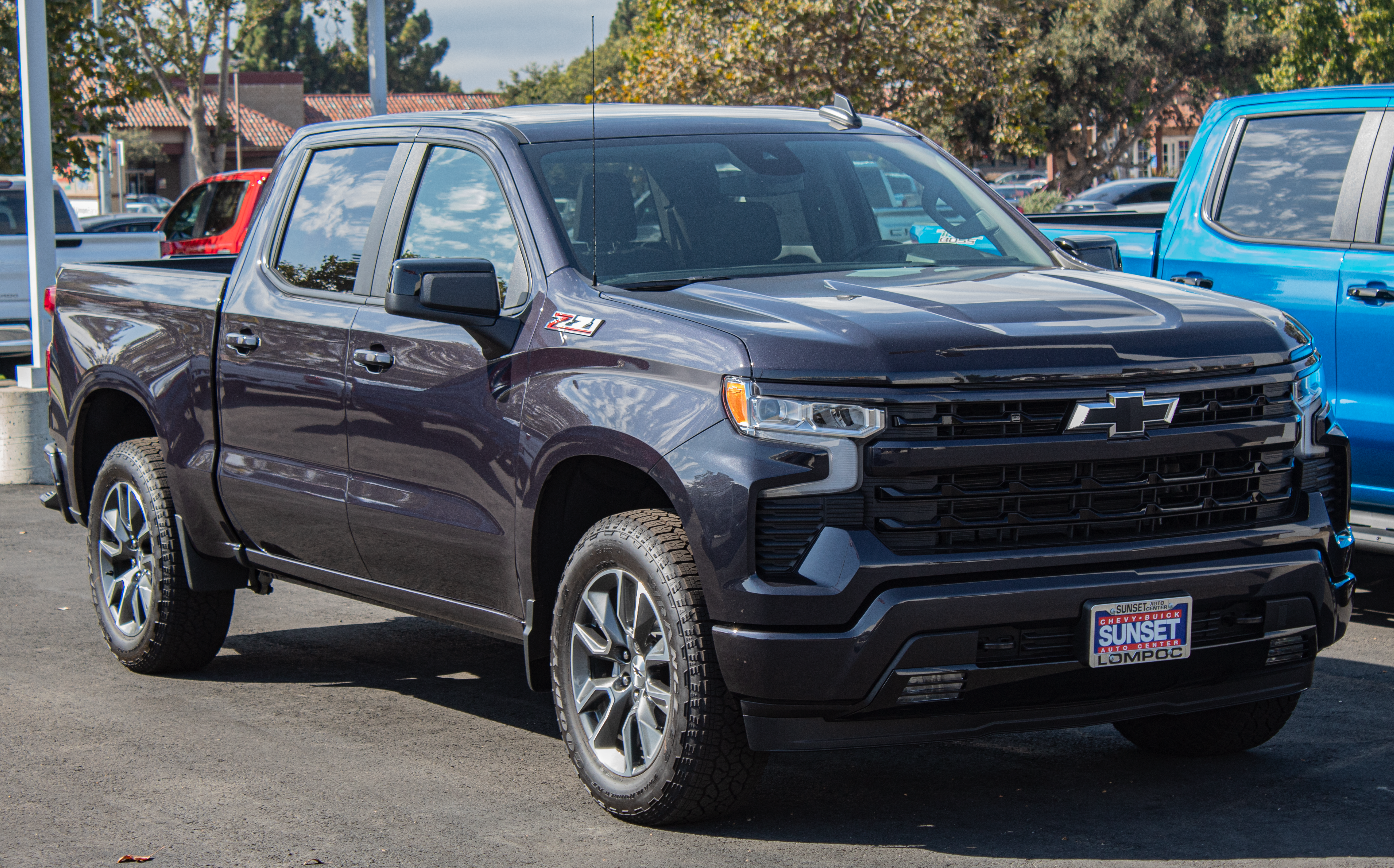
has it with their Silverado. So I don't know at this point if they idle it and then come back.
Is a better solution, I guess to look at Chevy sales and go, huh, is there a market for that
big battery and then only sell long range and super duper long range, like just go so honking big.
I have I have a whole different kind of hypothesis about this. So remember the
presentation they did a few months ago on their like low cost, you know, modular construction EV.
So they've already said the first variant of that is going to be a pickup.
They say they're going to sell for around 30,000 ish. I have a hard time believe I think probably
by the time it comes to market, it'll be basically 40 for anything anyone would want to buy. I mean,
they might have a one at this price, you know, configuration with like a dinky battery and
steel wheels and all that. But that price will probably rely on 7500 bucks, which may be coming
back in 28, you know, for all we know, who knows. But I think I think this may be the end of the
current generation lightning, they may just say, you know what, we're going to sell out the inventory
we had, we're going to, you know, we had a good run for a few years. But at this point, we're going
to stop it. And then we're going to start R&D on a future model. I think there will be another
electric F 150. But this may be the end of this iteration of it. I think I've read supposedly a
new F 150 is coming in 2027. So I would think they would prioritize the gas and or hybrid,
whatever versions first. So possibly we might see a next generation lightning, maybe like around 28,
2028. And that would also come alongside the new, you know, lower cost modular EV pickup.
So then it would say, Oh, they might do it like there, but wait, there's more, you know, everyone's
expecting the what a lot of people things maybe call the ranchero, the smaller one says ranchero,
but wait, there's more. Ah, look at the new lightning. Yay. So I mean, I don't know.
You don't think the answer would potentially be blow out the lightning name with do it dodge style.
You see, you get rid of the current lightning, and then right at kind of the end of the lifespan
of this F 150 lineup, you bring back like the super truck, the lightning super truck version.
Oh, was that like a big old gas like supercharged V8? No, like you know, you do an EV version, you do
a thousand horsepower. Yeah, you do like to be new with the super van, whatever it is,
you drop you basically make a Raptor lightning limited edition, 150,000, 180,000 dollars,
whatever it is, a truck that does zero to 60 in 2.1 seconds. And you blow out the rest of your
inventory that you've got. And all you've done really is just strapped in a different motor
and throwing your Raptor body on it. Possibly. I'm not seeing they couldn't make the lightning
great again, is what I'm saying. Could happen. I don't know. But yeah, a lot of people are
maybe prematurely riding the obituary on the lightning, but Ford hasn't really said one
word or the other. But I think it's safe to say they're going to prioritize the gas version first.
And if they have the capacity and if they feel there's enough pinup demand, they may
kind of reintroduce it. But this could be the end. So yeah, I don't know. I think it was a good
effort. I think it was a compelling product. I do feel was a little too expensive. I think that was
it's a Kelly seal that could be said for a lot of EV models. I would say that's the case for
almost all of the EV models out there. So you know, I think it would have been a lot more
compelling at about $10 to $15,000 than it is, you know, per the trim level, because even
like the sweet spot, I'm trying to remember that gosh, what was the they came out with one where
it was like kind of the XLT trim, but it had the long range battery. It wasn't the pro, but there
was another I don't know. I can't remember the variation off the top of my head, but it was
kind of the sweet spot where it had all the desirable hardware, but it didn't have like all
the gingerbread of like the the limited or King Ranch. It was just kind of pretty basic, but all
the good stuff, you know, you want, and even that was like 65 grand. And I'm like, you know,
if that was 50, you know, that would that'd be pretty sweet, but 65. Anyway, that's everything
in my life right now. Like I went to the grocery store today to buy apple juice and brown sugar.
And I ended up spending because you see things when you're walking through. I ended up spending
like $22. But you were planning or total in total, like it should have, it should have cost me
and spending to spend 10 bucks and you left not even twice as much. I left my $22 bill.
Well, that's how it goes sometimes. Trader Joe is like all the time.
I go in there with like one, one reusable bag and I have to get another one because I get too
much. So anyway, so that's such a California thing. I went to Trader Joe's, you know,
on my way to Whole Foods and the organic aisle wasn't enough there. So I drove there in my Tesla.
Of course, I don't have the anti-elan bumper sticker. So I guess I lost my
California cred there. Anyway, I'll print you one for Christmas.
You give me that identifies as a Rivian. So this is a company that we've,
we've criticized before for being kind of dragging their feet with EVs, you could say.
But and they've been talking, they've been talking this up for a while. So we'll see if
they finally deliver on it. So this is Toyota and solid state batteries, which, you know,
they've been talking a big game for I'd say probably about the last two or three years at least.
At least they seem to be the manufacturer that is in my newsfeed anyway comes up the most
for solid state battery development is Toyota. They get this, they are targeting a
40 year lifespan for their solid state batteries. So pretty on brand for Toyota,
because they're known for going the distance. So but I mean, I'm kind of wondering, is this
even necessary? As somebody that buys cars and runs them into the ground over the course of 20
years? Yes, yes, this is necessary. The thing that impressed me here was I read the headline
40 year lifespan and I was like, yeah, 40 year and what's the battery? Like, what's the capacity
on that at 40 years? Because everything degrades. This, the crazy thing is they're saying 90%
capacity after 40 years. I think their standard now is 90% after like 10 or 15 years or something
like that. So this is a massive, massive jump in that. And I really like that. Like I my newest
car is a 2011 my oldest car streetcar. Anyway, is a 99. And they like my 99 goes just as far as the
data bought it like nothing degraded on it. I mean, yeah, you know, the windows, the window
regulators couple of them need replacing as they're slowing down, stuff like that. But you can still
go the same 300 and something miles on it. And I kind of expect EVs to do the same thing. They should
they should go just about as far as when you bought it. Now, I mean, I know physics and science
and that is never going to happen. Like batteries are always going to degrade. That is the nature of
the beast. But I like this. And I said this many times like I'll make fun of Toyota all day long.
I think I didn't deliver. I think Toyota has the capacity to win if they really,
really played a conservative and a lot of people, you know, I'd say, you know, the peak EV hype
cycle is probably around 2018 2019. And everyone's like, Oh, Toyota is dragging their feet. They're
going to lose, you know, Chinese are just going to steamroll them and they're going to, you know,
they're going to be bankrupt in two years. It's like, well, that didn't happen. Yeah.
Yeah. So I think they've been very slow and steady and methodical, you know, with their EV
development. The first generation, when it was still called the BZ4X was a little underwhelming.
And there were major flaws with it. There are major charging flaws with it. But once again,
but the charging flaws were in order to extend the battery life. Like that's how conservative
if they play it. Yeah. The refresh, I think they really stepped up in terms of the features, the
specs. And I'd say even the general desirability. Yeah. You know, I look at the second gen BZ and
I'm like, okay, you know, that that's actually potentially pretty compelling purchase. The
first gen I was like, don't even don't even bother with it. It'd be a good the first gen would be a
good second car, maybe a good used car, a good car for like running around town. Yeah. Like if you've
got a kid and you're getting him a new car that that would, you know, it's like buying an old
Civic for somebody is basically you're buying them something that's good enough. It's good enough.
And that was kind of the BZ4X. Anyway, so what's interesting about this is when you're talking
about a timeline this long, they're not just talking about second life use, but even third life
used for the battery. So I mean, they're saying this potentially the battery could outlive the car
itself. So 40 years undoubtedly. Yeah. Yeah. Look how many 40 year old cars are on the road.
20 years easy. 30 years, you're getting to almost like nothing. I mean, 40 years ago is 1985.
How many 1985 cars do you see on the road? I have an 83.
But do you even see it on the road? You don't drive it?
No. Barely. No. And when I have taken it out, it's people be like, what?
Yeah. 40 years is a crazy lifespan for any vehicle. And somebody else make a comment of,
you know, I got 1930. What percentage of those cars are you seeing being actually driven,
daily driven? Yeah. It's probably the oldest I see maybe like 70s. Like on weekends, I'll see
like 50s and 60s cars. Oh yeah. No, like weekend cars, completely different. Yeah. But daily driven
cars, 40 years is a crazy lifespan. Yeah. So they're talking like the battery will totally
outlive the car, the main car itself to the point where like salvage, the salvage 40 year
solid state batteries could, you know, assuming they pass kind of like the load test and everything
could just be swapped wholesale as like replacement batteries, potentially.
Yeah, they'd probably be be, you know, marketed as like remanufactured.
And the but even after that, they're talking, you know, we could stack a bunch of these for like
utility, utility grade battery storage for like, for like renewables and stuff. So
I think that's so pie in the sky. I think they're dead wrong about that.
Do you? I think when you're talking about a lifespan of 40 years,
so you put it in a car first, you drive the car and at this point, you don't have an engine failure,
like you got rid of engine failures. I think with most cars, what takes them off the road
eventually is the engines failing, emissions go and then they just get pieced out.
What you would end up with when you eliminate that is the end of life for a vehicle would be,
you'd get some of that, you get window regulators, like I talked about,
stuff that just kind of makes the car unusable day to day, so then it'd get parted out. And in
those cases, okay, batteries become a secondary market. I would guess that in a case where if
those don't fail, then the time when that vehicle hits end of life from sale, resell, resell,
supporting the software is what I think. When it gets hit by another car,
like 40 years, a long time to go without getting into an accident, you get into an accident with
one of these things, you get hit by a car, your battery is compromised at that point.
Now, it's people that run companies like Redwood Materials, Redwood Materials.
Taking it as a whole, I think that's probably good in theory, but in reality, you're going to have
cars, more cars written off than you can just use to that. I mean, I would say if it was a bad
collision, I think there would be safety and liability reasons why they wouldn't do that,
but I mean, as we've seen, and I've seen this with both Tesla's and Rivians and probably,
I mean, you could probably say BMWs and Mercedes models, they get into what looks like a relatively
minor collision and they're totaled, where it just barely scrunches the front corner bumper,
and they're like, well, that's a $30,000 repair, and the whole car is only worth 25 at that point.
I could see at that point where the battery pack is effectively untouched that they could drop it
out, do a diagnostic test on it, look for any physical damage, they say, no, this one's perfectly
good. So, I mean, who knows, this is all kind of hypothetical. Yeah, I'm just thinking if you're
taking batteries out of crashed cars and then strapping them to the side of my house,
I don't know if I'm cool with that. Yeah, I don't know, but I mean, if they bring this to
market and actually do this, I mean, I love this pretty revolutionary. If I could have a car for
40 years, that's my dream. I would buy a car now and be buried in it. I'm not making it another 40
years. So continuing on the Toyota EV theme. So if you live outside of the US, the predominant Toyota
truck is the Hilux, which was made famous by Top Gear and many other and Al Qaeda and other
organizations. Anyway, it is the definitive Toyota truck of the world outside of the US.
Anyway, so they just unveiled a new generation. And this is kind of remember we talked about the
BMW X5 a few episodes ago, where it's going to have the all of the above powertrain strategy.
Well, they're kind of doing the same thing on the new Hilux, including a full battery electric.
But it's not going to be a 600 horsepower rock crawling tire smoking beast, exactly. But
yeah, the specs are you kind of look at them like, oh, okay, well, I guess that's useful in some
applications. So you have specs as 59.2 kilowatt hour battery pack. DT for a truck.
Pretty small. Yeah, combine power output rating 193 horsepower to the front motor 151 pound feet
of torque, rear drive 198. So that, I don't know, that's a lot of power. Well, it's a lot of torque.
Yeah, well, I mean, yeah, that's a lot of but that's what you want with the truck. You want torque.
That's yeah, with the front motor, rear drive unit rated to yeah. So it's a lot of torque,
very little battery to use it. You get up a very small vertical hill, 150 mile WLTP range, which
which would be like 125. I'm looking at that wondering if that's a typo in your notes.
Like that is nothing. That's what all the stories are saying. That's crazy. That's your size battery
pack in your model three, something that probably weighs about 2000 pounds more. Yeah,
it's a craziness. Max payload and towing is okay. I mean, towing is 3,500 pounds, but your battery
doesn't I mean, it might as well be zero because with a 60 kilowatt hour battery, you're not in
a range unladen. So what I what I see is what I kind of see this for is like a ranch truck,
just as general like utility truck for like agriculture or local delivery.
You know, that that sort of stuff when like it's whole daily route is like under 100 miles.
Yeah. You know, I you know, it would work fine for that. But you know, you wouldn't you wouldn't
want to go road tripping in this. I wouldn't. This strikes me a little bit like the and I don't
remember the specs, but I want to say they were somewhat around in this general area.
But the Lord's town. Oh, yeah, the endurance. Yeah. Wasn't it small? Am I completely wrong?
Wasn't it small? I want to say it was like 80 at least 80 something. It was a big,
it was a big heavy truck. The big Achilles heel that I remember with the endurance is
its efficiency was horrific. I mean, even relative to like a Hummery V, it was less,
was significantly less than even that. And it had less power. When I worked at the construction
company years ago, we would buy trucks like they were candy. We bought them all the time. Oh,
I got a new job and you order like 10 new trucks. And we would go and buy the Silverado
work edition. They were like, yeah, white bench seat, like no floor mats, like rubber on the floor,
like cheapest things you could buy. And we would buy, you know, five or 10 at a time for every job
site. And they go out there and they just get beat up. We were not towing with them. We were not
doing long distance travel with them. They were going within job sites from job site to back to
the headquarters. They were operating, moving things around within the job site. I don't know
everything because I was in the cushing office, not actually doing that. I would deliver some of
the trucks. But these are what this is what this screams to me is when I worked at that construction
company, this is what we'd order five off or 10 off is the Lord Sound Endurance or this model
Hilux. This would be perfect for that for anybody in the real world. This doesn't work at all.
No, I would I see this. So I guess they're going to offer this predominantly in Asia and Europe.
So like food like bakery, like if you want a bakery and you deliver to like restaurants in the
area, perfect. Yeah, florists, you know, just kind of local, kind of even even like urban delivery
for stuff. And like you said, job sites like construction sites or, you know,
like in Australia, I'm sure they're going to sell this in Australia. Hilux is very popular there.
Like Australia has these huge ranches. So you know, it's going to go feed the sheep, you know, I
don't know. I don't even know if they have sheep in Australia. I think they have a lot of sheep.
I thought all the spiders and snakes ate all the sheep. Anyway, so I mean, this has an application,
but you know, it's definitely not going to be the volume seller, probably going to be the
turbodiesel for the markets it sells in. So but interestingly, they do say they plan on doing
a fuel cell model in 2028. Oh, sweet. Okay, Tacoma concept at SEMA. So I don't know if that's going
to have the monster like 500 plus horsepower, whatever. My guess for the Hilux, maybe like 200
horse, but I don't know. So somebody there said, well, this doesn't go very far. This electric
vehicle only goes 150 miles WLTP. Is there a way we can make this go less far? And somebody was like,
we can make it hydrogen. We'll put a fuel cell in there. You won't even be able to fill it up to go
anywhere. It'll be great. Anyway, so yeah, I mean, there's there's that. No. So we want to wrap this.
We got okay, so I want to mention this real quick. We might do a deeper dive on this in a future
episode. So remember, we talked about powered travel trailers that had electric motors. Yeah.
So a company, I guess, has made the first EREV travel trailer.
What? I got to click. Is this I just saw a story of Facebook? I don't know on.
No, this is not it. I just saw somebody's got a pin in Farina designed one that I think had a
powered axle and then extended out, I'm guessing what like $2 million. Oh, I don't even I didn't
even get that far in the thing. So what's the deal with this? So this is EREV. So this has got
a gas engine that a gas range extender on board on the trailer, which is basically just a
generator. I guess also, well, yeah, effectively a generator, but generator that powers the electric
motors that power the trailer, I guess. So cool. Well, that so who is this? Who's there'll be a
link in the show notes. We've evo trucks, whoever evo trucks is. Huh. And did they yeah, I don't
know who they're backed by if they're like back by Thor or whatever. This is just a startup kind
of like pebble or whatever. Interesting. I'm gonna have to read about this because in about a week
or so I'm going off camping in my very non EREV trailer being pulled by my very non electric truck.
So yeah, I got I got to read all about this because I'll put that in my list of things
I can't afford and will never probably own. Anyway, so yeah, we might do one of our future
episodes. We might do like an all travel trailer episode because there's actually a fair amount
of activity happening in that segment. And then we could do like what we did with the EVs of like
what would the perfect one be like price and features and what are we looking for. And I'm sure
nobody listened to the episode. But it won't stop us from doing it because apparently we don't care
how many people listen to the episode. Speaking of that, I don't know why another bad transition to
end the show that began with a bad transition. Everything we talked about links in the show
notes that can be found in any of the podcast players or at youtube.com slash at the what car.
We're on all the social medias, but I don't care if you follow or like us or anything you could post
though on your own page links to the podcast, which you could do links from anywhere. You could
also go to the walker.com will have we have a link there to every single episode with show notes,
you can link to that or you know, the YouTube show button. Yeah, click whatever it is that you
want to do, just share it. And that helps us get more of a reach, I guess. Yes. And then maybe we'll
have some weird episodes in the weeks coming up because it's getting a holiday season or we'll
take a break to be determined. Yeah, I don't know. We'll see how we're feeling. And I'm feeling like
I want to go. See ya. All right.
About this episode
The latest episode dives into the financial maneuvers of prominent EV CEOs, particularly Elon Musk's staggering $700 million bonus proposal and RJ Scaringe's $4.7 billion compensation package from Rivian. The hosts debate the implications of such wealth in the automotive industry, contrasting it with the struggles of Ford's F-150 Lightning, which faces production challenges and potential discontinuation. They also discuss Toyota's advancements in solid-state batteries and the new Hilux model, highlighting the evolving landscape of electric vehicles and their market viability.
Is Elon Musk asking for too much money? Is RJ Scaringe asking for too little? Is Ford scrapping the F-150 Lightning? Is Toyota going to win the EV battery war? There’s a lot to talk about this week, so that’s exactly what we do on the latest episode of The Watt Car EV Podcast!