An electric pump is a fuel pump that runs on electricity instead of being powered by the engine. It's often used in newer cars because it's more efficient.
A relay is like a helper switch that turns on other electrical parts of the car when needed. It helps control things like headlights or fuel pumps without using a lot of power.
A carburetor is a part that helps mix air and fuel so the engine can run. It's mostly found in older cars since many newer ones use fuel injectors instead.
A catalytic converter is a part of the exhaust system that helps clean up the gases that come out of the engine, making them less harmful to the environment.
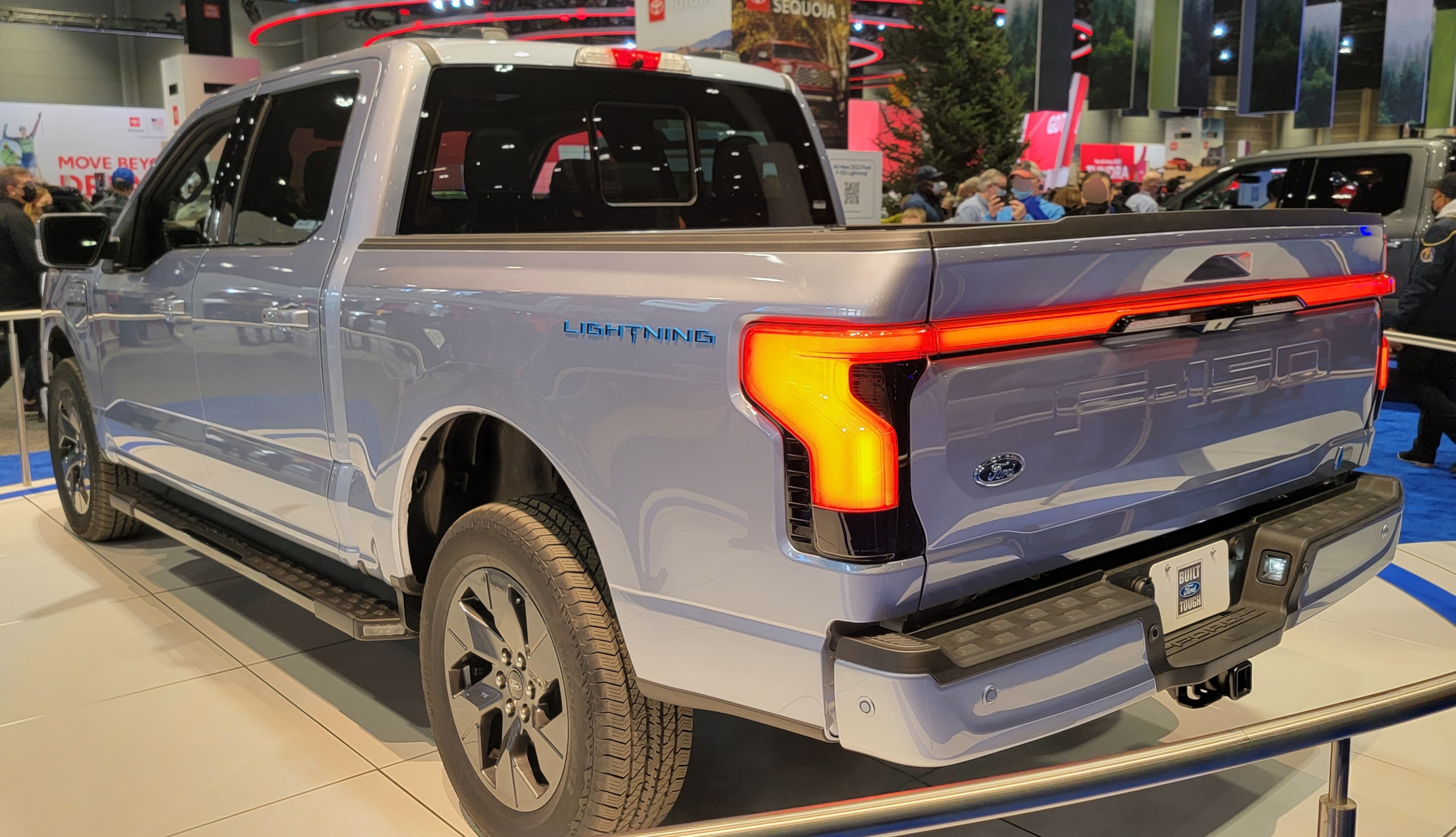
The Ford F-150 is a popular pickup truck that can be used for many purposes, like carrying cargo or towing. The 1997 version is known for being reliable and practical.
The disc rotor is the round part of the brakes that the brake pads press against to help stop the car. If it's scratched, it might not work as well, but it's not always a big problem.
The Volvo 740 Turbo Diesel is a car made by Volvo in 1985. It's known for being reliable and practical, especially with its diesel engine that helps it use less fuel.
A turbo diesel engine is a powerful engine that uses diesel fuel and a turbocharger to help it run more efficiently. It's often found in trucks and cars that need to pull heavy loads or go fast while saving fuel.
An oil change is when you take out the old oil from a car's engine and put in new oil. This helps keep the engine running smoothly and prevents damage.
Burning oil happens when a car's engine uses up its oil too quickly, which can be a sign of problems inside the engine. It's important to keep an eye on oil levels to avoid damage.
Sludge is like a gooey buildup that can form inside your car's engine. It can make the engine work less efficiently and cause problems if it isn't cleaned out.
Piston rings are like seals that help keep oil and fuel in the right places inside the engine. If they get stuck, it can cause problems like burning oil.
Valve guides are parts in an engine that help keep the valves in place. If they wear out, it can cause problems like oil leaking and the engine not running well.
The Saab 900 is a car made by the Swedish company Saab. The 1994 model is known for its distinctive look and is popular among car enthusiasts for its turbo engine options.
The Honda Accord is a well-known car that many people use for everyday driving. It's known for being dependable and having a lot of space inside for passengers and cargo.
A scanner is a device that mechanics use to check what's wrong with a car. It connects to the car's computer and shows error messages, but it doesn't always find every issue.
An intake manifold leak is when air gets into the engine from the wrong place, which can make the engine run poorly. It can cause problems like the engine not idling correctly or having trouble speeding up.
The fuel injection system is what sends fuel to the engine so it can run. It's more efficient than older systems and helps the car perform better.
LIVE
How could your favorite NPR podcast get any better?
Well, what if it had bonus features such as extended interviews and zero sponsor breaks?
There is a remarkably easy way to turn that fantasy into reality.
It's called NPR+.
You get perks across more than 25 NPR podcasts while supporting the teams that make them.
Make great podcasts even greater by visiting plus.npr.org.
Hello and welcome to Car Talk from National Public Radio.
With us, click and clack the Tabret Brothers and we're broadcasting this week from the
Wonders of Technology division, not department division.
It's an entire division, yeah.
Here at Car Talk Plaza.
Go ahead, Tommy.
And here it is.
Man goes to his dealership and picks up one of those brand new Mercedes SUVs.
As he's driving home, he turns on the radio and nothing happens.
Furious.
He goes back and tells the sales consultant, when I buy a $50,000 vehicle, I expect a stupid radio to work.
Salesman says, the radio has been pre-programmed to your voice, sir.
And all you have to do is tell the radio what you want to hear and it will play.
Guy gets back in his car and he says, country music.
And Willie Nelson starts singing.
Wow.
He says rock and roll and immediately Elvis started crooning.
Easy listening, he remarks.
And all at once it sounded like he was in an elevator.
Later that day, he was relaxed.
He's driving up Route 128 outside of Boston, listening to smooth sounds when all of a sudden
another SUV with two typical Boston drivers almost runs him off the road.
Morons, he screams.
The radio immediately blurts out.
This is clicking clock the time for the national public radio.
I saw it coming a mile away.
That was sent to us by Pierce Reed or Reed Pierce.
I don't know who he is.
But morons.
Well, if you want to talk to these morons, the number is 888-CAR-TALK.
That's 888-227-8255.
Hello, you're on Car Talk.
Hi, this is Marge from Houston, Texas.
Marge?
You have such a soothing voice.
Wow.
Thank you.
I love y'all's show.
Well, thanks.
Great, you've calmed me right down.
Which is something his wife hasn't managed to do in 20-some-odd years.
You know, that's the reaction I have to most men.
They're just like snoozing away.
It's terrible.
Yeah, I know.
What do you do for a living, Marge?
I fix things for a large company that can't tell you their name, but they mean service
and their initials are...
No, you can't tell us.
You can't tell us that either.
You fix physical things, mental things, or systemic things?
Well, in my business, often you have to fix them all at the same time.
Wow.
I specialize in mechanical things.
Good.
Really?
What an interesting...
So we can call you a mechanic.
Yeah, you could.
Great.
Which is why I'm calling you guys...
Yeah, so what's up?
Well, I have a 1985 Nissan pickup truck.
It's my little baby.
I bought it new, and I work on it myself when I can.
It has 150,000 miles on it.
And I've come up onto a very unusual problem that nobody seems to know what is causing
it.
I know what's wrong with it.
Already?
Yeah.
She hasn't even given you any clues.
She just told you the kind of vehicle...
Then that held in the steering wheel?
Don't tell them anything more.
Okay.
Let's see how good he is.
Is the truck blue?
Yes.
That's what's wrong with it.
It's blue.
I'm going to just take a wild guess.
Yeah.
Occasionally, and without warning, it just cuts out on you.
No, huh?
All right.
No.
But close.
Amazingly close.
Amazingly close.
Amazingly close.
Well, that's good.
Yes.
I'll be driving down the freeway, and it only happens when the weather is cold, like 40
degrees and below, and slowly the car starts to slow down.
It's going 75, then 70, then 65, then 60.
And the more I step on the gas, the slower it goes, which is a cruel metaphor for my
life, you know what I mean?
So adding insult to injury there.
So, I mean, by the time I'm going 55 miles an hour, I'm fixing to be a hood ornament
for a Mack truck.
Yeah.
So I pull off the side of the road and turn the car off and let it sit for two or three
minutes, turning back on in room, you know, just back.
Roars to life.
Yeah.
Roars to life for another, or used to be 30 miles, but now it's more like 14 to 20
miles, and then it starts doing the same thing.
Well, I tell you, my guess was remarkably close.
Well, it could well be that your solution to whatever you thought was the symptom may
in fact be the solution to this one.
I didn't have a solution.
Well, I'm sure you can see it now.
Let me tell you what I've replaced.
Oh, that would be good.
Okay.
I've replaced the fuel filter.
Good.
I've replaced the fuel pump.
Oh, this has an electric pump?
Yes.
Those are two beauties.
Yeah.
It's unfortunate that they didn't work.
No, they didn't fix it.
I, for another previous problem, I replaced the relay that's underneath the dash.
Oh.
I also swapped out the carburetor for a used carburetor I got from a junkyard.
Yeah, it wouldn't be the carburetor.
Well, it could be.
Did you ever replace the catalytic converter?
No.
I have a feeling.
My crystal ball says that that's in the cards for you.
A friend of mine went back, he said that if it was the catalytic converter that you,
you wouldn't get any exhaust coming out of the exhaust pipe.
How do you know what you're getting out of the exhaust pipe?
You're behind the wheel.
Well, I have a friend.
You got to stand back there.
And?
Well, when it's running, when it's running, you're getting exhaust.
Right.
But it can be when the thing, when the thing heats up.
Ah.
That it sufficiently blocks the flow of exhaust to slow the vehicle down from 70 to 60 to
50 and then finally, it won't run anymore and you pull over and what do you do?
You let it cool off.
Just about two minutes maybe.
Yeah.
Sometimes that's all it takes and then you start the thing back up again.
I mean, I have to say that the fuel pump would have been a much better answer.
Yeah.
But since you replaced it and it didn't help.
I mean, it's a classic symptom of a fuel filter or a fuel pump.
But if it's neither of those, it's almost for sure.
Does it do this during damp weather?
No, mostly during cold weather.
Cold but it doesn't have to be any moisture in the air?
It doesn't have to be any moisture in the air.
I was listening, I listened to y'all all the time.
I love it.
And you had one show where a woman seemed to have a similar problem and you said that
something with the gas was icing up.
Yeah, carburetor icing, but it requires moisture in the air for that to happen.
The Venturi effect will actually cause a drop in temperature as the cold air goes through
the carburetor, the temperature will actually drop and it can form ice which can in fact
block the passage of air.
But it requires that there be some moisture in the air.
Well, this is Houston.
Well, it's Houston.
There's always moisture in the air.
Yeah, what I think is not moisture is a nice dry day, you know, fish are swimming past
my face.
So what do you do for something like that?
Well, next time it does it, you have to pull over immediately and whip off the cover to
the air cleaner.
Okay.
And look down there with a flashlight and see if in fact you can see ice.
Oh.
And if you can see ice, that means in fact that ice is formed and has blocked the carburetor
passage and obviously prevented the thing from running.
And of course when the ice melts, once you shut it off and you can start it up and drive
it again.
If that's the case, what's wrong is that you're missing the tube that's called the stove
that conducts warm air into the snorkel of the air cleaner.
There's a little cardboard tube that fell off about 70,000 miles ago.
If that's missing, then that's definitely it.
Oh.
Is that missing?
Yeah, I think it is.
What the hell is this?
And I tossed it out of the window.
Ah, then that's it.
Well, I'm not so sure that that's it.
I like it.
I like it.
But try that first.
If that isn't it.
If you can't see ice down there, then it's more likely to be the cat converter.
Okay.
The cat converter.
Oh, wonderful.
Thank you guys so much.
See you, Marge.
Marge, it's a pleasure talking to you.
Bye-bye.
You calm me down.
Okay.
For the moment anyway.
Oh.
See you later.
Bye.
Thank you guys.
Yeah.
All right, Tommy.
Yes.
Do you remember last week's puzzler?
No, I don't.
But if you give me a hint, there's a possibility that something might happen.
It was about Vinny Gumbaz and his strong arm tactics.
Oh, was there an unfortunate industrial accident involved?
Yeah.
They do happen, you know.
No.
Yeah.
No.
Hey, talking about something.
What do you know about the Major Star again?
No.
No, no, no.
This American life, unexpected stories, wherever you get your podcasts.
On the ThruLine podcast from NPR, the former slaveholder who took on the KKK and won.
It became more and more and more militant as time went on.
Listen to ThruLine in the NPR app or wherever you get your podcasts.
What allows Olympic figure skaters to land a jump on ice that most of us couldn't land on solid ground?
And how do snowboarders defy gravity? Maybe even better than Cynthia Arrivo.
Come learn the science that allows Olympic athletes to push the boundaries of what the
human body is capable of with shortwave. Listen in the NPR app or wherever you get your podcasts.
Hi, we're back. You're listening to Car Talk with us. Click and clack to tap it,
brothers. Here to talk about cars, car repair, and of course the answer to last week's puzzler.
Yeah, which I remember now so clearly. How could I have forgotten that I have no idea?
In brief, our erstwhile mechanic Vinny Gumbach, known by all, and he's also known for his prowess
in arm wrestling. Little known fact. Oh, coming back to me now? Like breaking and a few other
things. Anyway, anyway, he's asked to set up an arm wrestling tournament at the local watering
hole. It's to be a single elimination tournament that is once you've lost, you're out. No ties
allowed in arm wrestling. No. To his horror, 247 people sign up for the tournament and the bar
keeper wants to know how many bolts will have to be fought. If each bolt takes like five minutes,
he wants to know at what time he should start the event. So it'll conclude before say he retires.
I got it. So now Vinny's in a tizzy. He's thinking he's got to draw up like a branching tree and
count all the branches and since he can't count beyond 14, he's getting nervous. But fortunately,
there's a little guy sitting next to Vinny at the bar and he says,
seven. What does he say? I know the answer. Oh, he says, I know the answer. Vinny says,
what? You some kind of genius or something? The guy says, no, but there's a simple reasoning
process that will allow you to instantly know how many bouts have to be fought.
Vinny says, well, tell me, or I'll break both your legs. So the question is how many bouts have
to be fought in order to determine one winner, one winner. So you got, you start off with 247
people. Yeah, right? Yeah. And so take, divide that group in half, right? You're going to,
half of them are going to wrestle the other half, then you're going to lose half of those people.
Half is going to wrestle, right? Yeah, I got it. You could go and do all this,
but there's a simpler way to figure it out. There is. Well, just add up the numbers,
four, two and seven, which comes out to be 13, four divided by two, which is almost seven,
and the answer seven. Seven what? Matches? We already had 123 matches to begin with.
Oh, you call those matches? Yeah, we don't need those thinking matches.
Oh, the answer's not seven. What is the answer? Well, according to John Latore,
who sent this to us, he claims that Albert Einstein used this as an example of elegant reasoning,
that is reaching a conclusion in the fewest number of steps in his math lectures.
Really? From time to time? He gave math lectures? He knew a little bit about the topic.
He did. And his the answer, since you can't have any ties, every bout must have a winner
and a loser. Are you with me? I'm with you. And since the thing is a single elimination,
everyone will lose once and only once except for whom? One guy. One guy. The winner. Therefore,
how many losers are we going to have? 246. How many matches are we going to have? I don't know.
246. Really? Yeah. Do the math, as they say. Do we have a winner? Well, what if you start it off
with seven people? Yeah, seven people. You divide them. You got two, two, two, and one. The answer
would be six. And one guy left over. Yeah. All right. So the two, each pair of two fights,
right? And you got one, one, one. That's three matches. Yeah, two, two, and two. So you have
three matches and one guy is just hanging out. One guy hanging out. All right. All right. After
those three matches, you got three winners and the guy hanging out. All right. So how many more
matches? Four people. They have two more matches. That's five. That's five. And then what happens?
Out of that? You got two people. I got two people. You're going to have one match and you're
going to determine a winner. Winner, right? So the answer's six. There you go. God, that's good.
Who was the little guy sitting in the bar? I know who it was. It was Jack Samuel's from
Cave Creek, Arizona. Exactly. And for having his answer selected at random from among the
thousands of correct answers and incorrect answers that we got, Jack is going to get a $25 gift
certificate to the Car Talk Shameless Commerce Division with which he can purchase anything or
at least any cheap thing from the Car Talk line of fine apparel and audio products.
Anyway, we will have a new, I think, automotive puzzler coming up in the third half of today's
show. So stay tuned for that. In the meantime, you can call us and ask us questions about your car
or a neighbor's car. Yeah, you can remain anonymous. Indeed, 1-888-CAR-TALK that's 888-227-8255.
Hello, you're on Car Talk. Hi, my name is Laura and I'm calling from Bainbridge Island, Washington.
Hi, Laura. For where? Bainbridge Island. Bainbridge. Got it. Okay. You ready for my story? You must be
like surrounded by water. Island, yeah. That would make sense. My brother is so quick, you know?
That might have something to do with what's wrong with your car. And I hope it does. Oh,
no, it doesn't. It doesn't. Oh, all right. Yeah, well. Right now, there's really nothing wrong with
my car. Great. Yeah. Well, thanks for calling, Laura. We'll get back to you. No, what I need to
find out is if I need to get my car checked out for a potential problem that might be there,
but I haven't figured out yet. Yeah. Here's the story. I've got a 97 Ford F-150 pickup.
It's got the, you know, a third door extended cab and it's great for my little kids getting in
and out with car seats and all that. What possessed you just out of curiosity to buy a pickup truck?
I like having the flat, you know, the open bed in the back. Oh, you do? I do. And, you know, I have
been a victim of not having, you know, all my life I've had to ask friends for help to move things
and pick up things. And, you know, when I finally got enough cash, I got a pickup truck. I don't
have to ask anyone. Well, that's the same reason I bought mine. It does give one a sense of
independence and self-sufficiency and all that. And always something to do on the weekend because
someone, you know, is always moving something. Absolutely. People love me because I can borrow.
Yeah. And you get more friends and it's like hanging a pork chopper on your neck so the dog
will play with you. Well, here's my problem. You know, I don't have a garage. I have a gravel
driveway. I discovered through error one time as I jumped in my truck and pulled out of my driveway
to this tremendous screeching noise that my sweet little then two-year-old had filled the
the wheel wells with gravel. Cool. Yeah. He is cool and he was so very pleased with himself.
What do you mean the wheel wells? Well, you know, I think that's what I'm talking about. Okay,
you've got your tire. You've got your hubcap. Yeah. You've got the openings in the hubcap.
He filled the wheel openings. Yeah. The wheel openings. All right. Yeah.
So I stopped, I jumped out of the truck and I picked all the gravel out. But as I was picking
the gravel out, I noticed that there was this big shiny scratch on the, on the round disc.
On the disc rotor. Yeah. Now, is this, what is that? That's part of the brakes. That's the thing
that the brake pads squeeze against to stop the vehicle. So is this a problem for me?
Well, it isn't good, but I wouldn't stay up at night thinking about it. Okay.
Which brings me to my second question. Yeah. My second question is on a different occasion.
My also then two year old was inside the truck, inside the cab, and my husband had been using
the cup holder as a change dish. And my son, one by one, put about 10 pennies in, in the vents.
This is, this is a, this kid's going to be watched.
You know, he's three and a half now and he's, he's a deer, you know. Yeah. He knows better.
He's been severely reprimanded. He knows, he knows now, but now the question is,
there's no problem yet, but is this a problem? Probably not. If it hasn't happened yet,
it's unlikely. No, there's no problem. It's not going to be, there's nothing that could happen.
What else has he done? This kid, has he tried painting the truck yet?
Well, no, but you know what? Somehow he got ahold of my purse in the back seat when he was in his
car seat. And I've now got a couple of credit cards stuck in the interior of the back door.
And I've been wondering, you know, my balances have never been so low, but I can't get them out.
Better to leave them in there. But I wonder if this, if this in some way points to this kid has
the assembly gene, putting things into things, putting things into things, the rocks in the
wheels, he could be a credit card in the window, he could be like a banker, putting things in the
safe. He'll carry his mama through old age, I think. Yeah. Or he could work at McDonald's,
putting the burgers in the bags. Could be that. Could be anything. Oh, well, thank you. That was
my question. I just want to make sure I wasn't going to have problems down the line and I needed
to get it fixed now. Nah, I wouldn't worry about any of those things. You're all settled. No, they're
all normal kid things to do. Yeah. Okay. And they can't really do any damage. Let them do anything
they want. Yeah, when he starts painting the truck with rollers, call us. We'll do. Thank you. Say
a laura. Bye-bye. Thanks a lot. Bye-bye. 1-888-CAR-TALK. That's 888-227-8255. Hello,
you're on CAR-TALK. This is Bernardo in Fort Lauderdale, Florida. Fort Lauderdale,
Bernardo. Yes. And you go, you use that name in your day-to-day doings? That's my name,
that's, I'm kind of stuck with it. So they don't call you Bernie? When I was younger, but it just
kind of got kind of faded down here in Florida, you know. Bernardo's good. I like it. Yeah.
No, I like Bernardo as well. Yeah. Were you at Fort Lauderdale? Fort Lauderdale, Florida. When
spring break? You know, they kind of have cut down on spring break. They don't
encourage the college kids to come down here. You know, the Fort Lauderdale police just about
drove them away. Right. So it's probably a good idea, but they ended up going where? San Pedro
Island or one of those places? Right, they're going to be each. South Padre Island. South Padre.
That's it. Yeah. So what do you guys do for fun now?
Now, it still gets kind of wild, just not as many college kids. Not as many college kids as
right. So what's up, Bernardo? Well, I have a 1985 740 jelly turbo diesel Volvo wagon. It's got about
125,000 miles on it. The one thing it does do is it burns oil, burns about maybe, maybe a quarter
every 500 miles or so, 500 to a thousand miles. I didn't know if that had something to do with
the fact that it had this turbo diesel thing going on, because it does have this, what I call the
James Bond effect. You hit the gas or you accelerate. And the smoke screen comes up.
Right. It comes out the back. You know, I usually drive so that doesn't happen, but you know,
every once in a while, you get, you're being tailgated by somebody in a convertible and it
comes in handy. Oh, you have a mean streak, man. Yeah, that's great. Whoa, you just gave my brother
an idea. I love it. I love it. But I didn't know whether that was, uh, there's something wrong with
the engine or if it's something. Yeah, of course there's something wrong with the engine. Okay.
But it's unusual because it's only got 125,000 miles on it. Has anyone ever changed the oil?
Oh yeah, I get the oil changed regularly. Well, because diesel engines do have, if the oil isn't
changed enough, a tendency to begin to burn oil, to beat the band as they say. So you, you could
have one of those engines. I mean, it's possible also that the turbo is sucking oil out of the
engine. But usually once it gets to that point, it, the decline is rather rapid. You'll go from
a quarter of a 500 to a quarter of a five miles pretty quickly. Yeah. Oh, it sucks it out fast.
Yeah. It might be time for the engine flush for you. Engine flush? Yeah, there, there were certain
companies, in fact, I'm sure there's one in the Fort Lauderdale area that, that have a machine
that will run a solvent through your engine and clean out all the sludge. And for example,
this may be burning oil because your piston rings are stuck. And the sludge breaker will get in there.
Maybe. You know what they should call it? The sludge hammer. Sludge? Man, and they, I'm the one
with the PhD in marketing and you come up with sludge hammer. The sludge hammer. What a, I quick
copyright it. I need somebody to take a sludge hammer. You need, you need to have the sludge
hammer put to this thing. Yeah. Because this will in fact, if you have any rings left,
if you have no rings left, the sludge hammer is not going to help. See, what happens to the rings
is that they're springy and they push out against the cylinder walls, but if they get sludged up,
they don't spring anymore and they get stuck there and they got no way now to take up the little bit
of slack between the piston and the cylinder wall and oil just burns up. Yeah. Of course,
the other possibility is that you have bad or worn valve guides. Yeah, but I would definitely try
the sludge. There's no way to, there's no way to tell with a diesel because on, on spark plug engines,
you can take the plugs out and see if they're oil fouled or whatever. And that will tell you
that no plugs in this thing. You've got no stinking plugs. So you may have bad valve guides, which
may require someone taking the valve cover off and checking them out. You may have to actually
spend money on this thing. Are you willing to do that? Oh sure. This is a great car. I mean,
I'd like to keep it for a long time. It should go another 125 K without any trouble. Yeah. First,
I would go have someone look at the valve guide seals and make sure that they're okay. If they
are okay, I would then go find one of these sludge hammer places and have the engine flushed.
Okay. On the other hand, there are many other miracle cures, which we have, you know,
refrain from suggesting. It's easy. You just walk into any parts store and you look for any bottle
or jar or can that has the word miracle on it and you just buy it. You know, like miracle whip.
Just to name one. Right. Yeah. Good luck, Bernardo. All right. Well, thanks a lot guys.
See you later. Bye bye. Stick around for more calls and the new puzzler coming right up.
On NPR's Wildcard podcast, Oscar nominee Wagner Mora on keeping his values on his path to success.
There were moments where I was like, oh, I really need that money.
You know, but I'm like, I can't do this. I can't do that because otherwise it'll be miserable.
Watch or listen to that Wildcard conversation on the NPR app or on YouTube at NPR Wildcard.
I'm Mary Louise Kelly. World news is changing by the hour. On sources and methods, NPR's national
security podcast, we zoom out to explain shifting alliances, global flash points,
and what's really happening in places like Iran, Venezuela, Greenland. Our reporters on the ground
connect the dots to help you understand a world order changing beneath our feet. Listen to sources
and methods on the NPR app or wherever you get your podcasts. Sources and methods is NPR's national
security podcast. When world news changes by the hour, we help you zoom out to understand
shifting alliances, global flash points, and what is really happening in places like Iran,
Venezuela, Greenland. Our reporters on the ground connect the dots to explain a world
order changing beneath our feet. Listen to sources and methods on the NPR app or wherever you get your
podcasts. We're back. You're listening to Car Talk with us. Click and Clack the Tappet Brothers
and we're here to discuss cars, car repair and the new puzzler. So you sent this,
Kent Hartfield from Texas, somewhere in Texas. And you're going to like this. I think you're
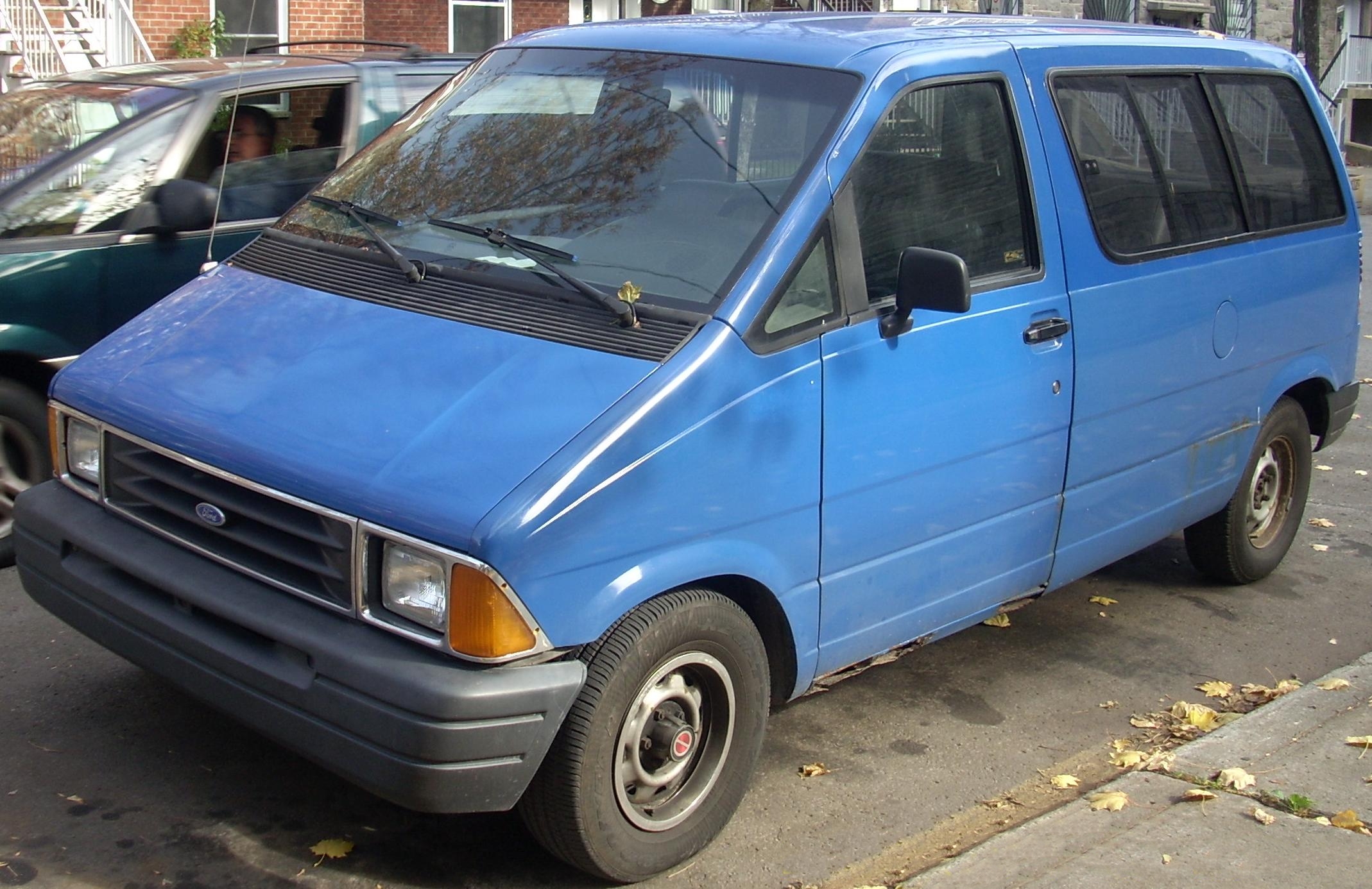
going to like it. Okay. He says, I was driving my Ford AeroStar down the road in Arlington, Texas
last June when all of a sudden I heard a muffled bang that was immediately followed by the motor
dying. So you got this. He's driving along Ford AeroStar. All these things are important. Pay
attention. You don't have to tell me that, man. I know that every word you speak driving along is a
pearl. Boom. The motor dies. I pulled off to the side of the road and popped the hood. This
this has a little hood because the engine is kind of buried and look to see what had happened.
Once I saw what had happened, I thought, gee, this is going to cost a lot to have fixed.
I closed the hood, got back in the van, started the engine and drove off. Wow. What happened?
He didn't say where the boom bang came from. But since he opened the hood, we can assume that it
came from the front of the vehicle. Well, I'll give you that. The muffled bang came from under the
hood. Okay. From the engine compartment. Engine compartment. And the motor stopped running.
Stopped running. And he said this is going to be expensive to fix, yet it started right up again.
This is puzzling. This is. If you think you know the answer, write that answer on the back of a
$20 bill or a dry porcini mushroom. Actually, the portabellos are better. Portabellos, you can put
a whole dissertation on that. This one for a stamp too. And send your answer to Puzzler Tower,
Car Talk Plaza, Box 3500, Harvard Square, Cambridge. Our fair city. Matt 02238. Or of course,
you can email your answer from the Car Talk section of cars.com. 1-888-CAR-TALK. That's the
number to call if you want to talk to us. That's 888-227-8255. Hello, you're on Car Talk. Hi,
this is Fred Bulls from Cambridge. Fred. Hi, Fred. Cambridge, Massachusetts. Yes, the fair city.
Man. What's up? Well, I got a 94, sob 900, a four cylinder. And it's got some idling problems.
And it usually happens in the morning when I turn the engine on. It's really cold outside.
The engine, you know, it starts and then, you know, it's idling. And then the idling kind of
oscillates kind of up and down. It goes like that. Very good. Very nicely done. Nicely done, Fred.
And then once it warms up, it smooths out. Yeah, exactly. Once it warms up, it smooths out.
And I've taken it to my mechanic. I've taken it to Chuck over in Alton. He's looked at it.
And he's plugged it into the computer. And he says it comes back fine. He says there's nothing
wrong with it. Right. Because there isn't. Yeah, by the time he gets it, there isn't. Yeah,
but it's kind of dangerous. You know, a couple of times I've been at an intersection
and, you know, the cars just started up and it's doing that. And I pop the clutch and I stall,
I stall the car, right? Sure. I know the intersection. How long does it take
for the, what do you call that? Surging to subside. Ten minutes. Yeah, it takes about,
takes about 10 or 15 minutes. You know, everything's fine after that.
How long does it take you to get from Cambridge to Alston?
15 minutes. 15 minutes. You're going to have to move to get this thing fixed.
So I'm going to have to leave it overnight, huh? Oh, sleeping the car.
Sleeping the car outside of Chuck's place so that when he gets there in the morning,
you can start it right up and then he'll find something wrong.
Yeah. In fact, we had a, what did we have the other day in the shop? We had a car in the
shop the other day. Did I tell you? No! We had a Honda Accord, which was doing exactly the same
thing. And where Pray Tell was the vacuum leak. And that's exactly what it was. And the moral of
the story is this, because all the cars now are computer controlled, we immediately think the
worst and we have abandoned all the traditional things that have gone wrong with cars since the
beginning of time. And we assume that all the answers are to be found in the scanner,
which is the machine you plug into the car's computer to tell you what's wrong.
And unfortunately, most scanners are not going to tell you if there's a vacuum leak any place.
And a vacuum leak can be there when the engine is cold and then disappear when it warms up.
And what would happen to your car, I think, if you have a small vacuum leak, it starts to surge
and the idle air control thing is trying to compensate or offset the vacuum leak.
So it may even exacerbate the surging. So what does that have to do with the temperature though?
Why does this only happen? Well, because once the engine warms up, and in fact,
and whatever is causing the leak goes away, because a piece of metal twists or distorts or
whatever, and makes the leak go away, the surging stops because then everything is okay.
And when Chuck or Chip or Jack or whatever his name is gets a hold of it and does his test,
he finds nothing wrong with it. So you need to leave it overnight with him and tell him you
suspect that there's a vacuum leak, maybe even an intake manifold leak. Yeah. I have to just
warn you that the bad part of it is the fact that it goes away probably means that something is
expanding as it gets warm and that something is probably metal. Well, it could be, but the other
part, I mean, there are a lot of possibilities, one of which is a faulty coolant temp sensor as well.
He should check that out. And if he's not sure whether or not it's bad, if he doesn't want to
go, just I'm going to put another one in there that may fix it. Okay. This is not rocket science,
Fred. Well, it's kind of embarrassing because I am a rocket scientist. I went to that institute
up the street and I'm beginning to think that maybe it isn't worth the paper it's printed on, but
really? Yeah. Well, I try and leave my car to professionals, you know. So who are you rocket
scienceing for? The Russians. No, no, I'm working. I'm working over here at MIT for a place called
Draper Labs. I always thought they made draperies there. Yeah, I thought so too.
Not draperies. No, they may. Okay, well, since it isn't rocket science, even Chuck from Alston is
going to be able to find this. Okay. And leave it overnight a few nights. So if he fixes something,
he'll know the next day whether or not he's really fixed it. Okay, I will do. See you, Fred.
All right, thank you guys. Good luck. Bye. Bye-bye. 1-888-CAR-TALK, that's 888-227-8255.
Hello, you're on CAR-TALK. Hey, guys, this is Smitty down in Murfreesboro. Hey! Murfreesboro,
Tennessee. That's correct. Is there another one? There is no other one. No, that's why I had to be
Tennessee. So what's cooking, Smitty? Well, I'm actually calling about my father's car, although
it could apply to anybody. He's got an 88 Buick Park Avenue with about 150,000 miles on it.
And somebody's told him that when he starts the car, if he'll put the key in the start position
and let it sit there until he hears a clicking noise, the fuel injection, that means the fuel
injection system has warmed up and then start the car. And what they told him was the fuel
injection system will last longer that way. Sounds good to me. It's a good story, but man,
does it have any validity? I love these little tricks that people develop, you know? I remember
when my father was in the oil business, he had a big oil truck. And on winter days,
he used to do the following. And maybe it worked. I don't really know. When he shut the engine off
at the night before, he knew it was going to be a very, very cold night. This car had a hand choke.
He would start it up and instead of shutting it off, he would pull out the choke until it
stalled for lack of air. Right. Then he would push the choke back in, assuring that it would start
the next morning. And it worked for 30 years. No. Why did he do that? Why did he do that?
Because some other old geezer told him that he should do that. It would make the fuel injection
last longer. Well, I don't see it. I can't imagine. I've been sitting here for a minute and a half
trying to conjure up some kind of explanation for this, and I can't think of anything. The
clicking. Don't forget the clicking sound. Yeah, I don't know what that is, and this
Buick, it clicks anyway. It does click. Yeah, 150,000 miles on it. It's going to click when the
engine's running, when the engine's not. You name it. The clicking sound. I mean, that might be
the directional signals for all we know. Has he been doing this for 150,000 miles? No, no. He
just started this recently. Somebody told him that it would make the fuel injection system
last longer. Well, he ought to do it because if you convince him to abandon this philosophy.
Yeah, as soon as the next thing that happens to the car, he's going to blame you. And us.
And us. Quite honestly, we can't take it anymore. I mean, he'll get a flat tire
a week later, and he'll be suing us. But you've never heard, this wouldn't apply to just any car.
It's just something weird. No, tell him it's peculiar to this car. Okay. Yeah. And I would
tell him to continue to do it, whatever it is, because even click and clack have to agree
that it works. There's something to it. Okay. Yeah. And I think either, when you tell him that,
he'll probably stop doing it immediately. Especially for the 88s, tell him. And tell him it
only works after you get 150,000 miles on the engine. Coming from a couple of Yankees, he'll
probably believe it. See ya, Smitty. We should make a list of all the little tricks that people use
like that. Like dad's business, he used to pull out the choke. I remember sitting there freezing
in the truck. Well, I think I know why they did that because you really wanted to rich in that
mixture up. You wanted to make sure you poured extra gasoline in there. So the next morning,
you could flood it and not go to work. Well, it's happened again. You vaporized
yet another hour listening to car talk. Our esteemed producer is Doug the Subway Fugitive,
not a slave to fashion bourbon, who recently got a haircut. He looks a lot better. Thank God.
Our associate producers are Ken, the diaper slayer Rogers, Frau Catherine Fenolosa,
and Louis the Barbarian Cronin. Our engineer is Dennis de Menesfoli. Our senior Web Blackie is
Doug the Old Gray Mayor, and our technical spiritual and menu advisor is John Bugsy,
free lunch lawler. Our public opinion pollster is Paul Murky of Murky Research,
assisted by statistician Marge Novera. Marge Novera, our customer care representative is
Haywood Jabuzov. Our director of new product repair is Warren T. Myfoot. Our student and
consultant is Norm DePlume. Our assistant director of strategic planning is Kent C. DeTries.
The head of our division of threat assessment is Ewan Watarmi. Our director of luxury car
horns is Tony Blair, and our new Russian chauffeur is Beakoff and Dropoff. Our chief
counselor from the law firm of Dewey Cheetahman Howe is Uluis Dewey, known to the snowboarders
in Harvard Square as U.E. Louis Dewey. Thanks so much for listening. We're clicking,
clack, the tap at brothers, and don't drive like my brother. Don't drive like my brother either.
And don't drive like my brother. We'll be back next week. Bye-bye.
Car Talk is a production of Dewey Cheetahman Howe and WBOR on Boston.
And even though Corey Flintoff wishes he was still bagging groceries in Duluth,
whenever he hears us say it, this is NPR, National Public Radio.
On Wait, Wait, Don't Tell Me, it's not so much we get to talk to celebrities. It's that we get
to talk to celebrities about other celebrities like we did with actor Nathan Lane. I remember
having to tell George C. Scott that I was leaving the show to do this musical. And he said to me,
you're leaving me to do a f***ing magic show? Listen to Wait, Wait in the NPR app or wherever
you get your podcasts. Akilah Sherrill's remembers the day in 1992 when the Bloods and Crips gangs
in his Watts neighborhood agreed to a ceasefire. We had a barbecue. It was like it became a family
reunion. I mean, we had a three decade war, you know, so the release was just extraordinary.
Listen to the Ted Radio Hour on the NPR app or wherever you get your podcasts.
About this episode
A humorous discussion unfolds as the Tappert Brothers tackle a listener's quirky car problem involving a 1985 Nissan pickup that mysteriously slows down in cold weather. The conversation dives into potential causes, from fuel filters to catalytic converters, with plenty of banter and laughter. Marge, the caller, shares her love for the show and her mechanical expertise, leading to a light-hearted exchange about fixing cars and the challenges of diagnosing issues. The episode blends car repair advice with entertaining anecdotes, making it a delightful listen for automotive enthusiasts.
Bernardo needs to get the crud out of his engine, but he can’t afford an expensive trip to his mechanic. Could a can of miracle goo from the auto parts store possibly be the answer? Enter, ‘The Sludgehammer’ on this episode of the Best of Car Talk.