An automatic transmission is the type of car gearbox that changes gears by itself. If it waits a few seconds and then makes a clunk when you put it in reverse, something inside the transmission may be slow or not engaging correctly.
The head gasket is a seal inside the engine that keeps oil and coolant separated. If it fails, the fluids can mix—like oil getting into coolant—which can cause overheating and other serious engine problems.
A recall means the car maker admits there’s a problem and offers a fix for affected cars. The caller is saying Saturn had a recall that relates to the issue they had.
If oil gets into the coolant, it usually means the engine’s internal seal has failed. That can make the cooling system work poorly and can lead to bigger engine trouble.
A brake flush is when a shop replaces your old brake fluid with new fluid. Brake fluid can get old and contaminated, and that can make the brake pedal feel soft or spongy.
In a healthy hydraulic brake setup, brake fluid should stay inside the brake lines and not just disappear. As brake pads wear down, the brake parts move a little, so the fluid level may drop a bit, but it shouldn’t drain completely.
Your brake system is what makes your car slow down when you press the pedal. In many cars, it uses brake fluid to push force to the brakes at the wheels.
Calipers are the parts at each wheel that squeeze the brake pads against the spinning brake disc. When the pads wear down, the caliper has to move a bit farther, which affects the brake fluid level.
Brake lining is the rough, friction material on the brake pads. When it gets worn down, the brakes can feel different and the system has to compensate.
Brake pads are the parts that squeeze against the brake rotor to slow the car down. As they wear out, the brake system needs to move more, and that can change the brake-fluid level.
Brake fluid is what carries the force from your brake pedal to the brakes at each wheel. If the pads are worn, the fluid level can drop because the system has to move more to make the brakes work.
Brake lines are the tubes that move brake fluid from the master cylinder to the brakes at each wheel. When the system pressure changes during pad replacement, fluid can travel through them and cause leaks if levels are off.
The master cylinder reservoir is where the brake fluid is stored. If you put in new brake pads and the fluid level is already high, the system can push extra fluid up and it may overflow.
This is a sensor inside the brake fluid container that watches the fluid level. If the level gets too low, it turns on the brake warning light so you know to get it checked.
The brake warning light means the car thinks there’s a problem with the brakes. Often it’s low brake fluid, which can happen from worn pads or a leak—either way, it should be checked.
Spark plug wires are the cables that deliver electricity to the spark plugs. If a wire is loose, it can fail to spark correctly—or in extreme cases, combustion pressure can push it off.
Spark plugs make the spark that lights the fuel in the engine. In this story, the idea is that if the spark plug connection isn’t right, it can lead to ignition problems and even affect the wire.
Cylinder combustion means the fuel burning inside one of the engine’s cylinders. They’re saying that if the combustion pressure isn’t strong enough, it may not cause the wire to pop off.
The valve cover is a cover on top of the engine that protects the parts under it. They’re talking about how the spark plug wire connection fits tightly in that area.
This is a 1984 Toyota Land Cruiser, a rugged older SUV. Here it’s being used to talk about a problem where gasoline seems to be leaking and the car’s fuel system smells strongly like gas.
An air breather hose is a small tube that helps a system vent and stay at the right pressure. If someone ties it off, it can change where fuel vapors go and may stop a leak—at least temporarily.
The gas tank is where the fuel is stored. If opening the tank causes fuel to rush out, it usually points to a venting or vapor-control problem—something is pressurizing the tank.
A carbon filter is a charcoal-based part that traps gasoline vapors. The mechanic likely rerouted the vapors so they get captured instead of escaping, which can reduce both the smell and the sudden fuel surge when opening the gas cap.
The EPA is a U.S. government agency that sets rules to reduce pollution. In car terms, it helped drive regulations that stop gasoline vapors from escaping into the air.
Unburned hydrocarbons are basically gasoline-related fumes that aren’t burned in the engine. Regulations exist to keep them from escaping into the air.
Gas station “recovery systems” capture fuel vapors during refueling instead of venting them to the atmosphere. They route those vapors into storage or a vapor-processing system so they don’t escape as unburned hydrocarbons.
This is the car’s system for stopping gasoline fumes from escaping into the air. It stores the fumes and then sends them back into the engine to be burned.
The charcoal canister is like a filter/storage container that holds gasoline fumes. If it clogs up, the car may not handle those fumes properly and you can smell gas.
The purge valve is the part that opens to let the stored gasoline fumes get sucked into the engine. If it stops working, the fumes can build up instead of being burned.
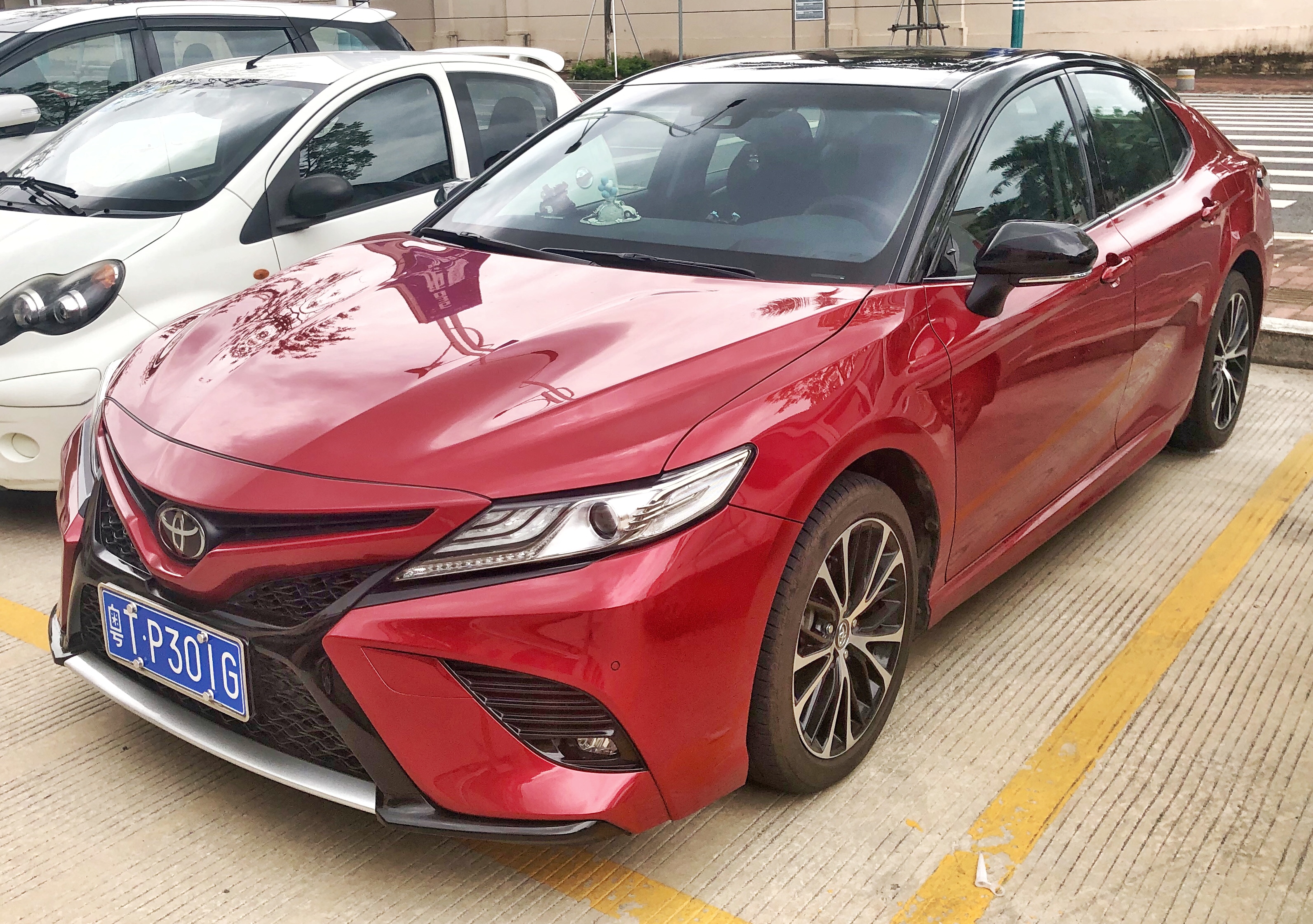
The Toyota Camry is a regular passenger car (a sedan) meant for commuting and family driving. It’s popular because it’s comfortable and easy to live with. In the podcast, it’s mentioned as a familiar Toyota name tied to the story.
LIVE
This is our glass. On This American Life, one that we like is a good mystery.
Sometimes about really big things, but most times, the little mysteries are the best.
Our lost and found is currently filled with pants. I don't know, I've never seen this happen.
Wait, is this true?
This is true.
Mysteries of every size, each week, This American Life, wherever you get your podcasts.
Music
Hello and welcome to Car Talk from National Public Radio with us, Click and Clack, the Tapper Brothers.
And we're broadcasting this week from the business school here at Car Talk Plaza.
Right, you can get an MBA right here.
This is from, evidently, a magazine ran a contest and asked people to submit quotes for real life Dilbert type managers.
We all know Dilbert.
Well, not everybody. Dilbert is a comic strip that's probably in about half the papers in the country.
That's all?
Well, so I'm extrapolating. It's in half the papers in Boston.
That's a good sample.
Not a thing.
Anyway, go ahead.
You qualify. You could be a Dilbert manager yourself.
Here are a few of the winning entries.
One day, my boss asked me to submit a status report to him concerning a project I was working on.
I asked him if tomorrow would be soon enough.
He said, if I wanted it tomorrow, I would have waited until tomorrow to ask you for it.
I worked for him once.
Quote from the boss.
What I need is a list of specific unknown problems that we will encounter.
In my favorite, and in fact, it was their favorite because it came in first, here's a note.
As of tomorrow, employees will be able to access the building using individual security cards.
Pictures will be taken next Wednesday and employees will receive their cards in two weeks.
It's like you're getting a two-week vacation.
Well, if you'd like to talk about something stupid your boss said, or something stupid about your car,
or just talk in general, our number is 888.
Or just talk stupid in general.
Or just talk to a couple of stupid guys.
Our number is 888-CAR-TALK, that's 888-227-8255.
Hello, you're on Car Talk.
Hi, this is Kathy from Ann Arbor, Michigan.
Ann Arbor, Michigan, so it must be Kathy with a K.
Hey, you are one smart guy.
Well, you notice I've never been wrong on the Kathy thing.
Oh, come on.
I have never been wrong on the Kathy thing because I know the rule.
Louie, you find any call.
Go through the tapes.
Louie has all the tapes.
Louie Cronin has all the tapes, and I guarantee you by this time next week,
we will have at least 10 examples where you say,
that Kathy, no, I'm sorry, that Kathy, no, I'm sorry.
You'll see.
I've never been wrong on the Kathy one.
Kathy with a K from Ann Arbor, what can we do for you?
I have a light plum that's very important, 95 Saturn.
Light plum?
It has about 86,000 miles on it now, and it has this thing,
that after I drive it for a little bit of time,
probably about 10 minutes at a high speed,
if I have to go into reverse, my car will do this very nice,
we'll wait for five seconds, 10 seconds, 15 seconds,
and then it will go, go clunk, and then I'll be in reverse.
Oh, it's an automatic transmission.
Oh, yeah.
It used to be.
And about two months ago, I had to have the head gasket replaced
because there was oil in it.
There was a crack in something, and Saturn did a recall.
Oh, oil was getting into your coolant.
Yeah, exactly.
And so I don't know if that has anything to do with it,
but it's a very delicate car.
Would you like it to have something to do with it?
Okay.
That's going to be harder for us,
because it doesn't have anything to do with it,
but we'll work on it.
If Saturn has to recall it and pay for it,
that would be good.
Yeah, no, I don't think we can arrange that.
No, it seems, how many miles are on it again?
86.
86k.
Well, if you're really lucky,
and it sounds like you're a nice person,
and deserving of some good fortune.
Because I'm a student with lots of loans, yeah.
You're done for it.
You are.
Well, if you're really lucky,
you're just low on transmission fluid.
Oh, I like that.
Have you ever checked it?
Never mind.
You don't have to answer if you have to.
I hesitate that long.
Let's see, what is the trend?
Where is the trend?
Well, I would take it into your repair shop,
and you must have one of those.
Okay.
Better still, go to a gas station.
Okay.
And ask that person at the gas station
to check the transmission fluid for you.
That person will pull out the dipstick,
check the fluid,
and if you're lucky, it's down a quarter or so.
Okay.
That would be just great.
And if that's the case,
filling it up will probably fix this problem.
I like that.
That doesn't mean that the problem is solved entirely,
because you're not supposed to lose fluid.
You don't burn up transmission fluid like you do engine oil.
If you're losing any, it means you have a leak.
Oh.
And so then you have,
once you've rectified the existing, you know,
the symptom.
The symptom.
There you go.
That's it.
Then you can go ahead and address the real issue,
which is where is it leaking from?
So that's something I should ask for for Christmas.
Right.
But if, in fact, the transmission fluid doesn't fix it,
then you're probably in for a rebuild.
That's not pretty.
Well, you might be eligible for a federal SLTR,
which is a student loan for transmission rebuild.
You should investigate that.
There's a website for that, yeah.
Yeah, there is a website.
See you, Cath.
All right, thanks.
Bye-bye.
Bye.
With a K.
Of course.
One brother's never wrong about that.
1-888-CAR-TALK.
That's 888-227-8255.
Hello, you're on Car Talk.
Hi, this is Cathy.
I'm from Phoenix.
From Phoenix.
And that's with a K, absolutely.
Are you sure about that?
Yes, I am.
So what does it end with?
An I.
Wrong, Ola.
On both counts?
What?
You tricked me on that one.
It's Cathy.
K-A-T-H-Y.
I.E.
That's it.
Finally, finally.
It's a basic Cathy from Phoenix.
I've never been wrong on the Cathy front here.
Never.
We'll see.
We'll have a special edition of Sam's and Trump's.
Anyway, Cathy from Phoenix, what's up?
All right, this is a problem.
I've got a 99 caravan that's still under warranty.
Good.
Which is the only reason I ever went to the dealership.
Because as soon as that 36,000-mile change, I'll be gone.
However, I went because I had my brake light coming on on the dash.
I brought it home.
I told my husband.
He opens up the hood.
Well, all the brake fluid is drained down.
I mean, it's drained down.
The whole reservoir part is not full anymore.
And of course, there's probably more underneath, but you can't see that.
So he fills it up.
The brake light goes off.
And he comments to me, you know, these brakes have always been spongy.
Now, this is news to me.
I've been driving all over town.
I hadn't noticed.
But guys have a better feel for this, I guess.
Yeah, well, we don't want to get into that either.
Yeah, well.
So I take it to the dealership and what a big surprise.
They can't find anything wrong with it.
The brakes are feeling fine.
There's no problem with the brake fluid.
But of course, being low.
But of course, they do have something that I can pay for.
It's not a pocket expense.
Which is a brake flush because they say my brake fluid is thick and dark.
Sounds like a scam to me.
All right.
Now, I'm so glad to hear that.
Because I said, wait a minute.
Wait a minute.
Those are the words.
Wait a minute.
Wait, just a minute.
Do you mean to tell me I've got a brand new car practically speaking here.
Isn't a brake system supposed to be a closed system?
If I'm losing significant enough fluid that it comes up as my whole reservoir empty, aren't
I in danger of having brake failure?
And this guy, my service representative tells me, oh no, no, no, no.
Not at all.
Because you've got 50% wear on your brakes.
So that means the calipers have to stretch out further to hit your brake wall.
And the fluid goes down to fill that up.
And that's why it's low.
He's right about that.
Well, the fact that it is a closed system, and it is, means, I mean, when you step on
the brake, what happens is the pressure is transmitted by the fluid to the calipers and
all that stuff.
And as the brakes wear out, as they are supposed to do, they wear out, what does that mean?
Something disappears.
Pieces of it disappear.
Yeah, but is my brake like four inches thick?
I don't think so.
No, no, no.
It doesn't take very much.
No, the brake lining is three-eighths of an inch thick.
Right.
Right.
And it doesn't take very much.
If you're down 50%, that means, don't forget, you've got two brake pads on the right front
wheel, you've got two brake pads on the left front wheel, you've got two on the back and
two on the back.
All of those being worn out by half of three-eighths, which is probably four-eighths, or one and
a half-eighths, means that all of that space had to be filled up with brake fluid.
And so it's very possible that the reservoir looked like it was almost empty.
That's a lot of brake fluid.
And then what would happen when you filled it up, what you did was you display, you filled
up the fluid that was now in the system.
If you now go ahead and put new pads in, you will push that fluid back up through the brake
lines and splash it all over the inside of your engine.
And the master cylinder reservoir will overflow.
Okay, so why was my brake fluid sluggish then?
Well, I think they were making that up.
They were brackish.
Well, because he knew that all you really needed to do was to fill up the reservoir.
But which I had already done.
Which you had already done.
So he couldn't charge you for that because what?
You did it.
Correct.
So he had to find something to charge you for.
But.
But what?
Okay, here's my second.
Getting rid of her is going to be tough.
See, the problem is that, I mean, a lot of dealerships will tell you, don't replace the
brake fluid when it looks low.
Because when we get around to replacing the brake pads, we're going to make a horrible
mess because it's going to overflow the reservoir.
Well, plus you defeat the inherent warning system built into the reservoir float mechanism,
which is designed to tell you, as it reads the drop in brake fluid level, that in fact
your brakes are worn out.
So when you saw the light come on, if you weren't so suspicious of the dealership's motives,
you would have just taken the thing in and asked them to check your brakes.
At which point they would have said, oh, Kathy, it's time for new brakes.
And you would have said, really, up to 34,000 miles?
And they would have said, well, they do wear out pretty quickly on these new vehicles.
And you would have said, oh, OK, if it's not more than 800, go ahead and do it.
And that's what a good customer would have done.
You know, no one suggested that.
Not one single brake.
No, they were afraid of you.
As are we.
But you should obviously keep an eye on the fluid level.
And if it does seem to drop at a rate that is ever increasing, then you do have a leak.
But I would be surprised if you had a leak.
And you also have wear indicators on the brake pads.
And they will sort of tell you when they're ready to get replaced.
OK. Good luck, Kathy.
It's been a pleasure talking to you.
And we're very happy that you live in Phoenix and you're not our customer.
That could change anything I wear.
That could change anything.
Hey, thanks for calling.
A pleasure.
Take care. Bye bye.
All right. Here's your chance, Tommy, to impress everybody.
Do you remember last week's puzzler?
Yes. I remember that it was unnecessarily long.
It was purposely misleading and it culminated in a sharp left turn off a cliff.
Is that it?
No, those are the directions you gave to your mother-in-law for last week.
Actually, you're right, man.
On June 11th, the globe's biggest sporting event comes to North America, the FIFA World Cup.
The Super Bowl, you might say, averages something over 100 million live viewers.
But the World Cup final, I think like five times that much.
The favorites, the underdogs and the Americanization of the world's game.
Listen now to the Sunday story from the Up First podcast on the NPR app.
Hi, we're back.
You're listening to Car Talk with us, Click and Clack, the Tapper Brothers.
And we're here to talk about cars, car repair and the answer to last week's puzzler.
This is going to be great.
As I mentioned last week, this came from my Arthur Conan Doyle series.
Yeah, right.
And it takes place in, of course, the English countryside.
It seems there was a terrible accident in a suburb north of London.
And Inspector Lestrade was sent to investigate.
Everyone knows.
Was it Red Hills Surrey by any chance?
Yes, in fact, it was.
I thought so.
Seems that Sir Richard Ashcroft was dead and everyone agreed it was an accident.
Though some suspected it was a suicide.
Sir Richard had had some problems with some non-existent copper mines in Chile.
And then that thing with the viceroy's grandmother.
I thought it was his granddaughter, but it was his grandmother.
Anyway, well, Sir Richard Ashcroft.
Anyway, he'd been found on a steep rocky slope.
His head dashed against one of the boulders and his mangled bicycle at his side.
The facts seem to speak for themselves.
He'd gone off the road and crashed.
This was a very long puzzler, as I remember.
This went on and on.
I've noticed you dozed off a few times.
I'm dozing off now.
That's what reminded me.
Finally, an eyewitness emerged.
Nigel, Sir Richard's trusty gardener of many years.
He was so shocked by Sir Richard's death he'd been able to speak for several days.
But haltingly, Nigel told his story.
Yes.
I was walking back from town up that long hill leading to Sir Richard's.
When I saw him riding toward me, sitting straight up in his seat,
the way he always rode, and he was riding at a high rate of speed,
when suddenly he jerked the handlebars to the left and off the road he flew to his death.
Lestrade asked, well, why didn't you come forward earlier?
Well, Nigel said, you know, I didn't come forward
because Sir Richard told me he was taking his own life
and he didn't want to shame the family.
But I decided I couldn't keep his secret any longer.
I had to let Sir Richard's soul rest in peace.
So now I've decided to come forward.
I saw Sir Richard take his own life.
By flying down this road, jerking his handlebars to the left,
going off the road to the left, and crashing into that rock.
Later that day, Lestrade is discussing the case with his pal, Sherlock Holmes,
over cognac and a few Arturo Fuentes cigars.
And Holmes says, bring the gardener in for questioning.
He's the perpetrator.
How did he know?
Okay.
Okay, go ahead.
Well, as is often the case, some puzzlers have, the question is great.
You'll decide.
I have to say that you have taken a little unknown fact.
A little unknown fact and you've turned it into a little novelette.
And when people hear what the little known fact is,
you are going to get so much hate mail and I just want to distance myself.
From this puzzler now.
Well, first of all, I have to roll up my sleeves and spit out my gum for this.
Yeah, okay, go ahead.
When Nigel saw Sir Richard riding down the road at a high rate of speed,
sitting straight up in his bicycle the way he always rode,
he said that he saw Sir Richard jerk the handlebars to the left
and in such make a left hand turn and crash.
Yep.
Well, everyone who rides a bicycle knows or almost everyone knows
that that's not the way you turn a bicycle.
In fact, what makes a bicycle stable is the gyroscopic action of the wheels.
You ready with me?
Right.
And the fact the way you make lefts and rights is by leaning the bicycle
and changing the center of gravity.
Oh, that was sitting upright.
Sitting upright.
Oh, I see, always did.
So he didn't lean into the turn.
Yeah.
But you say, well, so what?
So what?
But he jerked those handlebars to the left and that would do it.
Yes.
And here's the little known fact that Lestrade didn't know.
No, because he doesn't ride his bike like Sherlock does.
And nor did Nigel.
Nor did Nigel.
The perpetrator.
If you're riding at a high rate of speed and you don't lean,
but in fact, you decide to make a turn like that by turning your wheel to the left,
the bike goes to the right.
Now my brother being the incredulous type decided to try this whilst on vacation
on Cape Cod this summer and did spend three rather happy days at Cape Cod hospital
covering from its injuries.
It's true.
I'm not sure I know all the scientific principles involved,
but the gyroscope wants to keep the bike going straight.
And so it goes the other way.
And so it corrects.
If you try to make a left hand turn by turning the wheel,
it corrects and actually makes the bike turn to the right.
So Nigel couldn't have seen.
Sir Richard, turn the handlebars to the left and exit the road.
Yeah.
Well, I mean, I couldn't get it to happen.
I try.
If you were going fast enough, what I told you with the car though,
you got up to speed.
Anyway, who's our winner?
Well, it's Cheryl Cleveland from Lowell Mass or maybe Cheryl Lowell from Cleveland Mass.
I don't know.
And for having her answer selected at random from among those thousands of correct answers
that we got, Cheryl is going to win a $25 gift certificate to the store at the
cartalksectionofcars.com.
And with that $25 gift certificate, she can buy $1338 of an official car talk fall jacket.
This is how we make the money.
We give people $25.
She's going to get paid for $1338.
She's going to cough up the rest.
Someone's going to pay for the other $2538.
Notice how quick my math is.
Yeah, that's good.
Did you see that?
That just happened.
Yeah.
I didn't even think.
Unencumbered by the thought process.
Your forte.
This is great.
By the way, if you didn't win the puzzler and you still want some of our fashion challenged
items, you can find them at the store at the cartalksectionofcars.com.
We'll have a new puzzler.
I won't say anything more.
Coming up in the third half of today's show.
So stay tuned for that.
And as always, you can feel free to call us and ask us a question about your car or anything else.
Hey, you know what time it is?
Time to check the coolant level in the cappuccino machine.
No, no, no, no, no.
It's time to play Stump the Chumps.
All right.
This is the part of the show.
I have to read this because I can never remember it.
Where we hunt down a previous caller and check on the advice that we gave him or her
to see if we have done good or we have done not so good.
Or if we're done full.
So who's our lucky player this week?
Well, according to the notes, it's Dale the Oki from Muskogee.
Remember Dale?
No, I don't either.
I remember the Oki from Muskogee.
Dale had a 91 Nissan Centro, which had a teeny-weeny problem with its spark plug wires.
It says here.
Let's see what he said.
That's the car going uphill.
And it, like, blew five and, you know, it almost came all the way out of the hole.
It could be that the spark plugs are merely loose.
What'll happen is under ordinary circumstances, when the cylinder combustion is small,
that there's not enough force behind that explosion to sneak past the spark plug.
My brother has that look on his face.
The spark plug wire doesn't know anything about the explosion.
Not sure.
It gets this pressure now created in that long cylinder.
And when it's pushed down, okay, listen to me here.
Yeah, yeah, yeah.
Push down the very top of it makes a pretty tight seal with the valve cover.
Yes.
Okay, so when you pry to pass and you get the biggest possible explosion,
I'll understand the way it's a very small amount.
Sneaks past the threads, gets into that little cylinder, and will blow the wire off.
I have never heard such crap.
I have a backup theory then.
Ha, ha, ha.
Now, when you're wrong, as my brother often is, you always need a backup theory.
Well, what did you think it was?
I didn't believe Dale at all.
I suggested that the wires were never connected in the first place.
Well, let's find out.
Dale, are you there?
Yes, I'm here.
Before we find out whether it was the spark plugs that were loose or not,
we need to verify that the answer you're about to give here on Stump the Chumps
has not been influenced by our staff, my brother, the staff of National Public Radio,
or Willie the manicurist who put the spark plugs in for you.
Okay, Dale, were the plugs loose or not?
Tom, your check bounced, okay?
Uh-oh.
Ray, you were right, Tom.
What, the spark plugs were loose?
Yes, the spark plug was loose, my mechanic tightened it down about a half a turn, he said,
and the problem has ceased and desist.
Oh, man.
Yes.
And it's so-
So you obviously got my check, huh, Dale?
Yes, I got it.
I appreciate the five bucks.
Boy, and I doubted my brother.
I apologize from the bottom of my heart to think that my brother could have been
making up a story like that.
I never do that.
It was evil of me to even consider that he must have been doing that.
But I thought I could tell from the look in his eye, you know, he gets that certain look
when he's making up something that is complete horse feathers, as we say in the trade here.
So I apologize to you, Dale, to my brother, and to all the ships at sea.
You're the gods of radio, okay?
Dale, thanks for playing Stump the Chumps and-
And you'll get your check.
You're welcome back any time.
Great, thank you very much.
Bye.
Okay, Tommy, you know what it's time for now.
Is this when the president of NPR comes running into the control room,
bangs his head on the glass, and demands our resignation?
No, that was earlier in the show.
Oh, he's been here already.
This is where we take a short break and get ready for the new puzzler.
Ah, yes, we'll be back in just a moment.
Richard Reeves is unimpressed by online influencers who pedal ideas about hyper-masculinity.
You're talking about boys and men.
Where's your policy agenda?
You're good on podcasts, but we've actually done a bunch of stuff for boys and men.
Sorry, what have you done?
Ideas about the next era of manhood.
That's on the Ted Radio Hour podcast.
Listen on the NPR app or wherever you get your podcasts.
Ha, we're back.
You're listening to Car Talk with us, Click and Clack the Tappet Brothers,
and we're here to discuss cars, car repair, and the new-
I hate to have sounded descriptive to this puzzle.
Is it automotive?
No.
Is it quasi-automotive?
Only if you drove to the guy's house.
Is it non-automotive?
There you go.
Is it algebraic?
Could be.
Is it folkloric?
Maybe.
Is it historic?
Oh, no.
Is it complete?
Horse feathers?
Probably.
Okay, go ahead.
Here it is.
We don't want to name it.
The thing you can name is not the truth.
Everyone knows that.
Exactly.
The Dow says that.
Yes, the Dow is the Nasdaq.
A fellow finds himself at a party of all places at Bill Gates's house.
So he's standing there, and who should be standing next to him but Bill Gates?
The man himself.
And of course, the fellow introduces himself, and the fellow says,
Jesus, pretty big living room you have.
And it's jam-packed with people, and Gates says,
well, how many people do you think are here?
The fellow says, jeez, I don't know.
He said, looking around, I have to guess, maybe about 1,100.
Gates says, that's very good.
He said, there are about 1,100 people.
He said, you're very good with numbers.
The fellow says, oh, thank you.
Thank you so much.
And if this gets too long, let me know.
No, no, no.
I'm fascinated so far.
You'll just doze off.
When you get through with this,
I got to tell you about a dream my wife had.
All right.
Oh, yes.
Anyway, I said, I lost my train of thought.
You're very good with numbers.
Oh, you're very good with numbers.
And he said, you went to Games of Chance or anything like that?
Oh, no, no.
The fellow says, he said, chance the thing I ever get involved
in is tossing a coin.
Gates says, that's interesting.
He said, do you think you could toss a coin 10 times in a row
and call it correctly every time?
The fellow says, I don't think so.
He said, well, I want to make a little bet.
He said, because I can do it.
He said, I can call the coin 10 times in a row.
But after all, I'm Bill Gates and you're not.
And the fellow, of course, declines.
No, no, I don't think I want to bet.
He said, I don't think I can call it 10 times in a row.
I don't think you can either, but I don't want to bet.
And Gates says, then get out of my party.
Gates says, you think there's anyone in this room
that could call it 10 times in a row correctly?
The fellow says, I suppose there's a chance, he said,
but it's got to be a pretty small chance.
And Gates says, I'll tell you what.
I'll pick anyone at random.
He, is it a?
Is this your puzzle or my puzzle?
He said, I think there is someone who can call it correctly.
He said, his calling correctly consists of,
if I toss the coin, okay, I can call it.
And if I'm right, that's a win for me.
Or if you call, if I toss the coin and you call it,
and it's incorrect, that's a win for me.
Right? So imagine I, I toss the coin.
And I say heads.
And I say, I, as the coin tosser, I say heads.
It comes up heads, I win.
I toss the coin, you call it, you say heads.
If it's heads, I lose.
Yeah.
If it's tails, I win, even though I didn't call it.
I'm with you.
Okay. So that's the rule of the game.
So Gates says, you think there's someone in the room
that can do that and he says, no.
So I'll tell you what, I'll make you bet.
I'll bet you $10 million to your 1000.
Oh.
That it can happen in this room.
That there's, there's one person who can have 10 in a row.
Yeah.
The guy says, you're on.
Of course.
You know, if Bill Gates had a nickel
for every time windows crashed, he does.
Should you, should he have taken the bet?
If you're thinking of the answer, write it on a postcard.
I like it.
Or the deed for a centrally located two bedroom floor through
with eating kitchen, granite countertops,
central air and off street parking, downtown Boston,
and send it to puzzler tower, car talk plaza, box 3500,
Harvard square, Cambridge, our first city,
map 02238.
Or of course you can email your answer
from the car talk section of cars.com.
If you'd like to call us, the number is 1-888-CARTALK.
That's 888-2278-255.
Hello, you're on car talk.
Hi, this is Marianne from Denver.
I'm Marianne.
One word, two words or what?
Two words, one person.
Two words.
Ah, yes.
And is the and with an e at the end?
Nope.
That's just how I wrote it.
All right.
So what's up?
Well, here's what's up.
I've got a 1984 Toyota Land Cruiser.
And after I drive it for a little bit, I smell like gas.
You smell like gas.
I smell like gas.
And it's very annoying.
Oh, the petrol is not my favorite odor, if you know what I mean.
It doesn't have to be as long as it's your boyfriend's favorite odor.
Well, that doesn't work either.
So what happened is that I had gas leaking over the front passenger side tire.
And so I took it into my mechanic.
He tied off the air breather hose.
After he did that, the gas stopped leaking.
And then gas, when I opened up the gas tank, gas would gush out at me.
So I took it back to the mechanic who did something to pull the gas
through the carbon filter, he said.
And now the gas doesn't rush out of the gas tank when I open it up.
Right.
But you still have the smell.
But I smell like gas.
Well, what he's done is illegal, among other things.
Yeah, the authorities will be at his door within minutes.
Back in the old, old days, before 1984, certainly, gas tanks used to be vented to the
atmosphere by means of a little pinhole in the gas cap.
So that as the gasoline and the vapors in the tank expanded on a warm day,
it would just allow the pressure to escape via this little hole.
Into the atmosphere.
Into the atmosphere.
Thus polluting all the world.
Right.
And the hole was not so big that you had to worry about gasoline leaking out of it,
liquid gasoline, unless the thing were tipped over on its side.
But back around the end of the 60s, the Environmental Protection Agency or
whomever decided it was bad to have these unburned hydrocarbons escaping into the air.
That's why gas stations now have these recovery systems.
You notice when you go to a gas station, you don't smell gas anymore.
Unless, of course, you're in your 84 Land Cruiser.
Or you spill it on your shoes.
Because the fumes are trapped and removed before they can escape to the air.
And the same thing happens in your car.
Your car has an evaporative emission system, which consists of a charcoal canister
and a purge valve and hoses and all these things.
And what's happened is your canister probably got plugged up.
The purge valve probably stopped working.
I mean, after all, it is 1,000 years old.
And this guy tried to short circuit all this stuff.
But in doing so, he's created a monster.
Okay, so basically, I need the air breather hose reconnected.
And you need the canister, valve.
He may have ripped out, I don't know, the piping.
There were tubes that go from the canister to the tank that have done all that stuff.
So if he's a good guy and he wants to do it and doesn't want to spend the next 12 years
in a federal prison, he'll take care of this for you.
So you should tell him that what he did was not only illegal,
but it was just the wrong thing to do.
Yeah, but if he does choose to do the federal prison thing,
ask him to say hello to Vinny.
Uncle Vinny, that's his.
Okay, all right.
Good luck, Marianne.
Thanks.
Bye-bye.
1-888-CAR-TALK, that's 888-227-8255.
Hello, you're on Car Talk.
Hey, Car Talk, Brian from Boston over here.
Hey, this is our second call from Boston in as many days.
I mean, really, Boston?
Boston Boston?
Boston Boston made across the river.
All right, so what are we going to do for you today?
Well, I have a Toyota 1992 at the Camry.
My problem is my wife took the kids to the park,
and when the day was over, they got back into the car.
In my eight-year road was fidgeting like there's no tomorrow in the back seat.
When my wife turned around, he had about a 15-inch garter snake.
So, of course, she gave the hoot and the holler in the scream
and went outside the car and said, get that thing out of here.
He brought it in with him?
In the car in the back seat.
He was pumped up.
He wanted to bring it home, you know?
He was showing a normal kid's curiosity.
Indeed, indeed.
So anyway, and your wife should be ashamed of herself for screaming like that.
So the snake is still in the car, huh?
The snake is still in the car.
Oh, it is.
That's my problem.
I had a feeling.
So I'm driving down the Southeast Expressway, which you're familiar with.
Yes.
I look down on the passenger side floor and what goes by is a snake.
Oh, really?
It goes up underneath the dashboard.
Yeah, they love it underneath there.
I don't know why, because it's a place to hide.
And I see it about every other day.
So I'm getting a little bit worried now,
because it's been about the fourth or fifth day,
and now I'm feeling a little sorry,
because I don't know if it's eating anything,
except the crumbs I drop when I drive, you know?
You need to call.
You need to go to www.rentamongus.com.
Geez.
I mean, well, first of all,
I don't know what these snakes do in the winter,
but he's unlikely to be able to survive in the winter in your car.
So if you just could wait them out.
No, then you're going to find a dead snake wrapped around your glaring harness?
That would be the inhumane thing to do.
I think so.
I think you have to return the snake to its natural habitat,
and you have to lure them out.
Well, look, you're not very far from the Franklin Park Zoo.
That's right.
I would take a little ride over to the zoo.
Benny yet called Dougie's wife.
She's a veterinarian,
and she will know a way to get the snake out of there,
because she knows the basic habits of the snakes.
And if you haven't lived with Doug all these years.
And I mean, at least, I mean, the answer is we don't know.
And whatever you do, Brian, do not bring this car to our shop.
Whatever you do.
Well, the other problem I have is that my wife will not get in the car.
I don't blame her.
I don't think I would either.
I mean, even though you know this is a harmless snake,
because it would have killed you by now.
Well, it's going to kill you by scaring the living daylights out of you
when you're on the Southeast Expressway.
That's what happens.
Because it's not going to appear on the passenger side floor.
It's going to appear on your shoulder.
Oh, no, worse than that.
Up your pant leg.
Oh, can you imagine that?
Oh, God.
Yeah.
My best advice is Franklin Park Zoo.
Ask for the reptile guy, Mr. Snake.
And he or she might know how to lure a snake.
I don't know how to lure a snake.
I will do that.
Either that or you go to the Ray Burr Music and you buy yourself a clarinet.
And you can lure him out.
That's it.
Yeah.
See you, Brian.
Good luck.
Well, thanks a lot.
See you later.
Oh, he helped him a lot.
While you've wasted an otherwise perfectly good hour listening to car talk,
our esteemed producer has dug the subway fusion of not a slave to fashion,
punk and lips, Bungo Boy.
Bungo Boy, Burma.
Bungo Boy, there's a certain ring to that.
There is Bungo Boy, Burma.
And I love it.
This man took eight semesters of African drumming at Wesleyan University.
Yeah.
One semester for every year that he was there.
Our associate producers are Louis Cronin the Barbarian
and David, don't get your hopes up green.
He still hasn't sold his hopes.
But the price is dropping every week.
So there's hope.
What a deal.
Our engineer is Tad Massaman Curry.
Our senior Web Black, he has dug the old gray mare,
AKA Sheep Boy, and our technical spiritual and menu advisor,
who's supposed to be here today because he's just back from his quite respectable
showing at the Upper Sandusky Pierogi Fest.
Yes.
Man, he did great there.
I heard it was 13 in a minute.
That, of course, is John Bugsy-Lawler, our public opinion pollster.
Is Paul Murky of Murky Research, assisted by statistician Margin Overa.
Our customer care representative is Haywood Jabuzov.
Our director of new product repair is Warren T. Myfoot.
Our shop foreman is Luke Busy.
And our new truck reviewer is Zbignu Rigg.
Our director of Firestone Tire Recalls is Ivana Michelin.
Our divorce attorney is Carmine Not Yours.
Our bungee jumping instructor is Hugo First.
Our prayer coach is Denise Hurrett.
The car talk travel agent is lowest fare available.
Our Russian chauffeur is Picov and drop off the banker
at Car Talk poker games as Nikolai put in.
And our seat cushion tester is Mike Easter.
Our chief counsel as always from the law firm will do each of them.
How is your Louis Dewey?
Known to the bankrupt.comunists.
Sharing the public washrooms in the Harvard Square as Yubi Louis Dewey.
Thanks so much for listening.
We're clicking clack to tap the brothers.
And remember, don't drive like my brother.
And one other thing, don't drive like my brother.
Oh yeah, we'll be back next week.
Bye bye.
Car Talk is a production of Dewey Cheetah Menhow and WBUR on Boston.
And even though the New York Mets think at least we're not those losers,
we say this is NPR, National Public Radio.
This week on Sources and Methods,
President Trump says he told Benjamin Netanyahu you're effing crazy.
Is the president running out of patience with Israel?
Man, I do think Trump and the White House need Netanyahu.
They need Israel to have a lasting deal with Iran.
We unpack the week's biggest national security news on sources and methods.
Listen on the NPR app or wherever you get your podcasts.
About this episode
A caller’s 1995 Saturn has a reverse delay and clunk after driving, and the hosts connect it to oil/coolant mixing and a Saturn recall. They then pivot to used-car due diligence: check transmission fluid with the dipstick, remember you don’t “burn up” transmission fluid, and if topping it off doesn’t help, you may be looking at a rebuild. The show also tackles brake-fluid low warnings—how worn pads and the hydraulic system can lower the level without a leak—plus a few offbeat listener stories.
Brian’s kid is a typical, curious 8-year-old who brought his new buddy, a snake that he had just caught, into their car where it promptly escaped. The little guy pokes his head out from under the dash from time-to-time and Brian wonders if they should start feeding it or sell the car. It’s another episode of Click and Clack’s Wild Kingdom on this episode of the Best of Car Talk.
See pcm.adswizz.com for information about our collection and use of personal data for sponsorship and to manage your podcast sponsorship preferences.