Hi, I'm Gary, and this is Evie Musings, a podcast about renewables, electric vehicles,
and things that are interesting to electric vehicle owners.
And on the show today, we'll be looking at why your Evie won't do the range.
The advert's save, won't.
This season of the podcast is sponsored by Zatmap, the go-to app for EV drivers helping you find
and pay for public charging with confidence. Our main topic of discussion today is range.
A recent BBC Morning Live segment highlighted a Mustang Mach-E odour who was extremely unhappy
with his car because he wouldn't do the range he was told it would do when he bought it.
The official range was 610 km or 320 miles, and he was getting around 260 miles maximum,
fewer than that in winter. Now, he purchased the car so that he could do the trip to see
grandkids in Gretna, 95 miles away, giving a round trip of 190 miles in total. But in midwinter,
he arrived at Gretna with around 20 miles left. So, what went wrong? Was he sold a tough car?
Why was he getting such a low range in a car that he was told would do 320 miles?
Well, this is a common issue, and it's when I hear being discussed in forums and social
media posts on a regular basis, it highlights a fundamental issue with understanding range in
electric cars. Today, I want to talk about what the issues are, why the range will rarely be what
the advertising tells you, and how to work out what your actual range should be. But first,
a bit of history. Before EVs, the standard associated with efficiency for petrol or diesel
cars was fuel consumption. TV adverts, newspaper adverts, commercial advertising material
used to always quote a miles per gallon figure, or if you're listening in Europe,
a litre per 100km figure. This was meant to let the potential buyers know what the relative efficiency
was of the vehicle. You'll notice that it didn't give any indication of how the figure varied
across the year. You'll also notice that it didn't give any indication of what the range was
on the car. In fact, I can pretty much guarantee that the vast majority of ICE car
drivers have absolutely no idea how big their fuel tank is. Even if they did,
it would probably be a figure in litres, not gallons, which they picked up from seeing how much
they put in at the lash refill. So the efficiency is in miles per gallon and the fuel tank is in litres.
Yay! Philometric system in the UK. Consequently, nobody knew how far their car would go on a
tank full of fuel. To find out, you had to get the car, fill it with fuel, drive it and then
you refilled it and you drove it again and then you refilled it etc. Each time you refilled
it, the range you had would be a bit different. Perhaps you'd done a lot of round town driving
this time. Perhaps you'd done a lot of motorway driving. Either way, you weren't getting anywhere
near what the official figures were showing and your range was all over the place. Regardless
of this, how far you could travel was not a problem. In fact, and I've told you before on
this programme, back in the 1980s, my father's Jaguar had, uh, HJ6 had two 10 gallon fuel
tanks and it averaged 12 miles per gallon so it could travel 240 miles between refuelling stops
maximum. I saw a recent post on LinkedIn that showed a 1973 RS3100 Capri which had a 255
mile range on a 13 gallon tank. Now these figures are lower than a lot of EVs currently
available to buy, including the Ford marquee I talked about at the top of the show.
So we're now at the situation where electric cars are becoming more and more mainstream,
approximately one in four cars sold in the UK this year were electric. And now it seems that
range figures are both important to know and crucial to be accurate. But that's not how it works.
All the range figure gives you is an approximation to be used as a comparison figure, just like
the fossil fuel efficiency figures. The data that always get quoted are the WLTP figures.
This is the worldwide harmonised light vehicle test procedure. It's a simplified way of comparing
different sorts of vehicles over the same sets of conditions. The test itself is designed to
simulate an average car journey and it takes place on a dynamometer or commonly known as a
rolling road. The test journey includes phases for acceleration, braking when the vehicle is
stationary and other items to be taken into account are rolling resistance, air resistance,
different engine and gearbox combinations and optional equipment. Generally vehicle testers
will examine the lightest and heaviest variant of any given model then apply a mathematical
formula to determine the consumption figures for the rest of the range. But the key to
remember on this is that testing takes place over a relatively small driving distance and at a standard
temperature. Tests are carried out at speeds from 29 miles an hour up to 81 miles an hour,
but only over a rolling distance of 14 miles in total on a test that takes 30 minutes to
carry out. Now what this means is that very little, if any, relationship to real world
figures exists and the reason for this is because it's not meant to be used for real world values,
it's meant to be used for comparison purposes only and we'll come back to this a little later.
The key thing to remember here is that ice cars are the same. You go a lower distance on a fuel
tank in winter. This is especially true if you have a diesel vehicle that's generally doing
shorter journeys such as or I don't know the school run. The diesel engine takes a
while to get warm and it's less efficient while it's happening and if you're doing short trips
regularly you'll be a using more fuel and b kicking out more particulates and toxins as the
engine warms up to peak efficiency by then a lot of the shorter journeys like the school run will
have finished. You also don't get the Malper gallon rating you were promised on the car for
exactly the same reason you don't get the WLTP figure because the tests don't reflect
real world driving. As with fuel efficiency in ice cars your range depends to a very
significant degree on your driving style. If you have the proverbial heavy right foot it's going
to be very easy to both increase your fuel consumption in an ice car and lower your range
in an electric vehicle. There is a motoring journalist who can be seen lurking around
the LinkedIn comments of four-time Guinness World Record holder Kevin Booker. He has one simple
refrain that he repeats pretty much ad nauseam. Your EV range drops dramatically when you start to do
motorway speeds. The implication of course is that EVs are no good for motorways but what he always
tends to omit from this little refrain is the words and ice cars do too as in EVs and
ice car range drops dramatically when you do motorway speeds. The amount of energy needed to
push a car forward is proportional to the square of the speed at which you're going
thus energy is directly related to fuel consumption. Higher speed equals more energy equals more fuel
consumption equals shorter range. This means that for example the diesel car traveling at 55 miles
an hour might have a fuel efficiency of 55 miles per gallon but if you increase that speed to
75 miles per hour that efficiency will drop to around 37 miles per gallon. Likewise for a car
such as the Tesla Model 3 your range at 55 miles per hour might be 364 miles but if you do the same
journey at 80 miles an hour your range will be around 230 miles 238 miles even. Now it's just
physics so yes while traveling at a slightly higher speed you can expect on certain parts of
the German Autobahn your range will drop quickly in an EV. It will also drop in any car regardless
of fuel time. If I go back to our Mark E driver who was the subject of the BBC article it's
worth noting that in the report he was seen traveling in lane three of the motorway in other
words he was traveling the lane that encourages the kind of speed that would decrease his efficiency.
It's worth remembering that at speeds such as this big increases in speed from say 60 miles an
hour to 70 miles an hour don't create huge differences in journey times. There's a famous
graphic that Rory Sutherland at ad exec from Ogilvy shows from time to time which indicates
that traveling at 60 miles an hour will let you cover 10 miles in 10 minutes but if you travel at 70
miles an hour you'll cover the same 10 miles in only 90 seconds fewer. Is that extra 90 seconds
worth destroying your fuel efficiency for? Now while we're talking about Kevin Booker as we were
he holds a number of world records for distance and efficiency driving. The one that I always
found the most interesting is that he traveled from Land's End to John O'Groats a distance of
over 570 miles in a Ford marquee electric vehicle the one around which this whole discussion evolved
and he did all of this with one single charge stop. That's right the full length of the UK
with one stop to charge and that's pretty much twice the WLTP range specified on the vehicle.
So how did he do it? Well you can listen to the whole episode in the archive
for more details but basically it's a combination of careful driving style,
correct setup of the car software with things like eco mode and regenerative
braking setup correctly as well as using the tyres that are most suited to the job. Kevin likes to
go for the smaller tyres such as the 19 inch rims rather than the 21 or the 20 or 21 inch rims that
come with many cars. It seems like a small difference but it all plays into rolling resistance
and that plays into efficiency which plays into range. So how do you know what your real range
is going to be if you're looking to buy a new or second hand EV? The easiest way
is to consult the EV Database at EV Database Dusk Drog. It has realistic ranges for all
electric vehicles split into summer and winter ranges for both city combined and highway
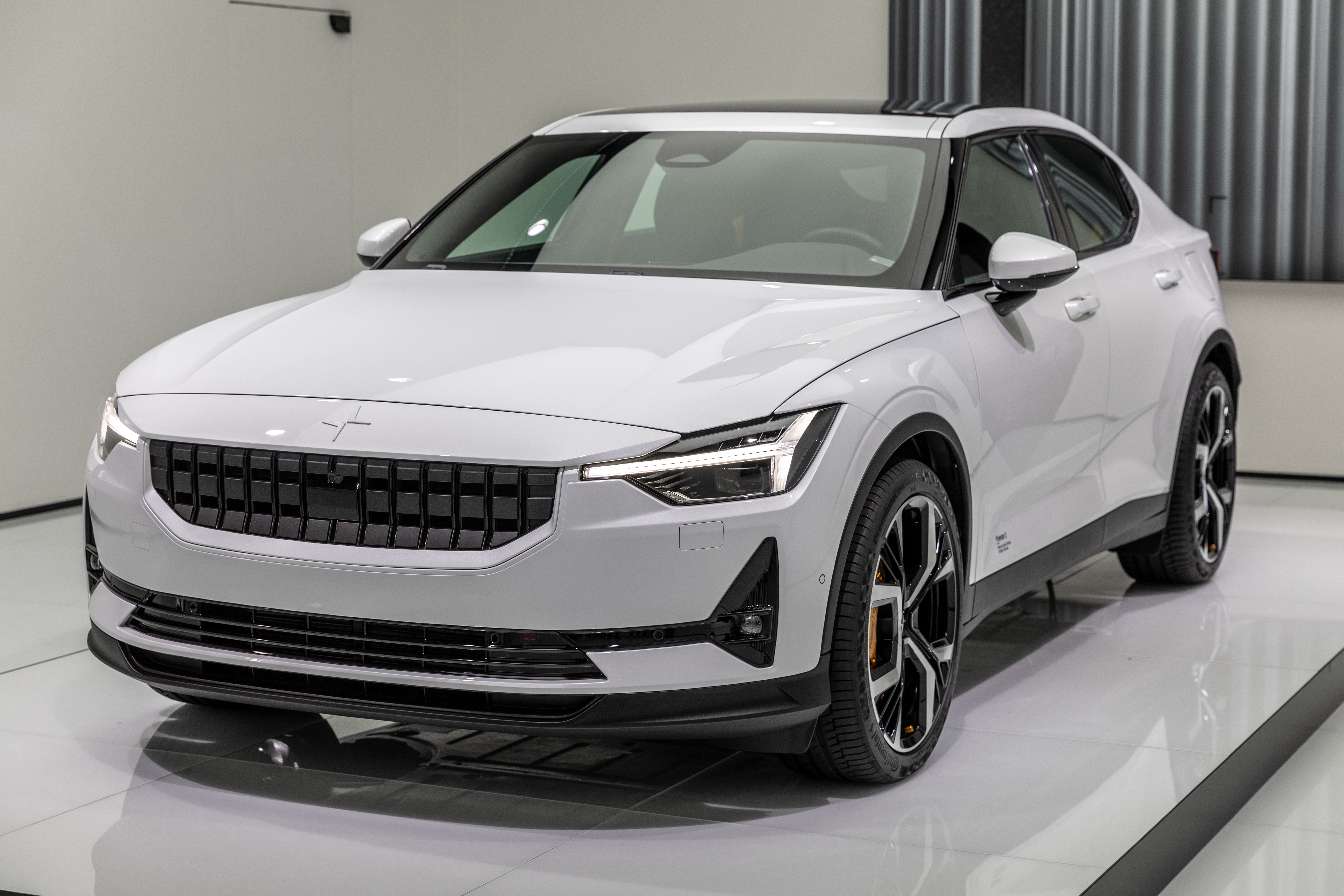
driving. My current car the Polestar 278 kWh has according to the EV Database arranged
the various from 175 miles on the highway in winter to 350 miles around town in summer. Knowing
that I can make a respectable guess at how far I can actually drive on a given journey according to
the figures. What the EV Database will also give you are some actual consumption figures compared
to WLTP data. For the Polestar 2 for example the WLTP consumption figure is 256 watt hours per
mile which is about 3.9 miles per kilowatt hour but the EV Database consumption figures are closer
to 3.2 miles per kilowatt hour and on a 75 kilowatt hour vehicle that difference in range is 52 miles.
So check them out for your car or potential car linking the show notes.
So you've worked out that buying a car and using the WLTP range as your definitive guide for
how far the car will go is probably a mistake and we've worked out that the difference in
actual range and stated range under WLTP is also something that happens to ICE cars.
And we've worked out that WLTP is a comparative measure not an actual measure. It's used to
give an indication of efficiency and rate difference between two cars not actual empirical
values. So is it a conspiracy? Well no. As I just mentioned the WLTP ranges are meant as
comparative values not absolute values. If you see a car with a WLTP range of say 320 miles
and another with a range of 400 miles you know that the second one is a longer range car.
As these are only comparative values it doesn't mean you'll be able to actually do
400 miles of range out of that car although you certainly might be able to as Kevin Booker
has illustrated on numerous occasions but it does mean that under similar conditions
you'll get a higher range than the car with the WLTP range of 320 miles. Now if range is important
to you when looking at an EV the best thing to do is not look at the actual range figures
but look at the efficiency figures for the vehicle. Some figures are respectable the old
Hyundai Ioniq 28 kilowatt hour old 38 kilowatt hour wind knife cars used to easily get over five
miles per kilowatt hour without trying. This gave good distance even with a small battery
whereas something like the Audi e-tron SUV might not get anywhere near that even with a bigger battery.
Generally you're looking for the most efficient vehicle not necessarily the one with the biggest
battery and the reason this becomes important is because if you go for the longest range that
depends on efficiency and battery size it's relatively easy to give an inefficient car a
long range by sticking a large battery in there. I'm looking at you 2025 GMC Sierra EV
extended range with over 204 kilowatt hours of battery but once the efficiency starts to drop as it
will in winter or when towing or if it's raining the range will start to fall away very quickly.
Once you know and understand this WLTP starts to become a useful measure to help you understand
potential range differences between cars but you certainly shouldn't be using it for actual
range calculations. So how does this help if you're looking to buy an EV? If the range stated on the
car's advertising is not a real-life range how are you supposed to know how far the car will actually
go? Well there are two ways to do this and we've already discussed one of them check the EV
database for realistic figures and the second way do a test drive in the car. Now I have a
complete episode on test drives in the archives and what you should do but in essence one
of the things you need to use a test drive for is to get some indication of the range of the car.
If you only have a 20-minute test drive ask the dealer to reset the trip meter
and the efficiency settings and drive as you normally would. Then at the end of the test
drive make a note to the efficiency either miles per kilowatt hour or kilowatt hours per 100
miles or per 100 kilometers depending on where you're test driving and what the units of measure
are and ask the dealer for the battery size or better still look it up online because chances are
they don't know what it is or they don't know what it is accurately and remember you want the usable
battery not the total battery. With the efficiency figures you've got multiply that by the battery
size to get an approximation of range. Now it won't be perfect but it will probably be more
indicative of WLTP. If you're doing your test drive in winter remember your summer range
would be more if you're doing your test drive in summer and be your winter range would be less.
If you get the vehicle for 48 hours or even 24 hours try and do a long distance drive in it.
Charge to 100% take it somewhere on the motorway and when your battery is at about
55% state of charge i.e. you've used 45% of charge to get to where you are
turn around and head back home. In theory the distance you covered there and back
should be 90% of the range of your battery. Add what's left on the display and that should be 100%
of your range under those conditions again longer in summer shorter in winter. So that's WLTP
useful for comparison purposes not so useful for planning purposes. However if you do want to
see what a good efficient driver can do to the WLTP range check out Kevin Booker's social
media profiles in regularly test cars across the year and beats the WLTP range in most of them.
But he's a magician not a normal driver.
It's time for a cool review or renewable thing to share with you listeners.
Healthy soil is full of tiny organisms that produce energy as they break down organic
matter. Milieu Brunel designed the Sully lamp which uses this energy from microbes to create
light. The outdoor lamp uses microbial fuel cells which is a type of battery that converts
the chemical energy released by micro organisms like those in soil or wastewater into electricity.
Researchers have said that there could be an alternative to fossil fuels
powering everything from biosensors to desalination plants and in labs they've
powered small fans, LEDs and calculators. Scaling up this electricity source
is still a challenge but it produces relatively low power and it isn't yet cost competitive.
Brunel hopes her work will inspire people to better connect with
and respect the environment. Another one to keep an eye out for.
I hope you enjoyed listening to today's show.
If you have any thoughts, comments, criticisms or other general messages to pass on to me
I can be reached at info at evmuseings.com. On the socials I'm on blue sky at evmuseings.biscount.com.
I'm also on instagram at evmuseings where I post short videos and podcast extracts regularly.
Why not follow me there? Thanks to everyone who supports me through Patreon
on a monthly basis and through coffee.com on an ad hoc one. If you enjoyed this episode one
buy me a coffee go to coffee.com slash evmuseings and you can do just that
ko-fi.com slash evmuseings takes out the pay too. Regular listeners will know about my two books
so you've gone electric and so you've gone renewable. The 99ph are equivalent and you can get them on
Amazon. Check out the links in the show notes for more information as well as links to my regular
evmuseings newsletter and associated articles. Now I know if you're listening you're probably
driving or walking or jogging now but if you can remember and you enjoyed this episode
drop a review in iTunes please it really helps me out. Thanks if you're watching on the YouTube
nice subscribe and maybe a like would also be very helpful.
If you've reached this part of the podcast and are still listening thank you.
Why not let me know you've got to this point by messaging me at musingsv.biscount.com
with the words WLTP and FLA not a TLA is that okay? Hashtag if you know you know
nothing else. Thanks as always to my co-founder Simon.
We know he's been quite quiet again this week. I'm hoping he's going to be back next week.
Thanks for listening. Bye!
About this episode
Explore why electric vehicle (EV) range often falls short of advertised WLTP figures, using a Mustang Mach-E owner's experience as a case study. The discussion explains WLTP as a standardized, comparative test rather than a real-world range predictor, highlighting factors like driving style, speed, temperature, and vehicle setup that affect actual range. The episode also compares EV efficiency to traditional fuel consumption, offers tips on assessing real EV range through test drives and databases, and shares insights from record-setting EV driver Kevin Booker. Additionally, a brief segment on microbial fuel cell technology offers a renewable energy perspective.
In this episode Gary covers a topic of great concern to many new EV drivers: the range of their car. We've been sold EVs with phenomenal ranges by dealers, OEMs, and general advertising. But, in reality, these rarely materialise, with lower-than advertised ranges compounded by a further reduction in winter when the weather is cooler.
We look at the WLTP range, what it means and how it's calculated; factors that affect your range; how to calculate what your actual range is; and why efficiency is more important than range
The EV Musings Podcast is sponsored by Zapmap, the go-to app for EV drivers, helping you find and pay for public charging with confidence.