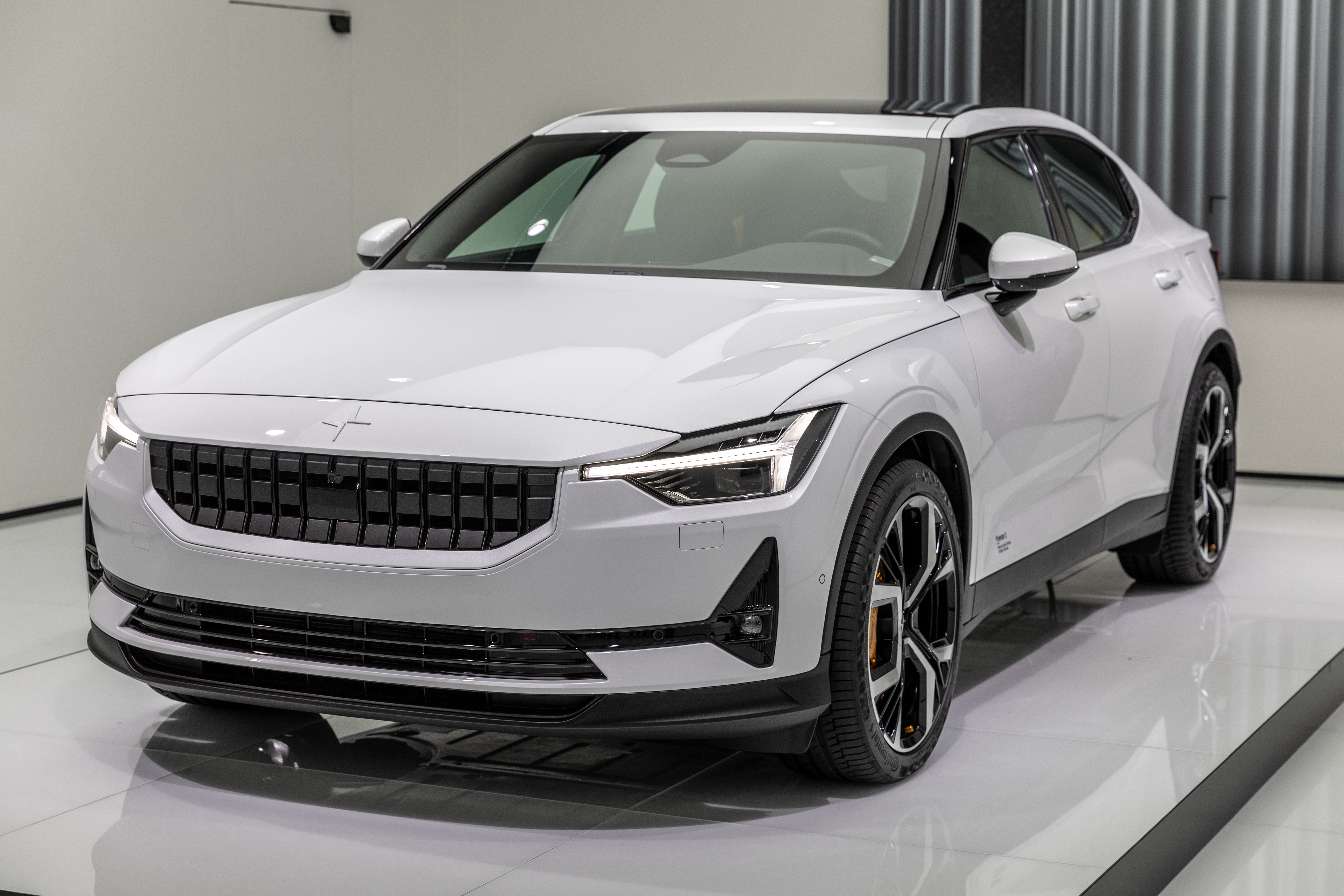
Hi, I'm Gary and this is episode 267 of EV Musings, a podcast about renewables, electric vehicles
and things that are interesting to electric vehicle owners.
All on the show today we'll be going back to basics in the first of the series of episodes
I like to call EV 101.
This season of the podcast is sponsored by ZAPMAP, the go-to app for EV drivers helping you find
and pay for public charging with confidence.
Tusker, salary sacrifice car scheme.
It's an affordable way to drive electric via an employer benefit scheme, a complete
car package including insurance, MOTs, replacement tires, routine service and maintenance as
well as full breakdown cover, all for a fixed monthly amount and with no deposit
or upfront payments.
Now our main topic of discussion today is EV basics and this is the first of three episodes
in a short series that I've put together for you.
Across this series we're going to be going back and laying out the whole EV thing for
absolute beginners.
So let me explain because I think a little bit of explanation is in order.
Now I've been putting out podcast episodes now for about seven years and across 260
plus episodes I've covered all sorts of EV related topics from your first day with
an EV, charging, roaming, the grid, the AA, range anxiety, driving long distances, insurance,
charge safety, tires, fires, everything.
If there's a topic related to electric vehicles there's a very good chance I've got
an episode on it or even two if it's an episode in a fast moving part or sector
but if you're someone sitting outside the EV sphere or bubble and you're thinking
about getting an EV it can look like a complicated thing to get right.
I mean we've got charge curves and preconditioning and roaming cars and the public charge point
regulations 2023 not to mention expensive public charging, CCS, Chatham-O, fast charging,
rapid charging, ultra rapid charging.
I mean who wants to sit and listen to 260 episodes of a podcast to learn enough to
be able to drive a car?
It's all so complicated, right?
So over the next three fairly short digestible episodes we're bringing you back to basics.
What do you absolutely need to know before you get your EV, how do you choose your EV
and what do you need to do on day one?
We're going to be talking about the following things.
Who should and probably shouldn't go electric right now.
Different ways to get an EV so hiring, leasing, buy, new, second hand, salary, sacrifice.
We're going to be talking about the test drive to do and what not to do.
We're going to be looking at home charging or not and we're going to be looking at
taking delivery and driving your car, regen braking, high power, the apps you need, etc.
And we'll be looking at charging your car at home or on the street, we'll be looking
at doing a long distance journey and we'll be looking at charging your car on a public
charger.
Now we'll split these topics up across three episodes so you can focus in on the one
you really need to answer your specific question.
Now in this episode we'll be discussing who should get an electric car?
Should it be new or used?
We'll be looking at leasing, buying and test driving.
In the next episode we'll assume you've got your car and it's either arrived on the
back of a low loader or you've got to pick it up from a dealer.
And in the final episode, number three, we'll look at public charging and driving a long
distance in your EV.
So let's get started.
So the first thing we want to talk about is who should and probably shouldn't go
electric right now.
Now whilst I would love everyone to be driving around in an electric car, the truth is that
at the moment there are use cases where an electric car isn't quite right for everyone.
Just now.
The big question you need to ask yourself is whether you can park your car off street
and gain access to an electricity source.
Now if you can, then it's well worth getting an electric vehicle.
If you can't, so you might live in a terrorist house, then it's not the end of the world.
It's more to do with what's the local charging infrastructure like nearby.
Do you have a workplace that has chargers?
Do you live in one of the cities that's had a payment charging everywhere so you can
hook up overnight?
So take an honest look at your situation and make the decision.
Now I know many people with no home charging, they make use of public charging infrastructure
via payment chargers or enroute chargers, and we'll talk about those a little later.
In fact I did a whole episode about those EV drivers in season 11, episode 290 if you want
to check that out.
You can also get access to a home charge if your car is parked on a pavement outside
your house, via a device such as a gully or kerbo charge which is a channel installed
across the pavement into which your charging cable can sit without being a trip hazard.
There are other alternatives such as the charge bridge by Nodum that threads the cable over
people's heads in a lamppost style arrangement across the pavement, and again we talked about
both of these in episode 214.
Now if you live in an apartment and it has underground parking and more than 30 spaces,
you can look at a company such as Charge Guru who provide a charging service as
needed by liaising directly with your landlord and we spoke about this in episode 226.
Now if none of these apply to you and there's no local charging infrastructure you can use
and no workplace charging, then you should probably think about delaying the transition
to electric for a while until the situation changes, but that's not the only thing
that plays into this.
Let's talk about your use case.
Do you drive hundreds and hundreds of miles every day needing to carry a half a tonne in
the back towing a trailer or a caravan?
What about if you're someone who only buys 5th, 6th, 7th hand cars and you never want
to spend more than about, I don't know, £500 and then you'll run them right into
the ground.
Now both of these scenarios are outside the range of electric vehicles right now
but this will change.
So former guest of the podcast Dr Ewan McTurk did calculations once that proved it even if
somebody gave you a free car, a free petrol car, it can end up costing more than an electric
vehicle due to fuel savings, servicing savings, etc.
Remember purchase price is just a small part of the cost of running a car, add up the
total of cost, insurance, servicing, vehicle size, duty, fuel and compare the values
for EV and petrol especially if you have off-street parking.
What I would also caution you not to do is to buy an EV based on the longest journey you
do in a given year.
I have someone tell me once that he'd never buy an EV because he drove to the south of
France every year on holiday and he could do it in one tank of diesel and no EV can
do that.
Well, apart from the fact that he's incorrect about the fact no EV can do it, YouTuber
Andrew Till has done the UK to Rome run in multiple EVs quite easily.
The comparison of one tank of diesel to multiple charge stops is not a great one and
we'll cover that in a later episode.
Just remember that as Jack Sile Scarlett said on this very podcast, you wouldn't buy your
shoes based on the fact that you go skiing once a year so you'll need ski boots so why
buy your car the same way.
The other thing to avoid doing is buying a car based on the manufacturer's stated
range and that's what's called the WLTP range and is calculated using a rather
esoteric set of criteria.
The range that comes from it is neither accurate nor reliable.
This meant purely as a means of doing a comparison between different vehicles.
I released an episode earlier this season that discusses WLTP, the standard for vehicle range
evaluation and why it shouldn't be relied on so check that out if you're interested
in more detail.
Now my advice to you is to go to a site such as the evdatabase.org, put in your
potential car and look at the real world ranges they display for you.
The values shown there are more reliable than the WLTP ranges.
These show ranges you can expect in warm weather and cold weather because it's different, around
town, on a run, on a motorway.
Now if you regularly need a car that will easily take you on a 250 mile motorway trip
without a problem, find one where the cold weather highway range gets close to that.
Don't rely on manufacturer's WLTP range to guide you.
But if you only do this trip once in a blue moon, buying a car with a large
battery that will meet that need is both expensive because bigger batteries mean more
expensive EVs and it's a bit of a waste because you'll be hauling around batteries you don't
need for 99% of the time when you're not actually doing that 200 plus mile trip.
So let's assume you've looked at your criteria, you've decided that you can work with
an electric car and you're now looking to see how to get one on your drive.
Let's look at that, the different ways you can get an EV, hiring, leasing, buying,
you, sent hand, salary, sacrifice.
And we'll assume you're in the large proportion of the population who can
feasibly move to electric.
The next thing you'll need to look at is how you get there.
What are the ways of getting an electric vehicle on your drive?
Well, there are actually quite a few of them.
Let's start with the really easy ones.
You can hire them.
There are companies such as Zimbal in Bambream, we've had them on the show.
And Europe Car, nationwide, we've had them on the show.
And they'll rent you an electric car with everything included for
you to see if you like it.
If that Europe Car will even lease you one on the monthly basis,
including insurance and servicing.
And all you need to do is get the electricity to fuel it.
Now, it's probably a great way to see whether it works for you.
Back in the day when I was young, there were things like the electric
vehicle experience center that were brand diagnostic.
And it would loan EVs for a weekend or four days, complete with a charging
card, so it cost you nothing to charge.
And you could try them out.
And that's how I got my first electric vehicle.
It was fantastic.
Unfortunately, the EVC is no longer around.
And perhaps the concept should be reinstated.
Who knows?
The next way of getting an electric car and one that's increasingly popular
for the cost-saving aspect is salary sacrifice or sales sack.
Yes, so I'm Cheryl Clements.
I'm head of business development at Tusker Direct.
Wonderful.
Now, we're here to talk about salary sacrifice.
So if I was to ask you to give me a quick sort of 15-second pitch
for salary sacrifice, what would that be, please?
So salary sacrifice allows employers to provide cars to their employees
as part of employee benefits, green cars, so electric cars and hybrids as well,
and also make tax and NISavings for the employee,
as well as the employer making employers NISavings on the cars.
And who specifically is it designed for?
Because it's not everybody who's employed.
So like I'm employed, but I'm self-employed.
So can I get a salary sacrifice offering?
Typically not, no.
It would be companies that have a number of employees with employee benefits in place.
And it's typically something that's done through salary sacrifice
and employee benefits portal.
So it doesn't tend to work for individuals as such.
What is it that salary sacrifice offers
that me going out and getting a lease car of my own
or buying a car of my own doesn't give?
What's the USP for a salary sacrifice?
Definitely the tax and NISavings on the gross reduction that's coming out of salary,
which is great, as long as the car is 75 grams of CO2 and below.
But it's more about tapping into the leasing company that's providing it.
So the provider, they get really good discounts from manufacturers and dealers
because they're buying a lot of volume.
There's discounted motor insurance, discounted servicing maintenance and that sort of thing.
So all of that coming out discounted from gross reduction
and then making tax and NISavings.
They're currently from our dealings.
There is no cheaper way of getting an employee into one of these cars.
So do you have sort of some ballpark figures for what this would look like
for say a base rate taxpayer?
How would that actually work?
What would that look like from the bottom line on their take-home salary?
Yeah, it's really difficult to say because there's so many different variables that go into a quote.
So for example, you can have the car between two and five years with Tusker.
There's a set mileage as well.
So if you're doing lexano mileage and you only choose 5,000 miles a year,
then clearly it's going to be cheaper for you than if you're doing 20 or 25 or even 30, etc.
Also depends on the employee's age
because that will affect the motor insurance premium.
So once all of those elements have gone in to make up the quotation,
it's kind of an average, an average saving for an employer.
And employers and I have about 731 pounds a year for everyone coming into the scheme.
But it's typically much more than that even for 20% taxpayers.
Are there other things that you can actually get through a salary sacrifice scheme?
Or is it just electric vehicles?
Well, there's four mandated salary sacrifice schemes in the UK currently under current legislation, let's say.
And that's electric cars, ultra-low emission cars, cars of 75 grams and below.
Pensions, which can be salary sacrificed.
Child care, although that's kind of less on the remit of employee benefits now.
And bike to work schemes.
So those are the kind of four mandated by the government.
There are other ways of doing salary sacrifice,
but you don't make the NI savings with them.
OK, that makes sense.
Now, I mentioned a few seconds ago about the fact that I'm sort of self-employed
and you said, no, it has to be within a company
and there's got to be a minimum number of individuals employed there for the scheme to work.
But is there a way of a number of different individuals
banding together to create like a generic salary sacrifice company
that could be used then to have a scheme applied against it?
Unfortunately, not, no.
So if you're self-employed, you're not taking a...
You're not being paid through a payroll.
You're not taking a salary as such.
You might be taking dividends or being paid another way.
It has to be through an employer to comply with HMRC salary sacrifice rules.
So it has to be taken from the payroll.
So the structure of the scheme is from the supplier to the employer.
They're leasing the car directly from the supplier.
And then the employer makes that car available to the employee
in lieu of salary as a non-cash benefit.
That's how it works.
So the idea is that supplier has a hands-off financial arrangement
with the employee directly, which doesn't happen if you're self-employed.
And is salary sacrifice only for new cars?
Or is there the option to get what they call pre-owned vehicles on salary sacrifice?
Typically, they are brand new cars.
But in recent years, we definitely brought our pre-loved scheme to the marketplace.
So that's cars that we've got up to three years old
that are coming back of contract that go through a 200-point safety check.
From a health and safety perspective, that's paramount.
So all the cars are known to us.
We know what they're servicing history they've had, et cetera.
And if they are in really good condition and really low mileage,
then we're repurposing those and putting them back out.
So that's also helping.
People can take them up to five years as well from that.
So you could be driving a three-year car over an additional five years,
which is much cheaper.
So it's helping with national living wage as well,
because eligibility for the scheme is one of the barriers
that's been quoted by employers recently.
Talk to me a little bit about Tusker as a company
and how they play in the salary sacrifice space.
Because we've talked fairly generically about salary sacrifice.
What is it that Tusker offered that maybe other salary sacrifice companies don't?
So Tusker was first to market with the scheme in 2009
when the benefiting kind taxation changed.
And we realised that actually it would be more advantageous
for employees to drive much lower emission cars.
We decided to specialise in that a long time ago.
And because of that, three years ago were bought by Lloyds Banking Group
to be now the sole salary sacrifice provider
within the Transport Division, which is fantastic.
Tusker's USPs, that's all we do.
So we are salary sacrifice specialists.
All of our systems have been built around salary sacrifice.
It takes into account nuances with different pension schemes,
particularly within the public sector.
It only shows employees' cars they're entitled to see
that won't take the below national living wage,
which is one of the key elements.
Our lifestyle protection, so the risk removal,
what happens if somebody leaves or goes on maternity leave, etc.
Employers understandably don't want to be left with a car in the car park
that they're having to pay for and can't reallocate to anybody else.
So it's looking at the scheme to be employee and employer centric.
So it's got to work really well for the employee,
be really good value, no hassle, just ring one number
when you need something done, etc.
And for the employer, it's not like running a separate
traditional company car fleet on the side.
This is a fully outsourced employee benefit.
So it's got to work for both.
So that would be Tusker's USPs.
So does Tusker act as a vehicle provider,
or are you just the financier of the whole scheme?
We are the financier.
So what we're doing is an employee will come onto the portal,
they'll run a quote on, let's say, Ford Focus or Ford Puma,
which has now just been confirmed to get the EV grant, by the way,
if anybody's watching this and thinking about a car,
get £3,750 of a Ford Puma.
I'm not on commission for Ford.
What they can do is come into the portal,
we will then, once they place their order,
we'll go out to the dealer network to see who has got that car in stock.
So we're very much working closely with the dealer network
for all manufacturers and also the manufacturers
to see who can supply the car the quickest.
And then we will purchase that car as part of the arrangement
and have the car delivered onto the employee.
So we are very much funding those cars
and managing them in life, obviously.
Now, one of the big issues or questions
that I like to address in the podcast
is the whole topic of educating individuals
who are new to electric vehicles.
So you've got people on your scheme.
This will be potentially the first EV they've ever taken delivery of.
So who has that responsibility
for ensuring that the new drivers get training
on things like public charging and regenerative braking
and removing the little rubber bung from the charge socket
to release the high-voltage pins?
Who has that responsibility?
Yes, it's all really simple stuff, isn't it,
when you know what to do.
But if you don't know what to do, it's highly confusing.
So that responsibility is down to the employee
to understand what it is,
because they are having a new piece of kit delivered effectively.
But within the Tusker Portal,
specifically, we have the EV Hub.
And what that does is explain to employees
from the ground up, basically, what an electric vehicle is,
how you charge it, what the public infrastructure looks like.
We've got a tie-up with ZapMap.
So we put them in touch with ZapMap.
ZapMap have some wonderful stuff on their app as well,
not just locating the right charger for your car,
but some other information as well.
But equally, then when the car is delivered,
it's the part of the arrangement is that the delivery driver
will make sure that the employee is happy
and knows how to start the car.
Sometimes you get in to an electric
and you can't even start it.
So it's like, where's the start button?
I can't even find, there's no key.
So even that sometimes is a revelation to people.
So we do suggest strongly in our SLAs for dealers
that they do take the employee around the car
and make sure they're comfortable
with being able to drive it before they leave.
Okay, fantastic.
And Nina Gales, you want to say about salary sacrifice
before we close?
Only just to reiterate that what I said previously about,
it is there is no better way for an employee
to get into one of these cars.
It does support the government's road to zero
strategy for 2030.
We're not expecting any changes on that.
Who knows, things change on a daily basis,
but we're not expecting any changes on that at all.
So really, if you haven't got a scheme in place,
then of course do your due diligence
within the market select a provider
that can manage the risk elements,
make sure that they are being employee
and employer centric and put the scheme in place
and make the most of it while we can.
Wonderful.
Salary sacrifice is basically a way
to get an electric company car.
It's provided by the company,
it's owned by the company,
it's insured and maintained by the company.
But in order to get it,
your salary is reduced by an amount each month.
Now what this does is it gives you
the company car as normal,
but it also reduces your tax burden.
So instead of paying tax on say 3,000 pounds per month,
you're only paying tax on 2,500 pounds per month
but getting a company car alongside that.
If your company does sell sack,
it's worth seeing what cars they have on the list.
If you can find one that fits your lifestyle,
as noted above, it's well worth looking at that.
For more on salary sacrifice,
why not ask your employees to get in contact with Tusker,
the sponsors of today's episode
and a major salary sacrifice provider.
Now we did cover salary sacrifice in great detail
in episode 152, the new EV episode.
Of course, if you are so inclined,
you can always go out there,
get yourself a dealer and buy one.
Take a big bag of cash and negotiate with the dealer
and see what sort of a discount you can get.
Now remarkably few people actually do that
as a way of buying a new car nowadays,
but don't rule it out.
However, with the current residual values of EVs,
it's probably not a great thing to do.
You could lose a lot of money
in depreciation in the first year or so.
Now the next way of getting an electric vehicle is leasing.
And there are many companies out there
that will lease you an EV.
My last two EVs came through Drive Electric,
which is a lease company.
Now how this works is quite simple.
You select the car you want from their list,
you let them know the deposit you want to put down
and how many months you want the lease for
and then you tell them how many miles
you want to drive across the length of the lease
and they'll calculate a monthly lease cost.
My first lease on the Kia Soul EV was 36 months,
zero down, 12,000 miles per year
and it came to a grand total of 290 pounds per month.
My second lease, the ID3, was 1,200 pounds down,
36 months and 10,000 miles per year
and that came to 335 pounds per month.
Now there are some really good lease deals
available on some cars.
It all depends on supply and demand
and how much the dealers who supply the cars
need to sell them.
Usually at the end of a lease,
you'll have to give the car back
although some type of leases give you the option
to pay an amount to take full ownership of the vehicle
but not all of them do.
So be aware of that,
you'll have to check the terms and conditions
for more details.
Now finally, there is a way that most people
would get an EV which is the second hand car market.
Now for quite a while the second hand car market
for EVs was quite small and prices were high.
Nowadays that's not the case.
In many instances EVs are less expensive
than similar ICE cars on the second hand market
and I have an episode coming a little later on this season
talking all about buying a second hand EV
but the short version of this is
make sure you get the battery checked,
make sure you test drive it
and always buy from a reputable dealer.
One of the most important parts of the buying process
especially for someone who's never driven an EV before
is the test drive.
Unfortunately it's one of the least understood
and misused aspects of the buying process as well
and this is for two reasons.
The first reason is that people tend to equate
test driving an EV with test driving a fossil fuel car
and unfortunately they're not the same things.
And secondly, dealers often have less information
than the people wanting to buy the car
and this leads to all sorts of poor advice
and miseducation.
So let's look at these two things.
Back in the day when everyone had been driving
internal combustion engine cars for years
if you wanted a new car a test drive was great.
It let you know if the car was suitable for you
whether it was comfortable
whether you could fit the dogs in the back
that's a quick nod to Laura Hustwick-Wilch from Power
and what sort of performance you could get out of it.
As ICE cars were pretty much the same
in terms of how they operate
and what you could do with them
once you knew these things
a decision was often quite easy to make.
The problem is that EVs are totally different.
If you've been driving them for a while
it's fairly easy to see what you do
and don't like about say an ID3 over a BYD Dolphin
or a Polestar 2 over a Tesla Model 3.
But if you've never driven an electric car before
this is much more than a test drive
to see if you like the car.
It's more an examination to see if it will work for you.
Now I've told this story before
and I kind of mentioned it earlier on
but when I got my first EV
I borrowed a similar model
from the EV Experience Center in Milton Keynes
and I ran it for a number of days.
During that time I did all the usual trips
that I would do so I did a commute
I did a trip to a specific place
I visit regularly but not frequently
I did all my local runs around the area
for shopping, et cetera and leisure activities.
I checked what the local charging was like
as well as the charging at the destinations
that I usually went to.
And once I'd done that
I knew I could live with an electric car
and this electric car specifically
and that's when I put down the order
but you can't do that in a 20 minute test drive.
That's why you need an EV
especially if it's your first EV
ideally for about 48 hours.
You need to be able to do long and short runs in it
you need to be able to see how it charges
at home and how it charges on the public network
so don't go for a 20 minute test drive
and make your decision solely based on that
but as well as doing that
if you get to speak to a dealer
make sure you understand whether the dealer knows
about EVs and can give you good advice.
Ask whether he or she drives electric themselves
ask how many dealers at the dealership drive electric
if it's one or two out of the whole dealership
that's a sign they're not necessarily invested in electric.
Ask them a simple question such as
how large is the battery?
If they answer something like 77 kilowatts
you know they don't really understand
what they're talking about.
The correct answer is 77 kilowatt hours
it might not sound like a big difference
but if you'd ask the same dealer a similar question
about a car with an internal combustion engine
what's the top speed of that car
and they answered
or that car will top out at 155 miles per gallon
you'd seriously question
whether they knew what they were talking about wouldn't you?
Now I did a full episode on test drives
back in episode 217
again linked in the show notes
if you want to check that out.
Now that's pretty much all you need to do
when thinking about an electric vehicle.
Very easily you work out
whether you can live with one.
You decide how you're going to get one
finance it, buy it outright, lease it, hire it, whatever.
You take several of them out on extended test drives
and you see if they fit your lifestyle
and you place your order.
So let's do a quick recap.
You've checked to see whether electric works for you.
You've looked at different ways
of taking ownership of one.
You've test driven a couple ideally
for more than a day or so
and you've finally pulled the trigger
and ordered and bought one, new or sent hand.
So what comes next?
Well, we'll look more into that in the next episode
when we look at what happens
when the car gets delivered
and what to do on your first day in an electric vehicle.
And that's in next week's episode.
It's time for a cool EB or renewable thing
to share with you listeners.
Vodafone UK will complete the electrification
of its 1,000 strong company car fleet by 2026,
one year ahead of schedule.
The move is part of the operator's wider strategy
to achieve net zero emissions across its operations by 2030.
Now it's good to see the big companies moving forward
with electrification,
more so where they end up doing it ahead of schedule.
So well done, Vodafone.
The EV Muses podcast is sponsored by ZapMap,
the go-to app for EV drivers,
helping you find and pay for public charging with confidence.
See what charge points are available right now
with live availability
and unrivaled UK charge point coverage
at your fingertips.
Pay it thousands of charge points within the app
or with the ZapMap charging card.
Join over a million EV drivers,
download ZapMap and charge with confidence.
I hope you enjoyed listening or watching today's show.
It was put together this week
with the help of Cheryl Clements from Tusca.
Many thanks to her for her time.
If you have any thoughts, comments, criticisms
or other general messages to pass on to me,
I can be reached at info at evmusings.com.
On the socials, I'm on Blue Sky
at evmusings.bsky.social.
I'm also on Instagram at evmusings
where I post those little short videos
in the odd podcast extract regularly.
Why not follow me there?
Many thanks to everyone who supports me through Patreon
on the monthly basis
and through coffee.com on an ad hoc basis.
Now, if you enjoyed this episode,
why not buy me a coffee?
Go to coffee.com slash evmusings
and you can do just that.
ko-fi.com slash evmusings.
It takes Apple Pay too.
Regular listeners will know about my two e-books.
So you've gone electric
and so you've gone renewable.
Now they're 99p each or equivalent
and you can get them on the Kendall Store on Amazon.
Now check out the links in the show notes
for more information as well as a link
to my regular evmusings newsletter
and associated articles.
Now I've spoke to a few of you
and I know that you're probably
driving, walking, jogging, ironing,
all sat on the sofa watching this on your phone
but if you can remember and you enjoyed the episode,
drop a review in iTunes, please, like, subscribe,
leave a comment on YouTube because it really helps.
Thank you very much.
Now, if you've reached this part of the podcast
and are still listening, thank you.
Why not let me know you've got to this point
by messaging me at musingsv.beastkind at social
with the words, how do I love thee?
Let me count the ways.
Hashtag, if you know, you know nothing else.
Thanks as always to my co-founder Simon.
You know I learned recently that he's one of these people
that can solve a Rubik's cube without looking at it?
I asked if it was something he could teach me
and he gave me an enigmatic smile and he replied,
Yes, it's all really simple stuff, isn't it,
when you know what to do
but if you don't know what to do,
it's highly confusing.
Thanks for listening.
Bye.
About this episode
Gary breaks down the basics of electric vehicles in this first part of a three-episode series aimed at beginners. Topics include who should consider going electric, the importance of off-street parking and local charging infrastructure, and various ways to acquire an EV such as hiring, leasing, buying new or used, and salary sacrifice schemes. Special guest Cheryl Clements from Tusker explains how salary sacrifice works and its benefits. The episode also highlights the importance of extended test drives and choosing the right EV for your lifestyle rather than just the longest trip. Practical advice and real-world insights make this a great starting point for potential EV buyers.
In this episode of EV Musings, Gary introduces a series focused on the basics of electric vehicles for beginners. He discusses who should consider going electric, the various ways to acquire an EV, and the importance of test driving before making a purchase.
The episode aims to simplify the transition to electric vehicles by addressing common concerns and providing practical advice.
This is Episode 1 of a 3-part series focused on teaching the basics of EV ownership to newbies.
The EV Musings Podcast is sponsored by Zapmap, the go-to app for EV drivers, helping you find and pay for public charging with confidence.
The Tusker Car Benefit Scheme is a salary sacrifice car scheme where employees are provided with an affordable way to drive electric. It means an employee can drive a new car, complete with insurance, replacement tyres, MOTs, routine servicing and maintenance, as well as RAC breakdown cover – for a simple, fixed monthly amount. Because this amount is taken directly from gross salary via a salary...