Hi, I'm Gary, and this is episode 278 of EV Musings, a podcast about renewables, electric vehicles
and things that are interesting to electric vehicle owners.
And on the show today, we'll be looking at what difference tyres make to your electric vehicle.
This season of the podcast is sponsored by Zatmap, the go-to app for EV drivers helping you find and pay
for public charging with confidence. Now, our main topic of discussion today is EV tyres.
Now, we've spoken about EV tyres in an earlier episode, 2-2-2, for those who are interested,
where I discussed tyre wear and degradation with Dr Yun McTurg and Hansen Chang.
Now, if you want to know about hysteresis and tyre particulates, then that's a great episode to
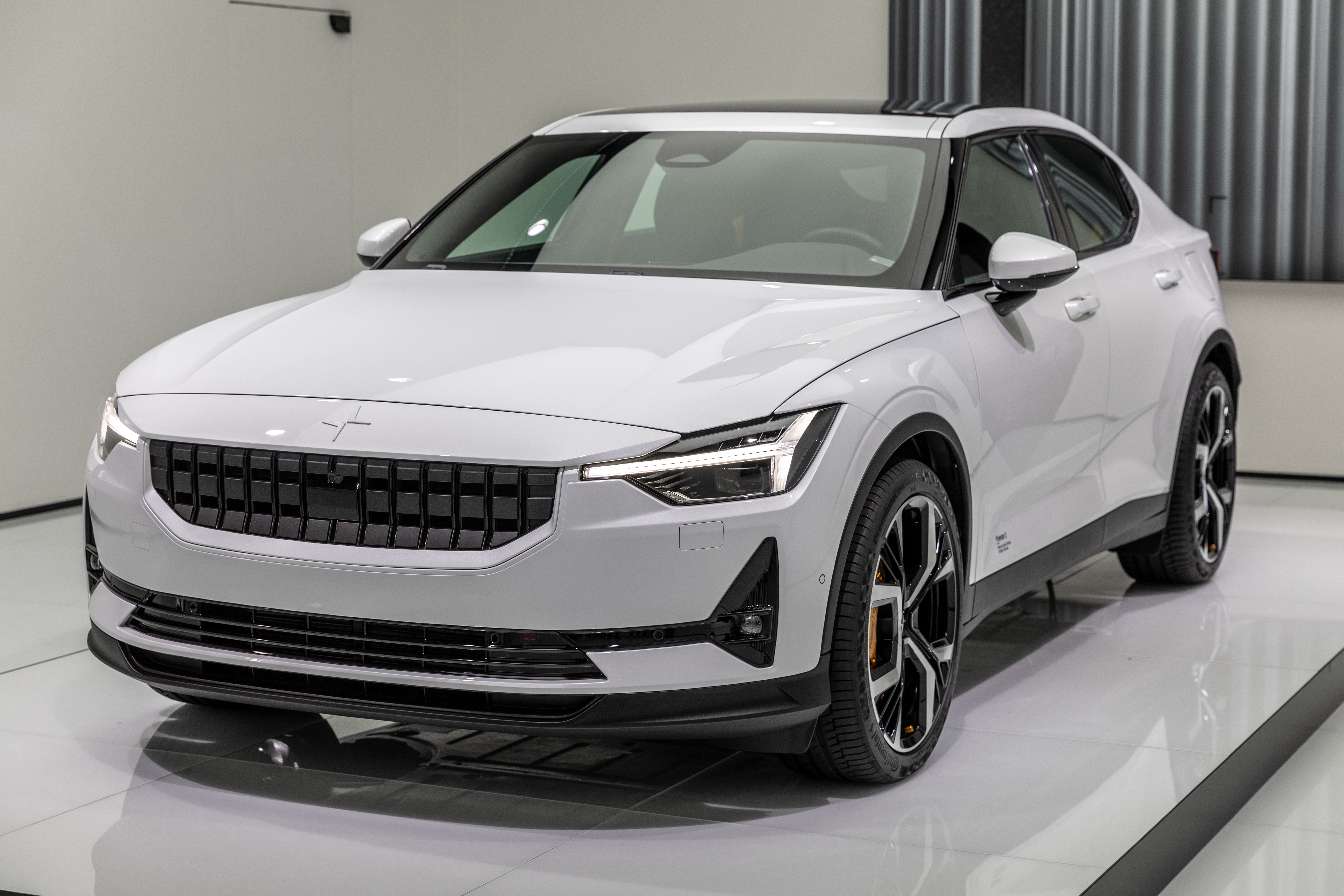
listen to. But I recently took delivery, as many of you will know, of a Polestar 2 as a daily driver,
and one of the things that I realised when I did so was that it was provided to me with a set of
fairly cheap tyres from a brand called Davanti, who I've never actually heard of.
Now, I also noticed that I was getting quite a bit of road noise on those tyres over any sort of
non-smooth surface. It was quite noticeable, especially when you move from a rougher surface
to a smoother one where the noise lessened. So, I figured it might be time to get some
sort of upgraded tyres on them. So, I reached out to the good people at Hancock tyres,
and they provided me with a set of their Hank Hancock Ion series tyres. Now, these
boots are developed from the tyres that are attached to the Formula E series of racing
cars, so you know they're probably going to be ideal for electric driving. But apart from
putting some newer tyres on the car, I wanted to check and see what sort of an impact these tyres had
on my efficiency. Was I getting a longer range? Did they in fact reduce the noise I was experiencing?
What was the tyre degradation like over time? But, over and above that, I also ran into
well-known EV YouTuber and friend and former guest of the podcast, Andrew Till, who's also
doing something similar with Hancock. So, we decided that it might be a good idea to run
two different vehicles on the Hancock tyres and see what happens. So, this is going to
be a relatively long-term review of the tyres, and I'll be liaising with Andrew next season
when he puts the tyres on his car. Now, I had the tyres fitted on mine in late October,
so at the time of recording I've had them on for about two weeks. But before I did,
I managed to take a few measurements for things like efficiency on the old tyres.
Now, over a long journey I was averaging around 30.3 kWh per 100 miles, which is about 3.3 miles to
the kWh on the Polestar 2. And on top of that, I took several measurements around road noise
when I was driving the car. Now, I did this on a 15-minute local run, which I repeated several
times to get an average, and this run had several rough and smooth parts to validate the
difference the tyres made. Now, as an average, the inside of the car was showing noise in the
60 dB range prior to fitting in new tyres. I have a decibel metre app on my iPhone,
which is usually used for OSHA health and safety measurements in noisy environments.
But what it does allow you to do is to run the app for, say, 10 or 15 minutes in the car,
and it will track average noise and peak noise. Now, I've done this for a number of runs that
I do on a normal basis, and captured a couple of measurements for each run.
Now, next season I'll be showing you the results, and we'll see whether a specific
EV tyre from Hancock has made any difference to my efficiency and noise level.
But what I'd like to do before we go any further is to start off by having a nice chat
with the good folks from Hancock Tires about their tyre philosophy
and what I should expect from my Hancock IONs.
Well, my name's Neil Barrett, and I am EV Lead and Key Account Manager for Hancock Tire UK.
Okay, good. So we'll talk a little bit about tyres specifically and why you and I are
chatting today a little bit later. But I want to just start by talking specifically about
Hancock. Talk to me about how Hancock is positioned in the market, because there's the big boys,
they're literally in the continental Pirelli's Bridgestone. And at the bottom end, there are the
no-name brands, like the one that I used to have on my Polestar, Davanti. So where do Hancock
sit in that? Okay, so I guess it's a question of perception, whether it's self-perception or
market perception. I think we're now comfortably positioned as the new premium product. So we've
done a lot of work with OE and OEMs over the last, I guess it's 20 years now, and we've really built
that portfolio. So we're original equipment on virtually every single brand. And from a
marketing point of view, we've gone into Formula E, WRC, Lamborghini Super Trofeo. So we are
comfortably within that. I think in terms of price point, we're slightly under them.
We offer good value for the product. But in terms of performance, and this is something
everyone's welcome to look at themselves and see independent tests, we are at least in the mix,
and in many cases, superior to some of the brands you've already mentioned.
Now if we look at tyres generally, there are those that are the ones that all the
fossil fuel cars have been using for years and years and years. Now there's this
newer type which are EV specific and the ones that have been developed to take advantage of
or to benefit electric vehicles. Hankook have the range that we're talking about today,
which is the ION range, taught you a little bit about the EV specific aspects of the ION range
and what is it about them that differentiates it from other tyres in the Hankook range
and other tyres by some of your competitors? Okay, let's pick that one apart one by one.
So if we start from the beginning, we'd be making EV tyres for around about 10 years now.
So this is a specific development of an existing pattern that we put on OEM vehicles
because they come to us with a demand or requirement. And if you are going to try and
define what the requirement is in two points, it is the need for high power and high torque
and high efficiency. Now those two have traditionally required a big trade-off.
So we've kind of recognized that going forward and looking at how the EV market is developing
as quick as it could possibly develop, we started to recognize that really all these
individual changes we've made to our standard ICE tyres would be better and more understandable
if they come under an umbrella. And to do that then, we've kind of gone and taken all the
experience and all the technical know-how and all the back-to-back testing we've got from formulary
and then really pushed that into a single offer called ION, which we make in multiple sizes for
multiple vehicles depending on lower power outputs to the very highest outputted EV.
But all of them balancing those requirements that EV drivers, if they don't know yet,
they soon will need in their car, which is the ability to deal with that sort of power and torque,
the ability to maintain an efficient vehicle that will give them the range they're looking for,
the ability to drive silently and quietly without excessive road noise. And then when all those
things come together and all the individual technical advancements are put in one tyre,
you're going to get then a tyre that lasts a lot longer than it would
if you just put an ICE tyre on it. So there's multiple points and the individual technical
advancements don't just affect one thing, they affect all of it. So I hope that sort of answers
the question really. It's more of a case of making it relatable to the consumer and to the
tyre buyer that they can come to Hankuk ION range and they will get a tyre that is specifically
designed for an EV. So what goes into making a tyre specifically for an EV? What does it
need or not need that say a Ford Focus tyre doesn't have or doesn't need?
To break that down, I'd have to give you multiple different points to what it, but in the round a
Ford Focus would not need a tyre to roll as quietly as an EV does because it's got an internal
combustion engine, it makes a lot of noise and that filters out certain frequencies that you
can hear more in an EV. Here's an example, I think ICE at the moment a good ICE 25 to 30% of the noise
you hear is from the road. In an EV it's 50, that's where the noise comes from. That's the
unpleasant frequency and if you think you know an unpleasant frequency banks in around in a
steel shell it soon you know it soon becomes quite unpleasant and that's the thing that
people will notice on it. Does a Ford Focus need a tyre that is so efficient with such low rolling
resistance? The truth is not really. An EV is an inherently incredibly efficient way of getting
around and we're quoting efficiency levels of sort of mid 80s to 90%. ICE are still kicking
around 25, 30% the rest is lost as heat but when you break down you know where that efficiency
is lost 25% of the efficiency is lost in the tyres. By their very definition EVs are victims
of their own success because they are so efficient anything attached to it that isn't efficient
will stand out and will make a measurable difference. We claim efficiency increases
around 6 to 10% with the ION compared to top quality ICE tyre. So if you start measuring
against some of the budget products which we can talk about later but in terms of it's very
difficult to measure like we like here because you know measuring a new tyre to a used tyre is not
fair we'll go into that. So all these different things you know you've got to take over the life
of the tyre and the life of the car but again I guess when you come from a design point of
view when you're trying to make a product it's incredibly useful to know what that product
is going to be fitted to. It really does I mean it's an enormous advantage to know that so while
there is a cost implication for us being first mover in the market to make a specific EV tyre
you know it certainly in terms of long term belief is it will be accepted and it will
help differentiate because at the moment EV buyers are you know we've gone past early
adopters we're now into early majority people have been a bit more pragmatic and buy them
for reasons of you know they're far more applicable to daily use now than maybe they were five, six,
seven, eight years ago so that's kind of where we are with it really. So you know for the newer
buyers may need a little bit more help in terms of what they should choose, what they should
choose and what benefits they're going to get from it. Come on to that in a little while
you know talking about actually how you select your EV tyre but I just want to look back to
that last question which is what specifically is the difference between the tyre you would put on a
Ford Focus and the tyre you would put on my Polestar for example. Is it the compound? Is it the
tread pattern? Is it something else? What do you do that makes them...
All of it. Everything. Everything. I mean the fundamental problem we have in the industry
is when you put two tyres together it's very difficult to tell a difference because they
look like tyres they look the same colour and they're roughly the same shape but when
you start digging down and say getting a cross section cutting through the tyre and just looking
at cross section and seeing the aspects of the tyre we've changed which is everything.
The only way really to explain it is to go on individual cases. So let's say for example
you've got your Focus and it's 120 horsepower, 150 horsepower, 200 horsepower. It doesn't
require the kind of reinforcement that we have to put in an EV tyre and it is an example
so when you've got a high performance EV which is most of them let's be honest most of them
I've got very high torque instantly they will have a tendency to grow circumferentially under
high torque what effectively happens the centre of the tyre grows lifts the sides off the road
you've got reduced traction you've got an even wear okay and the tyres are more likely to spin.
This was an issue I think a lot of people recognise on the earlier front drive EVs where
they had a tendency to spin off the line and you know not heavy acceleration but just standard
acceleration. So what we do with that we can really drill down into the individual reinforcement
belts underneath the tread of the tyre so we can change and vary the the tensions of these to
make sure that that circumferential growth as it accelerates is absolutely kept in check
absolutely kept in check and that will have a number of benefits as I talked about traction
off the line you know cornering grip and wear because as soon as you start to wear one part of
the tyre over the other you're going to encourage uneven wear through the rest of your life and
that's just one part of it so to have that technology on a focus would be wasted technology
wouldn't be something that would be needed because the torque in something like a 1.8 petrol
engine I think we sort of remember those a non-turbo is is so much smaller and you need
to have so much more you know you can need to be at three four thousand revs to produce the torque
that the smallest EV produces instantaneously I guess the point I'm trying to make it's Gary is
it it's it's a very difficult question to answer without digging into the individual aspects of
the performance and and what we're looking at so we talk about you know ability to take and use
the power and put it on the road the ability to remain efficient and ability to remain quiet
as it's driving and then to give you a longer life so all these things are so interconnected I cannot
and I cannot separate one development from another and say well that's just specifically for that
everything if you want a tyre that lasts a long time it has to work everywhere does that sort of
begin to answer the question because it the question you asked is so broad well let's let's
phrase it another way then because you mentioned way back at the beginning the conversation that
you're working or you've been work with Formula E so talking about some of the work that you've
done with them and how that has shaped the the product that you're the end product that you're
producing for people like myself well Formula E is as a race series it's one of the most
interesting and one of the most relatable to to road cars because you have very specific
performance criteria and a very specific requirement for efficiency so I guess we'll start
at the beginning really a Formula E car is 350 kilowatts it's maxed out power with a 50 kilowatt
boost so you're talking somewhere around 525 30 horsepower in a 900 kilo vehicle there are
road cars that produce that sort of power I'm sure but in terms of the other things you've
got to bear in mind Formula E's only have one set of tyres you can't come in and put wets on
so you're driving around it so we have to get that balance of dry grip and wet traction
you know from from the off which is we can all relate to that because it's the same as our car
we can't go and put wet tyres on if it's raining so you've got all that they require
600 kilowatts of reach in to deal with that so they only have 40 kilowatt hours to actually
complete the race the race is about 60 miles on average and they also are allowed to have a boost
of 30 seconds to get another 5 kilowatt hours into the battery so the total is 45 kilowatt hours
now that's a real constraint because you know you think right well okay we need a bit more
grip around this corner or this track but it has to be done without a trade-off for efficiency
because if we do that it's not going to finish the race and this it is extraordinary it's very
tight but every single part of the requirements of the technical specifications for Formula E
is completely transferable into road cars and that was the cold room where we developed the
ion I just could see if your good self received a new set of handcuffed ions for my vehicle
they've been on now for about 10 days I think doing really well really well so
tell me what I should expect from those tyres as they bed in what's going to happen to
my range my performance and rolling resistance and noise for example what's what's the expectation
okay well I guess the first point to make out is when you fit a new tyre that tyre is at that
point at its least efficient now as a tyre wears you can call it bed in in but as it wears
certainly the first millimetre is probably one of the greatest difference you're going to have
you're going to see a significant improvement into the efficiency from that point onwards and I guess
that's a that's a tricky one because sometimes people replace very worn tyres put new tyres on
and I might be disappointed that there isn't this huge difference in efficiency but really
you've got to take the whole life of the car so I would hope over the next
1050 depends on you on your wear rate and how how long these are going to last but certainly a
gradual improvement in the efficiency and the range of your vehicle if you haven't seen one already
so that's that's something I'd do the first thing I would expect you to appreciate and
feel a difference of is the actual cabin noise the ion has been engineered to an inch of its
life to reduce cabin noise there are specific frequencies especially the ones between 160
and 300 Hertz they're quite unpleasant in a vehicle there are other frequencies as well but these
this is a very low hum that can easily penetrate the inside of the car and that's something that
we've really gone to town with to remove that this is I suppose it's not an aside but there's
an interesting fact I think that the handker guy on range has more AAA rated tyres in the
EU labelling than any other tyre on the market so you know we've really worked out do you've ever
looked at the ratings do you ever this is something that you've ever looked at when you bought or
looked at tyres not in detail although when we started having this conversation I did go and
look through the website and I saw a couple of different writers talking to me as if I don't
know what that means so because I assume there'll be a number of listeners who also don't know
what that means well if they got very good eyesight the listeners might be able to see
an example just there to my I suppose is to my left from me so the EU labelling was set up in
or at least make requirement I believe it's like 2012 to 2014 and it it demanded manufacturers to
produce labelling that was an accurate reflection of the performance in three key areas so the
first one is noise the noise it measures is drive by noise and that's the only way you can do
it really because every car has different mitigating sound absorbing strategies for you know trying to
reduce that so you've got drive by noise you got a wet braking performance and then you've got
efficiency now the efficiency is calculated based on the size of the tyre and a number of
other aspects into it the ranges in which they're allowed to be is noted on that website
the best performing labelling is a AAA so a for rolling resistance a for wet braking
and a for noise and I think most people would agree when you're looking at a tyre for EV
those are pretty important sort of criteria they were less important on ISE wet braking was but
no one seemed to worry about the noise they made if I'm honest with you and because the
efficiency might have a one or two percent difference in and no one seemed to worry about
that either but certainly for EVs it has become front and centre as a really really good independent
reference to you know whether that tyre is suitable for an EV so and if you look on that
website I have the last time I looked there was 234 000 labels so each tyre so each manufacturer
who makes a pattern in an individual size has to have a label on it okay so it's 234 000 which
is a lot he's so AAA that then brings it down to 600 about 620 I think last time so 600 tyres on
the market at AAA the last time I looked it does change which was last week 103 of them were
hanky guyons so we kind of dominate that place so they're independent testing you know there's
other independent testing you can look at auto build uh TUV so most of the German tests
are incredibly detailed and incredibly technical maybe that appeals to me and you more than a lot
of EV drivers but you know for me I just want as much proof as possible it it is it's just a
quite a good first look guide you know that that narrows it down a bit where am I going to go from
here I mean I want to address a report and unfortunately I don't have the exact details
of it but I've got a quote from it it's a report that went out recently now it's quote
buyers for electric cars remain more expensive to buy and need replacing sooner than for internal
question engine equivalents according to epics data ep y x now totally from people that I speak to
who run electric vehicles they don't seem to have or the data that they're supplying anecdotally
doesn't seem to match that particular statement that I've just read what what are your thoughts
on that it was a leasing company wasn't it quite possibly or a data captured by leasing
companies yeah so I understand yeah yeah now is the thing so we've always got to try and
compare eggs with eggs on these because if you are a leasing company and you've got say two ledgers
EV vehicles non EV vehicles then the bad news is that the EV vehicles will have a higher tire
spend so you might say well why is that well we know EVs are heavier they are heavier
about 20% 15 to 20% heavier than ICE as a result they tend to have bigger tires they tend to
so the average size in an IC at the moment is somewhere between 17 and 18 inch on an EV is 19
to 20 inch so unfortunately we can't get around this if you have a bigger tire with more rubber
and more steel and more requirement to carry more load there is a cost implication to it but I
think the other point to make is one of the biggest drivers of cost on tires is volume
so I think if I read this article correctly they said they were disappointed that tire manufacturers
maybe haven't done more to reduce that I think it was something like that and I think in many ways
it's a fair point it's something we're really are trying to address in terms of the cost per unit
when you're purchasing it well I'll be I'll be honest with you some of the sizes that are
coming out on some of the new EVs I've never seen before and I've been in the industry now
longer than I can think of they they are made up sizes if we look back to we don't have to look
that far let me think around about 12 years 12 to 13 years ago pretty much before EVs you know were
a twinkle in whatever's eyes 80% of all sales in in the UK were of seven sizes okay that's gone
what we'll probably find if we did that calculation now that'll go from seven to around about 50
and some of these new sizes are coming through now unfortunately there is a cost implication
to research development and production of a new unique size so I think if I was to give advice to
people who are maybe buying EVs or buying a used EV take time to look at the size make sure it's
something that is available make sure that it's something that you'll soon tell by a comparative
cost on it you know and it's easy to do it online but here's the thing you don't really have
to do a lot of servicing to EVs there's not a lot of ongoing costs to them I'm afraid one
of the biggest costs are going to be tires I can't apologize for that it's not something we want as I
said before EVs are victims of their own success certain things will rise to the top as more important
the the importance of a tire to an EV is certainly far more noticeable than it would be on an ICE
especially now we live in a world where four five-year-old ICEs are coming in and they've
got you know DPFs and belt-in oils and all these massively expensive complicated
problems that are just occurring and need need doing so I guess if you've got you know your EV
will thank you for having some good tires on it and you will get a benefit for it in the future
because it's going to be your one of your main maintenance expenses let's address the second
part of the the statement that I read out because we've talked about EV ties being more
expensive the second part was they need replacement sooner than for internal push and engine
the equivalence now that's certainly not my experience driving for seven years what what are
your thoughts on that do EVs wear their tires out quicker than ICE cars well there's no straight
answers to that I mean and as you say if it's not your experience it's not your experience
so if we're going to talk in absolutes a heavier car with more power will wear out
its tire quicker than a lighter car with less power I think everyone accept that as a fact
so it all depends on how you're using the power of your vehicle so you'll find that a lot people
are trading up into their first EV trading a 150 170 horsepower you know mild hybrid or maybe
plug-in hybrid and they're going to a 300 horsepower EV okay if they want to have fun in a car that's
probably 300 kilos heavier they're going to burn through tires but that's not the data I'm
getting because the data I'm finding is that people are actually concerned about the range
they're getting because they've invested a lot of their money in buying a car they'll give them the
range and there's two examples of that I'll give you buying a new car you'll usually have the
option of a smaller battery option a bigger battery option just pick whichever one you know
Kia Tesla they all sort of do this you know you can have this one as an entry model if you
wanted to get an extra 18 90 miles you can do this 85 percent of all sales are of the higher
battery size that's the data we're getting back now okay so people would like to have the opportunity
to get that range even though maybe they're not going to use it that often so that's important
the other side of it is to use vehicles so one of the most important documents you'll see is
the battery condition report now that again that was a perception but if you're presented
with two EVs one's got a battery degradation of 97 percent one's got a battery degradation of 93
you're going to be more inclined to go for the 97 percent why because it'll give you more range
to the two vehicles or otherwise the same so people are genuinely seem to be focusing on the
range so going back to your original point if you're driving your EV rather than driving it
like you stole it you're driving it like you want to beat the range target you got on your
last drive and that seems to be the way it's going and people are starting to understand
and use regen braking very well we're understanding the benefits of that in terms of tyre life because
it's a very controlled smooth braking and it doesn't produce as much heat at that point so these
things are all pretty important in my experience is people are driving EVs very conservatively
very well and with the aim to get in a very good range out of them if we go back to a comment
that I made way back at the beginning of this the vehicle that I just thought used the Polestar came
with a set of tyres from Devanti who I believe are a Chinese almost like a white label type brand
they produce lots of tyres in a certain in a central factory in the mountain to different brands
now what sort of comes out of that is one of the reasons that people fit them is because
they're cheaper now I don't necessarily want to go into the discussion of why
one brand of EV tyre is cheaper than another brand of EV tyre because I think we've we've
kind of talked about that but one thing that I am hearing happening is that and this is I'm not
saying it's prevalent in the taxi trade but I've heard about it in the taxi trade people will
buy cheaper tyres that maybe aren't EV specific and put them on an electric vehicle an electric
taxi because it's saving them money talk to me about a little bit about why that might be an issue
an issue for me or an issue for them an issue for them yeah okay good okay it's obviously an issue
for me okay so let's talk about taxis they're doing mostly town driving bit of most mostly I mean I
don't know my friend with the father was a taxi driver once he drove to Heathrow every week so
that's not necessarily true but let's just say what we perceive to be the average Uber driver
or some such other taxi firms are available what you'll tend to find is that they're mostly doing
relatively slow speeds so their average speed will probably be between 20 and 40 miles an hour you
know it they are doing town driving now one of the weird quirks about tyres and we haven't really
talked about it and what rolling resistance is so I think we just touch on that now so rolling
resistance is effectively energy wasted as heat as the tyre rotates as a tyre rotates on the road
and produces its grip and its traction and produces the contact with the road at the tyre is stretching
contracting pushing back out trying to retain his shape that produces that can produce rolling
resistance so the aim of EVs is to reduce that as much as possible and we do that in a number
of ways including very high silica compounds that we can touch on later the one of the
weird quirks about rolling resistance is the slower you go the more percentage of your
total use will be in rolling resistance so for example we I talked and I might have alluded to
previously 25% of energies used on average just making the tyres roll so it's quite a big target
at 35 miles an hour up to 40% of the energy total energy used by your battery is used just to
make the tyres roll again you've got to factor in other things like HVAC systems and
other power losses but at that speed aerodynamics makes almost little or no difference it's only
really over 50 miles an hour I'm quoting Kevin Booker the world champion uh he's broken every
world champion the world for EV distances and he'll tell you the same and he said the same to
me yeah over under 50 miles an hour it's less of a problem over 50 mile an hour aerodynamics
is everything but at town speed it is enormous so let's just do the maths a second if let's say
in town speed 40% of your energy is rolling the tyre and we can reduce the rolling resistance by 27%
which we can certainly on very on specific and you know as a rough idea on ion then you will
have a range increase of around 11% okay now here's the argument is that is that a cost benefit
depends on the charging it doesn't it the charging it at home just cost a lot if you're charging it at
a public costs a lot and and you know it's a different it's a different maths then when you when you
compare in the two but it's a big target for us to save and then in terms of life in terms of the
fact that tyres that produce heat in their natural everyday job you know just turning they
won't last as long because heat is the enemy of tyres heat is the thing that reduces the tyre's
life we've done everything we can to reduce that there's an interesting byproduct of silica because
it does two things it doesn't require heat to grip okay so with the coefficient of friction
on the road with a high silica compound is less require there's less requirement for heat
and this is a massive massive change in the overall you know the technology involved in tyres
has been it's been enormous but silica has a lovely little other benefit which is it's anti abrasive
so um so those two together are sort of like a double bubble now if you're asking me how far
driver x will go on this than that i can't give you an answer i can't give you an answer
and in many ways it's why you know you've got a set on yours we're hungry for the data
we want to know the data we want to know the real world data in about a couple of months
everyone at handcook driving cars will be on evs we'll have another sort of tranche of data and
and we're really we're going out into the market to find in it but certainly we understand why
tyres wear out quicker and we understand why tyres use more energy to roll that's just understood
so we you know we've attacked all those at that at that point so yeah i think uh if you're
a taxi driver and you know you wanted to look at minimizing your costs you wanted a longer life
you wanted a quieter ride for your customers and you wanted it to break extremely well in wet
conditions the downside might be an investment at this you know the stage of buying a tyre the
very least it will be cost neutral in our experience now is the thing about tyres again
unfortunately we do recognize the fact that they are a distress purchase no one jumps up and down and
says what we do i need new tyres that's great and so is and i think there's a natural inkling for
people not to really prepare for the expense of a time so it becomes a problem it becomes a problem
they need to solve quite quickly because they've been told maybe their tyres are illegal or
need to be replaced soon so i always urge people to take ownership of their tyres look at them
look at the condition i know it's boring and people say these things they don't do it but it
it'll save your money it'll save your money and at the point of change when you come to change
your time you you've accepted that you need new tyres or you know you do and you've planned it
you're going to be in a stronger position then especially if you looked into what would be the
most suitable tyre for my car if you had a telephone call from MIT station you can't drive
home then that's a different problem and it's like how much have i got in the bank but
believe me the more preparation you can put it the more more work you can do in terms of
independent testing etc etc you will you'll be in a position at the time when you need
tyres to make a better decision and i think that's to do with preparation you know it it comes back
to i keep saying it to everyone just take ownership of your tyres have a look at them
don't let it be a shock to you when they need replacing because you'll you'll just make a better
decision that's very very fair to say now as i've already said um i've now got a brand new
set of handcooks on efficiency now as you say it will probably efficiency will be a little bit worse
as the tyres are brand new and it should increase as the first millimetre or so of tread down i'm
also going to be capturing what the tread wear is so i think the brand new ones are 10 million
should be best no there should be about 6.7 pence on the size it's all relative to the
size okay but we are the irons are quite generous on the tread there was um there was a bit of a cheat
code to be honest we was used on the introduction of evs where people would buy their new cars with
new ev tyres and not be aware there was like just over five millimetres of tread well the legal
limits 1.6 so they only had 3.4 usable tread and they were coming in early and complaining the
tyres didn't last very long well if wasn't that it's just they didn't have a lot of tread
yeah and there was a way of getting it through it so technology advanced that quickly we're talking
that's only four years ago that we can now add 6.7 6.8 millimetres of tread on a new ev
does that make a difference what yeah it does yeah absolutely you and i are probably going to get
either sometime in the new year when i get to my next season and we'll do a review of where we
are so i'll be able to tell you other tyres are wearing what the sound is like whether the
efficiency is improved we can have a conversation about the implications of that so really looking
again gary if you could just you know i mean you're going to do it anyway we're just talking
general driving impressions the the steering response you know you're going to get a feel of
it like people think you know as soon as you get the tyre that's that's going to be when you're
a new tyre that's when you're going to feel it isn't you you dial into it you dial into it
so i would be fascinated to hear every single aspect of that you know the tyre performance
not just efficiency as important as it is and and it's going to be probably a long time before we
actually talk about true life of it as well isn't it yeah but i am really looking forward to that
sometime during next season so that you will be back to speak to us then but be as we come to
the end of our conversation today is there anything else that you'd like the listeners
or viewers to know about hand cook tyres or about ev tyres in general i would say just
hang your cynicism because i spent a weekend at everything electric and it's a great opportunity
to speak to people who who were actually buying our tyres most of the time and speaking to my
dealer network and there is a an understandable cynicism that there isn't a difference between
ic and ev and i well i've taken it upon myself guess i have with others is to try and debunk that and
with the help of yourself driving on our tyres and and the like we hopefully get down to the
bottom of that but from a technical standpoint and from a design standpoint an rg standpoint
couldn't be more different to the point where i would say that the ions wouldn't work that
well on an ic e car and that's important i'm prepared to say that they wouldn't be optimal
because of the way that the different tread design the different areas of i mean a lot of
it would be wasted unnecessary but but that's how different they are you know as as we go on and
as you experience more and have more questions i'm happy to dig in a little bit deeper there
and really see why that is the case and hopefully you know help others you know make a good
decision wonderful thank you Neil for your time much appreciate pleasure lovely love forward to see you
shortly so a few quick takeaways as neil mentioned i'm expecting a deficiency hit for the first few
miles with the new tyres the oils in inverted commas in the tyre will seep to the surface and
alter grip levels etc and this is usual in every new tyre now incidentally my old tyres were
all worn evenly to around six millimetres of tread tread depth which for comparison means
they've dropped down from the initial eight millimetres by around 25 percent unfortunately
i don't know how long they've been on the vehicle prior to me taking delivery of it so i can't tell
you how much they've worn in terms of mileage but i will be keeping an eye on the new tyres now i'll
be back towards the back end of next season to give you my thoughts with some results
as well as speaking with andrew till to see how he's done with his so any tyre thoughts
let me know info at evmusing.com
now it's time for a cool EV or renewable thing to share with you listeners
MG Motor UK has just sold its 100 000th electric vehicle reaching the milestone on the 31st of
October the brand introduced the first edition of the MG ZSEV in 2019 and he's expanded its
range of practical EVs with the MG4, MG S5, IM5, IM6 and Cyberster. MG says it's going to expand its
EV lineup to give more choice and support the UK's net zero girls. Now i drove the IM5 at
everything electric and fiber recently and i quite enjoyed it nice and zippy vehicle and
see why they're doing so well over here and that's great news
the EV musings podcast is sponsored by Zapmap the go-to app for EV drivers helping you find
and pay for public charging with confidence see what charge points are available right now with
live availability and unrivaled UK charge point coverage at your fingertips pay at thousands of
charge points within the app or with the Zapmap charging card join over a million EV drivers
download Zapmap and charge with confidence now i hope you enjoyed listening to today's show
it was put together this week with the help of Neil Barrett if you have any thoughts
comments criticisms or other general messages to pass on to me i can be reached at info
at evmusings.com on the socials i'm on blue sky at evmusings.bsky.social
i'm also on instagram at evmusings where i post those little short videos in the odd podcast
extract regularly why not follow me there many thanks to everyone who supports me through Patreon
on the monthly basis and through coffee.com on an ad hoc basis now if you enjoyed this episode
why not buy me a coffee go to coffee.com slash evmusings and you can do just that
ko-fi.com slash evmusings takes apple pay too regular listeners will know about my two ebooks
so you've gone electric and so you've gone renewable now they're 99 ph or equivalent
and you can get them on the kendall store on amazon now check out the links in the show
for more information as well as a link to my regular evmusings newsletter
and associated articles now i've spoke to a few of you and i know that you're probably
driving walking jogging ironing or sat on the sofa watching this on your phone but
if you can remember and you enjoyed the episode drop a review in itunes please
like subscribe leave a comment on youtube because it really helps thank you very much
if you've reached this part of the podcast and are still listening thank you why not let me know
you've got to this point by messaging me at musingsv.psky.social with the words feeling tired
hashtag if you know you know nothing else thanks as always to my co-founder Simon you know
he's got a huge lego collection at home mostly star wars focused and he's got the
millennium falcon model spent ages putting it together only to realize that he'd forgotten
a piece that was supposed to go inside so he ended up dismantling it all and starting
again took him hours to get it done turns out his death star model suffered from the same problem
so what did he say okay let's let's pick that one apart one by one thanks for listening bye
About this episode
Exploring the impact of tyres on electric vehicles, this episode dives into the specifics of EV tyre technology with Neil Barrett from Hancock Tyres. The discussion covers how EV tyres differ from traditional ones in terms of noise reduction, efficiency, and durability, highlighting the Hancock ION range developed from Formula E racing experience. The host shares personal experiences upgrading tyres on a Polestar 2 and plans a long-term review on efficiency, noise, and wear. The episode also addresses misconceptions about EV tyre costs and lifespan, emphasizing the importance of choosing the right tyre for EV performance and range.
In this episode of EV Musings, Gary Comerford discusses the impact of tires on electric vehicles, focusing on his experience with Hankook ION tires.
He shares insights from Neil Barrett, EV lead at Hankook Tyre UK, about the development and benefits of EV-specific tires. The conversation covers topics like tire efficiency, noise reduction, and the differences between EV and ICE tires.
Gary also shares his initial impressions of the Hankook ION tires on his Polestar 2 and plans for a long-term review.
Guest Details:
Neil Barrett is the EV Lead Key Account Manager for Hankook Tyre UK Ltd with the responsibility of supporting the promotion of the Hankook Ion EV tyre range. This includes writing and presenting specific EV training to the tyre trade, market analysis to understand present and future demand, size development and technical support to colleagues in all departments.
With Hankook being first to market with the Launch of a range of a EV specific tyres, Neil's experience and enthusiasm for the future of electric mobility made him the obvious choice to help increase awareness of the Hankook Ion range.
Now in comfortably in his 12th year at Hankook, Neil can draw on 24 years of experience in the tyre trade. Previous employers include Bridgestone and Michelin with experience in not only car tyres, but also both Truck and Motorcycle tyres. Neil has now accrued a total of 34 years of experience in businesses associated with the motor trade.
The EV Musings Podcast is sponsored by Zapmap, the go-to app for EV drivers, helping you find and pay for public charging with confidence.