Range means how far an electric car can go before it needs to be charged again. The better the range, the longer you can drive without stopping to recharge.
Battery replacement means changing the big battery in an electric car when it gets old or weak. But usually, these batteries last a long time and are covered by the car's warranty.
The Polestar 2 long range dual motor is a fancy electric car with two motors that help it drive on all wheels and a big battery so it can go far without needing to recharge.
The Mercedes-Benz C-Class is a small fancy car that is comfortable and has many modern features. People often talk about it because it’s expensive and not easy for everyone to buy.
The BMW 7 Series is a big, fancy car that is very comfortable and has lots of technology inside. It’s expensive to buy and maintain, so not everyone can afford it.
The Audi Q7 is a big, fancy car that can carry many people and has lots of nice features inside. It costs more than many regular cars because it’s made to be very comfortable and stylish.
The Tesla Model 3 is a small electric car that doesn’t use petrol. It’s popular because it can go far on a single charge and is cheaper than many other electric cars.
The Tesla Model Y is a small electric car that looks like a small SUV. It runs on electricity instead of petrol, so it doesn’t need gas and is better for the environment.
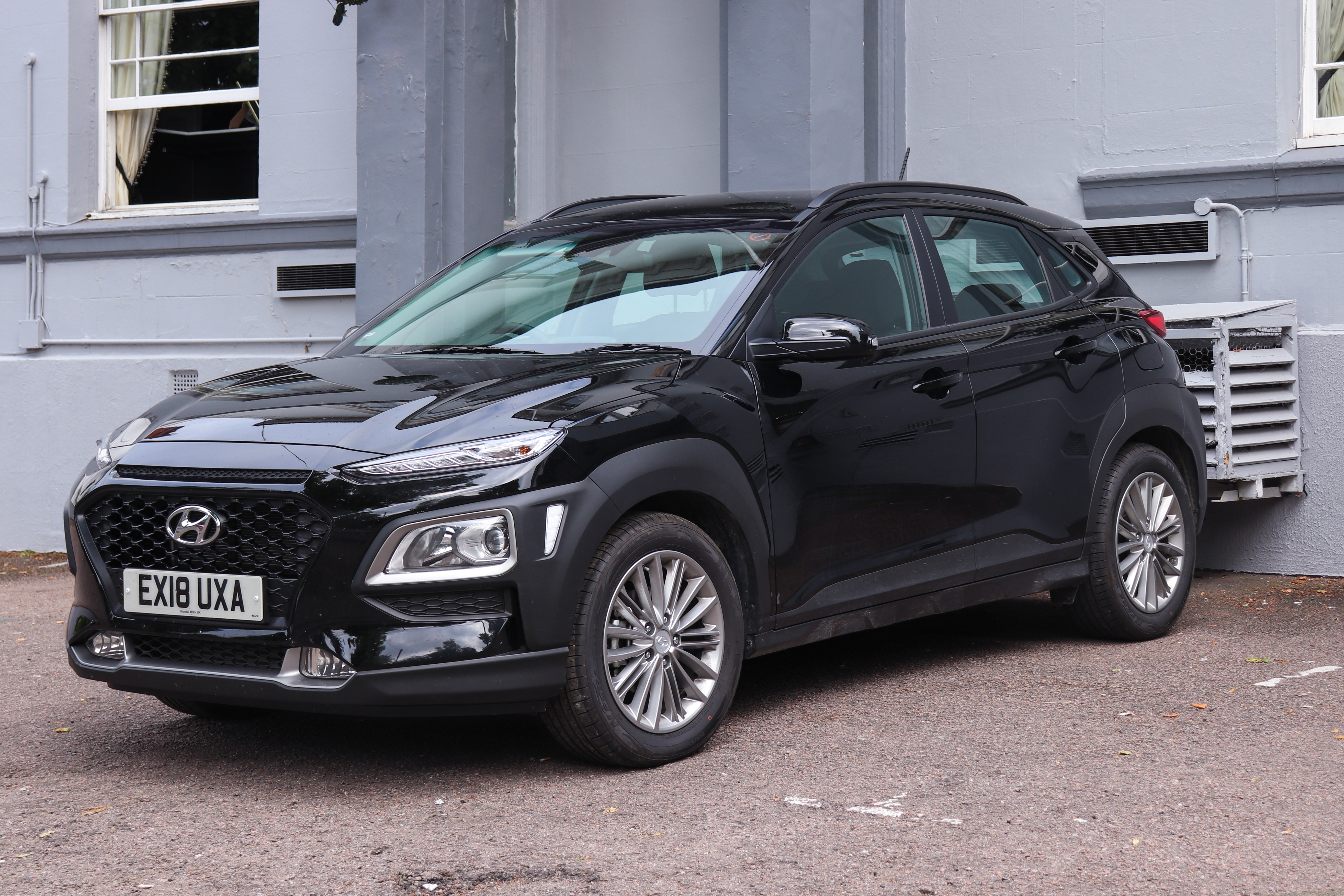
The Hyundai Kona is a small SUV that can run on petrol or electricity. The electric version can drive a long way without needing to recharge, making it popular for everyday use.
The Ford Puma is a small SUV that now comes with an electric version. This means it uses less petrol and is better for the environment while still being a good family car.
The Toyota Yaris iA is a small, simple car that doesn’t use much petrol and is easy to take care of. It’s a good choice if you want a cheap and reliable car.
The Toyota GR Yaris is a small car that is very fast and fun to drive. It’s made for people who like sporty cars but still want something they can use every day.
The Renault 5 is a small car that used to be popular a long time ago and is now coming back as an electric car. It’s designed to be easy to drive in cities and not cost too much.
Charging infrastructure means places where you can plug in and charge your electric car, like charging stations or home chargers.
LIVE
Hi, I'm Gary and this is EV Musings, a podcast about renewables, electric vehicles,
and things that are interesting to electric vehicle owners.
All on the show today, we've been looking at exactly how expensive EVs actually are.
The EV Musings podcast is sponsored by Zatmap, the go-to app for EV drivers,
helping you find and pay for public charging with confidence.
Our main topic of discussion today is the price of electric vehicles.
A report from Ernst & Young in December last year indicated that people
are moving back towards petrol from an electric vehicle.
Now, according to the survey, which was carried out in September and October 2025,
expensive upfront purchase cost was the top factor,
terrarial respondents from opting for an electric vehicle, with 41% citing this reason.
Meanwhile, limited range, 36%, had expensive battery replacement,
30% with the next most prominent reasons, among respondents for choosing not to go electric with
their next vehicle purchase. If you've been listening to this podcast for long enough,
you'll know what I'm going to say next, and it's all down to poor education.
The facts counteract the feelings. EVs don't have poor range, as of mid-2025,
the average range for UK EV was 300 miles, as per the SMT, and battery replacement is neither
expensive, as any replacements usually occur under warranty, nor required, as most batteries
don't need replacing. Which leaves the old bugbear of they're too expensive.
So today, I want to do some sums and see what sort of costs we're talking about when it comes
to electric vehicles. I'm going to start with a report produced by Electric Vehicles UK
called the Cost of Driving Electric Report Code for Short. Clever.
In the introduction to that report, Motring journalist and EV reviewer Ginny Buckley said,
quote, these figures expose a striking disconnect in public perception and underscore the indispensable
role of the EV UK Cost of Driving Electric Report in setting the record straight on the true
affordability of electric car ownership, end quotes. The summarised data indicate that 80%
of people saved by moving to an electric vehicle, the average saved is £5,850,
and a used EV is usually £2,781 cheaper than used internal combustion engine vehicle.
Now, before we go any further, I want to address the elephant in the room,
which will be that those people who are now shouting back at their device saying,
I looked and electric cars are far more expensive than petrol cars, I can't afford one.
Well, that's possibly correct. But only in the context of your personal circumstances.
Your individual circumstances will define what you can and cannot afford. Now, I, for example,
couldn't afford to take out a loan to buy a new £53,000 Polestar 2 long range dual motor.
The repayments are too expensive. And it's just not worth it to me. But I could afford to get a
used Polestar 2 long range dual motor on a lease. In fact, it's costing me less per month than my
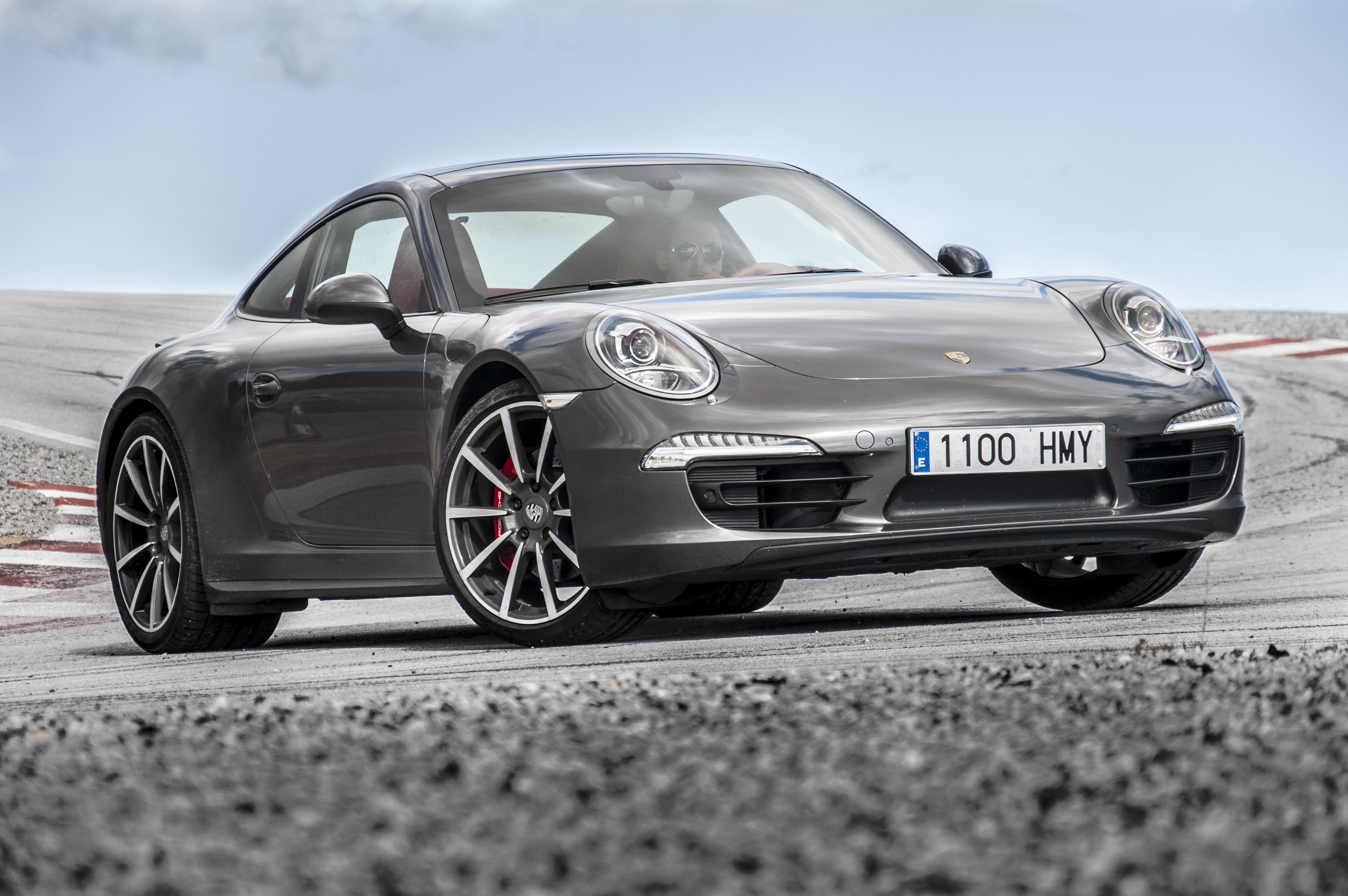
old ID3, and about £180 per month less than the loan I was repaying for one of the Porsche 911s
that I used to drive back in the early 2000s. Now, the reason I couldn't afford to take out a loan
wasn't because it was an electric vehicle, it's because it's an expensive luxury saloon.
I also couldn't afford a loan on a Porsche Panamera and Mercedes C-Class,
or a BMW 7 Series either, regardless of the powertrain. Also, if you're the sort of person
who tends to buy cheap 4-4-5th hand vehicles for £1000 and run them into the ground before
scrapping them, then yes, an EV at the moment will probably be too expensive for you. But so will
a large number of internal combustion engine cars. But what the Code Report has done is taken 50
new battery electric vehicles and 35 used battery electric vehicles and looked at the cost of
purchasing one of those according to various different methods. For 50 new vehicle models,
it compared three ownership methods which were personal contract purchase, PCP,
and leasing through salary sacrifice with both basic and high rate tax relief.
Each scenario was assessed across three different annual mileage levels
and two charging approaches, primarily home charging versus entirely public charging,
over a four-year term resulting in 270 scenarios in total. For 35 used vehicle models registered
in 2022-2023, 2019-21, and 2017-19, it compared costs against internal combustion engine vehicles
using the same mileage and fueling criteria, generating an additional 210 scenarios.
So we're looking at almost 500 different combinations of vehicle, mileage, age, purchasing
method, and time frame. Let's dig into the data. There is a broad spread of outcomes but consumers
who charge mostly at home are far more likely to save money with an EV compared to an ICE vehicle.
Only a small proportion of outcomes, few than 10%, will result in the consumer paying more.
For drivers without home charging access, the median outcome still results in a saving of £430
a year. However, there is a 42% chance that they'll end up paying more over the term of the car.
And this is all down to the cost of public charging, which of course has nothing to do with
upfront purchase price, as quoted by the Ernst & Young report. By the way, if you want to learn
more about how to cut your public charging costs, using subscriptions, cheap charge point operators,
and time of day tariffs, there's an episode coming later this season talking all about that.
In the used market, the difference is even starker. For a 6-year-old Audi e-tron, you can save almost
£12,000 against the price of an equivalent Audi Q7. 12 grand! But of course, there are many
factors that play into things like leasing an EV, which are not obvious and apparent at first glance.
For example, with many EVs, the monthly cost is relatively low for a new car, but the initial
deposit can be quite high. And if that's the case, ask your leasing company to reduce the initial
deposit down to one month and recalculate the monthly payment. The amount you'll end up paying
over the length of the lease will be the same, but it will mean you don't end up shelling out a lump
sum that you might not have. Second-hand cars are where the major financial benefits come for EV
buyers. The theory is that schemes such as lease schemes and salary sacrifice schemes bring new
cars to market and after 24, 36 or 48 months, these go to the second-hand market with all their
initial depreciation taken off. And that's how I was able to get a nicely specced Polestar 2
with the Plus and Pilot Pack for less than the cost of a much cheaper ID.3 leased from new.
Plus, I have the option of paying a relatively small balloon payment for the car
when the lease is up to take total ownership of it. So what does the cost of driving electric
ports say about used car drivers? Well, let me give you a quote. Drivers with driveways,
for used car owners with access to home charging, driving electric was cheaper in 90% of scenarios.
Where it was more expensive, it was in some instances of low annual mileage,
fewer than 5,000 miles per year. However, even in these cases, driving electric remained cheaper
for 74% of the vehicles analyzed. The average saving over five years for someone charging at a home
was £5,317. Drivers without driveways or consumers without access to home charging,
a higher cost of public charging, reduced savings at 5,000 annual miles over 60% of
used EVs were still more affordable over a five-year term than their ICE counterparts.
However, at 10,000 annual miles, this dropped to 46%. The cost of charging away from home
is a significant challenge for all stakeholders, not least drivers. End quote.
Now, you may think that this report is slightly biased being created by Dan Caesar,
Tanya Sinclair and the good people at Electric Vehicles UK, and that's a fair point,
although the data set tell the same story regardless of who's telling it.
So, I checked, and there's a report produced by Anderson EV in February 2025 that said there is a
quote pronounced difference in the cost to own and run an electric car versus an equivalent
petrol-powered model. The overall cost of running an electric vehicle is now £1,154
per annum, which is 50.2% less than the 2316 equivalent cost to run a conventional petrol-driven
car over the same period. Quote. This had calculated the overall ownership costs for an EV
and petrol-powered car by assessing the latest road tax charges, average fuel, recharge costs,
typical servicing costs and average insurance premiums, and unveiled that combustion engine
owners are spending 50% more than EV drivers. Now, let's dig a little deeper into the cost of
driving an electric report and look at specific information about used vehicles.
Now, here's a set of direct quotes from the report. Quote. Two to three year old cars
among used vehicles registered in 2022 or 2023, 12 out of the 15 most popular EVs are priced lower
than their ICE equivalents. The only exceptions are the Kia Niro EV, the MG4, and the BMW i4.
For 46 year old cars, for vehicles registered between 2019 and 2021, the trend is similar.
Eight out of 10 of the most popular battery electric cars from this period are more affordable
than their petrol counterpart. The only exceptions are the Tesla Model 3 and, as with two and three
year old cars, the Kia Niro. For six and eight year old cars, finally, looking at the oldest EVs
available in large numbers on the used market, we examine the most popular models from 2017 to
2019 and, once again, eight out of 10 EVs are priced lower upfront than their petrol equivalents.
The only exceptions, which retail for slightly more, are the Tesla Model 3 and the Hyundai Kona.
End quote. Now, again, let's look at altered sources of information to see what they say.
A recent report from car gurus found that, quote, used combustion engine models are, on average,
£2,560 more expensive than equivalent electric models of the same age and mileage
from the same manufacturer. A difference of 10%. In addition, car gurus explored the typical
mileage of models listed on the platform and found that, quote, on average EVs had 18% fewer miles,
equating to 3,250 miles less, than the comparable ICE models, further adding to their appeal.
End quote. So we've seen the data, we've used multiple sources to prove this,
but still, the general population think that EVs are more expensive than ICE cars,
and that's putting them off looking at them. So why is that? Well, good question.
And the answer is, as I stated right back at the start of this episode, education. Remember,
the vast majority of people in the UK and indeed worldwide have never sat in an electric car and
even fewer have actually driven one. A lot of what they hear about EVs comes from media that's
also created by people who've never driven one. Specifically, they'll read headlines that are
anti-EV without reading the actual article that may have more nuance and in fact be neutral
or pro-EV is clickbait. You see it all the time on social media, for example. Put anything up that
portrays EVs in a positive light and you'll soon see a stream of comments bringing up all the old
tropes and myths as mentioned right at the start. These are rehashing either facts that were accurate
six or seven years ago when EVs were more expensive or they're propagating the same talking points
they see elsewhere. But as for up-to-date experience with EV prices, many people will
have taken what they've heard from the media both mass media and social media and use that to inform
their decision. I've been told that EVs are more expensive so I'm not actually even going to look
myself to see what the situation is. I'll just take it as fact that they are more expensive.
So let's take a look at a couple of recent examples of good EV pricing. Ford recently released their
Gen E Puma, the electrified version of the best-selling car in the UK. At launch, you could get a Gen E on a
two-year lease, 15,000 miles a year free servicing and breakdown, three months deposit at £300 a month
including a free wallbox or £260 electroverse public charging credit. Now let that sink in.
A brand new EV with high annual mileage on a short-term lease for less than I was paying for
my ID three five years ago. For context, a Ford Puma ST Line X, which is the closest spec to the
Gen E Puma, could be purchased from Ford on a Ford Options Finance model for £337 per month,
but that's only 9,000 miles per year instead of 15,000, 38 months instead of 24 and a deposit of £5,000,
not 900 and you've still got £12,000 to pay at the end to take ownership.
Or how about a BYD Dolphin? You can get one on PCP direct from BYD themselves for £289
down and £289 per month over 49 months with 6,000 miles per annum. That's a great car for not a lot
of money. The nearest car I can think of that's the Intelliq Bushing engine that will be an equivalent
will be a Toyota Yaris. I chose a similar-priced Yaris GR Sport Hybrid and found a quote online
wanting £3,000 deposit, 42 payments of £392 per month and a final balloon payment of almost £12,000
on 8,000 miles per year. I know which of the two I'd be taking in either case. Now there are numerous
other examples of deals like that out there if you want to look and that's not even looking at cars
which are in and of themselves quite cheap. The LeapMotor TO3 is under £15,000, the Dacia Spring
is now cheaper for the current model year than it was for the previous model year.
£16,000 for the short range, model £17,000 for the longer range. The Renault Twingo will be £18,000
when released later this quarter. Or the Renault 5, one of the best little cars on the market at the
moment in terms of fun, performance, range and price. £21,500 for the 40kWh model and £24,000
for the 52kWh model are for comparison. That's a car that has almost the same battery size as
my last ID3 but which is £15,000 cheaper than the VW was when new. The current ID3 with the same
battery size is almost £6,000 more expensive. Even the Hyundai Insta, a great little car that's
getting rave reviews, is available on the road for under £24,000. These are all brand new prices
in a few years when these hit the second hand market. They'll be really good value but it
gets even better. Friend of the podcast Rob Shaw, you may remember he and I had a thousand-kilometer
journey one day around the charging wastelands of the UK in episode 102 as recently released an
excellent video showing some of the pre-registered savings you can make on very low mileage EVs.
Dealers are pre-registering their cars, which is a practice that's been going on for years to
massage registration figures, and they sell them off with mileage is as low as 10 miles on the clock
and at substantial discounts. Rob quotes several examples including a BYD Atto 3 list price of
£38,800 with a £12,000 discount as 30% of the price just because it's pre-registered. Now I'm
not going to say that this is an EV only thing because as I just mentioned pre-registering cars
at dealerships has been going on since figures were first compiled. If a car is registered and has a
number plate it's counted as a sale in that month and it goes into the SMMT statistics as a sale
regardless of whether it's actually still sitting on a deal of forecourt or not. Don't
blame the player, blame the game. So as we bring this episode to a close let's summarize what we've
learned. Despite what the media and social media will tell you EVs are not generally more expensive
than similar in terms of combustion engine cars. Research indicates that moving to an EV
especially if you've got a driveway can save you thousands per year. Used EVs which will form the
majority of the EV market moving forward are extremely good opportunities for bargains.
Again buying news and having a driveway will save you money compared with an ICE car.
If you don't have a driveway the savings will depend on your annual mileage and the state of the
local charging infrastructure near you. Although you can use services such as juicer or co-charger to
find local people with spare chargers, spare charger capacity that you can use overnight to charge
your car and more on that later this season. So what do you think? Anything surprise you or
astonish you here? If you're watching this and you don't drive electric what are your impressions?
The EV Musings podcast is sponsored by Zatmap, the go-to app for EV drivers helping you find
and pay for public charging with confidence. Zatmap is free to download and use with subscription
plans for enhanced features such as using Zatmap in car, on carplay or android auto
and discounted charging across thousands of charge points.
Reaction email me at info at musings.com I hope you enjoyed listening to today's show
is put together with the help of Electric Vehicles UK and their cost of driving electric report.
If you have any thoughts, comments, criticisms or other general messages to pass on to me
I can be reached at info at evmusings.com On the socials I'm on Blue Sky at evmusings.bsky.social
I'm also on Instagram at evmusings where I post those little short videos in the odd podcast
extract regularly. Why not follow me there?
Many thanks to everyone who supports me through Patreon on the monthly basis
and through coffee.com on an ad hoc basis. Now if you enjoyed this episode why not buy me a coffee
go to coffee.com slash evmusings and you can do just that ko-fi.com slash evmusings takes apple pay to
you. Regular listeners will know about my two ebooks so you've gone electric and so you've
gone renewable. Now they're 99p each or equivalent and you can get them on the Kendall store on Amazon.
Now check out the links in the show notes for more information as well as a link to my regular
evmusings newsletter and associated articles. Now I've spoke to a few of you and I know that
you're probably driving, walking, jogging, ironing or you know sat on the sofa watching this on your
phone but if you can remember and you enjoyed the episode drop a review in iTunes please,
like, subscribe, leave a comment on YouTube because it really helps. Thank you very much.
If you've reached this part of the podcast and are still listening thank you very much.
Why not let me know you've got to this point by messaging me at musings.bsky.social with the words
cheap as chips. Hashtag if you know you know nothing else. And thanks as always to my co-founder
Simon you know he agrees with everything I said here today. Thanks for listening. Bye bye now.
About this episode
Exploring the true cost of electric vehicles, this episode breaks down common misconceptions about EV prices, range, and battery replacement. Drawing on reports from Electric Vehicles UK and Anderson EV, it highlights how many EVs, especially used ones, are often cheaper to own and run than petrol cars. The discussion covers various ownership methods, charging habits, and the impact of home versus public charging costs. It also addresses why public perception lags behind reality, emphasizing the need for better education and firsthand experience with EVs to overcome outdated myths.
In this episode of the show Gary discusses the true costs associated with electric vehicles and debunks common myths surrounding their affordability.
He highlights the CODE Report indicating that many consumers are deterred from purchasing EVs due to perceived high upfront costs, limited range, and expensive battery replacements.
However, he presents data showing that the majority of EV owners actually save money over time, especially those with home charging capabilities. The conversation emphasizes the importance of education in changing public perception about EV pricing and ownership.
Takeaways
Expensive upfront costs deter many from choosing EVs.
Limited range and battery replacement costs are common concerns.
Education is crucial in countering misconceptions about EVs.
80% of people save money by switching to EVs.
Home charging significantly increases savings with EVs.
Public charging costs can affect overall savings.
Used EVs often provide better value than ICE vehicles.
Many consumers have never driven an electric vehicle.
The cost of running an EV is significantly lower than ICE cars.
Pre-registered EVs can be found at substantial discounts.
Key Sound bite
"The average saving is £5,850 with an EV."
Chapters
00:00 The Cost of Electric Vehicles: An Overview
05:09 Understanding Savings with Electric Vehicles
07:02 CODE Quotes
08:01 What do other sources say
11:22 Debunking Myths: Education on EV Costs
12:41 Recent pricing Examples
15:16 Dealer Preregistrations
16:28 Conclusion: The Future of EV Affordability
The EV Musings Podcast is sponsored by Zapmap, the go-to app for EV drivers, helping you find and pay for public charging with confidence.
The EV Musings Podcast is sponsored by Zapmap, the go-to app for EV drivers, helping you find and pay for public charging with confidence. Zapmap is free to download and use, with subscription plans for enhanced features such as using Zapmap in-car on CarPlay or Android Auto, and discounted charging across thousands of charge points.
Download the app from the Apple App Store or Google Play Store or find out more at www.zapmap.com.