297 The Electricity Pricing Episode
About this episode
Wholesale electricity pricing in the UK is driven by marginal pricing: the wholesale price reflects the most expensive source dispatched, with the grid using half-hour demand forecasts. Contracts for Difference (CfD) then reshape generator payments via strike prices, so wind can still coincide with higher wholesale outcomes when gas sets the marginal price. Even when spot prices fall, LCCC/CfD-related money and curtailment payments don’t flow back into the spot price paid by suppliers, keeping bills high. Levies and system costs add further pressure.
I wanted to dig into one of the most confusing and frustrating topics for EV drivers - why electricity bills keep rising even as more renewables come online.
In this episode, I break down how electricity pricing actually works in the UK. From wholesale markets and marginal pricing to Contracts for Difference, curtailment payments, grid constraints, and all the hidden levies that end up on your bill, this is a clear-eyed look at why gas still dominates pricing and what it means for EV owners.
What You’ll Discover
- How Marginal Pricing Works: Why the price of the most expensive source (often gas) sets the wholesale price for everyone, even when most power comes from cheap wind and solar.
- Contracts for Difference (CfD) Explained: How strike prices, the Low Carbon Clearing Company (LCCC), and payments flow between renewables and the grid, and why this system doesn’t always reduce consumer bills.
- The Hidden Costs Driving Up Your Electricity Bill: Curtailment payments, transmission constraints, levies, VAT differences, and why domestic gas often looks cheaper than electricity despite the headlines.
What is clear is just how complex and inefficient the current system has become. We’re generating more cheap, clean power than ever, yet structural issues like marginal pricing, curtailment, and regional transmission problems mean we’re still paying gas prices for much of our electricity and footing the bill for millions in payments to switch off renewables. It’s a fascinating but frustrating picture.
If you’ve ever wondered why public charging feels expensive or why your home electricity bill doesn’t reflect all those windy days, this episode cuts through the noise and gives you a much clearer understanding of what’s really going on.
The EV Musings Podcast is sponsored by Zapmap, the go-to app for EV drivers, helping you find and pay for public charging with confidence.
Episode produced by Arran Sheppard at Urban Podcasts: https://www.urbanpodcasts.co.uk
(C) 2019-2026 Gary Comerford
Support me:
Patreon Link: http://www.patreon.com/evmusings
Ko-fi Link: http://www.ko-fi.com/evmusings
The Books:
'So, you've gone electric?' on Amazon : https://www.amazon.co.uk/dp/B07Q5JVF1X
'So, you've gone renewable?’ on Amazon : https://amzn.to/3LXvIck
Social Media:
EVMusings: Twitter https://twitter.com/MusingsEv
Instagram: @EVmusings
Octopus Energy referral code (Click this link to get started) https://share.octopus.energy/neat-star-460
Upgrade to smarter EV driving with a free week's trial of Zapmap Premium, find out more here https://evmusings.com/zapmap-premium
Mentioned in this episode:
Zapmap
The EV Musings Podcast is sponsored by Zapmap, the go-to app for EV drivers, helping you find and pay for public charging with confidence. Zapmap is free to download and use, with subscription plans for enhanced features such as using Zapmap in-car on CarPlay or Android Auto, and discounted charging across thousands of charge points. Download the app from the Apple App Store or Google Play Store or find out more at www.zapmap.com.
CPOs
"When we talk about electricity costs, we're talking of the wholesale price to use as such as CPOs and the price the energy companies pay to the energy suppliers."
CPOs are the companies that run public EV charging stations. They buy electricity and then sell it to drivers at the charger.
CPOs stands for Charging Point Operators. They own and operate public charging hardware and typically buy electricity (often at wholesale rates) to supply it to drivers.
wholesale price
"When we talk about electricity costs, we're talking of the wholesale price to use as such as CPOs and the price the energy companies pay to the energy suppliers."
Wholesale price is the price of electricity at the “bulk” market level. Retail prices (what you pay at home) are built on top of that.
In electricity pricing, the wholesale price is what electricity suppliers pay/charge at the market level before it becomes part of a retail bill. EV charging costs often track these wholesale dynamics because utilities and charging networks buy power in bulk.
marginal cost of wind and solar vs gas or coal
"If your energy is coming from wind and solar, the price would be lower than gas or coal. Even if everything else in the generation was the same cost, the fact that an energy company needs to buy coal and gas to generate electricity means that this energy will be more expensive than wind and solar..."
They’re comparing power sources: wind/solar don’t need fuel, while gas/coal do. Fuel-burning plants tend to make electricity more expensive when they’re used.
The hosts are contrasting how different generation sources affect electricity prices: wind and solar can be cheaper because they don’t require fuel purchases per kWh, while gas and coal plants must buy fuel. That fuel requirement changes the cost structure that shows up in wholesale pricing.
zero marginal cost
"Even if everything else in the generation was the same cost, the fact that an energy company needs to buy coal and gas to generate electricity means that this energy will be more expensive than wind and solar, where the source energy has a zero marginal cost."
Zero marginal cost means the “extra cost” to make one more unit of electricity is very low. Wind and solar don’t burn fuel, so their per-unit cost can stay lower than fuel-burning power plants.
Zero marginal cost means that once a power plant is built and operating, producing one more unit of electricity has little to no additional fuel cost. Wind and solar are often described this way because they don’t require buying fuel per kWh the way gas or coal plants do.
grid
"So the generators, wind farms, solar farms, hydrodams, gas power plants, etc, sell their [302.1s] energy to the grid."
The “grid” is the big electricity network that delivers power from where it’s made to where people use it. It has to keep supply and demand matched so the lights don’t flicker or go out.
In electricity pricing, the “grid” is the large network that moves electricity from generators (like wind farms or power plants) to homes and businesses. It has to balance supply and demand in real time so the system stays stable.
demand forecast
"The grid needs to know what energy will need at a given time during the day. [309.7s] So they split the day into 24 half hour chunks and each of these chunks has a demand forecast."
A demand forecast is a prediction of how much electricity people will use at certain times. Utilities use it to decide how much power to generate so they don’t run short.
A demand forecast is an estimate of how much electricity will be needed at different times. Grid operators use it to plan which power sources to dispatch so they can meet expected peaks without shortages.
peak
"And this is related to weather conditions, time of day and expected peaks. [320.0s] You can expect the demand for energy at 6.30pm on a cold winter's evening to be more than"
A “peak” is when electricity use is at its highest. During those times, the grid may need to use more costly power sources to keep up.
“Peak” demand is the highest electricity usage period during the day (often evenings). Those peaks typically require more expensive or slower-to-start generation to cover the extra load.
megawatt hours
"So say for 4.30 to 5am, the demand might be x megawatt hours of energy. [332.7s] The natural grid will buy that from the different energy sources."
A megawatt-hour (MWh) measures how much energy is used or produced. Think of it like “power for a certain amount of time,” such as running 1 megawatt for one hour.
A megawatt-hour (MWh) is a unit of energy, not power. It represents using 1 megawatt of power for one hour, which is how electricity markets often measure how much energy is delivered.
kilowatt hour
"if you want [353.4s] to use my wind energy, you'll pay me 12 pence a kilowatt hour. [356.9s] The government keeps going until it calculates that it has enough little packets of energy"
A kilowatt-hour (kWh) is the unit most electricity bills use. It’s how much energy you use when you run 1 kilowatt of power for one hour.
A kilowatt-hour (kWh) is a unit of energy commonly used for electricity bills. It means using 1 kilowatt of power for one hour, and it’s the basis for many retail and wholesale electricity prices.
interconnections
"Some cheap wind, some more expensive nuclear, maybe some energy bought from France or Belgium [371.3s] through interconnections."
Interconnections are cables/links that connect one electricity network to another. They let countries share power to help keep the grid balanced.
Interconnections are physical links between electricity grids in different regions or countries. They let electricity flow across borders so the grid can balance supply and demand when local generation is insufficient or expensive.
wholesale electricity market
"But under the current electricity market, the wholesale price of energy is calculated as the price of the most expensive source of energy used."
This is the market where electricity is bought and sold in bulk before it gets to your home or business. The price there can influence what you pay.
The wholesale electricity market is where electricity is priced and traded before it reaches end customers. Wholesale prices can be driven by the cost of the marginal (most expensive needed) generation, and those costs can flow through to retail bills.
marginal pricing
"This is a concept known as marginal pricing. So if the grid needs x kilowatt hours of energy, and 90% of that is sourced from wind, nuclear and imports at 9 pence a kilowatt hour average, the fact that 10% is sourced from gas at 20 pence a kilowatt hour means that the wholesale price of energy to everyone is 20 pence a kilowatt hour."
It’s a pricing rule where the electricity price is set by the “last and most expensive” power plant needed to keep the lights on. That means cheap energy can still end up priced high if some costly energy is required.
Marginal pricing is how wholesale electricity prices are set: the market price is based on the cost of the most expensive power source needed to meet demand. So even if most electricity comes from cheaper sources, the presence of a small amount of expensive generation can set the price for everyone.
strike price
"Now, job fairly AW renewables is contracted for a strike price of 12 pence a kilowatt hour. But now because of gas, he's been paid 20 pence a kilowatt hour. Fantastic."
The strike price is the agreed electricity price in advance. Under a contract for difference, the real market price is compared to this number to decide whether money is paid in or paid back.
The strike price is the predetermined price per unit of electricity (here, pence per kilowatt-hour) set in a CfD. It acts as the target value the generator is meant to receive, with payments adjusted based on the actual market wholesale price.
contract for difference
"And that's what's known as the contract for difference. Now, the simple question to be asked is, if John Fairley is willing to supply energy to the grid from his turbine at 12 pence a kilowatt hour, why would he then be paid 20 pence a kilowatt hour only to pay back the difference?"
A contract for difference is like a price guarantee for renewable energy. If electricity sells for more than the agreed price, the generator gives the extra back; if it sells for less, they get help to reach the agreed price.
A contract for difference (CfD) is an agreement that guarantees a generator a fixed “strike price” for electricity. If the market price is higher than the strike price, the generator pays back the difference; if it’s lower, the counterparty pays the generator the shortfall.
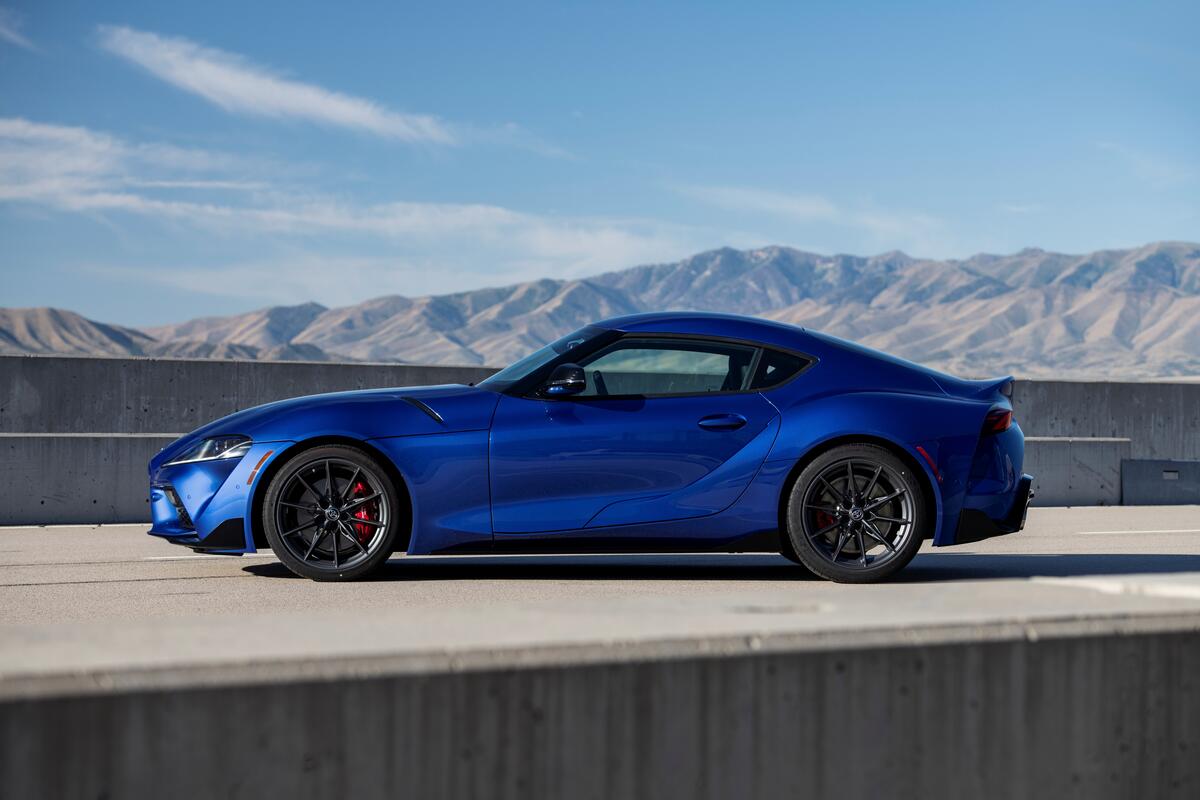
Toyota A90
"Second thing to consider. 8 PKW gas coming into your home and a 90% efficient combi boiler means your marginal cost of KW for heat is probably 9 PKW or somewhere around that."
The Toyota Supra is a sports car made by Toyota. It’s designed to feel fast and fun to drive, with a focus on performance. In this podcast, it’s brought up in the middle of a discussion that’s mostly about electricity and heating costs.
The Toyota Supra is a sports coupe known for its performance-focused design and strong enthusiast following. It’s often discussed in automotive podcasts because it represents a blend of everyday usability with track-capable driving dynamics. In this episode, it’s mentioned as part of the broader conversation, even though the surrounding topic is about energy costs rather than the car itself.
renewables obligation
"And then everything on top of that is additional costs and fees. So that might be the renewables obligation to pay for people to build wind turbines."
This is a government-style add-on that helps pay for building renewable power, such as wind farms. It shows up as an extra line item on your electricity bill.
The renewables obligation is a policy mechanism that adds a charge to electricity bills to help fund renewable generation (like wind). In practice, it’s one of the “top-up” costs layered onto the base energy price.
CFD
"It might be the CFD to pay for Hinkley Point."
A CFD is a contract that helps protect certain power projects from price swings. If electricity prices are too low, the contract makes up the gap so the project still gets paid.
CFD usually refers to a Contract for Difference, a type of energy subsidy/price-stabilization contract used to support specific power projects. If market prices are lower than the contract strike price, the difference is paid out to the generator.
capacity market
"It might be the capacity market to pay for the gas plant to generate in the middle of the night when no one else is generating."
A capacity market is like paying power plants for standing by and being ready. The goal is to prevent shortages when demand is high or renewable output is low.
A capacity market is a mechanism that pays power plants for being available to generate, not just for the electricity they produce. It’s intended to ensure there’s enough generation capacity during peak demand or low-renewables periods.
VAT
"You've then got your levies, so your warm home discount, all that sort of stuff. You've got your 5% VAT and somewhere in between all of this, you've got your cost to serve,"
VAT is a tax added to purchases. It can make your electricity bill higher even if the underlying electricity cost is relatively low.
VAT (Value-Added Tax) is a consumption tax applied to goods and services, including parts of electricity bills. It’s one of the taxes that can increase the final retail price beyond the underlying energy and policy charges.
cost to serve
"somewhere in between all of this, you've got your cost to serve, which is basically the money that an electricity company charges to run a call centre, generate a bill and physically move the electron around."
Cost to serve is what the electricity company spends to manage your account and deliver the service. It’s not the “power itself” cost, but it still gets added to your bill.
Cost to serve is the retail utility’s overhead and operational expense—things like running customer support, issuing bills, and administering metering and billing systems. It’s separate from the wholesale cost of the electricity itself.
Off Gem
"You can get that data from the Off Gem segment and reporting."
Ofgem is the organization that regulates UK energy companies. Their reports can show how much money companies make and where costs come from.
Ofgem is the UK energy regulator that oversees electricity and gas markets. When the speaker says you can get data from Ofgem reporting, they mean regulatory publications about costs, returns, and market structure.
curtailment and regeneration fees
"And if we didn't have to deal with curtailment and regeneration fees, [1277.8s] we could instantly take about £1.5 billion per year off energy costs, and that's £52 per UK household."
Curtailment is when grid operators reduce or stop output from generators (often renewables) because the system can’t absorb all available power. Regeneration fees (as referenced here) are charges tied to grid balancing actions, which can add cost when the grid has to manage excess generation.
marginal cost pricing
"But I think that also in the contracts so that we don't price everything at the marginal price [1311.7s] will probably be a good start, don't you?"
Marginal cost pricing is when electricity price follows the cost of making the next bit of power. The problem is that the next bit might be expensive, so the whole price can jump even if cheaper sources are available.
Marginal cost pricing means electricity prices are set based on the cost of producing the next unit of power. In practice, that can cause prices to spike even when some generation sources (like renewables) have low operating costs, because the “next unit” may come from more expensive plants.
levelized cost of ownership (LCO) for renewables vs fossil fuel generation
"we haven't covered things such as price caps and how they work, [1320.4s] or levelized cost of ownership for renewables versus fossil fuel generation, [1324.9s] or how nuclear plants are priced and paid for,"
This is a “lifetime cost” comparison method. It estimates what it costs to build and run different types of power plants over many years, then averages it per unit of electricity.
Levelized cost of ownership (often discussed as levelized cost of energy) is a way to compare how expensive different power sources are over their full lifetime. It spreads upfront and ongoing costs across the total electricity produced, making renewables and fossil generation comparable on a common basis.
Request an Explanation
Heard something you'd like explained? We'll add it to this episode.
Sign in to request explanations for terms you heard.
Want to learn more?
Browse our glossary for plain-English explanations of automotive terms, jargon, and concepts.
Help improve this episode
See something that's not quite right? Our annotations are AI-generated and can sometimes miss the mark. Click the flag icon on any annotation to suggest a correction.