
341: Blind Spot Angle Verification
About this episode
Dive into the intricacies of blind spot radar sensor calibration, focusing on rear corner modules used in many modern vehicles. The discussion covers different module configurations, calibration challenges after body repairs, and the importance of precise target placement using tools like five-line lasers. Unique insights include variations in calibration methods across manufacturers, the use of Doppler setups to simulate moving targets, and practical tips for quick measurement referencing via the Autel website. The episode also highlights common issues such as corrosion in GM modules and stresses the need for accurate setup to ensure proper blind spot detection functionality.
This week on the show I share our experiences with calibrating blind spot modules/sensors on vehicles that have been in a collision. In addition to the standard radar calibration, the physical mounting angles of the sensor must be measured and adjusted if damage occurred. Listen to hear our solution to measuring both the vertical and horizontal angles.
Website- https://autodiagpodcast.com/
Facebook Group- https://www.facebook.com/groups/223994012068320/
YouTube- https://www.youtube.com/@automotivediagnosticpodcas8832
Email- [email protected]
Please make sure to check out our sponsors!
SJ Auto Solutions- https://sjautosolutions.com/
Automotive Seminars- https://automotiveseminars.com/
L1 Automotive Training- https://www.l1training.com/
Autorescue tools- https://autorescuetools.com/
GDI diagnostics
""...they've got Keith Perkins and John Thornton putting on classes like network diagnostics, mechanical engine testing, advanced electrical testing, and GDI diagnostics...""
GDI diagnostics means checking a special way cars put gas into the engine to make sure it works well.
GDI diagnostics involves troubleshooting issues related to Gasoline Direct Injection systems, which deliver fuel directly into the combustion chamber for improved efficiency and performance.
mechanical engine testing
""...they've got Keith Perkins and John Thornton putting on classes like network diagnostics, mechanical engine testing...""
Mechanical engine testing means checking the engine's parts to see if they are working well and not damaged.
Mechanical engine testing involves assessing the physical condition and performance of an engine's mechanical components, such as compression tests and leak-down tests.
advanced electrical testing
""...they've got Keith Perkins and John Thornton putting on classes like network diagnostics, mechanical engine testing, advanced electrical testing...""
Advanced electrical testing means using special tools to check the car's electrical parts to make sure they work right.
Advanced electrical testing refers to sophisticated methods used to diagnose electrical systems in vehicles, including sensors, wiring, and control modules.
network diagnostics
""...they've got Keith Perkins and John Thornton putting on classes like network diagnostics, mechanical engine testing...""
Network diagnostics means checking how different parts of a car talk to each other using special wires and signals, to find out if something is broken.
Network diagnostics in automotive refers to the process of troubleshooting and analyzing the communication networks within a vehicle, such as CAN bus systems, to identify faults or issues.
Blind Spot Module
"I'm going to be talking about Blind Spot Module or sensor calibration today. These are the radar sensors that you're going to see on the rear corners of vehicles."
The Blind Spot Module is a safety feature that helps you see cars or things that are hard to see in your side mirrors. It uses sensors to warn you if something is in your blind spot.
A Blind Spot Module is an electronic system in vehicles that uses sensors to detect objects in the driver's blind spots, usually located on the rear corners of the vehicle. It alerts the driver to vehicles or obstacles that may not be visible in the side mirrors.
radar sensors
"These are the radar sensors that you're going to see on the rear corners of vehicles. You can also see radar sensors that are effectively going to be the same thing, both on the front corners of some newer vehicles."
Radar sensors are like eyes for the car that use radio waves to find things nearby. They help the car know if there are other cars or objects close by.
Radar sensors in vehicles emit radio waves to detect objects around the car by measuring the reflected signals. They are commonly used for safety features like blind spot detection and adaptive cruise control.
adaptive cruise control
"You could even group in the forward radar on these with the front radar for adaptive cruise control. The calibration process is going to be relatively similar..."
Adaptive cruise control is a smart feature that helps your car keep a safe distance from the car in front by slowing down or speeding up automatically.
Adaptive cruise control is an advanced driver assistance system that automatically adjusts a vehicle's speed to maintain a safe distance from the vehicle ahead. It uses radar or other sensors to detect traffic conditions.
ADAS calibrations
"...one of the services that we offer, of course, is doing ADAS calibrations. After a vehicle repair, usually involving body or structural repair..."
ADAS calibrations are adjustments made to the car's safety systems after fixing or changing parts so they work properly again.
ADAS calibrations refer to the process of adjusting Advanced Driver Assistance Systems, such as cameras and sensors, to ensure they function correctly after vehicle repairs or part replacements.
General Motors
"...We see that a lot with General Motors vehicles, of course. They're well known to have major corrosion issues in the Blind Spot Modules..."
General Motors is a big car company that makes brands like Chevrolet and Cadillac. Some of their cars can have problems with rust that affects parts like sensors.
General Motors is a major American automotive manufacturer known for brands like Chevrolet, GMC, Cadillac, and Buick. Some of their vehicles have known issues with corrosion affecting electronic modules.
master-slave configuration
"in like a master-slave configuration where maybe you can only talk to the left module, and then the left module actually receives data on a private can from the right side or something like that."
It's like one device is the boss and talks to other devices, which listen and respond only through the boss.
A master-slave configuration refers to a setup where one module (the master) controls or communicates with one or more subordinate modules (the slaves), often limiting direct communication to the master module.
CAN bus
"left module actually receives data on a private can from the right side or something like that. Sometimes, you still have master-slave set up, but you can still talk to them both with the scan tool."
It's like a language that car parts use to talk to each other inside the vehicle.
CAN bus (Controller Area Network) is a vehicle communication system that allows different electronic modules to exchange data efficiently and reliably.
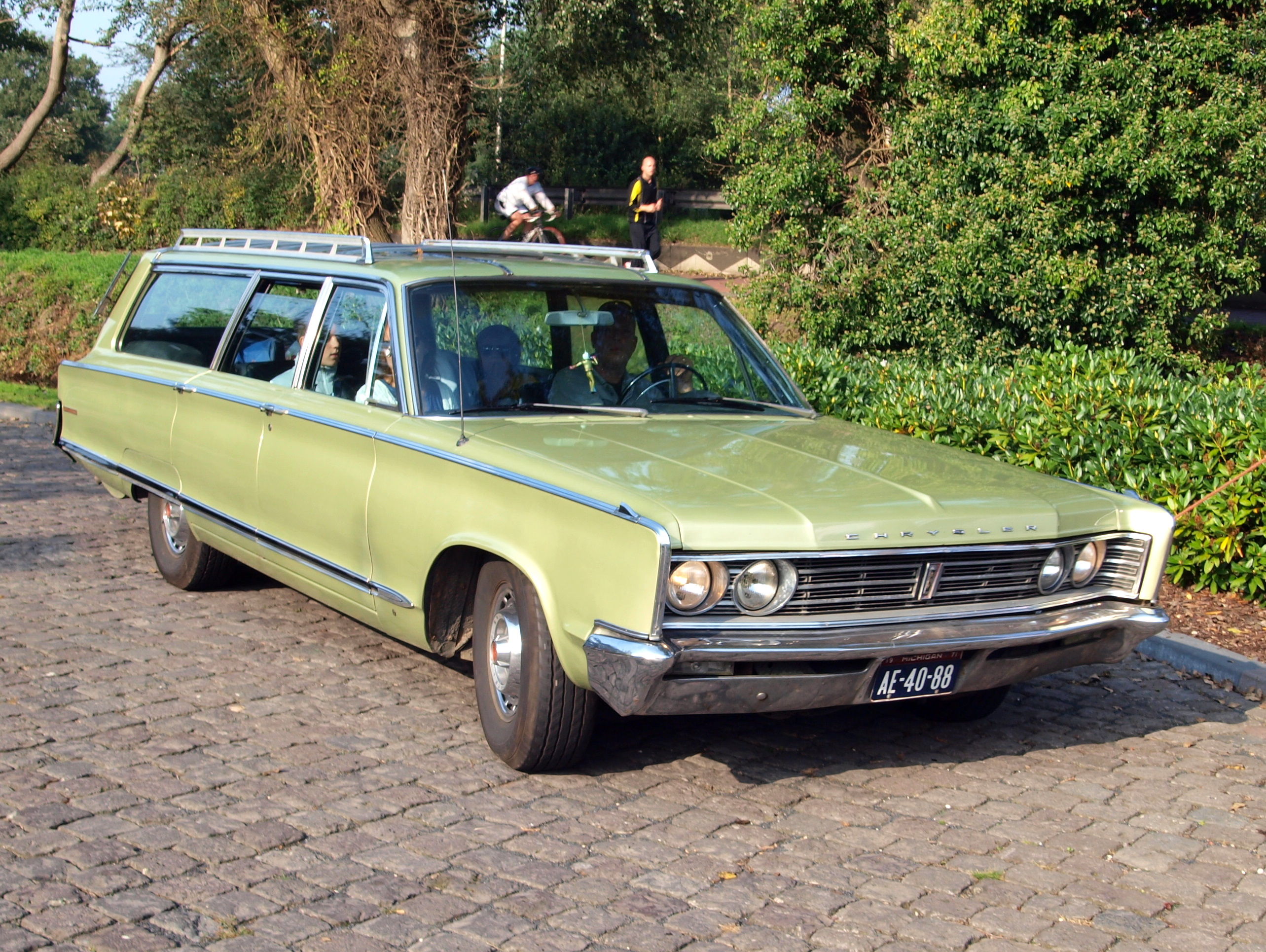
Chrysler Town and Country
"one that comes to mind on that is like Chrysler Town and Country minivans. The sensors themselves do their thing, they do the radar thing, and then there's a separate module, which is your blind spot module, which takes information from both of those."
It's a type of family van made by Chrysler that has safety features to help you see cars next to you.
The Chrysler Town and Country is a minivan known for its family-friendly features and was produced by Chrysler until 2016. It often features advanced safety systems including radar sensors for blind spot detection.
blind spot system
"And these are actually impressive sensors, not only that they can measure the distance and the angle and whether there's a vehicle in your blind spot... it has to be programmed to not trigger the light."
A blind spot system helps you know if another car is next to you where you can't easily see. It warns you so you don't accidentally hit that car when changing lanes.
A blind spot system uses sensors to detect vehicles in areas that are difficult for the driver to see, typically alongside and slightly behind the car. It alerts the driver, often with a light, to help avoid collisions during lane changes.
sensor calibration
""...when these things get replaced, or certain components removed, or again structural damage, and we see this a lot, they have to be calibrated. But there's a second piece to this...""
After fixing or changing parts of a car, the sensors that help keep you safe need to be adjusted so they work right. This adjustment is called calibration, and it helps the sensors spot other cars properly.
Sensor calibration is the process of adjusting vehicle sensors after repairs or replacements to ensure they function correctly. This is especially important for safety systems like blind spot detection, which rely on precise sensor positioning and alignment.
radar cone
"we're either going to be using the radar cone that's going to reflect the signal back to the radar, or potentially depending on the application number."
A radar cone is a special tool that bounces radar signals back to your car's sensors so they can be checked and adjusted to work properly.
A radar cone is a calibration tool used to reflect radar signals back to a vehicle's radar sensor during system calibration. It helps ensure the radar system accurately detects objects by simulating real-world reflections.
Mazda
"And from what I can read on this, it's actually simulating a moving target with those Doppler setups. And there's Mazda's, and there's Volkswagen Audis that require that setup."
Mazda is a company that makes cars. Some of their cars need special tools to check their radar sensors.
Mazda is a Japanese automaker known for its innovative engineering and sporty vehicles. Some Mazda models require specialized radar calibration setups like the Doppler setup.
Volkswagen Audi
"And from what I can read on this, it's actually simulating a moving target with those Doppler setups. And there's Mazda's, and there's Volkswagen Audis that require that setup."
Volkswagen and Audi are car companies from Germany. Some of their cars need special tools to check their radar sensors.
Volkswagen and Audi are German automotive brands under the Volkswagen Group. Certain models from these brands require Doppler radar calibration setups for their advanced driver assistance systems.
Autel
"...you can go onto the Autel website and just look up ADAS coverage, and you can enter your vehicle..."
Autel makes tools that mechanics use to check and fix car computers and safety systems.
Autel is a company that provides automotive diagnostic tools and equipment, including scan tools and software for calibrating vehicle systems such as ADAS.
bumper
""...Did you just have the bumper off? Was it any type of collision? That's our real important question that we ask is was there damage to this vehicle structurally? And if there was, we tell them, hey, we need access to this sensor so that a lot of the times is bumper off...""
The bumper is the part at the front or back of a car that helps protect it if you bump into something.
The bumper is a protective component at the front or rear of a vehicle designed to absorb impact in minor collisions and protect other parts like sensors.
front radar
"And again, same thing for front radar, we see this a lot with front radars, they get dinged or smacked in the front, and they'll replace the radar,"
Front radar is a sensor at the front of the car that helps it see other cars or objects by sending out radio waves. It helps keep you safe by warning or slowing the car if something is too close.
Front radar is a sensor typically mounted at the front of a vehicle that uses radio waves to detect objects and measure their distance and speed. It is a key component in advanced driver assistance systems like adaptive cruise control and collision avoidance.
control module
""...sourcing, installing and programming a used control module in a vehicle? I know a lot of us have. It seems to be happening more and more often today with the volume of control modules on vehicles...""
A control module is like a small computer in your car that helps control how things work, like the engine or brakes. When you replace it, you might need to copy its settings so it works right.
A control module is an electronic component in a vehicle that manages various functions such as engine performance, transmission, or safety systems. They often require programming or cloning when replaced to work correctly with the vehicle.
salvage vehicle
"especially if you're dealing with, you know, a salvage vehicle that's been totaled, you know,"
A salvage vehicle is a car that got damaged so badly it was called a total loss by insurance. It might need a lot of fixing before it can be driven again.
A salvage vehicle is a car that has been declared a total loss by an insurance company due to damage, often from an accident. These vehicles may require extensive repairs before being roadworthy again.
angle gauge
""If you have an angle gauge, you could use a bubble angle gauge. I have a digital one, you just put the angle gauge up against it.""
An angle gauge is a tool that helps you check if something is tilted the right way. In cars, it's used to make sure sensors are lined up correctly.
An angle gauge is a tool used to measure the angle or tilt of a component relative to a reference surface, often used in automotive sensor calibration to ensure proper alignment.
scan tool
"If it's a scan tool, I'm obviously not going to build a scan tool. So I'm going to buy it from"
A scan tool is a gadget that connects to your car to find out if anything is wrong or to help fix problems.
A scan tool is an electronic device used to communicate with a vehicle's onboard computer to diagnose issues, read error codes, and perform system calibrations.
Request an Explanation
Heard something you'd like explained? We'll add it to this episode.
Sign in to request explanations for terms you heard.
Want to learn more?
Browse our glossary for plain-English explanations of automotive terms, jargon, and concepts.
Help improve this episode
See something that's not quite right? Our annotations are AI-generated and can sometimes miss the mark. Click the flag icon on any annotation to suggest a correction.