So, before we get to Gary Patterson with Shelby American, I have two big announcements to make here.
Now, the second one you'll really want to hear because I'm giving a sneak peek as far as what
replaced my beloved 1965 Mustang, Fastback, Caspian blue over blue hypo that I sold a couple
months ago.
So, that's coming up here shortly.
But before that, I would like to announce a new sponsor for the podcast, California
Car Covers.
Now, they were great in helping me source two covers for those two special cars I
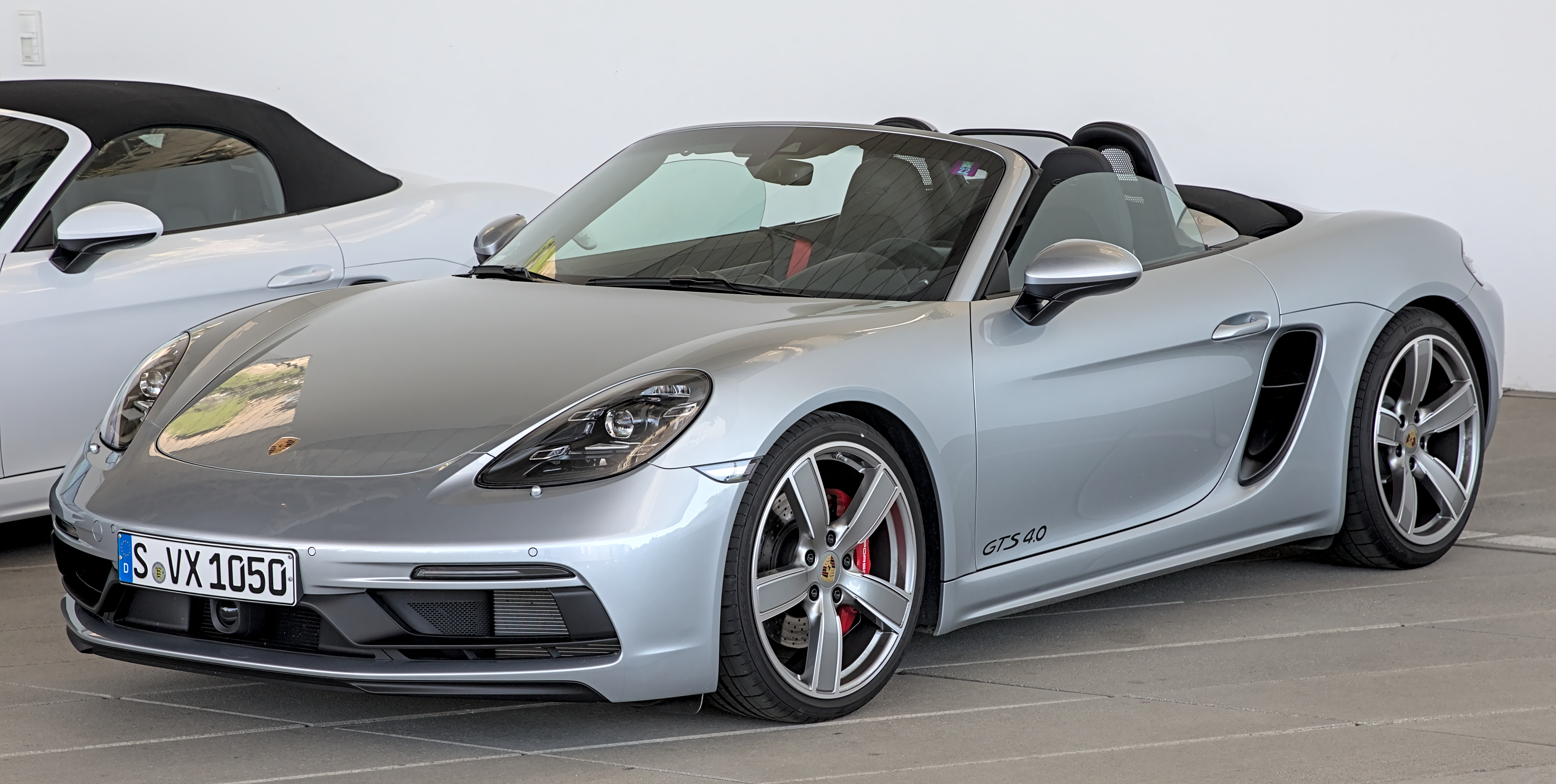
have in the garage for my wife's Boxster S. Now, that's a 2005, less than 5,000 miles from
new and unrestored untouched.
You want to make sure that's kept in pristine shape.
I picked a beautiful red car cover that goes right with it.
We call her Lucy because she's a fiery redhead and a great car to drive.
Now, the other car, as you know, is my unrestored 1966 Pontiac GTO.
I chose a black cover for this one to kind of go with the black vinyl Cordova roof.
So, as you can see, I've got those both covered up.
What I love about California Car Cover is the quality of the materials.
They stretch incredibly easily.
They're very soft.
They will not hurt your car.
And what I really enjoy is the fact that they have carrying cases for these and it
actually fits in there.
You roll it up and it's not hanging out.
It fits perfectly in the carrying case.
Now, on to the announcement as far as what replaced my hypo.
If you're watching online, you'll see it right now tucked underneath the covered GTO.
Yes, that is a Poppy Red Looks Orange 1965 Mustang Convertible Hypo.
So I replaced one hypo with another hypo.
It was somewhat accidental.
If you would like to hear the full story, send me your email address to Greg at the
Collector Car Podcast and I will add you and you can hear the whole story.
Now I just need to reach out to California Car Cover and see if they might have a car cover
in orange.
RM Sotheby's is the world's largest collector car auction house by Total Sales.
They are the preeminent market maker of high quality collector cars and collections, regardless
of size or complexity.
By working in partnership with the Sotheby's team and its network of 80 offices in 40 countries,
RM Sotheby's has established the largest client network of any collector car auction house
in the world.
Join the RM Sotheby's family by connecting with one of their car specialists at RMSotheby's.com
or contact me directly at GStanley at RMSotheby's.com.
Here.
All right.
I'm super excited to have Gary Patterson on to talk about Shelby's.
So Gary, thank you for joining the Collector Car Podcast.
Man, Greg, it's certainly great to join everybody and car enthusiasts talking about
cars.
How bad can he get, right?
Well, exactly.
We're going to talk about Shelby's.
We're going to talk about Shelby America, you know, Shelby American and what you do there
and how you got involved and all that.
But you know, I recently sold my 65 hypo fastback Mustang and you responded to me with a really
cool story about when you were a little kid driving a hypo or something crazy.
So tell us what happened with you and your little kid in a hypo Mustang?
Well, you know, Greg, I'm still blaming my parents for my problems.
So you know, there's that.
So yeah, long story short.
My dad had a hypo convertible.
He bought it brand new in 64 from a dealership.
It's kind of an interesting story that there was a guy in Chicago that radio station that
this was their grand prize giveaway and the person that won it didn't want the car.
He wanted money.
So my father bought the car virtually brand new from the dealership who just turned
around and paid the guy the money.
So that was pretty cool.
It was a hypo four speed, eight grand rally pack.
OK, so my father had built this little box for myself and my brother so that we could sit
up in the back seat and see what was going on.
I'm sure it was a child protected safety seat, but back then that's not what they had.
So you're lucky to have seat belts, right?
Yeah, you know, seat belts were an option back then, not the front seats, right?
Or were they?
I know in 67 they were mandatory, but I can't remember.
I know back seats there are optional.
So yeah, now you said in 64.
So that would have been a 64 and a half hypo convertible or very early 65.
Correct? Yeah, it was actually a generator car.
OK, wow. OK, very, very first of the hypo's.
So yeah. And you said you drove that thing.
I did. So right before dad sold it in 73
and he drove a year round.
It was his daily driver in Michigan and Ohio.
And, you know, so it didn't it never rusted on the outside,
but the undercarriage was starting to, you know, have some issues.
And so he said, you know, it's probably a good idea to just just let it go down a road.
But yeah, so it was 73.
I was like just just turned 14.
And he said, hey, you want to take it out for a spin.
And so we went over to a church parking lot and I drove the hypo around for a little bit.
That was kind of cool.
So that was technically the first car I ever drove.
Wow, what a great first car. That's incredible.
I think mine was an easy to I mark diesel, so not nearly as spectacular as yours.
So as this podcast posts, which won't be for a few weeks,
either I will be the new owner of a 65 poppy red hypo convertible
or I'm going to see it next week or by the time I see it,
it will have been just not right.
And I passed on it.
And so, you know, stay tuned for that.
So well, I appreciate it.
So high performance, mustangs, engines that went into Shelby's
are in your bloodstream from a very young age.
Correct. Yeah.
So the the hypo going down the road,
my father actually helped me find two years later when I was 16,
a 428 Cobra Jet Mach 1.
Wow.
Shaker hood, four speed, the whole bit.
And that's that was the car I wanted since I was 10 years old.
I built a model of it.
That was the car.
And so that was pretty cool fact.
Hold on a minute.
Let me get in my cabinet.
I can show you right here.
Yeah, very nice.
OK.
Now, what you would that have been that you've got this crazy car
and how old were how old were you?
So March 3rd, 1976.
I bought the car with money.
I made mowing lawns and I was not quite 17, so I was still 16.
And the serial number is nine F02 R152435.
Wow. And I drove it yesterday.
Oh, you still have it or do you have to find it?
Still have it.
Wow. I never ever sold it.
So I am that kind of car guy.
Wow, red with what color interior?
Black, red and black.
OK, so I have to share this.
I just grabbed this off the back wall behind me,
but I've got my parents, not a 428, a 351.
There. No, look at that.
They're 69 mustang that they bought in 60.
This is a picture of the day they bought it.
Wow. I'll overlay a better picture.
And so I would love to have a red on red 69 Mach 1.
Obviously, 428 would be nice,
but it would be fun to get back what my parents had.
You know, and there's a 428 red on red car here locally.
I said thanks for taking care of my car
and I haven't heard back from them.
But I also, strangely enough,
have a three second video of them in that car in 69
going down a muddy trail and it has a trailer hitch.
And it just tells you things were different back then, right?
Yeah, a friend of mine bought a 68 GT500KR
Highland Green, and it's just like my wife's car, by the way.
So have that, too. It's in the basement, too.
Yeah, they had a Christmas tree in the back of that car.
You can tell because there's all these pine needles
and stuff in the back.
Wow, that's amazing.
They were just cars, right? Yeah.
All right. So you've been with Mustangs High Pose
428 big blocks since you were 16
and you still own that car, which is amazing.
Well, how did you get involved in Shelby
to where you are today?
I mean, obviously, this seems like it's a dream job for you
and you've been doing it for a very long time.
Yeah, so I did the college thing and, you know, got out of college
and got into retail distribution for a little bit.
But, you know, my heart was always with the cars
and I always had the 69 Cobra Jet.
So, you know, I would go to shows and events
and I was a member of the Toledo Shelby Club for a while.
And then when I moved to Minnesota,
I was involved in the Minnesota, you know, Shelby Clubs
and stuff there.
And so I was always involved in the cars and the car events.
And just like any other enthusiast,
and I'm sure there's a lot of those guys watching this today,
you know, the equivalent of cars and coffee
because they certainly didn't call it back then.
But, you know, anything I could do with cars
I was involved in and then I got involved in Nevada.
I moved out because I got tired of the cold weather
and stuff in the winter time.
And so I moved where there was warm weather in sunshine
and that was Las Vegas.
So I did the retail distribution there,
but, you know, I was president of the Mustang Club
fairly quickly.
I got involved in open road racing,
which was Silver State Classic Challenge.
I don't know if you guys have heard of that,
but a couple of times a year it blocked off 90 miles
of State Route 318 with the, you know,
all the appropriate sign-offs from the Highway Patrol
and, you know, the government and everything.
And we worked with city groups
and we helped raise a lot of money for charity,
but that's another topic.
But I was involved with all that stuff
and Carol Shelby had always wanted to have
a production facility near a racetrack
where he could test the cars.
Carol decided to open operations in Las Vegas
because he had a friend, Richie Klein,
that helped open the Las Vegas Motor Speedway
and they were putting this industrial park in.
And so, you know, that whole thing was going on.
But when we found out that this guy, Don Rager,
who was president of Shelby at the time,
it was a real small company.
What year were this event?
This would have been like 90, probably 94, 95, okay?
So probably 94.
I invited Don Rager to come to the Mustang Club
and speak about Shelby
because it looked like they were gonna rebirth the company.
I mean, it existed, but, you know,
they were selling Goodyear tires and stuff like that.
They really weren't building cars
since the Dodge days.
And so, Carol wanted to start up
with a continuation Cobra program.
And, you know, because all these guys were copying his car,
so he figured, well, you know,
why not just compete with them but do it right
and do the right things with the right materials
and the right designs and all those kind of things.
So he wanted to start up the operation.
So Don was coming to the Mustang Club
to tell us about those things.
And that was real exciting stuff
and as an enthusiast, I thought, man,
and this guy's president of Shelby,
little did I know at the time
that there was like six people in the company.
But so, you know, it was like, okay,
well, let's see what this is all about.
So Don came and he brought a Black 427 Cobra, bad ass.
So, you know, we had a great time, blah, blah, blah.
So, unbeknownst to me,
Don was going to come out
to the Silver State Classic Challenge.
And, you know, look at this open road race thing
and bring his Cobra just for display, not running it.
But I was a cheap tech inspector.
And so he didn't know very many people
but he knew me from two weeks ago.
So we became fast friends.
He's a car guy, I'm a car guy, you know,
we're a big pro Shelby guy, all those kind of things.
So, hey, this was outstanding.
And so we just hit it off and got along.
Well, two years later my job was looking to change,
you know, make a change.
And I went to leave and I went in to say goodbye to Don.
And, you know, Shelby and all that stuff.
And Don looked at me and he goes,
Gary goes, you can't leave.
And I said, well, I got a family to think about,
you know, I got two boys, I was a single parent.
But you know, I had two boys to think about.
I said, I gotta, you know, I gotta do what I gotta do.
And he says, hey, he goes, I got plans for you.
He goes, you can't leave.
He goes, tell you what?
You go down and start this distribution thing
that you wanna do in Georgia.
You come back in two months, I wanna talk to you.
So I came back in two months
and I thought, you know, I was a very successful guy
in retail distribution.
I was on a fast track with my career.
But I thought, you know, I can always go back
and do that.
I'm never gonna get a chance to work
for Shelby American.
You're right.
Whether this works or it doesn't,
I'm gonna roll the dice.
So I went from supervising directly or indirectly,
500 people at a distribution center
to looking at a box saying,
are you gonna ship this or not?
You know, there was many days,
I gotta tell you, Greg, where I was like,
what have I done?
Well, obviously it looks like it's worked out very well.
Yeah, so here we are 29 years later,
almost 29 years later.
And yeah, you know, I mean,
the company's certainly had its ups and downs
and challenges and stuff like that.
But you know, here we are today.
And I was very, very fortunate and blessed
to be involved with Shelby right from the beginning.
And I knew Carol very well
and worked within the last 16 years of his life.
So I knew really how he thought
and what he felt about things.
And we sat in product planning meetings
and I knew what his five year vision was
and down the road and got to know his personality.
And he was always looking, hey, what's next?
What's new?
And that was really neat.
So can you share a Carol Shelby story
that maybe no one else has heard?
It could be something funny.
Something funny you said in a meeting.
Could be a dinner somewhere.
It could be anything.
Is there a fun little Carol story you could share?
Oh, there's a million of those.
Some of them we can talk about on TV.
Yeah, this is family friendly.
This is family friendly.
So we're gonna keep that in mind.
So I was there for maybe,
I'd started to work for Shelby in 96
and I was there maybe for two months.
And he walks in my office one day
and he gets in my uncomfortable space, you know?
And when somebody gets in your uncomfortable space,
when his nose is like within a foot of mine,
that's uncomfortable space to me.
That's not friendly talking distance.
And Carol was like that and he would,
you know, when you really got to know him,
what he really wanted to know is what you were made of.
If you were, you know, good, respectful,
you'd have a sense of humor.
Could you, you know, play the game?
Could you be one of the guys
or did you treat him like, oh, the great Carol Shelby?
He gets in my uncomfortable space and he says,
Gary, he goes, I hear you've been driving my Cobra.
I said, yeah, we had it on display out at the Speedway.
And at the time we didn't have an office there,
it was downtown.
He said, I heard you were driving my car
100 miles an hour on the freeway,
weaving in and out of traffic.
And we actually had a guy that was,
he was kind of one of those guys
that thought he could get ahead in the company
if he made you look bad.
And he had told Carol that lie, right?
The truth is the CFO had followed me back
and I did none of that.
Okay, I did plenty of shenanigans at a Cobra, trust me.
But I didn't do it that day or on that freeway that day.
But, and I knew that Carol probably
already knew the answer.
So I looked right at him and I said, Carol,
and they said that's absolutely not true.
I was well over 100 miles an hour.
And he laughed and turned around
and walked out of my office.
After that, we were good.
Yeah, yeah, wow, that's great.
Well, I do wanna get to like,
what are your halo cars right now?
What are you working on?
But first, can you give us a little overview
of the interaction and the partnership with Ford?
Because I know for folks like me,
I'm a Shelby guy, I'm a Mustang guy,
I'm an NCAA judge.
I get a little confused in the history.
Like, you know, 15 years ago
or so there was a Shelby GT350
before Ford made a Shelby GT350.
You know, like go over that a little bit.
Do you get the 350s from Ford now
and you turn them into the Shelby's
and the KR's and the Super Snakes?
Like, how does that process work?
You know, Greg, it's confusing to people
because it's done both, right?
Yeah.
So that's why it really is confusing.
So, and you know, Shelby's always done
different things too.
I mean, you know, he was clearly with Ford
and then he went in with Dodge for a little bit
and then we made the ground up Shelby series one,
which was a lot of GM parts, but a ground up Shelby.
You know, from the frame up, that was a Shelby spec car.
Then back with Ford again
and Carol Shelby had licensed the GT500 name
and after that period of time,
eventually in 2015, the GT350 name
for a period of time.
So we own Shelby American owns the GT350
and the GT500 brands, okay?
We always have, but occasionally we license that to Ford
if there's a, you know, the stars align
and things go, that's how we do it.
If not, we do it ourselves.
And so, you know, it's been like anything else.
It's kind of keeps running its course
and there'll be times we do it.
There'll be times they do it.
Currently, we're, you know, we're building the GT350s again.
So-
So you're building the 350s
and then you also have a partnership
if I'm not mistaken with Hertz?
Well, it's not really, you know,
we've built cars for Hertz.
The first car we built for Hertz was 1966.
Right.
And there was about 1,000 of those
and it was a great campaign
and people took those cars
and they erased them on weekends
and you can see shoe polish on the windshields
and stuff like that
where they entered them in speed contests.
I think a few people got ordinary
and even did engine swaps with their regular Mustang
and put the Hypo 289 that was in the rental car
into their car.
And, hey, Hertz didn't know the difference, right?
So when we started that program again in 2006
we did 500 coupes
and in 2007 we did 500 convertibles.
And that really helped Shelby American
because largely we had licensed the name GT 500 to Ford.
We weren't really building much at Shelby at the time
other than continuation cobras.
And we were building a continuation cobras
here at Shelby American at the time.
But really not in the Mustang,
Rame at all.
So in 2005, we really loved what Ford did with the Mustang.
And so we were really Jonesing to, you know
do something on that body style.
And we talked to Ford about it
but they'd already licensed the name
and they said, yeah, you know, we're not real interested.
I met with them in September of 2005,
me and the then president,
but they didn't seem like they had a lot of interest.
But, you know, we owned the brand, we went back
and we designed our own car.
We showed it six weeks later in the Paxton booth
at SEMA and it had a Paxton supercharger on it.
We had our own front-facing that we designed
and hood and, you know, American racing wheels
and bare brakes and we put some suspension stuff
with iBock, we got a lot of good partners together.
We came up with a car.
Badass showed it to the Paxton booth
and the Ford guys came down and they're like,
what are you doing?
We said, well, you didn't seem to have an interest
so we're doing it anyway, right?
Well, as luck would have it,
Hertz had contacted Ford and said,
hey, we'd love to do another GT350 Shelby Mustang
and they said, well, we don't have the rights to that car
but Shelby's got a pretty cool car
and they let us use the design studio
to debut what we had with Hertz.
Oh, that's cool.
So we went to Detroit, we used the design studio,
great time, Ford was super helpful
and Hertz came back and we had this car we had
was a little six cylinder with a supercharger on it.
So the Hertz people said, we don't wanna deal with that.
We want a V8, oh, there you go.
We'll do that.
The front fascia you designed is super cool
but it won't load off and on our transports
that we need to do to ship cars around.
Do you have anything else?
Ford piped up and said, hey,
we got this California special front fascia
that we haven't even debuted yet.
Would you like to buy that from us
and put that on the car and Hertz said,
if you would do that, then we got a program.
So we did suspension and wheels
and some other stuff on the Hertz car,
but it came back, right?
We did our own Hertz car
and all that kind of stuff in the car, we showed them.
And then people loved it and they said,
we don't wanna rent it, we wanna own it.
And that got us to Shelby GT program in 07
and we built over 5,600 of those cars in 07
and 2,300 cars in 08.
We also by 08, by 07, we'll backtrack a little bit,
but Ford had come out with the licensed GT 500
and it was a remarkable car.
It had 500 supercharged horsepower
and people were blown away
because nobody had something like that in 07.
And they looked at us and like, what are you gonna do?
Well, in 67, Shelby took the regular GT 500
and they were doing tire testing and things like that.
They put a NASCAR basic spec, 427 race kind of engine in one
and they did a lot of testing with that
and they called that the super snake.
So we used that moniker and we said, okay,
what can we do to this car to make it a super snake?
And we did wheels and tires and suspension and brakes
and a hood and we put a supercharger on it.
We used a Ford Performance supercharger with 605 horse
in the convertibles and you could get it in a coupe too,
but the coupes you could also get a Kenny Bell supercharger
with 725 horses in 2007.
So that's how the super snake debuted in 2007.
So sorry all you guys with the Hellcast
and 707 horses, many decades later, we had that in 2007.
So anyway, you got a little poke to the guys.
Well, I just love cars.
So I like the Mopars.
I used to pick up Shelby once in a while in my Corvette
just to poke the back.
But now don't you have that Shelby snake
in your museum on location there?
Yeah, so the super snake that we did,
the first one in 07, long story behind that,
we have that in the museum at Shelby right now.
What about the 67?
The 67 we have in the museum at Shelby right now.
That's one of my favorite cars ever.
So I remember seeing that last time I was out there.
Yeah, and the cool thing is I've driven them both.
We've got pictures of them out front of the museum,
you know, like this with the museum in the background.
So you got the 07 or the 67 and the 07,
you know, right next to each other.
That's amazing.
That's really cool.
And, you know, and Evan Smith tested that car
because they couldn't believe that it was really that powerful.
And they took it to for muscle mustangs
and fast forwards in 07.
They took it to English town.
That was when they were still based out of the Northeast
and they went to English town
and I was there and Evan put a set of drag radials on it
after he drove the car around for two weeks
and he said, man, he goes, this thing's unbelievable.
It went 1087 at 134 miles an hour and a quarter mile.
And he's like, whoa, this thing's badass.
So that's how good that car ran that long ago.
Wow, that's unbelievable.
That's really cool.
So how does, how does Kerry,
Carol Shelby's philosophy guide you today?
Because obviously he's been gone for a long time.
How does that guide you and what you do today?
I mean, I know it's a little more difficult with EVs.
You got the Maki, which I know you have a cool prototype
but how do you keep that philosophy vision going forward
as the industry changes so much?
Well, you know, Greg, when you got to know
Carol Shelby really well, he was an innovator.
He was not afraid to try anything new.
Most people may not remember,
but in the late 60s Carol actually came close to racing.
The tech inspection people booted him at the last moment.
Something about the air inlet was too big
but he had two turbine powered Indy cars.
And they actually had those.
Those cars exist today and they're in collections, right?
But Carol's all about innovations
and he was like, what's the greatest thing?
And you know, Pardonelli Jones almost won the overall
at Indy in a turbine powered Indy car
right before they outlawed him the next year, right?
So Carol was involved in that kind of innovation.
In 2003, Carol partnered with a guy named Jim Heffel
in California and they made,
they took one of our continuation cobras
and they made a run on hydrogen.
So it was a big block forward
but it had an injection system
that allowed it to run on hydrogen.
So they put the bomb in the trunk.
Oh, sorry, the fuel cell in the trunk.
Okay, I did that on purpose.
Anyway, they put that in the trunk and so,
but you know, I drove the car
and it was neat, but it made 30% less power.
Right.
I mean, okay, and the range was small.
That doesn't mean that hydrogen
doesn't have a future at some point,
but it means that technology has existed at that time.
It didn't make any sense.
So we tabled the program, but there was that.
Carol, we've got him on film in 2011
talking about how excited he was
about the future of automobiles and powertrains
and how sadly he would likely not be around
to see a lot of it.
But he talked about electric cars
and he said, who knows, you know, you got to try stuff.
And if you, we walked Carol into the museum
and we had everything at the time
from the first Cobra ever built
to other, you know, race cars and things like that.
What's your favorite, Carol?
And it was always the next one.
Mm, right.
So yeah, for a guy that had won,
you know, the 24 hours of LeMond and Aston Martin,
you know, he did that as the only person to ever do that.
So he won as a driver.
He won as a manufacturer with a ton of coupes.
And then he helped Ford team win,
as you guys saw with Ford versus Ferrari.
I know you guys have all seen it.
They helped them win the overall LeMond
take Ferrari off the podium.
Yeah.
And that's what the partnership
between Shelby and Ford does.
It's one of those things that, you know,
can't do it without Ford, you know?
They've done some things, but right now,
I mean, that's really what it was.
So to get back to your topic,
we knew Carol would be excited.
When the EVs were all the rage, we said, okay,
let's look at this.
And we do have a prototype.
We showed it at SEMA in 21, I think, the fall of 21.
A white car with blue stripes, imagine that.
A completely reimagined front fascia hood.
It scoops air in through the nose, goes through the radiator
because you gotta cool the batteries in the cooling system.
And then exits that air right out over the hood,
just like the Daytona Coupes, the GT40s,
the Shelby Series One, all those kinds of things
had that kind of design.
And if you look at a lot of the modern
performance cars today, that's what they use.
They use the air coming in
and it goes through the radiator
and right back out over the hood.
And it gives you some downforce in the nose.
It gives you a very efficient cooling system
and a very stable car at high speed.
So, but we looked at it, we drove it at the track.
We actually had a Tesla Model 3 several years before that.
And a guy loaned it to us and we said, look,
he said, do whatever you want.
I said, whatever you want is quite a bit.
I said, can we modify the body?
Yes.
So we flared the fenders,
we put slicks on all four corners,
we took it to a road course
and it was fairly quick for two laps.
And then it just started going, and it was like, okay.
So we realized, you know, the shortcomings at the time
and we decided that other than that
we ended up doing about a hundred cars for Hertz,
but by then we realized that it just wasn't something
that we were gonna pursue at this time.
We were gonna continue to look at new emerging technology
which is what Carol would want us to do.
And we are doing that.
We're still looking electric,
but we're also looking at hybrids.
So there's a real tie in there
and I think that that's a good future.
And with technology, you know,
if I told you that we had a car, you know,
a few years from now that's got a thousand miles of range
it'll charge in five minutes,
it'll last 35,000 charge cycles
and it doesn't take all this mining and stuff
to create the raw materials to make the car.
Are you interested?
Sign me up.
You know, if I told you this phone I got,
fancy ass phone, right?
If I told you I wanted that technology with me
at all times 12 years ago,
you'd say I was stupid
because you'd have to pull it in a wagon behind you.
Today it fits in my pocket.
So Carol would be all about the innovation side.
He'd be all about trying new things
and moving the company forward.
We do that today.
We're not looking in the past, you know,
but we do look in the past.
I look at it, Greg, as a view from the driver's seat
because I love driving, right?
What do you see, right?
The rear view mirror, it's there.
It's important.
It's this big and you learn from it
and you should pay attention to it.
But if that's all you do is look in the past,
you're gonna crash.
We're looking out the windshield.
We're looking in our future out the windshield
and where we're going.
We're not just stuck in the past.
Shelby American is looking at the next 60 years.
Yeah, that's awesome.
That's great.
And I know, I don't know how big it is,
but a significant part of your business
is the continuation cars, the CSX cars.
So I know, you know, for those who do not know,
the original 260 cubic inch,
289 cubic inch cobers were the CSX 2000s
and the 3000 serial number cars
were the big block 427, 428s.
And then I did a podcast defining the 4,000, 5,000,
6,000, 7,000, 8,000s, even 1000s.
But right now, am I correct
that you have the 7,000, 8,000s?
Break out the CSX a little bit.
You've got, you know, the,
I'm drawing a blank on it, the FIA cars
and then you got the street cars is how it works.
Well, you know, you gotta keep doing things.
You gotta keep innovating.
So a lot of those cars are very similar
to the cars that we did in the 60s.
So the small block cars are three inch round tube,
leaf spring suspension, big block cars
are four inch round tube, coil over suspension.
That still continues today.
We use a little bit of heim joints
and, you know, steering racks and those kinds of things.
But, you know, so that kind of still goes.
So yeah, that, that sequence is today.
So the 4,000s and the 6,000s
are actually continuation small and big block cars, right?
Okay, so fourth, that is a little confusing.
The 7,000s were 289 FIAs
and the 8,000s were the street 289s.
What happened to 5,000?
Well, we already use CSX 5,000s
in the series one program we did in 99,
which was the ground up car
we talked about briefly earlier.
So yeah, that's kind of where the numbers stand.
We just came out with a very limited production,
10,000 series.
Oh, I hadn't heard about this, okay.
Yeah, so I mean, you know,
there's all kinds of stuff that's going on
and there's a few that we've licensed
that are more modernized.
But, you know, also a significant business right now
is our trucks.
And in 2013, we started making a few Shelby trucks.
Carroll had done it with Dodge in 1989
where they made about 1,500 of the Dakotas.
But we got back in the business in 2013.
We started building with a partnership
with Tuscany in 15.
And so that really exploded the truck market
because we had a dealer network now.
We had production facilities.
We built some trucks in Vegas.
We built some trucks in Elkhart, Indiana.
And that really has evolved over time.
And so yeah, trucks are about 70% of what we do today, but.
70%, wow, okay.
Yeah, so if you look at things, Greg,
I mean, how many people own a truck?
Right, yeah.
How many people own a Mustang?
All right, yeah.
The balance is very skewed
and people really love the performance trucks.
We don't build a lot of them,
but the ones we build, they're cool.
They're awesome, they're incredible.
800 horsepower, you know, kind of thing.
Off-road, on-road, we've got lifted ones.
We got lowered ones.
We even do a Shelby version of the new Ford Raptor R.
Fabulous truck comes from the factory at Ford
at a remarkable 720 horses.
What could you do with that?
Well, let's just put a 3.8-wheel-wheel
leader-whipple supercharger on it
and work the suspension and come up with a hood
and a grille and all those kind of things.
And the next thing you know,
we got over 900 horses.
And that's very conservative number, by the way.
In a truck, that's just explosive.
So we've got a real range of vehicles
and we're always looking at the next ones.
That's what Carol would want.
So I can end this podcast without us talking
about the Mustangs, the Shelby Mustangs
you have on offer right now.
What are kind of the top spec cars
that are available for purchase?
Yeah, so the halo kind of super snake,
we've got that out there.
And that one is just a rockstar.
830 horses soon to be more.
But you gotta keep pushing the limits.
But it's got our own hood, fenders,
front grille, fascia, all those kind of things.
It's got hardened wheel studs,
things you don't even see.
Half shafts, exhaust system for Borla
that we designed together, rear diffusers
and side rocker panels, things that,
we're not just stickers and scoops at Shelby.
This thing is heavily contented with key partners
that we've done business with many for many, many years.
So we do that.
So that's a great car and that's a car
that people have been very familiar.
If you weren't familiar in 67 by 07,
it really set the mark
and really established that super snake name
and associated that.
So when you say super snake now,
people know it's a Shelby and it's a Mustang.
And it's a badass Mustang, right?
Yeah, yeah.
And it's a badass Shelby Mustang.
Serial numbered, so we have a Ford VIN number
and a Shelby VIN number.
Those two must match
and we don't publish them together.
So that's pretty cool.
So that car is still there and it's iconic.
We also have stuff in a range around it.
So we've got the GT350 again.
So we started building that 2020.
This year we're actually in production now.
2025, we came out with a GT350.
We showed it to the Bear Jackson auction.
We also showed a GT350R.
Both are in production today.
Fords always wanted to stab more involvement
around Detroit.
So we have a factory just not too far from Flat Rock
who is assembling the car that we designed
with our hood and our spec suspension
and wheels and tires and those kind of things.
That is all being built right now in Michigan.
But it's basically under our direction.
So it's great.
GT350's in production now.
Small quantities, but a lot of cool content
at a price point that's less than a Super Snake.
Then you got the Super Snake.
Then you've got also a GT350R.
So in 65, Shelby came out with a GT350R for the racetrack.
And they changed the front spaceship.
So it's scooped more air, little different stuff
with carburation and the long tube headers
and those kind of things.
It was a race car and they built 36 of them.
So we took the 350 that we designed
and we used some components off the Super Snake
with hood, fenders and things like that.
We came up with our own wheels
and then we also announced that we are developing
a Trans-Am race car for next year.
In thinking that way, the 350R has spelt Alcon brakes
that we're gonna use in next year's Trans-Am car.
And a Trans-Am style wing and a carbon fiber tub
in place of where the carpet would go.
And our own wheels and tires
and we just talked about the brakes suspension
and adjustability and there's all kinds of stuff
in that 350R and the 350R, all the graphics,
the paint on the hood and where it says Shelby
on the back and the fenders and stuff like that.
It's all painted on.
Wow.
This is a high-end car.
So that really comes at a price point
that's even above where the Super Snake is.
Sure, yeah, that makes it.
So that's pretty cool.
Killer content limited to 36 for 25.
Stay tuned.
Yeah, yep, yep.
And this, let's see, it's July.
In mid-August, we'll start talking a little bit more
about the next one.
Aha, there we go, all right.
We can come back and talk about that.
All right, so I'm gonna do a little rapid fire
questions for you here in a second.
But what's the best way for the listeners
to stay up to date with Shelby American?
You know, you gotta go to shelby.com.
So that's an easy one.
And that's our company website.
You can look through, build ones and those kind of things.
We've got a new division, Shelby Performance,
that's gonna come online next year.
You know, Shelby Performance parts
where you can buy lots of different parts
for the newer cars.
We have a retail store, so if you wanna buy apparel,
you know, shirts, hats, things like that.
You know, and all kinds of posters and banners
and models and those kind of things.
We have a retail store and clearly a catalog
kind of business that's that way too.
So you can keep up with all those kind of things.
So that's probably the first and best way to do it.
You just start there and then there's all kinds of,
you know, Twitters and podcasts.
Sure, everything else, yeah.
We do things and partner with people like yourself.
Which we appreciate.
Yeah.
All right, you're ready for some questions
to end the podcast.
You betcha.
All right, what's your favorite Shelby model
of all time?
Depends, so I could use the next one, but I can't.
So that's Carol's, you know, for me,
it's what flavor of the ice cream do you wanna eat today?
I love ice cream, but I like different flavors
of ice cream at different times.
So there's nothing like showing up to cars and coffee
in a 427 Cobra.
It makes all the right sounds.
It's a badass car.
It's iconic.
People know what it is.
And I own a particular continuation,
one of our very early continuation,
genuine 427 Shelby Cobras.
I also like taking my Supercharged Shelby Series 1.
People don't have that car.
They don't even know what it is oftentimes.
So if you wanna show up with something really cool,
really badass, that's a ground up Shelby,
show up with that, right?
But if you wanna go fast,
how about, you know, you've got the new Shelby Code Red.
That's out there with over 1300 horsepower.
So that car will run mid eights at over 160 miles an hour
if you take that to the drag strip.
If you had to pick one, what would it be?
Like I said, it depends on the day
and the time in the application.
How about today for lunch?
What would you do?
Today for lunch.
Today for lunch it's hot, it's humid,
and so I'd like to have a little air conditioning.
So I'd probably drive my 950 horse plus.
Depends on the tune I push in the steering wheel.
Could be over a thousand, a 2020 GT 500 KR.
I would drive that car today.
All right, now what do you prefer?
Driving on the track or the street?
I like the track.
Okay.
I like the track because of the controlled environment.
I can mix it up with my friends.
I can share the experience with friends and people
that happen to be in the passenger seat
and we can do a little, say games out on the track
and see who can put it down and who can't.
Cause at the beginning of the day,
there's a lot of stuff out there.
People talk to talk, can you walk the walk?
Let's see what you got.
Now what do you consider
the most underrated Shelby vehicle?
You know, that's a good question.
That's a good question.
Like series one.
Yeah, I think you hit that pretty good.
The series one had a lot of drama at the time.
You know, there was some delays in production
that we could go on for six more podcasts over that.
But at the end of the day, that was a very underrated car.
People didn't realize even Motor Trend tested
at one time against cars like Ferrari 430 at the time
or 360, I can't remember, cause I was there.
There was a BMW Z8, there was a Cobra R,
there was a Viper ACR, this was all back in like 2001.
And a Turbo Porsche, we could beat those guys.
R zero to 60, you gotta remember
in that time period was three seven.
Yeah, crazy.
Okay, that was a Shelby series one was three seven
with a set of road race tires, it was three two.
I did the quarter mile in 1135 at our track.
Wow.
In 124 miles an hour.
That was faster than the Turbo Porsche and the Viper ACR.
Those cars were very fast, but that car was good.
And I used to take those customers
or potential customers, take them out to the race track,
take them for a ride in the car.
And if they were serious about buying one,
they signed a contract.
That car was cool and it's still bad ass,
but it's highly underrated because of the controversy.
So, you know, things that didn't do well,
the convertible top, yeah, that was really crappy.
It basically funneled most of the water on your lap.
I've never seen one with a top up.
I know that's for sure.
That's a good thing.
But there was, so there's pluses and minuses,
but that's a bad ass car.
I could really kick butt with it on a road course
and that car was truly underrated for what it was.
All right, I've got two more questions.
What is one thing people misunderstand about Carroll Shelby?
I think that, I think the innovation part.
I think that we get comments all the time, you know,
when we came out with a performance pickup or something,
oh, Carroll Shelby would never do that.
Not true, he actually did that
while he was still alive, right?
Oh, Carroll Shelby would never do an electric vehicle.
No, we have him on film right here
talking about those kind of things.
I think most people don't realize just how innovative
Carroll Shelby was and how he thought.
And I really think that that was true.
And it was, some of that was in the movie
and it really showcased,
and we still do a lot of that kind of stuff today.
The computer tells us one thing.
You get much further down the road
than you could in 1966, right?
But today, even if the computer tells us,
maybe it doesn't have all the parameters it needs,
that you can't be taking the car, going to the track,
running lap after lap, finding out where the failure points
are and continue to refine the product.
We got car people running a car company.
It's Shelby American today.
We're innovative just like Carroll Shelby would be.
That's awesome.
And now my last question
and probably the most important question,
when you saw my 65 Hypo Fastback for sale,
did you even have half a thought to possibly buy it?
Actually, no.
And I'll tell you why.
As much as I revered that car, I love that car.
And I'd like to have a, you know,
part of me wanted another Hypo Converable.
I even tried to track the one down for my father.
In fact, my parents are on the way to the house right now.
I've got vacation today and tomorrow and the next day.
But anyway, we're gonna go to a family wedding
later this weekend in the Northeast,
but they're on my way to the,
my father said, you know,
that car was great then, but that was then.
And when I drove a Hypo not too long ago,
and quite frankly, it's like,
yeah, I want to remember what I remember
and what we're doing today is so cool.
And you know what?
I kind of like air conditioning and, you know,
brakes that are good more than one stop.
You know, those kinds of things.
And so, you know, I live this thing, Greg,
just like you do too, right?
You've got a really cool GTO.
That's cool.
It's a different flavor of the ice cream.
Do you want another Hypo?
Yeah, maybe you do.
If somebody showed up with a Hypo Converable,
maybe I would do that just because
of the nostalgia with my dad.
But yeah, for the most part, you know,
I'm looking at what's next.
We have, in our family,
we have the continuation Cobra.
We have, you know, I still got the 69 Mach 1.
My wife's got the car her father had too.
And he's still around, can enjoy as well,
the 68 GT500KR.
So we've got the old stuff,
but we got new stuff too.
So, you know, that's kind of where we're at.
We've got some old, some new, some in the middle.
We own the 07 Concept Superstate.
That's in the garage too.
It's a Shelby's garage right now,
but, you know, it's cool to own that car.
Yeah.
Well, thank you so much, Gary,
for being on the Clutch of Car podcast.
I appreciate it so much.
And I've been wanting to have you on for such a long time.
I'm glad we were able,
we were able to finally make it come together.
Well, Greg, I can't thank you enough.
And, you know, I think maybe this is a new beginning.
We should do this on a more regular basis.
Sure, let's do it.
All right, man.
Take care.
All right, see you.
He forged his name in power and trust
with a cowboy hat and cobra's hiss.
He made American muscle what it is.
Shelby's fire still burns today
in the roar of a GT through 50's play.
From Daytona nights to Texas sun,
he showed the world what could be done.
Belt to race, born to lead.
Carroll Shelby, planted speed like a seed, like a seed.
Started doing the dream in a British frame,
dropped in a V8 and changed the game.
The cobra struck with a venomous bite.
Ferrari blinked and lost that fight.
He tamed the Mustang, gave it might,
turned a pony into a street fight knight.
Ford's secret weapon in 66, that GT 40 still gives kicks.
Shelby's fire still burns today
in the echo of those racing days
with grit and gears and pure resolve.
He made machines that wanted all from the track
to show room floors.
Shelby thunder forever oars.
He wasn't just a man, he was a flame that lit the path,
that changed the game.
So Detroit had a build with soul and chased horse power
like gold.
Shelby's fire, you can hear it scream in a super snake,
tearing through a dream.
Legacy forged in chrome and pride, the man,
the myth still takes that ride.
Gone but not gone, he's in it every row.
Carol Shelby lives forevermore.
About this episode
Gary Patterson from Shelby American shares his deep-rooted passion for Mustangs and the legacy of Carroll Shelby. The conversation dives into personal stories, including Patterson's first driving experience in a Shelby Mustang and his long-standing career with the company. They discuss the evolution of Shelby vehicles, including the iconic Super Snake and the new GT350 models, as well as the challenges and innovations in the automotive industry today. Patterson emphasizes the importance of looking forward while honoring Shelby's spirit of innovation.
What does it take to preserve a legend like Shelby American while continuing to innovate for the next generation of drivers?
In this very special episode of The Collector Car Podcast, I sit down with Gary Patterson, President of Shelby American, to explore the full throttle story of America's most iconic performance brand.
From working alongside Carroll Shelby himself to leading the company into the future with new builds, collector programs, and electric concepts, Gary shares behind-the-scenes stories you won't hear anywhere else.
Plus:
A preview of what's next for the Shelby GT lineup
A special spotlight on Shelby's incredible fanbase
And… a personal tribute in the form of my original track: "Shelby Legacy" — you'll hear a 30-second teaser at the beginning and the full song at the end of the episode.
This episode is sponsored by our friends at California Car Cover — my go-to source for custom-fit car covers and detailing gear. They've protected both my '66 GTO and Porsche Boxster S, and I trust them to keep your Shelby safe, too.
Listen to the "Octane FM: Shift, Rev, Repeat" album on Spotify!
Stay connected with The Collector Car Podcast—find us on our Website, Instagram, Facebook, YouTube, or reach out to Greg directly via email.
Join RM Sotheby's Car Specialist Greg Stanley as he brings over 25 years of experience and keen market analysis to the world of collector cars. Each week, Greg dives into market trends, interviews industry experts, and shares insights—with a little fun along the way. New episodes drop every Thursday and are available on Apple Podcasts, Google Play, Spotify, or wherever you get your podcasts.
Learn more at www.TheCollectorCarPodcast.com or email Greg at [email protected]. Interested in consigning a car at an RM Sotheby's auction? Contact Greg directly at [email protected].