The Spirit of Ecstasy is a famous figure that sits on the front of Rolls-Royce cars. It represents beauty and luxury, and there are different versions of it, including one where the figure is kneeling.
The Bentley Continental is a fancy car that is very powerful and comfortable. It's designed for long drives and is made with high-quality materials, making it a popular choice for those who want a luxury vehicle.
The flying bee is a decoration on the front of some Bentley cars. It looks like a bee with wings and is made to make the car look more luxurious and special.
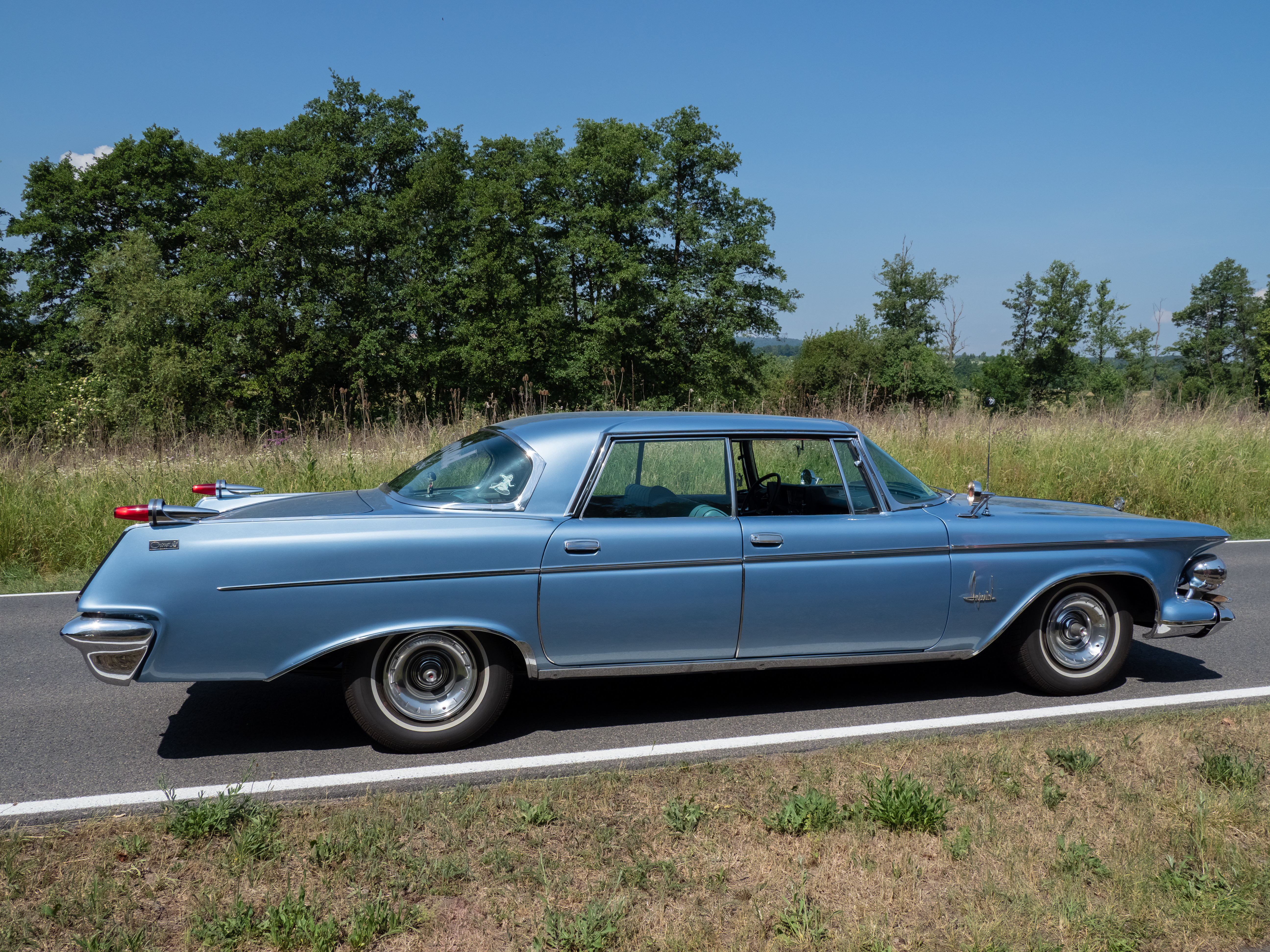
The Chrysler Imperial is a big, fancy car that was made for people who wanted something really nice to drive. It was known for its beautiful design and comfortable features, making it a popular choice for those looking for luxury in their vehicles.
California Car Cover is a company that makes special covers to protect cars from things like rain and dust. They have many different styles to choose from.
The Pontiac GTO is a famous muscle car that was made by Pontiac. It's known for being fast and has a strong engine, making it a favorite among car enthusiasts.
Mercedes-Benz is a luxury car brand from Germany. They make high-end cars, and some of them have decorative ornaments on the front.
LIVE
Okay, for this episode of the Collector Car Podcast, I'm thrilled to have Steve Purdy,
the author of Mascots in Motion.
Steve, how are you doing today?
I'm great.
How are you doing?
Doing great.
Now, we met at one or two concor events, and you had produced this wonderful book.
I'll hold it up here.
Oh, yes.
Yeah, Mascots in Motion, just a stunning book.
And I do want to get into a little bit, but tell us, just give us an overview for my listeners.
What is the book all about, and how could they possibly get a copy of one of these wonderful
editions?
Well, I'll be glad to cover both of those.
So the book is about the aesthetics of auto design.
I've been photographing these details of auto design for years, the hold ornaments and the
side mounts and the art deco details of auto design.
And finally, three or four years ago, I found myself in a position where I could actually
gather all those together, 40 years worth of them, and put them into a book as sort of
a legacy project, essentially.
So just last spring, I got the book back from the printer.
It's 314 pages, 320 images and 50,000 words or so, just enough text to tie it all together
and put them all in context.
And I hired an art book producer in Grand Rapids to actually design and produce the book.
So they handled all the printing and the design, top notch art book standards.
And I've had it for about a year, and it's just been a thrill being out there, peddling
the book and talking to all these people that share that interest.
Yeah.
So, yeah, what's the best way that they can learn more about it?
Like, do you have a website, you know, publisher website?
I do.
It's a self-published book.
It's on my website, shunpikerproductions.com, S-H-U-N-P-I-K-E-R, shunpiker.
A shunpiker, for those who don't know that term, is one who shuns the turnpike, takes
the back road instead of the highway, in the spirits of Charles Corralton, people like
that.
So that's kind of the guiding philosophy of what I do aesthetically, as a photographer,
as a writer, as a producer, and all the other projects that I'm always overloaded with.
So anyway, that's essentially what the book is about.
They can go to that website, shunpikerproductions.com, and they can see some details of the book,
and they'll also see a story that was just published in International Business Times,
in the International Business Times about me and the book.
They found me online somehow, and decided they wanted to produce a story that they could
peddle to one of these major publications, so there's a link to that on the website
as well.
That'll give you a lot of the background of the story and who I am.
Yeah, and I'll also put all these links in the description of this podcast.
Now, so the way I heard you, you were taking photos for decades, and what was the moment
that you said I should compile all these into a book?
Was it the fact that you had so much historical documents now through photographs?
Was there a particular hood ornament or story that hooked you into this project?
Like, what was that moment?
I'll tell you how that came about.
For the last, for about five years, I had resurrected and produced a series of automotive heritage
awards and put together a foundation to manage that.
That took a lot of time and a lot of money.
I was still doing, I was still writing and shooting pictures and stuff for outlets.
And I was the Detroit editor for the Auto Channel for years, so I was still doing product
reviews weekly and again, way over book.
Anyway, we finally had to fold the tent on that big project because we just couldn't
find enough sponsorship to keep it going.
So I realized then that I now could, I was at the point where I could produce this book
that I'd been really thinking about for 10 or 15 years, wishing I had the time to do it.
But I knew, I'd done three other books and I always surprised at how much work they took.
So I knew what it would take to do it.
And I didn't want to hold a trigger on it until I had the time and the resources to
actually self-publish it.
And I found myself in that position.
So I pulled the trigger and here we are.
Imagine a journey so rare, it only happened once.
That's the spirit behind once.
Exclusive, one time only adventures that will never be repeated.
Our next experience, American Muscle Legends takes you trackside with the most iconic cars
in history, complemented by luxury accommodations and behind the scenes
access you simply can't buy.
Spots are limited.
When it's gone, it's gone.
You can learn more at discoveronce.com forward slash muscle.
RM Sotheby's is the world's largest collector car auction house by total sales.
They are the preeminent market maker of high quality collector cars and collections,
regardless of size or complexity, by working in partnership with the Sotheby's team
and its network of 80 offices in 40 countries.
RM Sotheby's has established the largest client network of any collector car
auction house in the world.
Join the RM Sotheby's family by connecting with one of their car
specialists at RMSotheby's.com or contact me directly at GStanley at RMSotheby's.com.
Now, a big part of this is how decorative hood ornaments became.
And there's just thousands upon thousands of different versions here.
Could you give our listeners just a little snapshot, maybe a hood ornament
101 on how they went from like a simple radiator cap to how they involved into
works of art, not just like brass or metal, but became even glass sculptures?
Yeah, well, that's that's pretty much what the book is about.
And I do a lecture about a half hour to 45 minute lecture.
Did you I don't know if you went to one of those?
No, unfortunately, I did not.
Just went to the ACD Museum a couple of weeks ago.
Anyway, I have a slide presentation that sort of takes you through the book,
which begins with the motor meter, which was essentially a radiator
cap with a thermostat built into it so the driver could see from the driver's
position what the temperature of the engine was.
Well, by the 20s, well, after the motor meter was was kind of a thing,
manufacturers began to embellish them with their logo.
So your car would come with a logo with a packered emblem around it or
and integrated with some other packered iconography, you could say.
So but in the 20s and after that, the temperature gauge was inside,
but the ornamentation stayed and became more and more a part of the design of the car.
So each manufacturer would have its theme.
The Pontiac, of course, had the Indian head and Plymouth had the sailing ship.
And they would they they some of them would have these themes
that they would kind of upgrade and change each few years or so.
And others like Packard would produce a whole bunch of different ones
and you could buy them as an option and so forth.
Well, in the in the early 50s,
they after World War Two, they evolved into less classic themes
and more into aeronautical themes, rockets and airplanes and flying things
and and and that sort of thing.
And then they just kind of faded away in the late 50s and you don't see them any more much
except for maybe Rolls Royce and Jaguar and a few like that.
Well, the book also has a separate chapter on Lalique,
which is a crystal manufacturer in Paris who produced 30 some 34, 35,
36 different crystal hood ornaments.
One is an as an is a reclining nude.
One is a rooster's head, five horses, three horses.
They run
Renee Lalique produced a bunch of these
and there's a whole chapter dedicated to those.
And then we go into the Europeans, who had most
way fewer hood ornaments than we did, many of which were designed
specifically by a noted sculptor of one kind or another.
Bazin, for example, did most of them.
And and we have a separate chapter for the Brits because they had such a wonderful variety.
But then we cover General Motors and all the sub subdivisions of that.
Ford and Chrysler and then we have a big chapter on American independence
like Packard and Studebaker and Pierce Arrow and all of those.
So and then finally, I'll just give you a little wrap up here.
In the end, I had a few pages left to fill, said my designer.
And so I decided to do a little piece on trucks.
So I've got four or five pages on trucks, including the Divco,
the little humpy milk truck that was so popular back in the day.
Had a wonderful Art Deco hood ornament.
So that's kind of right at the end of the book and that that in chapter.
But I the last image I was to put in there,
I thought I would leave it with a little whimsy.
So I put in an image that I took of a of a guy's old raggedy pickup truck
at a show in Jackson, Michigan, where he'd welded a little crowbar handle
on the front of his hood, and that was both his good puller and his hood ornament.
So that's how we end the book with a little whimsy.
Yeah, that's really great. I mean, they're so cool.
There's so many iconic ones. I'm just thinking back.
I mean, you have the Rolls Royce, the spirit of ecstasy,
the woman flowing with their arms out and draping.
And I just had a podcast where I talked to an owner of one of these cars
and he actually informed me and there was an example
at the Hillsborough Concourse of another version of that,
where it is actually kneeling.
And I believe the story was, and correct me if I'm wrong, you're the expert.
But the one with the flowing and she's standing up,
she kind of has her butt pointed towards the driver.
And that was not seen as demure or modest.
And in the I think it was in the Middle East,
they gave it this other version for the Middle East,
where it's more of a crouched version.
Is that correct? Something like that?
I'm not familiar with the Middle East version or any destination like that.
But I can tell you, I feel like an expert because on particularly that one,
because a friend of mine,
Maureen McDonald, came up with the idea of doing a historical novel
about the model who posed for that hood ornament,
the spirit of ecstasy hood ornament.
Her name is Eleanor Velasco Thornton,
and she was the friend and confidante and right in the middle
of the first 15 years of automobiling in England.
So what a great central theme for a historical novel
about a powerful woman who was the the the paramour of Lord Montague,
who ran the first, who created the first car magazine
and was a member of parliament and a great promoter of automobiles.
King Edward VII and Mr. Rolls and Mr. Royce,
all of this wonderful story, the first 15 years of British automobiling.
And we're going to do a novel about that.
So I've done a whole lot of research about Eleanor Velasco Thornton
and what a charming person she was.
Well, it's interesting because those are the ones you mostly think of today
would be Rolls Royce and Bentley because they still actually use them
and they they're so desirable.
They actually have it so they can hide them inside the grill.
They actually will go down into the grill so you can't steal them.
I was in Florida this weekend and I actually saw a Bentley Continental,
a new one, and it had the classic flying bee on the front.
And what was interesting is the wings were actually glass.
And this is a new one.
And so I thought that was really interesting,
that they're actually making, you know, new hood ornaments today
with these mascots, such as the famous flying bee and their customizing them
even today, which is fascinating.
And there's barely a handful of any being made now.
And the one that most people think of is the Jaguar,
which has essentially unchanged from the very beginning.
Yeah, that's what I was going to mention to you.
You mentioned trucks like I know the Mack truck,
the bulldog is a pretty iconic mascot for a truck.
You know, you mentioned Jaguar.
We already talked about, you know, Rolls Royce and Bentley.
Are there others you mentioned Packard like I picture?
What is it Lincoln that had the Greyhound in the 30s and 40s?
Oh, yes. And Chrysler had the Gazelle.
You remember the Gazelle?
Yeah. Chrysler Imperial had a wonderfully graceful Gazelle.
You know, there were different themes like there were animal themes.
There were mythological themes like God's and goddesses and all that kind of thing.
There was a theme for raptors.
There was a theme for, you know, there's a lot of different themes
that were popular throughout the times of hood ornaments.
And and and some companies, as I mentioned before,
like like Plymouth and Pontiac, stuck to the same.
Basic theme, but had a lot of versions of it.
Others. Yeah.
And I'm thinking of Packard because they had so many different ones.
As you well know, Europe, you're a Packard aficionado.
There's the one version of the Cormorant in the book
that has what appears to be feathers coming out its back end.
And flowing along the hood for about a foot.
Wow. And you'll see that in the Packard chapter in the book.
And what happened was the largest Packard dealer in California decided
he that that ought to be a radio antenna.
So he created this.
He engineered it and produced it for his Packard customers in California.
Now that's a real collector's collector's item.
I don't know they may reproduce those.
Somebody may reproduce those today, I don't know.
But you see them very rarely, but they're pretty cool.
Your car deserves the best.
That's why my Pontiac GTO and Porsche Boxster S
are wrapped in California car covers.
Since 1989, they've been family owned and focused on quality,
offering more than 100,000 patterns plus fully custom options.
Protect your passion with California car cover.
The world's softest custom fit covers.
Learn more at CalCarCover.com.
Yeah, and now that's interesting because you talked about customization
and personalization, it started with, you know, it was functional.
It was the Moto Meter, then it became branded where, you know,
the company could start dressing those up a little bit,
but then you started getting into the animals and the different things.
And it sounded like it became, you know, personalized your car
by buying a custom hood ornament, correct?
That's true. And in England, particularly, you know, I've seen
as I was doing the research on this Eleanor Thornton book,
I found catalogs, you know, 100 pages of, you know,
thousands of different hood ornaments that you could just buy after market.
It was a thing. Everybody produced what they liked.
Another story from the book is that in the early 1920s,
there was a club in Northern England called the Ancient Order of Frothblowers
who had their own custom hood ornament design that they,
their members were expected to put on their cars and they had some special tie
they wore at all the meetings and so forth.
But I found that on a 1920 Vuxel at a show near here.
And the story of that's in the book.
But in those days, you could either order something from a catalog
or you could go have some sculptor make one for you, you know?
Artists were a dozen, so anybody could cast one of these
if they had a wonderful idea.
So the Ancient Order of Frothblowers is one of the most interesting.
That's hilarious because I know I've seen a couple of hood ornament displays.
I think of Nethercutt Museum has a really nice one when the Mullins Museum
was still together, they had one and you just walk through and, you know,
you might see 10 versions of, you know, the Lincoln Greyhound.
But then you'll also see, you know, airplanes and I think even saw a hobo one
time as an ornament, like some really weird stuff, right?
There was there was one called Old Bill that was a World War one soldier
that was real popular.
It was aftermarket, but it was so popular that, you know,
that there's still some of them around.
Yeah. Yeah. Now, how does it, from a collector's perspective,
what drives value?
I would assume the crystal ones are very valuable.
Is it the rarity?
Is it factory made rarity?
Is it one off that somebody made?
Like, how does how do collectors look at this segment?
Well, there aren't a lot of collectors who are focused, particularly on these,
there are quite a few, but not not not many.
My understanding, and I'm not a collector, I pay a little bit of attention to it.
The really, really rare and unique ones are the La Leaks,
because since they were crystals, so few original survived, you know,
hit a big bump and it would crack the thing.
They were lit from within, so I don't know how thick the crystal was.
So if you find an original, one of those are by bomb guessing, they're priceless.
But they're reproduced today.
You can go to the La Leak company and order one today if you want.
I don't know how much.
So I think those are probably, well, I'm guessing more than 10 grand
for a new one, probably. Wow. OK.
I maybe even more than that.
But, but, you know, the rarity is one thing.
Significance is another, but popular.
You know, it's it's like car collecting, essentially.
It's whatever turns you on, really.
You know, if you really like the art of it all,
a collector would concentrate on the European ones and the and the and the
gazelle and the and the greyhound and all those really beautiful sculptures.
Nice sculptures.
If a person was more interested in culture, then they might go for,
you know, the the Pontiacs, you know, the the the in there were lots
of other Native American references in these sculptures as well.
So if you're interested in mythology, certainly the mythology.
So you could you could focus on some brands and the value, I suppose.
You know, and I think, again, that's probably
somewhat reflective of the collector car business, generally, in that
a surviving original unrestored can be as valuable,
sometimes more valuable than a restored copy.
So but with a hood ornament, if you find an old one.
And you and you can replay it, you know, I don't know.
Yeah, I think it's just what what what a person really likes
is what the value is going to be.
So in all your research, were there any ones that surprised you
and also what would you say is like your favorite hood ornament?
Oh, wow. You know, that's like asking, what's your favorite kid?
And it's like and here I'll give you another little
tidbit of of insight here.
About the way I look at all of this is that if I went to a collector car
auction with 100 grand in my pocket, 200 grand in my pocket to buy a collector car,
I couldn't do it. I would be so overwhelmed because I like them all.
Oh, I could do it.
I can tell you which one I like the best is the one I'm looking at at the moment.
That's the one.
Oh, this is one of my favorite.
So and what was the other part of your question?
I forgot already.
Was there some some in your research, a particular one that surprised you
that you didn't either know existed or was so weird or whatever?
There was also a number that surprised me that I thought
when I thought I knew the story and I went in to just fact check it.
I found there were maybe a couple other stories.
Eleanor Thornton, for example, there's two or three or four different stories
about her, whether or not she was actually she actually posed for it or whether
the sculptor Charles Sykes used a previous version of her that you don't
know, there's all kinds of of surprises in the research and surprises
in the stories behind them more than surprises in the hood ornaments themselves.
Although I go to a concourse today and I'll still see once I've never heard
of or never seen before.
So yes, there's always surprises that pop up and there were a lot of them in this
in this book.
So so if you could design a modern mascot today
for a contemporary car brand, what might it look like?
That seems to be pretty tough to do based on how sleek and smooth everything is.
You know, oh, yeah, I don't.
I think boy, that's a good question.
I would say from an aesthetic point of view, I'd try to reflect.
Well, as these hood ornaments were always designed to reflect something
about the brand, its modernity, its sportiness, its image of one kind or another.
So for a today's brand like Tesla, if they had a hood ornament,
it would probably be a stylized version of their badge.
Something artful and sculptural,
but probably not representing a raptor or a goddess or or any of those
traditional images, it would be something that would be.
Contemporary and reflect the aesthetics of the of the organization
if it had an aesthetic.
Most. Yeah, it's very.
Yeah, it's interesting because, you know, I think I don't know, Mercedes,
they might still have them on some cars in the past.
If it had a hood ornament like in the 80s and 90s and 2000s,
it was more of the luxurious version of the car.
If it if it was not a hood ornament, but, you know, a regular hood,
I don't know what you call it logo on the nose of the car where it was flush.
That meant it was a sports car, you know, so it's interesting how those have
transitioned. I know BMW recently redid their logo on the nose of their cars
quite a bit to reflect more of their aeronautical heritage
and added some colors in there.
So just really fascinating.
So if someone wanted to dig more into this, obviously go buy your book.
But are there other ways you would recommend it?
I mean, hit car shows at swap meets. What would you recommend?
You know, the point of the book, I guess the point of most of my photography is
slow down and take a closer look at stuff.
If you go to a car show, you know, you'll probably see that hood ornament
and know that's pretty cool and you'll walk on to the next car.
But take a little closer look, take a little closer look at the
the design details of these cars.
If you're into the aesthetics of it all and the art of auto design,
just take a look at all those details.
A lot of times we miss the details because we're looking we're looking at
the forest and we're so impressed with the forest, we don't see the trees.
Right. Right. Well, awesome, Steve.
Yeah, like I said, I'll have your your web links in the description here.
And I as I appreciate you being on the collector car podcast.
Well, thanks for inviting me. Appreciate it.
About this episode
Steve Purdy, author of 'Mascots in Motion', shares insights into the evolution of automotive hood ornaments, transforming from functional parts to artistic expressions. The conversation delves into the history and significance of various designs, including iconic examples like the Rolls Royce Spirit of Ecstasy and the Lalique crystal ornaments. Purdy discusses his journey in compiling decades of photography and stories into his book, emphasizing the aesthetic details often overlooked at car shows. He also touches on the collector's perspective on value and rarity in hood ornaments.
In this episode, I sit down with Steve Purdy — writer, photographer, producer, and automotive historian — to discuss his stunning new art book, Mascots in Motion. This beautifully crafted coffee table book celebrates over 40 years of photographing the details of special cars and sharing their stories.
Featuring more than 300 original images captured "in the wild" at events and venues across the country, Mascots in Motion explores the artistry, culture, and history behind some of the world's most captivating automotive mascots and design details. Steve shares his creative process, the stories behind his favorite shots, and what it means to preserve automotive art through photography and storytelling.
This book — designed and produced by Michigan-based, award-winning publisher M.J. Jacobs, LLC — is a must-have for anyone who loves art, automotive design, history, and culture.
This episode is sponsored by our friends at California Car Cover — my go-to source for custom-fit car covers and detailing gear. They've protected both my '66 GTO and Porsche Boxster S, and I trust them to keep your collector car safe, too.
A special thank you to our new sponsor, Discover Once, curators of one-of-a-kind automotive adventures you'll never experience twice. Learn more at discoveronce.com/muscle.
And as always, huge thanks to RM Sotheby's for their continual support and for making so many of these automotive dreams possible.
Listen to the "Octane FM: Shift, Rev, Repeat" album on Spotify!
Stay connected with The Collector Car Podcast—find us on our Website, Instagram, Facebook, YouTube, or reach out to Greg directly via email.
Join RM Sotheby's Car Specialist Greg Stanley as he brings over 25 years of experience and keen market analysis to the world of collector cars. Each week, Greg dives into market trends, interviews industry experts, and shares insights—with a little fun along the way. New episodes drop every Thursday and are available on Apple Podcasts, Google Play, Spotify, or wherever you get your podcasts.
Learn more at www.TheCollectorCarPodcast.com or email Greg at [email protected]. Interested in consigning a car at an RM Sotheby's auction? Contact Greg directly at [email protected].